Plan a Trip


Duration
1 Day
Travel Time
6-7 hours
Distance
175 km
Vehicle Type
Bus
Driver
Included
Group Size
1-35 Pax
Max. Altitude
750 Metres
Best Season
Round the year
Activity
Multi Day Tour
Meals
Not Included
Highlights of Kathmandu to Besisahar bus ticket
- Direct Access to Adventure: The most reliable transport link to the starting point of the world-famous Annapurna Circuit.
- River Gorge Views: Drive parallel to the thundering Trishuli and Marsyangdi rivers, offering white-water views right from your window.
- Highway Gastronomy: Experience a true Nepali “Dal Bhat” power lunch at a bustling highway motel—fuel for the journey ahead.
- The Dumre Turn: Feel the landscape shift as you leave the main highway and climb steeper, greener roads toward the Lamjung district.
- Cultural Transition: Watch the scenery transform from the concrete density of Kathmandu to the terraced farmlands and hill villages of Besisahar.

Introduction of Kathmandu to Besisahar bus ticket
The smell of diesel hits you first. It’s thick, oily, and hangs heavy in the air at Gongabu Bus Park. Forget the romantic travel brochures. The Annapurna Circuit doesn’t begin at a polite trailhead in Lamjung. It begins here, in the chaotic pre-dawn dark of Kathmandu, dodging mud puddles and shouting hawkers.
Buying a Kathmandu to Besisahar bus ticket is your first real commitment to the mountains. This isn’t a sanitized airport transfer. It is a six-hour endurance test. You are ripping yourself away from the capital’s concrete grip and throwing yourself onto the Prithvi Highway—a scarred, potholed ribbon of asphalt hanging precariously over the Trishuli River.
The ride is deafening. The curves are stomach-churning. The views are aggressive. One minute you’re reading a “Horn Please” sticker on a Tata truck; the next, you’re staring down a 300-foot drop into white water. It’s dusty, it’s chaotic, and frankly, it’s the only honest way to start a Himalayan climb. Get in. Sit down. Hold on.
For travelers seeking premium experiences, visit our sister company, Treknepalhimalayas and Alpine Luxury Treks, where you can explore luxury vacations and thoughtfully designed trekking itineraries across Nepal.

Itinerary of Kathmandu to Besisahar bus ticket
Drive From Kathmandu to Besisahar
Your mission begins before dawn. The city of Kathmandu is just waking up as you navigate to the departure point (typically Gongabu Bus Park or Machhapokhari). The energy here is frantic and electric—porters loading heavy trekking duffels, engines revving, and the anticipation of hundreds of trekkers hanging in the cool morning air. Your Kathmandu to Besisahar bus departs strictly between 6:30 AM and 7:00 AM.
Once you escape the traffic knot of the Kathmandu Valley at the Thankot checkpoint, the real ride begins. The Prithvi Highway drops sharply, winding down serpentine roads that cling to the side of steep hills. To your right, the Trishuli River churns with glacial meltwater. This is not a place for sleeping; the views are jagged, green, and spectacular. Around midday, the bus pulls over for a mandatory pitstop. This is your chance to devour a massive plate of rice and lentils (Dal Bhat) alongside locals and fellow adventurers—it’s carb-loading 101.
After passing the bustling junction of Mugling and crossing the bridge, you eventually veer right at Dumre. The road narrows, the tarmac gets rougher, and the mountains loom larger. The final stretch follows the Marsyangdi River upstream. You will feel the air get fresher and the humidity drop. By mid-afternoon, you roll into the dusty, vibrant town of Besisahar. It’s a hub of activity where jeeps wait to ferry trekkers higher up to Syange or Chame. You have arrived. Check into your teahouse, double-check your gear, and rest up. Tomorrow, the walking begins.

Activity: 6-7hours

Max. Altitude: 750m

Meal: Not Included

Accommodation: Not Included

Includes & Excludes
What is included?
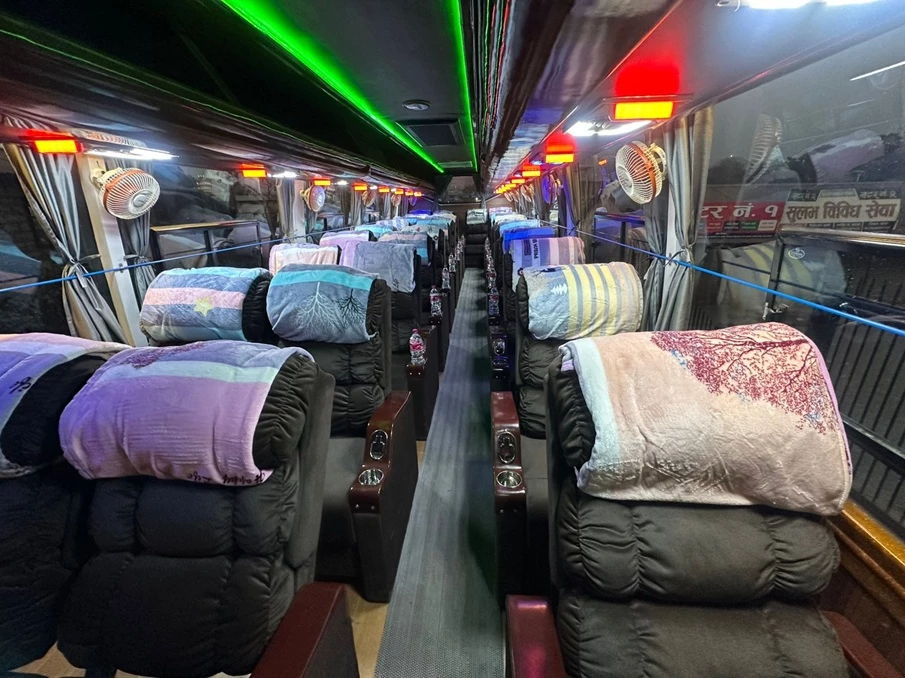
- One-way bus ticket from Kathmandu to Besisahar (Tourist Standard or VIP Coaster depending on selection).
- Assigned seating (Window preference subject to availability).
- Bottle of mineral water.
- Luggage storage in the bus hold (for large trekking packs).
What is not included?
- Transfers from your hotel to the Bus Park in Kathmandu.
- Breakfast, Lunch, and snacks during the journey.
- Annapurna Conservation Area Project (ACAP) Permit & TIMS Card (Must be purchased separately).
- Onward Jeep transport from Besisahar to Chame/Manang.
- Travel Insurance.

Trip Information
Best Season & Weather: The road to Besisahar is open year-round, but the experience varies wildly. The prime seasons for this journey are Spring (March to May) and Autumn (September to November). During these months, the skies are generally clear, offering glimpses of the snow-capped Ganesh Himal and Manaslu ranges during the drive. The monsoon season (June to August) brings heavy rains, which can cause landslides along the Prithvi Highway and the road from Dumre, leading to significant delays. Winter (December to February) is dry and stable, though morning fog can delay departures from Kathmandu.
Visa Requirements & Costs: While the bus ticket doesn’t require a visa, you cannot enter Nepal without one. Most travelers obtain a Visa on Arrival at Tribhuvan International Airport. Costs are currently $30 for 15 days, $50 for 30 days, and $125 for 90 days. You must pay this in foreign currency (USD, EUR, GBP). Ensure your passport has at least six months of validity. Police checkpoints along the highway may occasionally ask for identification, so keep your passport and permits accessible in your daypack, not buried in the luggage hold.
Accommodation Standards. This package covers transport, but you will need to arrange accommodation upon arrival. Besisahar is a functional transit town, not a resort destination. Accommodation here consists of standard teahouses and lodges. Expect clean but basic rooms with twin beds, shared bathrooms (unless you pay for an attached one), and solar-heated showers. The “Samjhana Hotel” and “Gateway Himalaya Resort” are among the higher-end options if you want a final night of comfort before hitting the rugged trails. Wi-Fi is widely available in Besisahar, but it gets spotty as you move higher.
Cultural Etiquette: The bus ride is a cultural immersion. You will likely be traveling with a mix of international trekkers and local Nepalis returning home. Dress modestly; sleeveless shirts and short shorts are frowned upon in rural Nepal. Public displays of affection are culturally inappropriate. When the bus stops for lunch, wash your hands before eating. If you eat with your hands like the locals, use only your right hand. Be patient with delays—time in Nepal is fluid (“Nepali Time”), and getting angry at the driver for traffic jams will not speed up the journey.
Money & ATM Availability: Cash is king in the Himalayas. Besisahar is the last reliable place to withdraw cash before the trek. There are several ATMs (Nabil Bank, Everest Bank) in the town center that accept international cards. However, network failures happen. It is highly recommended to withdraw the bulk of your trekking budget in Kathmandu before you board the bus. Once you leave Besisahar for Chame or Manang, ATMs are nonexistent or frequently out of order. Carry small denominations (Rs. 100, Rs. 500) for easier transactions on the trail.
Comprehensive Gear List (For the Bus)
Since this bus ride leads directly to a trek, your packing must be strategic. Keep a Daypack (20-30L) with you on the bus, while your main Duffel Bag goes in the storage hold.
Essential Documents (Keep in Daypack):
- Passport (Original + 2 copies).
- ACAP Permit and TIMS Card (Checkpoints occur on the road).
- Bus Ticket (Digital or Printed).
- Cash (NPR) for lunch and snacks

Bus Comfort & Hygiene:
- Neck Pillow: Essential for sleeping on winding roads.
- Earplugs / Noise-canceling Headphones: Nepali buses often play loud music.
- Dust Mask / Buff: The highway can be incredibly dusty, especially near construction zones.
- Hand Sanitizer & Wet Wipes: For use before lunch and after restroom stops.
- Toilet Paper: Roadside squat toilets rarely provide toilet paper.
- Motion Sickness Medication: The road is extremely curvy. If you are prone to car sickness, take this 30 minutes before departure.
Electronics:
- Power Bank (20,000mAh): Bus charging ports (if available) are often slow or broken.
- Offline Maps: Download Google Maps or Maps.me for the region to track your progress without data.
Frequently Asked Question (FAQ’s)
The journey typically takes 6 to 8 hours. However, road conditions in Nepal are unpredictable. Traffic jams at the Nagdhunga checkpoint or construction on the Prithvi Highway can extend this to 9 or 10 hours. Always plan for a full day of travel.
Most local and semi-tourist buses (Micro or Coaster) depart from the New Bus Park (Gongabu)or the nearby Machhapokhari area. Some specific tourist buses may pick up near Sorhakhutte, but you must confirm the exact location on your ticket.
No, buses on this route do not have onboard toilets. However, the driver will make frequent stops for restroom breaks and meals (usually every 2-3 hours).
- Local Bus: Large, old, very cheap, stops everywhere, extremely crowded. Not recommended for comfort.
- Micro (Hiace): Faster than a big bus but with very cramped legroom. It can be terrifyingly fast on curves.
- Tourist Coaster/Sutlej: The best balance. Assigned
The Prithvi Highway is a mountain road with heavy traffic. While accidents happen, experienced bus drivers navigate these roads daily. The section from Dumre to Besisahar is narrower and rougher but generally safe. Avoid night buses to maximize safety.
Yes. There are police checkpoints along the highway and immediately upon arrival in Besisahar. If you don’t have permits, you will be delayed or fined. Buy them at the Nepal Tourism Board in Kathmandu before you leave.
You can bring one large trekking backpack/duffel (up to 15-20kg) to go in the luggage hold and one daypack to keep with you. Space is limited, so avoid hard-shell suitcases if possible
Tourist Coasters usually have AC. However, drivers often prefer to open windows for fresh mountain air once they leave the polluted valley. You can request the driver to turn it on if it gets too hot.
Yes, taking a tourist bus is generally safe. We recommend requesting a seat near the front or, if possible, sitting next to another female traveler. The conductors are usually helpful to tourists.
Stick to Dal Bhat(rice and lentils) or cooked noodles. Avoid raw salads or cut fruits at roadside stalls to prevent stomach issues before your trek even begins.

Reviews on Kathmandu to Besisahar bus ticket

Related Trips