Plan a Trip


Kathmandu to Lumbini by Private car, jeep, hiace, and bus full Vehicle Guide

Kathmandu to Lumbini by Private car, jeep, hiace, and bus full Vehicle Guide – Road Trip to the Birthplace of Buddha (2026)
Lumbini is one of the most sacred destinations on earth – the birthplace of Siddhartha Gautama, the founder of Buddhism, and a UNESCO World Heritage Site visited by pilgrims and travelers from every corner of the world. Traveling from Kathmandu to Lumbini by private vehicle is the most comfortable, flexible, and rewarding way to make this meaningful journey. This complete guide covers everything you need to know before you go.
1. Route Overview: Kathmandu to Lumbini
The road journey from Kathmandu to Lumbini is long but scenic, passing through the mountains, river valleys, and subtropical Terai plains of western Nepal. Most private vehicles follow the Prithvi Highway to Mugling, then head south and west via Butwal to reach Lumbini.
Distance: Approximately 280–300 km by road
Travel Time: 6 to 8 hours by private car (depending on road and traffic conditions)
Main Route: Kathmandu – Mugling – Narayangadh – Butwal – Bhairahawa – Lumbini
Road Type: Prithvi Highway + East-West Highway – national highways, mostly paved
Altitude: From 1,400 m (Kathmandu) down to 100 m (Lumbini Terai plains)
2. Why Travel from Kathmandu to Lumbini by Private Vehicle?
Given the long distance, choosing a private vehicle over public transport makes the journey far more comfortable, safer, and more enjoyable. Here is why:
- Depart from your Kathmandu hotel at any time – no fixed bus schedules
- Direct door-to-door service to your Lumbini hotel or monastery guest house
- Rest stops at your own pace – stop at scenic spots, riverside dhabas, or local towns
- Full luggage and equipment space – important for pilgrims carrying offerings or ceremonial items
- Private and peaceful travel – ideal for spiritual pilgrimages, family trips, and group tours
- More comfortable than overnight buses on long mountain-to-plains routes
- Experienced driver who knows the Kathmandu to Lumbini route inside out
- Option to combine with Pokhara, Chitwan, or Bhairahawa stops along the way
3. Vehicle Options & Prices: Kathmandu to Lumbini
Vehicle Hiring Nepal offers a full fleet of vehicles for the Kathmandu-Lumbini route. Choose the right vehicle for your group size and comfort needs:
| Vehicle Type | Capacity | Approx. Price (USD) | Best For |
| Sedan Car | 1–3 passengers | $180 | Couples, solo pilgrims |
| SUV / Jeep | 4–6 passengers | $230 | Families, small groups |
| Hiace Van | 7–14 passengers | $270 | Pilgrimage groups, tour groups |
| Coaster Bus | 15–22 passengers | $330 | Large pilgrimage groups |
| Full Bus | 23–30 passengers | $380 | Monastery groups, school tours |
All prices include driver, fuel, and vehicle insurance for a one-way journey. Round-trip packages with driver stay are also available. Contact us for an exact quote based on your travel dates.
4. Road Guide: Kathmandu to Lumbini Milestone by Milestone
The Kathmandu-to-Lumbini drive is a full-day journey. Here is what you will see and experience at each stage of the road:
Kathmandu to Naubise (30 km | ~45 min)
Leave Kathmandu early – ideally by 6:00 or 7:00 AM. Exit the city via Kalanki heading west, then climb into the Chandragiri hills before the road descends into Naubise. This section has winding mountain roads with views back towards the Kathmandu Valley. The road can be slow during morning rush hour – an early departure helps.
Naubise to Mugling (75 km | ~1.5 hrs)
One of the most beautiful stretches of the journey. The Prithvi Highway hugs the banks of the Trishuli River through a deep gorge. The river is green and fast-moving – a famous destination for white-water rafting. You will pass Malekhu, where local restaurants serve fresh river fish (sahar and asla) – a popular stop for Nepali travelers.
Mugling Junction – Rest Stop (Recommended 20–30 min)
Mugling is a busy junction town at the confluence of the Trishuli and Marsyangdi rivers. This is the halfway point and the most popular rest stop on the route. Take a tea break, have a light meal, or stretch your legs before continuing south.
Mugling to Narayangadh / Bharatpur (36 km | ~45 min)
From Mugling, head south on the Narayangadh Highway. The road descends rapidly from mountain terrain into the flat Terai lowlands. The landscape transforms from terraced hillsides to open farmland and subtropical forest. Narayangadh and Bharatpur are busy commercial hubs – your driver will navigate through the town towards the East-West Highway.
Narayangadh to Butwal (90 km | ~1.5 hrs)
Join the East-West Highway heading west. This is a long, flat stretch through the Terai plains – rice paddies, mustard fields, and occasional forest patches line the road. The highway is generally in good condition. Watch for slow trucks and farm vehicles. Butwal is a major Terai city and a gateway to the western hills.
Butwal to Bhairahawa to Lumbini (25 km | ~45 min)
From Butwal, head south towards Bhairahawa (also called Siddharthanagar), the nearest city to Lumbini. The road is wide and well-paved. From Bhairahawa, it is just 22 km west to the Lumbini sacred garden. Your driver will bring you directly to your hotel or to the main gate of the Lumbini Development Zone.
5. Best Time to Visit Lumbini from Kathmandu
October to March (Best Season)
The cool, dry winter months are the best time to visit Lumbini. Temperatures are comfortable (15–28°C during the day), roads are clear, and the Lumbini gardens are peaceful and pleasant. This is also the peak pilgrimage season with many international Buddhist groups visiting from Sri Lanka, Thailand, Japan, China, Korea, and Myanmar.
April to May (Good but Hot)
The weather is warm and dry, but temperatures can reach 38–42°C in Lumbini during peak summer. Visit early morning and late afternoon to avoid midday heat. The gardens are lush and green, and crowds are smaller than in peak season.
June to September (Monsoon – Not Recommended)
The Terai plains receive heavy monsoon rainfall from June to September. Roads on the East-West Highway can flood in severe rain. Humidity is extreme, and the heat is intense. Travel is still possible, but not recommended for comfort. If you must travel during the monsoon, choose a Hiace or SUV for better ground clearance.
6. Top Places to Visit in Lumbini
Lumbini is a deeply spiritual and historically significant destination. Here are the key sites to visit:
Maya Devi Temple
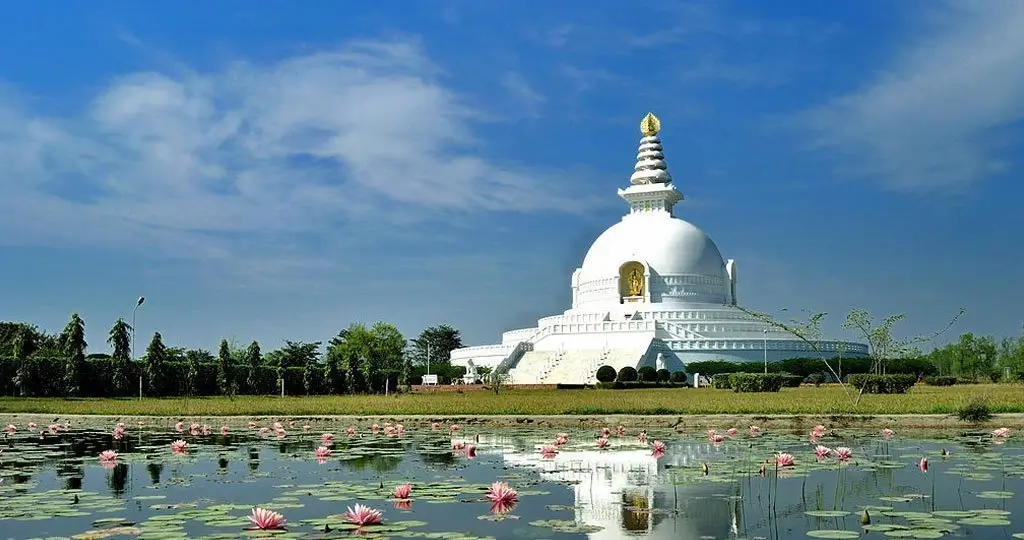
The holiest site in Lumbini – the exact birthplace of Siddhartha Gautama. The ancient temple stands beside the sacred Puskarini Pond, where Queen Maya Devi bathed before giving birth. The Ashoka Pillar, erected by Emperor Ashoka in 249 B.C., marks the precise birthplace. Entry is free, ree but remove shoes before entering.
The Sacred Garden
Surrounding the Maya Devi Temple, the Sacred Garden is a peaceful park of ancient ruins, meditation spaces, and the sacred Bodhi tree. This is the core pilgrimage zone and a UNESCO World Heritage Site. Visitors are asked to maintain silence and respect the spiritual atmosphere.
Monastic Zone – East and West
The Lumbini Development Zone contains dozens of beautiful monasteries built by Buddhist nations from around the world. The East Zone contains Theravada monasteries (Sri Lanka, Myanmar, Thailand, Cambodia). The West Zone contains Mahayana monasteries (China, Japan, Korea, Vietnam, Germany). Each monastery has its own unique architectural style – a remarkable journey through global Buddhism.
World Peace Flame
A permanent flame near the Maya Devi Temple symbolizes universal peace and the spread of the Buddha’s teachings. The flame is lit day and night and is a powerful symbol for Buddhist pilgrims.
Lumbini Museum
The Lumbini Museum near the entrance of the Development Zone contains archaeological artifacts, ancient coins, terracotta figurines, and exhibits on the history of Lumbini and Buddhist civilization in Nepal.
Kapilavastu (Tilaurakot)
Just 27 km from Lumbini lies Tilaurakot – believed to be the ancient palace of King Suddhodana, the father of Buddha, where Siddhartha grew up. The archaeological ruins include palace foundations, city walls, and the eastern and western gates. A deeply moving site for Buddhist pilgrims.
7. Lumbini Travel Tips
- Depart Kathmandu by 6:00–7:00 AM to arrive in Lumbini by early afternoon and make the most of your first day.
- Lumbini is a sacred site – dress modestly (cover shoulders and knees), remove shoes at temples, and maintain silence in the Sacred Garde.n
- Carry cash in Nepali Rupees – ATMs are available in Bhairahawa, not always inside Lumbi.ni
- Hire a bicycle or electric rickshaw inside the Lumbini Development Zone – the monasteries are spread over a large area (about 3 km north to south)
- Accommodation options range from monastery guest houses (very affordable, authentic experience) to comfortable hotels in Bhairah.awa
- The Lumbini Development Zone entry fee is NPR 500 for foreign visitors
- Visit the Maya Devi Temple early in the morning for a peaceful, crowd-free experience
- Plan at least 2 nights in Lumbini to explore the monasteries, the Sacred Garden, and Tilaurakot comfortably
- Carry sunscreen, a hat, and sufficient drinking water – the Terai sun is intense

8. Combine Lumbini with Other Destinations
Lumbini’s location in western Nepal makes it easy to combine with other destinations on the same trip:
Lumbini + Pokhara
Pokhara is approximately 140 km northeast of Lumbini (2.5–3 hrs by private vehicle). A Kathmandu – Lumbini – Pokhara – Kathmandu circuit is a popular itinerary for travelers who want to combine pilgrimage, culture, and mountain scenery in one trip.
Lumbini + Chitwan
Chitwan National Park is approximately 120 km east of Lumbini (2–2.5 hrs by road). A Lumbini-to-Chitwan combination allows you to pair a spiritual pilgrimage with a jungle safari. Vehicle Hiring Nepal can arrange multi-destination itineraries.
Lumbini + Kapilavastu (Tilaurakot)
Just 27 km from Lumbini, Tilaurakot is a half-day excursion easily reached by private vehicle. Our drivers are familiar with this route and can take you there and back during your stay in Lumbini.
9. What is Included in Your Vehicle Booking?
- Experienced, licensed driver with knowledge of the Kathmandu to Lumbini route
- Full fuel cost for the entire journey (one-way or round-trip)
- Vehicle insurance coverage
- Hotel pickup in Kathmandu and drop-off at your Lumbini destination
- Flexible rest stops at Mugling, Narayangadh, or Butwal
- 24/7 WhatsApp support before and during travel
- Option for the driver to stay in Lumbini during your visit for the return trip
Not included: Lumbini Development Zone entry fees, monastery donations, personal meals, accommodation, and any additional site visits (Tilaurakot, Kapilava,stu) which can be arranged at extra cost.
10. How to Book Your Private Vehicle to Lumbini
- Visit vehiclehiringnepal.com and select your vehicle type
- Choose your travel date and preferred departure time from Kathmandu
- Enter your hotel pickup address in Kathmandu
- Enter your destination in Lumbini or Bhairahawa
- Submit your booking form or contact us via WhatsApp for instant confirmation.
- Receive your driver details and journey confirmation
WhatsApp: +977 9851013196
Email: [email protected]
Website: www.vehiclehiringnepal.com

11. Frequently Asked Questions
How far is Lumbini from Kathmandu by road?
Lumbini is approximately 280 to 300 km from Kathmandu by road, depending on your exact destination within the Lumbini area.
How long does it take to drive from Kathmandu to Lumbini in a private car?
The journey takes 6approximately 6 hours, including rest stops. The route involves mountain highways near Kathmandu and flat Terai plains in the second half.
Is it better to fly or drive from Kathmandu to Lumbini by private car?
Bhairahawa Airport (now Gautam Buddha International Airport) serves Lumbini with daily flights to Kathmandu, with a flight time of around 5 minutes. However, flights are weather-dependent and subject to delays. Many travelers prefer the private car option for its flexibility, cost-effectiveness, and suitability for groups.
Can I visit Lumbini in one day from Kathmandu?
A same-day return from Kathmandu to Lumbini is extremely difficult, given the 6–8 hour drive each way. We strongly recommend a minimum of 2 nights in Lumbini to properly experience the Sacred Garden, monasteries, and nearby Tilaurakoy.
What is the best vehicle for a pilgrimage group to Lumbini?
For pilgrimage groups of 10 or more, the Toyota Hiace van is the most popular and practical choice. It offers comfortable seating, good luggage space for offerings and personal items, and is well-suited to the long Terai highway drive. For larger groups, we offer Coaster buses and full-size buses.
Can I book a multi-city trip – Kathmandu, Lumbini, Pokhara, and Chitwan?
Yes. Vehicle Hiring Nepal specializes in multi-destination vehicle hire across Nepal. We can arrange a full circuit covering Lumbini, Pokhara, and Chitwan with a single booking and a professional driver for the entire duration of your trip.
Is Lumbini safe to visit?
Yes. Lumbini is a peaceful, well-maintained UNESCO Heritage Site with a strong pilgrimage tradition. It is safe for solo travelers, families, and international groups. The Bhairahawa area is a modern city with good facilities, hospitals, and police presence.
Final Thoughts
The journey from Kathmandu to Lumbini by private vehicle is more than just a road trip – it is a pilgrimage through Nepal’s spectacular landscape, from the mountain valleys of Kathmandu to the sacred Terai plains where the Buddha was born over 2,500 years ago.
Whether you are traveling as a Buddhist pilgrim, a curious traveler, or a family exploring Nepal’s heritage, a private vehicle gives you the comfort, flexibility, and personal space to make the journey as meaningful as the destination itself.
Book your private vehicle from Kathmandu to Lumbini today. Contact Vehicle Hiring Nepal on WhatsApp at +977 9851013196 or visit vehiclehiringnepal.com to reserve your vehicle and begin your journey to the birthplace of the Buddha.
Visit our sister company, Alpine Luxury Treks, for luxury vacation packages and trekking journeys. There, you may choose from a variety of carefully planned itineraries.

Related Blog & Articles
Kathmandu to Chitwan by Car – Complete Travel Guide (2026)