Plan a Trip


Kathmandu to Mustang (Muktinath)
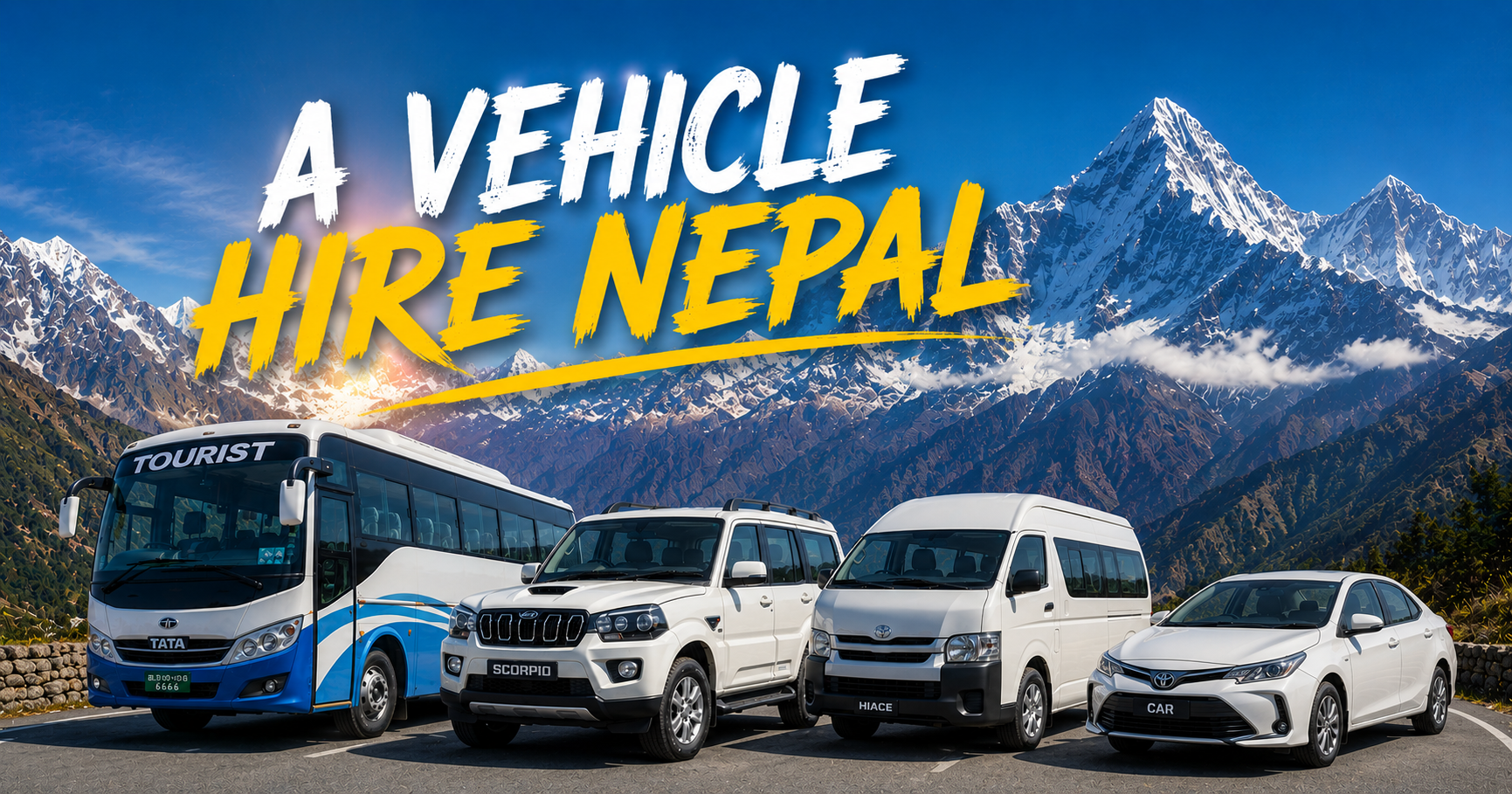
Mustang – the ancient forbidden kingdom of Nepal – is one of the most extraordinary destinations in the entire Himalayan region. From the sacred pilgrimage site of Muktinath Temple at 3,710 m to the medieval walled city of Lo Manthang at 3,840 m, Mustang draws pilgrims, adventure travellers, and photographers from around the world. Travelling from Kathmandu to Mustang by private vehicle is a once-in-a-lifetime road adventure that combines dramatic mountain highways, river crossings, and some of Asia’s most remote roads.
This complete guide covers every vehicle option – jeep, car, Hiace van, and bus – with routes, prices, permits, road conditions, best travel times, and expert tips for the journey from Kathmandu to Mustang and Muktinath.
Kathmandu to Mustang
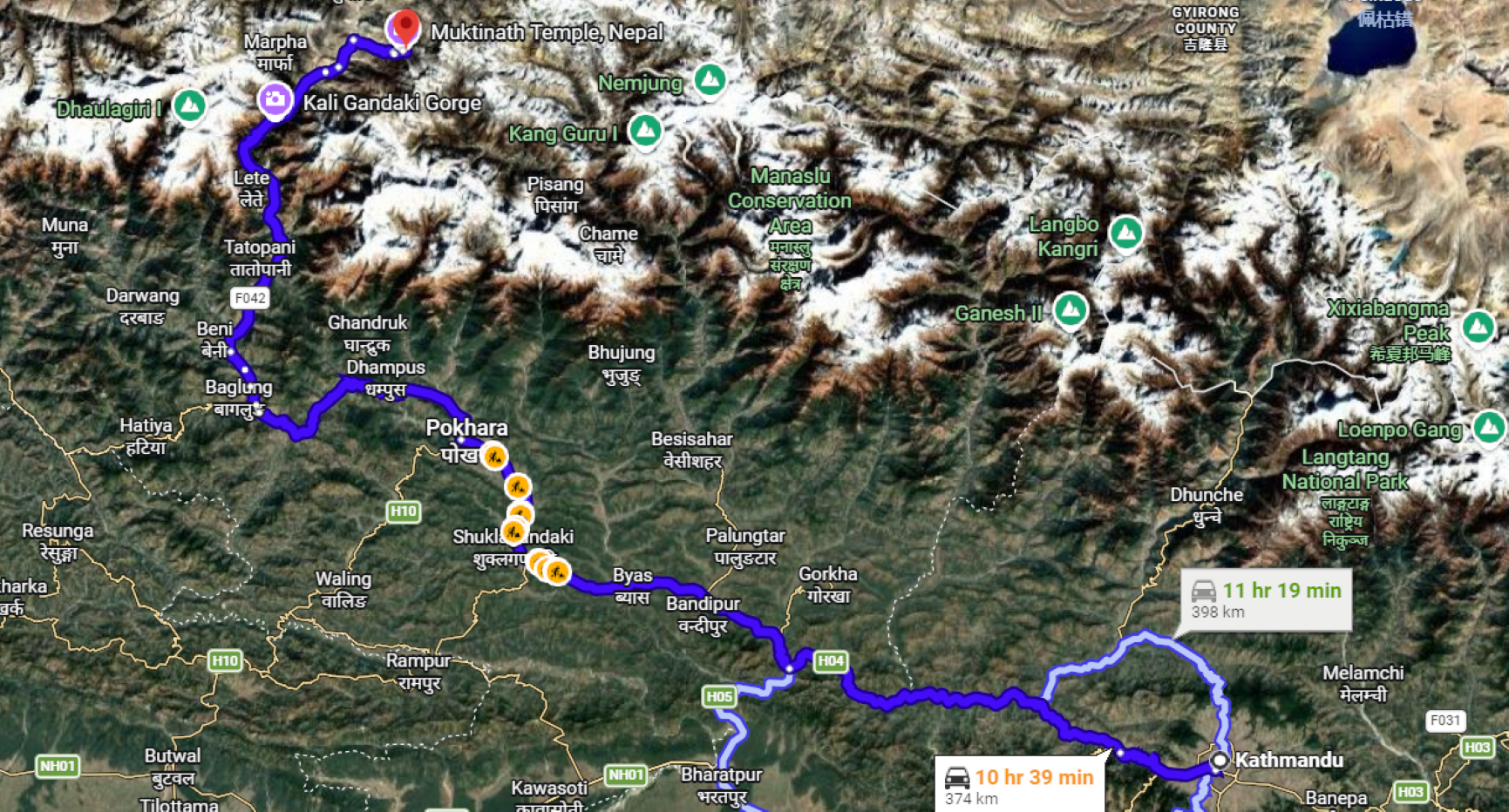
There are two main ways to reach Mustang from Kathmandu by road – both passing through Pokhara and Beni before entering the Kali Gandaki valley and climbing north to the Mustang district.
Total Distance: Approximately 380–420 km from Kathmandu to Jomsom (district headquarters of Mustang)
Kathmandu to Muktinath: Approximately 430–450 km
Total Travel Time: 2 to 3 days by road (usually broken into 2 overnight stops at Pokhara and Tatopani or Ghasa)
Main Route: Kathmandu – Pokhara – Beni – Tatopani – Ghasa – Marpha – Jomsom – Muktinath
Road Type: Prithvi Highway (paved) + Annapurna Circuit Road (gravel / rough mountain track beyond Beni)
Altitude Range: Kathmandu 1,400 m → Jomsom 2,720 m → Muktinath 3,710 m → Lo Manthang 3,840 m
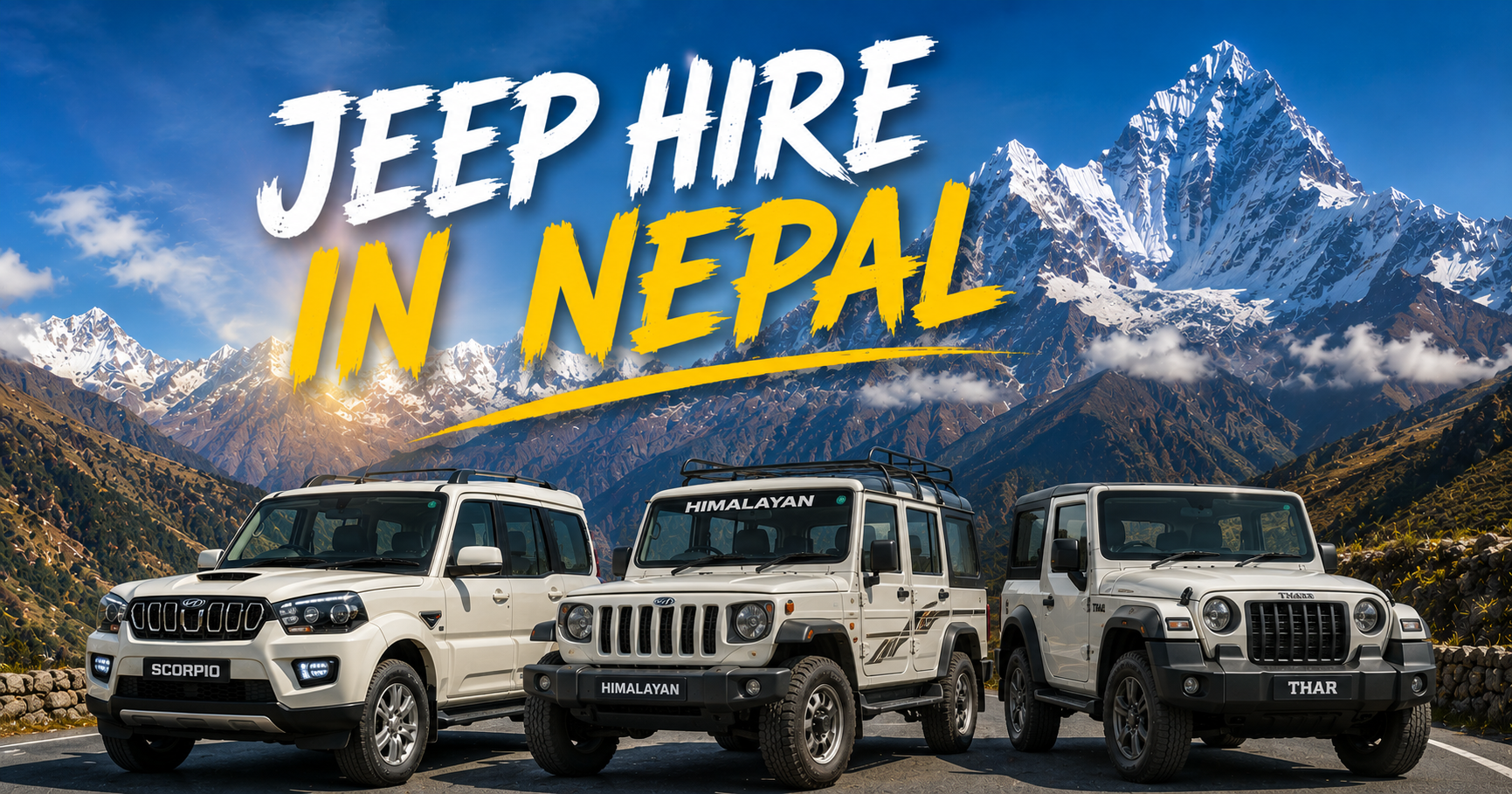
Vehicle Required: 4WD Jeep mandatory beyond Beni – sedans and minivans cannot proceed on the Kali Gandaki gorge road
Two Route Options: Which Way to Mustang?
Route A: Via Prithvi Highway – Pokhara – Beni (Most Popular)
The standard and most reliable route from Kathmandu to Mustang. Follow the Prithvi Highway to Pokhara (6–7 hrs), rest overnight, then continue west to Beni (2 hrs) and north into the Kali Gandaki gorge towards Tatopani, Ghasa, Marpha, and Jomsom. This is the route all vehicles use to reach Mustang.
Route B: Via Prithvi Highway – Damauli – Beni (Direct, Avoiding Pokhara)
A slightly shorter alternative that bypasses central Pokhara via the Damauli–Baglung highway and reaches Beni from the east. This route saves about 45 minutes but is less commonly used, as most travellers prefer to overnight in Pokhara. It is equally viable for 4WD vehicles.
Vehicle Options: Jeep, Car, Hiace & Bus Compared
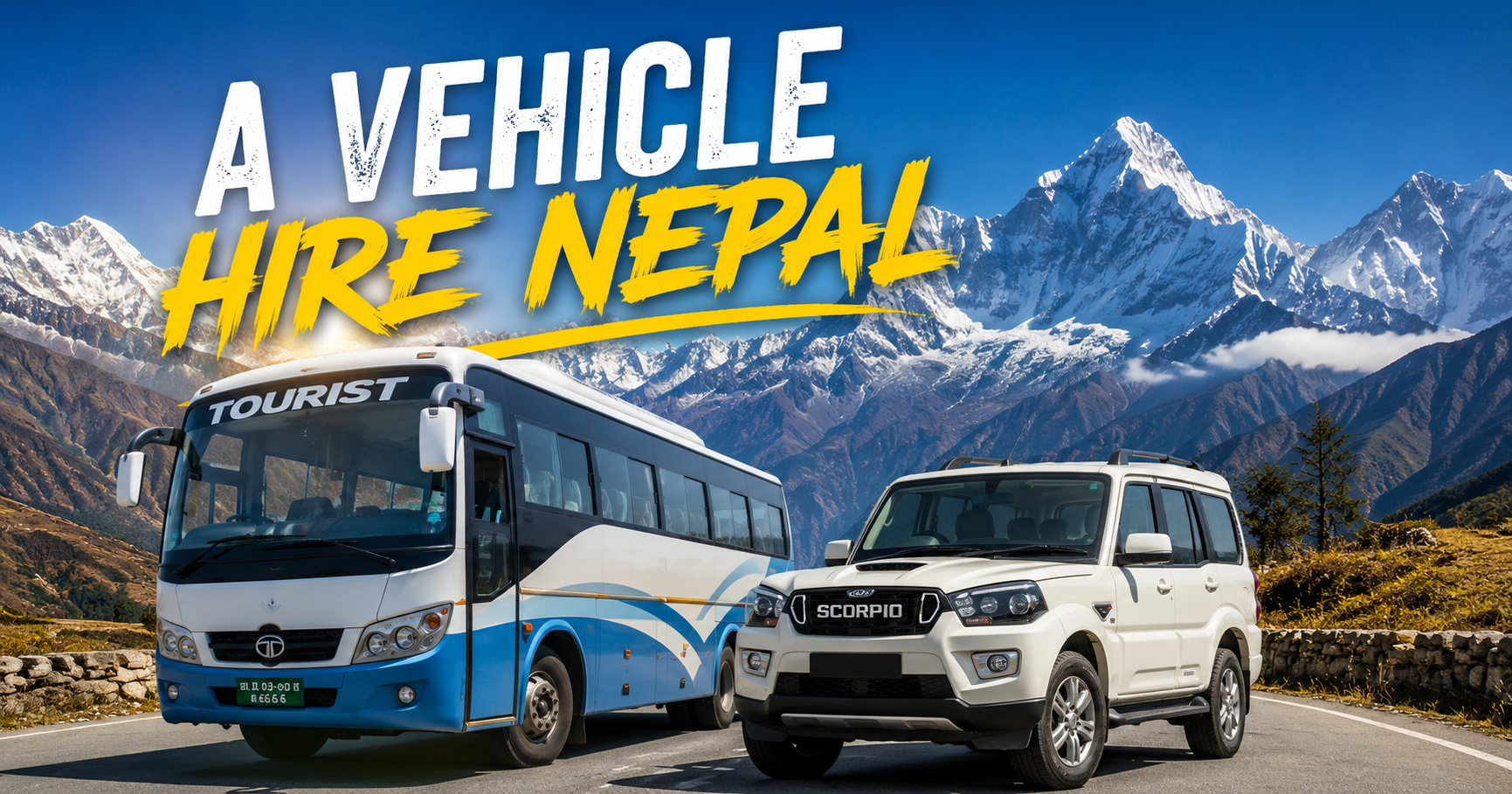
Choosing the right vehicle for the Kathmandu-to-Mustang route is critical – this is not a route where all vehicles are equal. Here is a complete comparison of every vehicle option:
| Vehicle | Capacity | Can you reach Jomsom? | Can you reach Muktinath? | Best For |
| Sedan Car | 1–3 pax | Only to Beni | No | Pokhara/Beni only |
| SUV (light 4WD) | 4–5 pax | Beni to Tatopani | Risky in wet | Small groups, dry season only |
| Land Cruiser (4WD) | 4–6 pax | Yes – all year | Yes | Best choice for Mustang |
| Toyota Prado (4WD) | 4–5 pax | Yes – all year | Yes | Comfort + capability |
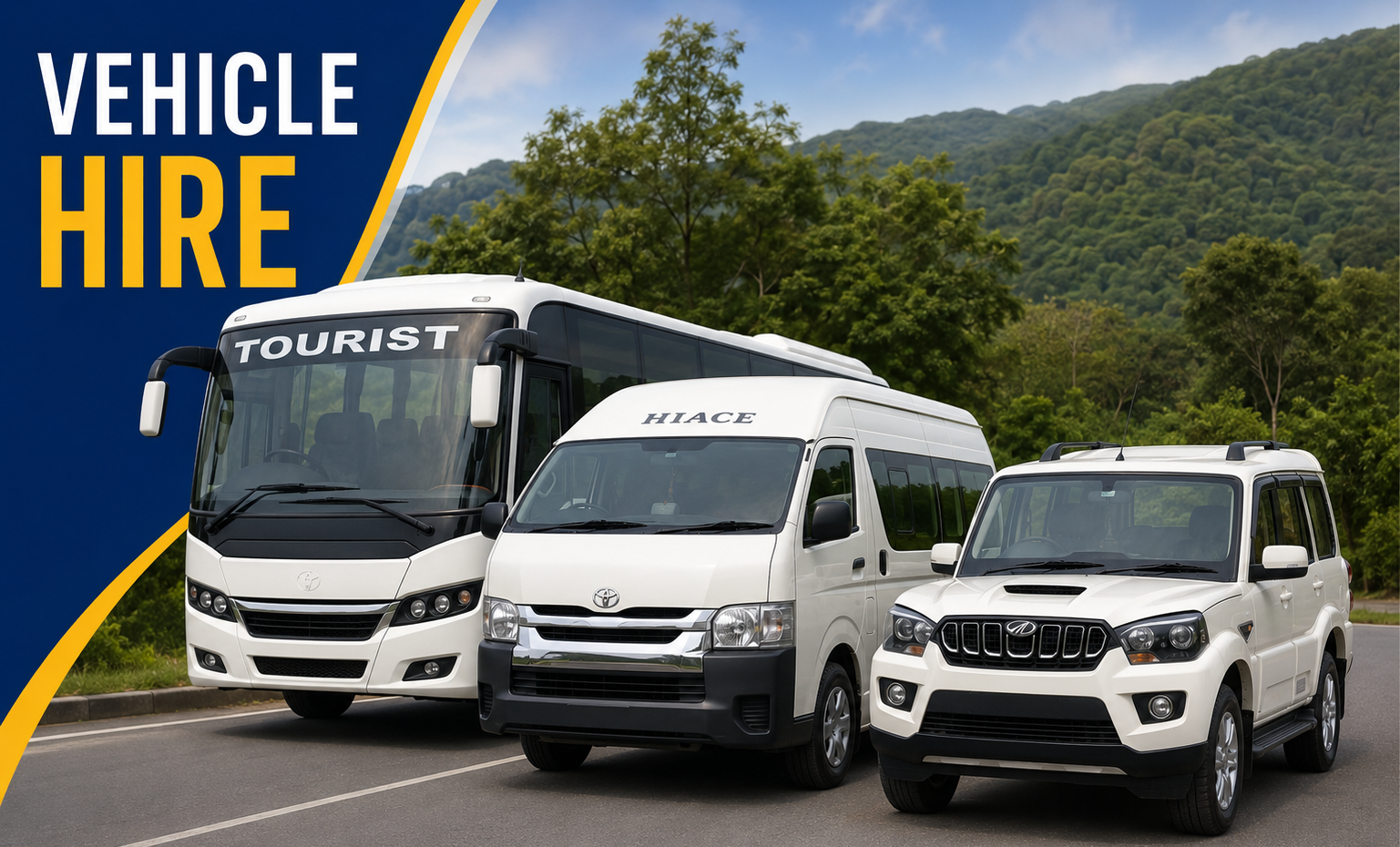
| Hiace Van | 7–14 pax | To Beni/Tatopani | No | Groups to lower Mustang |
| Tourist Bus | 25–40 pax | To Pokhara only | No | Budget Kathmandu–Pokhara leg |
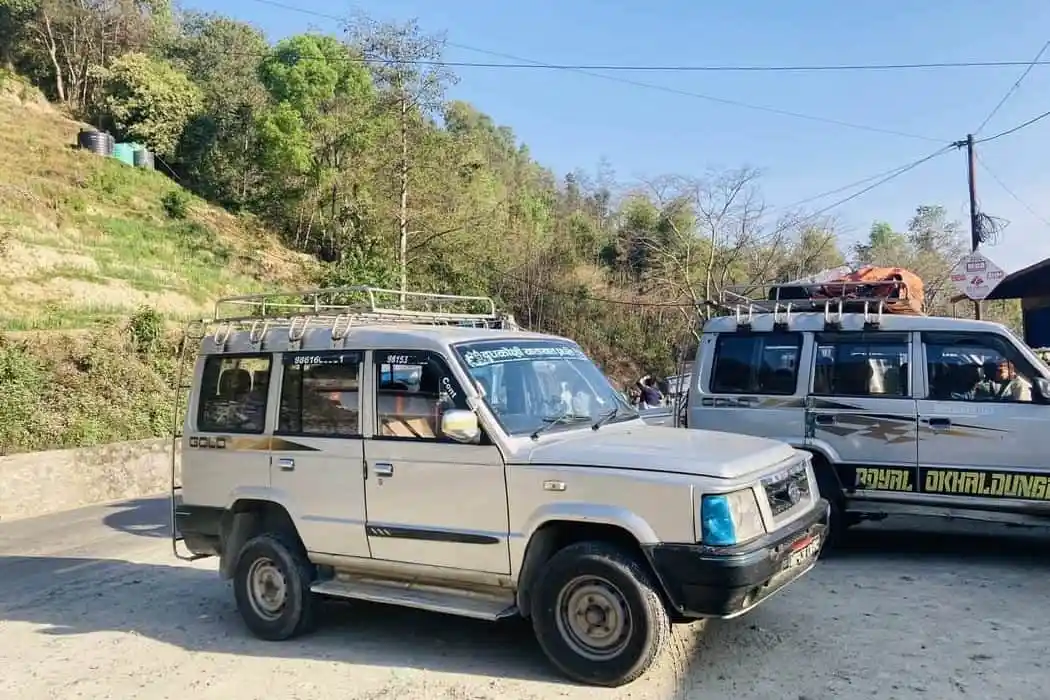
| Local Jeep (Jomsom) | 4–6 pax | Yes | Yes | Jomsom–Muktinath last leg |
Important: Beyond Beni, only 4WD vehicles with high ground clearance can safely navigate the Kali Gandaki gorge road. We recommend a Land Cruiser or equivalent for the full Kathmandu-to-Muktinath route.
Detailed Road Guide: Kathmandu to Mustang
The journey from Kathmandu to Mustang typically takes at least 2 days. Most travellers break the journey into three stages. Here is the full road guide:
Day 1: Kathmandu to Pokhara (200 km | 6–7 hrs)
Depart Kathmandu early morning (6:00–7:00 AM) via the Prithvi Highway. Pass through Naubise, along the scenic Trishuli River gorge, through Malekhu and Mugling (lunch stop), then continue west past Damauli and into the Pokhara valley. Arrive in Pokhara by early to mid-afternoon.
Overnight in Pokhara –a great opportunity to explore Phewa Lake, the Lakeside area, and enjoy clear Annapurna range views in the morning before your next stage.
Day 2: Pokhara to Tatopani or Ghasa (130 km | 5–6 hrs by 4WD)
Depart Pokhara early (6:00 AM). Drive west to Naya Pul and Baglung, then turn north at Beni – the last major town before the mountain road begins. Beyond Beni, the road follows the Kali Gandaki River north through one of the deepest gorges on Earth – flanked by Dhaulagiri (8,167 m) and Annapurna I (8,091 m) on either side.
Key stops along this section:
- Beni (830 m) – Last major town; fuel up here; last reliable ATM and mobile signal
- Tatopani (1,190 m) – Famous natural hot springs, excellent lunch stop
- Ghasa (2,010 m) – Good mid-mountain overnight option with basic lodges
- Kalopani (2,530 m) – Spectacular views of Dhaulagiri and Nilgiri from the road
- Marpha (2,670 m) – Apple orchards, Tibetan architecture, famous apple brandy
Overnight at Tatopani, Ghasa, or Marpha, depending on your pace and preference.
Day 3: Tatopani / Ghasa to Jomsom and Muktinath (80–100 km | 4–5 hrs)
The final mountain stage climbs into the Mustang valley. The road surface becomes increasingly rough and windy as you approach Jomsom. The famous Kali Gandaki wind begins in the early afternoon – a strong, cold headwind that sweeps up the valley daily, making afternoon travel uncomfortable. Plan to reach Jomsom by midday.
- Jomsom (2,720 m) – District headquarters of Mustang, airport, lodges, teahouses
- Kagbeni (2,810 m) – Entry point to Upper Mustang restricted area
- Muktinath Temple (3,710 m) – Sacred Hindu and Buddhist pilgrimage site, 108 water spouts
- Ranipauwa (3,760 m) – Village and accommodation area adjacent to Muktinath
Road Conditions: What to Expect on Each Section
| Section | Distance | Surface | Difficulty | Notes |
| Kathmandu – Pokhara | 200 km | Paved highway | Easy | Good condition, Prithvi Highway |
| Pokhara – Beni | 62 km | Mostly paved | Easy-ModerateTheTheThe | Baglung highway has some rough patches |
| Beni – Tatopani | 45 km | Gravel / rough track | Moderate | Narrow gorge road, river crossings |
| Tatopani – Ghasa | 25 km | Rough gravel track | Difficult | Steep, narrow, occasional rockfall |
| Ghasa – Jomsom | 55 km | Very rough/rocky track | Very Difficult | Wind from noon, exposed cliff roads |
| Jomsom – Kagbeni | 18 km | Gravel desert track | Moderate | Flat valley, sandy sections |
| Kagbeni – Muktinath | 22 km | Rough rocky switchbacks | Difficult | High altitude, steep climb to 3,710m |
| Kagbeni – Lo Manthang | 80 km | Remote desert track | Very Difficult | Upper Mustang permit required |
The Kali Gandaki gorge road is one of the most dramatic and challenging roads in Nepal. Beyond Beni, a 4WD with high clearance is absolutely mandatory. Road quality improves slightly in the dry season (October–May) and worsens significantly during the monsoon.
Permits Required for Mustang and Muktinath 2026
Mustang requires more permits than almost any other region of Nepal. Arrange ALL permits in Kathmandu or Pokhara before departure – none are available on the road:
| Permit | Area Covered | Cost 2026 (Approx.) | Where to Obtain |
| ACAP – Annapurna Conservation Area Permit | Beni onwards (Lower Mustang) | NPR 3,000 (USD 22) | Nepal Tourism Board, Kathmandu or Pokhara |
| TIMS Card – Trekkers Information Management | Required for all trekkers | USD 10 | Nepal Tourism Board / TAAN office |
| Upper Mustang Restricted Area Permit | Kagbeni to Lo Manthang | USD 500 for 10 days (+USD 50 per extra day) | Dept. of Immigration, Kathmandu |
| Upper Mustang requires a licensed guide | Mandatory for Upper Mustang only | Guide fee separate | Licensed trekking agency |
Best Time to Travel from Kathmandu to Mustang 2026
March to May (Excellent)
Spring is one of the best seasons for the Kathmandu-to-Mustang route. Rhododendrons bloom across the Annapurna foothills, skies are clear, temperatures are warm at lower altitudes, and roads are dry and in good condition. The famous Upper Mustang Tiji Festival typically falls in May and is one of Nepal’s most spectacular cultural events. Book vehicles and accommodation well in advance for this period.
June to August (Unique – Mustang’s Secret Season)
While monsoon makes most of Nepal wet and cloudy, Mustang lies in a rain shadow behind the Annapurna and Dhaulagiri ranges. The Mustang valley receives very little monsoon rain and stays remarkably dry and sunny, while the rest of Nepal is drenched. This makes June to August a unique and increasingly popular time to visit Mustang. However, the road south of Tatopani can be affected by monsoon landslides – confirm road conditions before departure.
September to November (Best Overall)
The post-monsoon period is arguably the finest time for the full journey from Kathmandu to Mustang. Skies are crystal clear with spectacular views of Dhaulagiri, Annapurna, Nilgiri, and the Mustang plateau. Roads have dried out, and conditions are optimal. October is the peak month – book vehicles 4–6 weeks in advance. The drive through the golden autumn landscape of the Kali Gandaki valley is unforgettable.
December to February (Cold but Possible)
Winter travel to Lower Mustang and Jomsom is possible for most of the season. Muktinath and upper areas can be snowbound in December and January – confirm conditions before attempting the Kagbeni–Muktinath switchbacks in winter. Lo Manthang is generally inaccessible by road in deep winter. Clear, cold, and beautifully quiet – few travellers attempt Mustang in winter.
Top Destinations in Mustang – Complete Visitor Guide
Muktinath Temple (3,710 m)
One of the most sacred pilgrimage sites in all of Asia, revered by both Hindus and Buddhists. The Mukti Dhaam temple complex contains the sacred flame of natural gas burning from the rock, 108 water spouts of holy Gandaki water, and the Jwala Mai fire temple. For Hindu pilgrims, a bath in the 108 spouts is considered to wash away all sins. The surrounding high-altitude desert and snow-capped peaks are breathtaking. Entry is free and open to all faiths.
Jomsom (2,720 m)
Mustang’s district headquarters is a busy, surprisingly modern town perched in the wind-scoured Kali Gandaki valley. Jomsom has a domestic airport with daily flights to Pokhara (25 min), plus good hotels, restaurants, and shops. The river splits the town into old and new sections. The famous afternoon wind can reach 80–100 km/h – plan your activities for the morning.
Marpha (2,670 m)
Often called the most beautiful village in Mustang, Marpha is a medieval, whitewashed Tibetan-style village famous for its apple orchards, apple brandy (local raksi), and the annual autumn apple harvest. The compact village has cobbled lanes, traditional flat-roofed houses, and a beautiful monastery—an ideal overnight stop between Ghasa and Jomsom.
Kagbeni (2,810 m)
The atmospheric medieval village of Kagbeni sits at the confluence of the Kali Gandaki and Kak rivers and marks the entry point to Upper Mustang. The ancient red-walled Kag Chode Thupten Samphel Ling monastery dominates the village. Beyond Kagbeni, a Restricted Area permit for Upper Mustang is required. The views of the Mustang plateau opening up beyond Kagbeni are extraordinary.
Lo Manthang (3,840 m) – Upper Mustang
The ancient walled capital of the former Kingdom of Mustang, Lo Manthang, is one of the most extraordinary and remote destinations in the entire Himalayan region. The medieval city walls, palace of the Lo Raja (King of Mustang), ancient cave monasteries, and the surrounding lunar landscape of red and ochre cliffs are unlike anything else in Nepal. Requires the USD 500 Upper Mustang Restricted Area Permit.
Tiji Festival – Lo Manthang (May)
The three-day Tiji Festival in Lo Manthang each May is one of Nepal’s most spectacular and authentic cultural festivals. Masked monks perform ancient cham dances recounting the legend of the demon who threatened to destroy Mustang. The festival draws increasing numbers of visitors each year – book vehicles 8–10 weeks in advance if travelling for Tiji.
Muktinath to Thorong La – Annapurna Circuit
Muktinath is also a key waypoint on the famous Annapurna Circuit Trek. Trekkers arriving at Muktinath after crossing the Thorong La Pass (5,416 m) from Manang often take a private jeep down to Jomsom and Pokhara. Vehicle Hiring Nepal can arrange jeep pickups from Muktinath for Annapurna Circuit trekkers on their descent.
Recommended Itineraries: Kathmandu to Mustang 2026
Itinerary A: Kathmandu – Muktinath (5 Days)
- Day 1: Kathmandu to Pokhara by private vehicle (6–7 hrs) – overnight in Pokhara
- Day 2: Pokhara to Tatopani or Marpha by 4WD jeep (5–6 hrs) – overnight en route
- Day 3: Drive to Jomsom and Muktinath Temple – full day sightseeing, overnight Muktinath/Ranipauwa
- Day 4: Explore Muktinath, Kagbeni village – drive back to Jomsom or Marpha, overnight
- Day 5: Return drive to Pokhara or Kathmandu
Itinerary B: Kathmandu – Lo Manthang – Upper Mustang (9 Days)
- Day 1: Kathmandu to Pokhara by vehicle – overnight in Pokhara
- Day 2: Pokhara to Marpha by 4WD jeep – overnight in Marpha
- Day 3: Marpha to Jomsom to Kagbeni – overnightin Kagbeni (Upper Mustang permit check)
- Day 4: Kagbeni to Chele or Syangboche – overnight in Upper Mustang
- Day 5: Drive to Lo Manthang – full day exploration of the walled city and monasteries
- Day 6: Lo Manthang day trips – Sky Caves (Chosar), Nyphu Gompa, Nam La
- Day 7: Return to Kagbeni / Jomsom
- Day 8: Jomsom to Pokhara by vehicle
- Day 9: Pokhara to Kathmandu
Itinerary C: Kathmandu – Muktinath with Pokhara Extension (7 Days)
- Day 1: Kathmandu to Pokhara – city sightseeing, overnight in Pokhara
- Day 2: Pokhara sightseeing – Sarangkot sunrise, Phewa Lake, World Peace Pagoda
- Day 3: Pokhara to Tatopani – hot spring soak, overnight in Tatopani
- Day 4: Tatopani to Jomsom – Marpha apple orchards, overnight Jomsom
- Day 5: Jomsom to Muktinath – temple visit, Kagbeni, overnight Muktinath
- Day 6: Return to Pokhara by jeep
- Day 7: Pokhara to Kathmandu
The Kali Gandaki Wind – Essential Travel Tip
The Kali Gandaki valley experiences one of the world’s strongest thermal wind systems. Every afternoon from about 12:00–1:00 PM, a powerful wind sweeps up the valley from south to north at 60–100 km/h. This wind makes driving extremely dangerous and uncomfortable from midday onwards.
- Always plan to complete driving in the Kali Gandaki valley before midday
- Depart Tatopani or Ghasa no later than 7:00 AM to reach Jomsom by noon
- Jomsom airport flights are grounded in the afternoon due to this same wind – another reason to arrive early
- Morning hours (6:00–11:00 AM) in Mustang are calm, clear, and ideal for driving and trekking
- Plan all Muktinath temple visits and Kagbeni exploration in the morning
Altitude Sickness – Know Before You Go
Mustang reaches a significant altitude. Muktinath is at 3,710 m and Lo Manthang at 3,840 m. Altitude sickness (Acute Mountain Sickness – AMS) is a real risk for travellers who ascend too quickly.
- Ascend gradually – do not drive from Pokhara directly to Muktinath in one day.
- Spend at least one night at Jomsom (2,720 m) before ascending to Muktinath (3,710 m)
- Stay well hydrated – drink 3–4 litres of water per day at altitude
- Avoid alcohol for the first 48 hours at altitude
- Carry Diamox (acetazolamide) – consult your doctor before travel for dosage advice.
- Know the symptoms of AMS: headache, nausea, dizziness, fatigue, loss of appetite.
- If symptoms worsen, descend immediately – do not ascend further.
What to Pack for the Kathmandu to Mustang Journey
For the Vehicle Journey
- Warm clothing and a windproof jacket – the Kali Gandaki valley wind is intense and cold
- Sunglasses and sunscreen – high-altitude UV radiation is extreme in the Mustang Desert.
- Sufficient snacks and litres of water per person – stops are limited in the gorge.
- Motion sickness tablets – the gorge road is very winding
- Camera with a charged battery – scenery is extraordinary throughout
- Power bank – limited charging opportunities beyond Jomsom
Documents and Essentials
- Passport with all required permits (ACAP, TIMS, Upper Mustang if applicable)
- Emergency cash in Nepali Rupees – ATMs only available in Jomsom (sometimes out of service)
- Travel insurance covering high-altitude helicopter evacuation (strongly recommended)
- First aid kit with altitude sickness medication
What is Included in Your Vehicle Hire with Vehicle Hiring Nepal?
- Private 4WD jeep (Toyota Land Cruiser or equivalent) with experienced Mustang route driver
- Full fuel cost for the entire journey – Kathmandu to Mustang and return
- Vehicle insurance coverage
- Hotel pickup in Kathmandu and drop-off at your Mustang destination
- Flexible rest stops at Mugling, Pokhara, Tatopani, and Marpha
- Driver accommodation during your Mustang stay (pre-arranged)
- 24/7 WhatsApp support throughout the entire journey
- Option for a multi-day round trip with a driver waiting at Jomsom or Muktinath
Not included: Trekking/restricted-area permits, accommodation, personal meals, entry fees, guide fees, and additional detour stops (available at extra cost).
How to Book Your Vehicle for Kathmandu to Mustang
- Visit vehiclehiringnepal.com and select 4WD Jeep hire
- Choose your destination: Jomsom / Muktinath / Lo Manthang / Kagbeni
- Select your travel dates and preferred departure time from Kathmandu
- Specify the number of passengers and luggage requirements
- Indicate if you need multi-day driver waiting service at Mustang
- Submit your booking form or contact us via WhatsApp for instant confirmation
- Receive driver details, vehicle information, and full journey plan
WhatsApp: +977 981-4227196
Email: [email protected]
Frequently Asked Questions
Can I drive from Kathmandu to Muktinath in one day?
No. The journey from Kathmandu to Muktinath is approximately 430–450 km and involves very rough mountain roads beyond Beni. You need at least 2 overnight stops for a safe, comfortable journey. Trying to do this in one day would be exhausting and potentially dangerous.
Is a jeep necessary, or can I take a Hiace van?
A Hiace van can travel comfortably from Kathmandu to Pokhara and from Pokhara to Beni. Beyond Beni, the road through the Kali Gandaki gorge is too rough, narrow, and technical for a Hiace van. A 4WD jeep (Land Cruiser or equivalent) is mandatory from Beni onwards. Many groups take a Hiace to Pokhara and switch to a local jeep service from there.
Can I fly to Jomsom and hire a jeep from there to Muktinath?
Yes. Tara Air and Summit Air operate daily flights from Pokhara to Jomsom (a 25-minute flight). From Jomsom, a local jeep to Muktinath takes 1.5 to 2 hours via Kagbeni. This is a popular option for travellers short on time. Vehicle Hiring Nepal can arrange Jomsom-based jeeps for this final leg.
What is the Upper Mustang Restricted Area Permit, and do I need it?
The Upper Mustang Restricted Area Permit costs USD 500 for the first 10 days and is required for all travel north of Kagbeni – including Lo Manthang, Lo Gekar, Ghar Gompa, and the Tibetan border area. If you are only visiting Jomsom, Marpha, Tatopani, and Muktinath (which are in Lower Mustang), you do NOT need this permit – only ACAP and TIMS are required.
Is Mustang safe to visit?
Yes. Mustang is a peaceful and safe destination. The main challenges are road conditions, altitude, and weather – not safety or security: local communities welcome visitors, and the trekking infrastructure is well established. Standard travel precautions and altitude awareness are all that is required.
How far in advance should I book my vehicle for the Mustang?
During peak season (October–November and April–May), we strongly recommend booking your vehicle 3 to 6 weeks in advance. If you’re travelling for the Tiji Festival in Lo Manthang (May), book 8 to 10 weeks ahead,d as vehicles are in extremely high demand. Outside peak seasons, 1 to 2 weeks’ notice is usually sufficient.
Can I combine Mustang with Pokhara and Annapurna in one trip?
Absolutely. Mustang, Pokhara, and the Annapurna region are all connected, and many travellers combine them in a single extended trip. A popular itinerary is: Kathmandu – Pokhara – Mustang – Muktinath – Pokhara (via Jomsom by vehicle) – return to Kathmandu. Vehicle Hiring Nepal can arrange multi-destination vehicles for the entire circuit.
Final Thoughts
The road from Kathmandu to Mustang is one of the great overland journeys of Asia – a multi-day adventure through the world’s deepest gorge, past two of the highest mountains on Earth, and into the ancient Tibetan plateau kingdom of Mustang. Whether you are a Hindu or Buddhist pilgrim visiting the sacred waters of Muktinath, an explorer heading to the medieval walled city of Lo Manthang, or simply a traveller seeking the extraordinary, the journey itself is as unforgettable as the destination.
With a private vehicle from Vehicle Hiring Nepal, you travel at your own pace, stop where you choose, and arrive at each destination with the freedom and comfort that only a private hire can provide. Our experienced Mustang route drivers know every challenging kilometre of this road. They will ensure your journey is safe, smooth, and full of the raw, magnificent beauty of the Himalayan landscape.
Ready to begin your Mustang journey in 2026? Contact Vehicle Hiring Nepal today. WhatsApp: +977 981-4227196 | Email: [email protected] Website: www.vehiclehiringnepal.com
- Kathmandu to Mustang
- Two Route Options: Which Way to Mustang?
- Vehicle Options: Jeep, Car, Hiace & Bus Compared
- Detailed Road Guide: Kathmandu to Mustang
- Road Conditions: What to Expect on Each Section
- Permits Required for Mustang and Muktinath 2026
- Best Time to Travel from Kathmandu to Mustang 2026
- Top Destinations in Mustang – Complete Visitor Guide
- Recommended Itineraries: Kathmandu to Mustang 2026
- The Kali Gandaki Wind – Essential Travel Tip
- Altitude Sickness – Know Before You Go
- What to Pack for the Kathmandu to Mustang Journey
- What is Included in Your Vehicle Hire with Vehicle Hiring Nepal?
- How to Book Your Vehicle for Kathmandu to Mustang
- Frequently Asked Questions
- Final Thoughts

Related Blog & Articles
Car Hire in Nepal – Complete Guide for Travelers
Kathmandu to Besisahar Transport Guide