Plan a Trip


Duration
1 Day
Travel Time
6-8 hours
Distance
120 km
Vehicle Type
Van
Driver
Included
Group Size
1-6 Pax
Max. Altitude
2030 Metres
Best Season
Round the year
Activity
Day Tour
Meals
Not Included
Highlights of Kathmandu to Syabrubesi Jeep Transfer
Direct & Convenient: Get a direct private jeep transfer to Syabrubesi with door-to-door pickup from Kathmandu. Your driver will come right to your hotel, so you don’t have to lug your heavy trekking gear around the crowded bus parks.
Your Schedule Flexibility: Enjoy the benefit of a flexible departure time. Whether you want to beat the city traffic or ease into your day after breakfast, the itinerary is all about you.
Breathtaking Journey: Drive through the foothills of the Himalayas. Soak in the comfort as you wind along the Trishuli River, past terraced farming fields, deep gorges, and traditional Nepali villages.
Secure & Efficient: A tough & high-clearance 4WD jeep is far safer & faster than public transport. It easily navigates the region’s rough, unpaved mountain trails, ensuring a safe trip and cutting hours off your overall travel time.
Perfectly Tailored: Best for Langtang trekkers and small groups. You and your trekking partners can share the ride comfortably and arrive at the trailhead fully energized, thanks to spacious seats and ample space for heavy backpacks.

Introduction of Kathmandu to Syabrubesi Jeep Transfer
Your Langtang Valley Trek begins with the adventurous journey from Kathmandu to Syabrubesi jeep transfer. Syabrubesi, about 120 kilometers north of Nepal’s bustling capital, is the picturesque entry point to the spectacular Langtang region. Though the physical distance might seem short, the rough terrain of the Himalayas makes this vital transit into an adventure in itself, an unforgettable overland journey.
Normally, it takes six to eight hours to travel this route. This window varies wildly based on seasonal weather, local traffic, and ever-changing road conditions. The transition from the comparatively smooth asphalt highways out of the Kathmandu Valley to hairpin, dirt mountain roads becomes very pronounced as you climb higher into the foothills, approaching the fringes of Langtang National Park.
Because of the mixed and often unpredictable road conditions, a private four-wheel-drive jeep transfer is the most reliable, efficient, and comfortable option. Public buses and shared vehicles are readily available, but they are notoriously crowded, slow, and jarring on rough off-road sections. For ultimate safety, a private jeep features high clearance and rugged suspension for mountain terrain. It also gives you ultimate flexibility. You set the pace, and can easily stop for a walk, photos, or a meal at a local roadside teahouse.
This drive is not a boring commute but a spectacular visual preview of Nepal’s natural beauty. On the winding road, you will closely follow the banks of the rushing Trishuli River, passing by lush green hillsides, steep terraced farming fields, and vibrant traditional Nepalese villages. Choosing a private jeep transfer ensures a smooth, safe ride, so you can reach the Syabrubesi trailhead rested, energized, and ready to tackle the magnificent Himalayan trails ahead.
Visit our sister company, Alpine Luxury Treks, for luxury vacation packages and trekking journeys. There, you may choose from a variety of carefully planned itineraries.

Itinerary of Kathmandu to Syabrubesi Jeep Transfer
Day 1: Kathmandu to Syabrubesi Drive
Door-to-Door Kathmandu Pickups
Starting the trip to the Langtang region with the best convenience of direct pickup from your hotel or residence in Kathmandu. Instead of trudging through the noisy streets with heavy backpacks in search of a crowded bus park, your private jeep and driver will come directly to you. This simple start means you’ll begin your long travel day relaxed and totally organized.
Departure in the early morning
If you choose a private booking, you are in charge of the schedule, but it is strongly advised that you leave very early in the morning, usually between 6:00 AM and 7:00 AM. An early start lets you slip out of the notorious Kathmandu Valley traffic before the rush hour hits. More importantly, it ensures you’ll be riding the tricky mountain sections in the safest, brightest hours of the day.
Trishuli Highway and Dhunche Route
The first leg of your drive is on the fairly smooth paved Trishuli Highway, leaving the hectic capital behind. This is where you can drive out of the valley in comfort. At the end of the route, the trail heads towards the Dhunche road, where the elevation starts to increase, and the surface slowly changes from normal highways to more rugged, adventurous mountain tracks.
Scenery and Country Landscapes
This drive is an immersive visual experience, far from a boring transit ride. After the winding route, you will be close to the roaring glacier water-fed Trishuli River. Your jeep’s windows will open to spectacular, uninterrupted views of steep emerald-green hillsides, carefully terraced farmland, and colorful traditional Nepalese villages that capture authentic rural life.
Noontime Lunch Break
Somewhere about the middle of your trip, your driver will stop for a dedicated lunch and rest break. The stop is usually in one of the busier transit towns, such as Trishuli, or higher up in the mountain town of Dhunche. It’s a great chance to stretch your legs, get some crisp mountain air in your lungs, and refuel with a hearty, traditional plate of Dal Bhat before continuing the drive.
Getting There and Mountain Roads
After lunch, the real off-road adventure begins, as you head on winding and often unpaved mountain tracks towards Langtang National Park. Your tough 4WD jeep bounces over the rough, steep terrain before finally dropping down into the riverside town of Syabrubesi. The trek finishes off perfectly with a direct drop-off at your chosen hotel or trekking lodge, so you can rest up and get ready for the trails.

Activity: 6-7 hrs

Max. Altitude: 2030m

Meal: Not Included

Accommodation: Not Included

Includes & Excludes
What is included?
- Private Jeep with Driver: A well-maintained, high-clearance 4WD vehicle operated by a professional and experienced mountain driver.
- Fuel and Road Taxes: All necessary fuel costs, local road tolls, parking fees, and government taxes for the entire journey.
- Hotel Pickup and Drop-off: Convenient door-to-door service directly from your Kathmandu accommodation to your booked hotel or lodge in Syabrubesi.
- Bottled Water: Complimentary bottled drinking water to keep you hydrated during the drive.
- Driver Allowance: The driver’s daily bhatta, fully covering their personal meals and accommodation expenses.
What is not included?
- Meals and Drinks: Your personal food, snacks, and beverages during the journey, including the midday lunch stop at Trishuli or Dhunche.
- Accommodation: Any hotel, lodge, or teahouse stays in Kathmandu, Syabrubesi, or during your trek.
- Langtang Permits: Your Trekker’s Information Management System (TIMS) card and Langtang National Park entry permits (these must be acquired separately).
- Personal Expenses: Any individual purchases, shopping, or extra stops not included in the standard transit itinerary.
- Travel Insurance: Comprehensive travel and trekking insurance (highly recommended before heading into the Langtang region).
- Driver Tips: Gratuities for your driver at the end of a safe journey (this is customary in Nepal to show appreciation, but it is entirely optional).

Trip Information
Trip Glance – Kathmandu to Syabrubesi Jeep Transfer
- Private jeep cost: USD 180-200, NPR 26,000-30,000 ( per vehicle )
- Share jeep/van cost: USD 15-20, NPR2,500-3,000 (per person)
- Service Type: Private Jeep Transfer
- Route: Kathmandu → Trishuli → Dhunche → Syabrubesi
- Distance: ~120 km
- Travel Time: 6–8 hours (depending on road & weather conditions)
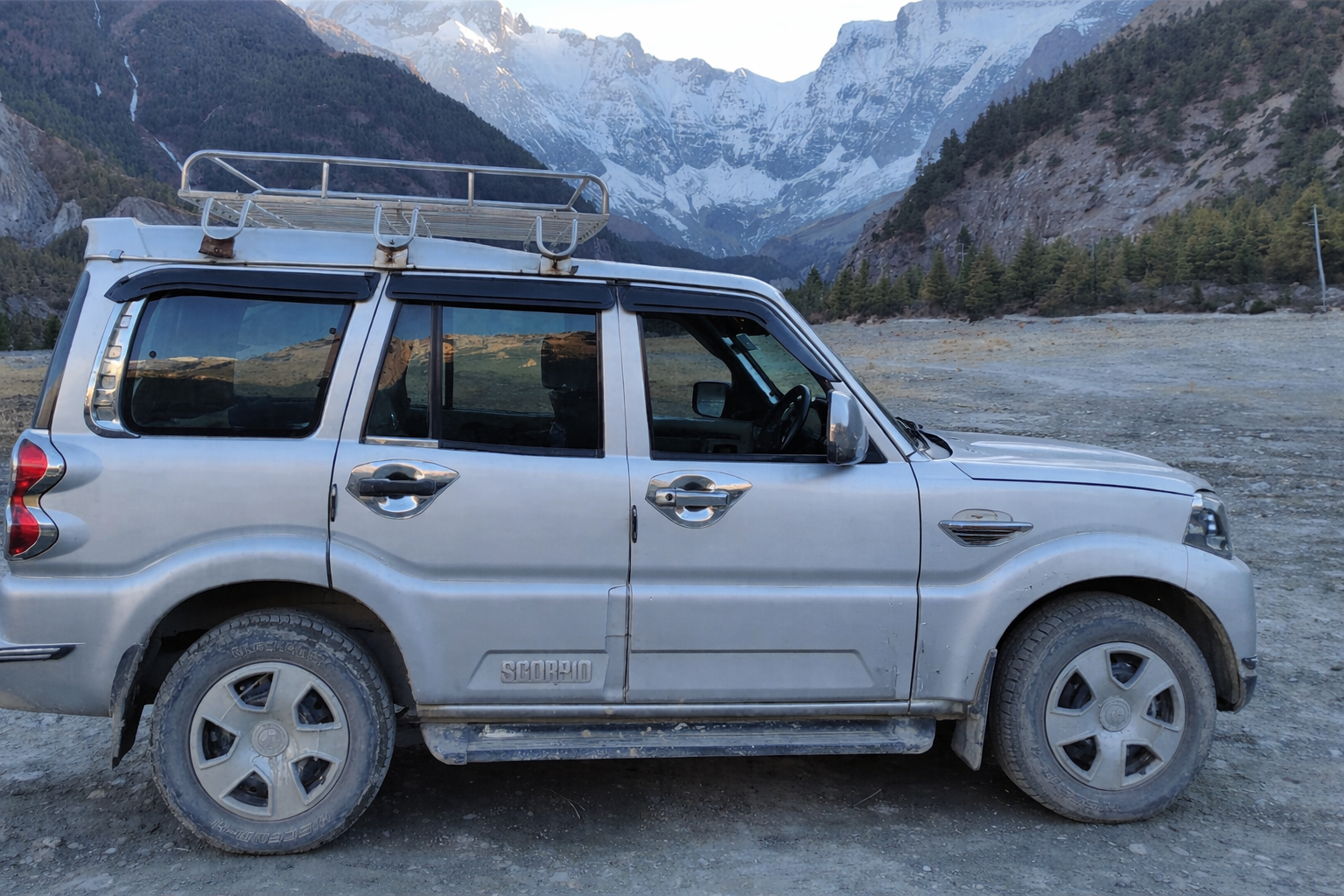
- Vehicle Type: 4WD Jeep (Scorpio / Bolero or similar)
- Pickup Point: Hotel/Home in Kathmandu
- Drop-off Point: Hotel/Lodge in Syabrubesi
- Departure Time: Flexible (recommended early morning 6:00–7:00 AM)
- Road Type: Highway + narrow mountain road + off-road sections
- Max Altitude: ~2,000m (near Dhunche)
- Best For: Langtang trekkers, small groups, adventure travelers
- Service Style: Private, door-to-door transfer (no sharing)
- Stops: Tea, lunch, and rest stops on request
Road Condition Detail: Kathmandu to Syabrubesi
The overland trip to Langtang is about 120 kilometers and is divided into three sections, each with its own terrain and driving conditions. Below is a detailed breakdown of what you can expect to see on the route.
1. Trishuli – Kathmandu
Terrain: Paved highway, rolling hills.
Condition: This is the easiest, fastest, and most comfortable leg of the journey. The route is mainly along the well-developed Trishuli Highway, which is mostly blacktopped and well-paved.
What to Expect: The road surface is in good condition, but it is a classic Nepali highway with many sharp bends and winding sections as it descends from the Kathmandu Valley. Leaving the city, traffic can be heavy, but usually eases off into a steady cruise approaching the riverside town of Trishuli Bazaar.
2. Trishuli to Dhunche
Terrain: Steep inclines, off-road trails, narrow mountain passes.
Condition: The road condition is dramatic once you leave Trishuli. This middle section changes from a paved highway to a rough, unpaved mountain dirt road. It’s famously narrow, steep, and bumpy as heck.What to
Expect: Slow, deliberate driving is required here, which is why a high-clearance 4WD jeep is so strongly recommended over a bus. The trail slowly gains altitude as it heads towards Dhunche, the Langtang National Park checkpoint. You’ll likely encounter rocky sections, deep muddy patches, and areas that have traditionally had minor landslips (especially during or just after the summer monsoon), depending on the season.
3. Dhunche-Syabrubesi
Terrain: Downhill mountain trail, dirt roads, river valleys.
Condition: The last part of the drive is a steep, winding descent from the high ridges of Dhunche into the valley of Syabrubesi. The road up here is still entirely unpaved, rough, and severely rutted in places.
What to Expect: This area requires high caution from drivers due to steep drop-offs and the region’s fragile geology. Expect a very dusty and bumpy ride during the dry trekking seasons (Spring and Autumn). The dirt tracks can become very slippery in the wet season. The narrow, winding descent leads you safely to the riverside town, the official gateway to your trek.
2026 Pricing: Kathmandu to Syabrubesi Private Jeep Transfer
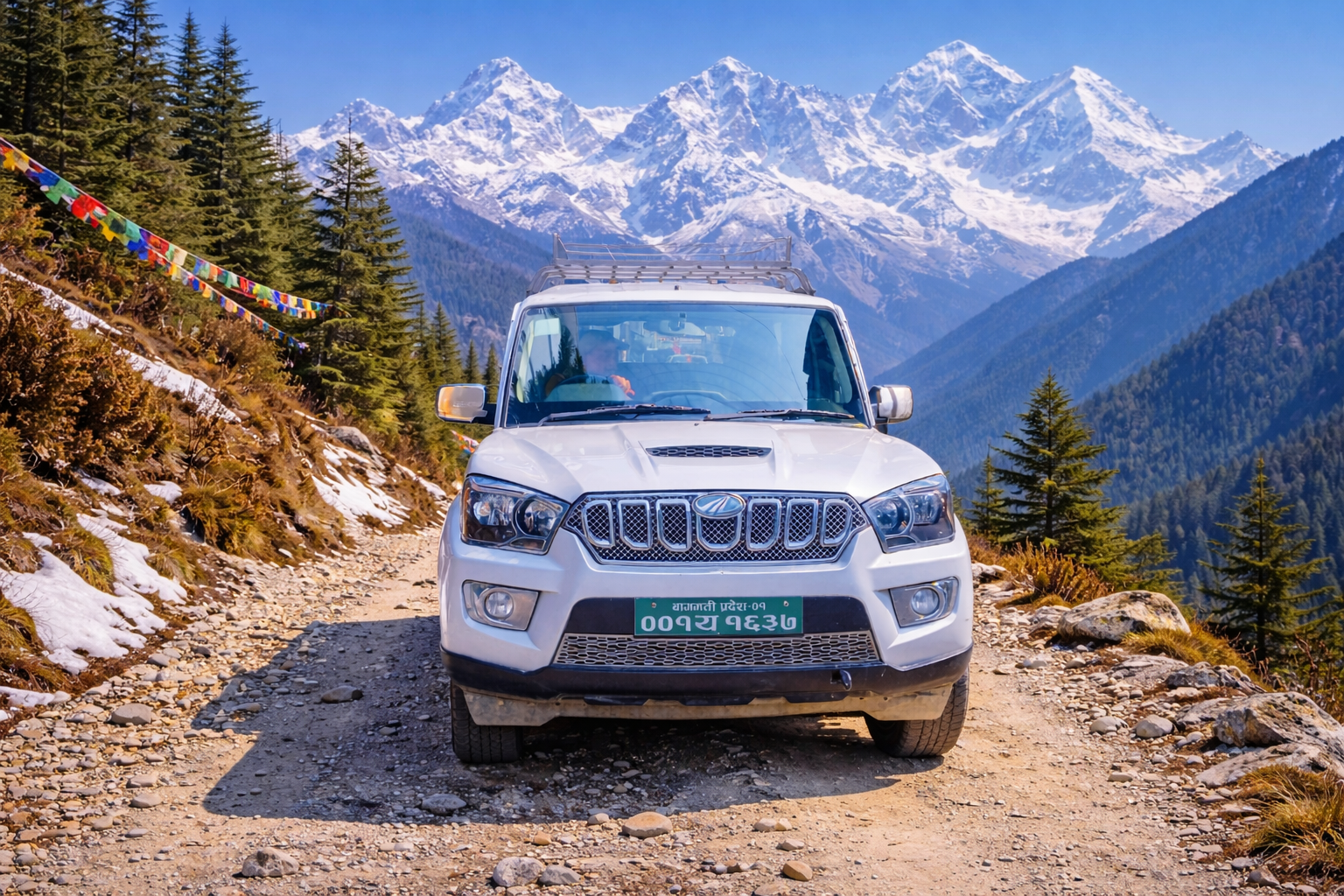
For the 2026 trekking season, the standard cost to hire a private 4WD jeep for the route from Kathmandu to Syabrubesi is $180 USD ( NPR 26000) for the entire vehicle.
Because prices fluctuate slightly depending on peak trekking seasons (Spring and Autumn) and the specific vehicle model, it is helpful to break down the costs and inclusions when structuring service details and overviews for Nepal Vehicle Hiring.
Standard Pricing Breakdown
- Private Jeep: 180-200 USD (NPR 26000-30,000) per vehicle
- Share a jeep/van: 15-20 USD ( per person)
- Passenger Capacity: Up to 6 or 7 passengers comfortably, plus luggage.
- Common 4WD Vehicles: Mahindra Scorpio (standard) or Toyota Land Cruiser (premium, often pushing closer to the $200+ mark)
Best Time to Visit from Kathmandu to Shybrubesi
Fall (Sept-Nov): Best visibility, road condition
The best time to take the Kathmandu-to-Syabrubesi jeep transfer is undoubtedly in the fall (September-November). The skies are absolutely clear after the monsoon, and you get the best possible view of the towering Himalayan peaks right from your window. More importantly, the dry weather makes the unpaved mountain tracks leading through Dhunche firm and highly stable. This provides the safest, most comfortable, and quickest driving conditions, making it the peak season for trekkers willing to start their Langtang adventure.
Spring (Mar-May): Fair weather
Spring (March to May) is the second most popular window for this overland route, with unbelievably good weather. The daily temperature is rising slowly, and travel is more comfortable, with no winter’s brutal cold. As rhododendrons bloom and lush green vegetation flourishes, the hillsides and river valleys explode with color, providing a breathtaking, highly scenic backdrop for your drive. The road conditions are generally dry and reliable, so your private jeep can easily and safely make its way across the rugged mountain passes.
Winter (Dec–Feb): Cold, but tolerable
Winter (December to February) is much colder, but it is still a perfectly viable and enjoyable time to make the trip. Your early morning departure from Kathmandu and the shaded drop down to the Syabrubesi valley will undoubtedly be chilly. However, the dry winter air means the unpaved dirt roads are solid and free of troublesome mud. Additionally, the winter skies are generally crisp and crystal clear, rewarding those who brave the colder weather with uninterrupted, panoramic mountain views and far less vehicle traffic along the route.
Monsoon (Jun–Aug): Landslip risk
The monsoon season, from June to August, is the most difficult time to drive, with heavy, constant rain. Steep, unpaved sections of the mountain road can easily become slick and deep with mud, and the risk of localized landslides or short-term road closures is much higher. The journey will be more time-consuming, and you will need to be flexible with your travel schedule to accommodate delays. It is essential to book a sturdy, high-clearance 4WD vehicle with a highly experienced local driver if you want to get safely through the demanding terrain during these wet months.
Weather Condition Breakdown – Kathmandu to Syabrubesi Route
Understanding weather conditions across each section of the route is essential because terrain and altitude change significantly from Kathmandu to Syabrubesi.
Kathmandu to Trishuli (Low Altitude – Stable Weather Zone)
Altitude Range: ~1,400m down to ~500–600m
This section follows river valleys and lower hills, so the weather is generally stable and moderate.
- Summer/Monsoon (Jun–Aug): Hot and humid with heavy rainfall. Roads may be slippery, and visibility can be reduced during rain.
- Winter (Dec–Feb): Mild temperatures, but early morning fog is common, especially near river areas.
- Spring/Autumn: Best conditions—clear skies, good visibility, and comfortable temperatures.
Overall, this section is rarely affected by extreme weather, but rain and fog can cause minor delays.
Trishuli to Dhunche (Mid-Hill – Changing Weather Zone)
Altitude Range: ~600m to ~2,000m
As the road climbs toward Dhunche, the weather becomes more variable and cooler.
- Monsoon: High risk of landslides and road blockages due to continuous rain. Roads can be muddy and slippery.
- Winter: Cold temperatures with occasional fog; higher sections may experience light frost.
- Spring/Autumn: Clear skies and stable weather, but occasional clouds in the afternoon.
This section is the most sensitive to weather changes, especially during the monsoon.
Dhunche to Syabrubesi (High Hill – Cool & Unpredictable Zone)
Altitude Range: ~2,000m down to ~1,500m
This section includes steep descents and narrow mountain roads, where the weather can change quickly.
- Monsoon: Risk of landslides, falling rocks, and muddy roads. Driving becomes slower and more cautious.
- Winter: Cold temperatures with possible fog; the road can be slippery in shaded areas.
- Spring/Autumn: Best travel time—clear, cool weather with excellent mountain visibility.
The weather here is cooler and less predictable, especially in early mornings and evenings.
Safety Overview: Navigating the Route to Langtang
The overland route from Kathmandu to Syabrubesi is about 120 kilometers of very diverse terrain. The first highway is quite good, but then you’re on twisting mountain roads, steep climbs, and bumpy dirt tracks with no pavement for the second half of the trip, especially after the Ramche and Dhunche sections. Under these challenging conditions, Nepal Vehicle Hiring maintains uncompromising safety standards to ensure your transit is as safe as it is scenic.
Here’s how we keep passengers safe on every trip:
Old Mountain Drivers: Driving on Himalayan roads requires considerable skill. Your jeep will be driven by a local professional with extensive experience on the unique challenges of this route. They are trained to cope with unpredictable weather, slippery mud, and the sharp blind corners typical of the region.
Well-Maintained 4WD Vehicles. Safety starts with having the right equipment. The transfer is done only by hard, high-clearance four-wheel-drive jeeps built for the mountains. Every vehicle undergoes rigorous mechanical maintenance and safety checks before each departure to ensure optimal traction and stability on rocky, uneven terrain.
Controlled Driving on Narrow Roads: The mountain passes descending into the Langtang Valley feature narrow stretches and steep drop-offs. Drivers are trained to drive in a very controlled, defensive, and strict manner. They do not violate sensible speed limits because it is more important to have a smooth, secure ride than to rush to the trailhead.
Daytime Travel Recommendation: It is strongly recommended to leave early in the morning to minimize the risk of evening poor visibility, mountain fog, or unexpected roadblocks. We start early so that the most difficult and roughest part of the mountain pass can be tackled safely in the clear light of day.
Vehicle Options for kathmandu to syabrubesi: 4WD Jeep & EV Van
4WD Jeep: The Safer Option for Rough Roads
Although the demanding Kathmandu-to-Syabrubesi transfer calls for it, a strong 4WD jeep (Mahindra Scorpio, Bolero, or Toyota Land Cruiser) is the definite, highly recommended vehicle. Leaving Trishuli behind, the roads are much narrower and steeper, and they quickly turn into rough off-road mountain tracks that normal vehicles struggle on. That is why a 4WD jeep is made for these remote high-altitude environments. It uses high ground clearance to easily clear rocky sections and deep ruts, and a heavy-duty suspension helps absorb jarring hits from bumpy dirt roads, resulting in a much smoother ride.
The 4WD also provides you with superior traction and control for maximum safety and stability when you’re climbing steep mountains or taking sharp descents. It is the safest and often the only viable option during challenging monsoon or winter seasons with poor, muddy road conditions, offering all-weather reliability. The 4WD jeep is the ideal mode of transport for passengers who prioritize total safety and reliability in the mountains over luxury. Ideal for small groups of 2 to 6 travelers and trekkers who are carrying basic gear.
EV Van: Comfortable & Eco-Friendly (Limited Suitability)
An electric Hiace or an EV van is a modern way to explore Nepal while being eco-conscious. It provides a very comfortable means of transit, but geography severely restricts its use on the difficult Langtang route. If you are traveling as part of a group of 6 to 12 people, an EV van offers spacious comfort, ample legroom, and a surprisingly smooth, quiet ride without the typical engine noise. It is also a very green option, with zero emissions, for preserving Nepal’s clean mountain environments, and is usually reasonably priced on well-paved highways. But travelers should be aware of its severe restrictions on the road to Syabrubesi.
Off-road, the van is at a loss and not built to cope with the rough, unpaved dirt tracks beyond Dhunche.Low ground clearance means the lower chassis is very prone to scraping and damage on the rocky mountain passes. Steep, damaged inclines can lead to performance drops and heavy battery drain. The remote charging infrastructure is very limited once you enter the Langtang region. Therefore, an EV van is best suited for group travel focused solely on comfort during the dry Spring and Autumn seasons, provided the trip remains on well-paved, established highways.
Why Jeep from Kathmandu to Syabrubesi?
Here is a clean and easy-to-read version of those bullet points, perfect for showing the advantages of a 4WD transfer:
Best For Rough Mountain Roads: The road from Kathmandu to Syabrubesi is notoriously steep, narrow, and off-road. In these difficult conditions, a reliable 4WD jeep always outperforms regular cars and vans, ensuring a smooth, reliable ride.
High Ground Clearance: Jeeps are built for mountain driving and feature high ground clearance to easily traverse large rocks, deep ruts, and uneven terrain without damaging the undercarriage or getting stuck.
Safe in All Weather Conditions: If you are up against torrential monsoon rains, dense mountain fog, or freezing winter mornings, a 4WD jeep provides better traction, stable performance, and better control on slippery or unpredictable surfaces.
Comfort on a Long Drive: The 6 to 8-hour drive will include long stretches of bumpy, unpaved track. A jeep’s suspension system is built to withstand these rough hits, making the ride much smoother and more comfortable for passengers.
Ideal for Trekking Groups: Since most travelers heading to Syabrubesi are trekking to Langtang Valley, jeeps are the ideal mode of transport, offering plenty of space to seat large trekking backpacks and carry mountain gear safely and comfortably.
Expert Driver Support: Hiring a private jeep means that you will have the benefit of a highly experienced mountain driver. These specialists are highly familiar with local road conditions, anticipate weather risks, and employ defensive, safe driving techniques appropriate to the challenging Himalayan terrain.
Frequently Asked Question (FAQ’s)
The trip is 120 km long and takes 6-8 hours. Exact travel time is very dependent on the seasonal weather, current road conditions and the traffic exiting the Kathmandu Valley.
The cost of hiring a private 4WD jeep is around $150 to $200 USD (NPR 18,000 to NPR 25,000) for the whole jeep during the 2026 trekking season. This price generally includes the driver, fuel, local road taxes, and the driver’s daily allowance.
Yes, but it takes caution and the right vehicle. Deep mud and the risk of landslides increase with the heavy rains from June to August. At this time, travel requires a high-clearance 4WD jeep and a very experienced local mountain driver. Travelers should also anticipate potential weather-related delays.
Private jeep with hotel door-to-door pick-up and drop. Flexible departure times. Plenty of room for trekking gear. Stop for photos or rest breaks. A shared jeep is much cheaper ($20 USD per seat), but you have to go to the local bus park early in the morning. They run on set schedules and can cram up to 10 passengers inside, which makes for a tight, less comfortable ride.
You don’t need permits to just rent the jeep, but you will need them to enter the region for your trek. You will pass through checkpoints in Langtang National Park on your drive, such as the one in Dhunche. It is highly recommended to get your Trekker’s Information Management System (TIMS) card and National Park entry permit in Kathmandu prior to departure.

Reviews on Kathmandu to Syabrubesi Jeep Transfer

Related Trips