Plan a Trip


Kathmandu to Chame Vehicle Hire
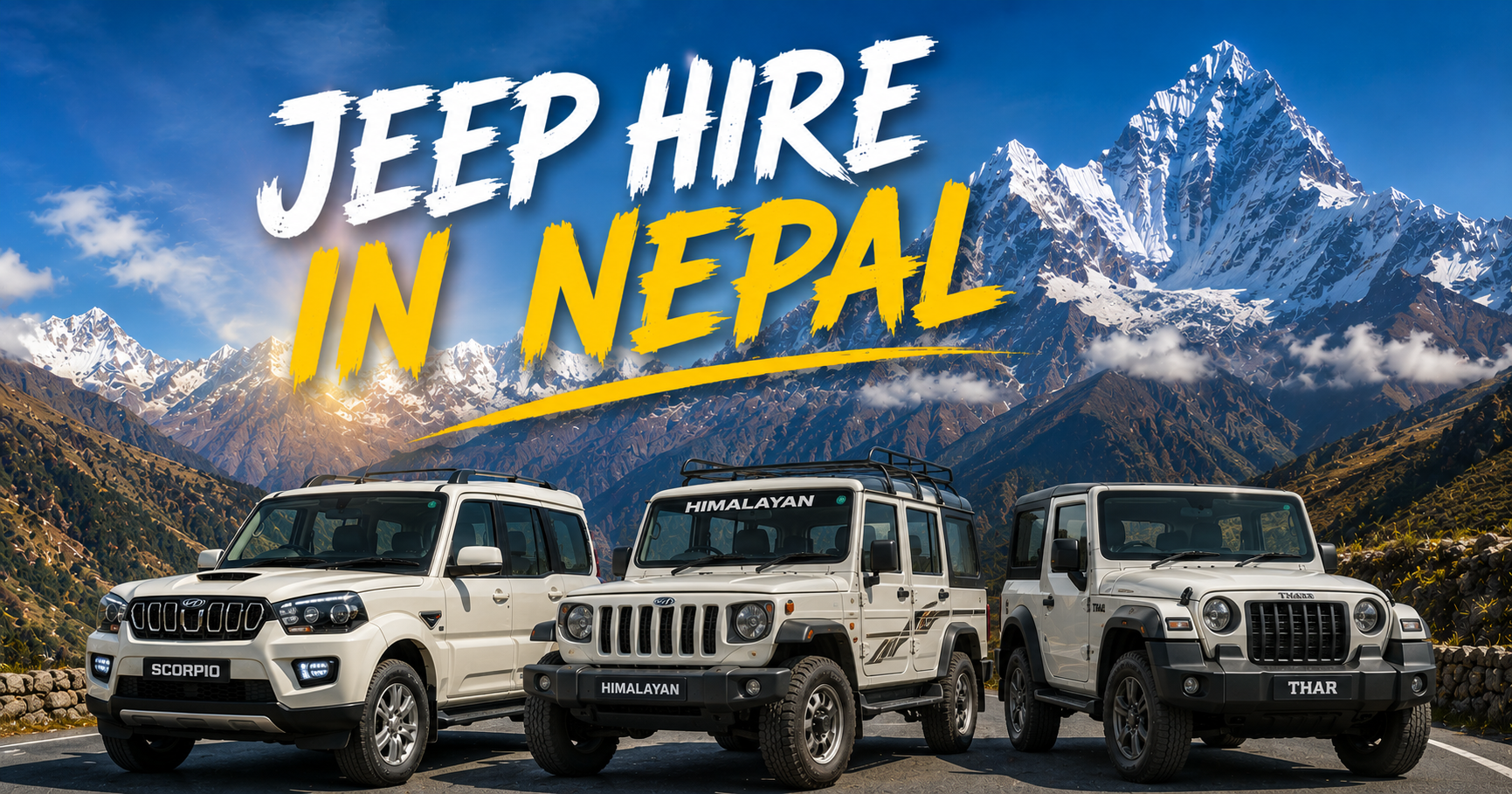
Kathmandu to Chame Vehicle Hire – Complete Road Guide
Chame is the district headquarters of Manang District and a key access point on the legendary Annapurna Circuit Trek. Situated at an altitude of 2,710 m in the Marsyangdi River valley, Chame is where trekkers first see the dramatic Annapurna range up close and where the classic Annapurna Circuit scenery truly begins. Getting to Chame from Kathmandu by private vehicle is the fastest and most comfortable way to begin your Annapurna Circuit trek – and in 2026, it has never been easier to arrange.
This complete guide covers everything you need to know about hiring a vehicle from Kathmandu to Chame – route options, road conditions, vehicle types, prices, permits, trekking overview, and practical tips for trekkers in 2026.
Where is Chame and Why Go There?
Location: Chame, Manang District, Gandaki Province, Nepal
Altitude: 2,710 m above sea level
Distance from Kathmandu: Approximately 185–195 km by road
Distance from Besisahar: Approximately 55 km north by mountain road
Travel Time from Kathmandu: 7 to 10 hours by 4WD jeep (road conditions vary significantly)
Road Type: Prithvi Highway (paved) + Annapurna Circuit road (rough mountain track from Besisahar)
Vehicle Required: 4WD Jeep mandatory from Besisahar onwards – sedans cannot reach Chame
Trek: Chame is a Day 4–5 stop on the Annapurna Circuit Trek
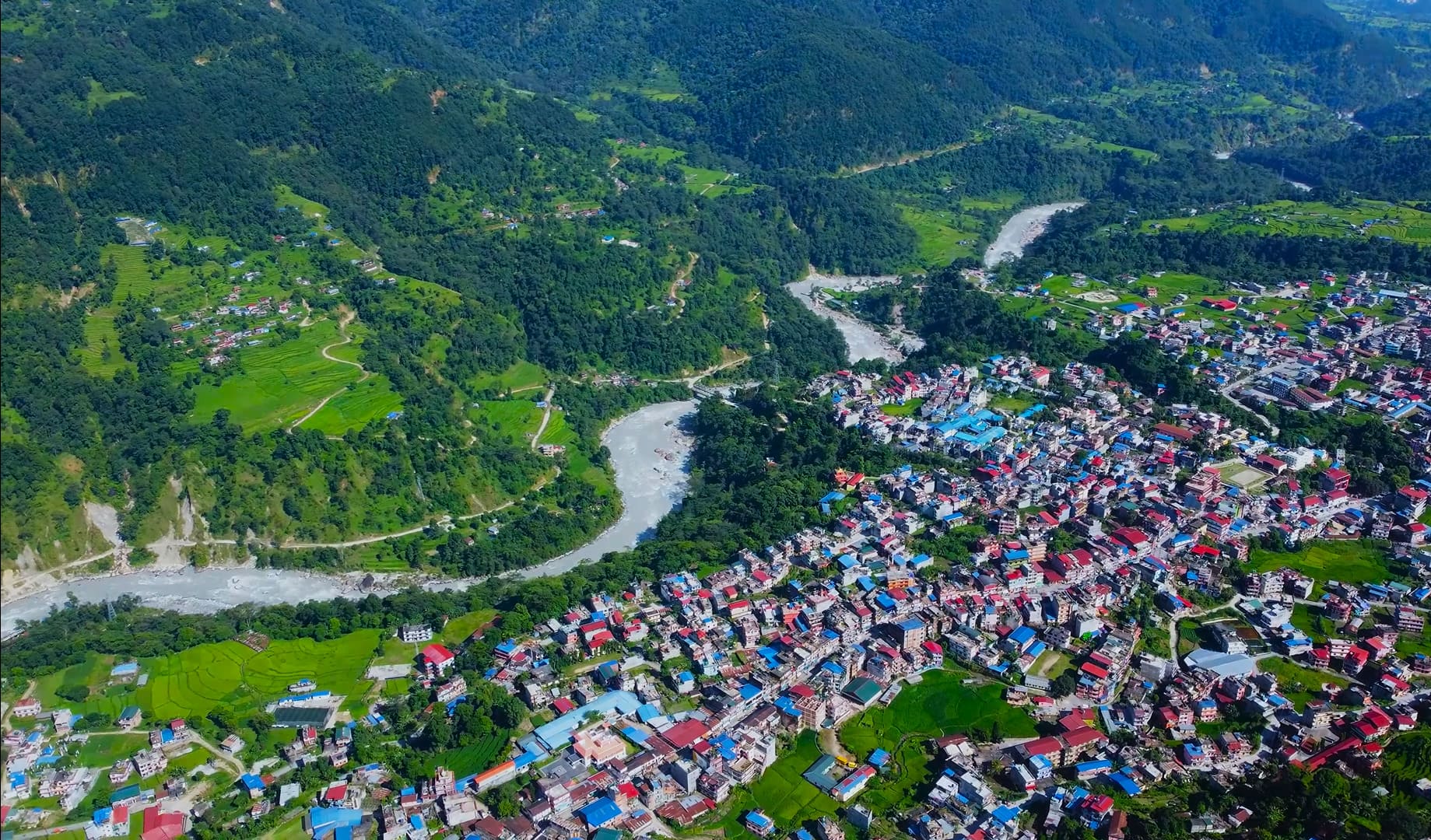
Chame sits in the deep Marsyangdi River gorge flanked by the towering Annapurna II (7,937 m), Annapurna IV (7,525 m), and Lamjung Himal (6,983 m). The village has teahouses, a health post, small shops, and nearby hot springs. It is the last significant settlement with reliable facilities before the trek enters the higher, more remote Manang valley.
Why Hire a Private Vehicle to Chame?
The Annapurna Circuit Trek traditionally starts in Besisahar and follows the Marsyangdi River valley on foot to Chame and beyond. However, many modern trekkers choose to hire a private vehicle from Kathmandu or Besisahar directly to Chame to skip the lower, less scenic sections of the circuit and begin trekking from the more spectacular mountain terrain. Here is why hiring a vehicle makes sense:
- Save 3 to 4 days of trekking on the lower valley section from Besisahar to Chame – now largely a jeep road rather than a traditional trail.
- The road from Besisahar to Chame has been significantly developed in recent years,s and much of the traditional trail now runs alongside or on the jeep road – less rewarding to walk than it once was
- Begin your trek from Chame at 2,71 m, where the most dramatic mountain scenery of the Annapurna Circuit begins.
- Arrive fresher and stronger for the harder high-altitude sections above. home.
- A private vehicle provides ample space for luggage, trekking gear, sleeping bags, and personal equipment. pment
- Depart from your Kathmandu hotel at any time – complete flexibility
- Experienced driver with knowledge of the rough Besisahar to Chame mountain road
- Significantly faster than local jeeps or buses on this route
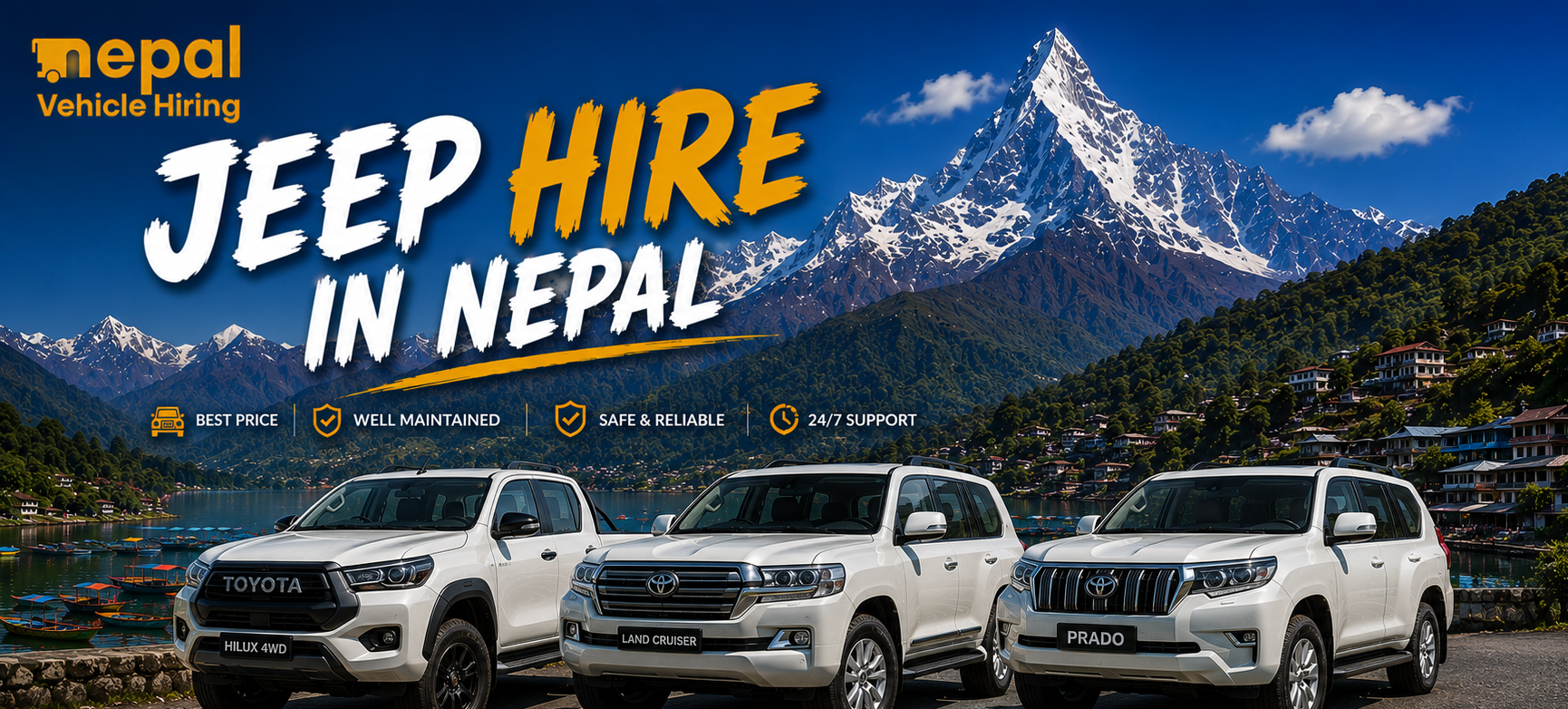
Vehicle Options & Prices: Kathmandu to Chame
Vehicle Hiring Nepal provides a full range of 4WD vehicles suitable for the Kathmandu-to-Chame mountain route. Note that only 4WD vehicles are suitable beyond Besisahar:
| Vehicle Type | Capacity | Price One-Way (USD) | Price Round Trip (USD) | Notes |
| Toyota Land Cruiser | 4–6 pax | $600 – $1000 | $700 – $1500 | Most popular – best for Chame road |
| Toyota Land Cruiser Prado | 4–5 pax | $400 – $600 | $600 – $800 | Comfortable, capable on rough terrain |
| Mahindra Bolero / Scorpio | 4–6 pax | $250 – $350 | $350 – $600 | Budget option with good clearance |
| Toyota Hiace (to Besisahar only) | 7–14 pax | $250 – $400 | $300– $900 | Cannot proceed beyond Besisahar – jeep needed |
| Sedan(to Jeepsahar only) | 1–3 pax | Not suitable | Not suitable | Cannot reach Chame – road too rough |
All private vehicle prices include the driver, full fuel for the journey, and vehicle insurance. Round-trip pricing includes the driver staying in Chame or Besisahar during your trek and returning you to Kathmandu after your circuit is complete. Contact us directly for the most accurate 2026 pricing based on your specific travel dates.
Route Overview: Kathmandu to Chame
The journey from Kathmandu to Chame includes two distinct road experiences: the smooth national highway from Kathmandu to Besisahar, and the rough mountain track from Besisahar north to Chame. Understanding this division is essential for planning your journey.
| Section | Distance | Road Type | Travel Time | Difficulty |
| Kathmandu to Dumre | ~120 km | Prithvi Highway – paved | 2.5–3 hrs | Easy |
| Dumre to Besisahar | ~22 km | Secondary road – mostly paved | 45 min | Easy–Moderate |
| Besisahar to Khudi | ~10 km | Rough gravel track | 30–45 min | Moderate |
| Khudi to Bahundanda | ~8 km | Rocky Mountain track | 30–45 min | Difficult |
| Bahundanda to Chamje | ~12 km | Very rough, narrow gorge road | 45–60 min | Very Difficult |
| Chamje to Tal | ~8 km | River crossing + rough track | 45–60 min | Very Difficult |
| Tal to Dharapani | ~10 km | Rocky Gorge track | 45–60 min | Difficult |
| Dharapani to Chame | ~15 km | Rough mountain road, some paved | 1–1.5 hrs | Moderate–Difficult |
Total distance: approximately 185- 195 km. Total travel time: 7- 10 hours, depending on road conditions, river levels, and weather. Depart Kathmandu early, between 5:00 and 6:00 AM, to reach Chame before dark.

Detailed Road Guide: Kathmandu to Chame
Kathmandu to Dumre (120 km | ~2.5–3 hrs)
Depart Kathmandu early – ideally 5:00 to 5:30 AM. Follow the Prithvi Highway west through Naubise, along the scenic Trishuli River gorge, past Malekhu and Mugling (a brief tea stop is recommended), then continue west past Damauli. At Dumre, turn north onto the road heading towards Besisahar. Dumre is the last town on the highway before the Annapurna Circuit road begins. Fuel up here if needed and stock up on snacks and water.
Dumre to Besisahar (22 km | ~45 min)
From Dumre, the road heads north into the Marsyangdi River valley. The road is mostly paved with some rough sections. Besisahar is the official starting point of the Annapurna Circuit and the district headquarters of Lamjung District. The town has ATMs (the last reliable ones before Chame), shops, teahouses, and the ACAP permit checkpoint where all trekking permits are first registered.
Stop in Besisahar for: a final ATM withdrawal, permit registration at the ACAP checkpoint, fuel (the last reliable fuel stop), and a light meal if you have not eaten since Kathmandu.
Besisahar to Khudi (10 km | ~30–45 min)
Beyond Besisahar, the road immediately becomes rough. The well-paved highway ends, and the Annapurna Circuit jeep track begins. The road follows the west bank of the Marsyangdi River through green terraced hillsides and small farming villages. The track is rocky and bumpy, but passable for 4WD vehicles. Khudi is a small village at 790 m with a few teahouses – the Marsyangdi River runs fast and clear below.
Khudi to Bahundanda (8 km | ~30–45 min)
The road becomes noticeably rougher and narrower through this section. The river gorge begins to close in. Bahundanda, at 1,310 m, is a Brahmin village perched on a ridge with excellent views down the Marsyangdi Valley and north towards the Annapurna range. The road through and beyond Bahundanda requires careful driving on narrow sections above steep drops.
Bahundanda to Chamje (12 km | ~45–60 min)
This is one of the most challenging sections of the drive. The road squeezes through a dramatic, narrow gorge with the Marsyangdi River roaring below. Multiple sections are cut directly into the cliff face. Your driver will navigate carefully and slowly. During the monsoon, this section is especially prone to rockfalls and road damage. On clear days, the gorge views are spectacular.
Chamje to Tal (8 km | ~45–60 min)
Chamje requires crossing the Marsyangdi River on a bridge to the east bank. From here, the road enters the Manang District. Tal at 1,700 m is a flat, open village situated in a wide river valley – a dramatic contrast to the tight gorge sections below. A massive ancient landslide formed the village by damming the river and creating the flat basin. A good place for a brief rest and snack break.
Tal to Dharapani (10 km | ~45–60 min)
From Tal, the road continues north through increasingly dramatic Himalayan terrain. Karte, Dharapani, and Bagarchhap are small villages along this section. Dharapani, at 1,860 m, marks the entry into the Manang District proper and serves as an important checkpoint where permits are inspected. The mountains are now noticeably closer and higher.
Dharapani to Chame (15 km | ~1–1.5 hrs)
The final section to Chame passes through Bagarchhap (affected by the famous 1995 landslide), Danaque, Timang, Thanchowk, and Koto. The Annapurna II (7,937 m) massif begins to dominate the northern skyline as you approach Chame. The road improves slightly in this final section with some paved stretches around Koto and Chame itself.
Arrive in Chame (2,710 m), the district headquarters of Manang. The town has government offices, a health post, multiple teahouses and lodges, small shops, a police checkpoint, and hot springs just outside town. Your trekking adventure begins in earnest from here.
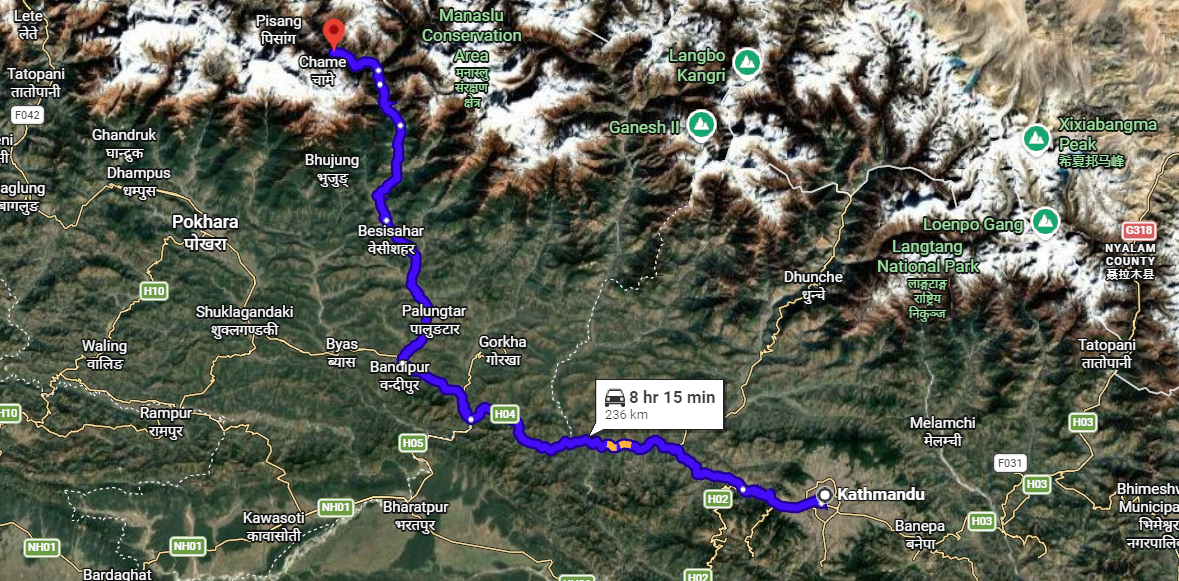
Kathmandu to Chame – Two-Day Option
Many trekkers and drivers prefer to split the long Kathmandu-to-Chame journey into two days for safety and comfort. Here is the recommended two-day itinerary:
Day 1: Kathmandu to Besisahar (142 km | 3.5–4 hrs)
Depart Kathmandu at a comfortable 7:00 AM. Drive via the Prithvi Highway to Dumre, then north to Besisahar. Arrive by late morning. Spend the afternoon exploring Besisahar, completing permit registrations, visiting the weekly market if timing allows, and resting in preparation for the rough road ahead. Overnight in Besisahar in a comfortable guesthouse – a good rest before the mountain track.
Day 2: Besisahar to Chame (55 km | 4–6 hrs by jeep)
Depart Besisahar by jeep between 6:00 and 6:30 AM. The mountain track from Besisahar to Chame takes 4- 6 hours, depending on road conditions. Arrive in Chame by noon to early afternoon, giving you time to settle in, explore the village, visit the hot springs, and acclimatise to the 2,710 m altitude before trekking the following morning.
The two-day option is strongly recommended for trekkers who want to arrive in Chame well-rested and fully acclimatised, rather than exhausted after a 9- to 10-hour continuous drive.
Road Conditions: What to Expect on the Chame Road
The road from Besisahar to Chame is one of Nepal’s most challenging access roads. Here is what to expect in each season:
October to November (Best Conditions)
The post-monsoon is the best time for the Besisahar-Chame road. Monsoon rains have ended, road surfaces have dried and been partially repaired, and water levels in the Marsyangdi River are dropping. Rockfall risk is reduced. The road is at its most reliable and passable during this peak trekking season. Still expect rough, bumpy sections throughout, but no major blockages in normal years.
March to May (Good Conditions)
Spring is the second-best season. Winter frosts have cleared, river levels are moderate, and the road is generally in good shape. Snow can occasionally affect the highest sections near Chame in early March, but usually clears by mid-March—a reliable season for vehicle hire.
December to February (Cold – Possible with Caution)
Winter driving to Chame is possible but requires an experienced driver and a suitable vehicle. Ice and frost can make the rocky sections above Chame and near Tal slippery in the early morning. Check conditions with your driver before departure. The road is usually passable, but avoid arriving in Chame after dark.
June to September (Monsoon – High Risk)
The Besisahar-Chamee road is at its most dangerous during the monsoon. Heavy rains cause frequent landslides and rockfalls, and occasional complete road closures along the narrow sections of the gorge between Bahundanda and Tal. Road repairs during the monsoon are ongoing, but closures can last for days. We strongly advise against attempting the Besisahar to Chame road during active monsoon unless local sources confirm road conditions on the day of travel.

Trekking Permits Required for Chame and Annapurna Circuit 2026
All trekkers visiting Chame and the Annapurna Circuit must carry valid permits. These must be arranged in Kathmandu or Pokhara before travel – not available at Chame:
| Permit | Cost 2026 (Approx.) | Where to Get | Valid For |
| ACAP – Annapurna Conservation Area Permit | NPR 3,000 (~USD 22) | Nepal Tourism Board, Kathmandu or Pokhara | Full Annapurna Circuit including Chame and Manang |
| TIMS Card – Trekkers Information Management | USD 10 | Nepal Tourism Board / TAAN office | Required for all trekkers on the circuit |
| Manang Restricted Area Permit | Not required for the standard Annapurna Circuit | N/A | Only needed for restricted side valleys off the main circuit |
Permit checkpoints are located at Besisahar, Dharapani, Chame, and Manang. Authorities thoroughly check all permits at each point. Trekkers without valid, stamped permits will be fined or turned back. Arrange all permits in Kathmandu or Pokhara the day before departure.
The Annapurna Circuit Trek – Overview from Chame
Starting your Annapurna Circuit trek from Chame rather than Besisahar means skipping the lower-valley section and starting directly in the dramatic high-mountain terrain. Here is what lies ahead from Chame:
| Stage | From – To | Distance | Altitude | Highlights |
| Day 1 from Chame | Chame – Pisang | ~17 km | 2,710m → 3,200m | Paungda Danda rock face, Lamjung Himal views |
| Day 2 | Pisang – Manang | ~22 km | 3,200m → 3,500m | Annapurna III, Gangapurna, upper Pisang monastery |
| Day 3 | Manang (acclimatisation) | – | 3,500m | Ice Lake, Gangapurna Lake, Milarepa Cave |
| Day 4 | Manang – Yak Kharka | ~10 km | 3,500m → 4,018m | High yak pastures, Annapurna IV views |
| Day 5 | Yak Kharka – Thorong Phedi | ~8 km | 4,018m → 4,450m | Last teahouses before the pass |
| Day 6 | Thorong La Pass crossing | ~16 km | 4,450m → 5,416m → 3,800m | The highest point of the circuit, descent to Muktinath |
| Day 7+ | Muktinath – Jomsom – Pokhara | – | 3,710m → 2,720m | Sacred temple, apple orchards, Kali Gandaki valley |
Total Trek Duration from Chame: Approximately 10 to 14 days to complete the circuit to Pokhara via Muktinath and Jomsom
Highest Point: Thorong La Pass at 5,416 m – one of the highest trekking passes in the world
Trek End Point: Most trekkers end at Nayapul or Pokhara via Jomsom and Muktinath
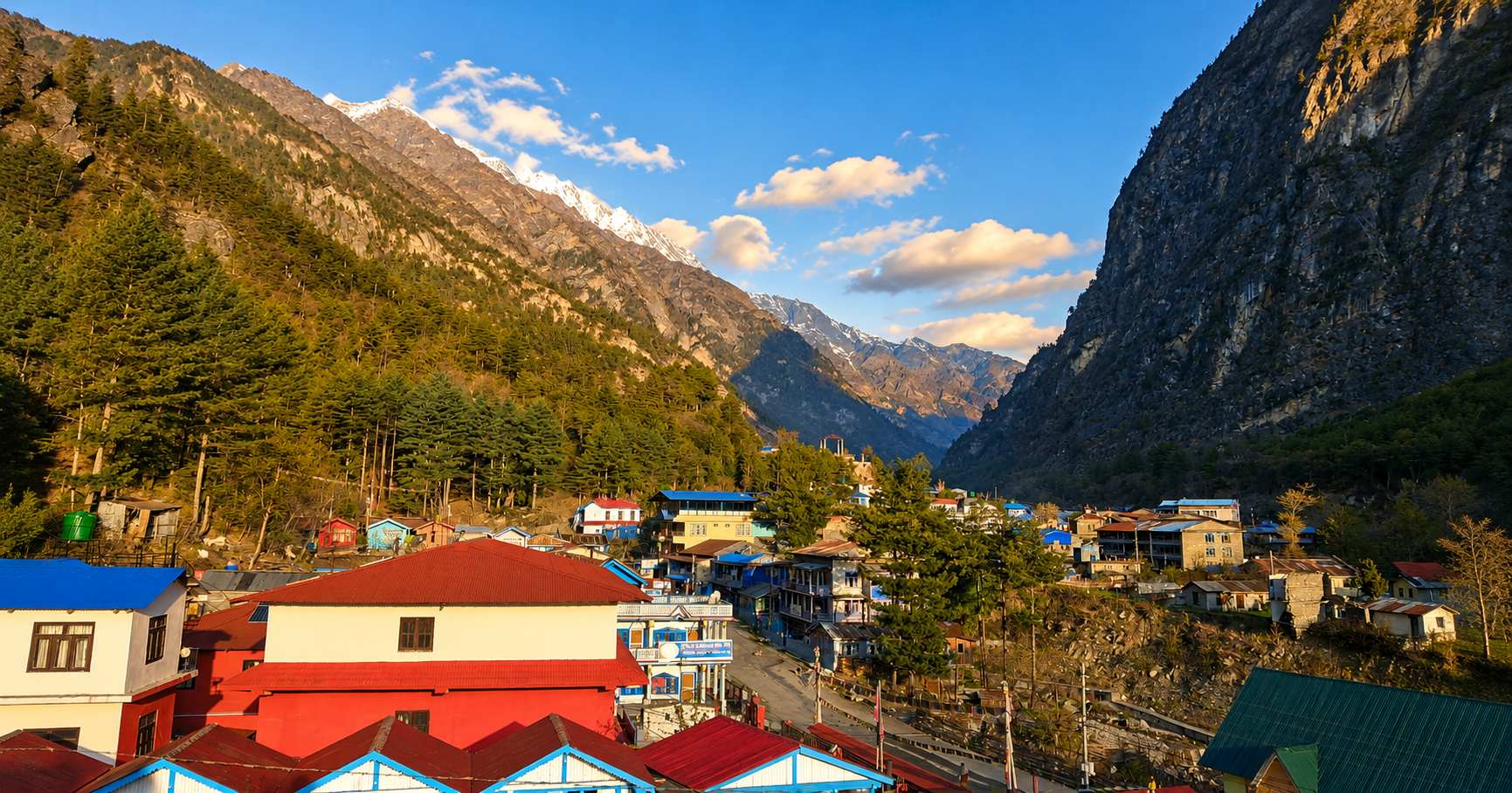
Chame Village – What to Expect
Accommodation
Chame has a good selection of teahouses and lodges by Annapurna Circuit standards. Rooms are simple – twin beds, blankets, and basic shared bathrooms. Most teahouses offer hot showers for a small extra charge. Electricity is available in Chame via the local micro-hydro system. Charge all devices here as power becomes less reliable above Manang.
Food and Dining
Teahouse menus in Chame offer the standard Annapurna Circuit fare – dal bhat (the best value and most filling option), noodle soup, fried rice, pasta, momo, pancakes, porridge, chapati, and Tibetan bread. Dal bhat with unlimited refills is the recommended meal for trekkers needing maximum energy. Apple-based products, including apple pie, apple juice, and apple brandy, become available from Chame onwards.
Hot Springs
Natural hot springs are located just outside Chame village, a short walk from the main teahouse area. After the long drive from Kathmandu, a soak in the hot springs is an excellent way to relax tired muscles and acclimatise before beginning the trek. The hot springs are open daily with a small entry fee.
Mobile Signal and WiFi
Ncell and NTC both have a signal in Chame, though it can be intermittent. Most teahouses offer WiFi for a small fee. Download offline maps (Maps.me or Gaia GPS with the Annapurna Circuit map) before leaving Kathmandu, as the signal becomes very unreliable above Manang.
Banking and ATM
There is no reliable ATM in Chame. The last reliable ATMs on the circuit are in Besisahar and Pokhara. Withdraw sufficient Nepali Rupees in Kathmandu or Besisahar before proceeding. Budget approximately NPR 3,00- 5,000 per person per day for teahouse accommodation and meals above Besisahar.
Best Time to Hire a Vehicle from Kathmandu to Chame
October to November (Peak Season – Best)
The finest time for the Kathmandu to Chame drive and the Annapurna Circuit Trek. Clear post-monsoon skies offer spectacular views of Annapurna II, IV, and Lamjung Himal from the road and trail. Road conditions are at their most reliable. The circuit is busy during this season – book your vehicle 3 to 6 weeks in advance. The golden autumn colours of the Marsyangdi valley are breathtaking.
March to May (Excellent – Spring)
Spring is the second-best season for the Annapurna Circuit. Rhododendron forests below 3,000 m are in full bloom from March to April, with clear mornings and excellent mountain views. The Besisahar-Chame road is in good condition after winter. Slightly less crowded than October–November. Strongly recommended season for the circuit.
December to February (Quiet – Cold)
Winter trekking on the Annapurna Circuit is possible but challenging. The Thorong La Pass can be snowbound or closed in January and February. Chame and Manang are very cold (-10°C to -20°C at night). The drive from Besisahar to Chame is possible but requires extra care on icy sections. Fewer trekkers and lower teahouse prices make winter an appealing option for experienced cold-weather trekkers.
June to September (Monsoon – Not Recommended for Chame Drive)
While the Annapurna Circuit above 3,000 m remains relatively dry during the monsoon, the Besisahar to Chame road is extremely risky from June to September. Frequent landslides can block the road for days. We do not recommend driving to Chame during the active monsoon season. If trekking in the monsoon, consider flying to Jomsom or Pokhara and starting from Muktinath on the reverse circuit instead.
Kathmandu to Chame vs Kathmandu to Besisahar – Which is Right for You?
Some trekkers prefer to drive only to Besisahar and walk from there to Chame over 3 to 4 days. Others prefer driving all the way to Chame. Here is how to decide:
| Factor | Drive to Besisahar Only | Drive all the way to Chame |
| Trek starting altitude | 820 m (Besisahar) | 2,710 m (Chame) – skip lower valley |
| Drive difficulty | Easy – paved road only | Difficult – rough mountain track to Chame |
| Total trek days | 16–20 days full circuit | 12–15 days full circuit |
| Lower valley experience | Walk through the full Marsyangdi gorge | Skip lower valley (now largely jeep road) |
| Vehicle required | Any vehicle | 4WD jeep mandatory |
| Cost | LJeep – sedan suitable | Higher – jeep required |
| PhysicaJeepmand | More walking, gradual ascent | Higher altitude start – monitor for AMS |
| Best for | First-time circuit trekkers, traditionalists | Experienced trekkers, limited time |
Our recommendation: If you have 16 or more days for the circuit, consider driving to Besisahar and walking the full route. If you have 12 to 14 days, driving to Chame allows you to experience the best sections of the circuit without rushing. Either way, Vehicle Hiring Nepal provides the right vehicle for both options.
What to Pack for the Kathmandu to Chame Jeep Ride
- Pack and organise all trekking gear in your main backpack the night before departure.
- ACAP permit and TIMS card – essential, must be shown at Besisahar and Dharapani checkpoints
- Sufficient Nepali Rupees – withdraw in Kathmandu or Besisahar, as there are no reliable ATMs in Chame.
- Motion sickness tablets – the road beyond Besisahar is extremely rough and windy. ing
- Snacks and litres of water per person for the full day journey
- Warm layers – Chame is at 2,710 m and temperatures drop significantly, especially after sunset
- Camera or phone fully charged – mountain views begin appearing from Tal onwards
- Offline maps downloaded to phone – signal unreliable above Besisahar
- Headlamp accessible – in case of late arrival at Chame after dark
- First aid kit and altitude sickness medication (Diamox) – consult a doctor before travel

What is Included When You Book With Vehicle Hiring Nepal?
- Private 4WD jeep (Land Cruiser or Jeep equivalent) with experienced mountain road driver
- Full fuel cost for Kathmandu to Chame and return journey
- Vehicle insurance for the entire journey duration
- Hotel pickup from your Kathmandu hotel or guesthouse
- Drop-off directly at your teahouse in Chame village
- Rest stops at Mugling, Dumre, and Besisahar
- Driver staying in Besisahar or Chame during your trek (for round-trip bookings)
- Return pickup from Chame, Besisahar, or Nayapul at the end of the trek
- 24/7 WhatsApp support during the journey and throughout your trek
Not included: Trekking permits (ACAP and TIMS), personal meals, teahouse accommodation, porter and guide fees, and any additional detour stops beyond the agreed route.
How to Book Your Kathmandu to Chame Vehicle Hire
- Visit vehiclehiringnepal.com or contact us directly on WhatsApp
- Select your vehicle type – Land Cruiser or Prado, recommended for the Chame road
- Choose your travel date and preferred departure time (5:00–5:30 AM strongly recommended)
- Provide your pickup address or hotel name in Kathmandu
- Confirm your drop-off destination – Chame, Besisahar, or another Annapurna Circuit point
- Specify if you need a round-trip booking with a driver waiting for the post-trek return
- Confirm your group size and luggage – trekking packs require adequate boot space
- Receive booking confirmation with driver details, vehicle type, and departure plan
WhatsApp: 977 981-4227196
Email: [email protected]
Website: www.vehiclehiringnepal.com
Frequently Asked Questions
Can a regular car reach Chame from Kathmandu?
No. A regular sedan or standard car can travel comfortably from Kathmandu to Besisahar on the paved Prithvi Highway. However, the road from Besisahar to Chame is a rough, rocky mountain track with steep sections, narrow ledges, and occasional river crossings, so it requires a high-clearance 4WD vehicle. A Toyota Land Cruiser or equivalent is the minimum requirement for the Besisahar-Chame section.
How early should I depart from Kathmandu to reach Chame in one day?
To reach Chame in a single day, depart Kathmandu by 5:00 to 5:30 AM at the latest. The journey takes 8 to 10 hours, including rest stops at Mugling and Besisahar. Departing after 6:00 AM risks arriving in Chame after dark, which is not safe on the mountain track sections. Most trekkers should plan a two-day journey with an overnight in Besisahar.
Do I need to arrange a guide or porter before reaching Chame?
The Annapurna Circuit does not legally require a guide or porter, though both are strongly recommended. You can arrange guides and porters in Kathmandu, Pokhara, or Besisahar. By the time you reach Chame, it becomes harder to find reliable guides or porters as most work out of Pokhara or Kathmandu. We recommend arranging your guide and porter before departure.
What if the road is blocked by a landslide between Besisahar and Chame?
Landslide blockages are a real possibility, especially after heavy rain. Our drivers are experienced on this route and monitor road conditions before departure. If a blockage occurs mid-journey, the driver will assess whether to wait for clearance (minor slides are typically cleared within hours), take an alternative route, or arrange for you to continue on foot with your gear while the vehicle waits. We stay in touch with local road crews and will keep you informed via WhatsApp.
Can I combine a Kathmandu-to-Chame vehicle with a Pokhara-to-Nayapul return?
Yes. This is one of the most popular Annapurna Circuit transport combinations. Hire a jeep from Kathmandu to Chame at the start of your trek, and pre-arrange a vehicle from Nayapul (or Jomsom) to Pokhara at the end of your circuit. Vehicle Hiring Nepal can arrange both legs as part of a single booking – giving you seamless transport at both the start and finish of your Annapurna Circuit trek.
How much does it cost per person for the Kathmandu-to-Chame jeep?
The Land Cruiser jeep costs USD 200-250 for a one-way trip from Kathmandu to Chame. For a group of 4 trekkers sharing the jeep, this works out to approximately USD 50-63 per person – excellent value given the distance, road conditions, and driver expertise involved. For groups of 5 to 6 sharing a single Land Cruiser, the per-person cost drops further to USD 33 to USD 50.
Is altitude sickness a risk when driving directly to Chame?
Yes. Driving directly from Kathmandu (1,400 m) to Chame (2,710 m) in a single day is a significant altitude gain. Most healthy adults tolerate this well, but some individuals may experience mild AMS symptoms – headache, fatigue, or nausea – on the first night in Chame. To minimise risk, stay well hydrated throughout the drive, avoid alcohol on your first night in Chame, and if symptoms are more than mild, spend an extra night in Chame before beginning the trek upward. Carry Diamox (consult your doctor for dosage) as a precaution.

Final Thoughts
Hiring a private vehicle from Kathmandu to Chame is one of the smartest ways to begin the Annapurna Circuit trek in 2026. By starting at Chame at 2,710 m, you skip the lower valley section of the circuit that has been significantly modified by road construction and begin your trek in the most spectacular and dramatic mountain terrain of the entire route – with Annapurna II towering above you from the very first morning.
The road journey from Kathmandu to Chame is itself a remarkable experience – descending through the Trishuli gorge, crossing the Terai foothills at Dumre, and then climbing through progressively wilder and more remote Himalayan terrain from Besisahar to Chame. With Vehicle Hiring Nepal, you travel with an experienced mountain driver who knows every kilometre of this challenging road and will ensure your group arrives safely, on time, and ready to begin one of the world’s great trekking adventures.
Book your Kathmandu-to-Chame vehicle hire today. We also arrange return transport from Nayapul or Pokhara at the end of your circuit.
- Kathmandu to Chame Vehicle Hire – Complete Road Guide
- Where is Chame and Why Go There?
- Why Hire a Private Vehicle to Chame?
- Vehicle Options & Prices: Kathmandu to Chame
- Route Overview: Kathmandu to Chame
- Detailed Road Guide: Kathmandu to Chame
- Kathmandu to Chame – Two-Day Option
- Road Conditions: What to Expect on the Chame Road
- Trekking Permits Required for Chame and Annapurna Circuit 2026
- The Annapurna Circuit Trek – Overview from Chame
- Chame Village – What to Expect
- Best Time to Hire a Vehicle from Kathmandu to Chame
- Kathmandu to Chame vs Kathmandu to Besisahar – Which is Right for You?
- What to Pack for the Kathmandu to Chame Jeep Ride
- What is Included When You Book With Vehicle Hiring Nepal?
- How to Book Your Kathmandu to Chame Vehicle Hire
- Frequently Asked Questions
- Final Thoughts

Related Blog & Articles

Kathmandu to Besisahar Transport Guide

Kathmandu to Manang Jeep Service Guide