


 Plan a Trip



Duration
1 Day
Travel Time
6-7 hours
Distance
150 km
Vehicle Type
Bus
Driver
Included
Group Size
1-35 Pax
Max. Altitude
1400 Metres
Best Season
Round the year
Activity
Day Tour
Meals
Not Included
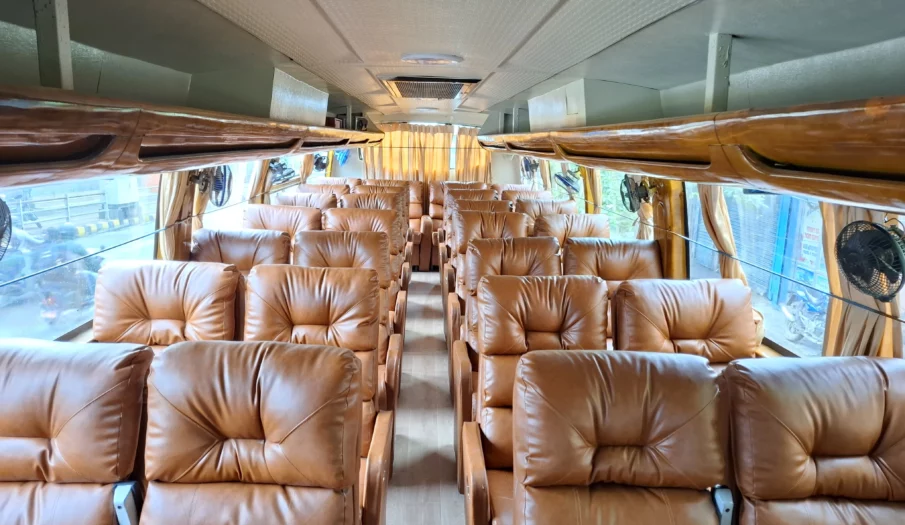
Kathmandu to Chitwan Sofa Bus
- The Trisuli River Chase: Watch the white-water rapids of the Trisuli River crash against rocks just meters below your window as the Bus navigates the gorge.
- The Malekhu Fish Stop: Sink your teeth into crispy, fried river fish (Macha) at a dusty roadside shack in Malekhu—the undisputed fish capital of the highway.
- The Mugling-Narayanghat Corridor: Experience the engineering marvel (and madness) of the road carved directly into sheer cliffs.
- The Climate Shift: Feel the physical slam of humidity as you leave the hills and enter the flat, golden plains of Chitwan.
- Sunset in Sauraha: Ending the grit-filled journey with a cold beer by the Rapti River, watching the sun bleed into the jungle canopy.

Introduction of Kathmandu to Chitwan sofa Bus
Diesel fumes mix with the crisp morning air at Sorhakhutte. It’s 6:30 AM. The city is waking up, but the engines are already roaring. This isn’t just a commute; it’s a shift in reality. You aren’t just taking the Kathmandu to Chitwan sofa bus; you are strapping yourself in for a descent from the cool, bowl-shaped valley of the gods into the humid, tiger-stalked flatlands of the Terai.
Forget the sanitized descriptions of “scenic drives.” This is the Prithvi Highway. It’s a living, breathing beast of asphalt that snakes along the Trisuli River. It demands respect. You’ll witness the raw grit of Nepali infrastructure, dodge painted trucks blaring folk tunes, and feel the temperature climb with every kilometer dropped. The mountains fade, the jungle rises, and the chaos of the capital gives way to the buzzing silence of the wild. This is the road trip you talk about for years.
Visit our sister company, Alpine Luxury Treks, for luxury vacation packages and trekking journeys. There, you may choose from a variety of carefully planned itineraries.

Itinerary of Kathmandu to Chitwan sofa Bus
Drive From Kathmandu to Chitwan
The day starts before the sun hits the temples. You need to be at the Sorhakhutte Tourist Bus Park by 6:30 AM sharp. The air is cold. Vendors sell sweet tea and hard-boiled eggs on the curb. You find your Bus—look for the “Sofa Seat” or “Super Deluxe” branding—and throw your pack in the hold.
At 7:00 AM, the convoy moves. Getting out of Kathmandu is a battle of inches, weaving through morning traffic until you hit the checkpost at Nagdhunga. Then, the plunge begins. The road drops sharply, winding down hairpin turns. To your right, the valley opens up. To your left, sheer rock.
By 10:00 AM, you reach Malekhu or a nearby riverside settlement for a “bio-break” and early lunch. This is raw Nepal. You eat Dal Bhat (rice and lentils) or spicy noodles at a roadside dhaba, fueling up fast. The journey continues along the Trisuli River. You might see rafters battling the currents below.
The crux of the drive is the Mugling-Narayanghat stretch. The road widens, the heat rises. You are entering the Terai. The massive hills flatten out into endless plains of rice paddies and mustard fields. The air gets heavy. You strip off your jacket. The AC fights a losing battle against the sun.
Around 2:00 PM or 3:00 PM, the Bus pulls into the Sauraha Bachhauli Bus Park. You step off onto the dusty ground. The smell is distinct—damp earth, elephant grass, and woodsmoke. You’ve made it. A jeep or hotel shuttle whisks you away to your lodge. Shower the road dust off, grab a drink, and watch the crocodiles sunbathe on the riverbanks.
Key Highlights:
- Nagdhunga Checkpoint: The gateway out of the valley, offering the last view of Kathmandu.
- Riverside Lunch: Eating local curry while watching the river rush by.
- The Arrival: The sudden transition from chaotic highway to the peaceful, green canopy of Sauraha.
Overnight: Jungle Lodge or Resort in Sauraha (AC Room recommended).

Activity: 6-7 hours

Max. Altitude: 1400m

Meal: Not included

Accommodation: Not Included

Includes & Excludes
What is included?
- Transport: One-way ticket on a Tourist Bus (Sofa/VIP/Deluxe category).
- Water: One bottle of mineral water (usually provided on VIP buses).
- Comfort: Air-conditioning (dependent on the bus engine’s mood) and reclining seats.
- Stops: Designated stops for breakfast and lunch at hygienic(ish) road restaurants.
What is not included?
- Meals: Breakfast and Lunch on the highway (approx. 400-800 NPR total).
- Transfers: Taxi from your hotel to Sorhakhutte Bus Park in Kathmandu.
- Entry Fees: Chitwan National Park permit (paid upon activity entry, not on the Bus).
- Insurance: Travel insurance covering road accidents or lost luggage.

Trip Information
Departure Station – Kathmandu
- Name: Sorhakhutte Tourist Bus Park
- Location: Sorhakhutte, near Thamel, Kathmandu
- Landmark: Close to the Garden of Dreams and Kathmandu Guest House
- Reporting Time: 6:30 AM
- Departure Time: 7:00 AM sharp
Final Destination – Chitwan
- Name: Sauraha Tourist Bus Park
- Location: Sauraha, near the entrance of Chitwan National Park
- Landmark: Close to Elephant Breeding Centre Road, Sauraha Chowk
- Arrival Time: Between 12:30 PM and 1:30 PM (approx.)
- Distance from Kathmandu: ~150 km
- Facilities: Local taxis, hotel pickups, and refreshment stalls nearby
Best Time to Visit
Timing your “Safety & Comfort on Your Kathmandu to Chitwan Bus Journey” is critical. Road conditions change with the seasons, and so does the heat inside the Bus.
Spring (March to May): The Dust & Gold
- Vibe: Hot, dry, and dusty. The jungle is thinning, making tiger spotting easier once you arrive.
- Temperature: Kathmandu (10°C – 25°C) -> Chitwan (20°C – 35°C).
- Daylight: 12+ hours.
- Road Condition: Dry. Fast-moving unless there’s construction.
Autumn (September to November): The Clarity
- Vibe: The monsoon scrubs the air clean. Views of the distant Himalayas from the highway are razor-sharp. This is peak season.
- Temperature: Kathmandu (10°C – 23°C) -> Chitwan (18°C – 30°C).
- Daylight: 11 hours.
- Road Condition: Generally good, though post-monsoon landslides are possible.
Winter (December to February): The Fog
- Vibe: Chilly starts. The Terai (Chitwan) gets engulfed in thick fog (Sheetalhar) until noon.
- Temperature: Kathmandu (3°C – 18°C) -> Chitwan (8°C – 22°C).
- Warning: Fog can significantly delay buses.
Monsoon (June to August): The Mud Bath
- Vibe: Wild. Rain hammers the roof. The river roars like a jet engine.
- Risk: High probability of landslides blocking the Mugling road. Delays are common.
- Temperature: Humid and sticky everywhere

Bus Categories
The highway has a hierarchy.
- VIP / Sofa Bus: The top tier. Huge, plush seats, AC that usually works, and suspension. Cost: $13-15 USD.
- Tourist Standard: 2×2 seating. Decent, but tighter legroom. AC is hit or miss. Cost: $10-20 USD.

Road Conditions
The Asphalt Jungle. Let’s be real. The Prithvi Highway is not the Autobahn. It is a living, breathing entity. The section from Kathmandu to Mugling is decent tarmac but plagued by heavy truck traffic. The real “adventure” (read: challenge) begins at the Mugling-Narayanghat stretch. This section has been under expansion for years. Expect stretches of gravel, massive potholes that will rattle your teeth, and dust clouds thick enough to block out the sun. In the monsoon, this section is prone to landslides. Construction crews work around the clock, so you may face 20-minute delays while you wait for an excavator to clear debris. It’s raw, dusty, and loud.
Safety & Comfort
Your journey from Kathmandu to Chitwan is operated with a strong focus on safety and passenger comfort. We work with experienced, licensed drivers who are familiar with the Narayanghat highway and trained in safe driving practices. We regularly service and inspect our vehicles to ensure reliable performance on long-distance routes. We strictly follow speed control measures, and safety features such as seat belts and first-aid kits are available on board for added peace of mind throughout the trip.
Comfort is equally important during your travel. Our tourist buses are clean, well-maintained, and designed for a relaxed seating experience with ample legroom. Air-conditioned vehicles are available depending on the bus category, and scheduled rest stops along the route offer refreshments and relaxation. Spacious luggage storage keeps your belongings safe while you enjoy a smooth, comfortable ride from Kathmandu to Chitwan.
Visa & Permits
You don’t need a specific permit to ride the Kathmandu-Chitwan bus. However, once you arrive in Chitwan, you cannot enter the National Park without a permit (2000 NPR for foreigners), which your hotel usually arranges. Carry your passport on the Bus; police do random checks, and they may ask for ID.
Frequently Asked Question (FAQ’s)
Officially? 5 to 6 hours. Realistically, 6 to 8 hours. Traffic jams at the Nagdhunga pass or construction on the Mugling road can add time to the journey. Mentally prepare for a full day of travel.
It has a reputation for being gritty. The Prithvi Highway is busy and narrow in spots. However, Tourist Buses are generally safer than local buses because they drive more slowly and are larger. Accidents happen, but thousands make this trip safely every day.
Most tourist buses depart from Sorhakhutte (near Thamel), not the main Gongabu Bus Park. It is a 5-10 minute walk or a quick taxi ride from Thamel. Be there by 6:30 AM.
Yes. Tourist buses are filled with other travelers and trekkers. It is a very public and safe environment
Yes. The sofa bus is fully air-conditioned and designed for comfortable long-distance travel.
Not officially. They stop for food and toilet breaks. However, if you are sitting by the window (on the right for river views), you can snap photos constantly.
The Bus drops you at the Tourist Bus Park in Bachhauli (Sauraha). Most hotels offer free pickup if you book in advance. If not, touts and jeeps are waiting there. A ride to the main hotel strip costs about 200-300 NPR.
The first 3-4 hours are very winding as you descend from the hills. Take medication beforehand. Sit near the front of the Bus for a more stable ride. Avoid reading your phone during the twisty sections.
Many buses advertise “Free WiFi.” It rarely works. Do not rely on it. Use your own mobile data (Ncell or NTC), which has decent coverage for about 70% of the journey
Yes. The buses have massive storage trunks underneath. It is safe, but keep your valuables (camera, passport, money) in your daypack on the seat with you.


