Plan a Trip


luxury vehicle hire in Nepal
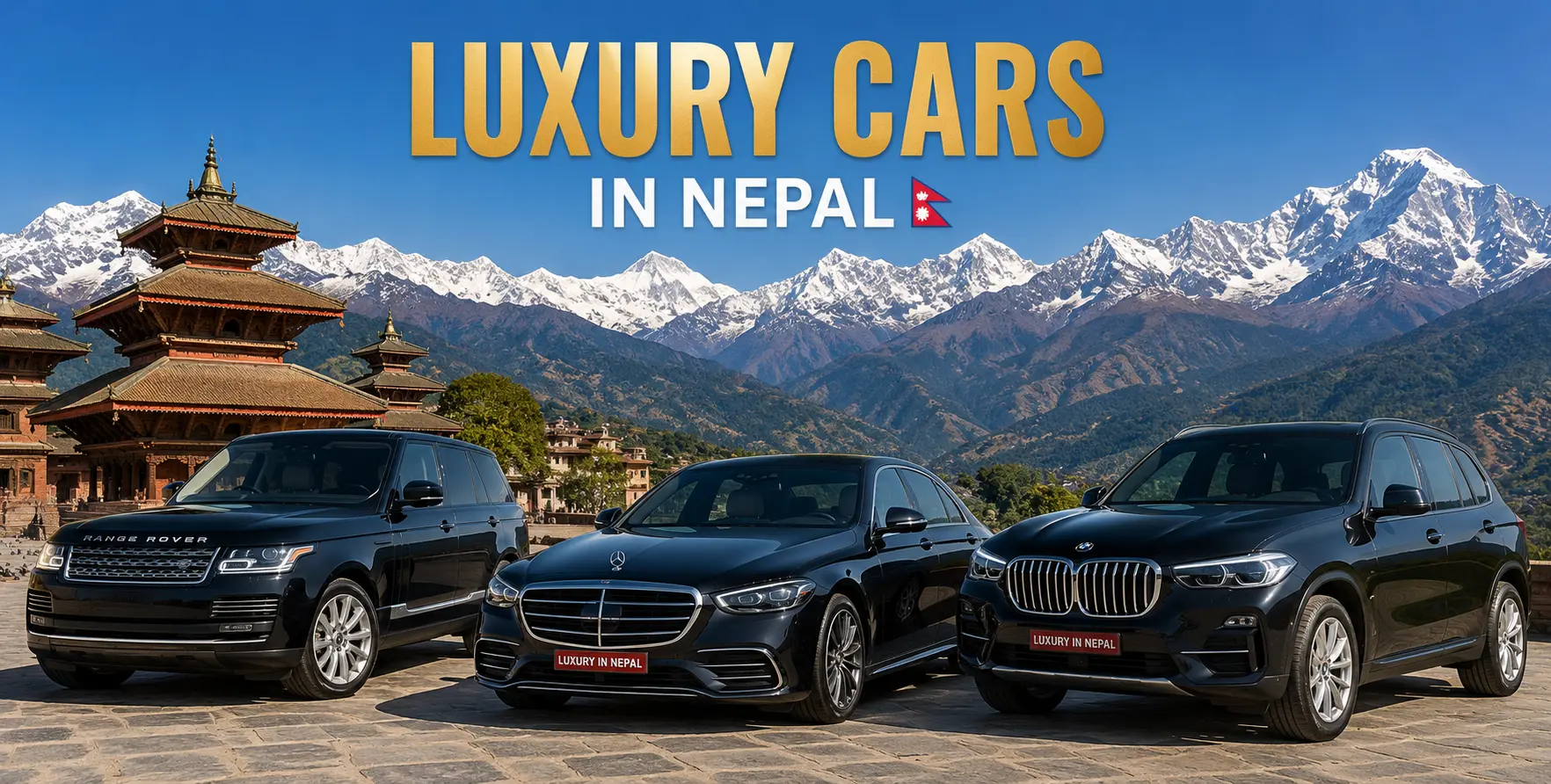
Why Luxury Vehicle Hire Is Transforming Nepal Travel
How Premium Ground Transport Is Reshaping Trekking, Touring, and Pilgrimage Across Nepal
A decade ago, most visitors to Nepal accepted a simple trade-off: comfort or authenticity, but rarely both. Long jeep rides on rutted mountain roads, crowded local buses, and unpredictable airport pickups were treated as an unavoidable part of the adventure, the price paid for reaching the Himalayas. That trade-off is disappearing fast. Across airport transfers, trekking logistics, pilgrimage journeys, and city touring,
Luxury vehicle hire in Nepal is quietly but fundamentally changing what a trip to Nepal actually feels like, and the shift is visible in nearly every corner of the country’s travel industry.
This article explores why that shift is happening, where it is most evident, and what it means for travellers planning a trip to Nepal in the years ahead. Nepal Vehicle Hiring has been central to this transformation, coordinating premium ground transport across trekking routes, pilgrimage corridors, airport transfers, and touring itineraries. This piece draws on firsthand experience to show that travel in Nepal is changing.
The Shift: From Basic Transport to a Premium Experience
For most of Nepal’s modern tourism history, ground transport was treated as a logistical necessity rather than part of the travel experience itself. Trekkers endured the journey to reach the trail; pilgrims endured the drive to reach the temple; tour groups endured the transfer to reach the hotel. What has changed is a growing recognition among both travellers and operators that the journey itself can be comfortable, memorable, and well-organised, rather than something to be survived.
This shift mirrors a broader global trend in travel, where the quality of the experience is judged end-to-end rather than only at the destination. Travellers who would never accept a poorly maintained rental car at home increasingly expect the same standard in Nepal, and operators investing in modern vehicles, trained drivers, and professional logistics are capturing this growing market segment. Our own
Ultimate Nepal Vehicle Rental Guide and
Why Private Vehicle Hire Is the Smartest Way to Travel. Nein, pal. To explore this shift in greater depth, the short version is simple: comfort and authenticity are no longer opposites in travel in Nepal.
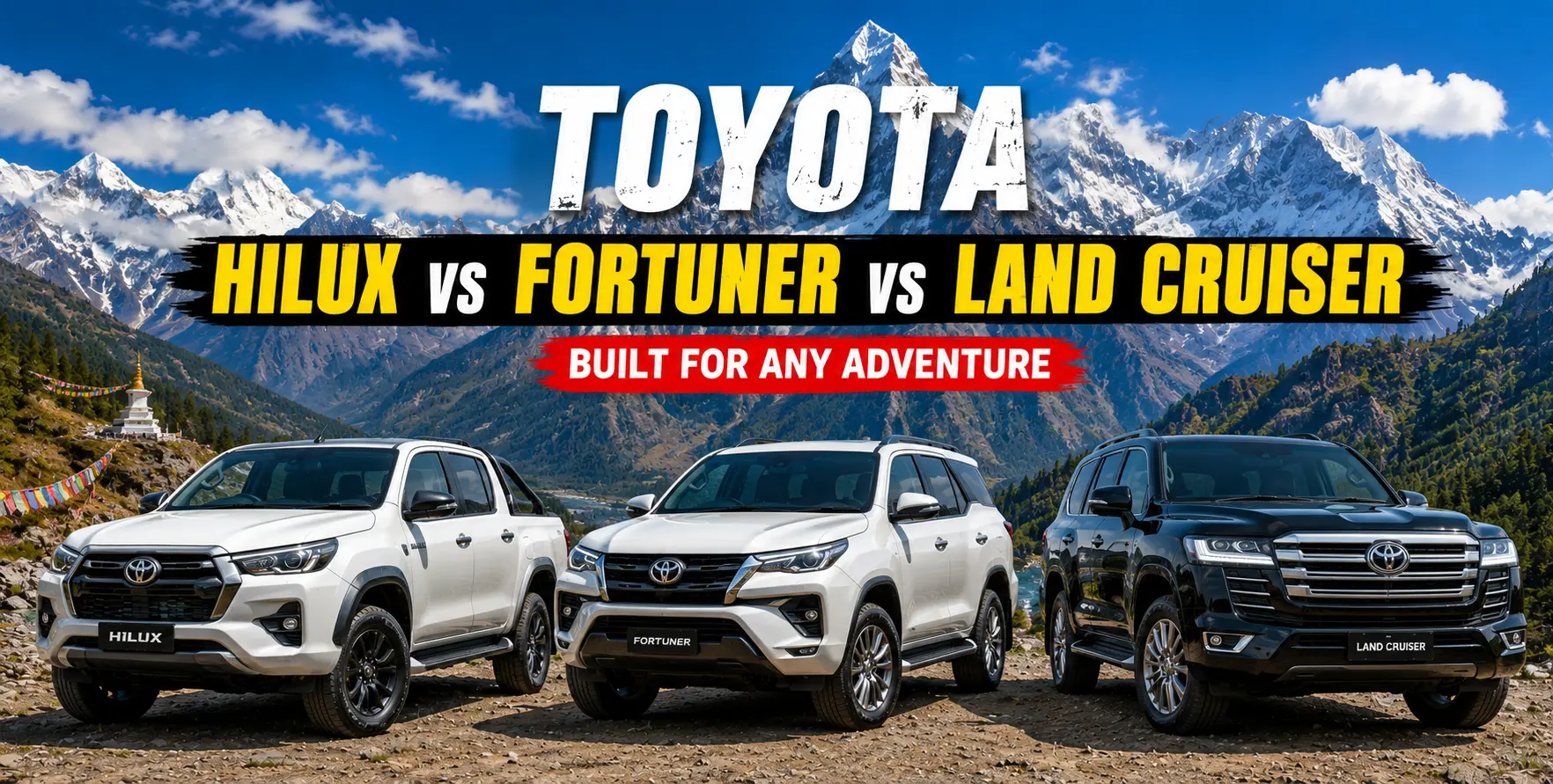
Airport Transfers: Setting the Tone From Touchdown
Nowhere is this transformation more visible than at the airport. A private, professionally driven vehicle waiting inside the arrivals hall, with real-time flight tracking and a clean, comfortable cabin, has replaced the chaotic taxi rank as the expected standard for a growing share of visitors. As we explored in detail in our
Luxury Airport Transfer Nepal guide. This shift is accelerating as Pokhara’s international airport matures, Gautam Buddha International Airport in Bhairahawa expands, and traveller expectations rise in step with Nepal’s growing profile as a premium travel destination. Our
Kathmandu airport transfer service and
car hire in Pokhara are both built directly around this expectation, giving travellers a calm, dependable start to their trip rather than a stressful scramble on arrival.
Trekking Transport: Comfort Without Sacrificing Access
Trekking logistics are perhaps the clearest example of how luxury vehicle hire is changing the shape of travel in Nepal, as covered in our In the In the In the
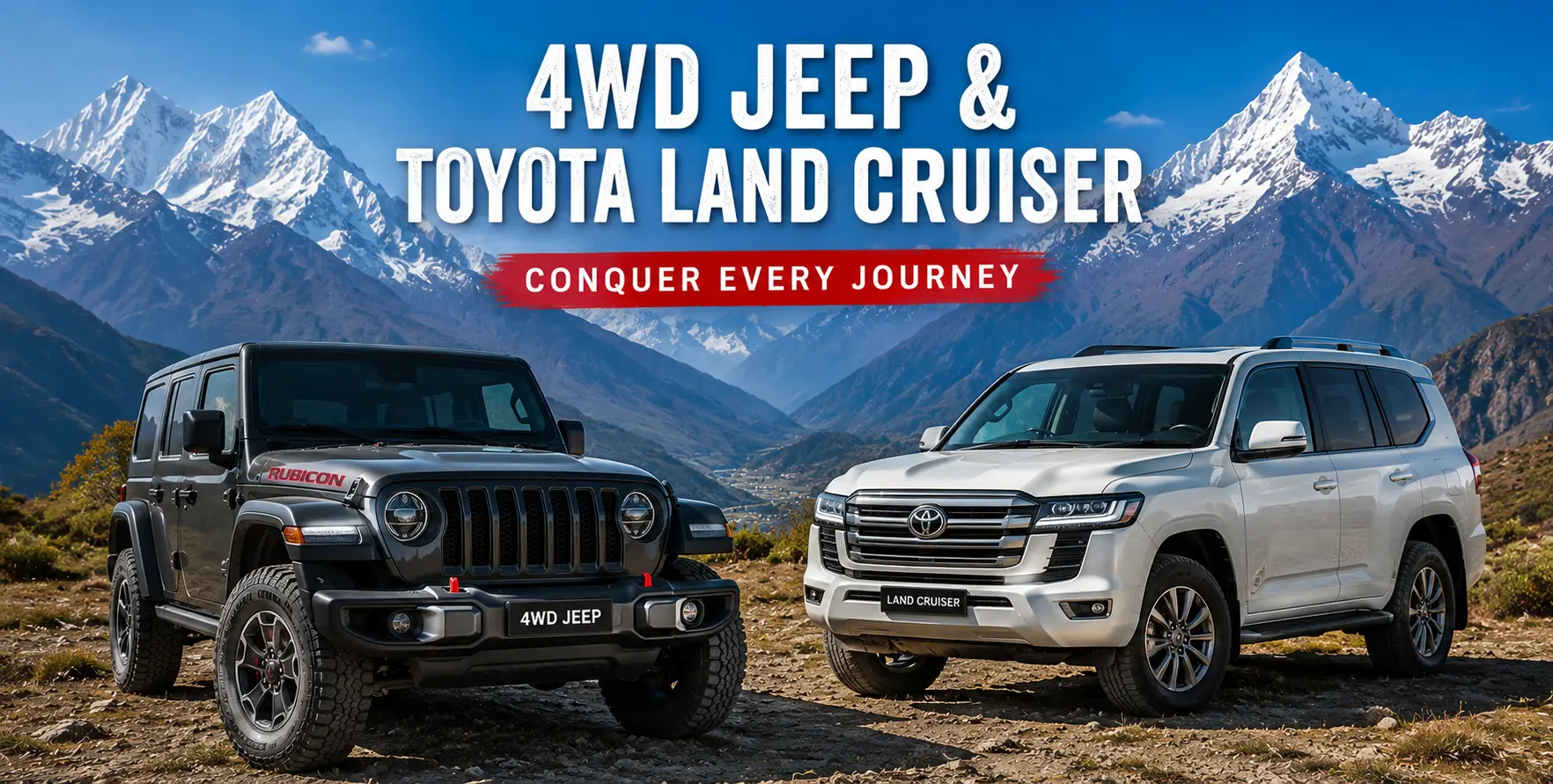
Luxury Vehicles for Trekking in Nepal guide, a premium Land Cruiser or Prado turns the often-gruelling approach roads to major trailheads into a genuinely comfortable part of the journey, rather than an ordeal to endure before the real adventure begins.
This matters enormously given how demanding these roads can be. The drive to Besisahar, gateway to the
Annapurna Circuit Trek, offered by our sister company Alpine Luxury Treks, is the route to Syabrubesi for the
Langtang Valley Trek, the long haul to Soti Khola for the
Manaslu Circuit Trek, and the classic overland approach through Salleri and Phaplu toward the
Everest Base Camp Trek all involve long, rough drives where vehicle quality and driver experience directly affect how a trekker feels on day one of their trip. Our dedicated
Hiace hire services, along with route-specific transport such as our
Kathmandu to Salleri-Phaplu jeep services are built around this reality.
Shorter, equally popular routes follow the same pattern. The drive from Pokhara to Nayapul, gateway to both the
Ghorepani Poon Hill Trek and the
Annapurna Base Camp Trek is increasingly done in a comfortable private car rather than a shared local jeep, arranged through our
Pokhara to Nayapul transportation service. Our
Mahindra Bolero and Tata Sumo trekking transfer guide and our broader The
Best Vehicle Hire Routes for Trekking Trailheads Nepal article, and both go into further detail on how this transformation is playing out, route by route.
Pilgrimage Travel: Sacred Journeys Made More Accessible
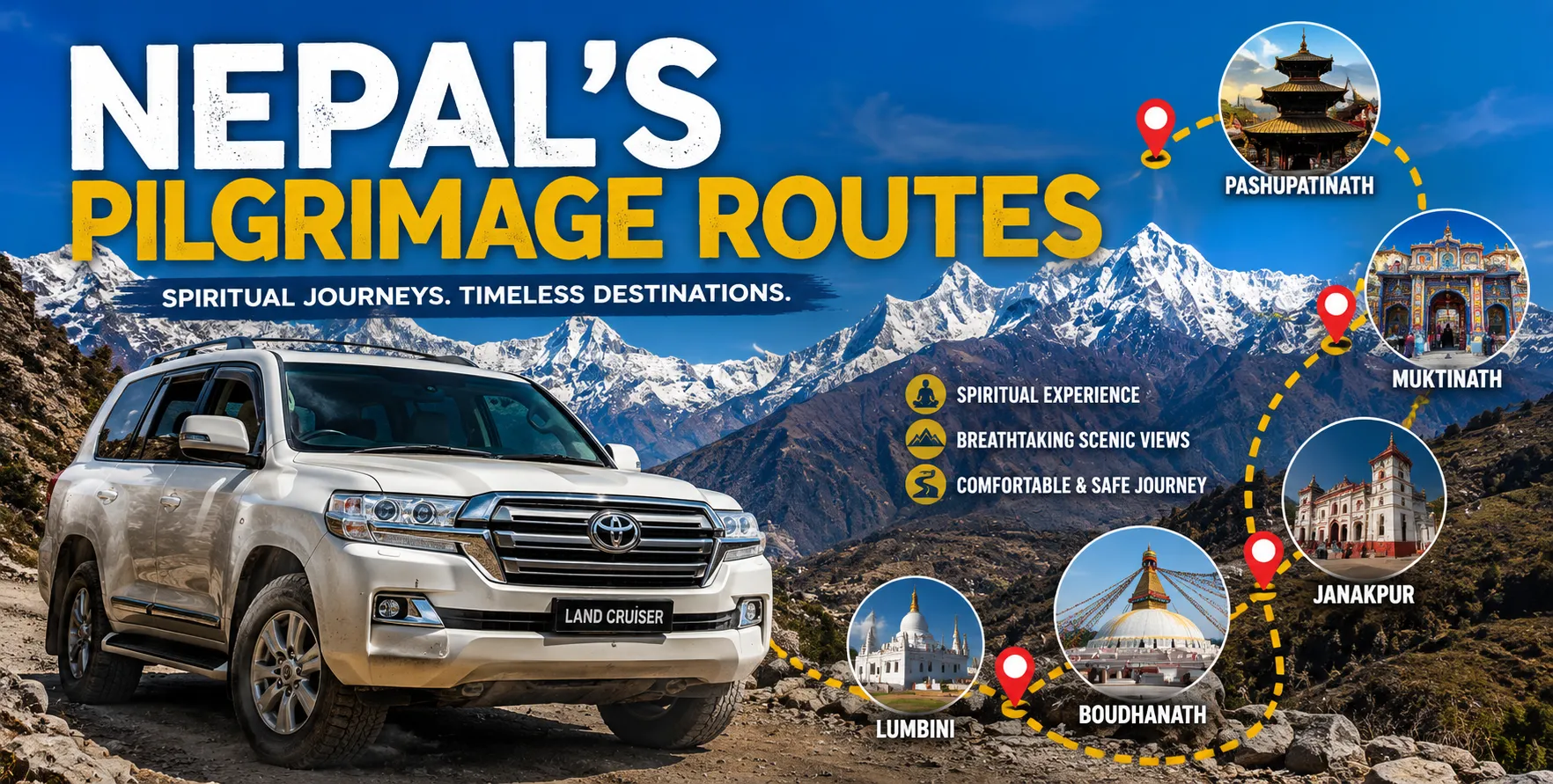
Pilgrimage travel has benefited just as much from this shift as trekking has. As detailed in our
Muktinath Temple: Vehicle Hire and Pilgrimage Route Guide, the demanding overland journey through Beni, Tatopani, Ghasa, and Jomsom toward one of Nepal’s most sacred shrines is now far more accessible to older pilgrims and families than it once was, purely because vehicle quality and driver experience have improved so significantly along this corridor.
The same pattern applies to other major pilgrimage routes across Nepal, including journeys to
Pashupatinath Temple in Kathmandu, and to Lumbini, the birthplace of Lord Buddha, reachable through our
Kathmandu-to-Lumbini bus and private vehicle service. Our detailed guide to the
Kathmandu Tamang Heritage Trail and the
Korala Tibet border route also reflects how the same premium transport standard is now expected across culturally and religiously significant routes, not only the most famous ones.
City and Valley Touring: A New Standard for Sightseeing
Beyond trekking and pilgrimage, everyday sightseeing around the Kathmandu Valley and Pokhara has quietly absorbed the same expectations. A sunrise excursion through our Nagarkot Sunrise Tour Vehicle Service, a heritage walk arranged via our
Bhaktapur Durbar Square tour, or a lakeside excursion through our
Sarangkot sunrise tour vehicles in Pokhara are all now commonly booked as private, comfortable experiences rather than shared, schedule-bound group tours. Longer regional connections, such as our
Kathmandu to Pokhara, BBus and private vehicle services from us, and private vehicle services from
Pokharato Lumbinireflects the same demand for flexible, comfortable travel between Nepal’s major tourist regions.
Corporate Travel and the MICE Sector
Nepal’s growth as a destination for meetings, incentives, conferences, and exhibitions has brought a wave of corporate travellers who expect premium ground transport as standard. Reliable, punctual, professionally presented transport has become a genuine competitive factor for hotels and conference venues courting this market, and our
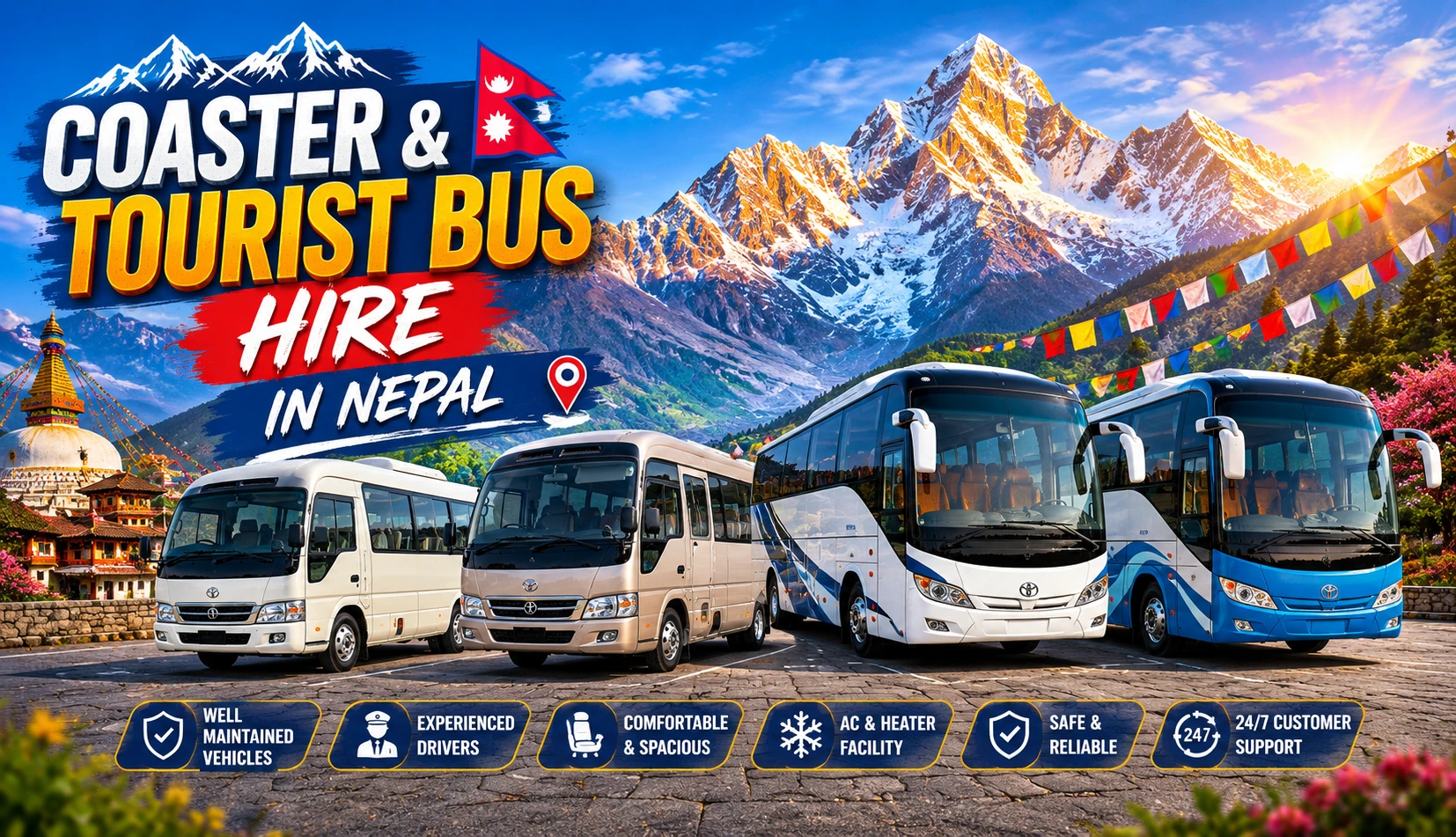
Coaster and Bus hire fleet, alongside our executive
Hiace hire service is increasingly booked by companies moving delegations and incentive groups around Kathmandu and Pokhara, with the same consistency expected at any major international business destination.
Weddings, Honeymoons, and Celebration Travel
Nepal’s growing popularity as a destination for honeymoons and small destination weddings, particularly around Pokhara’s lakeside setting, has added another dimension to this transformation. Couples planning these trips increasingly treat ground transport as part of the overall experience design, choosing private vehicles that reflect the occasion rather than a purely functional transfer. This trend aligns with and complements our sister companies’ luxury lodge trek offerings, where a private vehicle transfer bookends a honeymoon trek through the Annapurna or Everest regions, offering genuine comfort from start to finish.
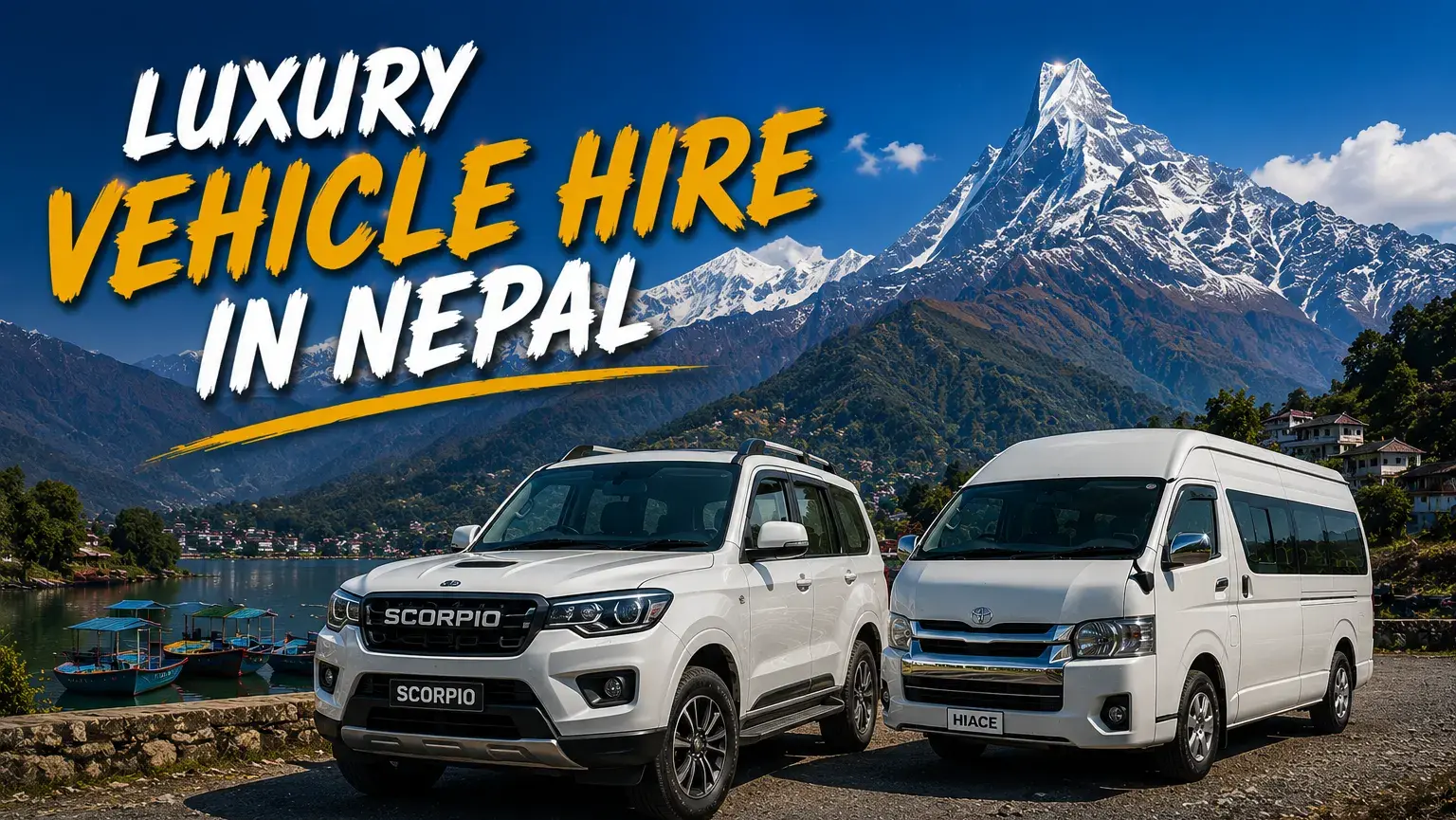
Combining Vehicle Hire With Luxury Trekking and Touring Packages
Perhaps the clearest sign of how thoroughly this transformation has taken hold is the growing number of travellers booking vehicle hire and trekking or touring together as a single, coordinated experience, rather than arranging each piece separately. Because Nepal Vehicle Hiring works closely with our sister companies,
Trek Nepal Himalaya, we can coordinate ground transport for any of their luxury lodge treks, classic teahouse treks, helicopter tour packages, or combined packages.
Nepal, Tibet, and Bhutan tour itineraries, including remote regions such as
Upper Mustang and the
Everest Base Camp Luxury Lodge Trek, where premium ground transport and a well-run trekking itinerary reinforce each other rather than operating as separate, disconnected bookings.
Technology and the Digital Booking Expectation: Traveller expectations around booking and communication have shifted just as much as expectations around the vehicles themselves. Real-time flight tracking, clear digital booking confirmations, direct driver contact details shared in advance, and live updates during a journey are now considered standard rather than exceptional, particularly among travellers accustomed to this level of service in other major travel markets. Operators that have invested in this kind of digital infrastructure alongside their physical fleet are best positioned to meet rising expectations through 2026 and beyond.
Driver Training and the Human Side of the Transformation
None of this shift would matter without the people behind the wheel. Across every category discussed here, from airport pickups to multi-day mountain transfers, driver training has become as important a differentiator as vehicle quality itself. Drivers who understand mountain roads, communicate clearly in English, handle luggage and equipment carefully, and remain calm and professional regardless of road conditions or schedule pressure are central to what makes a vehicle hire experience feel genuinely premium rather than simply expensive.
Sustainability Alongside Comfort
Interestingly, this shift toward premium vehicle hire has not come at the expense of sustainability considerations. Well-maintained, properly serviced vehicles run more efficiently than older, poorly kept cars, and consolidating group travel into appropriately sized vehicles reduces the overall number of trips needed for a given group. Many travellers now ask specifically about vehicle age, fuel efficiency, and driver welfare when booking premium transport, and operators who can answer these questions honestly are increasingly favoured over those who cannot.
The Broader Economic Impact Across Nepal
This transformation extends well beyond traveller comfort. Premium vehicle hire supports skilled drivers, vehicle maintenance businesses, and guesthouse networks along popular routes, from Tatopani and Marpha on the Muktinath corridor to Besisahar and Syabrubesi on trekking routes. As demand for higher-standard ground transport grows, it creates a stronger incentive to invest in vehicle quality, driver training, and road infrastructure, benefiting the wider tourism economy rather than only travellers who can afford a premium transfer.
What This Means for Travellers Planning a Trip
For travellers planning a trip to Nepal in the near future, this transformation translates into more choice and, generally, greater reliability than in years past. Whether the plan centers on a trek toward Everest or Annapurna, a pilgrimage to Muktinath or Lumbini, a business trip tied to Nepal’s growing MICE sector, or simply a comfortable, well-organised tour of the Kathmandu Valley and Pokhara, premium ground transport is now a realistic and increasingly well-established option rather than a rare luxury reserved for a small handful of travelers.
A Closer Look: Why the Timing Is Right
Several forces are converging at once to accelerate this transformation, and understanding them helps explain why the shift toward premium vehicle hire feels so pronounced right now rather than gradual and unremarkable. Nepal’s tourism sector has recovered strongly in recent years, bringing renewed investment into vehicle fleets, driver training, and road infrastructure that had previously seen only limited upgrades. At the same time, a new generation of travelers, having grown up with app-based ride booking, real-time tracking, and transparent pricing in their home countries, arrives in Nepal expecting a comparable standard rather than accepting the older model of unmarked taxis and informal negotiation.
Social media and travel content have also played a quiet but significant role, with photos and videos of comfortable private Land Cruisers navigating dramatic mountain roads increasingly shaping how prospective travellers imagine a trip to Nepal, well before they book their first flight. This visibility creates its own momentum, as operators who can deliver on that expectation gain a clear advantage over those still offering an older, rougher standard of service.
Traveller Segments Driving the Shift
Returning Visitors With Higher Expectations
Travellers who have visited Nepal before, sometimes years or even decades earlier, often notice this transformation most clearly, since they have a direct point of comparison with how transport used to work. Many actively seek out premium options on a return visit, having experienced the older, more difficult standard firsthand and having no interest in repeating it.
First-Time Visitors From Mature Travel Markets
Travellers arriving from markets with well-established premium travel norms, including much of Europe, North America, Australia, and increasingly parts of Asia, tend to expect a certain baseline of comfort and reliability regardless of destination, and Nepal’s ground transport sector has adapted accordingly to meet this expectation rather than lose these travellers to competing Himalayan destinations.
Multi-Generational and Family Groups
Families travelling together across generations, from young children to grandparents, have particular comfort and safety needs that a premium vehicle meets far more effectively than a shared bus or an ageing local jeep, and this segment has grown steadily as more families choose Nepal for a shared, once-in-a-lifetime trip.
A Case in Point: One Journey, Multiple Transformed Legs
Consider a typical present-day itinerary and how this shift now touches nearly every stage. A traveler lands at Tribhuvan International Airport and is met by a uniformed driver who tracks their flight in real time, rather than searching for a handwritten sign in a crowded arrivals hall. A day of Kathmandu Valley sightseeing follows in a private vehicle, taking in Bhaktapur’s medieval squares and a sunrise view from Nagarkot, rather than a fixed-schedule group tour. From there, a comfortable Land Cruiser carries the traveller toward a trekking trailhead such as Besisahar or Syabrubesi, arriving rested rather than exhausted.
After days on the trail, the same coordinated logistics bring the traveller back to Kathmandu in time for a relaxed final night before departure. A decade ago, nearly every leg of this journey would have involved some degree of discomfort, uncertainty, or improvisation. Today, each stage is handled with a consistent, professional standard, and that consistency, more than any single vehicle upgrade, is what genuinely defines this transformation.
Looking Ahead: What Continued Growth Looks Like
As this transformation continues through 2026, 2027, and beyond, several developments seem likely to shape its next phase. Continued airport expansion, particularly around Pokhara, should keep shifting demand toward locally based premium transport rather than routing everything through Kathmandu. Growing demand for luxury lodge trekking, supported by our sister companies’ expanding itineraries, should further deepen the integration between vehicle hire and trekking logistics. Rising corporate and MICE travel should continue pushing consistent, professional ground transport standards into market segments previously served by more basic, ad hoc arrangements.
How Nepal Compares to Other Himalayan Destinations
Nepal is not alone in seeing rising demand for premium ground transport, but its position at the heart of the world’s most famous mountain range gives this transformation particular weight. Neighboringdestinations offering Himalayan trekking and touring, including parts of northern India and Bhutan, have seen similar shifts toward higher-standard vehicles and more professional driver services, and Nepal’s tourism sector has nhadto keep pace to remain competitive for travelers weighing multiple Himalayan options Because Nepal offers by far the widest range of trekking regions, from Everest and Annapurna to Langtang, Manaslu, and Mustang, the pressure to deliver consistent, high-quality ground transport across a much larger and more varied road network has, if anything, been greater here than in more geographically compact competing destinations.
Fleet Investment and What It Actually Involves
Building a genuinely premium vehicle hire operation involves considerably more than simply purchasing newer cars. It requires ongoing investment in regular mechanical servicing, particularly for vehicles working the punishing unpaved routes to Besisahar, Syabrubesi, and Soti Khola, where brakes, suspension, and tyres wear far faster than in ordinary city driving. It requires a genuine training pipeline for drivers, covering not only safe mountain driving but also customer service, English communication, and route-specific knowledge built up over repeated trips along the same corridors. And it requires an administrative and technological backbone to support real-time flight tracking, digital booking confirmation, and reliable communication among drivers, dispatchers, and clients throughout the journey. Operators who have consistently made these investments are well positioned to capture the growing premium segment of Nepal’s travel market.
The Role of Trekking and Tour Agencies in Accelerating the Shift
Trekking and touring agencies have played an important, if sometimes underappreciated, role in accelerating this transformation. As agencies such as our sister companies, Alpine Luxury Treks and Trek Nepal Himalayas, have expanded their luxury lodge trek offerings, they have simultaneously raised client expectations for every other part of the itinerary, including ground transport. A traveller booking a five-star lodge trek naturally expects vehicle transfers to and from the trailhead to match that standard, and agencies have responded by partnering closely with vehicle hire operators who can deliver consistently, rather than leaving ground transport as an afterthought arranged separately by the traveller.
Insurance, Regulation, and the Formalisation of the Industry
Alongside rising comfort expectations, Nepal’s vehicle hire sector has also gradually formalised, with more operators carrying proper commercial vehicle insurance, maintaining transparent pricing structures, and operating under clear company registration rather than informal, individually negotiated arrangements. This formalisation matters enormously for traveller confidence, particularly for those booking multi-day trekking transfers or pilgrimage journeys into remote regions, since it provides real accountability if something goes wrong, whether that is a mechanical breakdown, a scheduling misunderstanding, or a safety incident on a difficult mountain road.
Customer Service Culture and the Human Element
Perhaps the least visible yet most important part of this transformation is a broader cultural shift in how ground transport providers view their role. Where drivers were once viewed primarily as a functional necessity, getting the traveller from one point to another, many operators now train and position drivers as an active part of the overall travel experience: knowledgeable about local history and culture, attentive to comfort and safety, and genuinely invested in how the traveller feels about their trip to Nepal as a whole. This shift in mindset, as much as any specific vehicle upgrade, is what separates a merely functional transfer from a genuinely premium one.
What Hasn’t Changed, and Why That Still Matters
This transformation has limits. Nepal’s mountain roads remain genuinely challenging, weather-dependent, and occasionally affected by landslides or seasonal closures regardless of how premium the vehicle or how experienced the driver. No investment in vehicles can prepare for the fundamental physical reality of travelling through the world’s highest mountain range, and travellers should still expect long days, occasional delays, and a need for flexibility, particularly during the monsoon season.
The underlying difficulty of the terrain hasn’t changed. Still, travellers can now move through it more comfortably, safely, and predictably. That distinction is worth keeping in mind when planning a trip: premium vehicle hire improves the experience considerably, but it does not, and should not, remove the genuine adventure at the heart of travel in Nepal.
Frequently Asked Questions
Is luxury vehicle hire only relevant for wealthy travellers?
No. While premium vehicles cost more than a shared bus or basic jeep, the price difference is often modest relative to the overall cost of a Nepal trip, and travellers on a standard mid-range budget now choose a private vehicle for at least the most demanding legs of their journey, such as trekking transfers or pilgrimage routes.
Which routes benefit most from premium vehicle hire?
Long, unpaved routes with significant elevation change, such as the roads to Besisahar, Syabrubesi, Soti Khola, and Muktinath, show the clearest benefit, since vehicle quality and driver experience directly affect comfort and safety on these corridors.
Can luxury vehicle hire be combined with a trekking or touring package?
Yes. Nepal Vehicle Hiring coordinates directly with our sister companies, Alpine Luxury Treks and Trek Nepal Himalayas, to arrange seamless ground transport around any trekking, pilgrimage, or luxury touring itinerary.
Is this trend limited to Kathmandu and Pokhara?
No. The shift toward premium ground transport is visible across trekking corridors, pilgrimage routes, and regional connections throughout Nepal, including increasingly remote areas such as Upper Mustang and the Manaslu region.
How has airport infrastructure influenced this transformation?
The expansion of Pokhara International Airport and the gradual growth of Gautam Buddha International Airport in Bhairahawe both increased demand for premium ground transport outside Kathmandu, allowing travellers to start their trips with a direct, comfortable connection to their final destinations.
Does premium vehicle hire compromise environmental responsibility?
Not necessarily. Well-maintained vehicles operate more efficiently than poorly serviced older cars, and consolidating group travel into appropriately sized vehicles can reduce a group’s overall transport footprint compared to multiple smaller, less efficient trips.
What should travellers look for when choosing a vehicle hire provider?
Look for a properly registered company with a well-maintained fleet, trained and experienced drivers, transparent pricing, and clear digital communication, including flight tracking for airport transfers and realistic route planning for mountain roads.
Is this transformation likely to continue through
All current indicators, including airport expansion, growing demand for luxury trekking, and rising corporate and MICE travel, point to continued growth in premium ground transport standards across Nepal in the coming years.
Seasonal Demand Patterns and Booking Behaviour
This transformation has also changed how far in advance travellers now plan their ground transport. A decade ago, arranging a jeep or car in Nepal was often a same-day or next-day affair, negotiated informally on arrival. Today, particularly during the peak spring and autumn trekking seasons, travellers often book premium vehicles and experienced drivers weeks in advance, mirroring booking patterns already familiar from flights and trekking permits. This shift reflects growing traveller awareness that the best vehicles and most experienced drivers are a limited resource during peak season. Early booking is now important for securing quality ground transport, as it has long been for securing a good trekking guide or a well-located hotel room.
Regional Variation Across Nepal’s Trekking and Touring Zones
This transformation has not been uniform across Nepal. The Kathmandu Valley, Pokhara, and the most popular Annapurna and Everest approach routes have seen the fastest and most visible upgrades in vehicle standards and driver training, simply because traveller volume and competition are highest there. More remote corridors, including the roads toward Manaslu, Upper Mustang, and parts of the far western region, are following the same trajectory but at a slower pace, reflecting lower traveller numbers and, in some cases, more challenging road conditions that limit how quickly premium vehicle standards can be established. Travellers planning trips to these more remote regions should expect an earlier stage of this transformation, though the trajectory remains consistently upward.
The Connection Between Vehicle Quality and Trip Safety. This transformation is not simply about comfort for its own sake. A well-maintained vehicle with proper suspension, reliable brakes, and adequate ground clearance, driven by someone genuinely experienced on a specific mountain corridor, is measurably safer than an older, poorly serviced vehicle driven by someone less familiar with the route. As Nepal’s premium vehicle hire sector has grown, it has, in a very real sense, also driven a broader safety upgrade across the country’s most demanding roads, even though safety is rarely the primary marketing angle.
How This Transformation Shapes First Impressions of Nepal
Traveller reviews and word-of-mouth recommendations increasingly reference the quality of ground transport as part of an overall assessment of a trip to Nepal, alongside more traditional factors like trekking guide quality, lodge comfort, and scenery. This shift has raised the stakes for operators across the industry, since a single poor ground transport experience, whether a late airport pickup or an uncomfortable trekking transfer, can now meaningfully affect how a traveller describes their entire trip to friends, family, and online audiences, regardless of how well every other part of the itinerary went. Operators that recognise this link between transport quality and overall trip perception are investing accordingly, treating ground transport as a core part of the travel product rather than a peripheral logistics detail.
Practical Advice for Travellers Navigating This Shift
For travellers trying to make sense of Nepal’s rapidly changing ground transport landscape, a few practical principles help. First, book premium vehicle hire as early as reasonably possible, particularly for peak-season trekking or pilgrimage transfers, since the best vehicles and most experienced drivers are in high demand during the busiest times. Second, ask specific questions when booking about the vehicle’s age, the driver’s experience on your particular route, and what happens in the event of a flight delay or road closure, rather than relying on general marketing claims. Third, consider coordinating your entire journey, from airport pickup through trekking or touring transfers, with a single provider where possible, since this consistency tends to produce a smoother overall experience than piecing together transport from multiple separate operators.
How Nepal Vehicle Hiring Fits Into This Broader Shift
Nepal Vehicle Hiring has grown alongside this transformation, expanding from a general vehicle hire service into a company that coordinates premium ground transport across nearly every major category discussed in this article: airport transfers, trekking trailhead transport, pilgrimage routes, Kathmandu Valley and Pokhara sightseeing, and corporate and group logistics. Our close working relationship with our sister companies, Alpine Luxury Treks and Trek Nepal Himalayas, reflects exactly the kind of coordinated, end-to-end approach that this broader industry shift has made increasingly important, allowing travellers to plan an entire Nepal journey, from the first airport pickup to the final trekking transfer, through a single, consistent point of contact rather than a patchwork of separate arrangements.
A Note on Cultural Sensitivity Amid Modernisation
As ground transport standards rise across Nepal, it remains important that this modernisation does not come at the expense of the cultural texture that makes travel here distinctive in the first place. The best premium vehicle hire experiences in Nepal combine genuine comfort and reliability with drivers who remain deeply knowledgeable about local culture, history, and etiquette, rather than adopting a generic, placeless service standard imported wholesale from elsewhere. Nepal’s transformation in ground transport is, at its best, additive rather than replacement; it adds comfort and reliability atop the country’s existing cultural depth rather than displacing it.
The Growing Overlap Between Vehicle Hire and the Trekking Economy
As luxury vehicle hire has expanded, it has become increasingly intertwined with the broader trekking and tourism economy rather than functioning as a standalone service. Guesthouses along popular approach roads, from Tatopani and Marpha on the Muktinath corridor to smaller settlements along the Besisahar and Syabrubesi routes, have adapted to serve a growing volume of comfortable, well-organised traffic, often coordinating directly with transport operators on overnight stops, meal planning, and last-minute itinerary changes.
This deepening relationship among vehicle hire operators, guesthouses, and trekking agencies has created a more resilient, better-coordinated travel ecosystem along Nepal’s major routes, benefiting nearly everyone involved, from the traveller enjoying a smoother journey to the local businesses that support it along the way.
Local drivers have also become an increasingly skilled and specialised workforce as a direct result of this shift. Where driving jobs in Nepal’s tourism sector were once viewed as relatively low-skill positions, the growing demand for drivers who combine mountain driving expertise, English communication skills, and genuine customer service ability has elevated these roles considerably, creating a stronger career path and better working conditions for drivers who invest in developing this broader skill set.
What Travellers Consistently Say About the Difference
Feedback from travellers who have experienced both the older, more basic standard of Nepali ground transport and the newer, premium alternative tends to converge on a few consistent themes. Travellers often note how much less physically draining a long mountain transfer feels in a well-maintained vehicle with a skilled driver than in an older jeep on the same road. They mention the psychological relief of a clearly identified driver waiting at the airport, removing a source of low-grade anxiety that often accompanies international arrival in an unfamiliar country. And they mention, perhaps most tellingly, that the quality of the journey itself has become something they now actively remember and discuss, rather than a forgettable, purely functional part of the trip they were relieved to have survived.
A Broader Reflection on Travel and Comfort in Challenging Terrain
There is a long-standing romantic notion in travel writing that discomfort is somehow inseparable from authenticity, that a rough, uncomfortable journey is more genuine than a smooth, well-organised one. Nepal’s experience over the past several years suggests a more nuanced reality: the mountains, temples, and culture that draw travellers to Nepal remain as authentic and challenging as ever, regardless of how comfortable the vehicle that carries them there is. A smoother better-organisedd journey to the trailhead does not diminish the genuine physical and spiritual challenge of the trek that follows; if anything, arriving rested and unstressed allows travellers to engage more fully with the parts of the experience that actually matter, the trail itself, the temple, the summit view, or the quiet moment of reflection at a sacred shrine, rather than spending that energy simply recovering from the journey to get there.
Bringing It All Together Across a Full Nepal Itinerary
Stepping back across everything covered in this article, the pattern is consistent: airport transfers, trekking trailhead transport, pilgrimage journeys, city and valley touring, corporate travel, and celebration trips have all moved in the same direction, toward greater comfort, reliability, and professionalism in ground transport. Each of these categories once operated as a largely separate, often improvised part of a trip to Nepal. Today, they increasingly form a single, connected chain of premium service, coordinated from the moment a traveller lands to the moment they depart, whether that journey includes a five-star lodge trek to Everest Base Camp, a pilgrimage to Muktinath, a business conference in Kathmandu, or simply a relaxed week of Valley sightseeing and lakeside relaxation in Pokhara.
This connected approach matters because travel experiences are rarely remembered as a series of disconnected logistics; they are remembered as a whole. A traveller who begins their trip with a smooth, professional airport pickup, continues through comfortable, well-organised transfers to their trekking trailhead or pilgrimage site, and finishes with an equally well-coordinated return journey is far more likely to describe the entire trip as seamless and well-run, even if the destinations themselves vary enormously in character. That sense of seamlessness, more than any individual vehicle feature, is the real product of this transformation.
Why This Matters for Nepal’s Tourism Future
Nepal competes for travellers against destinations across Asia and beyond, many of which have invested heavily in polished, end-to-end travel experiences. The continued growth of premium ground transport gives Nepal’s tourism sector a genuine competitive advantage, allowing it to pair its unmatched natural and cultural assets- the highest mountains on earth, deeply rooted Hindu and Buddhist heritage, and some of the richest trekking terrain anywhere- with a standard of ground logistics that no longer undercuts those assets. As more travellers choose Nepal specifically because they trust the full journey will be well handled, not only the destination itself, this transformation becomes not just a traveller’s convenience but a genuine driver of the country’s ongoing tourism growth.
A Final Snapshot of the Transformation in Numbers and Everyday Terms
While comprehensive nationwide statistics on premium vehicle hire remain limited, the everyday signs of this transformation are visible to anyone who has travelled through Nepal across multiple years: newer vehicles on major trekking corridors, more uniformed drivers at Tribhuvan International Airport’s arrivals hall, a wider range of vehicle classes available through established operators, and a growing number of trekking and tour packages that explicitly include premium ground transport as a core part of the itinerary rather than an optional add-on. None of these signs individually proves a dramatic industry-wide shift. Still, taken together, across airport transfers, trekking logistics, pilgrimage routes, and city touring alike, they describe a travel sector that has moved decisively toward comfort, professionalism, and reliability as standard expectations rather than rare exceptions.
Frequently Asked Questions, Continued
How does this transformation affect budget travellers?
Budget travellers continue to have access to shared buses, local jeeps, and public transport at lower cost, and this transformation has not eliminated those options. What has changed is the range of choice available above that baseline, giving travellers of varying budgets a genuine spectrum of options rather than a single, uniformly rough standard for everyone.
Are luxury vehicles available in more remote parts of Nepal?
Availability in more remote regions, such as Upper Mustang or the far western districts, is improving but remains more limited than in the well-established Kathmandu, Pokhara, and central trekking corridors. Booking well in advance is particularly important for premium vehicle hire in these more remote areas.
What role do trekking agencies play in this shift?
Trekking and touring agencies have driven much of this transformation by raising client expectations across the entire itinerary, not just the trek or tour itself, and by encouraging closer coordination between agencies and vehicle hire operators.
Is this trend specific to international travellers, or does it affect domestic tourism too?
While international travellers have driven much of the visible demand for premium vehicle hire, domestic tourism within Nepal, including for weddings, family trips, and pilgrimage journeys, has also increasingly embraced higher standards of comfort and reliability in ground transport.
How can travellers verify a vehicle hire company meets premium standards before booking?
Look for clear company registration, transparent pricing, verifiable reviews, and a willingness to answer specific questions about vehicle age, driver experience, and contingency planning for delays or route disruptions.
Final Practical Takeaways
- Book premium ground transport as early as possible, particularly during peak spring and autumn seasons, when the best vehicles and drivers are in highest demand.
- Consider coordinating airport transfer, sightseeing, and trekking or pilgrimage transport through a single provider for a smoother, more consistent overall journey.
- Ask specific questions about vehicle age, driver route experience, and contingency plans for delays rather than relying solely on general marketing claims.
- Recognise that premium vehicle hire improves comfort and reliability but does not eliminate the genuine physical challenges of Himalayan travel, particularly during the monsoon season.
- Look for operators who combine modern vehicles and professional drivers with genuine cultural knowledge and local hospitality, rather than a generic, imported service standard.
Final Thoughts: A Journey Worth Getting Right
Nepal’s landscapes and cultural sites have always been the reason travellers come, and that fundamental appeal has never needed improving. What has changed, steadily and significantly, is everything that connects a traveller to those landscapes and sites: the pickup at the airport, the drive to the trailhead, the journey to a sacred shrine, the transfer between cities.
Getting that connective tissue right, comfortably, reliably, and professionally, is what this transformation in Nepal travel has ultimately been about, and it is a change worth recognising for what it is: not a departure from Nepal’s authentic character, but a long-overdue upgrade to the experience of reaching it.
Contact Nepal Vehicle Hiring today at +9779814227196 or visit
vehiclehiringnepal.com to arrange your premium vehicle for trekking, pilgrimage, touring, or airport transfer anywhere in Nepal.
From your very first pickup at the airport to the final drive back for your departure flight, our team is ready to help make every leg of your Nepal journey as comfortable, reliable, and memorable as the destinations themselves.
Whatever shape your 2026 or 2027 Nepal itinerary takes, whether centred on a Himalayan trek, a sacred pilgrimage, a business trip, or simply a relaxed cultural tour of the Kathmandu Valley and Pokhara, the same underlying principle applies: the journey between destinations deserves the same care and attention as the destinations themselves, and that is precisely the standard this ongoing transformation in Nepal’s vehicle hire sector continues to build toward, one comfortable,well-organizedd journey at a time.
A Closing Thought on Value
Ultimately, the value of this transformation is best measured not in the price difference between a shared jeep and a private Land Cruiser, but in the quality of the memories a traveller carries home. A pilgrim who reaches Muktinath rested rather than exhausted, a trekker who begins the Annapurna Circuit refreshed rather than depleted, a family who lands in Kathmandu and steps calmly into a waiting vehicle rather than scrambling through a chaotic taxi rank, all describe a materially different experience of Nepal than travellers faced a decade ago. That difference, multiplied across the tens of thousands of journeys taken through this country each season, is what genuine transformation in an industry actually looks like: not a single dramatic change, but a steady, cumulative improvement in how well a country’s transport matches the extraordinary places it connects.
Nepal Vehicle Hiring remains committed to that steady improvement, one journey, one traveller, and one carefully planned itinerary at a time.
For anyone weighing how to plan their next Nepal trip, that commitment translates into a simple, practical promise: whichever route you take, whichever mountain you aim for, and whichever temple or city you visit, the journey to get there will be treated with the same care, professionalism, and attention as the destination itself.
That is, in the end, the real story behind why luxury vehicle hire is transforming travel in Nepal: not a passing trend in comfort, but a lasting shift in how seriously the country’s tourism sector now treats every part of the journey, from the first mile to the last.
We look forward to being part of that journey with you, whenever and wherever it takes you across Nepal.
From the winding road to Muktinath, to the long haul toward Everest and Annapurna, to the calm, professional pickup waiting at Tribhuvan International Airport, every one of these journeys tells the same underlying story about where Nepal’s travel industry is heading. Comfort, reliability, and genuine care for the traveller experience are no longer optional extras reserved for a narrow luxury segment; they are steadily becoming the baseline expectation across the country’s trekking, touring, and pilgrimage routes alike. That is the real measure of transformation, not a single flashy upgrade, but a broad, sustained shift in how an entire industry chooses to treat the people who travel through it, one vehicle, one driver, and one carefully planned journey at a time.
Thank you for taking the time to explore why this shift matters. We hope it helps you plan a smoother, more comfortable, and truly memorable journey through Nepal, wherever your travels take you next, whether that is a quiet valley temple, a bustling city street, or a remote mountain trailhead waiting at the end of the road. We hope the vehicle that carries you there reflects how much the journey itself has come to matter in modern Nepal travel.
Safe travels, and we look forward to welcoming you to Nepal soon.
- Why Luxury Vehicle Hire Is Transforming Nepal Travel
- The Shift: From Basic Transport to a Premium Experience
- Airport Transfers: Setting the Tone From Touchdown
- Trekking Transport: Comfort Without Sacrificing Access
- Pilgrimage Travel: Sacred Journeys Made More Accessible
- City and Valley Touring: A New Standard for Sightseeing
- Corporate Travel and the MICE Sector
- Weddings, Honeymoons, and Celebration Travel
- Combining Vehicle Hire With Luxury Trekking and Touring Packages
- Technology and the Digital Booking Expectation: Traveller expectations around booking and communication have shifted just as much as expectations around the vehicles themselves. Real-time flight tracking, clear digital booking confirmations, direct driver contact details shared in advance, and live updates during a journey are now considered standard rather than exceptional, particularly among travellers accustomed to this level of service in other major travel markets. Operators that have invested in this kind of digital infrastructure alongside their physical fleet are best positioned to meet rising expectations through 2026 and beyond.
- Driver Training and the Human Side of the Transformation
- Sustainability Alongside Comfort
- The Broader Economic Impact Across Nepal
- What This Means for Travellers Planning a Trip
- A Closer Look: Why the Timing Is Right
- Traveller Segments Driving the Shift
- A Case in Point: One Journey, Multiple Transformed Legs
- Looking Ahead: What Continued Growth Looks Like
- How Nepal Compares to Other Himalayan Destinations
- Fleet Investment and What It Actually Involves
- The Role of Trekking and Tour Agencies in Accelerating the Shift
- Insurance, Regulation, and the Formalisation of the Industry
- Customer Service Culture and the Human Element
- What Hasn't Changed, and Why That Still Matters
- Frequently Asked Questions
- Seasonal Demand Patterns and Booking Behaviour
- Regional Variation Across Nepal's Trekking and Touring Zones
- The Connection Between Vehicle Quality and Trip Safety. This transformation is not simply about comfort for its own sake. A well-maintained vehicle with proper suspension, reliable brakes, and adequate ground clearance, driven by someone genuinely experienced on a specific mountain corridor, is measurably safer than an older, poorly serviced vehicle driven by someone less familiar with the route. As Nepal's premium vehicle hire sector has grown, it has, in a very real sense, also driven a broader safety upgrade across the country's most demanding roads, even though safety is rarely the primary marketing angle.
- How This Transformation Shapes First Impressions of Nepal
- Practical Advice for Travellers Navigating This Shift
- How Nepal Vehicle Hiring Fits Into This Broader Shift
- A Note on Cultural Sensitivity Amid Modernisation
- The Growing Overlap Between Vehicle Hire and the Trekking Economy
- What Travellers Consistently Say About the Difference
- A Broader Reflection on Travel and Comfort in Challenging Terrain
- Bringing It All Together Across a Full Nepal Itinerary
- Why This Matters for Nepal's Tourism Future
- A Final Snapshot of the Transformation in Numbers and Everyday Terms
- Frequently Asked Questions, Continued
- Final Practical Takeaways
- Final Thoughts: A Journey Worth Getting Right
- A Closing Thought on Value

Related Blog & Articles
Chitwan to Kathmandu Luxury Car Rental – Private Transfers from Chitwan National Park
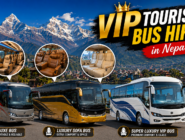
Kathmandu to Chitwan VIP Sofa Bus Ticket
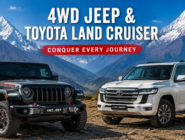
Luxury Jeep Hire in Nepal – Premium 4WD Vehicle Rental for Himalayan Adventures
Luxury Airport Transfer Nepal