Plan a Trip


Besisahar to Dharapani Jeep Hire – Complete 4WD Transfer Guide for Annapurna Circuit Trekkers

Introduction – The Gateway Drive to Nepal’s Greatest Trek
The Besisahar to Dharapani jeep hire is one of the most important and dramatic 4WD transfers in all of Nepal — the ride that launches trekkers directly into the heart of the Annapurna Conservation Area (ACAP) and the iconic Annapurna Circuit, widely regarded as one of the greatest trekking routes on earth. Nepal Vehicle Hiring Pvt Ltd provides the most reliable, professional, and experienced private 4WD jeep hire service for this spectacular off-road mountain route.
Covering approximately 40 km along the roaring Marsyangdi River gorge, the Besisahar–Dharapani jeep track ascends from the green subtropical valleys of Lamjung District (760 m) through a landscape of increasing dramatic grandeur — past traditional Gurung and Magar villages, through narrow gorge sections where waterfalls cascade directly onto the road, along cliff-hugging tracks carved into sheer rock faces, through the ancient salt-trade village of Jagat, and finally to the gateway village of Dharapani (1,860 m) — where the classic Annapurna Circuit trek officially begins for most modern trekkers.
The Besisahar–Dharapani section of the Annapurna Circuit was originally a 2-day stage of the trek. However, as road construction extended the jeep track deeper into the Marsyangdi valley over the past decade, this section is now motorable by 4WD — and most trekkers in 2026 choose to ride by jeep from Besisahar to Dharapani, skipping the dusty, vehicle-trafficked lower trail and beginning their genuine wilderness trekking from Dharapani, where the road ends.
The pristine high-mountain trail to Manang and Thorong La begins. This guide explains everything you need to know to make the most of your jeep transfer from Besisahar to Dharapani.
Book now: Nepal Vehicle Hiring – Jeep | All Vehicles | Call/WhatsApp: +977 9851013196
Besisahar to Dharapani Jeep Hire – Complete Route Overview
| Route | Besisahar (760 m) to Dharapani (1,860 m) |
| Road Distance | Approx. 40 km off-road mountain track |
| Travel Time | 3–4 hours (private jeep) | 4–5 hours (shared jeep) |
| Road Condition | Rough, narrow, unpaved off-road – 4WD MANDATORY |
| Altitude Gain | 760 m (Besisahar) to 1,860 m (Dharapani) |
| Key Villages | Bhulbhule, Ngadi, Khudi, Syange, Jagat, Chamje, Tal, Dharapani |
| Best Vehicle | Toyota Land Cruiser (premium) | Mahindra Scorpio (most popular) |
| Permits Required | ACAP (Annapurna Conservation Area Permit) + TIMS Card |
| Best For | Annapurna Circuit trekkers starting/skipping lower trail sections |
| Availability | Daily – depart Besisahar early morning for the best conditions |
| Contact | +977 9851013196 | vehiclehiringnepal.com |
The Annapurna Circuit – Context for Your Jeep Transfer
Before diving into the details of the Besisahar–Dharapani jeep route, it is essential to understand the context of the Annapurna Circuit itself — Nepal’s most complete trekking experience and arguably the finest long-distance mountain trek in the world.
What Is the Annapurna Circuit?
The Annapurna Circuit is a circular trekking route that circumnavigates the entire Annapurna massif — one of the world’s most spectacular mountain ranges, located in the Gandaki Province of north-central Nepal. The full circuit covers approximately 160–175 km of trekking, ascending from the subtropical Marsyangdi River valley (760 m) in the east, climbing through lush rhododendron and oak forests, crossing the Thorong La Pass (5,416 m) — the world’s highest trekking pass — before descending dramatically into the arid trans-Himalayan Mustang region and the Kali Gandaki valley, Nepal’s deepest gorge. The circuit takes most trekkers 10–21 days to complete, depending on the starting point and pace.
Why Trekkers Start at Dharapani Instead of Besisahar in 2026
The classic starting point for the Annapurna Circuit is Besisahar (760 m) in Lamjung District. However, over the past decade, road construction has progressively extended a jeep track from Besisahar up the Marsyangdi valley, passing through villages that were once pure trekking territory. Today, the road reaches Dharapani (1,860 m) and beyond to Chame and Manang.
As a result, the trail between Besisahar and Dharapani has become increasingly dusty, trafficked by jeeps and motorcycles, and less wilderness-like than it once was. Most experienced trekking guides and agencies now recommend starting the actual trekking from Dharapani, where the road effectively ends as a practical jeep route, and the pristine high-mountain trail to Chame, Manang, and Thorong La Pass begins.
The Annapurna Circuit in Brief – Key Stages After Dharapani
From Dharapani (1,860 m), the Annapurna Circuit progresses through these key stages:
- Dharapani to Chame (2,670 m): 15 km trekking through rhododendron and pine forests, past Bagarchhap, Danakyu, and Timang villages. Spectacular views of Manaslu and Annapurna II emerge. 5–6 hours walk.
- Chame to Upper Pisang (3,300 m): 17 km through narrow gorge, dense forest, and first views of the soaring Annapurna III. 5–6 hours walk.
- Upper Pisang to Manang (3,540 m): 20 km across a wide open glacial valley; Tilicho Peak and Gangapurna dominate the skyline—mandatory acclimatization rest day at Manang.
- Manang to Thorong Phedi / High Camp (4,450 m): 12 km across alpine meadows. Views of Annapurna III, Gangapurna Glacier.
- Thorong La Pass (5,416 m) to Muktinath (3,760 m): The great crossing — 15 km, 8–9 hours. World’s highest trekking pass. Descent to the sacred Muktinath Temple.
- Muktinath to Jomsom to Pokhara: Most trekkers drive from Jomsom to Pokhara by jeep or bus via Marpha, Tatopani, and Beni.
Why Hire a Private 4WD Jeep from Besisahar to Dharapani?
Shared jeeps do run from Besisahar to Dharapani — departing when full (typically 6–7 passengers per jeep), with no fixed schedule, no luggage guarantees, and stops at every village along the 40 km route. A private 4WD jeep hire from Nepal Vehicle Hiring transforms the experience entirely:
Departure on Your Schedule – Critical for Trekking Timing
The 40 km off-road Besisahar–Dharapani jeep track takes 3–4 hours under ideal conditions. Combined with a 6–7 hour drive from Kathmandu to Besisahar, a total Kathmandu-to-Dharapani day requires departing Kathmandu by 5:30–6:00 AM. With a private jeep, you control every departure time along the chain. Shared jeeps from Besisahar often wait until full, which can mean standing at the bus park for 1–2 hours — a significant waste of precious trekking-day time.
No Passenger Overcrowding – Luggage and Comfort Protected
Shared jeeps on the Besisahar–Dharapani route are notoriously overcrowded. Seven passengers in a vehicle designed for six, trekking poles strapped to the roof, backpacks wedged between passengers — the shared jeep experience on this off-road mountain track can be genuinely uncomfortable. With a private jeep, your group has the vehicle to itself. Trekking backpacks are secured in the boot or on the roof rack under a tarpaulin. Everyone has a proper seat with adequate legroom. After a long day of travel from Kathmandu, arriving in Dharapani refreshed and comfortable makes a meaningful difference to your first days of trekking.
Expert Local Driver with Off-Road Mountain Experience
The Besisahar–Dharapani jeep track is not a road for inexperienced drivers. It is narrow, steep, and rutted, with cliff drops on one side and rock faces on the other, and features multiple blind corners, river crossings, and sections that become treacherous after rain. Nepal Vehicle Hiring’s drivers for this route are experienced mountain specialists who have driven the Marsyangdi valley track many times, know every difficult section, and understand the conditions required for safe passage in different seasons.
Flexible Stops at Key Villages and Viewpoints
The Besisahar–Dharapani route passes through villages that, while now accessible by road, still retain significant cultural, scenic, and experiential value. A private jeep allows you to stop at Bhulbhule for ACAP permit registration, photograph the Syange waterfall, briefly explore Jagat’s historic lanes, and pause at Tal’s stunning flat valley and waterfall backdrop — all impossible at your own pace on a shared jeep following a shared schedule.
Vehicle Reliability in Remote Terrain
Breaking down on the Besisahar–Dharapani track — deep in a remote mountain gorge with no phone signal and no passing traffic — is a genuine possibility with poorly maintained vehicles. Nepal Vehicle Hiring’s fleet is regularly inspected and serviced before every departure on a mountain route. All vehicles are fully insured and equipped with basic tools, a spare tire, and a first-aid kit. Our drivers carry emergency contact numbers and are experienced in handling minor mechanical issues in remote locations.
Combined Kathmandu–Besisahar–Dharapani Service
Many trekkers want the convenience of a single vehicle and driver from Kathmandu all the way to Dharapani — rather than switching from a bus to a shared jeep at Besisahar Bus Park. Nepal Vehicle Hiring offers a fully combined Kathmandu-to-Besisahar-to-Dharapani private jeep service — one booking, one driver, one vehicle for the entire 220+ km journey. This is the most stress-free, comfortable, and time-efficient way for trekking groups to reach the Annapurna Circuit starting point.
Best 4WD Vehicles for the Besisahar to Dharapani Route
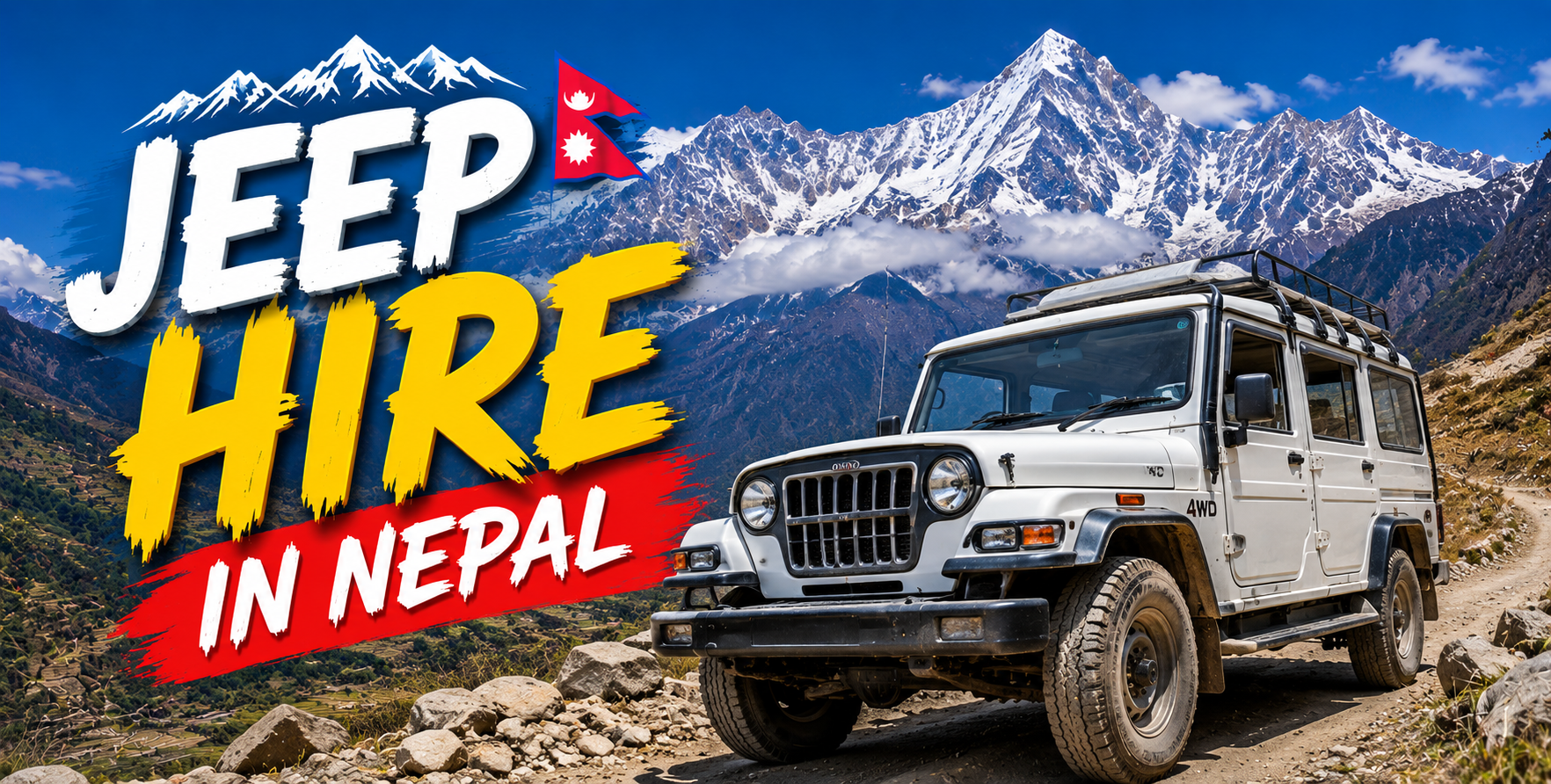
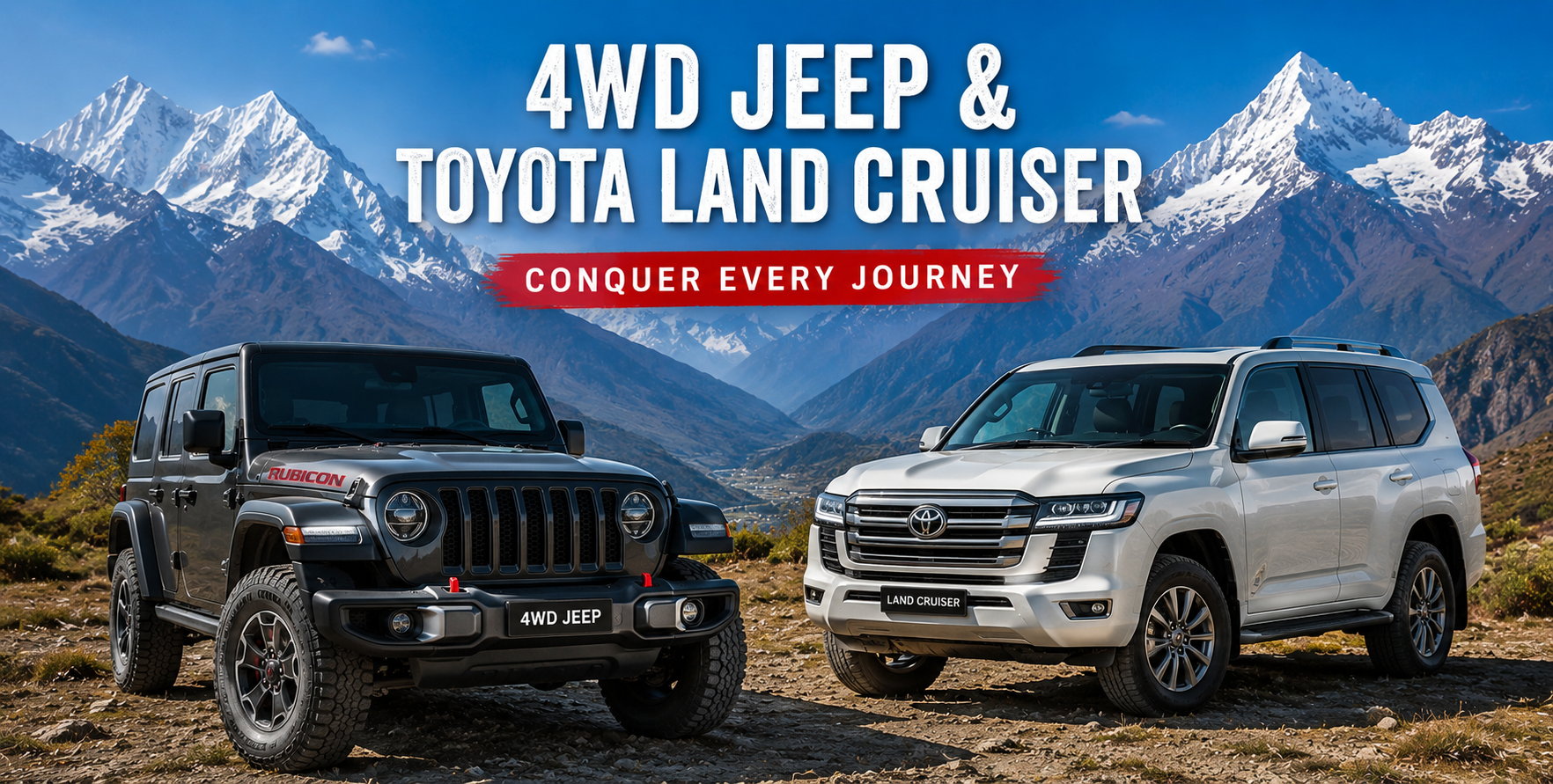
The Besisahar–Dharapani jeep track is one of the most technically demanding roads regularly driven in Nepal. All vehicles MUST be genuine 4WD with high ground clearance — standard AWD crossovers, sedans, and vans are entirely unsuitable for this route. Nepal Vehicle Hiring uses only the following proven mountain vehicles:
| Vehicle | Capacity | Off-Road Rating | Ground Clearance | Best For |
| Toyota Land Cruiser 4WD | 1–6 pax | Excellent | 220 mm | Premium trekkers / VIP groups |
| Mahindra Scorpio 4WD | 1–6 pax | Excellent | 180–200 mm | Groups / Standard trekkers |
| Mahindra Bolero 4WD | 1–6 pax | Excellent | 180 mm | Budget groups |
| Tata Sumo 4WD | 1–7 pax | Good | 165 mm | Large budget groups |
Toyota Land Cruiser 4WD – The Ultimate Marsyangdi Valley Vehicle
For the Besisahar–Dharapani route, the Toyota Land Cruiser 4WD is without question the finest available vehicle. Its purpose-built off-road architecture — locking differentials, superior suspension travel, 220 mm of ground clearance, a low-range transfer case, and a proven high-torque diesel engine — handles the roughest sections of the Marsyangdi valley track with capabilities other vehicles cannot match.
Passengers experience significantly less jarring on the rocky sections, and the Land Cruiser’s spacious interior accommodates 6 trekkers with full backpacks in genuine comfort. For groups who have invested in a 15–20-day Annapurna Circuit trek, starting the journey in a Toyota Land Cruiser is an investment in both safety and physical well-being that pays dividends on the first days of trekking.
Mahindra Scorpio 4WD – Nepal’s Most Popular Trekking Transfer Vehicle
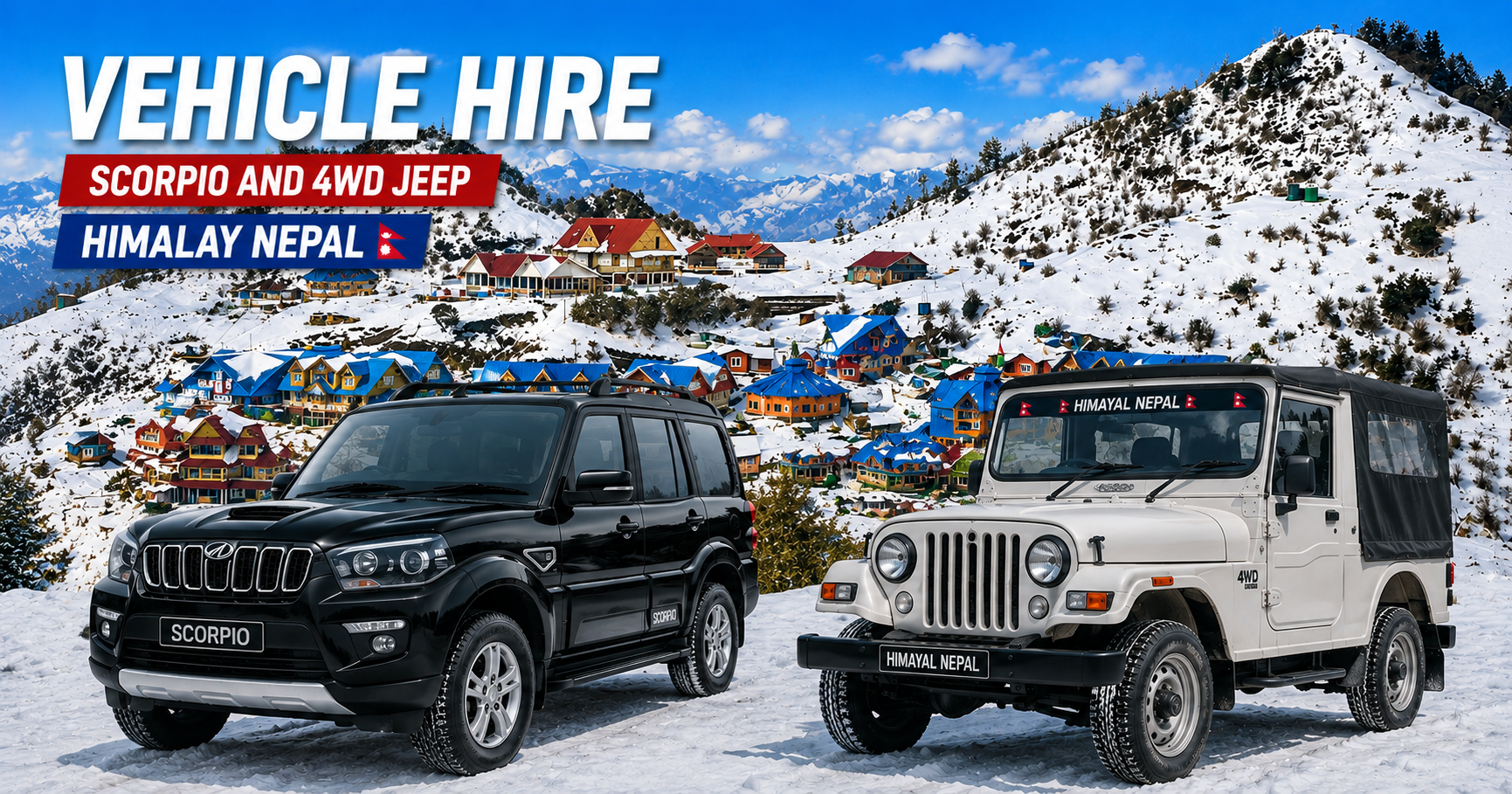
The Mahindra Scorpio 4WD is the most widely used private jeep on Nepal’s mountain trekking transfer routes — and with very good reason. Its powerful diesel engine, 180–200 mm ground clearance, genuine 4WD with switchable low-range, and 6-passenger capacity make it the most cost-effective and reliable vehicle for the Besisahar–Dharapani off-road section.
The Scorpio handles the cliff-edge sections, stream crossings, and steep rock-strewn climbs of the Marsyangdi valley track with proven confidence, and its reputation on Nepal’s mountain roads is unimpeachable. For most trekking groups, the Scorpio represents the optimal balance of off-road capability, passenger comfort, luggage capacity, and value for money.
Mahindra Bolero and Tata Sumo – Budget 4WD Alternatives
For groups traveling on tighter budgets, the Mahindra Bolero and Tata Sumo 4WD are reliable budget options for the Besisahar–Dharapani route. Both are genuine 4WD vehicles with adequate ground clearance for the route in dry conditions. The Bolero and Sumo offer slightly less refined interiors than the Scorpio but equivalent off-road capability under standard Marsyangdi valley conditions. Suitable for trekking groups prioritizing value over comfort. Not recommended during or after heavy rainfall, when the more powerful Scorpio or Land Cruiser provides meaningfully superior traction on wet rock and mud sections.
Besisahar to Dharapani – Detailed Village-by-Village Route Guide
The 40 km Besisahar–Dharapani off-road route is not merely a transfer — it is a journey through one of Nepal’s most dramatically beautiful and culturally rich river valleys. Here is a complete village-by-village guide to what you will see and experience:
| Village / Checkpoint | Distance from Besisahar | Altitude | Drive Time from Start | Highlights |
| Bhulbhule | 7 km | 840 m | 30 min | Annapurna Conservation Area entry; ACAP permit check; first Gurung villages |
| Ngadi / Khudi | 10 km | 790 m | 45 min | Marsyangdi River crossing; local villages; wide valley views |
| Syange | 15 km | 1,100 m | 1–1.5 hrs | Dramatic gorge entry; seasonal waterfall over road; Mad Honey hunters’ village |
| Jagat | 22 km | 1,330 m | 1.5–2 hrs | Former Tibet salt-route checkpoint; suspension bridge; cliff-hugging road |
| Chamje | 27 km | 1,410 m | 2–2.5 hrs | Marsyangdi gorge narrows; dense forest; dramatic canyon views |
| Tal | 32 km | 1,700 m | 2.5–3 hrs | First village of Manang District; wide flat valley; impressive waterfall backdrop; palm trees |
| Dharapani | 40 km | 1,860 m | 3–4 hrs | ACAP checkpoint; Annapurna Circuit proper begins; Manaslu Circuit junction; stone-paved lanes |
Besisahar (760 m) – The Annapurna Circuit Gateway Town
Besisahar is the headquarters of Lamjung District and the traditional starting point of the Annapurna Circuit. A bustling small mountain town straddling the Marsyangdi River (“Turbulent River” in Nepali — named for its powerful, churning currents), Besisahar serves as the last major town with reliable ATMs, well-stocked shops, pharmacies, and vehicle fuel before entering the Annapurna Conservation Area. The town’s tea houses, trekking supply shops, and guesthouse lodges are always busy with Annapurna Circuit trekkers preparing for their mountain journey.
Besisahar is also where most Annapurna Circuit trekkers obtain their ACAP (Annapurna Conservation Area Permit) and TIMS Card if they have not already secured them in Kathmandu or Pokhara. Nepal Vehicle Hiring drivers wait in Besisahar for the permit process and any last-minute supplies before continuing on the off-road section to Dharapani.
Bhulbhule (840 m) – The ACAP Entry Checkpoint
Just 7 km from Besisahar, Bhulbhule is the official entry checkpoint for the Annapurna Conservation Area (ACAP). All trekkers must have their ACAP permit and TIMS card checked and stamped here — whether arriving by foot or by jeep. The ACAP checkpoint is managed by the National Trust for Nature Conservation (NTNC), and the fees collected directly fund conservation of the extraordinary biodiversity of the Annapurna region — including the protection of snow leopards, Himalayan tahr, red pandas, and over 400 bird species. The village itself has several guesthouses and a scenic suspension bridge over the Marsyangdi River, which trekkers cross to begin the trail proper from the east bank.
Khudi and Ngadi – River Valley Villages
Beyond Bhulbhule, the jeep track continues through Khudi (790 m) and Ngadi — traditional Gurung and Magar villages set among rice paddies, banana groves, and millet fields. The Marsyangdi River here is wide and powerful, its glacier-fed waters a magnificent turquoise-grey, flanked by forested hills that hint at the increasingly dramatic landscape ahead.
These lower-valley villages are home to the indigenous Gurung people — a community famous throughout Nepal and around the world for producing the legendary Gurkha soldiers who have served in the British and Indian armies for two centuries. The stone-built homes, water mills (called dhiki or kol), and terraced farmland of these villages are among the most photogenic scenes of the lower circuit.
Syange (1,100 m) – Waterfalls, Gorge Entry, and Mad Honey
At Syange, approximately 15 km from Besisahar, the Annapurna Circuit jeep track enters the first true gorge section of the Marsyangdi valley. The road narrows dramatically as it is carved directly into sheer cliffs above the river, with the gorge walls rising hundreds of meters on either side.
The approach to Syange is marked by a spectacular seasonal waterfall that cascades directly across the road during monsoon and early autumn — passengers in the jeep are drenched as the vehicle passes through, an experience that generates both shock and delight in equal measure. In the dry season, the waterfall is reduced to a trickle, but the rocky overhang above the road remains impressively dramatic.
Syange is also associated with Nepal’s legendary “Mad Honey” (Phryngo Mahuri) — a rare hallucinogenic honey produced by the giant Himalayan Cliff Bee (Apis laboriosa) from the nectar of rhododendron flowers. The Gurung honey hunters of Syange and the surrounding cliffs practice the ancient, vertigo-inducing art of cliff-face honey harvesting using traditional rope ladders and smoke pots — a practice documented in the famous Eric Valli National Geographic photographs that brought global attention to this extraordinary Lamjung tradition.
The unique psychoactive properties of Mad Honey have been known to the Gurung people for millennia, and it is used in very small quantities for medicinal and ritual purposes.
Jagat (1,330 m) – The Ancient Salt Road Checkpoint
Roughly halfway between Besisahar and Dharapani, Jagat is one of the most historically significant villages on the lower Annapurna Circuit. Its name in Nepali means “the world” — reflecting its former importance as a toll and customs post on the ancient Tibet–India salt trade route, where traders from Tibet bringing salt, wool, and dried meat southward paid taxes to the local administration. The historic trail passed directly through Jagat before descending to the Terai plains.
Today, Jagat retains its stone-built character and its position on a rocky ridge above the Marsyangdi, with the jeep track requiring a suspension bridge crossing and a short, steep climb to reach the village. The approach to Jagat involves some of the most dramatic cliff-edge driving on the entire route — sections where the road is barely wide enough for a single jeep and the drop to the river below is vertigo-inducing.
Chamje (1,410 m) – Into the Deep Gorge
Beyond Jagat, the jeep track descends to Chamje — a small village where the Marsyangdi River gorge narrows to its most extreme point. The walls of the gorge here are vertical or overhanging in places, with the river far below and the road carved into a thin ledge of rock. Rhododendron, oak, and pine forests cling to every available slope. In spring, the blaze of red and pink rhododendron flowers against the grey cliff walls creates an extraordinary scene of natural beauty.
The sound of the river is constant and powerful at Chamje — the Marsyangdi roaring through the narrows in a permanent white-water thunder that fills the canyon. This is one of the finest sections of the entire Besisahar–Dharapani drive for photography and sheer natural drama.
Tal (1,700 m) – The Flat Valley and the Great Waterfall
At Tal, the dramatic gorge suddenly and unexpectedly opens into a wide, flat valley floor — a geological anomaly formed by an ancient glacial lake that once filled this entire section of the Marsyangdi valley. The name “Tal” literally means “lake” in Nepali, reflecting this origin. The village sits at the center of this wide valley on a raised plateau of flat alluvial land, with the Marsyangdi flowing peacefully between engineered embankments (gabions) rather than in its usual fury.
The backdrop to Tal is one of the most iconic natural scenes on the Annapurna Circuit — a magnificent waterfall cascading several hundred meters from the cliff face at the head of the valley, flanked by dense forest. In the foreground, palm trees sway beside traditional stone-built teahouses — an incongruous tropical touch at 1,700 m. Tal is the first village of Manang District — the cultural transition point from the largely Hindu Lamjung communities of the lower valley to the increasingly Buddhist Gurung and Tibetan-influenced communities of the upper Marsyangdi and Manang.
Dharapani (1,860 m) – Where the Trek Truly Begins
The destination: Dharapani — a small but critically important village at 1,860 meters, marking both the practical end of the Besisahar–Dharapani jeep transfer and the beginning of the pure wilderness trekking section of the Annapurna Circuit. Dharapani is also the junction village for the Manaslu Circuit — the trail to the north leading toward the Nubri Valley and the Manaslu Base Camp region. The ACAP checkpoint here records all trekkers’ permits and collects data on conservation fees.
Dharapani’s teahouse lodges are simple yet welcoming — and their warm dal bhat, sweet Nepali tea, and campfire evenings mark the beginning of authentic mountain-trekking hospitality. The dramatic view of the Manaslu range (8,163 m) visible to the north from Dharapani is often many trekkers’ first direct sighting of an 8,000-meter peak — a moment of genuine awe that signals the scale and magnificence of what lies ahead on the Annapurna Circuit.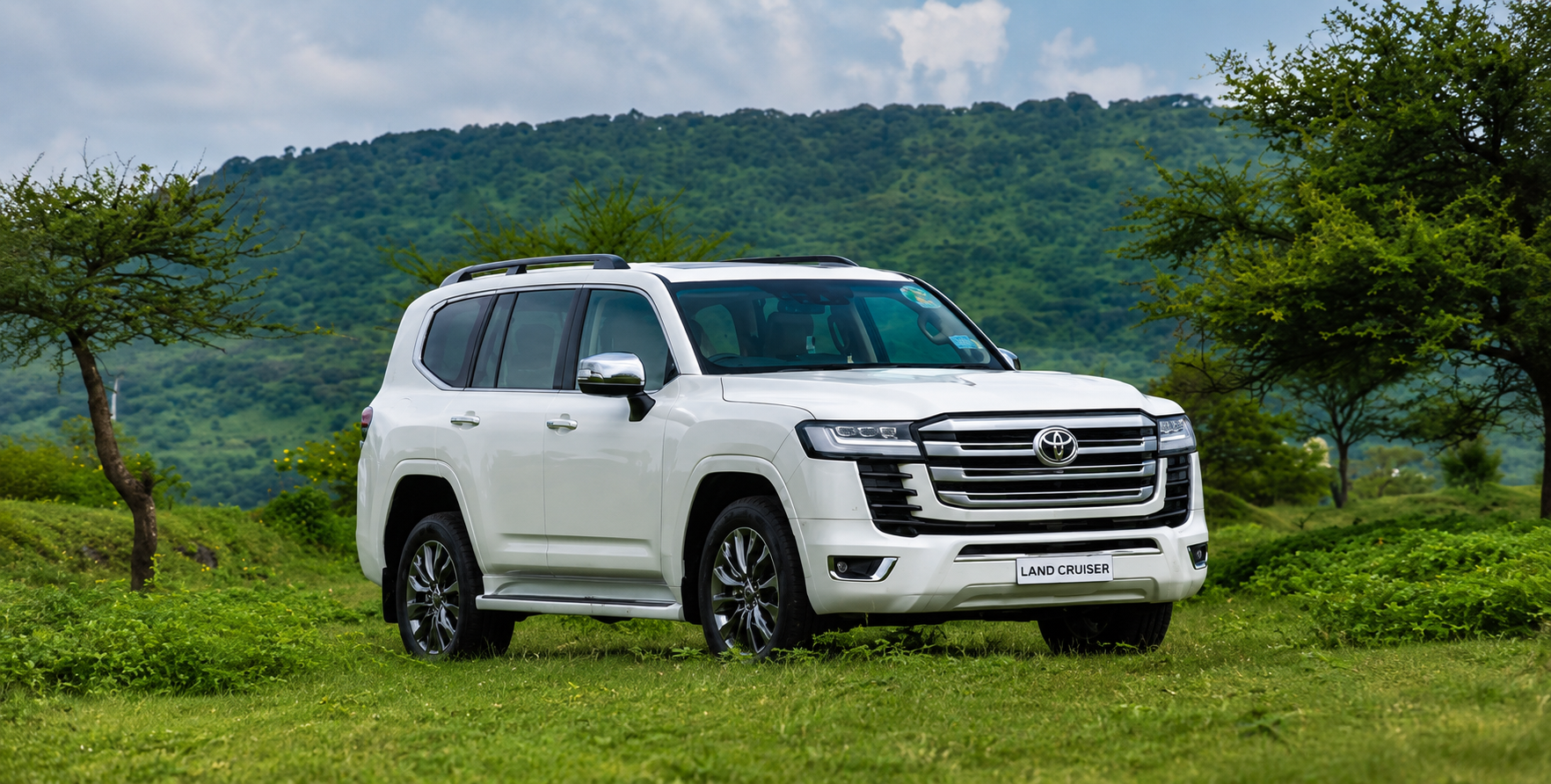
Permits Required for the Besisahar to Dharapani Jeep Route
All visitors to the Annapurna Conservation Area must carry valid permits. These must be obtained BEFORE the jeep departs from Besisahar — the ACAP checkpoint at Bhulbhule will require their presentation. Permits are significantly more expensive and time-consuming to obtain at mountain checkpoints. Obtain in advance at the NTB (Nepal Tourism Board) offices in Kathmandu, Pokhara, or Besisahar:
| Permit | Required For | Cost (Foreign) | Where to Get |
| ACAP | All Annapurna Conservation Area visitors | NPR 3,000 | NTB offices KTM / Pokhara / Besisahar |
| TIMS Card | All foreign trekkers | USD 20 (~NPR 2,700) | NTB / TAAN offices |
| Manaslu MCAP | Manaslu Circuit extension only | NPR 3,000 | NTB office Besisahar / Kathmandu |
ACAP Permit – The Annapurna Conservation Area Entry Pass
The Annapurna Conservation Area Permit (ACAP) is the primary permit required for all visitors entering the Annapurna region — whether on foot or by vehicle. The permit funds the National Trust for Nature Conservation (NTNC), which manages the 7,629 sq. km Annapurna Conservation Area — the largest protected area in Nepal. The ACAP fees directly support wildlife conservation, trail maintenance, community development, and environmental protection across the entire circuit. Foreign nationals pay NPR 3,000; SAARC nationals NPR 1,000; Nepali citizens NPR 100.
TIMS Card – Trekker Registration
The TIMS (Trekkers Information Management System) Card is a safety registration system managed by the Nepal Tourism Board. It records trekkers’ personal details, contact information, and trek routes, creating a database that facilitates search-and-rescue operations in the event of an emergency on the trail. The TIMS card costs USD 20 for independent trekkers and USD 10 for trekkers using a registered trekking agency. The card is checked at multiple points along the Annapurna Circuit.
Choosing Your Annapurna Circuit Starting Point – Complete 2026 Guide
One of the most important decisions for any Annapurna Circuit trekker in 2026 is where to start the actual trek. The extension of the jeep road to Dharapani (and beyond to Chame and Manang) has created multiple viable starting points, each with its own advantages and disadvantages. Nepal Vehicle Hiring’s jeep service covers all of these, and our drivers can advise on the best option for your group’s fitness, timeline, and priorities:
| Trek Start Point | Altitude | Pros | Cons | Best For |
| Besisahar | 760 m | Full circuit; local culture | Dusty road walking 40 km | Purist trekkers |
| Bhulbhule | 840 m | Partial road skip; ACAP start | Still near the road | Budget trekkers |
| Syange | 1,100 m | Skip the dusty lower road | Miss the lower villages | Trekkers with time limits |
| Jagat | 1,330 m | Good middle-start option | Skip Bhulbhule gorge | Moderate trekkers |
| Dharapani | 1,860 m | Pure trekking begins here; the most popular 2026 | Miss lower trail entirely | Most trekkers in 2026 |
| Chame | 2,670 m | Skip all road sections; 3 extra days | Altitude gain is fast and expensive | Fit/experienced trekkers |
Why Dharapani is the Most Popular Starting Point in 2026
The overwhelming majority of Annapurna Circuit trekkers in 2026 choose to ride by jeep from Besisahar (or directly from Kathmandu/Pokhara) to Dharapani, and begin trekking from there. The reason is straightforward: the 40 km trail from Besisahar to Dharapani now runs alongside a paved road, making it dusty, noisy, and less wild than the original remote trekking trail. Beyond Dharapani, the road becomes increasingly impractical for most vehicles, and the trail enters genuine wilderness terrain — dense rhododendron forests, dramatic river gorges, traditional alpine villages, and the soaring Himalayan peaks of Annapurna and Manaslu appearing above the treeline. Starting from Dharapani delivers the authentic Annapurna Circuit experience without the compromised lower section.
Best Time for the Besishahar to Dharapani Jeep Transfer
| Season | Months | Road Condition | Trek Conditions | Recommendation |
| Autumn | Oct–Nov | Dry & stable | Best season: clear views | Highest recommended |
| Spring | Mar–May | Good | Rhododendrons; warm | Highly recommended |
| Winter | Dec–Feb | Cold; possible ice | Quiet; snow above 3,500 m | Moderate; experienced only |
| Monsoon | Jun–Sep | Landslide risk; muddy | Leeches; road closures | Not recommended |
Autumn Season – October to November
Without question, October and November are the finest months for the Besisahar–Dharapani jeep transfer and the Annapurna Circuit. The monsoon has ended, the roads have dried, the rivers run clear, and the skies are crystal blue with the full panorama of the Annapurna massif, Manaslu, and Lamjung Himal visible in sharp relief. The rhododendron forest along the route has its deepest autumn foliage, and the waterfalls — including the spectacular one above Syange — are still running strongly from late monsoon discharge but not overflowing onto the road. October and November are peak trekking season — Nepal Vehicle Hiring strongly recommends booking your Besisahar–Dharapani jeep transfer at least 1 week in advance during this period.
Spring Season – March to May
Spring is the second great trekking season for the Annapurna Circuit. March and April bring the extraordinary spectacle of rhododendron forests in full bloom along the Besisahar–Dharapani route — the hillsides between Syange and Tal ablaze with red, pink, and white flowers against the snow-covered mountain backdrop. Temperatures are warm and pleasant at lower elevations (excellent for the jeep ride), and trail conditions above Dharapani improve progressively as the month advances. May is warm and slightly hazy, but still good — and the Haribodhini Ekadashi festival at Muktinath (usually April–May) draws enormous numbers of pilgrims to the upper Mustang end of the circuit, adding a vibrant cultural dimension to the trek.
Winter – December to February
Winter travel on the Besisahar–Dharapani route is possible but requires extra caution and preparation. The lower sections (Besisahar to Tal) remain drivable in most years because the altitude is too low for significant snowfall. However, the track can be icy in shaded sections and slippery after overnight frost. Above Dharapani on the trek itself, snow accumulates heavily at altitude, and the Thorong La Pass is frequently closed from December through February. Winter trekkers on the circuit typically need more time, experience, and appropriate equipment. The road section from Besisahar to Dharapani is quieter in winter — a significant benefit for those who prefer solitude, lower costs, and an uncrowded trail.
Monsoon – June to September
The monsoon season is not recommended for hiring a jeep between Besisahar and Dharapani. Heavy rainfall causes frequent landslides on the cliff-face sections between Syange and Jagat, which can block the road for hours or days. The track becomes extremely muddy and slippery, significantly increasing the risk of vehicle incidents. The waterfalls — spectacular in the dry season — become dangerous flood cascades that can overwhelm the road. Leeches are rampant on the lower trails from Bhulbhule to Dharapani during the monsoon months.
For determined monsoon trekkers, the Annapurna region’s rain shadow effect (Manang and Mustang districts receive relatively little monsoon rain) makes the upper circuit passable — but reaching Dharapani safely from Besisahar by jeep in July or August requires experienced drivers and close monitoring of road conditions.
Packing and Preparation Guide – Besisahar to Dharapani Jeep Transfer
The Besisahar–Dharapani jeep transfer is the gateway to a major Himalayan trek. Being well-prepared before the jeep departs sets the tone for your entire Annapurna Circuit experience:
Trekking Permits and Documents
- ACAP Permit: NPR 3,000 (foreign). Obtain in Kathmandu, Pokhara, or Besisahar. Carry the original certificate.
- TIMS Card: USD 20. Obtain from the NTB offices in Kathmandu or Pokhara. Required from Bhulbhule checkpoint onwards.
- Passport: Original passport required at all ACAP checkpoints along the circuit.
- Travel Insurance: Must cover trekking at an altitude above 5,000 m and helicopter evacuation. Verify your policy before departure from Kathmandu.
Cash and Banking
- Besisahar ATMs: The last reliable ATM on the Annapurna Circuit is in Besisahar. Draw sufficient Nepali rupees for your entire trek — including accommodation, meals, hot showers, charging fees, and tips. Budget approximately NPR 2,500–4,000 per day for teahouse costs in the lower circuit, rising to NPR 4,000–6,000+ in upper Manang.
- Small Denominations: Carry notes in small denominations (NPR 100, 200, 500) — teahouses on the trail have limited change.
Essential Gear for the Jeep Ride and First Trek Days
- Layered Clothing: The Besisahar–Dharapani jeep ride passes through subtropical (760 m) to lower temperate (1,860 m) zones—light clothes for the jeep ride, with layers available for Dharapani evenings.
- Trekking Poles: Secure in the jeep boot or tied to the roof rack, not between passengers.
- Hydration: Carry 1–2 liters of water for the 3–4 hour jeep ride. Water refills are available at all villages along the route.
- Snacks: Energy bars, biscuits, or fruit for the jeep ride. Restaurants are available at Bhulbhule, Jagat, and Tal.
- Camera / Drone: The Syange waterfall, Jagat gorge, and Tal valley backdrop are extraordinary photography subjects. Have your camera accessible during the jeep ride.
How to Book Your Besisahar to Dharapani Jeep Hire
- Step 1 – Browse Fleet: Visit com/jeep and review our 4WD fleet.
- Step 2 – Contact Us: Call or WhatsApp +977 9851013196 with: your trek start date, number of passengers, volume of luggage and trekking packs, preferred vehicle (Scorpio / Land Cruiser), and whether you need the combined Kathmandu–Besisahar–Dharapani service or only the Besisahar–Dharapani section.
- Step 3 – Confirm Permits: Confirm that all passengers have valid ACAP and TIMS permits, or advise Nepal Vehicle Hiring to factor in permit acquisition time in Besisahar.
- Step 4 – Receive Booking Confirmation: We provide your driver’s name, vehicle registration, pick-up location, and departure time.
- Step 5 – Depart Early: Meet your driver at the agreed point — in Besisahar, at Kathmandu hotel, or at Pokhara — and depart as early as possible (6–7 AM maximum) to complete the off-road Besisahar–Dharapani section before the afternoon.
Essential Travel Tips – Besishahar to Dharapani Jeep Transfer
- Depart Besisahar by 8 AM: The off-road section to Dharapani takes 3–4 hours in good conditions. Departing by 8 AM ensures arrival at Dharapani by noon–1 PM, giving you a full afternoon to rest, settle into your guesthouse, and prepare for the next day’s trekking.
- Obtain Permits Before Besisahar: Getting ACAP and TIMS permits in Kathmandu or Pokhara saves significant time in Besisahar. The NTB office in Kathmandu’s Pradarshani Marg and Pokhara’s Damside area both process permits within 30 minutes on weekday mornings.
- Sit on the Right Side: For the best views of the Marsyangdi gorge and the waterfalls on the approach to Syange, sit on the right side of the jeep (facing forward) — this is the mountain/river side on the northbound journey from Besisahar to Dharapani.
- Avoid Sharing Your Jeep with Freight: Local shared jeeps on this route often carry local produce, building materials, and supplies alongside passengers. A private Nepal Vehicle Hiring jeep carries only your group — no freight, no unexpected co-passengers, no impromptu collections along the road.
- Notify Your Trek Agency or Guesthouse: If your trekking agency or Dharapani guesthouse is expecting you, send your estimated arrival time from Besisahar. Phone signal is available in most villages, but may be unavailable in deep, narrow gorges.
- Check Weather Forecasts: In monsoon and shoulder seasons, check weather forecasts before departure. Heavy overnight rain can cause landslides that block the Syange–Jagat section for several hours. Nepal Vehicle Hiring’s drivers monitor road conditions and advise on safe departure timing.
- Budget Extra Time in Besisahar: Plan to spend 1–2 hours in Besisahar for permit checks, last-minute supply purchases, a proper breakfast, and vehicle loading. Rushing this preparation phase adds stress to the entire trek.

Related Vehicle Hire Services – Nepal Vehicle Hiring
Nepal Vehicle Hiring covers the full range of transport options for Annapurna Circuit trekkers and all other Nepal routes:
- Kathmandu to Besisahar Vehicle Hire
- Pokhara to Besisahar Jeep Hire
- Dharapani to Chame Jeep Transfer (Extended)
- Pokhara to Muktinath Jeep Rental
- Kathmandu to Muktinath Tour Guide
- Pokhara to Beni Jeep Hire
- Kathmandu Sightseeing Tour by Jeep
- Nepal Trekking Packages
- Bus Hire Nepal – All Routes
Frequently Asked Questions – Besisahar to Dharapani Jeep Hire
How far is Besisahar from Dharapani?
The road distance from Besisahar to Dharapani is approximately 40 km along an off-road mountain track that follows the Marsyangdi River valley through Bhulbhule, Syange, Jagat, Chamje, and Tal. Despite the relatively short distance, the rough terrain means the drive takes 3–4 hours by private jeep.
Is a 4WD jeep truly necessary for the Besisahar-Dharapani route?
Yes — absolutely. The Besisahar–Dharapani track is entirely off-road, narrow, rocky, and steep in multiple sections. Standard cars, sedans, SUVs without 4WD, and vans cannot safely navigate this route. Only genuine 4WD vehicles with high ground clearance — Toyota Land Cruiser, Mahindra Scorpio, Bolero, or Tata Sumo — should be used. Nepal Vehicle Hiring operates exclusively genuine 4WD jeeps for this route.
Can I go from Kathmandu directly to Dharapani by private jeep in one day?
Yes — the combined Kathmandu-Dharapani journey (approx. 220 km) can be completed in a single long day with a very early departure from Kathmandu (5:30–6:00 AM). Expect to arrive at Dharapani in 9–12 hours, including the off-road section from Besisahar. Nepal Vehicle Hiring provides this combined single-day service on request. Departing earlier is strongly recommended, as it allows the off-road Besisahar–Dharapani section to be completed before the afternoon, when road traffic and weather conditions can be less favorable.
Can I continue by jeep from Dharapani to Chame or Manang?
Yes — the jeep road continues beyond Dharapani to Chame (2,670 m, 17 km) and to Manang (3,540 m, 50+ km) in good conditions. However, Nepal Vehicle Hiring and the most experienced trekking guides strongly recommend starting the trek in Dharapani rather than in Chame or Manang. The trail from Dharapani to Chame passes through some of the most beautiful forest terrain on the entire circuit — driving past it means missing superb biodiversity, wildlife, and classic mountain village culture. Additionally, driving to Manang without proper acclimatization significantly increases the risk of altitude sickness.
What happens if the road is blocked by a landslide between Besisahar and Dharapani?
Landslide blockages are a real possibility on the Syange–Jagat section, particularly during and after heavy monsoon rainfall. If a blockage occurs, options include: (a) waiting for the road clearance team (typically 2–6 hours for minor blockages), (b) trekking around the blockage on foot, loading equipment after the cleared section, or (c) in extreme cases, returning to Besisahar to overnight and retry the following morning. Nepal Vehicle Hiring’s drivers are experienced in managing these situations and carry emergency contact numbers. We monitor road conditions before departure and advise clients on the safest timing.
Where can I get ACAP permits and TIMS cards near Besisahar?
ACAP permits and TIMS cards can be obtained at the NTB office in Besisahar Bazaar (open standard office hours, Monday–Friday). They can also be obtained at NTB offices in Kathmandu (Pradarshani Marg area) and Pokhara (Damside), which Nepal Vehicle Hiring recommends as the faster and more reliable option. Some private trekking agencies also process permits on behalf of their clients in advance. The ACAP checkpoint at Bhulbhule requires both the ACAP certificate and TIMS card — have both ready before passing this checkpoint.
How many people can fit in a private jeep from Besisahar to Dharapani?
A Mahindra Scorpio or Bolero comfortably seats 6 passengers with full trekking backpacks in the boot or on the roof rack. A Toyota Land Cruiser also seats 6 in comfort. If your group is larger than 6, we arrange a second jeep — both departing together to maintain the group dynamic throughout the drive. Nepal Vehicle Hiring does not overload vehicles — passenger safety and comfort on off-road sections require proper seating for all passengers.
What is included in the Nepal Vehicle Hiring jeep hire price?
Our Besisahar to Dharapani jeep hire rate includes a 4WD vehicle, a professional mountain driver, fuel, and vehicle insurance. Not included: passenger food and refreshments en route, ACAP and TIMS permit fees, and driver gratuity. A full, transparent quote is provided before booking confirmation — there are no surprise charges on the day.
Can I book the jeep from Pokhara to Besisahar and then to Dharapani?
Yes — Nepal Vehicle Hiring provides a complete private jeep service from Pokhara to Besisahar to Dharapani. The journey from Pokhara to Besisahar takes approximately 3–4 hours via Dumre (paved road), followed by a 3–4-hour off-road section to Dharapani. Total Pokhara–Dharapani journey: approximately 6–8 hours. Contact us at +977 9851013196 to arrange this combined service.
Is the Besisahar-to-Dharapani route safe for families and less-experienced travelers?
The jeep ride itself is safe with an experienced driver. However, it is genuinely rough and adventurous — not the driving that suits travelers prone to severe motion sickness or those who are highly anxious about heights and cliff-edge tracks. The gorge section between Syange and Jagat has several dramatic cliff-edge moments that some passengers find startling. Children and older travelers generally manage well with a calm, experienced driver at the wheel. If motion sickness is a concern, take medication before departure from Besisahar and sit in the front passenger seat for the most stable ride.
Book Your Besisahar to Dharapani Jeep Hire Today
The Besisahar to Dharapani jeep transfer is the first great adventure of the Annapurna Circuit — 40 km of off-road mountain driving through waterfalls, cliff-face gorges, ancient salt-route villages, and the roaring Marsyangdi River that is, in itself, an unforgettable experience. Nepal Vehicle Hiring Pvt Ltd provides Nepal’s most trusted, experienced, and professionally equipped 4WD jeep service for this spectacular route.
Whether you are a solo trekker, a group of friends, a family on an adventure journey, or a professional trekking agency arranging transport for your clients, our Toyota Land Cruisers and Mahindra Scorpios, our expert mountain drivers, and our 24/7 booking and support service ensure that your Annapurna Circuit begins exactly as it deserves — in safety, comfort, and genuine mountain adventure.
The trek of a lifetime begins with the right vehicle. Book your Besisahar-to-Dharapani jeep hire today.
Call / WhatsApp: +977 9851013196 | Website: vehiclehiringnepal.com | Book Your 4WD Jeep Now | Nepal Trekking Packages
- Introduction – The Gateway Drive to Nepal's Greatest Trek
- Besisahar to Dharapani Jeep Hire – Complete Route Overview
- The Annapurna Circuit – Context for Your Jeep Transfer
- Why Hire a Private 4WD Jeep from Besisahar to Dharapani?
- Best 4WD Vehicles for the Besisahar to Dharapani Route
- Besisahar to Dharapani – Detailed Village-by-Village Route Guide
- Permits Required for the Besisahar to Dharapani Jeep Route
- Choosing Your Annapurna Circuit Starting Point – Complete 2026 Guide
- Best Time for the Besishahar to Dharapani Jeep Transfer
- Packing and Preparation Guide – Besisahar to Dharapani Jeep Transfer
- How to Book Your Besisahar to Dharapani Jeep Hire
- Essential Travel Tips – Besishahar to Dharapani Jeep Transfer
- Related Vehicle Hire Services – Nepal Vehicle Hiring
- Frequently Asked Questions – Besisahar to Dharapani Jeep Hire
- Book Your Besisahar to Dharapani Jeep Hire Today

Related Blog & Articles

All Over Nepal Vehicle Hire – Private Car, Scorpio, 4WD Jeep, Hiace & Tourist Bus
Toyota Land Cruiser 4WD Hire in Nepal – The Ultimate Mountain Vehicle 2026
Kathmandu to Arughat Transport
Kathmandu to Besisahar Transport Guide