Plan a Trip


Pokhara to Manang – Full Transport, Route, Cost & Trek Guide 2026
Pokhara to Manang Transport – Route, Cost & Trek Guide 2026
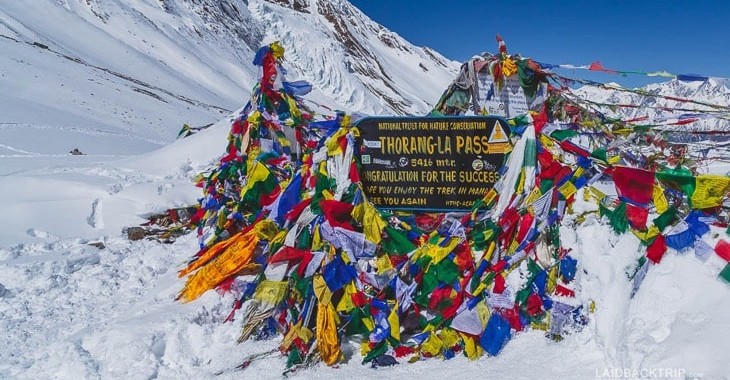
Manang is one of the most extraordinary villages in Nepal – a high-altitude Tibetan-influenced settlement at 3,500 m in the heart of the Annapurna Circuit, sitting beneath the towering walls of Annapurna III (7,555 m), Gangapurna (7,455 m), and the Gangapurna Glacier. Every trekker doing the Annapurna Circuit passes through Manang – it is the last major village before the circuit’s highest and most challenging section, and the obligatory acclimatization stop before attempting the Thorong La Pass at 5,416 m.
In 2026, reaching Manang from Pokhara by private jeep or vehicle is increasingly popular among trekkers who want to skip the lower sections of the Annapurna Circuit (now largely alongside a jeep road) and begin trekking from the spectacular high-altitude terrain above Chame and Manang. This complete guide covers every aspect of the Pokhara-to-Manang journey – transport options, route details, road conditions, costs, the Manang experience, Annapurna Circuit trek stages, altitude safety, permits, and expert tips for 2026.
About Manang – The High-Altitude Gateway
Location: Manang Village, Manang District, Gandaki Province, Nepal
Altitude: 3,500 m above sea level
Distance from Pokhara: Approximately 175–185 km by road via Besisahar
Distance from Besisahar: Approximately 95 km north by mountain road
Travel Time from Pokhara: 8 to 12 hours total by 4WD jeep (usually done in 2 days)
Road Type: Pokhara to Besisahar – paved | Besisahar to Chame – rough mountain track | Chame to Manang – improved track with some paved sections
Vehicle Required: 4WD Jeep mandatory from Besisahar onwards – no sedan, no Hiace beyond Besisahar
Trek Position: Manang is the Day 8–10 stop on the Annapurna Circuit Trek from Besisahar, or Day 5–6 if starting from Chame by vehicle
Population: Approximately 1,500 – Gurung and Tibetan Buddhist community
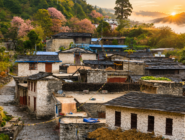
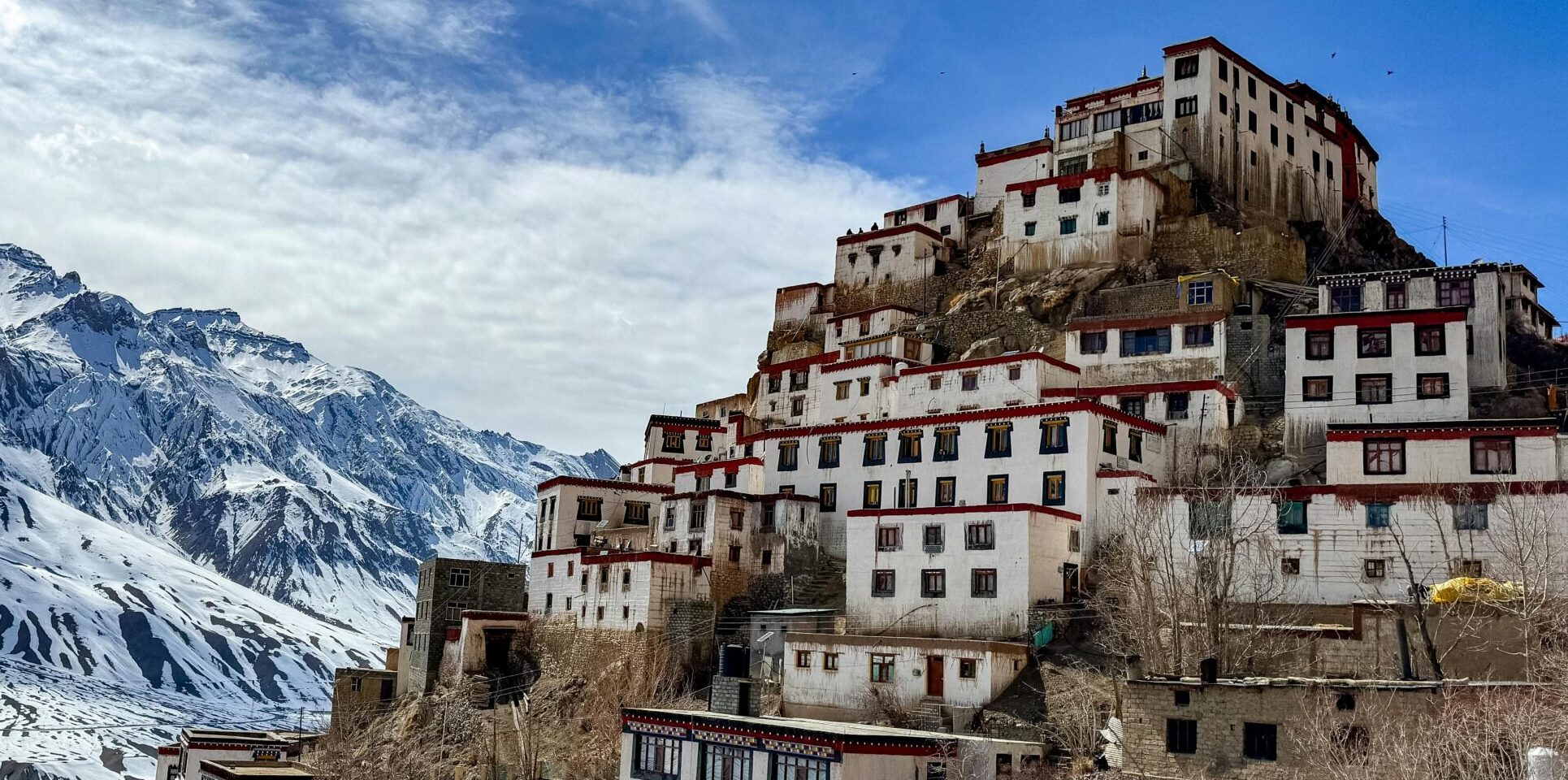
Manang sits in a wide, open valley at the foot of the Gangapurna Glacier – an extraordinary landscape of raw Himalayan grandeur. The village itself is a dense cluster of flat-roofed stone houses, prayer flags, ancient gompas, and the sounds of yak bells. Above the village, the Gangapurna Glacier descends in a dramatic cascade of blue ice and grey moraine. To the south, Annapurna III and Gangapurna rise in vertical walls of rock and ice. To the north, the high dry plateau of the Annapurna Circuit stretches towards the Thorong La. Manang is, for most Annapurna Circuit trekkers, the most beautiful and memorable overnight stop of the entire circuit.
Why Drive from Pokhara to Manang by Private Vehicle?
The traditional Annapurna Circuit trek starts in Besisahar and continues to Manang over 8 to 10 days. However, the road from Besisahar to Chame and beyond has been significantly developed in recent years, and most of the lower circuit now runs alongside or on a jeep track. Many experienced trekkers in 2026 choose to drive from Pokhara to Manang (or at least to Chame) and begin the most scenic sections of the circuit on foot. Here is why:
- Save 6 to 8 days of walking on the lower circuit sections that now largely follow the jeep road and offer less traditional trekking atmosphere
- Begin trekking at Manang (3,500 m) in the most dramatically beautiful section of the entire Annapurna Circuit
- The lower sections from Besisahar to Chame are now widely considered the least rewarding part of the circuit due to road construction and vehicle traffic alongside the trail
- A 4WD private jeep gives full luggage space, and group travel together – no splitting the group across multiple local shared jeeps
- Flexible departure from your Pokhara hotel – choose your own schedule and rest stop locations
- Combine the circuit with Muktinath and Mustang by entering from Pokhara and exiting via Jomsom
- Arrive fresher and stronger for the genuinely challenging high-altitude sections above Manang
Vehicle Options & Prices: Pokhara to Manang Transport 2026
The Pokhara-Manang route requires a capable 4WD vehicle from Besisahar onwards. Here are the vehicle options and 2026 prices:
| Vehicle | Capacity | One-Way Price (USD) | Round Trip (USD) | Notes |
| Toyota Land Cruiser | 4–6 pax | $200 – $260 | $320 – $420 | Best vehicle for the full Pokhara–Manang road |
| Toyota Land Cruiser Prado | 4–5 pax | $220 – $280 | $350 – $450 | Superior comfort on rough mountain track |
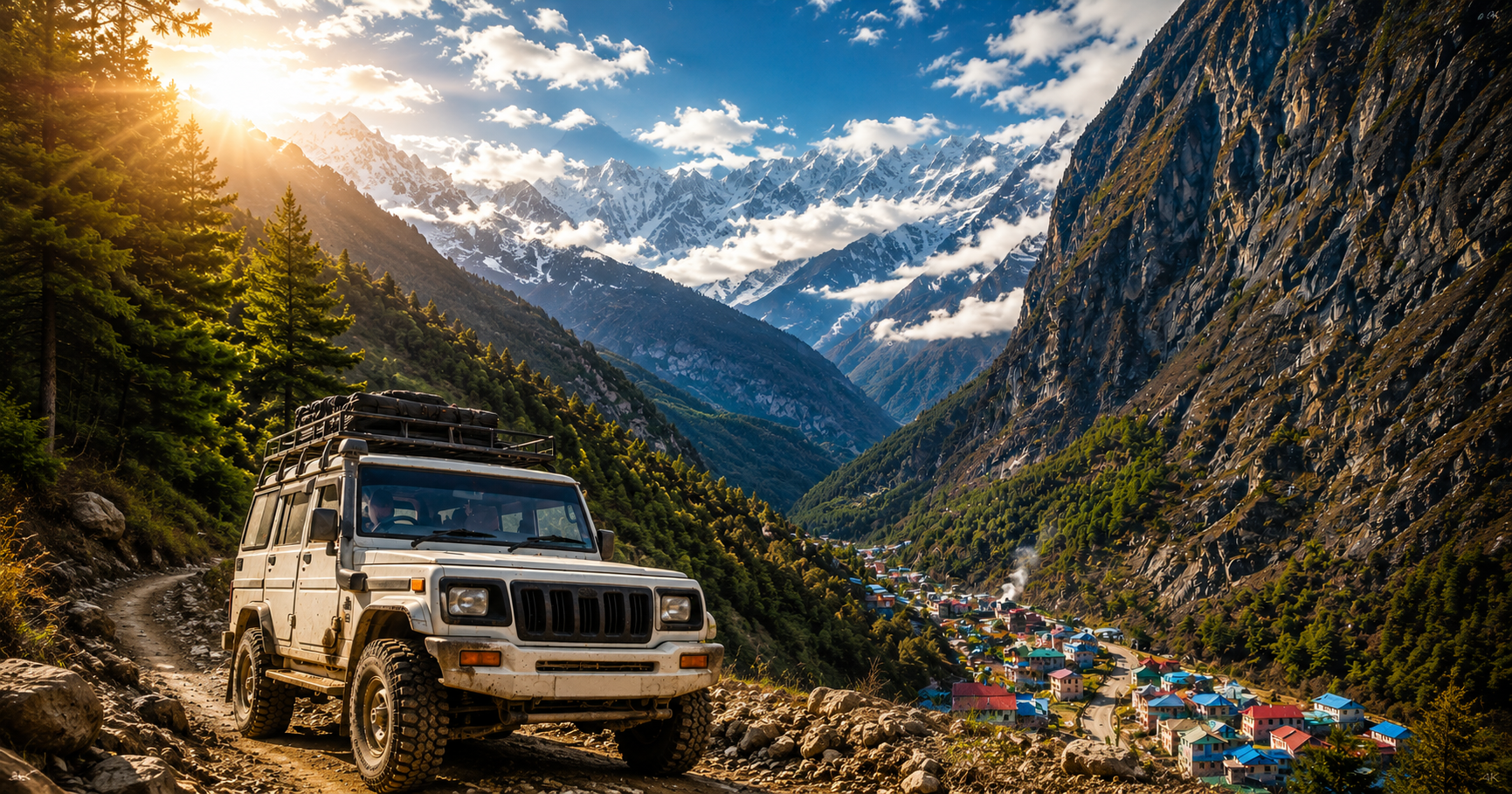
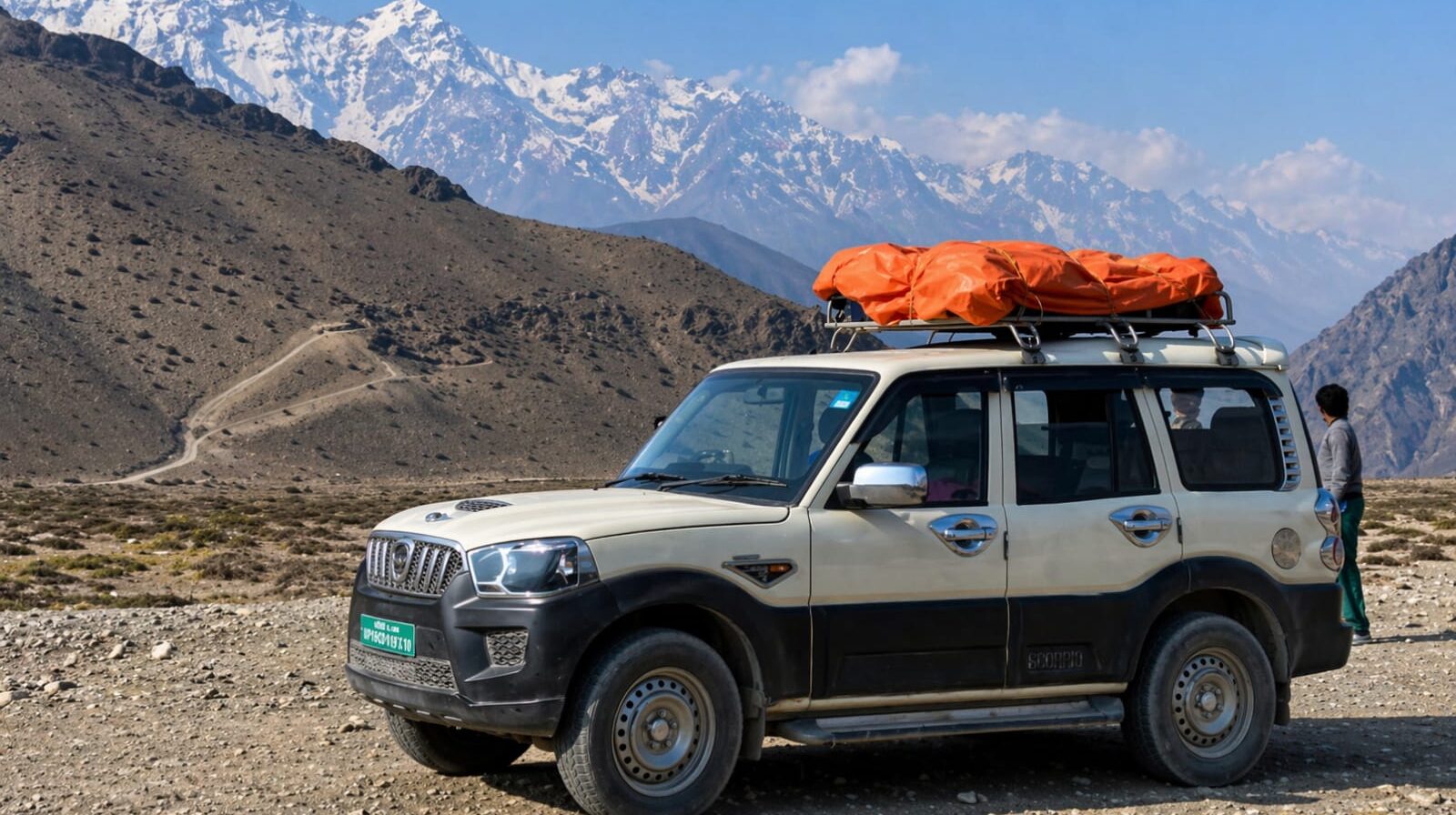
| Mahindra Bolero / Scorpio | 4–6 pax | $170 – $220 | $280 – $360 | Budget 4WD, capable on this route |
| Hiace Van (Pokhara–Besisahar only) | 7–14 pax | $100–$135 | $170–$230 | Cannot proceed beyond Besisahar – jeep required |
| Sedan Car (Pokhara–Besisahar only) | 1–3 pax | $70–$95 | $120–$165 | Paved road to Besisahar only – not beyond |
All private vehicle prices include driver, full fuel, and vehicle insurance. Round-trip pricing includes the driver staying in Manang or Chame during your trek and returning you to Pokhara or Kathmandu after the circuit. For trekkers completing the full Annapurna Circuit and exiting via Jomsom to Pokhara, a one-way Pokhara-to-Manang booking is all that is needed.
Two Route Options: Pokhara to Manang
Route A: Pokhara – Besisahar – Chame – Manang (Most Common)
Total Distance: 175–185 km
Total Time: 8 to 12 hours by 4WD (recommended as a 2-day journey)
Via: Pokhara – Dumre – Besisahar – Khudi – Bahundanda – Chamje – Tal – Dharapani – Chame – Pisang – Manang
This is the standard and most commonly used route. The road from Pokhara to Dumre follows the Prithvi Highway and is fast and paved. From Dumre, the road climbs north to Besisahar on a secondary road. Beyond Besisahar, the rough mountain track begins through the Marsyangdi River valley to Chame and finally Manang.
Route B: Pokhara – Beshisahar via Damauli (Alternative)
Total Distance: 165–175 km (slightly shorter)
Via: Pokhara – Baglung – Beni road junction – Damauli – Dumre – Besisahar
A slightly shorter alternative that bypasses the longer Pokhara-Prithvi Highway stretch by heading east via Damauli before joining the Besisahar road. Both routes converge at Besisahar. Your driver will choose the best option based on traffic and road conditions on your travel day.
Detailed Road Guide: Pokhara to Manang Stage by Stage
Stage 1: Pokhara to Dumre (75 km | ~1.5 hrs)
Depart your Pokhara hotel early – 5:30 to 6:00 AM is ideal for a two-day journey with an overnight in Besisahar or Chame. Head east on the Prithvi Highway through the Pokhara valley, past Damauli and Dumre. Dumre is the junction town on the Prithvi Highway where the road branches north toward Besisahar and the Annapurna Circuit. Stock up on snacks here if needed – the highway shops are more convenient than the mountain road ahead.
Stage 2: Dumre to Besisahar (22 km | 45 min)
From Dumre, head north on the secondary road into the Marsyangdi River valley. The road climbs gently through terraced hills and farmland to Besisahar – the district headquarters of Lamjung District and the official starting point of the Annapurna Circuit. The road is mostly paved. Besisahar has the last reliable ATMs on the circuit, a good selection of teahouses, pharmacies, and a well-stocked market. Stop here to withdraw cash, complete ACAP permit registration at the checkpoint, refuel, and have breakfast or an early lunch before the mountain road begins.
Stage 3: Besisahar to Chame (55 km | 4–6 hrs by 4WD)
This is the most challenging section of the drive. Beyond Besishahar, the paved road ends, and the rough Annapurna Circuit mountain track begins. The route follows the Marsyangdi River north through dramatically deepening gorges. Key villages and landmarks on this section:
- Khudi (790 m) – First village on the track, 10 km from Besisahar
- Bahundanda (1,310 m) – Brahmin village on ridge, good views back down valley
- Chamje (1,430 m) – Bridge crossing to the east bank, gorge narrows dramatically
- Tal (1,700 m) – First village in Manang District, flat valley formed by an ancient landslide dam
- Dharapani (1,860 m) – Important permit checkpoint, Manaslu Circuit junction point
- Bagarchhap (2,160 m) – First Tibetan-style stone buildings appear
- Chame (2,710 m) – District headquarters of Manang, hot springs, good teahouses, end of Day 2 drive
Overnight in Chame (2,710 m) is strongly recommended for acclimatization before continuing to Manang at 3,500 m. Ascending too quickly from Besisahar to Manang in a single day significantly increases the risk of altitude sickness.
Stage 4: Chame to Manang (40 km | 2–3 hrs by 4WD)
The road from Chame to Manang is more manageable than the Besisahar–Chame section, with some paved sections and generally better track surface. The scenery becomes increasingly dramatic as you enter the high-altitude Annapurna landscape. Key stops:
- Bhratang (2,850 m) – Apple orchard settlement, dramatic Paungda Danda rock face
- Dhukur Pokhari (3,240 m) – Small pond, open plateau, Annapurna III views begin
- Upper Pisang (3,310 m) – Beautiful perched Tibetan village with an ancient monastery (worth a stop)
- Ngawal (3,657 m) – Spectacular viewpoint village above the main road
- Braga (3,475 m) – Ancient cave monastery with some of Nepal’s finest Buddhist art
- Manang (3,500 m) – Arrival at the circuit’s most important acclimatization village
Road Conditions: Pokhara to Manang
| Section | Distance | Surface | Difficulty | Best Season |
| Pokhara to Dumre | 75 km | Prithvi Hwy – paved | Easy | Good year-round |
| Dumre to Besisahar | 22 km | Secondary road – mostly paved | Easy–Moderate | Good year-round |
| Besisahar to Bahundanda | 15 km | Rough gravel track | Moderate | Muddy in monsoon |
| Bahundanda to Chamje | 10 km | Rocky Mountain track | Hard | 4WD essential, rockfall risk |
| Chamje to Tal | 8 km | Very rough, river crossings | Very Hard | Risk in monsoon |
| Tal to Dharapani | 12 km | Rough track, improving | Hard | Best Oct–May |
| Dharapani to Chame | 15 km | Mixed – rough to partly paved | Moderate–Hard | Reliable in the dry season |
| Chame to Pisang | 20 km | Mixed track – some paved | Moderate | Good Oct–May |
| Pisang to Manang | 20 km | Better track – partly paved | Moderate | Good Oct–May, snow risk Dec–Feb |
The Besisahar-to-Chame section remains the most challenging part of the drive and requires a fully capable 4WD Land Cruiser with an experienced mountain driver. Road conditions improve significantly from Chame to Manang, where the road has received more investment in development. Even so, 4WD capability remains essential throughout.
Recommended 2-Day Journey Plan: Pokhara to Manang
A two-day journey with an overnight stop in Chame or Besisahar is strongly recommended for safety, comfort, and gradual acclimatization. Here is the ideal schedule:
Day 1: Pokhara to Chame (145 km | 7–8 hrs driving)
- 5:30–6:00 AM: Depart Pokhara Lakeside by private 4WD jeep
- 7:30–8:00 AM: Reach Dumre junction on Prithvi Highway – brief tea stop
- 9:00 AM: Arrive Besisahar – ATM withdrawal, ACAP permit registration, breakfast stop (45–60 min)
- 10:00 AM: Depart Besisahar on the mountain track
- 12:00–1:00 PM: Lunch stop at Tal or Dharapani teahouse
- 3:00–4:00 PM: Arrive Chame (2,710 m) – check into teahouse, explore village
- Evening: Visit natural hot springs near Chame, light dinner, early to bed
- Overnight: Chame at 2,710 m – gentle acclimatization altitude
Day 2: Chame to Manang (40 km | 2–3 hrs driving)
- 7:00 AM: Depart Chame after breakfast
- 8:00 AM: Stop at Upper Pisang monastery (15 min) – extraordinary views and frescoes
- 9:00–9:30 AM: Drive through Ngawal and Braga villages – stop for photos
- 10:00–10:30 AM: Arrive Manang (3,500 m) – check into teahouse, acclimatize
- Afternoon: Rest, explore Manang village, visit Gangapurna Glacier viewpoint
- Mandatory: Spend at least one full rest day in Manang before trekking upward
Transport Costs: Pokhara to Manang – Complete Breakdown
| Transport Option | Route | Cost | Notes |
| Private Land Cruiser (full vehicle) | Pokhara → Manang | USD 200–260 | Best option – door to door, all groups together |
| Private Land Cruiser (per person est.) | Split 4–6 ways | USD 33–65/person | Excellent value for groups of 4–6 |
| Local Shared Jeep (Besisahar–Chame) | Besisahar → Chame | NPR 1,200–1,800/seat | Run when full – unpredictable wait times |
| Local Shared Jeep (Chame–Manang) | Chame → Manang | NPR 800–1,200/seat | Available daily in season, basic comfort |
| Pokhara to Besisahar (bus/local) | Pokhara → Besisahar | NPR 400–600/person | Public bus – time-consuming, no connections |
| Tourist Bus Pokhara to Kathmandu, then jeep | Pokhara → KTM → Besisahar | USD 10–15 bus + jeep | Longer route, used by some budget trekkers |
For groups of 4 or more, a private Land Cruiser from Pokhara to Manang at USD 200–260 total works out to USD 33–65 per person – often less expensive than combining local bus, local shared jeep, and waiting time costs, while providing dramatically superior comfort and significantly less total journey time.
Permits Required: Pokhara to Manang & Annapurna Circuit 2026
All visitors to Manang and the Annapurna Circuit require valid permits. Arrange all permits in Pokhara or Kathmandu before departure – not available in Besisahar or Chame with the same ease:
| Permit | Cost 2026 | Where to Obtain | Valid For |
| ACAP – Annapurna Conservation Area Permit | NPR 3,000 (USD 22) | Nepal Tourism Board, Pokhara (Damside office) or Kathmandu | Full Annapurna Circuit from Besisahar to Manang, Thorong La, and Muktinath |
| TIMS Card – Trekkers Info Management | USD 10 | Nepal Tourism Board / TAAN office, Pokhara or Kathmandu | Required for all trekkers on the circuit |
| Note: No Restricted Area Permit needed | Standard Annapurna Circuit is open – no extra restricted permit | –The | Upper Mustang permit (USD 500) is only required if continuing north of Kagbeni. |
Permit checkpoints are located at Besisahar, Dharapani, Chame, Manang, and Muktinath. All permits are thoroughly inspected at each checkpoint. Obtain your ACAP permit at the Nepal Tourism Board Damside office in Pokhara (open 9:00 AM weekdays) the day before your departure.
Manang Village – Complete Visitor Guide
The Village and Its Surroundings
Manang is a Tibetan-influenced village of flat-roofed stone houses, prayer walls, ancient stupas, and the sounds of yak bells and wind through prayer flags. The village has two main sections – the lower, newer settlement near the main trail and road, and the upper traditional village of Manang proper with its narrow lanes and ancient architecture. The upper village is where the most atmospheric teahouses, the old gompa, and the best mountain viewpoints are located. Always walk up to the upper village – it is more beautiful and more authentically preserved than the lower settlement.
Gangapurna Lake
A 20-minute walk from the upper village, Gangapurna Lake sits in a glacial bowl at 3,540 m with the Gangapurna Glacier flowing directly into its ice-blue waters. The reflection of Gangapurna (7,455 m) and Annapurna III in the still morning lake is one of the finest mountain lake scenes in Nepal. Visit early in the morning before the wind disturbs the reflection. The walk to the lake is also an excellent acclimatization exercise for the day.
The Gangapurna Glacier Viewpoint
A 45-minute climb above the upper village reaches a dramatic viewpoint directly facing the Gangapurna Glacier – a massive, actively calving glacier flowing from the peak of Gangapurna. The scale of the glacier is astonishing, and the sounds of ice movement and occasional calving crashes add to the experience. This is the finest viewpoint easily accessible from Manang and is recommended for the acclimatization rest day.
Ice Lake (Kicho Tal) Acclimatization Hike
The Ice Lake hike from Manang is the most popular and rewarding acclimatization day hike on the Annapurna Circuit. The trail climbs steeply from the upper village to Ice Lake at 4,600 m – a gain of over 1,000 m – and then descends back to Manang. The round trip takes 5 to 7 hours. The panoramic view from Ice Lake of the entire Manang Valley, the Annapurna Range, and the Tilicho Massif is extraordinary. This hike is the single best acclimatization activity before crossing the Thorong La.
Milarepa Cave and Praken Gompa
Above the upper village, a stone staircase leads to the Praken Gompa – one of the oldest and most important Buddhist monasteries on the Annapurna Circuit, perched dramatically on a cliff face. The gompa has ancient thangka paintings, butter lamps, and Buddhist texts. Adjacent to the gompa is a cave associated with Milarepa, the great Tibetan Buddhist yogi and poet who is said to have meditated here. The climb to the gompa takes 30 to 40 minutes from the village and offers spectacular views of the Gangapurna massif.
Manang HRA (Himalayan Rescue Association)
The Manang HRA office is a critical resource for all Annapurna Circuit trekkers. The HRA operates a clinic with capabilities for altitude sickness diagnosis and treatment, and provides free daily altitude and Thorong La pass briefings every afternoon (usually at 3:00 PM). Attendance at the HRA briefing is strongly recommended for all trekkers planning to cross the Thorong La. The briefing covers weather forecasts, current pass conditions, AMS symptoms and treatment, and survival advice for the high crossing.
Annapurna Circuit Trek from Manang – Complete Stage Guide
Starting the Annapurna Circuit trek from Manang (reached by vehicle from Pokhara) puts you immediately in the most spectacular high-altitude section of the circuit. Here is the full stage guide from Manang onward:
| Day | Stage | Distance | Altitude | Key Highlights |
| Rest Day | Manang (acclimatization) | – | 3,500m | Ice Lake hike, Praken Gompa, Gangapurna Lake, HRA briefing |
| Day 1 | Manang – Yak Kharka | 10 km | 3,500m → 4,018m | High yak pastures, open plateau, Chulu peaks views |
| Day 2 | Yak Kharka – Thorong Phedi | 8 km | 4,018m → 4,450m | Last teahouses before the pass, glacier views |
| Day 3 | Thorong Phedi – Thorong La – Muktinath | 16 km | 4,450m → 5,416m → 3,710m | The highest point of the circuit, the sacred Muktinath temple |
| Day 4 | Muktinath – Jomsom | 22 km | 3,710m → 2,720m | Kali Gandaki valley, Kagbeni, Marpha apple orchards |
| Day 5 | Jomsom – Marpha – Tatopani | 35 km | 2,720m → 1,190m | Dramatic Kali Gandaki descent, Dhaulagiri views, hot springs |
| Day 6 | Tatopani – Ghorepani | 18 km | 1,190m → 2,874m | Steep rhododendron forest climb, Poon Hill viewpoint prep |
| Day 7 | Ghorepani – Poon Hill sunrise – Nayapul | 21 km | 2,874m → 3,210m → 1,070m | Poon Hill sunrise, descend to Nayapul trailhead |
| End | Nayapul – Pokhara by vehicle | 42 km | 1,070m → 820m | Private jeep pickup, return to Pokhara Lakeside |
Total trek duration from Manang: 7-9 days, including the mandatory rest/acclimatization day. Vehicle Hiring Nepal can arrange a jeep pickup in Nayapul at the end of your circuit – book this at the same time as your outward transport from Pokhara to Manang.
Altitude Safety: Essential Manang and Thorong La Advice
Manang at 3,500 m and the Thorong La at 5,416 m are serious altitudes that demand careful acclimatization and awareness. This section could save your life – read it carefully:
Golden Rules of Acclimatization
- NEVER ascend more than 500 m per day above 3,000 m – follow the ‘walk high, sleep low’ principle
- ALWAYS spend a minimum of 2 nights in Manang before attempting the Thorong La crossing – ideally 2 to 3 nights
- The Ice Lake acclimatization hike (climb to 4,600 m and descend to 3,500 m) is the most important preparation you can do in Manang.
- Descend 300 to 500 m for sleep if you feel unwell at any altitude above 3,000 m – never push through worsening AMS symptoms.
- The Thorong La crossing (5,416 m) must be started before 6:00 AM from Thorong Phedi – afternoon winds and cloud make the crossing dangerous.
Symptoms of Acute Mountain Sickness (AMS)
- Headache (most common) – especially a throbbing headache that worsens on movement
- Nausea and loss of appetite
- Fatigue, weakness, and dizziness disproportionate to exertion
- Difficulty sleeping – insomnia and disturbed breathing at altitude
- Shortness of breath at rest – this is a serious warning sign, descend immediately
High-Altitude Emergencies – HACE and HAPE
- HACE (High-Altitude Cerebral Edema) – confusion, inability to walk straight, loss of coordination. DESCEND IMMEDIATELY and seek evacuation
- HAPE (High-Altitude Pulmonary Edema) – gurgling or wet sounds in breathing, severe shortness of breath at rest, blue lips. MEDICAL EMERGENCY – immediate descent and evacuation required
- Helicopter rescue from Manang and Thorong Phedi is available but expensive (USD 1,500–3,000+) – travel insurance covering helicopter evacuation is essential.
Medications and Prevention
- Diamox (acetazolamide) – 125 to 250 mg twice daily starting 24 hours before ascending above 3,000 m. Consult your doctor before travel
- Ibuprofen – effective for altitude headache (not a substitute for descending if AMS is severe)
- Dexamethasone – emergency treatment for HACE and HAPE, NOT for prevention. Carry only if trained in use.
- Stay extremely well hydrated – drink 4-5 liters of water per day at altitudes above Manang.
- Avoid alcohol completely for the first 48 hours after arriving in Manang.
Best Time to Travel from Pokhara to Manang
October to November (Peak Season – Best for Circuit)
The finest season for the Pokhara to Manang journey and the Annapurna Circuit. Post-monsoon skies are crystal clear, and views of Annapurna III, Gangapurna, Chulu, and Tilicho from Manang are spectacular. The Thorong La is clear of fresh snow and at its most reliable for crossing. October and November are the busiest months – teahouses can be full in Manang. Book your vehicle 3 to 6 weeks in advance. The morning mountain views, driving into the Marsyangdi gorge in October light, are breathtaking.
March to May (Excellent – Spring Circuit)
Spring is the second-best season for the circuit. Rhododendron forests from Besisahar to Chame bloom spectacularly in March and April. Mountain views are excellent in the mornings. The Thorong La is usually clear from mid-March onwards. Less crowded than October–November and equally beautiful. The road from Besisahar is in good condition after the winter freeze.
December to February (Cold – Experienced Trekkers Only)
Winter is possible but serious. The road from Besisahar can have ice and snow in December and January. Manang experiences -15 to -25°C at night. The Thorong La may be snowbound and impassable in January and February. Several trekking deaths have occurred in winter on this pass – only very experienced cold-weather trekkers with proper winter gear should attempt the crossing. The Manang valley is peaceful and beautiful in winter, with almost no visitors.
June to September (Monsoon – Not Recommended)
The Besisahar-Chame road is at its most dangerous during the monsoon. Frequent landslides can close sections for days. The circuit trail above Manang is relatively dry (rain-shadow protection), but the access road is not. If planning a circuit during the monsoon, consider flying to Pokhara and taking local transport to Besisahar only on confirmed good-road days. Do not attempt the Besisahar–Chame road in active monsoon conditions.

What to Expect in Manang – Practical Information
Accommodation in Manang 2026
| Type | Price Per Night (NPR) | Facilities | Best For |
| Basic Teahouse | NPR 300–600 | Simple twin/dorm, shared bathroom, cold water | Budget trekkers |
| Standard Teahouse Lodge | NPR 600–1,500 | Better rooms, hot shower (extra), electricity, WiFi | Most trekkers |
| Better Teahouses | NPR 1,500–3,000 | Attached bathroom, solar hot water, and a good restaurant | Comfort-seeking trekkers |
| Note: Dal bhat meal | NPR 500–800 | Unlimited refills included – best value at altitude | All trekkers |
Solar panels and micro-hydro supply electricity in Manang. Power is available for charging during daylight hours. Charge all devices during the day – power is cut or rationed in the evening. WiFi is available at most teahouses in Manang at a small fee. Mobile signal: NTC works in Manang, Ncell is unreliable above Chame.
Food and Nutrition at Altitude
At 3,500 m, your body needs more calories than at sea level to maintain warmth and energy. Dal bhat (with unlimited refills) is the ideal meal for trekkers at altitude – high-carbohydrate, high-calorie, warm, and nutritious. Eat regularly even if appetite is reduced (a common AMS symptom). Avoid heavy, fatty foods on the day before the Thorong La crossing. Garlic soup is a traditional altitude remedy widely available at Manang teahouses and worth trying.
ATM and Cash in Manang
Manang has an ATM (eSewa kiosk type) that is sometimes operational but unreliable. Do not count on it. Withdraw all the cash you need in Pokhara or Besisahar before beginning the circuit. Budget NPR 3,500 to NPR 6,000 per person per day for accommodation and meals in Manang. Prices increase significantly above Besisahar and again above Manang due to the cost of supplying goods by porter or yak to high altitude.
Combine Pokhara to Manang with a Bigger Nepal Itinerary
The Pokhara to Manang journey and Annapurna Circuit trek can be seamlessly combined with other Nepal destinations for a complete Nepal travel experience:
Kathmandu – Pokhara – Manang – Muktinath – Jomsom – Pokhara
The most popular complete circuit: fly or drive from Kathmandu to Pokhara, jeep to Manang, trek the Annapurna Circuit over the Thorong La, arrive at Muktinath (a sacred pilgrimage site), descend to Jomsom, and return to Pokhara by jeep. The complete circuit,, including trave,l, takes 12 to 16 days.
Lumbini – Chitwan – Pokhara – Manang (Nepal Triangle Circuit)
Begin with a pilgrimage to Lumbini, transfer to Chitwan for a jungle safari, continue to Pokhara for sightseeing, then take a jeep to Manang for the Annapurna Circuit. This ‘Nepal Triangle’ itinerary covers Buddhist heritage, wildlife safari, mountain scenery, and Himalayan trekking in one comprehensive Nepal journey.
What to Pack for the Pokhara to Manang Journey
For the Jeep Journey
- Water – 2 liters per person minimum – limited stops between Besisahar and Chame
- Snacks – energy bars, nuts, and chocolate for the 7 to 8-hour drive
- Motion sickness tablets – essential for the very rough Besi Sahar to Chame gorge road
- Light warm layer – the gorge can be cool even in warm months
- Camera with a charged battery and a spare – the Marsyangdi gorge is spectacular
- Offline maps (Gaia GPS or Maps.me with Annapurna Circuit downloaded)
For Manang and the Thorong La
- Down jacket (rated to -10°C minimum) – nights in Manang are cold even in October
- Thermal base layers (top and bottom) – essential from Chame onwards
- Windproof and waterproof outer shell jacket and trousers
- Warm trekking gloves and a thicker pair for the Thorong La crossing
- Warm hat and neck gaiter – the wind on the Thorong La is severe
- Trekking boots with ankle support – not trail runners for the Thorong La
- Trekking poles – strongly recommended for the steep Thorong La ascent and descent
- Headlamp with spare batteries – you start the Thorong La crossing before dawn
- High-altitude sunscreen (SPF 60+) and UV-protection goggles or wraparound sunglasses
- Travel insurance documents with emergency helicopter evacuation coverage confirmed
- Diamox prescription (consult doctor), personal first aid kit
- Cash NPR 50,000+ for the full circuit, including emergencies
What is Included in Your Pokhara to Manang Vehicle Hire
- Private 4WD Toyota Land Cruiser or equivalent with an experienced Annapurna Circuit route driver
- Full fuel cost for the complete Pokhara to Manang journey
- Vehicle insurance for the entire journey duration
- Hotel pickup from your Pokhara Lakeside hotel or guesthouse
- Drop off at your chosen teahouse in Manang village
- Overnight stop arrangement in Chame (Day 1) – driver knows all Chame teahouses
- Brief stops at Besisahar (ATM, permits, breakfast), Tal, and Upper Pisang monastery
- Return pickup from Nayapul (end of Annapurna Circuit) or Jomsom (if exiting via Mustang)
- 24/7 WhatsApp support during the journey and throughout your trek
Not included: ACAP permit and TIMS card (arrange in Pokhara before departure), personal meals, teahouse accommodation, guide fees, porter charges, helicopter evacuation insurance, and any additional detour stops.

Frequently Asked Questions
How long does it take to drive from Pokhara to Manang?
The total driving time from Pokhara to Manang is approximately 8 to 12 hours, including rest stops. We strongly recommend spreading this over 2 days – Pokhara to Chame on Day 1 (7 to 8 hours), overnight in Chame, then Chame to Manang on Day 2 (2 to 3 hours). This two-day approach provides gradual acclimatization and significantly reduces the risk of altitude sickness upon arrival in Manang.
Can I go directly from Pokhara to Manang in one day?
Technically possible, but strongly not recommended. The drive alone takes 8 to 12 hours, including the rough mountain road, and arriving in Manang at 3,500 m on the same day you depart Pokhara at 820 m is a rapid gain in altitude that significantly increases the risk of AMS. A one-day Pokhara-to-Manang push also means very long driving hours on a difficult road, arriving in the village exhausted. Always split into two days with an overnight in Chame.
Is the road from Besisahar to Manang open year-round?
The road is generally open from October through May in the dry season. During monsoon (June to September), sections between Besisahar and Chame are prone to landslides and can be closed for days at a time. In winter (December to February), ice and snow can affect the upper sections near Manang, but the road usually remains passable for capable 4WD vehicles. Always confirm current road conditions with your driver before departure.
What is the difference between starting the Annapurna Circuit at Besisahar vs Manang?
Starting in Besisahar means walking the full traditional circuit – approximately 17 to 21 days in total, covering the entire Marsyangdi Valley from 820 m to 3,500 m on foot. Starting at Manang by vehicle means skipping the lower 10 to 12 days of the circuit (now largely alongside a jeep road) and beginning the trek in the most scenic high-altitude section. Most modern trekkers in 2026 start from Chame (by vehicle) or Manang (by vehicle) for this reason. Both approaches are completely valid – it depends on your available time and what you want from the experience.
Do I need a guide for the Annapurna Circuit?
The Annapurna Circuit does not legally require a guide. However, above Manang and particularly on the Thorong La crossing (5,416 m), a licensed guide is strongly recommended for safety, navigation in poor weather, and altitude emergency response. Local guides can be arranged in Besisahar, Chame, or Manang. Vehicle Hiring Nepal can recommend licensed guide agencies in Pokhara if you need assistance with arranging a guide.
What is the Thorong La pass, and how difficult is it?
The Thorong La is the highest point of the Annapurna Circuit at 5,416 m and the defining challenge of the trek. The crossing from Thorong Phedi (4,450 m) to Muktinath (3,710 m) covers approximately 16 km with a 966 m ascent and 1,706 m descent. In good conditions with proper acclimatization, most fit and healthy trekkers complete the crossing in 6 to 8 hours. The crossing must begin before 6:00 AM – afternoon winds make the high sections extremely dangerous. In poor weather, the pass can be impassable, and several deaths have occurred due to avalanches and exposure to storms.
Can I take a local bus from Pokhara to Manang?
There is no direct local bus from Pokhara to Manang. From Pokhara, local buses run to Besisahar (3-4 hours). From Besisahar, shared local jeeps run to Chame when full (3 to 5 hours, highly unpredictable wait times). From Chame, another shared jeep to Manang (2-3 hours). This three-vehicle connection is time-consuming, uncomfortable with trekking gear, and unreliable for departure times. A private Land Cruiser from Pokhara to Manang is far superior in every regard.
What happens if my trekking group gets altitude sickness in Manang?
The Himalayan Rescue Association (HRA) clinic in Manang can diagnose and treat mild-to-moderate AMS. For serious AMS, HACE, or HAPE, immediate descent (by foot or porter carry) to Chame (2,710 m) provides rapid relief. For severe emergencies, helicopter evacuation can be arranged from Manang or Thorong Phedi – this requires travel insurance covering high-altitude helicopter rescue, which typically costs USD 1,500 to USD 3,000. Never try to push through serious altitude sickness symptoms – descend immediately.
How to Book Your Pokhara to Manang Transport
- Contact Vehicle Hiring Nepal via WhatsApp at +977 9851013196 or visit vehiclehiringnepal.com
- Choose your vehicle – the Toyota Land Cruiser is strongly recommended for the full Manang route.
- Provide your travel dates and preferred departure time from Pokhara (5:30–6:00 AM recommended)
- Give your hotel name and pickup address in Pokhara Lakeside
- Confirm your group size and number of trekking packs/porter luggage
- Specify if you need an overnight stop arranged in Chame (highly recommended)
- Request a return vehicle pickup from Nayapul or Jomsom at the end of your circuit
- Receive full booking confirmation with driver details, vehicle type, and day-by-day journey plan
WhatsApp: +977 9851013196
Email: [email protected]
Website: www.vehiclehiringnepal.com
Final Thoughts
The journey from Pokhara to Manang is one of the great Himalayan road adventures of 2026 – a two-day progression from the beautiful lakeside city of Pokhara through dramatic river gorges, medieval stone villages, and ancient Buddhist culture into the raw, breathtaking high-altitude world of Manang at 3,500 m. And then, from Manang, the greatest section of the Annapurna Circuit awaits – the Thorong La, Muktinath, the Kali Gandaki gorge, and finally Poon Hill and the return to Pokhara.
Vehicle Hiring Nepal makes the Pokhara-to-Manang journey safe, comfortable, and seamlessly organized. Our experienced mountain drivers, well-maintained Land Cruisers, and deep knowledge of the Annapurna Circuit access road ensure that your trekking adventure begins the right way – with a reliable vehicle, a knowledgeable driver, and the freedom to focus on the extraordinary landscape unfolding outside the window.
Book your Pokhara-to-Manang transport today and secure your return pickup from Nayapul or Jomsom at the same time. WhatsApp: +977 9851013196 | Website: www.vehiclehiringnepal.com
- Pokhara to Manang Transport – Route, Cost & Trek Guide 2026
- About Manang – The High-Altitude Gateway
- Why Drive from Pokhara to Manang by Private Vehicle?
- Vehicle Options & Prices: Pokhara to Manang Transport 2026
- Two Route Options: Pokhara to Manang
- Detailed Road Guide: Pokhara to Manang Stage by Stage
- Road Conditions: Pokhara to Manang
- Recommended 2-Day Journey Plan: Pokhara to Manang
- Transport Costs: Pokhara to Manang – Complete Breakdown
- Permits Required: Pokhara to Manang & Annapurna Circuit 2026
- Manang Village – Complete Visitor Guide
- Annapurna Circuit Trek from Manang – Complete Stage Guide
- Altitude Safety: Essential Manang and Thorong La Advice
- Best Time to Travel from Pokhara to Manang
- What to Expect in Manang – Practical Information
- Combine Pokhara to Manang with a Bigger Nepal Itinerary
- What to Pack for the Pokhara to Manang Journey
- What is Included in Your Pokhara to Manang Vehicle Hire
- Frequently Asked Questions
- How to Book Your Pokhara to Manang Transport
- Final Thoughts

Related Blog & Articles

Kathmandu to Manang Jeep Service Guide 2026
Kathmandu to Chame Vehicle Hire

Kathmandu to Besisahar Transport Guide