Plan a Trip


Muktinath Tour guide – Complete Travel & Pilgrimage Guide from Nepal
Muktinath Tour Guide – Complete Travel & Pilgrimage Guide
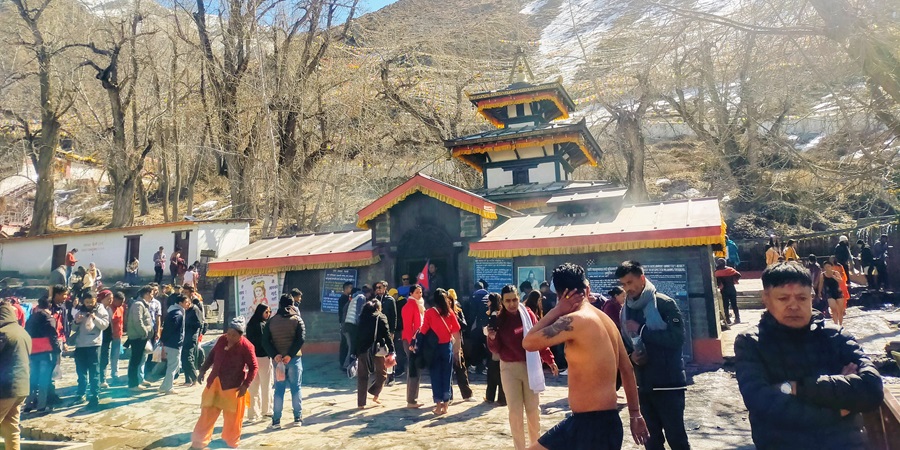
Muktinath is one of the most sacred and awe-inspiring destinations in all of Asia. Perched at 3,710 m in the high-altitude desert of Upper Mustang, Nepal, Muktinath is a supreme pilgrimage site for both Hindus and Buddhists – one of the rare places on earth where two great religions share a single sacred ground with equal reverence. More travellers and pilgrims are visiting Muktinath than ever before, drawn by its spiritual power, its extraordinary Himalayan setting, and the increasingly accessible Road and air connections from Kathmandu and Pokhara.
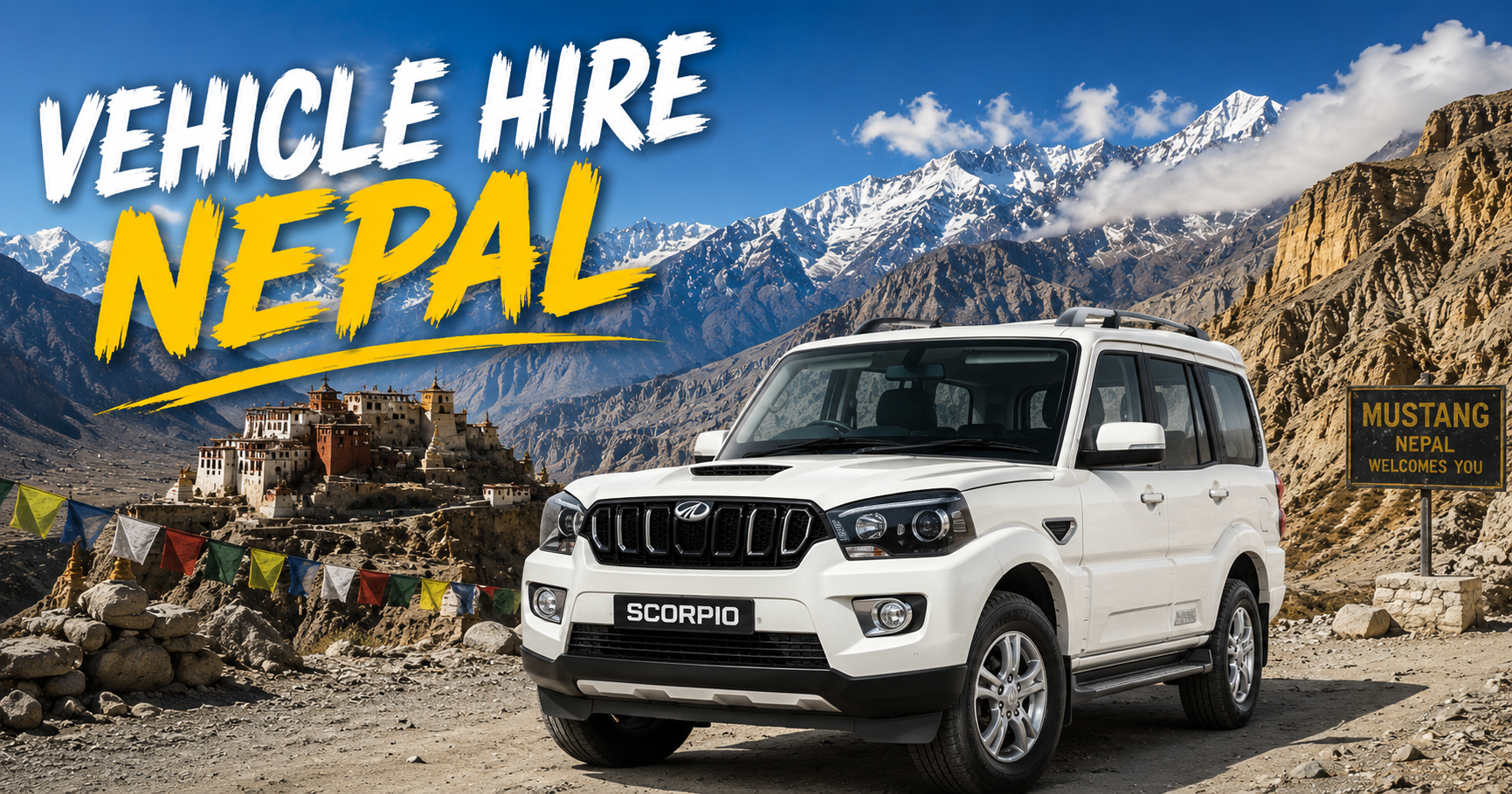
This complete Muktinath tour guide covers everything you need to plan your journey – how to get there, which vehicle to hire, recommended itineraries, what to see, pilgrimage rituals, accommodation, permits, altitude tips, and how to book with Vehicle Hiring Nepal.
About Muktinath – The Sacred Site
Location: Muktinath, Mustang District, Gandaki Province, Nepal
Altitude: 3,710 m (12,172 feet) above sea level
Religious Significance: One of the 108 Divya Desams (sacred Vishnu temples) for Hindus and a Tibetan Buddhist pilgrimage site
Temple Name: Mukti Dhaam (also called Muktinath Temple) – sacred to both Vaishnavas and Shaivites
Sacred Elements: 108 stone water spouts (muktidhara), eternal flame from natural gas (jwala mai), sacred Gandaki river stones (shaligrams)
Nearest Town: Jomsom (2,720 m) – 22 km south, 1.5 to 2 hours by jeep
Nearest Airport: Jomsom Airport – 25-minute flight from Pokhara (Tara Air / Summit Air)
Hindus revere Muktinath as one of the most important Vaishnava pilgrimage sites in the world – the only place where the divine elements of earth (shaligram fossils), water (108 spouts), fire (eternal flame), sky, and air converge in a single sacred location. For Buddhists, Muktinath is identified with Chumig Gyatsa – the place of a hundred waters – and is associated with Guru Rinpoche (Padmasambhava). The monastery adjacent to the Hindu temple complex is an important Tibetan Buddhist site managed by nuns.
Days to Reach Muktinath
In 2026, you can reach Muktinath from Kathmandu or Pokhara in three main ways. Each has distinct advantages depending on your time, budget, group size, and whether you prioritise the journey experience or the destination itself:
| Route Option | From | Travel Time | Best Vehicle | Cost (Approx.) | Best For |
| Road – Kathmandu to Muktinath | Kathmandu | 2–3 days | Land Cruiser 4WD | USD 380–800 (full jeep) | Road lovers, groups, pilgrims |
| Road – Pokhara to Muktinath | Pokhara | 1.5–2 days | Land Cruiser 4WD | USD 300–400 (full jeep) | Most popular route, scenic |
| Flight – Pokhara to Jomsom + Jeep | Pokhara | 1 day | Flight + local jeep | USD 200–300/person + jeep | Short on time, comfort seekers |
| Flight – Kathmandu to Pokhara + Road | Kathmandu | 1.5 days | Flight + Land Cruiser | USD 80 flight + jeep hire | Good combination for groups |
Vehicle Hiring Nepal specialises in private jeep hire for the Pokhara-to-Muktinath and Kathmandu-to-Muktinath routes. We also help with local jeep arrangements in Jomsom for travellers flying into Jomsom Airport.

Kathmandu to Muktinath by Private Jeep – Full Guide
Route and Distance
Total Distance: Approximately 430–450 km from Kathmandu to Muktinath
Travel Time: 2 to 3 days by private jeep (with overnight stops)
Main Road Route: Kathmandu – Pokhara – Beni – Tatopani – Ghasa – Marpha – Jomsom – Kagbeni – Muktinath
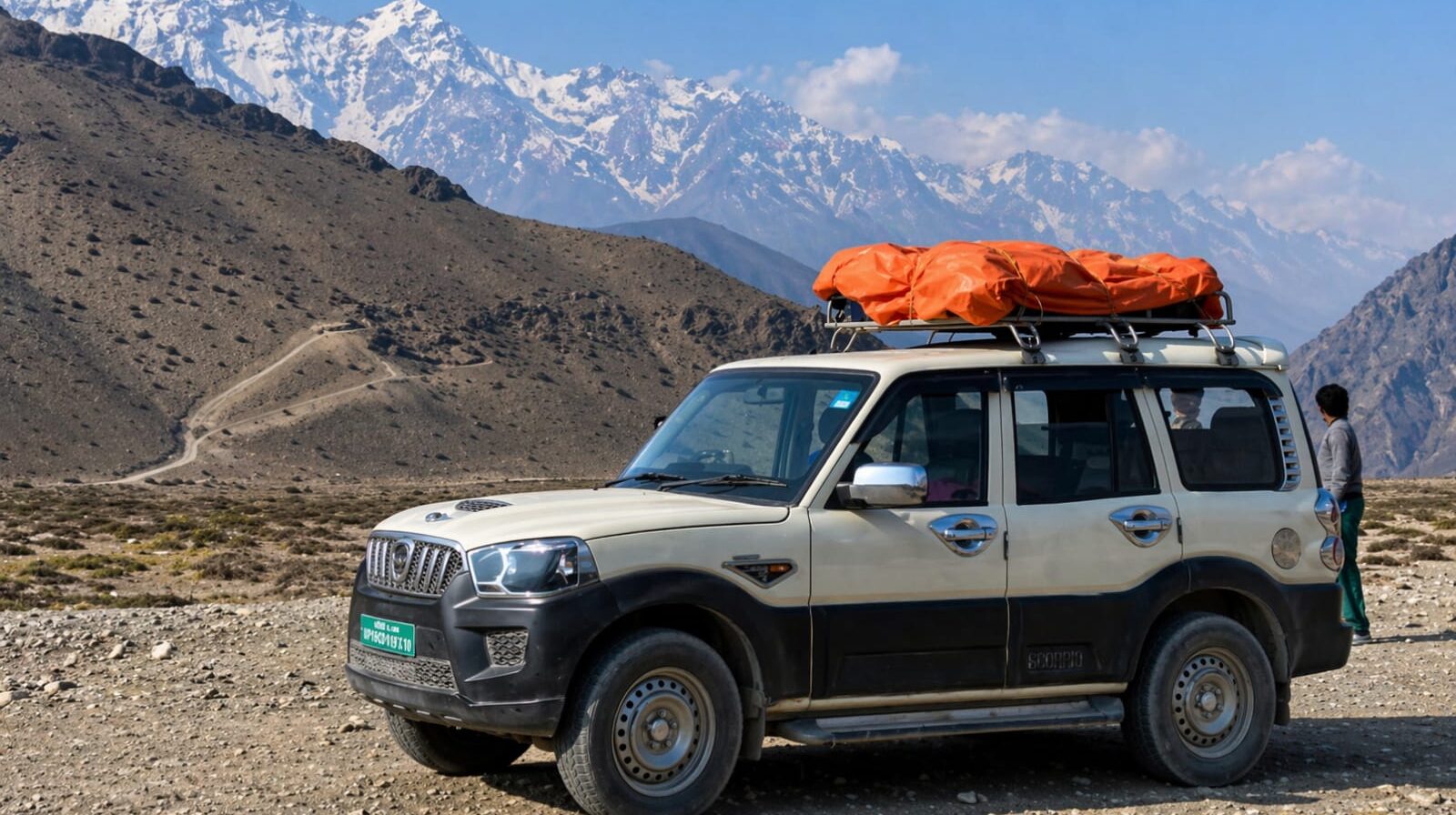
Vehicle Required: 4WD Toyota Land Cruiser or equivalent – mandatory from Beni onwards
Day-by-Day Road Journey
Day 1 – Kathmandu to Pokhara (200 km | 6–7 hrs): Depart Kathmandu early morning via Prithvi Highway. Travel through the Trishuli River gorge, stop for lunch in Mugling, and arrive in Pokhara by early afternoon. Overnight in Pokhara Lakeside.
Day 2 – Pokhara to Tatopani or Marpha (130–170 km | 5–7 hrs): Depart Pokhara at 6:00 AM. Drive via Baglung and Beni into the Kali Gandaki gorge. Pass through Tatopani (hot springs), Ghasa, Kalopani, and Marpha (apple orchards). Overnight in Tatopani, Ghasa, or Marpha.
Day 3 – Marpha to Jomsom to Muktinath (40 km | 3–4 hrs): Complete the drive to Jomsom, continue to Kagbeni (Upper Mustang entry point), and climb via the Ranipauwa switchbacks to Muktinath at 3,710 m. Arrive in the morning to complete the full temple pilgrimage before the afternoon winds.
All prices include driver, full fuel, and vehicle insurance. Round-trip pricing includes the driver staying in Jomsom or the Muktinath area during your visit and returning you to Kathmandu or Pokhara on your chosen return date.
Pokhara to Muktinath by Private Jeep – Full Guide
The most popular way to visit Muktinath is by private jeep from Pokhara. Shorter than the Kathmandu route and equally spectacular, this is the preferred choice for most pilgrims and tourists in 2026.
Route and Distance
Total Distance: Approximately 230–250 km from Pokhara to Muktinath
Travel Time: 1 full day (very long) or 2 days with an overnight stop (recommended)
Main Route: Pokhara – Baglung – Beni – Tatopani – Ghasa – Marpha – Jomsom – Kagbeni – Muktinath
Key Road Challenge: Kali Gandaki gorge road from Beni onwards – requires 4WD; rough and narrow
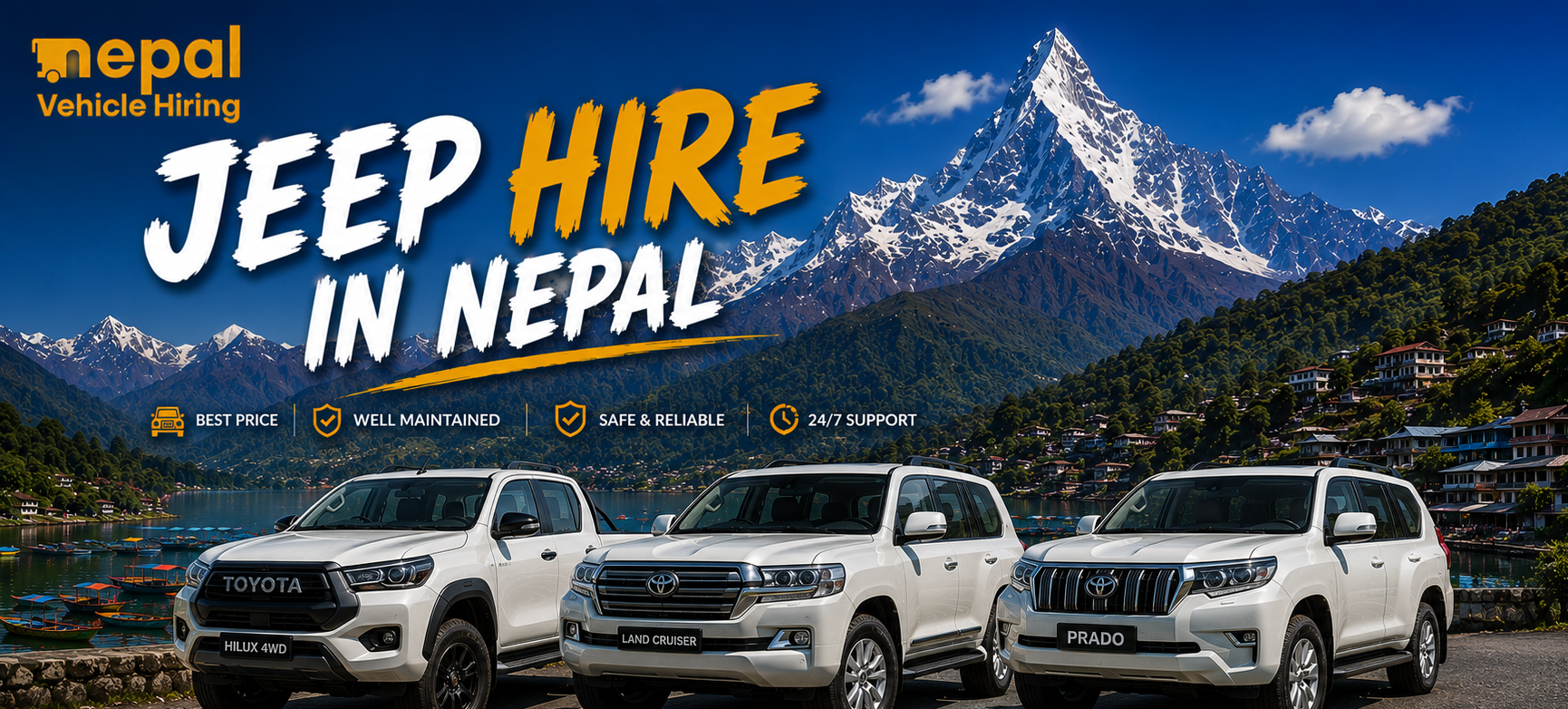
Vehicle Hire Price – Pokhara to Muktinath 2026
| Vehicle | Capacity | One-Way (USD) | Round Trip (USD) | Notes |
| Toyota Land Cruiser | 4–6 pax | $300 – $700 | $600– $1000 | Standard choice, experienced drivers |
| Toyota Land Cruiser Prado | 4–5 pax | $500 – $1000 | $600 – $1200 | Best comfort for the long Kali Gandaki road |
| 4WD Jeep | 4–6 pax | $250 – $400 | $400 – $800 | Budget 4WD option |
Note: Jomsom Airport is one of Nepal’s most weather-dependent airports. The famous afternoon Kali Gandaki wind grounds flights daily after approximately 10:00–11:00 AM. Flights depart early in the morning and are often delayed or cancelled because of cloudy weather, wind, or poor visibility. Always carry a backup plan – usually an extra day in Pokhara and a private jeep as the alternative.
The Sacred Sites of Muktinath – Complete Visitor Guide
Muktinath is not just a single temple – it is a complex of sacred sites spread across the Ranipauwa plateau at the base of the Thorong La pass route. Here is a complete guide to every sacred site:
Mukti Dhaam Temple (Vishnu Mandir)
The main Muktinath temple is a golden-roofed shrine dedicated to Lord Vishnu (in his form as Muktinath – the Lord of Liberation). This is one of the 108 Divya Desams – the most sacred Vishnu temples in the world – and the only one located in the Himalayas outside India. The inner sanctum houses a golden image of Lord Vishnu with the sacred Shaligram stones – fossilised ammonite shells found in the Kali Gandaki riverbed and considered to be the living form of Lord Vishnu.
Entry to the temple is free and open to all faiths. Remove shoes before entering. The temple is open from sunrise to sunset with a midday closing from approximately 12:00 to 1:00 PM. Photography inside the inner sanctum is generally not permitted – respect the religious atmosphere.
The 108 Sacred Water Spouts (Muktidhara)
Arranged in a semicircle around the main temple, 108 stone waterspouts shaped like cow heads pour a continuous stream of icy Himalayan spring water from the sacred mountain above. For Hindu pilgrims, bathing under all 108 spouts in sequence is considered to wash away all sins and grant moksha (liberation from the cycle of rebirth). The ritual bath is conducted at dawn or early morning when the water, though bitterly cold, is at its most spiritually potent.
The 108 spouts represent the 108 sacred names of Vishnu and the 108 sacred texts of the Vedas. Even non-religious visitors find the curved spouts, set against the backdrop of the Himalayan peaks and the Mustang plateau, deeply moving.
Jwala Mai – The Eternal Sacred Flame
Behind the main Vishnu temple lies the Jwala Mai shrine – a small chamber where a perpetual flame burns from a natural gas seep in the rock. This eternal flame has burned without human intervention for centuries, representing the sacred element of fire in Muktinath’s divine composition. The flame is closely associated with the goddess Jwala Devi and is worshipped by Hindu and Buddhist pilgrims alike. The sight of the blue flame emerging from the rock – often with a thin trickle of water flowing beside it – is profoundly sacred.
Jwala Mai: Water and Fire Together
Uniquely, at the Jwala Mai site, both fire (natural gas) and water flow from the same rock at the same time. This extraordinary natural phenomenon – fire and water together from the earth – is considered the most sacred miracle of Muktinath and the reason pilgrims travel thousands of kilometres to reach this remote high-altitude shrine. It is believed that witnessing this phenomenon and offering prayer here grants liberation of the soul.
Gompa Muktinath – The Buddhist Monastery
Adjacent to the Hindu temple complex is Gompa Muktinath, an ancient Tibetan Buddhist monastery managed by Buddhist nuns. The monastery contains beautiful thangka paintings, bronze statues of Avalokitesvara and Guru Rinpoche, prayer wheels, and butter lamps. Tibetan Buddhists call the monastery Chumig Gyatsa (the Hundred Waters), a significant stop on the ancient Tibetan pilgrimage circuit. Visitors are welcome to enter, make offerings, and sit in quiet meditation.
Shaligram Stones – Sacred Fossils of the Kali Gandaki
Shaligram stones are black fossilised ammonites found in the bed of the Kali Gandaki River – the only place on earth where they are found in their natural setting. These stones are considered to be the physical embodiment of Lord Vishnu and are among the most sacred objects in Hinduism. Pilgrims collect Shaligram stones from the riverbed between Kagbeni and Muktinath for worship at home temples. The stones range from marble-sized to melon-sized and feature distinct spiral fossil patterns.
Ranipauwa Village
The small settlement of Ranipauwa, just below the Muktinath temple complex, has most accommodation and restaurants. The village has approximately 20 to 30 teahouses and small hotels ranging from very basic to surprisingly comfortable. Most pilgrims spend at least one night in Ranipauwa to complete the full dawn ritual at the 108 spouts before returning to Jomsom.
Muktinath Pilgrimage Ritual – Step-by-Step Guide
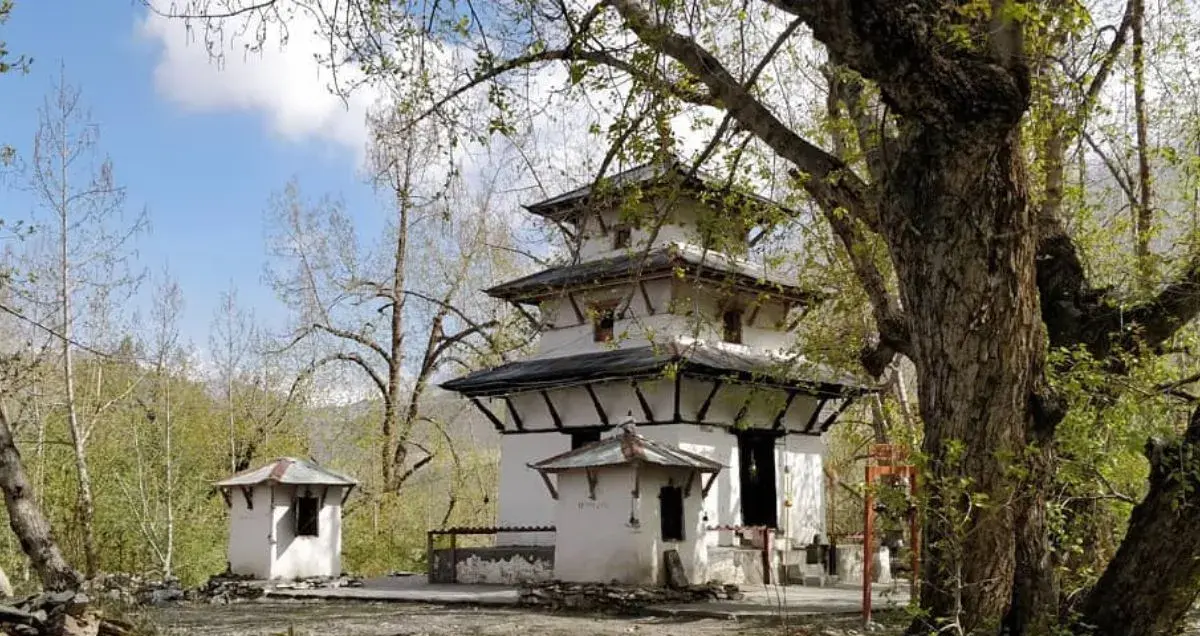
For Hindu pilgrims, the Muktinath pilgrimage follows a specific sequence of sacred rituals. Here is the traditional pilgrimage sequence:
- Arrive in Ranipauwa the evening before the main pilgrimage day and rest overnight to acclimatise to the 3,710 m altitude
- Wake before sunrise (approximately 5:00–5:30 AM) and dress in clean, fresh clothes for the pilgrimage
- Walk to the 108 sacred water spouts – the ritual bath under all 108 spouts is best done at dawn when the site is quiet and spiritually powerful.
- Stand under each of the 108 spouts in sequence, chanting the name of Lord Vishnu or your chosen mantra at each spout.
- The water is extremely cold (approximately 4–6°C year-round) – be prepared and bring a dry change of clothing.
- After the bath, enter the main Vishnu temple and offer flowers, incense, and prayer at the inner sanctum.
- Visit the Jwala Mai fire temple and witness the eternal flame – offer ghee, incense, and prayer here.
- Visit the adjacent Buddhist Gompa, spin the prayer wheels, and make an offering at the altar.
- Collect Shaligram stones from the nearby riverbed if desired (a few small ones for personal worship are traditional)
- Complete the pilgrimage with a final prayer facing the sacred peaks of Dhaulagiri and Nilgiri, offering gratitude for safe arrival at this holy site.
The complete pilgrimage ritual typically takes 2 to 4 hours. Non-religious visitors are welcome to attend any or all parts of the ritual as respectful observers. Dress modestly, remove shoes at all temple entrances, and maintain a quiet, respectful demeanour throughout.
Muktinath Tour Itineraries 2026
Vehicle Hiring Nepal offers complete Muktinath tour packages suitable for pilgrims, families, and adventure travellers. Here are our most popular 2026 itineraries:
Itinerary A: Muktinath Express Tour – 5 Days from Kathmandu
- Day 1: Kathmandu to Pokhara by private vehicle (6–7 hrs) – overnight Pokhara Lakeside
- Day 2: Pokhara to Tatopani by 4WD jeep via Beni and Kali Gandaki Gorge (5–6 hrs) – hot spring soak, overnight Tatopani
- Day 3: Tatopani to Muktinath via Marpha and Jomsom (4–5 hrs) – arrive by noon, temple pilgrimage (108 spouts, Vishnu temple, Jwala Mai), overnight Ranipauwa
- Day 4: Full day pilgrimage – dawn ritual at 108 spouts, Gompa visit, Shaligram collection, Kagbeni exploration, overnight Jomsom or Marpha
- Day 5: Return drive to Pokhara (6–7 hrs) or fly Jomsom to Pokhara (25 min) – evening in Pokhara or return to Kathmandu
Itinerary B: Muktinath Pilgrimage & Mustang Tour – 8 Days
- Day 1: Kathmandu to Pokhara by private vehicle – overnight in Pokhara
- Day 2: Pokhara to Marpha by 4WD jeep – overnight in Marpha (apple orchards, Tibetan monastery)
- Day 3: Marpha to Muktinath via Jomsom and Kagbeni – afternoon temple visit, overnight in Ranipauwa
- Day 4: Dawn pilgrimage at Muktinath – full sacred ritual at 108 spouts and all shrines
- Day 5: Muktinath to Kagbeni – explore the ancient Kagbeni village and the Kag Chode monastery
- Day 6: Kagbeni to Jomsom – explore Jomsom market, Thakali culture museum, river beach
- Day 7: Jomsom to Tatopani – descend Kali Gandaki gorge, hot spring soak, overnight Tatopani
- Day 8: Tatopani to Pokhara (3–4 hrs) – return to Kathmandu or extend Pokhara stay
Itinerary C: Fly-In Muktinath Day Tour from Pokhara – 2 Days
- Day 1: Pokhara to Jomsom by flight (25 min, depart 6:00–7:00 AM) – hire local jeep Jomsom to Muktinath (1.5 hrs) – full temple pilgrimage – overnight Ranipauwa
- Day 2: Dawn ritual at 108 spouts – Kagbeni and Jharkot village exploration – jeep return to Jomsom (1.5 hrs) – fly Jomsom to Pokhara (25 min) by 10:00 AM – return to Kathmandu by afternoon
Itinerary D: Complete Muktinath & Chitwan & Pokhara Circuit – 10 Days
- Day 1: Kathmandu to Chitwan by private vehicle – jeep safari (2 nights Chitwan)
- Day 3: Chitwan to Pokhara by private vehicle (3.5 hrs)
- Day 4: Pokhara sightseeing – Sarangkot sunrise, Phewa Lake, World Peace Pagoda
- Day 5: Pokhara to Tatopani by 4WD jeep – overnight Tatopani hot springs
- Day 6: Tatopani to Muktinath via Marpha, Jomsom – afternoon temple visit, overnight in Ranipauwa
- Day 7: Full Muktinath pilgrimage – dawn ritual, all sacred sites – overnight in Jomsom
- Day 8: Jomsom to Pokhara by jeep or flight – overnight in Pokhara
- Day 9: Pokhara to Kathmandu by private vehicle or flight
- Day 10: Departure from Kathmandu
Best Time for Muktinath Tour
October to November (Best Season – Peak Pilgrimage)
The post-monsoon is the finest time to visit Muktinath. Crystal-clear skies offer spectacular views of Dhaulagiri, Nilgiri, and the entire Mustang plateau. The Road from Beni is in good condition after monsoon repairs. Temperatures at Muktinath are cool (5 to 15°C by day) and manageable for the outdoor 108-spout ritual. This is the peak pilgrimage season – teahouses in Ranipauwa can be busy. Book vehicles and accommodation 4-6 weeks in advance.
March to May (Excellent – Spring Pilgrimage)
Spring is the second-best season for Muktinath. Lower-altitude sections bloom with rhododendrons, and the Mustang plateau turns vivid ochre and red. Mountain views are superb in the morning, and the road is in good condition. Temperatures at Muktinath are mild to cool. The Tiji Festival in Lo Manthang (nearby Upper Mustang) typically falls in May – a spectacular cultural bonus for those with extra time.
June to August (Mustang’s Unique Season)
While the rest of Nepal is drenched in monsoon, Mustang and Muktinath lie in a rain shadow and remain remarkably dry and sunny. June to August is an increasingly popular time for the Muktinath pilgrimage and Mustang tourism. The Kali Gandaki road south of Tatopani can be affected by landslides during the active monsoon – confirm road conditions before departure from Pokhara. The atmosphere at Muktinath during monsoon is unique – dramatic storm clouds over the Annapurna massif to the south, with the Mustang plateau clear above.
December to February (Cold but Spiritually Powerful)
The winter pilgrimage to Muktinath is a deeply meaningful experience for devoted pilgrims. The 108-spout bath in winter (water temperature approximately 2–4°C; air temperature -5 to -15°C at dawn) is an act of profound devotion. The site is quiet, uncrowded, and deeply spiritual. Roads from Jomsom to Muktinath may be icy and snow-covered in December and January – a capable 4WD jeep with snow chains is essential. Tatopani road from Beni can occasionally close in severe winter weather.
Altitude and Health: Essential Muktinath Advice
Muktinath sits at 3,710 m – a significant altitude that requires respect and preparation. Here is everything you need to know about staying safe and well at Muktinath:
Acclimatization Plan
- Do NOT drive from Kathmandu or Pokhara directly to Muktinath in a single day – the rapid altitude gain increases the risk of Acute Mountain Sickness (AMS)
- Spend at least one night at Jomsom (2,720 m) before ascending to Muktinath (3,710 m) – one night of acclimatisation at Jomsom significantly reduces AMS risk.
- Marpha (2,670 m) and Tatopani (1,190 m) are excellent gradual acclimatisation stops on the multi-day road journey.
Symptoms of Altitude Sickness (AMS)
- Headache – the most common symptom at Muktinath altitude
- Nausea and loss of appetite
- Fatigue and weakness disproportionate to activity level
- Dizziness or lightheadedness
- Difficulty sleeping and restless nights at altitude
- In severe cases: confusion, loss of coordination, difficulty breathing at rest – descend immediately
Prevention and T-meliters
- You are very dehydrated – drink 3 to 4 L of water per day from Jomsom onward, and avoid alcohol for at least 48 hours after arriving above 3,000 m
- Walk slowly and steadily – if you feel unwell, rest immediately and do not ascend further.
- Carry Diamox (acetazolamide 250 mg) – take as prescribed by your doctor, typically 125–250 mg twice daily starting 24 hours before ascent.t
- Travel and health insurance covering high-altitude helicopter evacuation is strongly recommended for all Muktinath visitors.
- The rule of mountains: if symptoms worsen, descend immediately – descending even 500 m usually provides rapid relief
What to Wear and Bring for Muktinath
For the 108 Spout Pilgrimage Bath
- Carry a complete change of clothing specifically for the ritual bath – you will be completely soaked.
- Pack the change of clothes in a waterproof bag – keep them dry until you need them.
- Quick-drying lightweight clothes are ideal – avoid heavy denim or cotton that stays wet and cold.
- A dry towel (microfibre recommended for compact packing)
- Warm thermal layers to put on immediately after the bath
General Clothing for Muktinath at 3,710 m
- Warm down jacket or heavy fleece – essential even in summer as temperatures drop rapidly after noon
- Windproof outer shell jacket – the Kali Gandaki wind reaches the Muktinath plateau by early afternoon
- Thermal base layers for early morning pilgrimage
- Warm hat, gloves, and neck gaiter – especially important for dawn rituals in all seasons
- Sturdy, comfortable walking shoes or trekking shoes – the temple complex is on uneven ground
- Sunglasses with UV protection – UV radiation is intense at 3,710 m
- High-factor sunscreen (SPF 50+) – apply before leaving your teahouse each morning
General Essentials
- Sufficient Nepali Rupees cash – no reliable ATM at Muktinath; withdraw in Jomsom or Pokhara.
- Personal medications, first aid kit, altitude sickness medication (Diamox)
- Travel insurance documents with emergency contact numbers
- ACAP permit and TIMS card – mandatory and checked at the Kagbeni checkpoint
- Small offerings for the temple – flowers, incense, ghee, or fruit purchased in Jomsom or Ranipauwa
- Camera with a charged battery and a spare – the landscape and temple complex are extraordinarily photogenic

Accommodation at Muktinath / Ranipauwa
Ranipauwa village, adjacent to the Muktinath temple complex, offers a good range of accommodation options for pilgrims and travellers. Here is what to expect:
| Accommodation Type | Price Per Night (NPR) | Facilities | Best For |
| Basic Teahouse | NPR 300–500 | Simple twin room, shared bathroom, cold water | Budget pilgrims |
| Standard Teahouse Lodge | NPR 500–1,200 | Twin/double room, shared bathroom, hot shower extra | Most trekkers |
| Hotel Bob Marley | NPR 1,500–2,500 | Better rooms, attached bathroom, hot shower, WiFi | Mid-range comfort |
| Hotel North Pole | NPR 2,000–3,500 | Comfortable rooms, A/C, good restaurant, hot shower | Best in Ranipauwa |
| Hotel Muktinath View | NPR 1,800–3,000 | Rooms with temple views, a restaurant, and hot water | View seekers |
Book accommodation in advance during October–November and March–May peak seasons as Ranipauwa fills up quickly. Outside peak seasons, walk-in accommodation is usually available. Electricity is supplied by solar and micro-hydro – charge all devices during daylight hours, as power can be cut at night.
Permits Required for Muktinath Tour
| Permit | Cost | Where to Get | Required For |
| ACAP – Annapurna Conservation Area Permit | NPR 3,000 (~USD 22) | Nepal Tourism Board, Kathmandu or Pokhara | All visitors to Muktinath via the Kali Gandaki road |
| TIMS Card | USD 10 | Nepal Tourism Board / TAAN | Required for trekkers (not required for pure pilgrims on vehicle only in some cases – confirm when booking) |
| Upper Mustang Restricted Area Permit | USD 500 for 10 days | Dept. of Immigration, Kathmandu | Only required for travel NORTH of Kagbeni towards Lo Manthang – NOT required for Muktinath. |
Important: Muktinath and Jomsom are in Lower Mustang. The Upper Mustang Restricted Area Permit (USD 500) is NOT required to visit Muktinath. It is only required for travel north of Kagbeni to Lo Manthang and the former Kingdom of Mustang. Confirm with Nepal Tourism Board whether TIMS is required for pilgrims travelling by vehicle only (not trekking).

Practical Tips for Muktinath Tour
- Arrive at Muktinath in the morning – the famous Kali Gandaki afternoon wind begins at 12:00–1:00 PM and makes outdoor activity uncomfortable and cold by early afternoon.
- Plan your 108-spout bath for dawn (5:30–7:00 AM), when the site is quietest, and the spiritual atmosphere is most powerful.
- The 108-spout bath is voluntary, not compulsory, for non-Hindu visitors – you can observe and photograph respectfully without participating.
- Hire a local temple guide in Ranipauwa (NPR 500–1,000) to understand the full religious significance of each sacred site – deeply enriches the experience.
- Jomsom has the nearest hospital and health post – in case of AMS or other health concerns, descend to Jomsom immediately.
- The evening puja (prayer ceremony) at the main Vishnu temple is a beautiful experience, usually held at 5:00–6:00 PM with bells, incense, and lamps. A vegetarian diet is widely observed at Muktinath – most teahouses offer vegetarian menus, and Hindu pilgrims traditionally eat pure vegetarian food during the pilgrimage.
- Photography is generally permitted outside temples and at the 108 spouts – always ask permission before photographing other pilgrims performing rituals.
- Local yaks and horses are used for transportation in Ranipauwa – short yak or horse rides to the temple are available for pilgrims who cannot walk easily.
Muktinath Tour from Kathmandu with Vehicle Hiring Nepal – What is Included
- Private 4WD jeep (Land Cruiser or equivalent) with experienced Mustang route driver for the full journey
- Full fuel cost from Kathmandu or Pokhara to Muktinath and return
- Vehicle insurance for the complete journey duration
- Hotel pickup from your Kathmandu or Pokhara hotel or guesthouse
- Drop-off at Ranipauwa village, adjacent to Muktinath temple
- Overnight stops at recommended teahouses in Tatopani, Marpha, or Jomsom (accommodation cost separate)
- Driver accommodation during your Muktinath stay (for round-trip bookings)
- Return journey from Muktinath to Kathmandu or Pokhara on your chosen return date
- 24/7 WhatsApp support throughout the entire journey
Not included: ACAP permit and TIMS card, flight costs, personal meals, accommodation, temple entry (free), offerings, local guide fees, porter charges, and any additional detour stops beyond the agreed route.
How to Book Your Muktinath Tour
- Contact Vehicle Hiring Nepal via WhatsApp at 977- 9814227196 or visit vehiclehiringnepal.com
- Choose your preferred tour itinerary from the options above or describe your own custom plan.
- Select your vehicle type – Land Cruiser recommended for all Muktinath routes.
- Confirm your travel dates, group size, and departure point (Kathmandu or Pokhara)
- Specify whether you need a one-way journey or a full round-trip with a driver waiting.
- Mention any additional stops – Chitwan, Pokhara sightseeing, Kagbeni, Marpha, Jomsom.
- Receive your complete tour confirmation, driver details, and vehicle information.
- Arrange your ACAP permit and TIMS card in Kathmandu or Pokhara before departure.
WhatsApp: 977- 9814227196
Email: [email protected]
Website: www.vehiclehiringnepal.com
Frequently Asked Questions – Muktinath Tour
How many days does a Muktinath tour take from Kathmandu?
A comfortable Muktinath tour from Kathmandu takes a minimum of 5 days: Day 1 to Pokhara, Day 2 to Tatopani, Day 3 to Muktinath, Day 4 for the full pilgrimage, and Day 5 return to Pokhara. Add 1 to 2 extra days to return from Pokhara to Kathmandu by road or fly back in 35 minutes. A 7- to 8-day tour is more relaxed and also allows you to explore Jomsom and Kagbeni.
Is Muktinath accessible by car or only by jeep?
From Jomsom, the 22 km road to Muktinath via Kagbeni is a rough mountain track that requires a 4WD vehicle. Standard sedans and cars can reach Jomsom from the south only in the dry season and on the best road days. For the Kagbeni-to-Muktinath switchback climb, you always need a 4WD Land Cruiser or equivalent. Hiring a capable 4WD jeep is the only reliable way to reach Muktinath by road.
Can elderly or mobility-limited pilgrims visit Muktinath?
Yes. Muktinath is accessible for elderly and mobility-limited pilgrims by jeep all the way to Ranipauwa. The temple complex itself is on a gentle slope, and most sacred sites are within 200-300 m of the road. Local yaks and horses are available for hire to carry pilgrims who cannot walk even short distances. A path with stone steps leads to the 108 spouts; some sections require assistance. With proper planning, elderly pilgrims complete the full pilgrimage successfully every year.
Is Muktinath safe to visit?
Yes. Muktinath is a safe, peaceful pilgrimage destination in 2026. The main considerations are altitude (3,710 m), weather, and road conditions – not security or crime. The local community is extremely welcoming to pilgrims and tourists. Standard altitude precautions and travel insurance covering helicopter evacuation are the most important safety preparations.
What is the difference between Muktinath and Lo Manthang?
Muktinath is in Lower Mustang at 3,710 m and is accessible with only an ACAP and TIMS permit. Lo Manthang, the ancient walled capital of Upper Mustang, sits at 3,840 m about 80 km north of Kagbeni and requires the additional USD 500 Upper Mustang Restricted Area Permit. Muktinath is the primary Hindu and Buddhist pilgrimage destination; Lo Manthang is the cultural and historical capital of the former Kingdom of Mustang, famous for its medieval monastery frescoes and the Tiji Festival.
Can I combine Muktinath with the Annapurna Circuit Trek?
Yes. Muktinath is a key waypoint on the Annapurna Circuit Trek. Trekkers typically arrive at Muktinath after crossing the Thorong La Pass (5,416 m) from Manang and descend to Jomsom by jeep. Many Annapurna Circuit trekkers hire a private vehicle from Jomsom to Pokhara at the end of their trek rather than continuing the full circuit on foot via Tatopani and Nayapul. Vehicle Hiring Nepal can arrange jeep pickups from Muktinath or Jomsom for Annapurna Circuit trekkers who have finished their circuit.
Final Thoughts
A Muktinath tour in 2026 is one of the most profound and rewarding journeys available in Nepal – combining spectacular Himalayan scenery, ancient sacred pilgrimage, and the unique high-altitude culture of the Mustang region. Whether you come as a devout Hindu pilgrim seeking liberation through the sacred 108 spout bath, a Buddhist traveller retracing the steps of Guru Rinpoche, or simply an adventurer drawn to the extraordinary landscape of the Kali Gandaki and the Mustang desert plateau, Muktinath will leave a lasting impression on your heart.
Vehicle Hiring Nepal makes your Muktinath journey smooth, safe, and memorable. From our well-maintained 4WD jeeps and experienced Mustang route drivers to our 24/7 WhatsApp support and flexible custom itineraries, we have helped thousands of pilgrims and travellers reach the sacred shores of Muktinath. Let us help you plan your Muktinath tour.
Contact Vehicle Hiring Nepal today. WhatsApp: 977- 9814227196
Email: [email protected]
Website: www.vehiclehiringnepal.com
- Muktinath Tour Guide – Complete Travel & Pilgrimage Guide
- About Muktinath – The Sacred Site
- Days to Reach Muktinath
- Kathmandu to Muktinath by Private Jeep – Full Guide
- Pokhara to Muktinath by Private Jeep – Full Guide
- The Sacred Sites of Muktinath – Complete Visitor Guide
- Muktinath Pilgrimage Ritual – Step-by-Step Guide
- Muktinath Tour Itineraries 2026
- Best Time for Muktinath Tour
- Altitude and Health: Essential Muktinath Advice
- What to Wear and Bring for Muktinath
- Accommodation at Muktinath / Ranipauwa
- Permits Required for Muktinath Tour
- Practical Tips for Muktinath Tour
- Muktinath Tour from Kathmandu with Vehicle Hiring Nepal – What is Included
- How to Book Your Muktinath Tour
- Frequently Asked Questions – Muktinath Tour
- Final Thoughts

Related Blog & Articles

4WD Himalayan Jeep in Nepal
Kathmandu to Mustang (Muktinath)

Kathmandu to Manang Jeep Service Guide
Altitude and Health: Essential Muktinath Advice