Plan a Trip


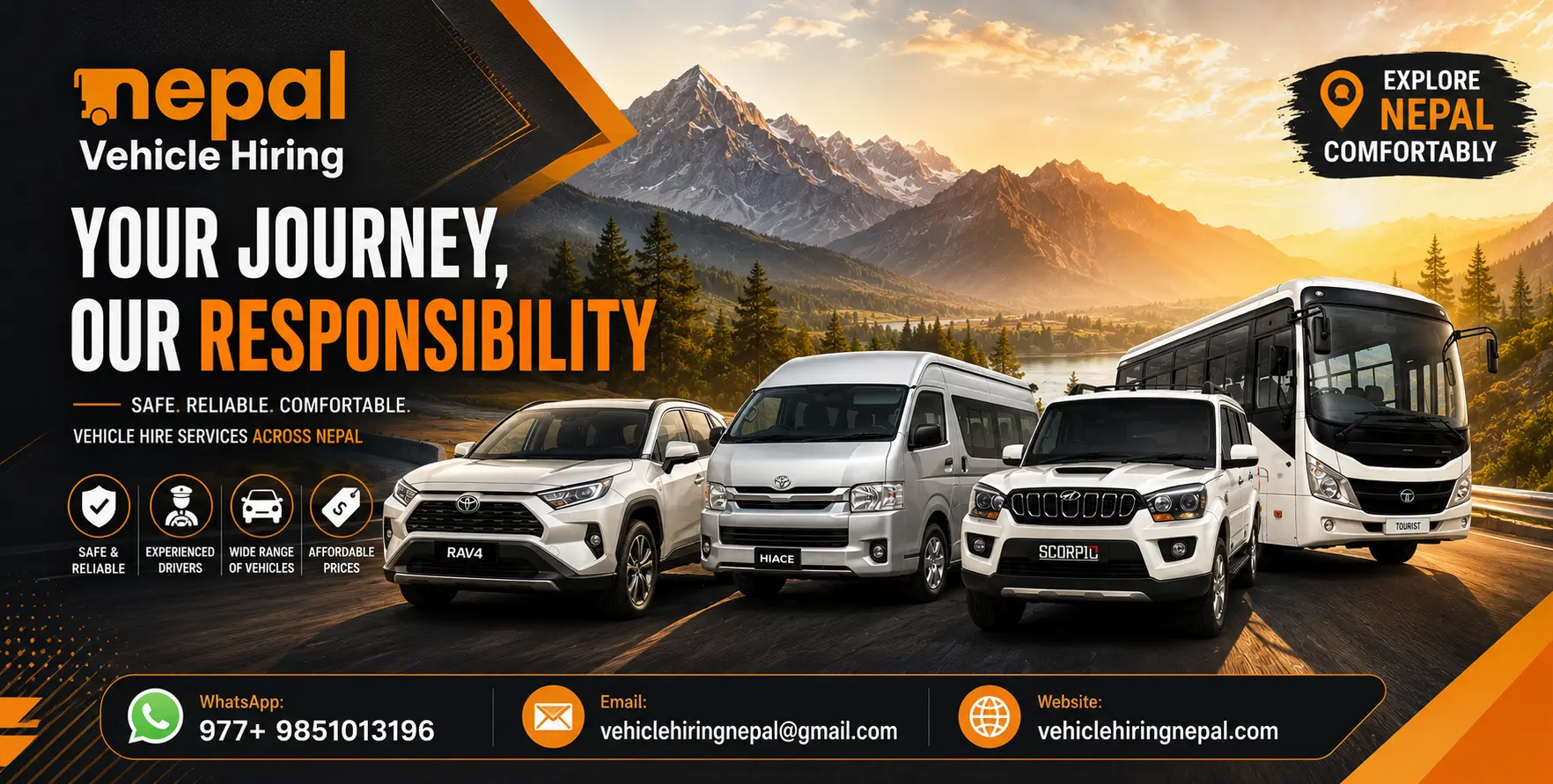
Best Tourist Vehicle Rental in Chitwan
Best Tourist Vehicle Rental in Chitwan
Chitwan National Park — Nepal’s most celebrated wildlife destination and one of Asia’s finest tiger and rhinoceros reserves — sits at the center of Nepal’s most popular tourist triangle, connecting Kathmandu’s cultural heritage and Pokhara’s mountain lakeside beauty with the extraordinary sal forest and grassland ecosystem of the inner Terai. Nearly every Nepal tourist itinerary includes Chitwan, and choosing the right vehicle to and from the park is a logistics decision that shapes both the journey experience and the budget.
Tourist vehicle rental in Chitwan covers two distinct requirements: the inter-city highway vehicle that brings tourists from Kathmandu (200 km, 4 to 5 hours) or Pokhara (150 km, 3 to 4 hours) to the park gate area; and the local Chitwan activity transport within and around the park — the jeep safari vehicles, elephant-back rides, and local taxis that serve the wildlife activities inside the park boundary. Nepal Vehicle Hiking Pvt. Ltd. specializes in the inter-city highway vehicle component — providing private tourist vehicles for the Kathmandu-to-Chitwan and Pokhara-to-Chitwan connections as part of the Nepal tourist triangle and broader Nepal circuit.
This complete guide covers every aspect of tourist vehicle rental in Chitwan — the right vehicle for every group size and budget, the Kathmandu-to-Chitwan and Pokhara-to-Chitwan route details, the Chitwan park entrance logistics, the wildlife activities requiring vehicle access, the cost structure, and how Nepal Vehicle Hiring’s complete service connects Chitwan within the broader Nepal tour.
Chitwan Tourist Vehicle Rental: Quick Reference
| Vehicle | Capacity | Kathmandu–Chitwan | Pokhara–Chitwan | Best For |
| Private Car (Sedan/SUV) | 2–4 pax | NPR 7,000–11,000 | NPR 6,000–9,000 | Couples, solo, small families |
| 4WD Jeep (Scorpio/LC) | 4–7 pax | NPR 11,000–16,000 | NPR 9,000–13,000 | Premium groups, mountain-approach combo |
| Hiace Van | 8–14 pax | NPR 16,000–22,000 | NPR 13,000–18,000 | Group tours, families, trekking groups |
| Coaster Bus | 15–25 pax | NPR 22,000–32,000 | NPR 18,000–26,000 | Corporate, pilgrim, large family groups |
| Full Tourist Bus | 25–45 pax | NPR 30,000–45,000 | NPR 25,000–38,000 | Large tour groups, schools, institutions |
All prices are all-inclusive — vehicle, licensed driver, fuel, and road charges. Contact Nepal Vehicle Hiring via our Plan Your Trip page for confirmed 2026/27 pricing.
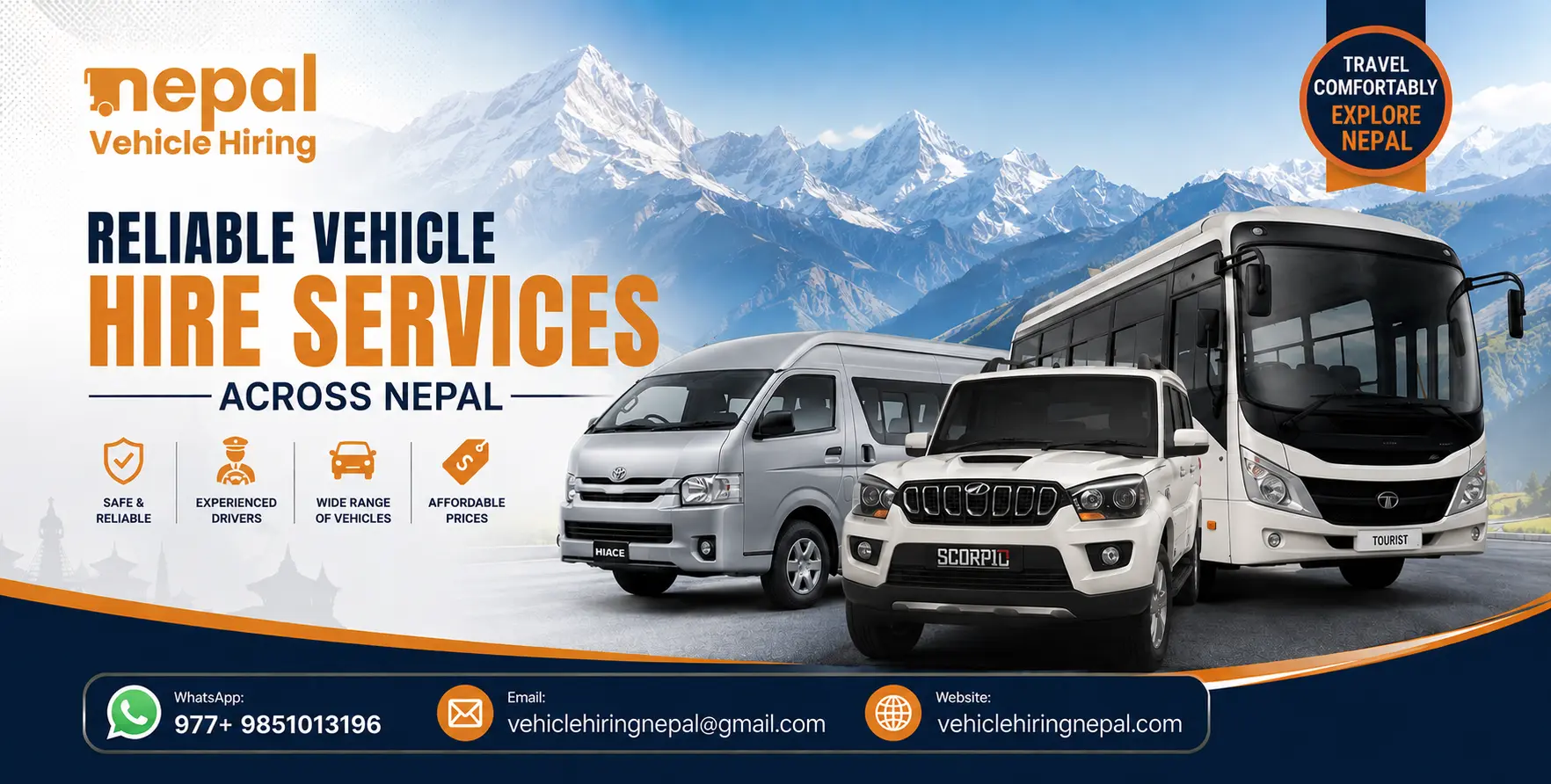
Why Private Tourist Vehicle is the Best Chitwan Transport Choice
Chitwan is one of Nepal’s few tourist destinations with a genuine alternative transport option: the tourist bus service that runs daily between Kathmandu and Sauraha (Chitwan’s main tourist village). For budget solo travelers, the tourist bus (approximately NPR 800 to 1,200 per seat) is a viable option. For everyone else, private tourist vehicle rental wins on every meaningful dimension:
- Door-to-door delivery: tourist buses depart from specific Kathmandu bus parks (far from Thamel hotels) and arrive at Sauraha’s tourist bus stand (requiring a short local tuk-tuk or vehicle to individual jungle lodges). Private vehicle picks you up at your Thamel hotel door and drops you at your specific jungle lodge gate.
- Schedule control: tourist buses depart at fixed times (typically 7:00 a.m. and 7:30 a.m.) regardless of your preferred start time. Private vehicles depart when you do — 6:00 a.m. for groups wanting an early Chitwan arrival, or 8:30 a.m. for a more relaxed start with a Manakamana stop en route.
- En-route flexibility: the Kathmandu-to-Chitwan private vehicle can include a Manakamana Temple cable car stop (2 to 2.5 hours, the most popular en-route attraction), a Mugling fish restaurant lunch, or any other roadside attraction the group prefers.
- Group economics: for groups of 4 or more, private vehicle per-person costs are competitive with tourist bus fares while delivering all of the above advantages. At 6 passengers in a Hiace van, per-person costs are often lower than a tourist bus seat.
- Luggage comfort: Chitwan tourists typically carry significant luggage — jungle clothing, binoculars, camera equipment, and often trekking gear for onward travel to Pokhara. Private vehicles accommodate full-sized luggage; tourist buses charge extra for large bags and may not accommodate all gear comfortably.
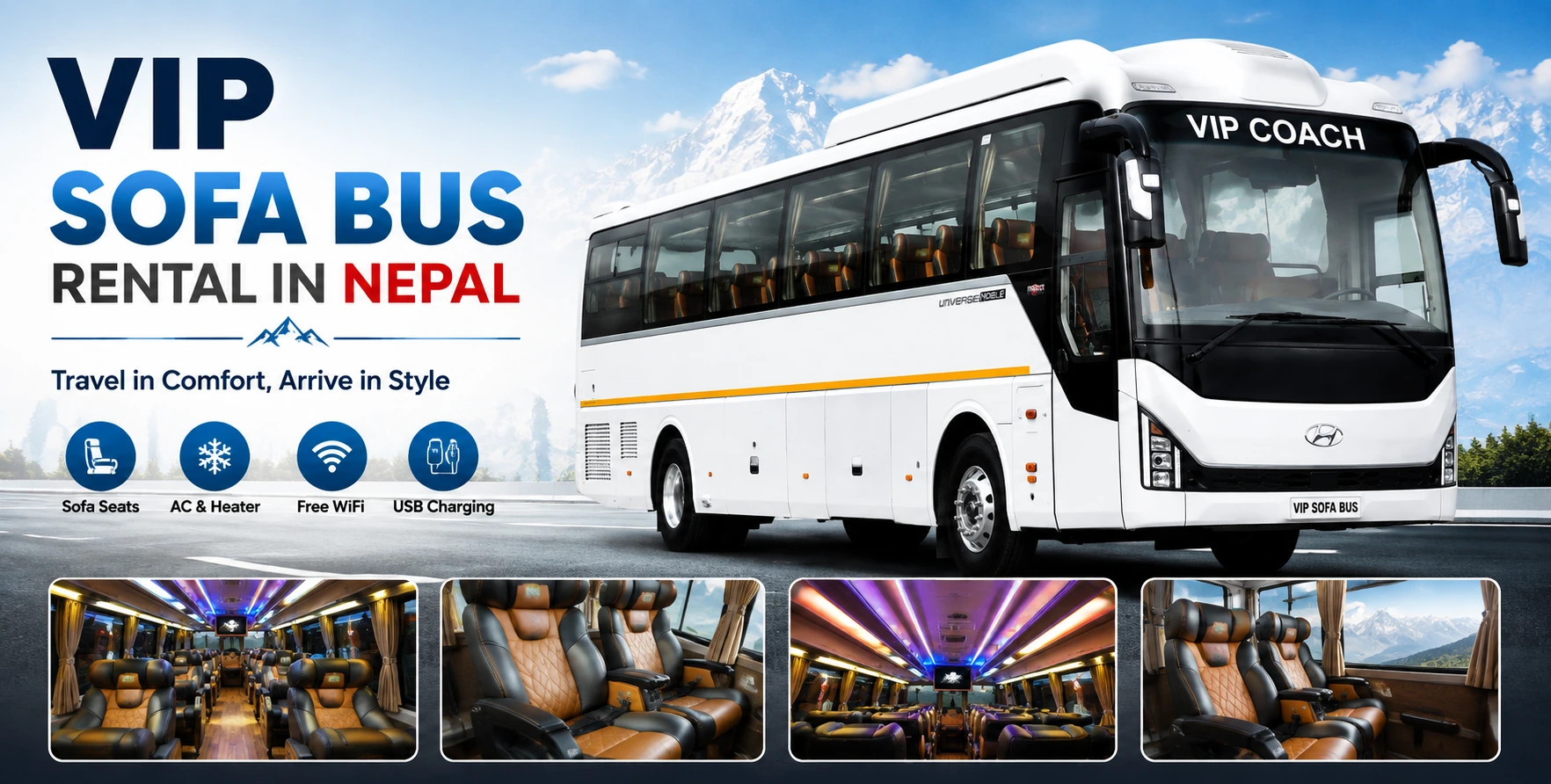
Kathmandu to Chitwan Tourist Vehicle: The Route in Detail
The Kathmandu-to-Chitwan journey is approximately 200 kilometers on the Prithvi Highway and Narayanghat road, taking 4 to 5 hours by private vehicle (5 to 6 hours with the Manakamana stop). Nepal Vehicle Hiring’s vehicles depart from your Thamel hotel at the agreed time and deliver you to your specific Chitwan jungle lodge.
| Section | Distance | Road | Drive Time | Key Notes |
| Kathmandu to Mugling | 110 km | Prithvi Hwy | 2–2.5 hrs | Trishuli River gorge; Manakamana cable car at Mugling |
| Mugling to Narayanghat | 33 km | NH44 (blacktop) | 30–40 min | Fastest, widest highway section; Narayanghat is Chitwan gateway |
| Narayanghat to Sauraha | 30 km | Provincial road | 40–50 min | Final approach to Chitwan; road through Bharatpur city |
| Sauraha to jungle lodges | 1–10 km | Local road | 5–20 min | Depends on specific lodge location near park buffer zone |
The Manakamana Temple Stop
The Manakamana Temple cable car at Mugling junction is the most popular en-route attraction on the Kathmandu-to-Chitwan journey. The cable car carries visitors up a dramatic 2.8-kilometer aerial ropeway (one of Asia’s longest) to the Manakamana Bhagwati Temple (1,302 m) — a major Hindu sacred site dedicated to the goddess Manakamana, believed to fulfill the wishes (mana = heart, kamana = wish) of devout visitors. Cable car operating hours: 9:00 a.m. to 12:00 noon and 2:00 p.m. to 5:00 p.m., closed Tuesdays. Ticket: approximately NPR 1,200 return per person. Total stop time including cable car ride (10 minutes each way), temple visit, and a meal at the top: approximately 2 to 2.5 hours. Nepal Vehicle Hiring includes the Manakamana stop on all Kathmandu-to-Chitwan journeys on request — our driver waits at the cable car base while guests make the ascent.
The Mugling Fish Restaurant Stop
At Mugling junction (approximately 3.5 hours from Kathmandu), the Trishuli River riverside restaurants serve Nepal’s most famous roadside lunch — fresh Mahseer fish (sahar) caught from the Trishuli River and prepared in a simple mustard-oil and spice preparation that is one of Nepal’s finest roadside food experiences. The Mugling fish lunch is a standard stop on all Nepal Vehicle Hiring Kathmandu-to-Chitwan journeys when time allows (approximately 45 minutes for a proper lunch). This stop works well with the Manakamana cable car visit—fish lunch after the cable car descent, before continuing to Chitwan.
Pokhara to Chitwan Tourist Vehicle
The Pokhara-to-Chitwan connection is about 150 kilometers and takes 3 to 4 hours by private vehicle—a straightforward, comfortable drive through the Terai plains and the Narayanghat junction. Most tourists make this journey as part of the Nepal Triangle circuit (Kathmandu → Pokhara → Chitwan → Kathmandu) or the reverse direction. Nepal Vehicle Hiring’s car hire in Nepal, Hiace van hire, and Coaster bus hire all serve this route, with all-inclusive pricing that includes the Pokhara hotel pickup.
Route: Pokhara → Prithvi Chowk (east Pokhara) → BP Highway east → Mugling junction → Narayanghat → Sauraha. The journey descends from Pokhara’s 827 m to Chitwan’s approximately 150 m — a tropical heat increase that Chitwan visitors should factor into their clothing preparation (Chitwan is significantly warmer than Pokhara, particularly in the October to April dry season when days reach 28°C to 35°C).
Chitwan National Park: What the Tourist Vehicle Connects You To
Understanding Chitwan National Park’s wildlife and activities helps tourists choose the right vehicle and stay duration.
One-Horned Rhinoceros
Chitwan National Park is home to one of the world’s most important greater one-horned rhinoceros (Rhinoceros unicornis) populations — approximately 700 individuals, making it one of the largest single populations of this endangered species on Earth. The rhino’s recovery from near-extinction in the early 20th century (when fewer than 100 individuals survived) to the current robust population is one of Nepal’s conservation success stories. Rhinos are most commonly seen in the grassland areas near the Rapti River, in the Sauraha buffer zone, and during jeep safaris in the core park area. The morning jeep safari (departing 5:30 to 6:00 a.m.) offers the highest rhino-sighting probability, as animals are active in the early morning.
Bengal Tiger
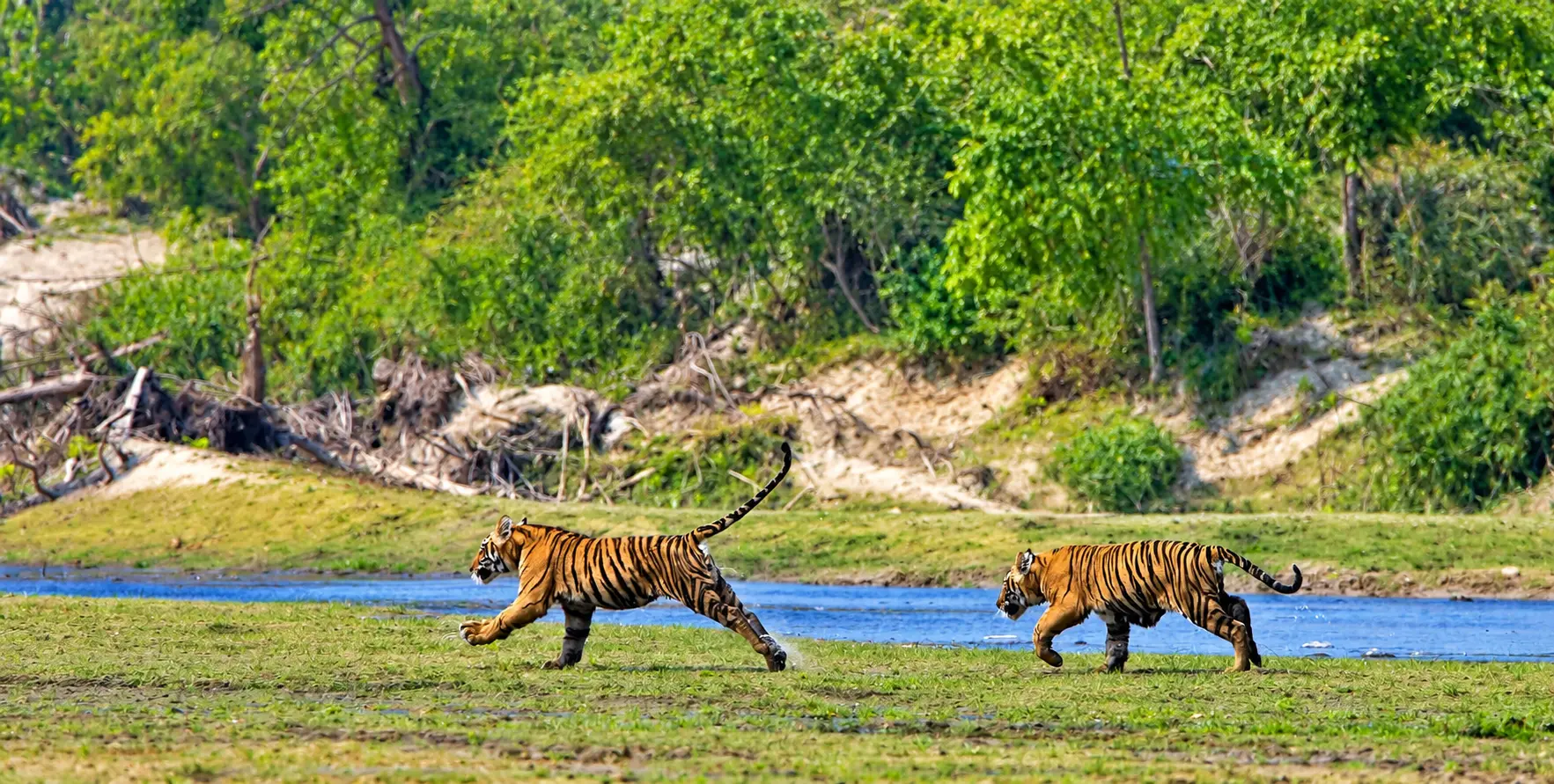
Chitwan’s tiger population—estimated at about 100 individuals in the most recent survey—represents one of Nepal’s greatest conservation achievements. Tigers are far less common than rhinos (sighting a tiger in Chitwan is a genuine wildlife event, not a guarantee). Still, the park’s core zone jeep safari offers the best chance of seeing a wild tiger in Nepal. You often see tiger pugmarks, scrapes, and scent markings during safaris, even when the tiger remains hidden in the sal forest.
Wildlife Activities Requiring Local Transport
Within and around Chitwan National Park, tourist activities that require local transport (separate from the Nepal Vehicle Hiring inter-city vehicle) include:
- Jeep safari in the core zone: open-top 4WD jeep operated by park-licensed safari operators from Sauraha. Price: approximately NPR 5,000 to 8,000 per person for a 3-hour morning or afternoon safari
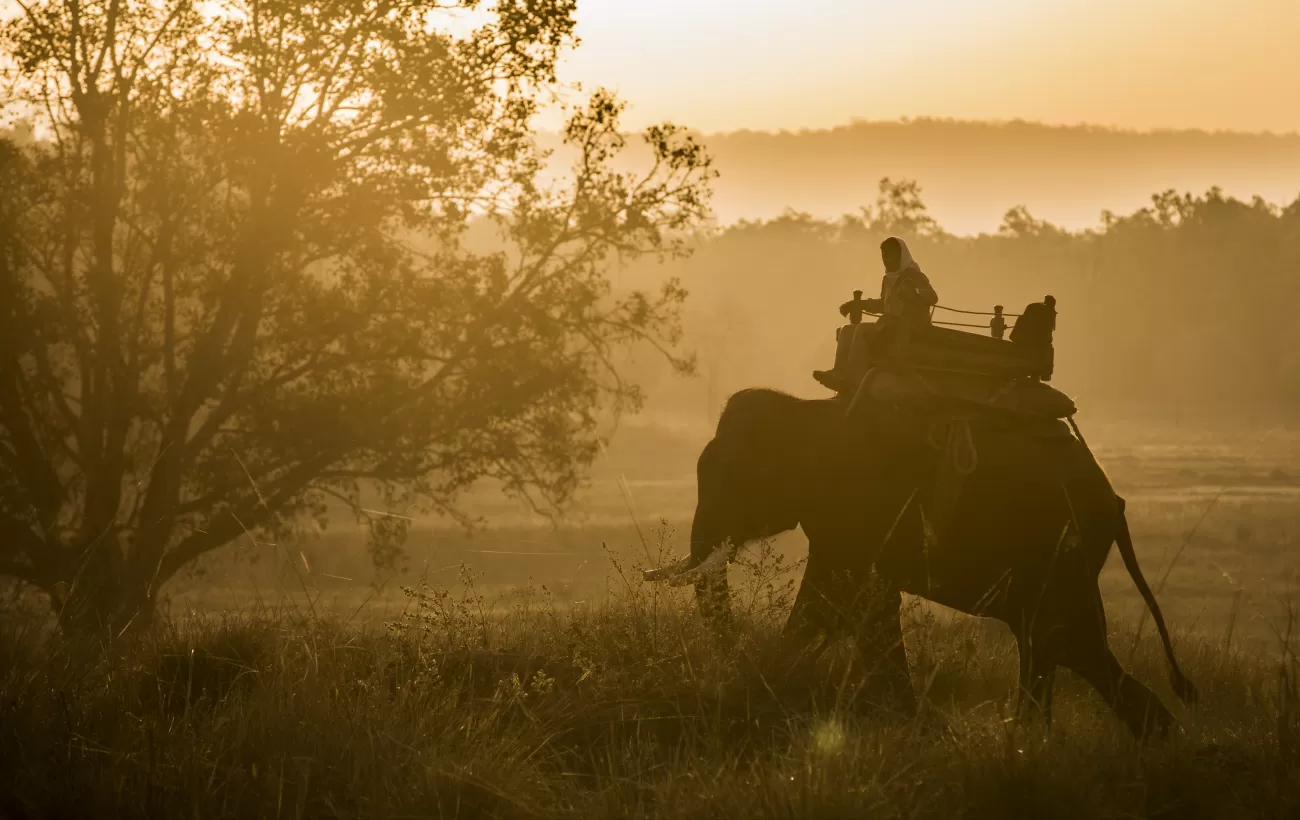
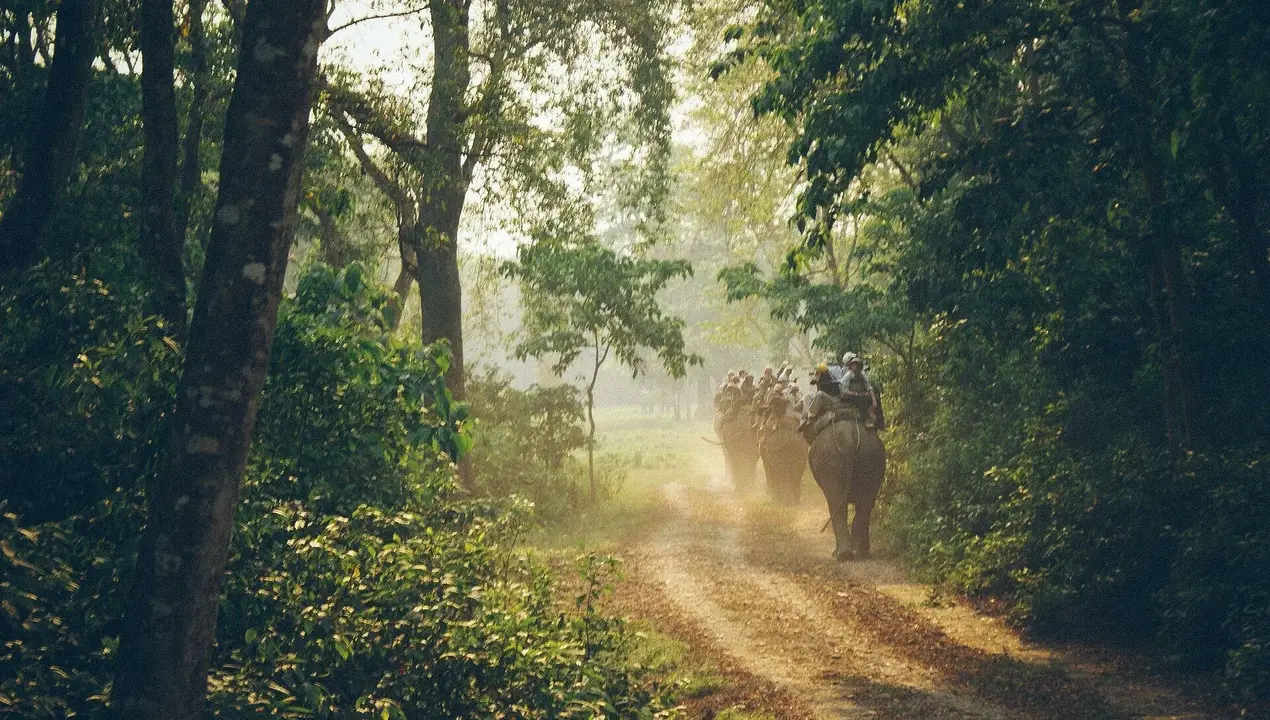
- Elephant-back safari: traditional elephant safari in the buffer zone grasslands — morning is the prime time for rhino sightings from elephant back. Price: approximately NPR 1,500 to 2,500 per person
- Canoe trip on the Rapti River: dugout canoe safari along the Rapti River boundary — excellent for crocodile (mugger and gharial), river birds, and riverside wildlife sightings
- Elephant breeding center: the government-managed elephant facility 3 km from Sauraha where park elephants are cared for, accessible by local tuk-tuk or walking
- Tharu cultural show: traditional Tharu dance and cultural performance at village cultural centers in the Sauraha area, accessible by local transport or a 10 to 20 minute walk from most lodges
Nepal Vehicle Hiring provides inter-city transport that brings tourists to Sauraha; local park activities are arranged separately through Chitwan jungle lodges, which include activity packages in their accommodation pricing. Our Nepal holiday tour and Nepal tour package services coordinate the Chitwan inter-city vehicle alongside Kathmandu and Pokhara in a complete Nepal circuit booking.
Sauraha: Chitwan’s Tourist Village — Vehicle Access Guide
Sauraha is the primary tourist village on the northern boundary of Chitwan National Park—a strip of jungle lodges, restaurants, activity booking offices, elephant facilities, and Tharu cultural centers that has developed organically around the park’s main tourist gateway. Understanding Sauraha’s geography helps tourists and their drivers navigate the lodge delivery logistics.
Sauraha is located approximately 30 km south of Narayanghat (the Chitwan gateway city) on the north bank of the Rapti River — the river that forms the northern boundary of Chitwan National Park’s buffer zone. The road from Narayanghat to Sauraha passes through Bharatpur (the Chitwan district capital with its own domestic airport for Kathmandu-Bharatpur flights) and then the market town of Tadi Bazaar before reaching the Sauraha tourist strip.
Within Sauraha, individual jungle lodges range from the main Sauraha road (closest to the village amenities) to the riverside lodge locations directly above the Rapti River and the park boundary (most wildlife-adjacent, best for dawn rhino sightings from the lodge terrace, but furthest from Sauraha’s restaurants and shops). Nepal Vehicle Hiring d: Drivers know the Sauraha lodge layout and will navigate to the correct gate for each lodge — confirm your specific lodge name and gate location with us at the time of booking.
Chitwan in the Nepal Tourist Triangle: The Vehicle Connection
Chitwan is most commonly visited as part of the Nepal tourist triangle — the classic circuit connecting Kathmandu (culture), Pokhara (mountain scenery), and Chitwan (wildlife). This three-destination circuit is Nepal’s most popular tourist itinerary and Nepal Vehicle Hiring’s most booked complete vehicle service. The triangle can be approached in three sequences:
- Kathmandu → Pokhara → Chitwan → Kathmandu: the most popular clockwise circuit. Begins with Kathmandu’s cultural heritage, transitions to Pokhara’s mountain lakeside for 2 to 3 days, then connects south to Chitwan for 2 days before returning to Kathmandu for international departure.
- Kathmandu → Chitwan → Pokhara → Kathmandu: begins with Chitwan wildlife before moving to Pokhara’s mountain scenery, ending in Kathmandu. Good for travelers who want wildlife before altitude.
- Pokhara → Chitwan → Kathmandu: for travelers arriving in Pokhara and departing from Kathmandu. Connects Pokhara, Chitwan, and Kathmandu in a linear southeast direction.
Nepal Vehicle Hiring’s Nepal holiday tour and Nepal tour package services coordinate all three triangle vehicle sequences as a single managed booking — every vehicle confirmed, every pickup arranged, every lodge delivery handled. Our car hire in Nepal for small groups, Hiace van hire for medium groups, and Coaster bus hire or full bus hire for large groups cover the three-triangle tourist parties of every size. The Tharu People: Chitwan’s Indigenous Cultural Heritage
Alongside its wildlife, Chitwan is the homeland of the Tharu people—one of Nepal’s most distinctive indigenous ethnic communities —with a unique cultural heritage that predates the park’s establishment and coexists with Chitwan’s conservation mission in a complex and fascinating relationship. Understanding the Chitwan Tharu cultural dimension of the tourist vehicle journey from Kathmandu adds a layer of significance.
The Tharu are an indigenous community of the inner Terai plains — historically resistant to malaria (a genetic adaptation that protected them from the disease that kept most other ethnic groups out of the lowland forests); they lived in the Chitwan area for centuries before the government’s malaria eradication program in the 1950s opened the region to settlement from the hills. The Tharu’s traditional lifestyle—communal longhouses, rice agriculture, fishing and foraging in the forest margins, and a rich tradition of dance, music, and craftsmanship—is both a living cultural heritage and a growing tourist attraction.
The Tharu Cultural Village Program in Sauraha allows tourists to visit traditional Tharu longhouses, observe traditional craft-making (particularly the intricate dhikki (rice pestle) and madhu (beer pot) pottery), and attend the Tharu cultural dance show — a performance of traditional dances including the Stick Dance (Deuda) and the Fish Dance that represent Tharu village social life. Nepal Vehicle Hiring’s Chitwan tourist vehicle service connects Kathmandu and Pokhara tourists directly to this cultural experience — the Sauraha delivery includes proximity to the Tharu cultural program venues as a standard feature.
Best Time to Visit Chitwan and Book Tourist Vehicles
| Season | Months | Chitwan Conditions | Wildlife Viewing | Vehicle Booking Lead |
| Spring | Mar–May | Hot, 30–38°C, dry | Good — water scarce, animals at rivers | 3–4 weeks |
| Monsoon | Jun–Sep | Heavy rain, humidity, 30–38°C | Park partially closed; wildlife concentrated | 1–2 weeks |
| Post-Monsoon | Oct | Warm, lush, clear | Excellent — lush grasslands, animals active | 3–5 weeks |
| Autumn Peak | Oct–Nov | 28–32°C days, cool nights | Best overall — peak season | 5–7 weeks |
| Winter | Dec–Feb | 18–25°C days, cold nights | Excellent visibility, active rhinos & tigers | 2–3 weeks |
| Late Winter/Spring | Feb–Apr | Warming, dry, grass burning | Good visibility when grass burned — prime tiger viewing | 2–4 weeks |
The October to March window is Chitwan’s finest tourist vehicle period — comfortable temperatures, operational park access, and peak wildlife visibility. The grass-burning period (February to March), when park management deliberately burns tall elephant grass to encourage new growth, dramatically increases wildlife visibility—historically the best period for tiger sightings, as animals are no longer hidden in the tall grass.
Chitwan National Park Fees and Permits 2026/27
| Fee / Permit | Cost (2026) | Who Pays | Where |
| CNP Entry Permit (foreign national) | NPR 1,500 per day | Each visitor | Park entry gate or online |
| CNP Entry Permit (SAARC national) | NPR 750 per day | Each visitor | Park entry gate |
| Jeep safari vehicle permit | NPR 4,000–6,000 per jeep | Safari operator | Included in safari price |
| Elephant safari permit | NPR 800–1,200 per elephant | Government elephant center | Included in elephant activity price |
Nepal Vehicle Hiring’s tourist vehicles do not enter the Chitwan National Park core zone — we deliver tourists to their jungle lodge gates in the Sauraha buffer zone area. Jungle lodges and local safari operators arrange park entry permits and safari vehicle permits. Our Plan Your Trip page provides Chitwan jungle lodge recommendations and contact details, along with inter-city vehicle booking.
Frequently Asked Questions: Tourist Vehicle Rental Chitwan
How long is the drive from Kathmandu to Chitwan?
Approximately 4 to 5 hours by private vehicle without stops, or 6 to 7 hours with the Manakamana cable car stop and Mugling fish lunch. Nepal Vehicle Hiring departs from your Thamel hotel at the agreed time — a 7:00 a.m. departure typically reaches Chitwan by 12:00 noon (without Manakamana) or 2:00 p.m. (with Manakamana).
Is the Manakamana stop worth adding?
For most tourists, yes — the Manakamana cable car is one of Nepal’s most memorable short experiences and a significant Hindu sacred site. It adds 2 to 2.5 hours to the Kathmandu-to-Chitwan journey but delivers a genuinely distinctive experience. The main reason to skip it: if you are arriving in Chitwan in time for an afternoon wildlife activity that requires a specific early arrival time, the Manakamana stop may conflict with your lodge’s afternoon safari schedule.
What is the best vehicle for a family of 4 visiting Chitwan?
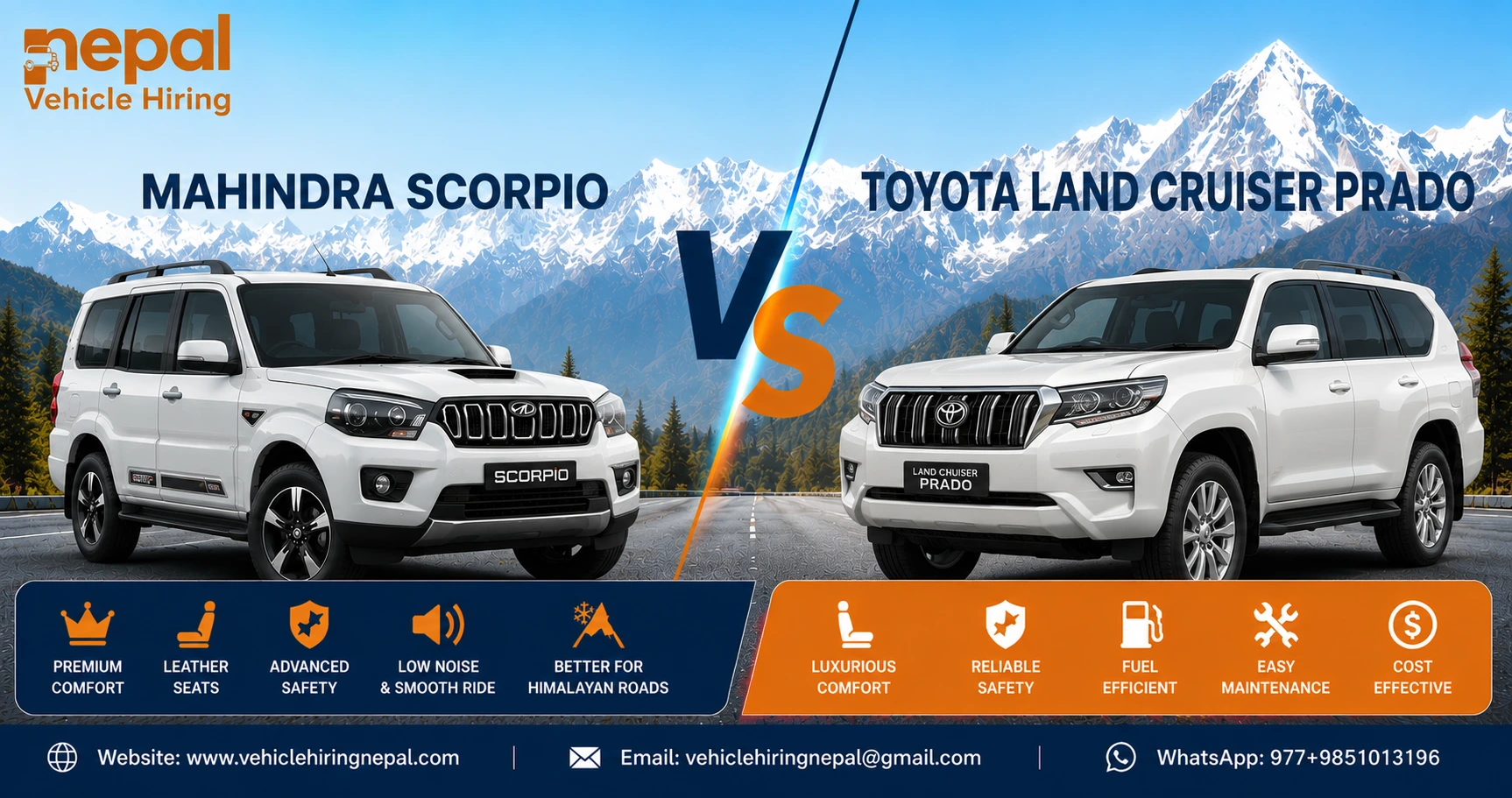
Our private car hire in Nepal (sedan or SUV) comfortably seats a family of 4 with luggage for the Kathmandu-to-Chitwan highway. For families of 5 to 7, our 4WD jeep hire (Mahindra Scorpio) is the right vehicle — more space and a higher ride position for better views of the Trishuli gorge landscape en route. For families of 8 or more, our Hiace van hire is the most comfortable configuration.
Can Nepal Vehicle Hiring also arrange the return from Chitwan?
Yes — Nepal Vehicle Hiring pre-books the return vehicle (Chitwan-to-Kathmandu or Chitwan-to-Pokhara) as part of the original circuit booking. We confirm the return before departure from Kathmandu, so your lodge knows the pickup time and the driver is confirmed for your specific return date. No improvised arrangements at Chitwan — everything is pre-arranged.
Do your vehicles go inside Chitwan National Park?
No — Nepal Vehicle Hiring’s highway vehicles deliver tourists to their jungle lodge gates in the Sauraha buffer zone. Access to the CNP core zone requires a park-licensed open-top safari jeep operated by Sauraha-based safari operators (arranged through your jungle lodge). Our vehicles serve the inter-city approach; the jungle lodge provides the park activity vehicles.
Can I combine the Chitwan visit with Lumbini?
Yes — Lumbini (birthplace of the Buddha) is approximately 150 km west of Chitwan on the Terai highway, about 2.5 to 3 hours by private vehicle. Nepal Vehicle Hiring’s Hiace van hire or car hire in Nepal connects Chitwan and Lumbini directly as part of the Nepal circuit. Our Nepal Nekhor tour coordinates Lumbini and Chitwan as part of the complete Nepal pilgrimage and wildlife circuit.
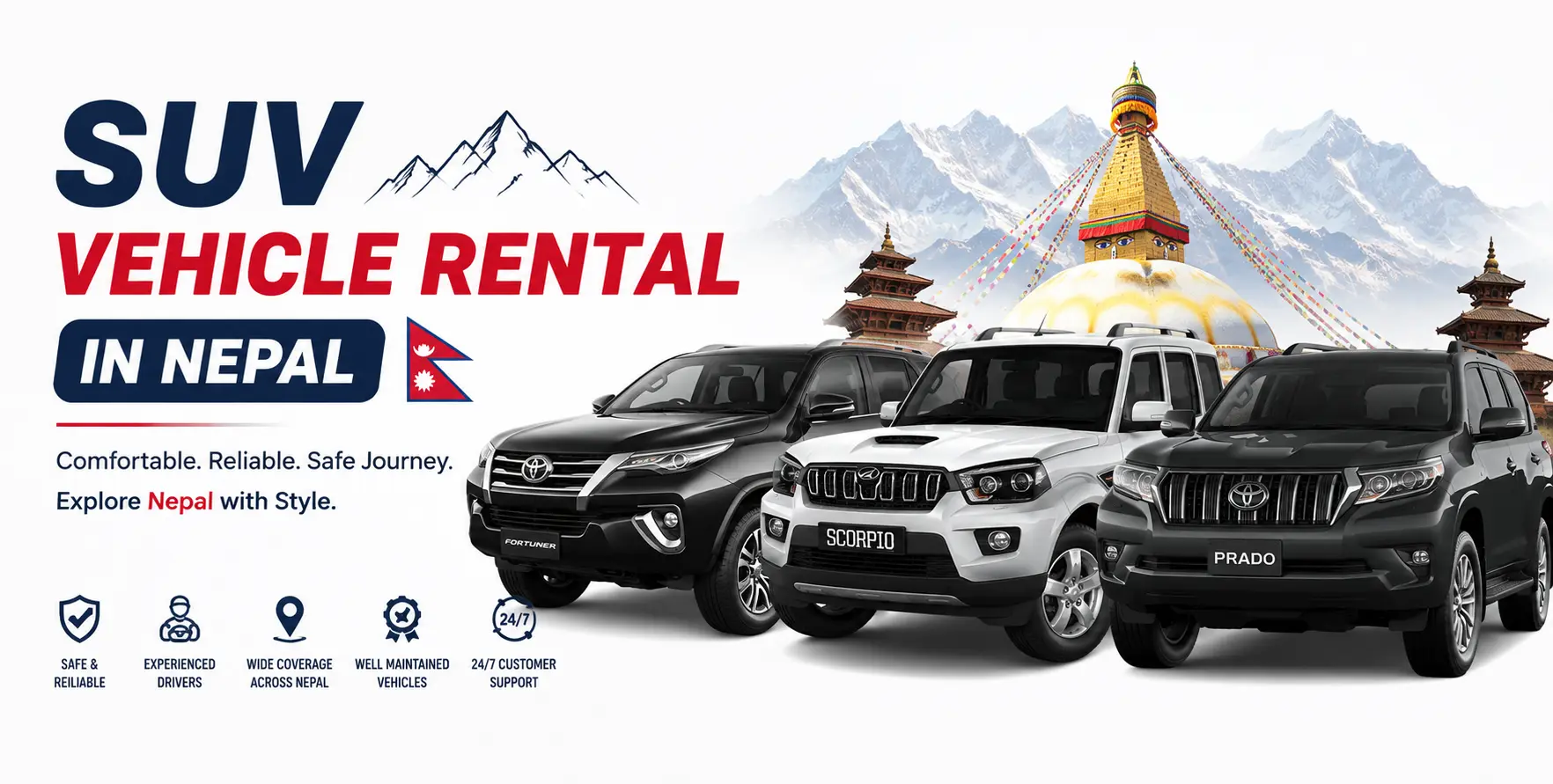
Book Your Chitwan Tourist Vehicle with Nepal Vehicle Hiring
Nepal Vehicle Hiring Pvt. Ltd., Thamel, Kathmandu — your specialist for tourist vehicle rental from Kathmandu and Pokhara to Chitwan National Park. Hotel door pickup, all-inclusive pricing, experienced drivers, 24/7 WhatsApp support:
- Car hire in Nepal — individuals, couples, small families
- 4WD jeep hire — premium highway and small groups of 4–7
- Hiace van hire — group tours of 8–14
- Coaster bus hire — mid-size groups of 15–25
- Full bus hire — large groups of 25–45
- Nepal holiday tour — Chitwan within the complete Nepal triangle circuit
- Nepal tour package — Kathmandu, Pokhara, Chitwan, Lumbini circuit
- Nepal Nekhor tour — sacred circuit including Chitwan
- Kathmandu airport transfer — arrival logistics before the Chitwan journey
- Kathmandu sightseeing service — valley cultural circuit before departure for Chitwan
- Kathmandu to Pokhara bus — for tourists doing Kathmandu-Pokhara before Chitwan
- Pokhara to Nayapul transportation — Annapurna foothills option before Chitwan
- WhatsApp / Call: +977 9851013196
- Email:[email protected]
- www.vehiclehiringnepal.com
Visit our Plan Your Trip page with your group size, Chitwan dates, departure city (Kathmandu or Pokhara), and jungle lodge name. We respond within 24 hours with a confirmed vehicle, driver, all-in price, and departure time. Chitwan’s one-horned rhinos, Bengal tigers, and Tharu hospitality are waiting — Nepal Vehicle Hiring drives you there.
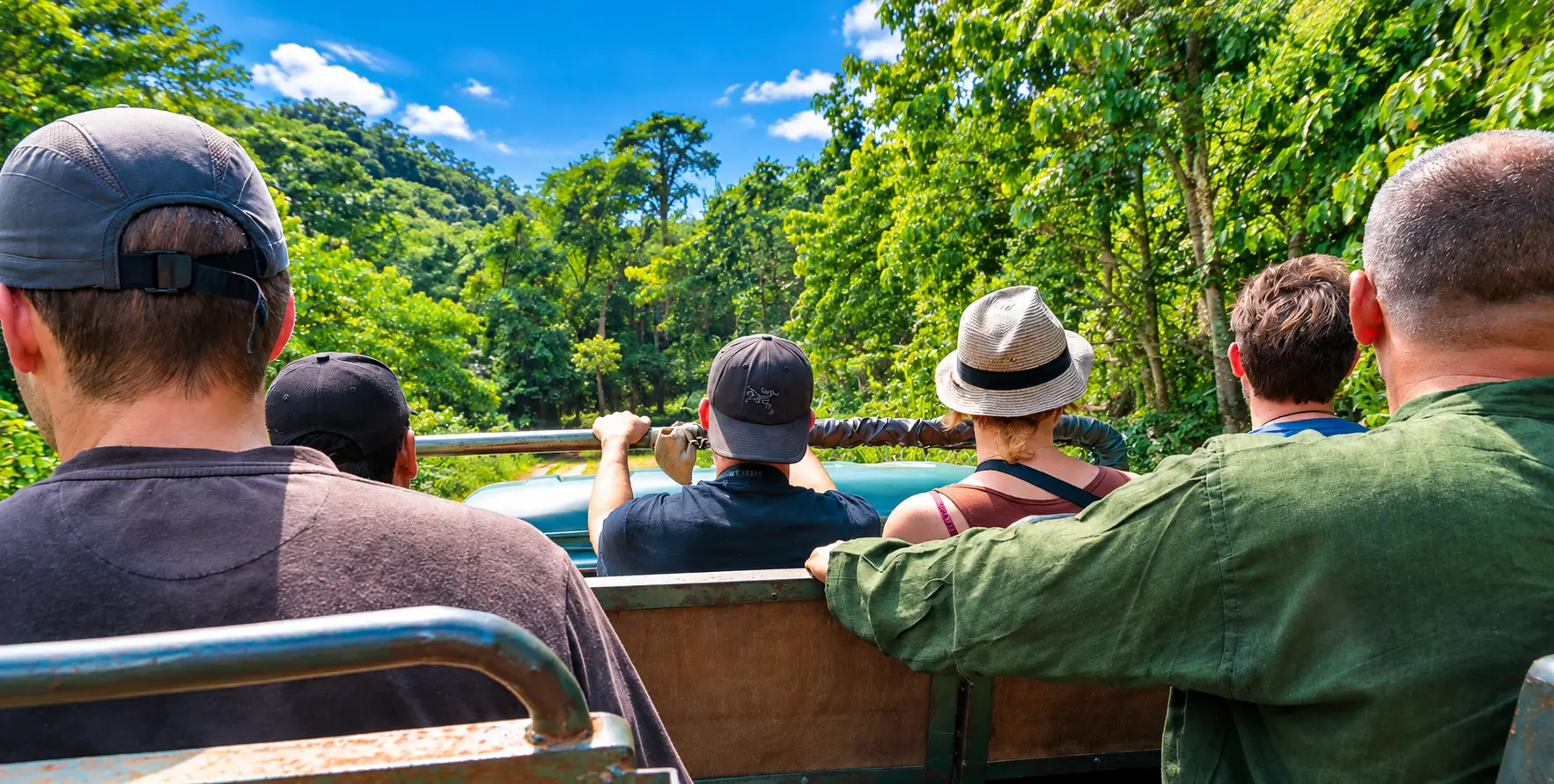
Chitwan National Park: Conservation Story and Ecological Significance
Understanding Chitwan National Park’s conservation history and ecological significance turns a wildlife visit into a genuinely meaningful encounter with one of Asia’s greatest conservation achievements. Nepal Vehicle Hiring’s drivers often share this context with tourist clients on the Kathmandu-to-Chitwan journey — the approximately 4-hour drive provides ample time to understand what makes Chitwan so extraordinary.
Chitwan was declared a Rhinoceros Sanctuary in 1963 and a National Park in 1973, becoming Nepal’s first protected area. The park was inscribed as a UNESCO World Heritage Site in 1984, recognizing its outstanding value as one of the few remaining undisturbed areas of the Terai-Duar savanna and grassland ecosystem that once extended across the entire length of the Indian subcontinent’s southern flank. Today, only scattered fragments of this ecosystem survive, and Chitwan is the finest and best-managed of them.
The park covers 952 square kilometers of core zone, surrounded by a 750-square-kilometer buffer zone that includes the Sauraha tourist area. This total protected landscape — approximately 1,700 square kilometers — is part of the larger Terai Arc Landscape, a transboundary conservation initiative connecting Chitwan with India’s Valmiki Tiger Reserve across the Gandak River border, and with other Nepal protected areas (Bardia, Shuklaphanta) in a network that allows wildlife movement across a 49,000 square kilometer connectivity corridor.
The one-horned rhinoceros population in Chitwan — approximately 700 individuals as of the most recent survey — has recovered from fewer than 100 animals in the early 20th century to a thriving population that is gradually expanding its range. Nepal has achieved zero rhinoceros poaching incidents for several years running—a conservation achievement that requires the continuous vigilance of Nepal Army soldiers and park rangers who patrol Chitwan’s borders. Tourist vehicles that bring visitors to Chitwan, and the park entry fees they generate, are a direct and important funding source for this protection system.
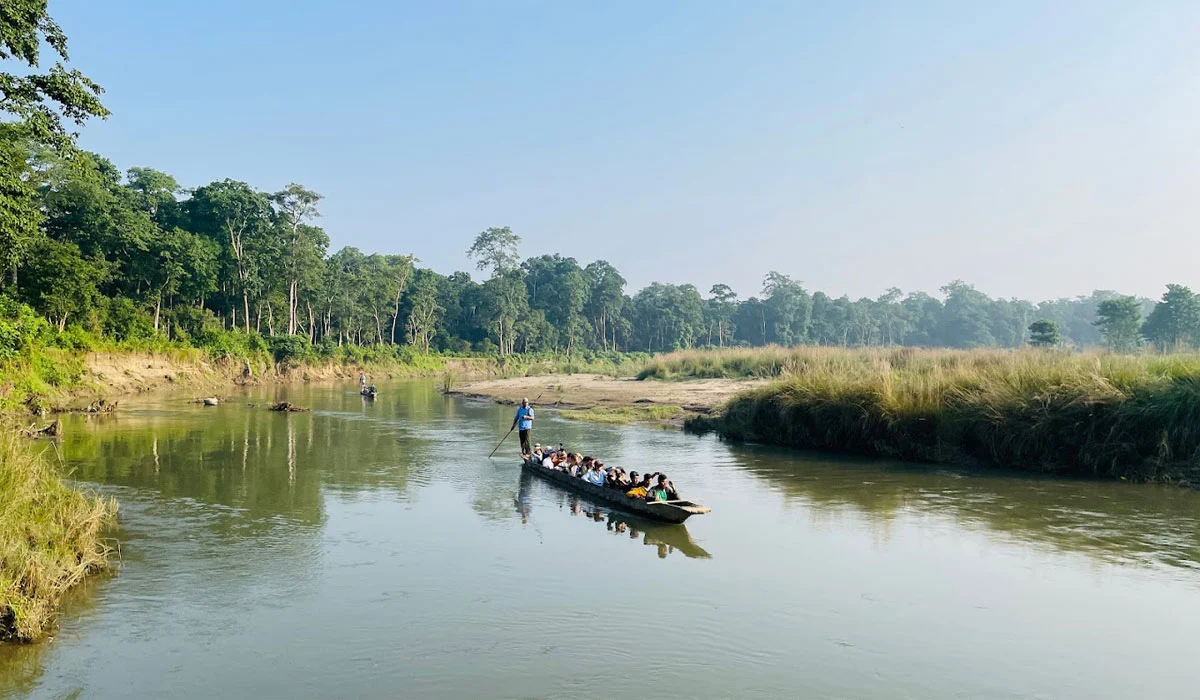
The Rapti River: Chitwan’s Ecological and Visual Heart
The Rapti River — which forms the northern boundary of Chitwan National Park’s buffer zone and flows along the Sauraha tourist area’s southern edge — is both an ecological boundary and one of the park’s most productive wildlife observation zones. Understanding the Rapti’s role in Chitwan’s ecosystem gives tourist vehicle clients a richer appreciation of what they are approaching.
The Rapti is a Terai river — braided, shallow, and seasonally flooding — that creates the mosaic of riverside grassland, oxbow lakes, and riverine forest that the one-horned rhinoceros, Bengal tiger, mugger crocodile, gharial, and Gangetic river dolphin all depend on. The riverbanks of the Rapti within sight of Sauraha are among the most reliable rhino-spotting zones in Nepal — the animals come to drink and wallow in the morning and evening hours, and tourists staying at riverside lodges can sometimes observe rhinos from their lodge terraces without leaving the property.
The Rapti also supports a remarkable waterbird population: grey-headed fish eagle, brown fish owl, great thick-knee, river lapwing, small pratincole, Eurasian and Asian openbill storks, Indian spot-billed pelican, and various kingfisher species are all commonly seen along the riverside in the October-to-March dry season. The canoe safari on the Rapti — one of Chitwan’s most affordable and most rewarding wildlife activities — gives tourists a water-level perspective on this riverside ecology that no jeep safari can replicate.
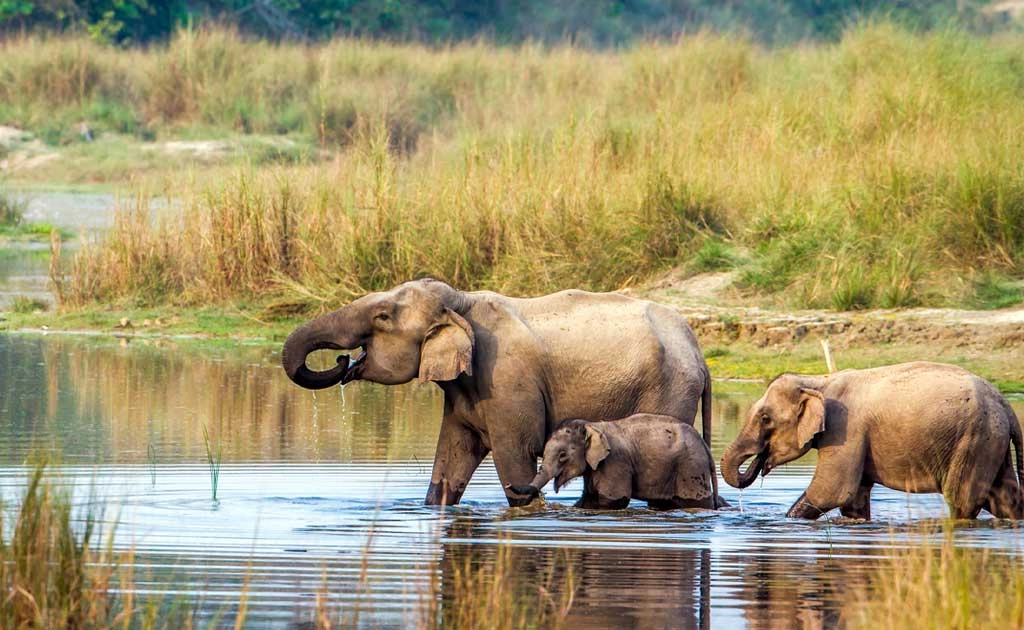
Chitwan Beyond Wildlife: Cultural and Historical Context
Chitwan’s history as a tourist destination predates Nepal’s tourism industry. The inner Terai (Dang and Chitwan valleys) was historically the winter hunting ground of Nepal’s Rana prime ministers—the hereditary autocrats who ruled Nepal from 1846 to 1951—who organized spectacular royal hunts (shikars) in which hundreds of elephants were deployed to drive game through the forests toward waiting hunters. These royal shikars also hosted international guests, including King George V of Britain in 1911, making the Chitwan wildlife experience one of Nepal’s earliest internationally promoted tourist activities.
The Tiger Tops Jungle Lodge, established in 1964 in the heart of what became Chitwan National Park, was Nepal’s first tourist jungle lodge and one of the world’s pioneering ecotourism ventures. This model influenced the development of the modern African safari lodge concept. Although Tiger Tops operated within the park boundary (a privilege that ended when the park established its current strict zoning), its success demonstrated that wildlife tourism could generate the economic incentives that sustain conservation. This economic logic underpins Chitwan’s entire conservation model today.
For tourists approaching Chitwan by private vehicle from Kathmandu, these historical layers—the Rana hunting grounds, the royal shikars, the pioneering eco-lodge—give the landscape depth beyond the immediate wildlife excitement. The sal forest visible from the Chitwan highway approach is the same forest that once echoed with the trumpeting of shikar elephants and the reports of the Rana rulers’ rifles. Its current status as a UNESCO World Heritage Site—protected, recovering, and supporting one of South Asia’s most important wildlife populations—reflects a conservation journey as remarkable as any Nepal trekking route.
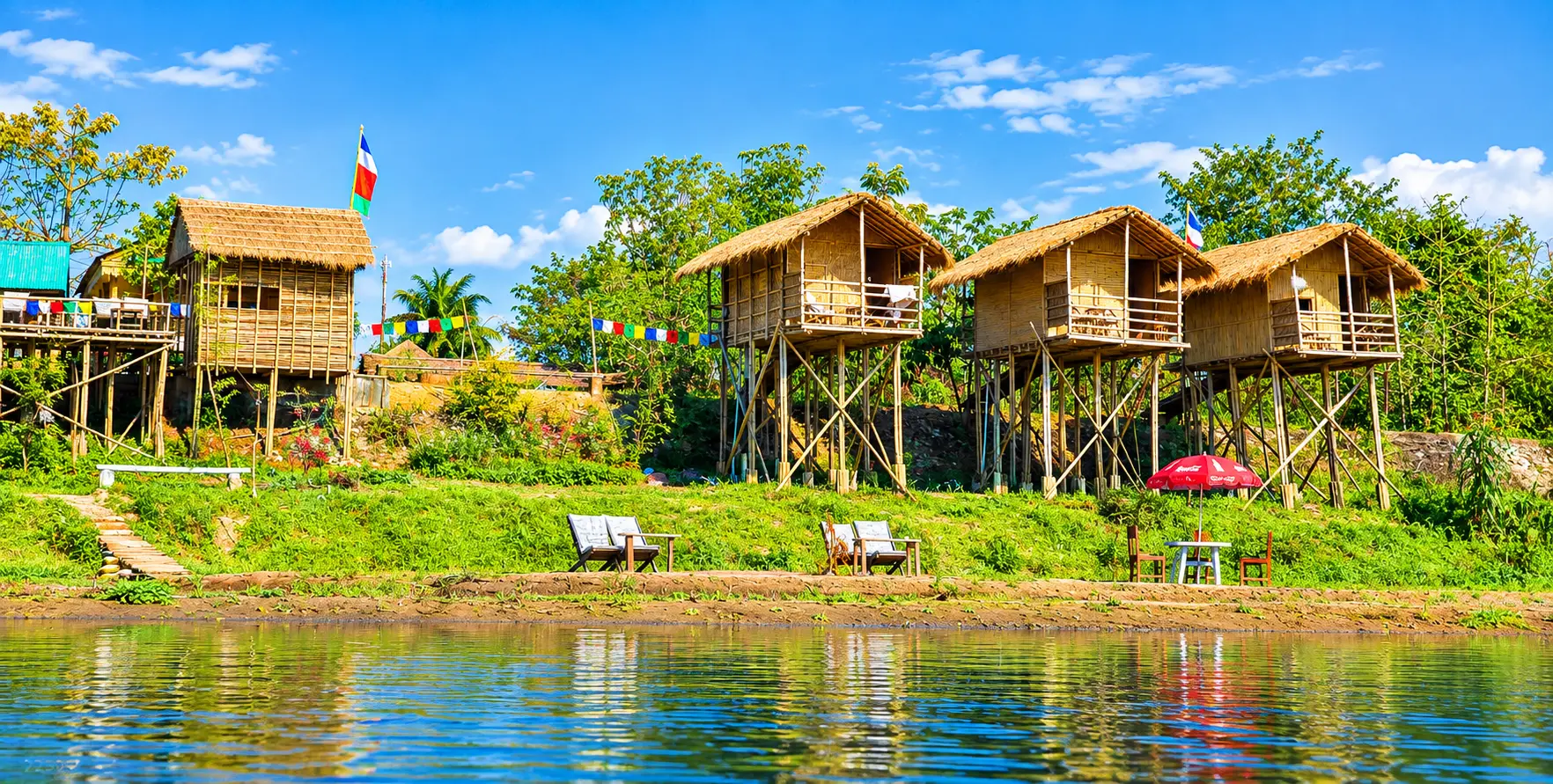
Chitwan Jungle Lodge Selection Guide: What the Vehicle Delivery Means
The jungle lodge a tourist chooses in Chitwan directly affects what the Nepal Vehicle Hiring tourist vehicle delivery involves — and choosing the right lodge is one of the most important Chitwan planning decisions.
Riverside Lodges (Premium Wildlife Position)
The riverside lodges along the Rapti River — within direct sight or sound of the national park boundary — are Chitwan’s most desirable wildlife positions. Guests at riverside lodges can watch rhinos wading in the Rapti from their breakfast terrace, hear tigers calling across the river at dawn, and observe the Rapti’s waterbird community without leaving the property. These lodges are also farthest from Sauraha’s restaurant and shop strip — guests enjoy a quieter, more wildlife-immersive environment. Nepal Vehicle Hiring drivers know the access roads to all riverside lodge gates — confirm the specific lodge address at booking time.
Sauraha Village Lodges (Budget and Mid-Range)
Lodges within and adjacent to Sauraha village offer easy walking access to the village’s restaurants, cultural show venues, elephant breeding center, and the Sauraha informal wildlife viewing area on the riverbank. These lodges are less wildlife-immersive than the riverside positions but more convenient for tourists who want flexibility in choosing evening meals and activities from Sauraha’s options. Good budget-to-mid-range accommodation is available within 5 to 10 minutes’ walk of Sauraha’s main street.
The Kasara Resort Area (Luxury)
The Kasara Resort and similar luxury properties in the western Chitwan area offer the highest-end Chitwan accommodation—private villas, infinity pools with Rapti River views, and exclusive safari arrangements with dedicated naturalists. Nepal Vehicle Hiring’s Land Cruiser private hire is the right vehicle for guests at Kasara and similar luxury properties—matching the premium experience from highway to lodge gate. Confirm the Kasara access road with Nepal Vehicle Hiring at booking time, as the approach from the Narayanghat highway differs from the main Sauraha road.
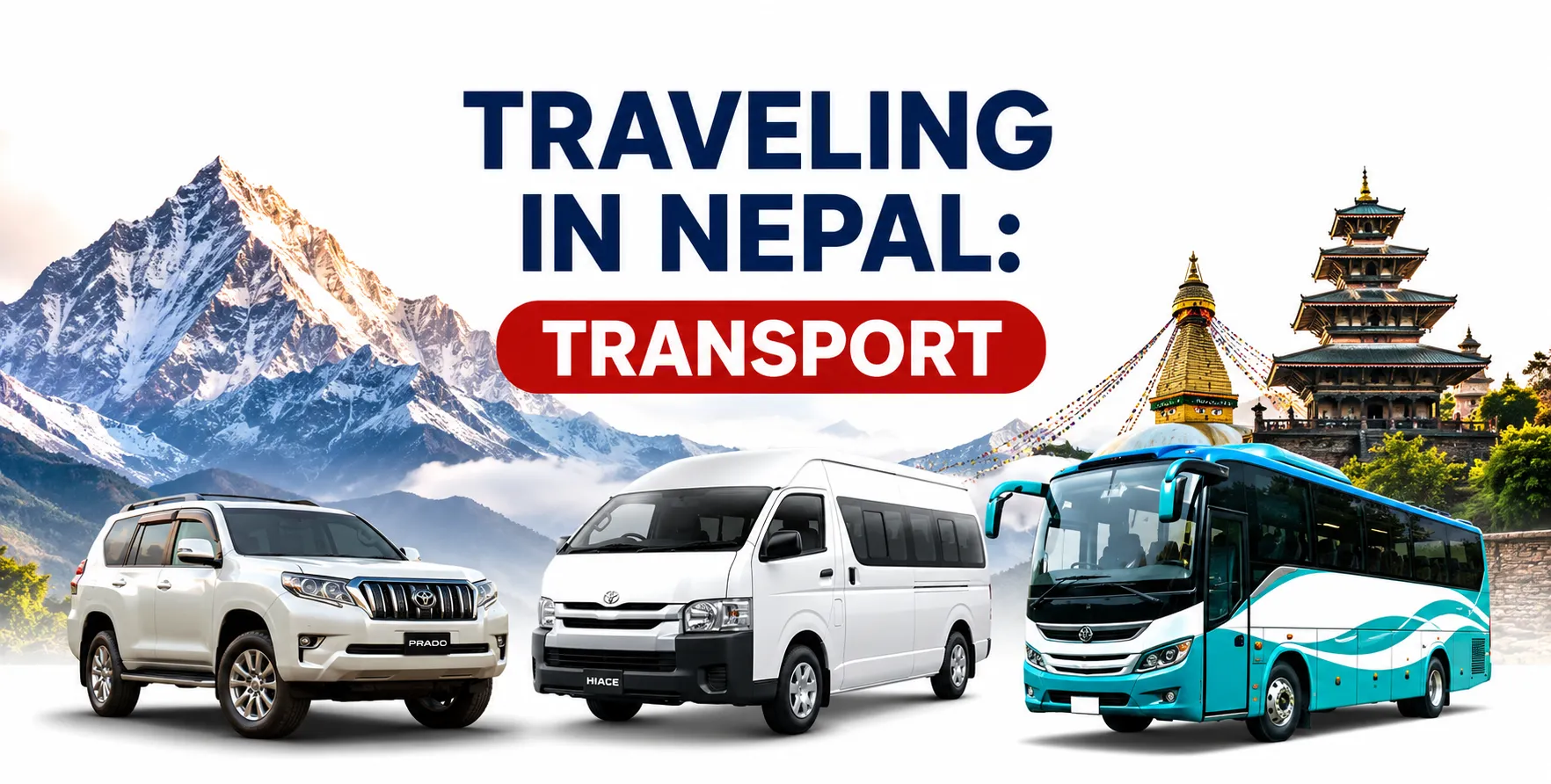
Practical Packing Tips for the Kathmandu-to-Chitwan Tourist Vehicle Journey
The tourist vehicle journey from Kathmandu to Chitwan is approximately 4 to 5 hours — long enough to require some preparation for comfort, and the destination’s tropical climate is very different from Kathmandu’s higher-altitude character:
- Lightweight clothing for Chitwan: the park is hot (28°C to 38°C in most months) and humid. Carry lightweight, breathable clothing in neutral or earth-toned colors for wildlife activities — bright colors startle wildlife, and dark colors attract insects. Do not pack all your Chitwan clothing in checked luggage on top of the vehicle—carry a small day bag with your immediate Chitwan needs accessible in the vehicle cabin.
- Insect repellent: Chitwan is a mosquito zone, particularly at dawn and dusk safari times. DEET-based repellent (30 percent or higher) is strongly recommended. Pack it in your accessible day bag, not in the roof luggage.
- Binoculars: for wildlife viewing, 8×42 or 10×42 binoculars transform the experience — rhinos in distant grassland, birds in the riparian forest, deer in the sal woodland margin are all better appreciated through quality optics. Pack binoculars in your lap bag for the vehicle journey rather than in checked luggage.
- Sun protection: Chitwan’s flat terrain and open grasslands provide less shade than Nepal’s mountain destinations. SPF 50 sunscreen, sunglasses, and a wide-brimmed hat are essential for morning jeep safaris and canoe trips.
- Cash in NPR: Sauraha has ATMs, but they are not always reliable. Carry adequate NPR from Kathmandu for park entry fees, safari activities, meals, cultural shows, and tips. Budget NPR 5,000 to 8,000 per person per day for the Chitwan stay.
- Water: The vehicle can stop for water en route, but carry at least 1 liter per person for the journey. Chitwan’s heat requires higher hydration than Kathmandu’s cooler altitude.
Nepal’s Conservation Success: Why Chitwan Matters Globally
For international tourists visiting Chitwan, understanding Nepal’s broader conservation achievement puts the experience in context as one of the world’s most inspiring wildlife recovery stories. Nepal is one of the few countries where tiger and rhinoceros populations are increasing — a counterpoint to the global narrative of wildlife decline that is both genuinely encouraging and an argument for the economic value of wildlife tourism as a conservation funding mechanism.
Nepal’s wild tiger population has more than doubled from approximately 121 individuals in 2009 to over 355 in the most recent national survey — one of the most dramatic wild tiger population recoveries in the world. Chitwan National Park accounts for the largest single share of this population. Nepal’s conservation approach — combining strict law enforcement (zero tolerance for poaching, with significant penalties), community buffer zone programs that give local communities an economic stake in conservation, and wildlife tourism revenue that funds park management — is increasingly studied as a model for conservation in high-biodiversity, high-human-pressure landscapes globally.
The tourist vehicle that carries visitors from Kathmandu to Chitwan is a small but real part of this conservation equation. The park entry fee each tourist pays, the jungle lodge revenue that sustains local employment, and the guide and safari activity fees that circulate through the Sauraha community all contribute to the economic case for conservation that keeps Chitwan’s wildlife intact. Nepal Vehicle Hiring’s tourist vehicle clients are not merely tourists visiting a wildlife area — they are, in a small but genuine way, participants in one of the world’s most successful conservation outcomes.
Chitwan to Other Destinations: Onward Vehicle Services from Nepal Vehicle Hiring
After Chitwan, most Nepal tourist circuits continue to one of three destinations — and Nepal Vehicle Hiring provides confirmed onward vehicles for all of them:
- Chitwan to Kathmandu (return): 4 to 5 hours, same route as the inbound journey. Pre-booked at the time of the Kathmandu-to-Chitwan booking. Our driver returns on the confirmed date at the confirmed pickup time from your jungle lodge gate.
- Chitwan to Pokhara: approximately 3 to 4 hours on the Narayanghat-Mugling-Pokhara highway. Our car hire, Hiace van, and Coaster bus serve this route as part of the Nepal triangle circuit, with a Pokhara Lakeside drop-off at your hotel.
- Chitwan to Lumbini: 2.5 to 3 hours west on the Terai highway through Butwal and Bhairahawa. Our Hiace van hire and car hire connect Chitwan directly to the birthplace of the Buddha without returning to Kathmandu — ideal for pilgrims combining wildlife with the Lumbini sacred circuit.
- Chitwan to Kathmandu via Narayanghat and Mugling with Manakamana stop: the return option adds the Manakamana cable car on the homeward journey for tourists who skipped it on arrival.
Nepal Vehicle Hiring pre-books all onward vehicles from Chitwan at the time of the original circuit booking — ensuring that your jungle lodge departure is as smooth and confirmed as your arrival. No improvised taxi negotiations in Sauraha when you are tired and ready to move on — your Nepal Vehicle Hiring driver is confirmed, on time, and ready at your gate.
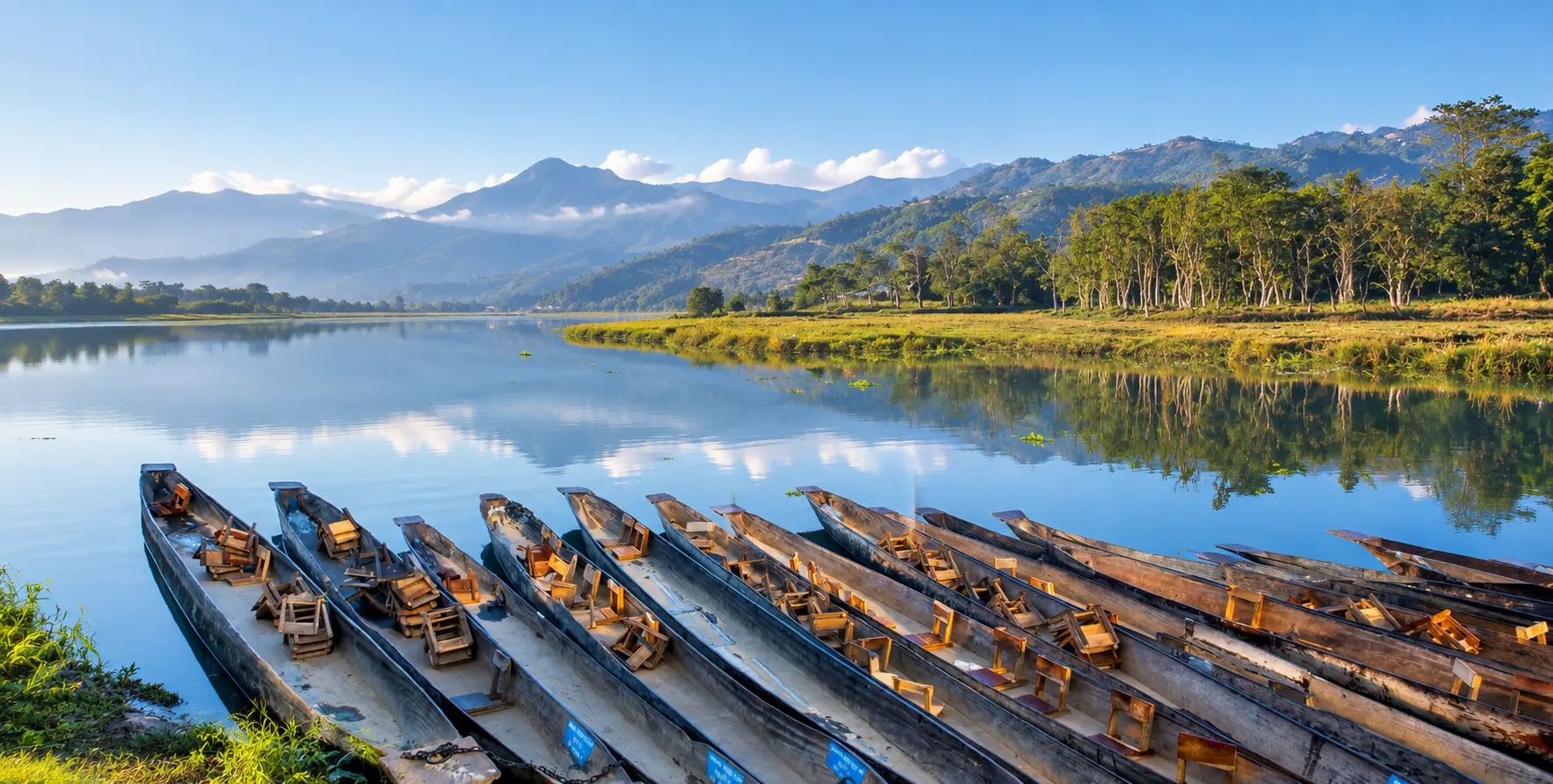
Chitwan National Park Wildlife: The Complete Species Guide
Chitwan’s wildlife richness extends well beyond the headline species of rhinoceros and tiger. Understanding the full range of wildlife the park’s sal forest, grassland, and riverine ecosystem supports helps tourists appreciate every element of the jeep safari experience—not just the iconic megafauna moments, but the hundreds of smaller sightings that make up a Chitwan wildlife day.
Mammals
One-horned rhinoceros (approximately 700 individuals) — the park’s most reliably seen large mammal, particularly in the Sauraha buffer zone grasslands and along the Rapti River. Bengal tiger (approximately 100 individuals) — present but secretive; most commonly detected by pugmarks, alarm calls of deer and langur, and occasionally in the early morning core zone safari. Sloth bear — nocturnal but occasionally seen; omnivorous and potentially aggressive if surprised. Wild elephant — small resident population in the western Chitwan forests. Gharial crocodile — critically endangered; the Narayani River (Chitwan’s western boundary) supports one of the world’s most important gharial populations, with the Gharial Conservation Breeding Center at Kasara as a key recovery facility. Mugger crocodile — abundant on the Rapti riverbanks; readily seen on morning canoe trips. Spotted deer (chital) — by far the most numerous large mammal, seen in herds of 20 to 200 in grassland clearings. Sambar deer — larger, more solitary, seen at forest edges in evening hours. Barking deer (muntjac) — small, shy, forest interior species. Gaur (Indian bison) — large bovid, occasionally seen near the Sat River; common langur and rhesus macaque — primate species active in the park’s sal canopy.
Birds
Chitwan’s bird list exceeds 650 species — one of the highest counts for any protected area in Asia. Key species for visiting birders: the giant hornbill (great hornbill), pied kingfisher, common kingfisher, stork-billed kingfisher, and Himalayan pied kingfisher along the waterways; the red jungle fowl (ancestor of the domestic chicken) in the forest floor; the Bengal florican (critically endangered bustard) in the tall grasslands; the grey-headed fish eagle and Pallas’s fish eagle above the rivers; the red-wattled lapwing and river lapwing on exposed sandbars; and the osprey, greater flameback, and lineated barbet among the dozens of species that make Chitwan one of Asia’s premier birding destinations. Nepal Vehicle Hiring’s tourist vehicle clients who are birders should ask their driver to include a Rapti River crossing and a sal forest edge stop at dawn for the maximum Chitwan bird species count on the journey to Sauraha.
Reptiles
Beyond crocodiles, Chitwan’s reptile fauna includes the Indian python (found near grassland waterholes), monitor lizard (Bengal monitor — common on riverbanks), rat snake, and king cobra. The Gharial Conservation Breeding Center at Kasara breeds critically endangered gharials for release into the Narayani River — a visit to the center (approximately 7 km west of Sauraha) is one of Chitwan’s most educationally rewarding excursions.
Narayanghat: The Chitwan Gateway City
Narayanghat is the city through which all tourist vehicles approach Chitwan — a Terai junction city of approximately 150,000 people at the confluence of the Narayani and Trishuli Rivers, approximately 30 km north of Sauraha. Understanding Narayanghat’s role helps tourists and Nepal Vehicle Hiring drivers plan the Chitwan approach efficiently.
For tourist vehicles coming from Kathmandu on the Prithvi Highway, the Mugling junction (where the Prithvi Highway meets the Narayanghat road) is the key decision point—turn south for Narayanghat and Chitwan, or continue west for Pokhara. Narayanghat has fuel stations, ATMs (more reliable than Sauraha’s), pharmacies, and restaurants — Nepal Vehicle Hiring drivers use Narayanghat as the standard final fuel stop before the Sauraha approach. The city is also the nearest town to Bharatpur Airport — tourists flying Kathmandu-to-Bharatpur (approximately 30 minutes) and then taking a vehicle to Sauraha can be collected at Bharatpur Airport by Nepal Vehicle Hiring for the 30 to 40 minute drive to their jungle lodge.
From Narayanghat, the road to Sauraha passes through Bharatpur city (Chitwan District headquarters) and Tadi Bazaar before reaching the Sauraha turn-off. This final section takes approximately 40 to 50 minutes. It passes through flat Terai farmland and buffer-zone communities surrounding the park. This landscape shows the human side of Chitwan’s conservation challenge: communities live adjacent to a national park whose wildlife (particularly elephants) occasionally damages crops, and the economic benefits of conservation must be distributed broadly enough to sustain community support.
Bharatpur Airport: The Flight Alternative to Kathmandu-Chitwan Road
For tourists whose schedule or budget makes the 4 to 5 hour Kathmandu-to-Chitwan road journey impractical,
Bharatpur Airport (BHR) offers domestic flights from Kathmandu in approximately 25 minutes on Buddha Air, Yeti Airlines, or similar. Ticket cost: approximately NPR 6,000 to 10,000 per person, one way. Nepal Vehicle Hiring’s car hire, Hiace van, or Coaster bus meets flight arrivals at Bharatpur Airport. It drivesIt drives 30 to 40 minutes to Sauraha Jungle Lodges — a total Kathmandu-to-Sauraha time of about 2 hours, including airport check-in. The flight is more expensive per person than road travel for groups of 4 or more, but for solo travelers and couples where per-person cost matters less, the time savings are significant.
For the return journey, tourists staying at Chitwan jungle lodges can book a Nepal Vehicle Hiring Sauraha-to-Bharatpur-Airport transfer (40 minutes) for the Bharatpur-to-Kathmandu domestic flight. Contact us via WhatsApp at +977 9851013196 or visit our Plan Your Trip page to book Bharatpur airport transfers as part of any Chitwan vehicle package.
Sample Chitwan Tourist Itineraries with Vehicle Plans
2-Day Chitwan Classic (Most Popular)
Day 1: Nepal Vehicle Hiring: private car/Hiace departs Kathmandu Thamel at 7:00 AM. Manakamana cable car stop (optional, 2.5 hours at Mugling). Mugling fish lunch. Arrive Sauraha/jungle lodge by 2:00 to3:00 p.mM. Afternoon: welcome cultural walk, rhino spotting from the Rapti River bank, and a Tharu cultural show in the evening.
Day 2: Early morning jeep safari in CNP core zone (5:30 a.m. departure, 3 hours). Return to the lodge for breakfast. Elephant breeding center visit. Afternoon: dugout canoe trip on the Rapti River (rhinos, crocodiles, birds). Late afternoon free for lodge pool/relaxation. Next morning: Nepal Vehicle Hiring return vehicle departs at 7:00 AM to Kathmandu or Pokhara.
3-Day Chitwan Extended (Recommended)
Day 1: Arrive as above. Afternoon canoe trip on the Rapti River.
Day 2: Early morning jeep safari (core zone). After breakfast: elephant breeding center, Gharial Conservation Center at Kasara (7 km west). Afternoon: guided nature walk in the buffer zone.
Day 3: Dawn bird walk along the Rapti (for birders: 40+ species possible in 2 hours)—Tharu village cultural program. Nepal Vehicle Hiring: return vehicle departs early afternoon.
Nepal Triangle (Kathmandu-Pokhara-Chitwan-Kathmandu), 8 Days
Day 1: Kathmandu arrival. Nepal Vehicle Hiring airport transfer. Valley sightseeing.
Day 2: Kathmandu to Pokhara. Manakamana stop (optional). Pokhara Lakeside.
Day 3: Sarangkot sunrise. Pokhara activities (Phewa Lake, Peace Stupa, Bindabasini Temple).
Day 4: Pokhara to Chitwan by Nepal Vehicle Hiring Hiace van (3 to 4 hours). Afternoon: Rapti River canoe.
Day 5: Full-day Chitwan — morning jeep safari, elephant center, nature walk, Tharu cultural show.
Day 6: Chitwan to Kathmandu by Nepal Vehicle Hiring Hiace van (4 to 5 hours, Mugling fish lunch).
Day 7: Kathmandu Nagarkot sunrise tour + Bhaktapur day tour.
Day 8: Nepal Vehicle Hiring airport transfer. International departure.
Nepal Vehicle Hiring coordinates every vehicle across all 8 days of this circuit — one booking, one provider, one contact throughout. Book via our Nepal holiday tour service page or WhatsApp +977 9851013196.
Why Nepal Vehicle Hiring is the Best Choice for Chitwan Tourist Transport
The Kathmandu-to-Chitwan tourist vehicle route is Nepal’s most frequently booked inter-city tourist transfer — and the quality difference between providers is significant. Nepal Vehicle Hiring’s Chitwan service stands out for specific operational reasons:
- Route-experienced drivers: our Kathmandu-to-Chitwan drivers know the Manakamana cable car timing (avoiding the midday queue by arriving at 9:30 a.m.), the best Mugling fish restaurant (we have specific recommendations from years of client feedback), the Narayanghat fuel stop logistics, and every jungle lodge access road in Sauraha. This isn’t generic Nepal highway driving knowledge—it is Kathmandu-to-Chitwan circuit knowledge built over years of operating the route.
- All vehicle types on the same route: whether you are a solo traveler driving a private car or a 35-person corporate group needing a full tourist bus, Nepal Vehicle Hiring’s fleet covers it. No handoffs to partner operators, no quality inconsistency between vehicle types — our full fleet operates the Kathmandu-to-Chitwan route under the same service standards.
- Return trip pre-booked at first booking: Nepal Vehicle Hiring confirms the return vehicle (Chitwan-to-Kathmandu or Chitwan-to-Pokhara) at the same time as the outbound booking. Your jungle lodge receives a confirmed pickup time from our driver — no uncertainty about when and how you are leaving Chitwan.
- Integration with the complete Nepal circuit: for tourists doing the Nepal triangle (Kathmandu-Pokhara-Chitwan or any sequence), Nepal Vehicle Hiring’s single booking covers every vehicle leg. The Pokhara-to-Chitwan vehicle and the Chitwan-to-Kathmandu return are confirmed simultaneously with the initial booking—total logistics certainty from arrival to departure.
- 24/7 WhatsApp operations: if the Prithvi Highway has a landslide causing delays, or if your Sauraha jungle lodge pickup needs to be rescheduled by an hour, Nepal Vehicle Hiring’s operations team is available on WhatsApp to manage the adjustment in real time—no phone tag, no email delays — instant WhatsApp coordination for any itinerary change.
- Best Tourist Vehicle Rental in Chitwan
- Chitwan Tourist Vehicle Rental: Quick Reference
- Why Private Tourist Vehicle is the Best Chitwan Transport Choice
- Kathmandu to Chitwan Tourist Vehicle: The Route in Detail
- Pokhara to Chitwan Tourist Vehicle
- Chitwan National Park: What the Tourist Vehicle Connects You To
- Sauraha: Chitwan's Tourist Village — Vehicle Access Guide
- Chitwan in the Nepal Tourist Triangle: The Vehicle Connection
- Best Time to Visit Chitwan and Book Tourist Vehicles
- Chitwan National Park Fees and Permits 2026/27
- Frequently Asked Questions: Tourist Vehicle Rental Chitwan
- Book Your Chitwan Tourist Vehicle with Nepal Vehicle Hiring
- Chitwan National Park: Conservation Story and Ecological Significance
- The Rapti River: Chitwan's Ecological and Visual Heart
- Chitwan Beyond Wildlife: Cultural and Historical Context
- Chitwan Jungle Lodge Selection Guide: What the Vehicle Delivery Means
- Practical Packing Tips for the Kathmandu-to-Chitwan Tourist Vehicle Journey
- Nepal's Conservation Success: Why Chitwan Matters Globally
- Chitwan to Other Destinations: Onward Vehicle Services from Nepal Vehicle Hiring
- Chitwan National Park Wildlife: The Complete Species Guide
- Narayanghat: The Chitwan Gateway City
- Bharatpur Airport: The Flight Alternative to Kathmandu-Chitwan Road
- Sample Chitwan Tourist Itineraries with Vehicle Plans
- Why Nepal Vehicle Hiring is the Best Choice for Chitwan Tourist Transport

Related Blog & Articles
Bhairahawa Airport to Chitwan Vehicle Hire – Complete Guide 2026

Chitwan to Kathmandu Luxury Car Rental – Private Transfers from Chitwan National Park
Chitwan to Kathmandu Airport Transfer
Chitwan to Birgunj Border Transport – Complete Private Vehicle Hire Guide
Chitwan to Pokhara Family Vehicle Hire