Plan a Trip


Kathmandu to Bandipur Heritage Day Trip Transport Guide
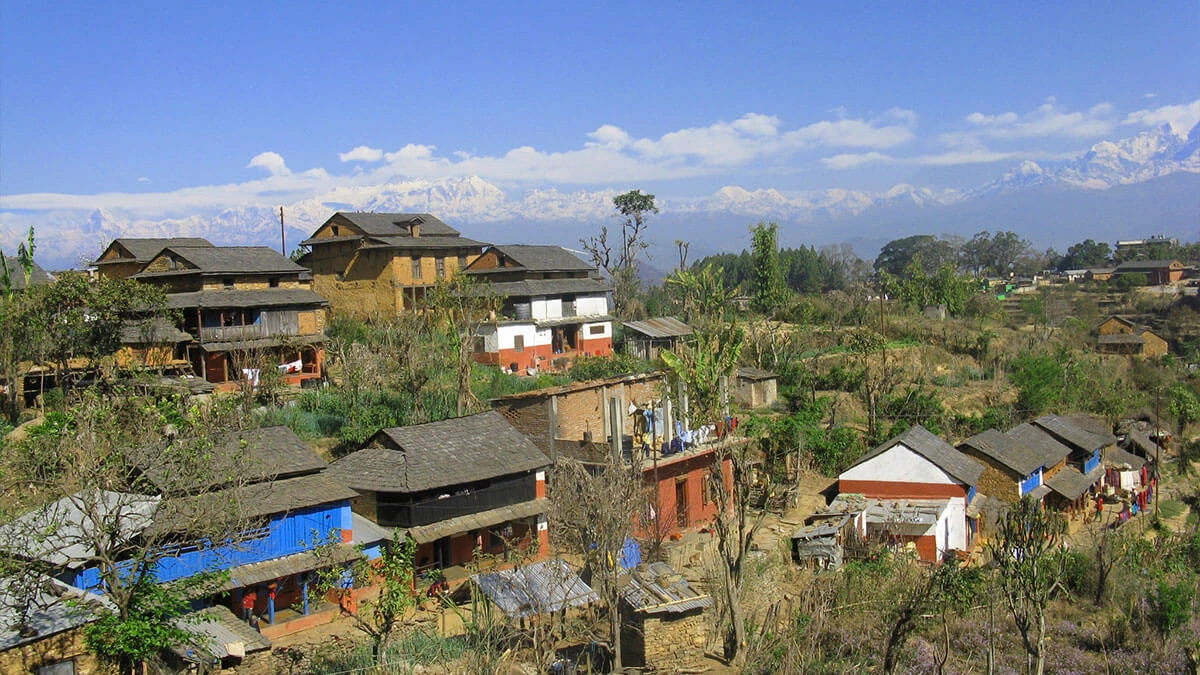
Kathmandu to Bandipur Day Trip Transport Guide
Somewhere between Kathmandu and Pokhara, perched on a long forested ridge 1,030 meters above the Marsyangdi River valley, sits a town almost nobody planned to preserve, and that, by historical accident, became one of Nepal’s most extraordinary living heritage sites. Bandipur was never declared a UNESCO World Heritage Site. It was never the deliberate object of a conservation campaign in the way that Bhaktapur or Patan have been.
It survived in its present, breathtaking, time-capsule condition for one simple, almost ironic reason: in the early 1970s, when engineers built the new Prithvi Highway to connect Kathmandu and Pokhara, they chose a route through the valley floor rather than over the ridge where Bandipur sat. The town, which had thrived for nearly two centuries as central Nepal’s most important commercial crossroads, was bypassed by the modern world in an instant—and in being bypassed, it was saved.
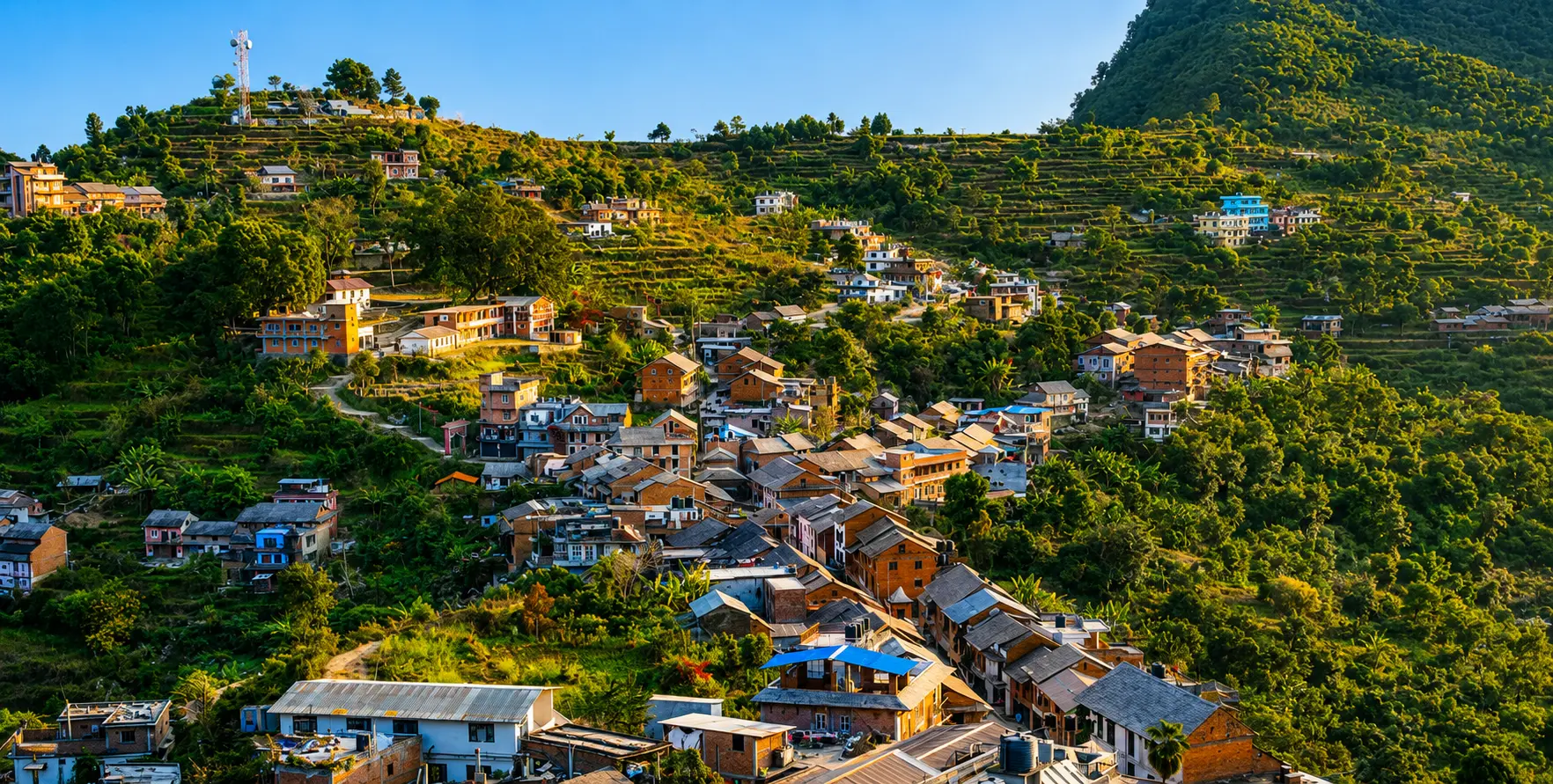
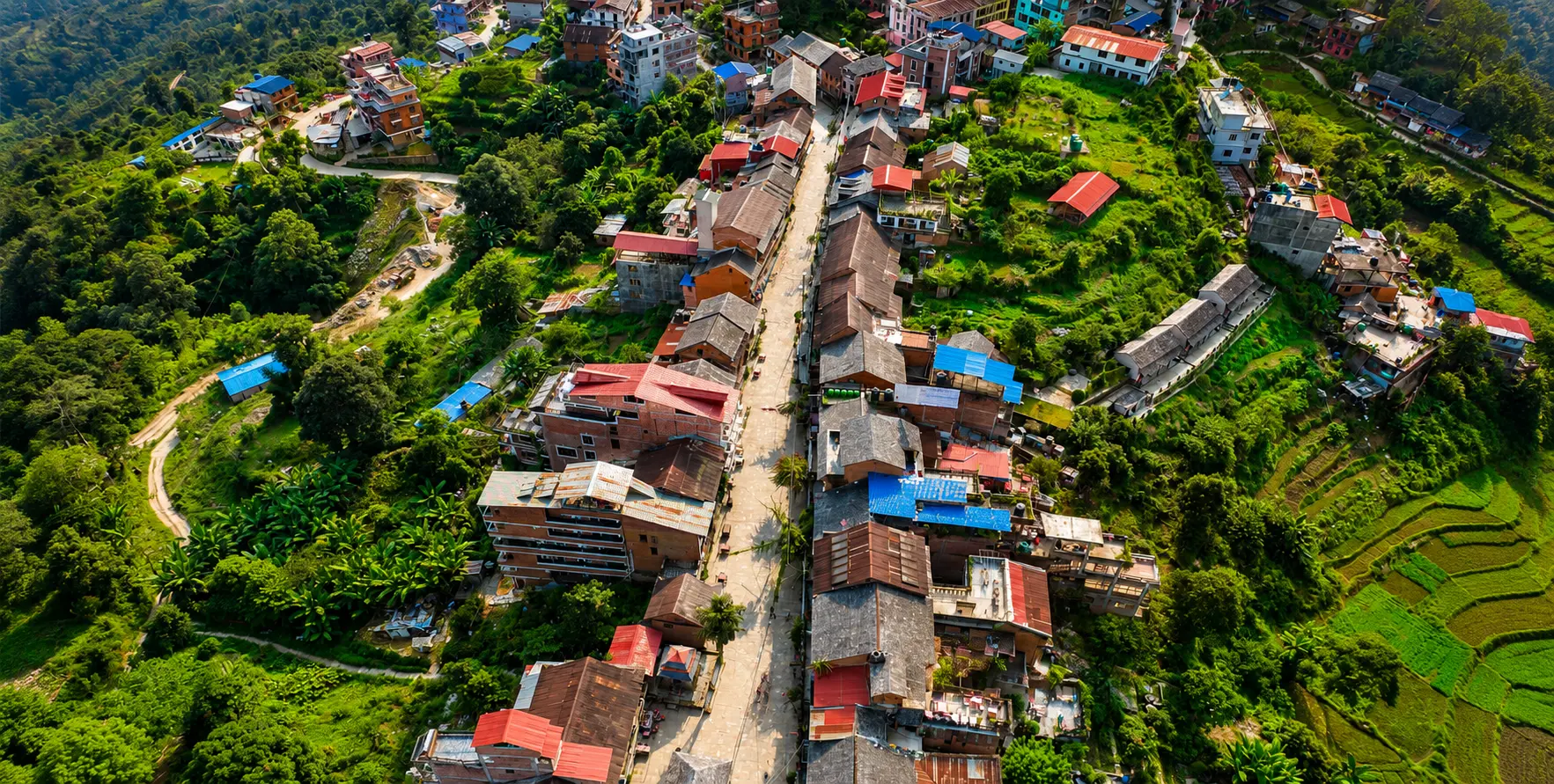
What survived as a result of this historical accident is genuinely extraordinary: a complete, intact, traffic-free Newari trading town, its main bazaar street paved in flagstone and lined on both sides with two- and three-story brick buildings, their carved wooden windows and balconies undisturbed by the concrete development that has transformed almost every other Newari settlement in Nepal over the past half-century. Bandipur today is often described as a living museum—not a recreation, not a heritage park, but a functioning town whose residents still live, trade, worship, and celebrate festivals within the same architectural fabric their merchant ancestors built in the eighteenth and nineteenth centuries.
For a traveller based in Kathmandu, Bandipur represents one of the single best day-trip opportunities available anywhere in central Nepal — a genuine heritage immersion, framed by some of the finest mountain panorama views in the country, reachable in a comfortable four to five hours of driving and offering an experience that, in the words of one well-known Nepal travel writer, feels ‘as if someone took the best of Kathmandu and placed it high up in the mountains, away from the modern world.’ Yet despite its extraordinary character, many first-time Nepal visitors fly past Bandipur on the Prithvi Highway without realising that, just a few kilometres up the ridge above them, an entire intact eighteenth-century trading town goes about its quiet daily life.
This deep-research guide is dedicated to making the Kathmandu to Bandipur journey—as a focused day trip or the foundation for a longer two-day visit—as informed, comfortable, and rewarding as possible. We will trace the route in detail, explore the extraordinary history of how a Magar forest clearing became one of the great trading towns of the Himalayan foothills, walk through what to actually see and do once you arrive, and provide the complete, honest, practical transport guidance that turns a good idea into a smoothly executed day of genuine discovery.
And throughout, Nepal Vehicle Hiring Pvt. Ltd. — Nepal’s trusted private vehicle hire partner with thousands of satisfied travellers and a five-star reputation — stands ready to be the transport backbone of your Bandipur journey, with experienced drivers who know this exact route intimately and a fleet built for exactly this kind of comfortable, flexible, single-day Himalayan excursion.
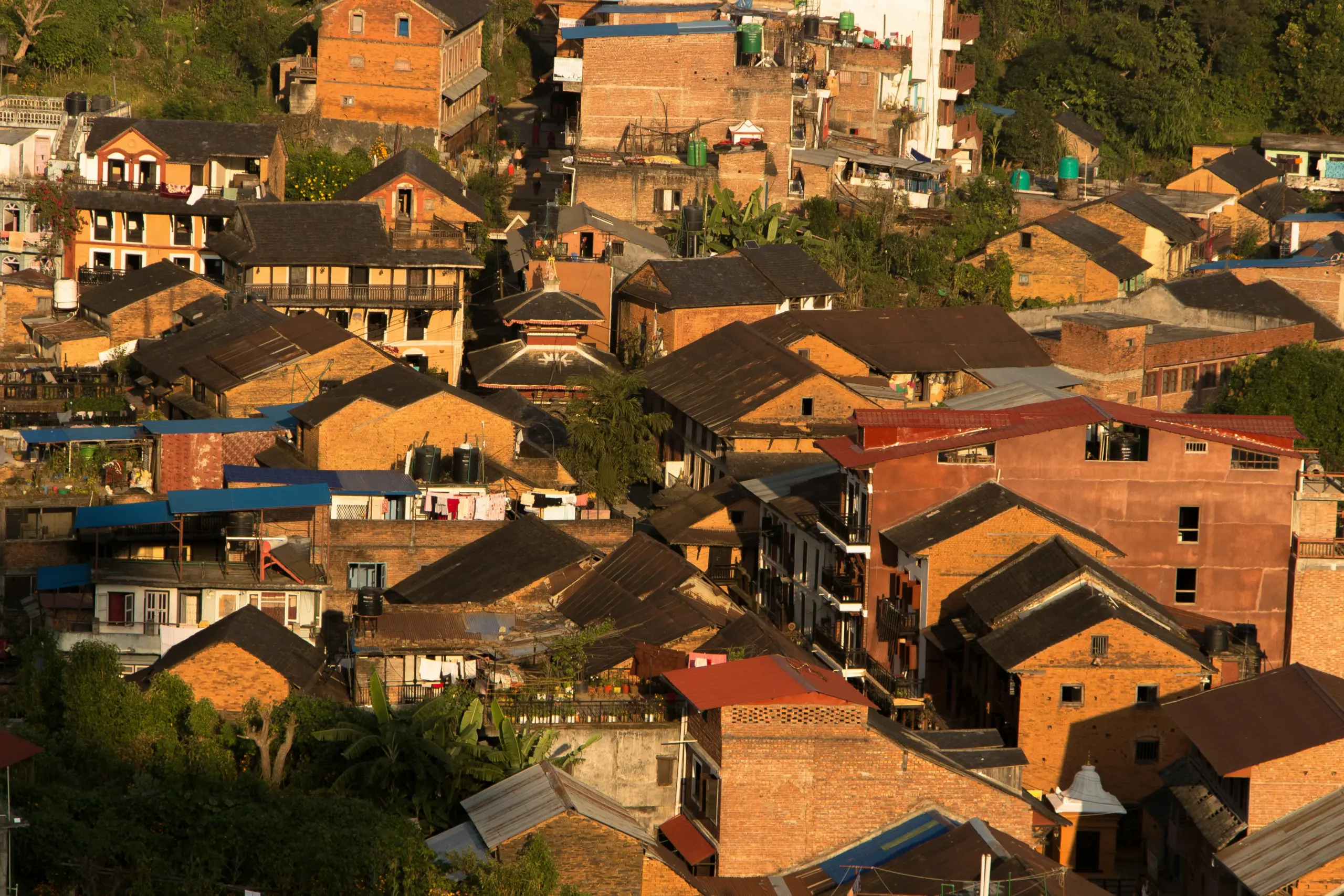
The Extraordinary History of Bandipur — From Magar Forest to Mercantile Crown Jewel
Origins in the Magar Hills
Long before the Newari merchants who gave Bandipur its present character ever arrived, the ridge and surrounding hills of what is now the Tanahun District were the territory of the Magar people — one of the indigenous ethnic groups of the Nepali mid-hills, whose chieftains historically governed several small republics and principalities across what is now central Nepal. The very name ‘Bandipur’ is widely believed to derive from Magar language roots: ‘Ban’ meaning forest, ‘Di’ relating to water, and ‘Pur’ meaning place — a name that speaks plainly of the forested, water-fed hillside that the Magar communities knew and worked long before it became anything resembling a town.
The Magar kingdom of Tanahun, of which the Bandipur area formed a part, was not an easy territory for outside powers to absorb. When Prithvi Narayan Shah, the ambitious king of the small hill state of Gorkha, began his historic campaign in the mid-eighteenth century to unify the fractured patchwork of Himalayan principalities into what would become the modern nation of Nepal, Tanahun proved to be one of his most stubborn and dangerous adversaries.iiThis kingdom could not be subdued easily. Only after this conquest, and the broader Gorkha unification of the Kathmandu Valley in 1768, did the conditions arise for Bandipur’s transformation into something entirely new.
The Newari Exodus and the Birth of a Trading Town
When Prithvi Narayan Shah’s forces captured the Kathmandu Valley in 1768, the political and economic shock to the valley’s long-established Newar mercantile and artisan communities was profound. Many Newar families, accustomed to the relative autonomy and prosperity of the independent Malla city-states, lost positions of privilege and opportunity within the newly centralised Gorkha kingdom. In response, in the years and decades that followed, significant numbers of Newar traders — particularly, according to local tradition, families originating from Bhaktapur — began spreading outward from the valley to establish new trading settlements throughout the Nepali hills, seeking fresh commercial opportunities along the ancient routes that had long connected the Indian plains to Tibet.
Bandipur’s ridge-top position made it an almost perfect location for exactly this kind of settlement. It sat directly on a natural corridor along which goods moved between the lowland Terai region near the Indian border and the high Himalayan passes leading toward Tibet. Its elevated position also helped it escape the malaria that made the lower Terai plains a genuinely dangerous place to live and trade for much of the year—a serious and often deadly hazard in pre-modern Nepal that drove much of the hill-settlement pattern across the country’s middle elevations. The Newar merchants who settled at Bandipur in the late eighteenth and through the nineteenth centuries found, in this breezy, malaria-free, strategically positioned ridge, an outstanding location from which to build a commercial empire.
And build it they did. Throughout the nineteenth century, Bandipur grew into one of central Nepal’s most important commercial centres. In this bazaar town, trade routes from Kathmandu, the high Himalayan regions, and Tibet to the north converged before continuing south, crossing the great Narayani River and passing through the Chitwan jungle lowlands toward the Indian railhead at Narkatiaganj.
Through this single mountain crossroads passed an extraordinary flow of goods: musk pods, valuable mountain herbs, animal skins, and horses arriving from Tibet in the north; calico cloth, cigarettes, glassware, and kerosene supplied by British India in the south. This trade generated wealth that physically transformed Bandipur—its merchant families used their fortunes to build grand, elaborately carved brick townhouses, temples, and public buildings whose remains visitors marvel at today.
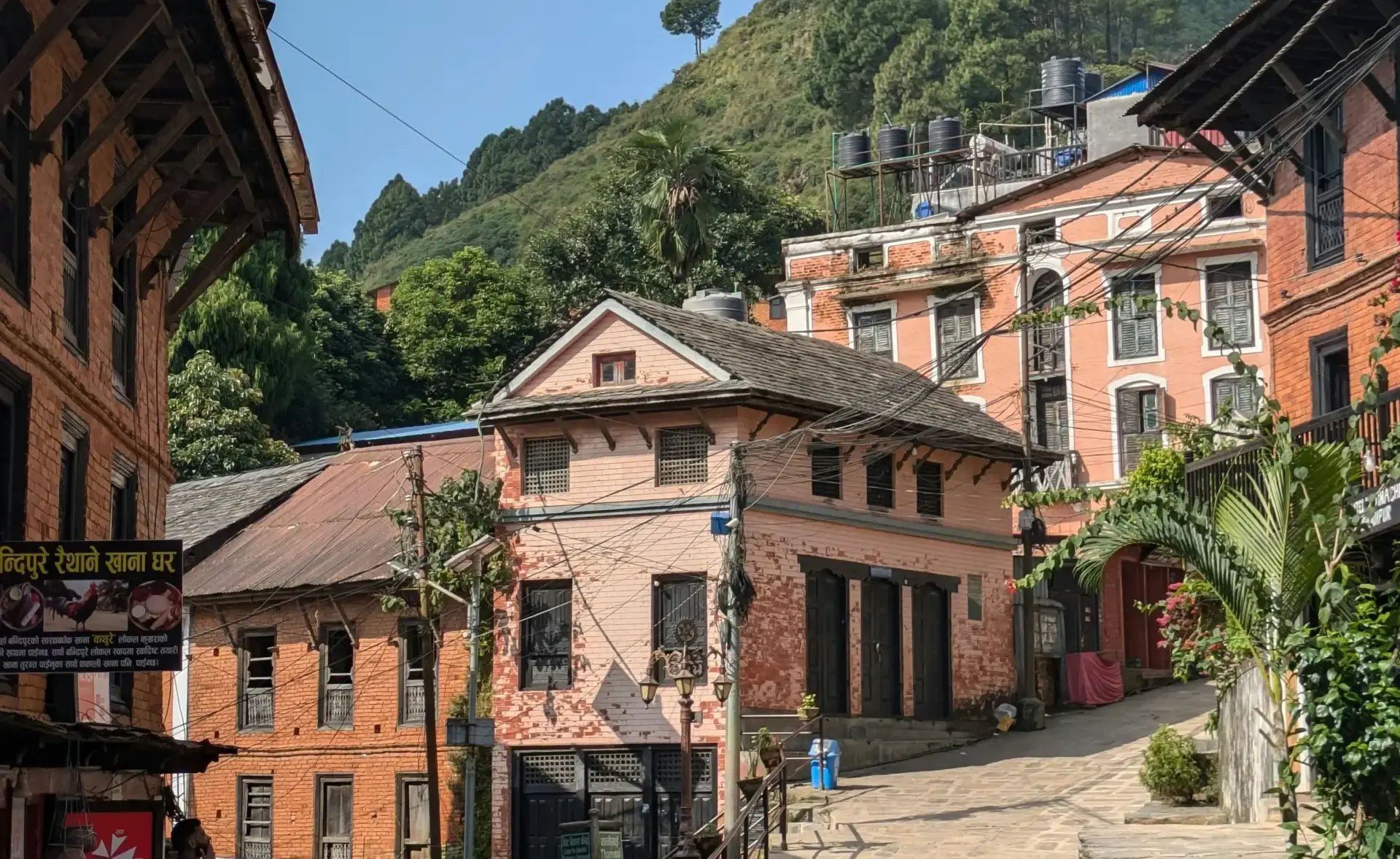
The Architecture of Mercantile Prosperity
Bandipur’s architecture is visually and historically distinctive—and repeatedly compared to Bhaktapur, even though Bandipur sits far outside the Kathmandu Valley—because its merchant families adapted Newar building traditions to the hill climate and their direct commercial and cultural ties to British India. The buildings along Bandipur’s main bazaar street are predominantly built from exposed red brick, with deep-set windows that keep interiors cool during the hot months—a sensible hill-climate adaptation of the classic Newari urban townhouse form. While Kathmandu Valley Newari buildings traditionally use fired clay tile roofing, many of Bandipur’s structures use local slate instead, a material more readily available in the surrounding hills and well suited to this ridge’s slightly different climate and rainfall pattern.
The wood carving on display throughout Bandipur’s bazaar is the town’s true artistic crown jewel and a direct expression of the same UNESCO-recognized Newari craft tradition found in Bhaktapur and Patan, transplanted to and flourishing within this hill town. Look closely at the windows and balconies of the better-preserved merchant houses. You will find gods, goddesses, mythical creatures, and intricate floral motifs carved with extraordinary precision into wooden lattice screens and door frames — craftsmanship of a quality that rivals anything found in the Kathmandu Valley’s more famous Durbar Squares, executed here by artisans who carried the techniques of their Bhaktapur ancestors into the hills and continued to practice and refine them across generations.
Equally distinctive — and a detail that immediately signals Bandipur’s particular historical character to anyone who has spent time in the Kathmandu Valley’s Newari heritage towns — is the clear colonial-era British Indian influence visible in some of the bazaar’s grander structures. Bandipur’s merchant elite, who grew wealthy through direct and sustained trade with British India, built homes and commercial buildings that blend their inherited Newari architectural vocabulary with stylistic elements absorbed from their trading partners to the south — a synthesis found nowhere else in Nepal’s Newari heritage landscape in quite the same combination, and one of the features that gives Bandipur its unique identity as distinct from, even as it echoes, the heritage towns of the Kathmandu Valley.
The Bypass That Became a Blessing
Bandipur’s commercial golden age could not last forever, and the same broader process of national modernisation that transformed so much of Nepal in the mid-twentieth century drove its eventual eclipse. As Nepal opened itself to the wider world following the political changes of the early 1950s, Pokhara — equipped with an airfield and positioned to become the gateway to the increasingly popular Annapurna trekking region — grew rapidly in strategic and commercial importance. The decisive blow to Bandipur’s centrality came in 1972, when the new Prithvi Highway was completed, connecting Kathmandu and Pokhara along the valley floor far below Bandipur’s ridge and bypassing the town that had been the essential crossroads of central Nepali trade for nearly two centuries.
The economic consequences for Bandipur in the years that followed were significant and, at the time, surely felt by its residents as a genuine loss: the district administrative headquarters relocated to the new highway town of Damauli, trade volumes collapsed as merchants and transport shifted to the new road, and many of Bandipur’s wealthiest families gradually relocated to the plains or to Kathmandu in search of continued economic opportunity, in some cases abandoning generations-old family properties whose ornately carved doors and windows still stand today, their original owners’ descendants scattered across Nepal and the wider world.
Yet this same economic eclipse produced, in a kind of historical irony heritage conservationists worldwide would recognise, the single greatest gift to Bandipur’s long-term preservation. Because no new investment, road widening, or modern concrete redevelopment ever disturbed Bandipur’s bazaar after the highway bypassed it, the town’s nineteenth-century character was effectively frozen in place.
While many other Newari hill settlements across Nepal lost their traditional architecture and urban character once they were incorporated into the country’s expanding road network—their main streets widened for vehicle traffic, their traditional buildings replaced by modern concrete construction—Bandipur, precisely because it was left behind, survived essentially intact. Today, it stands as what is widely and accurately described as Nepal’s best-preserved Newari hill town, where the absence of motorised traffic on its central stone-paved street is not a tourism gimmick but the continuation of a quiet rural reality that has prevailed, uninterrupted, for half a century.
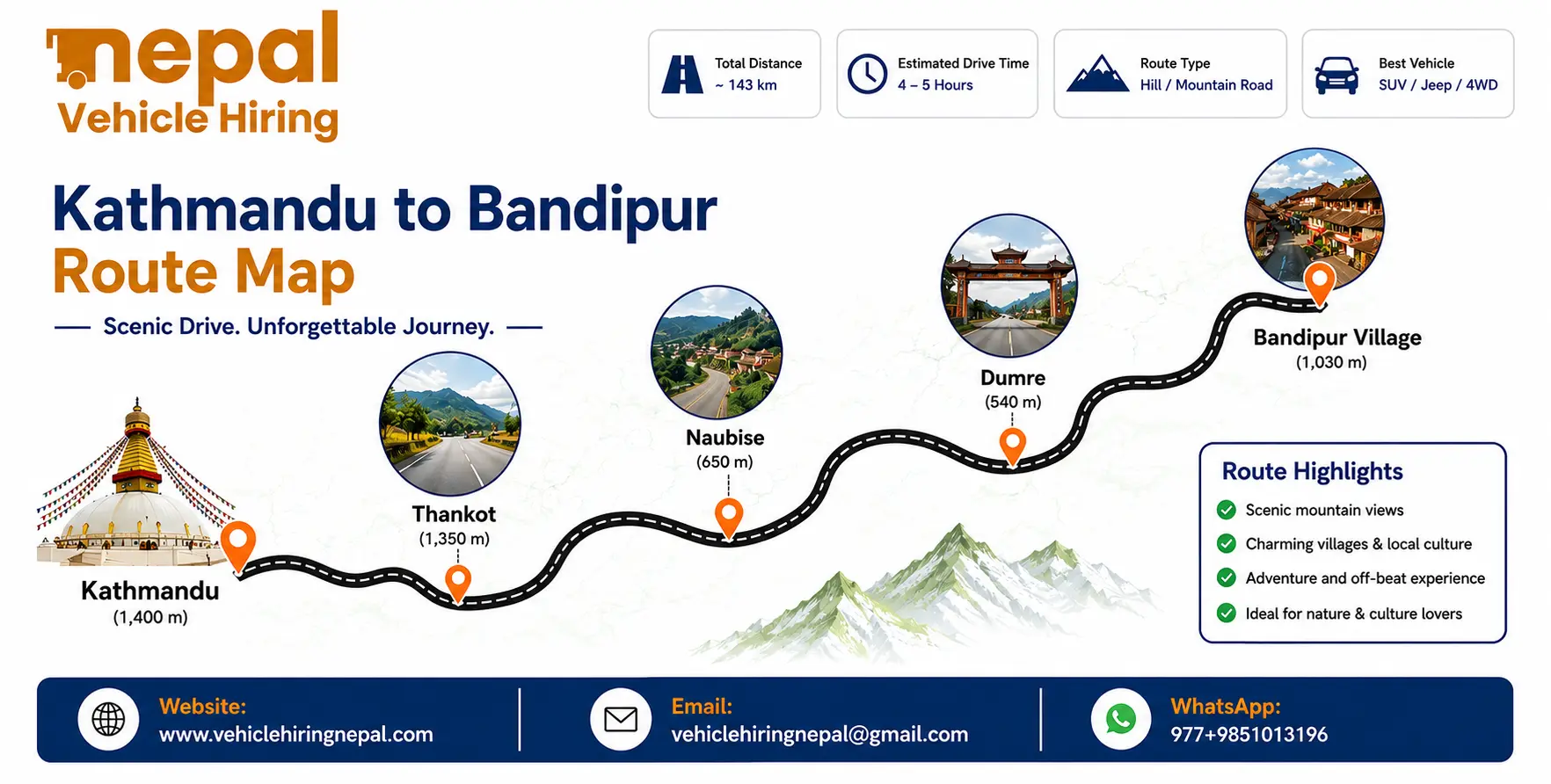
The Route: Kathmandu to Bandipur in Detail
Understanding the Geography of the Journey
Bandipur sits in Nepal’s Tanahun District, approximately 143 kilometres west of Kathmandu and roughly 76 kilometres east of Pokhara — making it, quite literally, the natural midpoint stopover on the journey between Nepal’s two largest tourist hubs. For a traveller approaching specifically from Kathmandu, however, Bandipur functions perfectly well as a dedicated single-day round trip, with a typical one-way driving time by private vehicle of approximately four to five hours, depending on traffic conditions through the Kathmandu Valley exit, the time of departure, and the specific route taken in the final approach to the town itself.
The journey follows, for the vast majority of its length, the same Prithvi Highway corridor used by all Kathmandu to Pokhara road traffic — meaning that travellers heading to Bandipur experience precisely the same spectacular sequence of Himalayan foothill scenery that has made this highway one of the most celebrated road journeys in Nepal. From Kathmandu, the route descends out of the valley through the Nagdhunga pass area, then follows the Trishuli River along a dramatic gorge section where the road clings to cliff faces above rushing glacial water, before reaching the riverside settlements of Malekhu and continuing to the busy junction town of Mugling, where the Trishuli and Marsyangdi rivers meet and where most travellers pause for the famous local curd and a change of scenery as the highway turns to follow the Marsyangdi valley westward.
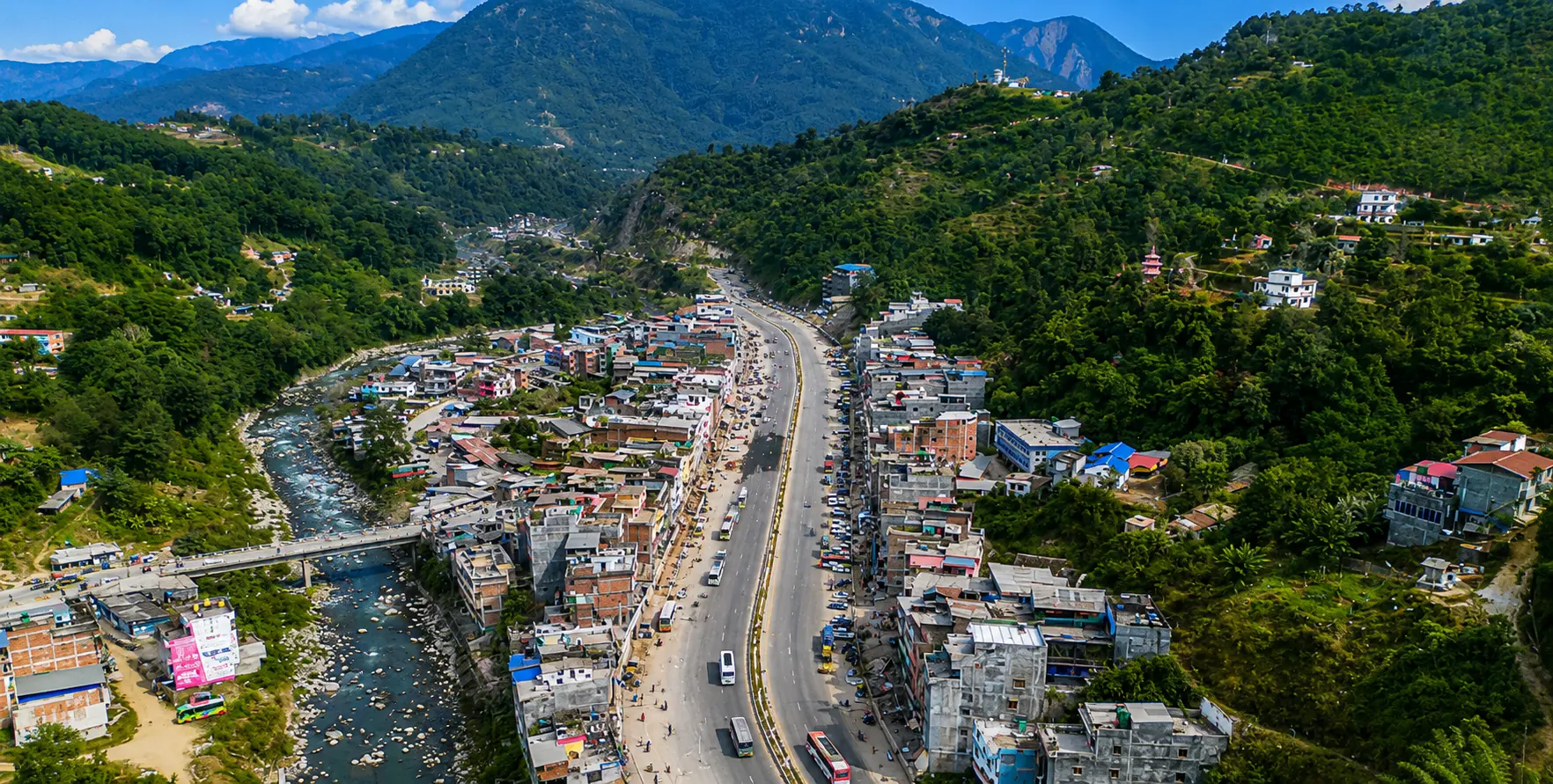
It is in this final stretch beyond Mugling — along the Marsyangdi and then briefly along the route that also serves Besisahar, the starting point of the Annapurna Circuit trek — that the turn-off for Bandipur is reached. The junction town of Dumre, situated directly on the Prithvi Highway, is the critical waypoint for the entire journey; travellers leave the main Kathmandu–Pokhara highway here and begin the final ascent toward Bandipur’s ridge-top position. From Kathmandu to Dumre is the great majority of the total journey’s distance and time; the final segment from Dumre up to Bandipur itself, while shorter in absolute distance, involves a steady climb of a switchbacking hill road that delivers, in its final kilometres, some of the most rewarding scenery of the entire trip.
The Final Ascent — Dumre to Bandipur
From the highway junction at Dumre, the road to Bandipur climbs steadily up the forested ridge the town occupies, gaining several hundred meters over a relatively short distance through pine and broadleaf forest, scattered farming terraces, and small roadside settlements. This final approach road has been progressively improved in recent years. It is now paved for most of its length, a substantial improvement over the rougher, unpaved conditions that characterised the route in earlier decades and that some older travel accounts still describe. A private vehicle in good condition, driven by an experienced driver familiar with the route, covers this final ascent comfortably, typically in well under an hour from the Dumre junction.
What makes this final stretch of the journey particularly special — and a genuine reward for travellers who have already spent several hours on the road from Kathmandu — is the progressive emergence of the Himalayan panorama as the road climbs. Bandipur’s elevated ridge-top position, at approximately 1,030 to 1,317 metres above sea level depending on the precise point measured, places it at exactly the right elevation and orientation to command sweeping views across the Marsyangdi River valley toward an extraordinary concentration of major Himalayan peaks: the Annapurna range, Dhaulagiri, the unmistakable fishtail silhouette of Machhapuchhre, Manaslu, Langtang Lirung, and Ganesh Himal are all visible from various viewpoints in and around the town on clear days — a mountain panorama of a breadth and quality that few other easily accessible hill towns in Nepal can rival. Travellers arriving by private vehicle also benefit from being dropped off at the edge of Bandipur’s pedestrianised core. Because the main bazaar street is entirely free of vehicle traffic—one of its most cherished and defining characteristics—private vehicles park in a designated area at the edge of the old town, from which you explore the historic bazaar street and its surrounding lanes entirely on foot. This short final walk into the traffic-free heart of Bandipur is itself part of the experience’s particular magic: the transition from the ordinary world of roads and engines to the hushed, stone-paved, centuries-old streetscape of the bazaar happens within the space of just a few minutes’ walk.
Alternative Routing and Combination Stops
One key practical strength of hiring a private vehicle for the Kathmandu to Bandipur journey, compared with scheduled public transport, is the freedom to add worthwhile stops along the route without being bound to a bus timetable. The single most popular and rewarding combination stop on this corridor is the Manakamana Temple, accessible via Nepal’s first cable car system at Kurintar, roughly midway along the Prithvi Highway portion of the journey. The cable car ride to this famous wish-fulfilling goddess temple takes approximately ten minutes each way.
It adds three hours to the day’s itinerary, but for travellers with a full day and a private vehicle, combining Manakamana with Bandipur creates an exceptionally rich single-day cultural circuit that touches both a major living pilgrimage site and an extraordinary preserved heritage town.
Other practical stopping points along the route, well known to experienced drivers on this corridor, include the riverside restaurants near Malekhu, popular for breakfast or an early lunch beside the rushing Trishuli River, and the curd vendors and restaurants clustered around Mugling junction, where the local yoghurt — thick, tangy, and served in small clay pots — is considered among the finest in Nepal and makes for a genuinely memorable roadside refreshment stop partway through the journey.
What to See and Experience in Bandipur
Walking the Bazaar — A Street Frozen in Time
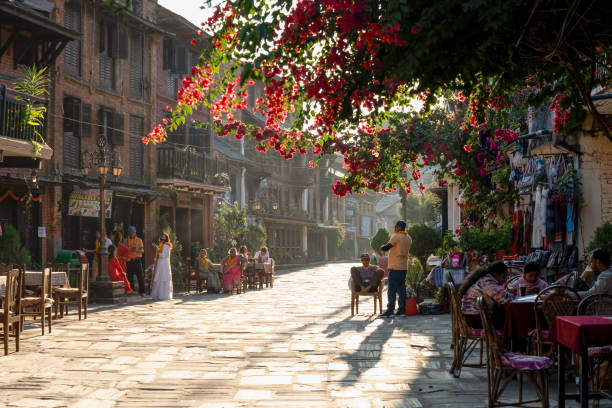
The single defining experience of any Bandipur visit is simply walking the length of its main bazaar street — a flagstone-paved, entirely pedestrianised thoroughfare lined on both sides with two– and three-storey brick merchant houses, their wooden balconies often draped in flowering plants, their ground floors now occupied by a mixture of boutique guesthouses, small cafes, souvenir shops selling local handicrafts, and a scattering of buildings still serving the everyday domestic functions of the families who have lived in them for generations.
The complete absence of vehicle traffic and the accompanying absence of engine noise, exhaust, and the general urgency of modern road traffic is, for many visitors, the first and most immediately striking sensory feature of arriving in Bandipur — a stillness and quiet that feels genuinely unusual after even a short time spent in Kathmandu’s traffic-dense streets.
Walking slowly along this street, it is worth pausing to look closely at the architectural details on the older and better-preserved buildings — the carved wooden window lattices, the elaborately decorated doorframes, the subtle variations in brickwork and roofline that distinguish the wealthiest merchant houses from more modest neighbouring structures. Among the historic buildings most frequently pointed out to visitors is the old Padma Library, an eighteenth-century structure with finely carved windows and beams that today houses a modest collection of books, including some in English, and stands as a quiet testament to the cultural aspirations of Bandipur’s prosperous merchant community even at the height of its commercial wealth.
Local guides and longtime residents can point out other notable historic houses—including grand old merchant residences whose intricately carved doors, bearing symbols and motifs that have intrigued visiting scholars but remain unstudied and unexplained, hint at stories largely lost as the original owning families relocated from Bandipur over the past century.
Tundikhel — The Historic Parade Ground and Premier Viewpoint
At the heart of Bandipur’s public space lies Tundikhel, a broad open ground that historically served as a military parade ground for Gurkha soldiers and, at the same time, a key gathering and trading point for merchants during the town’s commercial golden age. Today Tundikhel functions as Bandipur’s primary communal space and, for visitors, as one of its two essential mountain viewpoints — a place to gather in the late afternoon and evening to watch the Himalayan panorama catch the changing light as the sun sets, with the Annapurna, Dhaulagiri, and Manaslu ranges arrayed along the northern horizon in a sweep of snow and rock that, on a genuinely clear day, ranks among the finest easily accessible mountain views in all of Nepal.
Tundikhel’s appeal is not limited to sunset hours, however; it functions throughout the day as a relaxed picnic and gathering spot, and many visitors find that simply sitting on the open grass with a coffee from one of the nearby cafes, watching the slow rhythm of village life and the shifting mountain light, is among the most genuinely restorative experiences that Bandipur has to offer — a deliberate, unhurried counterpoint to the more structured sightseeing itineraries of Kathmandu’s Durbar Squares.
Thani Mai Temple and the Sunrise Hike — Bandipur’s Most Rewarded Early Start
For travellers willing to rise before dawn—a genuinely worthwhile sacrifice for anyone visiting Bandipur—the hike up to Thani Mai Temple on the crest of Gurungche Hill is widely regarded as offering the finest mountain panorama in or around the town. The trail begins near the school at the bazaar’s southwest end and climbs steeply for about thirty minutes to the temple top.
On a clear morning, the reward for this short but genuinely demanding ascent is extraordinary: a full 360-degree panorama in which the Himalayan range stretches unbroken along the northern horizon while, below, the valley is frequently blanketed in a sea of morning fog that gives the entire scene the appearance of a vast white lake from which only the highest ridgelines and the distant snow peaks emerge — one of the most photographed and most memorable sunrise scenes available anywhere in the central Nepal hills.
For travellers undertaking Bandipur strictly as a single day trip from Kathmandu rather than staying overnight, the sunrise hike to Thani Mai is, by definition, not accessible — a genuine and honest limitation of the day-trip format that is worth acknowledging directly. Those who can extend their visit to include an overnight stay in one of Bandipur’s heritage guesthouses gain access to this experience, and to the broader, more contemplative rhythm of a town best appreciated at something other than rushed daytime pace; for those constrained to a single day, the Tundikhel viewpoint and the late-afternoon mountain light remain an entirely worthwhile and achievable substitute.
Bindhyabasini Temple — The Spiritual Anchor of the Bazaar
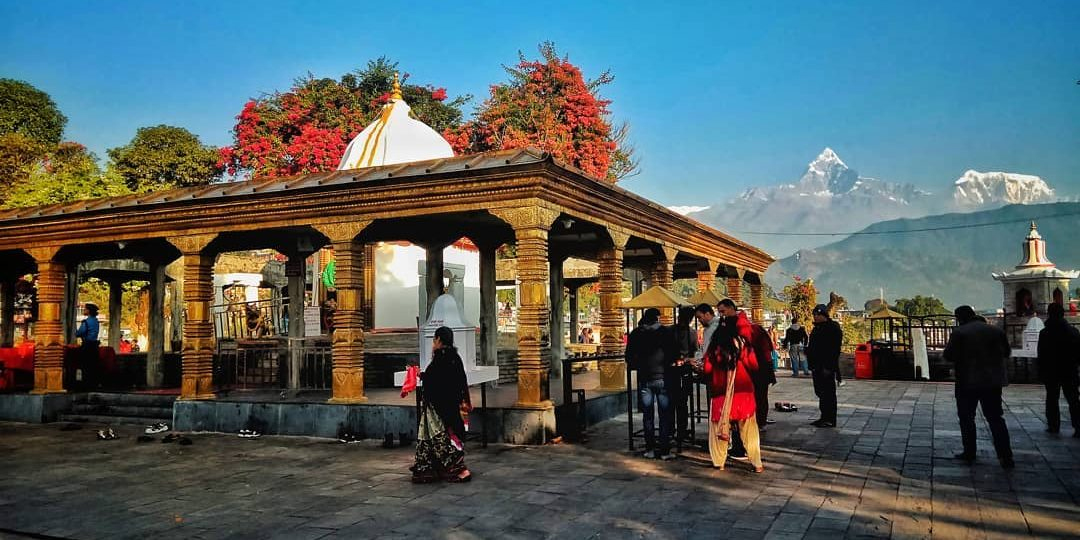
At the northern end of Bandipur’s main bazaar street stands the Bindhyabasini Temple, the town’s most significant religious structure and a genuine architectural and devotional landmark in its own right. Dedicated to the goddess Durga in her Bindhyabasini manifestation, this two-tiered temple, now well over two centuries old, is decorated with the same finely detailed woodcarving and stonework traditions found throughout Bandipur’s residential architecture, applied here to overtly sacred rather than commercial purposes.
Within the temple, a statue of the goddess adorned with gold and silver ornaments occupies the central shrine, surrounded by a scattering of smaller shrines dedicated to other deities, including Bhairav and Ganesh — a microcosm of the broader Hindu-Newari devotional landscape that the merchant families who built Bandipur carried with them from the Kathmandu Valley and reconstituted, in full, on this remote hilltop.
Bindhyabasini Temple is also the focal point for several of Bandipur’s most significant annual festivals, and the temple precinct — a broad open courtyard fronting the temple itself — functions as a natural gathering point both for daily devotional visits by residents and for the larger public celebrations that animate the town’s festival calendar throughout the year, discussed in more detail below.
Khadga Devi Temple and the Town’s Wider Sacred Geography
Beyond Bindhyabasini, Bandipur’s bazaar and surrounding lanes contain a scattering of smaller but historically significant shrines and temples, among which the Khadga Devi Temple holds particular local importance, housing a sacred sword (khadga) associated with the goddess and central to specific annual ritual observances. Exploring this wider sacred geography — generally most rewarding in the company of a local guide who can explain the specific stories and ritual functions attached to each shrine — reveals the degree to which Bandipur’s Newar founders successfully transplanted not merely the architectural forms but the full devotional and ritual infrastructure of their Kathmandu Valley origins onto this hilltop, creating a complete and self-sufficient sacred landscape in miniature.
Siddha Cave — Nepal’s Most Accessible Major Cave System
A short distance from the main bazaar, reachable by a brief vehicle transfer and walk, lies Siddha Cave (Siddha Gufa), reputed to be Nepal’s largest cave and one of the most popular half-day excursions from Bandipur. The cave’s vast interior chamber — accessed via a steep stairway descent — contains dramatic limestone formations, including stalactites and stalagmites that local guides point out in shapes evocative of various natural and mythological forms, and the scale of the main chamber, large enough that its full extent is not immediately apparent from the entrance, gives the visit a genuine sense of subterranean adventure that contrasts pleasingly with the more contemplative, architecture-focused experience of the bazaar itself.
Visiting Siddha Cave requires sturdy footwear and a reasonable comfort level with steep, sometimes slippery stone stairways in low light. While headlamps or torches are sometimes available for hire on-site, it’s best to bring your own to ensure a comfortable visit. Travellers on a tightly timed single-day itinerary from Kathmandu can include a visit to Siddha Cave. Still, it will meaningfully extend the time required in Bandipur—a worthwhile trade-off for those with sufficient daylight hours remaining, but one that should be planned explicitly when arranging the day’s vehicle timing.
Ramkot Village and the Hill Trail — For Those With Extra Time
For visitors extending their stay beyond a single day, or for those on a day trip with extra energy and time to spare, the walking trail to Ramkot village offers another dimension of Bandipur’s surrounding landscape. Ramkot is a traditional Magar and Gurung settlement characterised by distinctive round, thatched-roof houses quite different in form from the brick Newari architecture of Bandipur’s own bazaar, and the roughly eight– to nine-kilometre round-trip walk to reach it, taking approximately two and a half to three hours, passes through terraced farmland and forest with consistently excellent mountain views along the ridge. This excursion is generally treated as a half-day or full second-day activity rather than something easily folded into a single-day Kathmandu round trip. Still, it is worth knowing about for travellers considering whether a one-night stay might better serve their interests than a strict day trip.
Newari Cuisine in the Hills — Eating Well in Bandipur
One of the expected pleasures of a Bandipur visit for travellers with any interest in food is the chance to sample genuine Newari cuisine prepared in a hill-town context distinct from, yet clearly continuous with, the culinary traditions of Bhaktapur and Patan. The classic Newari ceremonial platter, samay baji — featuring beaten rice, spiced meat, lentil preparations, and pickled accompaniments — is available at several of the bazaar’s restaurants and cafes, alongside other Newari specialities such as yomari (the sweet steamed rice-flour dumpling), bara (the savoury lentil pancake), and chatamari (often described as Newari-style rice flour ‘pizza’).
Local hill cuisine, drawing on the surrounding terraced farms, supplements these Newari dishes with fresh seasonal vegetables, free-range chicken prepared in distinctly Nepali style, and, for travellers staying overnight, often homemade raksi — the traditional distilled spirit served as part of a complete evening meal experience in many of the town’s guesthouses.
Bandipur’s main street is also, somewhat unexpectedly for such a historically remote hill town, home to a genuinely good cafe culture, with balcony seating overlooking the bazaar street offering travellers the chance to sit with a coffee or a slice of locally baked cake, enjoying free Wi-Fi and the gentle rhythm of the pedestrianised street below — a contemporary comfort layered gently onto the town’s nineteenth-century architectural fabric without disrupting its essential historic character.
Bandipur’s Living Festival Calendar
Because Bandipur’s Newar founders brought with them the full devotional and festival traditions of the Kathmandu Valley, the town’s annual calendar remains animated by many of the same major celebrations that define cultural life in Bhaktapur and Patan, even though Bandipur itself sits a considerable distance from the valley and its population today is a smaller, more rural mixture of Newar, Gurung, and Magar communities.
Dasain, the great fifteen-day autumn festival central to the Nepali Hindu calendar, fills Bandipur’s streets and courtyard shrines each year with ritual observances, family gatherings, and the traditional sacrificial offerings that mark this most significant annual celebration nationwide.
During the monsoon month that brings Janai Purnima, Bandipur’s streets see their own distinctive local expression of this sacred thread-changing festival, while Tihar — the festival of lights that follows Dasain — and the boisterous, joyful celebration of Holi in spring both animate the town with colour, music, and the kind of cross-community celebration that briefly erases the usual boundaries of daily routine.
Perhaps most distinctively, the Maghe Sankranti festival in mid-January is associated in Bandipur with a notable local celebration at the town’s own Nyatapola-style tiered temple architecture, drawing crowds for what is described as one of the largest such gatherings in the wider region — a genuine point of local pride and an opportunity for visitors whose travel dates happen to coincide with it to witness Bandipur’s living culture at its most vivid and public. Travellers planning a Bandipur visit around any of these major festival dates should anticipate significantly higher visitor numbers, both domestic and international. They should arrange transport and overnight accommodation in advance through Nepal Vehicle Hiring Pvt. Ltd. and the relevant guesthouse operators, respectively, as operators have modest guest capacity and can become genuinely booked out during peak festival periods.
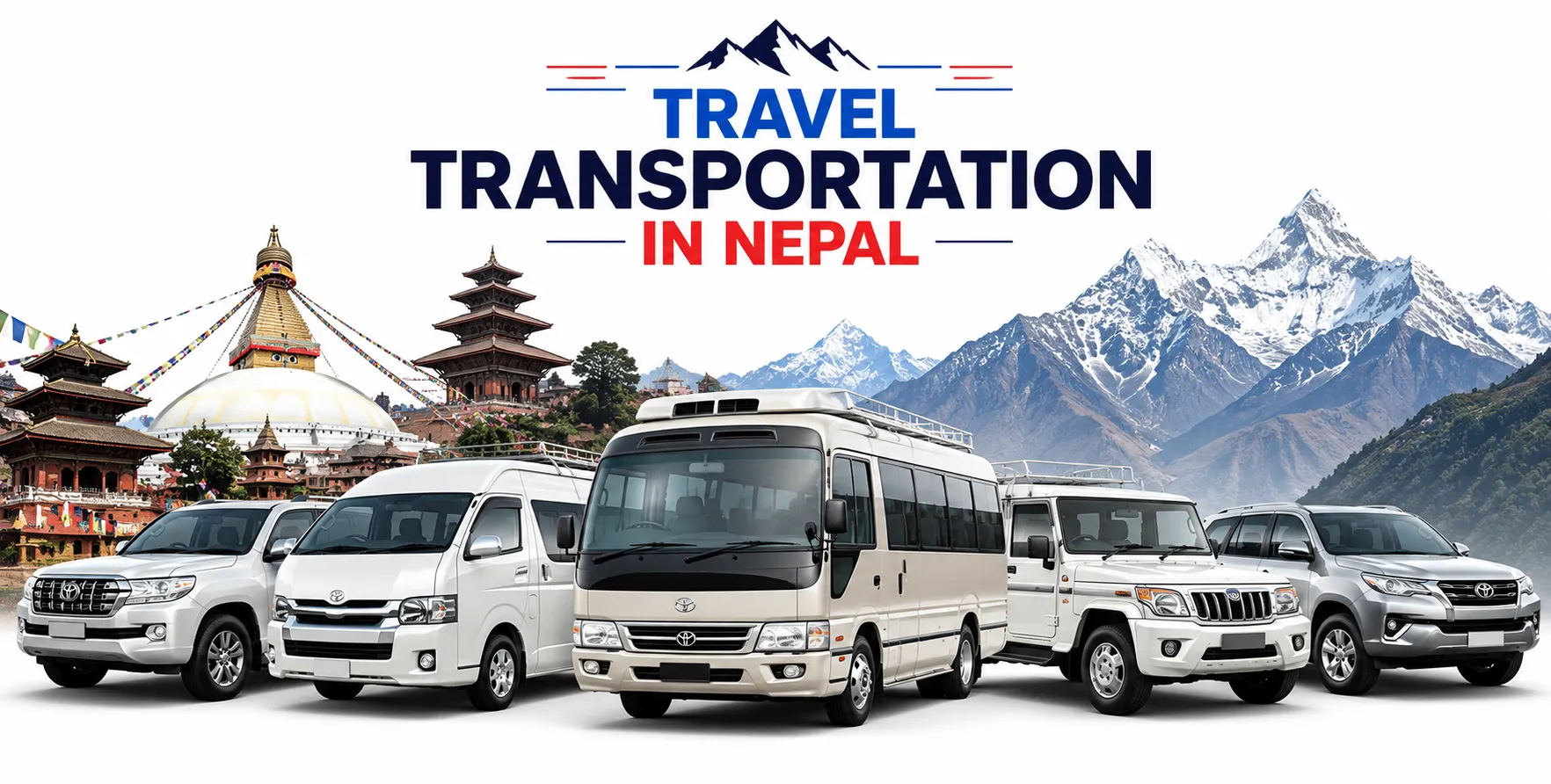
The Complete Transport Guide — Getting to Bandipur from Kathmandu
Why Private Vehicle Hire Is the Right Choice for This Journey
Bandipur can technically be reached by public transport — travellers can take a regular tourist or local bus from Kathmandu’s bus park toward Pokhara, disembark at the Dumre junction after roughly five to six hours, and then transfer to one of the local buses or shared jeeps that make the final ascent up to Bandipur itself. This option exists, is used by budget-conscious independent travellers, and can work with enough patience. But for the specific purpose of a focused day trip from Kathmandu — where time efficiency, schedule control, and the ability to incorporate worthwhile stops along the route all matter enormously — the practical case for private vehicle hire is considerably stronger here than for almost any other Nepal day-trip destination.
The reasoning is straightforward. A public bus journey to Dumre, followed by a transfer wait and a second vehicle for the final ascent, adds multiple unpredictable delays to a journey that already consumes most of a single day each way. A private vehicle, by contrast, departs precisely when you are ready, drives the full route from your Kathmandu hotel directly to Bandipur’s parking area without any transfer or waiting period, and — critically for a true day-trip itinerary — allows the driver to adjust departure and return timing flexibly based on how much time you actually want to spend exploring the bazaar, the viewpoints, and any combination of stops such as Manakamana, rather than being locked into the fixed schedule of a public bus service back to Kathmandu.
For a day trip specifically — as opposed to an overnight stay — this flexibility is not a luxury but close to a practical necessity. Bandipur sits at the end of a meaningful drive from Kathmandu; arriving with a fixed, inflexible return bus schedule risks either cutting your time in the town uncomfortably short or, worse, missing the return transport altogether and being forced into an unplanned overnight stay. A private vehicle from Nepal Vehicle Hiring Pvt. Ltd., with a driver who waits in Bandipur (or returns to collect you from Dumre or another agreed point) at the agreed return time, removes this risk and lets you plan and execute a true single-day round trip with confidence.

Vehicle Selection for the Bandipur Route
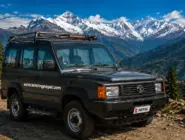
The Kathmandu to Bandipur route, including its final unpaved-to-paved ascent sections above Dumre, is comfortably manageable in a standard private car or SUV for most of the year and generally does not require the heavier 4WD jeeps that some of Nepal’s more remote mountain routes demand.
That said, Nepal Vehicle Hiring Pvt. Ltd. recommends a capable SUV or compact 4WD vehicle as the optimal choice for this specific journey, both for the genuinely improved comfort it offers on the final winding ascent road to Bandipur and for the additional margin of safety and confidence it provides during the monsoon season, when heavy rainfall can occasionally affect road surface conditions on the steeper sections above Dumre.
For larger groups or families, a Hiace-style van comfortably accommodates the journey on the main highway sections, with a transfer to a smaller vehicle arranged if needed for the final approach during periods of less favourable road conditions — though in good dry-season conditions, larger vehicles generally complete the full journey to Bandipur’s parking area without difficulty.
Whatever vehicle category you choose, the single most important factor in a successful Bandipur day trip by private vehicle is the driver’s experience on this specific route. The Prithvi Highway sections are well known to virtually any experienced Nepal driver, but the final approach road from Dumre to Bandipur — with its switchbacks, its periodic traffic of local vehicles and pedestrians moving between the highway and the hill villages, and its more variable surface conditions compared to the main highway — genuinely benefits from a driver who has made this specific run before and understands its particular character.
Nepal Vehicle Hiring Pvt. Ltd.’s driver team includes individuals with direct, repeated experience on the Bandipur route, ensuring that clients benefit from this local route knowledge rather than relying on a driver navigating the final ascent for the first time.
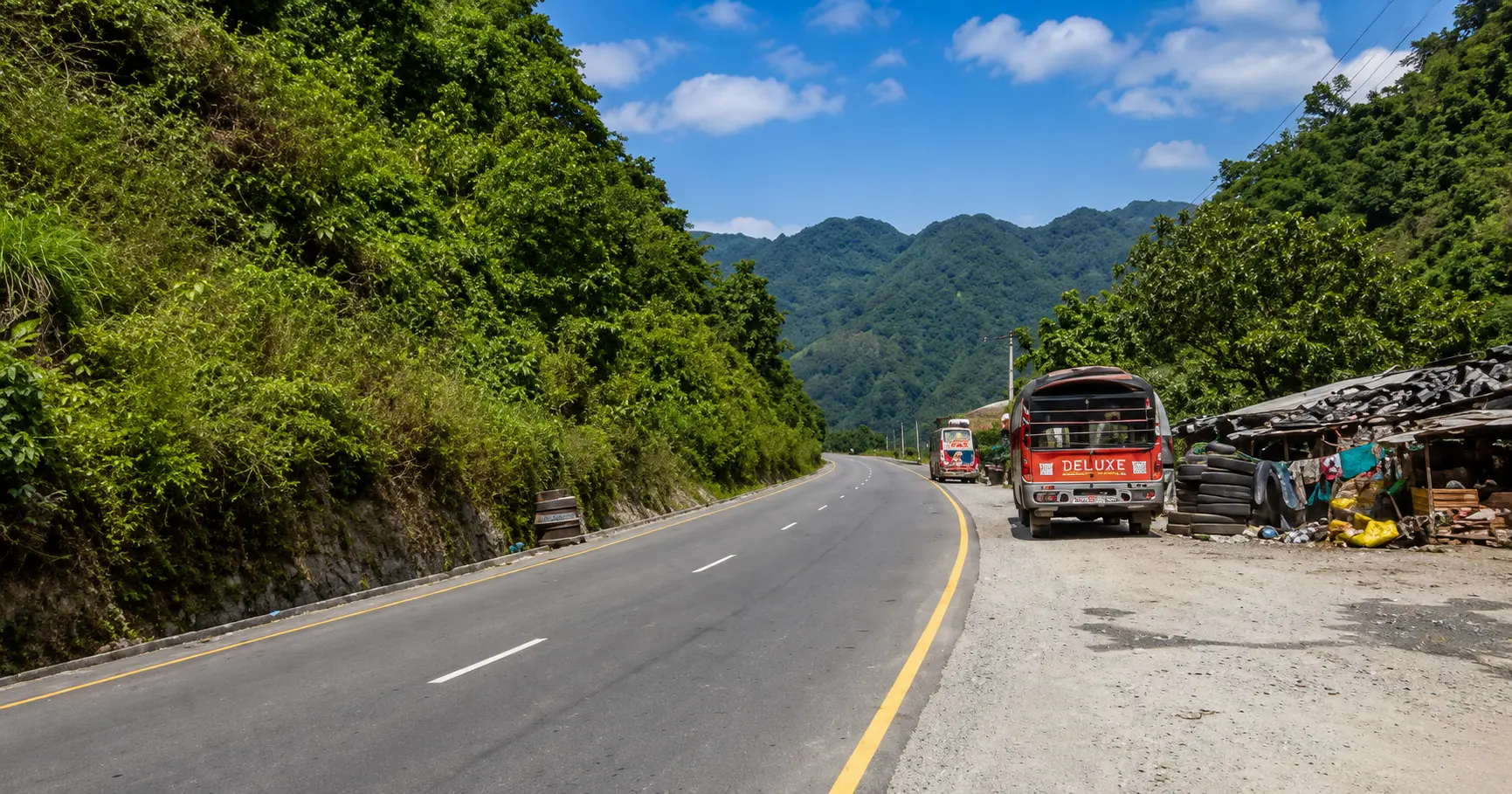
Timing Your Day Trip for Maximum Reward
Given the four-to-five-hour one-way drive, a successful single-day Kathmandu to Bandipur round trip by private vehicle requires a genuinely early departure from Kathmandu, ideally before 6:00 to 6:30 AM. This early start serves multiple purposes simultaneously: it avoids the worst of Kathmandu’s own morning traffic congestion on the city’s exit roads, it positions the vehicle to clear the periodically congested Mugling junction area before the busiest midday traffic period, and it maximises the actual usable daylight time available for exploring Bandipur itself once the long outbound drive is complete.
A realistic timing structure for a focused single-day trip looks approximately as follows: departure from Kathmandu by 6:00–6:30 AM, with an early breakfast stop at one of the riverside restaurants near Malekhu approximately ninety minutes into the journey; arrival at the Mugling junction area, with an optional brief stop for the famous local curd, at roughly the journey’s midpoint; arrival at Dumre and the beginning of the final ascent to Bandipur in the late morning; and arrival in Bandipur itself, ready to begin exploring the bazaar, by approximately 11:00 AM to noon, depending on the exact pace of the journey and any stops taken.
This timing structure leaves a genuinely useful four to five hours for exploring Bandipur’s bazaar, visiting Bindhyabasini Temple, walking to the Tundikhel viewpoint for at least the earlier, still-attractive stages of the afternoon light, and — for those with sufficient remaining time and energy — a visit to Siddha Cave, before a return departure from Bandipur in the mid-to-late afternoon that allows the return drive to Kathmandu to be completed before or shortly after nightfall.
Travellers who find this single-day structure too rushed, or who specifically want to experience the celebrated Thani Mai sunrise hike or prefer a more unhurried pace, should seriously consider converting the trip into a one-night stay, departing Kathmandu in the morning, spending the afternoon and evening exploring Bandipur at a relaxed pace, overnighting in one of the town’s heritage guesthouses, rising before dawn for the Gurungche Hill sunrise hike, and returning to Kathmandu the following day — an itinerary that the great majority of experienced Bandipur visitors and travel writers specifically recommend over the more compressed single-day version, while acknowledging that a well-organized day trip with private vehicle hire remains an entirely legitimate and rewarding option for travellers whose schedule genuinely cannot accommodate an overnight stay.
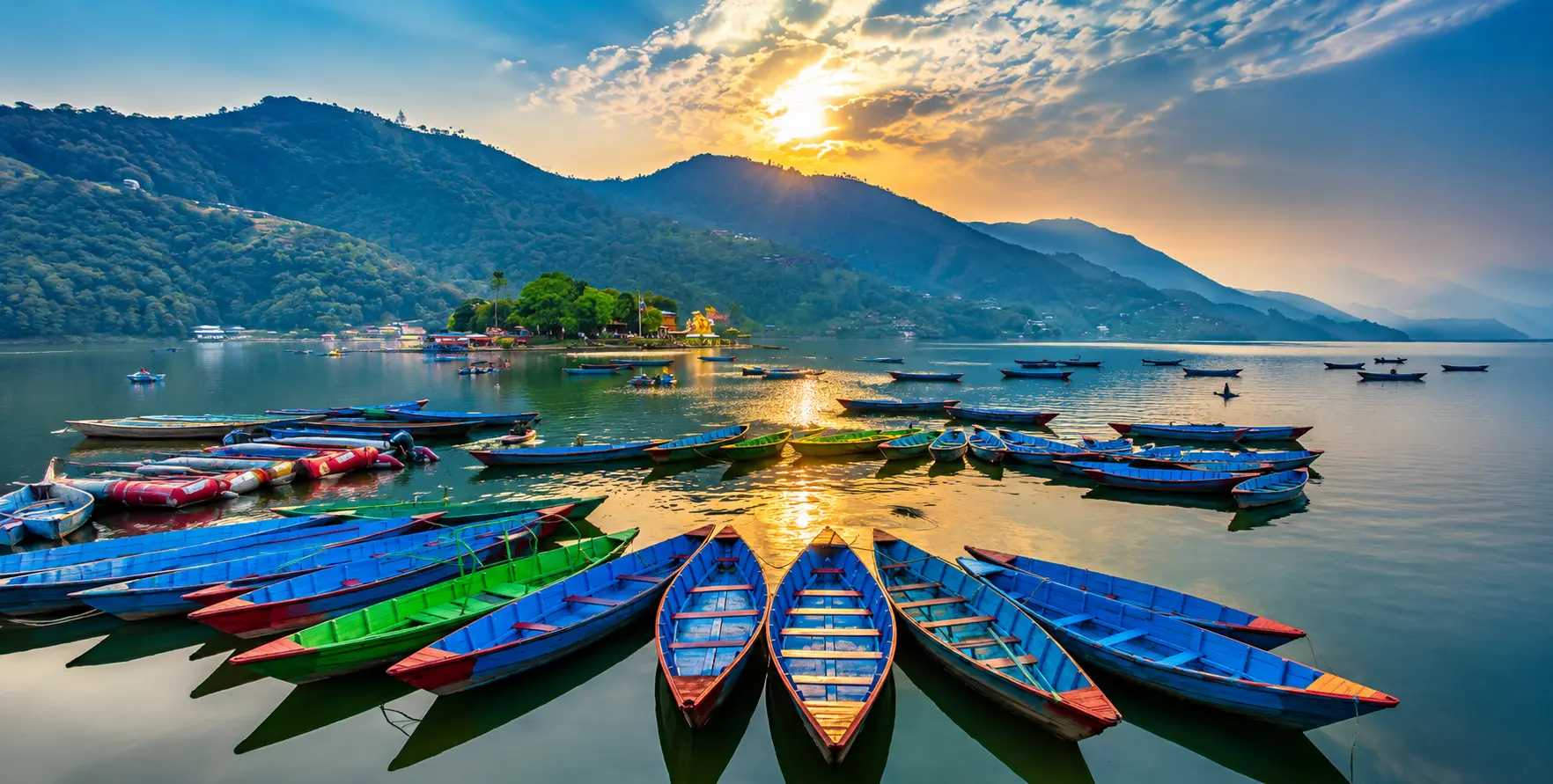
Combining Bandipur with an Onward Journey to Pokhara
Because Bandipur sits almost exactly midway along the Kathmandu–Pokhara corridor, one of the most popular and practically efficient ways to incorporate a Bandipur visit into a broader Nepal itinerary is not as a round-trip day excursion from Kathmandu at all, but as a one-way stopover en route to Pokhara — departing Kathmandu in the morning, spending several hours or an overnight stay exploring Bandipur, and then continuing onward to Pokhara (a further two to three hours of driving from Bandipur) rather than returning to Kathmandu at all. Nepal Vehicle Hiring Pvt. Ltd. readily accommodates this one-way routing.
For travellers whose broader Nepal itinerary already includes a transition from Kathmandu to Pokhara, this approach allows the Bandipur visit to be folded into a journey that the traveller needed to make in any case, rather than requiring a dedicated separate round trip from Kathmandu — often the single most time-and-cost-efficient way to experience Bandipur for travellers with a Pokhara leg already planned.
Practical Tips for Your Bandipur Visit
Comfortable, sturdy walking shoes are essential for any Bandipur visit — the bazaar’s flagstone paving, while charming, is uneven in places. Any excursion to Tundikhel, Thani Mai, or Siddha Cave involves real uphill or stair-based walking, so proper footwear beats casual sandals. With Bandipur at just over 1,000 meters, mornings and evenings can be noticeably cooler than Kathmandu, especially outside the warmer months; pack a light layer for early-morning or evening viewpoint visits, even when daytime temperatures feel comfortable.
Cash should be carried in adequate quantity, as while Bandipur’s tourism infrastructure has developed considerably in recent years, reliable card payment acceptance and ATM access remain less consistent than in Kathmandu or Pokhara, and many of the town’s smaller cafes, shops, and guesthouses continue to operate primarily or exclusively on a cash basis. As with any of Nepal’s traditional heritage towns, modest dress is appreciated, particularly around the temple precincts, and visitors who take the time to learn even a few basic Nepali greetings tend to find this small effort warmly and genuinely reciprocated by Bandipur’s residents, many of whom retain a strong sense of pride in their town’s history and are happy to share it with visitors who show real interest rather than treating the bazaar as a simple photo backdrop.
The best months for a Bandipur visit, as for most of central Nepal’s hill and mountain viewpoints, are the spring period from March through May and the post-monsoon autumn period from September through November, when skies are at their clearest, and the Himalayan panorama from Tundikhel and Thani Mai is most reliably visible in its full, snow-draped glory. Visits during the summer monsoon months remain entirely possible and offer their own charm—lush green terraced hillsides and a quieter, more contemplative atmosphere with far fewer visitors. Still, mountain visibility becomes considerably less reliable, so travellers should adjust their expectations and road-condition planning with their vehicle hire provider accordingly.
Why Choose Nepal Vehicle Hiring Pvt. Ltd. for Your Bandipur Day Trip
A journey to Bandipur asks a good deal of its transport arrangements: a genuinely long single day on the road, a route that combines fast highway driving with a more technical final ascent, the practical need for real flexibility around timing and stops, and — for travellers attempting the trip as a single day excursion — very little margin for the kind of unpredictable delay that an unreliable vehicle or an inexperienced driver can introduce. Nepal Vehicle Hiring Pvt. Ltd. has built its reputation, reflected in thousands of satisfied clients and a five-star average rating, on dependable, well-maintained vehicles and genuinely experienced, professional drivers that a journey of this character demands.
Every vehicle dispatched for a Bandipur route meets the same rigorous maintenance standard applied across Nepal Vehicle Hiring Pvt. Ltd.’s entire fleet, and drivers assigned to this route are selected for their familiarity with the Prithvi Highway corridor and the specific character of the final Dumre-to-Bandipur ascent. The company’s approach to a day trip of this kind is built around genuine flexibility: clients set their own departure time from their Kathmandu hotel, decide in real time how long they wish to spend exploring the Bandipur bazaar and its viewpoints, and can request combination stops — Manakamana Temple chief among them — without any of the rigidity that a fixed-schedule group tour or public bus journey would impose.
Booking is handled directly and responsively through Nepal Vehicle Hiring Pvt. Ltd.’s WhatsApp line and website, with the company’s team able to advise on the optimal vehicle choice for a given group size, the most sensible departure timing given the traveller’s specific interests within Bandipur, and any seasonal road-condition considerations relevant to the planned travel date. For travellers who decide, after researching the destination, that the richer experience of an overnight stay better suits their interests than a compressed single-day round trip, Nepal Vehicle Hiring Pvt. Ltd. equally accommodates one-way drop-off and later pickup arrangements, or full multi-day vehicle hire that keeps a driver and vehicle available throughout an extended Bandipur stay or an onward continuation to Pokhara.
Conclusion: A Day Trip Worth Every Kilometre
Bandipur occupies a genuinely unusual place in Nepal’s heritage landscape — a town preserved not by deliberate conservation policy but by historical accident, surviving in its present extraordinary condition precisely because the modern road network passed it by half a century ago. The result, for today’s traveller, is a destination that delivers an experience genuinely comparable in architectural and cultural depth to the famous Durbar Squares of the Kathmandu Valley, wrapped in a setting of complete pedestrian tranquillity and framed by one of the finest accessible Himalayan mountain panoramas in the entire country — all within a single comfortable day’s reach of Kathmandu by private vehicle.
Walking Bandipur’s flagstone bazaar street beneath its carved wooden balconies, standing on Tundikhel as the afternoon light moves across the distant Annapurna and Manaslu ranges, and tasting genuine Newari cuisine prepared by a community whose ancestors carried this entire cultural world over a mountain ridge nearly two and a half centuries ago — this is a day trip that rewards every kilometre of the journey required to reach it. Nepal Vehicle Hiring Pvt. Ltd. is ready to be your trusted, experienced, and genuinely flexible transport partner, making this remarkable day achievable in comfort, on your schedule, and without compromise. Contact our team today to begin planning your Kathmandu to Bandipur heritage day trip.
Book Your Kathmandu to Bandipur Day Trip with Nepal Vehicle Hiring Pvt. Ltd.
Website: www.vehiclehiringnepal.com
Phone / WhatsApp: +977 9814227196 (24/7 Support)
Email: [email protected]
Office: Bhagawatisthan, Thamel, Kathmandu, Nepal
Fleet: Private Car | SUV / 4WD Jeep | Hiace Van — matched to your group size
Route: Kathmandu → Malekhu → Mugling → Dumre → Bandipur (and return, or onward to Pokhara)
Flexible Timing: Early departure, your own pace in Bandipur, optional Manakamana stop
- Kathmandu to Bandipur Day Trip Transport Guide
- The Extraordinary History of Bandipur — From Magar Forest to Mercantile Crown Jewel
- The Route: Kathmandu to Bandipur in Detail
- What to See and Experience in Bandipur
- Bandipur's Living Festival Calendar
- The Complete Transport Guide — Getting to Bandipur from Kathmandu
- Practical Tips for Your Bandipur Visit
- Why Choose Nepal Vehicle Hiring Pvt. Ltd. for Your Bandipur Day Trip
- Conclusion: A Day Trip Worth Every Kilometre

Related Blog & Articles
ACAP Permit – The Annapurna Conservation Area Entry Pass: Complete Guide
Kathmandu to Bandipur Vehicle Hire

Besisahar Vehicle Hire | Pickup And Drop Guide