Plan a Trip


ACAP Permit – The Annapurna Conservation Area Entry Pass: Complete Guide
Introduction: Why the ACAP Permit Is Your Most Important Trekking Document
If you are planning to trek anywhere in the Annapurna region of Nepal — whether the iconic Annapurna Circuit crossing the 5,416-metre Thorong La Pass, the spectacular Annapurna Base Camp (ABC) trek through the glacial Annapurna Sanctuary, the beloved Ghorepani–Poon Hill route for its legendary sunrise mountain panoramas, the increasingly popular Mardi Himal Trek, the sacred Muktinath Temple pilgrimage, or the remote Tilicho Lake expedition — there is one document you absolutely cannot be without: the Annapurna Conservation Area Permit, universally known as the ACAP permit.
The ACAP permit is not optional bureaucratic paperwork. It is a legally mandatory entry pass issued by Nepal’s National Trust for Nature Conservation (NTNC) under the authority of the Government of Nepal. Without it, you cannot legally enter the Annapurna Conservation Area.
Without it, you will be turned back at the first trail checkpoint you encounter. Without it, you may face significant on-the-spot fines. Without it, you also miss the chance to contribute directly to conserving one of the world’s most extraordinary mountain ecosystems. This contribution makes the ACAP fee one of the most genuinely worthwhile expenditures in any trekker’s budget.
In 2026, the ACAP permit fee is NPR 3,000 for foreign nationals (approximately USD 22–25) and NPR 1,000 for SAARC nationals (from India, Bangladesh, Pakistan, Sri Lanka, Bhutan, Maldives, and Afghanistan). Children under 10 are exempt. NTNC offices in Kathmandu and Pokhara issue permits, which you can also process through the NTNC online portal. It is valid for the entire Annapurna Conservation Area — one permit covers all routes within the ACA boundary during a single entry.
This complete guide explains everything you need to know about the ACAP permit: what it is and why it exists, what the Annapurna Conservation Area is and why it matters, the exact cost for all nationalities, how and where to obtain the permit in Kathmandu and Pokhara, what documents you need, which trekking routes require it, the checkpoint system, the relationship between the ACAP and the TIMS card, common mistakes trekkers make, and how your ACAP permit connects to the vehicle hire you need to reach the trailhead — where Nepal Vehicle Hiring Pvt. Ltd. can help.
| ACAP Permit — Quick Reference at a Glance |
| Full Name: Annapurna Conservation Area Permit (ACAP) |
| Issuing Authority: National Trust for Nature Conservation (NTNC), Government of Nepal |
| Cost (Foreign Nationals): NPR 3,000 (approx. USD 22–25) |
| Cost (SAARC Nationals): NPR 1,000 (approx. USD 7–8) |
| Cost (Nepali Nationals): Free of charge |
| Children Under 10: Exempt — no permit required regardless of nationality |
| Where to Get It: NTNC Office, Kathmandu (Jawalakhel) | NTNC/NTB Office, Pokhara (Damside) | Online: epermit.ntnc.org.np |
| Documents Needed: Valid passport + 2 passport-sized photos + fee in NPR |
| Processing Time: 10–20 minutes (in-person, off-peak) | Go early in peak season |
| Covers: All trekking routes within the 7,629 km² Annapurna Conservation Area |
| Important: Carry a PRINTED copy — digital versions are often not accepted at remote checkpoints |
| Trekking without ACAP: Illegal under Nepali law — fines + forced removal from trail |
What Is the ACAP Permit? History, Purpose, and Legal Status
The Origin of the Annapurna Conservation Area Project
The Annapurna Conservation Area Project — from which the ACAP permit takes its name — was established in 1986 by the National Trust for Nature Conservation (NTNC), with support from the World Wildlife Fund and the Government of Nepal. It was Nepal’s first conservation area distinct from a national park) and remains Nepal’s largest protected area, covering 7,629 square kilometres across the Annapurna, Manaslu, and Lamjung districts of Gandaki Province.
The project was conceived in response to a growing crisis. By the early 1980s, the Annapurna region — which had been opened to foreign trekkers in 1977 — was already experiencing the negative consequences of poorly managed tourism: deforestation driven by the enormous demand for firewood from trekking lodges and teahouses, overgrazing of alpine meadows, accumulation of non-biodegradable waste on pristine mountain trails, and cultural disruption in communities that had little experience of mass tourism or its management. The forests that had sustained Annapurna communities for centuries were being stripped at an alarming rate.
The Annapurna Conservation Area Project introduced a revolutionary model for protected area management: rather than displacing the local communities (as Nepal’s national parks had done), ACAP actively involved the over 100,000 people living within the conservation area in its management. The project established Local Conservation Area Management Committees (LCAMCs) in villages throughout the area, channelling permit revenue directly into local conservation, Education, and community development projects. This community-based conservation model has since been adopted across Nepal and recognised internationally as a landmark approach to sustainable mountain tourism.
What the ACAP Permit Does and Why It Matters
The ACAP permit serves three distinct but interconnected purposes, each of which is important for understanding why the fee represents genuine value rather than mere bureaucracy:
- Legal Authorisation: The permit is the legal instrument that authorises your entry into the Annapurna Conservation Area. Nepal’s protected area legislation requires all visitors to carry a valid permit, and enforcement at checkpoints throughout the ACA is consistent and thorough. The permit identifies you as a registered visitor to the conservation area, enabling authorities to maintain visitor statistics, respond to emergencies, and plan conservation resources effectively.
- Conservation Funding: Revenue from ACAP permit fees goes directly to the Annapurna Conservation Area Project’s conservation and community development programs. These include: trail maintenance and bridge repair; waste management infrastructure in teahouse zones; reforestation and forest management projects; wildlife research and anti-poaching activities; community Education initiatives (schools, health posts, scholarships); clean water supply systems in remote villages; and the training and employment of local conservation staff and park rangers. When you pay for your ACAP permit, you are directly funding the protection and maintenance of the extraordinary landscape you are about to walk through.
- Trekker Safety and Records: The permit system creates a registry of who is in the Annapurna Conservation Area at any given time. This information is critical for search-and-rescue operations when trekkers go missing or require emergency assistance. In the Annapurna region, where weather can change rapidly, altitude sickness can affect trekkers at multiple elevations, and trail conditions can become hazardous, the permit registration system’s safety value is real and significant.
The Annapurna Conservation Area — What You Are Protecting
The Annapurna Conservation Area is not simply a trekking corridor — it is one of the world’s most biologically and culturally diverse mountain landscapes. Understanding what the ACAP protects gives context and meaning to the permit fee, which is easy to overlook when processing paperwork in a Kathmandu office.
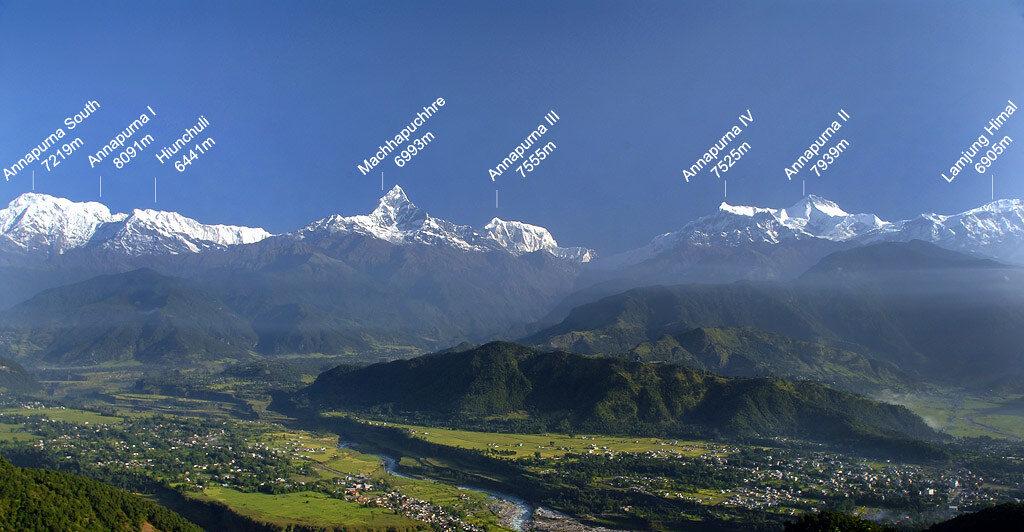
The ACA encompasses a remarkable altitudinal range — from subtropical lowlands at approximately 1,000 meters near Pokhara to the extreme high-altitude desert environment above 8,000 meters on the flanks of Annapurna I (8,091 m), the world’s tenth-highest mountain. This extraordinary elevation gradient creates a sequence of distinct ecological zones, each with its own characteristic flora, fauna, and microclimate.
Subtropical broadleaf forest in the lower valleys transitions through temperate mixed forest (including the magnificent rhododendron forests, ablaze with colour in March and April), to temperate coniferous forest, to sub-alpine scrub and alpine meadow, to the high-altitude desert landscape of the Manang and Mustang zones, and finally to permanent snow and glacier above 5,000 meters.
This biodiversity is genuinely outstanding by global standards. The ACA is home to 105 species of mammals — including snow leopard (Panthera uncia), clouded leopard (Neofelis nebulosa), Himalayan black bear (Ursus thibetanus), red panda (Ailurus fulgens), Himalayan tahr (Hemitragus jemlahicus), musk deer (Moschus moschiferus), and the elusive common leopard.
The bird fauna is equally remarkable — 518 species have been recorded within the ACA, including Nepal’s national bird, the Himalayan Monal (Lophophorus impejanus), the Satyr Tragopan, the Koklass Pheasant, the Snow Partridge, and numerous raptors, including the Lammergeier (Bearded Vulture) and the Himalayan Griffon Vulture. The 1,226 species of flowering plants include the iconic rhododendrons (over 30 species), orchids, primulas, and the medicinal plants that have been central to traditional Himalayan healing practice for centuries.
The human dimension of the ACA is equally rich. Over 100,000 people from more than 10 distinct ethnic and linguistic communities — including the Gurung (Tamu), Magar, Thakali, Manangi, and Tibetan-influenced communities of the upper valleys — live within the conservation area boundaries, maintaining cultural traditions, architectural styles, farming systems, and spiritual practices that stretch back centuries. The ACA program explicitly supports and preserves this living cultural heritage as an integral part of its conservation mission.
ACAP Permit Cost — Fees for All Nationalities
The ACAP permit fee structure is straightforward, with fees set in Nepali Rupees (NPR). All fees must be paid in NPR — foreign currencies are not accepted at the permit offices. If paying digitally (through registered trekking agencies or the NTNC online portal), an additional 2.9% online payment gateway charge applies.
| Nationality Category | ACAP Permit Fee | Approx. USD Equivalent | Notes |
| Foreign Nationals (Non-SAARC) | NPR 3,000 | USD 22–25 | All non-SAARC international trekkers |
| SAARC Nationals | NPR 1,000 | USD 7–8 | India, Bangladesh, Pakistan, Sri Lanka, Bhutan, Maldives, Afghanistan |
| Nepali Citizens | Free (NPR 0) | N/A | No permit fee for Nepali nationals |
| Children Under 10 Years | Free (NPR 0) | N/A | Exempt regardless of nationality |
| Online Payment Gateway Fee | Additional 2.9% | — | Applies only when paying through the NTNC online portal |
Important note: For the current trekking season, the Government of Nepal and the NTNC have confirmed no change to the ACAP permit fee from previous years. The NPR 3,000 fee for foreign nationals remains standard and is expected to stay the same. Always verify the current fee on the official NTNC website (ntnc.org.np) or at the permit office before paying, as fees can change between trekking seasons.
Also important: Permits obtained at trail checkpoints (rather than in Kathmandu or Pokhara) cost significantly more — in some cases double the standard office rate. Always obtain your ACAP permit in Kathmandu or Pokhara before reaching the trailhead.
ACAP Permit Cost vs What You Get
At NPR 3,000 (approximately USD 22–25) for foreign nationals, the ACAP permit represents outstanding value given what it provides access to. The Annapurna Conservation Area contains some of the world’s most spectacular mountain scenery, most diverse wildlife habitats, and most culturally rich Himalayan communities — accessible via a world-class network of teahouse trekking routes that are maintained, in significant part, by ACAP permit revenue.
No other protected area of comparable scale and significance anywhere in Asia charges less than half this amount. The ACAP permit is not an imposition — it is the most direct and tangible way individual trekkers contribute to the long-term conservation of the extraordinary landscape they come to experience.
Where to Get Your ACAP Permit
You can get the ACAP permit from three main sources: NTNC offices in Kathmandu or Pokhara, the NTNC online portal, or a registered trekking agency. Here is a detailed breakdown of each option:
Option 1: NTNC Office in Kathmandu (In-Person)
| Detail | Information |
| Office Location | NTNC Biodiversity Conservation Centre, Jawalakhel, Lalitpur (near the Nepal Tourism Board, Bhrikutimandap / Pradarshani Marg) |
| Alternative Kathmandu Location | NTNC office near Nepal Tourism Board (NTB) at Pradarshani Marg, Bhrikutimandap — easily accessible from Thamel (10-min walk) |
| Office Hours | Sunday to Friday, 9:00 AM – 5:00 PM | Closed Saturday and public holidays |
| Documents Required | Valid passport (original) | 2 passport-sized photographs (colour) | Fee in NPR cash |
| Processing Time | 10–20 minutes in off-peak season | 30–60 minutes in peak season (Oct–Nov, Mar–May) |
| Best Time to Go | Before 10:00 AM — queues build fast after 11:00 AM in peak season |
| Payment Method | Cash in Nepali Rupees ONLY — carry exact amount or near-exact change |
Option 2: NTNC / NTB Office in Pokhara (In-Person)
| Detail | Information |
| Primary Office Location | NTNC Building, Damside (Pardi), near Phewa Lake, Pokhara |
| Alternative Location | Nepal Tourism Board (NTB) office, Pardi, Damside, Ward No. 17, Pokhara |
| Also Available | NTNC office near Pokhara Lakeside (near Tourist Police Station) |
| Office Hours | Sunday to Friday, 9:00 AM – 5:00 PM | Closed Saturday |
| Documents Required | Valid passport (original) | 2 passport-sized photographs | Fee in NPR cash |
| Processing Time | 10–20 minutes typically | Pokhara office is often less busy than Kathmandu in peak season |
| Best For | Trekkers beginning their route from Pokhara — most convenient option; permits obtained the day before the trek |
Option 3: NTNC Online Portal (epermit.ntnc.org.np)
The National Trust for Nature Conservation has developed an online permit application system accessible at epermit.ntnc.org.np. This lets trekkers apply for and pay for their ACAP permit digitally before arriving in Nepal, without visiting a physical office. The online process requires: uploading a digital passport photo, entering passport details and trekking itinerary information, and paying the fee by card (with the 2.9% gateway surcharge).
However, there is an important practical caveat for 2026: while the online portal is operational, many remote trail checkpoints in the Annapurna Conservation Area lack reliable internet connectivity and cannot verify digital permits electronically. Checkpoint officials in many parts of the ACA — particularly above Manang on the Annapurna Circuit, at Chhomrong on the ABC route, and in the Mustang section — may insist on seeing a printed permit with your photograph and permit number clearly visible. If you obtain your permit online, always print a copy before leaving for the trailhead.
Option 4: Through a Registered Trekking Agency
If you book your trek through a registered Nepali trekking agency (mandatory for some routes and advisable for all trekkers since the April 2023 licensed guide requirement), the agency will typically arrange your ACAP permit as part of the trek package. The agency processes the permit through its licensed portal, and it will be issued in your name. Confirm with your agency that it has obtained the permit and that you have received the physical printed document before departing Kathmandu or Pokhara for the trailhead.
Option 5: At Trail Entry Checkpoints (Last Resort Only)
ACAP permits can technically be obtained at some trail entry checkpoints — notably at Besisahar (for the Annapurna Circuit) and at Birethanti (for the ABC and Ghorepani–Poon Hill routes). However, this is strongly discouraged for several reasons: checkpoint permits typically cost significantly more than the standard office rate (sometimes double); checkpoint offices may have queues that delay the start of your trek; and not all checkpoints can issue permits — some only verify them. Always obtain your ACAP permit at an office in Kathmandu or Pokhara before reaching the trailhead.
Documents Required for the ACAP Permit
The document requirements for the ACAP permit are simple and consistent across all permit offices. Prepare these before visiting the office to ensure a smooth, efficient process:
| Document | Details / Notes |
| Valid Passport | The original passport must be presented — photocopies are not sufficient for the initial application. Your passport must be valid for at least 6 months beyond your planned departure from Nepal. |
| 2 Passport-Sized Photographs | Recent colour photographs, passport size (35mm x 45mm or similar). They must be clear, well-lit, and show your full face without glasses. Many photo studios near the Kathmandu NTB office and Pokhara Lakeside can produce these in 10–15 minutes for NPR 100–200. |
| Permit Fee in NPR | NPR 3,000 (foreign nationals) or NPR 1,000 (SAARC nationals) in Nepali Rupees cash. Fees must be in NPR — foreign currency is not accepted at counters. |
| Nepal Entry Visa | Your valid Nepal visa (stamped in your passport or obtained on arrival at the airport). The permit office will verify your visa as part of the application. |
| Trekking Itinerary (sometimes requested) | Some offices ask for a brief description of your planned trekking route. A simple written or verbal description of your itinerary is sufficient — no detailed document is required. |
| Travel Insurance (for guide registration) | If you are registering with a licensed guide (mandatory since April 2023), your guide agency may require proof of travel insurance. This is not required for the ACAP permit itself. |
Pro tip: Carry extra passport photos — you will also need them for the TIMS card, guide registration, and potentially restricted-area permits if your route includes Nar-Phu Valley or Upper Mustang. Bringing 8–10 passport photos to Nepal is always a good idea.
Which Trekking Routes Require the ACAP Permit?
The ACAP permit is required for entry into the Annapurna Conservation Area — which means it applies to all trekking routes within the ACA boundary. The key phrase is ‘within the ACA boundary’: not just the Annapurna Circuit and ABC, but every trail that crosses into the protected area. Here is a comprehensive breakdown:
| Trekking Route | ACAP Required? | Additional Permits? | Key Checkpoints |
| Annapurna Circuit Trek | YES — mandatory | TIMS Card (recommended) | Besisahar, Dharapani, Chame, Manang, Thorong Phedi, Muktinath, Jomsom |
| Annapurna Base Camp (ABC) Trek | YES — mandatory | TIMS Card (recommended) | Birethanti, Ghandruk, Chhomrong, Sinuwa (occasional) |
| Ghorepani–Poon Hill Trek | YES — mandatory | TIMS Card (recommended) | Birethanti or Nayapul entry point |
| Mardi Himal Trek | YES — mandatory | TIMS Card (recommended) | Kande or Dhampus at trail start, Forest Camp / High Camp (occasional) |
| Tilicho Lake Trek (via Manang) | YES — covered by standard ACAP | TIMS Card | Same as Annapurna Circuit (Besisahar, Manang, Khangsar) |
| Muktinath Temple (by road/vehicle) | YES — required for ACA entry | None additional (unless via Jomsom flight) | Jomsom area checkpoint |
| Khopra Danda / Khopra Ridge Trek | YES — covered by ACAP | None additional | Nayapul / Birethanti entry |
| Annapurna Sanctuary Trek | YES — same as ABC Trek | TIMS Card | Birethanti, Chhomrong |
| Nar-Phu Valley Trek | YES — ACAP + RAP required | Restricted Area Permit (RAP) mandatory — separate, additional fee | Besisahar, Koto entry to Nar-Phu |
| Upper Mustang Trek | YES — ACAP + RAP required | Restricted Area Permit: USD 500 for the first 10 days | Jomsom, Kagbeni |
| Panchase Trek (via Kande/Bhadaure) | YES — if the route enters the ACA | TIMS Card | Kande checkpoint for some routes |
| Ghandruk Village Visit (vehicle or foot) | YES — ACA entry required | None | Birethanti checkpoint |
| Khangsar / Manang (vehicle or trek) | YES — part of ACA | TIMS Card | Besisahar, Chame, Manang |
Key principle: If your route passes through any part of the 7,629 km² Annapurna Conservation Area — regardless of how you are travelling (on foot, by jeep, or by any other means) — you need a valid ACAP permit. This includes vehicle passengers travelling to destinations like Muktinath (by road through the Mustang region), Ghandruk (via the Birethanti road), and Manang/Khangsar (via the Besisahar highway).
Routes That Do NOT Require ACAP
Trekking routes entirely outside the ACA boundary do not require the ACAP permit. These include: Langtang Valley Trek (requires Langtang National Park permit instead), Everest Base Camp Trek (requires a Sagarmatha National Park permit), Helambu Trek (requires TIMS card), Tamang Heritage Trail beginning sections (check with your guide as the route may enter ACA), and most other routes in Nepal’s other national parks and conservation areas which have their own separate permit systems.
ACAP Permit Checkpoints — Where Your Permit Will Be Checked
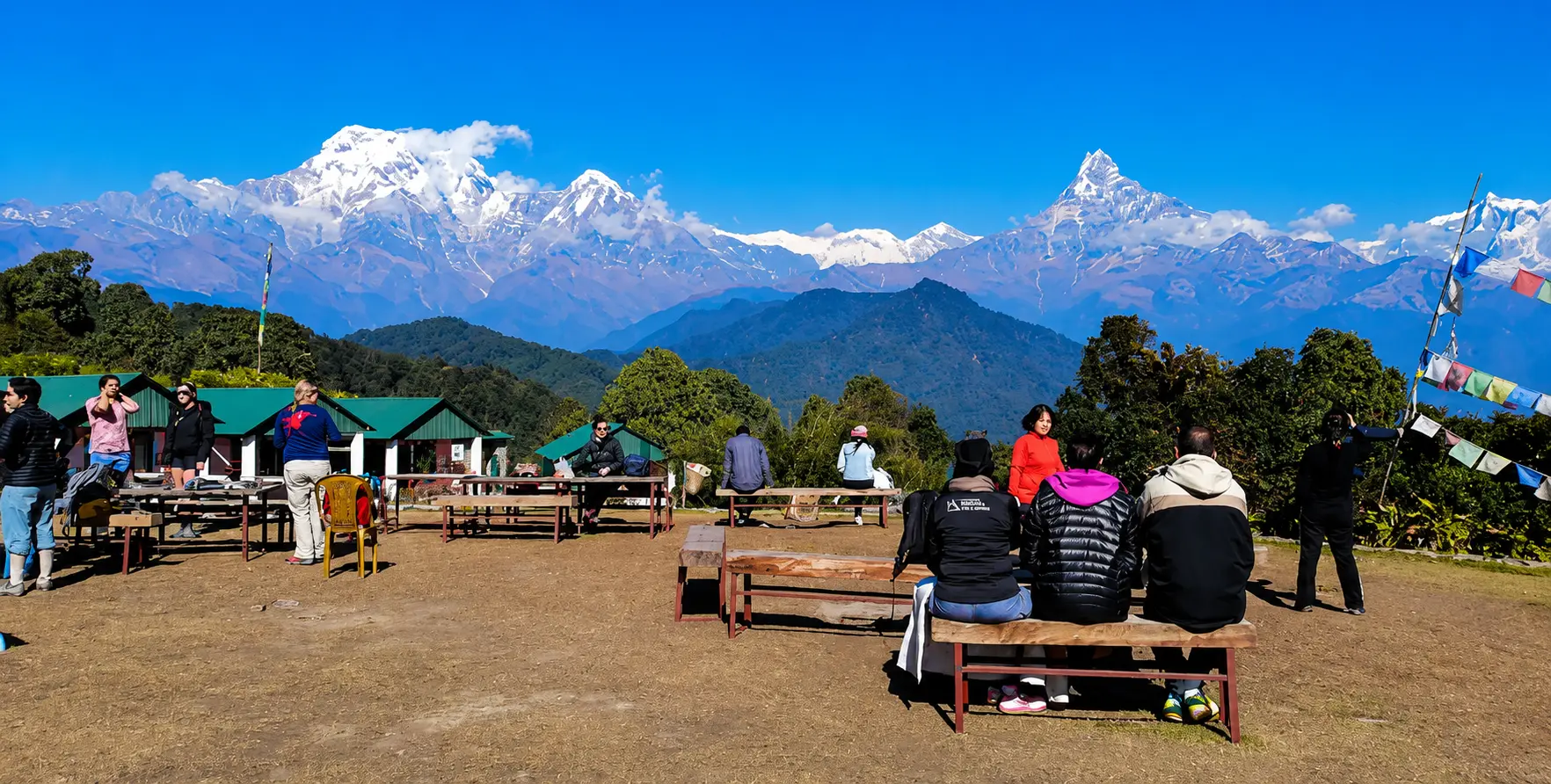
The Annapurna Conservation Area maintains a systematic network of permit checkpoints along all major trekking routes. Conservation area personnel staff these checkpoints and verify that every trekker entering the ACA carries a valid ACAP permit. The checkpoint system is consistently enforced — trekkers attempting to pass without a valid permit are turned back or fined. Here is the checkpoint breakdown by major route:
| Route | Primary Entry Checkpoint | Mid-Route Checkpoints | Notes |
| Annapurna Circuit | Besisahar (or Bhulbhule) | Dharapani, Chame, Manang, Thorong Phedi, Muktinath/Jomsom area | Multiple checks — carry permit accessible, not buried in pack |
| Annapurna Base Camp | Birethanti (main) | Ghandruk, Chhomrong, Sinuwa (occasional) | Birethanti is the key entry point — strictly enforced |
| Ghorepani–Poon Hill | Birethanti or Nayapul | Ghorepani (occasional) | Same entry as ABC — check at Birethanti essential |
| Mardi Himal | Kande or Dhampus | Forest Camp, High Camp (occasional) | Entry checkpoint at Kande road-end or Dhampus village |
| Tilicho Lake (from Manang) | Besisahar (initial), Khangsar | Between Manang and Khangsar | Covered by standard Annapurna Circuit ACAP |
| Nar-Phu Valley | Koto village (ACA entry to Nar-Phu) | Within Nar-Phu Valley | ACAP + RAP both checked — RAP officer accompanies groups |
| Upper Mustang | Jomsom, Kagbeni (Lo-Manthang approach) | Ghami, Lo-Manthang | ACAP + Restricted Area Permit both verified |
| Critical Checkpoint Tips |
| Always carry your PRINTED ACAP permit — digital copies are often NOT accepted in remote areas. |
| Your permit will have your photograph on it — carry a copy of the relevant pages of your passport as well. |
| Bribing checkpoint officials is a serious criminal offence in Nepal — never attempt this. |
| Keep your permit in a waterproof zip-lock bag or document sleeve — mountain weather can be unpredictable. |
| Checkpoints operate roughly from 6:00 AM to 6:00 PM — plan to pass through during these hours. |
| Sign the visitor register at each checkpoint — this is part of the safety recording system. |
| Permits obtained at checkpoints cost significantly MORE than at permit offices — always get yours in advance. |
ACAP Permit and the TIMS Card — What’s the Difference?
One of the most common sources of confusion for trekkers planning Annapurna routes is the relationship between the ACAP permit and the TIMS card (Trekkers’ Information Management System). Here is a clear explanation of both documents and their current status in 2026:
ACAP Permit — The Non-Negotiable
The ACAP permit is the primary document required for any trekking in the Annapurna Conservation Area. It is the conservation area entry authorisation, issued by the NTNC under government authority, and enforced at checkpoints throughout the ACA. The ACAP permit is the only permit that is consistently and universally enforced at Annapurna trail checkpoints. Trekking without it is illegal and will result in being turned back at the first checkpoint you encounter.
TIMS Card — The Situation
The TIMS card (Trekkers’ Information Management System) is a separate registration system managed by the Nepal Tourism Board (NTB) and the Trekking Agencies’ Association of Nepal (TAAN). It was introduced to maintain a database of trekker registrations for safety and emergency management purposes. The cost is NPR 2,000 for individual trekkers and NPR 1,000 for group trekkers (through a registered agency).
The TIMS card situation is nuanced and has caused some confusion: multiple credible sources indicate that the TIMS card is not consistently enforced at Annapurna trail checkpoints in 2026—several reports suggest that checkpoints verify only the ACAP permit, not the TIMS card, on most Annapurna routes. However, other sources and some agencies maintain that the TIMS card remains officially required for Annapurna routes. Nepal Vehicle Hiring Pvt. Ltd.
recommends obtaining both the ACAP permit and TIMS card before trekking to ensure full compliance and avoid any checkpoint issues regardless of current enforcement patterns. The combined cost (NPR 3,000 ACAP + NPR 2,000 TIMS = NPR 5,000 for foreign nationals) remains very reasonable for what is provided.
| Feature | ACAP Permit | TIMS Card |
| Full Name | Annapurna Conservation Area Permit | Trekkers’ Information Management System Card |
| Issuing Authority | NTNC (National Trust for Nature Conservation) | NTB (Nepal Tourism Board) / TAAN |
| Cost (Foreign) | NPR 3,000 | NPR 2,000 (individual) / NPR 1,000 (group/agency) |
| Cost (SAARC) | NPR 1,000 | NPR 1,500 (individual) / NPR 800 (group) |
| Purpose | Legal conservation area entry authorisation | Trekker registration for safety and statistics |
| 2026 Enforcement | STRICTLY enforced at all ACA checkpoints | Inconsistently enforced on Annapurna routes in 2026 |
| Online Available | Yes — epermit.ntnc.org.np | Yes — through registered agencies (eTIMS) |
| Recommendation | MANDATORY — get this without fail | RECOMMENDED — get for full compliance |
| Where to Obtain | NTNC offices (Kathmandu/Pokhara) or online | NTB offices (Kathmandu/Pokhara) or through an agency |
The Mandatory Licensed Guide Requirement
Since April 2023, the Government of Nepal has required all trekkers in specified areas — including the Annapurna Conservation Area — to be accompanied by a licensed trekking guide. This requirement is in addition to the ACAP permit and TIMS card, and authorities have consistently enforced it at ACA checkpoints since its introduction.
The licensed-guide requirement means independent solo trekking without a guide is no longer legally permitted in the Annapurna Conservation Area. The Nepal Tourism Board must license the guide, and the guide must be registered with the appropriate authority. When you register for your ACAP permit, you may need to provide your guide’s details. At trail checkpoints, staff verify both your permit and your guide’s credentials.
If you are booking through a registered trekking agency, the guide requirement is automatically handled as part of your booking. If you arrange your trek independently, you must hire a licensed guide before entering the ACA. Nepal Vehicle Hiring Pvt. Ltd. can connect you with trusted licensed guide services in Kathmandu and Pokhara — contact our team when booking your vehicle hire.
| Required Documents Summary — Complete Annapurna Trek Checklist |
| ACAP Permit (NPR 3,000 for foreign nationals) — MANDATORY |
| TIMS Card (NPR 2,000 per person) — STRONGLY RECOMMENDED |
| Licensed Guide — MANDATORY since April 2023 |
| Valid Nepal Entry Visa — REQUIRED |
| Travel Insurance (recommended by most agencies) — STRONGLY ADVISED |
| Restricted Area Permit (RAP) — ONLY if entering Nar-Phu Valley or Upper Mustang |
| Carry ALL printed copies — do not rely solely on digital versions at checkpoints |
| Carry 6–10 passport photos — needed for ACAP, TIMS, guide registration, and other permits |
ACAP Permit and Your Vehicle Hire — How Nepal Vehicle Hiring Helps
Most trekkers heading to Annapurna Conservation Area routes begin their journey with a vehicle ride from Kathmandu or Pokhara to the trek trailhead — whether that is Besisahar (for the Annapurna Circuit), Nayapul/Birethanti (for ABC and Poon Hill), Kande (for the Mardi Himal Trek), or Syabrubesi (for Langtang). Nepal Vehicle Hiring Pvt. Ltd. is the trusted vehicle hire partner for these trailhead journeys, and we help clients ensure they have all required documentation before reaching the checkpoints.
Why Getting Your ACAP Permit Before Your Vehicle Journey Matters
Every major Annapurna trekking trailhead has an ACAP permit checkpoint at or near the road-end or trail entry point. If you arrive at Birethanti by private jeep from Pokhara without your ACAP permit, you will not be allowed to proceed. You will have to return to Pokhara to obtain the permit — wasting half a day, the cost of the extra vehicle distance, and the best trekking hours of the day. Similarly, arriving at Besisahar from Kathmandu without permits means a frustrating delay at the checkpoint while other trekkers proceed.
Nepal Vehicle Hiring Pvt. Ltd. makes it standard practice to confirm permit status with all trekking clients during booking. Our team will remind you to obtain your ACAP permit (and TIMS card) before your scheduled vehicle pickup date and can guide you to the most convenient permit office near your hotel in Kathmandu or Pokhara. If you forget to obtain permits in advance, our drivers know the permit offices near the trailheads. They can redirect the vehicle there first, but this always takes extra time, and we strongly advise obtaining permits the day before departure.
ACAP Permit and Vehicle Passengers — Not Just Trekkers
An important point many visitors overlook: the ACAP permit requirement applies to all visitors entering the Annapurna Conservation Area — not only those trekking on foot. If you are travelling by private vehicle to any destination within the ACA boundary — Ghandruk village (via Birethanti), Manang and Khangsar (via Besisahar and the Annapurna Circuit road), Muktinath Temple (via Jomsom), or any other ACA destination accessible by road — you are entering the conservation area and must carry a valid ACAP permit. Nepal Vehicle Hiring Pvt. Ltd. reminds all vehicle hire clients travelling to ACA destinations of this requirement during booking.
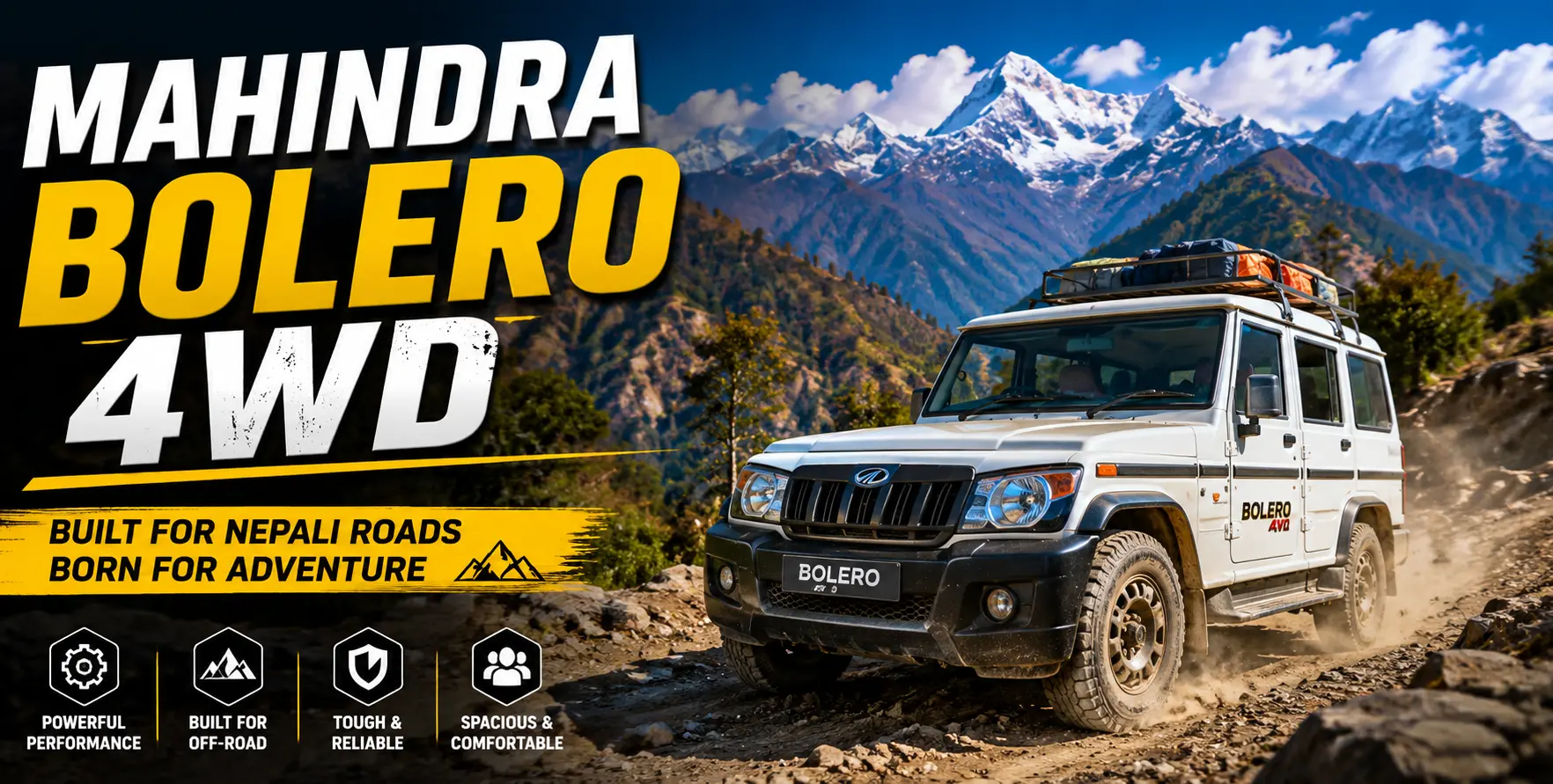
Our Vehicle Services for ACAP-Zone Destinations
| Destination (ACA Zone) | Vehicle Route | ACAP Required? | Nepal Vehicle Hiring Service |
| Besisahar (Annapurna Circuit start) | Kathmandu → Besisahar | YES | Private jeep hire — all vehicle types |
| Birethanti / Nayapul (ABC/Poon Hill start) | Pokhara → Birethanti/Nayapul | YES | 4WD jeep or car from Pokhara |
| Ghandruk Village | Pokhara/Kathmandu → Ghandruk | YES | 4WD Jeep — Birethanti road section |
| Manang / Khangsar | Kathmandu/Pokhara → Manang/Khangsar | YES | 4WD Jeep (Fortuner/Hilux/Land Cruiser) |
| Muktinath Temple | Pokhara → Jomsom → Muktinath | YES | Land Cruiser / Fortuner from Pokhara |
| Kande (Mardi Himal start) | Pokhara → Kande | YES (if entering ACA) | Car or jeep — Baglung Highway |
| Tilicho Lake approach (Khangsar) | Kathmandu → Khangsar | YES | 4WD Jeep — same as Manang route |
| Upper Mustang (Lo Manthang) | Pokhara → Jomsom → Lo Manthang | ACAP + RAP | Land Cruiser — 2-day journey from Pokhara |
Practical Tips for Getting Your ACAP Permit Smoothly
Timing Your Permit Visit
The NTNC permit offices in Kathmandu and Pokhara are open Sunday to Friday, 9:00 AM to 5:00 PM. During peak trekking season (October–November and March–May), the Kathmandu NTB office near Bhrikutimandap can become very busy from mid-morning onward, with queues that significantly extend processing times. The Pokhara office at Damside is generally less crowded than the Kathmandu office during peak season. In both cities, arriving at 9:00–9:30 AM gives you the best chance of a quick, smooth permit process.
During off-peak season (December–February and June–September), permit offices are rarely busy, and the process typically takes 10–15 minutes from arrival to receiving your printed permit.
Preparing Your Photographs
The most common cause of delay at permit offices is trekkers arriving without passport-sized photographs. These are not optional — the ACAP permit has your photograph printed on it as part of the security and identification system. If you arrive without photos, you will need to leave the queue, visit a nearby photo studio, and return.
Photo studios near the Kathmandu NTB office area (around Thamel and Bhrikutimandap) and near the Pokhara Damside permit office can produce passport-sized prints in 10–15 minutes for NPR 100–200. However, in peak season when offices are busy, leaving the queue to get photos made can mean a long wait on return. Always prepare your photographs the evening before your permit visit — your hotel can usually direct you to the nearest photo studio.
Currency and Payment
You must pay the ACAP permit fee in cash in Nepali Rupees (NPR) at the permit office counter. Foreign currencies — including USD, EUR, GBP, and Indian Rupees — are not accepted. Carry NPR 3,000 (or NPR 1,000 if you are a SAARC national) in cash, preferably as close to the exact amount as possible. ATMs are widely available near both the Kathmandu and Pokhara permit offices. Withdraw NPR before going to the permit office rather than hoping to exchange currency there.
Protecting Your Permit
Once issued, your ACAP permit is a physical document with your photograph and permit number — it cannot be replaced quickly if lost or damaged. Protect it carefully throughout your trek: keep it in a waterproof zip-lock bag or plastic sleeve, store it in the same secure pocket of your daypack where you keep your passport, and never put it in the bottom of a wet stuff sack or in an outside pocket where it could be lost. Many experienced trekkers also keep a photocopy of the permit as a backup.
Carry your permit in your daypack — not in your main trekking bag, which a porter carries. You will need to present it at checkpoints throughout the trek, and having it accessible without stopping to unpack your main bag saves time and inconvenience.
Common ACAP Permit Mistakes — And How to Avoid Them
- Mistake 1: Waiting until you reach the trailhead. Getting permits at checkpoints costs significantly more and wastes valuable trekking time. Always get your permit the day before departure in Kathmandu or Pokhara.
- Mistake 2: Forgetting passport photos. You can’t get the permit without photos. Carry 6–10 passport photos from home or prepare them the evening before your permit visit.
- Mistake 3: Carrying only a digital copy. Print your permit — many remote checkpoints cannot verify digital permits and will not accept them.
- Mistake 4: Assuming one permit covers multiple separate visits. The ACAP permit is valid for a single entry into the ACA. If you leave the conservation area and re-enter (for example, exiting at Nayapul and re-entering at Besisahar for a different route), you need a new permit for the second entry.
- Mistake 5: Confusing the ACAP with the TIMS. They are different documents issued by different authorities. Both are recommended — check with your guide or agency about current enforcement status.
- Mistake 6: Not having a licensed guide. Since April 2023, all Annapurna trekkers must have a licensed guide. Entering without one means being turned back at the checkpoint.
Where Does Your ACAP Permit Fee Go? Conservation in Action
Understanding what the ACAP permit fee funds transforms it from a bureaucratic cost into a meaningful contribution. The revenue from ACAP permits is channelled through the National Trust for Nature Conservation and the Local Conservation Area Management Committees into a wide range of conservation and community development programs:
Environmental Conservation
- Trail maintenance and repair: regular work on the network of trekking trails, bridges, and steps that connect the Annapurna region — including post-monsoon repair of landslide damage.
- Reforestation projects: planting and monitoring native tree species in areas affected by historical deforestation, particularly in lower-altitude zones near teahouse concentrations.
- Waste management infrastructure: building and maintaining waste collection points, eco-toilets, and waste management facilities along popular trekking routes.
- Wildlife monitoring and anti-poaching: funding for conservation staff, camera trap programs, and wildlife corridor management for the ACA’s extraordinary fauna, including snow leopard and red panda.
- Forest protection: employ community forest guards and support community forestry management groups in villages throughout the ACA.
Community Development
- Schools and educational facilities: build, maintain, and equip schools in remote ACA villages, and support scholarship programs for local students.
- Health infrastructure: build and maintain health posts, train community health workers, and support medical outreach in remote communities.
- Clean water supply: install and maintain clean water systems (gravity-fed pipe systems, water purification) in villages throughout the ACA.
- Renewable energy: support for micro-hydropower and solar energy projects in remote communities that would otherwise rely entirely on firewood for heating and cooking — a major driver of deforestation.
- Cultural heritage preservation: documenting and protecting traditional architecture, festivals, crafts, and cultural practices in Gurung, Manangi, Thakali, and other ACA communities.
When you consider this breadth of impact — from snow leopard conservation to village schools to clean water for 100,000 mountain residents — NPR’s $ 3,000 for a foreign trekker’s ACAP permit is among the best-value conservation contributions available anywhere in the world of adventure travel.
Frequently Asked Questions — ACAP Permit
Is the ACAP permit the same as the Annapurna trekking permit?
Yes — the ACAP permit (Annapurna Conservation Area Permit) is the primary trekking permit for all routes in the Annapurna Conservation Area. The terms ‘ACAP permit’ and ‘Annapurna trekking permit’ are used interchangeably, though technically the ACAP is the entry permit to the conservation area, not a trekking route permit per se. The NTNC (National Trust for Nature Conservation) issues it, and it’s mandatory for all visitors entering the ACA, whether trekking or travelling by vehicle.
Can I get the ACAP permit at the airport in Nepal?
No — the ACAP permit is not available at Tribhuvan International Airport (Kathmandu) or Pokhara Airport. You must obtain it from an NTNC permit office in Kathmandu (Jawalakhel or Bhrikutimandap area) or Pokhara (Damside), through the NTNC online portal, or through a registered trekking agency. Plan to visit the permit office on the day before your trekking vehicle departs from Kathmandu or Pokhara.
How long is the ACAP permit valid?
The ACAP permit is a single-entry permit valid for one visit to the Annapurna Conservation Area. It does not have a fixed expiry date in calendar terms, but it is valid for your current visit — defined as the period from your entry into the ACA until your exit. If you exit the conservation area and wish to re-enter (for example, to do two separate routes), you need a new permit for the second entry.
Do children need an ACAP permit?
No — children under 10 years of age are exempt from the ACAP permit requirement regardless of nationality. This exemption is official and consistently applied at all ACA checkpoints. Children 10 years and over are subject to the standard permit requirements.
Can I get the ACAP permit on the same day as my trek departure?
Technically, yes — the permit offices open at 9:00 AM, and a same-day permit is possible if you obtain it before your vehicle departs for the trailhead. However, this creates significant logistical stress, particularly in peak season when offices can be very busy. Nepal Vehicle Hiring Pvt. Ltd. strongly recommends obtaining your ACAP permit the day before your scheduled trek vehicle departure, so you start your journey without any last-minute permit anxiety.
What happens if I trek in the Annapurna region without an ACAP permit?
Trekking in the Annapurna Conservation Area without a valid ACAP permit is illegal under Nepali law. If caught at a checkpoint without a permit, you will be denied further access to the trail and required to return to obtain the permit. You may also face an on-the-spot fine that typically exceeds the standard permit cost. In extreme cases, repeat violations can result in being reported to immigration authorities. There is no benefit to trekking without a permit — the risks and consequences far outweigh any perceived savings.
Does a passenger in a jeep going to Muktinath or Manang need an ACAP permit?
Yes — the ACAP permit requirement applies to all visitors entering the Annapurna Conservation Area, whether trekking on foot or travelling by vehicle. Vehicle passengers travelling to Muktinath, Manang, Khangsar, Ghandruk, or any other destination within the ACA boundary must carry valid ACAP permits. Nepal Vehicle Hiring Pvt. Ltd. confirms permit status for all vehicle-hire clients travelling to ACA destinations during booking.
Can Nepal Vehicle Hiring help me get the ACAP permit?
Nepal Vehicle Hiring Pvt. Ltd. is a vehicle hire company, not a trekking agency, so we cannot issue ACAP permits directly. However, we provide permit guidance as part of our client service: reminding clients of permit requirements during booking, advising on the most convenient permit office relative to your hotel location in Kathmandu or Pokhara, and providing our drivers’ contact details so you can coordinate timing if you need to visit the permit office before vehicle pickup. We can also connect you with trusted registered trekking agencies who can arrange your ACAP permit, TIMS card, and licensed guide as part of a complete service.
Conclusion: Your ACAP Permit Is Your Passport to the Annapurna World
The Annapurna Conservation Area is one of the natural and cultural wonders of the world — 7,629 square kilometres of Himalayan magnificence encompassing the world’s highest mountains, Nepal’s richest biodiversity, one of Asia’s deepest gorges, centuries-old mountain communities, and a network of trekking routes that draws hundreds of thousands of visitors annually from every corner of the globe. The ACAP permit is your gateway to it all.
At NPR 3,000 for foreign nationals — approximately USD 22–25 — the ACAP permit is one of the most impactful, best-value contributions a traveller can make to mountain conservation anywhere in the world. Every rupee from your permit fee flows directly into the protection of the snow leopards, red pandas, and Himalayan Monals that share the ACA with you; into the schools, health posts, and clean water systems of the 100,000 people who call these mountains home; and into the maintenance of the trails, bridges, and teahouse facilities that make your trekking experience possible.
Get your ACAP permit the day before you trek, from the NTNC office in Kathmandu or Pokhara, with your passport and two passport photographs. Carry the printed copy in a waterproof sleeve in your daypack throughout the trek. Present it willingly and respectfully at every checkpoint — you are in one of the world’s great protected areas, and the permit acknowledges that protecting it matters.
And when you are ready to reach your Annapurna trailhead — whether Besisahar for the Circuit, Birethanti for the Base Camp route, Kande for Mardi Himal, or Ghandruk for the Gurung Heritage Trail — Nepal Vehicle Hiring Pvt. Ltd. is the vehicle hire partner that ensures you arrive on time, in comfort, and with all the support you need for an extraordinary Himalayan adventure.
Book Your Annapurna Trailhead Vehicle — Nepal Vehicle Hiring Pvt. Ltd. |
| Website: www.vehiclehiringnepal.com |
| Phone / WhatsApp: +977 981-4227196 (24/7 Support) |
| Email: [email protected] |
| Office: Bhagawatisthan, Thamel, Kathmandu, Nepal |
| Trailhead Routes: Besisahar | Birethanti | Nayapul | Kande | Ghandruk | Manang | Muktinath |
| Fleet: 4WD Fortuner | Hilux | Land Cruiser | Car | Hiace Van — all ACA routes covered |
| 8,000+ Happy Customers | 5.0 TripAdvisor | 200+ Verified Reviews |
| We confirm your ACAP permit status before every ACA-destination booking |
| Hotel Pickup from Kathmandu & Pokhara | Transparent Pricing | Licensed & Registered |
| ACAP Reminder: Get your permit at NTNC Kathmandu (Bhrikutimandap) or Pokhara (Damside) the day before departure! |
- Introduction: Why the ACAP Permit Is Your Most Important Trekking Document
- What Is the ACAP Permit? History, Purpose, and Legal Status
- ACAP Permit Cost — Fees for All Nationalities
- Where to Get Your ACAP Permit
- Documents Required for the ACAP Permit
- Which Trekking Routes Require the ACAP Permit?
- ACAP Permit and the TIMS Card — What's the Difference?
- The Mandatory Licensed Guide Requirement
- ACAP Permit and Your Vehicle Hire — How Nepal Vehicle Hiring Helps
- Practical Tips for Getting Your ACAP Permit Smoothly
- Where Does Your ACAP Permit Fee Go? Conservation in Action
- Frequently Asked Questions — ACAP Permit
- Conclusion: Your ACAP Permit Is Your Passport to the Annapurna World
- Book Your Annapurna Trailhead Vehicle — Nepal Vehicle Hiring Pvt. Ltd.

Related Blog & Articles

All Over Nepal Vehicle Hire – Private Car, Scorpio, 4WD Jeep, Hiace And Tourist Bus
Annapurna Conservation Area

Besisahar to Dharapani Jeep Hire – Complete 4WD Transfer Guide for Annapurna Circuit Trekkers
Pokhara to Kande Jeep Price – Complete Transport And Trek Guide

Besisahar to Manang Jeep