Plan a Trip


Besisahar to Manang Jeep
Besisahar to Manang Jeep — Complete 2026 Guide
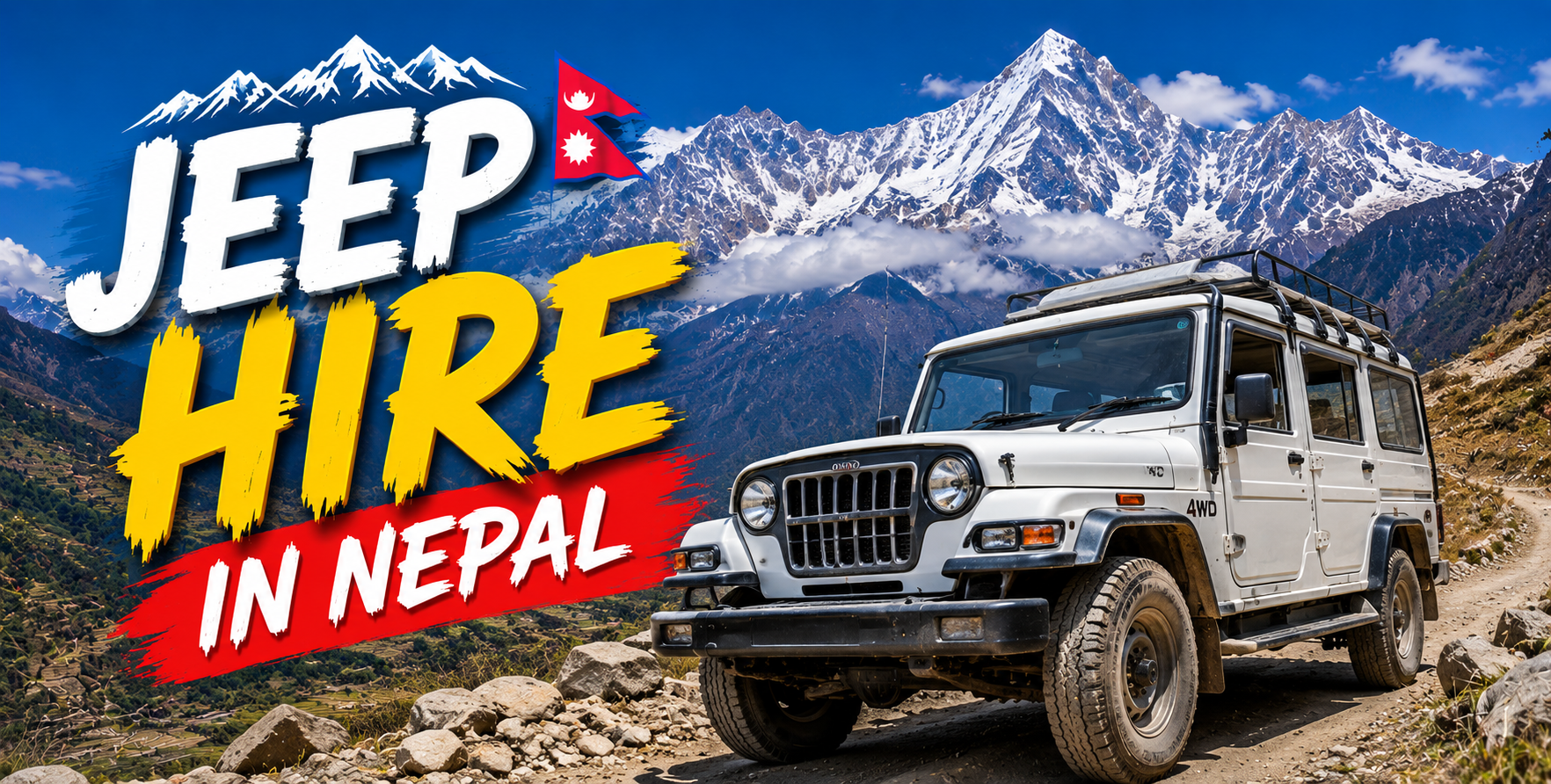
The 75 to 83 kilometers of off-road mountain track between Besisahar and Manang is one of the most thrilling, beautiful, and demanding jeep drives in all of Nepal. From the moment the paved road ends at Besisahar (760 m) and the 4WD jeep begins its climb into the Marsyangdi River gorge, every kilometre brings a new and more dramatic Himalayan landscape — roaring waterfalls, towering cliff walls, ancient Gurung and Tamang villages, dense rhododendron forests, and finally the wide, arid, Tibetan-flavoured valley of Manang (3,519 m) with its extraordinary mountain panorama.
For Annapurna Circuit trekkers, the Besisahar to Manang jeep journey serves a critical purpose: it saves 5 to 7 days of walking on the lower sections of the circuit while delivering trekkers directly to the acclimatization hub at Manang — fully rested and ready for the high-altitude challenges of Thorong La Pass (5,416 m) and the upper circuit ahead. For adventurous travelers and road trip enthusiasts, it is simply one of the world’s great off-road driving experiences.
This complete 2026 guide covers every aspect of the Besisahar to Manang jeep journey: the route in full detail, segment-by-segment road conditions, 2026 costs for both shared and private jeep hire, vehicle recommendations, altitude acclimatization advice, permits, and why Nepal Vehicle Hiring Pvt Ltd is the most trusted jeep hire provider for this demanding off-road route.
Route Overview — Key Facts 2026
| Route Detail | Information |
| Total Off-Road Distance | 75–83 km (Besisahar to Manang — entirely off-road) |
| Manang Altitude | 3,519 m (11,545 ft) above sea level |
| Besisahar Altitude | 760 m (2,493 ft) above sea level |
| Total Altitude Gain | 2,759 m — from 760 m to 3,519 m |
| Travel Time (Dry Season) | 8 to 12 hours — often done over 2 days |
| Travel Time (Monsoon) | 10–14+ hours — road conditions variable |
| Road Type | 100% off-road throughout — paved road ends at Besisahar |
| 4WD Required? | MANDATORY — no sedan, car, or Hiace can safely complete this route |
| Best Vehicles | Toyota Land Cruiser, Toyota Hilux 4WD, Mahindra Scorpio 4WD, Bolero 4WD |
| Shared Jeep Cost | NPR 4,500–5,500 / USD 35–45 per person (Besisahar to Manang) |
| Private Jeep Cost | NPR 25,000–40,000 / USD 200–330 (full vehicle, Besisahar to Manang) |
| Best Season | October–December and March–May (dry season) |
| Permits Required | ACAP + TIMS card — inspected at Jagat army checkpoint |
4WD IS NOT OPTIONAL: The Besisahar to Manang road is 100% off-road. No paved sections exist beyond Besisahar. Sedans, standard SUVs, and Hiace vans CANNOT safely complete this route. A high-clearance 4WD vehicle with an experienced driver is mandatory for the entire journey from Besisahar to Manang.
Why Take a Jeep from Besisahar to Manang?
Save 5 to 7 Trekking Days
The Annapurna Circuit from Besisahar to Manang on foot takes 5 to 7 days of walking through the Marsyangdi River valley. While this is a beautiful and culturally rich trekking section, many time-limited trekkers prefer to cover it by jeep — saving nearly a week that can be spent on the more spectacular high-altitude sections of the circuit above Manang, or on side trips to Tilicho Lake and Ice Lake.
Ideal for Trekkers with 10 Days or Fewer
International visitors with tight vacation schedules of 10 to 14 days cannot afford to spend 5 to 7 of those days walking the lower Annapurna Circuit. Jeep from Besisahar to Manang compresses this section to 1 to 2 days, preserving most of the available trekking time for the genuinely spectacular terrain above Manang — the high alpine pastures, glacial valleys, and, finally, the extraordinary crossing of Thorong La Pass.
An Off-Road Adventure in Its Own Right
For many travelers, the Besisahar-to-Manang jeep drive is not a shortcut — it is the main event. The route passes through some of Nepal’s most dramatic gorge country: cliff-face roads carved into the side of mountains hundreds of meters above the Marsyangdi River, enormous waterfalls cascading across the road, suspension bridges, ancient villages unchanged for centuries, and progressively more dramatic Himalayan scenery as altitude increases. Every hour of the drive brings a change in the landscape of remarkable intensity.
Gradual Acclimatization Over Two Days
When split over two days with an overnight stop at Chame (2,670 m), the Besisahar-to-Manang jeep journey offers better acclimatization than the direct single-day trek from Besisahar. Sleeping at Chame before ascending to Manang (3,519 m) on Day 2 is the standard acclimatization protocol recommended for jeep travelers — and Nepal Vehicle Hiring Pvt Ltd builds this into all Manang jeep itineraries.
The Route — Segment by Segment
| Segment | Distance | Duration | Altitude | Road Character | Difficulty |
| Besisahar → Syange | 20 km | 2.5–3 hrs | 760 m → 1,100 m | Bumpy, narrow, rocky track | Challenging |
| Syange → Jagat | 12 km | 1.5 hrs | 1,100 m → 1,300 m | Narrow gorge, cliff edges | Very Challenging |
| Jagat → Chamche | 3 km | 30–45 min | 1,300 m → 1,430 m | Huge cliff walls, waterfalls | Challenging |
| Chamche → Dharapani | 8 km | 1 hr | 1,430 m → 1,860 m | Valley opening, off-road mix | Moderate |
| Dharapani → Chame | 16 km | 3–3.5 hrs | 1,860 m → 2,670 m | Steep ascent, pine forests | Very Challenging |
| Chame → Pisang | 7 km | 1 hr | 2,670 m → 3,200 m | Apple orchards, valley road | Moderate |
| Pisang → Manang | 18 km | 1.5–2 hrs | 3,200 m → 3,519 m | Wide Manang valley, arid road | Easy-Moderate |
Segment 1 — Besisahar to Syange (20 km, 2.5–3 hours)
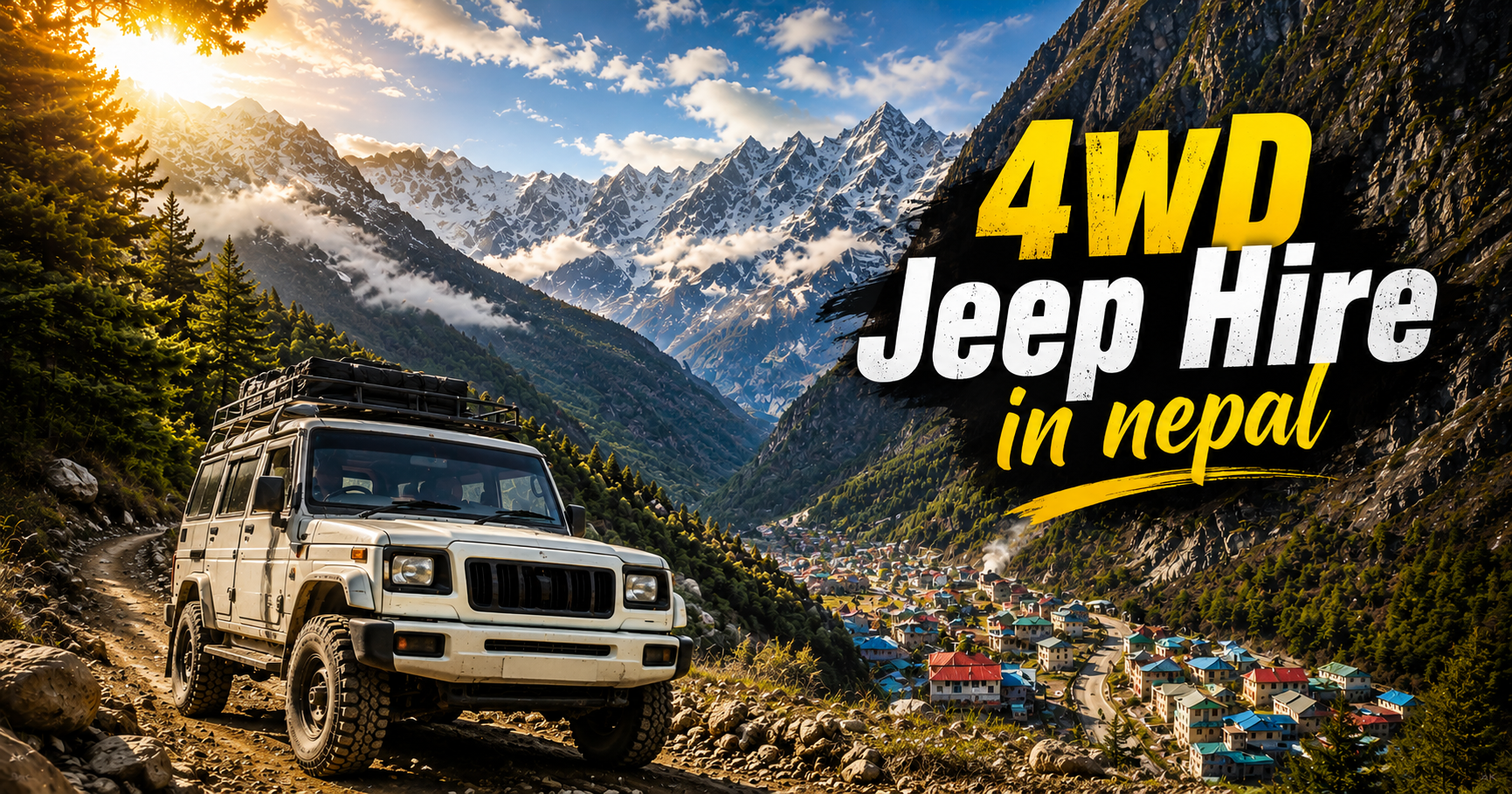
The off-road adventure begins immediately at Besisahar. As the Jeep leaves the last paved street and begins climbing the rocky track above the Marsyangdi River, the character of the journey changes Journeyely. The road is narrow, rough, and bumpy — the driver engages 4WD, and the vehicle begins the slow, deliberate progress that characterizes the entire Besisahar-Manang journey.
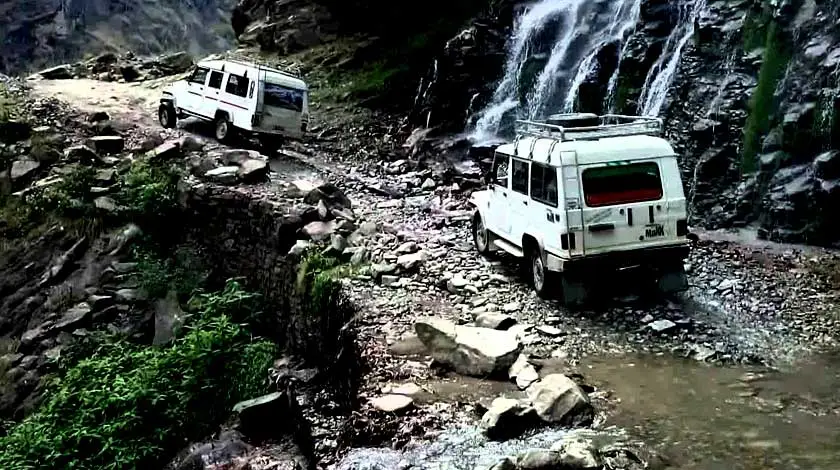
This first section passes through Ngadi and Bulbule — two small villages where the first suspension bridges cross the Marsyangdi. The river gorge begins to deepen and narrow, and the first glimpses of the high peaks above become visible. By Syange (1,100 m), the gorge has become truly dramatic — waterfalls tumble from cliff faces on both sides and the river far below roars through its rocky channel. The road here is often barely wider than a Jeep itself, with sheer drops to the river on one side and cliff walls on the other.
Segment 2 — Syange to Jagat (12 km, 1.5 hours)
Between Syange and Jagat, the gorge deepens further, and the road becomes progressively more challenging. This section involves some of the narrowest and most technically demanding driving on the entire route — cliff-face roads with loose rock surfaces, multiple stream crossings, and occasional landslide debris that requires careful navigation. The views are extraordinary: massive rock walls hundreds of meters high, multiple waterfalls, and the constant, turbulent presence of the Marsyangdi River below.
Jagat (1,300 m) is the location of the ACAP army checkpoint — all passengers must present their Annapurna Conservation Area Permit (ACAP) and TIMS card here. The checkpoint officers are thorough; always have your permits accessible. Jagat has basic tea houses and a small bazaar — a common rest stop after the demanding Syange-Jagat section.
Segment 3 — Jagat to Chamche (3 km, 30–45 minutes)
The short but visually extraordinary stretch from Jagat to Chamche is arguably the most spectacular 3 kilometers of the entire route. The road passes beneath enormous cliff walls — in some places, 200 to 300 meters of sheer rock tower directly above the vehicle. Multiple large waterfalls cascade across or near the road. The Chamche area is named for the waterfalls (‘chamche’ means ‘waterfall’ in Nepali) and the concentration of falling water here — particularly impressive during and after the monsoon — makes this one of the most photographed sections of the Annapurna Circuit road.
Segment 4 — Chamche to Dharapani (8 km, 1 hour)
Above Chamche, the gorge gradually widens, and the road quality improves slightly. The valley opens as the route passes through Tal (1,675 m) — a large flat settlement in an ancient glacial lake bed — and continues to Dharapani (1,860 m). Dharapani is an important junction village where the Annapurna Circuit trail meets the road from Tsum Valley and the Manaslu Circuit. The widening valley and warming landscape around Dharapani feel like a relief after the dramatic gorge sections below.
Segment 5 — Dharapani to Chame 16 km, 3–3.5 hours) — Hardest Section
The climb from Dharapani to Chame is the most physically demanding section of the route for both vehicle and driver. The road gains approximately 800meterss of altitude in 16 km — a steep, sustained ascent through dense rhododendron and pine forest on a narrow, rocky track that requires constant low-range 4WD engagement. In wet conditions, this section becomes extremely challenging — steep, slippery, and prone to minor landslides.
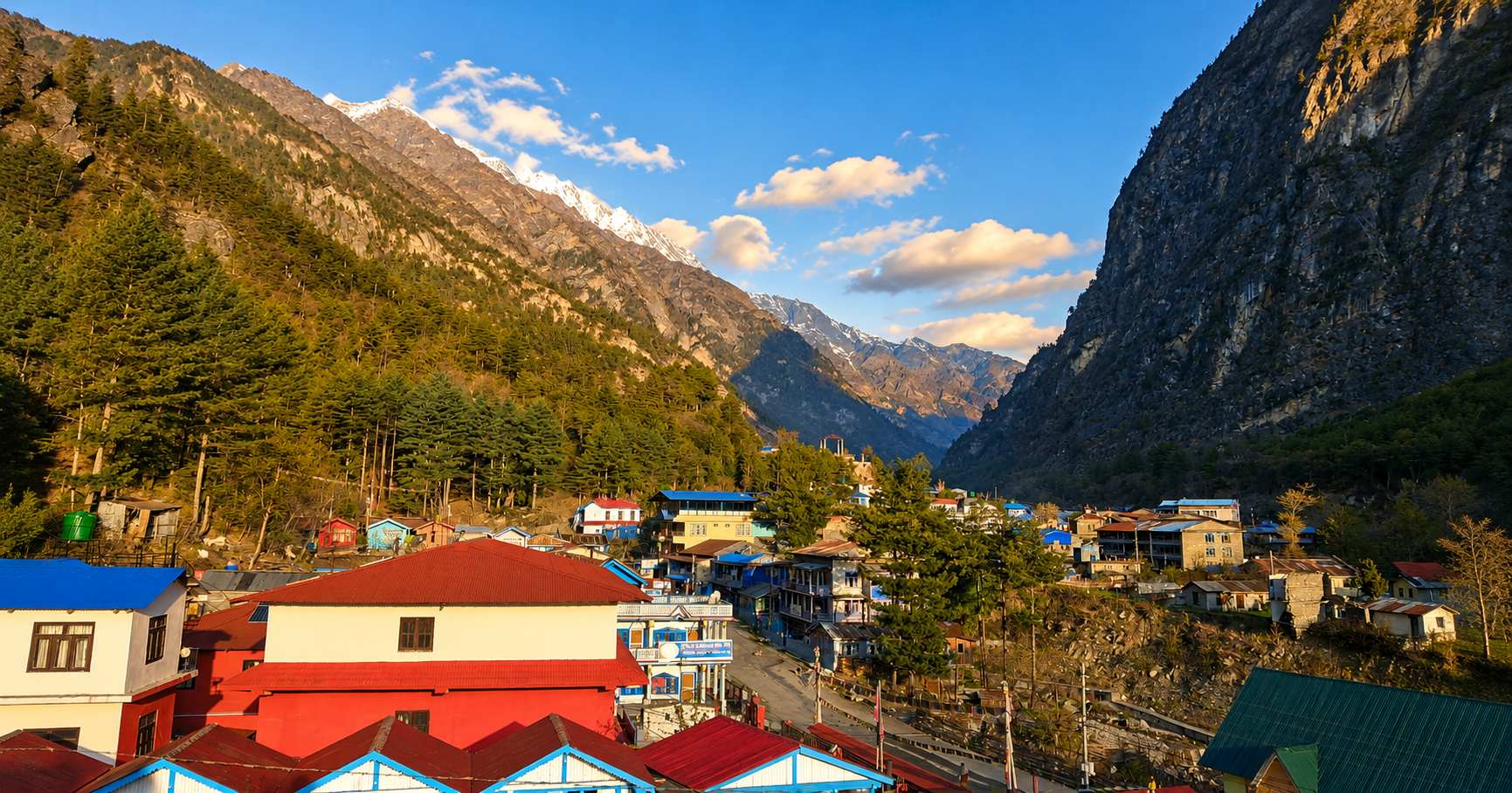
The reward for the long climb is Chame (2,670 m) — the headquarters of Manang District and the largest settlement between Besisahar and Manang. Chame has natural hot springs, apple orchards beginning to appear, several well-equipped guesthouses, restaurants, a telecommunications office, vehicle repair facilities, and the first genuine mountain views of the journey — Annapurna (7,937 m) appearing above the forest ridgeline to the northeast. Most two-day jeep itineraries overnight in Chame.
Overnight in Chame: Nepal Vehicle Hiring Pvt Ltd strongly recommends an overnight stop in Chame. Sleeping at 2,670 m before continuing to Manang (3,519 m) provides critical acclimatization and avoids the significant AMS risk of driving directly from Besisahar to Manang in a single day.
Segment 6 — Chame to Pisang (7 km, 1 hour)
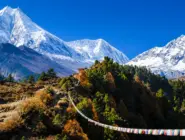
Above Chame, the terrain transforms dramatically. The forest gives way to open alpine terrain, and the Manang valley begins to reveal itself in earnest. Apple orchards line the road — Chame and the surrounding area are famous for apple production at altitude, and the apple brandy and cider produced here are among the finest in Nepal. Pisang (3,200 m) offers a spectacular viewpoint with Annapurna II (7,937 m) dramatically visible and the Upper Pisang Monastery perched on a ridge above the lower village.
Segment 7 — Pisang to Manang (18 km, 1.5–2 hours)
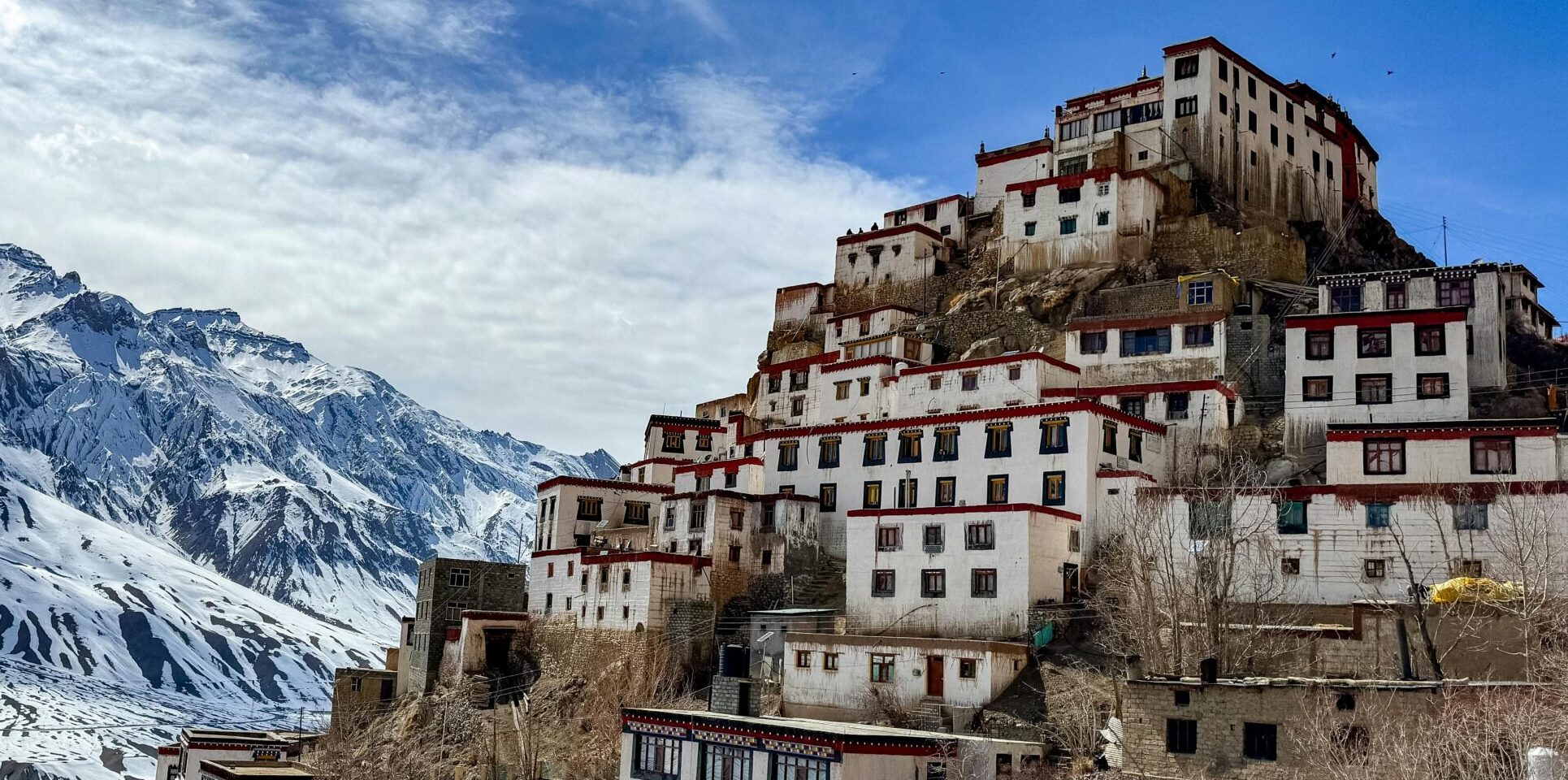
The final section from Pisang to Manang passes through the wide, increasingly arid Manang valley — a landscape that feels more Tibetan than Nepali. The valley floor is broad and flat between towering 7,000-meter walls on all sides. The road quality on this section is relatively better than the gorge sections below — still off-road but less technically demanding. Braga village, just before Manang, has the famous Braga Gompa — one of the oldest Buddhist monasteries in the Annapurna region with extraordinary frescoes and a massive collection of clay statues. Manang (3,519 m) appears around the final bend — a cluster of traditional white-washed stone houses beneath the immense south faces of Annapurna III and Gangapurna.
Key Stops Along the Route
| Stop | Altitude | Distance from Besisahar | Key Features & Notes |
| Besisahar | 760 m | Start | Last ATM, fuel, permits, paved road ends here |
| Ngadi / Bulbule | 840 m | 15 km | First suspension bridges, Marsyangdi views, off-road starts |
| Syange | 1,100 m | 20 km | Deep gorge entry, towering cliffs, waterfalls begin |
| Jagat | 1,300 m | 32 km | Army checkpoint — ACAP + TIMS inspected here |
| Chamche | 1,430 m | 35 km | Most dramatic cliff section — huge walls, multiple waterfalls |
| Dharapani | 1,860 m | 43 km | Manaslu Circuit junction, wider valley, guesthouses |
| Bagarchap | 2,160 m | 47 km | Traditional stone village, first Tibetan-influenced culture |
| Chame | 2,670 m | 59 km | Manang District HQ, hot springs, apple orchards — OVERNIGHT |
| Pisang | 3,200 m | 66 km | Upper + Lower Pisang, monastery, Annapurna II views |
| Braga | 3,360 m | 78 km | Ancient cave monastery — 500-year-old Braga Gompa |
| Manang | 3,519 m | 83 km | Acclimatization hub, Gangapurna Lake, HRA clinic |

Costs — Besisahar to Manang Jeep 2026
| Route Segment | ShJeep Jeep (per person) | PriJeep Jeep (full vehicle) | Notes |
| Besisahar → Syange | NPR 600–800 / USD 5–6 | NPR 5,000–7,000 / USD 38–53 | Short early section |
| Besisahar → Jagat | NPR 1,000–1,500 / USD 8–12 | NPR 7,000–10,000 / USD 53–75 | Includes gorge section |
| Besisahar → Dharapani | NPR 1,500–2,000 / USD 12–16 | NPR 10,000–15,000 / USD 75–115 | Half-route stop |
| Besisahar → Chame | NPR 2,500–3,500 / USD 19–27 | NPR 15,000–22,000 / USD 115–165 | Recommended overnight |
| Besisahar → Manang | NPR 4,500–5,500 / USD 35–45 | NPR 25,000–40,000 / USD 190–300 | Full off-road route |
| Chame → Manang | NPR 1,500–2,000 / USD 12–16 | NPR 8,000–12,000 / USD 60–90 | Day 2 section only |
| Manang → Besisahar (return) | NPR 4,500–5,500 / USD 35–45 | NPR 25,000–40,000 / USD 190–300 | Same pricing return |
Shared Jeep — Budget Option
Shared jeeps operate from Besisahar throughout the morning (typically 6:00–9:00 AM) and are the most affordable motorized option. They operate on a fill-and-depart basis —a jeep departs when all seats are taken, typically with 7 to 9 passengers sharing the vehicle.
- Cost: NPR 4,500–5,500 / USD 35–45 per person (Besisahar to Manang, one way)
- Departure: From Besisahar jeep stand — morning departures (6:00–9:00 AM typically)
- Capacity: 7–9 passengers Jeep jeep — cramped with full trekking gear
- Limitation: No hotel pickup, no flexibility in stops, departs only when full
- Best for: Solo trekkers or pairs on a budget willing to share with other passengers
Private Jeep — Recommended Option
A private jeep gives your group complete control over departure time, rest stops, and pace. With Nepal Vehicle Hiring Pvt Ltd’s private jeep hire, you get hotel or guesthouse pickup in Besisahar, freedom to stop at every waterfall, viewpoint, and village, and a driver who prioritizes your comfort and safety throughout the journey.
- Cost: NJourney00–40,000 / USD 190–300 (Besisahar to Manang, full vehicle, one way)
- Booking: Through Nepal Vehicle Hiring Pvt Ltd — book in Kathmandu or online in advance
- Departure: Flexible — depart from Besisahar at your preferred time
- Capacity: 4–6 passengers comfortably with luggage on roof rack
- Includes: Driver, fuel, all tolls — all-inclusive pricing
Group Value: For 6 trekkers sharing a private jeep at NPR 35,000 (USD 265), the per-person cost is approximately USD 44 — comparable to the shared jeep but with the comfort of a private vehicle, hotel pickup, flexible stops, and a professional driver from Nepal Vehicle Hiring Pvt Ltd.
Vehicle Comparison — Which Jeep for Besisahar to Manang?
| Vehicle | 4WD System | Ground Clearance | Capacity | Best For | 2026 Cost (Besisahar–Manang) |
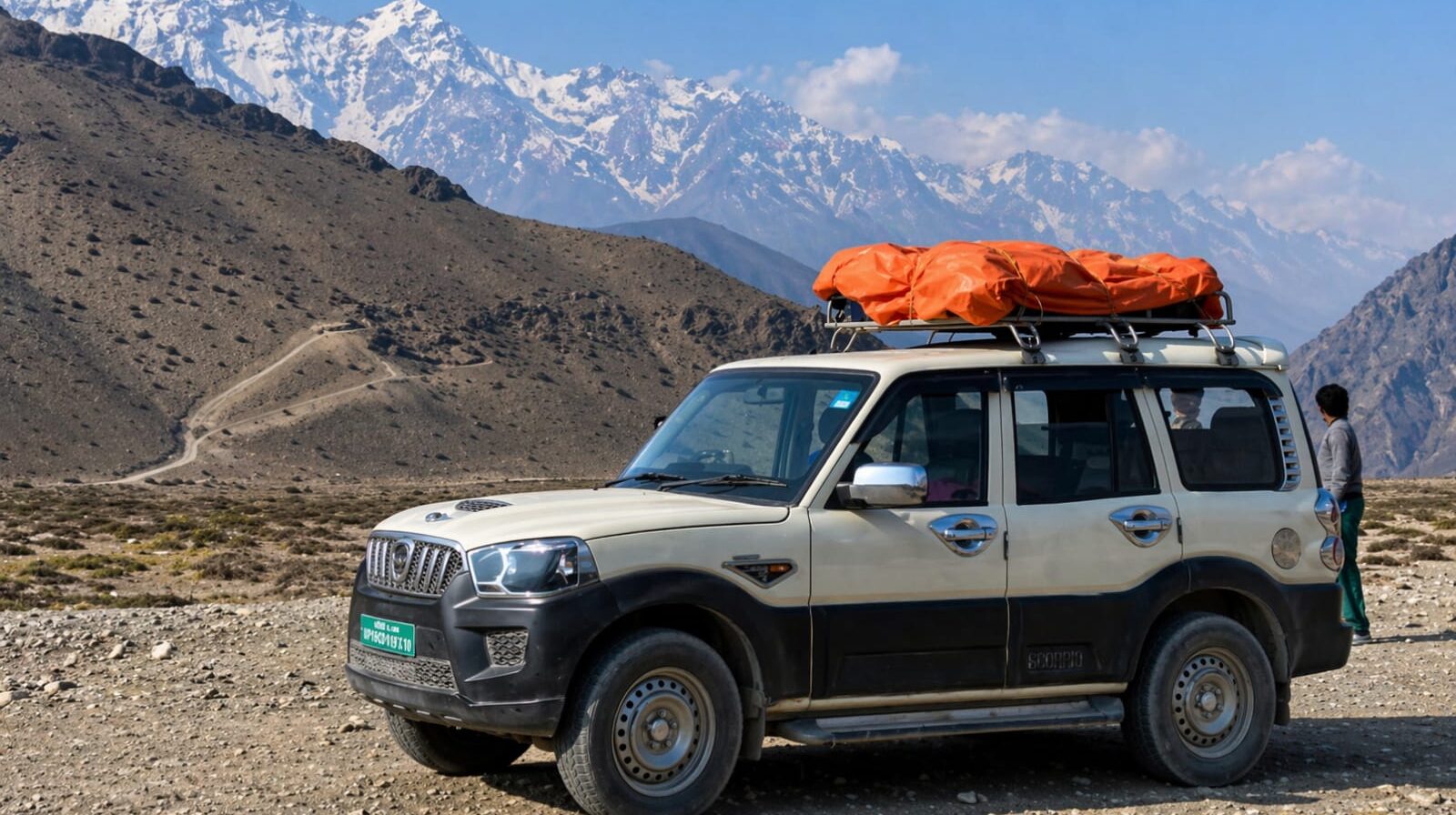
| Mahindra Scorpio | Part-time 4WD | 180 mm | 6–7 passengers | Budget groups — standard route | NPR 25,000–30,000 / USD 185–230 |
| Mahindra Bolero | Part-time 4WD | 185 mm | 7–9 passengers | Larger groups, popular Jeep jeep | NPR 22,000–28,000 / USD 165–210 |
| Toyota Hilux 4WD | Part-time + diff lock | 220 mm | 5–6 passengers | Best off-road performance, safest | NPR 30,000–40,000 / USD 230–300 |
| Toyota Land Cruiser | Full-time 4WD + crawl | 225 mm | 6–7 passengers | Premium comfort + max capability | NPR 40,000–55,000 / USD 300–410 |
Nepal Vehicle Hiring Pvt Ltd recommends the Toyota Hilux 4WD or the Toyota Land Cruiser for the Besisahar-Manang route. The Hilux provides the best combination of ground clearance (220 mm), off-road capability, reliability, and passenger comfort for this demanding mountain road. The Land Cruiser is the premium option — maximum clearance, the most advanced 4WD system, and superior interior comfort for the long journey.
Road Journeys — Season Guide
| Season | Months | Road Condition | Difficulty Level | Recommendation |
| Autumn (Best) | Oct – Nov | Dry, stable | High but manageable | Best season — dry roads, clear views |
| Winter | Dec – Feb | Dry but cold | High — frost risk above Chame | Good — cold nights; possible snow near Manang |
| Spring (Good) | Mar – May | Mostly dry | High but manageable | Excellent — warming up, rhododendrons |
| Monsoon | Jun – Sep | Muddy, risky | Very High — landslides | Caution — verify daily; 4WD critical |
Autumn — October to November (Best Season)
The best season for the Besisahar-to-Manang jeep. Post-monsoon roads are dry and at their most stable. The air is crystal-clear — mountain views from the upper sections (Chame to Manang) are spectacular. The waterfalls in the gorge sections are still active but not dangerous. October and November are peak trekking months — shared jeeps are readily available, and the Besisahar to Manang route is busy with Annapurna Circuit trekkers.
Winter — December to February
Dry conditions and clear skies make winter a surprisingly good season for theBesisahar-to-Manangg jeep. The gorge sections are dry and manageable. Above Chame and toward Manang, frost and occasional light snowfall are possible — the Toyota Hilux and Land Cruiser handle this without difficulty. Chame and Manang are cold but well served by guesthouses during the trekking season. Fewer trekkers mean more availability and potentially lower prices.
Spring — March to May
Spring is excellent — warming temperatures, rhododendron forests in bloom on the Dharapani to Chame section, and generally dry road conditions. March and April see heavy Annapurna Circuit trekking traffic — book private jeeps well in advance. The Chamche waterfall sections are particularly beautiful in spring when snowmelt swells the falls.
Monsoon — June to September
Monsoon Warning: The Besisahar to Manang off-road track is prone to landslides, mudslides, and surface damage during heavy monsoon rainfall — particularly the gorge sections between Syange and Dharapani. Road closures after major rainfall events can delay journeys by hours or days. A Toyota Land Cruiser or Hilux is mandatory during the monsoon. Nepal Vehicle Hiring Pvt Ltd monitors road conditions daily and will advise on the current status before departure. Always have a contingency plan during the monsoon.
Permits Required
ACAP — Annapurna Conservation Area Permit
- Cost: NPR 3,000 per person for foreign nationals (approximately USD 22)
- SAARC nationals: NPR 200 per person
- Where to obtain: Nepal Tourism Board office in Kathmandu or Besisahar
- Inspected at: Jagat army checkpoint — mandatory; cannot proceed without a valid ACAP
TIMS Card — Trekkers’ Information Management System
- Cost: Approximately USD 10–20 per person for foreign nationals
- Where to obtain: Nepal Tourism Board or TAAN office, Thamel, Kathmandu
Get both permits in Kathmandu before departure — saves time at Besisahar and avoids any risk at the Jagat checkpoint. Nepal Vehicle Hiring Pvt Ltd can assist with permit information and directions to the Nepal Tourism Board office.
Recommended Itinerary — Kathmandu to Manang by Jeep
| Day | Route | Drive Time | Overnight | Notes |
| Day 1 | Kathmandu → Besisahar | 5–6 hrs (paved) | Besisahar (760 m) | Early 5:30 AM departure from KTM; last ATM here |
| Day 2 | Besisahar → Chame | 7–8 hrs (off-road) | Chame (2,670 m) | 8 hrs through gorge, cliff sections, pine forests |
| Day 3 | Chame → Manang | 3–4 hrs (off-road) | Manang (3,519 m) | Apple orchards,the Pisang monastery, and a wide valley |
| Day 4 | Manang — rest day | — | Manang (3,519 m) | Acclimatization — Gangapurna Lake, Braga Gompa |
| Day 5 | Begin Annapurna Circuit | Trek starts | Yak Kharka / Ledar | Toward Thorong La Pass (5,416 m) |
The 3-day approach (Day 1: Kathmandu to Besisahar; Day 2: Besisahar to Chame; Day 3: Chame to Manang) is the safest and most comfortable itinerary for the Kathmandu-to-Manang jeep journey. The Chame overnight provides critical altitude acclimatization before the final ascent to Manang at 3,519 m.
Do NOT drive from Besisahar to Manang in a single day — the combination of 8 to 12 hours of rough driving and a 2,759-meter altitude gain is both physically exhausting and a significant AMS risk. Always split the journey with a journey to Chame (2,670 m).
Altitude Acclimatization — Essential Advice
Manang at 3,519 m is well into the high-altitude zone where Acute Mountain Sickness (AMS) is a genuine risk. Arriving by jeep rather than trekking up means your body has had less time to adjust to the altitude. Here is essential acclimatization advice for jeep travelers to Manang:
- MANDATORY: Sleep at Chame (2,670 m) on Day 2 before ascending to Manang (3,519 m) on Day 3
- Drink 3–4 liters of water per day throughout the jeep journey — dehydration worsens AMS
- Take a rest day in Manang on Day 4 before any further ascent — Gangapurna Lake (3,700 m) or Braga Gompa is an ideal acclimatization walk.
- AMS symptoms to watch for: Headache, nausea, fatigue, dizziness, loss of appetite
- Golden rule: If AMS symptoms worsen — DESCEND IMMEDIATELY
- Discuss Diamox (Acetazolamide) with your doctor before travel — particularly recommended for those arriving from sea-level cities
- Visit the HRA (Himalayan Rescue Association) clinic in Manang for free altitude briefings — open daily during trekking season
What to Bring for the Besishahar to Manang Jeep Journey
- ACAP permit and TIMS card: Easily accessible — inspected at Jagat checkpoint
- Cash (NPR): Besisahar is the last ATM. Carry enough for Chame and Manang accommodation, meals, and contingencies — minimum NPR 15,000–20,000 per person.
- Travel pillow or cushion: 8 to 12 hours of rough off-road driving — a neck pillow dramatically improves comfort
- Warm layers: Temperature drops dramatically from Besisahar (warm) to Chame (cool, 2,670 m) to Manang (cold, 3,519 m). Carry a fleece and a down jacket in the cabin — not in the roof rack luggage
- Dust buff or mask: The dry sections above Dharapani generate considerable dust — essential for comfort
- Water bottle (2 liters): Carry water for the journey — reststopse spaced 2 to 3 hours apart
- Motion sickness medication: The winding gorge road below Dharapani involves hundreds of turns — essential for sensitive travelers
- Camera accessible: Keep camera in day bag, not roof luggage — the Chamche waterfall section and Chame-Pisang mountain views are among Nepal’s finest photography subjects
- Snacks and energy food: Carry provisions for the full day, while tea houses exist in villages, stops are not guaranteed
- First aid kit: Basic medical supplies including blister treatment, painkillers, and altitude medication
Practical Tips for Besisahar to Manang Jeep
- Book your private jeep with Nepal Vehicle Hiring Pvt Ltd in Kathmandu before reaching Besisahar — private jeeps in Besisahar during peak season (October–November) are in very high demand and may not be available on the same day.
- Depart Besisahar by 6:30–7:00 AM on Day 2 — the long Dharapani to Chame ascent must be completed before late afternoon light fades.
- Take fuel in Besisahar — it is the last reliable fuel point before Manang. Nepal Vehicle Hiring Pvt Ltd ensures all vehicles are fully fueled before departure.
- At the Jagat checkpoint: Have all permits (ACAP and TIMS) immediately accessible — the army checkpoint can take 20 to 30 minutes at busy times. Passengers who cannot produce permits will not be allowed through.
- Chamche waterfall section: Ask your driver to pause for 5 to 10 minutes — this is the most photographed section of the entire route and the experience is worth the brief stop.
- Chame hot springs: If overnighting at Chame, the natural hot spring baths (a short walk from the main guesthouse area) provide extraordinary relief after a day of rough-road travel.
- Keep luggage on the roof rack secure and locked — while security on this remote road is generally excellent, valuables should always be kept in your day bag inside the vehicle.
- Inform your trekking agency or hotel of your planned arrival date in Manang — guesthouses fill quickly during peak season, and booking is strongly recommended.
- For the return journey: Nepal Vehicle Hiring Pvt Ltd arranges return jeep hire from Manang to Besisahar and Kathmandu — book at the same time as the outward journey.
Why Choose Nepal Vehicle Hiring Pvt Ltd
- Off-Road Route Expertise: Our drivers have extensive personal experience on the Besisahar to Manang route — including the most challenging gorge sections, the steep ascent from Dharapani to Chame, and the high-valley road from Chame to Manang. Every challenging section is familiar territory.
- Best Vehicles for the Route: Toyota Hilux 4WD and Toyota Land Cruiser — the two most capable and reliable vehicles for the Besisahar to Manang off-road. We never send an underpowered vehicle on this demanding mountain track.
- Altitude-Safe Itinerary: We always recommend and arrange an overnight stop in Chame — the essential acclimatization measure for jeep travelers to Manang. We never propose a single-day Besisahar-to-Manang itinerary.
- All-Inclusive Pricing: Driver, fuel, and road tolls are included in the quoted price — no hidden charges at mountain checkpoints or fuel stops.
- Kathmandu to Manang Full Package: We coordinate the complete Kathmandu-to-Besisahar highway leg AND the Besisahar-to-Manang off-road section as a single booking — one driver, one price, full route coverage.
- Real-Time Road Monitoring: Our team tracks road conditions on the Marsyangdi valley route daily — monsoon landslide updates, road closures, and construction delays are communicated proactively before departure.
- Return Journey Arranged. A Manang-to-Besisahar return jeep at the same time as the outward journey — vehicle arranged at Manang when your trek or acclimatization period is complete.
- 24/7 Booking: WhatsApp, phone, or email — instant confirmation at any time.
Frequently Asked Questions — Besisahar to Manang Jeep 2026
How far is Besisahar from Manang by road?
The off-road distance from Besisahar to Manang is approximately 75-83 km. This entire section is an unpaved off-road track — the paved highway ends at Besisahar.
How long does the Besisahar-to-Manang jeep journey take?
In dry-season conditions, the journey takes 8 hours by car. Due to the altitude gain and road conditions, the journey is strongly recommended to be split across two days with an overnight stop at Chame (2,670 m) — Day 1: Besisahar to Chame (7–8 hrs), Day 2: Chame to Manang (2.5–3 hrs).
Q: What is the 2026 cost of a private jeep from Besisahar to Manang?
A private 4WD jeep hire from Besisahar to Manang costs approximately NPR 25,000 to NPR 40,000 (USD 190 to USD 300) for the full vehicle, one way. This varies by vehicle type — Hilux is mid-range; Land Cruiser is premium. Includes driver, fuel, and road tolls.
What is the shared jeep cost from Besisahar to Manang?
The jeep per-seat cost from Besisahar to Manang is approximately NPR 4,500 to 5,500 per person (USD 35 to 45) one way. Shared jeeps depart from the Besisahar jeep stand when full—typically in the morning.
Is a 4WD jeep really necessary for the drive from Besisahar to Manang?
Yes — absolutely mandatory. The entire Besisahar-to-Manangg route is off-roaddwith rocky, narrow tracks, steep ascents, cliff-edge sections, stream crossings, and high-altitude terrain. Sedans, standard cars, and Hiace vans cannot safely complete this route. A 4WD vehicle with high ground clearance and an experienced off-road driver is essential.
Which is the best vehicle for the trip from Besisahar to Manang?
The Toyota Hilux 4WD is the best overall choice — with 220 mm of ground clearance, proven off-road reliability, and excellent performance on the steep Dharapani-to-Chame section. The Toyota Land Cruiser is the premium option for groups wanting maximum capability and interior comfort. The Mahindra Scorpio and Bolero are the budget options — capable but less refined than the Japanese 4WDs.
Do I need to stay overnight at Chame?
Yes — strongly recommended. Besisahar to Manang in a single day (an 8–12-hour drive + 2,759 m of altitude gain) is both exhausting and poses a significant AMS risk. Sleeping at Chame (2,670 m) before ascending to Manang (3,519 m) is the standard safe approach followed by Nepal Vehicle Hiring Pvt Ltd and all responsible operators.
What permits do I need for a Besisahar-to-Manan jeep?
ACAP (Annapurna Conservation Area Permit — NPR 3,000 / ~USD 22 per person) and TIMS Card (USD 10–20 per person). Both are inspected at the Jagat army checkpoint (approximately 32 km from Besisahar). Obtain both in Kathmandu before departure for the smoothest passage through the checkpoint. Can Itakeo theBesisahar-Manangg jeepduringn the monsoon season?
Yes, but with significant caution. The gorge sections (Syange to Dharapani) are particularly susceptible to landslides and road damage during the heavy monsoon season. Always verify road conditions with Nepal Vehicle Hiring Pvt Ltd on the morning of travel. A Land Cruiser or Hilux is essential during the monsoon. Journey times can be significantly longer than in the dry season.
Conclusion
The Besisahar to Manang jeep journey is one of the most extraordinary off-road driving experiences in all of Nepal — 75 to 83 kilometers of raw Himalayan adventure through roaring river gorges, enormous waterfall-draped cliff walls, ancient Gurung villages, dense rhododendron forests, and the wide, arid, mountain-ringed valley of Manang. It is a journey that challenges both vehicle and driver and rewards them with scenery that few roads on earth can match.
For Annapurna Circuit trekkers, it is a practical masterpiece — compressing 5 to 7 days of lower circuit walking into 2 days of jeep travel, delivering trekkers to Manang rested and acclimatized for the extraordinary high-altitude terrain ahead. For adventure travelers, it is a destination in its own right — an off-road road trip of the highest order.
Nepal Vehicle Hiring Pvt Ltd is your most trusted partner for jeep rentals from Besisahar to Manang. With specialist 4WD vehicles, experienced off-road drivers, altitude-safe itinerary design including the essential Chame overnight stop, real-time road monitoring, and the ability to book the complete Kathmandu to Manang journey as a single, seamless package, we ensure your arrival at Manang is exactly as it should be: safe, successful, and ready for the mountains ahead.
Book your Besisahar to Manang jeep — Call or WhatsApp: +977-9851343204
Gmail: [email protected]
- Besisahar to Manang Jeep — Complete 2026 Guide
- Route Overview — Key Facts 2026
- Why Take a Jeep from Besisahar to Manang?
- The Route — Segment by Segment
- Key Stops Along the Route
- Costs — Besisahar to Manang Jeep 2026
- Vehicle Comparison — Which Jeep for Besisahar to Manang?
- Road Journeys — Season Guide
- Permits Required
- Recommended Itinerary — Kathmandu to Manang by Jeep
- Altitude Acclimatization — Essential Advice
- What to Bring for the Besishahar to Manang Jeep Journey
- Practical Tips for Besisahar to Manang Jeep
- Why Choose Nepal Vehicle Hiring Pvt Ltd
- Frequently Asked Questions — Besisahar to Manang Jeep 2026
- Conclusion

Related Blog & Articles
4WD Himalayan Jeep in Nepal

Kathmandu to Manang Jeep Service Guide 2026
Besisahar to Chame and Upper Pisang Jeep