Plan a Trip


Besisahar to Chame and Upper Pisang Jeep
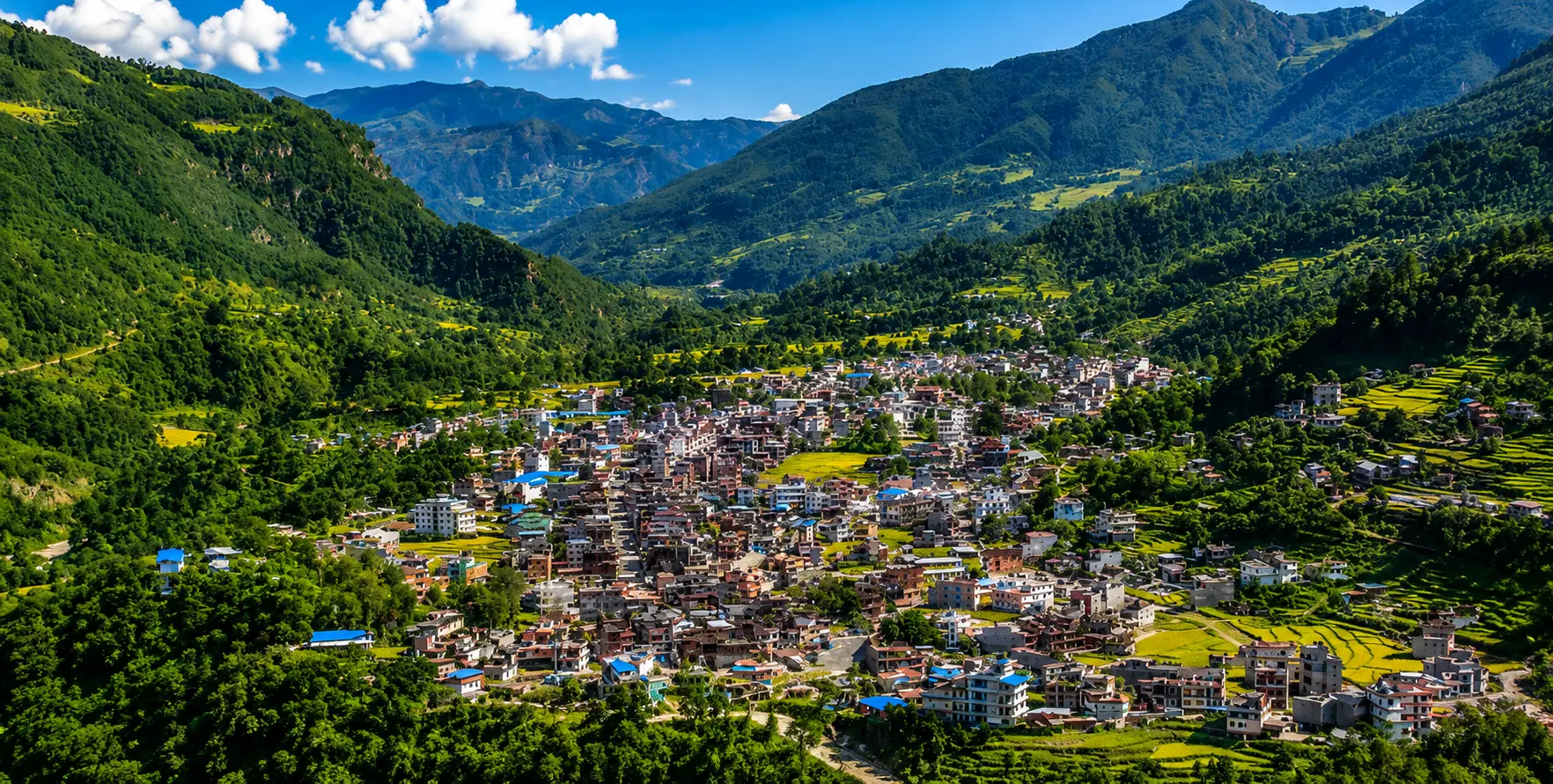
Besisahar to Chame and Upper Pisang Jeep 2026: Complete Road Guide for Annapurna Circuit Trekkers
The jeep journey from Besisahar to Chame and beyond to Upper Pisang is one of the most dramatic and spectacular off-road drives in all of Nepal. This route follows the Marsyangdi River gorge deep into the heart of the Annapurna Conservation Area, climbing from the subtropical lowlands of Besisahar (760 m) through the magnificent river gorge of the middle Marsyangdi, past cascading waterfalls, ancient Gurung and Tibetan villages, suspension bridges, and towering cliff faces, to the high-altitude pine forest and apple orchard landscapes of Chame (2,670 m) — and then further to the spectacular open valley and high ridge villages of Pisang and Upper Pisang (3,300 m).
For Annapurna Circuit trekkers, the decision to take a jeep from Besisahar to Chame or Upper Pisang rather than walking the lower circuit road is one of the most consequential transport choices of the entire trek. Riding this section by Jeep saves 3 to 5 days of trekking on a road that, while scenic, covers relatively flat or gently rising terrain along the motorable jeep track rather than on the traditional trekking trail. Those saved days can be used for additional rest days at Manang for acclimatization, extra exploration in the upper circuit, or simply a shorter overall trip duration.
At Nepal Vehicle Hiring Pvt Ltd, we provide professional 4WD jeep services for the Besisahar to Chame and Besisahar to Upper Pisang routes as part of our complete Annapurna Circuit transport portfolio. This 2026 guide covers every aspect of this journey — the road, the cost, the vehicle options, the key destinations, the road conditions stage by stage, acclimatization considerations, and the expert tips that prepare you for one of Nepal’s greatest mountain drives.
Why Take a Jeep from Besisahar to Chame or Upper Pisang?
Save 3 to 5 Trekking Days
The section of the Annapurna Circuit from Besisahar to Chame covers approximately 65-70 kilometers of road and takes 3-4 full days of trekking at a standard pace. The trail from Chame to Pisang is a further 14 km (approximately 1 day). By taking a jeep from Besisahar directly to Chame or Upper Pisang, trekkers save these lower circuit days and arrive at the high, spectacular section of the Annapurna Circuit much more quickly.
The Lower Road Is a Motor Road, Not a Classic Trail
An important reality of the modern Annapurna Circuit is that the section from Besisahar to Chame largely follows or runs parallel to the motorable jeep road rather than the classic remote mountain trail of earlier decades. While the villages, gorge scenery, and river crossings remain beautiful, much of the lower route no longer offers the isolated trekking wilderness experience it once did. Many experienced Annapurna Circuit trekkers now opt to take a jeep for this section, focusing their walking energy on the upper circuit from Chame to Thorong La and beyond.
Acclimatization Advantage at Chame
Chame at 2,670 meters is an excellent acclimatization base — significantly higher than Besisahar (760 m) but not so high as to cause acute mountain sickness in most reasonably fit travelers. Starting the trek proper from Chame allows for a natural 1,900-meter altitude gain by vehicle, followed by gradual trekking acclimatization through the upper circuit. Many experienced guides recommend this approach for trekkers with limited time.
Upper Pisang: The Ideal Trek Starting Point
Upper Pisang (3,300 m) is arguably the finest possible starting point for the Annapurna Circuit for trekkers who want to maximize mountain scenery from the very first step. The high village sits on a dramatic ridge above the main valley with outstanding views of Annapurna II, Annapurna IV, Gangapurna, and the entire upper Marsyangdi valley. Starting the walk from Upper Pisang immediately places you in a high-altitude, Tibetan-influenced landscape. It allows you to take the classic high route via Ngawal to Manang — one of the most spectacular trekking stages of the entire circuit.

Besisahar to Chame and Upper Pisang – Journey Quick Facts
| Detail | Information |
| Besisahar to Chame Distance | 65–70 km |
| Besisahar to Upper Pisang Distance | 90–95 km |
| Drive Time Besisahar to Chame | 4 to 6 hours (road conditions dependent) |
| Drive Time Besisahar to Upper Pisang | 6 to 8 hours (full day drive) |
| Road Type | Off-road 4WD track throughout – no paved sections beyond Bhulbhule) |
| Vehicle Required | 4WD mandatory – Toyota Hilux or Land Cruiser strongly recommended |
| Chame Altitude | 2,670 metres |
| Pisang Altitude | 3,200 metres |
| Upper Pisang Altitude | 3,300 metres |
| Recommended Departure Time | 6:00 AM – 7:00 AM for Chame; 6:00 AM for Upper Pisang |
| Key Checkpoints | Besisahar/Khudi (ACAP) + Jagat (Manaslu CArea boundary) |
| Permits Required | ACAP permit + TIMS card (plus MCAP if crossing Jagat) |

Vehicle Options: Besisahar to Chame and Upper Pisang 2026
| Vehicle Type | Capacity | To Chame (NPR) | To Upper Pisang (NPR) | NoJeep |
| Sharing Jeep (per seat) | 7–8 pax total | NPR 1,500–2,500/pax | NPR 2,500–4,000/pax | From the Besisahar jeep stand, when full |
| Private Jeep – Standard | 4–5 pax | NPR 15,000–22,000 | NPR 20,000–30,000 | Adequate for the dry season only |
| Private Jeep – Hilux/Fortuner | 5–6 pax | NPR 20,000–30,000 | NPR 28,000–40,000 | Recommended – high clearance, locking diff |
| Private Jeep – Land Cruiser | 5–6 pax | NPR 28,000–38,000 | NPR 38,000–52,000 | Premium – maximum capability and comfort |
Note: All private vehicle prices include driver and fuel for the one-way journey. These are approximate 2026 rates. The road conditions beyond Besisahar vary significantly by season — a Toyota Hilux (280mm ground clearance, locking rear differential) is strongly recommended for the Chame and Pisang routes — a Land Cruiser for groups prioritizing comfort and maximum capability.
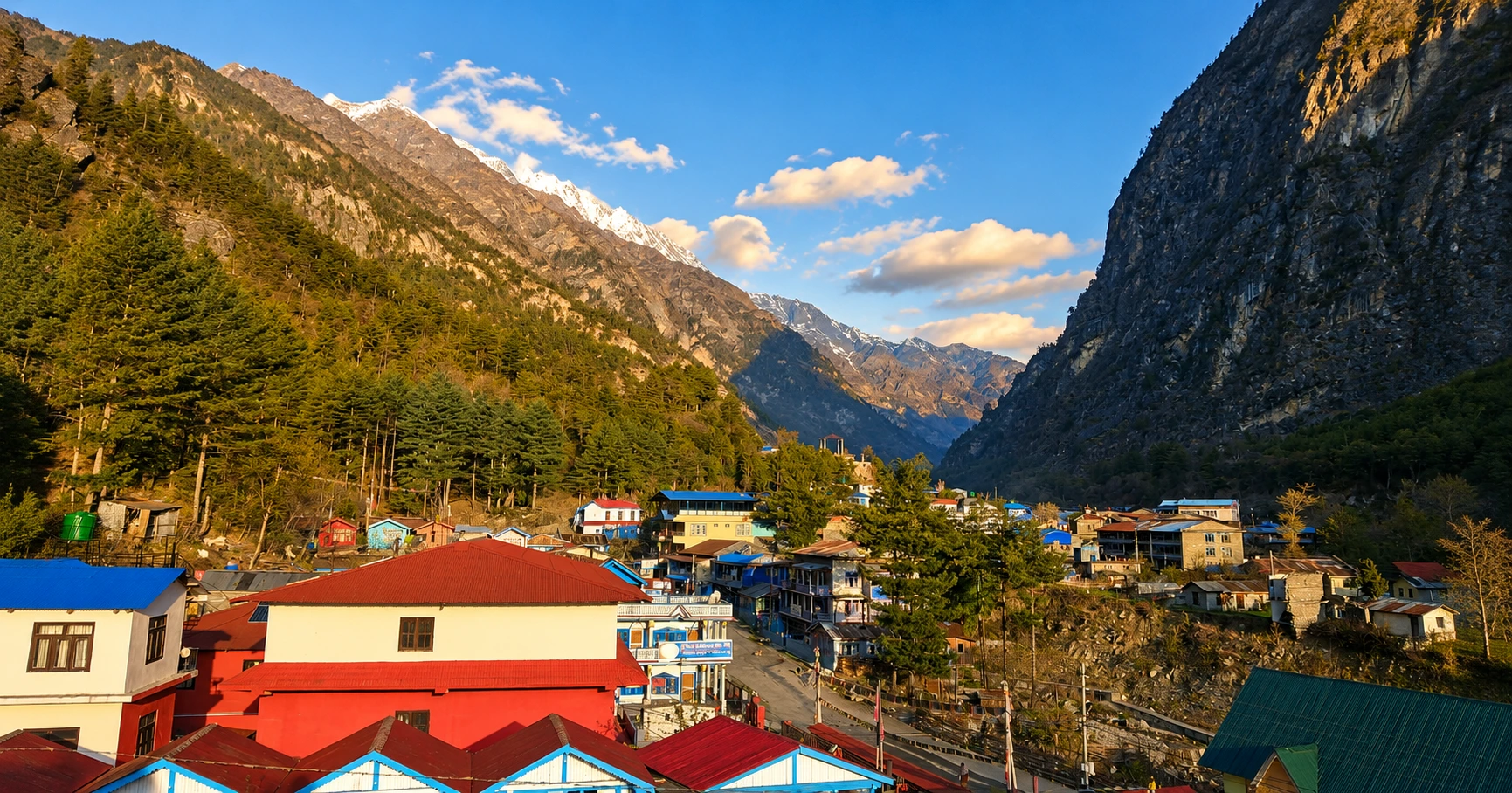
Full Cost Guide: Chame and Upper Pisang from Multiple Starting Points
| Route | Jeep Type | One Way (NPR) | One Way (USD) | Drive Time |
| Besisahar to Chame (private Hilux) | Hilux/Fortuner | NPR 20,000–30,000 | USD 150–225 | 4–6 hours |
| Besisahar to Upper Pisang (private Hilux) | Hilux/Fortuner | NPR 28,000–40,000 | USD 210–300 | 6–8 hours |
| Besisahar to Manang (private Hilux) | Hilux/Fortuner | NPR 35,000–50,000 | USD 260–375 | 8–12 hours |
| Pokhara to Chame (private Hilux) | Hilux/Fortuner | NPR 35,000–50,000 | USD 260–375 | 8–10 hours total |
| Pokhara to Upper Pisang (private Hilux) | Hilux/Fortuner | NPR 42,000–60,000 | USD 315–450 | 10–12 hours total |
| Kathmandu to Chame (private Hilux) | Hilux/Land Cruiser | NPR 45,000–65,000 | USD 335–485 | 10–13 hours total |
| Sharing jeep Besisahar to Chame | Sharing (per person) | NPR 1,500–2,500 | USD 11–19 | 5–7 hours |
| Sharing jeep Besisahar to Upper Pisang | Sharing (per person) | NPR 2,500–4,000 | USD 19–30 | 7–9 hours |
The Route: Besisahar to Chame and Upper Pisang – Stage by Stage
The road from Besisahar to Chame is one of the most demanding and most spectacular mountain jeep tracks in Nepal. Unlike the Pokhara-to-Besisahar highway section (which is paved throughout), every kilometer beyond Bhulbhule is off-road — a mix of rocky gravel, river crossings, cliff-edge paths, and steep switchbacks. Here is the complete stage-by-stage breakdown:
Stage 1: Besisahar to Bhulbhule – 15 km (45 minutes)
The first section from Besisahar to Bhulbhule (840 m) follows a relatively new concrete road. This is the smoothest section of the entire Besisahar-Chame road and is manageable by most vehicles. Bhulbhule sits at the confluence of the Marshyangdi and Ngadi rivers and is the traditional starting point for many Annapurna Circuit trekkers.
Beyond Bhulbhule, the road immediately changes character — the concrete surface ends and the off-road track begins.
Stage 2: Bhulbhule to Syange – 17 km (1 hour)
From Bhulbhule, the road crosses the Marsyangdi River on a suspension bridge, and the off-road conditions begin in earnest. The track passes through Ngadi (930 m) and climbs the river gorge toward Syange (1,100 m). The road is narrow, rocky, and partially overgrown in the monsoon season. The gorge walls begin to close in, and the Marsyangdi becomes increasingly dramatic as you travel north.
Syange is a small village with teahouses at the base of a magnificent 150-meter waterfall that falls directly beside the road — one of the most dramatic roadside natural features in Nepal.
Stage 3: Syange to Jagat – 11 km (45 to 60 minutes)
This section passes through Tal (1,700 m) — a remarkable flat river plain completely enclosed by towering gorge walls, offering a brief but memorable open valley respite from the tight gorge driving. Just before Tal, a large waterfall pours from the cliff face directly beside the road. Jagat (1,300 m) marks the Manaslu Conservation Area boundary checkpoint and is where trekkers crossing from the Manaslu circuit join the main Annapurna route. ACAP and TIMS permits are checked here.
Stage 4: Jagat to Chamche – 8 km (45 minutes)
The road from Jagat crosses the river and climbs steeply through the most dramatic cliff-edge section of the entire route. Chamche (1,430 m) sits above a magnificent waterfall and is named for the cascading falls that surround the village. The driving here requires full concentration — the cliff walls are close, the road is narrow, and the gorge drops sharply on one side.
Stage 5: Chamche to Dharapani – 14 km (1 to 1.5 hours)
From Chamche, the road continues through Bagarchhap (2,160 m) — one of the first villages with distinctly Tibetan-influenced architecture, prayer walls, and stupas — to Dharapani (1,860 m). The Annapurna Circuit officially enters the Manang District at Dharapani, marked by a distinctive arch at the checkpoint. The road here passes through increasingly high-altitude subtropical forest with the first Alpine tree species appearing above Bagarchhap.
Stage 6: Dharapani to Timang – 10 km (45 minutes)
Beyond Dharapani, the road climbs through Danaque and the small ridge village of Timang (2,750 m). This section offers the first truly spectacular high-mountain views — Lamjung Himal, Annapurna II, and Manaslu appear increasingly close and dramatic. The road here is steep, with switchbacks and a loose gravel surface.
Stage 7: Timang to Chame – 8 km (30 to 45 minutes)
The final approach to Chame passes through Koto (2,600 m) — the junction point for the Nar Phu Valley restricted trek — and arrives at Chame (2,670 m), the district headquarters of Manang District. Chame is a substantial administrative and trekking service town with multiple guesthouses, restaurants, a small market, a thermal spring, and the last reliable facilities before the high mountain section of the circuit begins.
Stage 8 (Extension): Chame to Pisang and Upper Pisang – 20 km (1.5 to 2 hours)
Beyond Chame, the road continues through Dhikurpokhari and the dramatic straight-valley section below the massive, curved rock face of the Paungda Danda cliff — one of the most awe-inspiring geological features anywhere in Nepal. The road passes through Lower Pisang (3,200 m) before climbing the final few kilometers to Upper Pisang (3,300 m), perched on the ridge above, with spectacular panoramic mountain views.
Upper Pisang is the point where the Annapurna Circuit trail splits into the classic lower-valley route to Manang and the spectacular high route via Ghyaru, Ngawal, and down to Braga — the latter being one of the finest trekking days on the entire circuit, with continuous Himalayan panoramas throughout.
Route Overview Table: Besisahar to Upper Pisang
| Stage | Section | Distance | Road | Time | Altitude | Highlights |
| 1 | Besisahar to Bhulbhule | 15 km | New concrete | 45 min | 760→840 m | Last paved section |
| 2 | Bhulbhule to Syange | 17 km | Rocky off-road | 1 hr | 840→1,100 m | Syange Waterfall, the gorge begins |
| 3 | Syange to Jagat | 11 km | Rocky, cliff | 45–60 min | 1,100→1,300 m | Tal plain, MCAP checkpoint |
| 4 | Jagat to Chamche | 8 km | Cliff-edge, rough | 45 min | 1,300→1,430 m | Most dramatic cliff road |
| 5 | Chamche to Dharapani | 14 km | Rough, improving | 1–1.5 hrs | 1,430→1,860 m | Bagarchhap, Manang District entry |
| 6 | Dharapani to Timang | 10 km | Steep switchbacks | 45 min | 1,860→2,750 m | First high mountain views |
| 7 | Timang to Chame | 8 km | Gravel, improving | 30–45 min | 2,750→2,670 m | Koto junction, Chame town |
| 8 | Chame to Upper Pisang | 20 km | Rough high valley | 1.5–2 hrs | 2,670→3,300 m | Paungda Danda cliff, Pisang views |
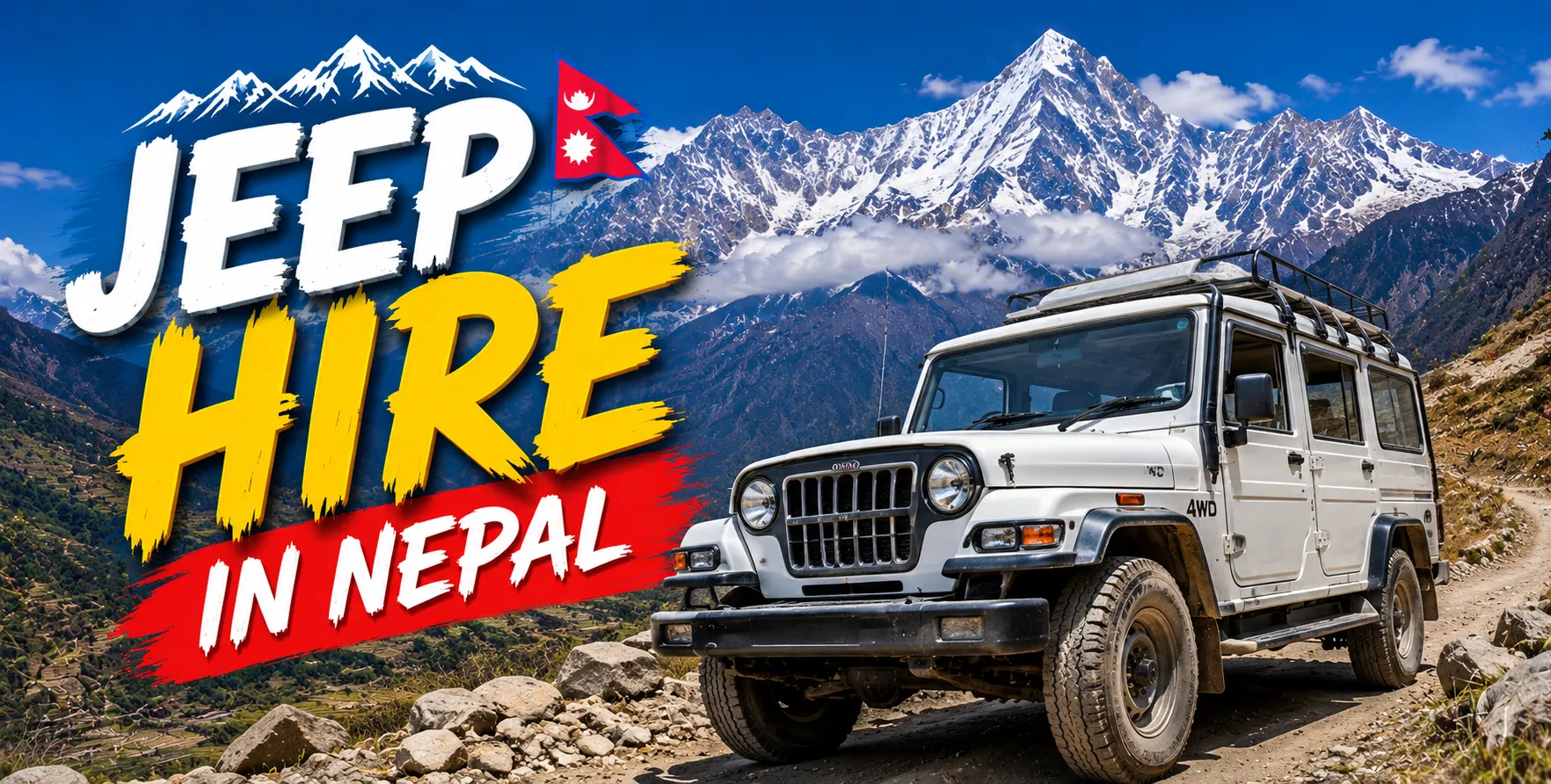
Road Conditions: What to Expect on the Besisahar to Chame Road
The road from Besisahar to Chame is not a normal driving road. It is an off-road mountain track built primarily to serve the villages of the Marsyangdi Valley and support the Annapurna Circuit trekking economy. Understanding exactly what this means for vehicle selection and travel planning is essential:
Why the Toyota Hilux is the Recommended Vehicle
The Toyota Hilux has 280mm of ground clearance — the highest of any production 4WD available in Nepal. This exceptional clearance is critical for the rocky, deeply rutted sections between Jagat and Chame, where large boulders and eroded gullies cross the road surface. The Hilux’s locking rear differential provides the traction needed for the steep, muddy climbs between Dharapani and Timang. The load bed also allows trekking gear, porter loads, and group equipment to be transported separately from the passenger cabin, keeping the interior comfortable throughout the long drive.
The Three Most Challenging Road Sections
- Jagat to Chamche cliff road – the narrowest and most exposed section of the route; cliff drops on the river side require careful, slow driving
- Dharapani to Timang steep switchbacks – muddy in the monsoon and early post-monsoon season; deep ruts and loose gravel require 4WD in low range
- River crossings – several sections between Syange and Jagat have minor river crossings that are manageable in the dry season, but can be problematic after heavy rain
Seasonal Road Conditions
| Season | Besisahar to Bhulbhule | Bhulbhule to Jagat | Jagat to Chame | Chame to Upper Pisang |
| Autumn (Sep–Nov) | Excellent | Good | Good – best season | Good – some dust |
| Spring (Mar–May) | Good | Good | Good to Moderate | Good |
| Winter (Dec–Feb) | Good | Moderate – frost possible | Difficult above 2,000 m | Snow risk above 3,000 m |
| Monsoon (Jun–Aug) | Good | Difficult – landslide risk | Very difficult – often impassable | Not recommended |
Monsoon Warning: The road from Bhulbhule to Chame is significantly affected by monsoon rainfall and landslides. Nepal Vehicle Hiring does not recommend the Besisahar-to-Chame jeep journey during the core monsoon months of July and August. Conditions improve rapidly in September as the monsoon retreats.
Besisahar to Chame and Upper Pisang Jeep)
Key Destinations: Chame, Pisang & Upper Pisang
Chame – District Headquarters of Manang
Chame (2,670 m) is the administrative headquarters of Manang District and the largest settlement on the Annapurna Circuit between Besisahar and Manang. The town straddles both banks of the Marsyangdi River and lies in a broad valley, surrounded by spectacular mountains on all sides.
Chame is the ideal rest and acclimatization point for trekkers taking the jeep from Jeepsahar. At 2,670 meters, it provides a gentle introduction to high-altitude conditions before continuing up the circuit. The town has well-equipped guesthouses, good restaurants, a small hot spring (Gaurishankar Kund), a monastery, shops with basic trekking supplies, and impressive views of Lamjung Himal and Annapurna II rising directly above the valley.
| Chame Key Facts | Details |
| Altitude | 2,670 meters (8,760 feet) |
| District | Manang District, Gandaki Province (HQ) |
| Distance from Besisahar | 65–70 km by road |
| Drive Time from Besisahar | 4 to 6 hours |
| Key Features | Guesthouses, restaurants, hot springs, shops, and a monastery |
| Mountain Views | Lamjung Himal (6,983 m), Annapurna II (7,937 m), Manaslu (8,163 m) |
| Best Trek Start | Trekkers beginning the circuit at Chame save 2–3 days vs Besisahar start |
| Acclimatisation | Excellent base – 1,900 m above Besisahar, comfortable altitude |
| ATM | No reliable ATM – carry sufficient cash from Besisahar or Pokhara/Kathmandu |
Lower Pisang and Upper Pisang
Pisang sits approximately 14 km by trail (or 20 km by road) beyond Chame, at elevations of approximately 3,200 meters (Lower Pisang) and 3,300 meters (Upper Pisang). The two Pisang settlements offer starkly different experiences of the same mountain location.
Lower Pisang sits in the valley floor beside the main Annapurna Circuit trail and has a collection of well-developed teahouse lodges along the motor road. Upper Pisang perches dramatically on the ridge above Lower Pisang and offers what many consider the finest mountain view of any teahouse stop on the entire Annapurna Circuit — a sweeping panorama of Annapurna II (7,937 m), Annapurna IV (7,525 m), Gangapurna (7,455 m), and the full arc of the Marsyangdi valley below.
| Pisang Key Facts | Details |
| Lower Pisang Altitude | 3,200 meters |
| Upper Pisang Altitude | 3,300 meters |
| Distance from Chame | 14 km by trail (1 trekking day), ~20 km by road |
| Drive Time from Chame | 1.5 to 2 hours |
| Mountain Views | Annapurna II, Annapurna IV, Gangapurna, Pisang Peak (6,091 m) |
| Trek Options from Upper Pisang | High route to Manang via Ghyaru and Ngawal (spectacular) |
| High Route Advantage | One of the finest trekking stages on the entire circuit |
| Pisang Peak | 6,091 m – popular peak climbing objective accessible from Pisang |
| Accommodation | Both Upper and Lower Pisang have good teahouse lodges |
The Paungda Danda Rock Face
Between Chame and Pisang, the road and trail pass below the extraordinary Paungda Danda rock face — a near-vertical curved cliff approximately 1,500 meters high that rises directly above the Marsyangdi valley. This massive natural wall is one of the most dramatic geological features anywhere on the Annapurna Circuit and provides context for the enormous scale of the Himalayan landscape. On a clear day, the reflection of the snow peaks in the Marsyangdi River below the cliff creates an exceptional photographic composition.
Annapurna Circuit Trek Strategy: Where to Start Walking
The decision of where to begin trekking after the jeep section is one of the most important planning choices for the Annapurna Circuit. Here is a complete guide to the options and the trekking implications of each choice:
| Trek Start Point | Altitude | Jeep Days Saved | Trek to EBC Days | Trek Circuit Days | Acclimatisation | Best For |
| Besisahar | 760 m | 0 | 3–4 days to Chame | 18–21 total | Very gradual | Maximum circuit experience |
| Bhulbhule | 840 m | 0.5 | 2.5–3 days to Chame | 17–20 total | Very gradual | Saves lower road sections only |
| Syange | 1,100 m | 1 | 2–2.5 days to Chame | 16–19 total | Gradual | Avoids the lowest valley section |
| Jagat | 1,300 m | 1.5 | 2 days to Chame | 15–18 total | Good | Saves ~30 km of road walking |
| Dharapani | 1,860 m | 2 | 1.5 days to Chame | 14–17 total | Good | Enters the upper circuit quickly |
| Chame | 2,670 m | 3–4 | 0 – start here | 12–15 total | Recommended base | Best balance – popular choice |
| Lower Pisang | 3,200 m | 4–5 | 0.5 days to Manang | 10–12 total | Good – 1 night needed | Time-efficient, good views |
| Upper Pisang | 3,300 m | 5 | Takes the high route to Manang | 9–11 total | Best views from day 1 | Best scenery start, high route |
| Manang | 3,519 m | 5–6 | 0 – acclimatize only | 7–9 total | Caution needed | Very time-limited trekkers |
Nepal Vehicle Hiring recommendation: For most trekkers, starting the walk in Chame or Upper Pisang offers the best combination of time efficiency, mountain scenery from day one, and adequate acclimatization. Starting from Upper Pisang and taking the high route to Manang via Ghyaru and Ngawal is, for many experienced trekkers, the single most spectacular day of trekking on the entire Annapurna Circuit.
Top Attractions Along the Besisahar to Upper Pisang Route
Syange Waterfall
The Syange Waterfall is one of the most dramatic roadside natural features on the entire Annapurna Circuit route. A massive cascade tumbles 150 meters directly from the cliff face immediately beside the road just before the village of Syange. The waterfall’s spray refreshes the village and fills a natural pool at the base. Your jeep driver will pass within meters of the waterfall — request a brief stop for photographs.
Tal – The Flat Valley Miracle
Tal (1,700 m) is one of the Annapurna Circuit’s most visually arresting surprises. In the midst of the narrow Marsyangdi gorge, the valley suddenly widens into a perfectly flat, kilometer-long river plain — an ancient lake bed completely enclosed by towering cliff walls. The contrast between the tight gorge driving either side of Tal and the brief, open flat valley is genuinely remarkable. The village of Tal has excellent teahouses and a beautiful waterfall emerging from the cliff face at the valley entrance.
Bagarchhap – First Tibetan Village
Bagarchhap (2,160 m) is the first village on the Annapurna Circuit with distinctly Tibetan cultural architecture — stone houses with flat roofs, elaborate prayer walls (mani walls), prayer flags, and a Buddhist gompa. The village sits on an elevated terrace above the Marsyangdi with excellent mountain views and a quiet, traditional atmosphere that contrasts sharply with the more tourism-oriented villages of the lower circuit.
Koto – Gateway to Nar Phu
Koto (2,600 m), just before Chame, is the junction for the restricted Nar Phu Valley Trek — one of Nepal’s most exclusive trekking experiences that requires a special restricted-area permit. The stone village checkpoint at Koto marks the entry into the Nar Phu restricted zone for those who hold the necessary permits. For regular Annapurna Circuit trekkers, Koto is a scenic stop with views up both the Koto Khola valley (toward Nar Phu) and the main Marsyangdi valley.
Chame Hot Spring
The Gaurishankar Kund hot spring in Chame (accessible from the main village) offers a welcome opportunity to relax for jeep drivers arriving after the long, bumpy road journey. The thermal pool is simple but effective — particularly enjoyable on cold mornings in autumn and winter.
Paungda Danda Rock Face
The Paungda Danda cliff between Chame and Pisang is the Annapurna Circuit’s most dramatic geological feature. The near-vertical, curved rock wall rising directly above the road and trail creates a genuinely extraordinary sense of vertical scale. The cliff was formed by tectonic uplift and glacial erosion over millions of years and is a defining image of the upper Marsyangdi valley landscape.
Upper Pisang Viewpoint
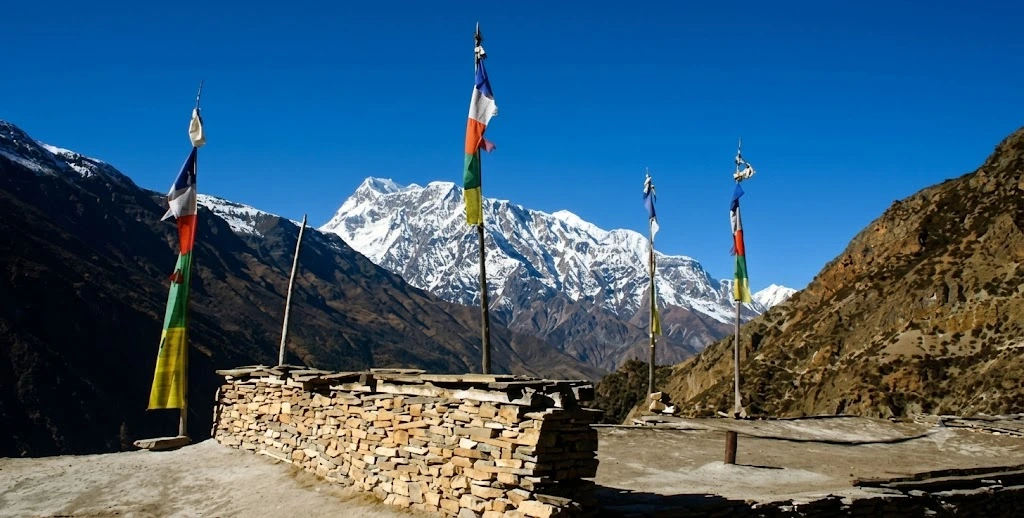
The view from Upper Pisang village is, for many trekkers, the first truly overwhelming high-mountain panorama of the Annapurna Circuit. Standing at 3,300 meters with the full arc of the Annapurna range from Annapurna IV through Annapurna II to Gangapurna visible at close range, and the Marsyangdi valley stretching below toward the distant plains, this viewpoint justifies the entire jeep journey and more.
Permits Required for Besisahar to Chame and Upper Pisang
| Permit | Cost | Required For | Where to Obtain |
| ACAP – Annapurna Conservation Area Permit | NPR 3,000 (foreigners) | All visitors to the ACAP area – Besisahar and beyond | Nepal Tourism Board, Pokhara or Kathmandu |
| TIMS Card | NPR 2,000 (foreigners) | All trekkers on multi-day routes | Nepal Tourism Board, Pokhara or Kathmandu |
| MCAP – Manaslu Conservation Area Permit | NPR 3,000 (foreigners) | Trekkers crossing the Jagat checkpoint (Manaslu Circuit crossover) | Nepal Tourism Board |
| Nar Phu Restricted Area Permit | USD 90/week (low season) USD 75 (high season) | Only for trekkers going to Nar Phu Valley at the Koto junction | Department of Immigration, Kathmandu |
IMPORTANT: ACAP and TIMS permits should be obtained in Pokhara or Kathmandu before departure. The checkpoint at Besisahar/Khudi checks these permits for all travelers. The Jagat checkpoint additionally checks the MCAP permit. Carry original permit documents and photocopies.
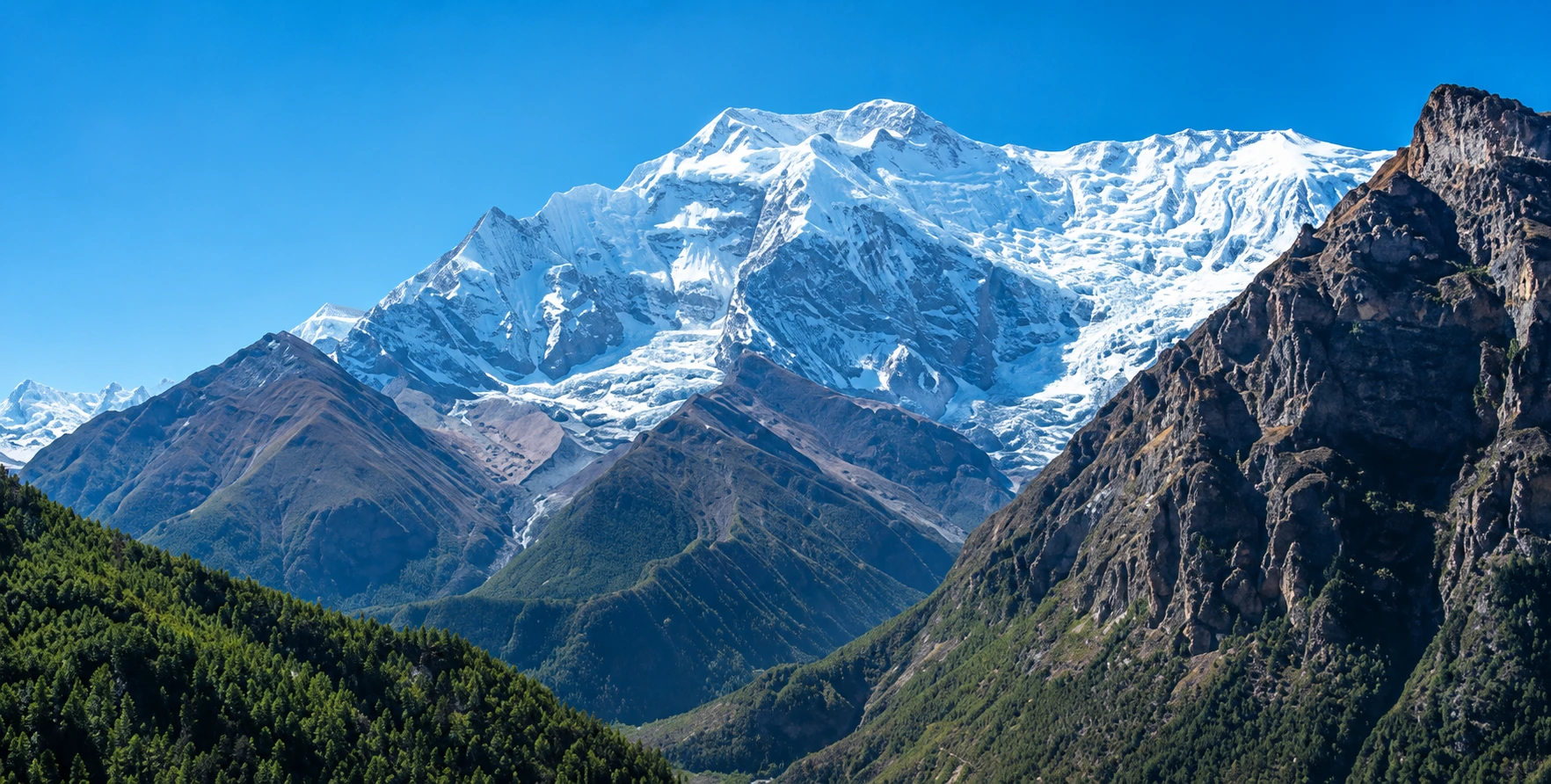
Best Season for the Besisahar to Chame and Upper Pisang Jeep
Autumn (September to November) – Best Overall Season
Autumn is the finest season for the Besisahar-to-Chame-and-Upper-Pisang jeep journey. Post-monsoon road conditions are at their best — freshly graded and cleared after the summer rains. Skies are crystal clear, and the mountain views from Chame and Upper Pisang are outstanding. October and November are peak months for the Annapurna Circuit. Book your private Jeep at least 5 to 7 days in advance.
Spring (March to May) – Excellent
Spring offers good road conditions and excellent mountain views. The rhododendron forests on the lower sections of the route are in full bloom in March and April. The high passes are generally open, and the weather is stable. Pre-monsoon haze can reduce visibility slightly in May, a superb time for the journey.
Winter (December to February) – Challenging
Winter driving to Chame and Upper Pisang is possible but challenging. Snow can affect road sections above 2,500 meters, particularly the Timang-to-Chame and Chame-to-Pisang stretches. A fully winter-capable 4WD jeep with chains is required for winter driving on this route. Nepal Vehicle Hiring advises on current winter conditions before confirming bookings.
Monsoon (June to August) – Not Recommended
The Besisahar-Chame road is significantly affected by monsoon landslides, particularly between Jagat and Dharapani. Nepal Vehicle Hiring does not operate the Besisahar-to-Chame jeep service during the core monsoon months. September conditions improve rapidly — by mid-September, the road is generally passable again.
Acclimatization Guide: Driving to High Altitude
Taking a jeep from Besisahar (760 m) to Upper Pisang (3,300 m) in a single day represents a significant altitude gain of 2,540 meters in a single vehicle journey. While most healthy adults can do this without serious problems, understanding the acclimatization implications is important:
The Golden Rule: Climb High, Sleep Low
If arriving at Upper Pisang by jeep from Besisahar, Nepal Vehicle Hiring strongly recommends spending at least 1 full rest day at Upper Pisang (3,300 m) before continuing to Manang (3,519 m). Do not be tempted to continue immediately to Manang on the same day as the jeep’s arrival — allow your body time to adjust.
Who Should NOT Drive Directly to Upper Pisang
- First-time high-altitude trekkers with no previous experience above 3,000 meters
- Trekkers with any history of severe acute mountain sickness
- Older trekkers or those with respiratory conditions
- Trekkers who have not been physically active in the weeks before the trek
For these trekkers, starting the walk from Chame (2,670 m) or even Dharapani (1,860 m) and ascending gradually over 2 to 3 days to Pisang is the safer and recommended approach.
Signs of Altitude Sickness to Watch For
- Persistent headache not relieved by paracetamol
- Nausea or vomiting
- Dizziness or loss of balance
- Unusual fatigue or difficulty sleeping
If any of these symptoms appear at Pisang or above, descend immediately and consult your guide. Do not ascend further until all symptoms have fully resolved.
What to Pack for the Besi to Chame and Upper Pisang Jeep
- ACAP permit and TIMS card (and MCAP if crossing Jagat) – obtained before departure
- Warm down jacket and thermal layers – mandatory even in October; Chame nights can be below 5°C
- Rain jacket and waterproof trousers – dust and occasional rain on the road above Jagat
- Face mask or buff scarf – the road generates substantial dust from Bhulbhule onward.
- Water bottles (minimum 1.5 liters) – refill at Syange, Jagat, Bagarchhap, or Chame
- High-energy snacks – biscuits, nuts, energy bars, dried fruit for the 4 to 8-hour journey
- Camera with extra battery – Syange waterfall, Tal plain, Bagarchhap, Paungda Danda, Pisang views
- Motion sickness tablets – the switchbacks above Dharapani and the cliff road near Jagat can cause nausea
- Small first aid kit – altitude medication (Diamox), paracetamol, blister care
- Altitude medicine (Diamox) – particularly important for any trekker going directly to Upper Pisang
- Sufficient Nepali cash – there are no ATMs from Besisahar to Manang; carry enough for the entire circuit.
- Offline maps downloaded (Maps.me – Manang area) – mobile data is absent from Besisahar onward.
Expert Tips for the Besisahar to Chamé and Upper Pisang Jeep
- Book your Jeep from Nepal Vehicle Hiring at least 5 to 7 days in advance during the October and November peak season – Chame-bound jeeps are in very high demand.
- Always request a Toyota Hilux or Land Cruiser for the Besisahar -Hame route – standard Scorpio jeeps often struggle on the worst sections above Jaga, and the experience is noticeably inferior.
- Depart from Besisahar at 6:00 AM to reach Chame by noon and Upper Pisang by early afternoon, allowing a full afternoon to rest and acclimatize before the next day’s trekking.
- For the shared jeep from Besisahar, go to the jeep stand at the northern end of Besisahar town in the early morning – shared jeeps depart when full, so arriving early increases chances of a quick departure
- Do not sit in the back of the shared deep – the rear section experiences the most extreme vibration on the rocky road sections and is significantly less comfortable than the middle or front seats.
- Request a stop at Tal for photographs and a brief walk – the flat valley plain, completely enclosed by gorge walls, is one of the most extraordinary natural formations on the circuit.
- Carry enough cash from Pokhara or Kathmandu for the complete Annapurna Circuit – there are NO functioning ATMs between Besisahar and Jomsom.
- Nepal Vehicle Hiring can arrange the complete Annapurna Circuit transport package: a jeep from Pokhara to Chame at the start, and a return jeep from Jomsom to Pokhara at the end – book both before you depart.
- If going to Upper Pisang, confirm that your guesthouse is open and has rooms available – particularly in early October and late November, when trekker numbers are at their extremes.
How to Book Your Besi Sahar to Chame / Upper Pisang Jeep
Booking your jeep with Nepal Vehicle Hiring Pvt Ltd is straightforward:
- Step 1: Contact us via phone, WhatsApp, or at vehiclehiringnepal.com
- Step 2: Share your departure point (Besisahar, Pokhara, or Kathmandu), travel date, group size, and final destination (Chame, Pisang, Upper Pisang, or Manang)
- Step 3: Choose your vehicle – standard jeep, Hilux/Fortuner (recommended), or Land Cruiser
- Step 4: Confirm return transport requirement at trek end – Nepal Vehicle Hiring arranges Jomsom/Nayapul to Pokhara return jeep
- Step 5: Receive booking confirmation with driver details, vehicle information, and pickup time
- Step 6: Your driver meets you at your hotel or at the Besisahar jeep stand at the confirmed time
Book at least 5- 75 days in advance during peak trekking season (October–November and March–April). For off-peak travel, a 2- to 3-day booking is usually sufficient.
Frequently Asked Questions (FAQ)
How long does the jeep journey from Besisahar to Chame take?
The drive from Besisahar to Chame covers approximately 65 to 70 kilometers and takes 4 to 6 hours, depending on road conditions, season, and the number of stops along the route.
How much does a private jeep from Besisahar to Chame cost in 2026?
A private Toyota Hilux or Fortuner from Besisahar to Chame costs approximately NPR 20,000 to 30,000 (USD 150 to 225). A Land Cruiser costs NPR 28,000 to 38,000. A shared jeep seat costs NPR 1,500 to 2,500 per person.
Can I take the shared jeep from Besisahar to Chame?
Yes. Sharing jeeps depart from the jeep stand at the north end of Besisahar town. They depart when full (7 to 8 passengers) and cost approximately NPR 1,500 to 2,500 per person to Chame. There is no fixed schedule — arrive early (6:00 to 7:00 AM) and wait for the jeep to fill.
Is a 4WD jeep necessary for this route?
Yes, absolutely. The road from Bhulbhule to Chame is a demanding off-road track that requires 4WD capability, high ground clearance, and an experienced mountain driver. Standard 2WD vehicles and tuk-tuks cannot manage this road. Nepal Vehicle Hiring uses only 4WD vehicles on the Besisahar-Chame route.
Should I start trekking from Chame or Upper Pisang?
For most trekkers, starting from Chame (2,670 m) is the safer and more acclimatization-friendly choice. Chame provides a natural rest point at a moderate altitude before ascending through the dramatic upper circuit. Starting from Upper Pisang (3,300 m) is excellent for fit, experienced high-altitude trekkers who want to take the spectacular high route to Manang from the very first day.
What is the road like between Jagat and Chame?
The Jagat-to-Chame section (via Chamche, Tal, Dharapani, Bagarchhap, and Timang) is the most demanding part of the route — narrow cliff-edge driving, deep ruts, steep gravel switchbacks, and occasional river crossings. A fully capable 4WD jeep with an experienced driver is essential. This section is also the most visually spectacular, with the Tal flat plain, the Bagarchhap Tibetan village, and the first close-up views of the high Himalayan peaks.
Are there ATMs in Chame or Upper Pisang?
No. There are no functioning ATMs in Chame, Pisang, or anywhere on the Annapurna Circuit between Besisahar and Jomsom. Carry all the cash you need for the entire circuit from Kathmandu, Pokhara, or Besisahar before departure.
Can I return from Chame or Pisa in a Jeep if needed?
Yes. Nepal Vehicle Hiring can arrange a return jeep from Chame or Pisang to Besisahar, Pokhara, or Kathmandu if a trekker needs to leave the circuit due to injury, illness, or other circumstances. Contact us in advance to register this as a contingency option for your group.
Book Your Besisahar to Chame and Upper Pisang Jeep with Nepal Vehicle Hiring
The jeep journey from Besisahar through the Marsyangdi gorge to Chame and Upper Pisang is one of the most extraordinary off-road drives in Nepal — a high-altitude adventure through roaring waterfalls, ancient villages, impossibly narrow cliff roads, and opening panoramas of the Annapurna range that grow more spectacular with every meter gained in altitude. For Annapurna Circuit trekkers, this drive is not just transport — it is the dramatic first chapter of one of the world’s greatest trekking adventures.
Nepal Vehicle Hiring Pvt Ltd provides the most reliable, best-equipped 4WD jeep service for the Besisahar-Chame-Upper Pisang route. Our Hilux and Land Cruiser fleet, experienced Marsyangdi valley drivers, and complete Annapurna Circuit transport coordination make us the preferred vehicle partner for Annapurna Circuit trekkers throughout Nepal.
Contact Nepal Vehicle Hiring Pvt Ltd today at vehiclehiringnepal.com to book your Besisahar-to-Chame-and-Upper-Pisang Jeep and start your Annapurna Circuit adventure most spectacularly.
Book your Besisahar-to-Chame-and-Upper-Pisang Jeep today WhatsApp: +977 9851013196 | Email: [email protected]
- Besisahar to Chame and Upper Pisang Jeep 2026: Complete Road Guide for Annapurna Circuit Trekkers
- Why Take a Jeep from Besisahar to Chame or Upper Pisang?
- Besisahar to Chame and Upper Pisang – Journey Quick Facts
- Vehicle Options: Besisahar to Chame and Upper Pisang 2026
- Full Cost Guide: Chame and Upper Pisang from Multiple Starting Points
- The Route: Besisahar to Chame and Upper Pisang – Stage by Stage
- Route Overview Table: Besisahar to Upper Pisang
- Road Conditions: What to Expect on the Besisahar to Chame Road
- Key Destinations: Chame, Pisang & Upper Pisang
- Annapurna Circuit Trek Strategy: Where to Start Walking
- Top Attractions Along the Besisahar to Upper Pisang Route
- Permits Required for Besisahar to Chame and Upper Pisang
- Best Season for the Besisahar to Chame and Upper Pisang Jeep
- Acclimatization Guide: Driving to High Altitude
- What to Pack for the Besi to Chame and Upper Pisang Jeep
- Expert Tips for the Besisahar to Chamé and Upper Pisang Jeep
- How to Book Your Besi Sahar to Chame / Upper Pisang Jeep
- Frequently Asked Questions (FAQ)
- Book Your Besisahar to Chame and Upper Pisang Jeep with Nepal Vehicle Hiring

Related Blog & Articles

4WD Himalayan Jeep in Nepal