Plan a Trip


Why Dharapani is the Most Popular Starting Point of the Annapurna Circuit
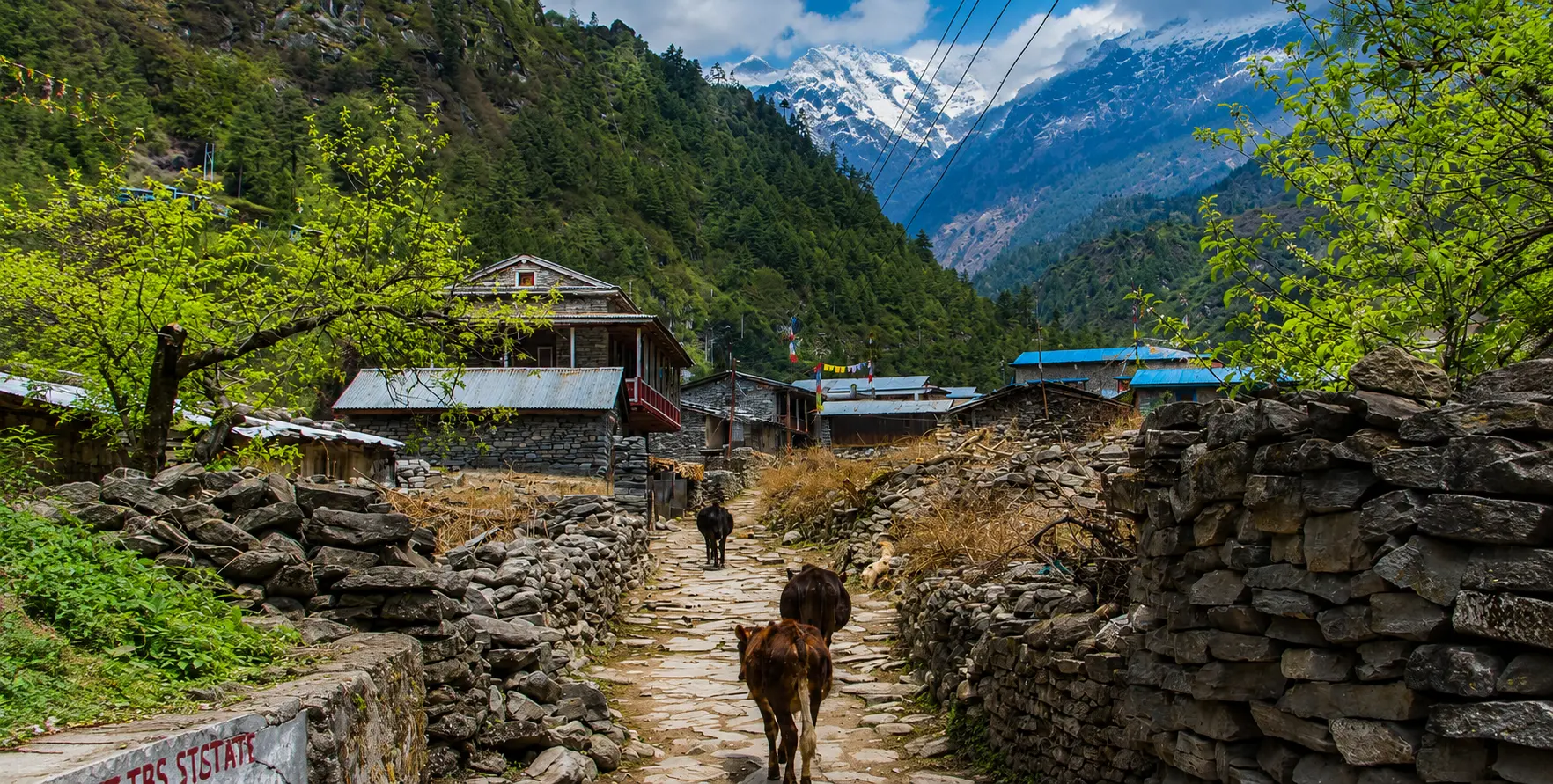
Why Dharapani is the Most Popular Starting Point of the Annapurna Circuit Trek (2026 Guide)
The Annapurna Circuit is widely regarded as one of the greatest long-distance trekking routes in the world. Circling the entire Annapurna massif — a collection of peaks that includes Annapurna I (8,091 m), the world’s tenth-highest mountain-
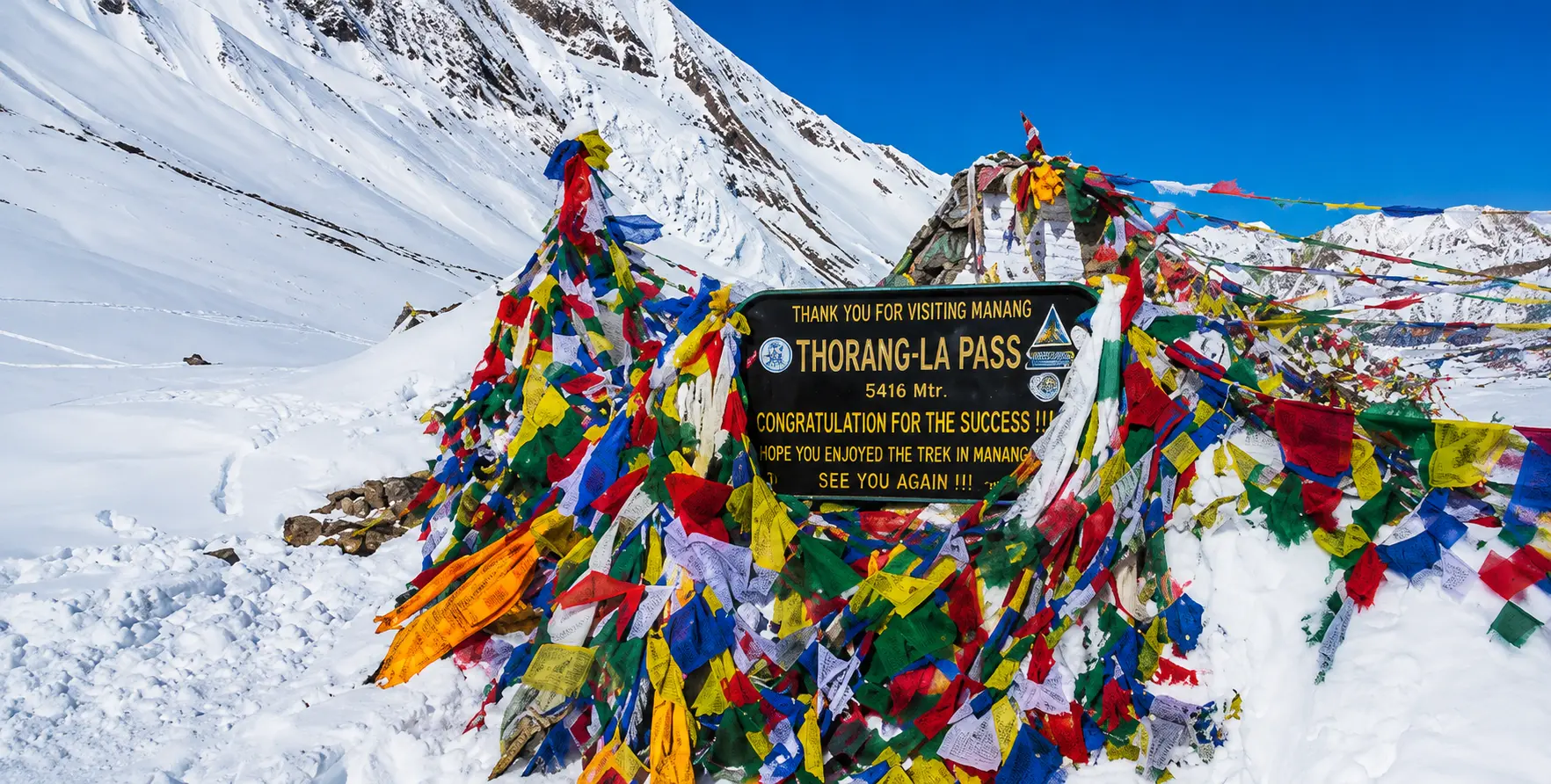
this legendary trek takes adventurers through some of the most diverse landscapes on earth: subtropical river valleys, dense rhododendron forests, high-altitude Tibetan plateaux, and some of the most dramatic mountain scenery the Himalayas have to offer. The route crosses the Thorong La Pass at 5,416 meters above sea level — one of the highest mountain passes accessible by trekkers anywhere on the planet.
For decades, trekkers have debated the best way to approach the Annapurna Circuit — which direction to walk, where to start, and how to get to the trailhead. In recent years, as road construction has extended deeper into the Marsyangdi River valley, one village has emerged as the most consistently recommended and logistically ideal starting point for the modern Annapurna Circuit trek: Dharapani.
Situated at approximately 1,960 meters above sea level in the Manang District of Gandaki Province, Dharapani is the point where the motorable jeep road from Kathmandu effectively ends, and the authentic high-altitude trekking trail begins. It is a small but vital village that serves as a gateway — a transition zone between the world of vehicles and the world of mountain footpaths, yak caravans, Buddhist monasteries, and snow-capped peaks.
In this comprehensive guide, Nepal Vehicle Hiring Pvt. Ltd. — your trusted private vehicle hire partner based in Thamel, Kathmandu — explains exactly why Dharapani has become the most popular starting point of the Annapurna Circuit, how to reach it by private jeep, what to expect on the road journey, what facilities await you in the village, and everything you need to know to plan your Annapurna Circuit adventure in 2026.
Where is Dharapani? Understanding Its Strategic Location
Dharapani is a small trekking village located in the Manang District of Gandaki Province in north-central Nepal. It sits at an elevation of approximately 1,960 meters above sea level along the banks of the Marsyangdi River, which flows southward from the high glaciers of the Annapurna and Manaslu ranges.
The village lies at a critical geographical junction. To its south, the Marsyangdi valley descends steeply toward the lowlands of Besisahar and eventually the Terai plains. To its north and east, the valley narrows and climbs rapidly into the high Annapurna Conservation Area — the trail to Chame, Pisang, Manang, and ultimately the Thorong La Pass. To its west, a side valley branches off toward the remote Nar Phu Valley, one of Nepal’s most restricted and least-visited trekking destinations, requiring a special permit.
This junction position is precisely what makes Dharapani so strategically important for trekkers. It is the last point where a vehicle can realistically and comfortably bring trekkers after the grueling mountain road from Besisahar, and it is the first point where the real Annapurna Circuit trail — free from vehicles and dust — begins in earnest. The road technically continues beyond Dharapani to Chame and Manang.
Still, its quality deteriorates dramatically, and most trekking agencies, experienced guides, and seasoned Annapurna trekkers recommend starting the trek on foot from Dharapani rather than pushing the vehicle farther.
Administratively, Dharapani is part of Narphu Rural Municipality. It has a population of a few hundred people, primarily from the Gurung, Manangi, and Tibetan communities. The village has an ACAP (Annapurna Conservation Area Project) checkpoint where all trekkers must register their permits before proceeding north on the trail.
The Annapurna Circuit Trek — A Brief Overview for 2026
Before understanding why Dharapani is the ideal starting point, it is worth briefly outlining what the Annapurna Circuit involves. This iconic trek was first documented and popularised in the 1970s and 1980s and, for many years, was Nepal’s most popular trekking route. The classic circuit covers approximately 160–230 km, depending on the route variations chosen, takes between 12 and 21 days to complete, and traverses terrain ranging from tropical river valleys at 800 meters to the windswept high-altitude desert landscape of the Mustang plateau at over 4,000 meters.
The trek crosses the Thorong La Pass (5,416 m) — typically from east to west, from Manang to Muktinath — which is the physical and emotional highlight of the entire journey. After descending from Thorong La, trekkers reach the sacred Hindu and Buddhist pilgrimage site of Muktinath Temple, and then continue down through the dramatic Kali Gandaki Gorge to Jomsom, Tatopani, and eventually Nayapul near Pokhara.
The traditional starting point of the Annapurna Circuit was Besisahar (760 m), the district headquarters of Lamjung District. From Besisahar, trekkers would walk northward for 6–9 days through small villages, crossing suspension bridges and passing through forests before reaching Manang. However, road construction over the past two decades has dramatically changed the character of the lower Annapurna Circuit.
The road from Besisahar to Dharapani — and even further to Chame and Manang — is now accessible to 4WD vehicles, which means the lower sections of the trek are frequently disrupted by jeep traffic, dust, noise, and a significant loss of trail solitude.
This fundamental change to the trail infrastructure is the primary reason why the majority of modern Annapurna Circuit trekkers now prefer to begin their trek at Dharapani rather than Besisahar.
Why Dharapani? The 8 Reasons It Is the Most Popular Starting Point
The Road Below Dharapani Is Now a Vehicle Track — Not a Trekking Trail
The single most important reason that Dharapani has replaced Besisahar as the preferred starting point is road construction. The road between Besisahar and Dharapani — approximately 110 km of mountain track — is now a jeep-accessible route. In this section, trekkers walking on foot share the trail with motorcycles, local jeeps, and supply vehicles serving the villages of Khudi, Bhulbhule, Ngadi, Jagat, Dharche, Tal, and Dharapani itself.
Walking alongside vehicle traffic on a dusty, unpaved mountain road is a dramatically different experience from trekking through pristine Himalayan wilderness. The dust raised by passing vehicles can be suffocating, particularly in the dry months of October–November and March–May. The noise of engines and the constant need to step aside for vehicles diminish the meditative, immersive quality that most trekkers seek on the Annapurna Circuit. By starting at Dharapani, trekkers skip this vehicle-dominated section entirely and begin immediately on the pedestrian-only trail where the real Annapurna Circuit experience begins.
Perfect Elevation to Begin the Trek
Dharapani sits at 1,960 meters above sea level — an excellent starting elevation for the Annapurna Circuit trek. This elevation is high enough that trekkers arrive with some initial altitude gain already covered by the vehicle journey, giving the body a gentle head start on acclimatization without the risk of altitude sickness that would come from starting too high. From Dharapani, the trail climbs steadily northward through Bagarchhap (2,160 m), Danaque, Chame (2,710 m), Pisang (3,200 m), and Manang (3,519 m), following a medically sound acclimatization profile.
Trekkers who begin at Besisahar (760 m) spend several days walking through lower-altitude terrain that is now largely motorable, meaning they gain altitude slowly via vehicle-accessible road sections. Trekkers who begin at Chame (2,710 m) skip the atmospheric lower villages and arrive in cooler, more challenging terrain without adequate prior acclimatization. Dharapani sits perfectly in the middle — high enough to provide a meaningful starting point, low enough to allow safe, gradual acclimatization over the days ahead.
Gateway to the Authentic Annapurna Circuit Trail
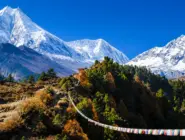
North of Dharapani, the character of the landscape changes dramatically. The wide, hot, dusty river valley narrows into a dramatic gorge. The vegetation shifts from subtropical forest to temperate pine and rhododendron. The villages become more distinctly Tibetan in character — stone houses with flat roofs, prayer flags snapping in the mountain wind, mani walls carved with Buddhist mantras, and the distant sound of monastery bells. This is the Annapurna Circuit that trekkers dream of, read about, and travel from across the world to experience.
The first village north of Dharapani on the trekking trail is Bagarchhap — a beautiful, traditional Gurung and Tibetan village at 2,160 meters with ancient stone buildings, a distinctive gompa (Buddhist monastery), and superb views of Annapurna II and Lamjung Himal. This is the quality of experience that begins as soon as trekkers set out on their Annapurna Circuit journey from Dharapani. It is authentic, remote, visually stunning, and completely free of vehicle traffic.
The Junction for the Nar Phu Valley — A Bonus for Adventurous Trekkers
Dharapani holds additional significance for adventurous trekkers because it sits directly at the junction of the main Annapurna Circuit trail and the side valley leading to the restricted Nar Phu Valley. The Nar Phu Valley is one of Nepal’s most remote and least visited trekking destinations — a hidden Tibetan-influenced enclave tucked behind the Annapurna and Kang Guru massifs. Access requires a special Nar Phu Restricted Area Permit (approximately USD 90–100 per person per week) and is limited to organized trekking groups with a licensed guide.
Trekkers who wish to combine the Nar Phu Valley side trek with the Annapurna Circuit often arrive in Dharapani first, spend a rest day to acclimatize, complete the Nar Phu circuit over 7–10 days, return to Dharapani, and then continue on the main Annapurna Circuit trail toward Chame and Manang. This combined itinerary is only logistically possible because Dharapani sits at this precise junction point — making it doubly important as a starting location for the most ambitious Annapurna region trekkers.
Saves 3–5 Days of Monotonous Road Walking
The section of trail between Besisahar and Dharapani, when walked on foot, takes approximately 3–5 days depending on the trekker’s pace and the stops made along the way. This includes the villages of Khudi, Bhulbhule, Ngadi, Bahundanda, Chamje, Tal, Dharche, and several smaller hamlets. While some of these villages are charming, the overall experience of this lower section has been significantly degraded by road construction, and most experienced trekkers and trekking agencies now agree that time and energy are better invested in the more spectacular upper sections of the circuit.
By starting from Dharapani — reached in a single day by private jeep from Kathmandu — trekkers can dedicate their full trekking time to the most beautiful and rewarding sections of the Annapurna Circuit: the pine forests of Bagarchhap and Chame, the dramatic glacial valley of Pisang, the high-altitude plateau of Manang, the challenging crossing of Thorong La, and the sacred descent to Muktinath. This is where the magic of the Annapurna Circuit truly lives, and starting from Dharapani ensures that every day of your trek is as spectacular as possible.
Logistically Practical — Private Jeep Can Reach Dharapani in One Day
From a purely logistical perspective, Dharapani is the furthest point along the Annapurna Circuit road that can be reached in a single day’s drive from Kathmandu in a private 4WD jeep. The journey covers approximately 285 km and takes 10–11 hours — a long but entirely feasible day’s travel for most trekkers. Departing Kathmandu at 5:00–6:00 AM, trekkers can typically arrive in Dharapani by 4:00–5:00 PM, with sufficient time to settle into their guesthouse, have a warm meal, and rest before beginning the trek the following morning.
Pushing the vehicle further to Chame (approximately 2 more hours on a very rough road) or Manang (another 3–4 hours beyond that) would require either a very early departure or an overnight stop at Besisahar or Dharapani — adding a day to the journey without enhancing the trekking experience. Dharapani, therefore, represents the optimal endpoint for a single-day drive from Kathmandu, making it the natural and logical starting point for the trek.
Strong Infrastructure for Trekkers
Despite being a small mountain village, Dharapani has developed a solid infrastructure specifically to serve the needs of arriving trekkers. The village has multiple tea houses and guesthouses ranging from very basic dormitory accommodation to comfortable private rooms with attached bathrooms. Local restaurants serve a wide range of food, including dal bhat, noodles, pasta, fried rice, soups, and various Tibetan dishes. There are small provision shops where trekkers can purchase last-minute supplies — energy bars, biscuits, noodles, water purification tablets, and basic trekking gear.
The ACAP permit checkpoint at Dharapani is an important administrative stop where rangers check and stamp all trekking permits. This is a legal requirement for all trekkers entering the Annapurna Conservation Area beyond Dharapani, and the checkpoint operates reliably throughout the trekking season. The presence of this official checkpoint also means that Dharapani is a recognized and well-established point in Nepal’s trekking permit system, further cementing its status as the modern official starting point for the Annapurna Circuit.
Growing Consensus Among Trekking Agencies and Experienced Guides
Perhaps the most practical endorsement of Dharapani as the ideal starting point comes from Nepal’s professional trekking industry itself. The overwhelming majority of reputable trekking agencies in Kathmandu and Pokhara now recommend Dharapani as the starting point for the Annapurna Circuit. Experienced mountain guides who have walked the circuit dozens or even hundreds of times consistently advise trekkers to begin at Dharapani rather than Besisahar, citing road conditions, dust, vehicle traffic, and the superior overall trekking experience that starts at Dharapani’s elevation.
International trekking publications, online trekking communities, and review platforms such as TripAdvisor consistently reflect this professional consensus. Trekkers returning from the Annapurna Circuit who began at Besisahar frequently report that the lower section was disappointing — hot, dusty, and vehicle-heavy — while those who began at Dharapani consistently describe a rewarding, immersive, and unforgettable experience from daDayne.
Getting to Dharapani: Kathmandu to Dharapani Route Guide
The journey from Kathmandu to Dharapani is an adventure in itself. The route passes through some of Nepal’s most diverse landscapes — from the crowded urban streets of Kathmandu to the vast flatlands of the Terai, the winding river gorges of the mid-hills, and ultimately the dramatic mountain terrain of the Marsyangdi valley. Here is a complete breakdown of the route:
| Destination / Stop | Distance from KTM | Travel Time | Road Condition | Elevation |
| Kathmandu | Start | — | City roads | 1,400 m |
| Prithvi Highway / Mugling | 110 km | 2.5 hrs | Sealed highway | 300 m |
| Dumre Junction | 155 km | 4 hrs | Sealed highway | 310 m |
| Besisahar | 175 km | 5 hrs | Sealed/improving | 760 m |
| Jagat | 230 km | 7.5 hrs | Rough mountain road | 1,300 m |
| Tal | 255 km | 9 hrs | Rough / 4WD needed | 1,700 m |
| Dharapani | 285 km | 10–11 hrs | 4WD jeep only | 1,960 m |
The journey from Kathmandu to Dharapani heads westward on the Prithvi Highway, Nepal’s busiest inter-city road, which follows the Trishuli River through a series of dramatic gorges before reaching the Mugling junction at approximately 110 km. From Mugling, the route turns north onto the road toward Besisahar, passing through Dumre — the last major town with good facilities and ATMs before entering the mountains.
Beyond Besisahar, the road transitions from sealed asphalt to rough, unpaved mountain track. The quality of the road deteriorates progressively as the valley climbs and narrows. From Jagat onward, a 4WD jeep is not merely recommended — it is essential. The road crosses numerous landslide zones, fords shallow river tributaries, and navigates precipitous cliff-side sections that are completely impassable in a standard car or Hiace van. By the time you reach Tal (1,700 m) — a beautiful flat village spread across an ancient lake bed — you are in genuinely remote Himalayan terrain.
The final stretch from Tal to Dharapani climbs through a series of tight gorges to reach Dharapani village, where the valley widens slightly, and the unmistakable peaks of the Annapurna and Manaslu ranges begin to dominate the skyline. The sense of arrival at Dharapani after the long drive from Kathmandu is genuinely exhilarating — you are now deep in the Himalayas, standing at the threshold of one of the world’s greatest treks.
Private Jeep Hire Prices: Kathmandu to Dharapani 2026
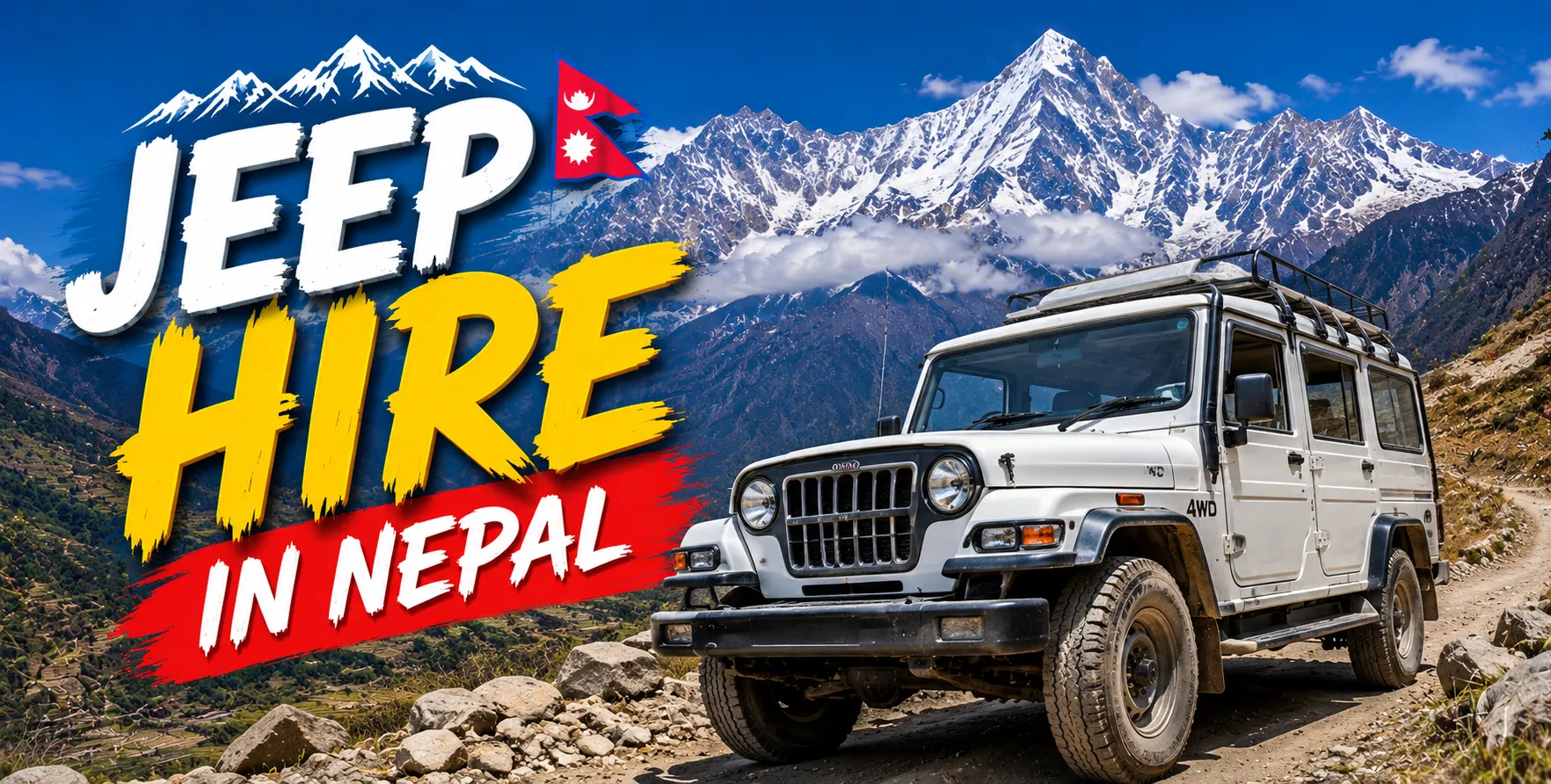
The only practical private vehicle option for the Kathmandu-to-Dharapani journey is a 4WD jeep. Standard cars, Hiace vans, and Coaster buses are not suitable for the road beyond Besisahar. Nepal Vehicle Hiring Pvt. Ltd. offers a full range of 4WD jeep hire options for the Kathmandu-to-Dharapani journey, with experienced drivers who know the Annapurna Circuit road in all seasons and under all conditions.
| Vehicle Type | Capacity | One-Way (NPR) | Round Trip (NPR) | Notes |
| 4WD Jeep (Standard) | 4–5 pax | 25,000–35,000 | 45,000–60,000 | Most popular option |
| 4WD Jeep (Premium) | 6–7 pax | 30,000–42,000 | 55,000–72,000 | Land Cruiser / Prado |
| Hiace Van (to Besisahar) | 10–12 pax | 18,000–25,000 | 32,000–44,000 | Besisahar only — not suitable beyond |
| Private Car (to Besisahar) | 3–4 pax | 12,000–18,000 | 20,000–30,000 | Besisahar only — not suitable beyond |
| Multi-Day Jeep (2 days) | 4–7 pax | 45,000–65,000 | 80,000–110,000 | Includes driver overnight |
All prices above include the driver, fuel, road tolls, and parking fees. The prices shown are approximate and subject to variation based on season, fuel prices, and vehicle availability. Please note that Hiace vans and private cars can be hired as far as Besisahar at the prices shown, from where a separate local jeep transfer to Dharapani must be arranged. For the most competitive and reliable pricing for your specific travel dates, contact Nepal Vehicle Hiring Pvt. Ltd. directly for a personalized quote.
For groups of trekkers traveling together, a private jeep from Kathmandu to Dharapani is almost always more cost-effective per person than booking seats on a public jeep or tourist bus. When you factor in the additional comfort, flexibility, reliability, and the ability to stop at your own pace along the way, private jeep hire represents exceptional value for the Annapurna Circuit approach journey.
Dharapani vs. Other Annapurna Circuit Starting Points — A Comparison
To fully understand why Dharapani is the most popular choice, it is helpful to compare it directly with the other possible starting points for the Annapurna Circuit trek:
| Starting Point | Elevation | Road Access | Trek Options |
| Besisahar | 760 m | Car / Jeep / Van | AC classic start — long walk out |
| Chame | 2,710 m | 4WD Jeep only | Skips lower AC sections |
| Dharapani | 1,960 m | 4WD Jeep only | Best balance — skips the road, starts the real trek |
| Koto (near Dharapani) | 2,600 m | 4WD Jeep only | Nar Phu Valley entry point |
| Manang | 3,519 m | 4WD Jeep only (seasonal) | Skips most of the trek |
As the comparison table shows, Dharapani occupies the optimal middle ground among all possible Annapurna Circuit starting points. Besisahar is too low and too vehicle-impacted for most modern trekkers. Chame is too high and overlooks the atmospheric lower-mountain villages of Bagarchhap and Danaque.
Manang is so high that it denies trekkers the majority of the circuit experience. Dharapani hits the sweet spot: it is the highest practical starting point that still includes all of the most rewarding and authentic trekking sections of the Annapurna Circuit.
What to Expect on the Annapurna Circuit Trek Starting from Dharapani
Day 1: Dharapani (1,960 m) to Bagarchhap (2,160 m) — 3–4 hours
The first day of trekking from DDayapani is a gentle warm-up — a short, beautiful 3–4-hour walk that eases trekkers into the mountain environment after the long drive from Kathmandu. The trail climbs steadily northward through forest and terraced fields, crossing suspension bridges over the Marsyangdi River before arriving at Bagarchhap, one of the most picturesque villages on the entire Annapurna Circuit.
Bagarchhap has an ancient Tibetan-style monastery, stone-paved streets, and stunning views of Annapurna II (7,937 m). The short day allows trekkers to recover from the journey and begin adjusting to the altitude in a beautiful, peaceful setting.
Day 2: Bagarchhap (2,160 m) to Chame (2,710 m) — 5–6 hours
The second day’s trek takes trekkers to the mountains, passing through the villages of Danaque, Timang, and Thanchok before reaching Chame, the district headquarters of Manang District. The trail in this section passes through dense pine and rhododendron forests, with dramatic views of the Lamjung Himal and the first glimpses of the extraordinary rock wall of Paungda Danda — a curved cliff face rising over 1,500 meters above the valley floor. Chame has good facilities, including lodges, restaurants, a police checkpoint, a post office, and even a small hospital. It is an excellent acclimatization stop.
Day 3: Chame (2,710 m) to Upper Pisang (3,310 m) — 5–6 hours
The walk from Chame to Pisang is one of the most visually dramatic days on the entire Annapurna Circuit. The trail passes through an extraordinary apple orchard zone, crosses the river multiple times on suspension bridges, and eventually emerges from the forest into the wide, dry, open valley of the Manang basin.
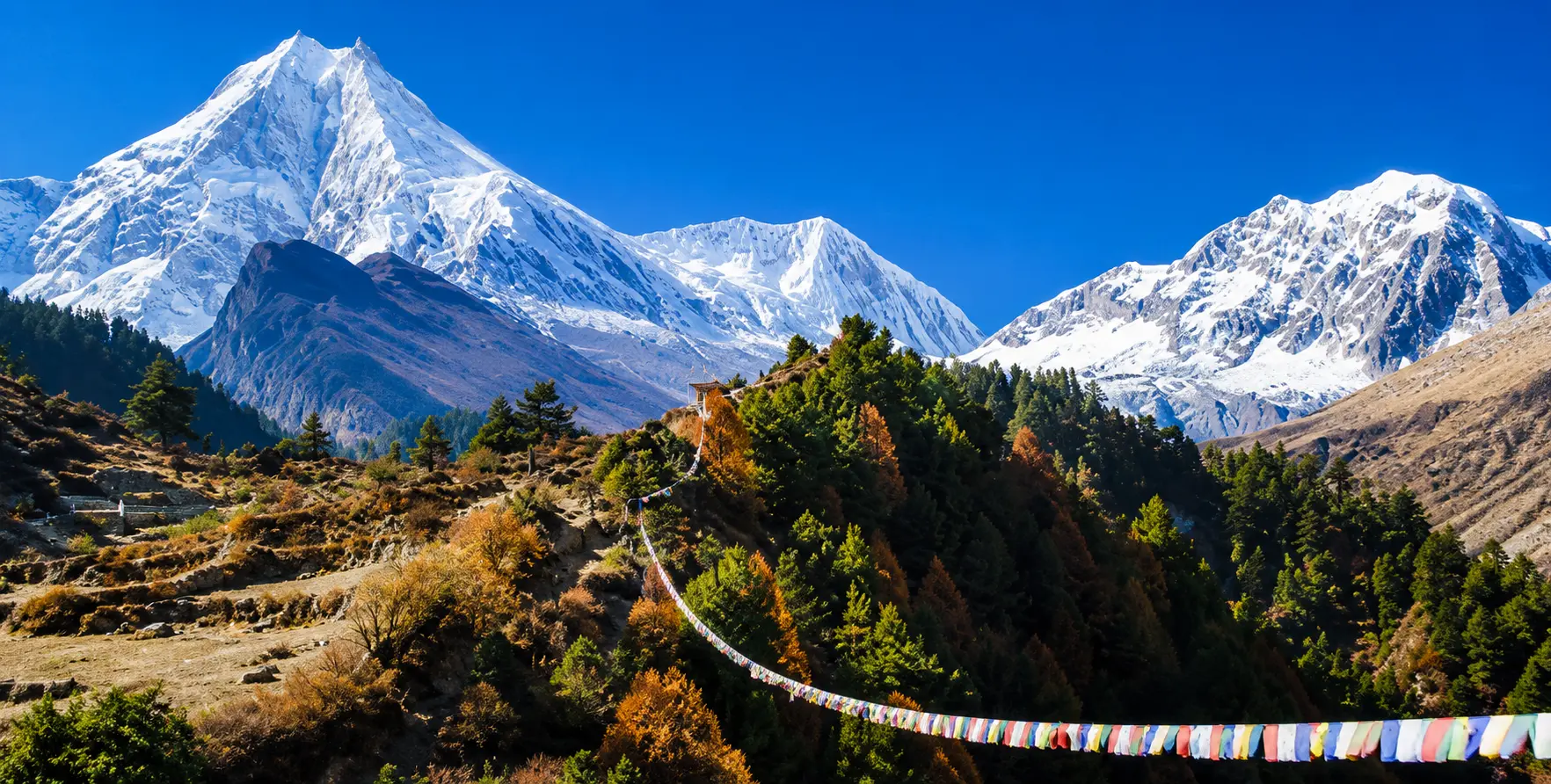
The view that greets trekkers as they emerge from the pine forest and see Annapurna II, Annapurna IV, Gangapurna, and the soaring wall of the Annapurna massif for the first time is one of the most breathtaking moments in all of Himalayan trekking. Upper Pisang, perched on a hillside above the valley floor, offers even better views than Lower Pisang and is the recommended overnight stop.
Day 4: Pisang (3,310 m) to Manang (3,519 m) — 5–7 hours
The walk from Pisang to Manang is a full day across the wide, arid Manang valley — a landscape that feels more like Tibet than Nepal. The trail passes through the traditional villages of Ghyaru and Ngawal, perched dramatically on the ridge above the valley floor with panoramic views of Annapurna III, Gangapurna, and the Tilicho peak massif. The high-altitude Tibetan culture is strongly evident in these villages — flat-roofed stone houses, large mani walls, Buddhist stupas, and locals dressed in traditional Tibetan chuba robes.
Manang village (3,519 m) is the largest settlement in the Annapurna Conservation Area and the last major supply and accommodation point before Thorong La. A rest day in Manang for acclimatization is strongly recommended before attempting the pass.
Day 5: Acclimatization Day in Manang (3,519 m)
A rest day in Manang is not optional — it is essential for safe acclimatization before the high-altitude crossing of Thorong La at 5,416 meters. Trekkers who skip the Manang rest day significantly increase their risk of developing Acute Mountain Sickness (AMS), High Altitude Pulmonary Edema (HAPE), or High Altitude Cerebral Edema (HACE) — all of which can be life-threatening conditions.
The Himalayan Rescue Association (HRA) maintains a clinic in Manang where doctors give free lectures on the symptoms and prevention of altitude sickness each afternoon during trekking season. Attending this lecture is highly recommended for all Annapurna Circuit trekkers. On the rest day, a short acclimatization hike to the Ice Lake (4,620 m) above Manang is strongly recommended to aid the body’s adjustment to altitude.
Day 6: Manang (3,519 m) to High Camp / Thorong Phedi (4,450–4,925 m) — 4–5 hours
From Manang, the trail climbs steadily through barren, wind-scoured terrain toward Thorong La. Most trekkers now stop at either Yak Kharka (4,018 m) or Thorong Phedi base camp (4,450 m) for the penultimate night before the pass, or push all the way to High Camp (4,925 m) for the final night. High Camp is the most popular choice as it dramatically reduces the distance and time required to summit Thorong La the following morning.
Day 7: High Camp (4,925 m) to Muktinath (3,710 m) via Thorong La (5,416 m) — 7–9 hours
The crossing of Thorong La is the physical and emotional climax of the entire Annapurna Circuit trek — and one of the great high-altitude trekking achievements available to non-technical trekkers anywhere in the world. Trekkers typically depart High Camp between 4:00 and 5:00 AM to reach the summit before the afternoon winds pick up. The approximately 4-hour ascent from High Camp to the Thorong La summit cairns and prayer flags is demanding but deeply rewarding.
The views from the summit — across the Annapurna massif to the south and the Mustang plateau to the north — are incomparable.
The long descent to Muktinath (3,710 m) takes another 3–4 hours. Muktinath Temple, sacred to both Hindus and Buddhists, is an extraordinary attraction that combines physical achievement with profound spiritual significance.
Permits Required for the Annapurna Circuit Starting from Dharapani
All trekkers on the Annapurna Circuit are required to carry two official permits, which must be obtained before reaching Dharapani’s ACAP checkpoint:
- ACAP — Annapurna Conservation Area Permit: The primary trekking permit for the Annapurna region. The current fee is NPR 3,000 per person for SAARC nationals and NPR 4,000 (approximately USD 30) per person for all other nationalities. The ACAP permit can be obtained at the Nepal Tourism Board (NTB) office in Pradarshani Marg, Kathmandu, or at the NTB office in Pokhara. Processing is usually immediate and does not require planning.
- TIMS Card — Trekkers’ Information Management System: The TIMS card is a trekker registration document required for all trekking routes in Nepal outside of national parks. For the Annapurna Circuit, the current fee is NPR 2,000 per person. TIMS cards are issued by the Trekking Agencies Association of Nepal (TAAN) office in Kathmandu (Maligaon) or Pokhara, or by the NTB offices. Processing is immediate.
- Nar Phu Restricted Area Permit (only if visiting Nar Phu Valley): Trekkers wishing to enter the Nar Phu Valley near Dharapani require an additional restricted area permit, currently priced at approximately USD 90–100 per person per week. This permit can only be obtained through a registered trekking agency and requires a minimum group of two trekkers with a licensed guide.
Important note: Neither the ACAP permit nor the TIMS card can currently be obtained at Dharapani itself or at the Besisahar checkpoint. Trekkers must obtain both permits in Kathmandu or Pokhara before beginning their journey to the trailhead. Failure to carry both permits will result in a refusal of entry at the Dharapani checkpoint and a requirement to return to Besisahar or further to obtain them. Nepal Vehicle Hiring strongly recommends organizing all permits in Kathmandu before the departure day.
Best Time to Start the Annapurna Circuit from Dharapani
Choosing the right season for your Annapurna Circuit trek from Dharapani is critical to both the quality of the experience and the safety of the journey. The table below summarises the four seasons and their suitability for the Dharapani-start Annapurna Circuit:
| Season | Months | Road Condition | Trek Condition | Recommended? |
| Autumn | Sep–Nov | Good to Very Good | Excellent — clear skies | Yes — Best Season |
| Spring | Mar–May | Good | Very Good — rhododendrons bloom | Yes — Excellent |
| Winter | Dec–Feb | Possible with care | Cold, snow above 3,000 m | Partial — lower sections only |
| Monsoon | Jun–Aug | Poor — landslides | Wet, leeches, poor visibility | Not Recommended |
The autumn trekking season (September to November) is Nepal’s most popular and arguably finest trekking period. The monsoon rains have washed the air clean, visibility is exceptional, and the skies above the Annapurna range are typically clear and vivid blue for weeks at a time. October is consistently the most popular month for Annapurna Circuit trekkers worldwide. The trails are dry and firm, temperatures are comfortable at lower elevations and cold but manageable at high altitude. Accommodation demand is at its highest in October and November — booking of guesthouses is strongly recommended, and private vehicle hire from Kathmandu should be arranged at least 7–10 days in advance.
The spring season (March to May) offers a different but equally magnificent trekking experience. The rhododendron forests that blanket the slopes between Bagarchhap and Chame burst into extraordinary bloom in March and April, painting the hillsides in brilliant red, pink, and white. Temperatures warm progressively through the season, making long trekking days in the Manang valley particularly pleasant. The main risk in spring is increasing afternoon cloudiness as the pre-monsoon convection builds, which can reduce summit views. However, clear mornings are almost always guaranteed.
Essential Travel Tips for the Annapurna Circuit from Dharapani
- Book your private 4WD jeep from Kathmandu to Dharapani at least 7–10 days in advance during peak season (October–November, March–April). Vehicles fill up quickly during busy trekking months.
- Obtain your ACAP permit and TIMS card in Kathmandu or Pokhara before departure. Do not assume you can obtain them at Besisahar or Dharapani — this is not possible.
- Carry sufficient Nepalese Rupees (NPR) cash from Kathmandu. There are ATMs in Besisahar, but none beyond. Bring enough cash for your entire trek plus a reasonable emergency reserve.
- Depart Kathmandu by 5:00–6:00 AM to ensure arrival at Dharapani before dark. The mountain road sections beyond Besisahar are not safe to drive at night.
- Pack warm layers, a down jacket, and a sleeping bag rated to at least -10°C for the high-altitude sections above Manang. Even in summer, temperatures at Thorong La can drop well below freezing.
- Carry altitude sickness medication (Diamox / Acetazolamide) and discuss its use with your doctor before departure. The ascent from Dharapani to Thorong La (from 1,960 m to 5,416 m) is significant, and altitude sickness is a genuine risk if the ascent profile is not followed carefully.
- Use a water purification method — iodine tablets, a SteriPen UV purifier, or a quality filter — to treat all water above Dharapani. Bottled water generates enormous plastic waste in the mountains, and filtered or purified water is the environmentally responsible choice.
- Hire a licensed local guide from Dharapani or Kathmandu if you are not an experienced Himalayan trekker. A knowledgeable guide adds significantly to the safety, cultural richness, and logistical ease of the Annapurna Circuit trek.
- Download an offline map of the Annapurna Circuit before departure (Maps.me or Gaia GPS are recommended). Mobile connectivity is unreliable above Dharapani and completely absent on many sections of the trail.
- Respect the local culture. The villages north of Dharapani are predominantly Buddhist and Tibetan in character. Remove your shoes before entering monasteries, always walk clockwise around mani walls and stupas, and ask permission before photographing local people.

Why Book Your Kathmandu-to-Dharapani Jeep with Nepal Vehicle Hiring?
The journey from Kathmandu to Dharapani is not a route to be taken lightly. The mountain road beyond Besisahar is one of the most challenging driving routes in Nepal — narrow, steep, rough, and prone to landslides during and after the monsoon. Choosing the right vehicle hire company and driver for this journey is as important as any decision you will make in your Annapurna Circuit preparation.
Nepal Vehicle Hiring Pvt. Ltd. is Kathmandu’s most trusted private vehicle hire company for trekking trailhead transfers. Based in Thamel — the heart of Kathmandu’s trekking district — we have been serving international trekkers, pilgrims, and travelers for many years with an unwavering commitment to safety, reliability, and exceptional customer service. Here is why thousands of Annapurna Circuit trekkers choose us every year:
- Experienced mountain drivers with years of driving experience on the Annapurna Circuit road in all seasons and conditions
- Well-maintained 4WD fleet — Land Cruiser, Prado, and other proven high-performance mountain vehicles
- 8,000+ satisfied customers with 5-star ratings on TripAdvisor and Google
- Flexible departure times — we can depart at 5:00 AM if needed to ensure arrival at Dharapani before dark
- Transparent all-inclusive pricing — driver, fuel, tolls, and parking with no hidden fees
- 24/7 customer support from our Thamel office for pre-trip planning and any on-road assistance
- Free advice on permits, accommodation, the best time to trek, and full Annapurna Circuit logistics
- Option for multi-day jeep hire for groups wanting a vehicle to wait at Manang or Jomsom
When you book your Kathmandu to Dharapani private jeep with Nepal Vehicle Hiring, you are not just booking a vehicle — you are beginning your Annapurna Circuit adventure with the peace of mind that your trailhead transfer is in the safest, most experienced hands in Nepal.
Frequently Asked Questions
Why is Dharapani considered the best starting point for the Annapurna Circuit?
Dharapani sits at the precise point where the road from Kathmandu ends and the real mountain trekking trail begins. The lower sections of the Annapurna Circuit between Besisahar and Dharapani have been largely converted into a motorable jeep road, which most trekkers prefer to skip. By starting at Dharapani, trekkers bypass the dusty, vehicle-dominated lower road sections and begin immediately on the traditional high-altitude trekking trail — making it the most practical and rewarding starting point for the modern Annapurna Circuit experience.
How do I get from Kathmandu to Dharapani by private vehicle?
The most comfortable and convenient way to reach Dharapani from Kathmandu is to hire a private 4WD jeep through Nepal Vehicle Hiring Pvt. Ltd. The journey covers approximately 285 km. It takes 10–11 hours, depending on road conditions. The road beyond Besisahar to Dharapani is a rough mountain track that requires a 4WD vehicle. Private jeep hire is the recommended option as it offers door-to-door service, flexible departure times, and a much more comfortable journey than public jeeps.
Is it possible to reach Dharapani by public transport?
Yes, but it is significantly more challenging. Local jeeps depart from Besisahar to Dharapani — but they are crowded, infrequent, and uncomfortable. Most serious trekkers prefer to book a private jeep from Kathmandu directly to Dharapani for a smoother, more reliable experience. Private vehicle hire also allows you to start your trek the moment you arrive, without the exhaustion of a long, cramped public transport journey.
Do I need any permits to trek the Annapurna Circuit from Dharapani?
Yes. Two permits are required to trek the Annapurna Circuit: the ACAP (Annapurna Conservation Area Permit) and the TIMS (Trekkers’ Information Management System) card. Both can be obtained in Kathmandu at the Nepal Tourism Board office in Pradarshani Marg, or in Pokhara. It is strongly recommended that you obtain your permits before traveling to Dharapani, as facilities there are limited. The Nar Phu Valley near Dharapani additionally requires a special Nar Phu Restricted Area Permit.
What is the best time of year to start the Annapurna Circuit from Dharapani?
The two best trekking seasons are autumn (September to November) and spring (March to May). Autumn offers the clearest mountain views, stable weather, and dry trail conditions. Spring is equally excellent with blooming rhododendrons and warm daytime temperatures. Winter (December to February) is possible for experienced trekkers, but the Thorong La Pass can be blocked by snow. The monsoon season (June to August) brings heavy rain, landslides, and leeches — and is not recommended for the Dharapani-to-Thorong La section.
How much does a private jeep from Kathmandu to Dharapani cost?
The cost of a private 4WD jeep from Kathmandu to Dharapani with Nepal Vehicle Hiring ranges from approximately NPR 25,000 to NPR 42,000 for a one-way journey, depending on the vehicle type and the number of passengers. Round-trip prices (for groups wanting a return vehicle) range from NPR 45,000 to NPR 72,000. All prices include the driver, fuel, tolls, and parking. Multi-day jeep hire packages are also available for groups who want the vehicle to wait in Manang or Jomsom.
Can I start the Annapurna Circuit from a different point and still reach Dharapani?
Yes. Some trekkers choose to fly into Jomsom Airport (on the western side of the Annapurna Circuit) and trek east toward Manang and Dharapani, completing the circuit in reverse. Others begin their trek from Chame or Tal. However, Dharapani remains the most popular starting point for the classic west-to-east Annapurna Circuit because it places trekkers at the perfect elevation to begin the mountain trail after the motorable road ends.
What facilities are available at Dharapani village?
Despite its remote setting, Dharapani has a good range of facilities for trekkers. The village has several tea houses and guesthouses offering basic but comfortable accommodation, a checkpoint for ACAP permit registration, small shops selling trekking supplies and snacks, and local restaurants serving dal bhat, noodles, and other Nepali and Tibetan dishes. There is no ATM in Dharapani, so trekkers must bring sufficient cash from Besisahar or Kathmandu. Mobile connectivity is limited — the Ncell network sometimes functions, but cannot be relied upon.
Conclusion — Dharapani: Where the Real Annapurna Circuit Begins
Dharapani is far more than a logistical waypoint on the road from Kathmandu to the Annapurna Conservation Area. It is the threshold — the precise and meaningful boundary between the motorized world and the timeless mountain world of the Annapurna Circuit.
It is the village where the dust and noise of the jeep road give way to the silence of the pine forest and the sound of the Marsyangdi River rushing over glacial boulders. It is where the distant white peaks that you caught glimpses of through the vehicle window suddenly become real, towering presences that will accompany you for every step of the days ahead.
The reasons for Dharapani’s popularity as a starting point are numerous and compelling: the road below it is vehicle-dominated and uninspiring for trekkers; its elevation provides a perfect acclimatisation baseline; it sits at the junction of the Nar Phu Valley for adventurous trekkers; it is reachable in a single day from Kathmandu by private 4WD jeep; and it has the infrastructure to receive and support arriving trekkers efficiently.
All of these factors together have produced a clear and well-deserved consensus in the Nepal trekking community: for the modern Annapurna Circuit, Dharapani is the place to start.
Whether you are an experienced Himalayan trekker making your fifth visit to Nepal or a first-time adventurer stepping into the Annapurna Conservation Area for the very first time, starting your Annapurna Circuit journey from Dharapani ensures that from the very first morning of your trek, you are in the mountains — real, raw, extraordinary, and unforgettable.
Nepal Vehicle Hiring Pvt. Ltd. is ready to take you there. Our professional drivers, well-maintained 4WD fleet, and deep knowledge of the Annapurna Circuit road will ensure that your journey from Kathmandu to Dharapani is safe, comfortable, and the perfect beginning to the greatest trek of your life. Contact us today to book your private jeep and take the first step toward Thorong La.
WhatsApp: +977 9851013196 | Email: [email protected]
- Why Dharapani is the Most Popular Starting Point of the Annapurna Circuit Trek (2026 Guide)
- Where is Dharapani? Understanding Its Strategic Location
- The Annapurna Circuit Trek — A Brief Overview for 2026
- Why Dharapani? The 8 Reasons It Is the Most Popular Starting Point
- Getting to Dharapani: Kathmandu to Dharapani Route Guide
- Private Jeep Hire Prices: Kathmandu to Dharapani 2026
- Dharapani vs. Other Annapurna Circuit Starting Points — A Comparison
- What to Expect on the Annapurna Circuit Trek Starting from Dharapani
- Permits Required for the Annapurna Circuit Starting from Dharapani
- Best Time to Start the Annapurna Circuit from Dharapani
- Essential Travel Tips for the Annapurna Circuit from Dharapani
- Why Book Your Kathmandu-to-Dharapani Jeep with Nepal Vehicle Hiring?
- Frequently Asked Questions
- Conclusion — Dharapani: Where the Real Annapurna Circuit Begins

Related Blog & Articles

Kathmandu to Besisahar Hiace Transfer – Complete Guide 2026

4WD Himalayan Jeep in Nepal

Besisahar to Dharapani Jeep Hire – Complete 4WD Transfer Guide for Annapurna Circuit Trekkers
Besisahar to Chame and Upper Pisang Jeep