Plan a Trip


Why Choose a 4WD Jeep for Mountain Roads in Nepal?
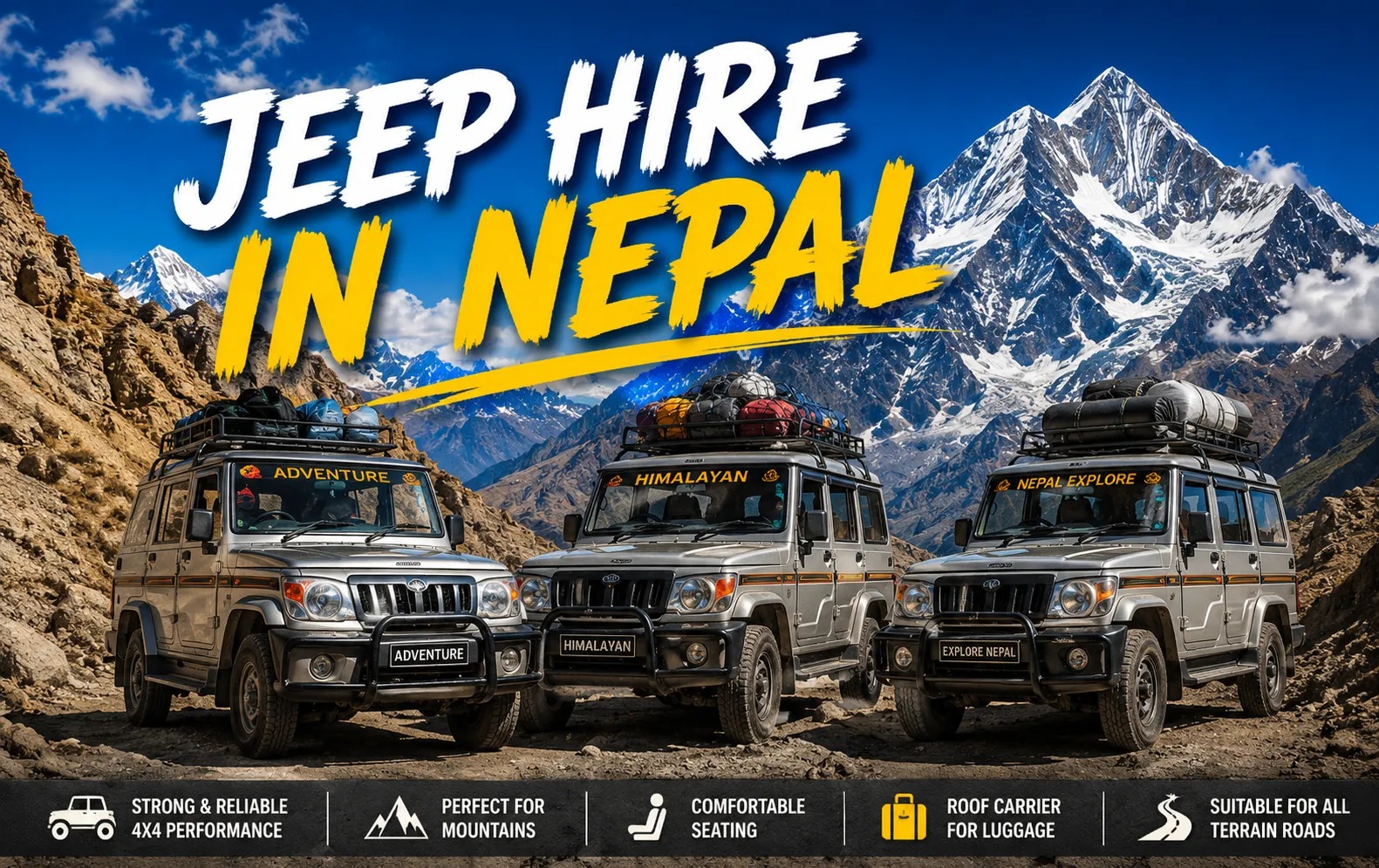
Why Choose a 4WD Jeep for Mountain Roads in Nepal?
Nepal’s mountain roads are unlike almost anywhere else on earth. Within a few hours of leaving a paved highway, a road can climb thousands of meters in elevation, narrow to a single rocky lane clinging to a cliff edge, cross seasonal streams with no bridge, and pass through landslide-prone gorges where the surface itself was carved by hand and bulldozer rather than engineered to international standards. On these roads, the choice of vehicle is not a matter of comfort preference – it is a matter of whether your journey is possible at all.
This guide explains exactly why a 4WD jeep – typically a Toyota Land Cruiser, Land Cruiser Prado, Mahindra Scorpio, or Bolero in the Nepali context – is the right, and often the only, choice for Nepal’s mountain routes, where 4WD is essential, and how to decide which vehicle your specific journey requires.
What Makes Nepal’s Mountain Roads So Demanding?
To understand why 4WD matters, it helps to understand exactly what these roads involve:
- Extreme gradients – mountain roads frequently climb or descend at gradients far steeper than anything found on a standard highway, sometimes exceeding what a 2WD vehicle’s drivetrain can manage on loose surfaces
- Unpaved and semi-paved surfaces – many mountain roads beyond the major highways are gravel, rock, or compacted earth tracks rather than asphalt
- River and stream crossings – seasonal streams cross many mountain roads directly, with no bridge, requiring the vehicle to drive directly through moving water and uneven riverbed
- Landslide-prone sections – the Himalayan geology is young and unstable; rockfall and landslide debris regularly affect the surface and width of mountain roads
- Narrow, exposed cliff-edge sections – many roads are cut into the side of steep valleys with sheer drops on one side and minimal margin for error
- High altitude and rough switchbacks – roads climbing to passes above 3,000 m involve constant tight switchback turns that demand a vehicle with a tight turning radius and strong low-speed control.
- Seasonal extremes – monsoon rain turns dry tracks into mud; winter brings ice and occasional snow to higher sections
What a 4WD Jeep Provides That a Standard Vehicle Cannot
Power Distribution to All Four Wheels
A 2WD vehicle sends engine power to only two wheels, meaning if those two wheels lose traction on loose gravel, mud, or wet rock, the vehicle can become stuck even on a relatively gentle slope. A 4WD jeep distributes power to all four wheels, dramatically increasing traction on loose, slippery, or uneven surfaces – exactly the conditions found on most Nepali mountain roads beyond the main highways.
High Ground Clearance
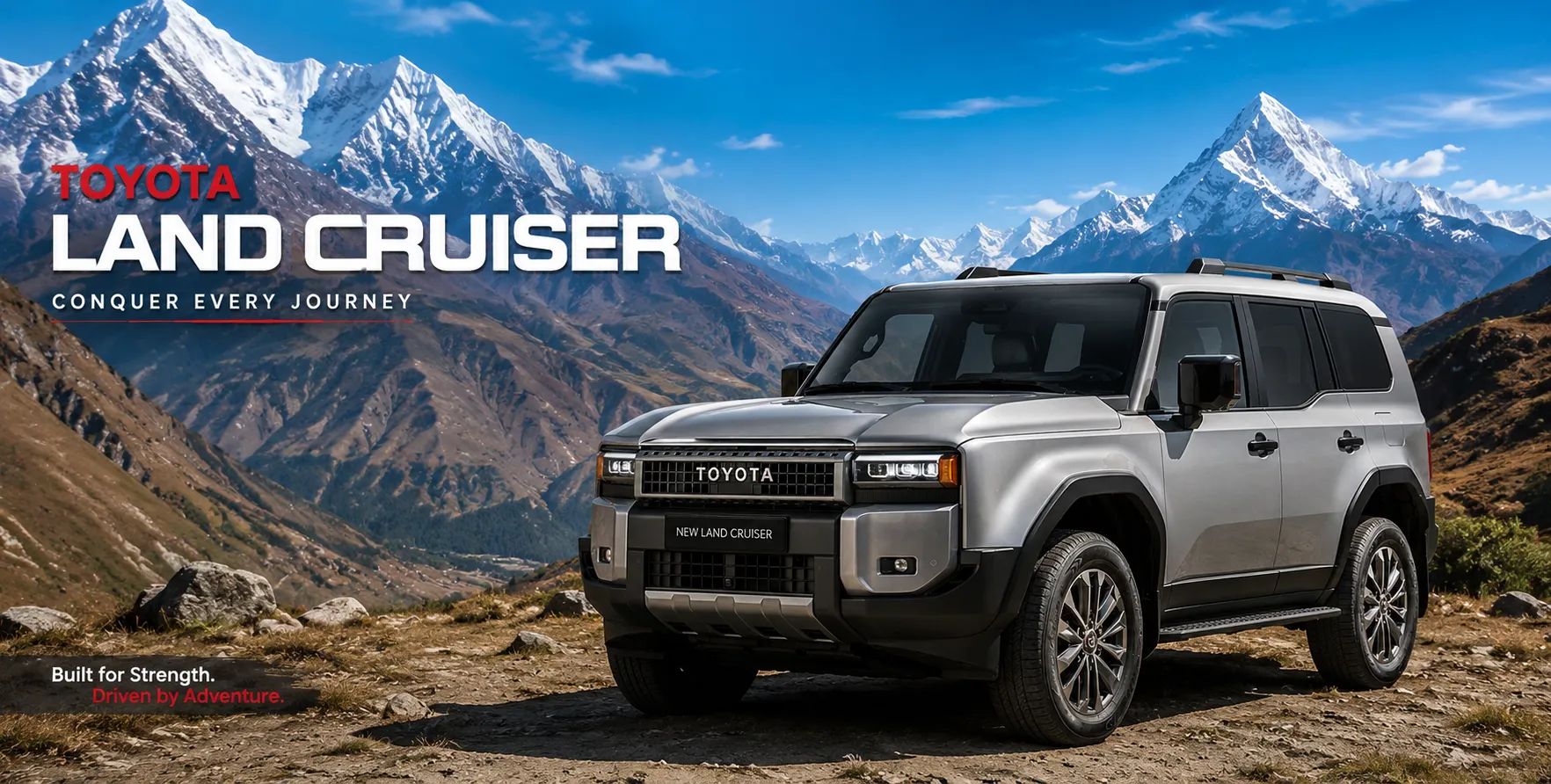
Jeeps like the Toyota Land Cruiser and Mahindra Scorpio sit significantly higher off the ground than sedans or standard SUVs. This clearance is essential for navigating rutted tracks, large embedded rocks, and the uneven surfaces common on mountain roads – a sedan’s low underbody would scrape, snag, or become high-centered on obstacles a jeep clears with ease.
Low-Range Gearing
Many 4WD jeeps include a low-range gear setting that provides immense torque at low speeds – critical for crawling up steep, loose-surface inclines or carefully descending steep grades without relying solely on the brakes. This capability does not exist in standard road vehicles.
Robust Suspension and Chassis
Mountain jeeps are built with reinforced suspension systems designed to absorb the constant impact of rough, rocky surfaces over thousands of kilometers without mechanical failure – a critical safety factor on roads where a breakdown could leave passengers stranded far from any assistance.
Engine Power for Steep, Sustained Climbs
The diesel engines found in Land Cruisers, Scorpios, and similar mountain vehicles are tuned for high torque at low RPM – exactly what is needed for sustained steep climbs at altitude, where thinner air also reduces engine performance in any vehicle. A 4WD jeep’s engine is matched to the demands of mountain driving in a way a standard sedan engine is not.
Where 4WD is Essential in Nepal – Route by Route
Not every road in Nepal requires a 4WD jeep. Major highways like the Prithvi Highway (Kathmandu–Pokhara) and the East-West Highway across the Terai are fully paved and accessible by any standard vehicle. 4WD becomes essential once you leave these main arteries. Here is a guide to where 4WD is mandatory:
| Route | 4WD Required? | Why |
| Kathmandu – Pokhara (Prithvi Hwy) | No | Fully paved national highway |
| Kathmandu – Chitwan / Lumbini (Terai) | No | Flat, paved highway throughout |
| Beni – Jomsom – Muktinath (Kali Gandaki) | Yes | Rough gorge track, river-edge sections, no paving |
| Jomsom – Kagbeni – Lo Manthang (Upper Mustang) | Yes | Remote high-plateau track, extremely rough |
| Besisahar – Chame – Manang (Annapurna Circuit) | Yes | Rough mountain track, switchbacks, stream crossings |
| Arughat – Soti Khola (Manaslu approach) | Yes | Cliff-edge gorge track, very narrow |
| Pokhara – Sikles / Ghasa / Ghandruk | Yes | Steep, rocky foothill tracks |
| Dharan – Taplejung (Pathivara approach) | Yes | Long winding mountain road, landslide-prone |
| Kathmandu – Jiri / Salleri (Everest road access) | Yes | Rough mountain road beyond Lamosangu |
As a general rule, any route beyond Nepal’s two or three fully paved national highways that climbs into hill or mountain terrain should be assumed to require a 4WD vehicle unless specifically confirmed otherwise.
The Risk of Using the Wrong Vehicle
Travelers sometimes attempt to save money by booking a standard sedan or van for a route that actually requires 4WD. The consequences can include:
- Getting stuck – a 2WD vehicle losing traction on a loose or wet incline can become completely immobilized, sometimes requiring a tow from another vehicle that may not be readily available in remote areas
- Vehicle damage –low-ground-clearance vehicles risk damaging the underbody, exhaust system, or suspension on rocky and rutted surfaces.
- Safety risk – loss of control on narrow, cliff-edge mountain roads is far more likely in a vehicle without adequate traction and stability.
- Trip delays – a stuck or damaged vehicle can cause hours or even days of delay in remote mountain areas where mechanics and spare parts are scarce.
- Stranding – in the most remote sections of Upper Mustang or the Manaslu approach, a breakdown without 4WD recovery capability can leave a group genuinely stranded.
The relatively small cost difference between hiring a sedan and a proper 4WD jeep is insignificant compared to the risk of an interrupted or unsafe journey on routes where 4WD is genuinely required.
Comparing 4WD Vehicle Options in Nepal
| Vehicle | Capacity | Strengths | Best Routes |
| Toyota Land Cruiser | 4–6 pax | Most powerful and capable, best for the toughest routes | Upper Mustang, Manang, Kali Gandaki gorge |
| Toyota Land Cruiser Prado | 4–5 pax | Premium comfort with strong 4WD capability | Muktinath, Mustang, for comfort-focused travelers |
| Toyota Fortuner | 5–6 pax | Good value 4WD, comfortable highway ride | Besisahar–Chame, foothill routes |
| Mahindra Scorpio | 6–9 pax | Powerful engine, high clearance, widely used regionally | Eastern Nepal hill roads, Pathivara, Ilam |
| Mahindra Bolero | 4–6 pax | Rugged and affordable 4WD option | Budget groups on rough but shorter routes |
4WD and Altitude: A Connected Challenge
Most routes requiring 4WD in Nepal also involve significant altitude gain – the Kali Gandaki gorge climbs from 820 m at Pokhara to over 3,700 m at Muktinath; the Annapurna Circuit road climbs to 3,500 m at Manang; Upper Mustang reaches 3,840 m at Lo Manthang. This connection is not coincidental: rough, undeveloped roads and high mountain terrain go hand in hand in Nepal’s geography.
A capable 4WD jeep with a powerful engine also performs better at altitude, where thinner air reduces engine power output in any vehicle. The combination of strong torque, 4WD traction, and engine power suited to high-altitude operation makes the Land Cruiser and similar jeeps the standard choice for Nepal’s highest and most demanding mountain routes.
Seasonal Considerations for 4WD Travel
Monsoon (June to September)
4WD becomes even more critical during the monsoon, when rain transforms dry mountain tracks into mud and increases landslide risk. Experienced 4WD drivers know how to read changing road conditions and adjust their approach to wet, slippery sections that would stop a 2WD vehicle entirely.
Winter (December to February)
Higher-altitude sections of mountain roads, particularly above 3,000 m, can develop ice and occasional snow in winter. 4WD with appropriate tires provides significantly improved control on these surfaces compared to any 2WD vehicle.
Post-Monsoon and Spring (October–November, March–May)
These are the best seasons for mountain road travel, with the driest and most stable surface conditions. Even in good conditions, however, the fundamental terrain – steep gradients, rough surfaces, river crossings – still requires 4WD capability on the routes listed above.
How to Decide if You Need a 4WD Jeep
Use this simple decision framework when planning your Nepal vehicle hire:
- Is your entire route on a major paved highway (Prithvi Highway, East-West Highway)? If yes, a standard sedan or van is sufficient.
- Does your route include any unpaved mountain section, river crossing, or climb above approximately 2,500 m on a non-highway road? If yes, 4WD is required.
- Are you traveling during or shortly after monsoon season on any hill or mountain road? If yes, 4WD strongly reduces risk even on routes that might be passable in the dry season with a 2WD vehicle.
- Is your destination in a restricted or remote area (Upper Mustang, Manaslu region, far eastern hill districts)? If yes, 4WD is mandatory and often the only realistic option.
- Still unsure? Contact Vehicle Hiring Nepal and describe your exact route – our team will confirm whether 4WD is needed based on current road conditions.
Why Book Your 4WD Jeep with Vehicle Hiring Nepal
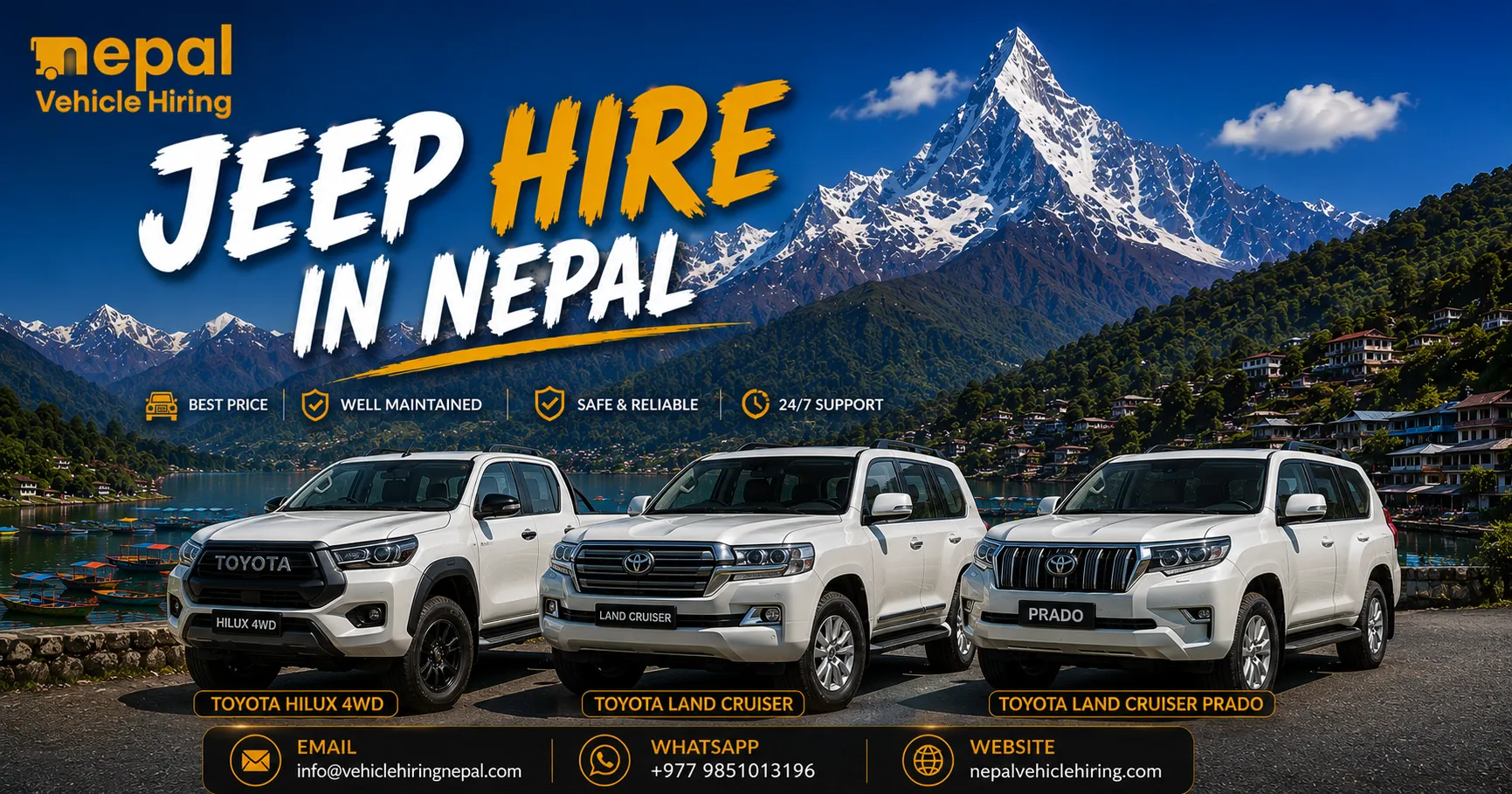
- Full fleet of Toyota Land Cruisers, Prados, Fortuners, and Mahindra Scorpios maintained specifically for mountain route reliability
- Drivers with deep experience on Nepal’s most demanding roads – Kali Gandaki gorge, Upper Mustang, Manaslu approach, Annapurna Circuit, eastern hill districts
- Honest advice on which vehicle your specific route actually requires – we will never recommend an underpowered vehicle to save you a small amount of money at the cost of your trip’s reliability
- Vehicles equipped and maintained for the specific demands of altitude, rough terrain, and remote operation
- 24/7 WhatsApp support throughout your journey, with drivers who understand how to respond to changing mountain road conditions
How to Book Your 4WD Jeep
- Contact Vehicle Hiring Nepal via WhatsApp at +977 9851013196 or visit vehiclehiringnepal.com
- Describe your planned route and destination
- We confirm whether 4WD is required and recommend the appropriate vehicle
- Provide your travel dates, group size, and pickup location
- Receive your booking confirmation with vehicle details and driver information
WhatsApp: +977 9851013196
Email: [email protected]
Frequently Asked Questions
Can a standard serve as an SUV substitute for a true 4WD Jeep on mountain roads?
It depends on the specific SUV and route. Some SUVs offer genuine 4WD or all-wheel-drive systems with reasonable ground clearance and can handle moderate mountain roads. However, for the most demanding routes – Upper Mustang, the Kali Gandaki gorge, the Manaslu approach – a true 4WD jeep like the Toyota Land Cruiser remains the safest and most reliable choice. Always confirm the specific drivetrain and ground clearance of any SUV before relying on it for serious mountain terrain.
Is 4WD necessary even in the dry season?
Yes, on the routes identified as requiring 4WD in this guide. While dry-season conditions are more favorable, the fundamental terrain challenges – steep gradients, loose rock and gravel surfaces, narrow cliff-edge sections, and river crossings – remain regardless of season. 4WD provides essential traction and control on these surfaces even when dry.
Does 4WD guarantee a completely safe journey on Nepal’s mountain roads?
4WD significantly improves safety and reliability but does not eliminate all risk. Mountain road travel in Nepal always carries inherent risks due to landslides, weather, and the challenging terrain. An experienced, professional driver combined with a properly maintained 4WD vehicle is the best combination for minimizing risk. Still, travelers should always follow their driver’s guidance, allow flexibility in their schedule for weather delays, and carry appropriate travel insurance.
How much more does a 4WD jeep cost compared to a standard vehicle?
4WD jeeps typically cost 20 to 40 percent more than equivalent-capacity standard vehicles for the same route, reflecting the vehicle’s higher value, increased fuel consumption, and the specialized driving skill required. For routes where 4WD is genuinely necessary, this additional cost is a worthwhile investment in the safety and reliability of your journey, not an optional upgrade.
Final Thoughts
Nepal’s mountain roads are part of what makes the country’s most extraordinary destinations – Upper Mustang, the Annapurna Circuit, Muktinath, the remote eastern hills – genuinely special and relatively untouched by mass tourism. But that same ruggedness that preserves their character also demands the right vehicle to reach them safely and reliably. A 4WD jeep is not a luxury upgrade on these routes – it is the fundamental tool that makes the journey possible at all.
Vehicle Hiring Nepal maintains a full fleet of Toyota Land Cruisers, Prados, Fortuners, and Mahindra Scorpios specifically suited to Nepal’s mountain terrain, with experienced drivers who have navigated these roads for years. Whatever mountain destination you are planning to reach in 2026, talk to us first – we will make sure you have the right vehicle for the road ahead.
Book your 4WD jeep today. WhatsApp: +977 9851013196 | Website: www.vehiclehiringnepal.com | Email: [email protected]
- Why Choose a 4WD Jeep for Mountain Roads in Nepal?
- What Makes Nepal's Mountain Roads So Demanding?
- What a 4WD Jeep Provides That a Standard Vehicle Cannot
- Where 4WD is Essential in Nepal – Route by Route
- The Risk of Using the Wrong Vehicle
- Comparing 4WD Vehicle Options in Nepal
- 4WD and Altitude: A Connected Challenge
- Seasonal Considerations for 4WD Travel
- How to Decide if You Need a 4WD Jeep
- Why Book Your 4WD Jeep with Vehicle Hiring Nepal
- How to Book Your 4WD Jeep
- Frequently Asked Questions
- Final Thoughts

Related Blog & Articles
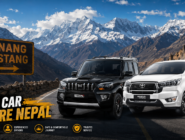
4WD Himalayan Jeep in Nepal
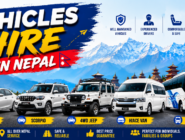
All Over Nepal Vehicle Hire – Private Car, Scorpio, 4WD Jeep, Hiace & Tourist Bus
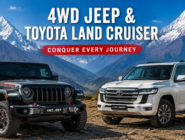
Luxury Jeep Hire in Nepal – Premium 4WD Vehicle Rental for Himalayan Adventures 2026