Plan a Trip


Mustang Full Guide: Upper & Lower Mustang Vehicle Hire
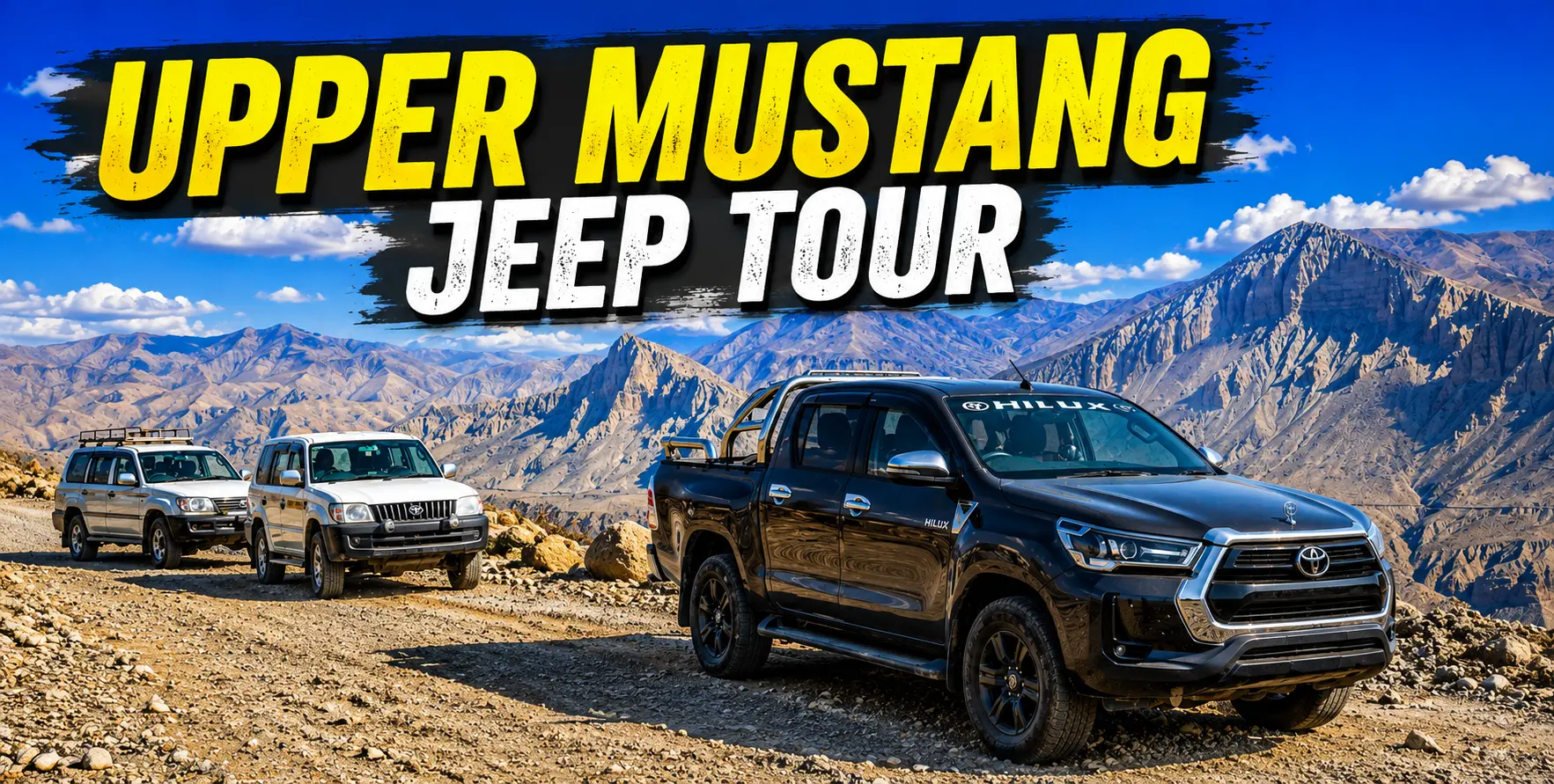
Mustang Full Guide: Upper & Lower Mustang — Jeep Tour, Trek & Vehicle Hire
The name Mustang conjures one of the most evocative landscapes in all of Nepal — a high-altitude world where wind-carved canyons of ochre and rust-red rock drop to the turquoise-blue waters of the Kali Gandaki River, where medieval walled cities perch on desert plateaus, where ancient Buddhist monasteries hold centuries of sacred art in near-perfect preservation, and where the skyline is defined by some of the most dramatic peaks on Earth: Dhaulagiri at 8,167 metres to the west, Annapurna at 8,091 metres to the east, and the striking Nilgiri massif looming directly above the valley floor.
Mustang is one of the most remarkable places you can reach by vehicle anywhere on the planet — and for travellers willing to commit to the journey, it delivers cultural and natural richness that stays with visitors for the rest of their lives.
Many first-time travellers do not realise that ‘Mustang’ encompasses two distinct geographic and administrative zones, each with its own character, permit requirements, key destinations, and optimal vehicle hire arrangements. Lower Mustang — also known as Southern Mustang or simply the Kali Gandaki Valley — covers the region from the Kali Gandaki gorge’s lower reaches at Beni through the dramatic river canyon to the ancient gateway town of Kagbeni, encompassing
the famous villages of Tatopani, Ghasa, Kalopani, Tukuche, Marpha, Jomsom, and Muktinath. Lower Mustang requires only the standard Annapurna Conservation Area Permit (ACAP) and is open to all visitors, with no special restrictions or group-size requirements. It is Nepal’s most dramatic highway drive destination, a journey that most visitors describe as extraordinary even before the formal trekking begins.
Upper Mustang — formerly the independent Kingdom of Lo — begins at the police and ACAP checkpoint just north of Kagbeni and extends northward to the ancient walled capital of Lo Manthang and beyond toward the Nepal-Tibet border near the Korala Pass. Upper Mustang is an officially restricted area, closed to foreign visitors until 1992 and still controlled.
Entry requires a special Restricted Area Permit (RAP) costing USD 500 per person for the first ten days (with USD 50 per day thereafter under the new daily extension rule), a minimum group of two foreign nationals, and a licensed guide at all times. This additional layer of control has kept Upper Mustang genuinely less visited than the main Annapurna corridors, preserving a cultural and landscape character that feels — authentically off the beaten path.
This complete guide to Guideom Nepal Vehicle Hiring Pvt Ltd (vehiclehiringnepal.com) covers both regions in full detail, drawing on thorough 2 research into accommodation costs, permit fees, jeep distances, driving times, road conditions, and cultural content. Every distance, cost, and timing figure reflects current information from multiple verified sources.
Whether you are planning a 3-day Lower Mustang overland escape, a 10-day Upper Mustang jeep tour, a classic 14-day trek over the Thorong La Pass, or a combined circuit that covers both regions in one journey, this guide gives you everything you need to plan your Mustang adventure with total confidence.
Understanding Mustang: Geography, History, and Culture
Geographic Setting
Mustang District sits in the Gandaki Province of north-central Nepal, immediately north of the Annapurna Conservation Area and sandwiched between two of the world’s eight-thousanders. The district is bisected from north to south by the Kali Gandaki River, which flows through what is widely described as the world’s deepest gorge — a designation based on the vertical drop from the summits of Annapurna and Dhaulagiri on either side to the river between them, a difference of nearly 6,000 meters.
The Kali Gandaki Gorge is the primary geographic feature that has shaped both Mustang’s landscape and human history, serving for millennia as the most practical high-altitude trade corridor between the Tibetan plateau to the north and the Indo-Gangetic plains to the south.
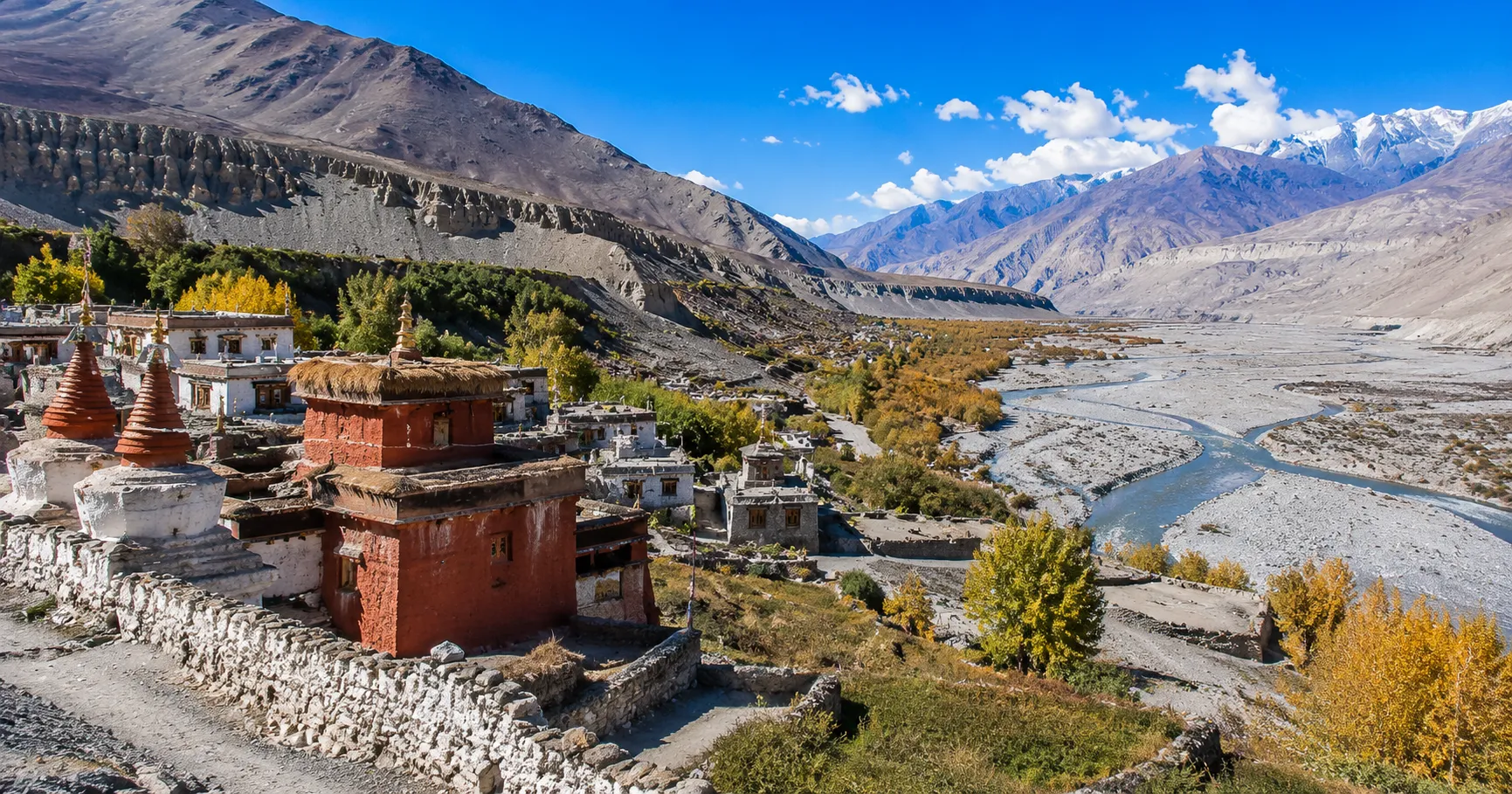
Upper Mustang, north of Kagbeni, sits in the pronounced rain shadow cast by the Annapurna and Dhaulagiri massifs, receiving minimal monsoon rainfall and developing a landscape strikingly reminiscent of the Tibetan Plateau, which it geographically and culturally resembles. The contrast between the lush, green terraced hillsides on the approach from Beni and the stark, wind-sculpted desert of the upper valley is one of the most dramatic landscape transitions in Nepal, occurring over just a few hours of driving as the valley narrows and climbs beyond Marpha and Jomsom.
The Kingdom of Lo: A History
Upper Mustang’s historical identity is inseparable from the Kingdom of Lo. This independent Tibetan-culture kingdom controlled this valley from the 14th century through its formal integration into the Kingdom of Nepal in 1795. It maintained cultural and administrative autonomy for decades thereafter. Founded by the Loba chieftain Ame Pal around 1380 CE, the Kingdom of Lo established its capital at Lo Manthang — still the principal settlement of Upper Mustang today — and built the elaborate palace, monastery, and city wall complex that defines the walled city’s extraordinary appearance.
The kingdom’s wealth came mainly from controlling the trans-Himalayan trade route and collecting customs duties on the salt and grain caravans that passed through Lo Manthang on the route between Tibet and India.
The formal abolition of Nepal’s monarchy in 2008 technically ended Lo Manthang’s royal lineage. Still, the current Loba king — Jigme Dorje Palbar Bista — remains respected by the Loba community as a traditional cultural authority and spiritual figure. Upper Mustang’s population numbers about 6,000, all of whom follow Tibetan Buddhism, speak the Tibetan-derived Loba language as their primary tongue, and maintain traditions of dress, ceremony, and agricultural practice that connect them far more closely to the Tibetan plateau than to Nepal’s more familiar hill cultures.
The Tiji Festival: Mustang’s Most Spectacular Event
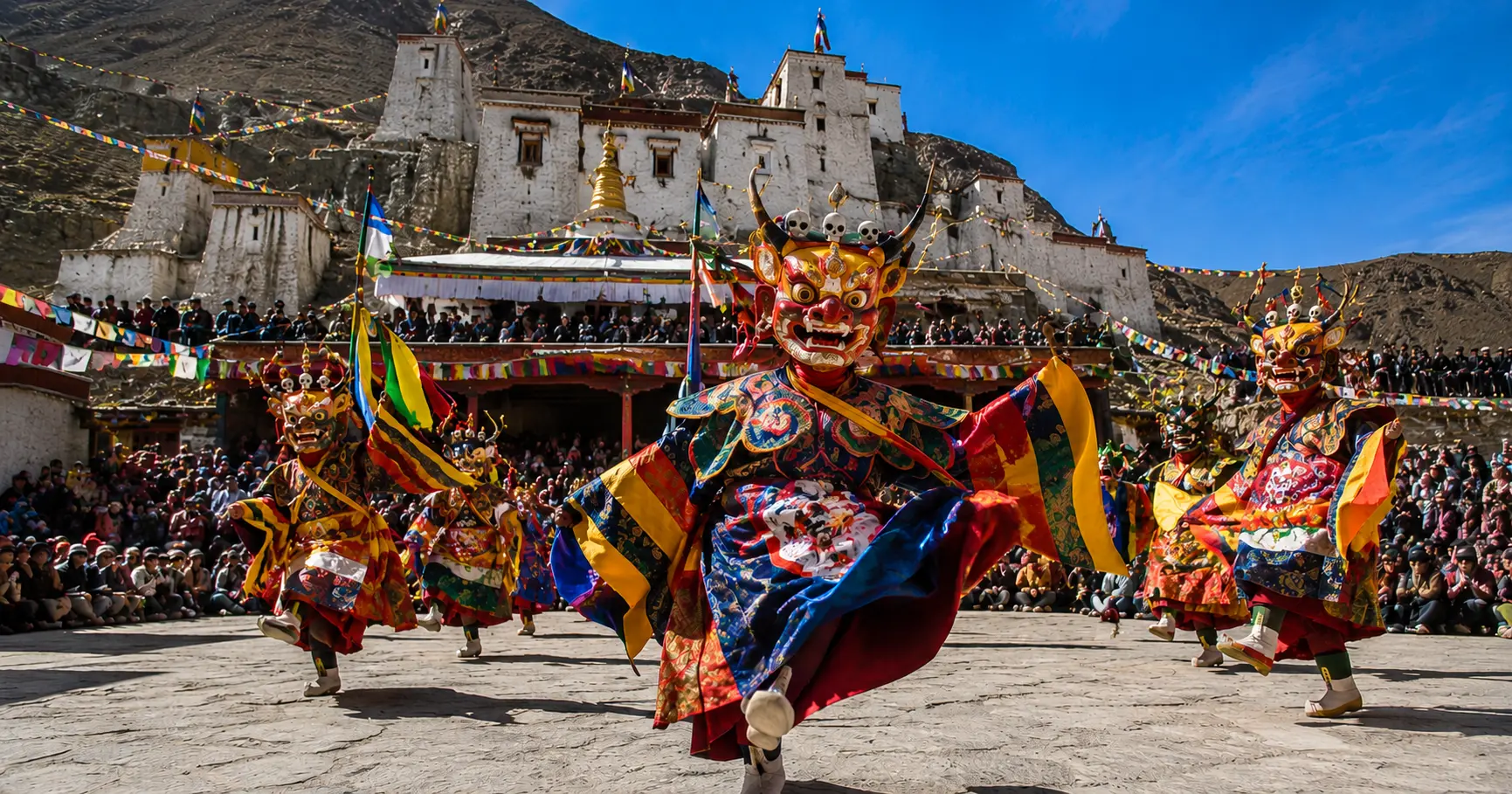
No cultural event in all of Nepal’s calendar quite matches the Tiji Festival of Lo Manthang for sheer visual and spiritual impact. Held annually in Lo Manthang over three days in May according to the Tibetan lunar calendar — the 2026 dates fall on May 13-15 — the Tiji Festival enacts a mythological narrative of the triumph of Jono over the demon who threatened to destroy the world by creating drought and flooding.
The festival involves three days of elaborate masked dance performances by monks from Lo Manthang’s principal monasteries, wearing costumes and masks of extraordinary craftsmanship, who perform before the entire assembled community in the courtyard of the ancient city. For travellers who time their Upper Mustang visit to coincide with Tiji, the experience transcends ordinary cultural tourism and becomes a more genuine spiritual witness.
Lower Mustang: Key Destinations, Road Guide & Vehicle Hire
Lower Mustang — the section of Mustang District south of Kagbeni, roughly corresponding to the Kali Gandaki corridor from Beni to the Upper Mustang checkpoint — is one of Nepal’s most dramatic and diverse overland destinations, offering a concentration of natural and cultural highlights within a relatively compact driving distance that makes it ideal for travellers with limited time who still want a genuinely extraordinary Himalayan experience.
The Drive: Pokhara to Jomsom via Kali Gandaki Gorge
The overland journey from Pokhara to Jomsom — the administrative centre of Mustang District and the main hub for Lower Mustang tourism — covers approximately 143 to 197 kilometres, depending on the specific route, and takes between 7 and 11 hours by private 4WD jeep. The route follows the Bhupi Sherchan Highway from Pokhara through Beni (109 km, approximately 3 hours on smooth concrete road), then transitions to rough off-road driving through Tatopani, Ghasa, Kalopani, Tukuche, and Marpha before reaching Jomsom. The off-road Beni to Jomsom section covers about 60 kilometres and takes 4 to 5 hours, making the road conditions the dominant factor in the journey’s demands.
This drive through the Kali Gandaki Gorge is one of Nepal’s great overland journeys, combining geological drama — the vertical canyon walls tower hundreds of meters above the road on both sides in the most confined sections — with cultural richness, from the ancient hot springs at Tatopani to the wind-carved rock formations of the upper gorge and the apple orchards of Marpha. The road runs alongside a river famous for its saligram fossils—ancient ammonite stones that Hindu tradition associates with Lord Vishnu and that lie scattered throughout the riverbed in numbers that astonish first-time visitors.
Key Villages and Destinations in Lower Mustang
Tatopani — Natural Hot Springs and Gorge Drama (1,190 m)
Tatopani — whose name literally means ‘hot water’ in Nepali — is one of the most popular rest stops along the Kali Gandaki corridor, famous for its natural sulfur hot springs that draw trekkers and vehicle travellers for a restorative soak after hours of mountain road travel. The springs sit directly beside the river, and the contrast between the hot mineral water and the cold, rushing Kali Gandaki alongside creates an atmospheric bathing experience unlike anything available in more conventional tourist destinations. The village suffered significant damage in the 2015 earthquake but has been substantially rebuilt, and its cluster of lodges, teahouses, and hot spring facilities now serves the steady stream of overland travellers and trekkers passing through on the Annapurna Circuit.
Marpha — The Apple Capital of Nepal (2,667 m)
Marpha is arguably the most charming village in all of Lower Mustang, a beautifully preserved Thakali settlement of whitewashed stone houses connected by narrow, flagstone-paved lanes so narrow that vehicles cannot pass and only pedestrians and pack animals move through. Marpha is famous throughout Nepal for its apple orchards — the valley’s microclimate and altitude create ideal conditions for apple cultivation — and the local apple products, including fresh apples, apple brandy (a locally distilled spirit with a cult following among trekkers), apple pie, apple juice, and dried apple rings ar, are among the most distinctive culinary specialities anywhere on the Nepal trekking circuit. A short walk through Marpha village’s covered lanes, plus a visit to the ancient Sakya monastery and the local distillery, is an essential stop on any Lower Mustang vehicle tour.
Jomsom — The Hub of Mustang (2,720 m)
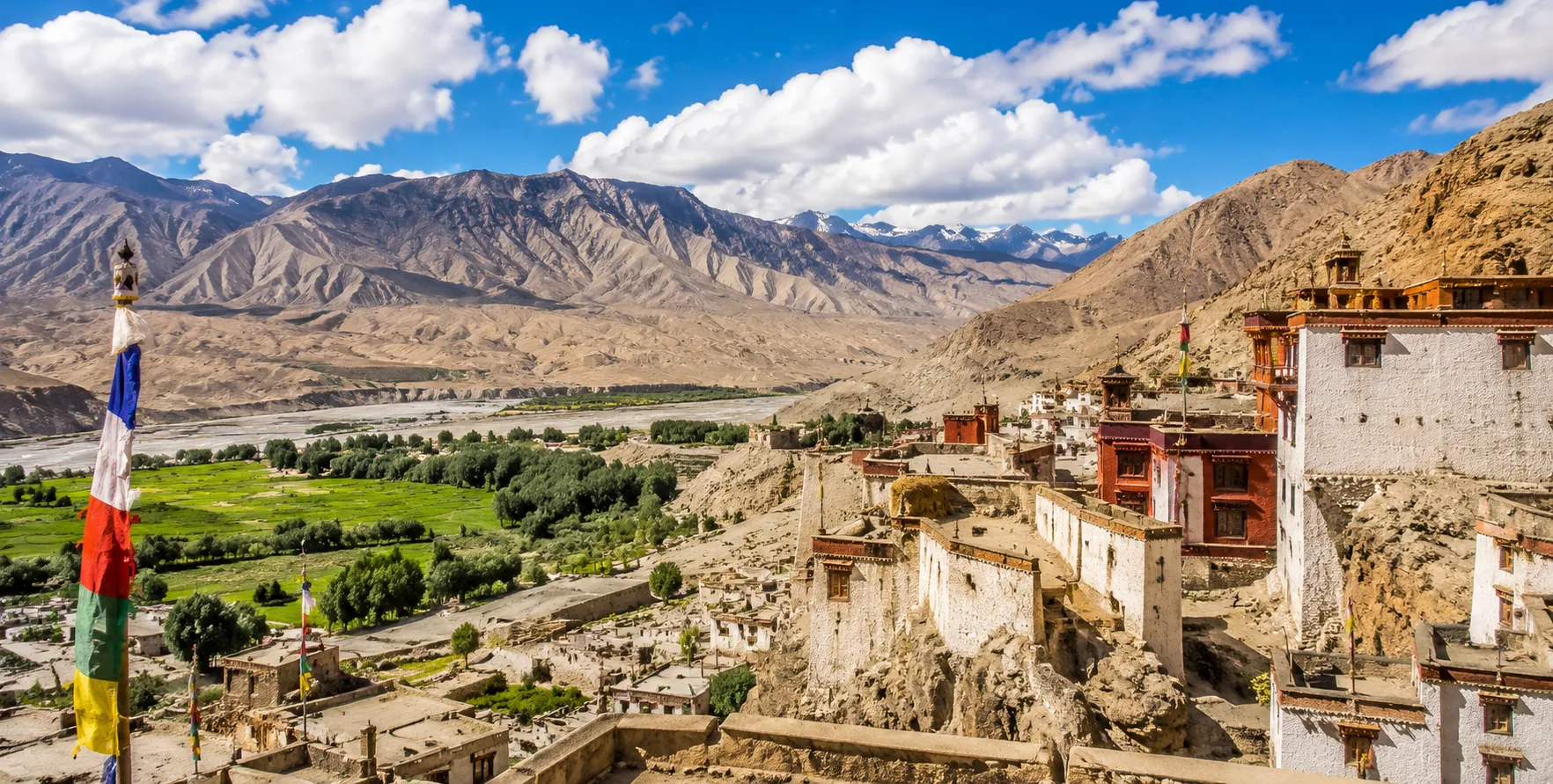
Jomsom is the administrative capital of Mustang district, a busy and surprisingly well-equipped small town strung along the banks of the Kali Gandaki River at an elevation of 2,720 meters. The town has a domestic airport — serviced by Tara Air and other carriers with regular flights from Pokhara (a spectacular 20-to-25-minute flight that costs USD 120 to USD 140 per person one-way, though subject to frequent weather delays) — alongside a Nepal Bank branch with an ATM, several comfortable hotels and teahouses, restaurants, shops, and the full complement of trekking support services. Jomsom functions as the principal base and staging point for both Lower Mustang day trips and the onward approach to Upper Mustang, and most multi-day Mustang itineraries include at least one overnight here.
Just 5 kilometres from Jomsom, the freshwater Dhumba Lake, at 2,830 metres near Thini Village, offers a peaceful detour with striking mountain reflections on calm mornings. At the same time, the ancient Bon-tradition monastery in Lupra village — one of Nepal’s last surviving Bon communities, where just 14 families maintain a 12th-century monastery through a hereditary priesthood system — offers a genuinely rare encounter with Nepal’s pre-Buddhist religious tradition on any trekking circuit.
Kagbeni — Gateway to the Hidden Kingdom (2,804 m)
Kagbeni is one of the most atmospheric villages in the entire Kali Gandaki corridor — a medieval Tibetan-influenced settlement of narrow alleyways, ancient mud-brick houses, prayer wheels, and chortens, dominated by a hilltop monastery visible from a considerable distance as the vehicle approaches from Jomsom along the flat riverbed track. The village sits at the confluence of the Kali Gandaki and Kag Khola rivers and has historically served as the gateway settlement controlling access to Upper Mustang, a role maintained today by the police checkpoint just north of the village, where all visitors must present their permits before continuing into the restricted zone.
Kagbeni rewards a leisurely exploration on foot — the monastery contains frescoes and statues of genuine antiquity, the village’s covered lanes create a maze-like atmosphere distinct from any other settlement in Nepal, and the views from the terrace above the village toward the Upper Mustang plateau to the north and the Annapurna peaks to the south are outstanding. Many vehicle tour operators include a one- to two-hour stop in Kagbeni specifically for this exploration, separate from any time spent at the checkpoint processing permits.
Muktinath — The Sacred Shrine at 3,710 Meters
Muktinath Temple complex, situated at 3,710 meters at the foot of the Thorong La Pass, is the most sacred destination in the entire Mustang region for millions of Hindu and Buddhist pilgrims who visit Nepal annually. As one of the 108 Divya Desams (holy Vishnu shrines) in the Hindu tradition and as the site of the natural miracle of an eternal flame burning above a spring of water — considered one of the most auspicious natural phenomena in Himalayan religious geography — Muktinath draws pilgrims from across India, Nepal, and the broader Hindu and Buddhist world.
The temple complex includes the main Vishnu shrine, the 108 sacred water spouts (Muktidhara) where devotees take ritual baths in icy mountain water, the Jwala Devi temple, where a natural gas flame burns perpetually, and an adjoining Buddhist monastery maintained by Tibetan Buddhist monks.
The drive from Jomsom to Muktinath covers approximately 19 kilometres of relatively smooth, paved road (the final stage from Kagbeni northward is largely paved and takes about 45 minutes to 1 hour by jeep), making Muktinath one of the most accessible high-altitude pilgrimage destinations in Nepal. Private jeep hire from Jomsom to Muktinath costs NPR 3,000 to NPR 4,500 for the full vehicle — an extremely reasonable rate for access to one of Nepal’s holiest sites.
Mustang Full Guide: Upper & Lower Mustang Vehicle Hire)
Lower Mustang Key Sites: Quick Reference
| Village/Site | Altitude | Distance from Pokhara | Key Attraction | No Permit Needed |
|---|---|---|---|---|
| Tatopani | 1,190 m | 85 km | Natural hot springs, gorge scenery | Yes |
| Marpha | 2,667 m | 130 km | Apple orchards, Thakali culture, distillery | Yes (ACAP only) |
| Jomsom | 2,720 m | 143 km | District HQ, ATM, airport, Dhumba Lake, Bon monastery | Yes (ACAP only) |
| Kagbeni | 2,804 m | 155 km | Medieval village, gateway to Upper Mustang | Yes (ACAP only) |
| Muktinath | 3,710 m | 197 km | Sacred Hindu/Buddhist temple, 108 spouts, eternal flame | Yes (ACAP only) |
Upper Mustang: The Forbidden Kingdom in Detail
Beyond the Kagbeni checkpoint, where the restricted area permit is verified and stamped, the landscape and experience of Mustang transform into something markedly different from anything in Lower Mustang — or indeed anywhere else in Nepal. The desert plateau stretches northward with an austere grandeur that feels fundamentally Tibetan rather than Nepali; the villages become increasingly remote and traditional, and the sense of entering a place that the modern world has touched only lightly intensifies with every kilometre gained toward Lo Manthang.
Chele, Syangboche and the Approach Plateau (3,055–3,930 m)
The first two major villages north of Kagbeni in the Upper Mustang restricted zone are Chele (approximately 3,055 m, reached 30 km north of Kagbeni by a rough 4WD track taking 2 to 3 hours) and Syangboche (3,800 m, a further 30 km north and 2 to 3 more hours of rough driving).
The road between Kagbeni and Chele involves the most technically demanding driving of the entire Mustang route — steep switchbacks above the Kali Gandaki gorge, narrow cliff-side tracks carved into the rock face, and the kind of loose-surface gradient that demands both low-range gearing and experienced driver judgment. Beyond Chele, the road climbs to the plateau proper at Syangboche, crossing Syangboche Pass at about 3,800 meters and offering panoramic views of the Mustang landscape in all directions.
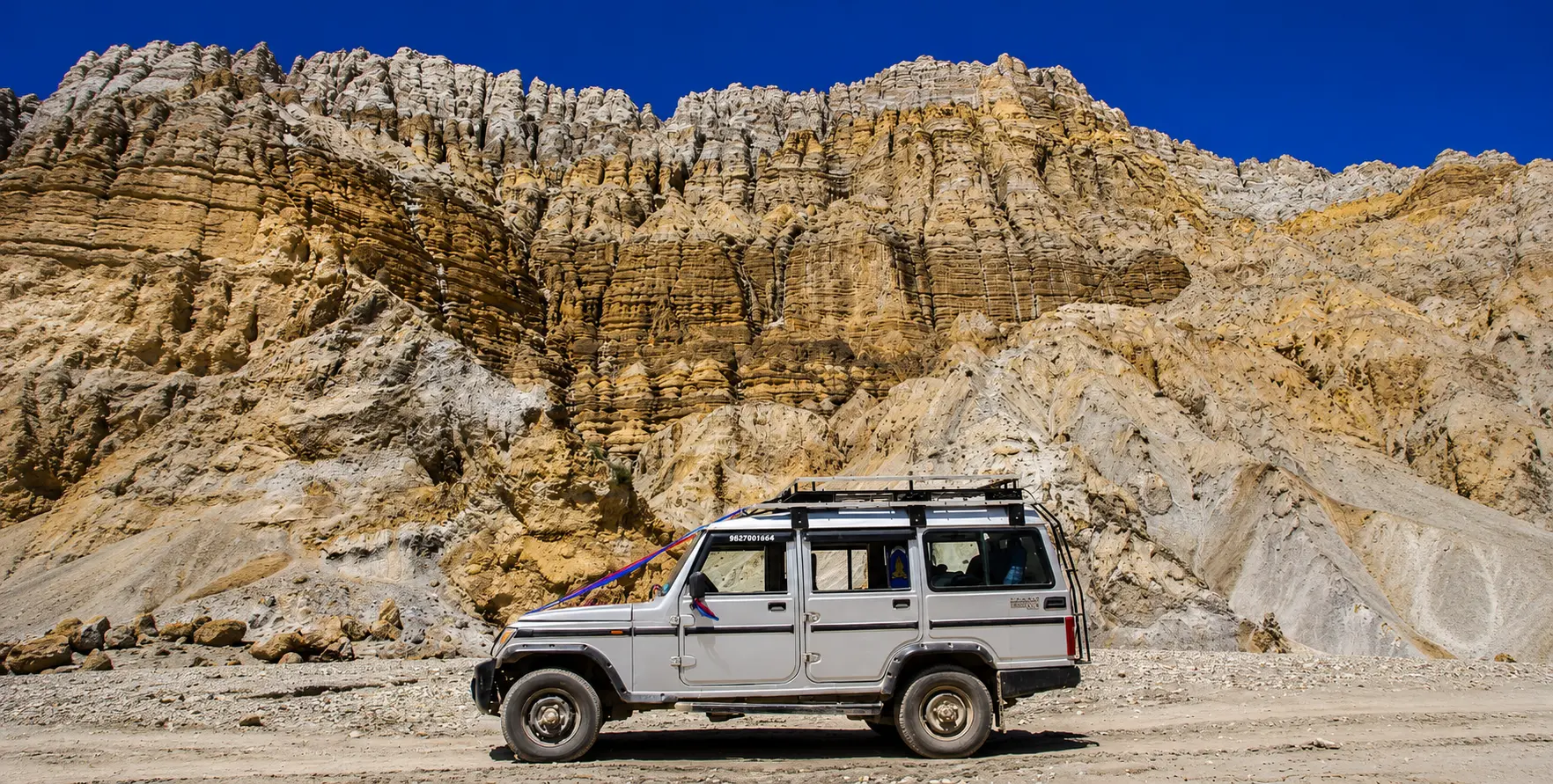
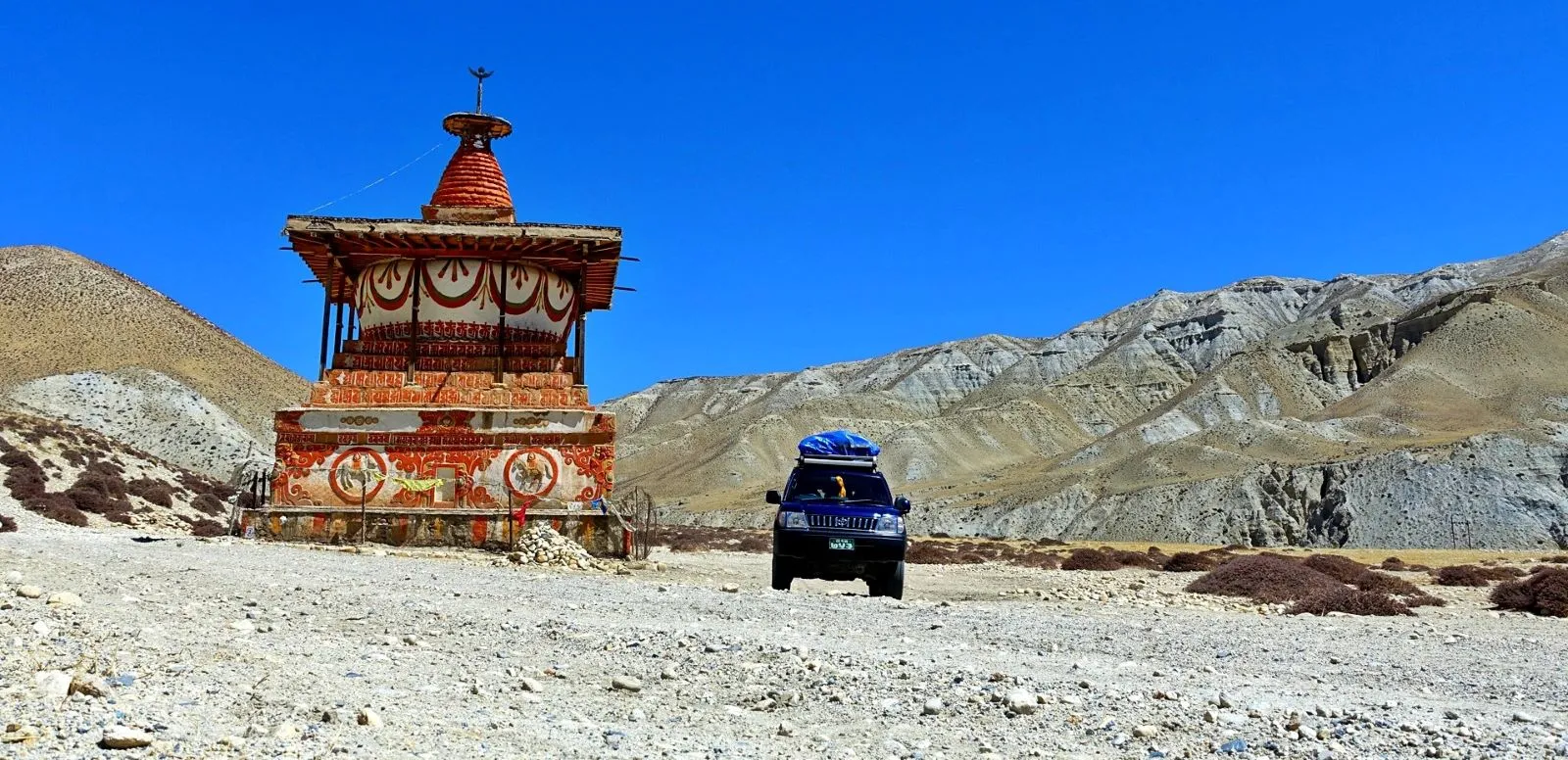
Along this section, the sky caves carved into the ochre cliff faces appear with increasing frequency—the remarkable ancient cave complexes that archaeologists believe served as habitation, burial, meditation retreat, and storage sites for Mustang’s prehistoric and early-medieval inhabitants. The Chhoser sky caves, accessible via a short detour off the main route approximately 20 kilometres north of Lo Manthang, are the most extensively documented and most dramatically photogenic of these cave complexes, with thousands of individual chambers cut into cliff faces at heights that would have required sophisticated rope-and-ladder systems for access.
Ghami and Tsarang: Villages of the High Plateau (3,520–3,560 m)
Ghami (also spelt Ghiling or Geling in some itineraries) is a significant village on the Upper Mustang plateau, at approximately 3,520 meters, offering excellent views of the surrounding desert landscape and the distant peaks of Tibet to the north. The village has a monastery and several well-preserved traditional houses. It serves as a standard overnight stop on both trekking and jeep tour itineraries between Syangboche and Lo Manthang.
The area around Ghami is notable for its collection of ancient mani walls — long stone barriers inscribed with Buddhist mantras — that stretch for hundreds of meters along the route, creating one of the most distinctive visual elements of the Upper Mustang plateau.
Tsarang (also written as Charang), at approximately 3,560 meters, is another significant cultural stop between Ghami and Lo Manthang, with a hilltop dzong (fortress) and a large monastery containing significant 14th-century murals and statuary.
The fort at Tsarang, though largely ruined, commands dramatic views across the plateau and provides context for the Kingdom of Lo’s military history during its period of greatest political independence. Tsarang is also notable for its traditional Loba houses with flat roofs and painted walls, which distinguish Upper Mustang’s domestic architecture from Lower Mustang’s stone houses.
Lo Manthang: The Walled Capital (3,840 m)
Lo Manthang is the destination toward which every Mustang itinerary ultimately points — an ancient walled city that has stood since the 14th century and that continues to function as the cultural, spiritual, and administrative heart of the Loba community. Approaching Lo Manthang by vehicle across the plateau, the city materialises with startling suddenness from the desert landscape — the white-painted perimeter walls, approximately 150 meters along the long axis, rising abruptly from the ochre Earth, with the monastery rooftops visible above.
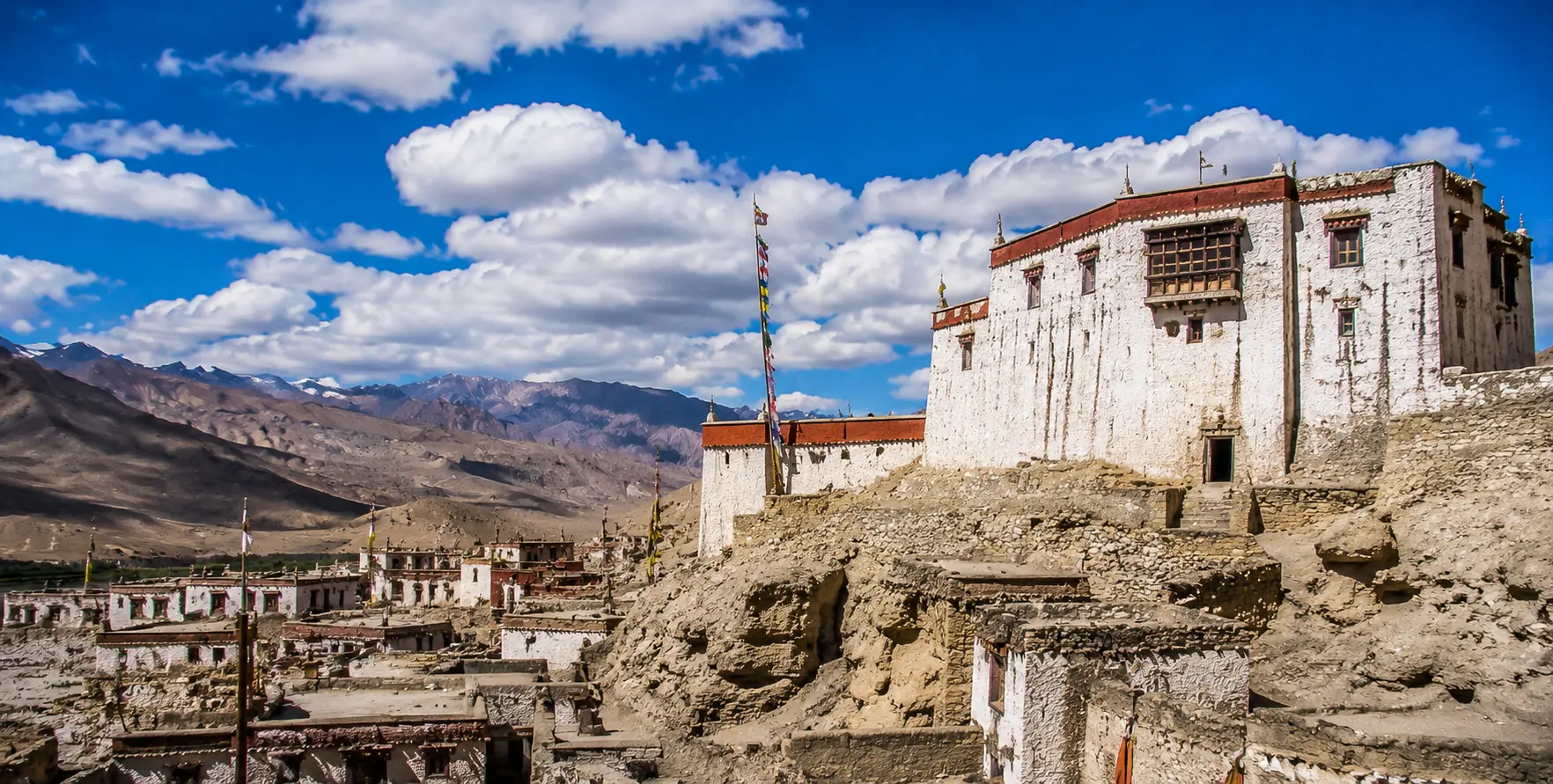
Within the walls, Lo Manthang rewards careful, unhurried exploration. The three principal monasteries — Thubchen Gompa, Jampa Gompa (Champa Lhakhang), and Chode Gompa — contain some of the finest surviving examples of 14th- and 15th-century Tibetan Buddhist mural painting and sculptural art anywhere in the world, preserved in extraordinary condition by the region’s extreme dryness and its long closure to the outside world.
The Royal Palace, a four-story mud-brick structure that served as the residence of the Kingdom of Lo’s hereditary rulers, stands at the centre of the city and can be visited with appropriate permissions, offering a glimpse into the domestic and ceremonial life of a medieval Himalayan royal family.
The streets of Lo Manthang are narrow and labyrinthine, connecting the monasteries, palace, residential compounds, and community spaces of a living urban settlement that has maintained its traditional character despite the growing number of visitors it receives each year. The morning atmosphere — monks processing to prayer, elderly Loba residents completing their daily kora (circumambulation) of the city’s perimeter, the smell of butter lamps drifting from open monastery doors — offers one of the most authentically medieval urban experiences in Asia.
Beyond Lo Manthang: Luri Gompa and the Korala Pass Area
For travellers with extra time and an appetite for deeper exploration, two destinations north of Lo Manthang extend the Upper Mustang adventure into territory even fewer visitors reach. Luri Gompa, located approximately aa4-hour drive from Lo Manthang at an altitude of 4,950 meters, is one of the oldest monasteries in the Mustang region, featuring remarkable cave-monastery architecture and some of the finest ancient Buddhist art in the Upper Mustang system. Most Upper Mustang jeep tour itineraries of 10 days or more include a day excursion to Luri Gompa.
The Korala Pass area, approximately 20 kilometres north of Lo Manthang and accessible by a rough 4WD track, brings vehicles to the Nepal-Tibet border — a sealed checkpoint that is not open to international crossing but that provides one of the most dramatic frontier viewpoints in all of Nepal, looking north across the Tibetan plateau toward the distant interior.
The drive from Lo Manthang to Korala passes through Tingkhar village and the Chhoser sky cave complex, making the excursion one of the most rewarding full-day activities in the entire Upper Mustang program.
Upper Mustang Jeep Route: Stage by Stage
| Stage | Route | Distance | Drive Time | Altitude | Road Type |
|---|---|---|---|---|---|
| 1 | Pokhara → Jomsom | 143 km | 7–9 hrs | 820–2,720 m | Paved + rough off-road |
| 2 | Jomsom → Kagbeni | 18 km | 45 min | 2,720–2,804 m | Mainly paved |
| 3 | Kagbeni → Chele / Syangboche | 60 km | 4–5 hrs | 2,804–3,930 m | 4WD off-road track |
| 4 | Syangboche → Ghami → Tsarang | 45 km | 3–4 hrs | 3,520–3,560 m | Rough plateau track |
| 5 | Tsarang → Lo Manthang | 15 km | 1–1.5 hrs | 3,840 m | Plateau track |
| 6 (Optional) | Lo Manthang → Luri Gompa | 45 km | 4 hrs | 3,950 m | Very rough track |
| 7 (Optional) | Lo Manthang → Korala area | 20 km | 1.5–2 hrs | 4,200–4,660 m | Rough 4WD track |
| TOTAL (Pokhara to Lo Manthang) | 280 km | 2–3 full driving days | Up to 3,840 m | Mixed |
Permits for Mustang: Complete Guide
The permit structure for Mustang is one of the most important practical elements to understand before planning any trip to the region, since costs and requirements differ significantly between Lower and Upper Mustang and have changed in recent years.
Lower Mustang Permits (South of Kagbeni)
Travel through Lower Mustang — the entire Kali Gandaki corridor from Beni through Tatopani, Marpha, Jomsom, Kagbeni, and Muktinath — requires only the Annapurna Conservation Area Permit (ACAP).
This costs NPR 3,000 (approximately USD 22-25) for non-SAARC nationals and NPR 200 for SAARC nationals (India, Bangladesh, Sri Lanka, Pakistan, Bhutan, Maldives). No restricted-area permit, guide requirement, or minimum group size applies to travel in Lower Mustang. The TIMS card (NPR 2,000 for non-SAARC) is additionally required for trekkers, but may be waived for those travelling by flight both in and out via Jomsom.
Note: A lower Mustang ACAP entry fee of approximately USD 25 applies to all visitors to the conservation area, including vehicle tour travellers who are not trekking. Confirm the current exact rate with your operator or the Nepal Tourism Board before departure.
Upper Mustang Permits (North of Kagbeni)
Entering the restricted zone north of Kagbeni requires a Restricted Area Permit (RAP) in addition to the ACAP. Nepal’s Department of Immigration manages the RAP, which can only be arranged through a government-registered trekking agency — individual travellers cannot obtain it directly. The key requirements and costs as of 2025/26 are:
| Permit | Cost | Duration | Who Issues | Group Requirement |
|---|---|---|---|---|
| Restricted Area Permit (RAP) | USD 500 per person | First 10 days inside restricted zone | Department of Immigration (via agency) | Minimum 2 foreign nationals + licensed guide |
| P extension | USD 50 per person per day | Each additional day beyond 10 | Same | Same |
| ACAP (Annapurna Conservation Area) | NPR 3,000 non-SAARC / NPR 200 SAARC | Full duration of trip | Nepal Tourism Board | None |
| TIMS Card | NPR 2,000 non-SAARC / NPR 1,000 SAARC | Full duration of trip | Nepal Tourism Board / TAAN | None |
| Licensed Guide (mandatory) | Arranged through an agency | Full Upper Mustang duration | TAAN-registered | Must be licensed |
Complete Vehicle Hire Costs: Pokhara to Mustang
The following cost tables consolidate vehicle hire rates for both Lower and Upper Mustang journeys, based on current market research. All Nepal Vehicle Hiring Pvt Ltd’s rates are fully inclusive of the vehicle, an experienced driver, fuel, and tolls.
| Route / Service | Vehicle | Cost (NPR) | Cost (USD) | Duration | Notes |
|---|---|---|---|---|---|
| Pokhara → Jomsom (one-way overland) | 4WD Jeep | NPR 28,000–38,000 | $210–$285 | 7–9 hrs | Kali Gandaki Gorge route |
| Pokhara → Jomsom (return) | 4WD Jeep | NPR 48,000–65,000 | $360–$488 | Multi-day | Round trip with waiting |
| Jomsom → Muktinath (private hire) | Private Jeep | NPR 3,000–4,500 | $22–$34 | 1–1.5 hrs | Full vehicle hire |
| Jomsom → Kagbeni (private hire) | Private Jeep | NPR 1,500–3,000 | $11–$22 | 30–45 min | Gateway to Upper Mustang |
| Pokhara → Lo Manthang (full overland) | Land Cruiser | NPR 45,000–65,000 | $338–$488 | 2–3 days | One way, full Upper Mustang |
| Pokhara ⇔ Lo Manthang (round trip) | Land Cruiser | NPR 80,000–120,000 | $600–$900 | 8–12 days | Full Upper Mustang jeep tour |
| Lo Manthang day hire (excursions) | 4WD Jeep | NPR 12,000–18,000 | $90–$135 | Full day | Korala, Luri Gompa, Chhoser |
| Kathmandu → Pokhara (for Mustang approach) | SUV / Toyota Fortuner | NPR 17,000–22,000 | $128–$165 | 6–8 hrs | If flying Pokhara→Jomsom |
| Pokhara → Jomsom by flight (note only) | Domestic flight | USD 120–140 one-way | $120–$140 | 20–25 min | Not a jeep, but a common alternative |
Tip: For the complete Upper Mustang round trip from Pokhara, booking a Toyota Land Cruiser VX or Prado (rather than a standard jeep) adds approximately NPR 20,000 to NPR 30,000 to the total vehicle hire cost but transforms the quality of the multi-day driving experience significantly — a worthwhile investment given that driving may account for 6 to 9 hours on some itinerary days.
Getting to Mustang: All Transport Options Compared
Overland Jeep from Pokhara (Recommended for Full Experience)
The overland jeep journey from Pokhara through the Kali Gandaki Gorge is the most immersive and experientially complete way to approach Mustang, combining the dramatic scenery of the world’s deepest gorge with stops at Tatopani, Marpha, and Jomsom before reaching the Upper Mustang gateway at Kagbeni.
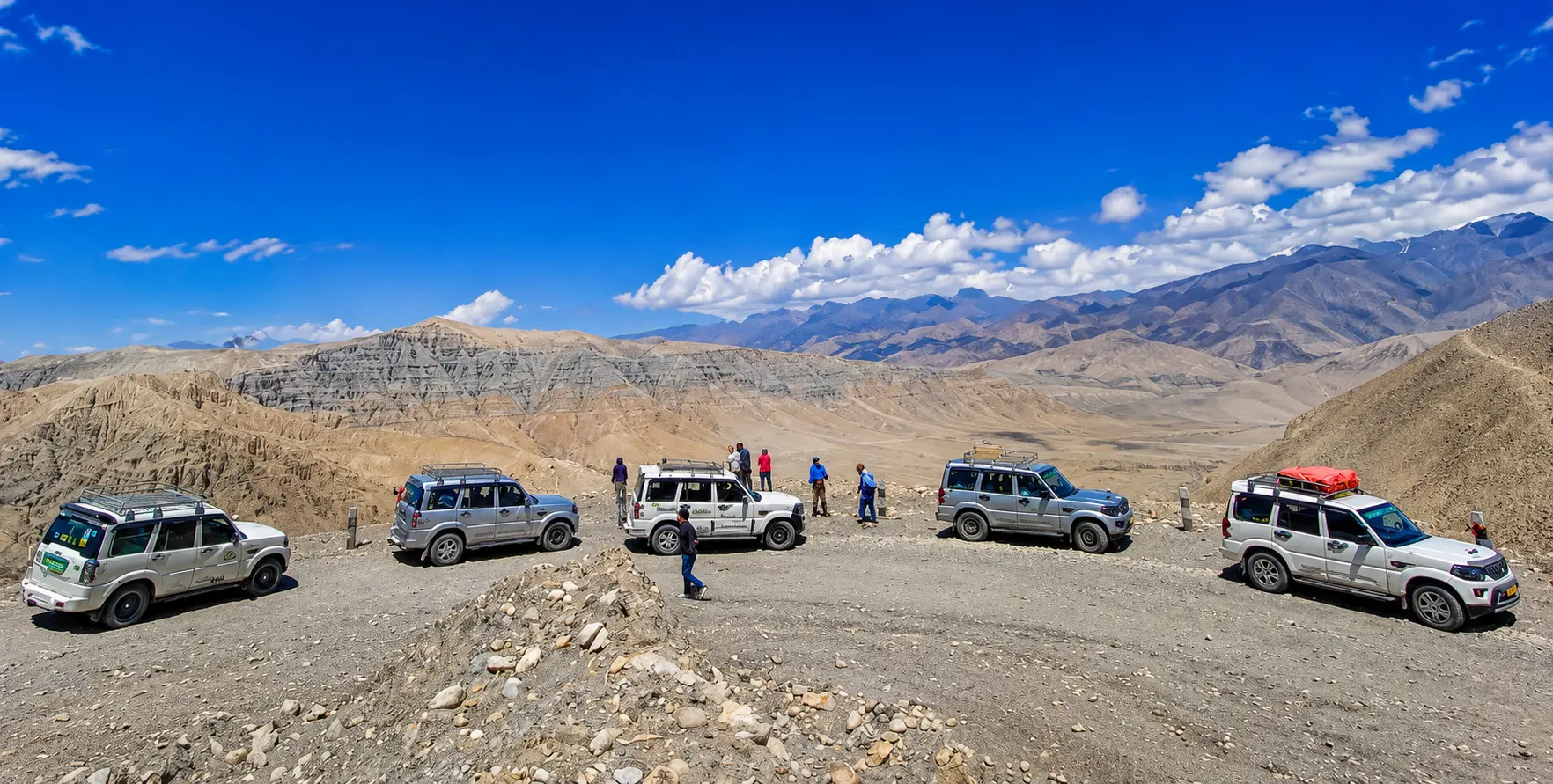
This approach is strongly preferred by experienced Nepal travellers specifically because the gorge journey is itself a major highlight — one that the flight from Pokhara to Jomsom completely bypasses. A private 4WD jeep from Pokhara to Jomsom costs NPR 28,000 to NPR 38,000 one-way, takes 7 to 9 hours, and accommodates up to 6 passengers plus luggage.
Flight: Pokhara to Jomsom
The domestic flight from Pokhara to Jomsom operates on a tight weather window—flights run only from about 7:00 AM to 11:00 AM each day, as afternoon winds in the Kali Gandaki Gorge make flying impossible. The one-way cost of USD 120-140 per person makes this considerably more expensive per passenger than a shared jeep.
However, it saves approximately 7 hours of driving and offers spectacular aerial views of Dhaulagiri and Annapurna that the road approach cannot match. Flights are notoriously susceptible to weather-related cancellations, and travellers relying on the Jomsom flight for a time-sensitive connection should always build in at least one backup day into their itinerary. Many seasoned Mustang travellers prefer to fly one way and drive the other, combining aerial views with the gorge experience.
Kathmandu to Pokhara: Setting Up the Mustang Approach
For travellers starting in Kathmandu, the first step is reaching Pokhara — either by domestic flight (30-40 minutes, approximately USD 80-100 per person) or by private vehicle along the Prithvi Highway (200 km, approximately 6-8 hours, NPR 17,000-22,000 for a private car or SUV).
Nepal Vehicle Hiring Pvt Ltd provides comfortable private vehicle transfers for this first leg as part of a coordinated Mustang tour package, allowing travellers to combine the Kathmandu-Pokhara scenic drive with an early arrival in Pokhara and position themselves for a next-morning departure toward Mustang.
Best Season for Upper and Lower Mustang
Mustang’s seasonal calendar differs meaningfully from most of Nepal’s other trekking and travel destinations, mainly because Upper Mustang’s rain-shadow location gives it access windows that don’t exist in rain-exposed destinations in Nepal.
| Season | Months | Lower Mustang | Upper Mustang | Road Conditions | Recommended? |
|---|---|---|---|---|---|
| Spring | Mar–May | Excellent — clear, warm days | Excellent — Tiji Festival in May | Good, dry | Highly recommended |
| Monsoon | Jun–Aug | Difficult — road disruptions | UNIQUE advantage — rain shadow, dry | Poor (lower), Good (upper) | Upper only |
| Autumn | Sep–Nov | Excellent — best conditions | Excellent — clear skies | Excellent | Best overall |
| Winter | Dec–Feb | Cold but passable (lower reaches) | Difficult — snow, closed passes | Variable — snow above 3000m | Lower only |
The unique monsoon advantage of Upper Mustang deserves emphasis: while June through August is Nepal’s least favourite season for virtually every other region due to rain, leeches, and poor visibility, Upper Mustang sits in the rain shadow of the Annapurna and Dhaulagiri ranges and receives minimal monsoon precipitation.
This makes it the only major Nepal trekking/jeep tour destination where June, July, and August represent a genuinely viable and even enjoyable travel window — indeed som, some experienced travellers specifically choose this period for the emptier trails, lower accommodation rates, and the dramatic quality of the monsoon clouds building over the surrounding peaks while the Upper Mustang plateau remains dry and clear.
Practical Tips for Mustang Travel
- Book permits well in advance for Upper Mustang — the RAP application requires passport copies, photos, a detailed itinerary, and a guarantee letter from a registered agency, and takes 2 to 3 working days to process.
- Withdraw sufficient NPR cash in Pokhara before departure — Jomsom has ATMs, but they are sometimes unreliable; carry enough for all expected expenses, including accommodation, meals, and local jeeps.
- Depart Pokhara by 6:00–7:00 AM for the overland drive to Jomsom to ensure a comfortable mid-afternoon arrival in Jomsom or Kagbeni with daylight for settling in.
- The strong afternoon winds in the Kali Gandaki Gorge — typically starting from around noon and reaching considerable strength by 2:00–3:00 PM — affect both driving comfort and aircraft operations; schedule demanding sections of the drive or any walking for morning .hours
- Carry warm layers at all times — temperatures at Lo Manthang (3,840 m) can drop sharply even in summer. The journey from Lo Manthang to the Korala Pass area reaches 4,660 m, where conditions can be genuinely cold. Mobile connectivity: NTC and Ncell coverage is available in Jomsom, Kagbeni, and Muktinath,th but becomes sporadic further north into Upper Mustang; download offline maps and key information before departing Jomsom.
- Photography: Upper Mustang’s extraordinary landscape rewards early morning and late afternoon light — the high-altitude colours are most vivid before the afternoon wind and dust haze build
- Altitude: Lo Manthang at 3,840 m is high enough to cause altitude sickness in some visitors; anyone arriving quickly from Pokhara (820 m) should plan a rest day and stay hydrated
- Book accommodation in Lo Manthang in advance during peak season (October–November and the Tiji Festival period in May) — accommodation is limited and fills quickly
Suggested Itineraries: Lower and Upper Mustang
Option A: 3-Day Lower Mustang Overland Escape (From Pokhara)
Day 1: Early departure from Pokhara by private 4WD jeep; drive through Beni, Tatopani (hot springs stop), Ghasa, and Kalopani; explore Marpha village; reach Jomsom by late afternoon. Day 2: Jomsom area exploration (Dhumba Lake, Lupra Bon monastery), afternoon drive to Kagbeni for village exploration and overnight. Day 3: Morning drive from Kagbeni to Muktinath (45 min), temple visit and ritual bath, return to Jomsom, drive back toward Pokhara (overnight at Tatopani or continue to Pokhara). Total vehicle hire is approximately NPR 35,000 to NPR 55,000 for the complete private jeep arrangement.
Option B: 8-Day Upper Mustang Jeep Tour (From Pokhara)
Day 1: Pokhara to Jomsom overland (7-9 hrs). Day 2: Jomsom to Kagbeni (permit check), continue to Chele (4-5 hrs). Day 3: Chele to Lo Manthang via Syangboche, Ghami, Tsarang (6-8 hrs). Day 4: Lo Manthang exploration — Thubchen, Jampa, Chode monasteries, palace. Day 5: Korala Pass / Chhoser cave excursion by jeep (full day). Day 6: Lo Manthang to Jomsom (return south, 6-8 hrs). Day 7: Jomsom to Pokhara (7-9 hrs). Day 8: Rest/buffer day or extend in Pokhara. Total RAP permit cost: USD 500 per person (5 days inside restricted zone at current daily rate structure). Total vehicle hire: NPR 80,000 to NPR 110,000 for a complete private jeep.
Option C: 14-Day Classic Upper Mustang Trek + Jeep Return
This itinerary combines the classic Annapurna Circuit approach — flying or driving to Jomsom, then trekking north through Kagbeni and the full Upper Mustang restricted zone to Lo Manthang over 6-7 days of walking — with a return by private jeep from Lo Manthang back to Jomsom and then Pokhara, saving 4-5 days of return walking while still completing the northward journey on foot at the trek’s natural pace. Vehicle hire for the return leg from Lo Manthang to Pokhara: NPR 40,000 to NPR 55,000.
Frequently Asked Questions
What is the difference between Upper and Lower Mustang?
Lower Mustang covers the Kali Gandaki corridor from Beni through Tatopani, Marpha, Jomsom, Kagbeni, and Muktinath. It requires only the ACAP permit and is open to all visitors without group restrictions. Upper Mustang begins north of the Kagbeni checkpoint, covers Lo Manthang and beyond, and requires a Restricted Area Permit (RAP) of USD 500 per person for 10 days (USD 50/day extension), a mandatory licensed guide, and a minimum of 2 foreign nationals travelling together.
How much does the Upper Mustang permit cost?
The Upper Mustang Restricted Area Permit costs USD 500 per person for the first 10 days inside the restricted zone, with USD 50 per person per day for any additional days beyond 10. Individual-day permits can be issued without a mandatory 10-day minimum, making shorter tours more cost-effective. You also need the ACAP (NPR 3,000, non-SAARC) and the TIMS card (NPR 2,000, non-SAARC). Total permit costs for a 7-day Upper Mustang tour: approximately USD 520–540 per person.
How long does the drive from Pokhara to Lo Manthang take?
The overland drive from Pokhara to Lo Manthang covers approximately 280 kilometres. It typically takes 2 to 3 full driving days, with overnight stops at Jomsom (Day 1) and Ghami or Chele (Day 2) before reaching Lo Manthang on Day 3. A single-day drive for the entire distance is not practical given the road conditions and distance involved.
Can I visit Upper Mustang without a guide?
No. A licensed guide is mandatory for all foreign visitors to Upper Mustang. Independent travel in the restricted zone is not permitted. Your guides must be registered with TAAN (Trekking Agencies’ Association of Nepal) and hold a current license. The guide requirement applies equally to jeep tour travellers and trekkers.
Is a 4WD jeep necessary for the entire Mustang route?
A 4WD vehicle is essential from Beni onward on the overland approach, and absolutely required for all driving north of Kagbeni into Upper Mustang. The road from Beni to Jomsom is approximately half off-road with rough, bumpy surfaces. Beyond Kagbeni, the track to Lo Manthang is entirely off-road and requires a proper 4WD, high ground clearance, and an experienced mountain driver. Do not use standard cars or vans north of Beni.
When is the Tiji Festival in 2026?
The 2026 Tiji Festival in Lo Manthang falls on May 13–15, according to the Tibetan lunar calendar. This is the most spectacular cultural event in Upper Mustang and one of the finest cultural experiences available anywhere in Nepal. Vehicle hire and accommodation in Lo Manthang fill quickly for the Tiji Festival period — booking 6 to 8 weeks in advance is strongly recommended.
What vehicle does Nepal Vehicle Hiring Pvt Ltd recommend for Upper Mustang?
For the complete Pokhara-to-Lo Manthang overland journey, Nepal Vehicle Hiring Pvt Ltd recommends a Toyota Land Cruiser (VX or Prado series) as the optimal combination of interior comfort and genuine off-road capability for this demanding multi-day route. For Lower Mustang only (Pokhara to Jomsom/Muktinath), a Toyota Fortuner or equivalent is appropriate and offers good value. All vehicles are provided with experienced mountain drivers familiar with the specific demands of the Kali Gandaki corridor and the Upper Mustang track.
Conclusion: Your Mustang Adventure Starts Here
Mustang is, without exaggeration, one of the most extraordinary travel destinations anywhere on Earth — a region where an ancient kingdom’s medieval capital still stands intact, where a landscape of desert canyons and wind-sculpted rock formations frames the world’s highest peaks, where the Kali Gandaki River cuts the world’s deepest gorge between walls of ochre and stone, and where a living Tibetan Buddhist culture maintains traditions that centuries of isolation have kept almost perfectly preserved.
Lower Mustang is accessible to every traveller with an ACAP permit and a reliable 4WD vehicle; Upper Mustang rewards those willing to invest in additional permits, offering a journey that consistently delivers one of the most profound experiences a Nepali destination can offer
Nepal Vehicle Hiring Pvt Ltd provides private 4WD vehicle hire for every stage of Lower and Upper Mustang travel—from the first overland kilometre out of Pokhara to the final frontier excursion to the Korala Pass area north of Lo Manthang. Our vehicles are maintained for the demands of the Kali Gandaki corridor and the Upper Mustang track; our drivers are experienced on these roads in every season, and our transparent, all-inclusive pricing in both NPR and USD ensures you know exactly what your Mustang adventure costs before you confirm a booking.
Whether you are planning a compact 3-day Lower Mustang overland escape, a full 10-day Upper Mustang jeep tour to Lo Manthang and beyond, or a combined itinerary that takes in the hot springs of Tatopani, the apple orchards of Marpha, the sacred ghats of Muktinath, the medieval streets of Lo Manthang, and the frontier drama of the Korala Pass all within a single well-organised journey, Nepal Vehicle Hiring Pvt Ltd has the right vehicle, the right driver, and the right experience to make your Mustang adventure everything it deserves to be.
Book Your Mustang Vehicle Hire Today
WhatsApp: +977 981-4227196
E-mail:[email protected]
Lower Mustang (Jomsom, Muktinath) | Upper Mustang (Lo Manthang, Korala) | 4WD Jeep & Land Cruiser
- Mustang Full Guide: Upper & Lower Mustang — Jeep Tour, Trek & Vehicle Hire
- Understanding Mustang: Geography, History, and Culture
- Lower Mustang: Key Destinations, Road Guide & Vehicle Hire
- Upper Mustang: The Forbidden Kingdom in Detail
- Permits for Mustang: Complete Guide
- Complete Vehicle Hire Costs: Pokhara to Mustang
- Getting to Mustang: All Transport Options Compared
- Best Season for Upper and Lower Mustang
- Practical Tips for Mustang Travel
- Suggested Itineraries: Lower and Upper Mustang
- Frequently Asked Questions
- Conclusion: Your Mustang Adventure Starts Here

Related Blog & Articles
4WD Himalayan Jeep in Nepal
Muktinath Pilgrimage and Mustang Tour
Altitude and Health: Essential Muktinath Advice