


 Plan a Trip


Muktinath Pilgrimage and Mustang Tour
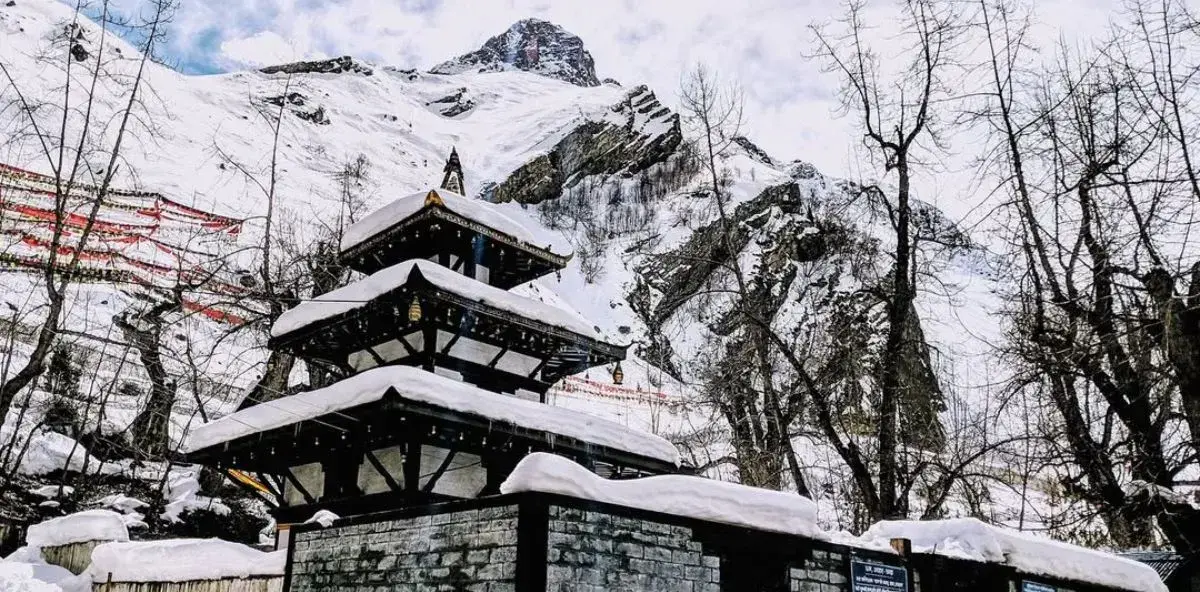
Muktinath Pilgrimage & Mustang Tour
Few journeys in all of Asia combine spiritual depth, natural grandeur, and cultural richness as completely as the Muktinath pilgrimage and Mustang tour. This route — from the lakeside city of Pokhara, up through the world’s deepest gorge along the Kali Gandaki River, through Thakali villages and apple orchards to the wind-swept desert plateau of Mustang — takes travellers from the subtropical Himalayan foothills to the edge of the Tibetan plateau in a single, extraordinary overland journey.
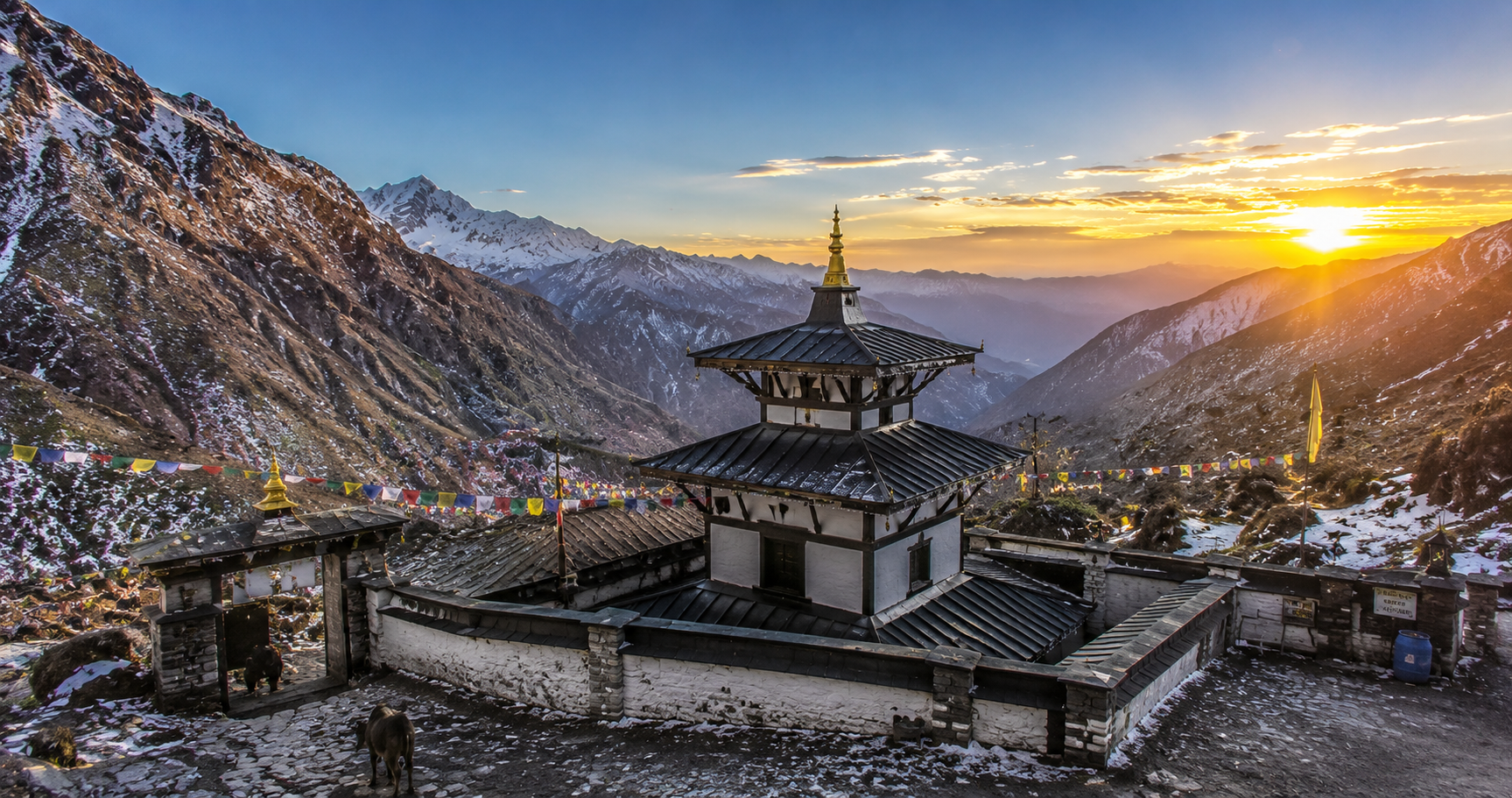
At its heart lies Muktinath Temple (3,710 m) — one of the most sacred sites in all of Hinduism and Tibetan Buddhism, where 108 sacred water spouts purify pilgrims of lifetimes of sin, and an eternal flame burns beside a mountain spring in a miracle that devotees regard as the co-existence of all five natural elements. Beyond Muktinath, the ancient walled kingdom of Upper Mustang—for centuries forbidden to outsiders and still one of the most intact examples of medieval Tibetan civilisation anywhere on earth—awaits those with the time and spirit to venture deeper into the ‘Forbidden Kingdom.’
This complete guide covers the full Muktinath pilgrimage and Mustang tour by private jeep, route stops, sacred sites, tour packages, costs, permits, itineraries, altitude advice, and the extraordinary Upper Mustang extension to Lo Manthang — with Nepal Vehicle Hiring Pvt Ltd as your trusted transport partner for every kilometre of this unforgettable journey.
Muktinath Temple — The Sacred Place of Liberation
Religious and Historical Significance
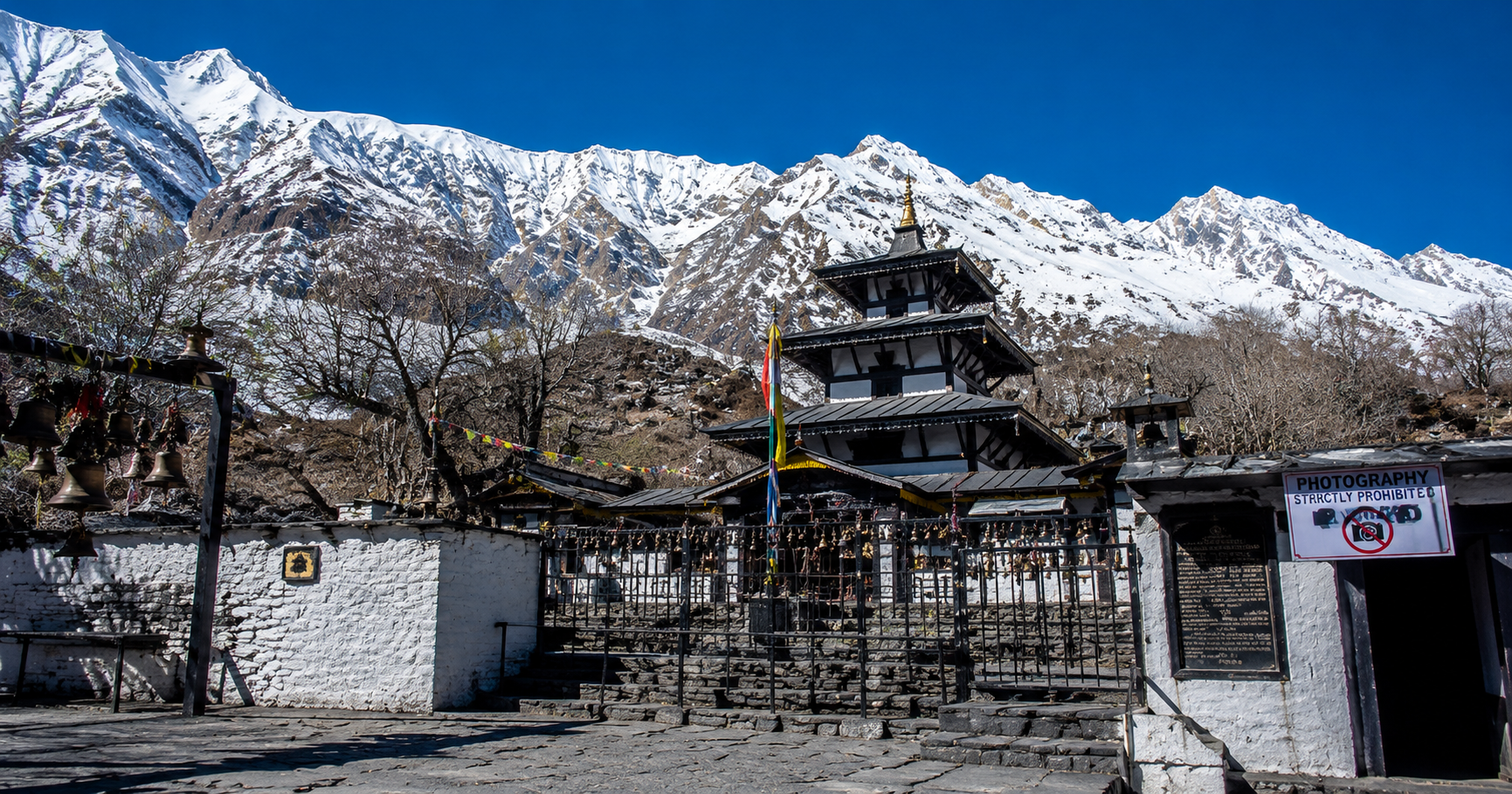
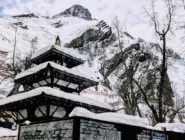
Muktinath Temple — known in Sanskrit as Muktikshetra (the field of liberation/moksha) — is simultaneously one of the most important Vishnu shrines in the Hindu tradition and one of the 24 Tantric places (Siddha Kshetra) sacred to Tibetan Buddhism. This rare dual sanctity makes Muktinath one of the most religiously significant pilgrimage destinations in the entire Himalayan world.
For Hindus, Muktinath is the 105th of the 108 Divya Desams — the sacred Vishnu temples of Sri Vaishnavism — and one of the Char Dham pilgrimage sites that devout Hindus aspire to visit in a lifetime. The temple enshrines the Salagrama Sila — sacred black ammonite fossils found only in the Kali Gandaki River, considered natural manifestations of Lord Vishnu — alongside the famous 108 water spouts that flow year-round from the sacred mountain springs. Bathing under all 108 spouts is believed to purify a pilgrim of the sins accumulated over 108 previous lives.
For Tibetan Buddhists, Muktinath is one of the most important Dakini lands — sacred to Guru Padmasambhava (Guru Rinpoche) and the site of significant Vajrayana Buddhist teachings and blessings. The Jwala Mai Monastery within the Muktinath complex houses the eternal natural gas flame that burns beside a stream of water—a phenomenon Buddhists regard as the co-existence of fire and water, symbolising the inseparability of all phenomena in the Buddhist view of reality.
For the Kirant people and followers of Nepal’s ancient Bon tradition, Muktinath has been a sacred site for thousands of years before either Hinduism or Buddhism arrived in the region, adding a third layer of pre-Hindu indigenous spiritual significance to this extraordinary place.
Key Sacred Features at Muktinath
| Sacred Feature | Religious Significance | Experience |
| 108 Water Spouts | 108 sacred Gandaki springs — cleanse sins of 108 births | Bathe under all 108 spouts for complete spiritual purification |
| Eternal Flame (Jwala Mai) | Natural gas flame burning beside a stream — fire + water coexist | Witness the miracle of ‘Panch Tatwa’ — all 5 elements in one spot |
| Vishnu Temple (Main) | 105th Vishnu Divya Desam — place of liberation/moksha | Darshan of Lord Vishnu / Muktinath idol |
| Buddhist Monastery (Jwala Mai) | Ancient Tibetan Buddhist gompa at the same complex | Gompa prayer, butter lamps, thangka paintings |
| Shaligram Shilas | Sacred black ammonite fossils from Kali Gandaki — natural Vishnu symbols | Collect Shaligrams from the riverbed at Kagbeni |
| Horse Ride to Temple | Traditional pilgrimage approach — horseback from Ranipauwa | Horse hire available at Ranipauwa village (NPR 1,000) |
| Muktinath Kunda | Sacred pond adjacent to the main temple | Ritual bathing in the cold, sacred waters |
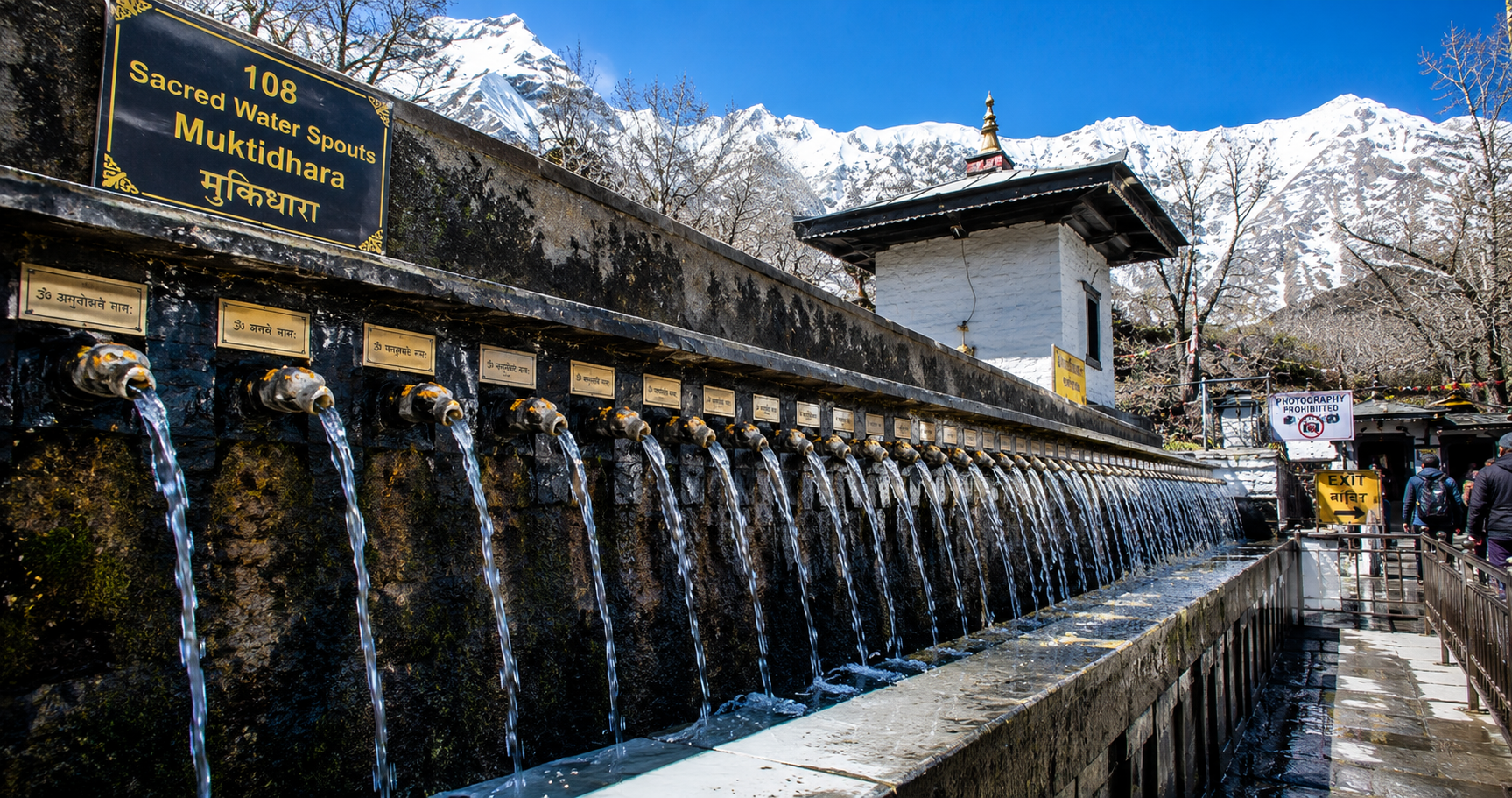
The 108 Water Spouts — The Most Powerful Ritual
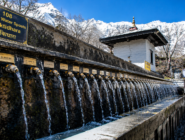
The 108 golden water spouts arranged in a semicircle around the main Muktinath temple complex define the site and form the central ritual of the Muktinath pilgrimage. Fed by underground sacred springs, the spouts flow year-round — even in the depths of Mustang winter, when temperatures plunge well below freezing, the water continues to flow. Pilgrims traditionally pass under all 108 spouts while reciting prayers, tolerating the intensely cold water (often near-freezing) in an act of devotional surrender that is both physically demanding and spiritually cleansing. Many pilgrims make multiple circuits of the 108 spouts — particularly during Shivaratri and other major festivals.
Mustang — The Last Forbidden Kingdom
Mustang District encompasses both Lower Mustang (south of Kagbeni, including the Muktinath area) and Upper Mustang (north of Kagbeni, historically closed to outsiders). Together, they form one of Nepal’s most extraordinary cultural and geographical destinations. This high-altitude region was an independent kingdom for over 500 years and maintains a culture more closely related to Tibet than to Nepal.
Lower Mustang — Accessible to All
Lower Mustang covers the area from Beni through the Kali Gandaki gorge to Kagbeni, including Jomsom, Marpha, and Muktinath. This area is accessible to all visitors with a standard ACAP permit (NPR 3,000 / USD 22) and is part of the standard Muktinath pilgrimage route. The Lower Mustang landscape shifts from the lush subtropical foothills near Beni to the increasingly arid, wind-scoured terrain of the Kali Gandaki valley—a visual transformation unlike anything else in Nepal.
Key Lower Mustang destinations include Tatopani (natural hot springs), Ghasa (traditional Thakali village), Marpha (Nepal’s apple capital, famous for apple brandy and cider), Jomsom (the windy gateway town with the world-famous airstrip), and Kagbeni (the medieval walled village at the Upper Mustang boundary).
Upper Mustang — The Forbidden Kingdom
North of Kagbeni, Upper Mustang was a closed, restricted area for most of the 20th century — one of the last truly ‘forbidden kingdoms’ in Asia. This isolation preserved a living example of medieval Tibetan civilisation that has largely disappeared from Tibet itself under Chinese governance. The ancient walled capital of Lo Manthang (3,840 m), with its palace of the Lo kings, its 1,200-year-old Lo Gekar Monastery (the oldest Buddhist monastery in the Mustang region), and its extraordinary frescoed cave temples, represents a cultural heritage of immeasurable value.
Upper Mustang was opened to trekkers with special permits in 1992. Since 2014, the route from Jomsom to Lo Manthang has been accessible by jeep, transforming the Upper Mustang experience from a demanding 14-day trek into an achievable 8- to 10-day jeep tour for those who lack the time or physical capacity for trekking.
Key Facts at a Glance
| Detail | Information |
| Muktinath Temple Altitude | 3,710 m (12,172 ft) — Lower Mustang |
| Lo Manthang (Upper Mustang) | 3,840 m (12,598 ft) — ancient walled city |
| Jomsom (Gateway Town) | 2,720 m (8,924 ft) — Mustang District HQ |
| Kagbeni (Upper Mustang Gateway) | 2,810 m (9,219 ft) |
| Distance — Pokhara to Muktinath | 168 km | 6–8 hrs by jeep |
| nce — Pokhara to Lo Manthang | 245 km | 9–12 hrs by jeep (days |
| Distance — Kathmandu to Muktinath | 368 km | 2 days via Pokhara |
| Vehicle Required | 4WD Jeep (mandatory): Toyota Land Cruiser / Hilux / Scorpio |
| Lower Mustang Permit (Muktinath) | ACAP: NPR 3,000 (USD 22) per person |
| Upper Mustang Restricted Area Permit | USD 50 per day per person (2026 rate) — previously USD 500/10 days |
| Best Season | October–November (Autumn) and March–May (Spring) |
| Key Religion | Hindu (Vishnu), Buddhist (Guru Rinpoche), Bon (Tibetan animist) |
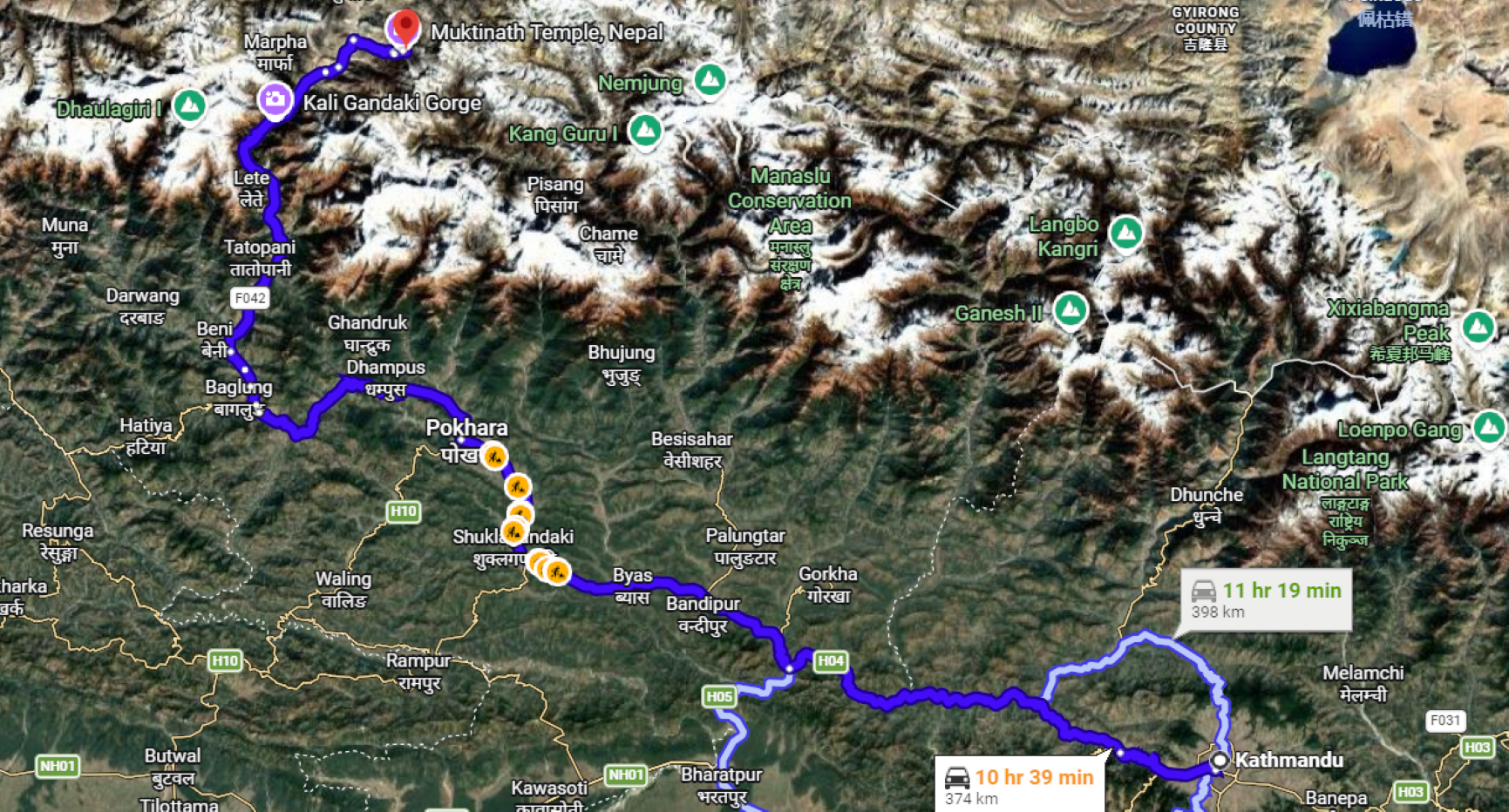
The Route — All Stops from Pokhara to Lo Manthang
| Stop | Altitude | Distance from Pokhara | Key Features |
| Pokhara | 827 m | Start | Lake, Annapurna views, tour starting point |
| Beni | 830 m | 75 km | Junction town — off-road begins north of here |
| Tatopani | 1,190 m | 115 km | Famous hot springs on the Kali Gandaki River bank |
| Galeshwor Mahadev | 1,025 m | 110 km | Ancient Shiva temple — riverside pilgrimage point |
| Ghasa | 2,010 m | 130 km | Entry to the Thakali homeland — traditional stone village |
| Marpha | 2,670 m | 145 km | Apple capital of Nepal — orchards, brandy, monastery |
| Jomsom | 2,720 m | 150 km | District HQ, airstrip, ATM, Dhumba Lake, windy town |
| Kagbeni | 2,810 m | 165 km | Gateway to Upper Mustang — medieval walled village |
| Jharkot | 3,550 m | 180 km | Ancient fortress, Buddhist monastery, hilltop village |
| Ranipauwa | 3,710 m | 168 km | Gateway settlement to the Muktinath temple complex |
| Muktinath Temple | 3,710 m | 168 km | 108 water spouts, eternal flame, Vishnu temple, monastery |
| Chhusang | 2,980 m | 175 km | Upper Mustang entry checkpoint — permit checked here |
| Chele | 3,050 m | 200 km | First village in Upper Mustang beyond Chhusang |
| Ghiling | 3,570 m | 215 km | High plateau village — dramatic ochre landscape |
| Tsarang (Charang) | 3,560 m | 230 km | Ancient palace ruins, famous red monastery |
| Lo Manthang | 3,840 m | 245 km | Walled capital of the ancient Mustang kingdom |
Beni — Where the Off-Road Adventure Begins
Beni (830 m) is the junction town where the Beni Baglung Highway from Pokhara ends and the Kali Gandaki road begins its dramatic mountain climb. The change in road character at Beni is immediate and profound — the smooth highway gives way to the wilder, more exciting road that follows the Kali Gandaki River northward into the heart of the Annapurna and Dhaulagiri massifs. From Beni, every kilometre brings new and increasingly dramatic scenery.
Tatopani Hot Springs — The Essential Stop
Tatopani (1,190 m) — literally ‘hot water’ in Nepali — is the most popular rest stop on the entire Pokhara to Muktinath route. Pilgrims and travellers have known the famous natural hot spring pools on the banks of the Kali Gandaki River for centuries. The hot springs are believed to have curative properties for skin diseases and joint conditions. After the dusty, bumpy drive from Beni, a soak in Tatopani’s warm, mineral-rich water provides extraordinary physical relief. Most Muktinath jeep tours stop here for 30 to 60 minutes on both the outward and return journeys.
Galeshwor Mahadev Temple — Sacred Starting Point
Just before Tatopani, the small but spiritually significant Galeshwor Mahadev Temple sits on a dramatic cliff face beside the Kali Gandaki gorge. An ancient Shiva temple, Galeshwor Mahadev is considered a sacred starting point for the Muktinath pilgrimage by many devout pilgrims, who perform ritual bathing in the Kali Gandaki here before ascending to Muktinath. The Rupse Chhahara waterfall — approximately 310 meters high and one of Nepal’s most spectacular waterfalls — is visible from the road near Galeshwor.
Marpha — The Apple Capital of Nepal
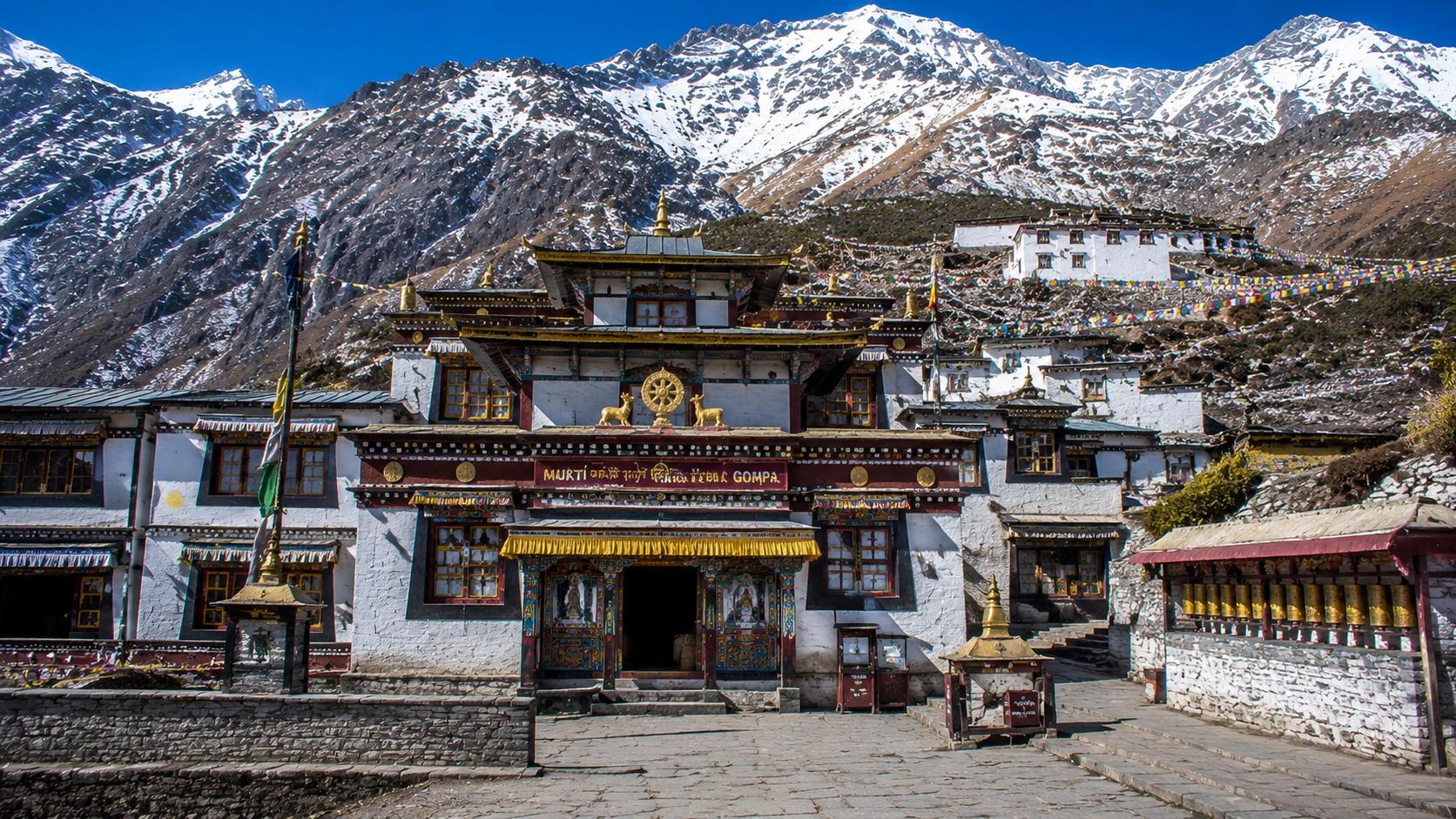
Marpha (2,670 m) is the most celebrated village in the lower Mustang valley — a traditional Thakali settlement famous throughout Nepal for its apple orchards, cider, and apple brandy. The village has an unusual microclimate that makes it the only area in Nepal where apples grow in abundance at this altitude. Traditional whitewashed stone houses with carved wooden balconies line narrow cobblestone lanes. The local apple products — fresh apples, apple juice, apple jam, apple brandy (locally called aarak), and dried apple rings — are widely sought after and make excellent gifts. The 300-year-old Marpha Monastery is one of the finest Buddhist gompas in the lower Kali Gandaki valley.
Jomsom — The Windy Gateway
Jomsom (2,720 m) is the headquarters of Mustang District and the main transport hub of the Kali Gandaki valley. The town is famous for its extreme afternoon winds — the Kali Gandaki gorge acts as a natural wind tunnel, and in the dry season, powerful gusts make outdoor activity challenging by early afternoon. For this reason, jeep travel in the Jomsom area is best done in the morning. Jomsom has the most reliable ATM in Mustang (Nepal Bank Limited), multiple guesthouses and restaurants, a small market area, the Dhumba Lake viewpoint (a beautiful glacial lake 5 km west of town), and the Jomsom Mukti Airport — one of Nepal’s most challenging and dramatic domestic airstrips.
Kagbeni — Gateway to the Forbidden Kingdom
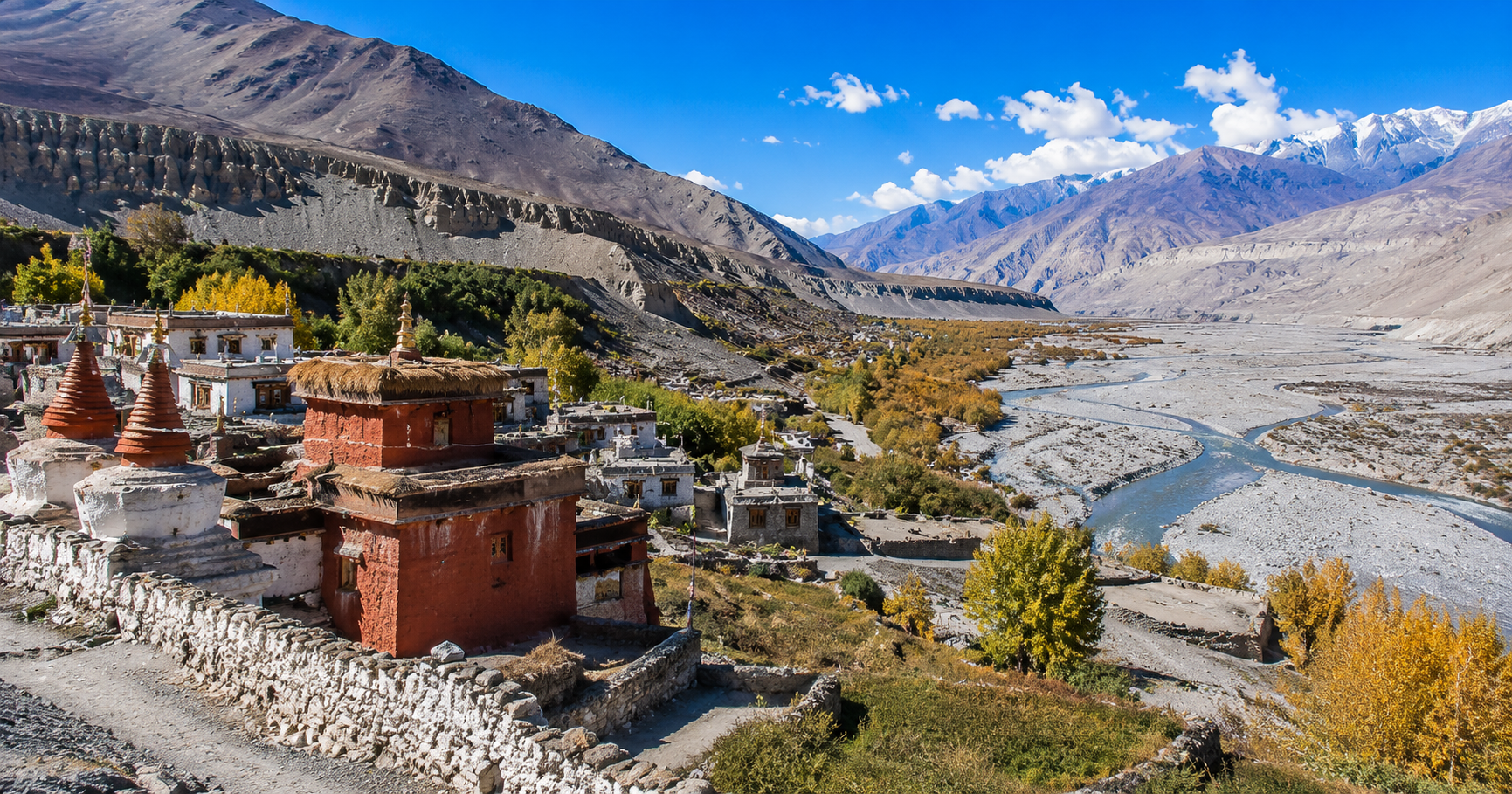
Kagbeni (2,810 m) is the last settlement before Upper Mustang — a spectacularly preserved medieval Tibetan-style walled village at the confluence of the Kali Gandaki and Kag Khola rivers. The village’s distinctly red-and-white-painted gompa (monastery) towers above a labyrinth of narrow mud-brick lanes and traditional Tibetan houses that have changed little for centuries. The Kali Gandaki riverbed below Kagbeni is the richest source of Shaligram Shilas — the sacred black ammonite fossils that Hindus regard as natural manifestations of Lord Vishnu. Pilgrims traditionally search the river gravel for Shaligrams to take home as sacred objects of worship.
Jharkot and Ranipauwa — Final Approach to Muktinath
The final approach to Muktinath passes through Jharkot (3,550 m) — an ancient hilltop fortress village with a well-preserved Buddhist monastery — and Ranipauwa (3,710 m), the small settlement immediately below the Muktinath temple complex where most pilgrims stay overnight. Horse hire for the final approach to the temple is available at Ranipauwa for pilgrims who prefer not to walk the steep path to the temple entrance.
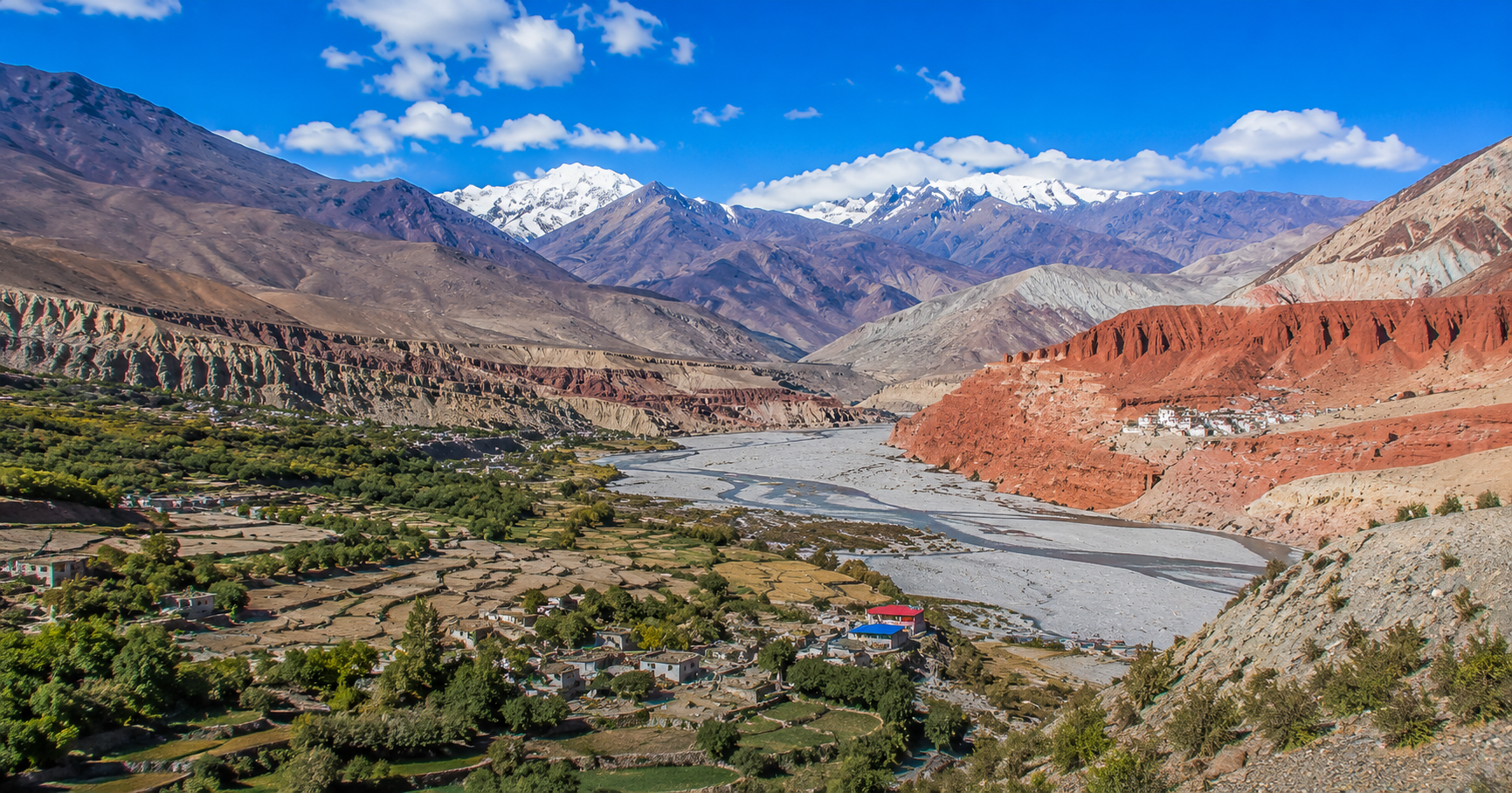
Upper Mustang — The World of Lo Manthang
| Destination | Altitude | Distance from Kagbeni | Key Features |
| Kagbeni | 2,810 m | Start (Upper Mustang checkpoint) | Medieval mud-brick village, Kali Gandaki confluence, permit entry |
| Chhusang | 2,980 m | 15 km | First upper section — cave dwellings, Kali Gandaki canyon |
| Chele | 3,050 m | 30 km | First official Upper Mustang village, ancient trail junction |
| Samar | 3,560 m | 50 km | Traditional Tibetan-style village, chortens, and a maple forest |
| Syangbochen | 3,780 m | 60 km | High-altitude pass crossing area, dramatic views |
| Ghiling | 3,570 m | 70 km | Well-preserved village, gompa, traditional farming life |
| Ghami | 3,520 m | 85 km | Longest mani wall in Nepal, an ancient monastery |
| Tsarang (Charang) | 3,560 m | 95 km | Palace of the kings of Mustang, red monastery, ancient frescoes |
| Lo Manthang | 3,840 m | 115 km | Walled capital — Lo Gekar Monastery (1,200 years old), King’s palace |
| Chosar / Lori Caves | 4,000 m | 130 km | Sky caves — ancient human burial caves carved into cliff faces |
Lo Manthang — The Walled Capital
Lo Manthang (3,840 m) is one of Asia’s most extraordinary places. The ancient walled capital of the Kingdom of Lo has been continuously inhabited for over 600 years and is one of the best-preserved medieval walled towns in the Himalayan world. Entering through the single gateway in the massive mud-brick walls, visitors find a living community of Loba people — descendants of Tibetan migrants — going about their daily lives in a townscape that looks more like a film set for a medieval epic than a real inhabited settlement.
Inside the walls: the Lo-Manthang Palace — home of the Lo Rajas (kings of Mustang) for centuries; the Thubchen Monastery (founded circa 1440 CE) with its extraordinary collection of ancient Buddhist frescoes; the Jampa Gompa (founded circa 1387 CE) housing a massive clay statue of Maitreya Buddha; and numerous smaller shrines, chortens, and prayer walls lining every lane.
Lo Gekar Monastery — The Oldest in Mustang
About 15 km from Lo Manthang, Lo Gekar Monastery (also spelt Ghar Gompa) is the oldest Buddhist monastery in the Mustang region, believed to have been founded by Guru Padmasambhava in the 8th century CE during his historic journey from India to Tibet. The monastery sits on a dramatic promontory above a deep canyon and contains some of the oldest Buddhist frescoes and ritual art in the entire Himalayan region. The journey to Lo Gekar from Lo Manthang is an adventure in itself — crossing high passes with views of the Tibetan plateau.
Sky Caves — Chosar and Lori
One of Upper Mustang’s most extraordinary and least understood features is its network of human-made caves carved into the vertical cliff faces — some at heights of hundreds of meters, apparently accessible only with ropes or ladders that have long since disappeared. These ‘sky caves’ — thousands of them throughout Upper Mustang — were used for habitation, meditation, and burial for thousands of years before the current settlement pattern developed. Recent archaeological research has revealed that some caves contain remarkably preserved mummies, manuscripts, and ritual objects dating back over 2,000 years. The most accessible sky caves are at Chosar and Lori, approximately 15 km north of Lo Manthang.
The Tiji Festival — Upper Mustang’s Greatest Celebration
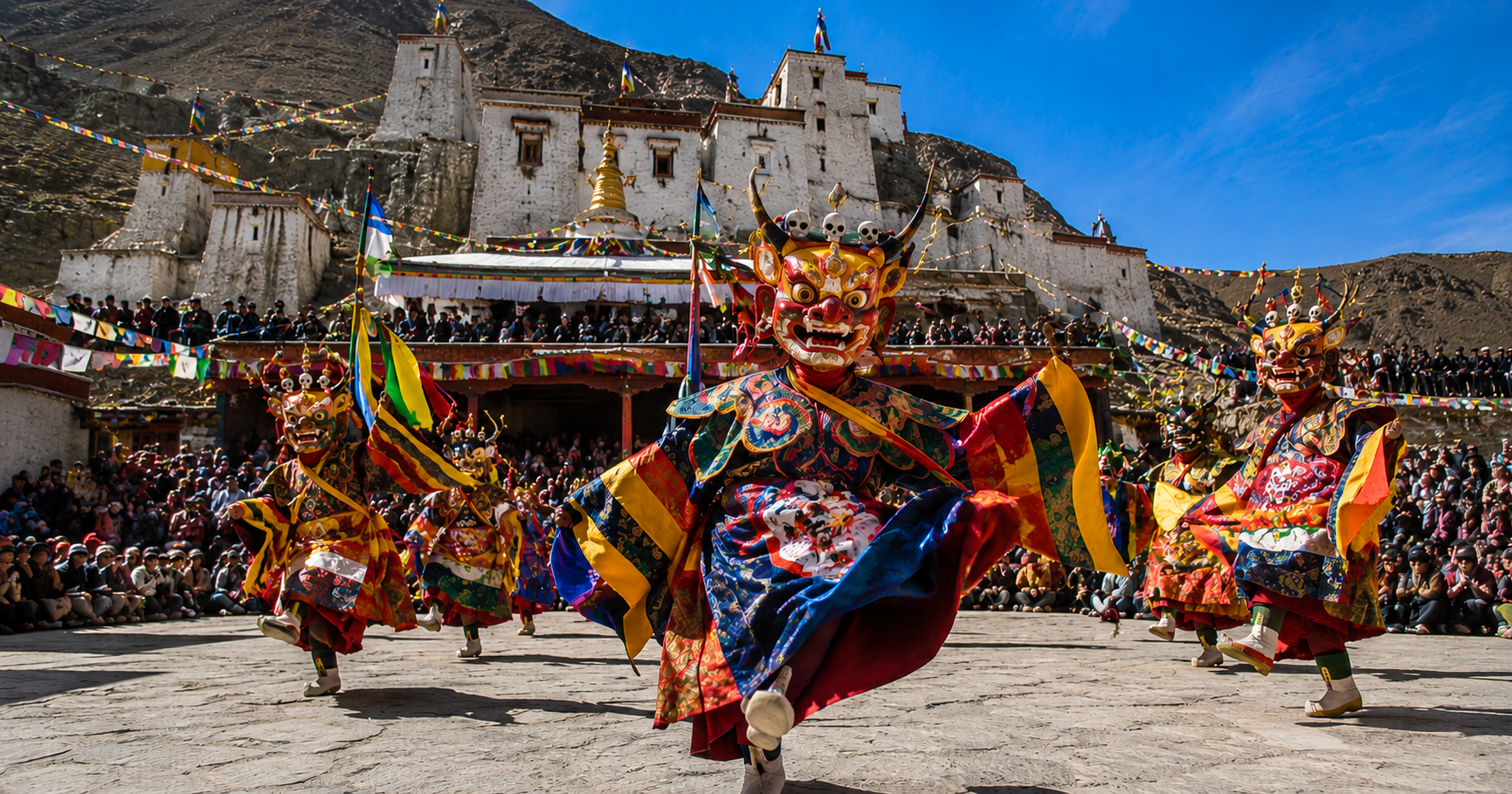
The Tiji (also written Tenchi or Yartung) Festival is Upper Mustang’s most important religious event and one of Nepal’s most spectacular cultural festivals. Held annually for three days in Lo Manthang during the month of Vaishakh (April or May), the Tiji Festival celebrates Dorje Jono’s victory over a demon who was causing drought and havoc in the kingdom of Mustang. Monks perform elaborate masked dances (cham) in the Lo Manthang courtyard over three days, enacting Dorje Jono’s battle and victory.
The festival draws more international visitors each year and is considered one of Asia’s most authentic and visually magnificent cultural events. Nepal Vehicle Hiring Pvt Ltd offers special Tiji Festival tour packages, with bookings available for 2026 and 2027.
Tour Packages — All Options
| Tour Package | Duration | From | Vehicle Cost | Includes Muktinath | Includes Lo Manthang |
| Muktinath Darshan (Short) | 3–4 days | Pokhara | USD 500–700 (full jeep | s | No |
| Lower Mustang Tour | 5–6 days | Pokhara | USD 700–950 (full jeep | s | No |
| Muktinath from Kathmandu | 5–7 days | Kathmandu | USD 900–1,200 (full jeep | s | No |
| Upper Mustang + Muktinath | 10–12 days | Pokhara / KTM | USD 1,600–2,200 (Land Cruiser) | Yes | Yes |
| Tiji Festival Tour (Upper Mustang) | 12–14 days | Kathmandu | USD 1,800–2,500 (Land Cruiser) | Yes | Yes |
| Muktinath + Chitwan + Pokhara Circuit | 9–11 days | Kathmandu | USD 900–1,200 (full jeep) | s | No |
Package 1 — Short Muktinath Darshan (3–4 Days from Pokhara)
The most popular and time-efficient Muktinath tour — designed for pilgrims and visitors who want the complete Muktinath temple experience from Pokhara without extending to Upper Mustang. The 3-day round trip from Pokhara covers Tatopani, Marpha, Jomsom, Kagbeni, and Muktinath in a well-paced itinerary, with a critical acclimatisation night in Jomsom (Day 1) before ascending to Muktinath (Day 2).
| Day | Route | Key Activity | Overnight |
| Day 1 | Pokhara → Tatopani → Ghasa → Jomsom | Kali Gandaki drive, hot springs stop, acclimatise at Jomsom | Jomsom guesthouse (2,720 m) |
| Day 2 | Jomsom → Kagbeni → Jharkot → Muktinath | Temple darshan, 108 spouts, Jwala Mai, monastery | Muktinath or Jomsom |
| Day 3 | Muktinath → Marpha → Tatopani → Pokhara | Return drive, Marpha apple village, Tatopani hot spring soak | Pokhara |
Package 2 — Complete Upper Mustang Tour with Muktinath (9–10 Days)
The complete Upper Mustang and Muktinath tour — Nepal’s most extraordinary overland journey. This 9-day route from Pokhara combines the Muktinath pilgrimage with the full Upper Mustang jeep expedition to Lo Manthang, the sky caves, and the ancient monasteries of the Forbidden Kingdom.
| Day | Route | Key Activity | Overnight |
| Day 1 | Pokhara → Tatopani → Jomsom | Full Kali Gandaki scenic drive, hot springs stop | Jomsom (2,720 m) |
| Day 2 | Jomsom → Kagbeni → Muktinath | Morning acclimatisation walk, afternoon temple darshan | Muktinath (3,710 m) |
| Day 3 | Muktinath → Kagbeni → Chhusang → Chele | Upper Mustang permit check, enter the restricted area, canyon drive | Chele (3,050 m) |
| Day 4 | Chele → Samar → Ghiling | High plateau drive, ancient villages, chortens, and mani walls | Ghiling (3,570 m) |
| Day 5 | Ghiling → Ghami → Tsarang → Lo Manthang | Tsarang palace ruins, red monastery, arrive at Lo Manthang | Lo Manthang (3,840 m) |
| Day 6 | Lo Manthang exploration, full day | Lo Gekar monastery, royal palace, sky caves (Chosar/Lori) | Lo Manthang |
| Day 7 | Lo Manthang → Tsarang → Ghami return | The reverse route sheds a different light on canyon walls | Ghami or Ghiling |
| Day 8 | Ghiling → Chele → Chhusang → Jomsom | Exit Upper Mustang, permit check-out, return to Jomsom | Jomsom (2,720 m) |
| Day 9 | Jomsom → Marpha → Tatopani → Pokhara | Apple village visit, hot springs, full return drive to Pokhara | Pokhara (827 m) |
Package 3 — Muktinath from Kathmandu (5–7 Days)
For visitors based in Kathmandu who want to include Muktinath in their Nepal itinerary without a separate Pokhara-based tour, Nepal Vehicle Hiring Pvt Ltd offers comprehensive Kathmandu-to-Muktinath jeep packages. The route follows the Prithvi Highway from Kathmandu to Pokhara on Day 1, then proceeds via the standard Kali Gandaki route to Jomsom (Day 2) and Muktinath (Day 3), returning to Kathmandu via Pokhara.
- Day 1: Kathmandu → Pokhara (5–6 hours by jeep)- overnight in Pokhara
- Day 2: Pokhara → Jomsom (6–7 hours) — overnight Jin omsom
- Day 3: Jomsom → Muktinath darshan — overnight in Muktinath or Jomsom
- Day 4: Return to Pokhara (6–7 hours)
- Day 5: Pokhara → Kathmandu (5–6 hours)
- Vehicle cost: USD 900–1,200 for a full jeep for the complete round trip from Kathmandu
Permits Required — Complete Guide
| Permit Type | Area Covered | Cost | Where to Obtain | Who Needs It |
| ACAP (Annapurna Conservation Area) | Beni to Kagbeni (Lower Mustang / Muktinath) | NPR 3,000 (~USD 22) per person | Nepal Tourism Board, Pokhara or Kathmandu | All visitors to Muktinath |
| Upper Mustang Restricted Area Permit | Kagbeni to Lo Manthang and beyond | USD 50 per day per person (2026 rate) | Nepal Tourism Board, Kathmandu | Only for Upper Mustang beyond Kagbeni |
| TIMS Card | All trekking areas in Nepal | USD 10–20 per person | Nepal Tourism Board / TAAN, Pokhara or KTM | All foreign trekkers |
| Mustang Heritage Trust Fee | Upper Mustang | USD 10–20 per person | Collected at the Kagbeni checkpoint | All Upper Mustang visitors |
Important Permit Changes in 2026
The Upper Mustang Restricted Area Permit structure changed in 2026. Previously, the permit cost USD 500 per person for a mandatory minimum of 10 days. From 2026, the permit costs USD 50 per day per person, with no mandatory minimum number of days. For a 10-day visit, the total cost remains USD 500 per person — but shorter stays (for example, a 5-day Upper Mustang visit) now cost USD 250 per person instead of the previous mandatory USD 500. This change makes short Upper Mustang visits significantly more affordable.
Permit Verification: Permit fees in Nepal can change. Always verify the current Upper Mustang permit rate with Nepal Vehicle Hiring Pvt Ltd or the Nepal Tourism Board in Kathmandu or Pokhara before your trip. Rates cited in this guide are the most current available at the time of writing.
Where to Get Permits: The Nepal Tourism Board issues ACAP and TIMS at its offices in Pokhara (Lakeside area) and Kathmandu (Bhrikuti Mandap). You must obtain the Upper Mustang Restricted Area Permit in Kathmandu or Pokhara (not at the checkpoint in Kagbeni). Obtain all permits before departing Pokhara.
Vehicle Hire Details — Muktinath and Mustang Route
Why a 4WD Jeep is Essential
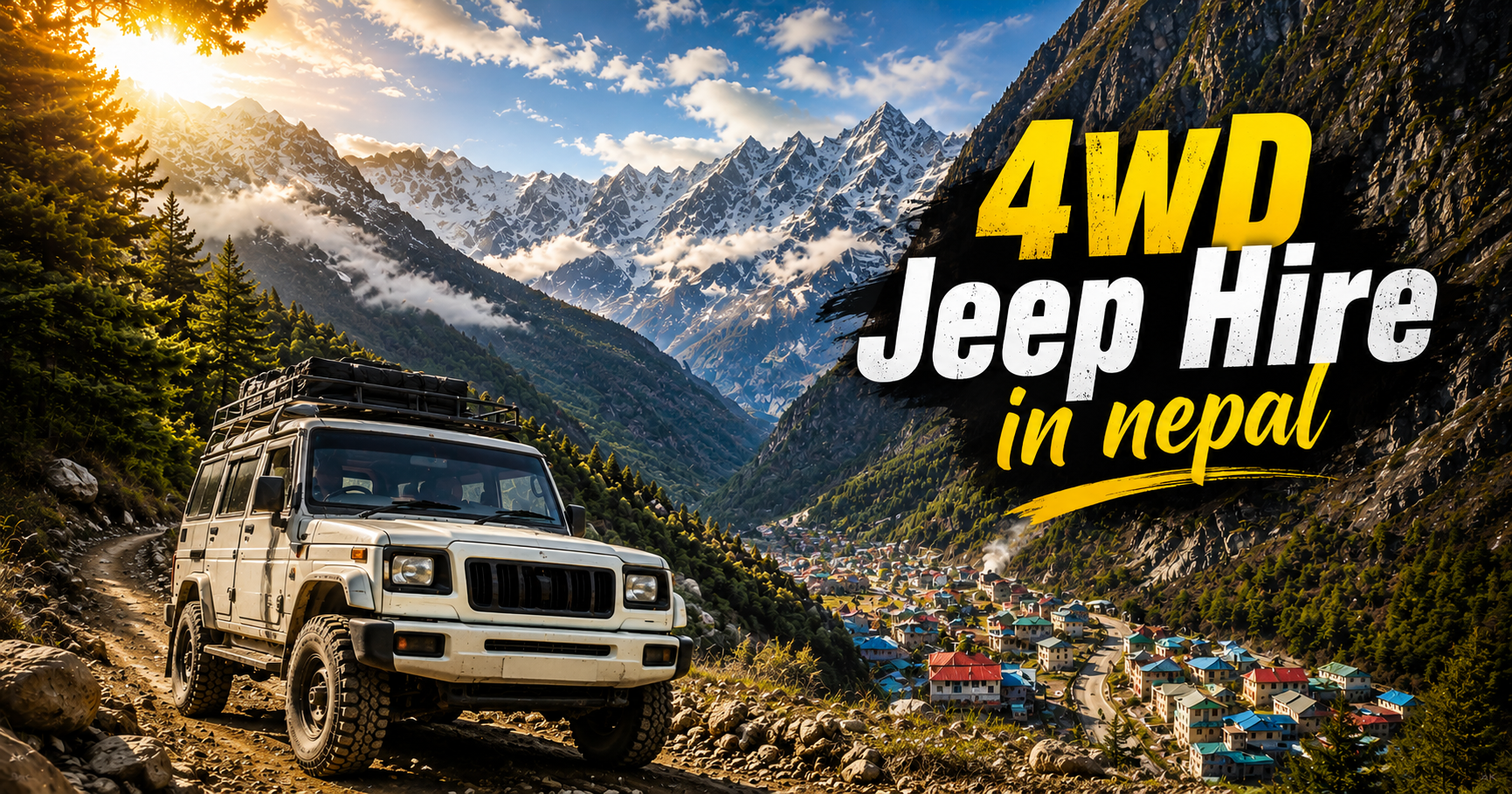
The Pokhara-to-Muktinath route and the Upper Mustang road are among Nepal’s most demanding jeep routes. A high-clearance 4WD vehicle is not optional—it is mandatory from Beni northward. The Kali Gandaki road involves rough gravel surfaces, river crossings, steep ascents, narrow cliff-edge sections, and — on the Upper Mustang section — some of the most dramatic off-road terrain in the entire Himalayan region.
- Toyota Land Cruiser 4WD: Best vehicle for Upper Mustang — maximum clearance, advanced 4WD, reliable performance on the toughest sections. Recommended for the full Lo Manthang route.
- Toyota Hilux 4WD: Excellent for Lower Mustang and Muktinath — highly capable, reliable, comfortable for 5–6 passengers.
- Mahindra Scorpio 4WD: Good budget option for Lower Mustang and Muktinath — capable but less comfortable than Hilux for very long mountain routes.
- Sedan or Hiace: NOT recommended beyond Beni — the road quality from Beni northward requires 4WD ground clearance.
Vehicle Hire Costs
- Pokhara to Muktinath (return, 3–4 days): USD 500–700 (full vehicle, Toyota Hilux or Scorpio)
- Pokhara to Lo Manthang (return, 9–10 days): USD 1,600–2,200 (full vehicle, Toyota Land Cruiser preferred)
- Kathmandu to Muktinath (return, 5–7 days): USD 900–1,200 (full vehicle)
- All-inclusive: Driver, fuel, road tolls — no hidden charges
- Capacity: Hilux/Scorpio comfortably seats 4–6 passengers; Land Cruiser seats 6–7
Altitude Health — Essential Muktinath and Upper Mustang Advice
Both Muktinath (3,710 m) and Lo Manthang (3,840 m) are in the high-altitude zone where Acute Mountain Sickness (AMS) is a genuine risk. For comprehensive altitude health information, refer to our dedicated blog ‘Altitude and Health: Essential Muktinath Advice.’ Here are the essential points:
Never drive from Pokhara directly to Muktinath in a single day; a 2,883 m altitude gain in one day carries a high risk of AMS. Always stay overnight in Jomsom (2,720 m) first — this single precaution dramatically reduces the risk of AMS.
- Day 1: Pokhara to Jomsom — sleep at Jomsom (2,720 m), rest and acclimatise
- Day 2: Jomsom to Muktinath (3,710 m) — safe ascent after one night at altitude
- For Upper Mustang: The ascent from Jomsom to Lo Manthang is gradual (over 3–4 days) — generally good acclimatisation profile
- Symptoms of AMS: Headache, nausea, fatigue, dizziness, loss of appetite — rest immediately, do not ascend further
- Golden Rule: If symptoms worsen at a higher altitude — DESCEND IMMEDIATELY
- Diamox (Acetazolamide): Discuss with your doctor before travel — particularly for elderly pilgrims and sea-level visitors from India
- Travel insurance: Must cover helicopter evacuation at 3,700+ m — verify before purchase
- Emergency descent from Muktinath to Jomsom: 1.5 hours by jeep. Emergency evacuation to Pokhara by flight from Jomsom (~25 min) or helicopter (~20 min)
Best Season for Muktinath Pilgrimage and Mustang Tour
| Season | Months | Road Condition | Muktinath Views | Upper Mustang | Best For |
| Autumn (Best) | Oct–Nov | Dry, excellent | Crystal clear | Open — ideal | Pilgrimage + touring |
| Spring (Best) | Mar–May | Dry, good | Clear + warm | Open — Tiji Festival | Tiji Festival (May) |
| Winter | Dec–Feb | Cold, accessible | Very clear, cold | Open but cold | Quiet pilgrimage |
| Monsoon | Jun–Sep | Some rainy sections | Variable — often clear (rain shadow) | Open but rough roads | Not ideal |
Autumn — October to November (Peak Season)
Post-monsoon autumn is the finest season for the Muktinath pilgrimage and Mustang tour. The monsoon has cleared the air and washed the landscape to a vivid clarity — the views of Dhaulagiri, Annapurna, and Nilgiri from the Kali Gandaki valley in October and November are simply breathtaking. Roads are dry and in excellent condition throughout the route. The Upper Mustang landscape in autumn — golden light on ochre cliffs, deep blue sky, prayer flags against white Himalayan peaks — is visually unforgettable. Accommodation and vehicles are in high demand — book 2 to 4 weeks in advance.
Spring — March to May (Tiji Festival Season)
Spring brings warming temperatures, rhododendron forests in full bloom on the lower approach sections, and — most importantly for Upper Mustang visitors — the spectacular Tiji Festival in Lo Manthang (typically in late April or early May). For cultural travellers and those interested in Buddhist traditions, timing a visit to coincide with the Tiji Festival is one of Nepal’s great travel experiences. March and April also see large Hindu pilgrimages to Muktinath for Ram Navami. Roads are dry and in good condition.
Winter — December to February
Winter offers the quietest and most intimate Muktinath experience. The pilgrimage site feels more spiritually concentrated with fewer visitors. Views from Muktinath and the Kali Gandaki valley are extraordinarily clear in winter light. The major caveat is temperature — nights at Muktinath and Lo Manthang can be exceptionally cold (below -15°C at higher elevations). Warm clothing, including a high-quality sleeping bag and down layers, is essential. Maha Shivaratri (February–March) brings the largest annual pilgrimage gathering to Muktinath — one of Nepal’s most powerful and moving religious events.
Monsoon — June to September
The Mustang region is unique in Nepal in that it falls largely in the rain shadow of the Annapurna-Dhaulagiri massif and receives relatively little direct monsoon rainfall compared to most of Nepal. The Kali Gandaki valley and Upper Mustang plateau are often clear and sunny even when the rest of Nepal is experiencing heavy monsoon rain. However, rain-related damage and landslides can affect the approach roads from Pokhara through Beni and the Tatopani area. The route is generally passable, but road conditions vary — always verify before travel. The Shravan Sombar (August Mondays) draws large numbers of pilgrims to Muktinath even during the monsoon season.
What to See and Do — Beyond the Temple
Dhumba Lake, Jomsom
Just 5 km west of Jomsom town, the beautiful Dhumba Lake sits at 2,830 m below the dramatic face of Nilgiri North. The glacially fed lake is crystal clear and surrounded by rocky moorland—a peaceful, scenic escape from the windy Jomsom bazaar. The walk from Jomsom to Dhumba Lake takes approximately 45 minutes and provides excellent morning views of Nilgiri and Dhaulagiri.
Shaligram Collecting at Kagbeni
The gravel beds of the Kali Gandaki River below Kagbeni are among the most sacred—and geologically extraordinary—stretches of river on earth. The black, disc-shaped fossils found here are ammonites (ancient marine molluscs from the Jurassic period (~130 million years old)) preserved when the ancient Tethys Sea dried up, and the Himalayan range rose. Hindus regard these Shaligrams as natural manifestations of Lord Vishnu and carry them home as objects of worship. Searching the river gravel for Shaligrams — with permission from local authorities — is one of the most memorable activities on the Muktinath route.
Wind Sports and Paragliding at Jomsom
The extreme afternoon winds in Jomsom (a reliable thermal-generating wind channel that begins around noon each day and can reach 60–70 km/h) have made the town famous among paragliding and wind sports enthusiasts. Several local operators offer morning tandem paragliding experiences from the Jomsom ridgeline before the winds become too strong — providing extraordinary aerial views of the Kali Gandaki gorge and surrounding massifs.
Thakali Cultural Experience
The Mustang valley from Ghasa through Jomsom is the traditional heartland of the Thakali people — one of Nepal’s most distinctive and entrepreneurially successful indigenous communities. Traditionally, the Thakali salt traders and innkeepers of the ancient Kali Gandaki trade route between Nepal and Tibeli are known for their exceptional cuisine (Thakali dal bhat is widely regarded as the finest version of Nepal’s national dish), their beautifully designed traditional stone houses, and their warmly welcoming hospitality. Several Thakali cultural homestays and heritage guesthouses operate in Marpha and Jomsom — a deeply authentic cultural experience.
Practical Tips for Muktinath Pilgrimage and Mustang Tour
- Obtain all permits in Pokhara or Kathmandu before departure: ACAP (NPR 3,000), TIMS (USD 10–20), and Upper Mustang Restricted Area Permit (USD 50/day) — the Upper Mustang permit cannot be obtained at the Kagbeni checkpoint.
- Book vehicles and accommodation 1 to 2 weeks in advance for the Tiji Festival (April–May) and Shivaratri (February) — these are the two peak-demand periods.
- Always spend the night in Jomsom before ascending to Muktinath — this is the single most important altitude-safety measure. Nepal Vehicle Hiring Pvt Ltd builds this into all Muktinath itineraries.
- Carry NPR cash from Pokhara: Withdraw at the Pokhara ATM. The Jomsom ATM (Nepal Bank) is the last reliable cash machine. Carry enough for the entire Mustang stay, including accommodation, meals, offerings, and horse hire at Muktinath.
- For Muktinath darshan: Wear modest, conservative clothing. Remove footwear at the temple gate. Women may wish to bring a shawl to cover the head. Offerings of flowers, milk, and coconut are appropriate for Lord Vishnu.
- Carry warm clothing even in spring and autumn: Muktinath nights can drop below 0°C even in October and April. Lo Manthang nights can be much colder. A down jacket, thermal base layers, a warm hat, and gloves are essential.
- Pack a headlamp for early morning temple visits and pre-dawn ritual bathing under the 108 spouts — the most spiritually concentrated time at the temple.
- The Kali Gandaki road gets very dusty and windy in the afternoon (particularly near Jomsom) — a buff or dust mask is recommended, especially on open sections of the road.
- For Upper Mustang: Photography rules apply near religious sites — always ask permission before photographing local people, religious ceremonies, or monastery interiors.
- For the Tiji Festival: Book accommodation in Lo Manthang 3 to 4 months in advance—the limited guesthouses inside the Lo Manthang walls fill up early for the festival period.
Why Choose Nepal Vehicle Hiring Pvt Ltd
- Muktinath and Mustang Specialist: Nepal Vehicle Hiring Pvt Ltd operates the Pokhara-to-Jomsom-to-Muktinath-to-Lo Manthang route regularly—our drivers know every checkpoint, road condition, overnight stop, and permit requirement along the full Mustang circuit.
- Right Vehicle for Every Section: Toyota Hilux for Lower Mustang and Muktinath; Toyota Land Cruiser for the demanding Upper Mustang road to Lo Manthang. We never send an underpowered vehicle on this challenging route.
- Altitude-Safe Itinerary Design: Every Nepal Vehicle Hiring Pvt Ltd Muktinath tour includes the mandatory Jomsom acclimatisation. We never design same-day Pokhara-to-Muktinath itineraries.
- Permit Assistance: We guide all clients through the ACAP, TIMS, and Upper Mustang Restricted Area Permit process — helping arrange permits in Pokhara or Kathmandu before departure.
- Festival Tour Expertise: Nepal Vehicle Hiring Pvt. Organises dedicated Tiji Festival and Shivaratri pilgrimage tours with bookings for the 2026 and 2027 seasons.
- Complete Mustang Packages: From the short 3-day Muktinath darshan to the full 10-day Upper Mustang expedition — all tour formats available with single-booking convenience.
- 24/7 Booking and Support: WhatsApp, phone, or email anytime — instant confirmation and emergency support throughout the tour.
Frequently Asked Questions — Muktinath Pilgrimage & Mustang Tour
How many days do I need for the Muktinath pilgrimage tour?
The minimum is 3 days from Pokhara (Day 1 Pokhara-Jomsom, Day 2 Muktinath, Day 3 return to Pokhara). For a more relaxed experience with time to properly explore Marpha, Kagbeni, and the Kali Gandaki Valley, 4 to 5 days is recommended. The full Upper Mustang extension to Lo Manthang adds 5-6 more days.
What is the cost of the Muktinath jeep tour from Pokhara?
A private jeep hire from Pokhara for a 3-day Muktinath round trip costs approximately USD 500-700 for the entire vehicle (Toyota Hilux or Scorpio), including driver and fuel. For 6 passengers sharing, the cost is approximately USD 83-117 per person for all vehicle transport.
What is the Upper Mustang permit?
As of 2026, the Upper Mustang Restricted Area Permit costs USD 50 per person per day — down from the previous rate of USD 500 for a mandatory minimum of 10 days. For a standard 10-day Upper Mustang visit, the total permit cost is USD 500 per person. For shorter visits, the per-day rate applies. Always verify the current rate with Nepal Vehicle Hiring Pvt Ltd or the Nepal Tourism Board before travel.
Can elderly pilgrims visit Muktinath safely?
Yes, many elderly pilgrims visit Muktinath every year. Key requirements include a 2-day approach with a Jomsom acclimatisation night, medical clearance from a doctor before travel, discussing Diamox with their doctor, travelling with a companion, and a flexible itinerary that allows rest if needed. Horse hire is available at Ranipauwa village for the final approach to the temple. Nepal Vehicle Hiring Pvt Ltd’s private jeeps provide door-to-door comfort throughout the journey.
Is the Upper Mustang accessible year-round?
Yes — Upper Mustang is accessible by jeepJeepr-round in normal conditions, unlike many Himalayan trekking destinations. The jeep road from Jomsom to Lo Manthang is open year-round, with occasional temporary closures after heavy snowfall. The Tiji Festival (April–May) and the autumn (October–November) are the most popular periods to visit.
What is the Tiji Festival, and when does it occur?
The Tiji Festival is the most important three-day religious festival in the Lo Manthang region, held annually in Vaishakh (typically late April or early May). Buddhist monks perform elaborate masked dances (cham) in the courtyard of Lo Manthang over three days to celebrate Dorje Jono’s victory over the demon. It is one of Asia’s most spectacular and authentic cultural festivals. Nepal Vehicle Hiring Pvt Ltd offers tour bookings for the Tiji Festival in 2026 and 2027.
Do I need a guide for Upper Mustang?
Yes — a licensed guide is mandatory for the Upper Mustang Restricted Area permit. Nepal Vehicle Hiring Pvt Ltd can connect you with licensed local guides for the Upper Mustang section of the tour. For Lower Mustang and Muktinath only, a guide is not legally required but is strongly recommended for first-time visitors.
What is the difference between Lower Mustang and Upper Mustang?
Lower Mustang covers the area from Beni to Kagbeni — including Tatopani, Marpha, Jomsom, and Muktinath. It is open to all visitors with the standard ACAP permit. Upper Mustang is the restricted area north of Kagbeni, including Chhusang, Ghiling, Tsarang, and Lo Manthang. It requires the special Upper Mustang Restricted Area Permit (USD 50/day in 2026) and a mandatory licensed guide.
How long does it take to drive from Pokhara to Jomsom?
The drive from Pokhara to Jomsom is about 150 km and takes 5 to 7 hours by private jeep, depending on road conditions, stops at Tatopani hot springs and Marpha apple village, and wind conditions near Jomsom. Depart Pokhara by 6:00–7:00 AM to arrive in Jomsom comfortably before the strong afternoon winds begin.
Conclusion
The Muktinath pilgrimage and Mustang tour is, quite simply, one of the greatest overland journeys on earth. From Pokhara’s lakeside serenity to the dramatic Kali Gandaki gorge, through the apple orchards of Marpha and the wind-swept airstrip town of Jomsom, to the sacred 108 water spouts of Muktinath and — for those who venture further — the ancient walled world of Lo Manthang in the Forbidden Kingdom of Upper Mustang, this is a journey that crosses not just geographical distances but spiritual, cultural, and historical worlds.
Whether your purpose is devout pilgrimage to one of Hinduism’s holiest Vishnu temples, Buddhist heritage exploration in the cave monasteries and gompas of Upper Mustang, cultural adventure in the living medieval city of Lo Manthang, or simply the sheer physical and visual magnificence of the Kali Gandaki drive through the world’s deepest gorge, the Muktinath and Mustang route delivers an experience of enduring depth and power.
Nepal Vehicle Hiring Pvt Ltd is your most trusted partner for this exceptional journey. We offer specialist 4WD vehicles, experienced drivers who know every kilometre of the Kali Gandaki and Upper Mustang roads, altitude-safe itinerary design, and permit assistance. With the flexibility to create exactly the tour you need — from a 3-day Muktinath darshan to a 12-day Upper Mustang expedition — we are ready to take you to one of the most extraordinary places on earth.
Book your Muktinath & Mustang tour today — Call or WhatsApp: +977 981-4227196
Website: www.vehiclehiringnepal.com
- Muktinath Pilgrimage & Mustang Tour
- Muktinath Temple — The Sacred Place of Liberation
- Mustang — The Last Forbidden Kingdom
- Key Facts at a Glance
- The Route — All Stops from Pokhara to Lo Manthang
- Upper Mustang — The World of Lo Manthang
- Tour Packages — All Options
- Permits Required — Complete Guide
- Vehicle Hire Details — Muktinath and Mustang Route
- Altitude Health — Essential Muktinath and Upper Mustang Advice
- Best Season for Muktinath Pilgrimage and Mustang Tour
- What to See and Do — Beyond the Temple
- Practical Tips for Muktinath Pilgrimage and Mustang Tour
- Why Choose Nepal Vehicle Hiring Pvt Ltd
- Frequently Asked Questions — Muktinath Pilgrimage & Mustang Tour
- Conclusion

Related Blog & Articles
Complete Muktinath And Chitwan And Pokhara Circuit Vehicle Hire
Sacred Sites of Muktinath – A Complete Pilgrimage Guide
Kathmandu to Mustang (Muktinath)