Plan a Trip


Muktinath Tour from Kathmandu – Complete Travel Guide
Muktinath Tour from Kathmandu – Complete Travel Guide
Introduction – Why Visit Muktinath from Kathmandu?
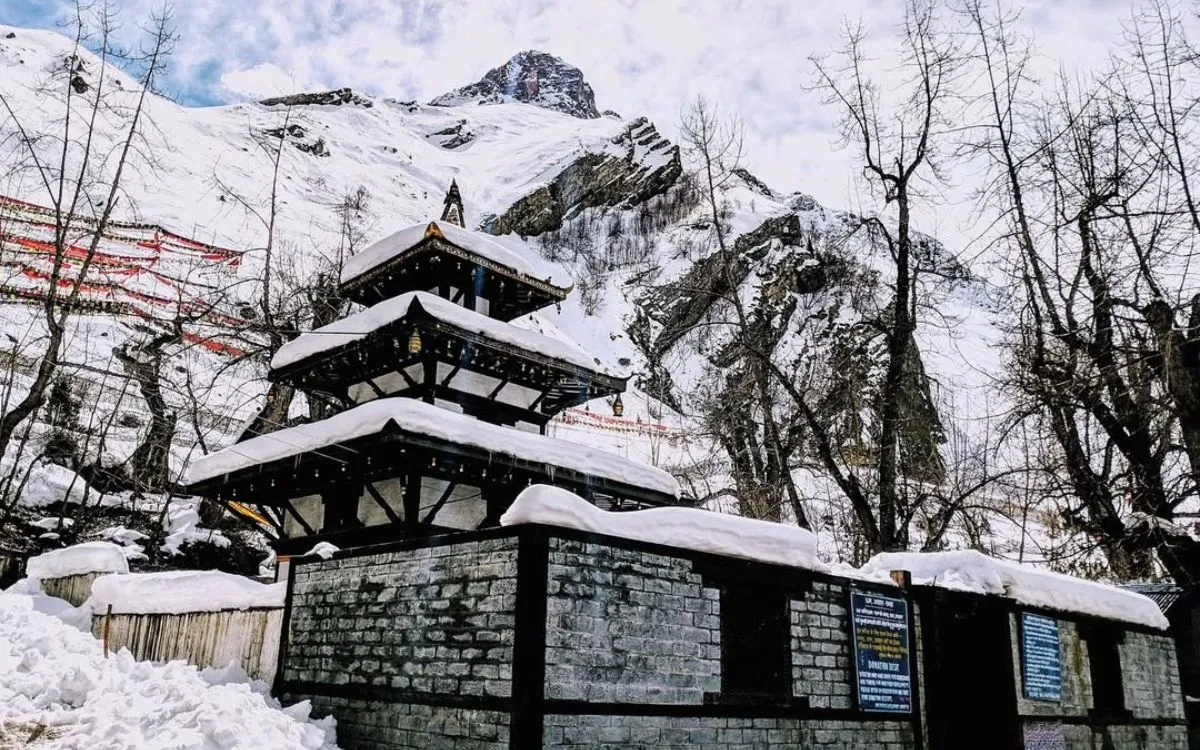
Few journeys in the world combine the depth of spiritual significance with the raw, breathtaking grandeur of natural beauty quite like the Muktinath tour from Kathmandu. Nestled in the Mustang District of Gandaki Province at a staggering altitude of 3,710–3,800 meters above sea level, the Muktinath Temple stands as one of the holiest pilgrimage destinations on earth — revered equally by Hindu and Buddhist devotees across Nepal, India, Tibet, and the world.
For Hindus, Muktinath is Mukti Kshetra — literally the “place of salvation” — and one of the 108 sacred Divya Desams of Lord Vishnu. Pilgrims believe a pilgrimage to Muktinath cleanses the soul of all sins accumulated across lifetimes and grants moksha, liberation from the endless cycle of rebirth. For Tibetan Buddhists, this valley is Chumig Gyatsa — the “Hundred Waters” — a sacred site blessed by Guru Rinpoche (Padmasambhava) himself, associated with Avalokiteshvara, the Bodhisattva of Compassion.
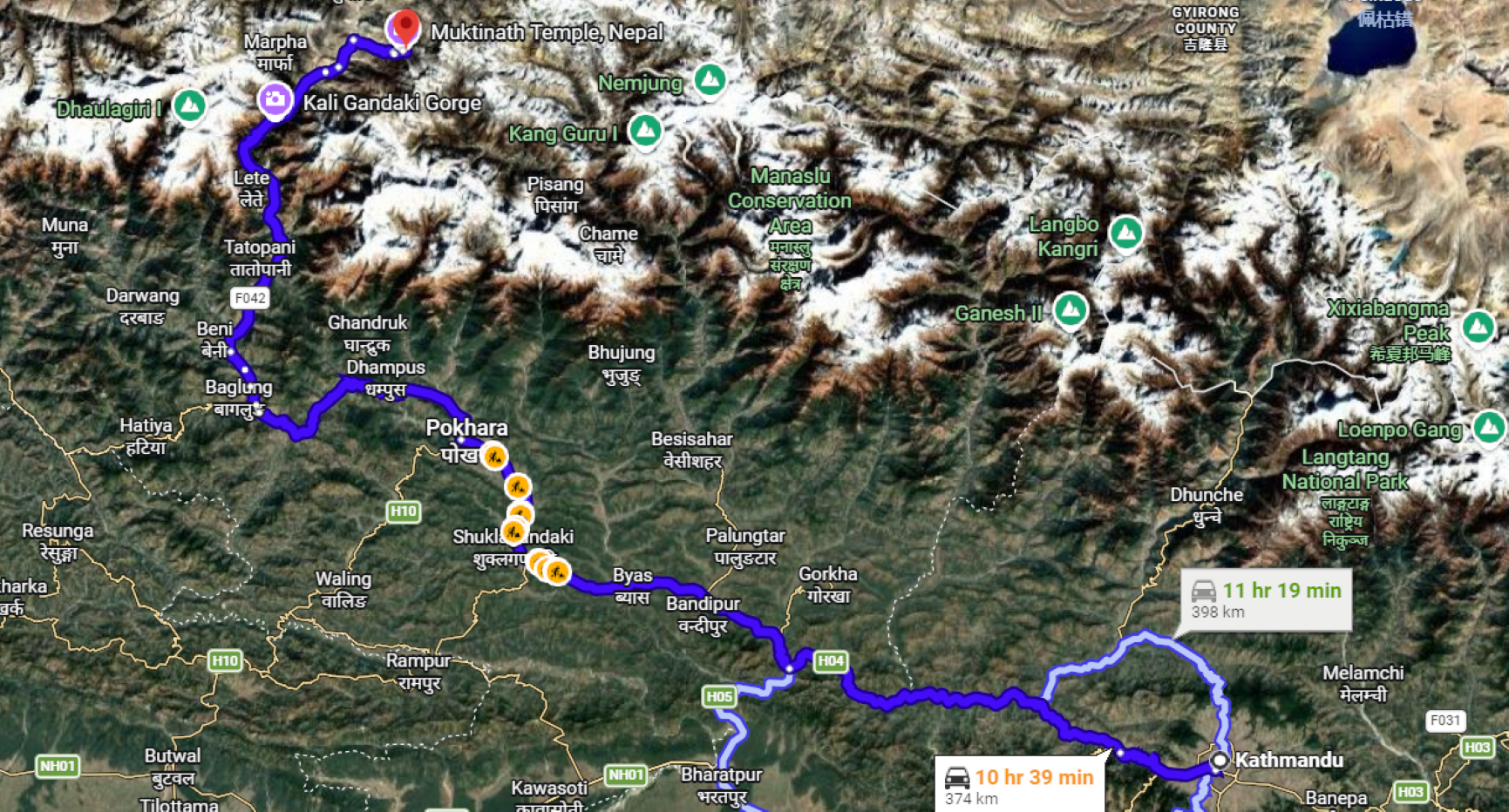
From Kathmandu, the journey to Muktinath covers approximately 400–410 km by road — a multi-day overland adventure through some of Nepal’s most dramatically varied landscapes: the lush Prithvi Highway valley, the thundering Kali Gandaki gorge (the world’s deepest gorge), the apple orchards of Marpha, the windswept bazaar of Jomsom, and the ancient walled village of Kagbeni — gateway to the Forbidden Kingdom of Upper Mustang.
Nepal Vehicle Hiring Pvt Ltd provides the most reliable, comfortable, and experienced 4WD jeep hire service from Kathmandu to Muktinath. This complete guide covers everything you need to plan your perfect Muktinath tour — route, itinerary, permits, vehicle selection, key stops, temple rituals, altitude preparation, and practical travel tips.
Book your journey: Nepal Vehicle Hiring – Jeep | All vehicles | Call/WhatsApp: +977 9851013196
Muktinath Tour from Kathmandu – Route at a Glance
| Full Route | Kathmandu -> Pokhara -> Beni -> Tatopani -> Ghasa -> Marpha -> Jomsom -> Kagbeni -> Muktinath |
| Total Distance | Approx. 400-410 km (Kathmandu to Muktinath) |
| Altitude Gain | Kathmandu 1,350 m -> Muktinath 3,710-3,800 m |
| Recommended Vehicle | 4WD Jeep (Toyota Land Cruiser, Mahindra Scorpio) – mandatory beyond Beni |
| Minimum Days | 5 Days (rush) | 7 Days (recommended) | 9-10 Days (comfortable) |
| Permits Required | ACAP (Annapurna Conservation Area Permit) + TIMS Card |
| Best Season | Spring (Mar-May) and Autumn (Sep-Nov) |
| Contact | +977 9851013196 | vehiclehiringnepal.com |
The Road from Kathmandu to Muktinath – Route Details
The Kathmandu–Muktinath overland journey follows a route that pilgrims, traders, and explorers have travelled for centuries. Today, a combination of paved highways and rugged mountain jeep tracks makes it possible to complete the journey by private vehicle. This road trip grows more spectacular with every passing kilometre.
Segment 1: Kathmandu to Pokhara (200 km | 6-7 hours)
The journey begins on the Prithvi Highway, one of Nepal’s finest scenic drives, as you head west from Kathmandu. The highway descends from the valley and follows the dramatic Trishuli River gorge for much of the journey — offering sweeping views of white-water rapids, forested hillsides, and traditional riverside villages. The popular pit stop at Mugling (approximately 100 km) is famous throughout Nepal for its riverside fish restaurants serving freshly grilled Asla (snow trout) — an unmissable Prithvi Highway tradition. The road then rises through hilly terrain before descending into the Pokhara Valley with its incomparable views of Machhapuchchhre (Fishtail Mountain) and the Annapurna massif. Overnight in Pokhara.
Segment 2: Pokhara to Beni (73 km | 2.5-3 hours)
Departing Pokhara, the road heads east then south to Beni (830 m), the headquarters of Myagdi District and the last large town before entering the Kali Gandaki valley. The road to Beni is well-paved and relatively straightforward. Beni is the key fuel and supply stop before the mountain roads begin. Stock up on fuel, cash, water, and snacks here — facilities become increasingly limited beyond this point.
Segment 3: Beni to Tatopani (55 km | 2-3 hours)
Beyond Beni, the road enters the Kali Gandaki valley, and the character of the journey changes dramatically. The highway narrows into a mountain road tracing the river’s edge through dense forest, past cascading waterfalls, and through traditional villages. The road passes through Tatopani (1,190 m) — famous throughout Nepal for its natural hot spring baths. After a long day’s drive, soaking in the Tatopani hot springs is an almost obligatory pleasure. The springs are believed to have healing properties, and on a cool mountain evening, they offer a moment of pure relaxation before the higher-altitude sections ahead.
Segment 4: Tatopani to Jomsom (80 km | 4-5 hours)
This is the most dramatic and scenically extraordinary segment of the entire Kathmandu–Muktinath journey. The road climbs through Ghasa (2,010 m), a traditional Thakali village at the entrance to the high-altitude Kali Gandaki valley. Beyond Ghasa, the gorge widens into the world’s deepest river gorge—the Kali Gandaki cutting between the towering peaks of Dhaulagiri (8,167 m) to the west and Annapurna I (8,091 m) to the east. The views from the road are absolutely staggering.
The route passes through Marpha (2,670 m), a beautifully preserved Thakali village famed for its apple orchards, apple cider, and apple brandy. The village’s whitewashed houses, narrow cobbled lanes, and Thakali monasteries make it one of the most charming stops on the entire route. Just beyond Marpha lies Jomsom (2,743 m), the headquarters of Mustang District, where most travellers overnight. Jomsom is a genuine high-altitude frontier town, windswept and dramatic, with the afternoon Kali Gandaki gale a daily feature of life here.
Segment 5: Jomsom to Muktinath (22 km | 1.5-2 hours)
The final segment from Jomsom to Muktinath is the most emotionally charged stretch of the journey. Leaving Jomsom by jeep, the road follows the Kali Gandaki River northward to Kagbeni (2,800 m) — an ancient, fortified Tibetan-style village standing guard at the entrance to Upper Mustang. Kagbeni’s red-walled monastery, narrow medieval lanes, and position at the confluence of two rivers make it one of Nepal’s most atmospheric villages. Beyond Kagbeni, the road climbs steeply on a narrow off-road track through dramatic high-altitude desert terrain to the small settlement of Ranipauwa — from where the Muktinath Temple is reached on foot in 10–15 minutes, or by horse.
Recommended 7-Day Muktinath Tour Itinerary from Kathmandu
Below is the most popular and well-balanced 7-day Muktinath tour itinerary from Kathmandu by private 4WD jeep. This itinerary allows for a comfortable pace, proper acclimatisation, scenic stops, and ample time for temple darshan at Muktinath.
| Day | Route / Destination | Key Highlights |
| Day 1 | Arrive in Kathmandu (1,350 m) | Pashupatinath Temple, Guheshwori Shakti Peetha, rest & briefing |
| Day 2 | Kathmandu to Pokhara (820 m) | 200 km | Prithvi Highway, Trishuli gorge, Mugling fish stop, Phewa Lake evening |
| Day 3 | Pokhara to Tatopani (1,190 m) | 135 km | Beni, Kali Gandaki valley entry, Ghasa village, hot spring soak at Tatopani |
| Day 4 | Tatopani to Jomsom (2,743 m) | 80 km | Ghasa, Kalopani, Marpha apple orchards, Jomsom bazaar |
| Day 5 | Jomsom to Muktinath (3,710 m) | 22 km | Kagbeni village, Muktinath Temple darshan, 108 water spouts, Jwala Mai, Buddhist Monastery |
| Day 6 | Muktinath Return to Pokhara | Return via the same scenic route, Marpha, Tatopani, overnight in Pokhara |
| Day 7 | Pokhara to Kathmandu | Prithvi Highway return, Kathmandu hotel drop-off, tour ends |
Day 1: Kathmandu – Arrival & Spiritual Preparation (1,350 m)
Arrive in Kathmandu and transfer to your hotel. After resting and getting oriented, spend the afternoon at Pashupatinath Temple—one of the holiest Hindu temples in the world, dedicated to Lord Shiva, and a perfect spiritual start to your Muktinath pilgrimage. Devotees also visit Guheshwori Shakti Peetha (adjacent to Pashupatinath) and Budhanilkantha Temple for darshan. Receive a briefing from your Nepal Vehicle Hiring guide and driver about the route, permits, and preparations for the journey ahead. Overnight: Kathmandu.
Day 2: Kathmandu to Pokhara (200 km | 6-7 hours | 820 m)
Depart Kathmandu at 7:00 AM by private 4WD jeep. Drive west on the Prithvi Highway, following the scenic Trishuli River gorge. Stop at Mugling for the famous freshwater fish lunch — a beloved tradition on this highway. Continue to Pokhara, arriving by early afternoon. Check into your lakeside hotel with views of Phewa Lake and the Annapurna range. In the evening, stroll the Lakeside (Baidam) area, visit Bindhyabasini Temple, or relax by the lakeside. Overnight: Pokhara.
Day 3: Pokhara to Tatopani via Beni (135 km | 5-6 hours | 1,190 m)
Depart Pokhara after breakfast and head to Beni, stocking up on fuel, cash, and supplies. Beyond Beni, the road enters the dramatic Kali Gandaki valley with waterfalls and deep gorges on either side. Pass through Ghasa and arrive at Tatopani in the late afternoon. Spend the evening soaking in the famous Tatopani natural hot springs — a deeply restorative experience after a long drive through mountain roads. Overnight: Tatopani.
Day 4: Tatopani to Jomsom (80 km | 4-5 hours | 2,743 m)
This is the most spectacular driving day of the entire tour. Depart early from Tatopani and climb through the world’s deepest gorge flanked by Dhaulagiri and Annapurna. Pass through Marpha for a brief stop to sample apple products and explore the beautifully preserved Thakali village. Arrive at Jomsom by mid-afternoon. Explore the Jomsom bazaar, visit the Eco Museum, and watch the powerful afternoon winds in the Kali Gandaki Valley — a daily spectacle that has shaped this landscape for millennia. Important: Rest and fully acclimatise at Jomsom before ascending to Muktinath the following day. Overnight: Jomsom (2,743 m).
Day 5: Jomsom – Kagbeni – Muktinath Temple (3,710-3,800 m)
The day every pilgrim and traveller has been waiting for. Depart Jomsom early by 4WD jeep to Kagbeni (2,800 m) — spend 30 minutes exploring this extraordinary medieval Tibetan-style village and its Red Monastery (Kag Chode Thupten Samphel Ling). Continue on the off-road mountain track, climbing steeply to Ranipauwa — the gateway village to Muktinath Temple. Walk (10–15 minutes) or ride a horse to reach the Muktinath Temple complex. Complete darshan: receive blessings at the Muktinath Vishnu Temple, take a ritual bath under the 108 Muktidhara water spouts, witness the eternal flame at Jwala Mai Temple, and visit the Tibetan Buddhist Monastery. Return to Jomsom or continue down to Kagbeni for the overnight. Overnight: Jomsom or Kagbeni.
Day 6: Muktinath Return to Pokhara (via Marpha, Tatopani)
Begin the return journey by retracing the Kali Gandaki Valley road. Stop again in Marpha for apple shopping and in Tatopani for a final soak. Arrive in Pokhara by late evening. Enjoy a farewell dinner at a lakeside restaurant with mountain views. Overnight: Pokhara.
Day 7: Pokhara to Kathmandu (200 km | 6-7 hours)
Final morning in Pokhara — visit Sarangkot viewpoint for a last Himalayan sunrise if desired. Depart by 8:00 AM for Kathmandu via the Prithvi Highway. Stop at Mugling for lunch. Arrive in Kathmandu by evening. Tour ends with hotel drop-off. Your Nepal Vehicle Hiring driver assists with onward connections to the airport if required.

Key Stops on the Kathmandu to Muktinath Route
| Stop | Distance from KTM | Altitude | Key Feature |
| Pokhara | 200 km | 820 m | Phewa Lake, Annapurna views |
| Beni | 280 km | 830 m | Myagdi HQ, Kali Gandaki entry |
| Tatopani | 315 km | 1,190 m | Natural hot springs resort |
| Ghasa | 335 km | 2,010 m | Thakali village, waterfalls |
| Marpha | 370 km | 2,670 m | Apple orchards, Thakali cuisine |
| Jomsom | 380 km | 2,743 m | Mustang HQ, Kali Gandaki gorge |
| Kagbeni | 390 km | 2,800 m | Gateway to Upper Mustang, old monastery |
| Muktinath | 400-410 km | 3,710-3,800 m | SacrTemple, 108 spouts, eternal flame |
Pokhara – Nepal’s Tourism Capital and Tour Basecamp
Pokhara is the natural basecamp and overnight stop for any Muktinath tour from Kathmandu. Nestled beside the beautiful Phewa Lake at 820 m, with the Annapurna massif dominating the northern horizon, Pokhara is one of Nepal’s most beautiful cities. Key experiences include: boating on Phewa Lake, visiting the World Peace Pagoda for panoramic views, exploring the International Mountain Museum, and witnessing the sunrise over Machapuchare from Sarangkot Hill. Pokhara is also the last major city with reliable ATMs, medical facilities, and well-stocked trekking supply stores before entering the Mustang region.
Tatopani – The Hot Springs of the Kali Gandaki
Tatopani (“Hot Water” in Nepali) at 1,190 m is one of the most celebrated stopover points on the Mustang road. The town’s natural hot spring pools, fed by geothermal activity beneath the Himalayan rock, provide extraordinary relief for tired muscles after a long jeep drive on mountain roads. The springs sit beside the roaring Kali Gandaki River, and bathing in the warm waters, with the sound of the rapids and the sight of forested gorge walls, is a uniquely memorable experience. Tatopani is also a fine viewpoint for Dhaulagiri and Annapurna South, visible above the gorge.
Marpha – The Apple Village of Mustang
Often called the “Apple Village of Nepal”, Marpha (2,670 m) is one of the most visually striking settlements in the Kali Gandaki valley. Its whitewashed stone houses are connected by narrow covered lanes that channel the famous valley wind. Apple orchards fill the surrounding slopes, producing Nepal’s finest apples —along with apple cider, apple brandy, apple jam, and apple pie sold in every shop. Marpha is also home to the Marpha Monastery (Drukpa Kagyu tradition) and offers spectacular views of the Dhaulagiri Icefall to the west. Budget 30–45 minutes to walk the village lane, visit the monastery, and stock up on apple products for the journey.
Jomsom – The Windswept Capital of Mustang
Jomsom (2,743 m) is Mustang’s district headquarters and the last major settlement before the sacred sites of Kagbeni and Muktinath. The Kali Gandaki Valley narrows here, and the famous afternoon winds—sometimes reaching gale force—begin around midday each day, making morning departures essential for the final drive to Muktinath. Jomsom’s main attractions include the Jomsom Eco Museum (showcasing Mustang’s geology, culture, and salt trade history), the airport (with daily flights to Pokhara), local teahouses serving authentic Thakali dal bhat, and sweeping views of the Nilgiri and Tilicho peaks.
Kagbeni – The Medieval Gateway to Upper Mustang
No stop on the Muktinath route is more atmospherically striking than Kagbeni (2,800 m). This ancient Tibetan-style walled village stands at the confluence of the Kali Gandaki and Jhong Khola rivers, with medieval red-mud walls, fortress ruins, and tightly packed, labyrinthine lanes that create a scene of extraordinary antiquity. The Kag Chode Thupten Samphel Ling Monastery (Red Monastery) — one of the oldest active Buddhist monasteries in Mustang — anchors the village with its ancient frescoes, prayer halls, and community of resident monks. Kagbeni is also the permit checkpoint for Upper Mustang—the famous Restricted Area—and the starting point for a further journey to Lo Manthang, the ancient Mustang Kingdom capital.
Muktinath Temple – History, Significance & Complete Darshan Guide
The Sacred History of Muktinath
The name Muktinath translates from Sanskrit as “God of Salvation” or “Lord of Liberation. The temple’s ancient name in the Vaishnava tradition is Thiru Saligramam, and it houses the famous Shaligrama Shila—naturally occurring ammonite fossils found in the Kali Gandaki River —which devout Vaishnavas consider the living embodiment of Lord Vishnu. The Muktinath Temple complex is listed as the 105th of the 108 Divya Desams — the most sacred Vishnu temples in the Hindu world, as counted in the Nalayira Divya Prabandham devotional hymns composed by the Alvars.
For Tibetan Buddhists and Bon practitioners, the valley predates even Buddhism itself. Guru Rinpoche (Padmasambhava), the great 8th-century master who brought Vajrayana Buddhism to Tibet, is said to have meditated in this valley and blessed its waters. The site is considered one of the 24 sacred Tantric power places (Pithas) in the Himalayan world. The eternal flame, burning from a fissure in the rock fed by natural gas from underground, represents for Buddhists the union of the five elements — earth, water, fire, air, and space — and a manifestation of the Dakinis, the female enlightened beings of Vajrayana Buddhism.
The Temple Complex – What to See and Experience
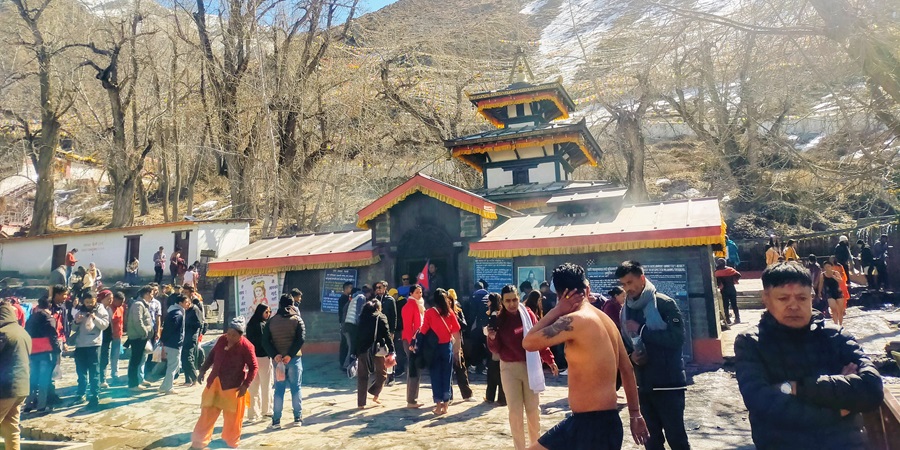
The Muktinath Temple complex sits within a walled enclosure at approximately 3,800 m, approached via a stone stairway flanked by prayer flags and chortens (Buddhist stupas). The complex contains several distinct sacred spaces:
- Muktinath Vishnu Temple (Mukti Narayana): The main temple-style temple housing the principal deity, Lord Vishnu as Mukti Narayana. A two-story structure with ornate wood carvings. The temple receives thousands of pilgrims annually. Devotees offer flowers, incense, and lamps, and receive the sacred Shaligrama darshan.
- 108 Muktidhara Water Spouts: The 108 bull-headed stone water spouts arranged in a semi-circular formation are the most iconic feature of the complex. Each spout pours glacially cold, pure mountain water year-round. The number 108 holds profound significance in both Hinduism (108 Upanishads, 108 Divya Desams) and Buddhism (108 defilements of the mind). Bathing under all 108 is an act of extraordinary spiritual courage — the water is near-freezing even in summer. Pilgrims who complete the full bath are believed to be purified of all accumulated karma and sins across lifetimes.
- Jwala Mai Temple (Eternal Flame): Adjacent to the main shrine, the Jwala Mai (“Flame Mother”) Temple houses the sacred eternal flame, fed by natural gas from underground. The flame burns with miraculous persistence beside a water spring — water and fire occupying the same sacred space. The Jwala Mai flame is considered the living presence of both Jwala Mai (a manifestation of Shakti) and, for Buddhists, the eternal energy of the Dakinis.
- Tibetan Buddhist Monastery (Gompa): A Tibetan-style monastery within the complex, dedicated to Guru Rinpoche and staffed by Buddhist monks. The gompa houses ancient thangka paintings, butter lamps, and images of the Bodhisattvas—Buddhist devotees prostrate, circumambulate the chortens, and recite mantras here.
- Shaligrama Stones: The Kali Gandaki River flowing below Muktinath is the world’s primary source of Shaligrama Shilas—black ammonite fossils naturally inscribed with spiral markings considered the direct form of Lord Vishnu. Pilgrims collect these sacred stones from the riverbed as divine blessings to bring home.
Temple Visiting Hours and Etiquette
The Muktinath Temple complex is open to all visitors and pilgrims of all faiths. Recommended visiting hours are 6:00 AM to 6:00 PM. Morning visits (before 9:00 AM) are most auspicious and less crowded. Important etiquette:
- Remove shoes before entering the main temple shrine.
- Dress modestly—with shoulders and legs covered is respectful for all visitors.
- If bathing under the 108 water spouts, bring a change of warm, dry clothing. The water is near-freezing, and rapid changes are essential to prevent cold exposure at altitude.
- Photography is generally permitted in the outer complex, but check before photographing inside the main shrine.
- Walk clockwise (Temple Dakshina) around the temple and chortens — this is the universal Himalayan pilgrimage convention.
Best Vehicles for Kathmandu to Muktinath Tour
The Kathmandu–Muktinath route divides clearly into two sections with very different road requirements:
- Kathmandu to Pokhara: Well-paved Prithvi Highway. Standard cars and vans are comfortable.
- Pokhara to Muktinath (via Beni): Paved to Beni, then increasingly rough, narrow, and off-road from Beni onwards. A 4WD jeep is essential and mandatory beyond Beni for the Tatopani, Jomsom, and Muktinath sections.
| Vehicle | Capacity | Route Suitability | Best For |
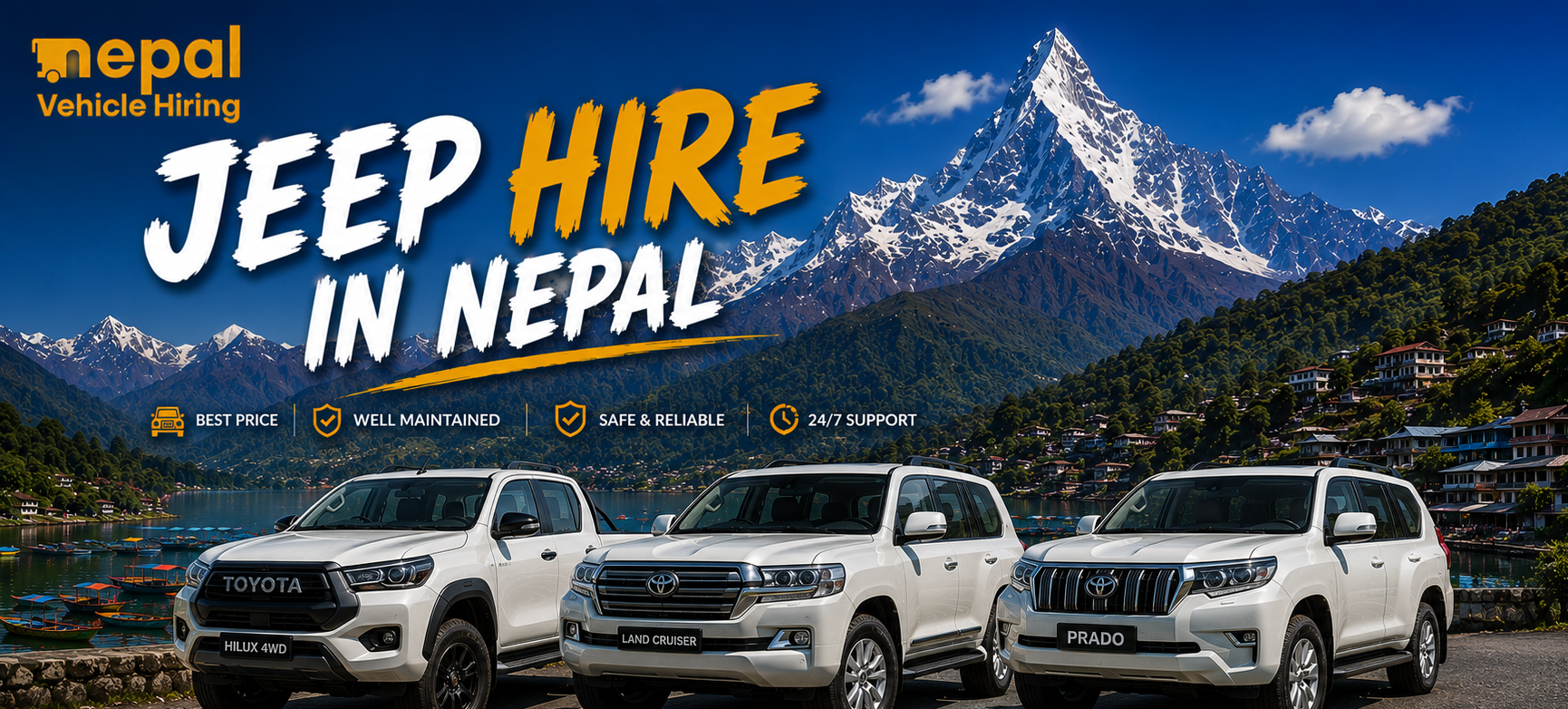
| Toyota Land Cruiser 4WD | 1-6 pax | Entire route incl. Beni-Muktinath | Premium / VIP pilgrims |
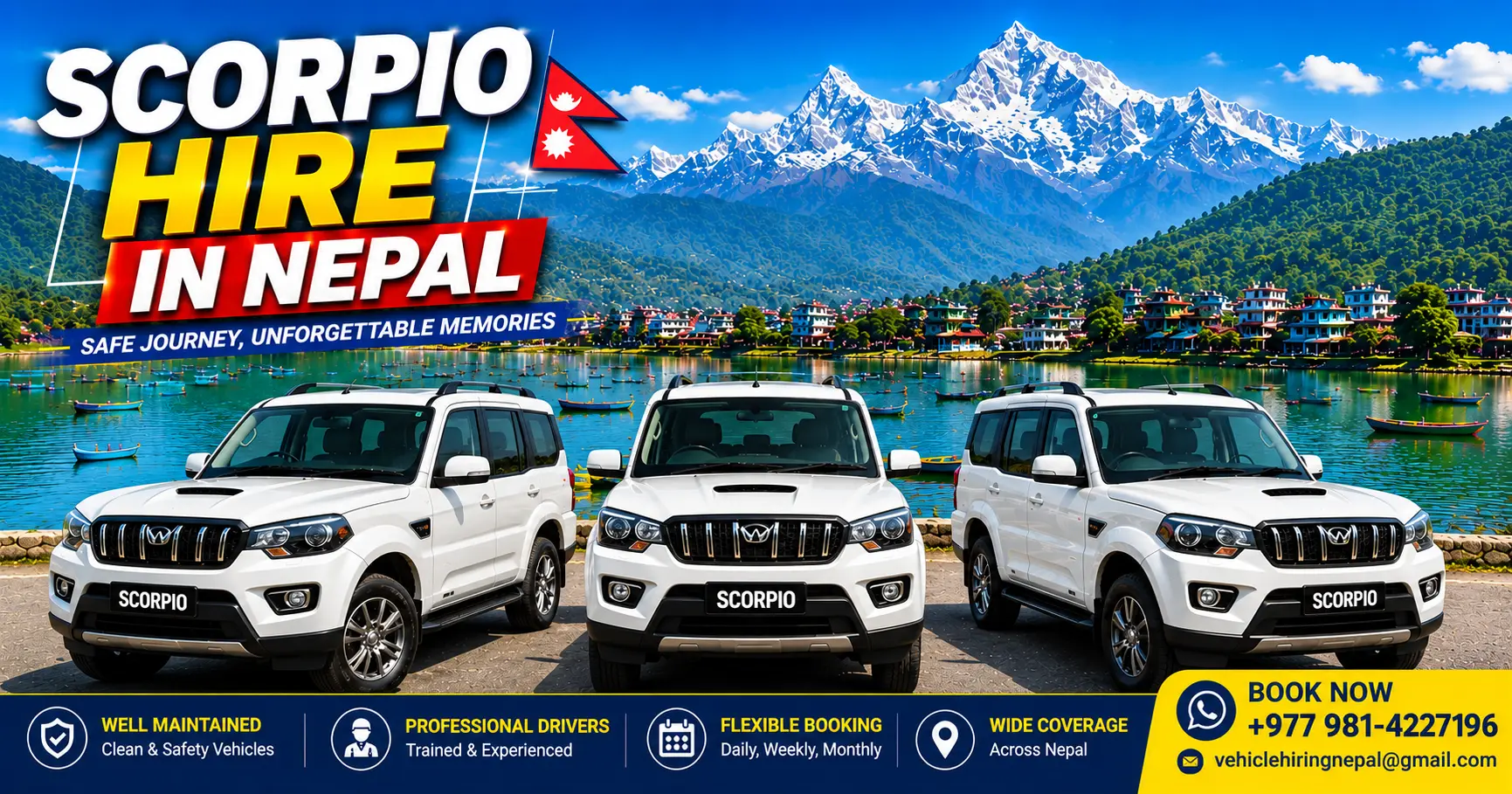
| Mahindra Scorpio 4WD | 1-6 pax | Entire route incl. off-road | Groups/budget pilgrims |
| Mahindra Bolero | 1-6 pax | Entire route incl. off-road | Budget groups |
| Toyota Hiace Van | 8-13 pax | KTM-Pokhara only (highway) |
Why the Toyota Land Cruiser is the Gold Standard
For the Muktinath route, the Toyota Land Cruiser 4WD is second to none. Its powerful engine handles steep mountain climbs with ease, its superior suspension absorbs rough off-road sections comfortably, and its spacious, well-insulated interior keeps passengers warm and comfortable at high altitudes. The Land Cruiser’s reliability on remote mountain roads — far from any workshop — is legendary, and Nepal’s experienced mountain drivers universally prefer it for Mustang routes. View our Jeep Hire page for current availability.
Why a 4WD Jeep is Non-Negotiable Beyond Beni
The road from Beni to Muktinath passes through some of Nepal’s most technically demanding terrain: narrow cliffside tracks above deep gorges, multiple river crossings, steep ascents at altitude, and sections that require serious ground clearance. Standard sedans, vans, and Hiace microbuses cannot safely or reliably navigate these sections. All Nepal Vehicle Hiring jeeps used for Muktinath tours are inspected before departure, and our drivers are experienced mountain specialists who have made this journey many times.
Permits Required for the Muktinath Tour
All visitors to the Muktinath Temple must obtain the required permits before entering the Annapurna Conservation Area. You can get permits in Kathmandu (NTB office) or Pokhara (NTB Damside office) — obtaining them in either location is strongly recommended, as buying them at checkpoints along the route is more expensive and time-consuming.
| Permit | Required For | Cost (Foreign) | Where to Get |
| ACAP | All visitors to the Annapurna Conservation Area | NPR 3,000 | NTB Kathmandu or Pokhara |
| TIMS Card | All trekkers (foreign) | USD 20 (NPR 2,700) | NTB or TAAN offices |
| Upper Mustang RAP | Beyond Kagbeni toward Lo Manthang only | USD 500 / 10 days | Registered trekking agency only |
Important: The Upper Mustang Restricted Area Permit is NOT required for visits to Muktinath. Muktinath, Jomsom, Kagbeni, and the Lower Mustang area are within the standard ACAP zone. Only travellers continuing north from Kagbeni toward Lo Manthang (Upper Mustang) require the Restricted Area Permit.

Altitude Acclimatisation – Essential Guide for Muktinath
At 3,710–3,800 m above sea level, Muktinath sits well within the altitude zone where Acute Mountain Sickness (AMS) is a genuine concern. The dramatic elevation gain from Kathmandu (1,350 m) to Muktinath over just 4–5 days means every visitor must treat acclimatisation seriously, regardless of age or physical fitness.
Symptoms of Altitude Sickness (AMS) to Watch For
- Persistent headache — the most common early symptom
- Nausea and loss of appetite
- Dizziness and light-headedness
- Fatigue and weakness disproportionate to effort
- Sleep disturbances and insomnia
- In severe cases (High Altitude Cerebral or Pulmonary Oedema): confusion, loss of coordination, inability to walk straight, severe breathlessness at rest — DESCEND IMMEDIATELY and seek medical help.
Golden Rules for Altitude Safety on the Muktinath Tour
- Ascend Gradually: Follow the “climb high, sleep low” principle. The 7-day itinerary is specifically designed for gradual acclimatisation at Tatopani and Jomsom before reaching Muktinath.
- Rest Day at Jomsom: Spend a full night at Jomsom (2,743 m) before ascending to Muktinath (3,800 m). This single overnight stop is the most important acclimatisation step on the entire tour.
- Stay Hydrated: Drink 3–4 litres of water per day. Dehydration dramatically worsens altitude sickness. Avoid alcohol, which accelerates dehydration at altitude.
- Avoid Overexertion: On arrival days at higher altitudes, rest and relax. Do not attempt vigorous hiking or exertion until fully acclimatised.
- Diamox (Acetazolamide): Consult your doctor about Diamox, a prescription medication that speeds acclimatisation. If prescribed, start 1-2 days before ascending above 2,500 m.
- Descend if Symptoms Worsen: If any AMS symptoms appear and worsen over 12 hours despite rest and medication, descend immediately. There is no shame in prioritising safety over completing the pilgrimage. The mountain will wait.
Best Time to Visit Muktinath from Kathmandu
Autumn (September – November) – The Peak Season
Autumn is widely considered the best time for a Muktinath tour. Skies are crystal clear after the monsoon, mountain views are at their most spectacular, temperatures are pleasant during the day (though cold at night at altitude), and the Kali Gandaki road is generally in its best post-monsoon condition. October and November coincide with Nepal’s great Hindu festivals — Dashain and Tihar — which transform the pilgrimage experience with extraordinary festive energy, especially at Muktinath and Pashupatinath. Most recommended season for first-time visitors.
Spring (March – May) – Second Best Season
Spring is the second peak season, offering stable, warm daytime temperatures and increasingly clear mountain views as the season progresses. Rhododendron forests along the Kali Gandaki valley burst into vivid red and pink bloom in March and April. The spring Muktinath Haribodhini Ekadashi festival (usually in April or May) draws vast numbers of Hindu pilgrims and is an extraordinary occasion to witness devotion at the temple. Water flow in the 108 Muktidhara spouts is at its most vigorous in spring as snowmelt fills the underground springs.
Winter (December – February)
Winter visits are possible but challenging. Snow can block the Jomsom–Muktinath road from December onwards, and temperatures at Muktinath can drop to -20°C at night. However, for experienced, well-equipped pilgrims, a winter Muktinath darshan carries profound spiritual significance—the silence, the snow-covered peaks, and the relative solitude create a uniquely powerful experience. A Toyota Land Cruiser with snow chains is essential for winter visits. Consult Nepal Vehicle Hiring for road condition updates before booking.
Monsoon (June – August) – Not Recommended
The monsoon season brings heavy rainfall, frequent landslides on the Prithvi Highway and the Kali Gandaki Valley road, and significantly more dangerous driving conditions on the mountain sections beyond Beni. Clouds almost entirely obscure mountain views. The Muktinath area itself, being in the rain shadow of the Annapurna and Dhaulagiri ranges, receives less rainfall, but the access roads are the major constraint. Monsoon Muktinath tours are possible but carry a higher risk and are not recommended for first-time visitors.
Food, Accommodation & Local Culture Along the Route
Where to Stay
- Kathmandu: A wide range of options, from budget guesthouses in Thamel to luxury hotels. Stay in Thamel for convenience.
- Pokhara: Excellent lakeside hotels with Annapurna views. Many mid-range and upmarket options along Lakeside (Baidam).
- Tatopani: Simple but comfortable guesthouses, all close to the famous hot springs. Basic facilities — cold nights, warm hospitality.
- Jomsom: The best-equipped overnight stop in the Mustang region with several decent hotels. Popular options include Hotel Nilgiri, Hotel Himalaya, and Mustang Resort.
- Kagbeni / Ranipauwa: Basic teahouse accommodation. Suitable for a one-night stay before or after visiting Muktinath Temple.
What to Eat – The Thakali Table
The Kali Gandaki Valley is the ancestral home of the Thakali people—one of Nepal’s most celebrated ethnic communities, renowned throughout the country for their extraordinary culinary tradition. Thakali Dal Bhat (lentil soup, rice, vegetable curry, pickle, and meat) is served along the entire route and is considered among the finest home cooking in all of Nepal. Other must-try foods along the route include:
- Marpha Apple Products: Fresh apple cider, apple brandy, apple jam, and apple pie from roadside shops in Marpha.
- Buckwheat Pancakes (Dhido): A traditional Mustang staple made from local buckwheat — dense, filling, and delicious with honey and butter.
- Thakali Set Meal: The Thakali khana set in Jomsom and Marpha is legendary — multiple vegetable dishes, pickles, crispy papadums, and butter tea served with enormous hospitality.
- Yak Butter Tea (Po Cha): The traditional Tibetan/Mustangi drink of tea brewed with yak butter and salt—an acquired taste, but warming and energising at altitude.
Thakali and Mustang Culture
The Kali Gandaki valley is a living cultural corridor between the Hindu plains and the Tibetan Buddhist highlands. As you travel northward from Beni to Muktinath, you pass through successive cultural layers — Magar and Gurung villages in the lower valley, Thakali communities in the middle (Ghasa to Jomsom), and Tibetan-influenced Bhotia communities in Kagbeni and Muktinath. Each community has its own distinct language, dress, food, music, and religious practice. The salt trade route that once connected the Nepal-Serai plains to the Tibetan plateau passed directly through this valley, and the architecture of Marpha, Jomsom, and Kagbeni still bears the marks of centuries of prosperous trading culture.
Essential Travel Tips for Your Muktinath Tour
- Book Your Jeep Early: During peak seasons (Oct-Nov, Mar-May), experienced mountain jeeps and drivers are in extremely high demand. Book your Nepal jeep hire at least 1-2 weeks in advance.
- Get Permits Before Departure: Obtain ACAP and TIMS permits in Kathmandu or Pokhara—not at mountain checkpoints, where costs are higher and the process is time-consuming.
- Depart Early Each Day: Mountain roads are best in the morning. Afternoon Kali Gandaki winds (especially around Jomsom) make road conditions more challenging. Always aim for early starts.
- Carry Cash: ATMs are available in Pokhara, Beni, and Jomsom. Beyond Jomsom, there are no banking facilities. Carry sufficient Nepali rupees for accommodation, meals, and permits for the full mountain section of the journey.
- Pack for Altitude Cold: Even in May, temperatures at Muktinath (3,800 m) can drop below 0°C at night. Pack thermal underlayers, a warm fleece or down jacket, gloves, and a hat — regardless of the season.
- Bring Dry Clothes for the Water Spouts: If you plan to bathe under the 108 Muktidhara water spouts, carry a change of warm, dry clothes in an easily accessible bag. Changing quickly after the ice-cold bath is medically important at altitude.
- Hire a Local Guide at Muktinath: A local guide at the temple complex ensures you complete every ritual correctly, understand the spiritual significance of each element, and follow the proper darshan sequence.
- Carry a First Aid Kit: Include altitude sickness medication (Diamox if prescribed), paracetamol, oral rehydration salts, blister treatment, and any personal medications. Medical facilities beyond Jomsom are very limited.
- Respect the Sacred Sites: Muktinath is an actively worshipped pilgrimage site of profound importance. Dress modestly, walk clockwise around the temples, do not litter, and approach the temple with the respect and reverence it deserves.
- Travel Insurance: Ensure your travel insurance covers high-altitude trekking and helicopter evacuation, as helicopter rescue is the primary emergency medical option above 3,000 m in this region.
Nepal Vehicle Hiring – Your Trusted Muktinath Tour Partner
Nepal Vehicle Hiring Pvt Ltd has been providing professional, reliable vehicle hire services for Muktinath tours and all major routes across Nepal. Our fleet of 4WD Toyota Land Cruisers, Mahindra Scorpios, and Bolero jeeps is regularly serviced and inspected before each mountain tour and driven by expert mountain drivers with years of experience in the Kali Gandaki Valley.
We offer complete Muktinath tour vehicle packages, including:
- Kathmandu-Pokhara-Muktinath-Kathmandu full tour jeep hire
- Pokhara to Muktinath jeep hire (for travellers flying to Pokhara)
- Jomsom Airport to Muktinath jeep transfers (for those flying Pokhara-Jomsom)
- Custom Muktinath plus Upper Mustang jeep tours
Related Vehicle Hire Services – Nepal Vehicle Hiring
- Pokhara to Muktinath Jeep Hire
- Kathmandu to Pokhara Vehicle Hire
- Pokhara to Beni Jeep Service
- Kathmandu Sightseeing Tour by Jeep
- Nepal Trekking Packages
- Bus Hire Nepal – All Routes
- Kathmandu to Chitwan Luxury Car Hire
Frequently Asked Questions – Muktinath Tour from Kathmandu
How far is Kathmandu from Muktinath?
The road distance from Kathmandu to Muktinath is approximately 400–410 km via the Prithvi Highway, Beni, Tatopani, Jomsom, and Kagbeni. Due to the mountainous terrain and off-road sections beyond Beni, the journey requires at least 2 full driving days.
How many days do I need for a Muktinath tour from Kathmandu?
A minimum of 5 days is required (very rushed). The recommended itinerary is 7 days, which allows for proper acclimatisation, scenic stops, and full temple darshan. 9–10 days is ideal for those wishing to explore Pokhara, Upper Mustang, and the Kali Gandaki valley more thoroughly.
Is a 4WD jeep mandatory for the Muktinath tour?
Yes — a 4WD jeep is mandatory from Beni onwards on the Muktinath route. The roads beyond Beni are narrow, steep, off-road in sections, and subject to landslides. Standard vehicles, vans, and Hiace microbuses cannot safely navigate these sections. Nepal Vehicle Hiring uses exclusively 4WD jeeps for the Muktinath route.
What permits are needed for Muktinath?
All visitors require the ACAP (Annapurna Conservation Area Permit) (NPR 3,000 for foreigners) and a TIMS Card (USD 20). You can best obtain these in advance at the NTB office in Kathmandu or Pokhara. You don’t need an Upper Mustang Restricted Area Permit to visit Muktinath, Jomsom, or Kagbeni.
What is the best time of year to visit Muktinath?
The best months are October, November, March, April, and May. Autumn (Oct–Nov) offers the clearest mountain views. Spring (Mar–May) is warmer with blooming rhododendrons and the Haribodhini Ekadashi festival. Monsoon (June–August) is not recommended due to landslide risk.
Can I fly to Jomsom instead of driving the full route?
Yes. Tara Air and other operators operate daily 20-minute flights from Pokhara to Jomsom (subject to weather conditions). From Jomsom Airport, Nepal Vehicle Hiring can arrange a jeep transfer to Muktinath (22 km, 1.5–2 hours). This option is popular for pilgrims with limited time or mobility concerns. However, driving the full route from Kathmandu is strongly recommended for the extraordinary scenic and cultural journey it provides.
How cold is it at Muktinath?
At 3,710–3,800 m, temperatures at Muktinath vary significantly by season. In October–November: 0–10°C during the day, -5 to -15°C at night. In March–May: 5–15°C daytime, -5 to 0°C nights. In December–February: -10 to 0°C during the day, down to -20°C at night. Warm layers are essential year-round.
Can non-Hindu visitors enter Muktinath Temple?
Yes. Muktinath Temple is open to visitors of all faiths. Both Hindus and Buddhists, as well as general tourists, are welcome. Visitors of all backgrounds are invited to experience the 108 water spouts, the eternal flame, and the Buddhist monastery within the complex. Respectful attire and behaviour are requested.
Book Your Muktinath Tour Vehicle from Kathmandu Today
The road to Muktinath is one of the great journeys of the Himalayan world — a passage through Nepal’s most dramatic landscapes, deepest gorges, highest traditions, and most sacred sites. Nepal Vehicle Hiring Pvt Ltd has the expertise, the vehicles, and the mountain drivers to make your Muktinath pilgrimage or tour from Kathmandu an experience you will carry with you for the rest of your life.
Our 4WD jeeps are fully equipped, regularly inspected, and driven by expert mountain drivers with years of experience on the Kali Gandaki valley route. With 24/7 availability, flexible itinerary planning, permit assistance, and door-to-door hotel pick-up in Kathmandu, we handle every detail of your Muktinath journey — so you can focus entirely on the experience.
Call / WhatsApp:+977 981-4227196 | Website: vehiclehiringnepal.com | Book 4WD Jeep for Muktinath
- Muktinath Tour from Kathmandu – Complete Travel Guide
- Introduction – Why Visit Muktinath from Kathmandu?
- Muktinath Tour from Kathmandu – Route at a Glance
- The Road from Kathmandu to Muktinath – Route Details
- Recommended 7-Day Muktinath Tour Itinerary from Kathmandu
- Key Stops on the Kathmandu to Muktinath Route
- Muktinath Temple – History, Significance & Complete Darshan Guide
- Best Vehicles for Kathmandu to Muktinath Tour
- Permits Required for the Muktinath Tour
- Altitude Acclimatisation – Essential Guide for Muktinath
- Best Time to Visit Muktinath from Kathmandu
- Food, Accommodation & Local Culture Along the Route
- Essential Travel Tips for Your Muktinath Tour
- Nepal Vehicle Hiring – Your Trusted Muktinath Tour Partner
- Related Vehicle Hire Services – Nepal Vehicle Hiring
- Frequently Asked Questions – Muktinath Tour from Kathmandu
- Book Your Muktinath Tour Vehicle from Kathmandu Today

Related Blog & Articles
Muktinath Tour guide – Complete Travel & Pilgrimage Guide from Nepal
Kathmandu to Mustang (Muktinath)