Plan a Trip


Pokhara to Mustang Border Route Jeep
Pokhara to Mustang Border Route Jeep 2026-2027: Lo Manthang, Korala & Upper Mustang Complete Guide
The jeep journey from Pokhara to the Mustang-Tibet border at Korala is one of the most extraordinary overland adventures available anywhere in the Himalayan world. The route travels from the lakeside paradise of Pokhara through the world’s deepest river gorge — the Kali Gandaki — past thermal hot springs, ancient Thakali villages, and the famous apple orchards of Marpha, to Jomsom and then northward into the high desert of Upper Mustang: a landscape of eroded red and ochre cliffs, ancient cave monasteries, medieval walled villages, and the legendary walled city of Lo Manthang — for centuries the capital of the independent Kingdom of Lo.
In a landmark development for Nepal’s overland adventure travel, the road from Pokhara to the Kora La Tibet border was fully opened in November 2025 — making the complete Pokhara-to-Mustang-to-Tibet border route drivable by jeep for the first time. This road, which connects Nepal to Tibet at the Korala border crossing, approximately 23 kilometers north of Lo Manthang, has transformed the Upper Mustang experience and opened a new chapter for overland adventure travel in Nepal.
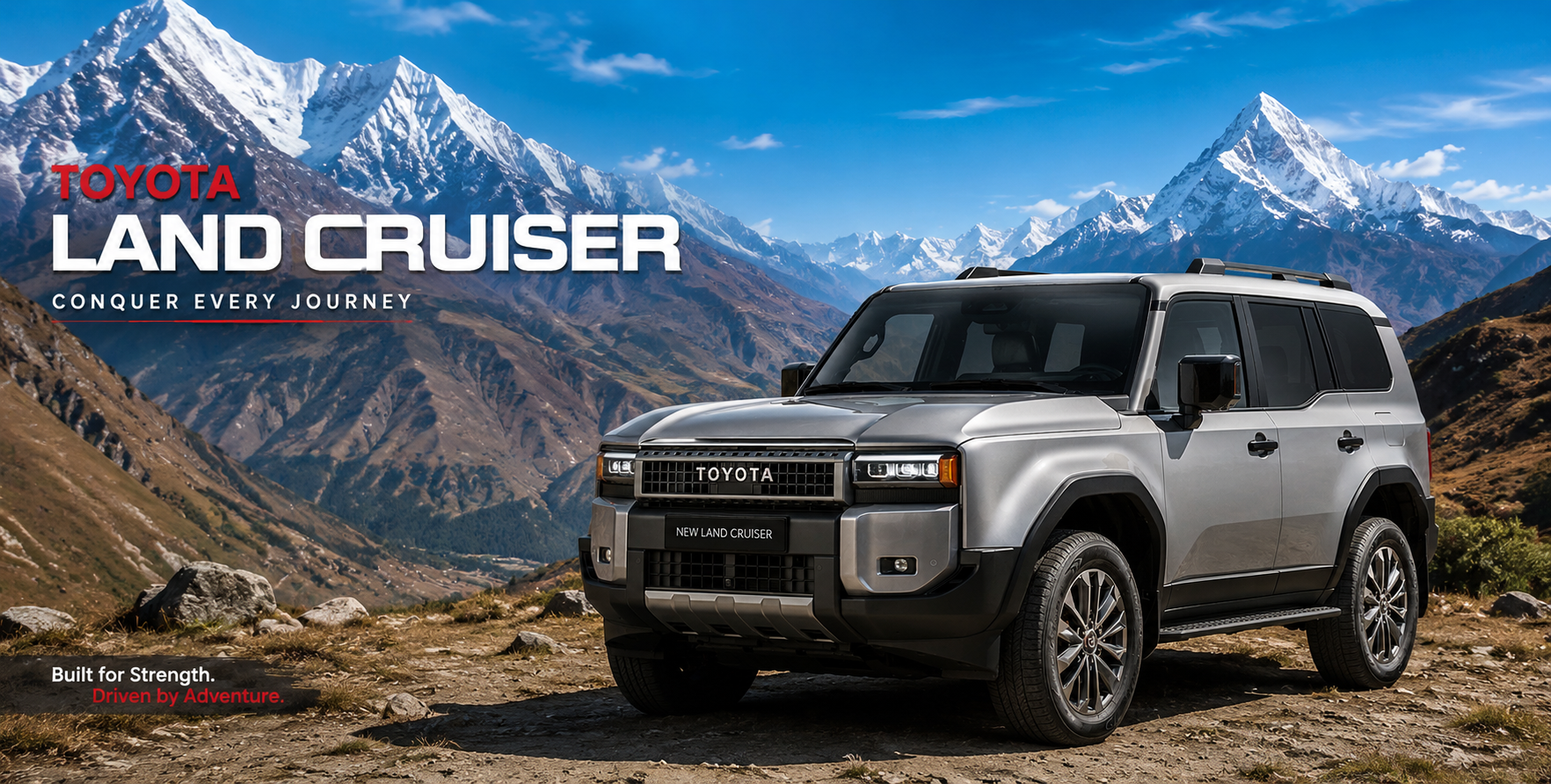
At Nepal Vehicle Hiring Pvt Ltd, we provide professional Land Cruiser and Hilux jeep services along the Pokhara-Upper Mustang border route. This comprehensive 2026 guide covers every aspect of the journey — the complete route, all vehicle options and costs, the latest 2026 permit regulations, the key destinations, the road conditions, suggested itineraries, and the expert tips that prepare you for one of the greatest jeep adventures in Asia.
IMPORTANT 2026 UPDATE: Korala Border Road and New Permit System
Road Opening: The Korala Tibet border road was formally opened in November 2025, making the Pokhara-to-Korala route fully drivable by jeep for the first time.
New Permit Pricing: The previous flat Upper Mustang Restricted Area Permit fee of USD 500 for 10 days has been replaced in 2026 with a per-day fee of USD 50 per person per day.
| 2026 Upper Mustang Permit – Key Changes | Details |
| Previous Permit System | USD 500 flat fee per person for 10 days (now discontinued) |
| New 2026 System | USD 50 per person per day in the Upper Mustang restricted area |
| Minimum Group Requirement | Minimum 2 people with a licensed government-approved guide |
| Permit Area Coverage | North of Kagbeni – all of Upper Mustang, including Lo Manthang and Korala |
| Where to Obtain | Department of Immigration or Nepal Tourism Board, Kathmandu |
| Processing Time | Allow 3 to 5 working days in Kathmandu. |
| Road to Korala | Opened November 2025 – first time jeep-accessible to the Tibet border |
Note: The new USD 50/day permit system means a standard 8-day Upper Mustang jeep tour now costs USD 400 per person in permit fees alone, compared to USD 500 previously for 10 days. For shorter 5- to 6-day tours, the new system is actually more economical than the previous flat fee. Always verify current permit pricing with the Department of Immigration before departure, as regulations may continue to evolve.
About Upper Mustang – The Last Forbidden Kingdom
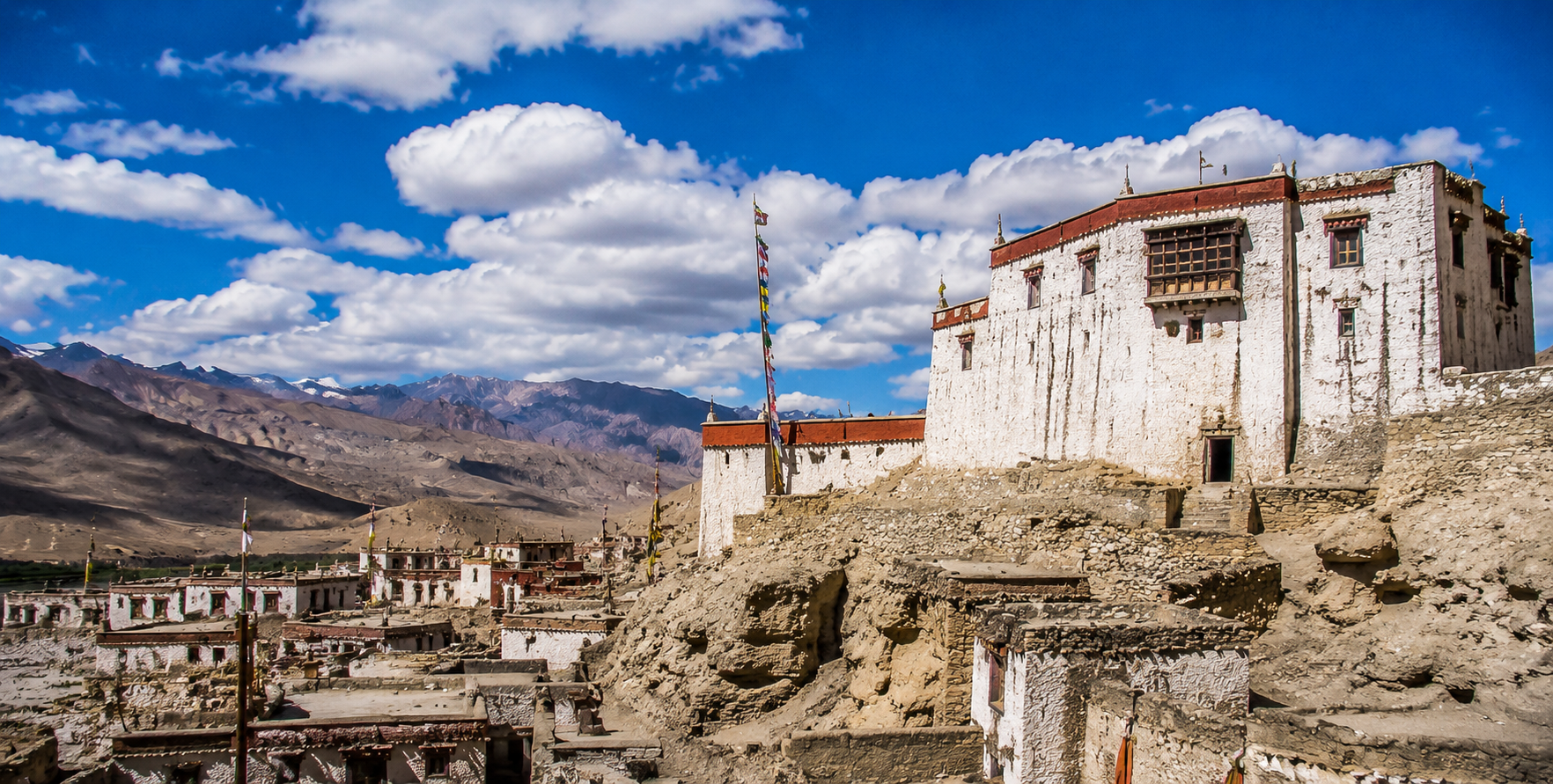
Upper Mustang (known as Lo in Tibetan) is one of the most culturally intact and most visually extraordinary regions in all of Nepal. For centuries, this was an independent kingdom — the Kingdom of Lo — with its own royalty, language, governance, and ancient Bon-Buddhist traditions that have remained largely untouched by the modern world. Nepal integrated Mustang in the 18th century, but the region retained much of its autonomous character and was only opened to foreign visitors in 1992.
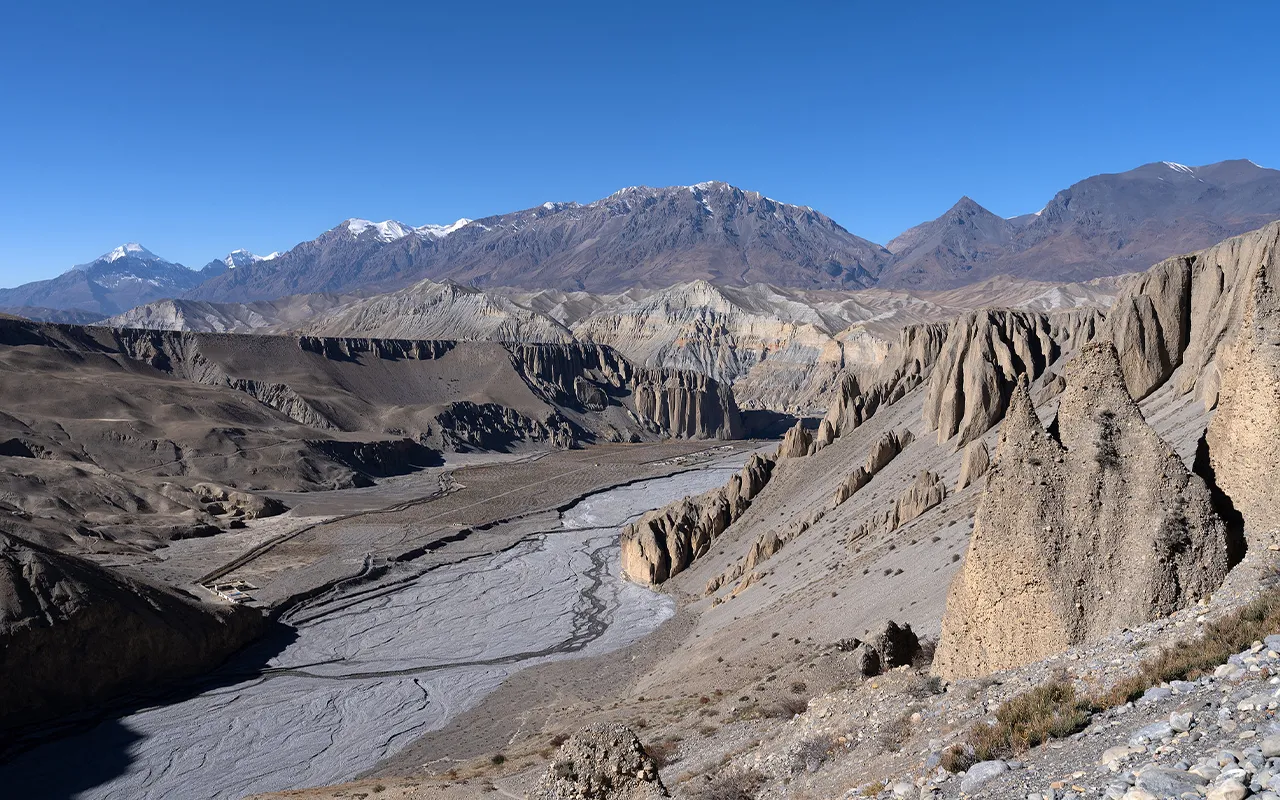
The landscape of Upper Mustang is unlike anything else in Nepal — a Trans-Himalayan plateau wilderness of eroded red and ochre cliffs shaped by ancient lake beds and wind erosion, dry riverbeds, sparse juniper forests, and ancient cave systems carved into the cliff faces that served as dwellings, meditation retreats, and storage facilities for thousands of years. The culture is profoundly Tibetan — the architecture, food, dress, religion, and language all belong to the same cultural sphere as Tibet itself.
| Upper Mustang Key Facts | Details |
| Capital | Lo Manthang (walled city at 3,840 m) |
| District | Mustang District, Gandaki Province |
| Altitude Range | 2,750 m (Kagbeni) to 4,660 m (Korala Border Pass) |
| Distance from Pokhara | 420–430 km to Lo Manthang; ~453 km to Korala Border |
| Korala (Tibet Border) Altitude | 4,660 meters |
| Distance from Korala to Lo Manthang | 23 km north |
| Population | Approximately 7,000 (mostly Loba Tibetan people) |
| Religion | Tibetan Buddhism and ancient Bon religion |
| Famous For | Lo Manthang walled city, sky caves, ancient monasteries, Tiji Festival |
| Road Status | Fully drivable Pokhara to Korala as of November 2025 |
| Restricted Area | Yes, north of Kagbeni requires an Upper Mustang permit |
The Complete Jeep Route: Pokhara to Mustang Tibet Border (Korala)
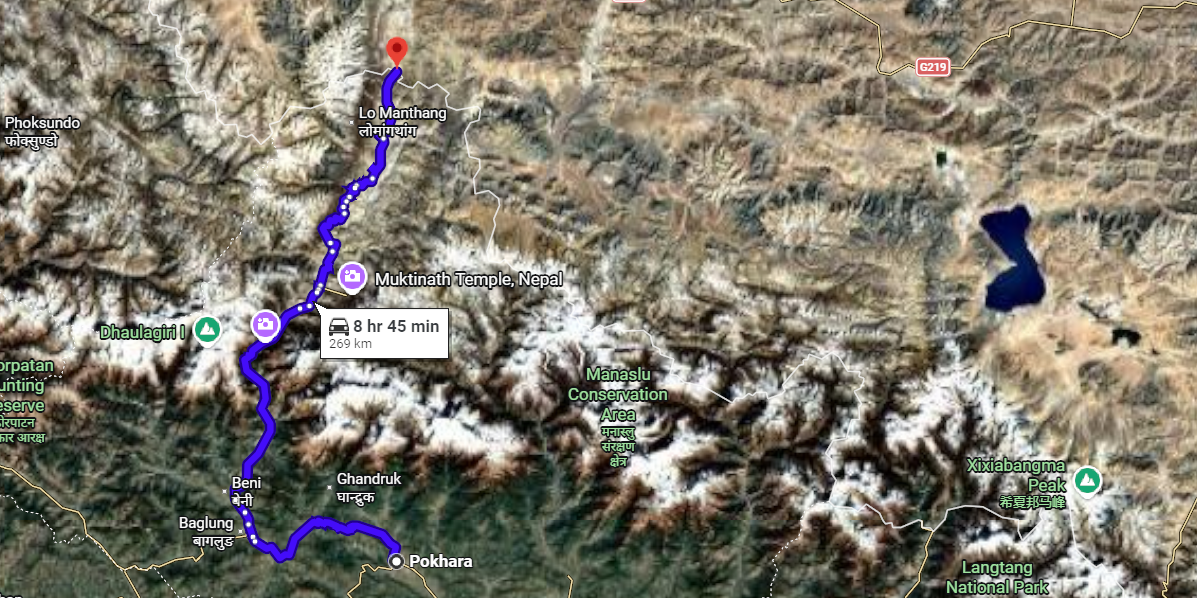
The complete Pokhara-to-Kora La Tibet border jeep route covers approximately 453 kilometers. It follows one of the world’s most spectacular overland corridors — from the subtropical hills of Pokhara through the Kali Gandaki gorge to the high Trans-Himalayan plateau. Here is the complete route:
| Stage | Section | Distance | Drive Time | Road | Key Highlights |
| 1 | Pokhara to Beni | 75 km | 2.5–3 hrs | Paved highway | Kushma Bridge, Baglung, Myagdi Valley |
| 2 | Beni to Tatopani | 42 km | 2 hrs | Rough Gorge Road | Rupse Waterfall, Kali Gandaki gorge entry |
| 3 | Tatopani to Marpha | 70 km | 3 hrs | Rough off-road | Ghasa, Kalopani, Dhaulagiri views, Marpha |
| 4 | Marpha to Jomsom | 7 km | 30 min | Sandy riverbed | Kali Gandaki riverbed crossing, Jomsom bazaar |
| 5 | Jomsom to Kagbeni | 18 km | 45 min | Rough jeep track | Upper Mustang entry, medieval village |
| 6 | Kagbeni to Lo Manthang | 90 km | 5–7 hrs | Off-road plateau | Chuksang, Ghami, Tsarang – ancient villages |
| 7 | Lo Manthang to Korala | 23 km | 1.5–2 hrs | New road, rough | Tibet border pass at 4,660 m |
| TOTAL | Pokhara to Korala | 453 km | Multi-day | Mixed | World-class overland adventure |
Stage-by-Stage Jeep Route Guide
Stage 1: Pokhara to Beni – 75 km (2.5 to 3 hours)
The adventure begins in Pokhara, with a northwestward drive along the smooth Baglung Highway. The road passes through Baglung Bazaar before descending to Beni, the district headquarters of Myagdi District at the confluence of the Myagdi and Kali Gandaki rivers at 830 meters. The optional detour to the Kushma Suspension Bridge (Nepal’s highest and longest suspension bridge) is a worthwhile 20-minute stop before Beni.
Stage 2: Beni to Tatopani – 42 km (2 hours)
After Beni, the road enters the Kali Gandaki gorge, and the surface immediately becomes rough. The track passes through the villages of Baglung, Dana, and the area of the spectacular Rupse Waterfall. Tatopani village (1,190 m) is famous throughout Nepal for its natural geothermal hot springs on the Kali Gandaki riverbank — the perfect first overnight stop or a soak before continuing.
Stage 3: Tatopani to Marpha – 70 km (3 hours)
The most spectacular section of the Kali Gandaki drive. The road climbs through the world’s deepest gorge — flanked by Dhaulagiri (8,167 m) and Annapurna I (8,091 m) — passing Ghasa, Kalopani, Lete, Kobang, Larjung, and Tukuche before reaching Marpha (2,670 m). Marpha is the most beautiful and most celebrated village on the entire Mustang route — famous for its apple orchards, apple brandy, whitewashed stone lanes, and the dramatic backdrop of Dhaulagiri rising directly above.
Stage 4: Marpha to Jomsom – 7 km (30 minutes)
The short but memorable crossing of the wide sandy Kali Gandaki riverbed from Marpha to Jomsom. The landscape has fully transformed into a high-altitude semi-desert — the Mustang valley opens wide, the mountains are enormous and close, and the powerful afternoon valley winds begin to blow. Jomsom (2,720 m) is the district headquarters of Mustang District, with a small airport, bustling bazaar, and the last reliable services before the remote upper valley.
Stage 5: Jomsom to Kagbeni – 18 km (45 minutes)
From Jomsom, the road heads north through the wide sandy Kali Gandaki riverbed to Kagbeni (2,810 m) — the medieval walled village that marks the entry into the Upper Mustang restricted area. Kagbeni is one of the most atmospheric and most visually striking villages in Nepal — its ochre-coloured stone buildings, ancient monastery, and narrow covered lanes are entirely Tibetan in character. This is where the Upper Mustang permit checkpoint is located.
Stage 6: Kagbeni to Lo Manthang – 90 km (5 to 7 hours)
The most dramatic and most extraordinary section of the entire route. North of Kagbeni, the landscape transforms completely into the high Trans-Himalayan plateau. The road passes through Chuksang (3,050 m), Chele (3,050 m), Syangbochen, Ghami (3,520 m), and the impressive cliff paintings of the Ghami Monastery, then climbs to Tsarang (3,720 m) — with its ancient five-story palace — before the final spectacular approach to Lo Manthang.
Lo Manthang (3,840 m) is the capital of the ancient Kingdom of Lo and the crown jewel of Upper Mustang. The walled city — one of the last intact walled cities in the Himalayan world — contains the King’s Palace (a five-story whitewashed mansion), the Champa Lhakhang and Thupchen Lhakhang monasteries (which contain some of the finest medieval Buddhist murals in existence), and the Chyodi Monastery. The experience of arriving at Lo Manthang’s gates by jeep as the sun sets over the Tibetan plateau is genuinely unforgettable.
Stage 7: Lo Manthang to Korala Tibet Border – 23 km (1.5 to 2 hours)
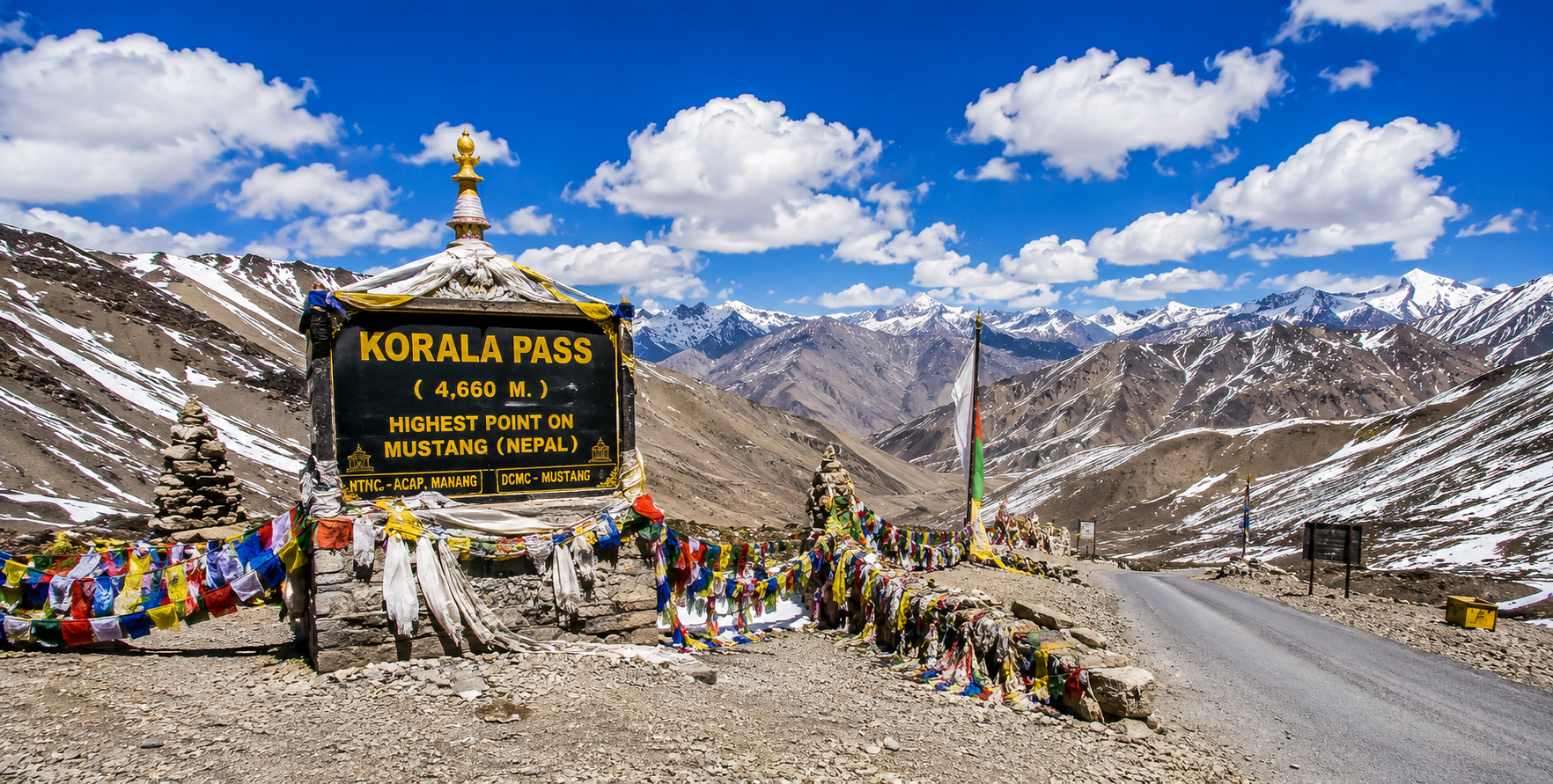
The newly opened road (November 2025) from Lo Manthang continues north to the Korala border pass at approximately 4,660 meters — the official Nepal-Tibet frontier. The landscape on this final section is pure high-altitude desert plateau — expansive, austere, and magnificent in its stark emptiness. The Korala pass was historically one of the most important salt and trade routes between Nepal and Tibet, and has been used by traders, pilgrims, and travelers for thousands of years.
At Korala, the Nepal border gate and the beginning of Chinese (Tibetan) territory are visible. Foreign visitors can approach the border, but crossing into Tibet requires separate Chinese visas and permits that are not covered by the Nepal Upper Mustang permit. The view from Korala — south toward the entire Upper Mustang valley and north toward the Tibetan plateau — is extraordinary.
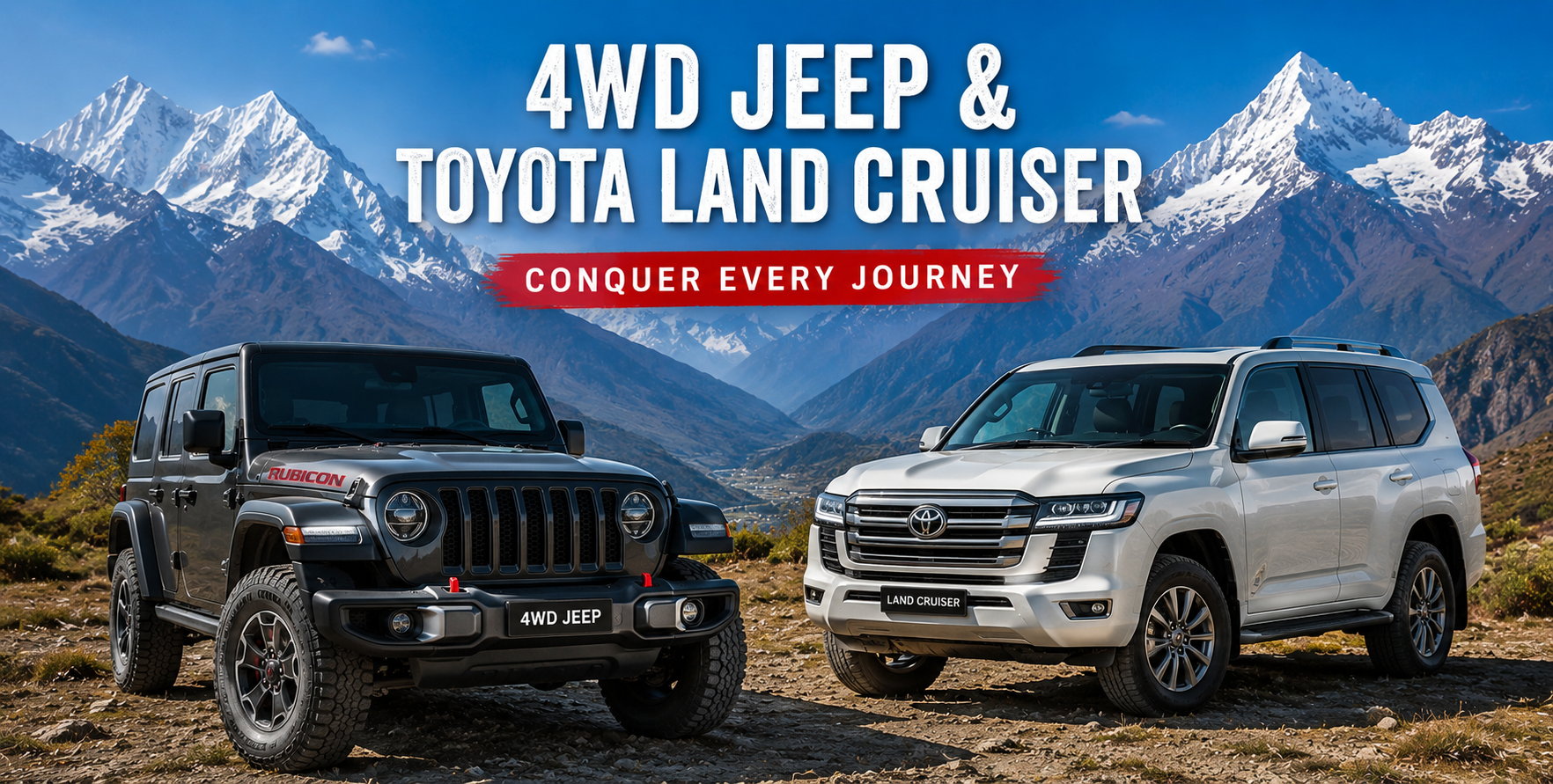
Vehicle Options: Pokhara to Mustang Border Route 2026
Nepal Vehicle Hiring Pvt Ltd provides the following 4WD vehicles for the Pokhara to Upper Mustang and the Kora La border jeep route:
| Vehicle | Capacity | Pokhara to Jomsom (NPR) | Pokhara to Lo Manthang (NPR) | Pokhara to Korala (NPR) | Best For |
| Toyota Land Cruiser | 4–5 pax | NPR 35,000–50,000 | NPR 65,000–95,000 | NPR 80,000–115,000 | Maximum capability and comfort – recommended |
| Toyota Hilux (4WD) | 4–5 pax | NPR 25,000–38,000 | NPR 50,000–75,000 | NPR 62,000–92,000 | Best all-round for Upper Mustang |
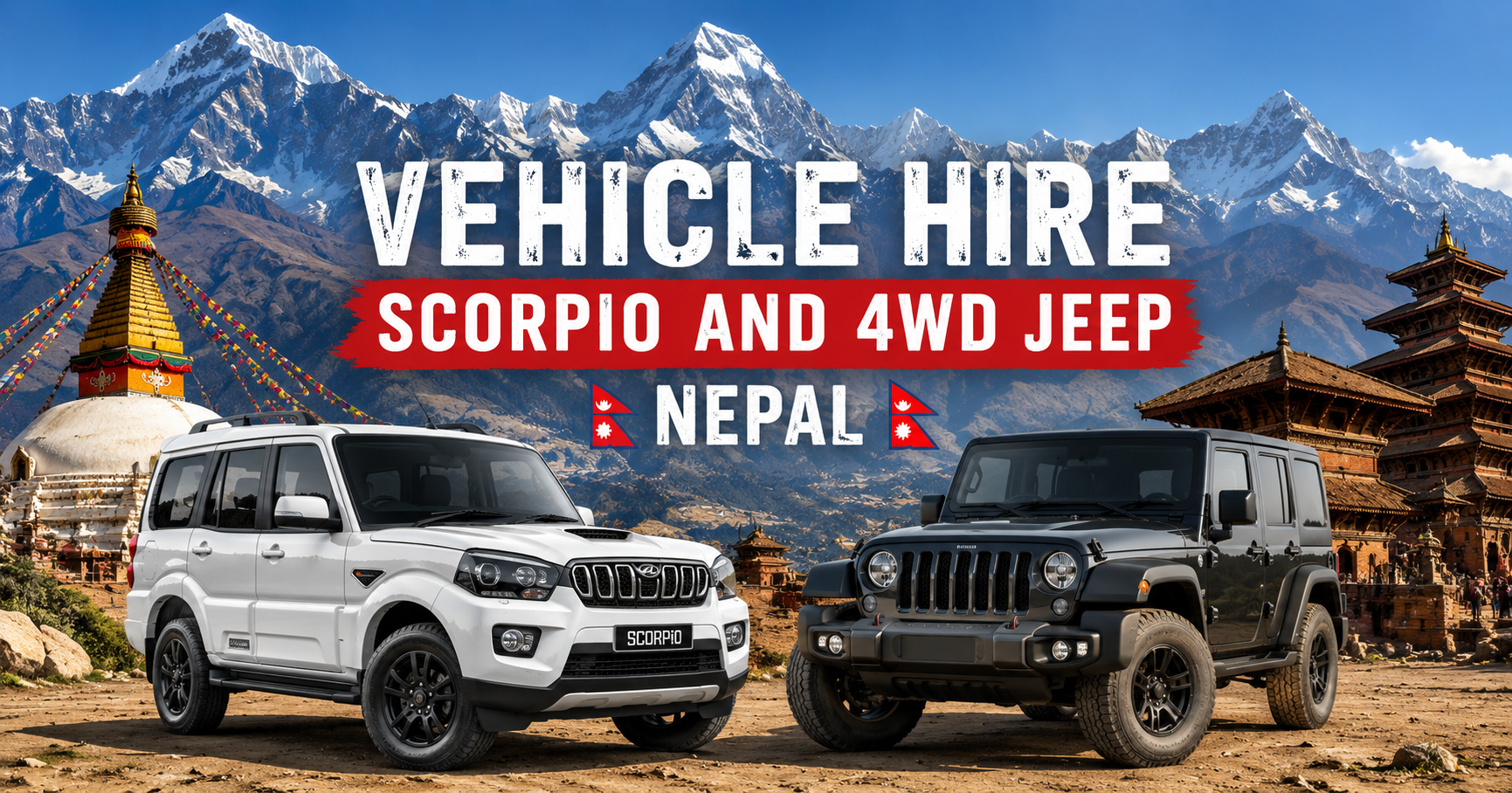
| Mahindra Scorpio (4WD) | 4–5 pax | NPR 18,000–28,000 | NPR 35,000–52,000 | NPR 44,000–65,000 | Budget – adequate for the dry season |
Note: All prices are for one-way vehicle hire,, including driver and fue,l from Pokhara. These are approximate rates for the full vehicle. Prices vary by season, road conditions, and vehicle availability. A Toyota Land Cruiser or Hilux is strongly recommended for the Kagbeni-to-Lo Manthang section and is mandatory for Korala. Contact Nepal Vehicle Hiring for confirmed expedition quotes.
Why the Land Cruiser is the Recommended Vehicle for Upper Mustang
- 225mm+ ground clearance handles the deeply rutted plateau roads north of Kagbeni
- Legendary reliability — in a region where breakdown recovery takes days, Land Cruiser reliability is not optional
- Full-time 4WD with a low-range transfer case for the steep rocky climbs north of Ghami
- Large fuel tank with extended range — fuel is unavailable north of Jomsom; full tanks plus spare jerricans required
- V8 or straight-6 turbodiesel maintains power at 4,000+ meter altitude
- Spacious interior for 4 to 5 passengers with full camping and expedition gear
Complete Cost Guide: Pokhara to Mustang Border Route 2026
Here is the full cost breakdown for a complete Pokhara to Lo Manthang / Korala jeep tour in 2026:
| Cost Item | Cost (NPR) | Cost (USD) | Notes |
| Private Land Cruiser (Pokhara to Lo Manthang return) | NPR 130,000–190,000 | USD 970–1,415 | Multi-day return trip – most popular package |
| Private Land Cruiser (Pokhara to Korala return) | NPR 160,000–230,000 | USD 1,190–1,715 | Includes the road to the Tibet border |
| Private Hilux (Pokhara to Lo Manthang return) | NPR 100,000–150,000 | USD 745–1,115 | Best value capable 4WD |
| ACAP Permit (per person) | NPR 3,000 | USD 22 | Annapurna Conservation Area |
| Upper Mustang Permit (NEW 2026 – per day/person) | USD 50/day/person | USD 50/day | Min. 2 pax + guide mandatory |
| TIMS Card (per person) | NPR 2,000 | USD 15 | Required for the trekking component |
| Licensed Guide (mandatory) | NPR 3,000–5,000/day | USD 22–37/day | Upper Mustang regulation |
| Accommodation (per night) | NPR 800–2,000/person | USD 6–15/person | Guesthouses in the Lo Manthang area |
| Meals (per day) | NPR 1,500–3,000/person | USD 11–22/person | Limited options in Upper Mustang |
| Emergency jerrican fuel | NPR 2,000–4,000/jerrican | USD 15–30 | Essential – no fuel north of Jomsom |
Example total cost for a 4-person group on a 10-day Pokhara to Lo Manthang tour: Vehicle (Land Cruiser round trip) NPR 160,000 + Upper Mustang permit (4 pax × USD 50 × 7 days in restricted area) = USD 1,400 + ACAP and TIMS = NPR 20,000 + guide fees and accommodation/meals = approximately USD 3,500 to 4,500 total for the full group for the vehicle and permit portions.
Key Destinations Along the Pokhara to Mustang Border Route
Tatopani – The Hot Spring Pit Stop
The natural geothermal hot springs of Tatopani (1,190 m) on the Kali Gandaki riverbank are among the most celebrated in Nepal. After the rough gorge road from Beni, a soak in the warm mineral pools beside the rushing glacial river is an excellent first-night reward before the serious mountain driving begins. Tatopani has multiple simple guesthouses and good local restaurants.
Marpha – The Apple Capital of Nepal
Marpha (2,670 m) is arguably the most beautiful village along the entire Pokhara-to-Mustang route. The perfectly preserved Thakali stone village with its covered alleys, whitewashed buildings, ancient chortens, and magnificent apple orchards is a masterpiece of Himalayan vernacular architecture. The local apple brandy and apple cider are world-famous among Himalayan travelers. Marpha deserves at least a 45-minute exploration stop — walk the covered lanes, visit the gompa, and have a glass of the famous local apple chang.
Jomsom – Gateway of the Mustang Valley
Jomsom (2,720 m) is the district headquarters of Mustang and the last town with reliable services, an airport, and ATMs before Upper Mustang. The Jomsom bazaar has a fascinating mix of Thakali and Tibetan culture, excellent local restaurants, and the remarkable Eco Museum with displays of Shaligram fossils and Mustang natural history. All jeep parties heading to Upper Mustang stop in Jomsom to fuel up, resupply, and verify permits.
Kagbeni – The Medieval Gateway
Kagbeni (2,810 m) is the Upper Mustang permit checkpoint and one of the most historically and visually compelling villages in Nepal. The ancient walled settlement of ochre-coloured stone buildings crowned by a large red gompa monastery, situated at the confluence of the Kali Gandaki and Kak rivers, feels entirely medieval and entirely Tibetan. The narrow covered alleys, ancient stupas, and the sudden view of the barren Upper Mustang plateau above create an atmosphere of time travel. Do not rush through Kagbeni — allow at least 1 hour for exploration.
Ghami – Ancient Mani Wall and Cliff Paintings
Ghami (3,520 m) contains Nepal’s longest mani wall — a continuous stone wall with thousands of carved Buddhist prayer stones stretching for approximately 300 meters through the center of the village. The Ghami Monastery contains ancient wall paintings of exceptional quality. The approach to Ghami from the south also offers the most dramatic views of the eroded red cliff formations that define the Upper Mustang landscape.
Tsarang – The Ancient Palace Village
Tsarang (also known as Charang, 3,720 m) is the second most important settlement in Upper Mustang after Lo Manthang. The five-story ancient palace of the local lords, the large red gompa housing remarkable medieval murals and clay sculptures, and the panoramic plateau views make Tsarang one of the finest villages along the entire route.
Lo Manthang – The Forbidden City
Lo Manthang (3,840 m) is the climax of the entire journey. The ancient walled city — with its 200 or so houses enclosed within whitewashed mud-brick walls and four major monasteries — is the capital of the former Kingdom of Lo and the last intact walled city in the Himalayan world. The King’s Palace, the Champa Lhakhang and Thupchen Lhakhang monasteries (with 600-year-old murals), and the Chyodi Monastery form a cultural treasure of global significance.
Beyond the sights, Lo Manthang has an otherworldly atmosphere — the flat-roofed Tibetan houses, prayer flags on every rooftop, elderly Loba women spinning wool, monks debating in the monastery courtyard, and the vast silence of the surrounding plateau create an experience of profound cultural authenticity that is increasingly rare in the modern Himalayan world.
Korala – The Tibet Border Pass
Korala (approximately 4,660 m) is the Nepal-Tibet frontier at the northern end of the Upper Mustang valley — now accessible by jeep following the road opening of November 2025. The pass is flanked by Nepal’s immigration post and the corresponding Chinese structures on the Tibetan side. The view from Korala is extraordinary: south across the entire Upper Mustang plateau with Lo Manthang visible below, and north into the vast, empty Tibetan tableland. The Korala crossing was historically one of the most important salt trade routes connecting Nepal and Tibet.
Permits for the Pokhara to Mustang Border Route 2026
| Permit | Cost (2026) | Required For | Where to Obtain |
| ACAP – Annapurna Conservation Area Permit | NPR 3,000 (foreigners) | Lower Mustang area – Jomsom, Muktinath, Tatopani | Nepal Tourism Board, Pokhara Lakeside |
| Upper Mustang Restricted Area Permit (NEW) | USD 50 per person per day | North of Kagbeni – Lo Manthang, Korala | Department of Immigration, Kathmandu |
| TIMS Card | NPR 2,000 (foreigners) | All trekking components | Nepal Tourism Board, Pokhara or Kathmandu |
| Licensed Guide (Mandatory) | NPR 3,000–5,000/day | Upper Mustang – mandatory per ACAP regulation | Licensed agency in Pokhara or Kathmandu |
| Vehicle Road Permit | Arranged by Nepal Vehicle Hiring | 4WD vehicles on Mustang roads | Nepal Vehicle Hiring manages |
2026 Permit Important Note: The Upper Mustang permit is now USD 50 per person per day (changed from the previous USD 500 flat fee for 10 days). For a typical 7-day Upper Mustang stay, this means USD 350 per person in permit fees. For shorter 5-day visits, the new system costs USD 250 per person — less than the old flat fee. Plan your days in Upper Mustang carefully to manage permit costs.
Suggested Itineraries: Pokhara to Mustang Border Route
Option A: 8-Day Pokhara to Lo Manthang Jeep Tour
| Day | Drive / Activity | Night | Altitude |
| Day 1 | Pokhara to Tatopani (via Beni, Rupse Waterfall) | Tatopani | 1,190 m |
| Day 2 | Tatopani to Jomsom (via Marpha – apple orchard stop) | Jomsom | 2,720 m |
| Day 3 | Jomsom to Kagbeni – permit checkpoint – drive to Chuksang | Chuksang | 3,050 m |
| Day 4 | Chuksang to Ghami (ancient Mani wall, monastery) | Ghami | 3,520 m |
| Day 5 | Ghami to Lo Manthang via Tsarang | Lo Manthang | 3,840 m |
| Day 6 | Lo Manthang full exploration day (monasteries, palace, walled city) | Lo Manthang | 3,840 m |
| Day 7 | Lo Manthang to Jomsom (return drive) | Jomsom | 2,720 m |
| Day 8 | Jomsom to Pokhara (return via Marpha, Tatopani) | Pokhara | 820 m |
Option B: 10-Day Pokhara to Korala Tibet Border Jeep Tour
| Day | Drive / Activity | Night | Altitude |
| Day 1 | Pokhara to Tatopani | Tatopani | 1,190 m |
| Day 2 | Tatopani to Jomsom (Marpha stop, Muktinath option) | Jomsom | 2,720 m |
| Day 3 | Jomsom – Muktinath Temple visit – Kagbeni | Kagbeni | 2,810 m |
| Day 4 | Kagbeni to Ghami via Chuksang and Chele | Ghami | 3,520 m |
| Day 5 | Ghami to Lo Manthang via Tsarang | Lo Manthang | 3,840 m |
| Day 6 | Lo Manthang full day – monasteries, palace, Namgyal Gompa | Lo Manthang | 3,840 m |
| Day 7 | Drive Lo Manthang to the Kora La Tibet border (23 km) – exploration | Lo Manthang | 4,660 m border |
| Day 8 | Lo Manthang to Ghami (southern return route) | Ghami | 3,520 m |
| Day 9 | Ghami to Jomsom via the alternate valley | Jomsom | 2,720 m |
| Day 10 | Jomsom to Pokhara | Pokhara | 820 m |
Best Season for the Pokhara to Mustang Border Jeep Route
Spring (March to June) – Best Season for Upper Mustang
Spring and early summer are the finest seasons for the Pokhara-to-Upper Mustang jeep route. Upper Mustang lies in a rain shadow north of the Himalayan range and receives very little monsoon rainfall, making it uniquely accessible when most of Nepal is in the wet season. May is particularly special as it coincides with the Tiji Festival in Lo Manthang — a three-day sacred Buddhist ceremony of extraordinary cultural significance. The road conditions are excellent, and the plateau views are spectacular in the clear pre-monsoon air.
Autumn (September to November) – Excellent
Post-monsoon autumn delivers outstanding visibility and excellent road conditions on the Kali Gandaki gorge section and the Upper Mustang plateau. October’s famous clear skies provide outstanding views of Dhaulagiri, Annapurna, and the Mustang plateau. Apple harvest season in Marpha (late September to October) is a bonus. Book vehicles well in advance for October and November.
Monsoon (July to August) – Possible with Caution
Because Upper Mustang is in a rain shadow, the plateau itself has relatively little rain during the monsoon. However, the Pokhara-Tatopani gorge section of the Kali Gandaki road can be affected by landslides during the monsoon season. The Beni-to-Tatopani section requires caution. Nepal Vehicle Hiring monitors road conditions and provides advice before confirming monsoon-season bookings.
Winter (December to February) – Not Recommended
The plateau north of Kagbeni, at elevations ranging from 000 to 4,600 meters, experiences severe cold and significant snowfall in winter. The road to Lo Manthang and Korala can be completely blocked by snow for weeks at a time. Nepal Vehicle Hiring does not operate the Upper Mustang jeep route during the winter months.
The Kali Gandaki Wind – Critical Departure Time Advisory
The Kali Gandaki valley experiences powerful afternoon winds that funnel through the gorge from the Tibetan plateau every day, intensifying from approximately 11:00 AM to 12:00 PM onward. These winds create dangerous driving conditions on the sandy sections of the Kali Gandaki riverbed and strong dust storms between Tatopani and Jomsom.
Nepal Vehicle Hiring requires all jeeps on the Pokhara-Jomsom section to depart Pokhara between 6:00 AM and 6:30 AM at the absolute latest. This is non-negotiable for safety on the Kali Gandaki route.
Essential Packing List for the Mustang Border Jeep Tour
- All permits arranged in Kathmandu before departure (ACAP, Upper Mustang permit, TIMS) – carried in waterproof document pouch
- Warm down jacket and thermal layers – Lo Manthang nights can be below –5 °C even in spring and autumn
- Windproof outer layer – the Kali Gandaki valley winds and the Mustang plateau winds are powerful
- Face mask, buff scarf, or balaclava – the dust on the plateau road is severe.
- Sunscreen SPF 50+, UV-blocking sunglasses, and a wide-brimmed hat – UV intensity at 3,800 m is extreme
- Water bottles (minimum 2 liters) plus water purification tablets – clean water is scarce north of Kagbeni.
- Sufficient Nepali cash for all expenses – there are NO ATMs north of Jomsom.
- High-energy snacks and emergency food rations – restaurants are very limited north of Kagbeni
- Camera with multiple charged batteries and power banks – exceptional photography throughout the route
- Altitude medication (Diamox) – consult your doctor before departure for the Lo Manthang and Korala stages
- Offline maps (Maps.me – Mustang region) – no mobile data north of Jomsom
- Sleeping bag rated to -10°C for Lo Manthang guesthouse nights
Expert Tips for the Pokhara to Mustang Border Jeep Route
- Book your Land Cruiser or Hilux at least 2 to 3 weeks in advance – Upper Mustang-bound vehicles are in very high demand during May (Tiji Festival) and October–November.
- Begin permit processing in Kathmandu at least 5 to 7 working days before departure – the Upper Mustang permit requires advance processing.
- Always depart Pokhara between 6:00 AM and 6:30 AM to complete the Kali Gandaki gorge section before the afternoon winds intensify.
- Fuel up completely in Jomsom – there is no fuel available anywhere north of Jomsom to Lo Manthang or Korala; carry at least 2 spare jerricans (20 liters each) in the Land Cruiser.
- Carry all the Nepali cash you need from Pokhara or Jomsom – there are absolutely no ATMs, bank facilities, or digital payment options between Kagbeni and Lo Manthang.
- Stop at Marpha for at least 45 minutes – the apple brandy, the covered lanes, and the Dhaulagiri views make it the finest village on the entire route.
- Always spend at least one full rest day in Lo Manthang (not just a drive-through) – the monasteries, the King’s Palace, and the walled city atmosphere require time to appreciate.
- For the Korala border visit, depart Lo Manthang early morning to complete the 23 km border road and return before afternoon weather develops on the high plateau.
- Nepal Vehicle Hiring can arrange a combined Pokhara-to-Mustang package, including vehicle hire, permit guidance, guide arrangement, and all logistics in a single booking.
–
How to Book Your Pokhara to Mustang Border Route Jeep
Booking your Upper Mustang jeep with Nepal Vehicle Hiring Pvt Ltd requires careful planning:
- Step 1: Contact us at vehiclehiringnepal.com or via WhatsApp, ideally 3 to 4 weeks before departure
- Step 2: Share your planned dates, group size, desired itinerary (Lo Manthang only, or including Korala), and departure point (Pokhara or Kathmandu)
- Step 3: Nepal Vehicle Hiring provides a full itinerary and cost breakdown, including vehicle, permit guidance, and guide arrangement referrals
- Step 4: Begin permit collection in Kathmandu with our documentation checklist
- Step 5: Vehicle pre-expedition service and driver briefing at Nepal Vehicle Hiring base
- Step 6: Depart Pokhara at 6:00 AM and begin one of the world’s greatest jeep adventures
Book at least 3 weeks in advance for the spring and autumn peak seasons, and 2 weeks ahead for other periods.
Frequently Asked Questions (FAQ)
Is the road from Pokhara to the Mustang-Tibet border (Korala) now open?
Yes. The road from Pokhara to the Kora Tibet border via Lo Manthang was officially opened in November 2025 and is now drivable by a capable 4WD jeep. This is a major 2026 development that has made it possible to complete the overland journey from Pokhara to the Mustang border for the first time.
How much does the Upper Mustang permit cost in 2026?
The permit system changed in 2026. The previous flat fee of USD 500 for 10 days has been replaced by a USD 50-per-person-per-day charge in the Upper Mustang restricted area. A minimum group of 2 people with a licensed guide is mandatory.
How far is Pokhara from Lo Manthang?
The road distance from Pokhara to Lo Manthang is approximately 420-430 kilometers. The drive takes 2 full driving days via Tatopani, Jomsom, Kagbeni, Ghami, and Tsarang.
How far is Lo Manthang from the Kora Tibet border?
Korala is approximately 23 kilometers north of Lo Manthang. The drive from Lo Manthang to the Korala border post takes approximately 1.5 to 2 hours on the newly opened road.
What vehicle is best for the Upper Mustang and the Kora La road?
The Toyota Land Cruiser is the recommended vehicle for the full route, including the stretch from Lo Manthang to Korala. The Toyota Hilux is an excellent and more economical alternative for experienced mountain drivers. Standard jeeps (Scorpio/Bolero) are adequate for Jomsom but struggle on the rougher plateau sections north of Kagbeni.
Can I visit the Tibet border at Korala as a foreign visitor?
Yes, foreign visitors with a valid Upper Mustang Restricted Area Permit can visit the Korala border post on the Nepal side. Crossing into Tibet requires separate Chinese visas and Tibet Travel Permits that are not part of the Nepal permit system. Contact Nepal Vehicle Hiring for the current border visit regulations.
What is the Tiji Festival, and when does it take place?
The Tiji Festival is the most sacred annual ceremony in Upper Mustang — a three-day Buddhist ritual performed by monks in Lo Manthang to celebrate the defeat of a demon and ensure the renewal of the valley’s life. The festival falls in May according to the Tibetan lunar calendar (exact dates vary annually) and is the single most spectacular cultural event in Upper Mustang. Visiting during Tiji is one of the most rewarding experiences available in Nepal.
Book Your Pokhara to Mustang Border Route Jeep with Nepal Vehicle Hiring
The Pokhara to Mustang Tibet border jeep journey is Nepal’s greatest overland adventure — a journey that begins in the subtropical lakeside beauty of Pokhara, traverses the world’s deepest river gorge through the Kali Gandaki, climbs to the high Trans-Himalayan plateau of Upper Mustang, and reaches the Nepal-Tibet frontier at Korala, where the Himalayan range finally meets the great emptiness of the Tibetan plateau. Along the way: the apple orchards of Marpha, the medieval lanes of Kagbeni, the ancient murals of Lo Manthang’s monasteries, the silence of the plateau dawn, and views of the Annapurna and Dhaulagiri massifs from every angle and every altitude.
Nepal Vehicle Hiring Pvt Ltd provides the most reliable, well-prepared, and experienced 4WD jeep services for the Pokhara-Upper Mustang and Kora La border routes. Our Land Cruisers and Hilux vehicles, expert Mustang road drivers, and complete expedition logistics make us the preferred vehicle partner for one of the world’s greatest jeep adventures.
Contact Nepal Vehicle Hiring Pvt Ltd today at vehiclehiringnepal.com to book your Pokhara-to-Mustang border-route jeep and experience the last forbidden kingdom of the Himalayas.
Direct Bookings & Inquiries: vehiclehiringnepal.com
Call / WhatsApp (24/7): +977 9851013196
E-mail: [email protected]
Pokhara | Kathmandu | Chitwan | Upper Mustang | All Himalayan Destinations
- Pokhara to Mustang Border Route Jeep 2026-2027: Lo Manthang, Korala & Upper Mustang Complete Guide
- IMPORTANT 2026 UPDATE: Korala Border Road and New Permit System
- About Upper Mustang – The Last Forbidden Kingdom
- The Complete Jeep Route: Pokhara to Mustang Tibet Border (Korala)
- Stage-by-Stage Jeep Route Guide
- Vehicle Options: Pokhara to Mustang Border Route 2026
- Complete Cost Guide: Pokhara to Mustang Border Route 2026
- Key Destinations Along the Pokhara to Mustang Border Route
- Permits for the Pokhara to Mustang Border Route 2026
- Suggested Itineraries: Pokhara to Mustang Border Route
- Best Season for the Pokhara to Mustang Border Jeep Route
- The Kali Gandaki Wind – Critical Departure Time Advisory
- Essential Packing List for the Mustang Border Jeep Tour
- Expert Tips for the Pokhara to Mustang Border Jeep Route
- How to Book Your Pokhara to Mustang Border Route Jeep
- Frequently Asked Questions (FAQ)
- Book Your Pokhara to Mustang Border Route Jeep with Nepal Vehicle Hiring

Related Blog & Articles
Kathmandu to Mustang (Muktinath)
4WD Himalayan Jeep in Nepal
Pokhara Airport to Muktinath Jeep Rental | Private 4WD Hire Nepal