Plan a Trip


Muktinath to Pokhara and Kathmandu by Jeep – Complete Return Guide 2026
Muktinath to Pokhara and Kathmandu by Jeep – Complete Return Guide 2026
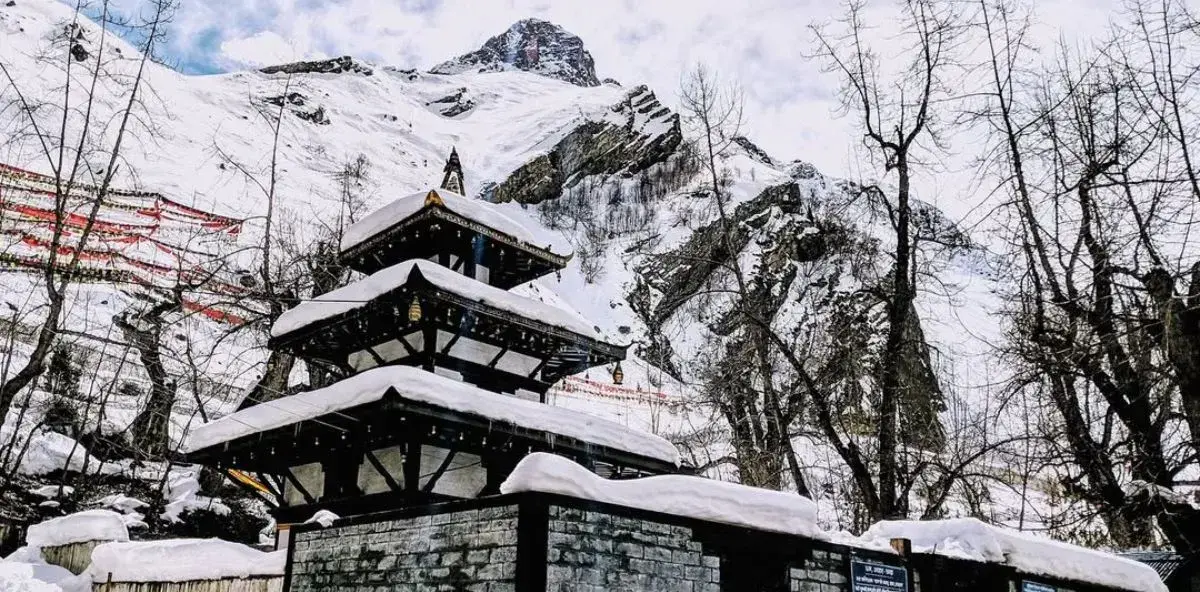
After completing your pilgrimage at the sacred temple complex of Muktinath or finishing the Annapurna Circuit trek, the return journey from Muktinath to Pokhara or Kathmandu is a major logistical step. You have two main options – fly from Jomsom Airport or hire a private jeep to take you back through the magnificent Kali Gandaki gorge. For most travelers, the private jeep is the preferred choice – it is more reliable than the weather-dependent Jomsom flights, it allows you to enjoy the breathtaking return scenery at your own pace, and it gives you the flexibility to stop at Tatopani’s famous hot springs, the medieval village of Marpha, and the dramatic gorge viewpoints along the way.
This complete 2026 guide covers everything you need to know about hiring a jeep from Muktinath back to Pokhara or Kathmandu – routes, distances, travel times, prices, road conditions, the famous Kali Gandaki wind, key stops along the way, and how to book your vehicle with Vehicle Hiring Nepal.
Your Two Return Options: Jeep vs Flight
From Muktinath and Jomsom, travelers have two main ways to return south. Here is a complete comparison:
| Factor | Private Jeep (Muktinath/Jomsom → Pokhara) | Flight (Jomsom → Pokhara) |
| Journey time | 6–8 hrs (Jomsom to Pokhara) | 25 minutes |
| Cost | USD 200–280 full jeep (split 4–6 pax) | USD 130–160 per person |
| Weather reliability | Reliable – rarely canceled | Frequently delayed/canceled (afternoon wind) |
| Departure time | Flexible – depart when you choose | Early morning only (before 10–11 AM wind) |
| Scenery | Full Kali Gandaki gorge experience | Aerial views only – weather permitting |
| Tatopani hot springs | Yes – stop en route | Not possible |
| Luggage | Unlimited – full jeep boot | Limited – weight restrictions apply |
| Group travel | Full group together | May need multiple flights |
| Kathmandu access | Jeep continues to KTM after Pokhara | Flight to Pokhara, then separate KTM transport |
| Cancellation risk | Very low | High – Jomsom flights are canceled regularly |
Our recommendation: For groups of 3 or more, the private jeep is often comparable in total cost to individual flight tickets and far more reliable. The Jomsom to Pokhara flight is one of the most frequently delayed domestic routes in Nepal due to the famous afternoon Kali Gandaki wind. If your schedule has any flexibility, the jeep is the better choice. If you are very short on time and flying during the reliable morning window, the flight is an option.
Muktinath to Pokhara by Jeep – Route Overview
Starting Point: Ranipauwa / Muktinath (3,710 m) or Jomsom (2,720 m)
End Point: Pokhara Lakeside (820 m)
Total Distance: Approximately 230–250 km from Muktinath to Pokhara
Total Travel Time: 7 to 9 hours from Muktinath (including stops)
From Jomsom: Approximately 190–210 km | 5.5 to 7 hours to Pokhara
Main Road: Muktinath – Kagbeni – Jomsom – Marpha – Ghasa – Tatopani – Beni – Baglung – Pokhara
Road Type: Jeep track (Muktinath to Jomsom) + Kali Gandaki gorge rough road (Jomsom to Beni) + paved highway (Beni to Pokhara)
Critical Timing: MUST depart Muktinath/Jomsom before 9:00 AM to avoid the afternoon Kali Gandaki wind
Muktinath to Kathmandu by Jeep – Route Overview
Starting Point: Ranipauwa / Muktinath (3,710 m)
End Point: Kathmandu (1,400 m)
Total Distance: Approximately 430–450 km
Total Travel Time: 2 to 3 days (recommended) – Muktinath to Pokhara Day 1, Pokhara to Kathmandu Day 2
One-Day Option: Possible but exhausting – 13 to 16 hours of driving – not recommended
Main Route: Muktinath – Jomsom – Beni – Pokhara (overnight) – Prithvi Highway – Kathmandu
The Muktinath-to-Kathmandu journey is almost always recommended as a 2-day trip with an overnight stop in Pokhara. The single-day option involves 13 to 16 hours of continuous driving through some of Nepal’s roughest mountain roads and is extremely tiring. Pokhara is a beautiful city worth at least one night and a morning’s exploration before continuing to Kathmandu.
Jeep Prices: Muktinath Return Journeys 2026
| Route | Vehicle | Capacity | Price (USD) | Notes |
| Muktinath → Pokhara | Land Cruiser 4WD | 4–6 pax | USD 200–260 | Full vehicle one-way, driver + fuel |
| Muktinath → Pokhara | Land Cruiser Prado | 4–5 pax | USD 220–280 | Premium comfort on rough sections |
| Muktinath → Pokhara | Mahindra Bolero | 4–6 pax | USD 170–220 | Budget 4WD option |
| Jomsom → Pokhara | Land Cruiser 4WD | 4–6 pax | USD 170–220 | Starting from Jomsom (not Muktinath) |
| Muktinath → Kathmandu | Land Cruiser 4WD | 4–6 pax | USD 380–460 | Full 2-day journey KTM via Pokhara |
| Muktinath → Kathmandu | Land Cruiser 4WD | 4–6 pax | USD 280–340 | 1 day (not recommended – very long) |
| Pokhara → Kathmandu (add-on) | Sedan / SUV | 1–5 pax | USD 80–130 | Second leg after an overnight in Pokhara |
| Jomsom → Pokhara (local jeep) | Shared jeep | per seat | NPR 1,500–2,000/seat | Local shared option if available |
All private vehicle prices are for the full vehicle and include the driver and fuel. For a group of 4 to 6 trekkers or pilgrims sharing a Land Cruiser, the per-person cost of the Muktinath to Pokhara jeep works out to approximately USD 33 to USD 65 per person – making it cost-competitive with individual flight tickets while offering significantly more reliability and flexibility.
The Critical Kali Gandaki Afternoon Wind – What You Must Know
Before planning your departure time from Muktinath, you must understand the Kali Gandaki wind. This is the single most important practical consideration for the return jeep journey.
Every day, from approximately 11:00 AM to 12:00 PM, a powerful thermal wind surges up the Kali Gandaki valley from south to north at speeds of 60 to 100 km/h or more. This wind is caused by the massive temperature differential between the hot Terai plains to the south and the cold Himalayan plateau to the north, creating one of the world’s most powerful daily thermal wind systems.
Why the Afternoon Wind Matters for Your Jeep Journey
- The wind makes driving on the exposed sections of the Kali Gandaki gorge road extremely dangerous and uncomfortable from midday onwards.
- Visibility drops sharply as the wind picks up thick clouds of dust and sand from the dry valley floor.
- The wind is bitterly cold even in warm months – temperatures can feel 10 to 15°C colder in strong wind than in still air.
- The same wind grounds all aircraft at Jomsom Airport daily – another reason flight reliability on this route is poor
- Sections of the jeep road between Kagbeni and Tatopani are particularly exposed to the wind.
The Golden Rule: Depart Before 9:00 AM
To comfortably complete the exposed Kali Gandaki gorge section before the worst of the wind arrives, all departures from Muktinath or Ranipauwa should be by 7:00 to 8:00 AM at the absolute latest. Departing at 6:30 to 7:00 AM is ideal. This gives you a full 3 to 4 hours of calm morning driving through the gorge before the wind begins to build. Travelers who depart late in the morning or after midday face the wind at its worst on the most exposed sections of the route.

Stage-by-Stage Road Guide: Muktinath to Pokhara
Stage 1: Muktinath / Ranipauwa to Jomsom (22 km | 1.5 hrs)
The return journey begins with a descent from Muktinath, at 3,710 m, to Jomsom, at 2,720 m, via the switchback jeep track. The road passes through Kagbeni – the medieval walled village at the confluence of the Kali Gandaki and Kak rivers. Kagbeni is worth a brief 20 to 30-minute stop if you have not already visited – the Kag Chode monastery, the ancient stone lanes, and the sweeping Upper Mustang views are extraordinary. From Kagbeni, the track follows the Kali Gandaki south to Jomsom.
Jomsom is the district headquarters of Mustang and a relatively modern town with a small airport, banks, shops, restaurants, and a hospital. It is the main service center for the upper valley. If you need to refuel, have breakfast, or make any final purchases before the long drive through the gorge, do so in Jomsom.
Stage 2: Jomsom to Marpha (8 km | 20 min)
Just south of Jomsom lies the village of Marpha – widely considered the most beautiful village in the entire Mustang region and one of the finest traditional villages in Nepal. Marpha is famous for its apple orchards, traditional Tibetan-influenced architecture of whitewashed flat-roofed houses and narrow cobbled lanes, and its locally produced apple products – brandy (apple raksi), apple pie, apple cider, and fresh apple juice.
A 20- to 30-minute stop in Marpha is warmly recommended. Walk the main cobbled lane from north to south, pass the ancient Samtenling monastery above the village, and pick up apple brandy or juice for the journey south. The large apple orchard above Marpha turns brilliant gold in autumn – one of the most beautiful sights in all of Mustang.
Stage 3: Marpha to Kalopani (20 km | 40 min)
South of Marpha, the valley widens briefly before the road enters the famous section where the Kali Gandaki gorge reaches its most spectacular dimensions. At Kalopani village (2,530 m), the full panoramic view of Dhaulagiri (8,167 m) and Nilgiri (7,061 m) opens magnificently – two of the world’s highest mountains towering vertically above either side of the valley at what feels like impossibly close range. Stop here for photographs if you did not stop on the way up.
Stage 4: Kalopani to Ghasa (10 km | 30 min)
Below Kalopani, the gorge narrows, and the landscape transforms from the arid Mustang plateau into dense subtropical forest. Ghasa (2,010 m) is a beautiful Thakali village surrounded by oak and rhododendron forest – the transition zone between the dry upper valley and the lush lower gorge. The air becomes noticeably warmer and more humid. The Kali Gandaki River is now loud and powerful below the road.
Stage 5: Ghasa to Tatopani (25 km | 1 hr)
This section passes through the most dramatic section of the Kali Gandaki gorge – narrow cliff walls, cascading waterfalls, including the spectacular Rupse Chhahara falls (visible from the road between Dana and Ghasa), and the river thundering below. Arrive at Tatopani (1,190 m) – a riverside village famous for its natural hot springs.
Tatopani hot springs are the most celebrated rest stop along the entire Muktinath-to-Pokhara route. After the days at high altitude and the long morning drive, a 30 to 60-minute soak in the thermal pools beside the Kali Gandaki River is deeply restorative. The springs are in a developed public bathing area with changing facilities—entry fee: approximately NPR 200 per person. Tatopani also has the best restaurants on this section of the route – excellent dal bhat, fresh fish from the Kali Gandaki, and cold drinks.
Stage 6: Tatopani to Beni (45 km | 1.5 hrs)
From Tatopani, the rough gorge track continues south through increasingly lower, warmer terrain. Pass through the villages of Kopchepani and Baisari before the gorge opens and the road reaches Beni (830 m) – the busy district headquarters of Myagdi District and the southern terminus of the Kali Gandaki jeep road. At Beni, the rough mountain track ends and the paved highway begins. The dramatic gorge experience is complete.
Stage 7: Beni to Pokhara (62 km | 1.5 hrs)
From Beni, the road heads east on the fully paved Baglung Highway through the Modi Khola river valley, past Baglung town and the rolling foothills of the Annapurna region. The road is wide, well-paved, and relatively fast. The Annapurna range and Machhapuchhre (Fishtail) appear ahead as you approach the Pokhara valley from the west. Arrive in Pokhara Lakeside – your driver will take you directly to your hotel.
Key Distances and Timing: Muktinath to Pokhara
| Stage | From – To | Distance | Driving Time | Altitude Drop |
| 1 | Muktinath → Kagbeni | 18 km | 45 min | 3,710m → 2,810m |
| 2 | Kagbeni → Jomsom | 4 km | 15 min | 2,810m → 2,720m |
| 3 | Jomsom → Marpha | 8 km | 20 min | 2,720m → 2,670m |
| 4 | Marpha → Kalopani | 20 km | 40 min | 2,670m → 2,530m |
| 5 | Kalopani → Ghasa | 10 km | 30 min | 2,530m → 2,010m |
| 6 | Ghasa → Tatopani | 25 km | 1 hr | 2,010m → 1,190m |
| 7 | Tatopani → Beni | 45 km | 1.5 hrs | 1,190m → 830m |
| 8 | Beni → Pokhara | 62 km | 1.5 hrs | 830m → 820m |
| TOTAL | Muktinath → Pokhara | 192 km | 7.5–9 hrs | 3,710m → 820m |
The total descent from Muktinath to Pokhara is approximately 2,890 meters – one of the most dramatic altitude drops on any single-day road journey in Nepal. You travel from the high-altitude Himalayan desert at 3,710 m to the subtropical Pokhara valley at 820 m in a single day.

Stage-by-Stage Guide: Pokhara to Kathmandu (Day 2)
After an overnight in Pokhara, most travelers continue to Kathmandu by vehicle the following day. Here is the Day 2 guide:
Distance: Approximately 200 km from Pokhara Lakeside to central Kathmandu
Travel Time: 6 to 7 hours, including the Mugling lunch stop
Best Departure: 7:00 to 8:00 AM from Pokhara to arrive in Kathmandu before evening traffic
Main Road: Pokhara – Prithvi Highway – Mugling – Trishuli gorge – Naubise – Kathmandu
Pokhara to Mugling (120 km | 2.5 hrs)
Head east from Pokhara on the Prithvi Highway through the Pokhara foothills, past Damauli and Dumre junction, and along the spectacular Marsyangdi River valley to Mugling junction. Mugling is the standard midpoint lunch stop on the Pokhara to Kathmandu route – numerous restaurants line the highway here serving dal bhat, noodles, and Nepali food. Take 30 to 45 minutes at Mugling.
Mugling to Naubise via Trishuli Gorge (85 km | 1.5 hrs)
From Mugling, the Prithvi Highway follows the beautiful Trishuli River east through a dramatic forested gorge. The river runs green and fast below the road – one of Nepal’s most scenic highway sections. Pass through Malekhu, a riverside town popular for its fresh river fish restaurants and a good tea stop option. The road climbs out of the gorge into the Chandragiri hills, approaching Naubise.
Naubise to Kathmandu (30 km | 45 min – 1.5 hrs traffic dependent)
The final section from Naubise climbs over the Chandragiri foothills and descends into the Kathmandu Valley via Kalanki. This section varies enormously depending on traffic – 45 minutes in clear conditions or up to 1.5 hours in peak hour Kathmandu traffic. A 7:00 AM Pokhara departure means arriving at Naubise around 11:00 to 11:30 AM – usually before the worst of the Kathmandu afternoon traffic builds. Your driver will take you directly to your Thamel hotel or any other Kathmandu address.
Recommended Journey Plans
Plan A: Muktinath to Pokhara in One Day (Most Popular)
- 5:30–6:00 AM: Complete final morning prayers at Muktinath temple. Collect bags from the teahouse
- 6:30 AM: Depart Ranipauwa by private jeep – critical early departure to beat the wind
- 7:15 AM: Brief stop at Kagbeni – monastery visit, Shaligram stone search if desired
- 8:00 AM: Reach Jomsom – breakfast stop 20–30 min
- 8:30 AM: Continue south – Marpha apple orchards stop 20 min
- 9:30 AM: Kalopani – photograph Dhaulagiri panorama
- 10:30–11:00 AM: Ghasa – the wind begins – push south through the gorge
- 12:00–1:00 PM: Arrive Tatopani – hot spring soak 45–60 min, lunch
- 2:30 PM: Depart Tatopani south through the lower gorge to Beni
- 4:00 PM: Beni – paved road begins, faster progress
- 5:30–6:00 PM: Arrive Pokhara Lakeside – check in to hotel
- Evening: Celebrate completing the Muktinath pilgrimage/trek on Lakeside
Plan B: Muktinath to Kathmandu in Two Days (Recommended)
- Day 1: Muktinath to Pokhara as per Plan A above
- Day 1 evening/night: Pokhara Lakeside – rest, dinner, optional Lakeside walk
- Day 2, 7:00 AM: Depart Pokhara for Kathmandu via Prithvi Highway
- Day 2, 9:30 AM: Mugling lunch stop
- Day 2, 12:30 PM: Through the Trishuli gorge section – Malekhu tea stop optional
- Day 2, 2:00–3:00 PM: Naubise – final climb into Kathmandu Valley
- Day 2, 3:00–4:30 PM: Arrive Kathmandu Thamel (traffic dependent)
Plan C: Overnight in Tatopani, Then Pokhara (3 Days Relaxed)
- Day 1: Muktinath to Tatopani – arrive afternoon, soak in hot springs, overnight Tatopani
- Day 2: Tatopani to Pokhara via Beni – arrive midday, full afternoon Pokhara sightseeing
- Day 3: Pokhara to Kathmandu or fly from Pokhara to Kathmandu
This relaxed 3-day plan is ideal for pilgrims and trekkers who want to fully savor the descent and recover from the high-altitude experience before jumping back into city life.
Jomsom to Pokhara by Flight – When It Makes Sense
While the private jeep is the recommended option for most travelers, the Jomsom to Pokhara flight does make sense in certain situations:
- Travelers with very limited time who cannot afford a full day of driving
- Solo travelers where splitting jeep costs is not possible, and the flight is cost-competitive
- Travelers with injuries, illness, or physical difficulty that make a long, rough jeep ride difficult
- Emergency return situations when speed is essential
Important Jomsom Flight Facts for 2026
Airlines: Tara Air and Summit Air (small turboprop aircraft)
Flight Duration: 25 minutes to Pokhara
Ticket Price: Approximately USD 130 to USD 160 per person
Departure: Early morning only – all flights depart between 6:00 and 10:30 AM
Cancellation Rate: Very high – Jomsom is one of Nepal’s most disrupted airports due to the afternoon wind and mountain weather
Luggage Limit: 15 kg per person (strict) – excess luggage charges apply
Booking: Booking strongly recommended – seats sell out during peak season
The most important thing to know about Jomsom flights: if you are booked on a morning Jomsom-to-Pokhara flight and it is canceled due to weather (which happens very frequently), you will need a backup plan. Vehicle Hiring Nepal can arrange a same-day or next-day jeep hire from Jomsom if your flight is canceled. Always have our WhatsApp number saved: +977 9851013196.
Road Conditions: Muktinath to Pokhara
| Section | Surface | Difficulty | 4WD Required? | Season Notes |
| Muktinath → Kagbeni | Rocky switchback jeep track | Hard | Yes | Altitude, rocky, icy in winter |
| Kagbeni → Jomsom | Gravel valley track | Moderate | Yes | Sandy, wind-exposed |
| Jomsom → Marpha | Mixed track | Moderate | Yes | Good in the dry season |
| Marpha → Ghasa | Rough Kali Gandaki gorge road | Very Hard | Yes | Narrow, rocky, cliff-edge drops |
| Ghasa → Tatopani | Rough Gorge Road | Hard | Yes | Waterfalls, narrow, rockfall risk |
| Tatopani → Beni | Improving the gravel track | Moderate–Hard | Yes | Lower gorge, better surface |
| Beni → Pokhara | Fully paved highway | Easy | No | Good condition year-round |
The section from Jomsom to Beni – particularly the gorge sections from Marpha through Ghasa and Tatopani – is the most challenging driving on the entire Muktinath to Pokhara route. A Toyota Land Cruiser or equivalent 4WD is the only appropriate vehicle for this entire journey. The Beni-to-Pokhara section of the paved highway is straightforward for any vehicle.
Key Stops on the Muktinath to Pokhara Return Journey
Kagbeni – Medieval Gateway Village (20–30 min stop)
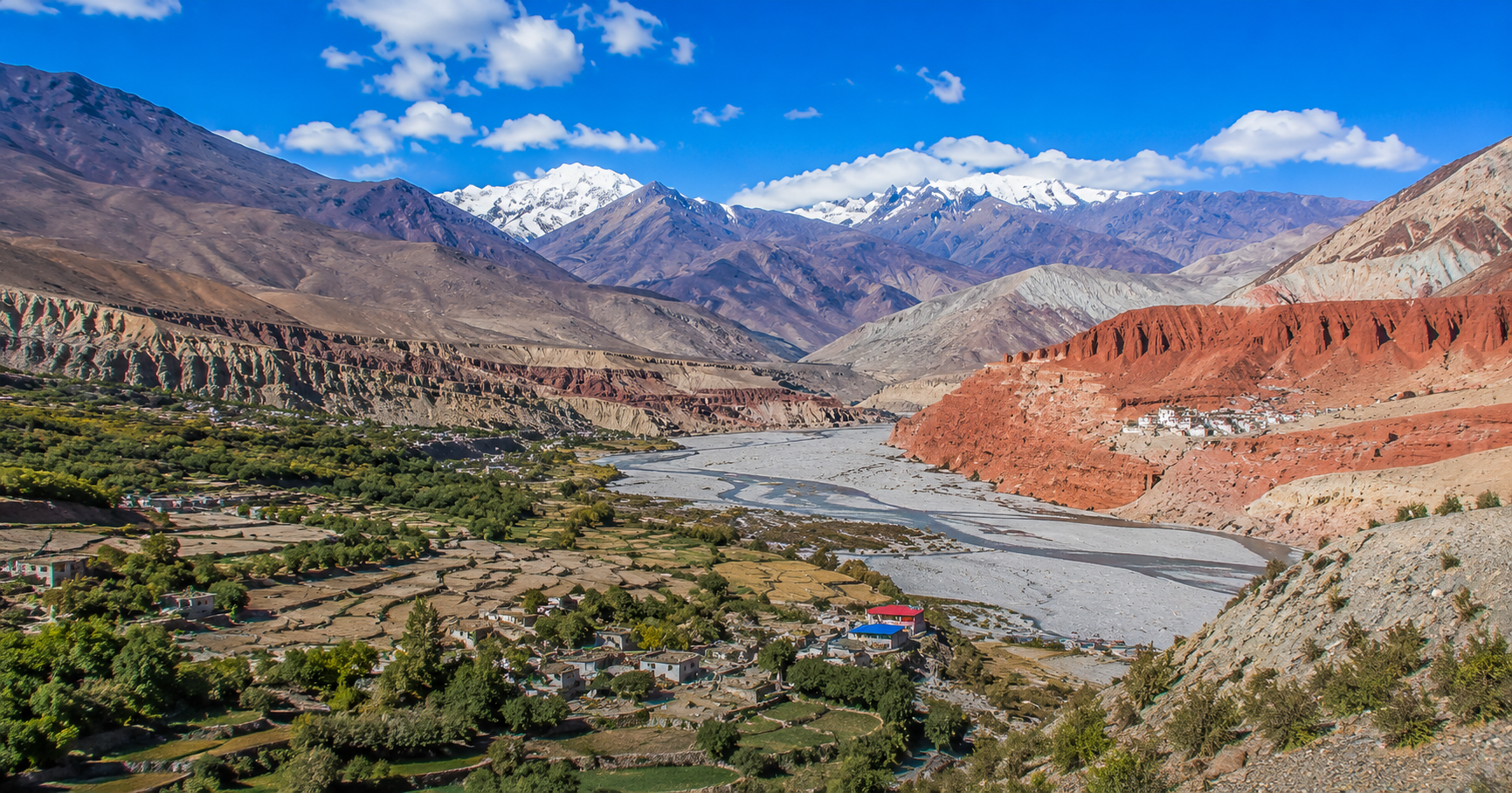
The atmospheric medieval village of Kagbeni at the confluence of the Kali Gandaki and Kak rivers is one of the most historically interesting villages in all of Mustang. The ancient Kag Chode Thupten Samphel Ling monastery dates to the 15th century and contains important Buddhist art. The narrow stone lanes, traditional flat-roofed houses, mani walls, and the view north into the restricted Upper Mustang all make Kagbeni a deeply rewarding brief stop. Many pilgrims collect Shaligram fossils from the Kali Gandaki riverbed near Kagbeni.
Marpha – Apple Village (20–30 min stop)
Marpha is the most beautiful village in the Mustang valley – a compact, pristine settlement of whitewashed stone houses with carved wooden windows, the cobbled main lane shaded by overhanging eaves, and the Samtenling Gompa perched on the hill above. Marpha is famous throughout Nepal for its apples – the orchards above the village were established with assistance from Swiss development cooperation in the 1960s. The locally distilled apple brandy (known as Marpha raksi or apple raksi) is a regional specialty. Pick up a bottle for the journey south – it is excellent.
Kalopani – The Dhaulagiri Viewpoint (15 min stop)
Kalopani sits in the section of the Kali Gandaki where the gorge opens briefly, and the full scale of Dhaulagiri (8,167 m) and Nilgiri (7,061 m) becomes visible from the valley floor. The vertical distance from the riverbed to the summit of Dhaulagiri above Kalopani is over 5,600 m – one of the most dramatic mountain wall perspectives in the world. Stop here for photographs, even if you paused on the way up.
Tatopani – Hot Springs (45–90 min stop)
Tatopani’s natural hot springs are a must-stop on the return journey. The hot springs pool sits directly beside the Kali Gandaki River, fed by naturally hot geothermal water at approximately 40-45°C. After days at high altitude, the physical and psychological relief of immersing oneself in warm water, surrounded by gorge scenery, is extraordinary. Most trekkers and pilgrims rate the Tatopani hot spring soak as one of the highlights of the entire Muktinath journey. Entry fee approximately NPR 150 to NPR 200. Towels and swimwear required.
Beni – Last Mountain Town (15 min fuel and refresh stop)
Beni marks the end of the rough mountain road and the beginning of the paved highway south. The town sits at the confluence of the Kali Gandaki and Myagdi rivers and is a good, brief stop for fuel, a cold drink, and a comfort break before the easier paved section to Pokhara.
Pokhara – Making the Most of Your Stopover
If doing the recommended 2-day Muktinath-to-Kathmandu journey, your overnight stop in Pokhara is not just a transit point – it is an opportunity to enjoy one of Nepal’s finest cities after your high-altitude pilgrimage or trek. Here is what to do in Pokhara on your overnight stopover:
Phewa Lake at Sunset
After arriving in Pokhara in the late afternoon, a walk along the shores of Phewa Lake at sunset is one of the most restorative experiences the city offers. The reflection of Machhapuchhre and the Annapurna range in the still lake water at sunset – the mountains turning pink and gold against the darkening sky – is one of Nepal’s most beautiful scenes and a magnificent contrast to the stark Mustang desert you have just left.
Lakeside Dining
Lakeside Pokhara has some of Nepal’s finest restaurants, cafes, and bakeries. After days of teahouse food at altitude, a good Lakeside restaurant meal – whether Nepali, Indian, Italian, or Mexican – is deeply appreciated. The Lakeside strip has options for every budget and appetite.
Sarangkot Sunrise (Optional)
If you have time for a 5:00 AM start, the Sarangkot viewpoint above Pokhara offers a spectacular sunrise over the Annapurna range – a beautiful way to begin your Day 2 drive to Kathmandu. A taxi from Lakeside to Sarangkot takes 30 to 40 minutes. Return by 8:00 AM, have breakfast, then depart for Kathmandu.
Alternative Return Route: Via Lo Manthang and Jomsom (Upper Mustang)
For travelers who have visited Upper Mustang (Lo Manthang, Chhoser, Lo Gekar), the return journey to Pokhara follows the same route along the Kali Gandaki southward from Jomsom. The Upper Mustang Restricted Area Permit is required only for the zone north of Kagbeni – once you cross back through Kagbeni heading south, you are in standard Lower Mustang, and the normal route to Pokhara applies. Vehicle Hiring Nepal can arrange combined Upper Mustang and return transport packages.
Tips for the Muktinath to Pokhara and Kathmandu Jeep Journey
- Always depart Muktinath no later than 7:00 AM – this is the single most important piece of advice for this journey.
- Book your return jeep at least 1 to 2 days before your planned departure while still at Muktinath or Jomsom – WhatsApp Vehicle Hiring Nepal at +977 9851013196
- Carry snacks and water for the full morning drive – the first reliable meal stop is Jomsom (30 min) or Marpha (1 hr from Muktinath)
- Carry warm layers for the early morning departure from Muktinath – at 3,710 m, the pre-dawn air is very cold even in summer.
- Motion sickness tablets are recommended for the gorge sections – the Marpha-Tatopani road has many sharp bends.
- Bring a camera with a charged battery – the gorge scenery and mountain views on the descent are extraordinary.
- If you want to bathe at Tatopani hot springs, carry a change of clothes and a towel in an accessible bag – not buried deep in your main pack
- The Beni-to-Pokhara road is fast and paved – relax and enjoy the changing landscape as you descend into the Pokhara valley.
- If you plan to fly Pokhara to Kathmandu on Day 2 instead of driving, confirm your Pokhara arrival time with your airline and book the flight before departing Muktinath
What is Included in Your Return Vehicle Hire
- Private 4WD jeep (Toyota Land Cruiser or equivalent) with experienced Kali Gandaki and Mustang route driver
- Full fuel cost for the complete Muktinath/Jomsom to Pokhara journey
- Vehicle insurance for the full journey
- Pickup from your teahouse or hotel in Ranipauwa (Muktinath) at your confirmed departure time
- Drop-off at your chosen hotel or address in Pokhara Lakeside
- Stops at Kagbeni, Jomsom, Marpha, Kalopani, Tatopani, and Beni at your discretion
- Option to continue from Pokhara to Kathmandu on the same booking (Day 2 continuation)
- 24/7 WhatsApp support before and during the journey
Not included: Tatopani hot spring entry fee (NPR 150–200), personal meals, accommodation in Pokhara (if overnight), and any additional detour stops beyond the agreed route.
How to Book Your Muktinath Return Jeep
- Contact Vehicle Hiring Nepal via WhatsApp at +977 9851013196 or visit vehiclehiringnepal.com
- Confirm your planned departure date from Muktinath and your group size
- Specify your starting point – Ranipauwa (Muktinath) or Jomsom
- Specify your destination – Pokhara only, or Pokhara overnight and Kathmandu Day 2
- Confirm your departure time – we strongly recommend 6:30 to 7:00 AM
- Provide your teahouse or hotel name in Ranipauwa for pickup
- Book at least 24 to 48 hours before departure – message us from your Muktinath teahouse via WhatsApp
- Receive confirmation with your driver’s name and WhatsApp contact number
WhatsApp: +977 9851013196
Email: [email protected]
Website: www.vehiclehiringnepal.com
Frequently Asked Questions
How long does the jeep ride from Muktinath to Pokhara take?
The journey from Muktinath (Ranipauwa) to Pokhara Lakeside takes approximately 7 to 9 hours by private jeep, including a breakfast stop in Jomsom, a brief stop in Marpha, and a recommended soak at the Tatopani hot springs. Departing from Muktinath at 6:30 AM, most travelers arrive in Pokhara between 2:00 and 4:00 PM.
Can I do Muktinath to Kathmandu in a single day by jeep?
Technically possible but not recommended. The total distance from Muktinath to Kathmandu via Pokhara is approximately 430 to 450 km, requiring 13 to 16 hours of continuous driving, including rough mountain sections. Very few drivers and travelers are willing to do this in one day. The two-day option with an overnight in Pokhara is far superior in terms of comfort, safety, and enjoyment.
What happens if the road is blocked by a landslide between Tatopani and Beni?
The Kali Gandaki gorge road between Tatopani and Beni is the most landslide-prone section of the entire route, particularly in and after the monsoon. Our drivers monitor road conditions before departure and maintain contact with local road crews. In the event of a blockage, the driver will assess the situation – waiting for clearance (minor slides are often cleared within a few hours), or advising an overnight stay in Tatopani until the road reopens. We will keep you informed in real time via WhatsApp.
Is it possible to share a jeep from Jomsom to Pokhara with other travelers?
Local shared jeep services run from Jomsom to Beni when they fill up – typically 6 to 8 passengers. From Beni, local buses and shared vehicles continue to Pokhara. This option costs approximately NPR 1,500 to 2,000 per seat from Jomsom to Beni, and NPR 400 to 600 per seat from Beni to Pokhara. The disadvantage is unpredictable departure times (shared jeeps wait until full), no flexibility for stops, and basic comfort. For most travelers, especially those who have just completed a pilgrimage or trek, the comfort and reliability of a private vehicle is worth the additional cost.
Can I fly from Pokhara to Kathmandu instead of driving on Day 2?
Yes. The Pokhara-to-Kathmandu domestic flight takes 25 minutes and is operated multiple times daily by Yeti Airlines, Buddha Air, and other carriers. The ticket price is approximately USD 80-110 per person. If you fly from Pokhara, Vehicle Hiring Nepal can arrange a transfer from your Lakeside hotel in Pokhara to Pokhara Airport on the morning of your departure flight.
What should I do if my Jomsom flight is canceled?
If your Jomsom-to-Pokhara flight is canceled due to weather – which happens very frequently – contact Vehicle Hiring Nepal immediately via WhatsApp at +977 9851013196. We can typically arrange a private jeep from Jomsom to Pokhara with a few hours’ notice, subject to driver availability. This is why we always recommend having our contact saved in your phone before you arrive in Mustang.
Final Thoughts
The return journey from Muktinath to Pokhara and Kathmandu by private jeep is the final chapter of one of Nepal’s most extraordinary travel experiences. Descending from the sacred high-altitude plateau of Muktinath through the world’s deepest gorge, past soaring Himalayan peaks, through dense rhododendron forest, and into the warm riverside town of Tatopani for a hot spring soak – it is a journey that perfectly complements the spiritual intensity of the Muktinath pilgrimage with the raw, magnificent beauty of the Kali Gandaki valley.
Vehicle Hiring Nepal provides the most reliable and experienced jeep service on the Muktinath-to-Pokhara-and-Kathmandu return route. Our drivers know every bend of the Kali Gandaki road, every timing consideration around the afternoon wind, and every stop worth making on the way down. Book your return jeep with us before you head up to Muktinath, so your return journey is arranged and worry-free from the start.
Book your return jeep from Muktinath to Pokhara or Kathmandu today. WhatsApp: +977 9851013196 | Website: www.vehiclehiringnepal.com
- Muktinath to Pokhara and Kathmandu by Jeep – Complete Return Guide 2026
- Your Two Return Options: Jeep vs Flight
- Muktinath to Pokhara by Jeep – Route Overview
- Muktinath to Kathmandu by Jeep – Route Overview
- Jeep Prices: Muktinath Return Journeys 2026
- The Critical Kali Gandaki Afternoon Wind – What You Must Know
- Stage-by-Stage Road Guide: Muktinath to Pokhara
- Key Distances and Timing: Muktinath to Pokhara
- Stage-by-Stage Guide: Pokhara to Kathmandu (Day 2)
- Recommended Journey Plans
- Jomsom to Pokhara by Flight – When It Makes Sense
- Road Conditions: Muktinath to Pokhara
- Key Stops on the Muktinath to Pokhara Return Journey
- Pokhara – Making the Most of Your Stopover
- Alternative Return Route: Via Lo Manthang and Jomsom (Upper Mustang)
- Tips for the Muktinath to Pokhara and Kathmandu Jeep Journey
- What is Included in Your Return Vehicle Hire
- How to Book Your Muktinath Return Jeep
- Frequently Asked Questions
- Final Thoughts

Related Blog & Articles
Altitude and Health: Essential Muktinath Advice
Muktinath to Pokhara and Kathmandu by Jeep – Complete Return Guide 2026