Plan a Trip


Pokhara to Kande Jeep Price – Complete Transport & Trek Guide 2026-2027
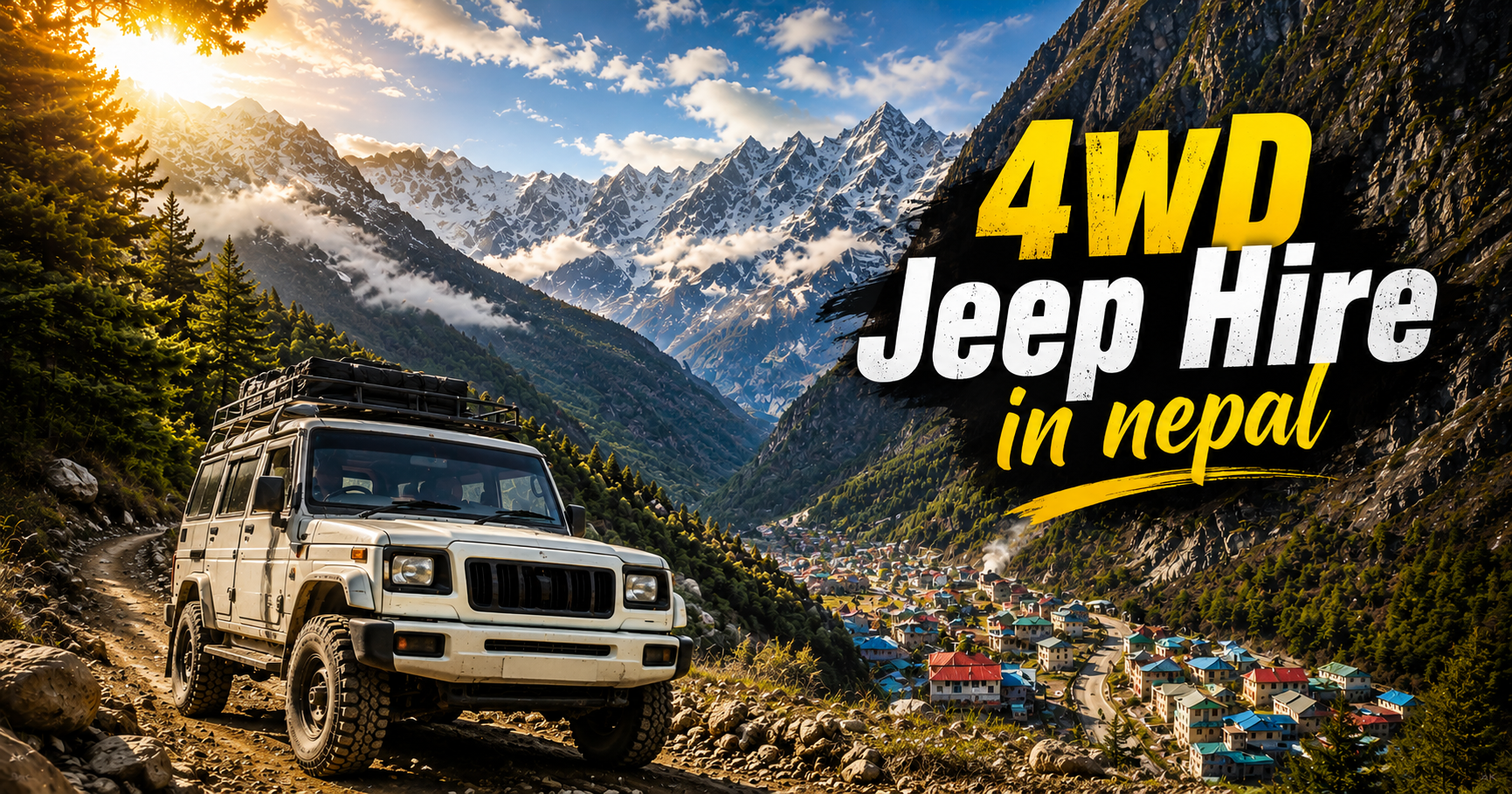
Pokhara to Kande Jeep Price – Complete Transport & Trek Guide 2026-2027
Kande is a prominent, strategic roadhead village nestled beautifully within the middle hills of the Annapurna foothill architecture. Situated approximately 12 to 15 kilometers northwest of the bustling tourist lakeside grid of Pokhara, Kande serves as the premier and most heavily trafficked logistical launchpad for the iconic Australian Camp Trek, Pothana Village, and sections of the newly popularized Mardi Himal ridge route system. For decades, global trekkers, independent backpackers, regional researchers, and domestic holidaymakers have recognized Kande as an unparalleled entry portal into the Annapurna Conservation Area Project (ACAP).
The trek from Kande up to the broad geographic spine of Australian Camp at 2,060 meters above sea level delivers some of the most conceptually striking, immediate, and intimate close-up panoramas of the Annapurna Massif, Mt. Machhapuchhre (the iconic Fishtail peak), and the deep-cut green fault lines of the southern Pokhara Valley basin available anywhere in Nepal within a single day’s excursion.
For travelers, trekkers, and climbing parties descending upon Pokhara, arranging highly specialized, reliable, and safe motorized transport to the Kande trailhead is a crucial first step in planning their wilderness deployment. Navigating the localized ecosystem of private jeeps, suburban street taxis, on-demand ride-sharing networks, public transit lines, and luxury multi-passenger vans requires a definitive, meticulously researched reference.
This encyclopedic transport and trail guide for 2026 provides exhaustive, real-time context on current pricing metrics, road conditions, vehicle categories, trekking route breakdowns, permit configurations, and localized safety parameters to ensure a completely seamless transition from city streets to mountain footpaths.
Where is Kande, and Why Go There?
Geographic Location: Kande Village, Lumle Village Development Committee, Kaski District, Gandaki Province, Western Nepal Basin.
Exact Elevation Metrics: 1,770 meters (5,807 feet) above mean sea level at the highway drop-off point.
Linear & Road Distance: Approximately 12.5 kilometers from Baglung Chowk; roughly 17 to 19 kilometers from the core visual center of Pokhara Lakeside, depending on your hotel’s exact perimeter positioning.
Motorized Transit Time: 20 to 35 minutes via high-performance private 4WD jeep or premium sedan; 45 to 60 minutes via localized public microbus routes encountering multiple intermediate vendor stops.
Current Road Topology: Primarily blacktopped asphalt highway infrastructure along the Pokhara-Baglung corridor, with regional segments undergoing ongoing structural expansions, resulting in localized gravel bypasses and foundational track surfaces.
Recommended Vehicle Class: Standard-layout front-wheel-drive sedans, hatchback taxicabs, and low-clearance passenger cars pass cleanly during dry calendar windows; elevated-clearance SUVs or 4WD jeeps become highly necessary during the intense degradation patterns of the summer monsoon window.
Trekking Connectivity Matrix: Acts as the undisputed principal trailhead for the short-circuit Australian Camp loop, primary access point for Pothana, alternative starting trajectory for the classic Dhampus ridge walks, and an elegant low-altitude runway for the multi-day Mardi Himal base sanctuary pathway.
Core Experiential Fame: Celebrated globally for its rapid transition from vehicle cabins to cinematic mountain environments, dense native rhododendron and sub-alpine oak forest cover, and rich intersectional ethnic cultural landscapes featuring Gurung, Magar, Brahman, and Chhetri homesteading patterns.
Kande sits precisely atop a beautifully defined geographical saddle ridge overlooking the sprawling, fertile valleys of the Modi Khola and the Yamdi Khola. Unlike other, deeper trailheads that require hours of punishing, bone-rattling transit across dangerous unpaved precipices, Kande offers an elegant, remarkably accessible compromise.
The small settlement itself comprises traditional stone-and-corrugated-iron residences, specialized local logistics shops, agricultural depots, tea stalls, and the foundational checkpoint office for the Annapurna Conservation Area Project. It acts as an energetic economic sorting hub where mountain communities meet the modernized transit arteries of the Gandaki Province.
The foundational philosophy of beginning a trek from Kande rests on vertical optimization. Because the village sits at an initial altitude of 1,770 meters, hikers gain a significant physical advantage: they begin their trek already elevated well above the humid valley floor. The climb from Kande to the panoramic meadows of Australian Camp requires only a vertical gain of 290 meters.
This makes it an incredibly safe, physically manageable, and highly rewarding target for multigenerational families, corporate retreat groups, senior travelers, and novice hikers who wish to capture iconic images of 8,000-meter Himalayan giants without exposing themselves to the acute medical risks of high-altitude sickness or extreme cardiovascular exhaustion.
Pokhara to Kande Jeep & Taxi Price 2026-2027
The transport landscape of 2026 reflects shifting economic realities in Nepal, heavily influenced by global fuel fluctuations, infrastructure upgrade levies, and provincial tourist board regularizations. For foreign nationals and domestic tourists alike, understanding standardized rates helps avoid arbitrary street-level overcharging. Below is the definitive pricing matrix for private and shared motorized configurations dispatched from Pokhara to the Kande trailhead.
| Vehicle Type | Passenger Capacity | One-Way (NPR) | One-Way (USD Equivalent) | Round-Trip Return (NPR) | Strategic Field Notes |
| Standard Hatchback Taxi | 1 – 3 Persons | NPR 800 – 1,200 | USD 6 – 9 | NPR 1,400 – 2,000 | Best for light packers; street negotiation mandatory. |
| Private Sedan / Saloon | 1 – 3 Persons | NPR 900 – 1,400 | USD 7 – 10 | NPR 1,600 – 2,200 | Pre-booked comfort, full AC, and hotel pickup included. |
| Mahindra Scorpio SUV / Jeep | 4 – 6 Persons | NPR 1,200 – 1,800 | USD 9 – 13 | NPR 2,000 – 3,000 | High clearance; recommended for heavy backpacks. |
| Toyota Land Cruiser 4WD | 4 – 5 Persons | NPR 1,800 – 2,500 | USD 14 – 19 | NPR 3,200 – 4,200 | Premium off-road luxury; ideal for VIP clients. |
| Toyota HiAce Passenger Van | 7 – 14 Persons | NPR 2,000 – 2,800 | USD 15 – 21 | NPR 3,500 – 4,500 | Perfect for organized trekking teams & student groups. |
| Local Shared Public Tempo | Per Seat Flat Rate | NPR 150 – 250 | USD 1.15 – 2 | N/A | Departs strictly from Baglung Chowk; highly crowded. |
| Local Public Bus Line | Per Seat Flat Rate | NPR 100 – 180 | USD 0.75 – 1.40 | N/A | Extreme budget option; variable schedules; slow speed. |
When analyzing these fiscal metrics, travelers must account for variable real-world factors. The rates cited represent standard dry-season operating perimeters. During the peak trekking seasons of autumn (October-November) and spring (March-April), fleet utilization rates are near maximum capacity, which can occasionally put upward pressure on on-demand street hailing. Conversely, pre-booking your vehicle asset through a certified aggregator like Vehicle Hiring Nepal locks in your operational expenditure, shielding you from arbitrary terminal charges or surprise fuel surcharges at drop-off.
Furthermore, ensuring the pricing quote explicitly specifies drop-off within the actual high-altitude village clearing of Kande—rather than the low highway junction—is an essential operational detail that prevents sudden, unwanted extensions to your first-day trekking itinerary.

All Transport Options: Pokhara to Kande
Every traveler operates under a unique framework of time density, economic limits, and comfort requirements. Selecting the precise mode of transit requires an objective cross-examination of the available options active along the Pokhara-Kande corridor.
| Transport Mechanism | Fiscal Demand | Temporal Velocity | Comfort Index | Optimal Demographic Profile |
| Pre-Booked Private Fleet Car | USD 7 – 13 Total Vehicle | 20 – 25 Minutes | Excellent / Five-Star | Discerning trekkers, families, and precise schedules. |
| Unmanaged Street Hailed Taxi | NPR 800 – 1,500 Variable | 25 – 30 Minutes | Moderate / Acceptable | Solo travelers or duos willing to haggle dynamically. |
| Digital Ride-Share (Pathao/InDriver) | NPR 600 – 900 Platform Rate | 20 – 30 Minutes | Good / Standard | Tech-savvy budget travelers with functional local SIMs. |
| Public Microbus / Shared Tempo | NPR 150 – 250 Per Person | 40 – 55 Minutes | Low / High Density | Ultra-low budget backpackers; immersive local seekers. |
| Pedestrian Foot Travel from Pokhara | Completely Free Fiscal Footprint | 3.5 – 5 Long Hours | Punishing / Exhausting | Not recommended due to heavy roadside exhaust and heat. |
Pre-Booked Private Agency Vehicles (The Premium Standard)
Securing an asset via Vehicle Hiring Nepal ensures total logistical control. The client bypasses the chaotic terminal environments of public transport and avoids the fluid, unregulated pricing structures of traditional street-hailing systems. The driver arrives directly at the foyer of your Lakeside hotel at the specified timestamp, assists with heavy technical gear and mountaineering duffels, and uses a thoroughly vetted, mechanically sound vehicle. This option completely removes language-barrier anxieties, as professional agency drivers possess conversational fluency in English and extensive training in safely navigating rural terrain.
Street-Hailed Taxis (The Flexible Alternative)
Hailing a compact taxi directly off the street handles immediate, spontaneous travel urges. However, it requires a firm grasp of localized negotiation practices. Taxis in Pokhara are legally outfitted with electronic distance-fare meters. Yet, drivers almost universally refuse to activate them for out-of-town mountain dispatches, preferring to negotiate a fixed flat rate instead. If you opt for this route, you must firmly establish the final price before setting your footwear inside the vehicle cabin. Be prepared for potential misunderstandings regarding the exact drop-off zone if the driver is unfamiliar with the upper Kande trailhead layout.
Public Transit Systems (The Cultural Deep-Dive)
For those operating on shoestring budgets or individuals attempting an immersive cultural lifestyle experiment, localized microbuses and shared tempos offer a distinct alternative. To engage this system, you must first take a local connector out to the Baglung Chowk transit hub. From there, you locate vehicles bound for Nayapul, Lumle, or Beni, ensuring they drop you off along the Kande highway ridge.
While exceptionally affordable, this method introduces severe logistical compromises: vehicles do not depart until every square inch of passenger space is fully occupied, storage for massive trekking backpacks is highly restricted (often requiring your expensive gear to be lashed open-air onto the roof rack), and the frequent, sudden stopping intervals turn a brief journey into a lengthy, fatiguing experience.
The Road: Pokhara to Kande
The physical corridor spanning Pokhara and Kande is an intriguing engineering blend of urban boulevards, industrial suburbs, agricultural plains, and winding, high-gradient mountain passes. Understanding the specific sections of this 12- to 19-kilometer roadway helps passengers anticipate terrain transitions and mentally prepare for the journey.
Pokhara Lakeside to Baglung Chowk (Distance: 5 km | Time: ~10 mins)
The journey initiates within the pristine tourist pocket of Lakeside, running parallel to the calm waters of Phewa Lake. The vehicle winds through Baidam, then transitions onto the expansive, multi-lane urban asphalt at Zero Kilometer, or Prithvi Chowk. Turning northward, the driver navigates the commercial heartbeat of central Pokhara, passing major municipal landmarks, banks, and supply depots before reaching Baglung Chowk. This initial phase is characterized by typical city traffic, smooth asphalt, traffic wardens, and pedestrians. Departing your hotel before 07:00 AM completely bypasses the school-bus and commercial-commute windows, saving valuable transit time.
Baglung Chowk to the Hemja Plateau (Distance: 4 km | Time: ~8 mins)
Leaving Baglung Chowk, the vehicle enters the Pokhara-Baglung Highway corridor, passing through Hari Chowk as the urban density rapidly thins out. The road drops slightly into the expansive, flat geological terrace of Hemja, locally famed for its intensive agricultural production, traditional brick kilns, and Tibetan refugee settlements (such as Tashiling). The road through Hemja is exceptionally wide, straight, and well-paved, allowing the vehicle to gain uniform velocity. Looking out the right-side windows on a clear morning rewards passengers with breathtaking, unobstructed views of the entire Annapurna range rising sharply above the low-lying agricultural fields.
Hemja to Naudanda and the Final Ascent to Kande (Distance: 6-10 km | Time: 12-17 mins)
At the northern terminus of the Hemja plateau, the geographical environment changes dramatically. The road reaches the base of the mountains near Phedi and initiates a steady, high-angle snake climb into the foothills. The asphalt transitions into a series of sharp switchbacks, hairpins, and steep shelf carvings as it climbs toward the ridge town of Naudanda. Here, the road can become somewhat rough; ongoing highway expansion initiatives mean that certain sections may have exposed gravel, loose shale, or compacted-earth bypasses.
As the vehicle gains altitude, the air temperature drops refreshingly, and the vast urban basin of Pokhara opens up spectacularly behind you. The vehicle passes the scenic ridge of Naudanda and traces the mountain edge for another 3 kilometers until it reaches the final crest at Kande Village. The final approach features a short, steep unpaved track leading from the main highway directly into the designated trekking trailhead parking clearing. Your driver brings the vehicle to a smooth stop, shuts down the engine, and you step out into the crisp, clean mountain air of Kande at 1,770 meters.
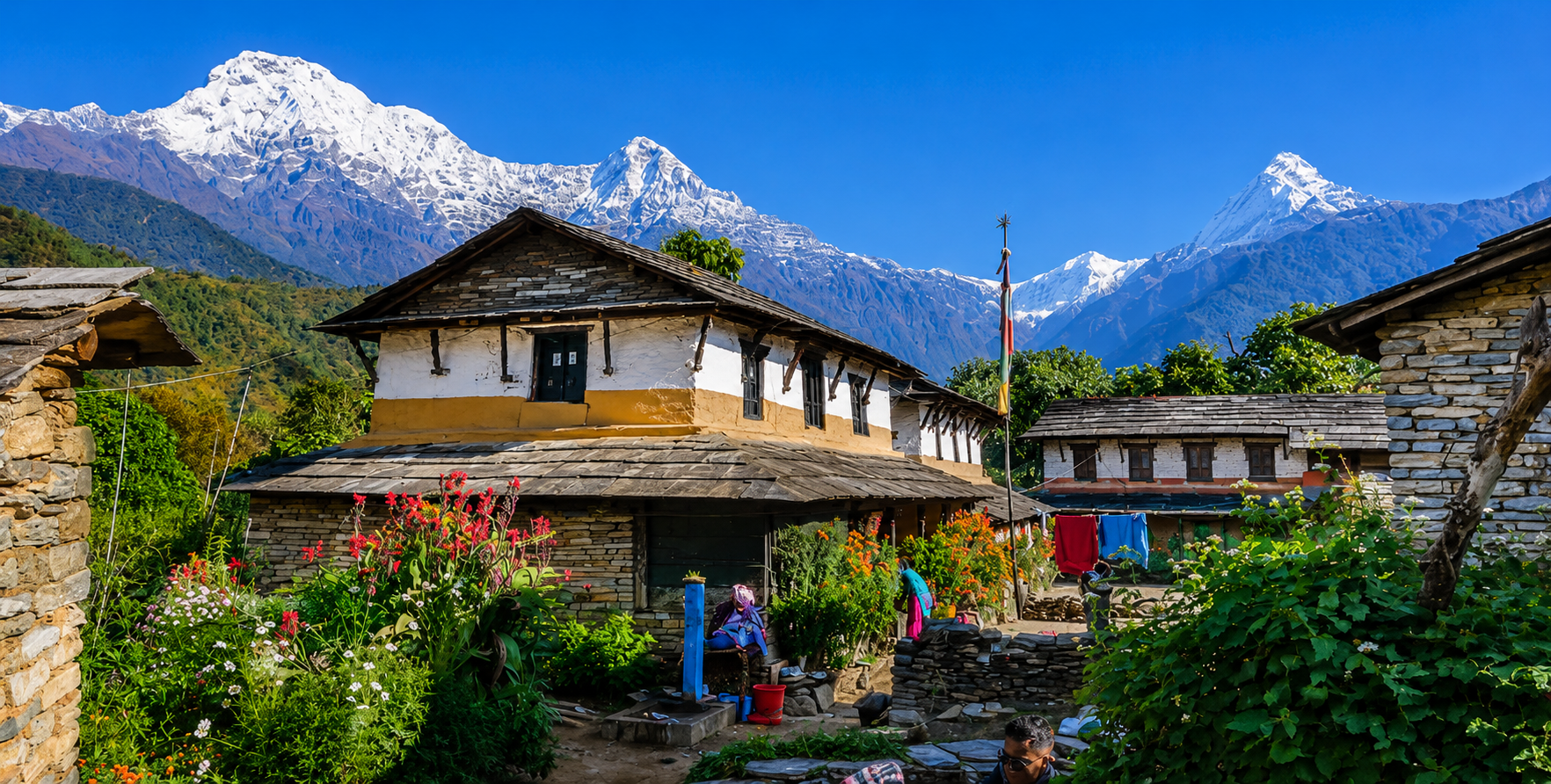
Trekking from Kande – Australian Camp and Beyond
Kande is not merely a geographic terminus for motor vehicles; it is a vital, dynamic gateway to an extensive network of interconnected wilderness trails stretching deep into the heart of the Annapurna Conservation Area. Below is an exhaustive breakdown of the primary trekking corridors that manifest directly from the Kande trailhead.
The Direct Ascent: Kande to Australian Camp
Trail Distance: Approximately 3.2 kilometers of active walking path.
Vertical Altitude Shift: Kande (1,770m) to Australian Camp (2,060m) — a clean net gain of 290 vertical meters.
Average Completion Duration: 1.5 to 2.5 hours, depending on physical fitness levels and photography stops.
Trail Quality & Terrain: Impeccably laid stone steps, well-beaten earthen pathways, and short sections of exposed tree roots winding through deep forest canopies.
The trek begins immediately behind the Kande parking clearing, marked clearly by an official ACAP information signboard. The initial 45 minutes of the trail feature a steep, uncompromising staircase of hand-carved stone steps that test your cardiovascular system. The path winds directly past local terraced fields, allowing hikers to observe traditional agrarian lifestyles up close. Women tending millet crops, water buffaloes resting in simple stone sheds, and local children walking down to school are common, heartwarming sights.
As you pass the initial ridge line, the path enters a dense forest sanctuary dominated by native rhododendron, moss-covered oak, and sub-tropical pine trees. The tree canopy provides a refreshing shield against the intense morning sun, keeping the ambient temperature on the trail pleasant. During March and April, this forest transforms into a vivid sea of crimson, pink, and white blossoms, creating an unforgettable fairytale aesthetic. The grade softens slightly as you approach the upper ridge—the forest suddenly parts, revealing a wide, flat, grassy meadow. You have arrived at Australian Camp, and the entire snow-clad wall of the Himalayas instantly fills your field of view.
The Extended Ridge Route: Kande to Pothana Village
For hikers who wish to extend their first-day journey beyond Australian Camp, the trail continues along the scenic ridge line toward the traditional settlement of Pothana at 1,990 meters. The path drops slightly into a cool, shadowed forest saddle before tracing an easy, stone-paved contour trail for about 45 minutes. Pothana is an exceptionally beautiful Gurung village characterized by clean, blue-painted stone lodges, neatly manicured paths, and an important ACAP tourist checking station. Pothana offers a slightly quieter, more culturally rich overnight alternative to Australian Camp, while still delivering pristine views of Mt. Machhapuchhre.
The Classic Loop: Kande to Dhampus and Phedi
The Kande-Australian Camp-Pothana track links directly with the historic trail leading down to the grand Gurung settlement of Dhampus (1,700m). This makes a phenomenal 2-day circuit trek. Instead of backtracking down to Kande after your overnight stay, you hike along the forested ridge line to Pothana, then descend a sweeping stone staircase down to the wide, terraced shelf of Dhampus. From Dhampus, a well-engineered trail leads straight down to the highway at Phedi, where your pre-arranged vehicle from Vehicle Hiring Nepal can pick you up for a smooth ride back to Pokhara.
The Grand Alpine Gateway: The Mardi Himal Trek Connection
For serious trekkers bound for the high-alpine sanctuaries of the Mardi Himal Trek (Maximum Altitude: 4,500m at Base Camp), Kande represents the absolute finest logistical starting point. By launching from Kande, trekkers bypass the lower, dusty river valleys of Mardi Pul or low-altitude dirt roads. Day 1 carries the team through Australian Camp to Pothana or Deurali (2,100m). Day 2 branches sharply northward along the pristine wilderness ridge line through Forest Camp (2,550m), leading onward to Low Camp, High Camp, and the spectacular high-altitude viewpoints directly beneath the sheer south face of Mt. Fishtail. This route design ensures optimal, gradual acclimatization and maximizes the time you spend in the forests and high-alpine biomes.
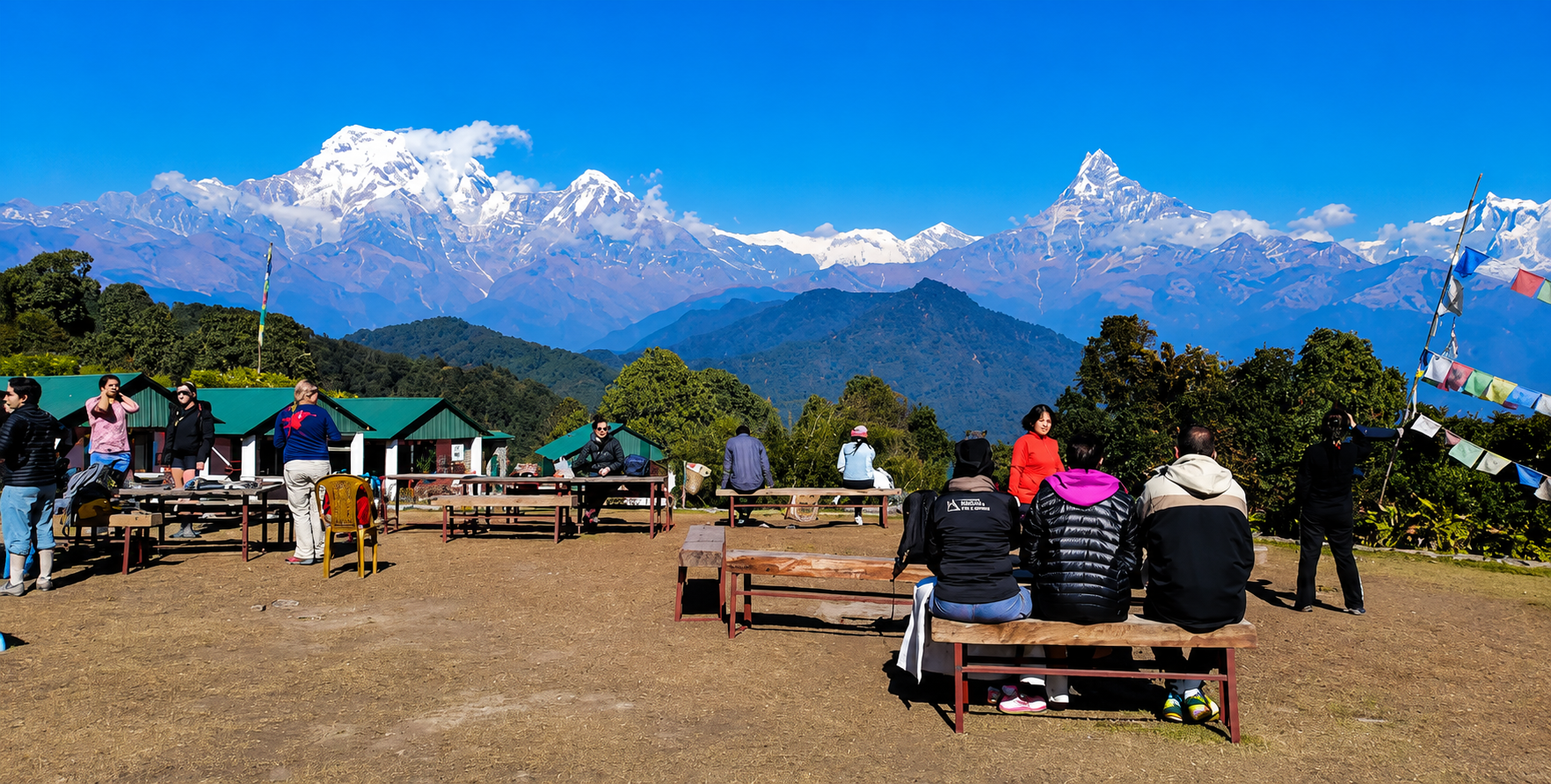
Australian Camp – The View and the Experience
Australian Camp (originally known locally as ‘Thulo Kharka’ or ‘Big Pasture’) owes its modern moniker to the pioneering Australian trekking groups and international aid workers who frequented the area in the late 1970s and 1980s, marveling at its pristine geographic setting. Today, it stands as an elite-tier viewpoint asset in the Gandaki Province.
The Architectural Grandeur of the Mountain Wall
The visual shock of arriving at Australian Camp lies in its spatial immediacy. Unlike views from Pokhara city, where the mountains form a distant backdrop across a wide valley, here you are elevated onto an opposing ridge with only a deep, narrow green chasm separating you from the high-altitude rock faces. The panorama is sweeping and uninterrupted: to your far left stands the massive bulk of Dhaulagiri I (8,167m); directly ahead rises the distinct form of Annapurna South (7,219m) and the towering peak of Annapurna I (8,091m); to your right, the elegant, sharp architecture of Mt. Machhapuchhre (6,993m) pierces the sky, flanked by Annapurna III, Gangapurna, and the far-reaching snow fields of Lamjung Himal.
The Alpenglow Phenomenon: Sunrise and Sunset Protocols
To truly internalize the beauty of Australian Camp, staying overnight is essential. As night approaches, the setting sun casts deep amber, violet, and crimson shadows across the massive glaciers of Annapurna South. But it is the sunrise that draws photographers from around the globe. At 05:30 AM, the air is freezing and crisp. Trekkers gather on the viewing platforms as a deep pre-dawn blue envelops the world. Slowly, the highest tip of Mt.
Machhapuchhre catches the first rays of sunlight, igniting into a brilliant, fiery orange alpenglow. Over the next thirty minutes, this golden wave cascades down the mountain faces, burning away the low valley mists and revealing the raw, glittering white majesty of the ice fields.
Teahouse Infrastructure and Hospitality Standards
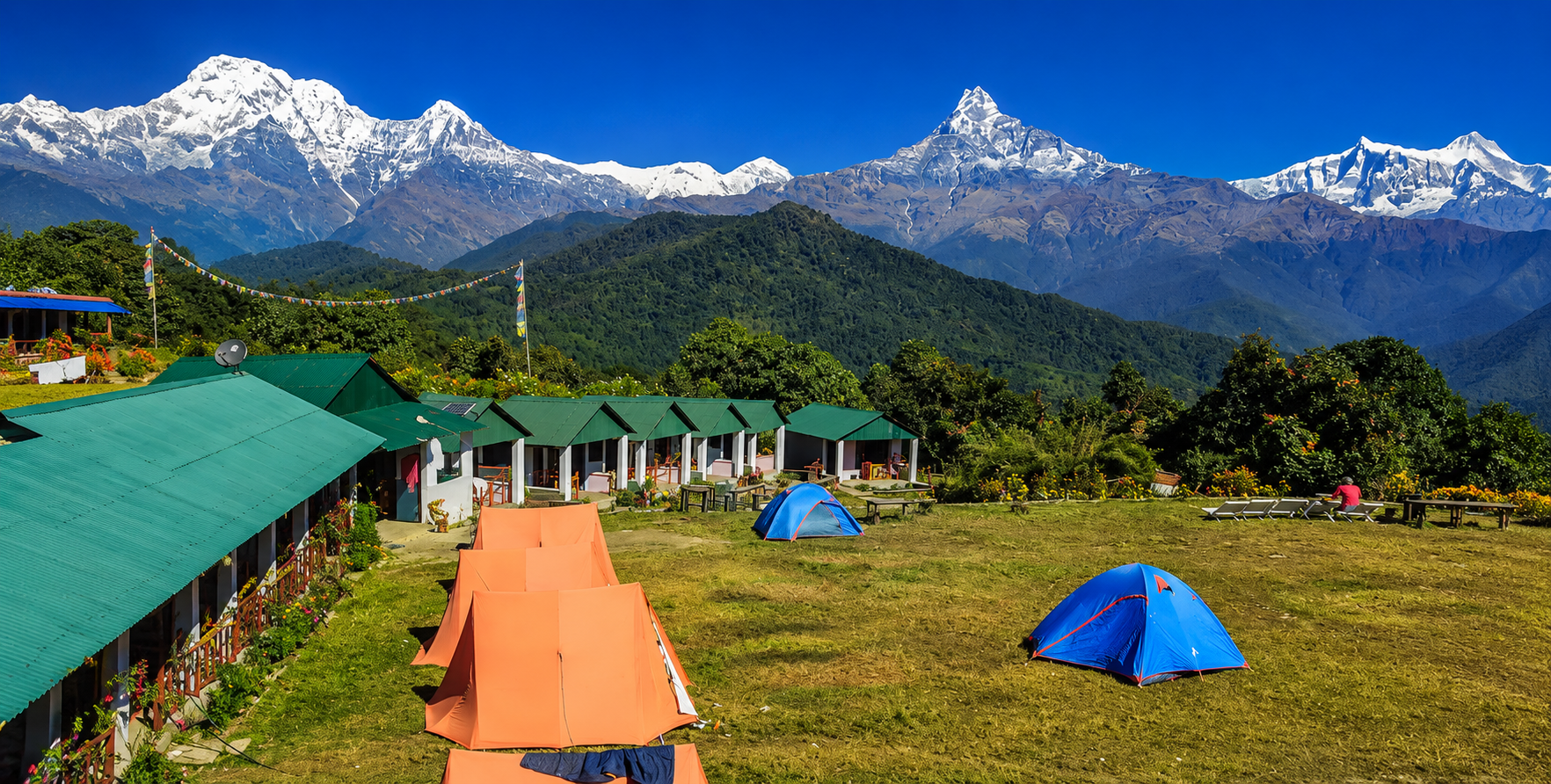
The overnight experience at Australian Camp is remarkably comfortable, far exceeding the rustic expectations of traditional remote trekking routes. The lodges here are well-established, offering clean twin-bedded rooms, thick foam mattresses, heavy quilts, and functional attached bathrooms with hot-water heating (powered by solar arrays or gas line inserts).
Most dining rooms are fully enclosed glass structures, allowing you to enjoy a piping hot plate of traditional Dal Bhat (lentil soup, rice, vegetable curry, and pickles), generic continental dishes, or Tibetan bread while remaining shielded from the biting ridge winds. Cellular connectivity is excellent, with robust 4G signals from both Ncell and NTC networks active across the plateau.
Trekking Permits for Kande and Australian Camp Area
Entering the mountain environment requires compliance with the statutory conservation frameworks managed by the Government of Nepal and the National Trust for Nature Conservation (NTNC). Ignorance of these requirements can result in heavy financial penalties or being denied entry at the Kande gate.
| Permit Instrument | Standard Tariff 2026 | Primary Issuing Bureau | Operational Scope & Purpose |
| ACAP Permit (Foreigners) | NPR 3,000 Per Person (~USD 22) | Nepal Tourism Board Office, Damside, Pokhara | A mandatory conservation levy for all foreign national hikers entering the boundary. |
| ACAP Permit (SAARC Nationals) | NPR 1,000 Per Person (~USD 7.50) | Nepal Tourism Board Office, Damside, Pokhara | Special regional tariff structure for citizens of SAARC countries. |
| TIMS Card (Trekkers Info System) | NPR 2,000 Per Person (~USD 15) | Authorized Trekking Agencies / TAAN Office Pokhara | Mandatory safety registration tracking card to monitor wilderness positioning. |
| Domestic Citizen ACAP Levy | NPR 100 Per Person | Directly at the Kande ACAP Gate Checkpoint | Nominal entry and maintenance fee for Nepalese national tourists. |
To secure these permits smoothly, hikers must visit the Nepal Tourism Board office in Pokhara (located near the Damside area) the day before their scheduled departure. The office operates from 09:00 AM to 05:00 PM. You must bring your physical passport, a clear digital or paper photocopy of your visa details, and at least four recent passport-sized photographs. If you book your vehicle and trek package through an authorized full-service provider like Vehicle Hiring Nepal, the agency can handle all permit documentation on your behalf and deliver the finalized paperwork straight to your hotel room to ensure a hassle-free start.
Best Time to Travel from Pokhara to Kande
The climate of the Annapurna foothills is highly cyclical, dictated by the overarching South Asian monsoon system and seasonal altitude shifts. Choosing your travel window correctly shapes your visual outcomes and overall comfort.
The Golden Window: Autumn (October to November)
Autumn is the undisputed premier trekking season. The heavy summer monsoon rains have completely washed the atmosphere clean of dust and haze, resulting in crystal-clear skies and near-perfect visibility. Mountain views are guaranteed almost every single day from sunrise to sunset. The road from Pokhara to Kande is dry and in its best mechanical condition. The teahouses at Australian Camp operate at peak energy, creating a vibrant, international atmosphere. Pre-booking your vehicle during this window is highly critical, as global expeditions heavily book regional transport assets.
The Floral Wonderland: Spring (March to April)
Spring is an extraordinarily beautiful time to visit Kande. The defining characteristic of this window is the spectacular blooming of the rhododendron forests. The entire trail becomes an active botanical display. Daytime temperatures are exceptionally warm and pleasant for hiking, though light afternoon cloud cover can occasionally obscure the highest peaks. The morning mountain views remain incredibly sharp and crisp, making it an elite window for landscape photography and nature enthusiasts.
The Sharp & Frosty Clear: Winter (December to February)
Winter brings cold weather, but it also delivers some of the sharpest, most brilliantly clear morning views of the entire year. Daytime hiking under the winter sun is very comfortable. Still, as soon as the sun dips behind the ridges, temperatures at Australian Camp can plummet to near or below freezing (0°C to -5°C). Snow occasionally dusts the upper meadows of Australian Camp, creating a beautiful winter wonderland. If you pack high-quality thermal base layers and a solid down jacket, winter offers a tranquil, uncrowded experience on the trails.
The Forbidden Window: Summer / Monsoon (June to September)
The monsoon season introduces severe environmental challenges along the Pokhara-Kande corridor. Heavy, relentless rainfall causes localized mudslides, washes out sections of unpaved roads, and turns stone trail stairs into slippery hazards. The mountains are shrouded in thick storm clouds for days on end, and the forests become swarming with active leeches. Transport costs can rise due to the increased need to use high-clearance 4WD jeeps to cross muddy bypasses. Trekking during this window is generally not recommended unless you are an experienced researcher or an off-season adventurer equipped with technical rain gear and a flexible itinerary.

Recommended Itineraries: Pokhara to Kande
To maximize your time and physical energy, your transit schedule should be paired with a well-structured trekking itinerary. Below are four highly optimized, field-tested route blueprints.
Itinerary Alpha: The Ultimate 1-Day Panoramic Day Hike
- 07:00 AM — Private agency vehicle picks you up from your Lakeside hotel foyer; departs immediately via the highway.
- 07:30 AM — Arrival at the Kande trailhead parking zone; complete passport registration at the official ACAP checkpoint station.
- 07:45 AM — Initiate foot travel on the stone stairs, maintaining a steady, regulated pace through the terraced agrarian hamlets.
- 09:45 AM — Arrive smoothly at the grand plateau of Australian Camp; secure an outdoor table at a local lodge, order hot milk tea, and absorb the massive mountain views.
- 10:15 AM to 12:15 PM — Two full hours of leisure, photography, and exploration along the ridge lines and viewing platforms.
- 12:30 PM — Enjoy a fresh lunch at a local teahouse (ordering traditional Dal Bhat or quick noodles).
- 01:30 PM — Initiate your descent along the shaded forest path back down toward Kande Village.
- 03:00 PM — Arrive back at Kande trailhead; your private vehicle is waiting in the clearing; transition into the cabin for the drive back.
- 03:30 PM — Smooth drop-off back at your Lakeside hotel; enjoy a free evening exploring the lakeside restaurants and markets.
Itinerary Beta: The Classic 2-Day Overnight Sunrise Experience (Highly Recommended)
- Day 1 – 02:00 PM — Vehicle departure from Pokhara Lakeside, taking advantage of open mid-day highway conditions.
- Day 1 – 02:30 PM — Arrival at Kande; unload gear and initiate the ascent through the cool afternoon forest air.
- Day 1 – 04:30 PM — Arrive at Australian Camp; check into your private room and watch a spectacular golden sunset over Dhaulagiri and the Annapurnas.
- Day 1 – 07:00 PM — Gather in the heated lodge dining hall for a hearty mountain dinner and track brief with your team.
- Day 2 – 05:30 AM — Wake early for the spectacular sunrise display; capture the changing colors of the peaks from the viewing platform.
- Day 2 – 08:00 AM — Enjoy a relaxed breakfast on the outdoor terrace facing the massive wall of mountains.
- Day 2 – 09:30 AM — Packing up and initiating a smooth, scenic descent back down the stone steps toward Kande.
- Day 2 – 11:00 AM — Meet your dedicated Vehicle Hiring Nepal driver at Kande; drive comfortably back to Pokhara, arriving before noon.
Itinerary Gamma: The 3-Day Eco-Cultural Ridge Circuit
- Day 1 — Private car from Pokhara to Kande; trek to Australian Camp; overnight stay amidst high-altitude panoramic vistas.
- Day 2 — Sunrise viewing; trek along the forested ridgeline from Deurali to Pothana Village; immerse in local Gurung heritage; overnight stay.
- Day 3 — Morning trek down through the terraced farmland of Dhampus Village to the roadhead at Phedi; private vehicle pickup and drive back to Pokhara.
Itinerary Delta: The 5-Day Mardi Himal Alpine Ridge Expedition
- Day 1 — Morning jeep from Pokhara to Kande; trek through Australian Camp to Pothana and onwards to Pritam Deurali (Overnight).
- Day 2 — Trek from Deurali through dense, mossy rhododendron wilderness up to Forest Camp at 2,550 meters (Overnight).
- Day 3 — Trek from Forest Camp, climbing past Low Camp into the sub-alpine environment of High Camp at 3,580 meters (Overnight).
- Day 4 — Pre-dawn alpine push to Mardi Himal Upper Viewpoint / Base Camp at 4,500 meters; descend to Badal Danda or Low Camp (Overnight).
- Day 5 — Descend via Siding Village or Lwang Phedi; meet your pre-arranged 4WD Jeep from Vehicle Hiring Nepal for an off-road drive back to Pokhara.
Nearby Trekking Trailheads from Pokhara – Price Comparison
To appreciate the logistical and economic brilliance of launching a trek from Kande, it is highly informative to contrast it with other major wilderness trailheads within the Pokhara travel orbit.
| Trailhead Portal | Road Distance | Private Fleet Car Price | SUV / 4WD Jeep Price | Transit Duration | Primary Trek Destinations |
| Kande Gate | 12 – 19 km | NPR 900 – 1,400 | NPR 1,200 – 1,800 | 20 – 35 Mins | Australian Camp, Pothana, Mardi Himal Entry. |
| Phedi Base | 9 – 11 km | NPR 600 – 1,000 | NPR 900 – 1,400 | 15 – 20 Mins | Dhampus lower route, Sarangkot ridge access. |
| Nayapul Hub | 42 km | NPR 2,500 – 3,500 | NPR 3,500 – 5,000 | 1.5 Hours | Ghorepani, Poon Hill, Annapurna Sanctuary. |
| Birethanti Gate | 44 km | NPR 2,800 – 3,800 | NPR 4,000 – 5,500 | 1.7 Hours | Alternative Poon Hill start, Ghandruk lower tracks. |
| Kimche Station | 58 km | N/A (Low Clearance) | NPR 5,500 – 7,500 | 2.5 Hours | Direct upper motorized route to Ghandruk Village. |
| Besisahar Hub | 76 km | NPR 5,500 – 7,000 | NPR 7,500 – 10,000 | 2.5 – 3 Hours | The official starting point for the Annapurna Circuit. |
This analytical data underlines that Kande stands out as the most cost-effective and time-efficient trailhead option anywhere near Pokhara. For travelers with tight schedules or limited budgets, spending thousands of rupees on a grueling, multi-hour road trip to deeper trailheads cuts significantly into actual trekking hours. Kande provides an immediate solution: in less than 40 minutes after leaving your lakeside hotel room, you are walking on a world-class mountain trail, maximizing your time outdoors and protecting your financial resources.

Time for Getting the Right Price from Pokhara to Kande
The localized transport ecosystem in Nepal can occasionally feel overwhelming or confusing to international tourists unfamiliar with regional commercial norms. Applying these proven, tactical insider strategies allows you to secure optimal rates with absolute confidence.
- Embrace Pre-Booking Protocols: The best way to ensure a stress-free experience is to book your vehicle through an established, legally registered agency such as Vehicle Hiring Nepal. This eliminates the need to engage in exhausting, emotionally draining street-level haggling after a long flight and guarantees a fully vetted driver and a clean vehicle.
- Deconstruct the Drop-off Perimeter: When discussing rates with street taxi drivers, explicitly clarify that the price must cover transport all the way to the upper Kande trailhead parking zone next to the ACAP station, rather than a generic drop-off point along the lower highway loop.
- Analyze License Plate Classifications: In Nepal, vehicles bearing green-colored license plates are officially registered tourist vehicles. These drivers undergo specialized background checks, carry comprehensive passenger liability insurance policies, and maintain higher standards of vehicle maintenance than local black-plated commuter options.
- Coordinate Return Logistics Simultaneously: Transport can be scarce at the Kande trailhead during the afternoon, when multiple trekking groups descend at once. Negotiating a comprehensive round-trip return package with your outward driver ensures that a dedicated vehicle will be waiting for you the moment you step off the trail.
- Maintain Baseline Local Currency Reserves: Ensure you carry an adequate supply of physical Nepalese Rupees (NPR) in small denominations (such as 100, 500, and 1,000 rupee notes). Drivers, local checkpoints, and rural teahouses universally reject foreign credit cards, digital international wallets, or large foreign currency notes.
What to Bring for the Pokhara to Kande Trek
Even a short, accessible trek requires careful gear selection. Having the correct personal items ensures your safety and comfort throughout the journey, transforming a good trek into an extraordinary one.
Essential Gear for the Vehicle Journey
- A lightweight, ergonomically sound daypack (20 to 35 liters) outfitted with a waterproof rain cover.
- Your physical passport, verified ACAP permit vouchers, and matching TIMS registration cards.
- A durable, reusable water bottle or hydration bladder filled with clean, filtered water before departing your hotel.
- A lightweight, wind-resistant outer jacket or softshell fleece layer, as the high-altitude ridge at Kande can be surprisingly breezy and cool compared to the warm valley floor.
Technical Gear for the Trail and Overnight Stay
- High-quality, broken-in trekking boots or sturdy trail-running shoes featuring deep-groove rubber outsoles for securing solid traction on wet stone steps.
- A dependable, high-lumen LED headlamp equipped with fresh batteries, which is absolutely mandatory for navigating the pitch-black viewing ridges safely during early sunrise photography pushes.
- A lightweight travel sleeping bag liner to provide an extra layer of personal hygiene and insulation beneath standard teahouse quilts.
- A compact personal first-aid pouch containing rehydration salts, blister tape, paracetamol, ibuprofen, anti-diarrheal medication, and your personal prescriptions.
- High-protection broad-spectrum sunscreen (SPF 50+), UV-blocking polarized sunglasses, and a wide-brimmed sun hat to shield your skin from the intense high-altitude solar radiation.
- A high-capacity portable power bank with matching charging cables to keep your smartphones and camera batteries functional throughout the cold mountain night.

Return Transport: Kande to Pokhara
Successfully concluding your high-altitude trek requires a smooth, predictable exit strategy back to the urban comfort of Pokhara. Carefully planning your return transport prevents unexpected delays at the trailhead.
The Pre-Arranged Return Pickup Strategy
This remains the undisputed standard of convenience. When you book your outward transit with Vehicle Hiring Nepal, you can simultaneously arrange your return pickup window. Because cellular data connectivity is highly functional across the entire Australian Camp and Pothana ridge line, you send a quick WhatsApp message to your assigned driver when you begin your descent from the upper meadows. By the time you complete your walk and arrive at the Kande clearing, your private, Time-conditioned vehicle is already waiting with the engine running, allowing you to load your gear and slide immediately into a comfortable cabin.
Spontaneous Trailhead Hailing
If you choose an open-ended itinerary without a pre-arranged return car, you must rely on locating available vehicles passing through the Kande highway corridor. On busy afternoons during peak trekking season, empty taxis can occasionally be found waiting near the ACAP gate, looking for passengers returning to the city. Standard rates mirror the outward leg (NPR 800-1,200 for a compact car). However, during rainy conditions, late evening hours, or low-season windows, vehicle availability drops drastically, which may leave you waiting at the roadside or forced to negotiate with crowded local public microbuses.
What is Included in Your Vehicle Hire with Vehicle Hiring Nepal
When contracting commercial transport services through a reputable agency, absolute transparency regarding inclusions and exclusions is paramount. Vehicle Hiring Nepal operates under a strict, client-first framework designed to prevent hidden fees or unexpected surcharges.
- A fully clean, mechanically sound private vehicle tailored precisely to your group size allocation (Premium Sedan, Mahindra Scorpio SUV, or Toyota HiAce Van).
- The professional services of a highly experienced, background-checked local driver holding valid commercial driving credentials and specialized training in mountain road safety protocols.
- Direct, on-time pickup from the lobby of your designated hotel or guesthouse in the Pokhara Lakeside perimeter.
- All associated operational costs, including clean fuel levies, vehicle maintenance allocations, and comprehensive commercial passenger insurance coverages.
- Full tracking of all regional highway tolls, municipal environment fees, and localized parking assessments encountered along the transit corridor.
- 24/7 dedicated customer service support via a direct WhatsApp channel, allowing you to modify pickup timestamps or adjust itinerary parameters seamlessly from the trail.
Items strictly excluded from standard vehicle charter quotes include individual ACAP or TIMS permit fees, personal teahouse accommodations, meal and beverage expenses on the trail, professional trekking guide or porter hiring allocations, and voluntary tips for your driver at the end of a successful journey.
How to Book Your Pokhara to Kande Vehicle
Securing your private transport asset for the 2026 trekking season is an efficient, fully digital process that takes less than 5 minutes.
Step 1: Initiate direct communication with the central booking desk of Vehicle Hiring Nepal via our official worldwide WhatsApp hotline at +977 9851013196, or submit an electronic reservation inquiry through our web platform at vehiclehiringnepal.com.
Step 2: Provide your exact requested travel date, along with your preferred departure timestamp from Pokhara (07:00 AM is highly recommended for day hikers, while 02:00 PM is optimal for overnight teahouse trekkers).
Step 3: Specify the full name and physical address of your designated hotel or guesthouse in Pokhara Lakeside to ensure seamless driver routing.
Step 4: Confirm your exact passenger count and provide an estimate of your total baggage volume so our logistical staff can assign the optimal vehicle class.
Step 5: Indicate whether your requirements call for a one-way dispatch or a comprehensive round-trip return package (including details if your exit point branches to an alternative trailhead, such as Phedi or Dhampus).
Step 6: Receive an instantaneous digital confirmation voucher, complete with your assigned driver’s mobile contact number, vehicle license plate details, and an exact flat-rate pricing guarantee, sent directly to your phone.
Comprehensive Appendix: Frequently Asked Questions (FAQ)
Is a 4WD vehicle strictly mandatory to reach the Kande trailhead safely?
No, a 4WD vehicle is not mandatory during the standard dry trekking windows of autumn, winter, and spring. The entire road network linking central Pokhara to the main highway drop-off point at Kande is completely paved with asphalt. Standard front-wheel-drive sedans, local hatchbacks, and tourist vans handle the journey comfortably. However, if you are traveling during the peak monsoon season (June through September), heavy rainfall can cause loose gravel and deep mud to accumulate on the short, unpaved track leading to the upper trailhead parking zone. In those specific conditions, a high-clearance SUV or a 4WD jeep becomes highly recommended to prevent wheel slippage and ensure absolute safety.
Can I buy my mandatory ACAP trekking permit directly at the Kande checkpoint?
No, foreign national tourists cannot purchase their primary ACAP permits at the Kande checkpoint. The office in Kande village functions strictly as a verification and registration post, checking that hikers already possess valid permits. Foreign national trekkers must secure their paperwork at the official Nepal Tourism Board offices in either Pokhara (Damside) or Kathmandu before setting out. Attempting to enter the trail without a pre-purchased permit will result in being turned back or facing double-tariff financial penalties. Nepalese domestic citizens, however, can pay their nominal 100 NPR entry levy directly at the gate.
How difficult is the physical hike from Kande up to Australian Camp?
The hike is classified as moderate in difficulty. The defining physical challenge is the initial 45 minutes, which features a continuous, relatively steep incline up hand-carved stone steps. This section requires a reasonable baseline of cardiovascular fitness. Once you pass this initial ridge and enter the forested zones, the trail grade dynamic softens considerably, transitioning into a gentle, rolling uphill grade. Because the net vertical gain is only 290 meters over three kilometers of trail, anyone capable of walking unassisted up several flights of stairs can complete this trek by maintaining a slow, steady pace and taking frequent hydration breaks.
Are there ATMs or card payment systems available at Australian Camp or Kande?
No, there are absolutely no functioning ATMs or credit card payment terminals anywhere within Kande village or the Upper Australian Camp plateau. The entire economic ecosystem of the mountain foothills operates strictly on physical cash transactions. All teahouses, local transport operators, and checkpoint stations require payment in Nepalese Rupees (NPR). You must withdraw sufficient cash from an ATM in Pokhara Lakeside before boarding your vehicle. It is highly recommended to carry smaller denominations (100, 500, and 1,000 rupee notes), as local mountain vendors often lack sufficient cash reserves to change large 1,000 or 2,000 rupee notes for minor purchases.
Is altitude sickness a common risk on the Australian Camp trek?
No, the medical risk of acute mountain sickness (AMS) is exceptionally low on this route. Standard altitude sickness protocols state that atmospheric pressure drops and fluctuations in oxygen density typically begin to affect the human body after crossing the 2,500-meter altitude threshold. Because Australian Camp sits well below this mark at an elevation of 2,060 meters, it represents a highly safe alpine environment. While you may experience normal physical exertion and heavy breathing due to the steep stone stairs, you will not encounter high-altitude medical complications, making it an ideal choice for families with young children or senior travelers.
What are the typical operating hours for public microbuses departing Pokhara for Kande?
Local public microbuses and shared tempos bound for the Kande corridor operate primarily between 06:00 AM and 05:00 PM daily, departing from the Baglung Chowk transit hub. However, public transport in rural Nepal does not follow a strict, minute-by-minute timetable. Vehicles operate on a high-density filling philosophy, meaning a microbus will remain at the terminal until every seat is occupied before departing. This introduces substantial temporal unpredictability into your travel day. For travelers bound by strict trekking schedules or those seeking pristine morning visibility windows, public transit is rarely practical, making a pre-booked private vehicle the preferred choice.
Can I safely leave my large travel suitcases inside the private vehicle while I trek?
If you arrange a continuous, multi-day round-trip charter package with Vehicle Hiring Nepal, special arrangements can be coordinated regarding your luggage security. However, for standard one-way dispatches or basic day-hike configurations, leaving expensive luggage unattended inside a parked vehicle at the trailhead is not recommended. The absolute finest logistical practice is to leave your primary, heavy travel suitcases in the secure luggage storage room of your Pokhara Lakeside hotel (a service almost universally provided completely free of charge for returning guests). You then set out for Kande, carrying only your lightweight trekking daypack containing your immediate mountain essentials.
Is safe drinking water readily available for purchase along the Kande trail?
Yes, safe drinking water is widely accessible throughout the route. Every teahouse and local shop along the path sells sealed bottles of mineral water. However, to minimize plastic waste within the vulnerable ecosystem of the Annapurna Conservation Area, travelers are strongly encouraged to bring reusable aluminum or hard-plastic water bottles. Most established lodges at Australian Camp and Pothana provide safe, UV-treated, or boiled drinking water filtration stations where you can refill your bottles for a nominal fee. Alternatively, carrying a pack of personal water purification tablets or a high-performance filtration straw allows you to treat local tap water safely.
Book Your Pokhara to Kande Jeep Transfer with Nepal Vehicle Hiring
The jeep transfer from Pokhara to Kande is one of the most rewarding short journeys available from Pokhara Lakeside — a climb through terraced rice fields and forested hillsides to a ridgetop Gurung village where the entire Annapurna Himal fills the morning sky. Whether you are making a sunrise day trip, beginning the Mardi Himal Trek, completing the Kande–Ghandruk circuit, or simply seeking the finest accessible mountain panorama near Pokhara, Dhampus, Kande delivers an experience that is genuinely hard to surpass anywhere in Nepal at this altitude and distance from a major city.
Nepal Vehicle Hiring Pvt Ltd provides the most reliable, comfortable, and professionally driven jeep transfer service for the Pokhara-Kande route. Our 4WD jeeps handle the hillside road with confidence, our experienced drivers know every switchback and viewpoint on the climb, and our flexible booking service ensures your Kande adventure starts exactly as you planned.
Contact Nepal Vehicle Hiring Pvt Ltd today at vehiclehiringnepal.com to book your Pokhara-to-Kande jeep transfer and experience one of the finest mountain vistas accessible from Pokhara.
WhatsApp: +977 9851013196
Email: [email protected]
Website: www.vehiclehiringnepal.com
Pokhara | Kathmandu | Chitwan | All Destinations Across Nepal
- Pokhara to Kande Jeep Price – Complete Transport & Trek Guide 2026-2027
- Where is Kande, and Why Go There?
- Pokhara to Kande Jeep & Taxi Price 2026-2027
- All Transport Options: Pokhara to Kande
- The Road: Pokhara to Kande
- Trekking from Kande – Australian Camp and Beyond
- Australian Camp – The View and the Experience
- Trekking Permits for Kande and Australian Camp Area
- Best Time to Travel from Pokhara to Kande
- Recommended Itineraries: Pokhara to Kande
- Nearby Trekking Trailheads from Pokhara – Price Comparison
- Time for Getting the Right Price from Pokhara to Kande
- What to Bring for the Pokhara to Kande Trek
- Return Transport: Kande to Pokhara
- What is Included in Your Vehicle Hire with Vehicle Hiring Nepal
- How to Book Your Pokhara to Kande Vehicle
- Comprehensive Appendix: Frequently Asked Questions (FAQ)
- Book Your Pokhara to Kande Jeep Transfer with Nepal Vehicle Hiring
- Pokhara | Kathmandu | Chitwan | All Destinations Across Nepal

Related Blog & Articles
Pokhara to Dhampus Jeep Transfer
Pokhara to Nayapul Trek Transport – Complete Guide for Trekkers (2026)
Pokhara to Ghandruk Vehicle Hire