Plan a Trip


Kathmandu to Chitwan Tour Package: Complete Travel Guide
Kathmandu to Chitwan Tour Package: Complete Travel Guide
Nepal sits at the crossroads of two entirely different worlds — the ancient Himalayan mountain culture and the subtropical lowland wildlife ecosystem of the Terai. A Kathmandu to Chitwan tour package bridges this divide: it begins in the world’s most densely UNESCO-heritage-rich capital city and ends in one of Asia’s finest national parks, where one-horned rhinoceroses outnumber their global wild population of fewer than 3,800 individuals, and Bengal tiger numbers are genuinely growing against the global trend.
Chitwan National Park — inscribed as a UNESCO World Heritage Site in 1984 for its outstanding biodiversity and conservation achievements — covers 952 square kilometres of prime Terai habitat in the inner lowlands of southern Nepal. The park’s buffer zone adds another 750 square kilometres, and the surrounding Barandabhar Corridor Forest connects Chitwan to the broader Terai Arc Landscape that spans both Nepal and India. For visitors arriving from Kathmandu’s stone-paved heritage squares and Buddhist stupas, the transition to Chitwan’s elephant-grass floodplains and sal forest canopy is one of the most striking landscape shifts available in a single country on a single day’s drive.
Nepal Vehicle Hiring Pvt. Ltd., based in Thamel, Kathmandu, provides the private vehicle service that makes the Kathmandu-to-Chitwan tour package work smoothly—hotel-door pickup in Thamel, the full Prithvi Highway journey with optional stops, and direct delivery to the Sauraha jungle lodge gate. This guide covers everything visitors need to plan the Kathmandu-to-Chitwan tour: the journey itself, what Chitwan offers, how to structure the visit for maximum wildlife and cultural experience, and how Nepal Vehicle Hiring connects both destinations as part of the broader Nepal circuit.
Kathmandu to Chitwan: The Journey Itself
The road from Kathmandu to Chitwan’s Sauraha tourist village runs approximately 200 kilometres via the Prithvi Highway west to Mugling junction and then the NH44 south to Narayanghat, followed by a 30-kilometre approach road to the Rapti River bank at Sauraha. The journey takes 4 to 5 hours by private vehicle depending on stops — making it entirely practical as a same-day transfer that allows a Kathmandu hotel departure in the morning and a Chitwan jungle lodge check-in by midday or early afternoon.
The Prithvi Highway section between Kathmandu and Mugling is the journey’s most scenic — the road descends from the Kathmandu valley rim through the Trishuli River gorge, with the river running alongside and below the highway for much of the distance. Progressive road widening has significantly improved this section, and the approach through the gorge remains one of Nepal’s most engaging highway drives. From Mugling junction, the NH44 follows the Narayani River south through a wide valley section to Narayanghat — Nepal’s finest highway section, recently widened to dual carriageway in large portions.
The optional Manakamana Temple cable car at Mugling junction is the most popular en-route stop — the 10-minute aerial ropeway ascent to the hilltop temple dedicated to the wish-fulfilling goddess Manakamana adds 2 to 2.5 hours but delivers a sacred mountain experience that many visitors find genuinely memorable. The Mugling fish restaurants (freshwater Mahseer from the Trishuli River, cooked simply in mustard oil) are the standard lunch stop — 40 to 45 minutes of excellent riverside eating. Nepal Vehicle Hiring’s drivers always offer both stops on the Kathmandu-to-Chitwan journey.
What Chitwan National Park Offers: The Full Picture
The One-Horned Rhinoceros: Chitwan’s Conservation Icon
The greater one-horned rhinoceros (Rhinoceros unicornis) is Chitwan’s defining wildlife species and one of Asia’s greatest conservation success stories. Commercial hunting and habitat destruction reduced the species to fewer than 100 individuals in the Indian subcontinent by the early 20th century; today, Chitwan’s population approaches 700 animals—the largest single population of this species anywhere in the world. This recovery — achieved through sustained anti-poaching enforcement, community engagement, habitat management, and political commitment maintained through periods of significant Nepal political upheaval — is one of wildlife conservation’s most remarkable achievements.
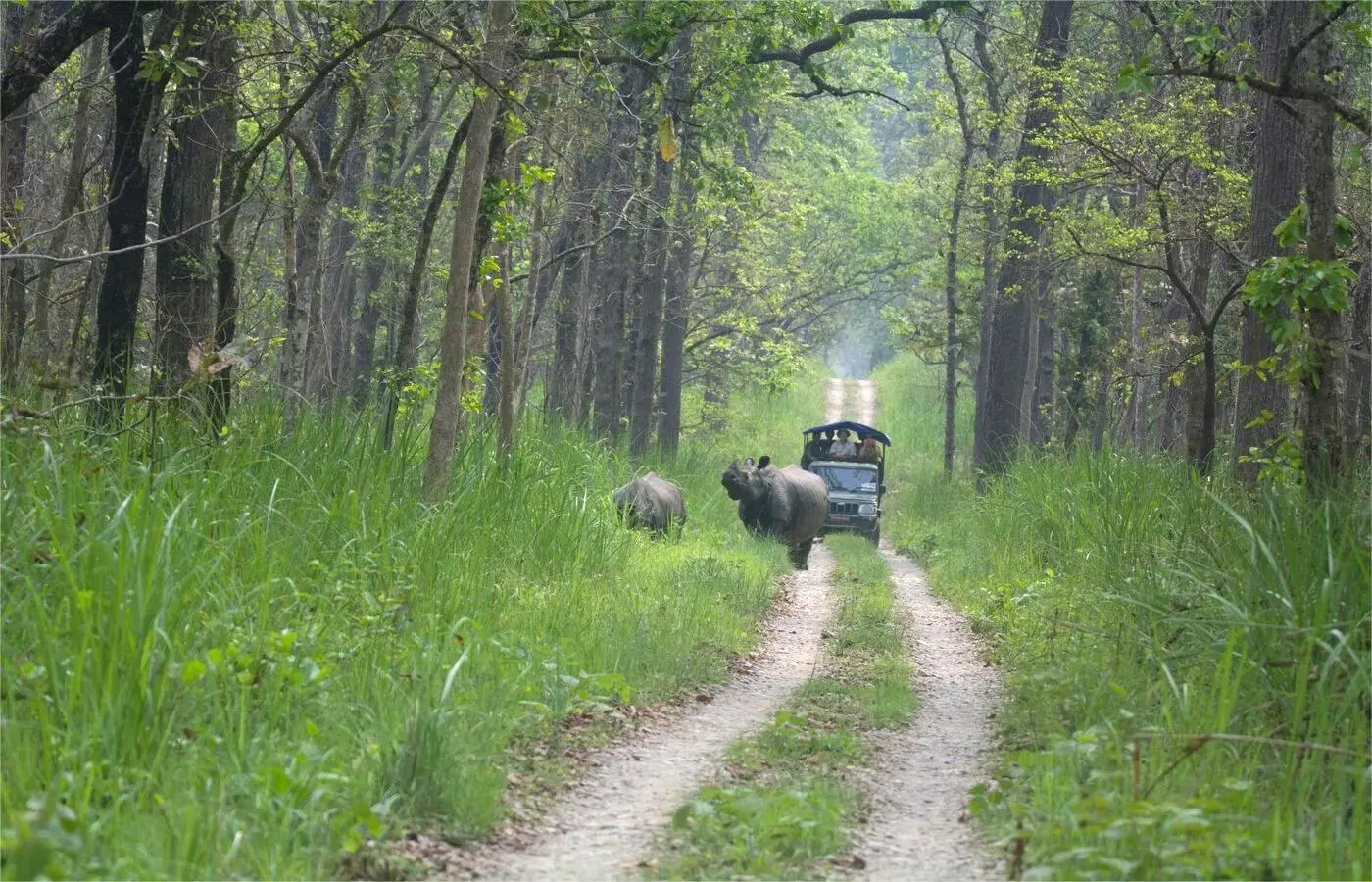
The rhino is primarily a grassland animal — it grazes in Chitwan’s dense elephant grass (Saccharum spontaneum and Phragmites karka, reaching 6 to 8 metres in height). It comes to the park’s rivers and wetlands to drink and wallow. Rhino sightings are among the most reliable large-mammal wildlife encounters in Asia—Chitwan’s morning jeep safari regularly encounters 3 to 5 rhinos in the park’s grassland sections near the Rapti River. The animals are accustomed to vehicles and observers who follow the park’s approach protocol, giving close, sustained views that photograph well even for non-specialist photographers.
The Bengal Tiger: Nepal’s Conservation Achievement
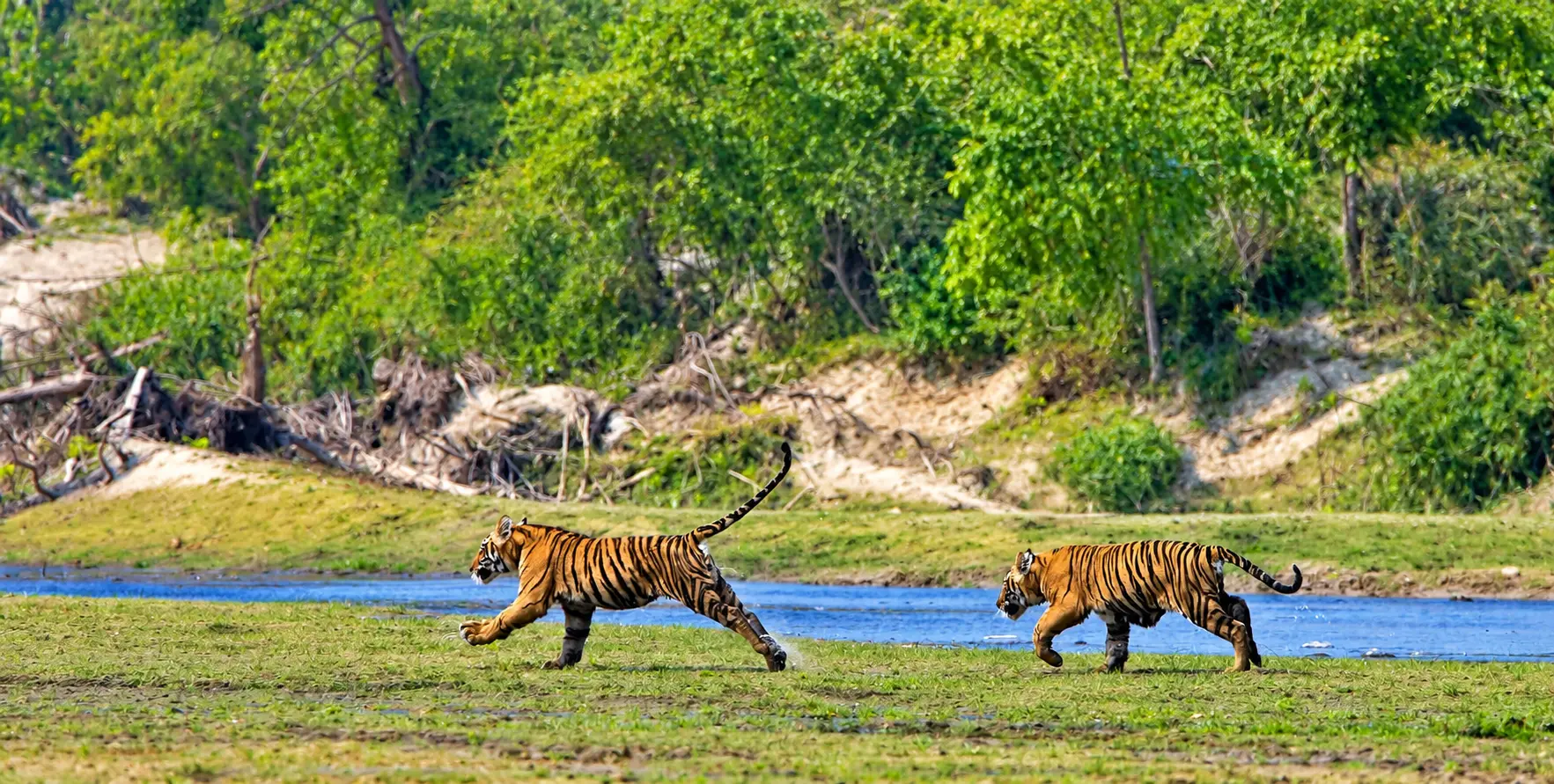
Chitwan holds about 100 Bengal tigers, a population that has more than doubled from its low point in the early 2000s and is increasing, even as tiger numbers decline in most range states worldwide. Nepal is one of the few countries where the tiger is genuinely recovering, and Chitwan’s tiger population is the centrepiece of this national achievement. Tiger sightings are less reliable than rhino encounters — the tiger is a supremely cryptic animal that most actively avoids human observation — but the pugmarks, scratch marks on trees, and the alarm calls of spotted deer and rhesus macaques that signal a tiger’s recent presence make the awareness of the animal constant even when the animal itself is not seen.
The best tiger-sighting opportunities at Chitwan are during the late dry season (March to May), when the tall elephant grass is cut or burned as part of the annual vegetation management cycle, reducing the tiger’s cover and increasing the chance of open-area sightings at grass margins. Morning jeep safaris during this season regularly encounter tigers in open ground near the riverbanks. The elephant grass-cutting season is one of Chitwan’s most productive wildlife periods and a key seasonal reason experienced visitors target April and May for their Chitwan visit.
The Asian Elephant: Wild and Elephant-Backed Safaris
Chitwan’s wild Asian elephant population — approximately 100 to 120 individuals — moves through the park and its buffer zone in a seasonal pattern that follows the availability of food and water. Wild elephant encounters during jeep safaris are among the most dramatic wildlife experiences at Chitwan — the animals are large enough to be visible above the tall grass, and matriarch-led family groups follow their own agenda rather than the safari’s. Bull elephants in musth (a seasonal testosterone surge) can be unpredictable and require the jeep driver to give them a wide berth — a wildlife encounter that demands real-time judgment.
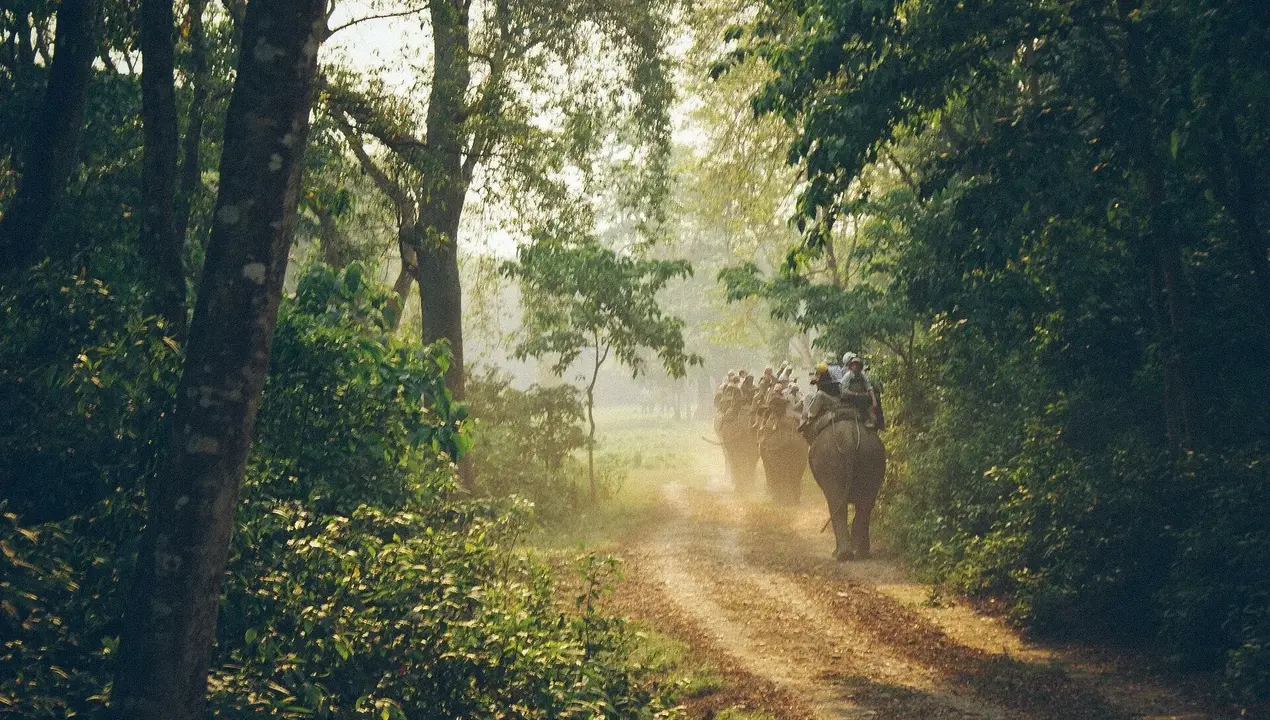
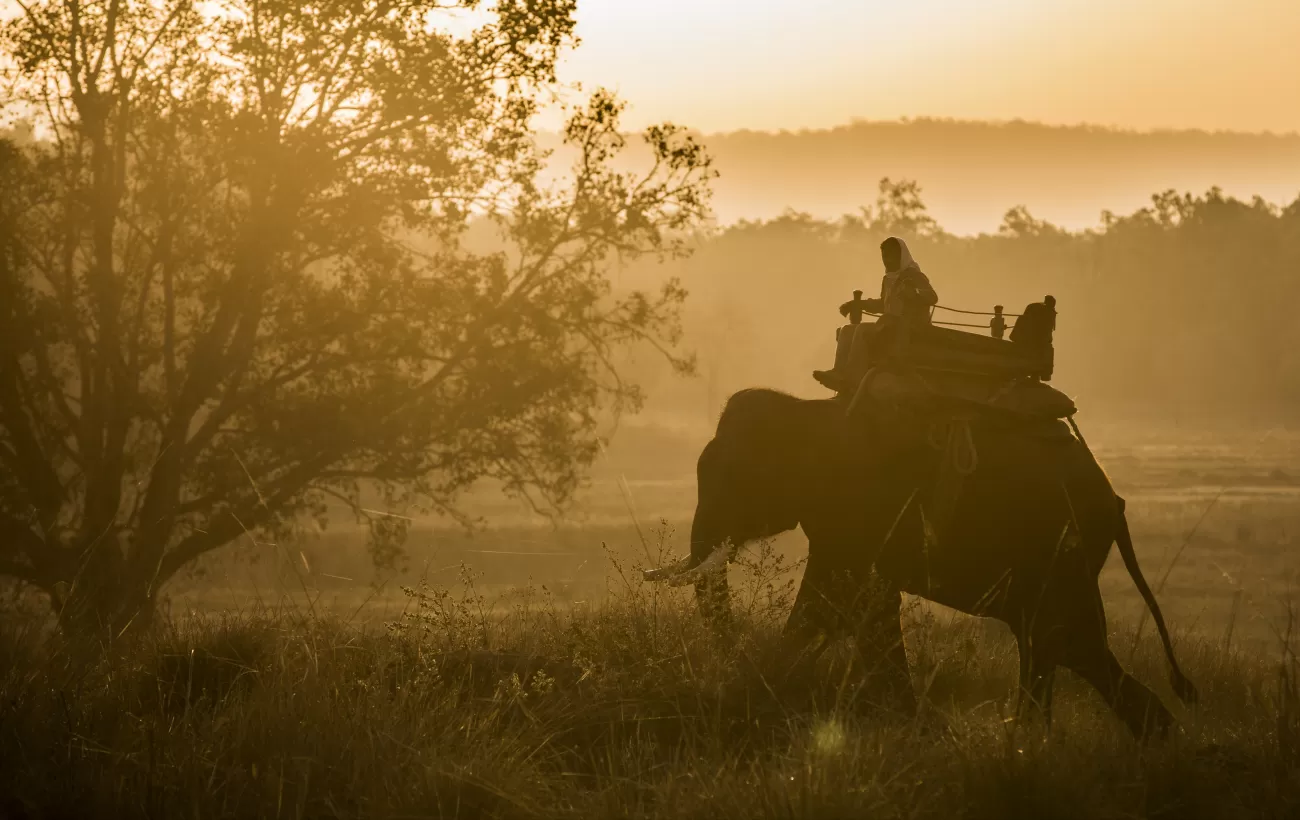
The elephant-backed safari — experienced observers seated in a wooden howdah on a domesticated working elephant’s back, moving through the tall grass on the elephant’s own terms — provides access to habitat that jeep vehicles cannot enter and an observation platform above the grass level that reveals wildlife otherwise invisible from ground level. Conservation ethics around captive elephant welfare have evolved significantly in recent years, and responsible operators use working elephants for a limited number of safaris per day with appropriate rest and feeding conditions. Visitors who want to include an elephant-backed safari in their Chitwan programme should confirm the specific operator’s welfare standards with their Sauraha lodge.
The Gharial Crocodile: Chitwan’s Speciality
The gharial (Gavialis gangeticus) — the critically endangered, fish-eating crocodilian with its distinctive long, narrow snout — is one of Chitwan’s most important resident species and one of the rarest large reptiles on Earth. The Narayani River system within Chitwan’s boundaries supports one of the world’s most significant gharial populations, and people can see the species on canoe safaris on the Rapti River, basking on sandbanks in the early morning. The gharial differs from the mugger crocodile (the broader-snouted species also present in Chitwan’s rivers) by its narrow snout, pale colouration, and the distinctive terminal narial boss on the adult male’s snout.
Chitwan National Park runs a successful gharial breeding and release programme, hatching eggs collected from at-risk nesting sites under controlled conditions and releasing juveniles into the Narayani system at a size where their survival probability is significantly higher than that of wild-hatched individuals. The programme has contributed meaningfully to the recovery of the species’ Chitwan population. Visitors to the Chitwan Gharial Conservation Breeding Centre near Kasara (the park headquarters) can observe captive-bred individuals of various ages and learn about the programme’s methodology and achievements.
Bird Life: Over 600 Species
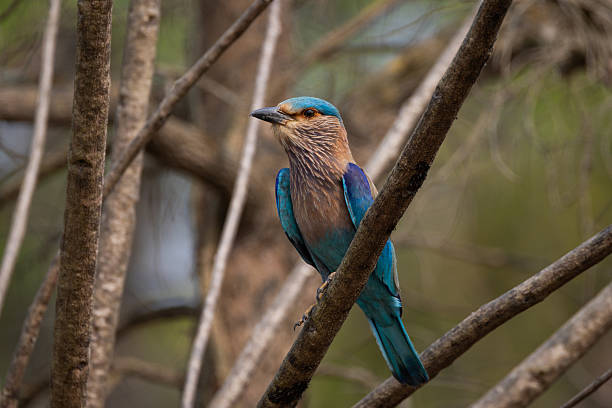
Chitwan’s bird diversity—over 600 species confirmed within the park boundaries—offers the most accessible and consistently rewarding wildlife experience at Chitwan year-round, regardless of season. The park’s habitats (riverine forest, grassland, sal forest, wetland) support a remarkably varied avifauna: the Indian roller (Nepal’s most vivid common bird), the paradise flycatcher with its white ribbon tail, the Bengal florican (critically endangered bustard found in the elephant grass), the great hornbill, the red-rumped swallow, the pied kingfisher, the white-tailed and lesser adjutant storks, and during the winter migration season a wide range of raptors and wildfowl from the north.
Sauraha: The Tourist Village on the Rapti River Bank
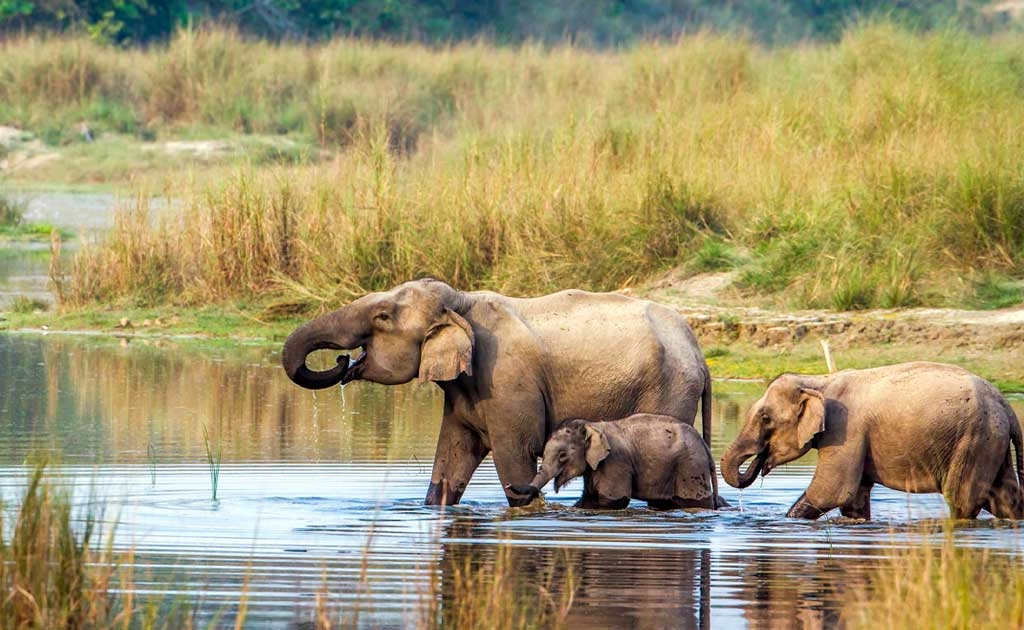
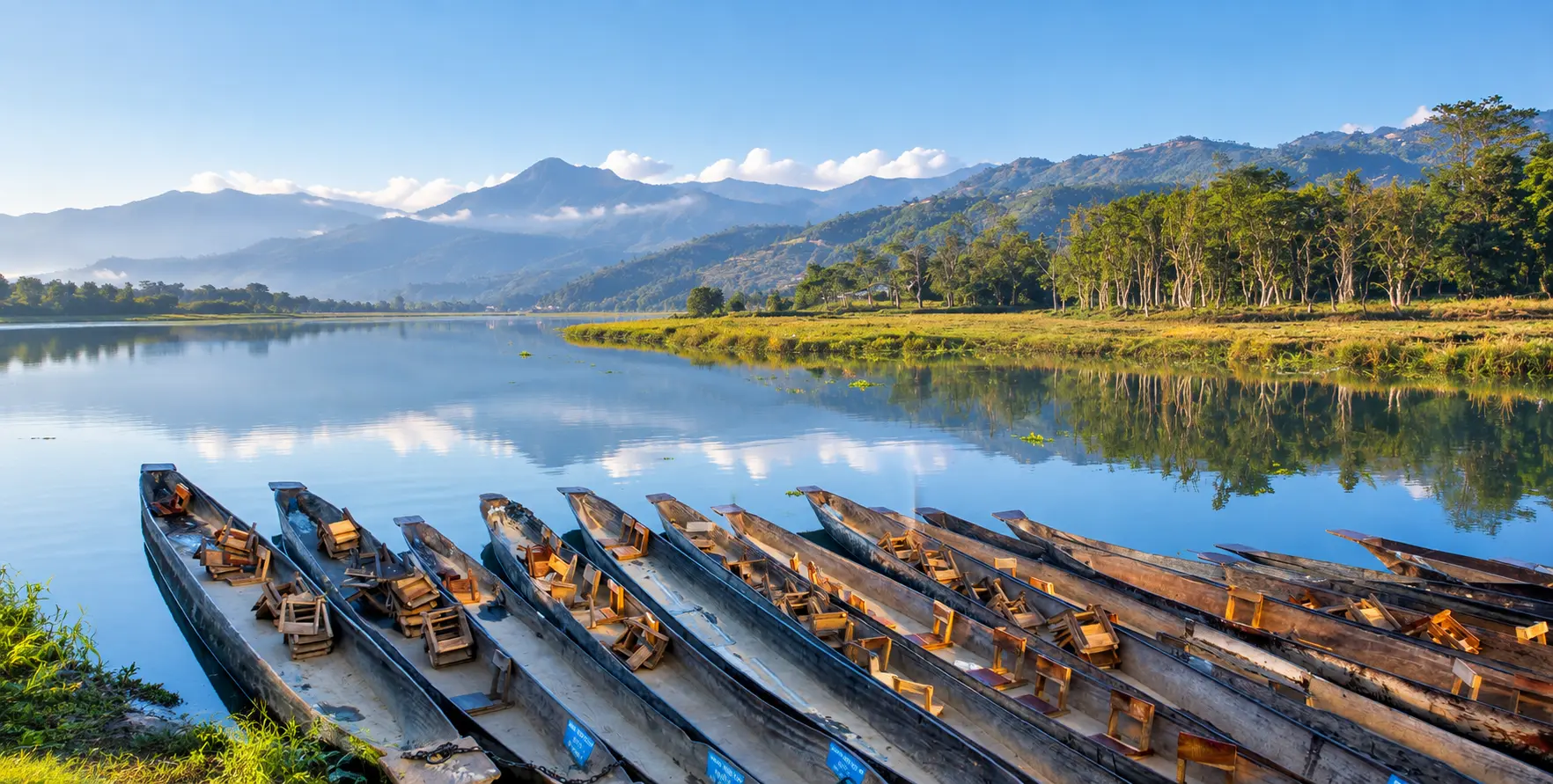
Sauraha is the primary tourist access point for Chitwan National Park — a village on the northern bank of the Rapti River, directly opposite the park’s buffer zone, that has developed over several decades into Nepal’s most organised wildlife tourism destination. At Sauraha, the Rapti River is where the first dramatic wildlife encounters often happen: rhinos wade in the river shallows at dawn, gharial and mugger crocodiles bask on the sandbanks, and painted storks stalk the shallows on the opposite park bank. Simply sitting on a Sauraha lodge veranda above the Rapti is, on many mornings, a wildlife experience in itself.
Sauraha’s lodge strip runs along the Rapti bank for approximately 2 kilometres, with properties ranging from budget guesthouses 500 metres back from the river to upmarket jungle lodges directly on the bank with open-air terraces above the water. Nepal Vehicle Hiring delivers to specific lodge entrances — not to the Sauraha village bus park, which is 1 to 2 kilometres from most riverside accommodation. This door-to-door delivery is especially valuable on arrival days, when luggage management on dirt tracks in the pre-monsoon heat or post-monsoon humidity is most challenging.
Chitwan Activities: Planning the Full Programme
Morning Jeep Safari
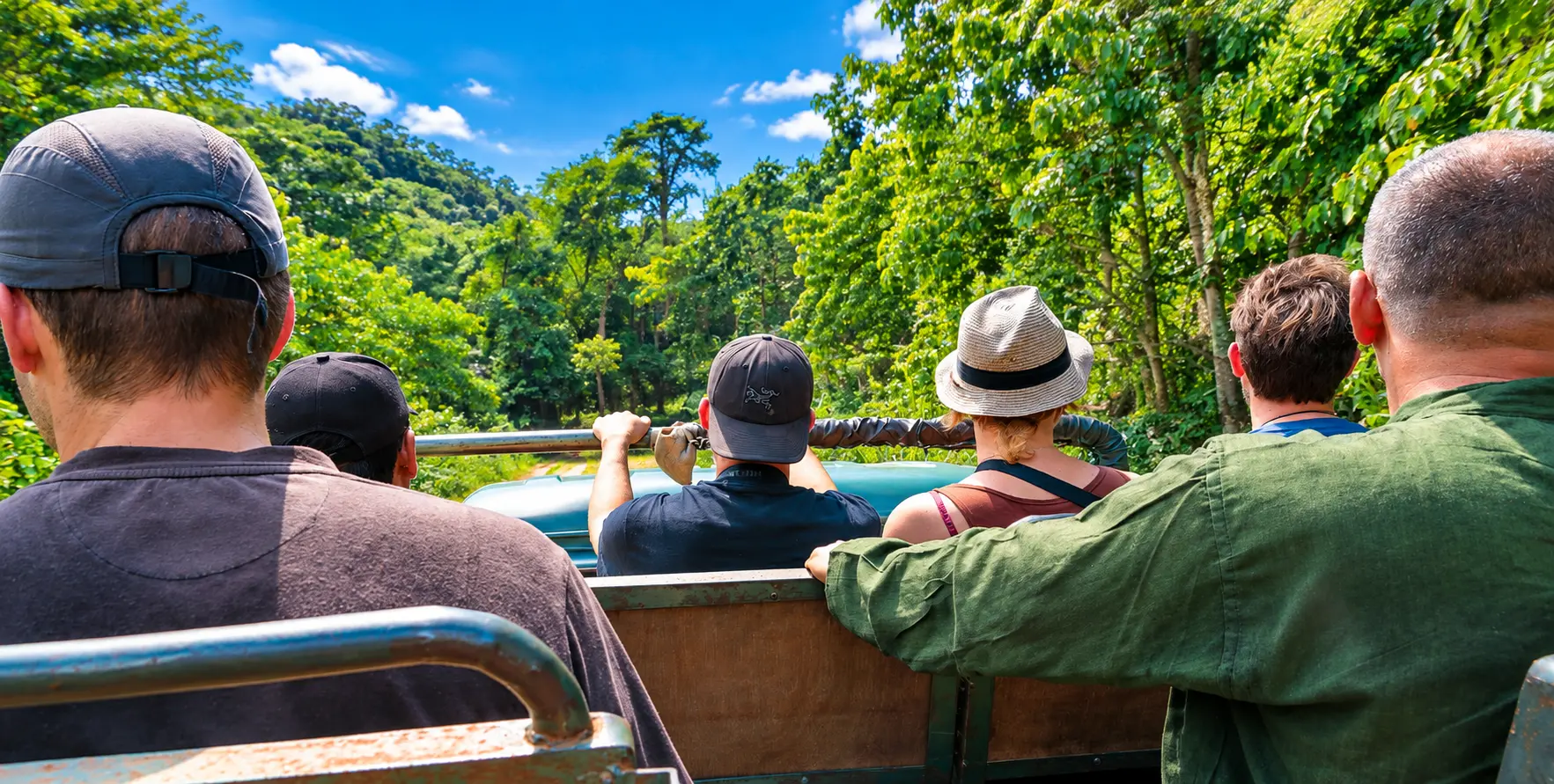
The morning jeep safari — departing from the park entry gate at the Rapti River crossing at sunrise (approximately 5:30 to 6:00 AM seasonally) and running 3 to 4 hours through the park’s grassland and sal forest zones — is Chitwan’s most productive wildlife activity and the programme centrepiece for most visitors. The 4WD safari jeep carries 6 to 8 visitors, plus a government-licensed naturalist guide who drives and comments on the wildlife encountered.
The morning safari’s productivity comes from the animals’ activity patterns: dawn and the first two hours of morning are the peak movement period for rhinos returning from overnight water sources, tigers finishing night hunts, deer at their most active, and birds at their most vocal and visible. The Tented area zone of the park (not available to vehicles) and the park’s core zones beyond the 1-kilometre buffer are where the morning jeep safari operates — deeper habitat than the casual boundary-area walk provides.
Canoe Safari on the Rapti River
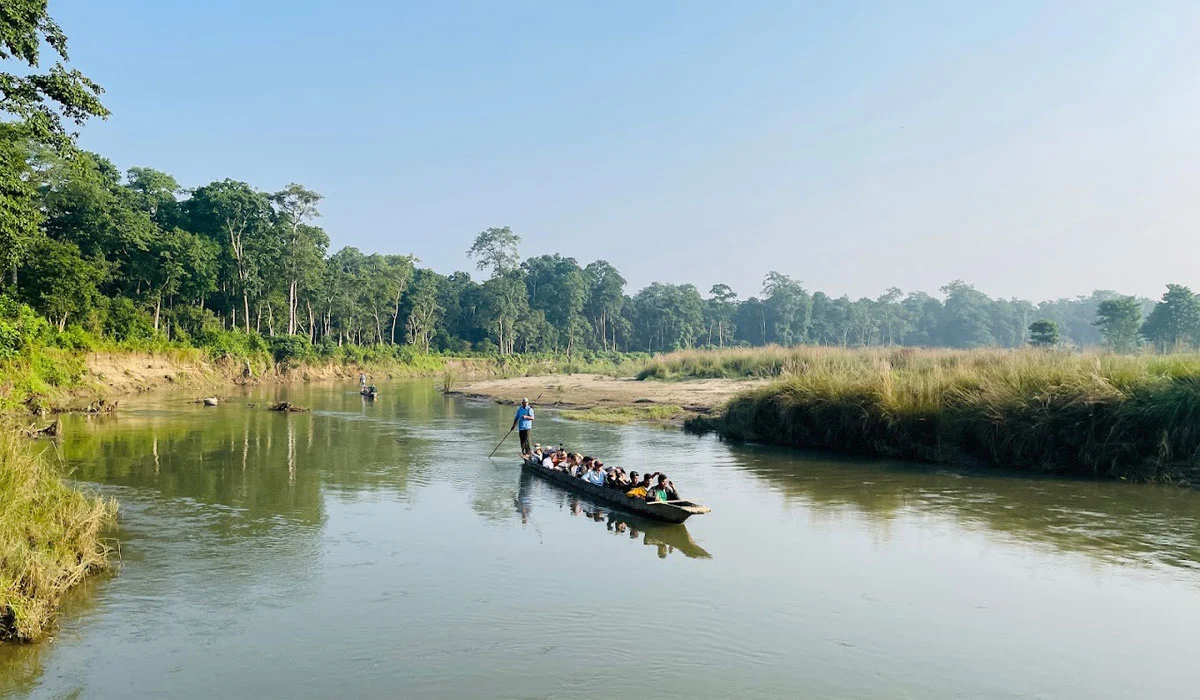
The canoe safari — a slow, silent drift in a dugout canoe along the Rapti River, steered by a pole-wielding boatman and guided by a naturalist — is one of Chitwan’s most peaceful and intimate wildlife experiences. The canoe’s silence allows close approach to riverbank wildlife that vehicle engines disturb: gharial crocodiles on their sandbanks, mugger crocodiles in the shallows, herons and egrets feeding at the water’s edge, and occasionally rhinos drinking at the riverbank. The canoe’s low profile puts the observer at water level — the same perspective as the wildlife rather than above it — creating a fundamentally different observation experience from the elevated jeep.
Jungle Walk with Naturalist Guide
The guided jungle walk — on foot through Chitwan’s buffer zone and the park’s designated walking areas with a government-licensed naturalist guide — is the experience that most directly conveys what Chitwan’s ecosystem feels and smells like at ground level. The alert posture required by walking in genuine wildlife habitat (rhinos and sloth bears can be encountered at close range), the interpreter’s identification of pugmarks, droppings, territorial scratch marks, and feeding signs, and the immersive sensory experience of the sal forest at dawn — these dimensions of the Chitwan experience are unavailable in a vehicle.
Tharu Cultural Programme
The Tharu people — the indigenous Terai community whose ancestors inhabited the malaria-endemic lowlands of the Chitwan valley for centuries before modern malaria eradication made the region accessible to the hill communities — have a distinctive material culture, performing arts tradition, and ecological knowledge that is one of Chitwan’s most underappreciated visitor experiences. The evening Tharu cultural programme offered by most Sauraha lodges — stick dance (traditionally performed by men with crossed bamboo sticks in a coordinated rhythm pattern), women’s song and dance, and the demonstration of traditional Tharu crafts — gives visitors an encounter with a living cultural tradition whose origins predate the national park that now surrounds it.
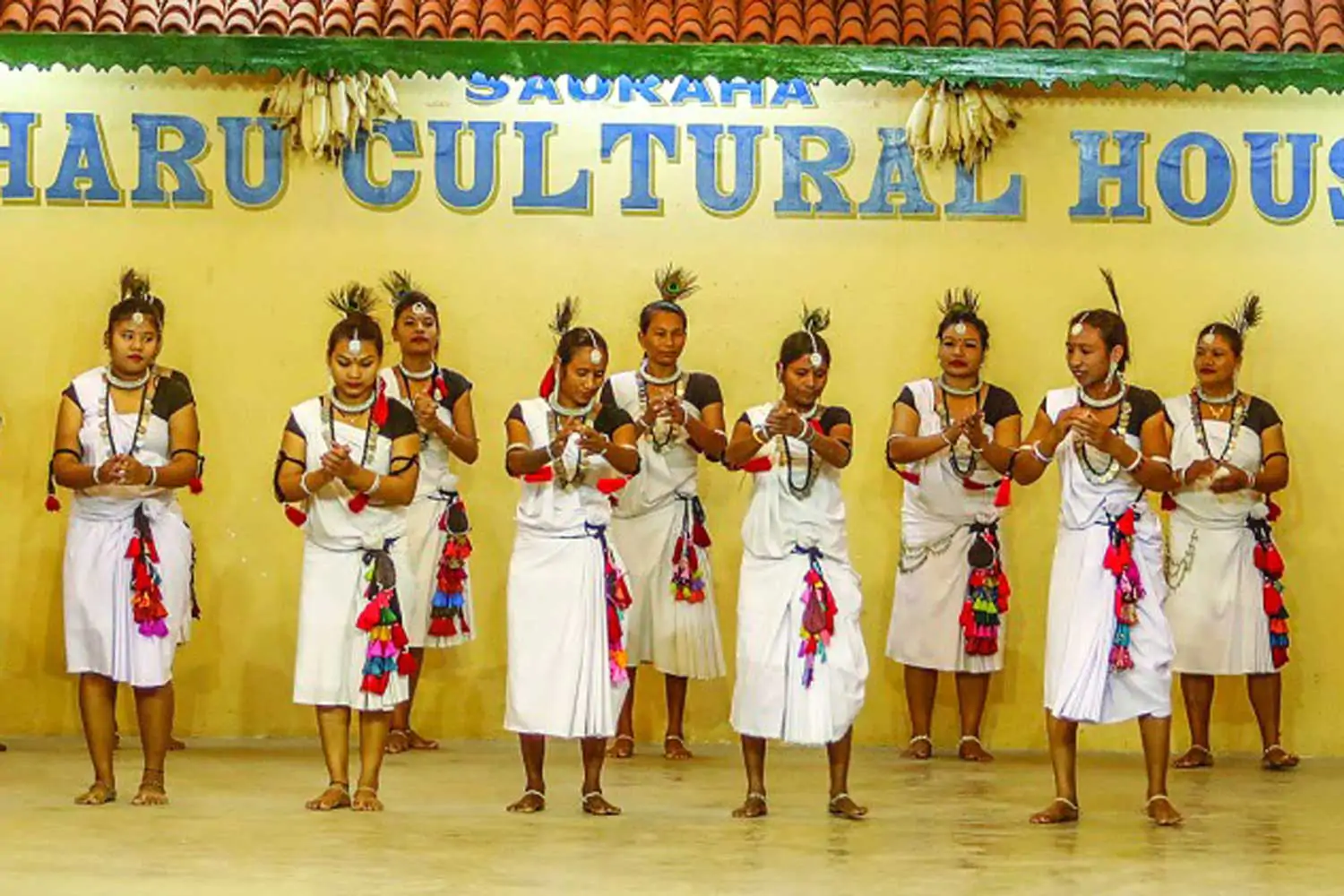
The Tharu cultural context is inseparable from the Chitwan ecological context: the Tharu’s traditional knowledge of the jungle — which plants are medicinal, which seasons are safe for specific activities, how to navigate the grassland without alarming the rhino, how to read the river’s flood behaviour — is an indigenous ecology that parallels and in some ways exceeds the scientific ecology of the contemporary conservation programme. Nepal Vehicle Hiring’s Chitwan approach: drivers often share Tharu cultural context during the Sauraha delivery; our drivers are accustomed to this route and enjoy introducing its human and wildlife dimensions.
Elephant Breeding Centre Visit
The government-operated Elephant Breeding Centre at Khorsor (about 3 kilometres from Sauraha) lets visitors observe elephant calves in their early developmental stages and the working relationships between the Centre’s mahouts (elephant handlers) and their charges. The Centre’s breeding programme has produced dozens of calves over its operational history, contributing to the working elephant population that supports park operations—patrol, anti-poaching, and emergency rhino management—in forest zones motor vehicles cannot access.
Private Vehicle from Kathmandu to Chitwan: Why It’s the Best Option
Public tourist buses, shared transfer services, and private vehicle hire serve the Kathmandu-to-Chitwan route. For groups of 3 or more, Nepal Vehicle Hiring’s private vehicle service consistently delivers a better travel experience for the following reasons:
- Hotel door departure: Nepal Vehicle Hiring’s vehicle collects from the Thamel hotel entrance at the confirmed time — no walk to the Kathmandu tourist bus park, no queue management for luggage on shared vehicles
- Safari-compatible timing: Nepal Vehicle Hiring’s departure time is set to arrive at the Sauraha lodge in time for the afternoon activity (canoe safari or jungle walk from 3:30 PM) on the arrival day — shared tourist buses may arrive too late for the first afternoon programme
- Flexible stops: the Manakamana cable car, the Mugling fish lunch, or any other en-route stop is incorporated at the group’s choice — shared buses stop only at fixed points
- Direct lodge delivery: Nepal Vehicle Hiring delivers to the specific jungle lodge entrance rather than to the Sauraha bus park 1 to 2 kilometres from most riverside accommodation
- Luggage security: wildlife photography equipment, binoculars, and specialist Chitwan kit travels in the private vehicle throughout rather than in a shared bus luggage hold
Nepal Vehicle Hiring’s fleet covers all group sizes for the Kathmandu-to-Chitwan journey: private car for individuals and couples, Scorpio jeep for groups of 4 to 7, Hiace van for groups of 8 to 14, and Coaster bus for larger parties of 15 or more. The vehicle depends on the group size and the lodge’s access road — Nepal Vehicle Hiking’s operations team recommends the best vehicle once the group size and lodge are confirmed.
Kathmandu to Chitwan in the Nepal Tourist Circuit
The Kathmandu-to-Chitwan journey is most commonly the second or third leg of Nepal’s most popular tourist circuit — the Nepal tourist triangle connecting Kathmandu, Pokhara, and Chitwan. The optimal routing for this circuit that avoids backtracking: Kathmandu → Pokhara (west on Prithvi Highway) → Chitwan (Pokhara to Sauraha, 200 km, 4 hours via Mugling) → Kathmandu (Chitwan to Kathmandu, Prithvi Highway return). Nepal Vehicle Hiring’s Nepal holiday tour and Nepal tour package services coordinate all three circuit legs as a single vehicle booking.
Chitwan also serves as a natural addition to the extended Nepal circuit that includes Lumbini — the Narayanghat junction on the Chitwan-to-Kathmandu route is just 30 kilometres from Sauraha, and the Mahendra Highway west from Narayanghat connects the Chitwan circuit directly to the western Terai and Lumbini. Visitors with 1 to 2 additional Nepal days can add the Lumbini UNESCO sacred site to the Chitwan visit without backtracking to Kathmandu first — Nepal Vehicle Hiring coordinates this Chitwan-to-Lumbini connection as part of the extended Nepal circuit.
The Kathmandu sightseeing service — covering Pashupatinath, Boudhanath, Bhaktapur, and the valley’s UNESCO sites — is the natural Day 1 or Day 2 Kathmandu activity before the Chitwan departure. Nepal Vehicle Hiring pre-books both the Kathmandu sightseeing vehicle and the Chitwan transfer vehicle as consecutive legs in the complete Nepal circuit booking.
Best Time to Visit Chitwan: Seasonal Wildlife Guide
October to February: Cool and Clear
The post-monsoon and winter period is Chitwan’s primary tourist season — cool temperatures (15 to 28°C daytime), no rainfall, clear skies, and the full range of wildlife activity visible. Tall elephant grass reaches its maximum height in October and November, creating the dramatic green-wall landscape of classic Chitwan imagery but reducing visibility into the grassland for vehicle-based safaris. November through February gives progressively improving visibility as the winter dry season develops.
March to May: Peak Wildlife Viewing
The dry season is Chitwan’s best wildlife-viewing period—the annual elephant grass-cutting and burning cycle that park management conducts from February through April significantly opens the grassland, reducing cover for both prey and predators and concentrating animals at water sources. Tiger, rhino, and deer sightings in the open areas near the Rapti and Narayani rivers peak in March, April, and May. Temperatures rise significantly (30 to 40°C), so morning safaris are essential for wildlife activity before midday heat suppresses animal movement.
June to September: Monsoon Season
The monsoon brings heavy rainfall, floods the park’s lower zones, and significantly reduces vehicle access to the park interior: the Rapti River floods seasonally, and the wildlife retreats to higher ground within the park. Leech activity on jungle walks requires appropriate footwear and vigilance. The landscape is extraordinarily green, and bird diversity peaks with the addition of monsoon-season breeding visitors. Most international visitors avoid Chitwan during peak monsoon, but fewer tourists mean a more private wildlife experience for those who accept the season’s constraints.
Accommodation at Chitwan: Lodge Options and Location
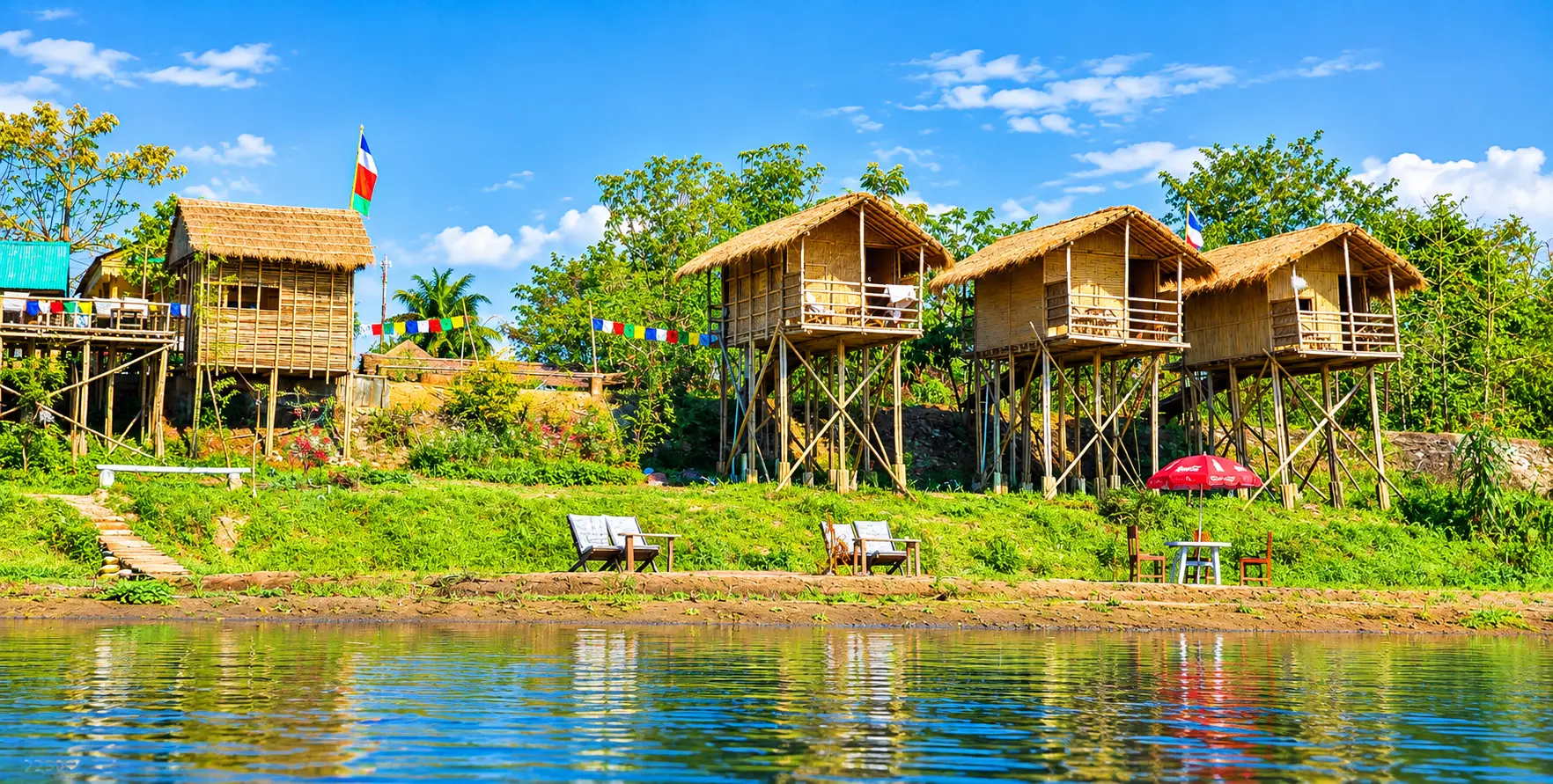
Sauraha’s accommodation spectrum runs from budget guesthouses (simple rooms in village buildings set back from the Rapti) to premium jungle lodges (open-air platforms above the river, naturalist-led programmes, full board with Tharu and continental cuisine). The Rapti riverbank location is the premium accommodation position — the morning wildlife sightings from the lodge veranda and the direct access to the canoe safari departure point are genuine advantages over lodges set further from the river.
The inside-the-park lodges — a small number of permitted accommodation properties within the park boundary rather than in Sauraha village — offer the finest Chitwan accommodation experience: deeper habitat access, no buffer-zone travel to reach the park interior, and the night sounds of the park (the bark of spotted deer, the distant call of a tigress, the splash of a gharial in the river) from the sleeping area. Inside-the-park lodge permits are limited; booking is essential, and the experience commands a premium over Sauraha village accommodation.
Nepal Vehicle Hiring delivers to all Sauraha accommodation options — riverbank lodges, village lodges, and the outside-the-park access roads to inside-the-park properties. Confirm the specific lodge name and location when booking the Kathmandu-to-Chitwan vehicle — our operations team is familiar with all Sauraha lodge access roads and delivers accurately to each.
Nepal Vehicle Hiring Services for the Kathmandu-Chitwan Circuit
- Kathmandu airport transfer — TIA arrival pickup for the Nepal circuit start
- Kathmandu sightseeing service — UNESCO heritage circuit before the Chitwan departure
- Bhaktapur Durbar Square day tour — Newari heritage complement to the natural world of Chitwan
- Nagarkot sunrise tour via Kathmandu to Nagarkot vehicle — Himalayan dawn panorama before the Chitwan journey south
- Scorpio jeep hire — private 4WD for small groups on the Kathmandu-to-Chitwan route
- Hiace van hire — group van for 8–14 passengers on the Chitwan circuit
- Car hire in Nepal — private car for couples and small groups
- Nepal holiday tour — complete Nepal triangle vehicle coordination
- Nepal tour package — full Nepal circuit with all vehicle legs confirmed
- Nepal Nekhor tour — sacred circuit that can incorporate Chitwan as the wildlife extension
- Kathmandu to Pokhara bus — Pokhara connection for the complete Nepal triangle circuit
- Sarangkot sunrise tour vehicle — Pokhara mountain dawn before the Chitwan leg
- Plan your trip — complete Nepal circuit vehicle coordination from a single booking
- WhatsApp / Call: +977 9814227196
- Email: [email protected]
- www.vehiclehiringnepal.com
Frequently Asked Questions: Kathmandu to Chitwan Tour Package
How far is Chitwan from Kathmandu and how long does the drive take?
Chitwan’s Sauraha tourist area is approximately 200 kilometres from Kathmandu via the Prithvi Highway and NH44. The drive takes 4 to 5 hours by private vehicle, including a short rest stop, and 5 to 6 hours if you include the Manakamana cable car and a Mugling fish lunch stop. A morning departure from Kathmandu (7:00 to 8:00 AM) reaches Sauraha by midday for the afternoon safari programme.
What is the best vehicle for the Kathmandu to Chitwan journey?
For groups of 4 to 7, Nepal Vehicle Hiring’s Scorpio jeep is the recommended vehicle — comfortable on the Prithvi Highway and capable on the Sauraha approach road. For groups of 8 to 14, the Hiace van covers the journey efficiently. For 2 to 3 passengers, the private car is the most economical option. All Nepal Vehicle Hiring vehicles deliver directly to the Sauraha jungle lodge entrance.
How many days should I spend at Chitwan?
A minimum of 2 nights and 2 full days in Chitwan covers the full activity programme—morning jeep safari (Day 1), afternoon canoe safari (Day 1), morning jungle walk (Day 2), afternoon elephant programme (Day 2), and an evening Tharu cultural show on both nights. 3 nights allow a more relaxed programme, with time for repeat safaris in different zones and a visit to the Elephant Breeding Centre. 1 night is the minimum for a meaningful Chitwan experience but allows only 2 activities.
Is the Chitwan-Lumbini combination possible from Kathmandu?
Yes — from Sauraha, the Narayanghat junction is 30 kilometres away on the highway, and the Mahendra Highway west from Narayanghat connects to Lumbini in approximately 2 to 2.5 hours. Nepal Vehicle Hiring coordinates the Chitwan-to-Lumbini direct vehicle as part of the extended Nepal circuit — avoiding the Kathmandu backtrack that most tour operators route between these two UNESCO sites. The Chitwan-to-Lumbini direct connection is one of Nepal’s most rewarding logistics shortcuts.
What should I pack for the Chitwan safari?
Neutral colours (khaki, olive, brown, tan) are recommended for wildlife activities — bright colours and white are visible to wildlife and are not permitted on jungle walks. Long sleeves and trousers protect against sun and insects in the grassland. Good closed walking shoes for the jungle walk; sandals are not appropriate. Binoculars (8×42 or 10×42) significantly enhance bird and distant wildlife viewing. Also bring sunscreen, insect repellent (especially during the monsoon and monsoon shoulder), and a light rain jacket for morning safaris in the cooler months.
Can Nepal Vehicle Hiring handle the return Chitwan-to-Kathmandu journey?
Yes — Nepal Vehicle Hiring pre-books the return Chitwan-to-Kathmandu vehicle at the same time as the outbound Kathmandu-to-Chitwan booking. The return vehicle collects from the Sauraha lodge entrance at the confirmed departure time, includes the same optional Mugling and Manakamana stop options, and delivers to the Kathmandu Thamel hotel or TIA airport for the international departure connection. For groups routing from Chitwan to Pokhara rather than back to Kathmandu, Nepal Vehicle Hiring’s Chitwan-to-Pokhara vehicle covers the 200-kilometre northward Prithvi Highway connection.
Chitwan’s Conservation Story: Why This National Park Matters
Chitwan National Park’s conservation achievement is extraordinary by any measure, but it is clearest against the backdrop of what was at risk. The inner Terai valleys of southern Nepal — Chitwan, Rapti, Narayani, and Deukhuri — were until the mid-20th century among the most wildlife-rich lowland habitats in Asia: thick sal forest, towering elephant grass, clean rivers fed by Himalayan snowmelt, and the full complement of South Asian megafauna including tiger, rhino, wild elephant, gaur, sloth bear, leopard, gharial, and python. DDT spraying eradicated the malaria that had protected this habitat from human settlement, and within a decade the population of the inner Terai valleys multiplied many times as hill communities poured into the newly habitable lowlands.
By the early 1970s, Chitwan’s rhino population had fallen to about 95 animals—from an estimated 800 in 1950. Conservation organisations and international donors helped establish the Royal Chitwan National Park in 1973, and the military supported the first anti-poaching operations. The subsequent five decades of conservation management — sustained through Nepal’s political transitions, the Maoist insurgency (which paradoxically reduced tourist pressure on the park while creating security challenges for anti-poaching operations), the earthquake of 2015, and the tourism disruptions of the pandemic — have produced one of conservation biology’s finest outcomes: a wildlife population genuinely recovering toward a functional ecological density.
The international scientific and conservation community’s recognition of Chitwan’s achievement—the UNESCO World Heritage inscription, its landmark status as one of the world’s great conservation success stories—provides important context for visitors who may see Chitwan simply as a wildlife tourism destination. It is more than that: it is one of the places where humanity has most successfully renegotiated its relationship with wild nature in the modern era, and the morning jeep safari through its grasslands is an encounter with the outcome of that renegotiation.
The Prithvi Highway: Understanding the Drive to Chitwan
The Prithvi Highway — named after King Prithvi Narayan Shah, the 18th-century monarch who unified Nepal into a single kingdom — is Nepal’s primary commercial and tourist artery connecting the Kathmandu Valley to the Terai and the western mid-hills. Built with Chinese assistance and completed in the 1970s, the highway has been progressively upgraded over subsequent decades and is today Nepal’s most travelled tourist road.
The highway’s most distinctive section is the Trishuli River gorge between the Kathmandu valley rim and Mugling junction — approximately 70 kilometres where the road descends from 1,350 metres to 195 metres through a narrow river canyon with the Trishuli’s rapids visible below the road at multiple points. This section has been progressively widened — the Nagdhunga-Sisnekhola Tunnel near the Kathmandu western rim has dramatically improved the valley exit — and approximately 40 to 50 per cent of the gorge section is now dual carriageway. The remaining single-lane sections retain the gorge road’s original character: the road cut into the cliff face, the river below, and the dramatic visual compression of the mountain landscape on either side.
For visitors on the Kathmandu-to-Chitwan transfer, the Prithvi Highway gorge is typically the first extended experience of Nepal’s mountain road character — the combination of the gorge scenery, the occasional passing encounter on narrow sections, and the progressive descent from the valley’s cool air to the warm Terai approaches creates a genuine sense of crossing between Nepal’s two primary worlds. Nepal Vehicle Hiring’s Kathmandu-to-Chitwan drivers know this highway well, including the current construction zones and the best time to stop at Manakamanp—the Mugling fish restaurant with the freshest daily catch.
The Manakamana Temple Cable Car: En-Route Sacred Experience
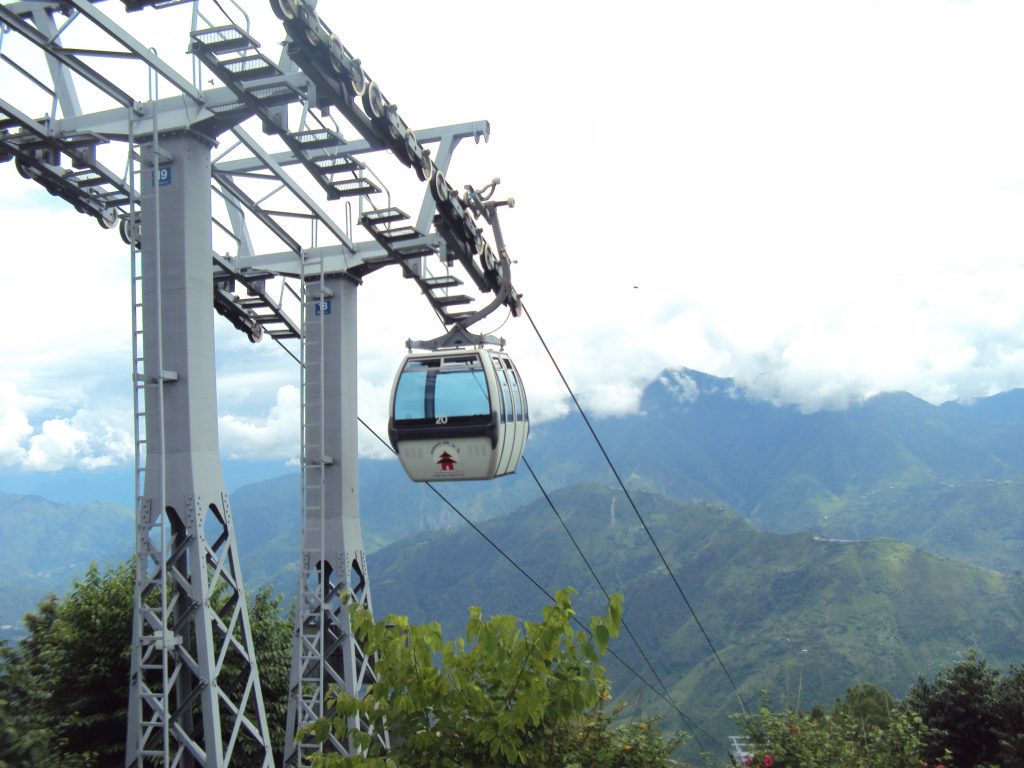
The Manakamana Bhagwati Temple — the wish-fulfilling goddess whose hilltop shrine above the Marsyangdi-Trishuli confluence has drawn Hindu pilgrims for centuries — is accessible by a 2.8-kilometre aerial cable car from the Mugling valley floor to the 1,302-metre hilltop in approximately 10 minutes each way. For Nepal visitors making the Kathmandu-to-Chitwan journey, the Manakamana cable car stop is the most rewarding en-route addition available — a sacred pilgrimage experience, a spectacular valley view, and a complete departure from the highway journey’s character, all within a 2 to 2.5-hour addition to the transfer time.
The cable car operates in morning and afternoon sessions with seasonal operating hours. Nepal Vehicle Hiring’s Kathmandu-to-Chitwan drivers time the Mugling arrival to catch the morning cable car session when requested — this requires a 7:00 AM or earlier Kathmandu departure. The temple compound at the summit has several shrines beyond the main Manakamana temple, a viewpoint over the Marsyangdi-Trishuli confluence, and the characteristic Nepali pilgrimage atmosphere of devotees, marigold garlands, and the smell of incense and burning ghee. A round-trip visit (ascent, temple, descent) takes approximately 1.5 hours at the summit.
The cable car stop and the Mugling fish lunch together are the standard complete en-route programme for Kathmandu-to-Chitwan visitors with time. Nepal Vehicle Hiring’s driver manages the cable car timing and the Mugling restaurant stop in sequence — both fall within the Mugling junction area, and the combined addition is approximately 2.5 to 3 hours added to the base transfer time. A 7:00 AM Kathmandu departure with both stops reaches Sauraha by 4:00 to 4:30 PM — in time for the late afternoon canoe safari.
Wildlife Photography at Chitwan: Practical Advice
Chitwan is one of Asia’s finest destinations for wildlife photography — the combination of reliable large mammal sightings, good morning light in the grassland openings, and the accessibility of the park’s riverine habitat from jeep and canoe gives photographers of all levels genuinely productive conditions. The following practical guidance helps photographers maximise the Chitwan visit:
- Morning light: the hour after sunrise (6:00 to 8:00 AM) provides the directional golden light that gives wildlife photography its finest quality. The morning jeep safari’s timing aligns perfectly with this window — the safari departs at first light and the first 2 hours are the most productive for both wildlife activity and photographic light quality.
- Focal length: a 300mm to 400mm lens is the practical minimum for wildlife photography at Chitwan. Rhinos allow closer approaches than tigers, and the canoe safari lets you frame riverbank species more tightly than the jeep safari. A 100-400mm zoom lens covers the widest range of Chitwan situations.
- Vehicle stability: Chitwan’s safari jeeps vibrate from the engine, which can reduce image sharpness at longer focal lengths. A beanbag draped over the vehicle door or a window clamp mount dramatically improves stability for telephoto shots taken from the jeep.
- Rain protection: the post-monsoon season (October-November) can still bring occasional brief rain showers, even in the dry period. A lightweight rain cover for the camera body protects against the sudden downpours that can interrupt an otherwise dry safari.
- Patience at water sources: the park’s ponds and river bends where rhinos regularly water and wallow are productive photography stations where the naturalist driver positions the jeep and waits. This passive approach — stationary vehicle at a known wildlife water point — is often more productive than active searching through the grassland.
Chitwan and Kathmandu: Complementary Heritage Experiences
The Kathmandu-to-Chitwan tour package is most rewarding when you see both destinations as complementary expressions of Nepal’s heritage range, not just consecutive stops on a tourist itinerary. Kathmandu’s heritage is cultural and architectural — the carved wooden temples of Bhaktapur, the gilded stupa of Boudhanath, the ancient cremation ghats of Pashupatinath, the Newari merchant houses of Patan’s Durbar Square. These heritage expressions are 500 to 1,500 years old, hand-made, and deeply embedded in the religious and civic life of the communities that inhabit them.
Chitwan’s heritage is ecological and evolutionary — the rhino’s 40-million-year lineage, the tiger’s 10,000-year presence in the subcontinent, the gharial’s 20-million-year persistence in Asian river systems, and the sal forest’s 10,000-year establishment in the Himalayan foothills. This ecological heritage is as ancient and as significant as Kathmandu’s cultural heritage, and no less endangered or dependent on human commitment to its preservation. Visitors who arrive at Chitwan with this understanding will leave with a deeper relationship to the park’s wildlife than the simple spectacle of large animals would provide.
The Nepal circuit that includes both Kathmandu and Chitwan — and ideally also Pokhara’s mountain scenery and Lumbini’s sacred geography — is the circuit that gives visitors the most complete encounter with Nepal’s extraordinary range. Nepal is both the world’s highest mountain range and one of its finest wildlife conservation areas, both a living heir to two and a half millennia of Buddhist and Hindu sacred tradition and a contemporary democracy managing one of the world’s most complex tourism-conservation balances. No single destination in Nepal reveals all of this; the circuit reveals it.
Responsible Wildlife Tourism at Chitwan: What Visitors Should Know
Chitwan National Park has benefited enormously from international wildlife tourism—the revenue from park entry fees, lodge accommodation, and activity charges supports the anti-poaching operations, habitat management, and community programmes that underpin its conservation success. Visitors to Chitwan are not merely consuming a wildlife experience; they are contributing financially to the conservation infrastructure that keeps rhinos, tigers, and gharials alive. This financial relationship is worth understanding explicitly.
The park entry fee for international visitors (payable at the park gate) goes to the government park management fund. Lodge accommodation revenue supports the lodge owners and, through employment, the Sauraha community. The naturalist guides — government-certified, trained in wildlife identification and ecology, dependent on tourism for their professional income — are the human face of conservation at the visitor-wildlife interface. Nepal Vehicle Hiring’s Chitwan transfer vehicles are part of this economic ecosystem, bringing visitors whose spending sustains the community that lives alongside the park.
Responsible wildlife tourism at Chitwan means: following the naturalist guide’s instructions on wildlife approach distances and behaviour; not pressuring the driver to approach animals closer than the recommended safe distance; not using drones in the park (prohibited) or making loud sounds that disturb wildlife; respecting the park’s no-entry zones and designated safari routes; and choosing accommodation operators who demonstrate credible wildlife and community commitments.
The conservation outcomes at Chitwan have been achieved by the community that lives with the park — the Tharu people who tolerate elephant crop raids and tiger livestock predation in exchange for the economic benefits of park proximity, the government rangers who enforce anti-poaching in difficult terrain, and the tourism professionals who translate the park’s wildlife into visitor experiences that justify its economic existence. Respectful, informed wildlife tourism at Chitwan is a genuine act of conservation support.
The Rapti River: Chitwan’s Living Border
The Rapti River — which forms the northern boundary between Sauraha village and Chitwan National Park — is more than a geographical boundary: it is one of the park’s most productive wildlife habitats and the most accessible wildlife observation point for visitors at any time of day. The river carries glacial melt from the Annapurna range and the inner Terai catchment through the park to its confluence with the Narayani, and its seasonal flooding regime is fundamental to the grassland ecosystem that supports the park’s wildlife.
The Rapti’s sandbanks — exposed during the dry season from October through June — are basking sites for gharial and mugger crocodiles, water access points for rhinos, deer, and wild boar, and feeding grounds for the storks, herons, and kingfishers that make Chitwan’s birdlife so productive. Dawn observation from the Sauraha riverbank — before the first safari jeeps have crossed to the park — is one of Chitwan’s finest free wildlife experiences: the river mist lifting to reveal a rhino standing in the shallows on the opposite bank, a gharial emerging from the water to bask on the sand, and a flock of painted storks landing on a gravel bar 100 metres away.
The canoe safari on the Rapti is the best way to experience the river’s wildlife dimension in depth — the silence of the dugout canoe allows an approach that no motor vehicle can achieve, and the boatman’s pole-steering gives the naturalist control over pace and position relative to wildlife on the banks. Nepal Vehicle Hiring’s Kathmandu-to-Chitwan delivery specifically targets the Sauraha riverside lodge strip rather than the village hotels further from the river — for precisely the reason that the Rapti River access is among Chitwan’s most valuable wildlife experiences.
Planning the Complete Kathmandu-Pokhara-Chitwan Nepal Circuit
For visitors planning the complete Nepal tourist triangle circuit that includes Chitwan as the wildlife destination, the following routing and vehicle plan delivers the best overall Nepal experience with minimal backtracking:
- Optimal routing: Kathmandu → Pokhara (west on Prithvi Highway, 200 km, 6 to 8 hours) → Chitwan (Pokhara to Sauraha, 200 km, 4 to 5 hours via Mugling) → Kathmandu return (Chitwan to Kathmandu, 200 km, 4 to 5 hours). This routing avoids the Kathmandu-Chitwan-Kathmandu-Pokhara double backtrack that many itineraries require.
- Day count: Kathmandu 2 days (sightseeing, permits, Nagarkot sunrise) + Pokhara 2 to 3 days (Phewa Lake, Sarangkot, Poon Hill day trip) + Chitwan 2 to 3 days (morning safari, canoe, jungle walk, Tharu culture) = 6 to 8 days minimum for a complete Nepal triangle circuit.
- Vehicle coordination: Nepal Vehicle Hiring’s Hiace van (for groups of 8+) or Scorpio jeep (for groups of 4 to 7) covers all three highway legs. The Kathmandu airport transfer and the Kathmandu departure airport transfer are booked as the circuit’s opening and closing legs. All pre-confirmed as a single circuit booking via WhatsApp +977 9851013196.
- Extended circuits: adding Lumbini between Chitwan and Kathmandu (Sauraha → Narayanghat → Lumbini → Kathmandu, 2 additional days) completes Nepal’s finest UNESCO double — Chitwan’s natural heritage and Lumbini’s sacred heritage — in a single westward exit before the Kathmandu return.
Nepal Vehicle Hiring coordinates all legs of the Nepal tourist triangle circuit as a single booking — one operations contact, all vehicles confirmed before the Nepal circuit begins, 24/7 WhatsApp support throughout. Contact our team at [email protected] or WhatsApp +977 9851013196 to start planning. Chitwan’s rhinos, Pokhara’s mountains, and Kathmandu’s temples are waiting—Nepal Vehicle Hiring connects every kilometre between them.
Chitwan Beyond the Safari: The Cultural Landscape
Most visitors to Chitwan come specifically for the wildlife — the rhino, the tiger, the gharial, the extraordinary bird diversity. But Chitwan’s cultural landscape, often overlooked amid the wildlife-focused excitement of a first visit, adds a dimension that makes the overall Chitwan experience far richer than the park alone.
The Tharu Village Experience
The Tharu villages surrounding the park boundary offer a living encounter with one of Nepal’s most distinctive and least-known indigenous cultures. The Tharu — who are believed by some anthropologists to have developed partial genetic resistance to the malaria strains that kept other communities from settling the Terai lowlands — built a sophisticated relationship with the jungle ecosystem over many generations: their traditional houses are designed for natural ventilation in the tropical heat; their agricultural calendar is calibrated to the Terai’s monsoon flooding cycle; their diet incorporates jungle products (wild roots, river fish, forest honey) that remain part of the daily food culture alongside cultivated rice and lentils.
A guided Tharu village walk — available from most Sauraha lodges with a local Tharu guide — takes visitors through working agricultural settlements where the daily life of the community is visible: women weaving traditional grass mats (modhiya) in house courtyards, men returning from field work with their tools, children playing in the lanes between the traditional mud-plastered long-house compounds. The Tharu’s traditional mud-and-thatch architecture—long, low houses with elaborately painted exterior walls featuring geometric patterns in white, red, and ochre—is one of Nepal’s most visually distinctive vernacular architectural traditions.
The Chitwan Museum and Research Centre
The Chitwan National Park Museum at Kasara (the park headquarters, approximately 10 km from Sauraha) documents the park’s natural history, the history of the conservation programme, and the ecology of the Terai Arc Landscape. The museum’s displays include the skeleton of a large male rhinoceros, mounted specimens of the park’s key species, maps of the park’s habitat zones, and historical documentation of the conservation programme. For visitors who want to understand the ecological and institutional context of their safari experience, the museum provides the intellectual framework the naturalist guide’s field commentary builds on.
The museum visit also provides access to Kasara’s resident gharial breeding programme—small-scale compared to the government facility at Khorsor, but with viewing of recently hatched juveniles, among the most charming wildlife encounters available in the Chitwan area. The combination of museum interpretation and juvenile gharial viewing at Kasara makes it a worthwhile half-day addition to the Chitwan programme for any visitor with 3 or more nights at Sauraha.
Bird Watching at Chitwan: A Specialist Destination
Chitwan is recognised internationally as one of Asia’s premier birdwatching destinations—the combination of over 600 confirmed species, a variety of productive habitat types, and the year-round presence of some of Asia’s rarest birds makes it a major draw for serious birders worldwide. The following Chitwan birds are among the most sought-after by visiting birders:
- Bengal florican (Houbaropsis bengalensis): critically endangered bustard of the tall elephant grassland, one of the rarest birds in Asia. Chitwais are among its most important breeding sites. In the species’ global population, the species is most visible during the March-June breeding season, when males perform a dramatic display flight above the grassland.
- Lesser florican (Sypheotides indicus): another critically endangered grassland bustard, smaller than the Bengal florican, seen at Chitwan during the monsoon breeding season.
- Giant hornbill (Buceros bicornis): the largest hornbill in Asia, with its extraordinary casque-topped bill, is a reliable Chitwan species in the riverine forest sections.
- Slaty-legged crake (Rallina eurizonoides): a secretive marsh bird that is seen at Chitwan more reliably than at most Asian sites.
- Hodgson’s bushchat (Saxicola insignis): a rare and localised chat species with one of its most reliable global sites in Chitwan’s grassland.
The specialist birding programme at Chitwan is best arranged with a dedicated bird-specialist naturalist guide — available through most Sauraha lodges on request. The early-morning departure (5:00 A. M. before the standard safari) and targeted use of specific habitat patches give serious birders access to Chitwan’s rare species that the standard morning jeep safari programme does not cover in sufficient depth.
The Narayani River: Chitwan’s Western Wildlife Corridor
The Narayani River — formed by the confluence of the Kali Gandaki and Trishuli rivers at Devghat, near Narayanghat — forms the western boundary of Chitwan National Park and is one of the most important river systems in the entire Terai Arc Landscape. The Narayani drains a significant portion of the central Himalayan range and is one of Nepal’s most powerful rivers in both volume and sediment load.
The Narayani’s sandbanks and deep pools support Chitwan’s most important gharial population—the species favours the large, powerful rivers of the Gangetic system for breeding, and the Narayani’s clean, fast-flowing sections provide the habitat gharials need for egg-laying and nest guarding. The Gharial Conservation Breeding Centre at Kasara maintains the captive-rearing programme that supplements the wild Narayani population, and the park’s wildlife research team monitors released gharials using radio telemetry.
The Narayani also serves as a wildlife movement corridor between Chitwan’s core protected area and the Valmiki Tiger Reserve across the Indian border—tigers, elephants, and other large mammals move seasonally between the two protected areas through the riverine forest and grassland that line the Narayani’s lower reaches. This transboundary wildlife movement is one of the key reasons the Terai Arc Landscape—the network of protected areas and wildlife corridors connecting Nepal and India’s western Terai reserves—is one of the world’s most important large-mammal conservation landscapes.
Kathmandu Before Chitwan: Making the Most of the Capital
For visitors doing the Kathmandu-to-Chitwan tour package who have 1 to 2 days in Kathmandu before the Chitwan departure, the following Kathmandu programme complements the natural world emphasis of the Chitwan visit with the cultural and sacred heritage that makes Nepal’s capital one of the world’s most extraordinary cities:
Day 1 in Kathmandu: The Sacred Circuit
The
morning at Pashupatinath Temple — Nepal’s most sacred Shiva site on the Bagmati River’s eastern bank — is the recommended first Kathmandu experience for Hindu pilgrims and for anyone seeking the spiritual intensity that Nepal’s UNESCO monuments uniquely provide. The cremation ghats visible from the public viewpoint across the river, the sadhus (wandering ascetics) at Ram Ghat, and the steady flow of devotees at the main temple entrance create an atmosphere of living religious practice that no other Kathmandu site matches in intensity. Nepal Vehicle Hiring’s Kathmandu sightseeing vehicle includes Pashupatinath as the standard first stop on the full-day heritage circuit.
The afternoon at Boudhanath Stupa — the world’s largest stupa and the most important Tibetan Buddhist sacred site in Nepal — provides the Buddhist complement to Pashupatinath’s Shaiva intensity. The evening kora (circumambulation) around the stupa, performed by the Kathmandu Tibetan Buddhist community in a continuous stream from late afternoon until dark, is one of Nepal’s most peacefully atmospheric public sacred practices. The prayer wheels lining the stupa’s base, the butter lamps illuminating the shrine alcoves, and mantras from the surrounding monastery rooftops create a sensory experience most visitors describe as deeply calming.
Day 2 in Kathmandu: Bhaktapur and the Valley Heritage
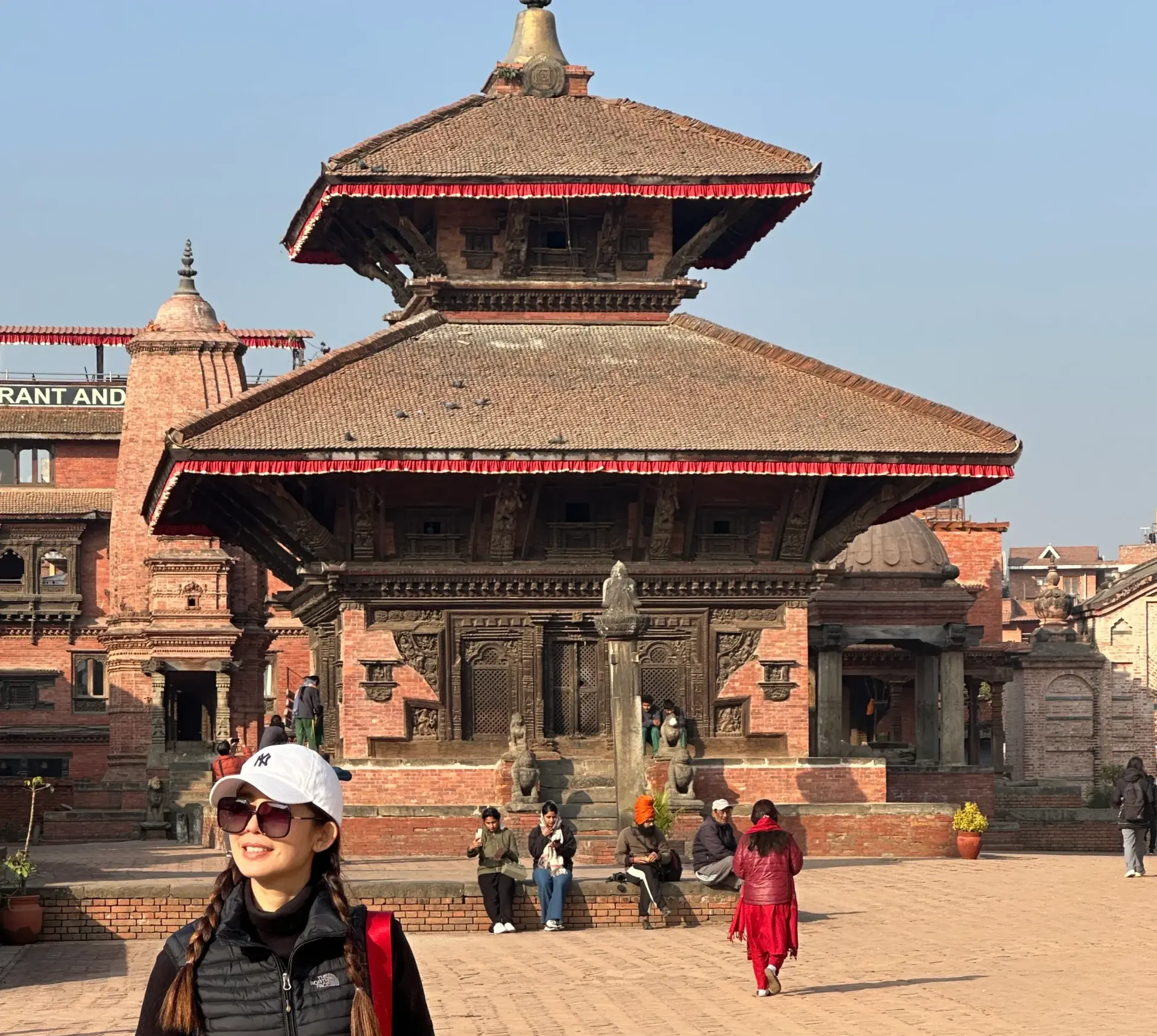
The Bhaktapur Durbar Square day tour — 13 kilometres east of Thamel in the Nepal Vehicle Hiring vehicle — is the finest single-site Kathmandu Valley heritage experience available. Bhaktapur’s designation as a Heritage Town with a vehicle-free historic core preserves the medieval Newari character of its streets, squares, and temples to a degree that Kathmandu’s own Durbar Square — damaged by the 2015 earthquake and subject to more intense commercial pressure — cannot match. The 55-Window Palace, the Nyatapola Temple (Nepal’s tallest pagoda temple), and the potters’ and weavers’ quarters of the old town together provide a 3 to 4 hour immersion in Newari material culture that is the finest cultural preparation available for the contrast with Chitwan’s natural world the following day.
The optional Nagarkot sunrise tour — a pre-dawn departure to the 2,175-metre valley rim viewpoint for the Himalayan panorama — provides the mountain world dimension before the Chitwan journey south. For visitors on the Kathmandu-Chitwan circuit without a Pokhara extension, Nagarkot’s Himalayan dawn offers a chance to see the snow peaks that define Nepal’s identity from an accessible vantage point before transitioning to Chitwan’s wildlife world.
Children and Families at Chitwan: What to Expect
Chitwan is one of Nepal’s most family-friendly travel destinations—the wildlife experiences are visually spectacular and immediately engaging for children of most ages; the variety of activities accommodates different energy levels and attention spans. The Tharu cultural programme has an accessible, performance-based format that children respond to enthusiastically. Some practical guidance for families visiting Chitwan:
- Age for activities: jeep safari is appropriate for children of all ages (the vehicle’s height above ground provides good views even for small children). Canoe safari is suitable for children who are comfortable near water and can sit still for 1 to 2 hours. Jungle walk on foot requires children to be old enough to walk quietly for 2 to 3 hours and to follow guide instructions precisely — recommended for children 8 years and above. Elephant encounters at the Breeding Centre are appropriate and typically memorable for children of all ages.
- Wildlife unpredictability: wildlife encounters in Chitwan can involve animals that behave unexpectedly. This includes rhinos that run toward the vehicle, an elephant that trumpets at close range, a monitor lizard that runs across the path during the jungle walk. The naturalist guide is trained to handle these situations, and the risk is well managed for guided activities. Educate children before the visit that the animals are wild, and that guide instructions must be followed immediately and without argument.
- Heat and hydration: Chitwan is warm throughout most of the year (28 to 38°C in the dry season) and humid during the monsoon. Children dehydrate faster than adults in these conditions. Carry 1.5 litres of water per child for morning safari activities; rehydrate actively during the midday lodge rest period before afternoon activities.
- Vehicle transfer comfort: the Kathmandu-to-Chitwan drive is 4 to 5 hours — long for young children without adequate entertainment and comfort. Nepal Vehicle Hiring’s Hiace van offers comfortable seating and good window views; the Manakamana cable car stop breaks up the journey with a genuinely exciting aerial ride most children find memorable. Carry car-sickness medication for children prone to motion sensitivity on winding highway sections.
Chitwan in Nepal’s Broader Conservation Context
Understanding Chitwan’s conservation significance within Nepal’s broader national park and wildlife reserve system gives visitors a more complete picture of Nepal’s remarkable commitment to wildlife protection. Nepal has allocated about 24 per cent of its total land area to protected areas—national parks, wildlife reserves, conservation areas, and hunting reserves—a proportion that exceeds most countries and reflects a sustained national policy commitment to biodiversity conservation maintained across multiple government changes.
Nepal’s protected area network extends from the subtropical lowland ecosystems of the Terai (Chitwan, Bardia, Parsa, Shuklaphanta) through the mid-hills (Langtang, Makalu-Barun, Kangchenjunga Conservation Area) to the high Himalayan zones (Sagarmatha/Everest, Annapurna Conservation Area, Manaslu Conservation Area). This altitudinal range—from 100 metres in the Terai to 8,848 metres at Everest’s summit—makes Nepal one of the world’s most biologically diverse countries per unit of land area, and its protected area network spanning this range is one of Asia’s most ambitious wildlife conservation systems.
Chitwan is the flagship of Nepal’s lowland protected area system — the park whose rhino recovery programme established the credibility and methodology that subsequent lowland conservation programmes have built on. The Lessons Learned at Chitwan (community engagement, buffer zone management, anti-poaching coordination with the military forces, and tourism revenue sharing with local communities) have been applied at Bardia, Parsa, and Shuklaphanta with varying degrees of success. Visitors to Chitwan are visiting the prototype conservation park whose methodology has influenced lowland wildlife protection across Nepal and, through knowledge sharing, across South Asia.
Nepal Vehicle Hiring is proud to bring visitors to Chitwan—not merely as a commercial service connecting tourism destinations, but as a transport partner that understands what Chitwan represents and delivers visitors to this remarkable place with the same care and knowledge the park’s wildlife management deserves. Contact us on WhatsApp at a977 9814227196 to book the Kathmandu-to-Chitwan vehicle and any other legs of your Nepal circuit. Nepal’s wildlife heritage awaits at the end of the Prithvi Highway—Nepal Vehicle Hiring drives you there.
- Kathmandu to Chitwan Tour Package: Complete Travel Guide
- Kathmandu to Chitwan: The Journey Itself
- What Chitwan National Park Offers: The Full Picture
- Sauraha: The Tourist Village on the Rapti River Bank
- Chitwan Activities: Planning the Full Programme
- Private Vehicle from Kathmandu to Chitwan: Why It's the Best Option
- Kathmandu to Chitwan in the Nepal Tourist Circuit
- Best Time to Visit Chitwan: Seasonal Wildlife Guide
- Accommodation at Chitwan: Lodge Options and Location
- Nepal Vehicle Hiring Services for the Kathmandu-Chitwan Circuit
- Frequently Asked Questions: Kathmandu to Chitwan Tour Package
- Chitwan's Conservation Story: Why This National Park Matters
- The Prithvi Highway: Understanding the Drive to Chitwan
- The Manakamana Temple Cable Car: En-Route Sacred Experience
- Wildlife Photography at Chitwan: Practical Advice
- Chitwan and Kathmandu: Complementary Heritage Experiences
- Responsible Wildlife Tourism at Chitwan: What Visitors Should Know
- The Rapti River: Chitwan's Living Border
- Planning the Complete Kathmandu-Pokhara-Chitwan Nepal Circuit
- Chitwan Beyond the Safari: The Cultural Landscape
- The Narayani River: Chitwan's Western Wildlife Corridor
- Kathmandu Before Chitwan: Making the Most of the Capital
- Children and Families at Chitwan: What to Expect
- Chitwan in Nepal's Broader Conservation Context

Related Blog & Articles

Best Tourist Vehicle Rental in Chitwan

Chitwan to Kathmandu Luxury Car Rental – Private Transfers from Chitwan National Park

All Over Nepal Vehicle Hire – Private Car, Scorpio, 4WD Jeep, Hiace And Tourist Bus