Kathmandu to Dakshinkali Private Jeep
Kathmandu to Dakshinkali Private Jeep — Temple Tour Complete Guide
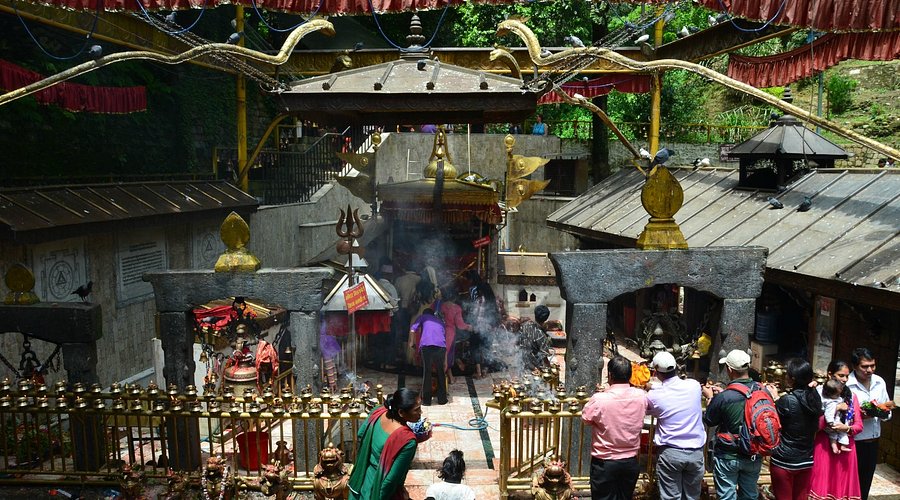
Dakshinkali Temple, tucked into a forested gorge at the confluence of two sacred streams approximately 22 kilometres southwest of Kathmandu, is one of Nepal’s most powerful and most frequently visited Hindu temples — a sacred site dedicated to Goddess Kali in her most fearsome manifestation, one of the Kathmandu Valley’s Ashta Matrika (eight mother goddesses), and a destination of profound devotional significance for Hindu pilgrims from Nepal and India alike.
The temple’s dramatic gorge setting, the intensity of the religious activity on Saturday and Tuesday puja days, and the surrounding southern Kathmandu Valley’s rich cultural and natural landscape make Dakshinkali one of the most rewarding and most distinctively Nepali sacred site experiences within easy reach of the capital.
Nepal Vehicle Hiring Pvt Ltd provides private jeep hire and private car hire from any Kathmandu hotel to Dakshinkali Temple — a 45 to 60-minute journey through the southern Kathmandu Valley that can be combined with the Pharping Buddhist meditation caves, Taudaha Lake, Chobar Gorge,
Kirtipur ancient city, and the traditional Newari villages of Bungamati and Khokana into a rich full-day southern valley circuit. This complete guide covers the Dakshinkali route, the temple’s sacred character, the best times to visit, the southern valley’s companion sites, vehicle options and costs, and how to book the full Dakshinkali day tour.
Kathmandu to Dakshinkali — Distance, Route and Transfer Time
Distance: Approximately 22 kilometres from central Kathmandu (Thamel) to the Dakshinkali temple entrance. From the south Kathmandu Ring Road junction, approximately 14 kilometres.
Route: From Thamel, the road heads south through Kathmandu city centre, crosses the Ring Road at the Kalanki junction, and follows the Dakshinkali road southwest through Thankot, the Chandragiri foothills, Pharping village, and the forested gorge approach to the temple. The Dakshinkali road is paved throughout but narrows in the Pharping section — adequate for private car hire and private jeep hire but not recommended for larger vehicles.
Transfer time: 45 to 75 minutes from central Kathmandu depending on time of day. Saturday mornings (the busiest puja day) create specific traffic congestion on the Dakshinkali approach road — depart by 6:30 AM to reach the temple before the main crowd surge.
Parking: The Dakshinkali Development Trust manages a vehicle parking area above the temple — a 10 to 15-minute walk down to the temple gorge. Nepal Vehicle Hiring Pvt Ltd drivers park in the designated area and wait during the visit.
Transfer Cost — Kathmandu to Dakshinkali and Back
Private car hire (2-4 passengers, half-day round trip, 4-5 hours): NPR 3,000 to 10,000 (USD 23 to 70) all-inclusive — driver, fuel, parking, return to Kathmandu hotel—private car hire.
Private 4WD jeep hire (4-6 passengers, half-day round trip): NPR 4,000 to 20,000 (USD 30 to 130) all-inclusive—private jeep hire.
Full-day southern valley circuit (Dakshinkali + Pharping + Chobar + Kirtipur, 8 hours): NPR 7,000 to 30,000 (USD 53 to 180) depending on vehicle type: private car hire or private jeep hire.
Toyota Hiace van hire (7-13 passengers, pilgrimage group): NPR 8,000 to 25,000 (USD 60 to 165) for the half-day or full-day southern valley circuit. Hiace van hire for larger pilgrimage groups.
All prices include driver, fuel, and road tolls. Contact Nepal Vehicle Hiring Pvt Ltd on WhatsApp or our plan trip page for a confirmed quote.
The Ashta Matrika Circuit — Dakshinkali in Nepal’s Sacred Geography
The Kathmandu Valley’s sacred geography is organised around the concept of the Ashta Matrika — the eight mother goddesses positioned at the valley’s directional perimeter to form a sacred protective mandala.
This eight-site pilgrimage circuit, one of Nepal’s most distinctively Newar religious practices, is undertaken by devout Newar Buddhists and Hindu pilgrims who visit all eight Matrika temples in a single day or over several days to complete the full mandala circuit.
The eight Matrikas in the traditional Kathmandu Valley circuit are: Kankeshvari (north), Guhyeshvari (east-southeast, adjacent to Pashupatinath), Sobha Bhagawati (northeast), Jaya Bageshvari (east), Indrayani (northwest Kirtipur), Brahmayani, Mahalaxmi, and Dakshinkali (south)
The southern protector and the most famous of the eight. For pilgrims completing the full Ashta Matrika circuit, Dakshinkali is typically the most significant stop — the southern goddess and the gorge temple’s concentrated sacred atmosphere making it the circuit’s climactic destination.
Nepal Vehicle Hiring Pvt Ltd’s Kathmandu sightseeing car hire can cover the full Ashta Matrika circuit as a dedicated full-day booking—visiting all eight Matrika temples in the valley in a single private vehicle. The circuit includes the Pashupatinath area for Guhyeshvari, the northern and eastern valley for the other six sites, and Dakshinkali as the final southern culmination. Contact our team on WhatsApp to book the complete Ashta Matrika circuit vehicle.
Chobar Gorge — Where Manjushri Cut the Valley
The Chobar Gorge — 2 kilometres north of Taudaha on the return route from Dakshinkali — is one of the Kathmandu Valley’s most mythologically loaded landscapes. In the valley’s founding legend, the Bodhisattva Manjushri arrived at the valley from China, saw the sacred lotus floating on the primordial lake that filled the valley basin, and used his wisdom sword to cut the limestone ridge at Chobar — releasing the lake’s water through the gap and exposing the valley floor where Kathmandu now stands.
The gorge is the physical evidence of this mythological founding act: a narrow, geologically anomalous canyon in the valley’s limestone rim whose specific narrowness (the Bagmati River passes through a gap just 50 to 60 metres wide in the ridge) does indeed suggest that the river’s current course was established by some ancient forcing event in the valley’s geological history.
The Chobar gorge area includes: the Adinath Lokeshvara Temple above the gorge — whose facade is decorated with the pots and vessels donated by householders as offerings, creating one of Nepal’s most visually distinctive temple exteriors;
the Chobar Cave (accessible by steps from the gorge road, a small sacred cave associated with the valley’s Tantric Buddhist tradition); and the gorge viewpoint from the bridge above the narrowest section, looking down at the Bagmati River passing through the mythological gap.
The 20 to 30-minute Chobar stop on the Dakshinkali circuit return is one of the southern valley’s most mythology-rich additions—a physical encounter with the founding story of the Kathmandu Valley in the landscape where it is set. Nepal Vehicle Hiring Pvt Ltd’s private car hire includes the Chobar stop as a standard southern circuit addition — contact us on WhatsApp
Dakshinkali Temple Management and Entry — Current Arrangements
The Dakshinkali Development Committee manages the temple complex and the approach area under the Dakshinkali Development Area regulations —a management structure that has progressively improved the temple’s facilities, approach road, and visitor management over the past decades.
Entry fees: The Dakshinkali complex charges an entry fee for non-Hindu foreign visitors — the fee is payable at the main gate and covers access to the temple compound. Confirm the current fee at the gate on arrival, as the Dakshinkali Development Committee periodically revises the fee schedule. Hindu devotees from Nepal and India typically enter without fee or at a lower rate under the SAARC heritage access convention.
Queue management on Saturday: The Dakshinkali management deploys temple volunteers (sevaks) to manage queues on Saturday puja day. This system channels the large Saturday pilgrimage flow through the temple’s inner sanctum in an orderly sequence. Queues can be 45 minutes to 2 hours long on busy Saturdays; arriving early (before 7:30 AM) significantly reduces wait times.
Facilities: The Dakshinkali approach area has developed basic facilities — food stalls and restaurants in the market approach, public toilets above the parking area, and basic first aid accessible from the temple management office.
The approach market serves as the offerings procurement point—flower garlands, coconuts, sindoor, and all items required for the puja are available from vendors lining the 10- to 15-minute walk from parking to the temple.
Nepal Vehicle Hiring Pvt Ltd’s drivers are updated on current Dakshinkali management arrangements and entry fee requirements — any changes since the last visit are communicated to the group before disembarking at the parking area. Contact Nepal Vehicle Hiring Pvt Ltd on WhatsApp or our plan trip page.
The Dakshinkali Approach Road — Southern Valley Drive
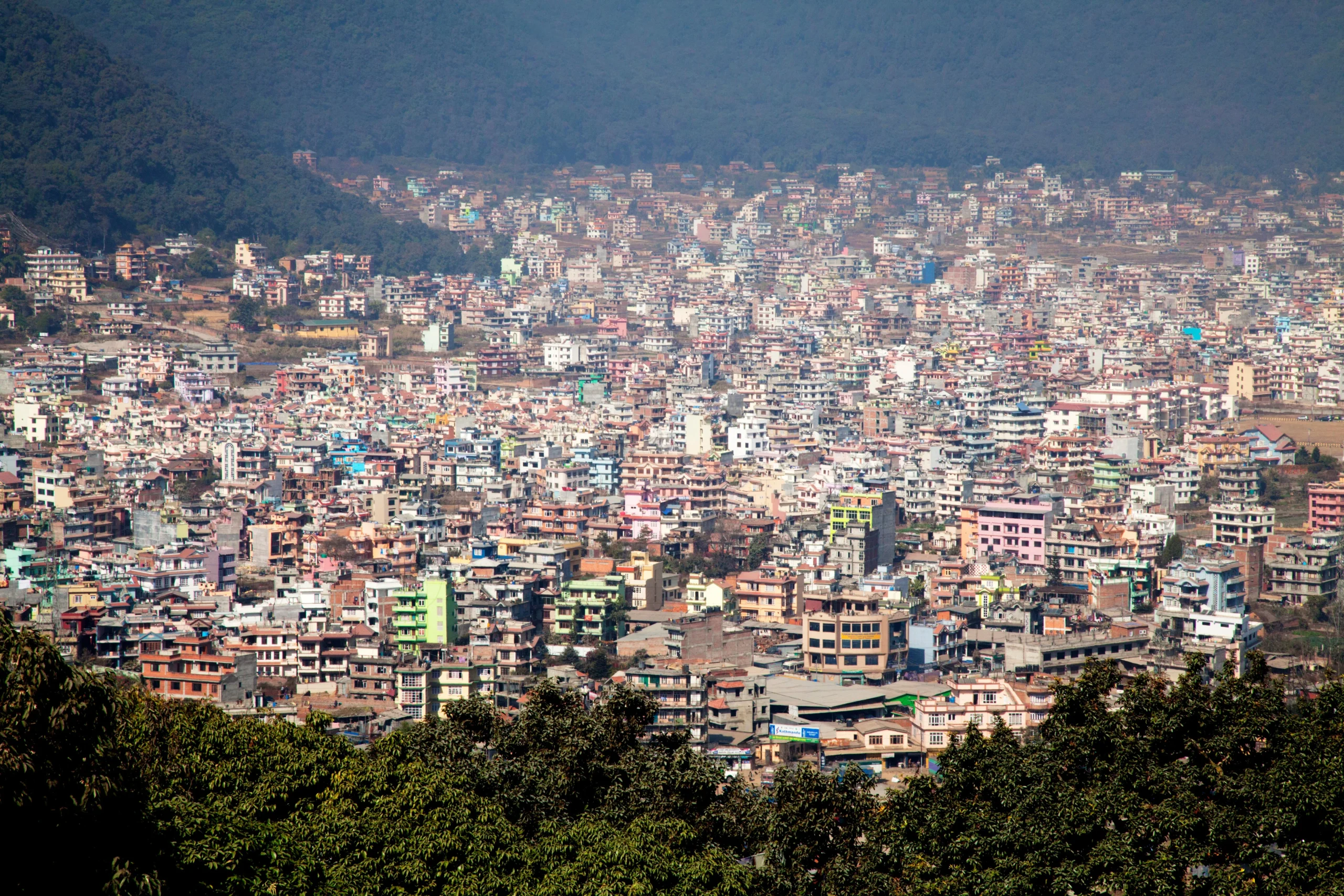
In a private vehicle hire, the road from Kathmandu to Dakshinkali takes you through the southern Kathmandu Valley’s progressive transition from urban to sacred—a 22-kilometre arc that passes through an increasingly quiet and beautiful landscape as the city’s density gives way to the forested gorge the temple inhabits.
Leaving Thamel by private car or jeep hire, the first 10 kilometres pass through Kathmandu’s densely built southern suburbs—the Kalimati textile market, the commercial character of the Kalanki junction, and the Ring Road’s heavy traffic—before the Ring Road crossing marks the transition to the outer valley.
From Kalanki southward, the road’s character changes immediately: buildings are spaced wider apart, the first field terraces appear on the hillsides above the road, and within 5 kilometres the semi-rural character of the outer valley’s settlements replaces the urban density.
The Thankot area, where the Tribhuvan Highway departs westward over the valley rim, is the road’s first visual landmark — the ridge crest visible above the junction offering the first glimpse of the forested Chandragiri slopes above.
From Thankot, the road descends slightly into the Pharping corridor — the specific microvalley whose forested character, cooler temperature, and monastic institutions distinguish it from the main valley floor.
The smell of the forest (Himalayan oak, pine, and the specific resinous fragrance of Nepal’s mid-hill tree species) enters the vehicle through the window before the Pharping settlement comes into view.
This sensory transition — from the exhaust and concrete smell of Kathmandu to the forest fragrance of the Pharping corridor — is the moment that the Dakshinkali journey begins to feel like a pilgrimage rather than a city transit. Nepal Vehicle Hiring Pvt Ltd drivers on the Dakshinkali route know this transition point and manage speed so the group can experience it fully.
Dakshinkali Temple — The Goddess and Her Sacred Gorge
Dakshinkali (literally ‘Kali of the South’) is the form of Goddess Kali worshipped at the Pharping gorge site—a manifestation of the divine feminine in its most powerful and demanding aspect. The temple sits at the confluence of the Bagmati River’s upper tributary and the Tika Bhairav stream in a forested gorge whose setting—narrow, shaded, and hemmed in by the cliff walls the streams have carved—creates the sacred enclosure that Nepal’s most potent Shakti sites characteristically inhabit.
The sacred image of Dakshinkali in the temple’s inner sanctum is unusual in its iconographic programme: the goddess stands upon the prostrate form of Lord Shiva (as in classic Kali iconography), but her eight arms hold specific attributes that connect her to the Kathmandu Valley’s Tantric Shakti tradition.
This tradition identifies the valley’s eight directional mother goddesses as the spiritual guardians of the sacred landscape. Dakshinkali is the southern guardian of this octagonal sacred geography, and her temple’s power is understood to be concentrated in the precisely calibrated alignment of the gorge, the water confluence, and the goddess’s inward-facing shrine.
The Ashta Matrika connection. Dakshinkali is one of the eight Matrika (mother goddess) temples that form the sacred perimeter of the Kathmandu Valley in the Tantric geography of the Newar Buddhist and Hindu traditions. Devout Newar Buddhists and Hindu pilgrims follow a specific pilgrimage circuit visiting all eight Matrikas, and Dakshinkali —the most famous and powerful— is typically the first or last Matrika on the circuit.
Best Time to Visit Dakshinkali
Saturdays — The Principal Puja Day. Saturday is Dakshinkali’s most significant puja day—the morning of animal sacrifice and the day the temple receives the week’s largest devotional crowd.
The combination of the Goddesses and the Saturday puja timing makes Saturday the most devotionally intense Dakshinkali experience—but also the most crowded. For the most active Dakshinkali pilgrimage experience, Saturday is the right day. For a quieter cultural and sacred-site visit, choose a weekday.
Tuesday — The Secondary Puja Day. Tuesday (dedicated to the divine feminine in the Hindu devotional calendar) is the second major puja day at Dakshinkali — significantly less crowded than Saturday but still active with animal sacrifice and pilgrimage offerings. Tuesday is the recommended visiting day for pilgrims who want the full Dakshinkali sacred experience without Saturday’s considerable crowd management.
Early morning — Before 9:00 AM. Regardless of the day, early morning is the best time to visit—the temple’s first aarti (ritual fire offering) takes place at dawn, the gorge’s forest light creates a specific atmosphere that the midday sun burns away, and the pilgrimage queue is shortest before day visitor groups arrive. Nepal Vehicle Hiring Pvt Ltd’s Kathmandu-to-Dakshinkali private car hire can depart as early as 5:30 AM for dawn darshan.
Festival periods. The Navaratri festival (nine nights of the divine feminine, occurring twice a year) brings Dakshinkali to its peak of sacred intensity — the temple complex and approach road alive with devotional activity for nine continuous days.
The Navaratri Dakshinkali visit is among Nepal’s finest Hindu festival experiences; book private car hire well in advance and plan an early-morning departure.
TIP: Depart Kathmandu by 6:00-6:30 AM on Saturday to reach Dakshinkali before the main morning crowd. The approach road fills quickly after 8:00 AM on busy puja Saturdays.
The Southern Kathmandu Valley — What to See Beyond Dakshinkali
The Dakshinkali approach road passes through one of the Kathmandu Valley’s richest cultural and natural landscapes. This southwestern valley rim area contains the Pharping Buddhist meditation caves, Taudaha Lake, Chobar Gorge, and the Newari living villages of Bungamati and Khokana. A full-day private car hire or private jeep hire from Nepal Vehicle Hiring Pvt Ltd turns the Dakshinkali visit into a complete southern valley circuit.
Pharping Buddhist Meditation Caves (Asura Cave and Yangleshö Cave). Pharping village, adjacent to Dakshinkali, contains two of Nepal and Tibet’s most sacred Buddhist meditation caves—the Asura Cave (Yangleshö), where Guru Rinpoche (Padmasambhava) is said to have attained the Mahamudra realisation that allowed him to bring Vajrayana Buddhism to Tibet, and the adjacent Sheshnarayan sacred site.
The Pharping caves are among the most significant Buddhist pilgrimage sites in the Kathmandu Valley—visiting Hindu Dakshinkali and Buddhist Pharping in the same day offers one of Nepal’s finest interfaith sacred-site experiences.
Taudaha Lake. The sacred lake of Taudaha, on the Kathmandu-Dakshinkali road about 9 kilometres from the Ring Road, is associated in Newar legend with the Bodhisattva Manjushri draining the Kathmandu Valley.
This remnant water body remained after Manjushri cut the valley’s southern wall at Chobar, releasing the primordial lake that once filled the valley basin. Taudaha is Nepal’s finest urban-fringe migratory bird sanctuary — hundreds of species visit the lake during migration seasons.
Chobar Gorge and Adinath Lokeshvara Temple. The Chobar Gorge — where Manjushri’s sword cut the valley’s southern limestone ridge to release the sacred lake — is one of the Kathmandu Valley’s most geologically dramatic landmarks: a narrow canyon where the Bagmati River passes through the valley rim in a gap of remarkable narrowness relative to the river’s volume.
The Adinath Lokeshvara Temple above the gorge is decorated with thousands of household pots and vessels donated by devotees—one of Nepal’s most visually distinctive sacred-site exteriors.
Kirtipur. The ancient Newar fortress city of Kirtipur, on a twin-hilltop ridge 5 kilometres southwest of Patan, is one of the Kathmandu Valley’s finest and least-visited heritage cities,
a living Newar community whose medieval street plan, traditional architecture, and the famous Uma Maheshvara Temple complex have survived largely intact. Kirtipur lies on the return route from Dakshinkali to Kathmandu — private car hire stops here for a 45-minute walk.
Bungamati and Khokana. The twin Newari villages of Bungamati (home of the Rato Machhendranath chariot festival) and Khokana (Nepal’s mustard oil production centre, with its extraordinary Rudrayani Temple) are on the Dakshinkali return route — living villages of exceptional traditional character that tourist Kathmandu largely bypasses.
Dakshinkali Darshan — Practical Guide
Entry and access. The Dakshinkali Development Trust charges an entry fee for the temple complex — NPR 50 to 100 per person for non-Hindu visitors (the standard Kathmandu Valley temple entry arrangement). Hindu devotees enter freely. Remove footwear before entering the temple’s inner courtyard.
Keep leather items (shoes, belts, wallets) out of the innermost sacred area on Saturday and Tuesday puja days.
Photography. Photography is permitted in the temple’s outer courtyard and approach area. The inner sanctum — particularly during active puja and animal sacrifice — does not permit photography in most cases. Ask the temple management about the current photography policy at the gate before bringing a camera.
Animal sacrifice (Saturday and Tuesday). Dakshinkali is one of Nepal’s principal animal sacrifice sites— devotees offer chickens, goats, ducks, and pigeons on the main puja days.
Visitors sensitive to this aspect of Tantric Hindu ritual tradition should visit on non-puja days (weekdays other than Tuesday), when the temple atmosphere is primarily aarti offerings, flower garlands, and incense rather than animal sacrifice.
The walk down to the temple. From the parking area, the temple is 10–10 to 15-minute walk down through the forest and the pilgrimage market stalls — vendors of flower offerings, materials, sindoor, and traditional puja items line the approach.
This walk is part of the Dakshinkali experience: the market’s unique blend of the commercial and the devotional, the fragrance of marigold garlands and incense, and the sound of temple bells growing louder as the gorge narrows around the sacred site.
The Dakshinkali Road — Character and Experience
The 22-kilometre Dakshinkali Road from Kathmandu is in itself one of the southern valley’s finest driving experiences. This route transitions from the capital’s urban density through the Ring Road junction’s Terai-junction character to the forested hillside approach of the Chandragiri range’s southwestern slopes.
The road leaves central Kathmandu through the Kalimati and Kalanki areas — industrial and commercial Kathmandu at its most functional — before crossing the Ring Road and immediately beginning the quality change that characterises the Dakshinkali approach: the road narrows,
the houses thin out, and within 5 kilometres of the Ring Road the urban density has given way to the semi-rural character of the outer valley villages. The Thankot area marks the valley rim’s approach — where the Tribhuvan Highway descends into the Trishuli gorge, and the Dakshinkali road continues southward into the Chandragiri ridge’s western foothills.
Pharping village — 17 kilometres from Thamel — is the approach’s most atmospheric settlement: a traditional Newar and Tamang community whose Buddhist character (the meditation cave monasteries, the prayer flags on the hillsides above,
the robed monks and nuns from the international retreat centres) creates a specific sacred atmosphere that the private car hire delivers into without any of the public bus’s schedule management. From Pharping, the road descends 2 kilometres into the gorge where Dakshinkali’s stream confluence announces the temple’s proximity.
Dakshinkali’s Sacred History — The Tantric Tradition
The historical tradition associated with Dakshinkali Temple reaches deep into the Kathmandu Valley’s Tantric past—a religious culture the Newar civilisation developed over more than a millennium into one of the world’s most sophisticated Tantric ritual traditions. The specific form of Kali worshipped at Dakshinkali — Mahakali or Kalika in her southern aspect — is one of the five primary emanations of the divine feminine in Nepali Tantric Hinduism.
The selection of the gorge site as her abode reflects the Tantric principle that the goddess’s powerful forms inhabit liminal landscapes: forest gorges, river confluences, and the boundaries between cultivated and wild terrain.
The historical founding of the Dakshinkali sacred site is associated with the Licchavi period of the Kathmandu Valley’s history — the early classical era (approximately 5th to 9th centuries CE) when the valley’s Hindu-Buddhist Tantric synthesis was crystallising into the distinctive Newar cultural form that persists today.
The specific legend of Dakshinkali’s founding involves a Newar priest’s divine vision at the gorge site—in which the goddess sees her presence in the water confluence and directs the establishment of her temple there. Whether this founding narrative is historical or mythological, the site’s sacred character — the specific combination of the water confluence, the enclosed gorge, and the southern valley’s natural power — is a genuinely distinctive landscape whose sacred quality is perceptible even to visitors without specific Tantric knowledge.
Nepal Vehicle Hiring Pvt Ltd’s drivers on the Kathmandu to Dakshinkali private car hire route have carried thousands of pilgrims and visitors to the temple over the years and understand the site’s significance across multiple devotional traditions — Hindu Shakta, Buddhist Tantric, and the increasingly large international visitor community who come to Dakshinkali as one of Nepal’s most distinctive cultural experiences. Our Kathmandu sightseeing service includes Dakshinkali as a specific option for the southern valley circuit alongside the standard UNESCO heritage sites.
Taudaha Lake — The Serpent King’s Sacred Water
Taudaha Lake (also called Taudah), on the Kathmandu-Dakshinkali road approximately 9 kilometres south of the Ring Road, carries one of the Kathmandu Valley’s most vivid founding legends. The Newar Buddhist tradition records that when the Bodhisattva Manjushri drained the primordial lake that filled the Kathmandu Valley basin by cutting the valley’s southern wall at Chobar Gorge,
he left Taudaha as a deliberate remnant lake for the Nagaraja (serpent king) Karkotaka — who had been protecting the sacred valley and needed a water body to inhabit when the great lake drained. Taudaha is therefore the valley’s protective Nagaraja’s specific abode, and Newar Buddhists perform offerings to serpent deities (naga puja) at the lake’s edge on specific festival days.
Beyond its mythological significance, Taudaha is one of the Kathmandu Valley’s finest natural wetlands- a shallow lake with dense reed margins and water chemistry that attracts an extraordinary diversity of migratory waterbirds during migration seasons. Ruddy shelducks, pochards, shovelers, pintails, and multiple teal species winter at Taudaha in significant numbers; grey herons and various egrets are year-round residents; and the lake’s perimeter reed beds host marsh warblers, bitterns, and water rails.
For the private car hire group making the Dakshinkali day circuit, a 20 to 30-minute Taudaha stop on the Dakshinkali road (the lake is directly on the route, no detour required) adds one of Nepal’s finest compact birdwatching sites to an already culturally rich day.
Kathmandu Southern Valley — A Half-Day or Full-Day Circuit?
Planning the Kathmandu-to-Dakshinkali private vehicle hire requires deciding whether the southern valley visit is a half-day or full-day circuit. This decision determines which sites are included alongside the Dakshinkali darshan.
Half-day circuit (4-5 hours, recommended for first-time visitors with a packed Kathmandu schedule): Depart Kathmandu hotel at 6:30 AM. Reach Dakshinkali by 7:30 AM. Dakshinkali darshan (1 to 1.5 hours).
Pharping Buddhist caves (45 minutes). Taudaha Lake brief stop (20 minutes). Return to Kathmandu by 11:00 AM.
The afternoon is free for Kathmandu sightseeing by car, covering Boudhanath, Swayambhunath, or Patan—private car hire: NPR 3,000 to 10,000.
Full-day circuit (8 hours, recommended for the complete southern valley experience): Depart 6:00 AM. Dakshinkali dawn darshan. Pharping caves.
Chandragiri Cable Car from Thankot (optional, 1.5 hours). Taudaha Lake. Chobar Gorge and Adinath Temple.
Kirtipur heritage walk. Bungamati and Khokana village circuit. Return to Kathmandu by 5:00-6:00 PM.
Private car hire full day: NPR 7,000 to 25,000. This format is the definitive southern Kathmandu Valley experience — a day that comprehensively covers the area’s Hindu sacred site, Buddhist meditation heritage, legendary geological landmark, and living Newari village culture.
Nepal Vehicle Hiking Pvt Ltd manages both formats through our plan trip page. Tell us which format. Please tell us your schedule and group size, and we’ll provide the right vehicle, confirmed timing, and a knowledgeable driver to make each stop as rewarding as possible.
Newari Village Culture — Bungamati and Khokana
The twin Newari villages of Bungamati and Khokana, on the southern Kathmandu Valley floor between Patan and the Dakshinkali approach road, are two of the valley’s finest living traditional Newari villages — communities where the medieval street layout, the courtyard-centred house design, the communal water spouts (dhunge dhara), and the extraordinary temple architecture of the Newar Buddhist-Hindu synthesis have survived largely intact.
Bungamati is the permanent home of the Rato Machhendranath deity—the valley’s rain god and protector —celebrated in one of the world’s longest-running chariot festivals, which takes the deity’s chariot through Patan and Bungamati in a procession that has been conducted without interruption for centuries. Bungamati’s central courtyard, the Machhendranath Temple’s setting at the village’s heart, and the wood-carving workshops that produce the window screens and pillar decorations of traditional Newar architecture make it one of the valley’s finest cultural destinations.
Khokana is Nepal’s traditional mustard oil production village — cold-press oil mills that process the Kathmandu Valley’s mustard harvest have operated there for generations, and the smell of fresh-pressed mustard oil permeates the village’s lanes during harvest season. The Rudrayani Temple in Khokana’s central square is the village’s sacred focal point — a finely restored Newar temple whose annual festival includes a ritual ‘battle for Rudrayani’ that is one of Nepal’s most dramatic communal festival events.
Both villages are within 5 kilometres of each other and 15 to 20 kilometres from Dakshinkali on the return route—a natural afternoon addition to the southern valley circuit that the private car hire from Nepal Vehicle Hiring Pvt Ltd includes at no extra cost on the full-day circuit booking. Contact our team on WhatsApp.
Kirtipur — The Kathmandu Valley’s Ancient Fortress City
Kirtipur (City of Fame in Sanskrit) is one of the Kathmandu Valley’s most historically significant and most visually distinctive settlements — a twin-hilltop Newar city that served as a major independent kingdom in the valley’s medieval period and whose 18th-century siege by Prithvi Narayan Shah (the founder of modern Nepal) produced one of the valley’s most dramatic historical narratives. The city’s strategic position on two adjacent hilltops connected by a saddle, its circuit of medieval fortress walls, and the survival of its traditional urban structure make it one of the valley’s finest heritage destinations.
Kirtipur’s key heritage sites: the Uma Maheshvara Temple (a finely proportioned three-tiered pagoda dedicated to Shiva-Parvati, Kirtipur’s most celebrated architectural monument), the Chilancho Stupa (a significant Buddhist stupa with a fine surrounding courtyard on the city’s northern hill),
the Bagh Bhairab Temple (whose exterior is decorated with the weapons of defeated enemies — one of Nepal’s most unusual temple facades), and the traditional lane system of the city’s residential areas where carved wooden windows, stone water spouts, and the specific three-storey brick architecture of the Newar townhouse provide an intact medieval streetscape.
The 30 to 45-minute Kirtipur walk on the return from Dakshinkali to Kathmandu adds one of the valley’s finest ancient cities to the southern circuit — a heritage quality comparable to Bhaktapur but with almost none of Bhaktapur’s international tourist density. Nepal Vehicle Hiring Pvt Ltd’s private car hire drivers park at the Kirtipur base and w, if requested, walk up with the group or wait at the parking area for the group’s independent Kirtipur circuit.
Combining Dakshinkali with the Standard Kathmandu Sightseeing Circuit
Dakshinkali pairs naturally with the standard Kathmandu Valley UNESCO heritage circuit for visitors who want both the capital’s classical heritage sites and the southern valley’s sacred-site experience in the same Kathmandu days.
Day 1 — Standard Kathmandu heritage circuit: Pashupatinath Temple, Boudhanath Stupa, Swayambhunath, Patan Durbar Square — covered by Nepal Vehicle Hiring Pvt Ltd’s Kathmandu sightseeing car hire.
Day 2 — Southern valley circuit: Dakshinkali (early morning darshan), Pharping Buddhist meditation caves, Taudaha Lake, Chobar Gorge, Kirtipur, Bungamati and Khokana — covered by private car hire for the complete southern circuit.
Day 3 — Eastern valley: Bhaktapur Durbar Square heritage day tour and Nagarkot sunrise vehicle hire — completing the three-day comprehensive Kathmandu Valley circuit.
This three-day Kathmandu Valley circuit covers UNESCO heritage sites, the principal Hindu sacred sites (Pashupatinath and Dakshinkali), and the finest medieval Newar heritage (Bhaktapur and Kirtipur) in a single, efficient private-vehicle arrangement. Nepal Vehicle Hiring Pvt Ltd coordinates all three days through a single trip-page submission.
Dakshinkali for Indian Pilgrims — The Hindu Sacred Valley
For Indian Hindu pilgrims visiting Nepal, Dakshinkali is one of the most significant sacred destinations in the Kathmandu Valley — and often the most emotionally powerful. Pashupatinath provides the Shiva sacred encounter; Dakshinkali provides the Kali-Durga sacred encounter that the Shakta tradition specifically seeks in Nepal’s sacred geography.
Indian pilgrims who visit Dakshinkali as part of the broader Nepal pilgrimage circuit — Pashupatinath (Shiva), Dakshinkali (Kali), Manakamana (Bhagwati, accessible by cable car from the Prithvi Highway), Muktinath (Vishnu/Shaligram) — complete Nepal’s four principal Sanatana dharma sacred site types in a single Nepal visit. Nepal Vehicle Hiking Pvt Ltd’s Kathmandu sightseeing car hire covers Pashupatinath, Dakshinkali, and the Kathmandu Valley’s complete Hindu sacred circuit, combined with private car hire for the southern valley’s specific Dakshinkali approach.
Indian pilgrims from Gorakhpur, Varanasi, and UP who enter Nepal through the Sunauli border can reach Dakshinkali by combining the Sunauli to Kathmandu private vehicle hire with the Kathmandu to Dakshinkali private car hire on the Kathmandu day — completing the Pashupatinath and Dakshinkali darshans in a single Nepal visit day before continuing to Pokhara or Lumbini. Contact Nepal Vehicle Hiring Pvt Ltd on WhatsApp to plan the complete pilgrimage circuit.
The Chandragiri Hills — Dakshinkali’s Mountain Backdrop
Above Dakshinkali to the north and west, the Chandragiri ridge rises to 2,551 metres — the Kathmandu Valley’s southwestern rim and one of the finest Himalayan panorama viewpoints accessible from the capital. The Chandragiri Cable Car (departing from the Thankot junction on the Dakshinkali road) takes 7 minutes to reach the Chandragiri hilltop, where passengers can take in a panorama of the Kathmandu Valley and the Himalayan range from Langtang to Manaslu, Ganesh Himal, Annapurna, and Dhaulagiri on clear days.
The Chandragiri cable car makes a natural addition to the Dakshinkali day — departing Kathmandu for the cable car at 8:30 AM (after the early Dakshinkali morning darshan), spending an hour on the Chandragiri ridge, and returning to the Dakshinkali road for the southern valley circuit continuation. Nepal Vehicle Hiring Pvt Ltd’s private car hire waits at the cable car base station during the hilltop visit and resumes the southern valley circuit on the group’s return.
The combined Dakshinkali darshan + Chandragiri panorama + Pharping Buddhist caves + Chobar Gorge + Kirtipur full-day circuit is the southern Kathmandu Valley at its most comprehensive — a day that no standard Kathmandu sightseeing car hire tour covers and that only the private vehicle hire format enables.
Dakshinkali and the Pharping Buddhist Meditation Tradition
The co-location of Dakshinkali’s Hindu Kali temple and Pharping’s Buddhist Guru Rinpoche meditation caves within 2 kilometres of each other creates one of the Kathmandu Valley’s most extraordinary interfaith sacred site concentrations — a place where the two great Himalayan spiritual traditions inhabit the same forested gorge and the same sacred landscape, each drawing its devotees from different traditions but sharing the specific quality of sacred power that the gorge’s geography and water character concentrate.
The Yangleshö Cave (also called Asura Cave) in Pharping is where Guru Rinpoche is said to have spent years in meditation before attaining the Vajrayana realisation that enabled him to pacify the malevolent forces blocking the spread of Buddhism in Tibet. The cave is now surrounded by Nyingma monasteries.
including the Tso Pema Orgyen Herukar Nyingma monastery above the cave, whose resident monks maintain the meditation tradition that Guru Rinpoche established at this specific site. For Buddhist pilgrims visiting Pharping on the same day as Dakshinkali, the contrast between the thunderous intensity of the Kali temple below and the serene meditation atmosphere of the Buddhist caves above is one of the southern valley’s most remarkable experiential contrasts.
Nepal Vehicle Hiring Pvt Ltd’s southern valley private car hire includes Dakshinkali and Pharping as standard stops on the full-day southern circuit—the driver knows the specific parking areas at both sites and the walking routes connecting the gorge temple to the hillside meditation caves. Contact us on WhatsApp or our plan trip page.
Why Private Car or Jeep Is Better Than Public Transport for Dakshinkali
Public transport to Dakshinkali exists — microbuses and local buses from Ratna Park in central Kathmandu serve the Dakshinkali route with regular departures from early morning. But public transport and private-vehicle experiences differ in ways that matter significantly for both pilgrimage and tourism.
Departure flexibility: The private car hire from Nepal Vehicle Hiring Pvt Ltd departs your Kathmandu hotel at 6:00 AM for the dawn darshan. The public microbus from Ratna Park starts at varying times and does not offer hotel pickup.
Return timing: The private vehicle waits at Dakshinkali for the entire darshan, however long the queue is on Saturday morning. The public microbus returns on a fixed schedule that may not align with the darshan’s actual completion time.
Southern valley circuit: The private vehicle covers Dakshinkali, Pharping, Taudaha, Chobar, Kirtipur, Bungamati, and Khokana in a single connected day. Public transport between these dispersed southern valley sites requires multiple vehicle changes, long waits, and significant logistical effort that consumes the time available for the actual site visits.
Group comfort: A pilgrimage group of 5 to 10 people travels together, with all luggage and offering materials, in a single private car or Hiace van hire — not dispersed across multiple public transport seats.
Dakshinkali and the Navaratri Festival — The Sacred Nine Nights
Navaratri (Nine Nights), the most important Hindu festival dedicated to the divine feminine, transforms Dakshinkali Temple into one of Nepal’s most intensely devotional sacred sites for nine continuous days. The festival occurs twice per year — in spring (Chaitra, March-April) and autumn (Ashwin, September-October) — and both occasions draw enormous pilgrimage crowds to Dakshinkali as the principal Kali site in the Kathmandu Valley.
During Navaratri, the Dakshinkali Development Committee extends seven hours; temple priests conduct additional puja sessions, and the approach market operates from before dawn to late evening. The approach road to Dakshinkali during Navaratri requires specific management — Nepal Vehicle Hiring Pvt Ltd arranges pre-dawn departures (4:30 to 5:00 AM) for groups who want to reach Dakshinkali before the main Navaratri crowd surge on the principal puja days.
The Navaratri Dakshinkali visit is among Nepal’s finest Hindu festival experiences—the devotional energy, the volume of sacred activity, and the visual spectacle of thousands of pilgrims filling the gorge approach and the temple compound create an atmosphere no non-festival visit can replicate. Nepal Vehicle Hiring Pvt Ltd’s Kathmandu sightseeing car hire and private car hire cover Navaratri Dakshinkali visits with early departure and driver wait — contact our team on WhatsApp or our plan trip page well ahead of the festival for Navaratri bookings.
Extending the Southern Valley Day — Nagarkot Sunrise the Next Morning
The southern Kathmandu Valley circuit — Dakshinkali, Pharping, Chobar, Kirtipur — covers the valley’s southwest. The northeast valley — Nagarkot’s Himalayan sunrise, Bhaktapur’s medieval heritage, Changu Narayan’s ancient temple — provides the complementary eastern circuit that creates the most comprehensive Kathmandu Valley experience available in two days.
Nepal Vehicle Hiring Pvt Ltd coordinates the two-day comprehensive Kathmandu Valley circuit: Day 1 morning — Dakshinkali early morning darshan and southern valley circuit (Pharping, Chobar, Kirtipur, Bungamati). Day 1 evening — Nagarkot sunset and overnight. Day 2 pre-dawn — Nagarkot Himalayan sunrise.
Day 2 morning — Bhaktapur Durbar Square heritage day tour on the return from Nagarkot. This 2-day circuit covers Dakshinkali’s sacred southern gorge, the southern valley’s cultural landscape, the northeastern valley rim’s Himalayan panorama, and Bhaktapur’s UNESCO medieval city — the most complete Kathmandu Valley experience available within 2 days. Plan through our trip page or call WhatsApp.
Dakshinkali for Trekking Groups — Pre-Trek or Post-Trek Sacred Visit
Trekking groups who begin or end their Nepal trek in Kathmandu often include a Dakshinkali visit as a sacred counterpart to the mountain experience—either as a pre-trek blessing or a post-trek thanksgiving. In the Tantric tradition, Dakshinkali’s specific Kali energy is understood as protecting mountain travel—the goddess’s power governs the fearsome and the transformative, offering the right sacred benediction for the physical challenge ahead.
Groups heading for the Langtang Valley trek, the Helambu circuit, the Everest Base Camp trek, or the Ghorepani Poon Hill trek frequently include a Dakshinkali morning darshan on the pre-departure Kathmandu day — the private car hire to Dakshinkali and back fitting comfortably into the morning before the afternoon trekking permit arrangements and packing. Nepal Vehicle Hiking Pvt Ltd coordinates the Dakshinkali morning visit alongside the same-day Kathmandu sightseeing car hire or the airport transfer as a single smooth booking.
Why Choose Nepal Vehicle Hiring Pvt Ltd for Dakshinkali
- Hotel pickup: Door-to-door service from any Kathmandu hotel — Thamel, Lazimpat, Kupondole, or any other area.
- All vehicle sizes: Private car for individuals/couples, jeep hire for small groups, Hiace van hire for pilgrimage parties.
- Driver waits during darshan: No rush, no fixed queue time — the vehicle and driver wait for the complete Dakshinkali visit.
- Southern valley circuit: Full-day circuit covering Dakshinkali, Pharping, Taudaha, Chobar, Kirtipur, Bungamati, Khokana — driver knows all stops.
- Combined with heritage circuit: Kathmandu sightseeing car hire and Dakshinkali day coordinated as a multi-day Kathmandu package.
- Saturday and festival departures: Pre-dawn departures (from 5:30 AM) for Saturday puja and Navaratri festival.
- All-inclusive pricing: Driver, fuel, parking — no additions at Dakshinkali.
- 24/7 on WhatsApp or plan trip page.
Dakshinkali Temple is also bookable as part of Nepal Vehicle Hiring Pvt Ltd’s Nepal tour packages — our complete Nepal circuit programmes for groups who want the full Kathmandu, Pokhara, Chitwan, and Lumbini circuit with all vehicle legs pre-arranged. Alpine Luxury Treks offers a top-end Nepal heritage experience, with Nepal Vehicle Hiking Pvt Ltd providing private vehicle hire for all ground transport. Contact us on WhatsApp.

Frequently Asked Questions — Kathmandu to Dakshinkali Jeep
Q: How far is Dakshinkali from Kathmandu?
Approximately 22 kilometres from Thamel, Kathmandu. Transfer time: 45-75 minutes by private car or jeep hire.
Q: What is the best day to visit Dakshinkali?
Saturday is the principal puja day — most active but most crowded. Tuesday is the secondary puja day. Weekdays offer a quieter darshan.
Early morning departure (before 7:00 AM) is recommended on all days.
Q: What is the private car hire cost from Kathmandu to Dakshinkali?
NPR 3,000 to 10,000 (USD 23 to 80) for a half-day round trip including driver wait. Contact Nepal Vehicle Hiring Pvt Ltd on WhatsApp for a confirmed quote.
Q: Can I combine Dakshinkali with Pharping Buddhist caves in the same day?
Yes — both are in the same gorge area, 2 kilometres apart. The full-day southern valley private car hire covers both as standard stops.
Q: Can Nepal Vehicle Hiring Pvt Ltd arrange a pre-dawn Dakshinkali departure?
Yes—departures from 5:30 AM for dawn darshan are available. Confirm the early departure time at booking via WhatsApp.

Nepal Vehicle Hiring Pvt Ltd’s complete Kathmandu private car and jeep hire service connects Dakshinkali to the Kathmandu Valley’s heritage and sacred-site network. From the same booking that covers the Dakshinkali southern valley circuit, groups can add Pashupatinath and Boudhanath sightseeing,
the Bhaktapur full-day heritage tour, the Nagarkot overnight and sunrise, and onward Kathmandu-to-Pokhara private vehicle hire or Kathmandu-to-Lumbini bus service to continue the Nepal circuit.
All Kathmandu area vehicle requirements — airport transfer, sightseeing car hire, Dakshinkali temple tour, Hiace van for groups, and the coaster for large pilgrimage parties — are coordinated through a single Nepal Vehicle Hiring Pvt Ltd plan trip page submission or WhatsApp contact.
Conclusion
Dakshinkali Temple in the southwestern Kathmandu Valley is one of Nepal’s most powerful sacred sites—the Goddess Kali’s gorge temple where the Tantric tradition’s most fearsome and most liberating feminine energy resides, and where the Saturday morning puja creates a devotional intensity that Nepal’s sacred sites match.
The 22-kilometre private car or jeep hire from Kathmandu delivers the pilgrim and visitor to this extraordinary site in under an hour — and the full-day southern valley circuit that Nepal Vehicle Hiring Pvt Ltd provides alongside the Dakshinkali darshan turns the visit into the most complete southern Kathmandu Valley experience available: Dakshinkali’s Kali darshan, Pharping’s Guru Rinpoche Buddhist meditation caves.
Taudaha Lake’s sacred migratory bird sanctuary, Chobar Gorge’s geological and mythological drama, and Kirtipur’s ancient Newar fortress heritage — all in a single day in the finest private vehicle hire from Nepal Vehicle Hiring Pvt Ltd.
Book your Kathmandu to Dakshinkali private jeep or car hire with Nepal Vehicle Hiring Pvt Ltd — call or WhatsApp, visit vehiclehiringnepal.com, or plan your complete Kathmandu sacred site circuit through our plan trip page.
Keep reading