Plan a Trip


Duration
3 Days
Distance
200 km
Driver
Included
Group Size
1-30 Pax
Max. Altitude
1400 Metres
Best Season
Spring
Activity
Multi Day Tour
Meals
Not included
Highlights of Kathmandu to Pokhara Tour by Private Car, Jeep or Hiace
- A private road trip along the Prithvi Highway, following the Trishuli and Marsyangdi rivers from the capital to the lake city.
- Door-to-door hotel pickup in Kathmandu and drop-off at your Lakeside hotel, with the same comfort as our Kathmandu to Pokhara car
- Ride the Manakamana cable car, nearly 2.8 km long, to one of Nepal’s most visited temples, as on our Manakamana Temple cable car and vehicle tour.
- Sunrise over Annapurna, Machhapuchhre and Dhaulagiri from Sarangkot with the Sarangkot sunrise tour vehicle.
- A full day of lakes, caves, waterfalls, temples and viewpoints with the flexibility of car hire in Pokhara.
- The 51-foot Shiva statue at Pumdikot and the World Peace Pagoda above Phewa Lake.
- A lunch stop in Bandipur, the car-free Newari hill bazaar, on the drive back to Kathmandu.
- Choose from car, jeep, Scorpio, Hiace, Coaster, or bus for any group size.
- Stops whenever you want them: river viewpoints, roadside fish restaurants, fruit stalls and photo spots.
- The same driver and vehicle from the first morning to the last evening.

Introduction of Kathmandu to Pokhara Tour by Private Car, Jeep or Hiace
The Kathmandu to Pokhara tour is Nepal’s classic road journey, linking the ancient, temple-filled capital valley with the relaxed lake city beneath the Annapurna range. About 200 km of winding highway separates the two cities, passing river gorges, terraced hillsides, market towns, and some of the country’s most loved pilgrimage sites. Most visitors sit on a tourist bus all day and see the road only through a window. This package turns the drive into the highlight it deserves to be, with a private vehicle and driver from Nepal Vehicle Hiring Pvt Ltd, time to stop where you like, and two nights in Pokhara to enjoy its lakes and mountain views.
The standard programme lasts three days. On the first day, you drive west along the Prithvi Highway, ride the cable car to Manakamana Temple, and arrive in Pokhara for sunset by the lake. On the second day, rise early for sunrise at Sarangk, then spend the day exploring Pokhara’s lakes, caves, waterfalls, temples, and viewpoints. On the third day, return to Kathmandu at a different pace, stopping for lunch and a stroll in the hilltop town of Bandipur. If you would rather finish in Pokhara and start a trek, the tour works equally well one way. If you have more time, you can extend it to four or five days with an overnight in Bandipur or Gorkha.
Why choose a private vehicle for this route? The highway is long and busy, and a private driver lets you leave when you are ready rather than at a fixed bus time, avoids crowded bus parks, and lets you stop for photos, breakfast, or a short walk whenever you wish. It also means you have transport for sightseeing once you arrive, so you don’t have to haggle with taxi drivers in Pokhara. Travellers who only need a transfer can book a simple one-way service through our Kathmandu to Pokhara all-vehicle transfer page, while those who want the full experience choose this tour. Our guide to private vehicle booking in Nepal explains the booking process step by step.
The Kathmandu to Pokhara tour is designed for every type of traveller. Couples and solo travellers usually travel by car; families of four to six prefer a jeep or Scorpio; and groups of friends, office teams, pilgrims and school groups travel by Hiace, Coaster or bus. Every vehicle is tourist-registered, regularly serviced and driven by a licensed driver who knows this highway well. If you are not sure which size to book, our article on the best vehicle for 6 people in Nepal will help.
Pokhara is also the gateway to some of the finest Himalayan walking. Many guests continue from the lake city onto short treks such as the Ghorepani Poon Hill Trek or longer journeys like the Annapurna Base Camp Trek. Others prefer the comfort of a luxury trek arranged by Alpine Luxury Treks. Whatever comes next, the vehicle and driver arranged through our Nepal tour package service make the road part of the adventure.
To plan your trip, send your dates, group size, hotels and preferred vehicle through the Plan a Trip page or on WhatsApp, and we will reply with a day-by-day plan for your group.

Itinerary of Kathmandu to Pokhara Tour by Private Car, Jeep or Hiace
The itinerary below is the standard three-day round trip. You can adjust each day: add or skip stops, and reverse the tour if you start in Pokhara.
Day 1: Kathmandu to Pokhara via Manakamana Temple
Your driver collects you from your hotel in Kathmandu around 6:30 to 7:00 a.m. Leaving early is the single best way to enjoy this drive, because the climb out of the valley is quieter and you have more time for stops. The vehicle crosses the city to Kalanki, climbs to the valley rim at Nagdhunga and descends a series of hairpin bends to Naubise, where the Prithvi Highway begins.
For the next 80 km, the road follows the Trishuli River through Galchhi, Gajuri and Malekhu. The river runs wide and green between steep terraced hills, with suspension bridges, sand beaches and rafting camps along the way.
Malekhu is famous for fried river fish served at roadside stalls and is a favourite place for a late breakfast. Travellers who love the water sometimes start the day with a short section of Trishuli River rafting and rejoin the vehicle downstream.
About 105 km and two and a half to three hours from Kathmandu, you reach Kurintar and the lower station of the Manakamana cable car at Cheres. The cable car climbs about 2.8 km and more than 1,000 metres in roughly ten minutes, from the river at around 258 metres to the hilltop at about 1,302 metres, with views over the Trishuli and Marsyangdi valleys.
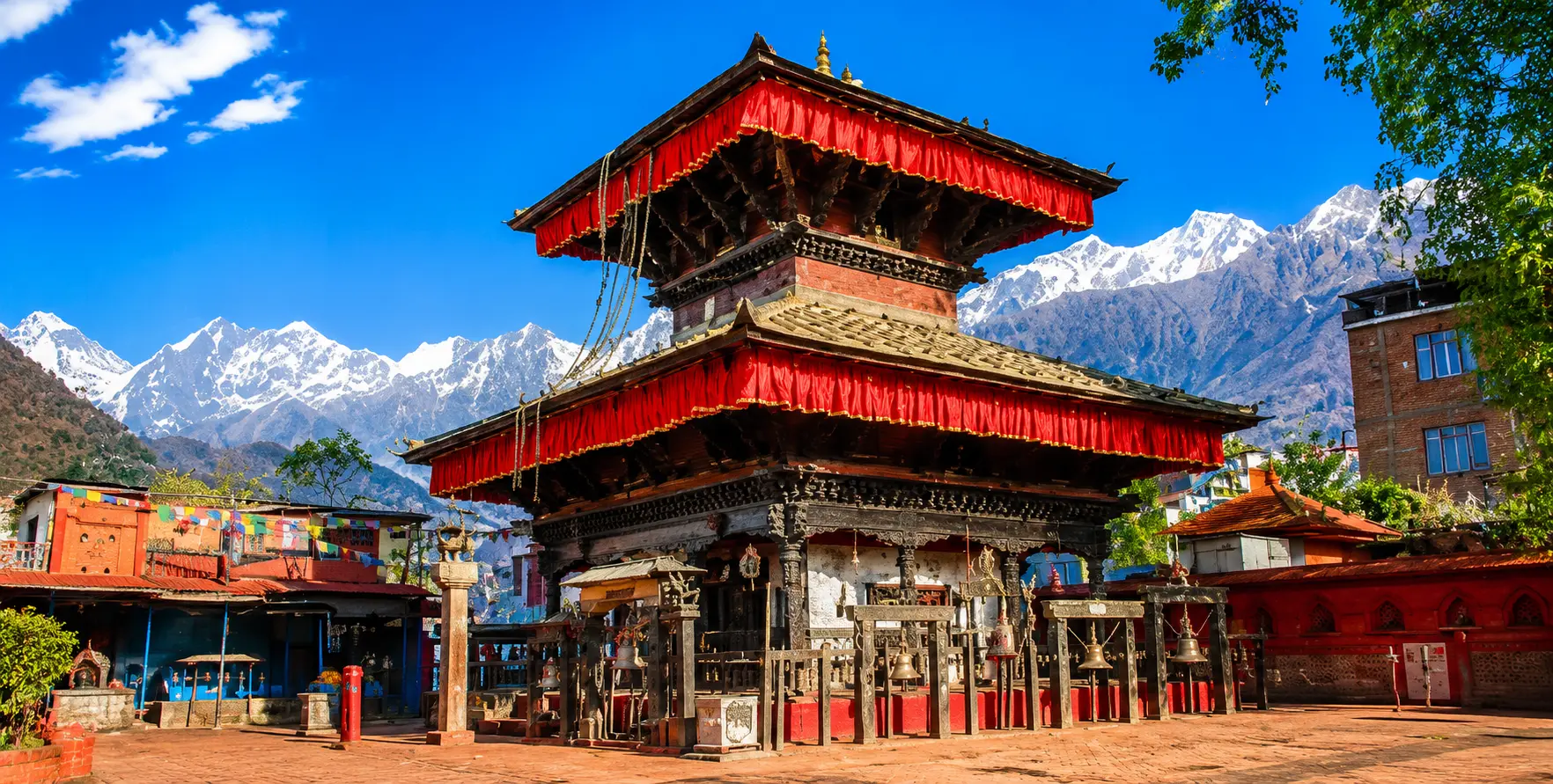
At the top, a short walk through a bazaar of offerings and souvenir stalls leads to the pagoda temple of Manakamana Devi, the goddess believed to fulfil her devotees’ wishes. Allow two to three hours for the visit; it takes longer on Saturdays and festival days when queues are long.
After the temple, the vehicle continues to Mugling, where the Trishuli meets the Marsyangdi and the road to Chitwan branches south. The highway then turns west along the Marsyangdi through Anbu Khaireni, the junction for Gorkha, and Dumre, the junction for Bandipur and for Besisahar, the starting point of the Annapurna Circuit Trek.
Beyond Damauli, where the Seti and Madi rivers meet, the road enters the broad Pokhara valley, and on a clear afternoon the Annapurna range rises ahead. You reach your Lakeside hotel late afternoon, with time to walk along Phewa Lake’s shore as the sun sets behind the hills. Pokhara lies at about 820 metres.
Day 2: Sarangkot Sunrise and Full-Day Pokhara Sightseeing
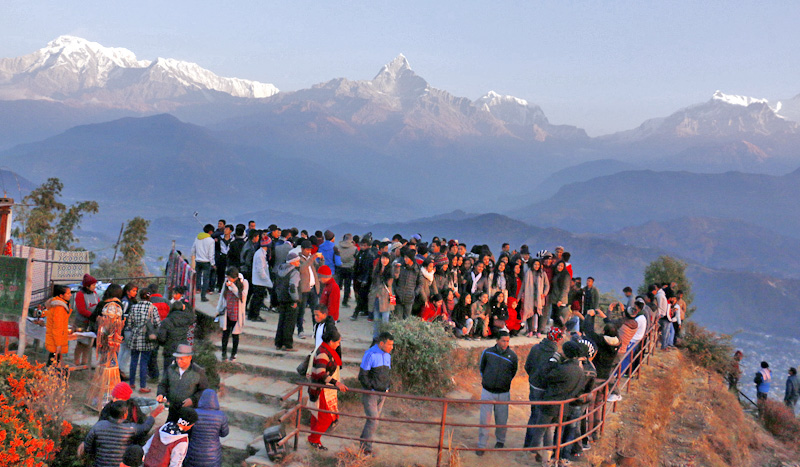
Your driver collects you before dawn for the 30 to 45-minute drive to Sarangkot (1,592 metres), Pokhara’s most famous sunrise spot. As the sky lightens, the first rays strike Dhaulagiri in the west, then the Annapurna peaks and the fishtail summit of Machhapuchhre, while the lake and city below are often still wrapped in mist. If you only need this viewpoint, the short Pokhara to Sarangkot jeep runs it as a single trip.
After breakfast back at the hotel, the vehicle takes you on a full day of sightseeing, normally six to seven hours. A typical circuit includes Bindhyabasini Temple in the old bazaar; the Seti River gorge, where the river vanishes into a narrow chasm below the city; the Mahendra Cave and the nearby Bat Cave at Batulechaur on the northern edge of town; the International Mountain Museum; Devi’s Fall, where the outflow of Phewa Lake plunges underground; and Gupteshwor Mahadev Cave just across the road, with its Shiva shrine and a view of the waterfall from inside the rock.
In the afternoon, the vehicle climbs to Pumdikot, a ridge at about 1,500 metres on the far side of the lake, where a 51-foot statue of Lord Shiva stands on a white stupa surrounded by 108 lingas. Our jeep takes the same road from Pokhara to Pumdikot Mahadev Temple.
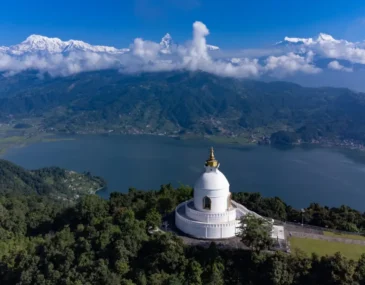
From there, continue to the World Peace Pagoda, a gleaming white stupa built by Japanese Buddhist monks on the ridge above Phewa Lake, offering one of the best views of the lake and the Annapurna range. End the day with a boat ride to the island temple of Tal Barahi, or, if you booked it for the morning, tandem paragliding in Pokhara from the Sarangkot launch site.
Day 3: Pokhara to Kathmandu via Bandipur
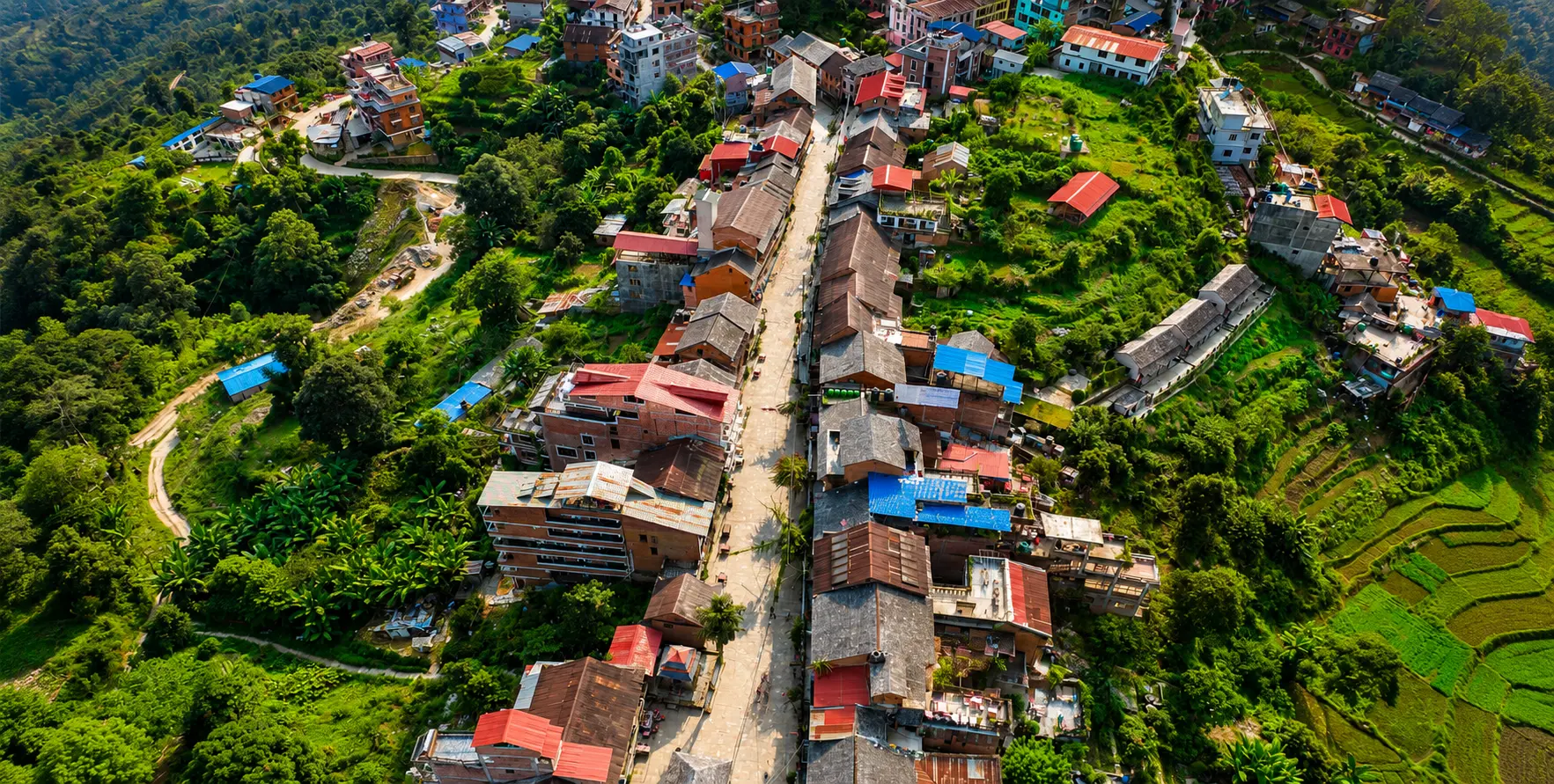
After breakfast, the vehicle leaves Pokhara and drives about 65 km east to Dumre, then climbs 8 km of winding road to Bandipur at about 1,030 metres. This beautifully preserved Newari town grew rich as a stop on the old trade route between India and Tibet, and its main street, a stone-paved bazaar lined with three-storey merchant houses, is closed to traffic.
Visit the Bindhyabasini and Khadga Devi temples, walk to the Tundikhel terrace for a wide view of the Himalaya above the Marsyangdi valley, and enjoy lunch on one of the old verandas. Two to three hours is enough for a relaxed visit.
From Bandipur, the vehicle returns to the Prithvi Highway and drives east through Mugling and along the Trishuli River to Naubise, before the final climb into the Kathmandu Valley. This is the same road our Bandipur-to-Kathmandu and Pokhara-to-Kathmandu ar services use. The whole day, including Bandipur, takes eight to ten hours.
If you prefer a shorter day, you can skip Bandipur and arrive in Kathmandu in seven to eight hours. The driver drops you at your hotel, and your Kathmandu-to-Pokhara tour ends.

Activity: 3 Days

Max. Altitude: 1400m

Meal: Not Included

Accommodation: Not Included

Includes & Excludes
What is included?
- A private, tourist-registered vehicle of your chosen size for all three days.
- A licensed, experienced driver who drives the Kathmandu-Pokhara highway weekly.
- Fuel for the full itinerary described on this page.
- The driver’s meals, overnight stay in Pokhara and daily allowance.
- Highway tolls, vehicle taxes and normal parking charges.
- Hotel pickup in Kathmandu and hotel drop-off in Pokhara, and the same on the return.
- Waiting time at Manakamana, during Pokhara sightseeing and at Bandipur.
- The pre-dawn Sarangkot sunrise drive and the full day of Pokhara sightseeing.
- Photo, meal and rest stops whenever you ask.
- Phone and WhatsApp support from our Kathmandu office throughout the tour.
What is not included?
- Hotels in Pokhara and, if needed, Kathmandu.
- Breakfast, lunch and dinner for travellers.
- The Manakamana cable car ticket.
- Entry fees at caves, waterfalls, museums, temples and viewpoints.
- Boating, paragliding, rafting and other optional activities.
- City guides, unless requested separately.
- Driving beyond the agreed route, such as a side trip to Gorkha or Chitwan.
- Travel insurance, tips and personal spending.

Trip Information

Trip Glance
The Kathmandu to Pokhara tour is a three-day private road trip with two nights in Pokhara. The vehicle covers about 200 km each way, plus local sightseeing, for a total round trip of roughly 450 to 500 km. The lowest point is the Trishuli valley at Kurintar, around 260 metres above sea level, and the highest is the Sarangkot viewpoint at 1,592 metres. The whole route is paved, no permits are needed, and there is no trekking or altitude concern. On this trip, a comfortable vehicle and a patient, experienced driver matter far more than four-wheel drive. For a wider look at travelling Nepal by road, read our guide Explore Nepal Your Way.
Choose Your Version of the Tour
The three-day round trip suits most travellers, but the same private vehicle can follow several other plans.
One-way tour (1 day). Kathmandu to Pokhara with Manakamana and all the scenic stops, ending at your Pokhara hotel. Ideal for trekkers starting from Pokhara and for travellers flying out of Pokhara. Trekkers can continue the next morning with our Pokhara-to-Nayapul transportation or the Pokhara-to-Ghorepani Poon Hill jeep hire.
Express round trip (2 days). Kathmandu to Pokhara on day one, then sunrise at Sarangkot and a half-day of sightseeing before driving back on day two. It is tiring but possible for travellers with very little time.
Bandipur overnight (4 days). The three-day tour includes an extra night in Bandipur on the way back, so you can watch sunset and sunrise from the hill town and walk to the Thani Mai viewpoint or Siddha Cave. You can also book the stages separately: Kathmandu to Bandipur by private car, and Bandipur to Pokhara by car.
Gorkha history tour (4 days)—an overnight in Gorkha on the way to Pokhara. Gorkha bazaar lies about 24 km north of the highway at Anbu Khaireni, and its hilltop palace, about 1,000 metres up, is the birthplace of Prithvi Narayan Shah, the king who unified Nepal. The palace complex includes the Kalika and Gorakhnath temples and a museum, with views of the Manaslu and Ganesh Himal ranges on clear days.
Pokhara in depth (5 days). Three nights in Pokhara, with extra time for Begnas Lake, the valley’s second-largest lake, a short walk to Dhampus or Australian Camp, and an adventure activity. Our Pokhara-to-Dhampus jeep and Pokhara-to-Kandee jeep cover the trailheads for these short hikes.
Route Overview: Kathmandu to Pokhara, Section by Section
The Prithvi Highway itself is 174 km long, from Naubise to Prithvi Chowk in Pokhara. Adding the climb out of the Kathmandu Valley brings the total to about 200 km. Knowing the road section by section makes planning stops easier.
Kathmandu to Naubise (about 26 km). From Kalanki, the road climbs to Nagdhunga on the valley rim and then descends a long series of hairpins to Naubise. This section is slow because trucks and buses queue on the bends, and it can take an hour or more. A road tunnel bypasses the climb, and drivers take whichever route is fastest that day.
Naubise to Mugling (about 85 km). The most scenic section. The road follows the Trishuli River through Galchhi, where the road to Dhunche and the Langtang region turns north, then Gajuri, Malekhu, Benighat and Kurintar. Terraced fields, banana trees, river beaches and rafting camps line the valley. This section also has the most road-widening work and is most exposed to monsoon landslides.
Mugling to Dumre (about 40 km). At Mugling, the Trishuli meets the Marsyangdi and the highway splits: the southern branch runs to Narayanghat and Chitwan, and the western branch continues to Pokhara. The road follows the Marsyangdi past Anbu Khaireni, the junction for Gorkha, to Dumre, the junction for Bandipur and for Besisahar.
Dumre to Pokhara (about 55 km). The road crosses rolling hills through Damauli, the headquarters of Tanahun district, where the Seti and Madi rivers meet,t and the Vyas cave is linked to the sage who composed the Mahabharata. It then passes Khairenitar and enters the Pokhara valley. On clear days, ys the Annapurna range and Machhapuchhre dominate the view for the last hour.
Guests who want more ground clearance and luggage room on this road often choose a private Scorpio from Kathmandu to Pokhara. Travellers making only the return journey can use our Pokhara to Kathmandu transport or hire a private Scorpio from Pokhara to Kathmandu.
Private Vehicle, Tourist Bus or Flight?
Three ways to travel between Kathmandu and Pokhara suit different travellers.
The flight. Domestic flights take about 25 minutes and offer quick views of the mountains on a clear day. They save time, but you see nothing of the countryside; flights are often delayed by weather, and baggage allowances are small. You also still need transport on arrival, which our Pokhara airport transfer team can provide.
The tourist bus. Tourist buses leave Kathmandu early each morning and arrive in Pokhara in the afternoon. They are a simple choice for solo travellers with light luggage. Still, they stop only at the company’s chosen restaurants, cannot visit Manakamana or Bandipur, and drop you at the tourist bus park rather than your hotel.
The private vehicle. A private car, jeep, Hiace, Coaster, or bus combines the road’s scenery with the comfort of door-to-door service. You decide when to leave and where to stop; you can visit Manakamana and Bandipur along the way, and the same vehicle becomes your sightseeing transport in Pokhara. For families, groups, older travellers, photographers, and anyone with plenty of luggage, it is by far the most comfortable way to travel. Travellers deciding between these options often find our guide to Nepal vehicle rental with roof luggage space and the Explore Nepal Your Way article useful.
Road Condition and Safety
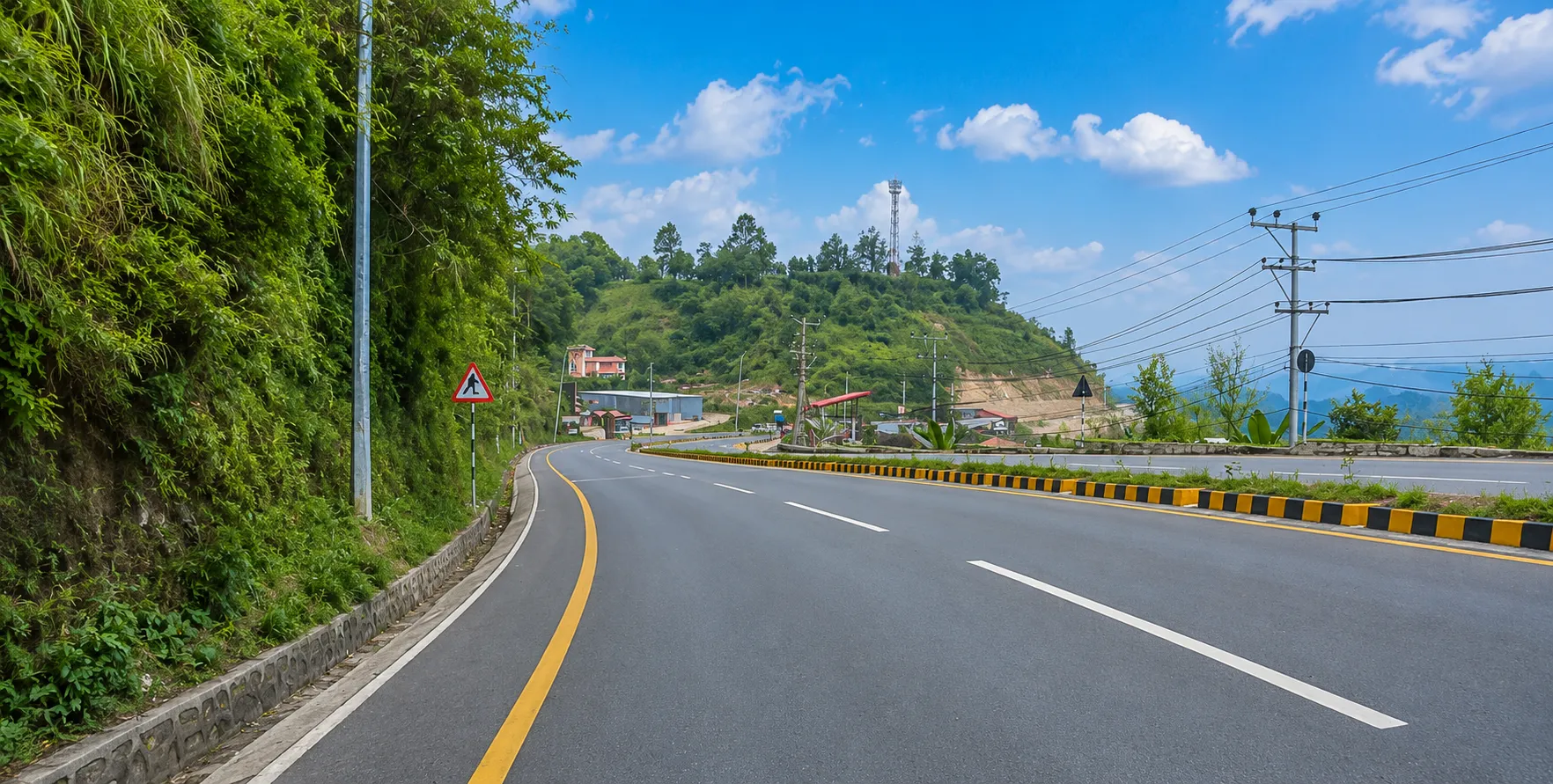
The Prithvi Highway is fully paved, but it is a busy mountain road rather than a motorway. Average speeds are usually 25 to 40 km per hour because of bends, heavy goods traffic and long stretches of road widening. Where the widening is complete, the road is wide and smooth; where it is still in progress, you will meet gravel, dust in the dry months, mud after rain and occasional one-way traffic control. This is why driving times on this page are always given as ranges.
The monsoon season brings landslide risk, especially between Naubise and Mugling. We clear most blockages within hours, but some take longer. Our office monitors road reports daily and will change your departure time or route if needed. In winter, morning fog can slow the first hours in the river valleys, and during the main festival holiday,e roads out of Kathmandu are extremely busy, so we recommend early starts in every season.
Our drivers are licensed for tourist vehicles, drive this highway every week, never overtake on blind bends and take a proper rest every two to three hours. We service vehicles on schedule and check them before every trip, fit seat belts in every seat, and avoid highway driving after dark. Learn more in our article on safe transportation during Nepal tours.
Vehicle Options for the Kathmandu to Pokhara Tour
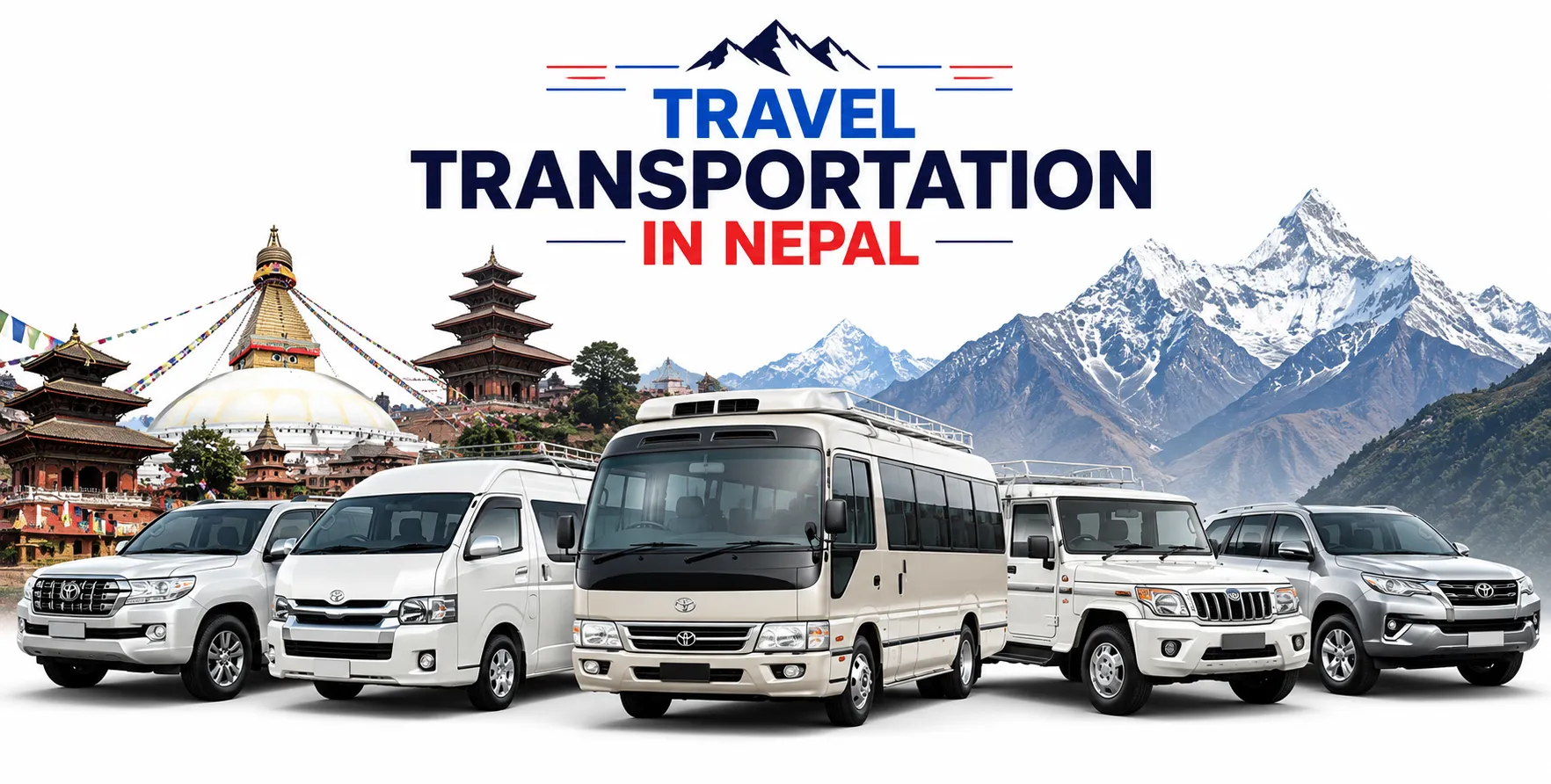
The right vehicle depends on your group size, luggage and how much space you want during two long highway days.
Car. A private sedan or hatchback for one to three travellers with normal luggage. It is quiet and comfortable on the paved highway and easy to park in Lakeside and at the sightseeing spots. Most couples and solo travellers book a private car with driver. Four adults with large suitcases should choose a jeep or Scorpio instead.
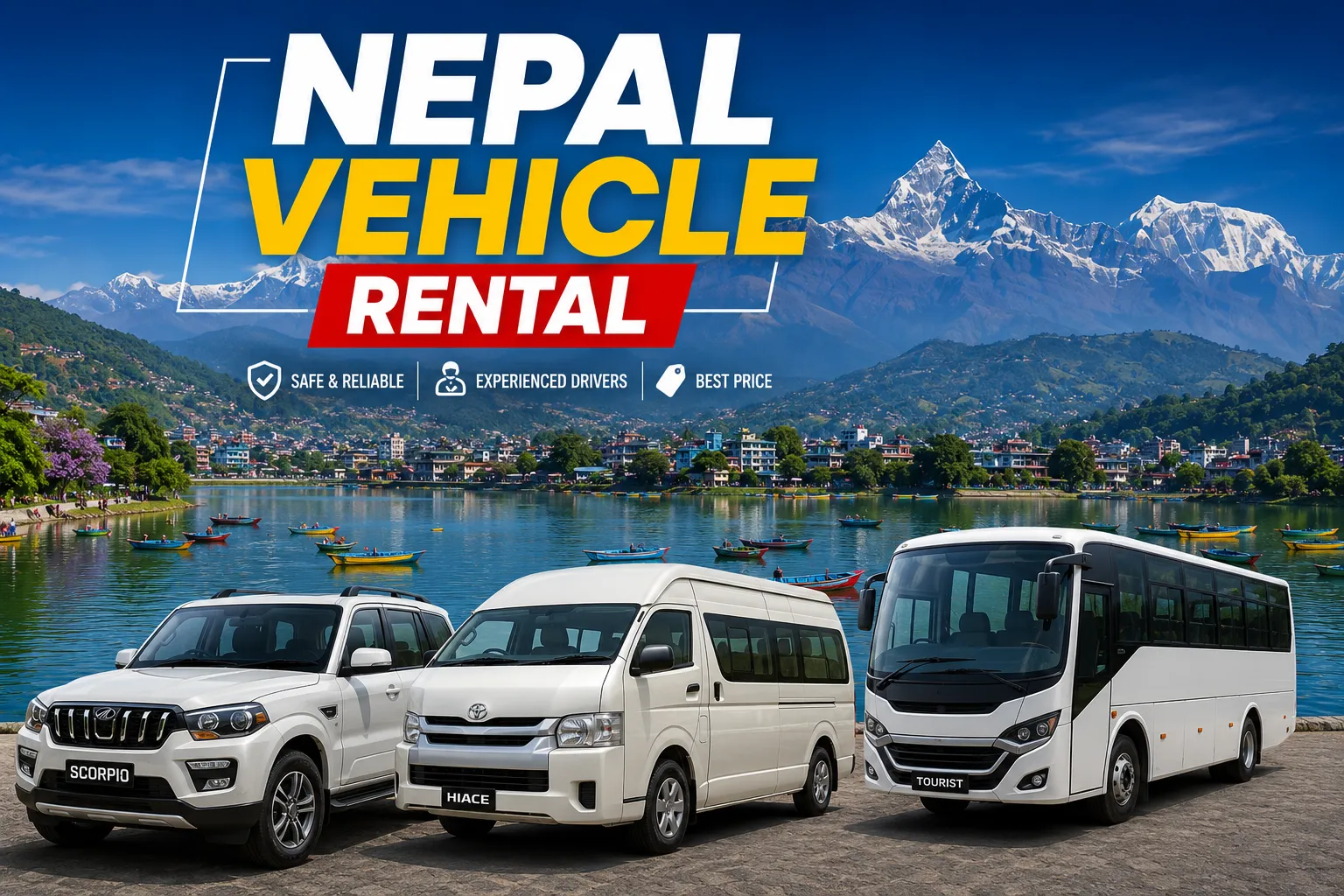
Jeep and Scorpio. A Mahindra Scorpio or similar jeep seats four to six people, with a higher seating position, firmer suspension and better clearance over construction zones and the steep roads to Sarangkot and Pumdikot. It is the most popular choice for families and small groups. See the full jeep hire fleet in Nepal.
Hiace. The Toyota Hiace van seats seven to thirteen people, with a high roof, large windows, air-conditioning and space for bags in the rear or on a roof carrier. It is the favourite vehicle of larger families, office teams and small tour groups. More details are on the Hiace page, and our note on Nepal vehicle rental with roof luggage space explains how luggage is carried.
Coaster bus. A Coaster seats 15 to 25 travellers in reclining seats, and has a luggage area. It reaches the Manakamana cable car station, most Lakeside hotels and the car park at Bandipur.
Bus. Groups of thirty to forty travel by full-size tourist bus. Some narrow roads, such as the climb to Sarangkot and Pumdikot, are better done in smaller local vehicles, which we can arrange for large groups.
The same vehicle and driver normally stay with you for the whole tour. Very large groups can be split across two vehicles.
Service Options: Private, One-Day, Two-Way and Shared
You can book our vehicles on the Kathmandu to Pokhara route in four ways.
Private hire. This tour is a private hire. The vehicle is reserved only for your group; nobody else joins, and the schedule is entirely yours.
One-day hire. A vehicle for a single day, such as the one-way tour from Kathmandu to Pokhara, or a day of sightseeing in Pokhara. Guests who arrive in Pokhara by other means often book only the sightseeing day.
Two-way hire. A round trip with the same vehicle, such as Kathmandu to Pokhara and back. The three-day tour is a two-way hire with a full sightseeing day in the middle. A one-way booking ends in Pokhara.
Shared. Individual seats on the morning tourist buses between the two cities, which you can reserve through our Kathmandu to Pokhara bus tickets, Kathmandu to Pokhara bus and Pokhara to Kathmandu bus pages. Shared seats suit flexible solo travellers but cannot offer Manakamana, Bandipur, sunrise drives or hotel-door service.
To discuss any of these options, send your dates and group size through our contact page.
Pickup and Drop Options
The tour normally starts from any hotel in the Kathmandu Valley, including Thamel, Lazimpat, Boudha, Patan and Bhaktapur, and ends at the same hotel or at Tribhuvan International Airport. Guests arriving on an international flight can start directly from the airport with our Kathmandu airport transfers team. The tour can also run in reverse, starting in Pokhara with a Pokhara airport transfer for travellers flying into the lake city. Visitors entering Nepal overland from India at Sunauli can start with the Sunauli to Pokhara car and continue to Kathmandu, a version described in detail on our Nepal tour from Gorakhpur page.
Best Time for a Kathmandu to Pokhara Tour
The tour runs all year, and each season gives the road and the lake city a different character.
Autumn is the peak season. After the monsoon t, the air is clear, the Annapurna range stands sharp above Phewa Lake, rice terraces along the Trishuli turn gold, and the great festivals of Dasain and Tihar fill the towns with colour. Manakamana is especially busy during Dasain, so allow extra time for the cable car. Book vehicles and hotels early.
Spring brings warm days, flowering rhododendrons on the hills around Sarangkot and Bandipur, and long evenings by the lake. Haze builds during the day, so the sunrise drive becomes even more important for mountain views.
Winter is cool and clear. Mornings are cold at Sarangkot, but days in Pokhara are mild and sunny, and mountain views are often at their best. Fog in the lower river valleys can delay early departures from Kathmandu.
Monsoon turns the countryside a brilliant green and fills waterfalls and rivers, including Devi’s Fall, to their most powerful levels. Clouds often hide the peaks, and landslides can slow the highway, so we add buffer time to both driving days. A private vehicle is the most flexible way to travel in this season.
Stops Worth Making Along the Highway
Part of the joy of a private road trip is stopping wherever something catches your eye. These are the stops our guests ask for most often.
- Nagdhunga viewpoint. A last look back over the Kathmandu Valley as you leave the city.
- Riverside stalls famous for fried fish from the Trishuli, and a popular breakfast stop.
- The meeting point of the Trishuli and Budhi Gandaki rivers, which drain the Manaslu region.
- Kurintar and Manakamana. The cable car station sits beside the highway, and Kurintar also has riverside resorts and restaurants for a relaxed lunch.
- A busy junction town at the confluence of the Trishuli and Marsyangdi, where the roads to Pokhara, Kathmandu and Chitwan meet.
- Anbu Khaireni. The junction for Gorkha and its historic hilltop palace.
- Dumre and Bandipur. The junction for the hill town of Bandipur and for Besisahar.
- The Seti and Madi confluence, the Vyas cave and a good stop for tea.
- Fruit stalls. Depending on the season, roadside sellers offer oranges, bananas, papaya, cucumbers and fresh corn.
Pokhara Sightseeing Guide
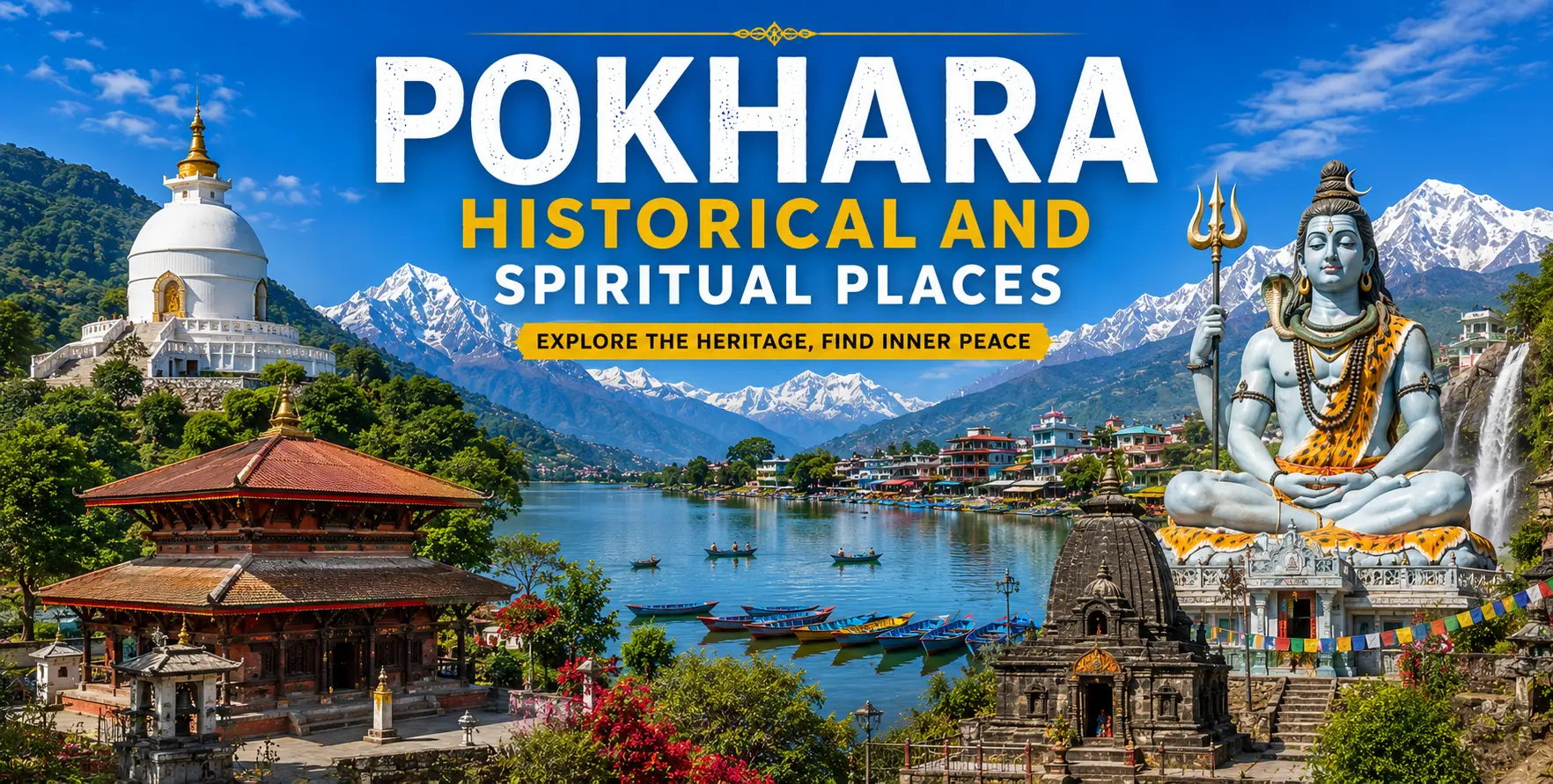
Pokhara offers far more than a single day can cover. Here is a quick guide to its main attractions, so you can choose your favourites for Day 2 or plan an extra day.
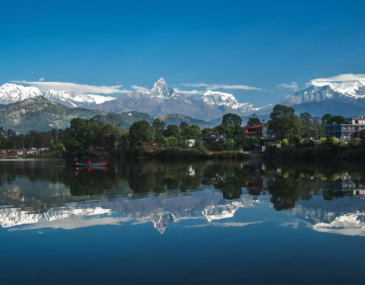
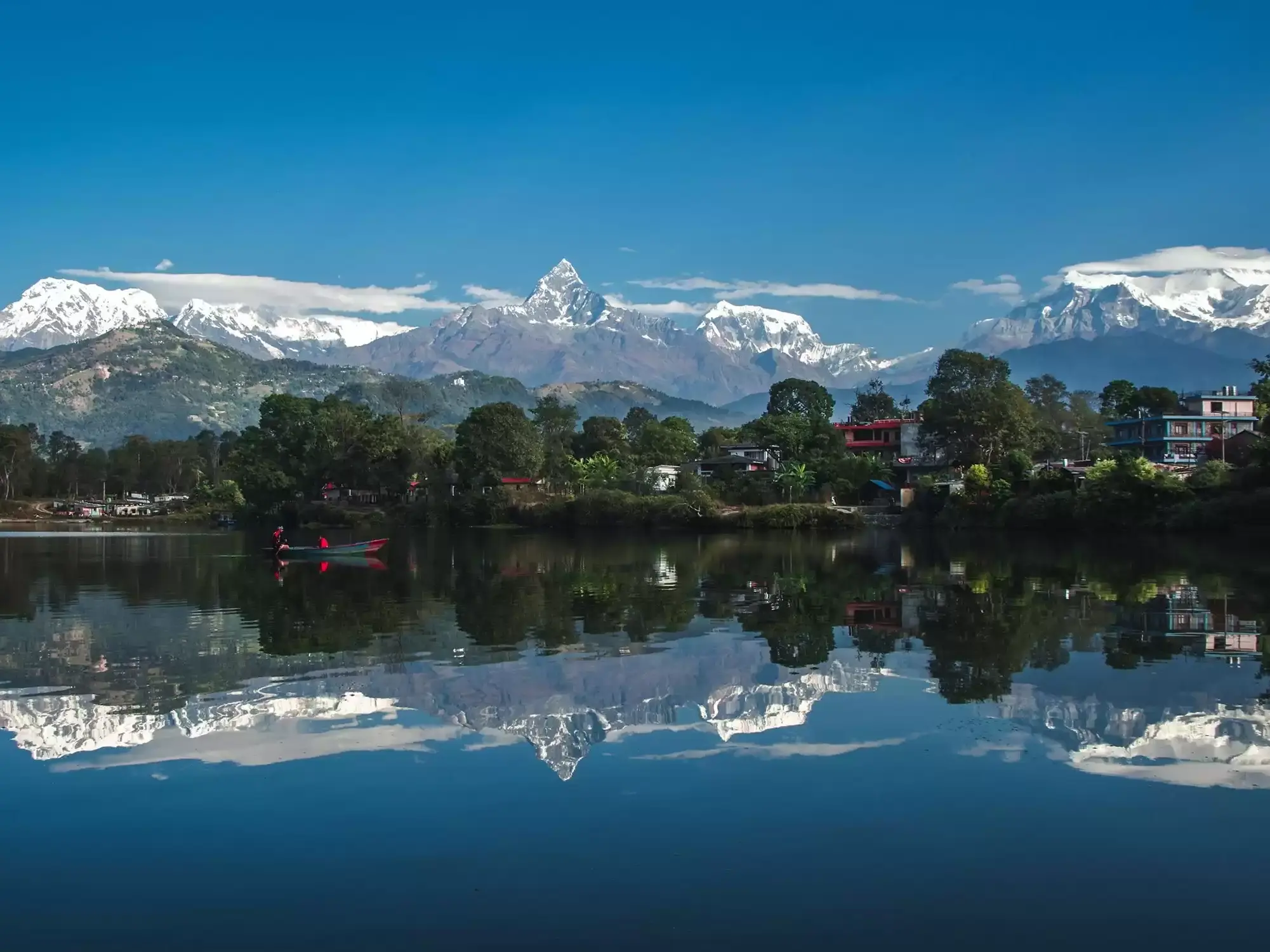
Phewa Lake. The largest lake in the Pokhara valley and the second-largest in Nepal. You can hire rowing and paddle boats along the Lakeside promenade, and on calm mornings Machhapuchhre reflects in the water.
Tal Barahi Temple. A small two-storey pagoda on an island in the lake, dedicated to the goddess Barahi and reached by boat.
World Peace Pagoda. A white stupa on the ridge south of the lake, reached by road or by boat and a short climb, with panoramic views of the lake, the city, and the Annapurna range.
Sarangkot. The classic sunrise viewpoint at 1,592 metres, and the launch site for paragliding.
Pumdikot. The 51-foot Shiva statue on its white stupa at about 1,500 metres, one of Pokhara’s newest landmarks and a superb viewpoint.
Devi’s Fall and Gupteshwor Mahadev Cave. A waterfall that disappears into an underground tunnel, and a cave temple directly opposite, where you can view the falls from inside the rock.
Mahendra Cave and Bat Cave. Limestone caves at Batulechaur on the northern side of the city. The Bat Cave is about 150 metres long and home to thousands of bats.
Seti River gorge. The milky Seti River flows through a gorge so deep and narrow that in places you can barely see the water below the bridges.
International Mountain Museum. Exhibits on the world’s highest mountains, the people of the Himalaya and the history of mountaineering.
Bindhyabasini Temple and the old bazaar. A hilltop temple to the goddess Bhagwati in Pokhara’s old trading quarter, with traditional Newari houses nearby.
Begnas and Rupa lakes. Quieter lakes about 15 km east of Lakeside, surrounded by fish farms, forests and small villages, ideal for a peaceful half day.
Entry Fees and Tickets
No trekking or road permit is needed for this tour. Visitors pay separately for the Manakamana cable car and for entry at Devi’s Fall, Gupteshwor Cave, Mahendra Cave, the Bat Cave, the International Mountain Museum, the Pumdikot viewpoint and some other sites. These are paid at the gate and are not part of the vehicle hire. Fees differ for foreign, SAARC, and Nepali visitors and change over time, so carry Nepali rupees in cash. You can hire boats on Phewa Lake at the boat stations along Lakeside, and book paragliding with licensed operators in Pokhara.
Traffic checkposts on the highway, such as those at Nagdhunga and Mugling, are routine for tourist vehicles. Your driver carries the vehicle papers; you only need your passport or a copy within reach.
Adventures and Onward Treks from Pokhara
Pokhara is Nepal’s adventure capital and the gateway to the Annapurna region. A free half day is enough for the Annapurna helicopter tour, the bungee and giant swing at the Kusma bungee jump, or a day on the Kali Gandaki rafting trip.
For walkers, the short and quiet Muldai View Trek and the classic Ghorepani Poon Hill Trek take four to six days, while the Annapurna Circuit Trek takes two to three weeks. Our trailhead transport includes the Pokhara to Ghandruk jeep, the Pokhara to Ulleri private jeep, the Pokhara to Jhinu Danda jeep and the Pokhara to Nayapul jeep. After your trek, the Ghandruk-to-Pokhara jeep and the Nayapul-to-Pokhara jeep take you back to the lake. Before you arrive, read our guide on booking a jeep from Pokhara.
Travellers seeking more comfort on the trail can choose one of Alpine Luxury Treks’ signature treks, and those drawn to the remote north can join the Upper Mustang Trek or the Upper Mustang luxury lodge tour.
Extend Your Journey
The road from Kathmandu to Pokhara connects to almost every other route in central Nepal, so extending the tour is easy.
- Chitwan National Park. Continue from Pokhara to the Terai for wildlife with our Pokhara to Chitwan by private car, and return to the capital with the Chitwan to Kathmandu private car. Our sister company arranges the Chitwan jungle safari.
- The birthplace of the Buddha is a long day south of Pokhara via the Siddhartha Highway, or via Chitwan using the Chitwan to Lumbini private car. The car from Lumbini takes you back to Kathmandu.
- Muktinath and Mustang. Pilgrims continue from Pokhara into the rain shadow of the Annapurna range with the Pokhara to Mustang jeep, following our Muktinath Yatra plan, and return with the Muktinath to Pokhara jeep.
- A complete Nepal holiday. Our Nepal holiday tour adds Kathmandu sightseeing, Lumbini and Chitwan to the Pokhara journey. For a Kathmandu Valley heritage tour before you leave, see our Kathmandu sightseeing tour and Bhaktapur Durbar Square day tour.
- Luxury and Himalayan journeys. Guests who want upgraded hotels and private guides can choose the Nepal Golden Triangle luxury tour, and travellers continuing beyond Nepal can join the Nepal Tibet Bhutan Tour or the Luxury Bhutan Tour.
Who This Tour Suits
First-time visitors. The road from Kathmandu to Pokhara shows the real Nepal: river valleys, hill villages, highway towns and the gradual appearance of the Himalaya.
Families. The driver stops whenever children need a break, and the mix of cable car, boats, caves, waterfalls and monkeys keeps young travellers interested. Child seats are available on request.
Senior travellers. No trekking and no high altitude; the vehicle drops you close to each site, and you can adjust the pace to your energy.
Pilgrims. Manakamana, Bindhyabasini, Gupteshwor Mahadev, Pumdikot, the World Peace Pagoda, and the temples of Bandipur make this a rewarding pilgrimage route for Hindus and Buddhists alike.
Trekkers. Use the one-way version to reach Pokhara comfortably before a trek, with all your gear in the vehicle and a stop at Manakamana along the way.
Groups. Office teams, school groups, and friends travelling together can stay on one schedule in a Hiace, Coaster, or bus.
Photographers. River gorges, sunrise from Sarangkot, Machhapuchhre reflected in Phewa Lake,e and the old streets of Bandipur make this one of Nepal’s most photogenic routes.
Packing and Preparation Tips
- Bring layers. Mornings at Sarangkot are cold for much of the year, while afternoons in Pokhara can be warm.
- Pack a light rain jacket in every season; showers are common in the hills.
- Wear comfortable shoes for steps at Manakamana, the caves and the stone streets of Bandipur.
- Keep a small day bag in the cabin with water, snacks, sunscreen, sunglasses, a hat and any medicine you need during the drive.
- If you suffer from motion sickness, take your usual remedy before the winding sections and ask for a front seat.
- A small torch is useful inside Mahendra Cave and the Bat Cave.
- Carry Nepali rupees for the cable car, entry fees and roadside snacks.
- Soft bags or medium suitcases fit vehicle boots and roof carriers more easily than oversized hard cases.
Travel Tips for the Road
- Leave Kathmandu by 7 am. Early departures avoid the heaviest truck traffic on the climb out of the valley and leave more time for Manakamana. If possible, visit Manakamana on weekdays; Saturdays and festival days bring long queues.
- Tell us your Pokhara hotel in advance. Some Lakeside lanes are narrow, and the driver will plan the best approach.
- Book paragliding and boating the day before so you can plan the sightseeing day around your time slot.
- In the monsoon season, keep part of the return day flexible in case of road delays.
- Let the driver know if you prefer a slower pace, more breaks or less air-conditioning; a private tour should work around you
- If you continue to high-altitude treks after the tour, read our notes on altitude sickness.
Why Choose Nepal Vehicle Hiring Pvt Ltd
Nepal Vehicle Hiring Pvt Ltd is a Kathmandu-based tourist transport company, and our drivers know the Kathmandu-to-Pokhara highway route best. Learn more about our team on the About Us page.
- Experienced highway drivers. Licensed, courteous and familiar with every rest stop, fuel station, viewpoint and alternative road.
- One vehicle, one driver. The same team for the whole tour, from hotel pickup to final drop.
- A full fleet. Cars, jeeps, Scorpios, Hiaces, Coasters, and buses from one company.
- Flexible plans. Add Gorkha or Bandipur, stay longer in Pokhara, or travel one way.
- Clear written plans. A day-by-day itinerary listing exactly what is included and what is not.
- Trek and tour partners. Through our sister companies, es we can link your road trip to a trek, a luxury holiday or a journey to Bhutan and Tibet.
Our article on quality transport in Nepal explains the standards we work to.
Related Vehicle Hire Services
- Kathmandu to Pokhara car for a simple one-way transfer.
- Kathmandu to Pokhara all-vehicle transfer to compare every vehicle on this route.
- Pokhara to Bandipur car for an overnight in the hill town.
- Sarangkot to Pokhara jeep for travellers staying on the ridge.
- Kathmandu to Besisahar private vehicle for the start of the Annapurna Circuit.
- Kathmandu to Chitwan private car and Pokhara to Chitwan bus for the jungle.
- Kathmandu to Syabrubesi jeep transfer for the Langtang Valley Trek.
- Kathmandu to Soti Khola jeep for the Manaslu Circuit Trek.
- Our complete list of trekking transport services and the Nepal Vehicle Hiring blog for more route guides.
How to Book
- Step 1: Send your details. Share your travel dates, group size, hotels and preferred vehicle through the Plan a Trip form, by email or on WhatsApp at +977 9814227196.
- Step 2: Receive your plan. We reply with a day-by-day itinerary and booking details for your group.
- Step 3: Confirm. Confirm the booking, and we reserve the vehicle and driver for your dates.
- Step 4: Travel. We send your driver’s name and phone number before departure, and he will pick you up from your hotel on Day 1.
Book Your Kathmandu to Pokhara Tour Today
From the temple city of Kathmandu to the mirror-calm waters of Phewa Lake, with a cable car ride, a Himalayan sunrise and a hill-town lunch along the way, this is the road trip every visitor to Nepal should take at least once. Reserve your Kathmandu to Pokhara tour with Nepal Vehicle Hiring Pvt Ltd and travel with a driver who knows every bend of the highway. Message us on WhatsApp at +977 9814227196, email [email protected], or fill in the Plan a Trip form, and your car, jeep, Scorpio, Hiace, Coaster or bus will be ready at your hotel door.
Frequently Asked Question (FAQ’s)
The distance is about 200 km. Without long stops, the drive takes seven to eight hours; with stops for Manakamana and meals, it usually takes eight to ten hours.
The flight takes about 25 minutes, but you miss the river valleys, hill towns and temples along the way. Driving in a private vehicle turns the journey into a day of sightseeing and gets you to Pokhara, too.
Yes. The cable car station is beside the highway in Kurintar, about 2.5 to 3 hours from Kathmandu. Allow two to three hours for the visit, and leave Kathmandu early.
For one to three people, a car is ideal; four to six travel well in a jeep or Scorpio; seven to thirteen in a Hiace; fifteen to twenty-five in a Coaster; and larger groups in a bus. With heavy luggage, choose one size larger.
Yes. One driver and one vehicle normally stay with you for all three days. We arrange the driver’s meals and overnight stay in Pokhara.
Yes. The one-way version ends at your Pokhara hotel, which is ideal for trekkers and for travellers flying out of Pokhara.
No. The package includes the vehicle and driver. Drivers know the route and the sites well but are not licensed guides. You can arrange a guide upon request.
The road is paved and very busy. It is winding and has sections under widening, so an experienced driver is essential. Our drivers avoid night driving, take regular breaks and follow daily road reports.
Our office monitors the highway every day. If we expect a landslide or strike, we change the departure time or route. If a long delay is unavoidable, we reschedule the remaining days with you.
Yes. The standard plan includes Bandipur on the return day, and you can add an overnight in Bandipur or Gorkha for a four-day version.
Yes. No trekking and no altitude concerns; the driver stops whenever you need, and we can adjust the pace. Please tell us about any special needs in advance.
Are hotels, meals and entry fees included?
No. Guests pay separately for hotels, meals, the cable car ticket, entry fees, and optional activities. We are happy to suggest hotels in Pokhara and Bandipur.
Yes. The driver can meet you at Tribhuvan International Airport and either take you to your Kathmandu hotel or, if you arrive early in the morning, drive directly to Pokhara.
Send your dates, group size, and preferred vehicle via WhatsApp at +977 9814227196, by email to [email protected], or through the Plan a Trip form, and we will confirm your group’s plan.

Reviews on Kathmandu to Pokhara Tour by Private Car, Jeep or Hiace

Related Trips