Plan a Trip


The Importance of Safe Transportation During Nepal Tours – Complete Guide
The Importance of Safe Transportation During Nepal Tours – Complete Guide
When travellers plan a Nepal tour, the planning phase is dominated by conversations about destinations, itineraries, trekking routes, heritage sites, and wildlife safaris. The conversation that should receive equally serious attention — but rarely does until something goes wrong — is about how they will get between all of those places. This is not a secondary logistical question. In Nepal’s specific geographic and infrastructure context, the choice of transport is one of the two or three most consequential decisions of the entire trip, carrying implications for safety, time, comfort, flexibility, and the overall quality of the Nepal experience that extend far beyond the simple question of how much a vehicle costs.
Nepal is, by any honest and current assessment, a country where road travel carries genuine and documented safety risk — not theoretical risk, not the kind of risk that exists in every country and is essentially academic, but real and measurable risk that multiple authoritative 2026 sources identify as the single most significant safety concern for tourists visiting the country. One of the most comprehensive and honest 2026 Nepal safety guides states without ambiguity: road accidents are the single biggest danger to travellers in Nepal. Mountain highways are narrow and winding, some buses are overcrowded and driven aggressively, and monsoon rain makes things worse. The Australian government’s official travel advisory for Nepal, updated in 2026, is similarly direct: travel on public buses and vans is dangerous. These vehicles are overcrowded and poorly maintained. Intercity buses are involved in frequent accidents with multiple deaths.
This is not alarmism — it is accurate information that travellers deserve to receive clearly and early, so they can make transport choices informed by the real landscape of Nepal’s road safety rather than by a vague sense that all ground transport is essentially equivalent. It categorically is not equivalent. The gap in safety outcomes between a well-maintained private vehicle with a licensed, experienced, route-familiar driver and an overcrowded, poorly maintained local bus driven aggressively on the same mountain road is not marginal — it is the gap between a journey that arrives safely and one that may not. And the cost difference between these options, when honestly calculated for a group of four or more, is frequently smaller than people assume and sometimes negligible once secondary transfers are included.
This guide from Nepal Vehicle Hiring Pvt Ltd — written with the specific intention of providing honest, actionable safety guidance rather than promotional content — covers every dimension of safe transportation during Nepal tours in 2026: the specific risks of Nepal’s road environment, the transparent comparison between transport options, the driver quality standards that matter most, the seasonal safety variables, the insurance requirements, and the operational standards that Nepal Vehicle Hiring maintains across its complete fleet and route network. For complete trekking experiences, our sister companies, Trek Nepal Himalayas and Alpine Luxury Treks, apply the same safety standards to their guided mountain programs.
Contact Nepal Vehicle Hiring: vehiclehiringnepal.com | Call/WhatsApp: +9779814227196
Understanding Nepal’s Road Safety Reality – The Facts Every Tourist Should Know
The foundation of safe transportation decision-making in Nepal is an accurate understanding of what the road environment actually is — not the sanitised version that treats all roads as generically manageable, and not the alarmist version that makes Nepal sound impossibly dangerous, but the honest, data-grounded picture of a country whose road network presents specific, identifiable, and largely manageable risks for those who understand them.
Nepal’s road fatality rate, measured by the World Health Organisation, stands at approximately 28.2 deaths per 100,000 population — a figure that is nearly double the Asia-Pacific regional average and substantially higher than most countries from which Nepal’s international visitors originate. This is not a figure to be dismissed as a general developing-country statistic — it reflects specific, identifiable structural factors in Nepal’s transport environment that translate directly into elevated risk for every road user, including tourists.
The factors behind this figure are well documented and consistent across 2026 sources. Nepal’s mountain roads are carved into geologically young, inherently unstable terrain — narrow, with frequent blind corners, minimal or no crash barriers on cliff-edge sections, and road surfaces that deteriorate rapidly under the combined effects of monsoon rainfall, vehicle loads, and seismic activity. The public bus fleet includes vehicles with genuinely questionable mechanical maintenance, operated under economic pressures that incentivise overloading and schedule adherence over safe driving. The driving culture on mountain roads includes overtaking on blind bends, driving at night on unlit roads, and schedule-driven aggression that produces accident rates consistent with WHO data. And passenger loading practices on local buses routinely exceed the vehicle’s designed capacity—passengers in the aisle, luggage on the roof, and sometimes people riding on the exterior—creating conditions where even a relatively minor accident becomes more serious than it would in a properly loaded, properly maintained vehicle.
The most important contextual point, consistently made by every credible 2026 Nepal safety guide: the risk is not evenly distributed across all transport options. As one 2026 specialist safety guide states precisely: road travel is the single biggest danger to travellers in Nepal, by a wide margin — but the risk is dramatically reduced by choosing tourist buses or private vehicles over cheap local buses on long mountain routes, avoiding overnight road journeys, and flying the longer legs when budget allows. This is the essential message: the risk is real, documented, and specific to certain transport choices — and it is largely avoidable through transport decisions that are available to every tourist who plans
The Transport Safety Hierarchy – What the Evidence Shows
Every reliable Nepal transport safety analysis places the country’s transport options in the same order of safety preference, and understanding this hierarchy is the single most useful piece of transport safety knowledge any Nepal visitor can have.
Private Vehicle Hire – The Safest Option for Nepal Road Travel
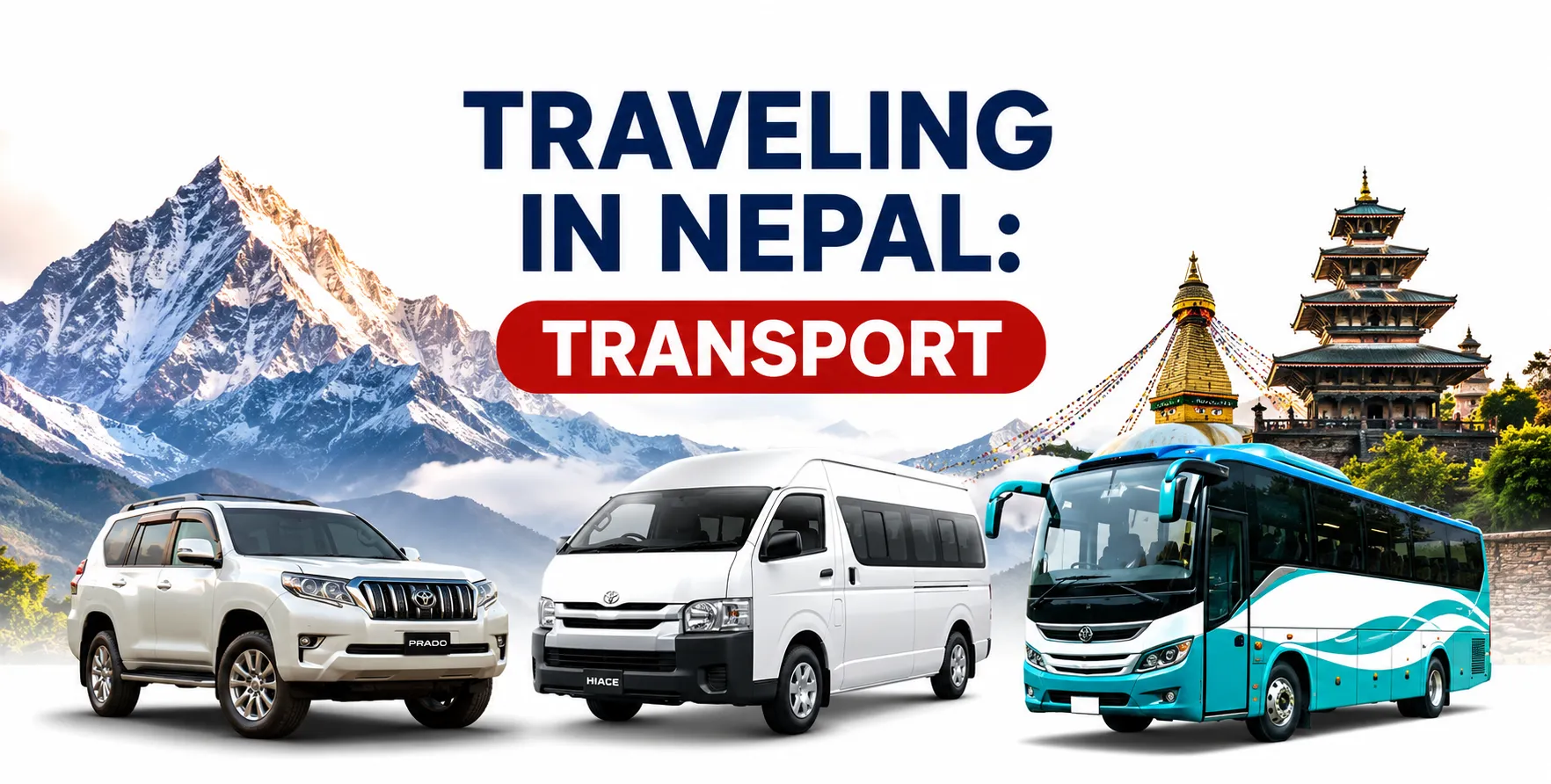
Every credible 2026 Nepal transport safety guide reaches the same conclusion: private vehicle hire with a professional, licensed, route-experienced driver is Nepal’s safest ground transport option. As Nepal Hiking Team’s 2026 transport guide states directly: private jeeps and taxis offer the most flexibility and safety. Multiple other 2026 specialist guides are equally direct. The reasons are structural rather than incidental — they reflect characteristics of private vehicle hire that are systematically different from every alternative in ways that directly affect safety outcomes.
A private vehicle carries only your group, so it is never overloaded beyond its designed passenger capacity—one of the primary structural factors in Nepal bus accident severity. The operator selects and maintains the vehicle specifically for tourist-standard road use, rather than using a high-mileage public vehicle whose maintenance schedule is driven by minimum economic viability. An operator assigns the driver to your specific route based on their experience on that road—not an anonymous driver with an unknown background and incentives that may not align with passenger safety. The group sets the departure time rather than a schedule that may require driving in dangerous conditions to make up lost time. And critically, if you ask the driver to slow down or stop because you feel unsafe, you are asking your own contracted driver whose entire professional relationship is with your group — not a public bus driver whose obligation is to a timetable and forty other passengers. The Australian government’s 2026 travel advisory specifically names this option: if you are concerned, ask your driver to slow down and drive safely — advice that only makes practical sense if you have a private driver to ask.
Tourist Buses – A Significant Improvement Over Local Buses
The tourist bus category—designated coaches operating exclusively on tourist-route corridors with fixed seating and no overloading—represents a significant safety improvement over local public buses and, according to most safety advisories, is the minimum acceptable transport standard for any inter-city journey in Nepal. Tourist buses avoid overloading, serve only tourist routes where drivers become familiar with the route, and attract operators who understand that safety reputation has commercial consequences in the tourist market. Nepal Hiking Team’s 2026 guide recommends tourist buses or privately hired vehicles for leaving the Kathmandu Valley for safety reasons, explicitly distinguishing these from local buses. The Australian government advisory, quoted above, makes a similar distinction between dangerous public buses and tourist-standard transport.
However, tourist buses retain certain structural limitations that private vehicle hire eliminates: they operate on fixed schedules that may require driving in compromised conditions to meet departure times. They deliver to fixed bus parks rather than hotel doors, requiring secondary transfers at both ends; and the driver-to-passenger relationship is not one of personal accountability—a tourist bus driver has the same obligation to his schedule as a local bus driver, even if his vehicle is better maintained. Tourist buses are a reasonable option for budget-constrained solo travellers who cannot afford private hire; for groups of four or more, private vehicle hire is typically competitive per head and categorically safer.
Local Public Buses – The Category Every Safety Guide Recommends Against
Every credible 2026 Nepal safety source—government travel advisories, specialist travel safety guides, and professional Nepal operators—consistently and explicitly recommends against local public buses for inter-city tourist travel. The Australian government advisory says travelling on public buses and vans is dangerous. These vehicles are overcrowded and poorly maintained. Intercity buses are involved in frequent accidents with multiple deaths.
TA2026 Nepal safety specialist notes that some buses are overcrowded and driven aggressively. Nepal Hiking Team 206 strongly recommends tourist buses and privately hired vehicles over local public buses. The consensus is complete, and the recommendation is unambiguous. The low headline fare of a local bus does not represent a genuine cost saving when the safety trade-off is properly understood — and for any group of four or more, the per-head cost difference between a private vehicle and a local bus is frequently smaller than the value of even a single additional day of Nepal travel that a serious road accident would eliminate.
Night Travel – The Risk Multiplier
Every 2026 Nepal transport safety source makes the same specific recommendation about night travel, and Nepal Vehicle Hiring applies it as an operational policy rather than a suggestion. The Nepal safety guide states this most clearly: road accidents are the single biggest danger to travellers in Nepal — avoid overnight road journeys where possible. The specialist guide is even more emphatic: avoid night buses where possible because tired drivers increase road-safety risks, and overnight journeys also increase the risk of theft. Nepal Vehicle Hiring’s operational standard is equally clear.
All mountain route departures are planned for early morning to ensure arrival before dark, and night driving on any route above Category 1 highway classification is not permitted. The reasoning is straightforward: Nepal’s mountain roads have no street lighting in rural areas, no barriers on cliff-edge sections, and minimal road marking. Every risk factor present in daytime mountain driving is compounded in darkness. Driver fatigue, already a major accident factor after long mountain drives, worsens at night. Debris from rockfalls and landslides that would be visible in daylight becomes invisible at night. The simple rule — always travel by daylight on Nepal’s mountain roads — eliminates one of the most significant avoidable risk factors in Nepal ground transport.
The Driver Quality Dimension – Why It Matters More Than the Vehicle
In most countries, vehicle quality is the primary determinant of transport safety — a newer, better-maintained car is safer than an older one with equivalent drivers. In Nepal, the driver’s quality and experience are arguably the more important variable, because the demands Nepal’s road environment places on driving skill and local knowledge exceed what any vehicle design feature can compensate for.
Consider what Nepal’s mountain road driving actually requires from a driver. On a route like the Kathmandu to Syabrubesi road, the driver must manage narrow single-lane sections through the Ramche landslide zone, judge the appropriate speed for loose-gravel descents in varying seasonal conditions, know which sections carry active rockfall risk and time the passage accordingly, navigate the unlit road sections near Dhunche after dark if the departure was too late, and manage the communication with oncoming vehicles on single-track sections where one vehicle must reverse to the last passing point. None of this is a skill that any licensed driver possesses by default — it is knowledge and judgment acquired through specific, repeated experience on that specific road. A driver who has made the Kathmandu–Syabrubesi run one hundred times has a fundamentally different safety profile on that route than a driver who is making it for the fifth time — and both are categorically different from an urban Kathmandu driver who has never driven it at all.
Nepal Vehicle Hiring’s driver assignment policy addresses this directly: drivers are assigned to routes where they have specific, documented prior experience, and no driver is dispatched on a mountain route without the route familiarity safe mountain driving requires. This is n’ta market differentiator Nepal Vehicle Hiring invented—it is a standard every responsible Nepal vehicle hire operator should maintain, and every tourist should verify before booking. The verification questions are simple and should be asked: Has this driver driven this specific route before? How many times? When did they last drive it? And does the operator have a policy against night driving on mountain roads? An operator that responds defensively to these questions is giving you its own answer.
Driver licensing is the second critical quality dimension. Nepal’s commercial vehicle licensing system requires a Class A+ license for mountain routes, with a heavy-vehicle endorsement. Nepal Vehicle Hiring verifies every driver’s licence. This step should be standard, but informal transport operators in the Thamel taxi and freelance vehicle-hire market do not universally practise it. When a visitor hires a vehicle through an informal street arrangement or an unverified booking platform, the assigned driver’s licensing status is genuinely unknown, and the consequences of that uncertainty are not theoretical in Nepal’s mountain road environment.
Vehicle Maintenance and Safety Standards – What to Look For and What to Avoid
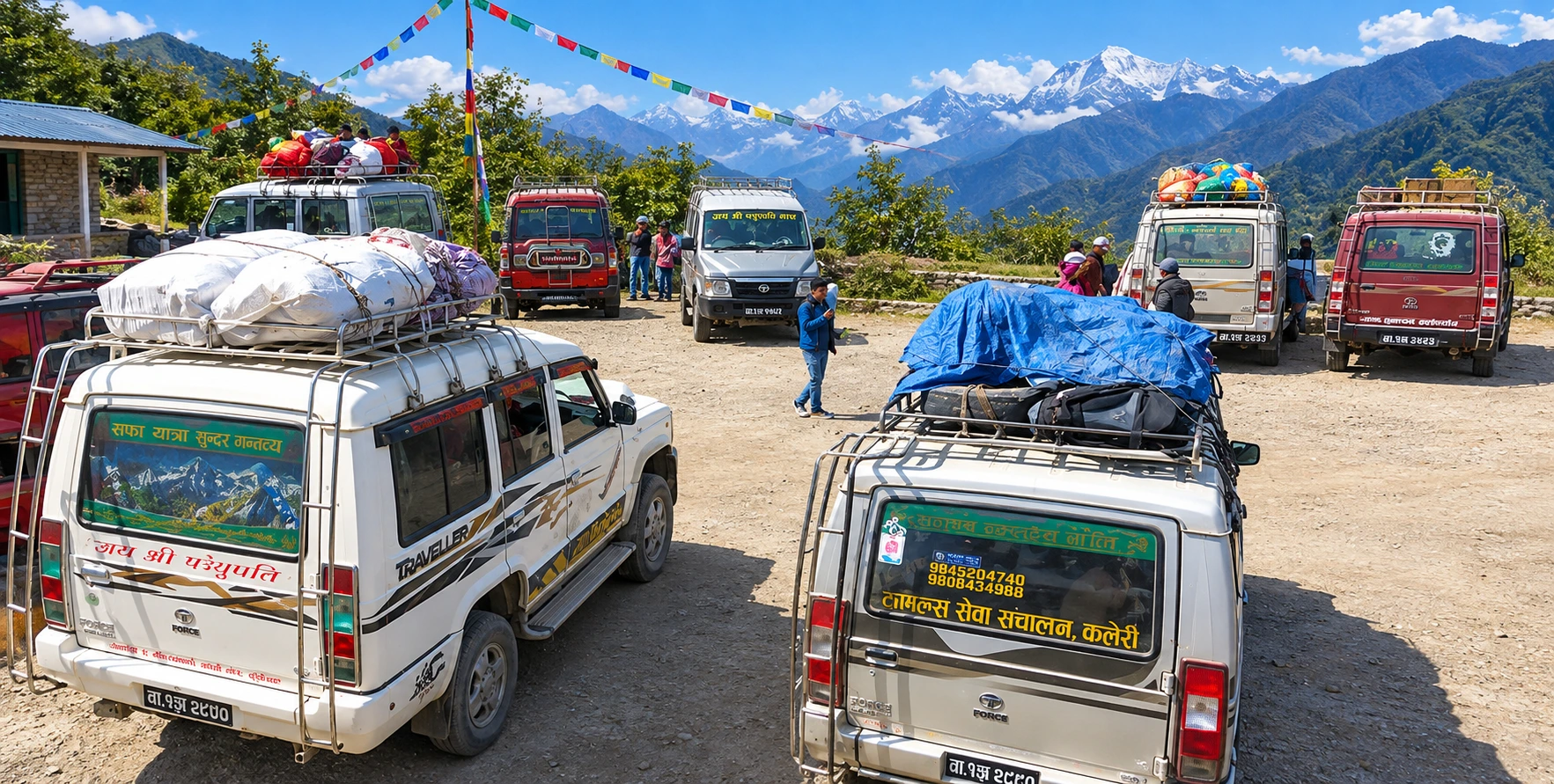
A vehicle’s mechanical condition is the third safety dimension in Nepal’s transport environment, and the gap between the best and worst options in the market is much wider than in more regulated transport markets. Understanding what to look for — and what warning signs indicate a vehicle you should not board — is practical safety knowledge every Nepal tourist should have.
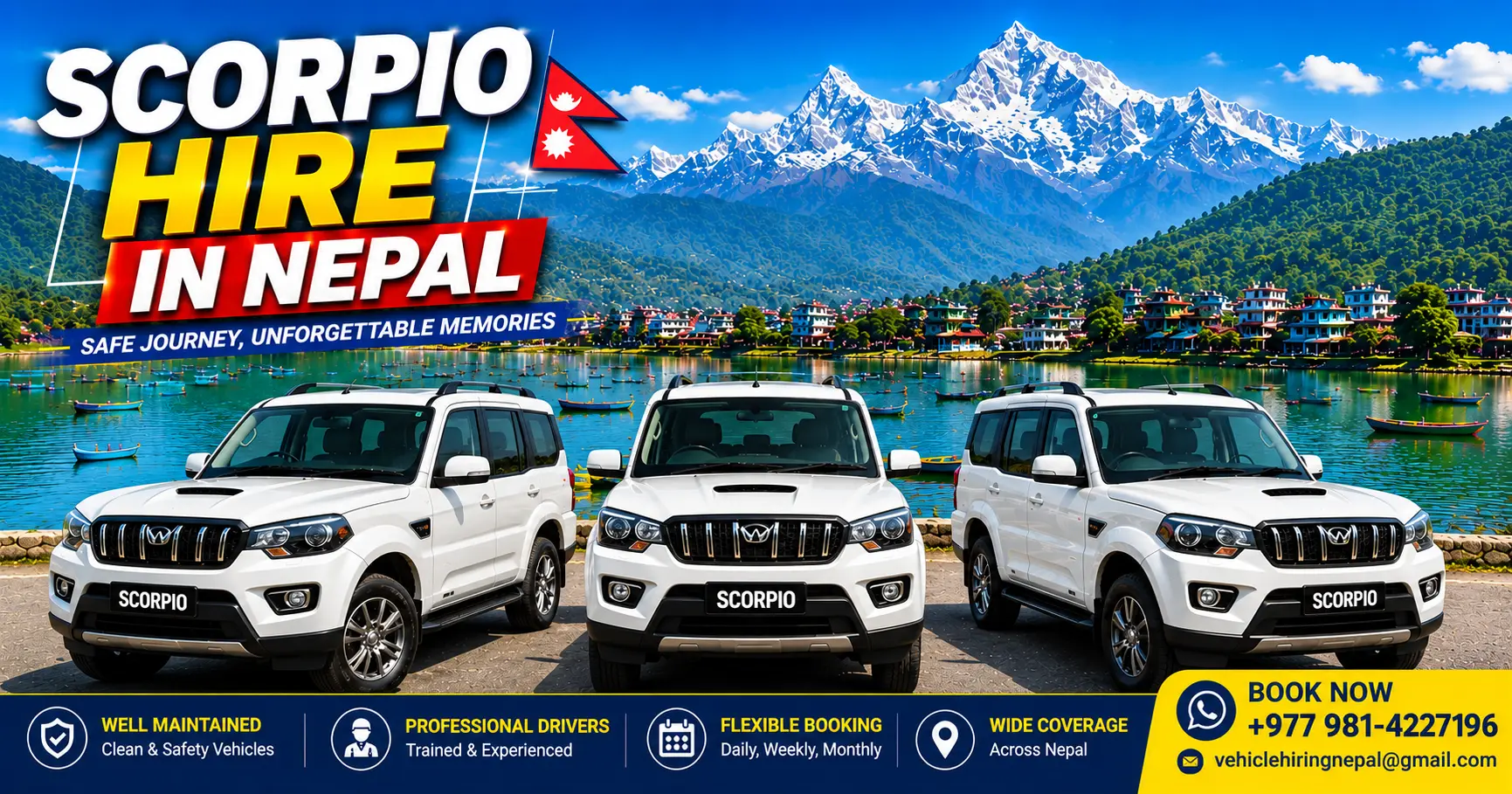
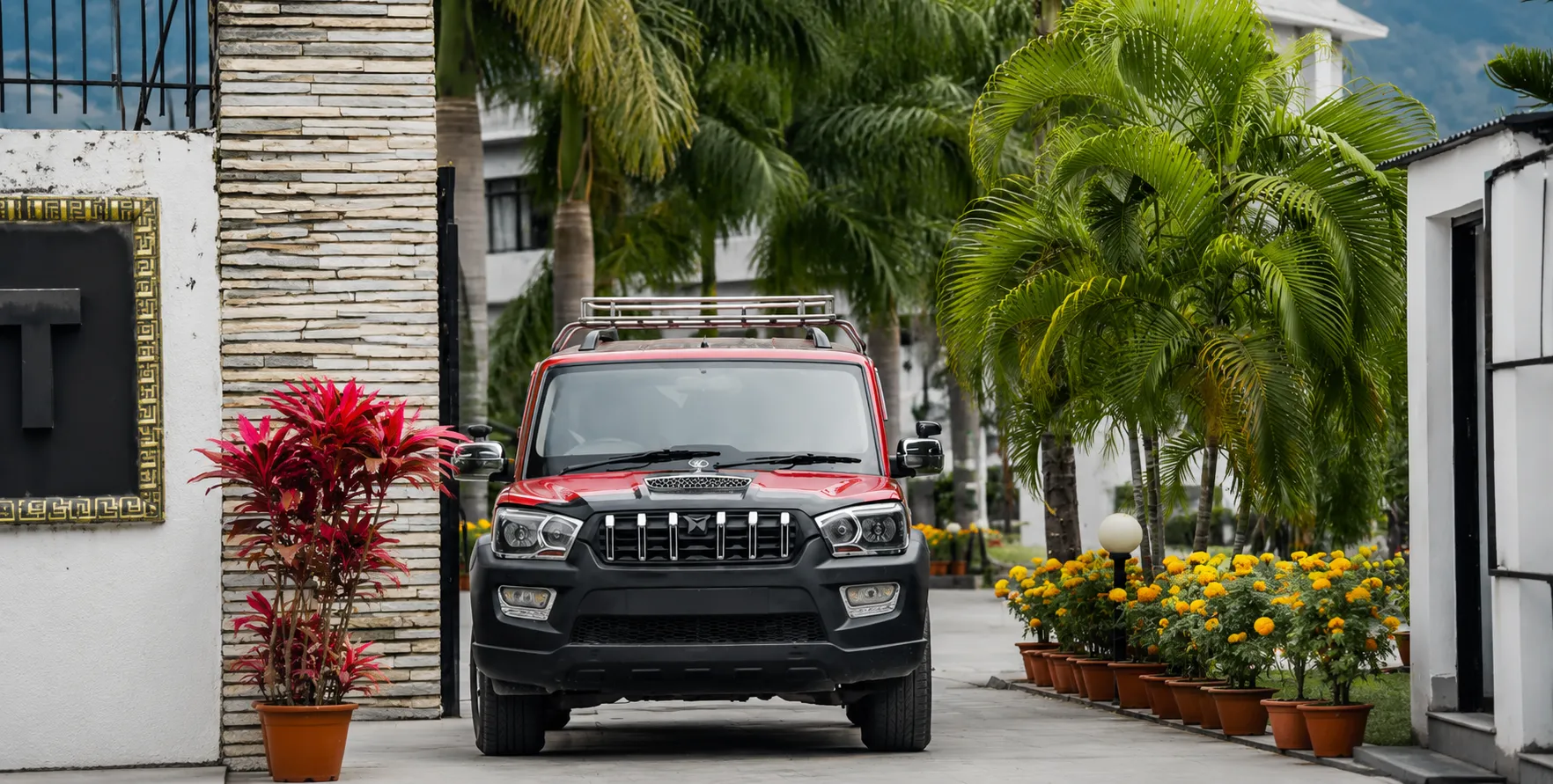
For 4WD vehicles on mountain routes, the most important safety-relevant specification is the actual functionality of the 4WD system — not merely whether the vehicle is nominally described as 4WD, but whether the switchable 4H and 4L modes engage correctly, the differentials function as designed, and the vehicle genuinely provides the traction and stability improvement that the mountain road requires. A Mahindra Scorpio or Bolero 4WD in good condition provides genuine capability on Nepal’s mountain roads; the same vehicle with a dysfunctional 4WD system is essentially a standard car on terrain that demands 4WD. Nepal Vehicle Hiring’s pre-departure vehicle check protocol verifies 4WD engagement before every mountain route departure.
For tyres specifically, the condition is visible and checkable before boarding: tread depth adequate for wet mountain roads, sidewalls without visible cracks or bulges, and tyre pressure consistent across all four wheels. The single most common cause of vehicle failure in Nepal mountain road accidents is tyre failure—blowouts on steep descents, loss of traction on wet gravel, and loss of control when underinflated tyres overheat on long descents. Nepal Vehicle Hiring’s fleet maintenance protocol includes tyre inspection before every departure and replacement at the first indication of wear that approaches the safety threshold.
For braking systems, the demands of Nepal’s mountain descents exceed what most vehicle operators from flat-country contexts understand. The Prithvi Highway descent from Mugling toward Narayanghat, the Syabrubesi road descent from Dhunche, and the Kali Gandaki valley descent from Muktinath toward Beni all involve extended downhill sections where brake fade — the loss of braking effectiveness as brake systems overheat under sustained load — is a genuine operational risk if brakes are not maintained to the standard the route demands. Nepal Vehicle Hiring’s mountain-route vehicles receive brake-system inspections before extended descents, and drivers are briefed on engine-braking techniques as the primary descent-management tool on routes where brake-fade risk is elevated.
Monsoon Transport Safety – The Season That Changes Everything
Nepal’s monsoon season (June–September) creates a fundamentally different transport safety landscape than the dry season—one that affects every road route in the country to varying degrees, with mountain routes disproportionately affected. Understanding specific monsoon transport risks and how professional operators manage them is essential for any visitor travelling during this period.
The primary monsoon road hazard is landslides and rockfall. Nepal’s mountains receive some of the world’s highest monsoon rainfall — Lumle near Pokhara, for example, receives over 5,000 mm annually — delivered in intense bursts that saturate the thin mountain soil above the road and trigger debris flows that can cover a mountain road in minutes. A vehicle that departed a section of road thirty minutes before a landslide covers it may have a completely safe journey; a vehicle that departed thirty minutes later may face an impassable debris field with no safe reversal route in a single-lane section above a river gorge. This is not a manageable risk like icy roads or heavy rain in a flat-terrain country —it is a genuinely unpredictable hazard that can materialise faster than any vehicle can respond.
Professional Nepal transport operators manage monsoon landslide risk through pre-departure intelligence rather than in-journey reaction. Nepal Vehicle Hiring’s daily road condition monitoring service aggregates information from local government road management authorities, district police checkpoints, and our own driver network on active routes to build a current picture of road conditions on every mountain route before dispatching any vehicle. When a section of the Ramche zone on the Syabrubesi road reports active landslide activity, Nepal Vehicle Hiring does not dispatch vehicles on that route until conditions are confirmed clear — even if a client has a confirmed booking and a planned departure. The booking is rescheduled, the client is notified with an honest explanation, and the vehicle departs when conditions are safe. This is not a service failure — it is the service, and it represents the most meaningful difference between a professional operator and one that sends a vehicle regardless of conditions.
The secondary monsoon road hazard is deterioration of the road surface. Monsoon rainfall transforms gravel mountain roads from their dry-season passable state into mud-covered tracks where vehicle traction drops dramatically, and wheel ruts can deepen enough to trap a vehicle with insufficient ground clearance. The 4WD vehicles that Nepal Vehicle Hiring deploys on all mountain routes are specifically chosen for their ability to manage this deteriorated surface condition — ground clearance adequate to pass over wheel ruts without grounding, 4WD traction management to maintain momentum through muddy sections, and diesel engines with low-RPM torque that can extract a vehicle from soft surface situations that would strand a standard petrol car.
Travel Insurance – The Safety Net That Completes Safe Transport Planning
No guide to safe transportation in Nepal is complete without addressing travel insurance — because the financial consequences of a transport-related incident in Nepal can be severe enough to be genuinely catastrophic without appropriate coverage, and the decision to travel with inadequate insurance is itself a transport safety failure that no amount of vehicle quality or driver experience can eliminate.
Nepal’s 2026 travel safety advisories are consistent and specific on this point: travel insurance with helicopter evacuation coverage is mandatory for any serious Nepal journey, not optional. As one 2026 specialist guide for trekking tours states explicitly: we refuse to continue ascent when a client shows worsening AMS symptoms, even when they argue otherwise — and we require travel insurance with helicopter evacuation coverage before any trek begins. Multiple government travel advisories emphasise comprehensive travel insurance covering medical evacuation, helicopter rescue, and trip cancellations as a baseline requirement, not an optional add-on. The practical reason is straightforward: a helicopter evacuation from a remote Nepal mountain road accident or trekking medical emergency costs USD 5,000–15,000, a sum that becomes the individual traveler’spersonal financial responsibility without insurance and that most individuals cannot absorb without serious financial consequence.
For transport specifically, the insurance dimension extends to vehicle insurance verification. Nepal Vehicle Hiring’s vehicles carry passenger insurance coverage for every occupied seat on every journey—not merely third-party coverage, but coverage that applies to passengers in the event of an accident caused by any party. This isn’t universal in Nepal’s vehicle hire market, particularly in the informal sector, and it’s one of the specific insurance questions visitors should verify with any operator before booking.
The Real Cost of Unsafe Transport – Why Price Is Never the Right Primary Criterion
The most persistent driver of unsafe transport choices in Nepal is a simple economic calculation that, on close examination, is systematically miscalculated in ways that make the unsafe option seem cheaper than it is.
The direct headline cost of a local bus ticket from Kathmandu to Pokhara is approximately NPR 700–1,000 per person. A Nepal Vehicle Hiring private car for the same journey costs about SD 100–120 for the whole vehicle—which, divided among four passengers, is NPR 3,300–4,000 per person at 2026 exchange rates. The headline cost comparison favours the bus by a factor of four. But this comparison omits the secondary taxi from the Kathmandu hotel to the bus park (NPR 300–500), the secondary taxi from the Pokhara bus park to the Lakeside hotel (NPR 300–500), the 6–8 hour journey time vs 6–6.5 hours, the absence of any stop flexibility, the luggage roof-rack exposure risk, and the complete absence of timing control. When you include these factors in the actual cost calculation, the real cost difference for a group of four between a private vehicle and a local bus is often NPR 1,500–2,000 per person, about USD 10–15 per person. This is the right comparison, and framed this way, the private vehicle is a straightforward choice for any group that values safety, comfort, and time.
The deeper point about cost and safety is more fundamental: a Nepal tour cut short or permanently interrupted by a transport accident has a cost that dwarfs the entire transport budget of the journey, whether measured in financial terms (medical evacuation, cancelled onward flights, lost hotel deposits) or in human terms that no financial calculation can capture. As one 2026 safety specialist frames it: the risk is real and documented — choosing safe transport is simply the sensible thing to do, and the cost difference is smaller than most people assume. Nepal Vehicle Hiring’s door-to-door private vehicle service is priced to be genuinely competitive with the true total cost of public transport alternatives for groups of three or more, precisely because we believe safe transport should be accessible rather than aspirational.
Nepal Vehicle Hiring’s Safety Standards – What We Actually Do
The safety principles discussed in this guide are not abstract recommendations that Nepal Vehicle Hiring endorses from a distance — they are the specific operational standards we apply to every vehicle, every driver, and every route in our network. Being explicit about these standards allows every prospective client to verify them directly and hold us accountable t
Driver Selection and Route Assignment
Every driver in Nepal Vehicle Hiring’s fleet holds the appropriate commercial driving license for their assigned vehicle category. Before any driver is assigned to a mountain route, their specific prior experience on that route is verified — number of previous journeys, most recent journey, and any known sections of particular challenge on the route in current conditions. No driver is dispatched on a Category 3 or 4 mountain road without documented familiarity with that specific road. Clients who want to verify their assigned driver’s route experience are encouraged to ask — Nepal Vehicle Hiring’s operations team provides this information on request.
Pre-Departure Vehicle Checks
Every Nepal Vehicle Hiring vehicle undergoes a pre-departure safety check before each mountain route departure: tyre condition and pressure, brake system function, 4WD engagement verification (for 4WD routes), engine oil and fluid levels, lights including headlights and hazard warning system, and fuel level adequate for the complete route without relying on unconfirmed fuel availability in remote areas. The Toyota Land Cruiser fleet receives the most comprehensive pre-departure inspection because it operates on the most demanding routes—Upper Mustang, Kali Gandaki Valley, and the Darchula approach.
No Night Driving on Mountain Routes
Nepal Vehicle Hiring’s operational policy prohibits night driving on all mountain routes above Category 1 highway classification. All mountain route departures are planned with a 6:06:00–7:00 a.m. maximum start time to ensure arrival at the destination in daylight. If a journey cannot be completed before dark within the available departure time, Nepal Vehicle Hiring recommends an overnight stop at an intermediate point rather than continuing in darkness. We communicate this to clients at booking, not during the journey. Clients are sometimes disappointed by this policy when they want to maximise a single day’s driving distance. Still, the policy is non-negotiable and reflects a genuine operational safety commitment, not a suggestion that clients can override.
24/7 Road Condition Monitoring
Nepal Vehicle Hiring’s operations line (+9779814227196) is staffed throughout all operating hours — including the pre-dawn hours of Manthali transfers and the late-evening hours of airport arrivals — to provide real-time road condition intelligence, coordinate route alternatives when conditions change, and support any vehicle and client that encounters an unexpected situation during a journey. This operational continuity is one of the most practical safety features of Nepal Vehicle Hiring’s service — the certainty that a known, accountable, experienced team is reachable at any hour of any journey is a material safety improvement over travelling with an uncontactable informal operator.
Passenger Insurance on All Vehicles
Every Nepal Vehicle Hiring vehicle carries passenger insurance coverage for every occupied seat — not third-party coverage only, but coverage applicable to the passengers in the event of an incident involving the Nepal Vehicle Hiring vehicle. This coverage is a standard component of every booking and does not require separate arrangement by the client. The Nepal Vehicle Hiring operations team can provide the specific coverage terms upon request.
Safe Transport for Specific Nepal Tour Contexts
Kathmandu Valley Heritage Circuit
The Kathmandu Valley heritage circuit is, in terms of pure road safety, the least challenging Nepal transport context — the roads within the valley are paved, congested but slow-moving, and involve nothing like the mountain road risks of inter-city or trekking routes. The primary transport safety consideration in the Kathmandu Valley is pedestrian and motorcycle interaction—Kathmandu’s chaotic street traffic requires alert, defensive driving rather than mountain-road expertise. Nepal Vehicle Hiring’s Kathmandu city drivers are selected for urban driving experience, and the heritage circuit private car or Hiace service provides professional navigation through the city’s complex one-way systems and heritage site access roads, with zero risk of the client attempting to navigate them independently.
Kathmandu to Pokhara – The Highway Safety Balance
The Kathmandu to Pokhara Prithvi Highway transfer is one of Nepal’s most-travelled tourist routes, and the transport-quality gap between local buses, tourist buses, and private vehicles is felt most acutely here. The road has improved significantly in 2026, with about 75–80% of the highway now smooth and well maintained. Still, the Mugling section and the final descent toward Pokhara retain sections that demand driver attention and vehicle capability. The specific safety improvement of a Nepal Vehicle Hiring private vehicle on this route over a local bus is not merely vehicle quality but departure timing control — departing at 7:00 a.m., not 5:30 a.m. when exhausted drivers may not have rested adequately, and arriving in daylight with no schedule pressure on the driver to make up lost time on the final mountain sections.
Mountain Trekking Transfers
For trekking trailhead transfers — Besisahar (Annapurna Circuit), Syabrubesi (Langtang), Salleri (Everest Road)apul/Ulleri (Poon Hill) — the transport safety stakes are the highest of any Nepal tour context. These routes combine Category 3 and 4 off-road mountain tracks requiring 4WD, landslide zones, seasonal closures, and the specific challenge of multi-hour mountain drives that test both vehicle and driver. The difference between a Nepal Vehicle Hiring Mahindra Scorpio 4WD with an experienced mountain driver and a casual rental Sumo with a driver who has completed this route a handful of times is the difference that matters most in Nepal transport safety — and this is precisely the context where the temptation to save money by booking the cheapest available option is most dangerous.
For trekking clients of Trek Nepal Himalayas — whether doing the Annapurna Circuit, Langtang Valley Trek, or Everest Base Camp Trek — the transport safety standard applied to the trailhead transfer directly affects the physical and mental state of the trekker on arrival: a trekker who arrives at Besisahar safely, on schedule, with full luggage and uninjured, is in an infinitely better position to begin the circuit than one who arrives shaken from a transport incident, delayed, or missing equipment damaged during a rough transfer.
What to Do When Something Goes Wrong – Emergency Transport Protocols
Even with the best preparation, professional operators, and careful vehicle selection, unexpected situations arise in Nepal’s dynamic mountain transport environment. Knowing how to respond to the most likely emergency scenarios is the final element of safe transport preparation.
If a road becomes blocked by a landslide during a journey, the correct responses are: stop immediately and assess the blockage from a safe distance; do not attempt to pass a fresh landslide whose debris is still moving; contact Nepal Vehicle Hiring’s operations line for route intelligence on whether the blockage is passable or whether an alternative route or wait is required. Nepal Vehicle Hiring’s 24/7 operations number (+9779814227196) coordinates real-time alternative routing and, where necessary, overnight accommodation at the nearest safe location.
If a vehicle breaks down on a mountain road, Nepal Vehicle Hiring’s response protocol includes notifying the client immediately, coordinating a replacement vehicle from the nearest available point in our network, and supporting the client until the replacement arrives. The Bolero and Scorpio fleets on mountain routes benefit from Bolero’s nationwide spare-parts availability—a mechanical issue that would strand another vehicle for hours can often be resolved locally the same day.
If a client requires medical assistance during a journey, Nepal Vehicle Hiring drivers carry a first aid kit. They are briefed on the nearest medical facility on every route they operate. For serious medical situations requiring evacuation, the 24/7 operations line coordinates directly with helicopter evacuation services — a practical implementation of the helicopter evacuation insurance coverage that Nepal Vehicle Hiring requires all clients on remote mountain routes to hold.
Practical Safe Transport Checklist for Nepal Tour Planning
- Book Private Vehicle Hire for All Mountain Routes: For any journey that leaves Nepal’s Category 1 paved highway network, private 4WD vehicle hire with a route-experienced driver is the minimum safety-appropriate transport choice. Public buses are not appropriate for mountain routes, and tourist buses are only marginally better on Category 3 roads.
- Verify Driver Route Experience Before Departure: Ask specifically whether the assigned driver has driven the planned route before, how many times, and when most recently. A professional operator like Nepal Vehicle Hiring answers this immediately; a defensive operator signals its own standard.
- Never Travel by Night on Mountain Roads: Depart by 6:00–7:00 a.m. at the latest for any mountain route. If you can’t complete the journey before dark, plan an overnight stop at an intermediate point. This single rule eliminates one of the most significant avoidable risks in Nepal mountain transport.
- Purchase Comprehensive Travel Insurance Including Helicopter Evacuation: Coverage must include helicopter evacuation to at least 6,000 m for trekking routes, and medical evacuation coverage for all journeys. Verify this before departure from your home country, not on arrival in Nepal.
- Confirm Passenger Insurance With Your Vehicle Hire Operator: Ask specifically whether the vehicle carries passenger insurance coverage — not just third-party coverage. Nepal Vehicle Hiring includes passenger insurance on all vehicles as standard. Informal operators may not.
- Avoid Night Buses on All Inter-City Routes: No headline cost saving justifies the combination of road safety risk, driver fatigue, theft exposure, and sleep deprivation that Nepal’s night bus services deliver. An extra hotel night costs less than the travel insurance excess on a night bus accident claim.
- Build Monsoon Buffer Days Into Mountain Route Itineraries: June–September travel on Category 3 mountain roads requires one to two contingency days for landslide delays. Nepal Vehicle Hiring’s daily road monitoring provides real-time guidance, but buffer days keep a temporary road closure from derailing the entire itinerary.
- Keep Nepal Vehicle Hiring’s Operations Number Saved and Charged: +9779814227196 — available 24/7 for road condition updates, emergency coordination, and operational support throughout every journey. Save this number before your Nepal tour begins, not after something goes wrong.
Related Nepal Vehicle Hiring Services and Resources
- Nepal Vehicle Hiring – Complete Fleet and Services
- Why Private Vehicle Hire Is the Smartest Way to Travel Nepal
- Nepal Travel Transport Companion 2026
- Jeep Hire Nepal – All Mountain 4WD Routes
- Luxury Jeep Hire Nepal (Toyota Land Cruiser)
- Mahindra Scorpio and Bolero 4WD Hire Nepal
- Door-to-Door Transport Nepal Guide
- Best Vehicle Hire Routes for Trekking Trailheads Nepal
- Everest Region Nepal Complete Guide
- Nepal Annapurna Circuit Road 2026 Vehicle Hire Guide
- Rasuwagadhi Kerung Border Vehicle Hire
- Nepal Trekking Packages
- Trek Nepal Himalayas – Nepal Trekking Specialists
- Alpine Luxury Treks – Premium Safe Nepal Himalayan Experiences
Frequently Asked Questions – Safe Transportation in Nepal
Is Nepal safe for tourists?
Nepal is a welcoming, relatively safe destination with low violent crime against tourists — millions visit safely every year, and the Global Peace Index ranks Nepal favourably by regional comparison. The main safety concern isn’t crime but road accidents on mountain routes, which you can reduce by hiring a private vehicle or taking tourist buses instead of local public buses, avoiding night travel, and securing comprehensive travel insurance with helicopter evacuation.
What is the most dangerous transport option in Nepal?
Local public buses on mountain inter-city routes are the most consistently identified dangerous transport option in Nepal, according to multiple government travel advisories and specialist safety guides. The Australian government’s advisory explicitly states that travel on public buses and vans is dangerous. These vehicles are overcrowded and poorly maintained. Intercity buses are involved in frequent accidents with multiple deaths. Night buses on any route add another significant layer of risk.
Why is private vehicle hire safer than a tourist bus in Nepal?
Private vehicle hire provides: no overloading beyond designed passenger capacity; a driver personally accountable to your group; departure timing set by the group; the ability to slow down or stop on instruction; no schedule pressure that incentivises unsafe driving; a pre-selected driver with route-specific experience; and direct 24/7 operator contact for any emergency. Tourist buses are safer than local buses but still have fixed schedules and fixed terminal delivery, creating structural safety compromises that private hire eliminates.
Does Nepal Vehicle Hiring provide passenger insurance on all vehicles?
Yes — all Nepal Vehicle Hiring vehicles carry passenger insurance coverage for every occupied seat on every journey, not merely third-party coverage. This is standard for every booking. Clients are also advised to carry comprehensive personal travel insurance with helicopter evacuation coverage for all mountain route and trekking transfers.
What happens if road conditions are unsafe on my travel day?
Nepal Vehicle Hiring’s 24/7 operations line (+9779814227196) monitors road conditions daily on all mountain routes and proactively contacts clients when conditions require rescheduling, rerouting, or alternative arrangements. We never dispatch clients on routes our daily intelligence identifies as unsafe. This monitoring service is most active during monsoon season but operates year-round for any unexpected road event.
Is it safe to trek in Nepal in 2026?
Yes — trekking in Nepal with a licensed guide, appropriate permits, and comprehensive travel insurance, including helicopter evacuation, is a safe and enormously rewarding activity for healthy adults with an appropriate fitness level. The primary trekking safety concern is altitude sickness on high-altitude routes—manageable with proper acclimatisation scheduling. Trek Nepal Himalayas and Alpine Luxury Treks apply the same safety standards to their guided trekking programs. Nepal Vehicle Hiring applies them to its transport fleet.
Travel Nepal Safely with Nepal Vehicle Hiring
Nepal is one of the most rewarding travel destinations on Earth — its mountains, heritage, wildlife, and people offer experiences that stay with visitors for the rest of their lives. Reaching and enjoying those experiences depends, more than most visitors realise before they arrive, on the quality of the transport decisions made during planning. The risk of road travel in Nepal is real, documented, and concentrated in specific transport choices that are largely avoidable. The solution — professional private vehicle hire with licensed, route-experienced drivers, proper vehicle maintenance, no night driving, and comprehensive insurance — is accessible, available, and the right choice for every Nepal tour that treats participant safety as a first principle.
Nepal Vehicle Hiking Pvt Ltd is built around this principle. Every vehicle in our fleet, every driver we deploy, and every operational decision we make — from the 6:30 a.m. maximum departure time for mountain routes to the 24/7 operations line that never goes unanswered — reflects our commitment to safe transport as the baseline standard, not an optional upgrade. Combined with Trek Nepal Himalayas’ guided trekking expertise and Alpine Luxury Treks’ premium Himalayan safety standards, we offer Nepal’s most complete safe travel ecosystem—from the moment you land to the moment you summit and return.
Call / WhatsApp: +9779814227196 | vehiclehiringnepal.com | treknepalhimalayas.com | alpineluxurytreks.com
- The Importance of Safe Transportation During Nepal Tours – Complete Guide
- Understanding Nepal's Road Safety Reality – The Facts Every Tourist Should Know
- The Transport Safety Hierarchy – What the Evidence Shows
- The Driver Quality Dimension – Why It Matters More Than the Vehicle
- Vehicle Maintenance and Safety Standards – What to Look For and What to Avoid
- Monsoon Transport Safety – The Season That Changes Everything
- Travel Insurance – The Safety Net That Completes Safe Transport Planning
- The Real Cost of Unsafe Transport – Why Price Is Never the Right Primary Criterion
- Nepal Vehicle Hiring's Safety Standards – What We Actually Do
- Safe Transport for Specific Nepal Tour Contexts
- What to Do When Something Goes Wrong – Emergency Transport Protocols
- Practical Safe Transport Checklist for Nepal Tour Planning
- Related Nepal Vehicle Hiring Services and Resources
- Frequently Asked Questions – Safe Transportation in Nepal
- Travel Nepal Safely with Nepal Vehicle Hiring

Related Blog & Articles
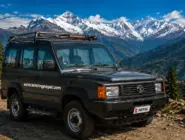
4WD Himalayan Jeep in Nepal
ACAP Permit – The Annapurna Conservation Area Entry Pass: Complete Guide
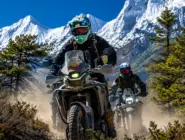
Adventure Bike Rental in Nepal – Complete Guide to Routes and Requirements
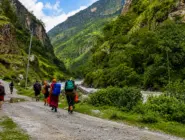
Airport to Trek Starting Point Transfer Nepal