Plan a Trip


Adventure Bike Rental in Nepal – Complete Guide to Routes and Requirements
Adventure Bike Rental Nepal – Complete Guide to Routes and Requirements
There is a particular sensation that no other form of travel in Nepal quite replicates: the moment a motorbike crests the final switchback above Beni and the lush, dripping greenery of the lower Kali Gandaki valley gives way, almost without warning, to the stark ochre cliffs and the thin, high-altitude light of the Mustang rain shadow. In a car or jeep, you watch this transition through the window. On a motorbike, you feel the air temperature drop, you smell the change in vegetation, you lean into the same wind that bends the prayer flags above Kagbeni. This is the essential appeal of adventure motorbike riding in Nepal — a country whose mountain roads were never designed for comfort but were, almost by accident, designed for exactly this kind of riding: narrow, technical, constantly changing in surface and gradient, and threaded through some of the most overwhelming mountain scenery on the planet.
Nepal has, over the past decade, quietly become one of the most significant adventure motorcycling destinations in Asia, drawing riders not only from Europe and North America but increasingly from across the wider region, all converging on Kathmandu’s Thamel district and Pokhara’s Lakeside in search of the same thing: a Royal Enfield, a tank of fuel, and a road that climbs into the highest mountains on Earth. In 2026, this scene has matured considerably — rental fleets have modernised with newer adventure-specific machines, permit systems for restricted areas like Upper Mustang have been reformed to be more accessible, and the gap between casual scooter rental and serious expedition-grade touring has become sharply defined.
This is also, candidly, one of the riskier and more demanding forms of travel in Nepal, and an honest guide must treat it as such. Nepal’s roads mix tarmac, dirt, gravel, sand, and sometimes nothing at all within the same kilometre. Altitude affects both rider and machine. Night riding is genuinely dangerous. And the documentation requirements — an International Driving Permit with a motorcycle endorsement, the correct insurance, and, in certain regions, specific government permits — are not mere bureaucratic formalities but genuine prerequisites for both legal riding and meaningful financial protection if something goes wrong.
This guide from Nepal Vehicle Hiring Pvt Ltd provides the complete, currently researched picture of adventure bike rental in Nepal: the machines available, the major touring routes from gentle Kathmandu Valley loops to the demanding heights of Upper Mustang, the legal and insurance requirements every rider must satisfy, realistic costs, and the honest comparison between self-guided rental and supported guided touring that every prospective rider should weigh before committing.
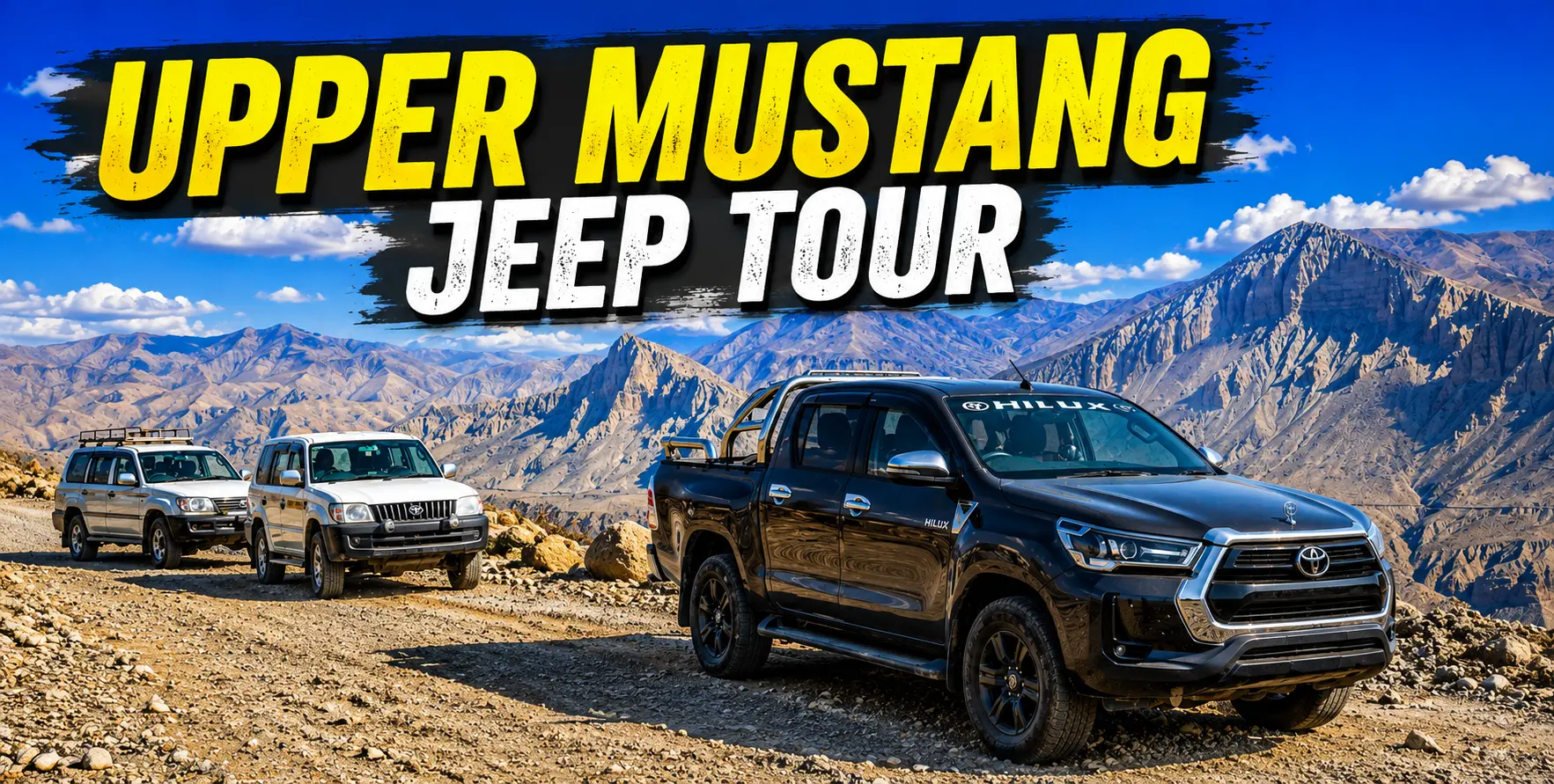
For travellers who prefer a four-wheeled alternative on the same spectacular routes, Nepal Vehicle Hiring provides private 4WD jeep hire across Nepal’s mountain regions. Call/WhatsApp: +977-9814227196
Choosing Your Machine – What You Should Actually Ride in Nepal
The single most consequential decision in planning an adventure motorbike trip in Nepal is choosing the right machine — and in 2026, the answer has become remarkably clear and consistent across virtually every experienced operator in the country.
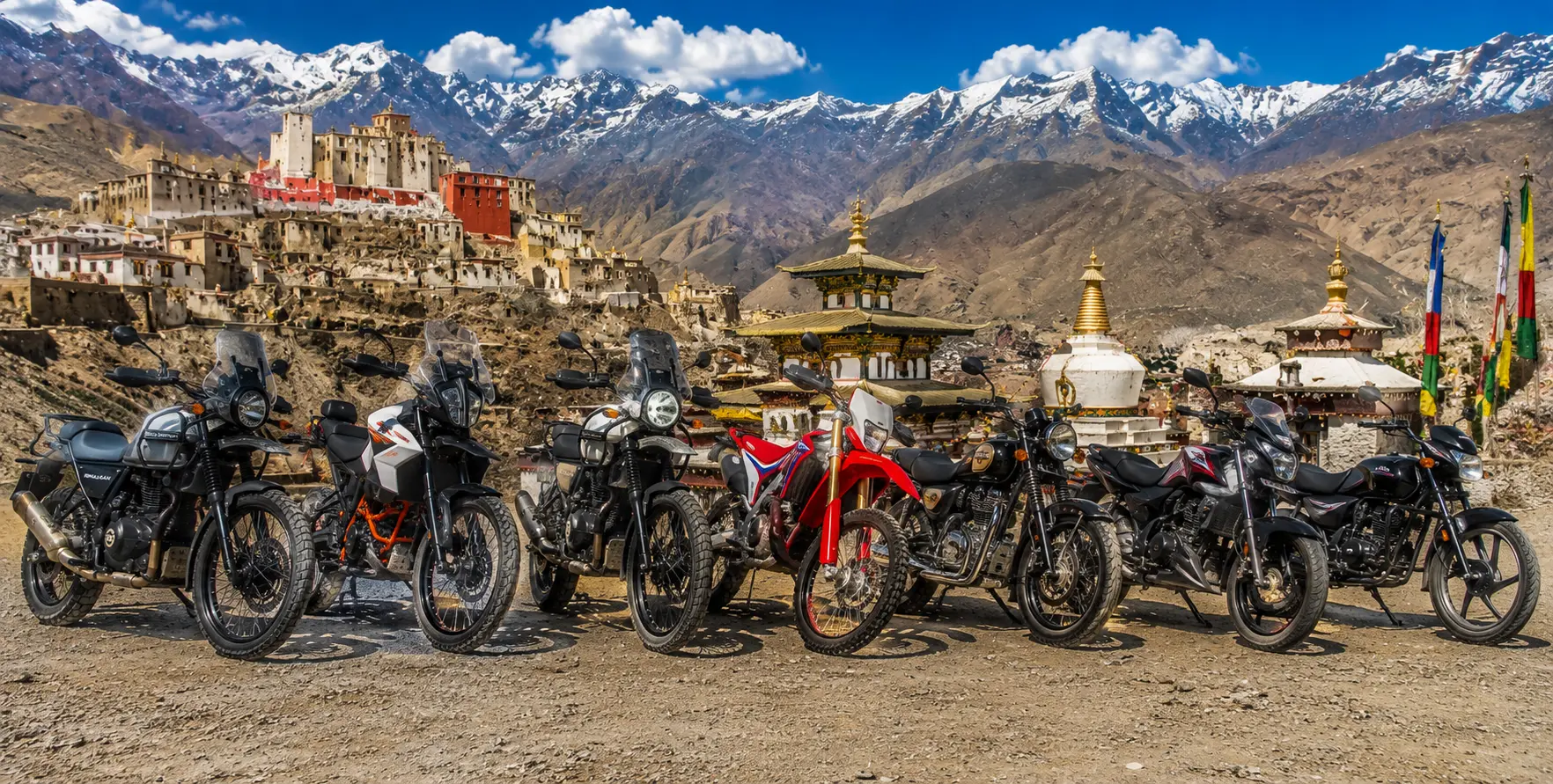
Royal Enfield Himalayan 450, KTM 390 Adventure, R Himalayan 4,11 Classic,350, 500, Bajaj Hero Motorcycle Tour, Mustang Nepal
The Royal Enfield Himalayan – Nepal’s Definitive Touring Bike
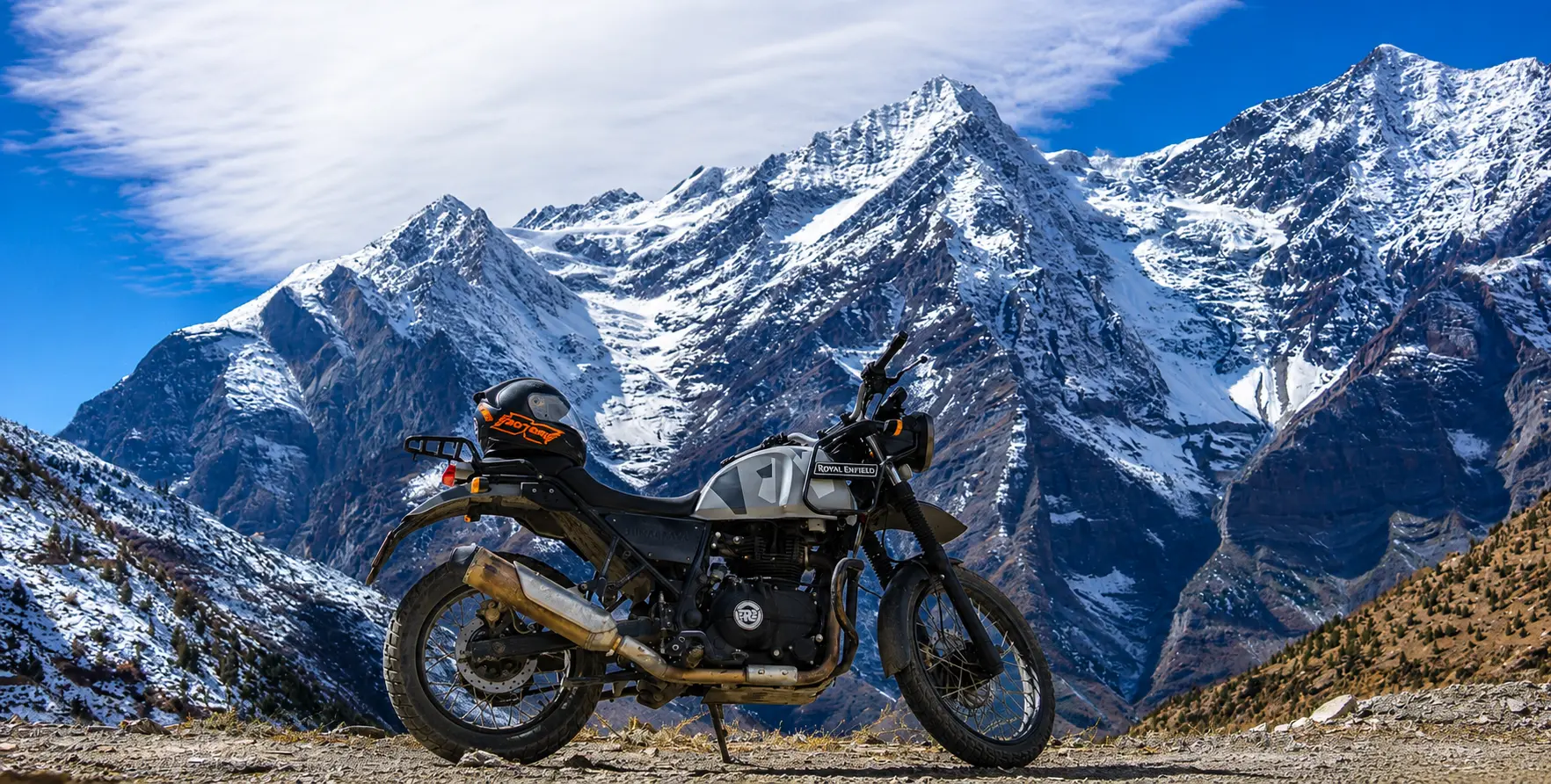
As one veteran Nepal motorcycle tour operator who has run Himalayan tours for years and personally ridden every major route the country offers, I put it bluntly: there is really only one serious choice for touring Nepal — the Royal Enfield Himalayan 411cc. This isn’t marketing language; it reflects a hard-won practical consensus built on years of breakdowns, river crossings, and remote-area repairs. The reasoning is entirely pragmatic rather than aspirational. Parts are everywhere — every mechanic in even the smallest mountain town in Nepal knows this bike intimately, and a mechanical failure in a place like Tatopani or Jomsom can typically be addressed locally, something that would be impossible with a premium European adventure bike. The Himalayan’s long-travel suspension, 21-inch front wheel, and manageable curb weight make it genuinely capable on poor surfaces without requiring the rider to be an expert off-road specialist. Its fuel economy of approximately 25–30 km per litre is a genuinely important practical factor on routes like Upper Mustang, where petrol stations can be 100 km apart and running dry in a remote high-altitude desert is a serious problem rather than a minor inconvenience. And critically, the rental cost of about USD 35–50 per day, including basic insurance, puts it within reach of most travellers, whereas a premium adventure machine—assuming one could even be found for rent in Nepal—would cost three times as much.
The newer Royal Enfield Himalayan 450 has also entered Nepal’s rental fleets in 2026, offering a more modern engine platform, improved electronics, and better ergonomics than the long-running 411cc model, while retaining the essential virtues of widespread parts availability and manageable weight. Riders booking through more established 2026-era rental operations in Thamel and Pokhara’s Lakeside increasingly find the 450 alongside the proven 411cc, and the choice between them generally comes down to personal preference for the newer, more refined platform versus the older engine’s proven reliability.
Adventure-Specific Alternatives – KTM and CFMoto
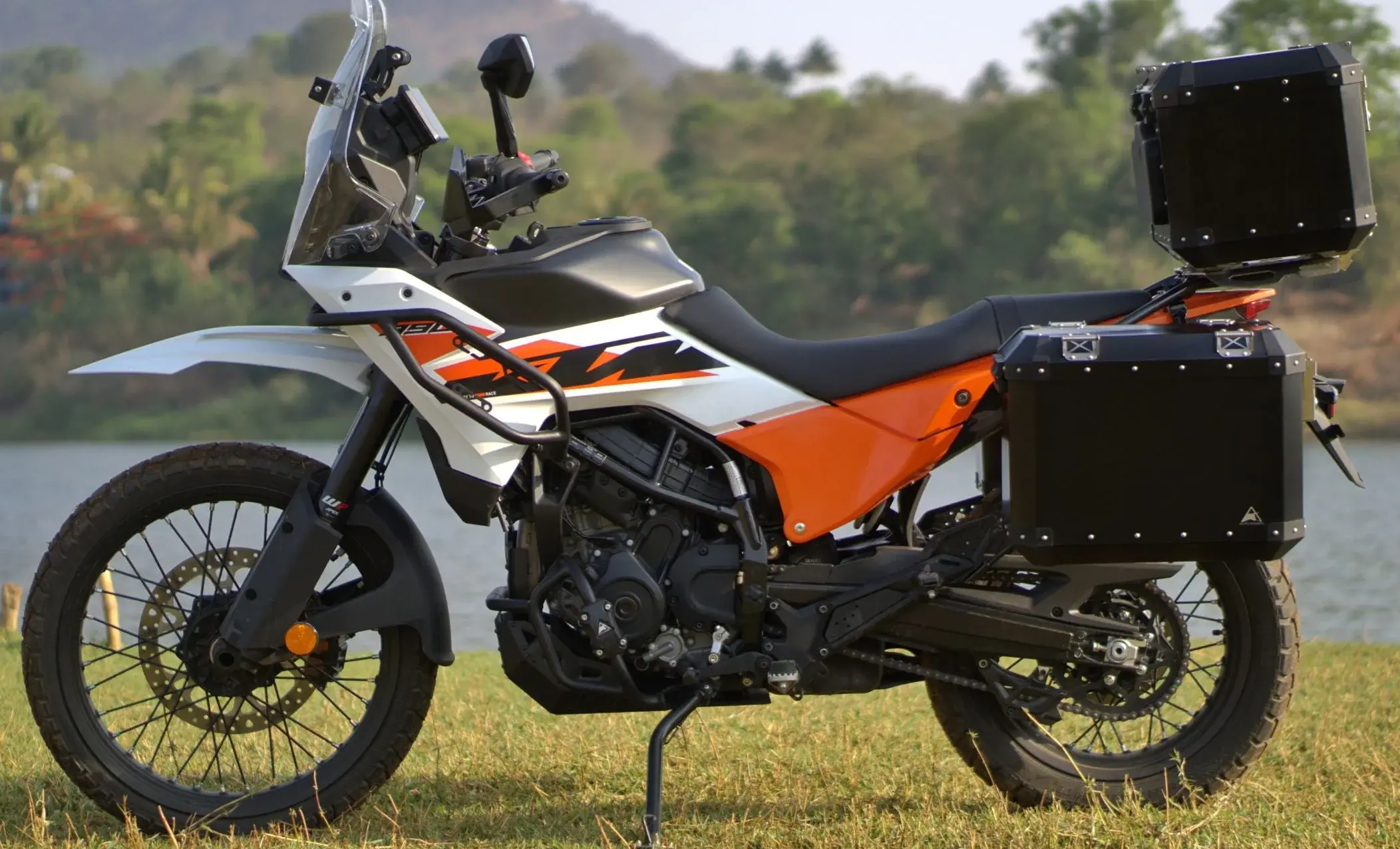
A smaller but growing segment of Nepal’s premium rental market now offers genuine adventure-touring machines such as the KTM 390 Adventure R and the CFMoto 450MT, typically through specialist operators who pair rental with mandatory guided support rather than offering self-rental. These machines offer more modern suspension technology, better off-road ergonomics, and noticeably sharper performance than the Himalayan, appealing to experienced riders seeking a more technically capable platform for routes such as the roughest sections of Upper Mustang. The trade-off is straightforward: these bikes cost significantly more to rent, parts and specialist mechanical support are far less available outside Kathmandu and Pokhara, and most operators require an accompanying guide rather than permitting independent self-rental. For experienced adventure riders seeking a more capable machine and willing to pay the premium and accept the guided-tour requirement, these represent a genuine upgrade over the Himalayan; for most visiting riders, the Himalayan remains the more practical and easier-to-arrange choice.
Smaller Bikes and Scooters – For City and Short-Range Use Only
Nepal’s rental market also includes a wide range of smaller commuter and trail bikes — the Honda XR150, Bajaj Pulsar, Yamaha FZ, and various 125cc–150cc scooters — typically priced from USD 15–25 per day for the smallest machines, rising to USD 25–40 for mid-range 200cc–250cc bikes. These are genuinely appropriate and sensible choices for city riding in Kathmandu or Pokhara, short excursions to nearby valley-rim destinations like Nagarkot or Dhulikhel, and gentle exploration for riders with no intention of attempting serious mountain touring. Several reputable operators also stock the Royal Enfield Classic 350, Honda CRF 250L, and KTM Duke 250 as mid-tier options between commuter scooters and the full adventure-touring Himalayan—capable machines for moderate mountain riding but generally less suited to the most demanding high-altitude, restricted-area routes than the purpose-built Himalayan.
Where to Rent – Kathmandu, Pokhara and the Established Rental Ecosystem
Nepal’s adventure bike rental market is concentrated in two locations, each serving a slightly different purpose in a typical rider’s itinerary.
Thamel, Kathmandu – The Largest Selection
Thamel is Nepal’s largest motorbike rental hub by a clear margin, with dozens of rental shops clustered along the district’s main streets offering everything from basic scooters to fleets of Royal Enfield Himalayans. This concentration of competing operators in Thamel generally produces the most competitive pricing in the country, and the sheer volume of available stock means a rider arriving without a reservation can usually still find an appropriate machine, particularly outside the absolute peak October–November season.
Thamel is the natural starting point for riders planning to begin their Nepal motorcycle journey directly from Kathmandu — whether heading toward Pokhara and onward to Mustang, exploring the Kathmandu Valley rim roads as a standalone short tour, or undertaking a longer circuit through Gorkha, the southern plains, and back.
Lakeside, Pokhara – Smaller but Strategically Positioned
Pokhara’s Lakeside rental scene is smaller than Thamel’s but increasingly significant, and in 2026 it will be notably elevated by the arrival of more professional, higher-standard operators. One recent 2026 review captures the shift well, describing a Pokhara rental operation offering brand-new KTM 390 Adventure R and Himalayan 450 machines kept in genuinely well-maintained condition, and noting that this represents the new standard for Upper Mustang motorbike hire in 2026.
Pokhara’s strategic value is geographic: it sits at the natural gateway to the Mustang and Manang regions, meaning riders beginning their Mustang or Annapurna Circuit tour from Pokhara save the day or more of riding that a Kathmandu start would otherwise require, and arrive at the most demanding section of their route with a machine and body that are already warmed up rather than fatigued from the long initial transit.
Most riders adopt a hybrid approach: renting in Kathmandu, riding the relatively straightforward Prithvi Highway to Pokhara as the first leg of the tour, then continuing from Pokhara into the mountains — though renting directly in Pokhara for Mustang-focused itineraries is an entirely viable and increasingly well-supported alternative.
Chitwan and Lumbini – Limited but Present
A handful of shops in Chitwan and Lumbini also offer scooter rentals. However, the selection is genuinely limited, and you shouldn’t rely on these locations as a primary rental source for any serious adventure-touring plan. They are useful primarily for riders who have already completed a mountain circuit and want a scooter for local exploration during the Terai leg of a broader Nepal trip.
The Documentation You Actually Need – And the Gap Most Riders Fall Into
This is, without exaggeration, the most important section of this guide because it addresses a genuine, well-documented gap between what is legally and practically required to ride a motorbike in Nepal and what most rental shops actually enforce when handing over the keys.
The International Driving Permit – Legally Required, Rarely Checked at the Rental Desk
Nepal requires an International Driving Permit (IDP) with a motorcycle endorsement for all foreign riders, obtained from your home country’s automobile association before you travel. It typically costs USD 15–30 and is valid for one year. Critically, your home license must itself carry a motorcycle endorsement — the IDP is a translation document and cannot grant permissions your underlying license does not already have. A car-only license, translated into an IDP, still does not authorise motorcycle riding in Nepal.
Here is the uncomfortable reality most guidebooks gloss over, as one detailed 2026 specialist guide states directly: many rental shops in Thamel and Lakeside Pokhara do not ask to see an IDP or even a driving license—they hand over the keys once you pay the rental fee and a deposit. This creates a genuinely dangerous false sense of security among travellers, who reasonably but incorrectly conclude that if the rental shop didn’t ask for documentation, the documentation must not really matter. It does matter — enormously, in two completely separate and serious ways.
First, the legal exposure: police checkpoints are common on every major highway in Nepal, with the Prithvi Highway between Kathmandu and Pokhara alone featuring several, and checkpoint frequency increases substantially on routes popular with tourist riders, including the road toward Upper Mustang, the Annapurna Circuit highway section, and the Kathmandu Valley rim roads. Officers at these checkpoints routinely ask foreign riders for documentation. If you cannot produce a valid IDP, you face an on-the-spot fine — typically NPR 1,000–5,000 — and your bike may be held until the correct documents are produced, a genuinely disruptive outcome in the middle of a remote multi-day tour.
Second, and far more consequential, is the insurance exposure. Travel insurance companies are explicit and consistent on this point: if you are involved in an accident while riding without a valid license — meaning an IDP plus an underlying home license with a motorcycle endorsement — your claim will almost certainly be denied. This denial applies specifically to medical evacuation, which in remote mountain areas of Nepal typically means a helicopter rescue costing USD 5,000–15,000 — a sum that becomes the rider’s personal financial responsibility entirely if the insurance claim is rejected on documentation grounds.
As the specialist guide summarises with appropriate bluntness: riding without an IDP effectively means riding without insurance, regardless of what your policy says on paper. The roughly USD 20 cost of obtaining the IDP before travel is trivial compared to this level of financial exposure, and Nepal Vehicle Hiring strongly urges every prospective rider to obtain a proper IDP with a motorcycle endorsement before arriving in Nepal, regardless of whether any individual rental shop asks for it.
For Extended Stays – The Nepali Driving License Option
Riders planning to stay in Nepal for more than three months or intending to return for multiple riding trips over time should consider obtaining a genuine Nepali driving license from the Department of Transport Management in Ekantakuna, Lalitpur. This provides more durable and unambiguous legal standing than repeatedly relying on an IDP, which has only a one-year validity and must be renewed and reissued by the rider’s home country for each subsequent trip.
Insurance – Standard Travel Policies Do Not Cover This
A second critical gap that catches many riders unprepared is that standard travel insurance policies do not cover motorbike riding. This is not a Nepal-specific quirk — it reflects the general international insurance industry treatment of motorcycling as a higher-risk activity requiring specific coverage. Riders need a policy that explicitly includes motorbike touring as a covered activity, and ideally one that specifically covers helicopter evacuation from remote mountain areas, given the realistic possibility of needing exactly this kind of rescue on Nepal’s more remote routes. Budget USD 120–250 for a two-week policy that includes appropriate motorcycle cover.
Established providers, including World Nomads and True Traveller, offer adventure sports add-ons that specifically include motorbike riding. However, riders should always check the engine capacity limit on any policy, as some policies exclude bikes with engines over 125 cc. This category includes virtually every adventure-touring machine discussed in this guide, including the Royal Enfield Himalayan. Separately, most Nepal rental shops themselves do not offer comprehensive insurance on the rented bike — confirm precisely what damage and theft coverage, if any, is included in your rental agreement before signing, since the gap between what the rental company covers and what your personal travel insurance covers can otherwise leave significant financial exposure unaddressed on both sides.
Deposits and Security – Protecting Yourself as Much as the Rental Shop
Every legitimate rental shop in Nepal requires a security deposit, with the amount varying by vehicleby vehicle value: a Royal Enfield typically requires a USD 400–500 cash deposit. In contrast,e a smaller scooter might require only USD 200. Some shops will accept a colour photocopy of your passport in place of a cash deposit, and a small but growing number of more established operators now accept credit card pre-authorisation. However, this remains relatively rare in Nepal.
The one absolute rule every rider should follow without exception: never hand over your original passport as a deposit, regardless of how the rental shop frames the request or how reputable the shop appears. A photocopy serves the same verification purpose without exposing you to the serious practical and legal complications of being without your original travel document in a foreign country.
Kathmandu Valley Day Rides – The Essential Warm-Up
Before committing to a multi-day mountain tour, every rider — but particularly anyone new to riding in Nepal’s specific conditions — should spend one to three days riding the Kathmandu Valley rim roads: the loop through Nagarkot, Dhulikhel, and Bhaktapur that circles the eastern and southeastern edge of the valley.
This route offers genuinely rewarding riding in its own right — climbing to Nagarkot’s celebrated Himalayan viewpoint, descending through the preserved Newari heritage town of Dhulikhel, and threading the medieval brick lanes around Bhaktapur — while remaining entirely on paved or well-maintained roads, with regular fuel stations, mobile phone coverage throughout, and a forgiving margin for the inevitable early mistakes of adjusting to Nepal’s specific traffic culture and road surface unpredictability.
Experienced Nepal motorcycle tour operators explicitly recommend this Kathmandu Valley loop as a good warm-up before a longer tour, and the reasoning goes well beyond simple skill-building. It lets a rider assess a rental machine’s mechanical condition and their own physical comfort before committing to a route where a problem cannot be easily resolved.
It provides an early, low-stakes encounter with Nepal’s distinctive road hazards — unmarked potholes, animals on the road, motorcycles and trucks overtaking at blind corners, and the complete absence of the predictable lane discipline that riders from most other countries take for granted.
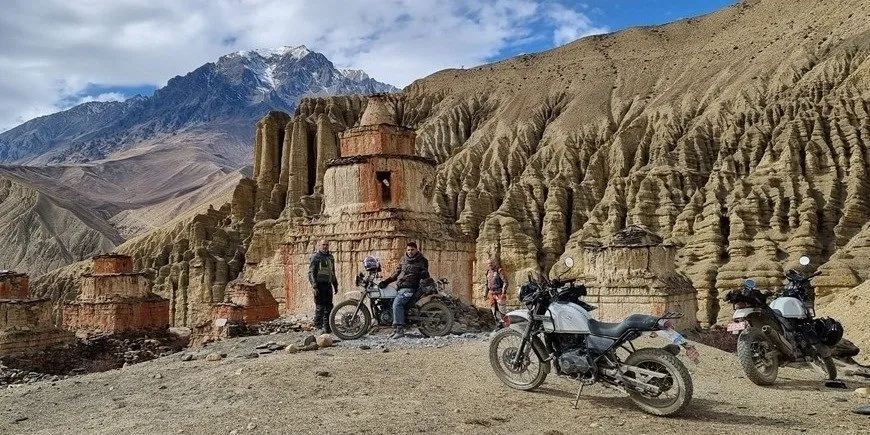
The Lower Mustang Loop – Nepal’s Finest Accessible Adventure Ride
For riders seeking a substantial, scenically extraordinary mountain tour without the additional permit complexity and cost of the restricted Upper Mustang zone, the Lower Mustang loop — Jomsom to Muktinath and back, typically completed as part of a five-to-seven-day circuit from Pokhara — is what one veteran operator calls their favourite ride in Nepal. Crucially, this route requires no restricted-area permit, making it significantly more affordable and logistically simpler than its Upper Mustang counterpart while still delivering an experience of comparable visual and emotional power.
The route begins in Pokhara, descends to Beni, and then follows the Kali Gandaki River valley northward into the rain shadow of the Annapurna massif. The landscape transformation along this stretch is one of the most dramatic in all of Nepal’s road network: lush subtropical forest gives way, within a matter of hours of riding, to arid, almost Tibetan high desert terrain, the vegetation thinning and the cliff colours shifting toward ochre and red as the road climbs and the surrounding peaks intercept the monsoon moisture that would otherwise reach this valley.
The section between Beni and Jomsom is where a rider’s actual technical skill is genuinely tested. The road here is carved directly into cliff faces, crosses rivers sometimes via proper bridges and sometimes via simple fords with no bridge at all, and turns to deep, loose gravel in extended sections. After rainfall, rockfalls can block the route for hours– a genuine operational hazard rather than a remote theoretical risk, and one that underscores why daylight-only riding and conservative pacing matter so much on this stretch.
Along the way, riders pass through Tatopani, where the natural hot springs provide a genuinely necessary and deeply welcome opportunity to soothe a body that has spent hours absorbing the impact of a technical gravel road; Marpha, known across Nepal as the country’s apple brandy capital and one of the most architecturally beautiful traditional villages on the entire route; and finally Jomsom itself — windy, dusty, and dramatically surrounded by peaks exceeding 8,000 metres on both sides of the valley.
The undisputed high point of the Lower Mustang loop, both literally and in every other sense, is Muktinath Temple at 3,710 metres, a site sacred to both Hindus and Buddhists, situated directly beneath the Thorong La pass, with the full Annapurna range rising dramatically behind it. Riders typically spend a night at Jomsom or Muktinath before retracing the route back to Pokhara, completing a circuit that delivers an extraordinarily complete sample of Nepal’s mountain riding character — technical gravel sections, river crossings, dramatic altitude and climate transition, deep cultural immersion in Thakali and Tibetan-influenced villages, and a genuinely sacred destination as its emotional centrepiece — all without the restricted area bureaucracy of the Upper Mustang zone proper.
Upper Mustang – Nepal’s Flagship Adventure Motorbike Destination
Upper Mustang is, by consistent consensus among virtually every Nepal motorcycle tour operator, the single most popular and most celebrated advanced motorbike route in the entire country — and in 2026, a significant regulatory change will make it considerably more accessible than it has been for the preceding decade.
The 2026 Permit Reform – Why This Is the Year to Go
For years, accessing Upper Mustang required payment of a flat USD 500 Restricted Area Permit fee regardless of how many days a visitor actually spent in the region — a structure that effectively penalised shorter, more focused itineraries and made Upper Mustang a significant financial commitment even for riders who only wanted a few days in the restricted zone. In 2026, the Nepalese government fundamentally restructured this system, replacing the flat fee with a daily rate of USD 50 per person.
As one Nepal permit specialist summarises the practical effect: this reform delivers a lower overall permit cost for shorter visits, genuinely flexible travel durations, and makes the route considerably more accessible to adventure riders while still protecting the region’s unique culture and environment and continuing to support local Mustang communities through permit revenue.
The practical consequence for motorbike tourers specifically: a focused four-to-five-day Upper Mustang ride now costs meaningfully less in permit fees than it would have under the old flat-rate system, while riders planning a more extended exploration of the region still have the option to pay proportionally for additional days rather than being forced into an inflexible single fee structure regardless of actual time spent in the restricted zone.
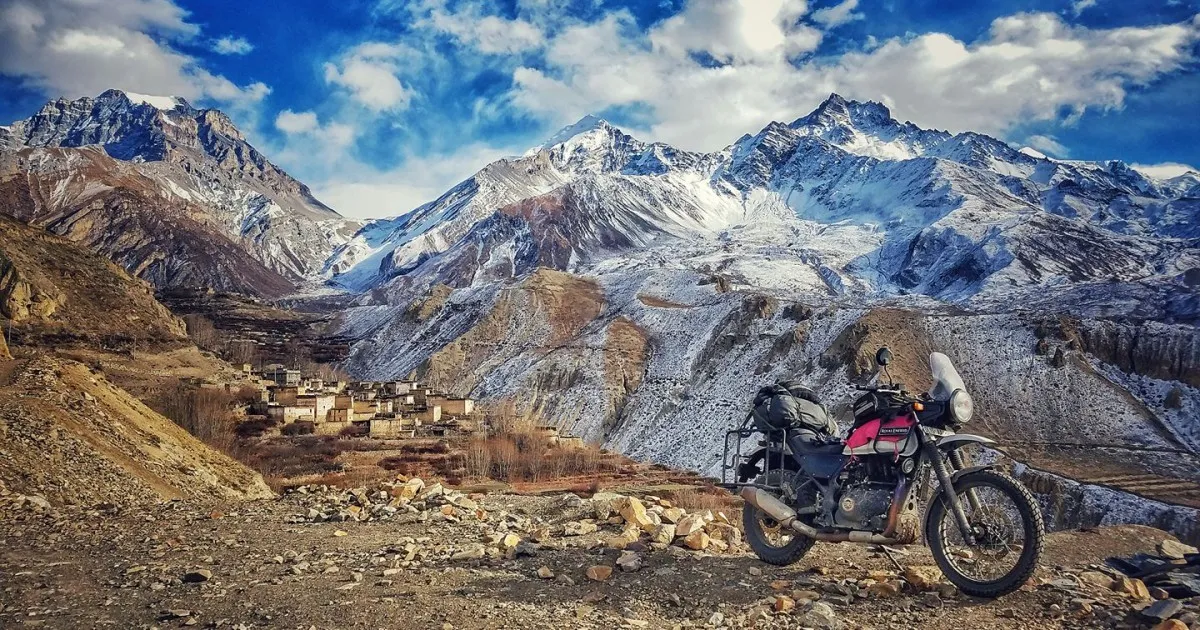
What the Restricted Area Permit Requires
Beyond the daily permit fee, Upper Mustang has two additional mandatory requirements that riders must understand before planning their route. First, an Annapurna Conservation Area Permit (ACAP), costing approximately NPR 3,000 (around USD 20), is also required, since the route to Upper Mustang necessarily passes through ACAP territory in its lower sections before reaching the restricted zone proper. Second, and most significantly for riders accustomed to independent travel elsewhere in Nepal: a licensed guide is mandatory throughout Upper Mustang, and independent unguided travel in this region is not permitted under any circumstances.
This guide requirement is not bureaucratic friction to be worked around—it reflects Upper Mustang’s status as a genuinely sensitive border region adjoining the Tibet Autonomous Region of China, where Nepal’s government carefully manages foreign access for both cultural preservation and broader diplomatic reasons. Reputable motorbike tour operators handle all of these permits and guide arrangements as a standard, fully included component of any Upper Mustang package.
The Riding Experience – Beyond Jomsom, Into the Forbidden Kingdom
Where the Lower Mustang loop turns back at Muktinath, Upper Mustang continues considerably further north, through Kagbeni and into the genuinely otherworldly high desert terrain of the former Kingdom of Lo, climaxing at the walled medieval capital of Lo Manthang — a settlement whose Tibetan Buddhist culture, royal palace, and ancient monasteries remained substantially isolated from the outside world until the region first opened to foreign visitors in 1992.
Riders describe the terrain in this section as feeling genuinely like crossing into a different country entirely — eroded red and ochre cliffs, scattered chortens and mani walls, ancient cave dwellings carved into vertical rock faces, and an atmosphere of profound, windswept remoteness unlike anywhere else accessible by road in Nepal. A typical guided Upper Mustang motorbike tour runs about eleven days. It starts around USD 1,990 per person for a genuinely private tour involving only the booking party rather than a mixed group of strangers, reflecting the comprehensive logistics, permit handling, accommodation, and support infrastructure required for this remote and regulated region.
The Annapurna Circuit by Road – A Demanding Seven-to-Ten-Day Alternative
For riders who want the cultural and scenic breadth of the famous Annapurna Circuit trekking route but prefer to experience it on a motorbike rather than on foot, a road-based version of the circuit — typically structured as a seven-to-ten-day tour following the trekking route via Manang and the Thorong Phedi approach — has become an increasingly established option in Nepal’s adventure riding scene. This is a genuinely demanding route, with some sections extremely rough — considerably more technically challenging in places than the Lower Mustang loop, given the steeper gradients, higher average altitude, and rougher track surfaces on the eastern Manang side of the circuit. This route is generally recommended only for riders with prior off-road or adventure-touring experience, or those undertaking it as part of a fully guided and supported tour with a backup vehicle.
The Solo Long-Distance Circuit – What a Genuine Independent Journey Looks Like
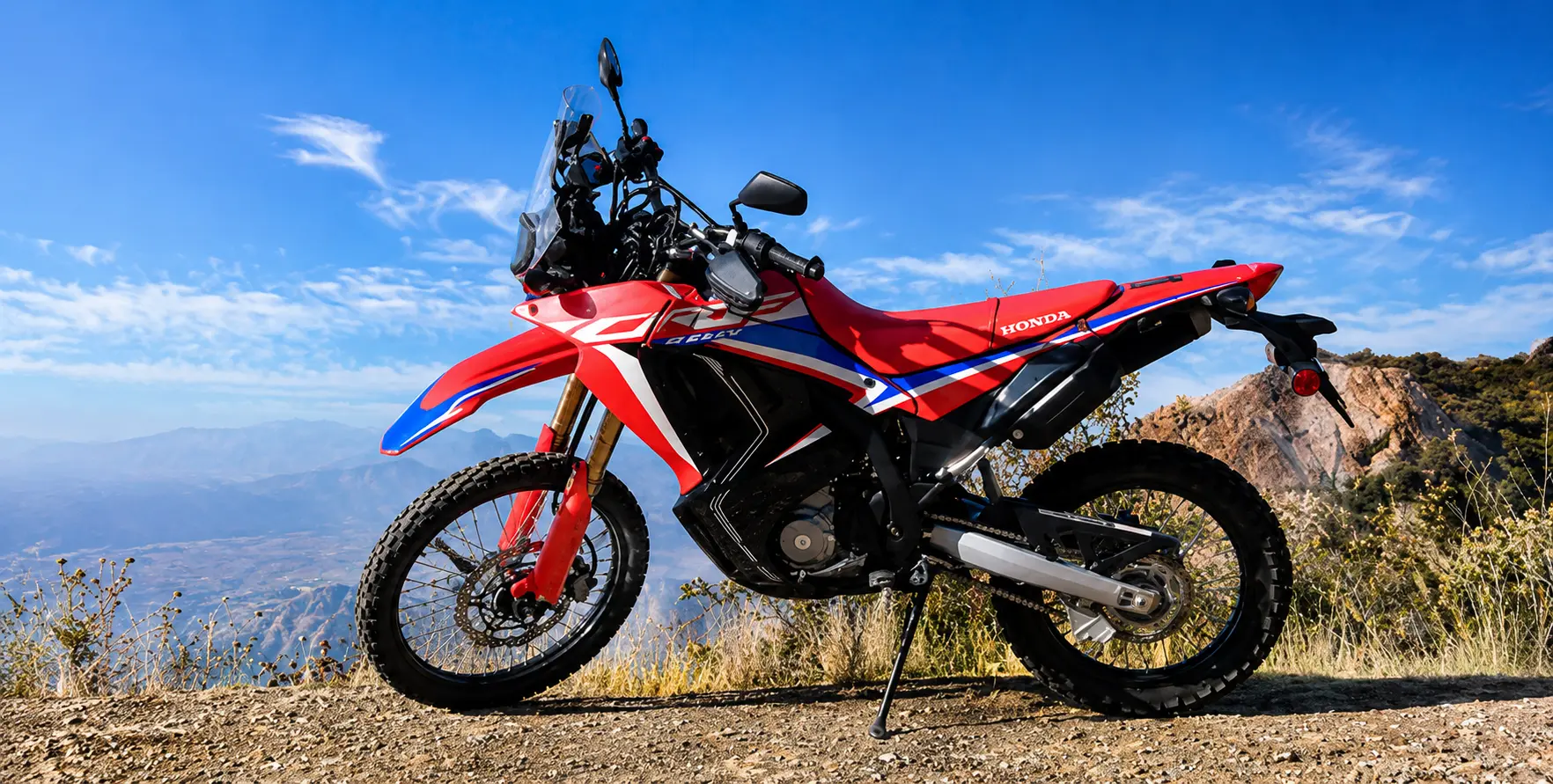
Beyond structured tour routes, some of the most compelling testimony to Nepal motorbike touring comes from riders who have undertaken genuinely independent, extended journeys covering much of the country in a single rental period. One documented example, shared on a respected international motorcycle rental review platform: a rider collected a Honda CRF 250L in Kathmandu, spent a couple of days riding around the city before heading west to Pokhara, obtained trekking permits there and rode up the western side of the Annapurna region through Beni into Jomsom, continued through the Mustang region to Muktinath where the road literally ended, completed several days of high-altitude hiking, then returned to Pokhara before riding on to Gorkha, descending from the Himalayan foothills to Lumbini at the Indian border, crossing the southern Terai plains to Sauraha for a Chitwan National Park wildlife safari, and finally riding back to Kathmandu to close the loop — a journey the rider himself described as an amazing solo journey with some of the toughest riding but most rewarding scenes I have ever seen, completed over twenty-five days for a total rental cost of approximately USD 900 cash, with the CRF 250 singled out as, in the rider’s own assessment, absolutely the best bike for the environment.
This kind of extended, multi-region solo circuit represents the genuine outer edge of what independent adventure riding in Nepal can deliver: a journey spanning the full vertical range of the country’s geography, from the high Himalaya down to the subtropical Terai plains, woven together entirely on two wheels and entirely on the rider’s own schedule. It is also, candidly, not a journey to attempt as a first experience of riding in Nepal — the rider in this account had clearly developed sufficient comfort and competence with Nepal’s specific riding conditions before attempting a route of this length and diversity, and the same progression — starting with shorter, better-supported routes before attempting an extended independent circuit — is the responsible approach for any rider new to the country.
Self-Guided Rental Versus Guided Tour – An Honest Comparison
Every prospective motorbike rider in Nepal eventually faces the same fundamental decision: rent a motorbike independently and plan your own route, or join a guided tour with organised support. Both are entirely legitimate approaches, and the right choice depends heavily on a rider’s experience level, risk tolerance, and the specific route under consideration.
Self-guided rental is, on the surface, considerably cheaper — a Royal Enfield Himalayan rental at USD 35–50 per day compares favourably with guided tour packages that run into the thousands of dollars for a comparable duration. But as one experienced operator frames the real trade-off: self-guided looks cheaper on paper, but consider what you actually lose — there is no backup jeep if the bike breaks down, which does happen; no mechanic on hand; no guide who actually knows the specific roads, their danger points, and local driving patterns; no pre-arranged accommodation in remote villages where finding a bed can otherwise be genuinely difficult; and no organised support if something goes seriously wrong in a remote area with no mobile signal. For a rider’s first Nepal motorbike trip specifically, the consistent professional recommendation is that a guided tour is worth the cost difference, precisely because the margin for serious consequence from a relatively minor problem — a mechanical failure, a moderate fall, a missed turn onto an unmarked track — is considerably higher in Nepal’s mountain regions than in most other adventure riding destinations.
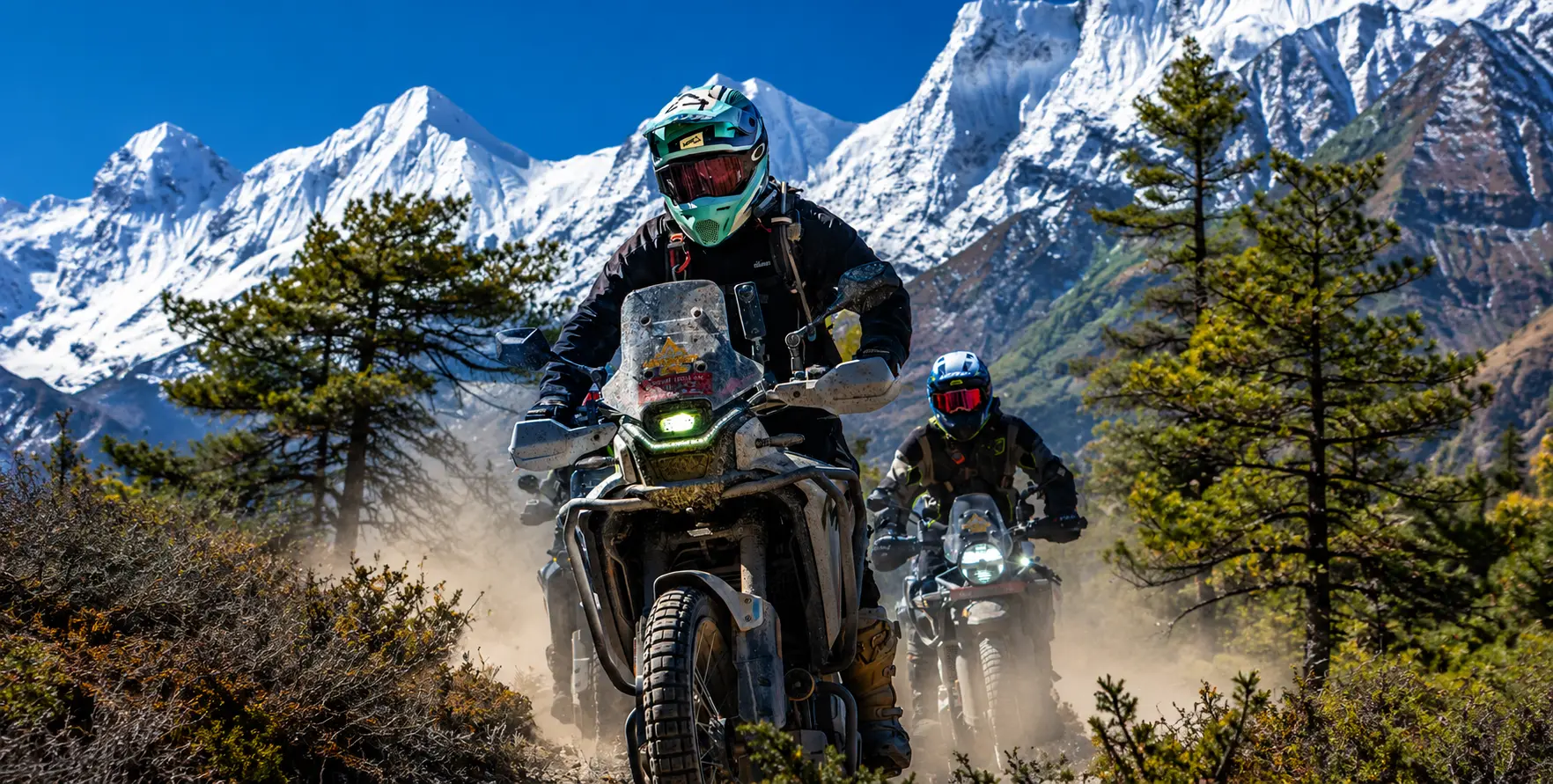
On a guided tour, the structure typically involves the guide riding ahead and setting the pace appropriate to the group’s collective skill level. At the same time, a backup support vehicle follows behind, carrying tools, spare parts, and a first-aid kit, so if a bike breaks down or a rider has an accident, organised help is available almost immediately rather than hours or potentially days away. This support structure is particularly valuable on routes like Upper Mustang, where remoteness, altitude, and limited mobile coverage compound the consequences of any breakdown or incident without nearby support.
There is also a social dimension worth noting: riding as part of an organised group tour means travelling alongside fellow riders from genuinely different countries and backgrounds, each bringing their own story to the trail, with shared costs for accommodation and meals reducing the individual financial burden compared to solo travel. At the same time, you still retain meaningful choices about pace and engagement on the road itself. Many riders describe this social dimension — the people they meet along the way — as nearly as significant to their overall experience as the riding and scenery themselves.
Altitude, Weather, and the Physical Demands of Himalayan Riding
Riding a motorbike at altitude is a meaningfully different physical and mechanical proposition from riding at sea level, and Nepal’s mountain routes routinely push well above 33,000 meters— Muktinath at 3,710 m, Manang on the Annapurna Circuit road well above that, and sections of Upper Mustang reaching even higher.
The thinner air at these altitudes affects both rider and machine simultaneously. For the rider, it means reduced physical stamina, a real possibility of altitude-related symptoms such as headache and fatigue developing over the course of a multi-day ascent, and a generally heightened sense of physical exertion even during what would otherwise be unremarkable riding — the same acclimatisation principles that apply to trekkers at equivalent altitudes apply equally to riders. A sensible itinerary builds in the same gradual altitude gain and adequate rest as a responsible trekking schedule. For the machine, engine power output drops noticeably at altitude, particularly on carburetted engines such as those found on older Royal Enfield models, since the thinner air contains proportionally less oxygen for combustion — riders should expect their bike to feel meaningfully less responsive above 3,000 metres than it did at the start of the trip, and should adjust their riding expectations and overtaking decisions accordingly rather than assuming consistent performance throughout a route with significant altitude variation.
Night riding deserves its own explicit and unambiguous warning, repeated consistently across every credible Nepal motorcycle guide: do not ride after dark. The reasoning is straightforward and serious — many vehicles in rural Nepal operate without functioning lights, road markings are essentially non-existent outside the main cities, and potholes and other hazards that would be easily visible in daylight become genuinely invisible at night. Every multi-day Nepal motorbike itinerary should be structured with generous daylight margins, building in earlier-than-strictly-necessary departure times and conservative daily distance targets specifically to avoid the situation of arriving at a destination after dark because the day’s riding took longer than anticipated — a situation that, on Nepal’s mountain roads, is unfortunately common even for experienced and well-prepared riders.
Costs, Cash, and Practical Logistics on the Road
Fuel prices in Nepal have risen meaningfully through 2025 and into 2026, with petrol in Kathmandu reaching approximately NPR 202 per litre (around USD 1.35) by April 2026, following three separate price increases driven by broader geopolitical disruptions to fuel supply chains. Prices outside Kathmandu typically run five to ten rupees higher per litre, reflecting transport costs to more remote fuel stations. A Royal Enfield Himalayan averaging around 30 km per litre means a rider covering 100–150 km in a typical riding day should budget roughly USD 4–7 in daily fuel costs, or approximately USD 30–50 for fuel across a complete seven-day tour. On routes like Upper Mustang, where considerable distances can separate fuel stations, riders should carry a spare fuel container as a genuine practical precaution rather than an optional extra.
Cash management is a consistently emphasised practical point in every credible 2026 Nepal motorcycle guide: card payments are unreliable outside Kathmandu and Pokhara, and while ATMs do exist in larger towns,s including Chitwan, Pokhara, and Lumbini, they are not guaranteed to function reliably or accept foreign-issued cards. Riders should carry sufficient Nepali rupees in cash for their entire trip duration before departing from a major city, budgeting approximately NPR 3,000–5,000 (USD 20–33) per day for personal spending on a guided tour, where accommodation and most meals are typically pre-arranged and included, rising to NPR 5,000–8,000 (USD 33–53) per day for self-guided riders who must independently cover food, fuel, and accommodation at each stop.
Essential Practical Tips for Adventure Bike Rental in Nepal
- Obtain a Genuine IDP with Motorcycle Endorsement Before Travel: Do not rely on the fact that a rental shop fails to ask for documentation — this does not exempt you from the legal and insurance requirements, and the financial exposure from an unrecognised claim during a serious accident vastly outweighs the modest cost of arranging proper documentation in advance.
- Confirm Your Travel Insurance Specifically Covers Motorbike Touring: Standard travel policies typically exclude motorcycling entirely. Buy a specific adventure sports add-on or specialist policy, and check the engine capacity limit, since many policies exclude bikes above 125cc—a category that includes the Royal Enfield Himalayan and most genuine touring machines.
- Choose the Royal Enfield Himalayan for Serious Touring: Its combination of nationwide parts availability, manageable weight, capable suspension, and reasonable fuel economy makes it the consistently recommended choice for any route beyond Kathmandu Valley day rides.
- Never Hand Over Your Original Passport as a Rental Deposit: A colour photocopy serves the same verification purpose without the serious complications of travelling without your original passport.
- Complete a Kathmandu Valley Warm-Up Ride First: The Nagarkot-Dhulikhel-Bhaktapur loop offers a valuable, lower-stakes introduction to Nepal’s riding conditions before committing to a remote multi-day mountain tour.
- Budget Realistic Fuel and Cash Reserves: Carry sufficient Nepali rupees for your full trip, as card and ATM reliability drops sharply outside Kathmandu and Pokhara, and carry a spare fuel container on routes with widely spaced petrol stations such as Upper Mustang.
- Never Ride After Dark: Build conservative daily distance targets and early departure times into every multi-day itinerary specifically to avoid arriving at any destination after nightfall.
- Strongly Consider a Guided Tour for Your First Nepal Ride: The backup vehicle, mechanical support, local route knowledge, and pre-arranged accommodation a guided tour provides offer real risk reduction, especially on remote or restricted-area routes like Upper Mustang.
- Confirm Upper Mustang Permit and Guide Arrangements in Advance: Independent unguided riding in Upper Mustang is not permitted under any circumstances. Reputable operators arrange the ACAP permit, the daily Restricted Area Permit, and the mandatory licensed guide as a single integrated package.
Related Nepal Vehicle Hiring Services
- Luxury Jeep Hire Nepal (Toyota Land Cruiser, Upper Mustang)
- Pokhara Airport to Muktinath Jeep Rental
- Korala Tibet Border Nepal – Upper Mustang Jeep Guide
- Nepal Annapurna Circuit Road Vehicle Hire Guide
- Why Private Vehicle Hire Is the Smartest Way to Travel in Nepal
- Nepal Trekking Packages
Frequently Asked Questions
What is the best motorbike to rent for touring Nepal?
The Royal Enfield Himalayan (411cc or the newer 450cc) is the consistently recommended choice for genuine adventure touring in Nepal, thanks to its nationwide spare-parts availability, capable long-travel suspension, manageable weight, and reasonable fuel economy of about 30 km per litre. Rental costs are approximately USD 35–50 per day, including basic insurance.
Do I really need an International Driving Permit to rent a motorbike in Nepal?
Yes, legally and practically. While many rental shops do not check for an IDP at the point of rental, this does not exempt riders from the legal requirement, and riding without one effectively voids most travel insurance coverage in the event of an accident — including helicopter medical evacuation, which can cost USD 5,000–15,000. Obtain your IDP with a motorcycle endorsement from your home country before travelling to Nepal.
What permits are required for motorbike travel in Upper Mustang?
Upper Mustang requires a Restricted Area Permit at USD 50 per person per day (reduced from a flat USD 500 fee in 2026), plus an ACAP permit of approximately NPR 3,000, and a mandatory licensed guide — independent unguided riding in this region is not permitted under any circumstances.
Is the Lower Mustang loop suitable for less experienced riders?
Lower Mustang is more accessible than Upper Mustang in terms of permits. However, it’sstill a genuinely technical route, particularly the Beni-to-Jomsom section, which involves cliff-carved roads, river crossings, and loose gravel. Riders should have some prior off-road experience or join a guided tour with backup support.
How much should I budget for a week-long motorbike tour in Nepal?
For self-guided rental: approximately USD 250–350 for bike rental, USD 30–50 for fuel, and USD 230–370 for cash expenses (accommodation, food) over seven days — roughly USD 500–750 total. Guided tours, which include accommodation, permits, a guide, and backup vehicle support, typically start from around USD 1,990 for an eleven-day private Upper Mustang tour.
Should I rent independently or join a guided motorbike tour?
For first-time Nepal riders, a guided tour is strongly recommended—the backup vehicle, mechanic, local route knowledge, and pre-arranged accommodation provide meaningful risk reduction on Nepal’s demanding, remote mountain roads. Experienced riders comfortable with technical off-road conditions and self-sufficient travel may reasonably choose independent rental, particularly for the unrestricted Lower Mustang and Kathmandu Valley routes.
Plan Your Nepal Adventure with Nepal Vehicle Hiring
Adventure motorbike riding in Nepal delivers an experience that no other form of travel quite matches — the direct, unfiltered sensation of the Himalaya’s changing air, light, and terrain passing immediately around you rather than through a window. It is also a serious undertaking that rewards careful preparation: the right machine, genuine documentation, appropriate insurance, and an honest assessment of your own experience level against the demands of routes like Upper Mustang and the Annapurna Circuit road.
For travellers who prefer the comfort, capacity, and professional driver support of four-wheeled travel across these same extraordinary routes, Nepal Vehicle Hiring Pvt Ltd provides private 4WD jeep and Land Cruiser hire to Mustang, Muktinath, the Annapurna region, and across Nepal’s complete mountain road network, with experienced route-specific drivers and full transparency on pricing and service.
Call / WhatsApp: +977-9814227196 | E-mail: [email protected] | Book Your Nepal Vehicle | Nepal Trekking Packages
- Adventure Bike Rental Nepal – Complete Guide to Routes and Requirements
- Choosing Your Machine – What You Should Actually Ride in Nepal
- Where to Rent – Kathmandu, Pokhara and the Established Rental Ecosystem
- The Documentation You Actually Need – And the Gap Most Riders Fall Into
- Kathmandu Valley Day Rides – The Essential Warm-Up
- The Lower Mustang Loop – Nepal's Finest Accessible Adventure Ride
- Upper Mustang – Nepal's Flagship Adventure Motorbike Destination
- The Annapurna Circuit by Road – A Demanding Seven-to-Ten-Day Alternative
- The Solo Long-Distance Circuit – What a Genuine Independent Journey Looks Like
- Self-Guided Rental Versus Guided Tour – An Honest Comparison
- Altitude, Weather, and the Physical Demands of Himalayan Riding
- Costs, Cash, and Practical Logistics on the Road
- Essential Practical Tips for Adventure Bike Rental in Nepal
- Related Nepal Vehicle Hiring Services
- Frequently Asked Questions
- Plan Your Nepal Adventure with Nepal Vehicle Hiring

Related Blog & Articles
Adventure Bike Hire in Nepal: The Complete Guide to Motorcycle Rentals
All Over Nepal Vehicle Hire – Private Car, Scorpio, 4WD Jeep, Hiace And Tourist Bus
Toyota Land Cruiser 4WD Hire in Nepal – The Ultimate Mountain Vehicle