Plan a Trip


Manakamana Temple Cable Car & Vehicle Combo Tour

Manakamana Temple Cable Car & Vehicle Combo Tour 2026 | Day Trip Guide
Manakamana Temple is Nepal’s most visited pilgrimage site, and one of its most spiritually charged destinations, perched at 1,302 meters on a dramatic ridgeline in the Gorkha district, overlooking the confluence of the Trishuli and Marsyangdi River valleys with panoramic views stretching north to the Manaslu, Himalchuli, and Annapurna ranges on clear days.
The Manakamana Temple cable car and vehicle combo tour has become the definitive way to visit this sacred site, combining the scenic drama of a 10-minute aerial cable car ride across the Trishuli gorge with the convenience and comfort of a private or shared vehicle transfer along the Prithvi Highway — Nepal’s main artery connecting Kathmandu and Pokhara.
This guide covers everything you need to plan the trip in 2026: cable car pricing, operating hours, distances, vehicle options from both Kathmandu and Pokhara, the temple itself, and how to structure the visit as a standalone excursion or as a natural stop within a longer Kathmandu–Pokhara road journey.
Nepal Vehicle Hiring Pvt Ltd arranges private vehicle transfers to Manakamana from both Kathmandu and Pokhara, with a full range of car hire, jeep hire, Hiace van hire, and bus hire options to match every group size and budget. For same-day bookings and inquiries, email [email protected] or WhatsApp us at +977 9851013196.
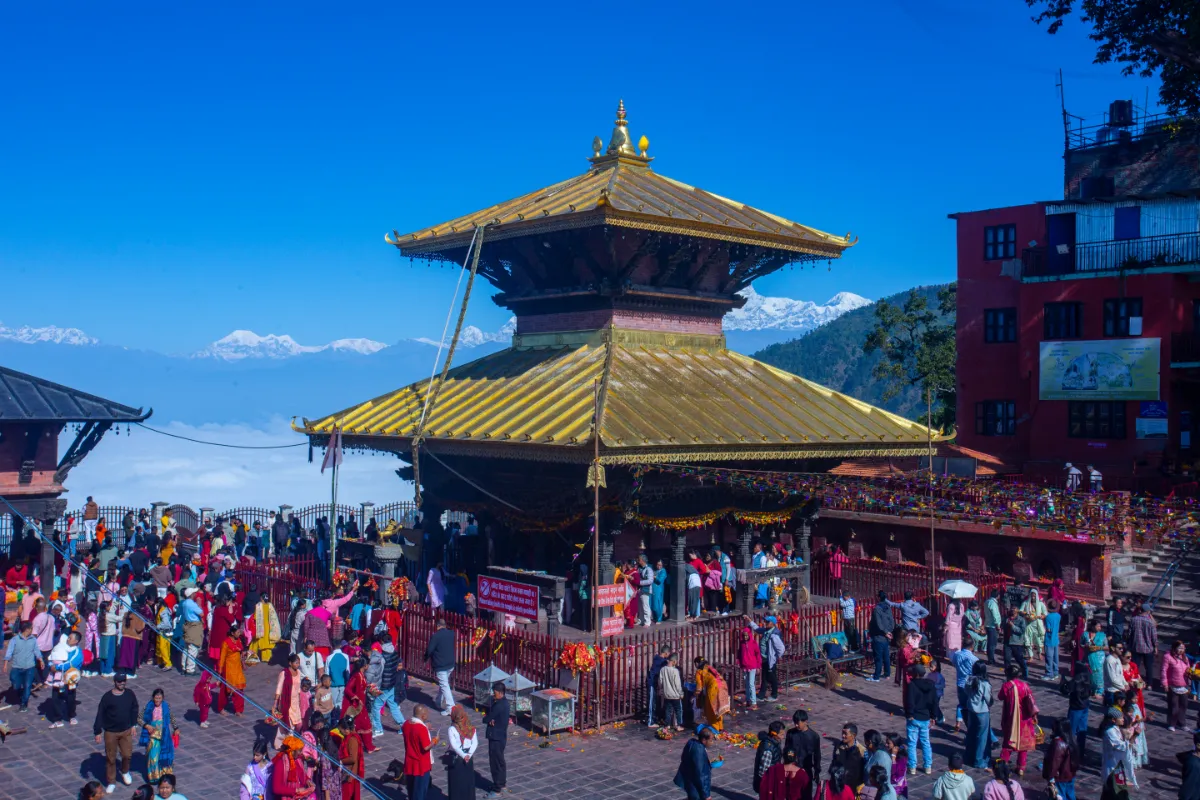
Manakamana Temple: History, Legend, and Spiritual Significance
The name Manakamana comes from two Nepali words: mana, meaning heart, and kamana, meaning wish or desire. Together, they translate as the goddess who fulfills the heart’s wishes or, in a more colloquial rendering, the wish-granting goddess—a description that has shaped the site’s identity as a place of petitionary prayer across many centuries of devotional tradition. Together they translate as the goddess who fulfills the wishes of the heart, a title that encapsulates the devotional relationship between the deity and her pilgrims that has drawn worshippers to this hilltop for centuries.
The temple is dedicated to Goddess Bhagwati, worshipped here as an incarnation of Parvati, the divine consort of Lord Shiva, in her wish-granting aspect — one of the Shakti Peethas, the sacred sites of the divine feminine widely venerated across the Hindu world.
The founding legend of Manakamana centers on a queen who lived with King Ram Shah of Gorkha in the 17th century. According to tradition, the queen was a manifestation of the goddess herself, meeting with divine beings in secret at night. Upon discovering her true nature, the king vowed to keep her secret. Still, when he died, the truth was revealed, and the queen ascended into the sacred rock on the hilltop, becoming the permanent divine presence worshipped at the temple today.
King Ram Shah himself is remembered as one of Nepal’s most just rulers, celebrated in Nepalese folklore for settling disputes impartially, and the site’s association with his reign adds a layer of historical depth to its religious significance.
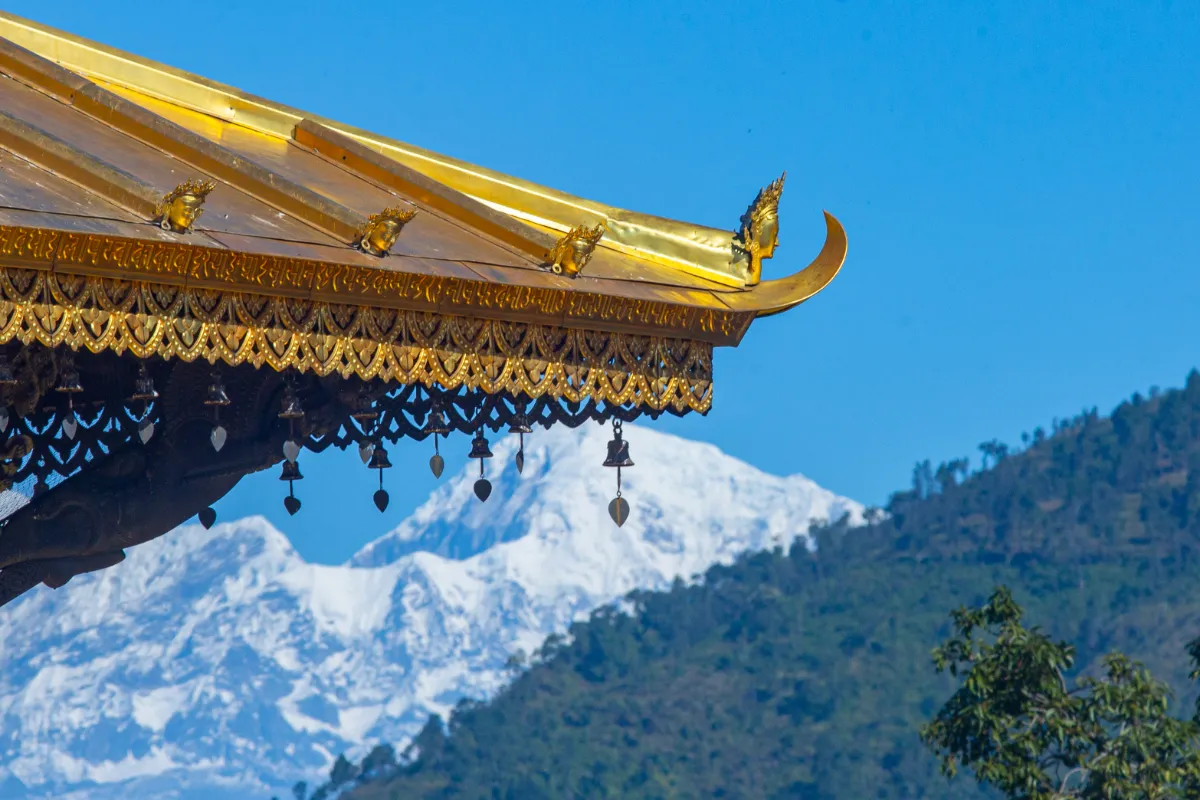
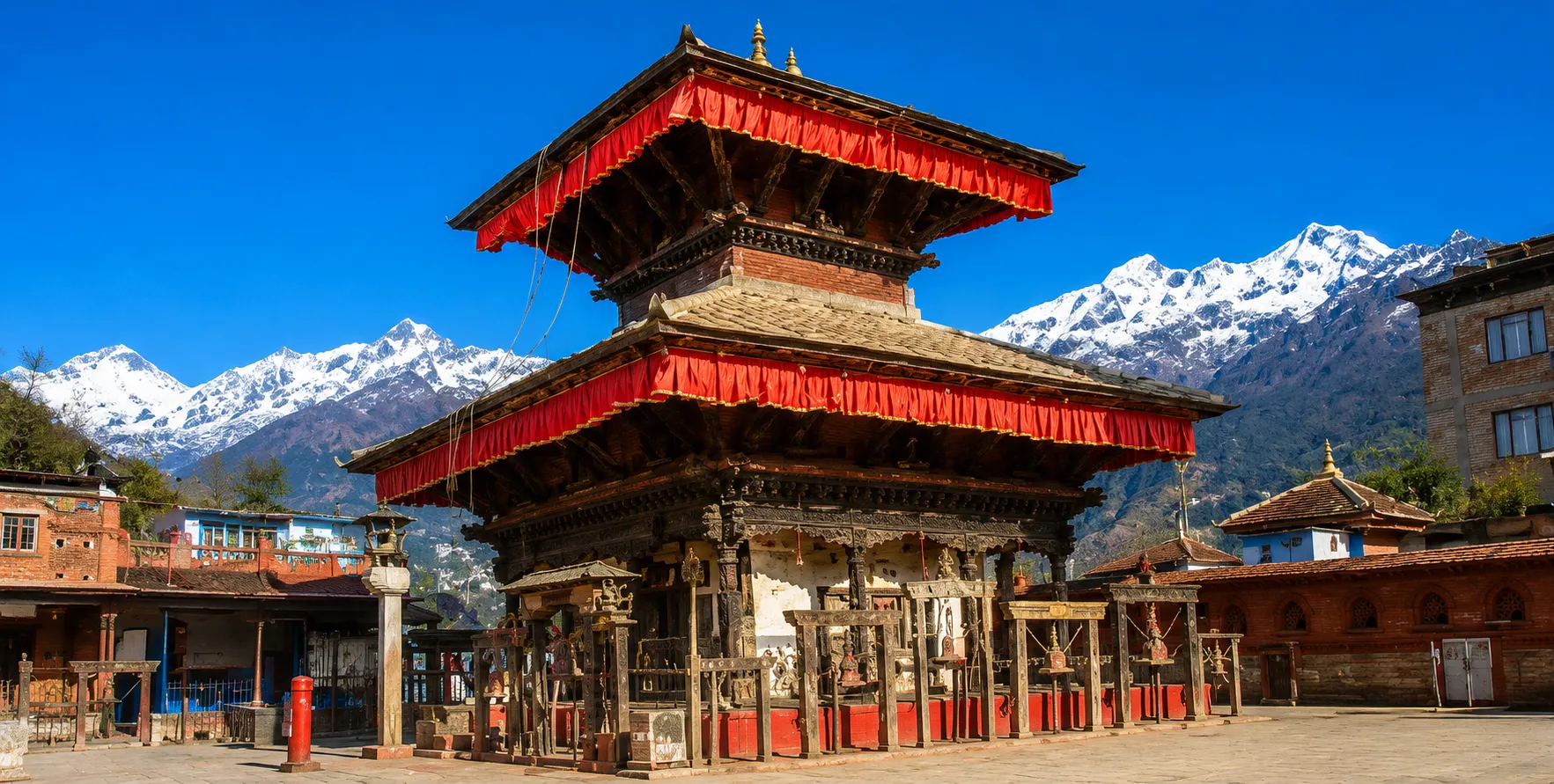
The main temple structure, painstakingly rebuilt following damage in the 2015 earthquake through a community-led effort that secured both local and governmental funds, follows the traditional Newari pagoda style with a gilded metal roof and ornate wooden carvings typical of Nepal’s finest temple craftsmanship. The reconstruction is widely regarded as having faithfully restored the structure’s original character rather than simply rebuilding at speed with substitute materials. The inner sanctum houses the sacred image of Goddess Bhagwati. Devotees typically offer flowers, coconuts, and, in traditional practice, live animals as sacrificial offerings, continuing a ritual tradition that predates the modern era and remains entirely active at the temple today, a visible reminder that Manakamana is very much a living place of worship rather than a heritage attraction.
The temple’s position on the Gorkha district ridge, within the cultural and historical heartland of the Shah dynasty that unified modern Nepal in the 18th century, gives it an additional layer of national significance beyond its purely religious importance, connecting the site to the broader narrative of Nepali state formation in a way that resonates deeply with Nepali pilgrims who make the journey as an expression of both devotional faith and national cultural pride. Gorkha itself, roughly 23kilometerss west of Manakamana, is the ancestral home of the Shah kings and the site of Gorkha Durbar, another magnificent hilltop palace and temple complex that some visitors combine with a Manakamana trip into a single extended day excursion.
The Manakamana Cable Car: Engineering, Operation, and the Ride
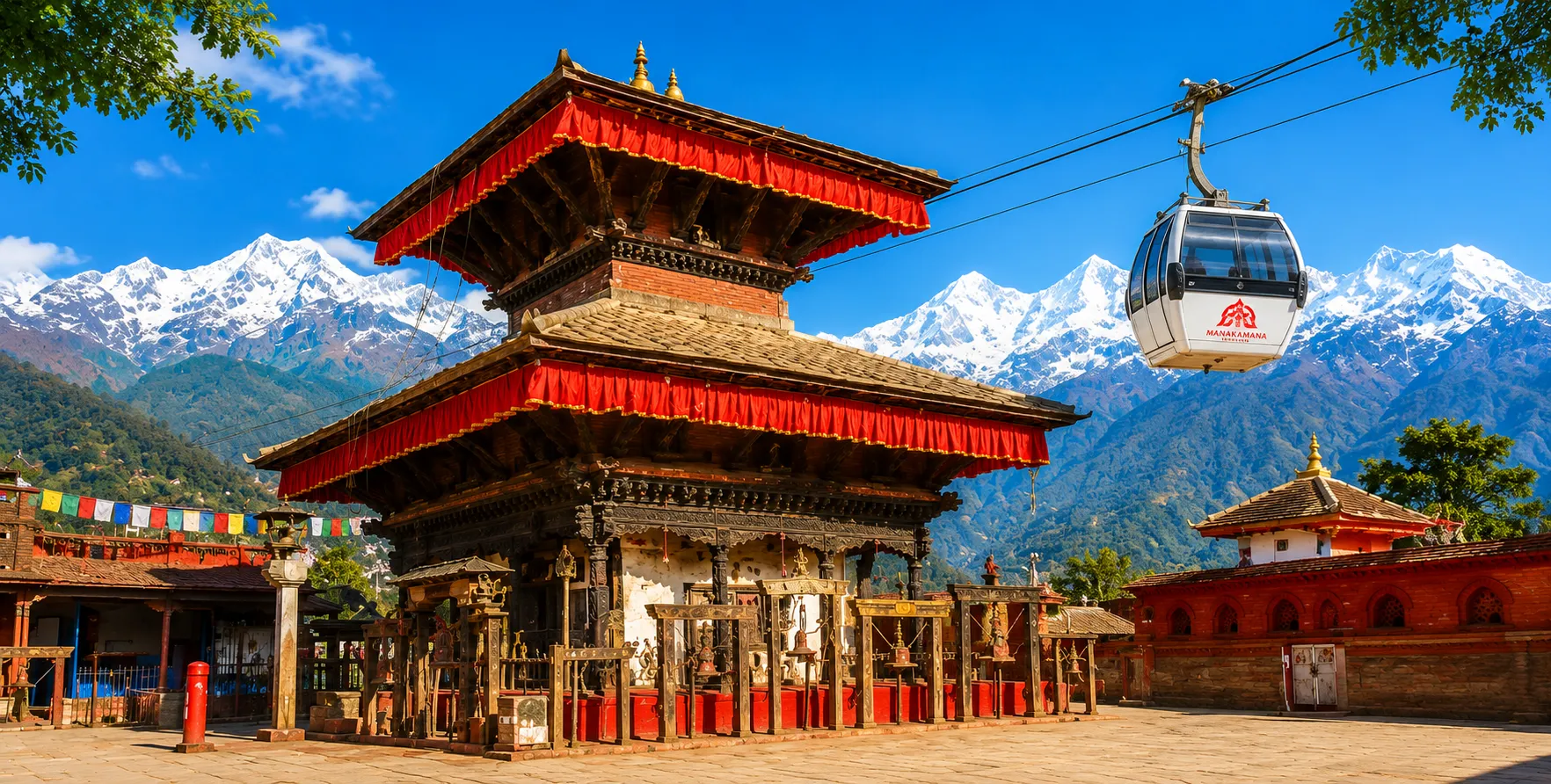
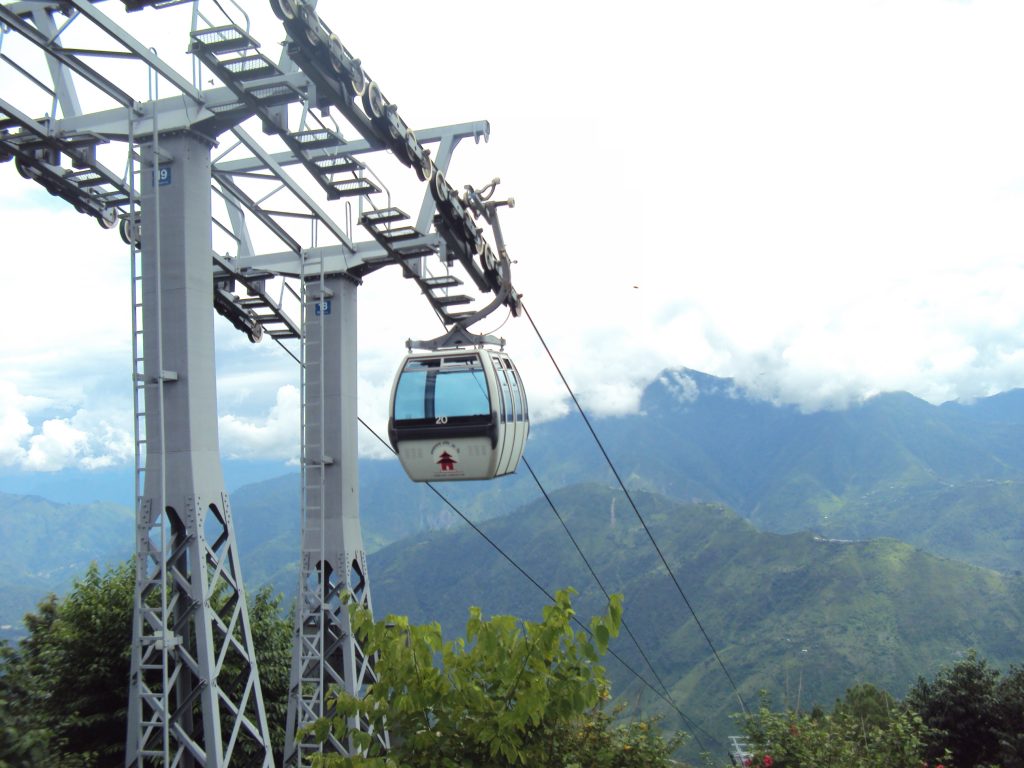
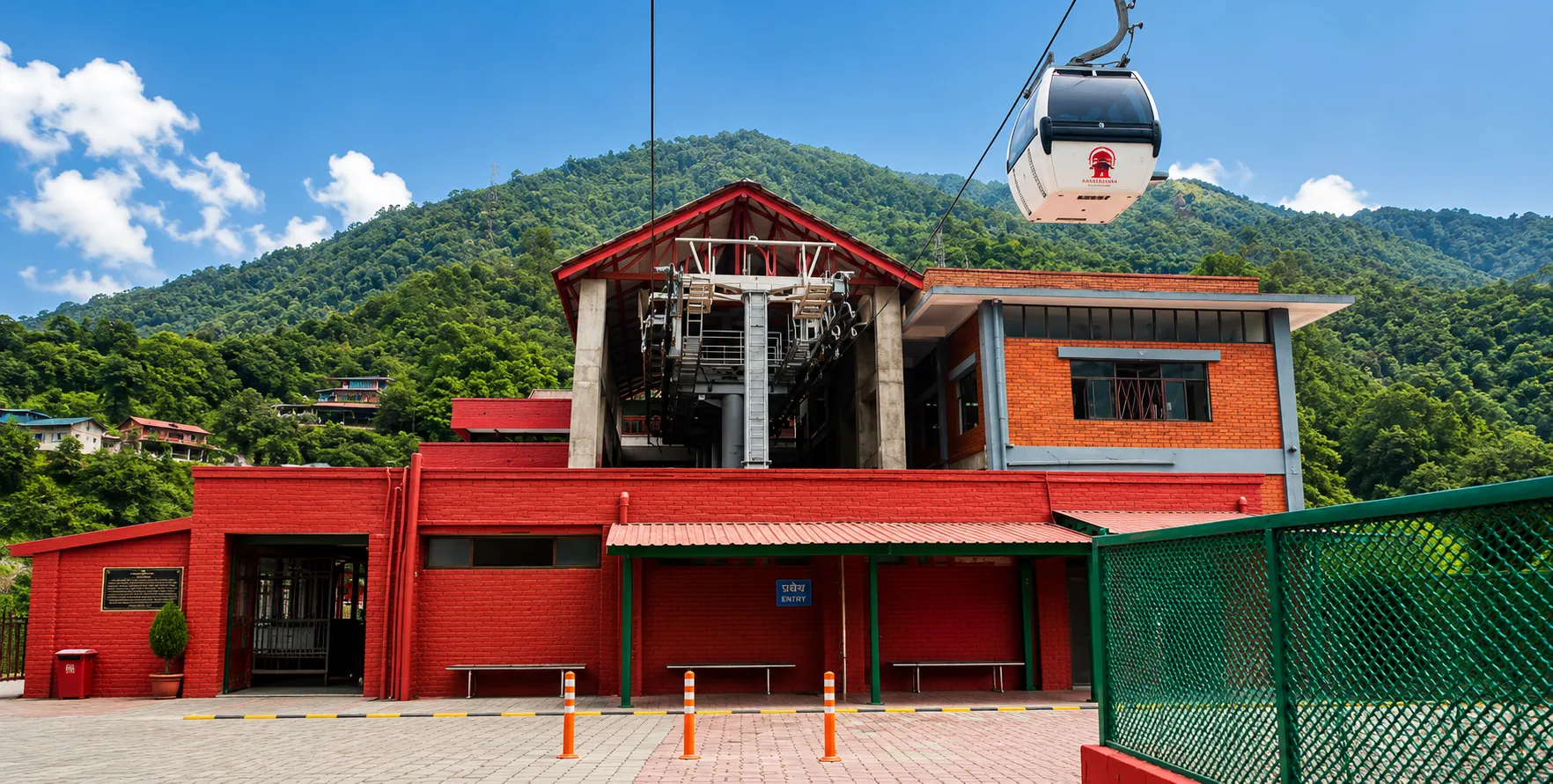
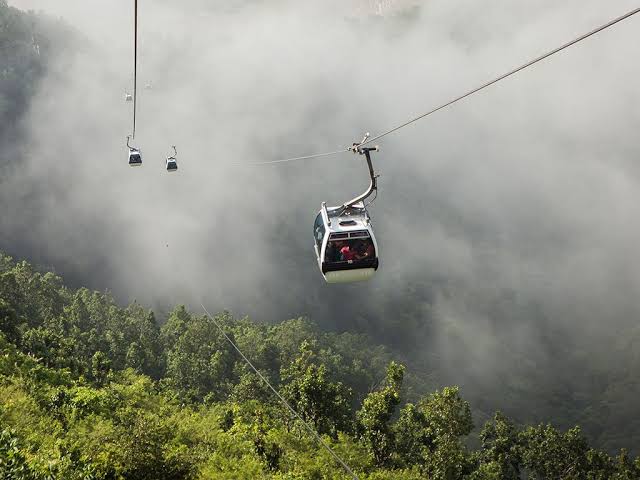
The Manakamana cable car holds the distinction of being Nepal’s first commercial ropeway system, inaugurated on 24 November 1998 and engineered by the Austrian firm Doppelmayr Group, one of the world’s leading manufacturers of cable car and gondola systems. The system operates 34 passenger gondola cabins, each seating 6 passengers comfortably, alongside 3 cargo cabins used to transport goods to and from the hilltop village and temple complex. Together, the passenger cabins carry approximately 600 passengers per hour at peak capacity, serving well over a million pilgrims and visitors annually.
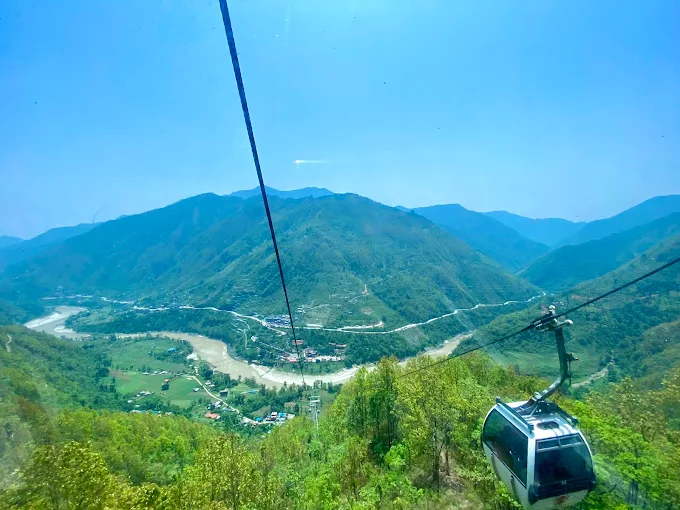
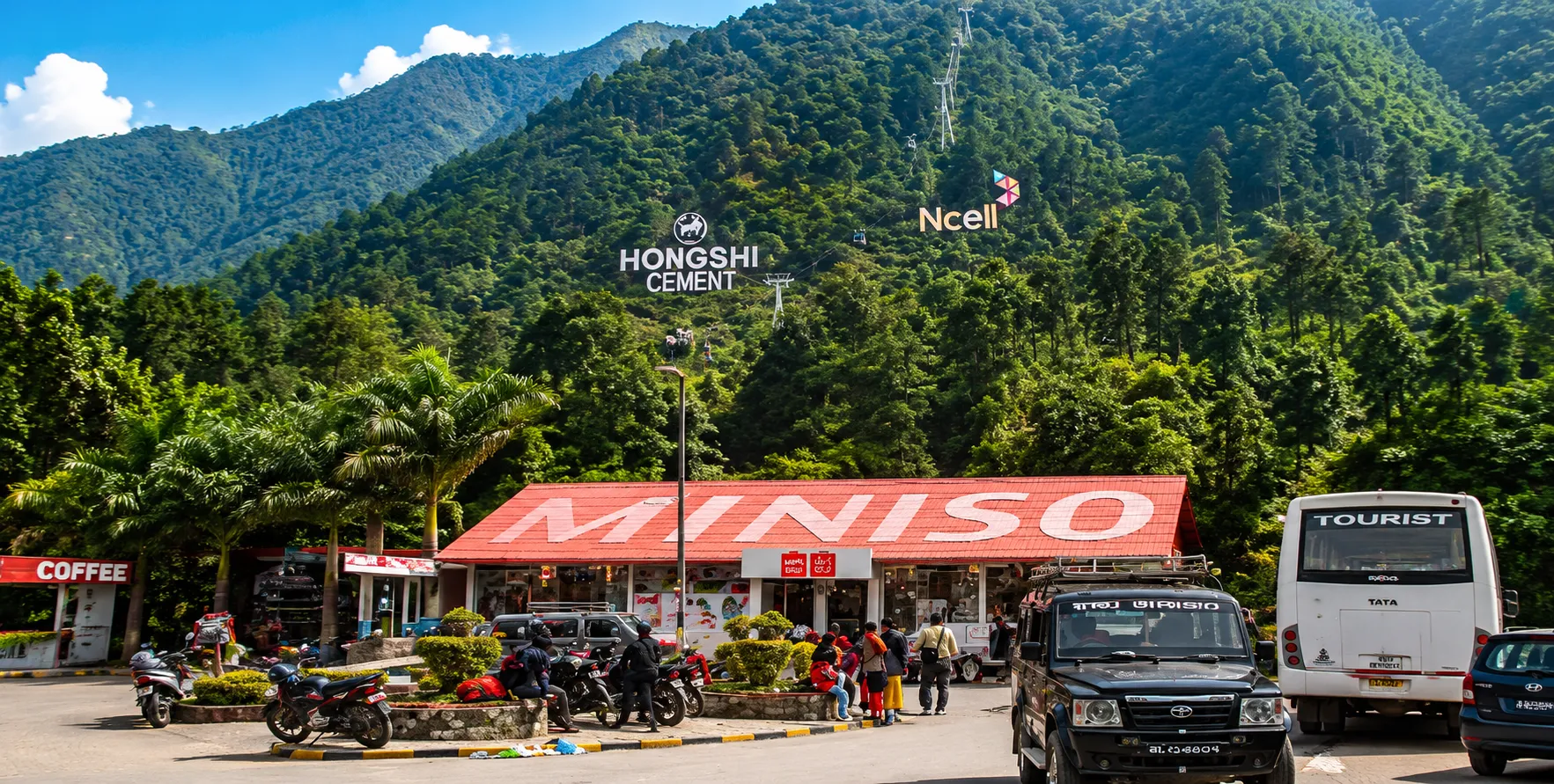
The cable car route covers 2.8 kilometers in approximately 10 minutes each way, rising roughly 1,000 meters in elevation from the base station at Kurintar on the Prithvi Highway to the top station near the temple complex at 1,302 meters, a rate of elevation gain per minute that rivals dedicated mountain cable cars found at far higher absolute altitudes elsewhere in the region. The ride itself crosses directly over the dramatic Trishuli River gorge, offering passengers a bird’s-eye view of the swift green river below, the steeply terraced hillsides of the surrounding Gorkha and Chitwan districts falling away in both directions, and — on clear days, particularly in the autumn and winter months — unobstructed views of Manaslu, Himalchuli, Ganesh Himal, and the eastern Annapurna ranges stretching in an unbroken line across the northern horizon.
This panorama surprises many visitors who arrived expecting a functional transport ride and find themselves looking at one of Nepal’s finest accessible Himalayan viewscapes instead. In clear conditions, the view from the gondola is frequently described by first-time visitors as unexpectedly spectacular, rivaling dedicated Himalayan viewpoints that require considerably more effort to reach. The sense of the gorge opening beneath the gondola immediately after departure from the base station is a moment of genuine drama that catches even experienced cable car riders off guard on their first crossing.
 –
–
Cable Car Operating Hours (2026)
- Opening time: 8:00 AM daily
- Closing time: 5:00 PM daily (last gondola departs before 5:00 PM)
- Lunch break: 12:00 PM – 1:30 PM (cable car operations pause during this window)
The 12:00–1:30 PM lunch break suspension is the single most important operational detail that first-time visitors to Manakamana need to know, as it catches a meaningful number of visitors off guard each day, particularly those who have driven from Kathmandu with a leisurely start and arrive at the base station just as operations are closing for the midday break, facing a 90-minute wait before the next gondola departs. Planning your vehicle departure from Kathmandu or Pokhara to arrive at the base station either before noon or after 1:30 PM avoids a potentially long wait at the base station during the hottest part of the day.
Cable Car Ticket Prices (2026)
- Adult (standard) – two-way: approximately NPR 640–675 per person
- Child (3–4 feet height): approximately NPR 385 per person (two-way)
- Student (with valid ID): approximately NPR 480 per person (two-way)
- Senior citizen (60+ with ID): approximately NPR 450 per person (two-way)
- Differently abled: approximately NPR 320 per person (two-way)
Ticket prices quoted above are the standard Nepali/SAARC citizen rates. Foreign nationals may be charged at a somewhat higher rate — confirming current foreigner rates directly at the Kurintar base station or via a tour operator before departure is recommended. Tickets are purchased at the bottom station (Kurintar) and are not available for confirmed advance online purchase through official channels as of 2026, making the standard process an in-person purchase on arrival at the base station — one of the few remaining major Nepal attractions that operates purely on a walk-in ticket basis rather than pre-booking, which underscores the importance of arriving early on busy days rather than assuming tickets will be available at any convenient time. On busy festival days, queues can be long; arriving early in the morning is strongly advised for weekend and festival visits.
Cable Car Baggage Rules
Passengers are permitted to carry personal items into the gondola cabins, with excess baggage charged at approximately NPR 17 per kilogram above a standard limit. Pilgrims carrying puja materials, flower offerings, and coconuts typically have these accommodated without issue, while larger items should be enquired about at the base station before queuing. Animals carried for ritual sacrifice are transported separately through the cargo cabin system rather than the passenger gondolas.
Distances and Drive Times to Manakamana
Manakamana’s position almost exactly midway along the Prithvi Highway between Kathmandu and Pokhara makes it naturally suited to both a standalone day trip from either city and a strategic midpoint stop on the Kathmandu–Pokhara road journey. The key distances are:
- Kathmandu to Kurintar base station: approximately 104–106 km by road via the Prithvi Highway, typically 2.5 to 3 hours depending on traffic.
- Pokhara to Kurintar base station: approximately 100–102 km by road, typically 2 to 2.5 hours depending on traffic and conditions.
- Chitwan (Sauraha) to Kurintar base station: approximately 62 km, typically 1 to 1.5 hours, making Manakamana an extremely convenient excursion from a Chitwan jungle safari base.
- Gorkha to Manakamana: approximately 23 km, easily combined with a Gorkha Durbar visit on the same day for travelers with more time.
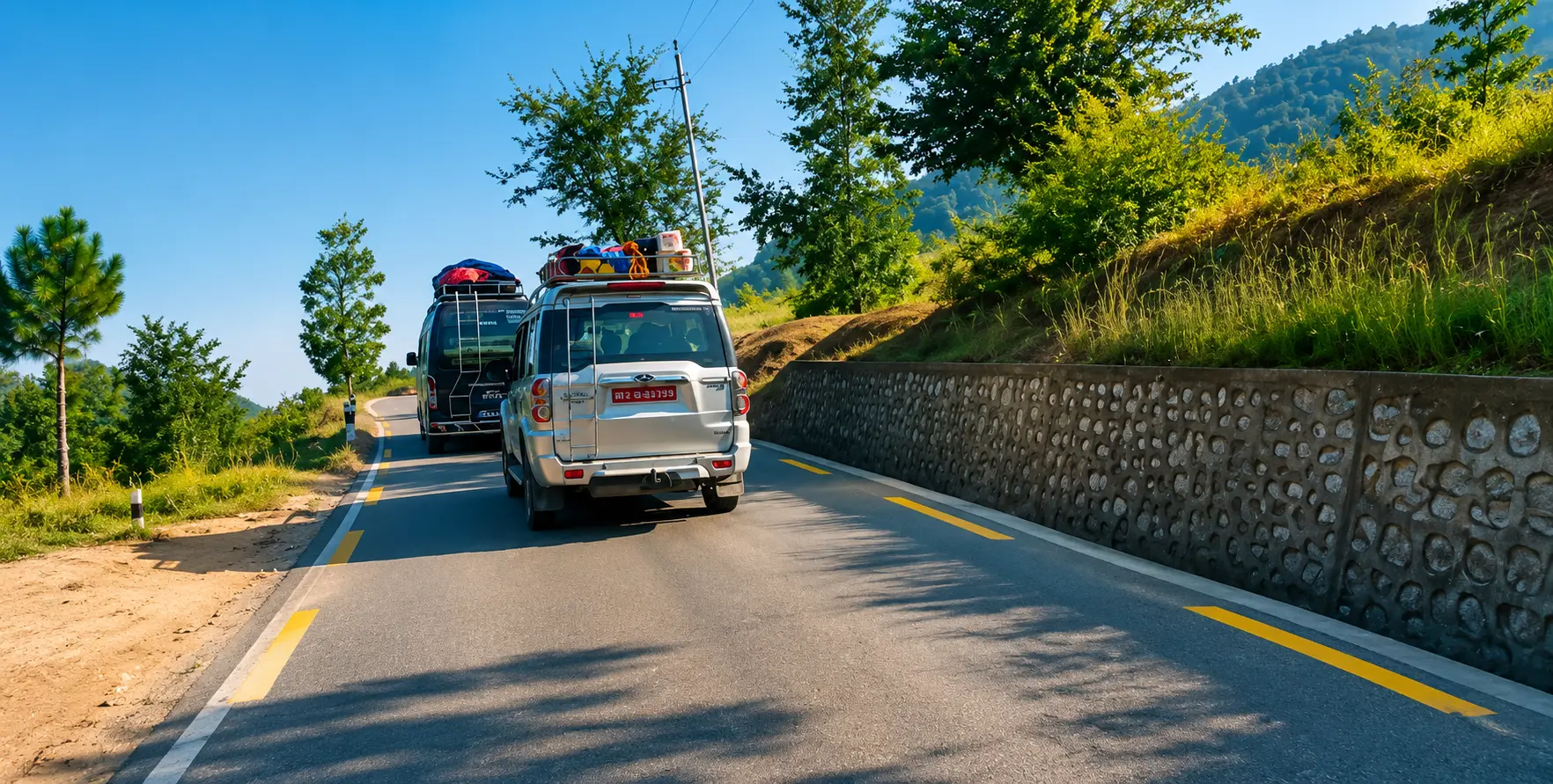
The Prithvi Highway between Kathmandu and Kurintar is fully paved and maintained, Nepal’s primary west-bound national highway, suitable for standard cars, jeeps, Hiace vans, and tourist buses, and generally passable year-round even during monsoon, making it one of the more reliable highway stretches for scheduled day-trip planning regardless of season. Traffic on the Kathmandu side can add 30–60 minutes to drive times during morning rush hours, making an early departure from Kathmandu, typically between 6:00 and 7:00 AM, the best approach for a day trip that aims to arrive at the cable car base station before the midday closure and before the peak festival-day queues build through the morning.
Vehicle Hire Options for the Manakamana Combo Tour
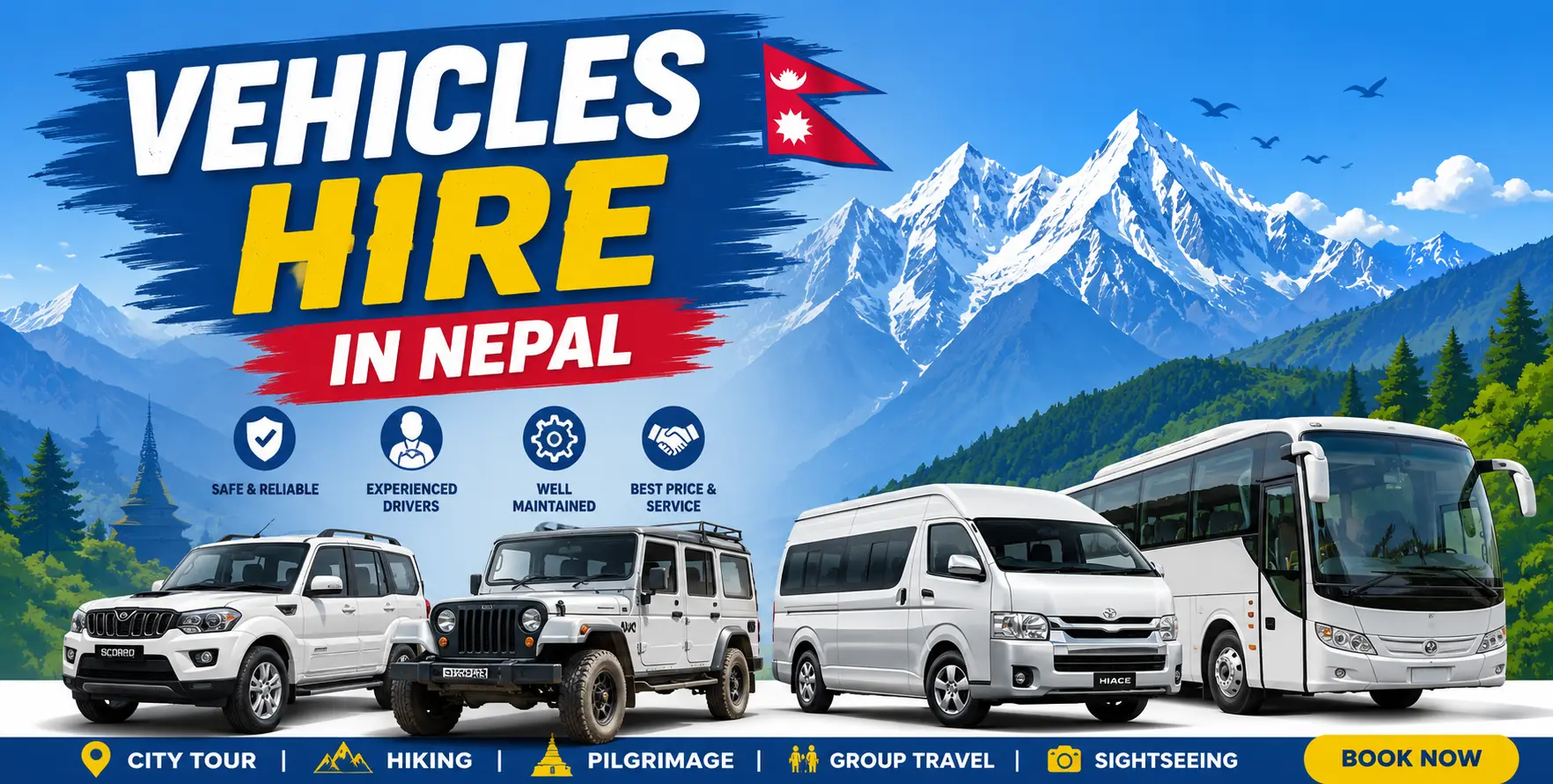
Nepal Vehicle Hiring Pvt Ltd offers the Manakamana combo tour across all major vehicle categories, allowing travelers to match the vehicle to their group size, comfort level, and budget. The Prithvi Highway route is fully paved and well maintained, meaning car hire in Nepal suits solo travelers and couples perfectly. At the same time, larger families and small groups fit comfortably in a Hiace van hire or a private jeep hire.
Private Car Hire (Sedan or SUV)
A private car hire from Kathmandu for a Manakamana day trip provides door-to-door service from your hotel, a comfortable 5-seater vehicle for small groups, and the flexibility to stop for photos, breakfast, or refreshments along the Prithvi Highway at your own pace rather than following a shared bus schedule. This is the preferred option for couples, solo travelers, and small families of up to four who prioritize private, flexible transport over economy of scale.
Jeep or 4WD Hire
A jeep hire is an excellent choice for groups of five to seven who want a single, comfortable vehicle for the Manakamana day trip, with the added benefit of higher seating positions and better luggage capacity than a standard sedan. The Prithvi Highway portion is fully paved, so four-wheel drive is not a strict terrain requirement on this route. Still, the additional space and seating comfort of a Mahindra Scorpio or similar SUV make the drive noticeably more comfortable for a full-capacity group on a return trip exceeding five hours of total driving time.
Hiace Van Hire for Groups
For groups of eight to fourteen people — extended families, tour groups, corporate pilgrimage outings — a Hiace van hire is the most practical and cost-effective single-vehicle solution. A Hiace carries the entire group in one vehicle, keeping everyone together for the cable car queue rather than coordinating separate smaller vehicles, and its individual reclining seats make the 2.5–3 hour highway drive each way considerably more comfortable than a shared public bus bench.
Tourist Bus or Coaster for Larger Groups
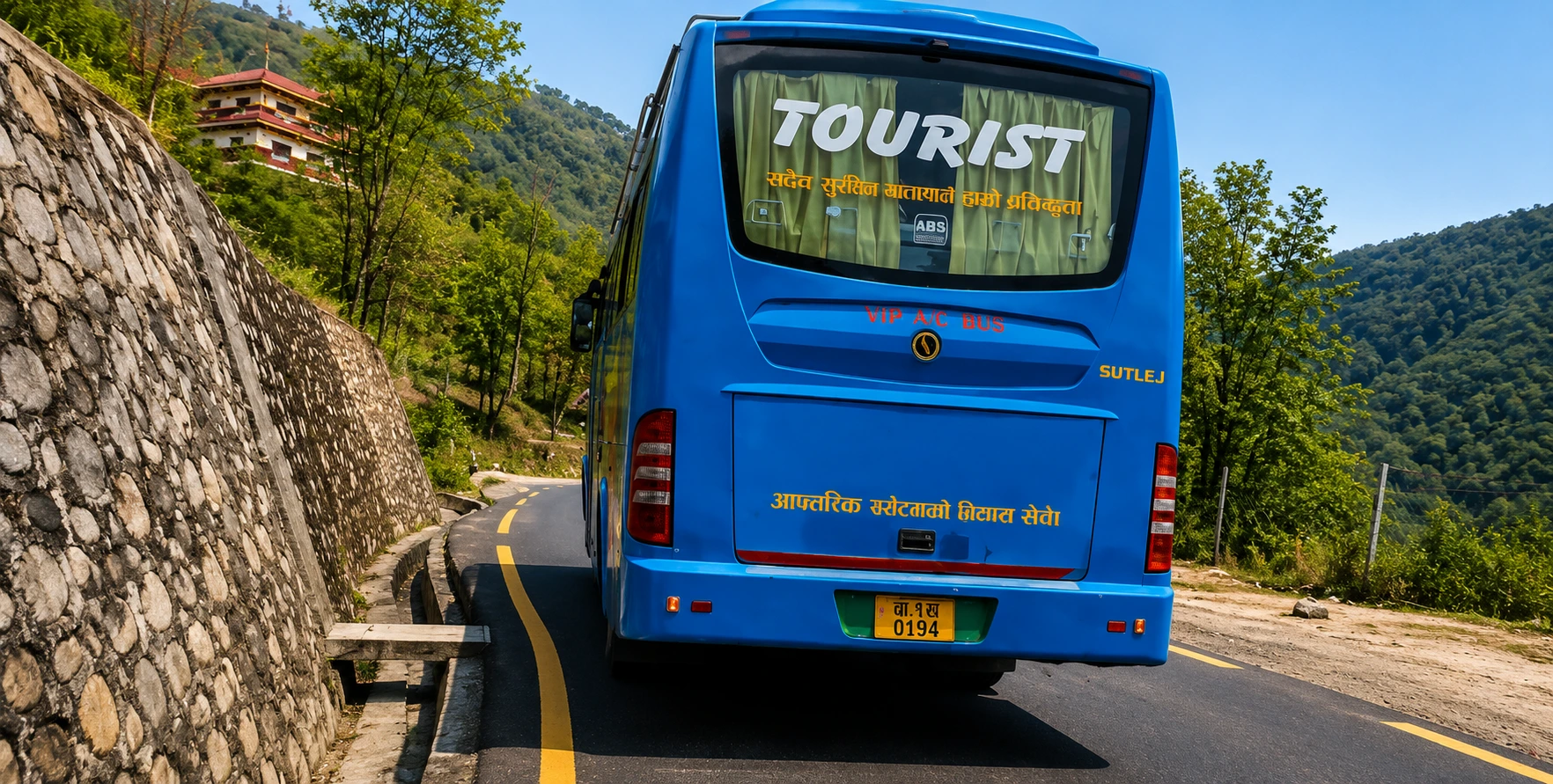
For groups exceeding fourteen people, a tourist bus or coaster charter provides the most economical per-person cost and comfortable journey experience for the highway sections. Large group Manakamana excursions — school trips, corporate pilgrimages, and community group outings — most commonly use this format, combining a full-size tourist coach for the highway transfer with the cable car experience at the hilltop.
Combining Manakamana with Kathmandu–Pokhara Transfer
One of the most popular and logistically elegant uses of the Manakamana combo tour is as a built-in stop on the journey between Kathmandu and Pokhara, or vice versa. Rather than driving straight through to Pokhara in a single 6–8 hour stretch, travelers who stop at Manakamana on the way split the journey into two comfortable halves, arrive refreshed at their destination, and add a genuinely memorable pilgrimage experience to what would otherwise be a purely transit day. This approach works seamlessly with car hire in Nepal, jeep hire, or Hiace hire on an intercity route, and our team plans the timing. Hence, your arrival at Kurintar avoids both the lunch break window and the heaviest morning queue periods.
Suggested Day Trip Itinerary from Kathmandu
Full Day Trip Schedule
5:30–6:30 AM: Departure from your Kathmandu hotel by private vehicle. An early start is strongly recommended, particularly on weekends and festival days, to reach the cable car base station before queues lengthen through the morning. Nepal Vehicle Hiring Pvt Ltd arranges pickups from Thamel, Patan, Bhaktapur, and other Kathmandu Valley locations.
8:30–9:30 AM: Arrival at Kurintar base station. Purchase cable car tickets at the base station counter (NPR 640–675 per adult two-way). Board the gondola for the 10-minute ride across the Trishuli gorge to the hilltop station.
9:30 AM–12:00 PM: Temple visit and Darshan (religious devotion). The temple complex typically requires 30–60 minutes for a complete visit, including queuing for the inner sanctum, making offerings, and exploring the surrounding temple courtyards and views. The remaining time before the cable car lunch closure can be used for lunch at one of the hilltop restaurants, Himalayan view photography, and exploring the small market area near the top station.
12:00–1:30 PM: Lunch break on the hilltop (cable car operations paused). This is an ideal window for a relaxed meal at one of the rooftop restaurants overlooking the Trishuli valley, with views of the Marsyangdi River confluence and, on clear days, the Annapurna and Manaslu ranges.
1:30–2:00 PM: Return cable car ride to Kurintar base station.
2:00–5:00 PM: Return drive to Kathmandu, arriving mid-afternoon. Total day trip duration approximately 10–11 hours with comfortable pacing and the midday lunch break included.
Combined Kathmandu–Manakamana–Pokhara Schedule
6:00 AM: Depart Kathmandu by private vehicle toward Pokhara.
9:00 AM: Arrive Kurintar, take cable car to hilltop, complete temple Darshan.
11:00 AM–1:30 PM: Hilltop lunch with Himalayan views during cable car break.
1:30 PM: Return cable car descent, rejoin vehicle at base station.
4:00–5:00 PM: Arrival in Pokhara, time for a Lakeside sunset walk before dinner.
What to Do and See at Manakamana Temple
Temple Darshan (Devotional Visit)
The central purpose of a Manakamana visit is Darshan—meaning the auspicious sight of the deity, an act that, in Hindu theology, is itself considered a form of blessing: a two-way exchange between the worshipper and the divine rather than merely passive observation. At Manakamana, Darshan means approaching the image of Goddess Bhagwati in the inner sanctum of the main temple through a queue that moves at the pace of the presiding priests’ ritual activities. Devotees typically queue to enter the inner sanctum in turn, offering flowers, incense, and coconuts to the presiding priests, who conduct the puja on behalf of visitors. The queue inside the temple complex can range from 15 minutes on quiet weekdays to well over an hour on major festival days, particularly Dashain, Tihar, and the auspicious days of the Nepali calendar when pilgrimage traffic peaks significantly.
Himalayan Views from the Ridgeline
On clear days, particularly in autumn (October–November) and winter (December–February), the ridgeline around Manakamana offers expansive views of multiple Himalayan peaks. Manaslu, at 8,163 meters, the eighth-highest mountain in the world, dominates the northern skyline. At the same time, Himalchuli (7,893m), Ganesh Himal (7,422m), and the eastern Annapurna massif are visible from various points along the temple ridge. The pre-monsoon spring season (March–April) also delivers good views, though afternoon haze builds more readily. Monsoon season (June–September) significantly reduces visibility from the hilltop.
The Cable Car Ride Itself
Many visitors report that the cable car ride is itself one of the highlights of the Manakamana trip, rather than purely functional transport to the temple. The aerial crossing directly over the Trishuli River gorge, with the white-water river visible hundreds of meters below, the terraced hillsides dropping steeply away on both sides, and the gradual revelation of the Himalayan panorama as the gondola gains elevation, makes for a genuinely dramatic 10-minute experience that many visitors photograph extensively from inside the gondola cabin.
Hilltop Village and Market
The small settlement surrounding the top cable car station has developed a modest but pleasant market of souvenir stalls, puja material shops selling flowers, incense, and other ritual offerings, and a range of restaurants serving Nepali dal bhat alongside basic continental food options catering specifically to the mix of domestic pilgrims and foreign tourists who make up the site’s diverse daily visitor population. Several rooftop restaurants with valley and mountain views have become popular for extended post-Darshan lunches, particularly during the enforced cable car pause between noon and 1:30 PM, when visitors have time to settle into a meal rather than rushing back to the gondola queue.
Traditional Trek (For the Adventurous)
A traditional walking trail to Manakamana Temple exists for travellers who want to approach the site on foot rather than by cable car, following the steep route used by pilgrims for centuries before the 1998 cable car opening, and still maintained as an active walking path for devotees who make the climb as part of a specific religious vow or want the unfiltered experience of arriving at a hilltop temple on foot rather than by gondola. The trail climbs steeply from the highway through terraced farmland and forest, typically taking 2.5 to 3.5 hours on the ascent and 1.5 to 2.5 hours on the descent, and offers an immersive experience of the rural landscape and occasional encounters with traditional pilgrims making the journey on foot as part of a religious vow. Most foreign visitors use the cable car for practicality, while trekking enthusiasts who choose the traditional trail describe the experience of arriving at the temple after a genuine climb as adding meaningful depth to the devotional experience — a sentiment shared by traditional pilgrims who occasionally choose to walk as part of a religious vow even now that the cable car alternative exists.
Combining Manakamana with Other Nearby Destinations
Gorkha Durbar
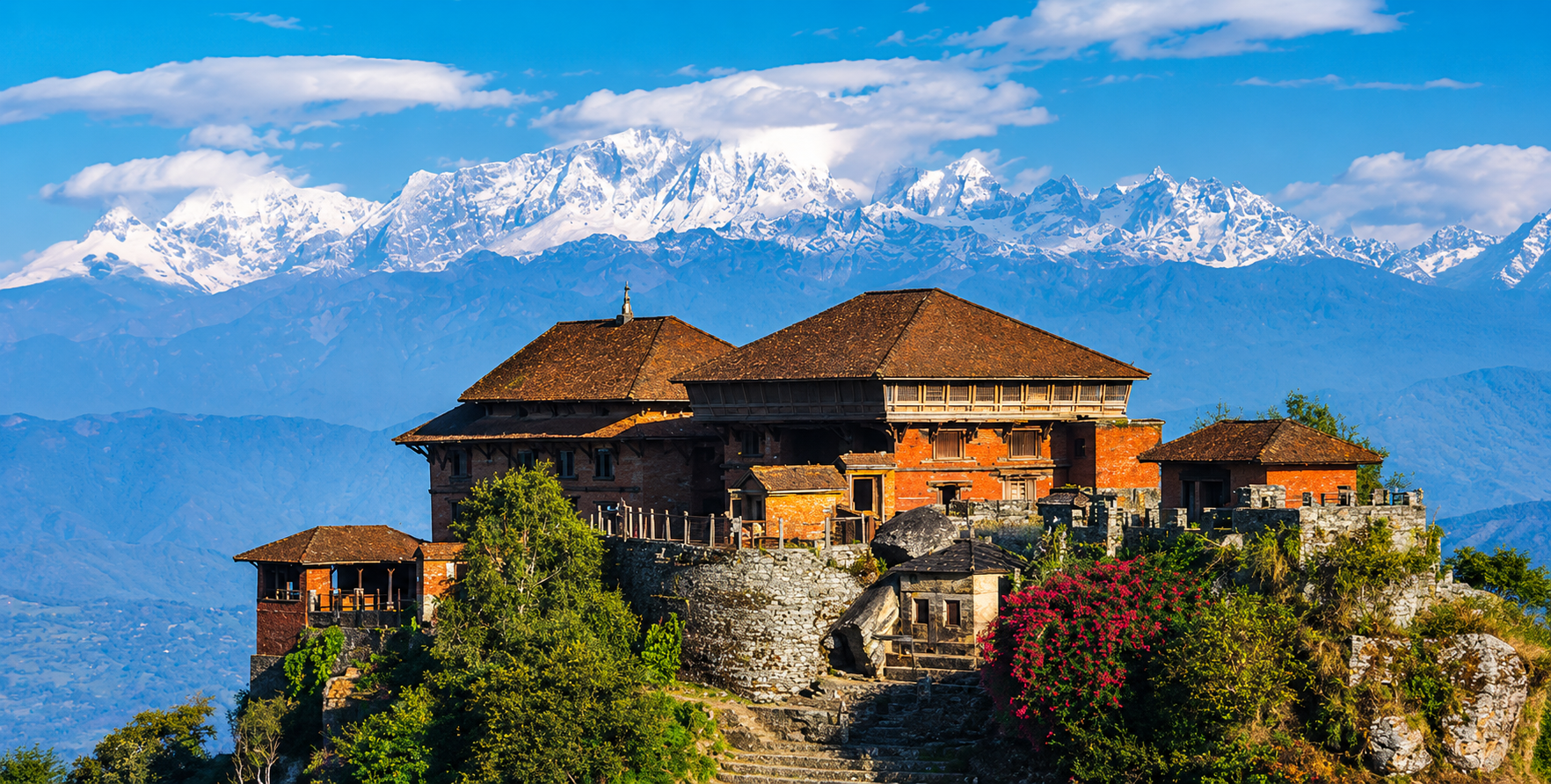
Gorkha, the ancestral home of the Shah dynasty and the birthplace of King Prithvi Narayan Shah who unified Nepal in the 18th century, sits approximately 23 kilometers northwest of Manakamana and is a natural addition for travelers with a full day available or those who want to deepen the historical and cultural dimension of their Gorkha district visit beyond the pilgrimage experience alone. Gorkha Durbar, the magnificent hilltop palace and temple complex, requires its own 20-minute climb to reach but offers extraordinary architecture and sweeping views. The combination of Manakamana temple and Gorkha Durbar in a single day is best managed with a private car hire or jeep hire rather than public transport, since coordinating the cable car timing with the Gorkha side trip requires flexible vehicle scheduling.
Pokhara as an Overnight Extension
For travelers starting from Kathmandu, a Manakamana stop as part of a Kathmandu to Pokhara bus journey or a private vehicle transfer creates a natural rhythm for the trip: a meaningful pilgrimage stop at the midpoint of the journey rather than a single long driving day with nothing to show for the transit time. Pokhara’s Sarangkot sunrise tour on the morning after arrival adds a spectacular Himalayan viewpoint experience that bookends the Manakamana hilltop views from the previous day with an entirely different mountain panorama.
Chitwan National Park
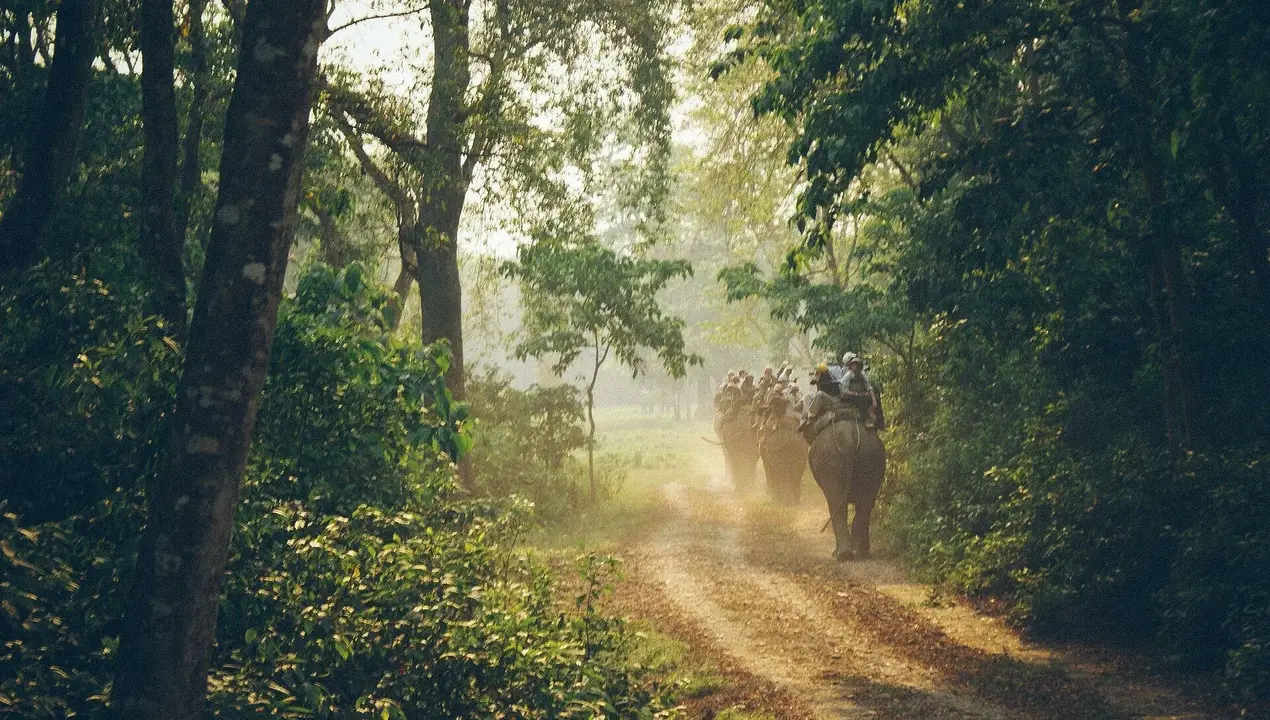
Manakamana also sits within reasonable striking distance of Chitwan National Park, at approximately 62 kilometers from Sauraha, making it an excellent half-day addition for travelers based at a Chitwan jungle resort who want a cultural and spiritual experience alongside wildlife activities. The Pokhara to Chitwan bus route passes close to Kurintar on the Prithvi Highway, and travelers comfortable with flexible scheduling can arrange a Manakamana stop within this journey fairly naturally with a private vehicle rather than a scheduled bus.
Kathmandu Sightseeing
Travelers based in Kathmandu who want to combine Manakamana with a broader valley sightseeing day sometimes add a Bhaktapur Durbar Square day tour to the day before or after, or include a Kathmandu sightseeing tour on a separate day within the same trip, making Manakamana the outdoor pilgrimage day and Kathmandu Valley the cultural heritage day of a well-rounded two-day Kathmandu program.
Best Time to Visit Manakamana Temple
Manakamana Temple can be visited throughout the year, and unlike many of Nepal’s high-altitude destinations, it is not closed or seriously disrupted by any single season. That said, timing choices meaningfully affect the experience:
Autumn (October–November)
Autumn delivers the clearest Himalayan views from the ridgeline, the most stable cable car operating conditions, and comfortably cool temperatures at the hilltop. This is also Nepal’s peak festival season, meaning Dashain and Tihar periods see very large pilgrimage crowds at Manakamana, with queue times for both cable car and temple inner sanctum reaching their annual peaks. Visitors who want autumn’s clear skies without the festival crowds should target the first half of October before Dashain begins, or the calmer window between Dashain and Tihar, typically one to two weeks apart depending on the lunar calendar year, when crowd levels drop perceptibly before Tihar brings a second surge of festival-season pilgrimage traffic.
Spring (March–May)
Spring brings warming temperatures and generally good conditions, with Himalayan views best in the mornings before afternoon haze builds. This is a comfortable season for the trip, with moderate pilgrimage crowds compared to major festival weeks.
Winter (December–February)
Winter offers the clearest air of the year and can deliver spectacular mountain views from the hilltop on cold, cloudless mornings. The hilltop is noticeably cooler than Kathmandu in winter, making a light jacket or warm layer advisable for the cable car ride and hilltop visit. Pilgrimage crowds are lighter than peak season, making this an excellent window for visitors who want a more personal, less crowded experience of the temple.
Monsoon (June–September)
Monsoon brings regular rain and significantly reduced hilltop visibility, making the Himalayan view aspect of the visit less reliable. The temple itself remains fully operational, and the cable car runs normally except during exceptional weather. Still, the combination of reduced visibility, humid conditions, and occasional heavy rain makes monsoon the least popular season for this particular excursion. Visitors who cannot avoid monsoon dates will still find the temple and cable car fully accessible, but should not expect clear mountain views and should carry adequate rain protection.
Practical Information for the Manakamana Cable Car Tour
What to Wear and Bring
- Modest clothing appropriate for temple entry: covered shoulders and knees for both men and women.
- Comfortable walking shoes, since the hilltop area involves short walks on stone surfaces between the top station and the temple complex.
- A light jacket or layer, particularly for winter visits or early morning cable car rides when the gorge breeze can make the gondola noticeably cool.
- Sunscreen and sunglasses, since the hilltop ridgeline has limited shade and the UV exposure at 1,300 meters is meaningful even on overcast days.
- Puja materials if participating in devotional offerings (flowers, coconuts, and incense are also available for purchase from stalls at the base station and near the top station).
- Sufficient cash in Nepali Rupees, since cable car tickets, hilltop restaurants, and souvenir stalls are all cash-based, and ATMs are not available at the site itself.
Photography Tips
The cable car gondola offers excellent photography opportunities, particularly on the outward (ascending) journey when the Trishuli River gorge drops away below, and the Himalayan range comes progressively into view ahead. The best light for mountain photography at the hilltop is in the first 1–2 hours after arrival, before afternoon haze or cloud begins to reduce visibility and contrast on distant peaks. The temple courtyard offers photogenic architectural subjects, though photography inside the inner sanctum is restricted and should be confirmed with attending priests before attempting.
Crowds and Queue Management
The busiest days at Manakamana are Saturdays (Nepal’s most popular domestic holiday for pilgrimage), major Nepali festival days (particularly Dashain, Tihar, and Shivaratri), and auspicious dates on the Hindu calendar. On these peak days, cable car queues at the Kurintar base station can extend to 1–2 hours. Templele inner sanctum queues on the hilltop similarly lengthen to comparable waiting times, meaning a visitor arriving at 9:00 AM on a major festival day may not complete the full cable car ascent, Darshan, and cable car descent before early afternoon even with efficient movement through each queue. Weekdays, particularly Tuesday through Thursday, see considerably lighter crowds and shorter queues for both the cable car and the Darshan, making them the best days for visitors who want a personal, unhurried experience of the temple rather than queuing alongside hundreds of other pilgrims and tourists.
Travelers booking a private vehicle through Nepal Vehicle Hiring Pvt Ltd benefit from the flexibility to depart at the optimal time for their specific visa; our team advises on queue expectations for particular dates and times when you enquire. Reach us at [email protected] or WhatsApp +977 9851013196 to plan your Manakamana vehicle and timing around your preferred visit window.
Why Choose a Private Vehicle Over a Tourist Bus for Manakamana
Shared tourist buses serving the Manakamana day trip from Kathmandu offer the lowest per-person cost and remain a perfectly functional option for budget-conscious solo travelers; however, several practical advantages of private vehicle hire make it the preferred choice for most families, couples, and groups visiting Manakamana with any degree of schedule flexibility.
- Flexible departure time: Private vehicles depart from your hotel at whatever time suits your Manakamana timing plan, rather than fixed bus departure windows that may not align with your preferred cable car arrival time.
- Direct hotel pickup: A private car hire or Hiace collects from your exact accommodation, eliminating the need to travel to an independent bus departure point in Kathmandu at 5:30 or 6:00 AM i; nd privacy: A private cabin means your own group throughout, with luggage, puja materials, and children accommodated without the shared space constraints of a tourist bus.
- Flexibility for additional stops: Gorkha Durbar, riverside lunch stops, or a return-route Chitwan detour are all easily added to a private vehicle day, while shared bus tours follow fixed itineraries that cannot accommodate individual additions.
- Midday flexibility: During the cable car lunch break (12:00–1:30 PM), private vehicle visitors can use the driver to drive briefly into a nearby village, join a riverside lunch spot, or wait comfortably in the vehicle, while shared bus groups are constrained to the hilltop and base station facilities.
The Manakamana Cable Car in Nepal’s Tourism History
The inauguration of the Manakamana cable car on 24 November 1998 marked a genuine turning point in Nepal’s domestic tourism and pilgrimage landscape, not simply as a transport convenience but as a demonstration that Austrian-engineered cable car technology could be successfully deployed and maintained in the complex terrain and operating environment of the middle Himalayan hills. Before the cable car, reaching Manakamana required a 3–4 hour steep walk each way, limiting the temple’s practical accessibility to physically capable pilgrims willing to dedicate a full, demanding day to the journey. The cable car reduced that journey to 10 minutes, immediately opening the site to elderly pilgrims, families with young children, and visitors with limited time or physical capability who could not have made the original trek.
The commercial and social impact of this transformation was profound. Annual pilgrimage numbers, which had been constrained by the physical and time barrier of the steep approach trail, grew rapidly after 1998 and have continued to grow steadily through the 2010s and 2020s, firmly establishing Manakamana as Nepal’s most visited single-day pilgrimage destination measured by annual visitor throughput. This title seems likely to hold given the continuing growth of both domestic Nepali religious tourism and international visitor interest in authentic Hindu pilgrimage experiences. The cable car operator, Manakamana Darshan Pvt Ltd, has consistently operated the service as a financially self-sustaining enterprise while directing a portion of revenues toward community development in both Manakamana Gaun Palika and the surrounding Darechock Gaun Palika municipality — specifically 1% of ticket revenue to each — an example of structured tourism revenue sharing with directly affected local communities that other Nepali heritage sites have studied as a potential model for broader application.
Manakamana’s Role in Nepali Hindu Festival Culture
The festival calendar significantly shapes the rhythm of visits to Manakamana, and understanding which festivals drive peak pilgrimage periods helps travelers plan visits that either coincide with the energy of a major festival or deliberately avoid the heaviest crowds depending on personal preference. The single busiest period at Manakamana is Dashain, Nepal’s most important Hindu festival, which typically falls over roughly fifteen days in September or October. During Dashain, the goddess Bhagwati in her various warrior manifestations is the primary deity of national veneration, making Manakamana — as one of Nepal’s most prominent Bhagwati shrines — a focal point of Dashain pilgrimage on a scale that can overwhelm the cable car’s capacity to serve the demand, even at maximum throughput of 600 passengers per hour.
The eighth and ninth days of Dashain, known as Mahashtami and Mahanavami, are the most intensely devotional days of the festival period and see the largest single-day pilgrimage crowds of the year, including ritual animal sacrifice that is integral to the Dashain celebration at Manakamana and at major goddess temples across the country. Visitors wishing to experience the full cultural and devotional intensity of Dashain-season Manakamana should prepare for very early morning arrivals, potentially 5:00–6:00 AM, substantial queues, and a far more immersive, emotionally intense atmosphere than a typical weekend visit, while those preferring a quieter personal experience should specifically avoid the Dashain window.
Comparing the Manakamana Cable Car Experience with Other Nepal Viewpoints
The Manakamana cable car experience occupies a distinct niche among Nepal’s various aerial and elevated viewpoint options, and comparing it with alternatives helps travelers understand what makes it unique and how to position it within a broader Nepal itinerary. The Sarangkot sunrise tour above Pokhara offers a more classically Himalayan panorama and closer views of the Annapurna range. Still, it’s a sunrise drive rather than a cable car experience, and it lacks the active pilgrimage dimension that gives Manakamana its distinctive character.
The Nagarkot sunrise tour east of Kathmandu similarly delivers Himalayan panoramas from a road-accessible hilltop, again without a cable car component. Manakamana’s combination of a genuine cable car crossing, an active sacred temple, Himalayan views, and the unique social atmosphere of mass pilgrimage places it in a category of its own among Nepal’s day excursion options. This experience is simultaneously more dramatic in its engineering, more spiritually charged in its destination, and more culturally immersive in its visitor population than any other standard Nepal day trip.
Overnight Stay Options Near Manakamana
While most visitors treat Manakamana as a day trip, overnight stay options exist for travelers who prefer a more relaxed schedule,w ant to be at the temple for dawn puja before the cable car queues build, or are making a more extended spiritual retreat at the site. The hilltop settlement near the top cable car station has several small guesthouses and basic hotels catering to pilgrims who wish to attend the early morning puja at the temple before the day-trip crowds arrive. At the same time, more comfortable resort options exist at Kurintar on the Prithvi Highway riverside, where a cluster of riverside resorts has developed specifically to serve the transit and excursion market on this most-traveled stretch of Nepal’s highway network, offering swimming pools, garden dining, and comfortable rooms alongside the Trishuli River at prices significantly below Kathmandu or Pokhara hotel rates.
Nepal Vehicle Hiring Pvt Ltd can arrange drop-off for overnight stay visitors and a next-morning pickup from either the Kurintar base station or an agreed Prithvi Highway point for the onward journey to Pokhara or the return to Kathmandu — mention an overnight component when enquiring at [email protected] or WhatsApp +977 9851013196. We will build the vehicle plan around your specific schedule.
Frequently Asked Questions
How long does the Manakamana cable car ride take?
The cable car ride takes approximately 10 minutes each way, covering 2.8 kilometers of aerial cable and rising roughly 1,000 meters in elevation from the Kurintar base station on the Prithvi Highway to the top station adjacent to the temple complex, a ratio of elevation gain to horizontal distance that makes it one of the steeper cable car gradients in South Asia.
What is the cable car ticket price for foreign visitors?
As of 2026, the standard adult two-way cable car ticket costs approximately NPR 640–675. Foreign visitor rates may be slightly higher and should be confirmed at the Kurintar base station on arrival.
What time does the Manakamana cable car close for lunch?
The cable car pauses all passenger operations between 12:00 PM and 1:30 PM daily for staff rest and routine checks. Visitors should plan their arrival to allow sufficient time for the ascent, temple visit, and descent before 12:00 PM, or arrange to spend the lunch window at the hilltop before descending after 1:30 PM.
How far is Manakamana from Kathmandu?
The Kurintar cable car base station is approximately 104–106 kilometers from central Kathmandu by road via the Prithvi Highway, typically a 2.5- 3-hour drive depending on departure time and traffic.
Can non-Hindus visit Manakamana Temple?
Yes, foreign and non-Hindu visitors are generally welcome at Manakamana Temple. The most sacred inner sanctum has specific protocols regarding footwear removal and modest dress, and some inner areas may have restricted access for non-devotees. Still, the overall complex and cable car are fully open to all visitors regardless of religion or nationality.
Is a guide necessary for a Manakamana day trip?
A guide is not strictly required for the Manakamana cable car and temple visit, since the site is compact and well signposted. Still, an English-speaking guide adds meaningful context to the temple’s history, deity iconography, and ritual practices observed during the visit. Nepal Vehicle Hiring Pvt Ltd can arrange guide services alongside your vehicle booking — enquire at [email protected] or WhatsApp +977 9851013196.
Can I book the Manakamana vehicle and cable car combo in advance?
Private vehicle transfers to Manakamana from Kathmandu or Pokhara can be booked in advance through Nepal Vehicle Hiring Pvt Ltd, ensuring your preferred vehicle category and departure time are confirmed before your visit date. Cable car tickets are purchased in person at the Kurintar base station on the day and cannot be reserved in advance through official channels. To book your vehicle combo, email [email protected] or WhatsApp us at +977 9851013196.
Book Your Manakamana Cable Car and Vehicle Combo Tour
Nepal Vehicle Hiring Pvt Ltd offers private vehicle transfers to Manakamana from both Kathmandu and Pokhara, with daily availability across all vehicle categories. Whether you want a private car hire for two, a jeep hire for a family group, or a Hiace van for a larger party, our experienced drivers know the Prithvi Highway route and the Kurintar timing requirements well, ensuring you arrive at the right time and return comfortably within the same day.
To make a booking or request a quote, reach us by email at [email protected] or call or WhatsApp us directly at +977 9851013196. You can also explore our full range of vehicle hire in Nepal or browse a complete Nepal tour package that includes Manakamana alongside Kathmandu, Pokhara, and Chitwan in a single coordinated itinerary. Our contact page is also available for inquiries at any time.
Final Thoughts: Why Manakamana Belongs on Every Nepal Itinerary
Manakamana Temple and its cable car approach is one of those rare travel experiences that simultaneously satisfies every kind of visitor — the religious pilgrim seeking divine blessing, the cultural traveller wanting a living encounter with active Hindu worship, the adventure traveller drawn by the aerial cable car drama and the hilltop Himalayan view, and the practical traveller who appreciates that this extraordinary experience is accessible within a single day from either of Nepal’s two major tourism cities without any particular physical fitness or technical preparation.
The cable car ride itself, an engineering achievement that transformed centuries of arduous pilgrimage trail into a 10-minute aerial crossing above the Trishuli gorge, is a remarkable symbol of how Nepal navigates the relationship between ancient spiritual tradition and modern infrastructure, using technology to widen access to sacred experience rather than displace it. The hilltop temple remains entirely and authentically alive with devotion, unchanged in its ritual character by the addition of the gondola that now delivers several thousand pilgrims a day instead of the slower trickle that once made the steep footpath climb the only option.
For travelers already planning a Nepal itinerary that includes the Kathmandu–Pokhara corridor, adding a Manakamana stop requires no significant detour and no additional travel day, only good timing, an early-morning start, and a flexible private vehicle that can be arranged directly through Nepal Vehicle Hiring Pvt Ltd with a single message or phone call. Contact us at [email protected] or WhatsApp +977 9851013196 — we will have your Manakamana combo tour planned and confirmed in a single conversation.
- Manakamana Temple Cable Car & Vehicle Combo Tour 2026 | Day Trip Guide
- Manakamana Temple: History, Legend, and Spiritual Significance
- The Manakamana Cable Car: Engineering, Operation, and the Ride
- Distances and Drive Times to Manakamana
- Vehicle Hire Options for the Manakamana Combo Tour
- Combining Manakamana with Kathmandu–Pokhara Transfer
- Suggested Day Trip Itinerary from Kathmandu
- What to Do and See at Manakamana Temple
- Combining Manakamana with Other Nearby Destinations
- Best Time to Visit Manakamana Temple
- Practical Information for the Manakamana Cable Car Tour
- Why Choose a Private Vehicle Over a Tourist Bus for Manakamana
- The Manakamana Cable Car in Nepal's Tourism History
- Manakamana's Role in Nepali Hindu Festival Culture
- Comparing the Manakamana Cable Car Experience with Other Nepal Viewpoints
- Overnight Stay Options Near Manakamana
- Frequently Asked Questions
- Book Your Manakamana Cable Car and Vehicle Combo Tour
- Final Thoughts: Why Manakamana Belongs on Every Nepal Itinerary

Related Blog & Articles

4WD Himalayan Jeep in Nepal
Kathmandu to Gorkha Jeep Service: The Complete Guide (2026)
Kathmandu to Soti Khola by Jeep – Complete Route Guide (2025)
Kathmandu to Arughat Transport
Kathmandu to Machha Khola Jeep Transfer
Kathmandu to Machha Khola