Plan a Trip


Kathmandu to Machha Khola
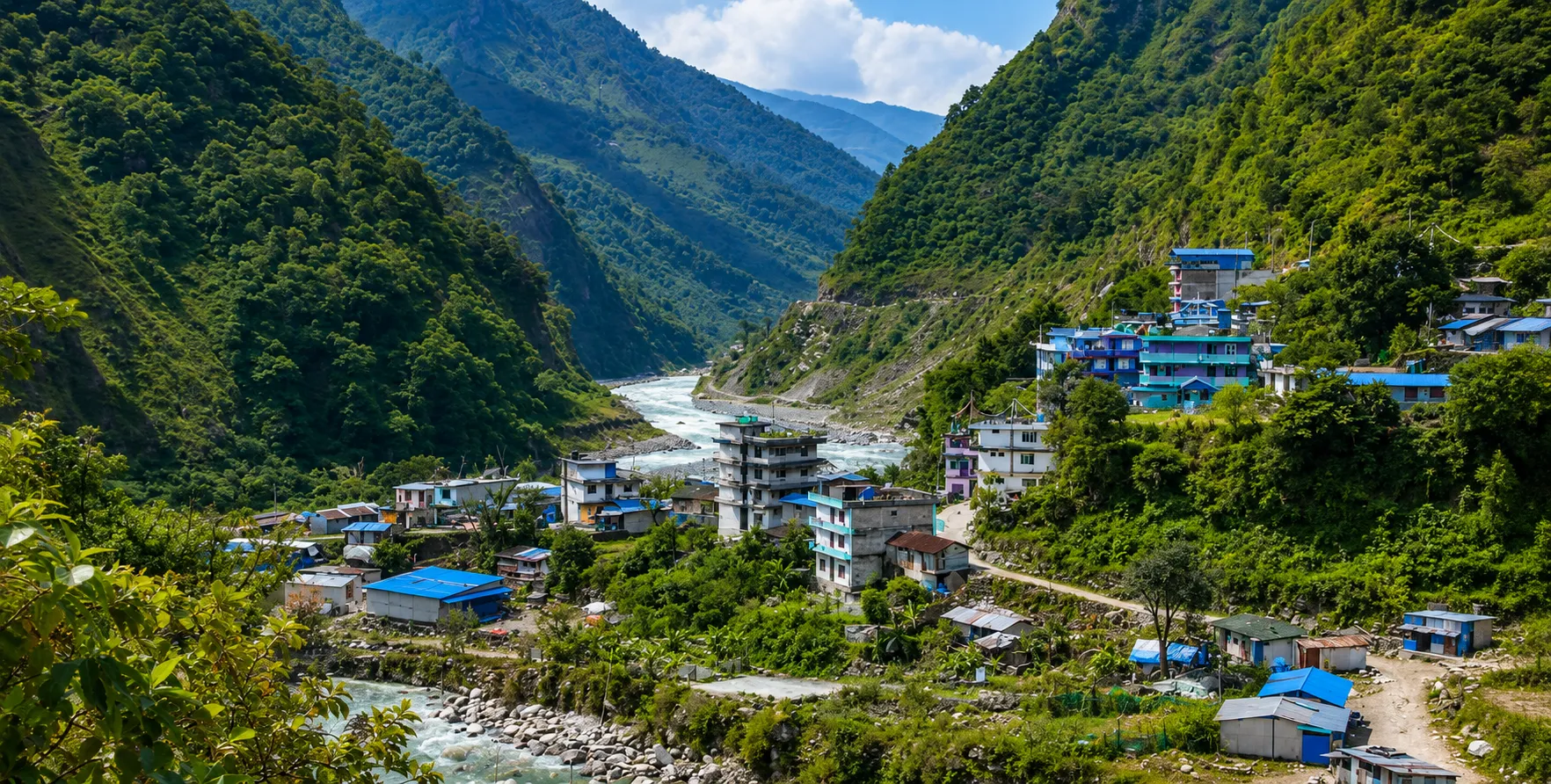
Kathmandu to Machha Khola — Quick Reference 2026 |
| Distance: Approx. 160 km (Kathmandu to Machha Khola via Dhading Besi and Arughat) |
| Drive Time: 7–8 hours by private jeep | 9–10 hours by public bus |
| Route: Kathmandu → Prithvi Highway → Dhading Besi → Arughat Bazaar → Soti Khola → Machha Khola |
| Machha Khola Altitude: Approx. 870–930 m (Manaslu Circuit trailhead) |
| Vehicle: 4WD Jeep ESSENTIAL beyond Arughat — Land Cruiser, Fortuner or Hilux |
| Private Jeep Cost: NPR 20,000–28,000 one-way (all-inclusive) |
| Key Permits: Manaslu Conservation Area Permit + Restricted Area Permit + TIMS |
| Road Status 2026: Jeep track ends at Lububesi — 3–4 hr walk to Machha Khola |
| Best Season: October–November and March–May |
| Book Transfer: Nepal Vehicle Hiring Pvt. Ltd. | +977 9851013196 | [email protected] |
Introduction: The Long Road to the World’s Hidden Circuit
Among Nepal’s great trekking destinations, the Manaslu Circuit occupies a singular position — the route that serious trekkers consistently describe as the Annapurna Circuit’s more dramatic, more wild, and more authentic counterpart. Circling Mount Manaslu (8,163 m), the world’s eighth-highest peak, through some of the most culturally intact and geographically spectacular terrain in the entire Himalayan chain, the Manaslu Circuit is the trek that rewards the additional effort of getting there with experiences that the more popular routes cannot replicate.
And while its fame has grown considerably in recent years as word of its extraordinary quality has spread through the global trekking community, it remains — by design and geography — considerably less crowded than the Annapurna Circuit or the Everest Base Camp Trek, precisely because reaching its trailhead is genuinely more demanding than arriving at either of those celebrated destinations.
The journey from Kathmandu to Machha Khola — the traditional trailhead for the Manaslu Circuit Trek — covers approximately 160 kilometers of some of Nepal’s most varied road terrain, from the smooth Prithvi Highway through the rolling Dhading hills to the rough, river-following tracks that wind northward from Arughat Bazaar through Soti Khola toward the mountain gateway.
In a capable private 4WD jeep with an experienced driver, this journey takes between seven and eight hours under good road conditions — a long day’s drive that demands proper preparation, the right vehicle, and ideally a very early departure from the capital. By public bus, the same journey extends to nine or ten hours. It involves a degree of logistical complexity and physical endurance that many trekkers, arriving at the trailhead already fatigued, regret having chosen.
This deep-research guide covers every dimension of the Kathmandu to Machha Khola road in the detail that Manaslu Circuit trekkers actually need. We examine the complete route stage by stage, address the critical 2026 road status update that directly affects where your private jeep can actually deliver you, explain why a 4WD vehicle is non-negotiable for the Arughat-to-trailhead section, detail the permits required and where to obtain them in Kathmandu, and provide honest, verified cost information for 2026. Throughout, Nepal Vehicle Hiring Pvt. Ltd. provides the professional 4WD jeep transfer service that makes this demanding journey as smooth, reliable, and comfortable as the route’s character allows.
Understanding Machha Khola — Gateway to the Manaslu Circuit
What Is Machha Khola and Why Does It Matter?
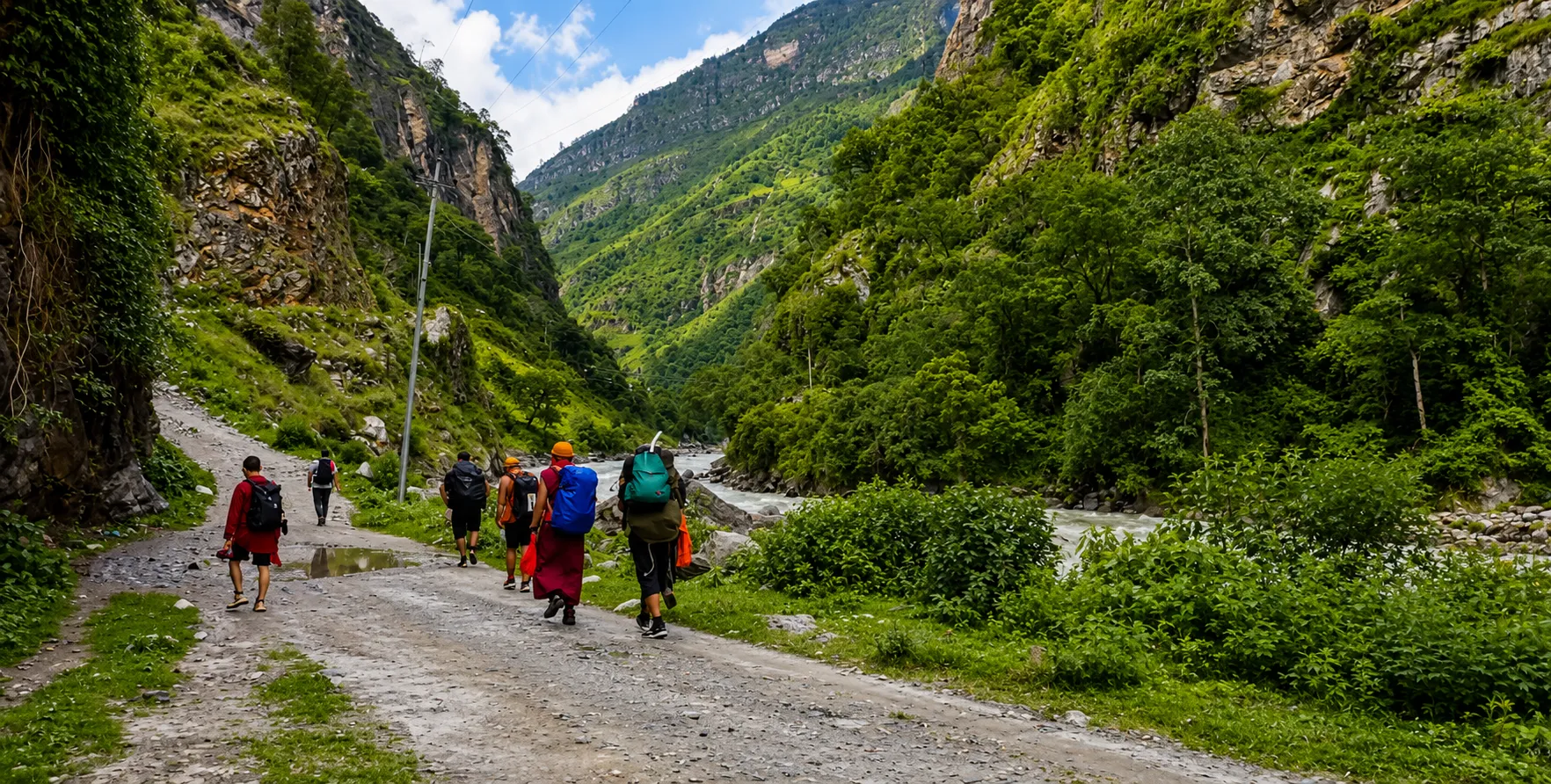
Machha Khola — whose name translates simply as ‘Fish River’ in Nepali — is a small village settlement in the Gorkha District of Gandaki Province, sitting at approximately 870 to 930 meters above sea level at a point where a tributary khola (stream) meets the main Budhi Gandaki River gorge. In ordinary circumstances, Machha Khola would be a quiet, largely unknown mid-hills settlement of no particular regional significance. Its importance to the global trekking community derives entirely from its geographical position as the point at which the traditional foot trail of the Manaslu Circuit Trek most recently became accessible by road — making it the effective trailhead for trekkers who want to begin their circuit walk rather than continuing the increasingly extended road journey that developing infrastructure progressively enables.
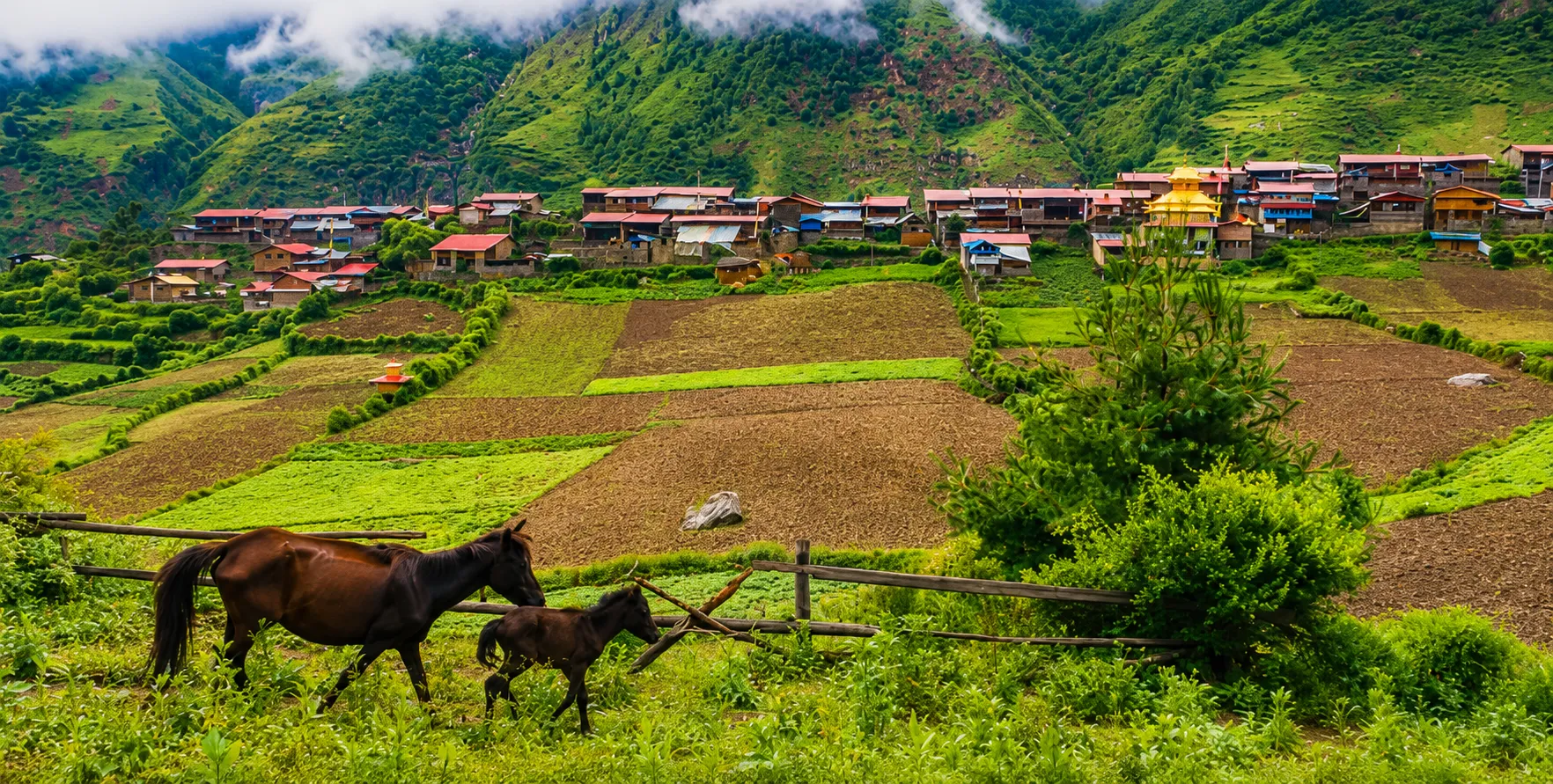
The Manaslu Circuit follows the Budhi Gandaki River gorge northward from the roadhead area through an extraordinary progression of ecological and cultural environments: subtropical forest and terraced Gurung farmland in the lower gorge, transitioning through mixed temperate forest and increasingly Tibetan-influenced communities as altitude increases, before reaching the dramatic high-altitude landscape of Sama Gaun (3,530 m) and Samdo (3,875 m) below the Larkya La Pass (5,106 m or 5,160 m by various measurements). From the pass, the circuit descends into the Marsyangdi Valley. It connects with the Annapurna Circuit at Dharapani, from where trekkers typically continue to Besisahar and then hire a vehicle back to Kathmandu or onward to Pokhara.
The 2026 Road Status — What You Must Understand Before Planning
One of the most practically important facts about the Kathmandu to Machha Khola journey in 2026 is a road status reality that outdated travel guides and agency itineraries sometimes fail to communicate clearly: the drivable road does not currently extend all the way to Machha Khola village itself. As of 2026, the road constructed northward through the Budhi Gandaki gorge from Soti Khola ends at Lububesi village — a point approximately three to four hours’ walk short of Machha Khola by the trail. This means that a private jeep transfer from Kathmandu delivers trekkers to Lububesi, from which they walk the remaining section of trail to Machha Khola on foot.
This road status information is critical for Manaslu Circuit itinerary planning because many published itineraries still describe the journey as ‘Kathmandu to Machha Khola by jeep’ as if a single vehicle journey delivers trekkers directly to the village. The reality in 2026 is more nuanced: a private jeep from Nepal Vehicle Hiring Pvt. Ltd. takes you as far as the road goes — currently Lububesi — and from there you transition to walking for the final three to four hours to Machha Khola itself, where the first night of the trek is spent.
Some Manaslu Circuit trekkers choose to begin walking from Soti Khola instead (where the road infrastructure is slightly more developed and teahouse facilities better established), which is a seven to nine hour jeep ride from Kathmandu and reduces the walking-in section compared to beginning from even further along the rough track. Nepal Vehicle Hiring Pvt. Ltd. discusses the most current road end point with every client at the time of booking to ensure that the transfer plan reflects actual 2026 conditions rather than outdated information.
Manaslu Circuit — Why Trekkers Choose This Route
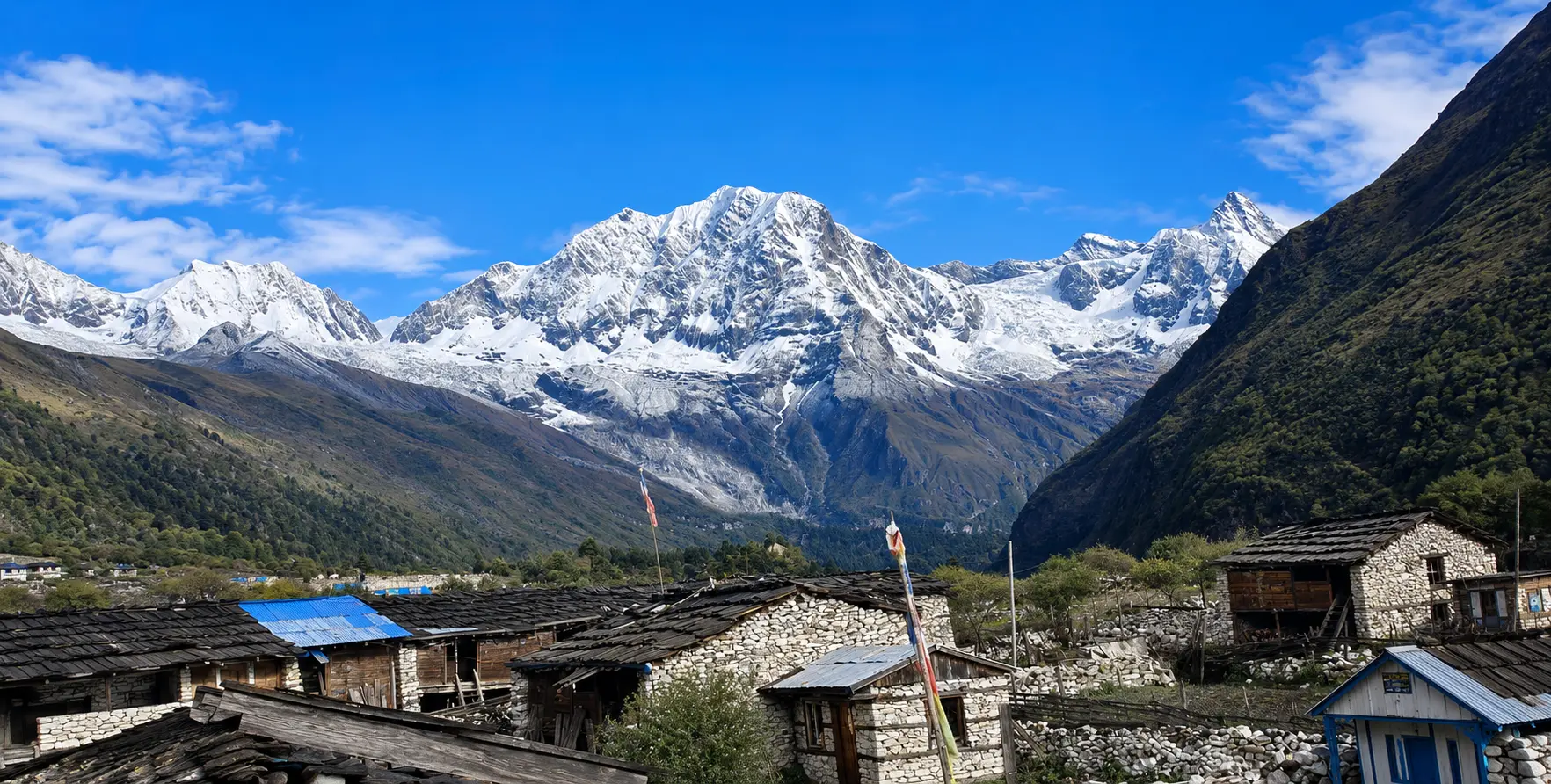
The Manaslu Circuit Trek draws trekkers from across the world for reasons that experienced Nepal visitors consistently describe with superlatives: the extraordinary depth and authenticity of the cultural landscape along the Budhi Gandaki gorge, where Gurung, Magar, and Tibetan-influenced Bhotia communities maintain ways of life barely touched by tourism compared to the well-trodden corridors of the Annapurna and Everest regions; the dramatic and escalating scenery of the gorge itself — one of the deepest and most visually spectacular river corridors in the Himalayan chain; and the Larkya La Pass crossing at over 5,100 metres, which delivers panoramic views of Manaslu, Himlung, Cheo Himal, and the entire northern Himalayan arc that are considered among the finest high-altitude panoramas accessible on any circuit trek in Nepal.
The Manaslu Circuit is also defined by what it is not. It is not a route with comfortable teahouses every few kilometers and a well-developed tourism infrastructure catering specifically to international expectations. It is a route where accommodation can be basic, where self-sufficiency matters more than on more developed trails, where the restricted area permit requirement limits total visitor numbers to a level that preserves the atmosphere of genuine mountain remoteness, and where the additional logistical effort of the Kathmandu to Machha Khola road transfer is itself part of the process of entering a world that takes some genuine commitment to reach. Trekkers who have walked both the Annapurna Circuit and the Manaslu Circuit consistently report that the greater relative difficulty of reaching and completing the Manaslu route produces a correspondingly greater sense of achievement and a depth of experience that the easier access of more popular routes cannot replicate.
Distance and Drive Time — The Verified 2026 Numbers
Total Distance: Kathmandu to Machha Khola
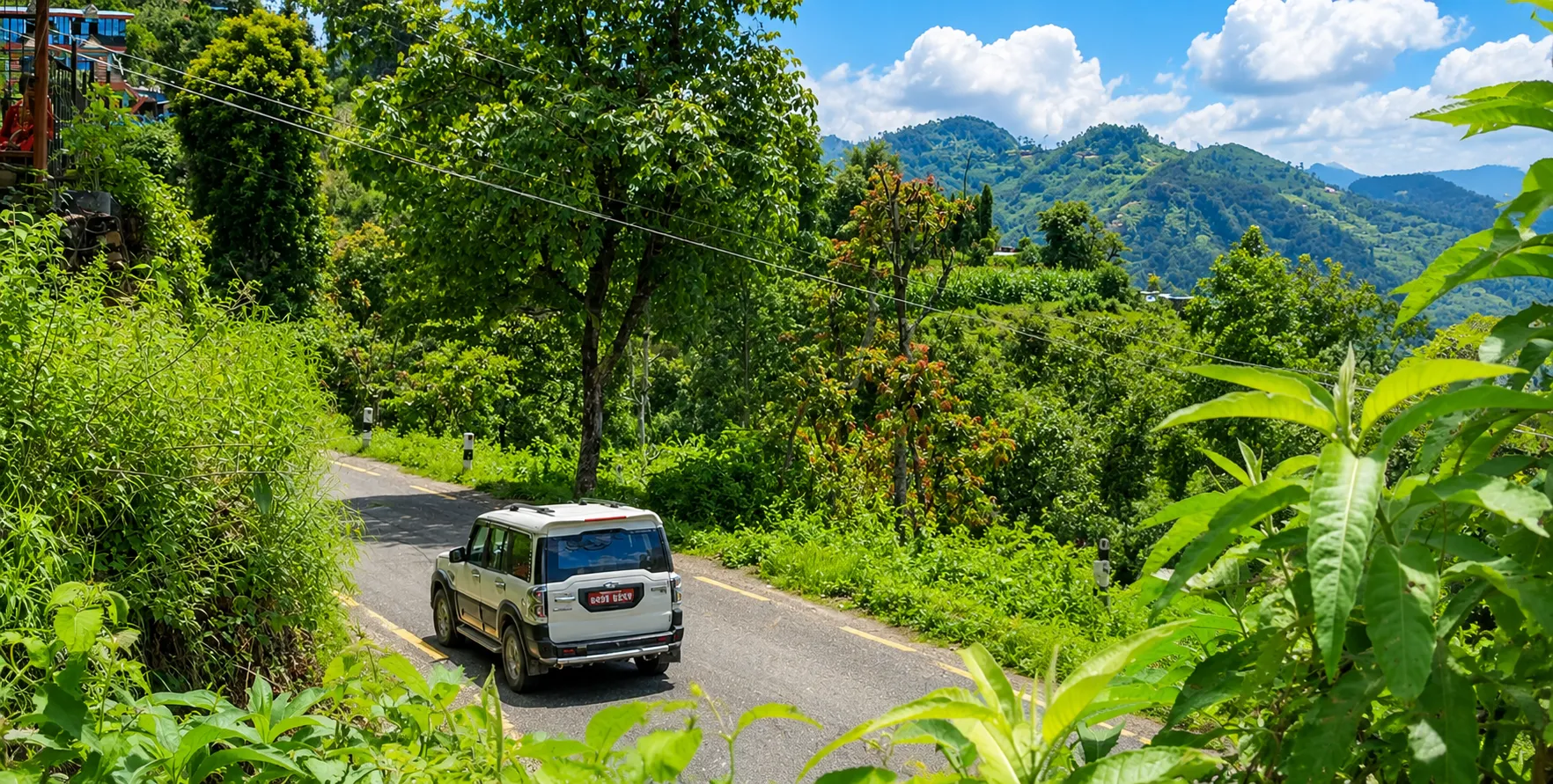
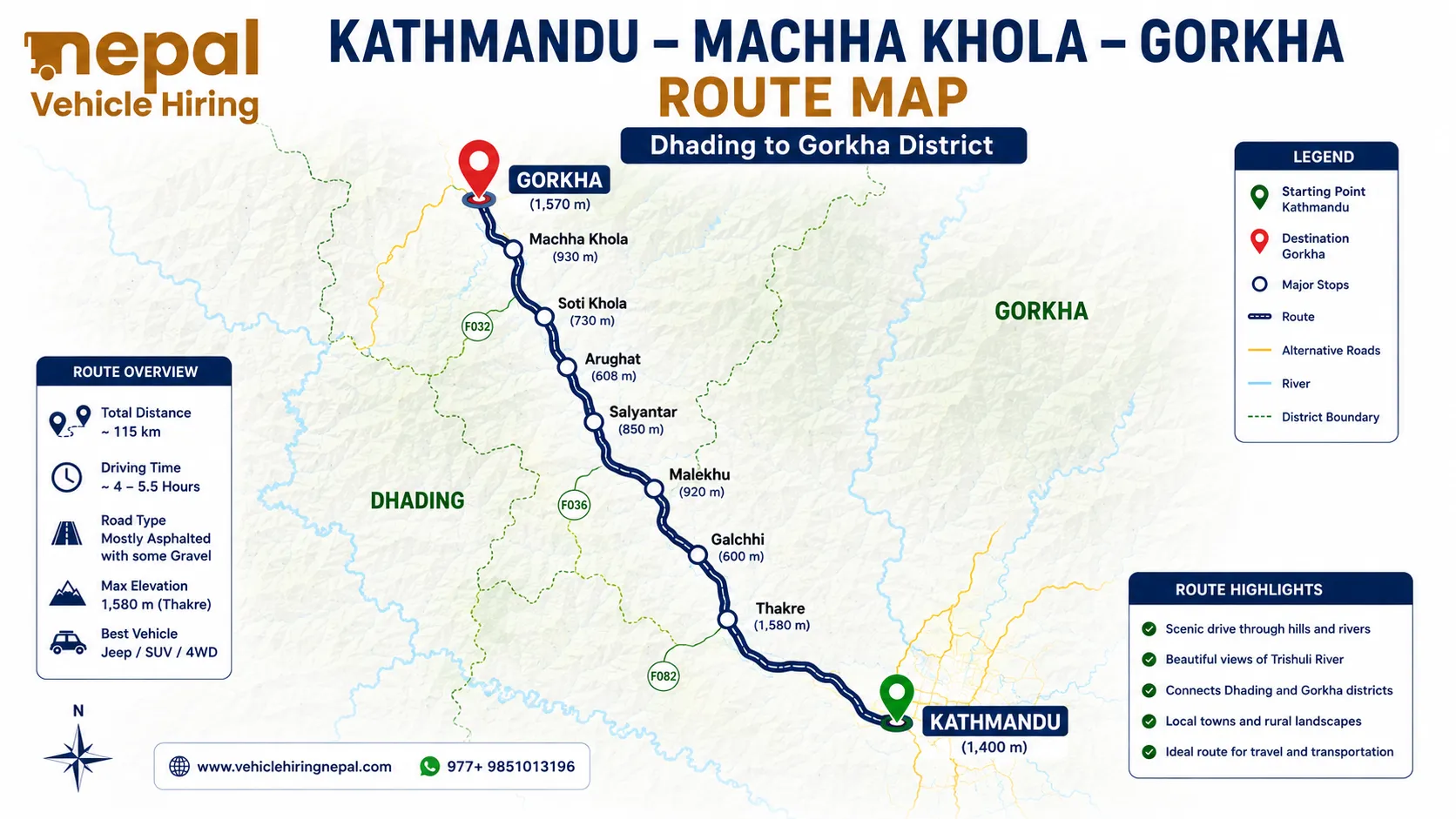
The total road distance from central Kathmandu to the current vehicle road end point in the Machha Khola area — via the route through Dhading Besi, Arughat Bazaar, and Soti Khola — is approximately 160 kkilometers The breakdown by major segment is approximately as follows: Kathmandu to Dhading Besi covers roughly 75 kilometres on the main Prithvi Highway and the Dhading district road; Dhading Besi to Arughat Bazaar adds approximately 38 kilometres on a progressively rougher district road; Arughat to Soti Khola is approximately 13 kilometres of rough jeep track following the Budhi Gandaki river gorge; and Soti Khola to Lububesi (the current road end) extends a further 10 kilometres on the rough gorge track. The Lububesi to Machha Khola section is on foot — approximately 6 to 8 kilometers of trail taking three to four hours of walking depending on fitness and pack weight.
These distances represent road distance rather than straight-line distance between Kathmandu and Machha Khola—the winding, switchbacking character of Nepal’s hill roads means road distances are consistently and significantly greater than straight-line distances, and drive times are correspondingly longer. A straight-line distance of approximately 80 kilometers between the two points becomes 160 kilometers of road — a factor-of-two expansion that is typical of Nepal’s mountain road geometry, and that explains why a 160-kilometer vehicle journey takes seven to ten hours rather than the two to three hours that the same distance would require on a European motorway.
Drive Time: Realistic Expectations for 2026
The Kathmandu to Machha Khola drive time by private 4WD jeep is consistently reported by experienced operators and recent travelers in 2026 as seven to eight hours under normal conditions, including one or two rest stops. By public bus, the same journey extends to nine to ten hours due to the bus’s multiple passenger pickup and drop-off stops, its generally slower pace on the rough road sections, and the greater time spent at the Arughat and Soti Khola intermediate stops. These are not optimistic marketing estimates — they are the verified, consistent experience of the operators and trekkers who have made the journey most recently. Conditions that can extend the drive beyond these typical figures include seasonal road damage from monsoon landslides, particularly on the Arughat to Soti Khola section; significant traffic congestion at the Dhading Besi junction; and any unscheduled road-clearance work that may be ongoing on the gorge section.
The drive time breakdown by stage is approximately: Kathmandu to Dhading Besi — two to two and a half hours on paved highway with a short detour from the main Prithvi Highway; Dhading Besi to Arughat Bazaar — one and a half to two hours on a progressively rougher district road; Arughat to Soti Khola — one to one and a half hours on rough gorge jeep track; Soti Khola to Lububesi — approximately one hour on the roughest section of the track; plus rest stops of thirty to forty-five minutes total. Trekkers who plan to walk on to Machha Khola from Lububesi should factor in a further three to four hours of walking time, making the total Kathmandu-to-Machha-Khola elapsed time approximately eleven to twelve hours from a Kathmandu hotel. This genuinely long day argues strongly for either a 5:00 to 6:00 AM departure from Kathmandu or an overnight stop at Arughat Bazaar or Soti Khola to split the journey across two days.
The Complete Route: Kathmandu to Machha Khola Stage by Stage
Stage 1: Kathmandu to Dhading Besi (75 km / 2–2.5 hours)
The Kathmandu to Machha Khola journey begins with a departure from the capital that follows the Prithvi Highway westward—the same route used by Kathmandu to Pokhara travelers for the first section of the journey. From Kathmandu, the road descends through the Nagdhunga Pass to Naubise and joins the main Prithvi Highway, following the Trishuli River gorge briefly before the Machha Khola route diverges from the Pokhara road and turns south toward Dhading Besi, the headquarters of Dhading District. The turn for Dhading Besi is at approximately 70 kilometers from Kathmandu, and the district headquarters town is reached after a further five kilometers of descent on a paved district road.
Dhading Besi, at approximately 500 meters altitude, is the last significant town on the Machha Khola road with consistently reliable fuel availability, good food options, and the full range of district-level services. Nepal Vehicle Hiring Pvt. Ltd. drivers on the Kathmandu to Machha Khola route always fuel the vehicle fully at Dhading Besi if there is any uncertainty about the fuel level — the road beyond Dhading Besi has progressively fewer reliable fuel sources, and a 4WD jeep operating on the rough roads of the gorge section consumes fuel at a meaningfully higher rate than on the smooth Prithvi Highway. Dhading Besi is also a good breakfast stop for early-departing trekkers who leave Kathmandu at 5:00 or 6:00 AM and arrive at Dhading Besi at 7:30 to 8:30 AM, when the town’s small restaurants are actively serving and the fresh morning air of the hill town makes the pause genuinely pleasant.
Stage 2: Dhading Besi to Arughat Bazaar (38 km / 1.5–2 hours)
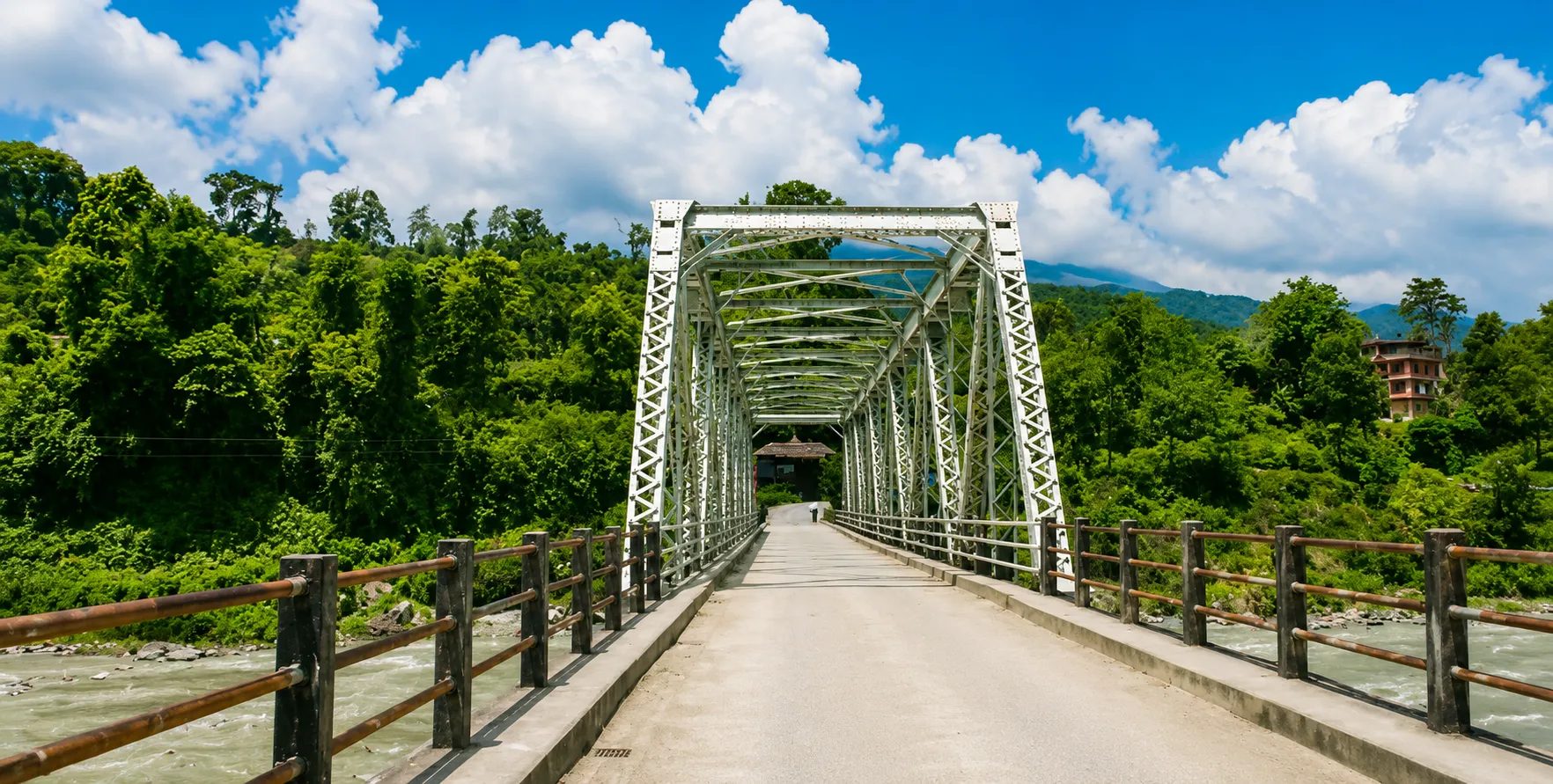
From Dhading Besi, the road to Machha Khola heads northwest into the Trishuli Valley. It then enters the Ankhu Khola catchment before connecting to the Budhi Gandaki watershed as the route approaches Arughat Bazaar. This section of road — approximately 38 kilometres between Dhading Besi and Arughat — is a progressively rougher district road, largely paved in its earlier sections but transitioning to patched tarmac and sections of gravel as the road climbs through a series of characteristic mid-hills landscapes: terraced rice and millet fields on the valley slopes, small village clusters with traditional stone and mud construction, and the characteristically braided river valleys of the pre-Himalayan Gandaki watershed.
Arughat Bazaar — or more precisely Arughat, at approximately 570 meters altitude — is the last genuine bazaar town on the Machha Khola transfer route, with a range of basic restaurants, small shops, a fuel point, and the district-level services appropriate to a Gorkha District market center. For private jeep hire clients who choose to split the Kathmandu to Machha Khola journey across two days, Arughat has basic guesthouse accommodation suitable for a single overnight stop before continuing on the rough gorge road the following morning — a two-day approach that Nepal Vehicle Hiring Pvt. Ltd. recommends to trekkers who want to arrive at Soti Khola or Lububesi in daylight without requiring the very early departure from Kathmandu that a single-day attempt demands.
Stage 3: Arughat to Soti Khola (13 km / 1–1.5 hours)
Beyond Arughat, the Machha Khola road transitions definitively from district road to rough jeep track as it enters the lower Budhi Gandaki gorge — the river canyon that the Manaslu Circuit Trek follows northward for the entirety of its approach section. The 13 kilometers between Arughat and Soti Khola (710 m) follow the right bank of the Budhi Gandaki on a track that combines sections of rudimentary paved surface with extended stretches of rough gravel, river-flat crossings, and in places genuinely rough rocky terrain that tests the ground clearance and traction capability of any vehicle attempting it. This is the section where the choice of a capable 4WD vehicle — specifically a Toyota Fortuner, Toyota Hilux, or Toyota Land Cruiser — becomes genuinely important rather than merely preferable.
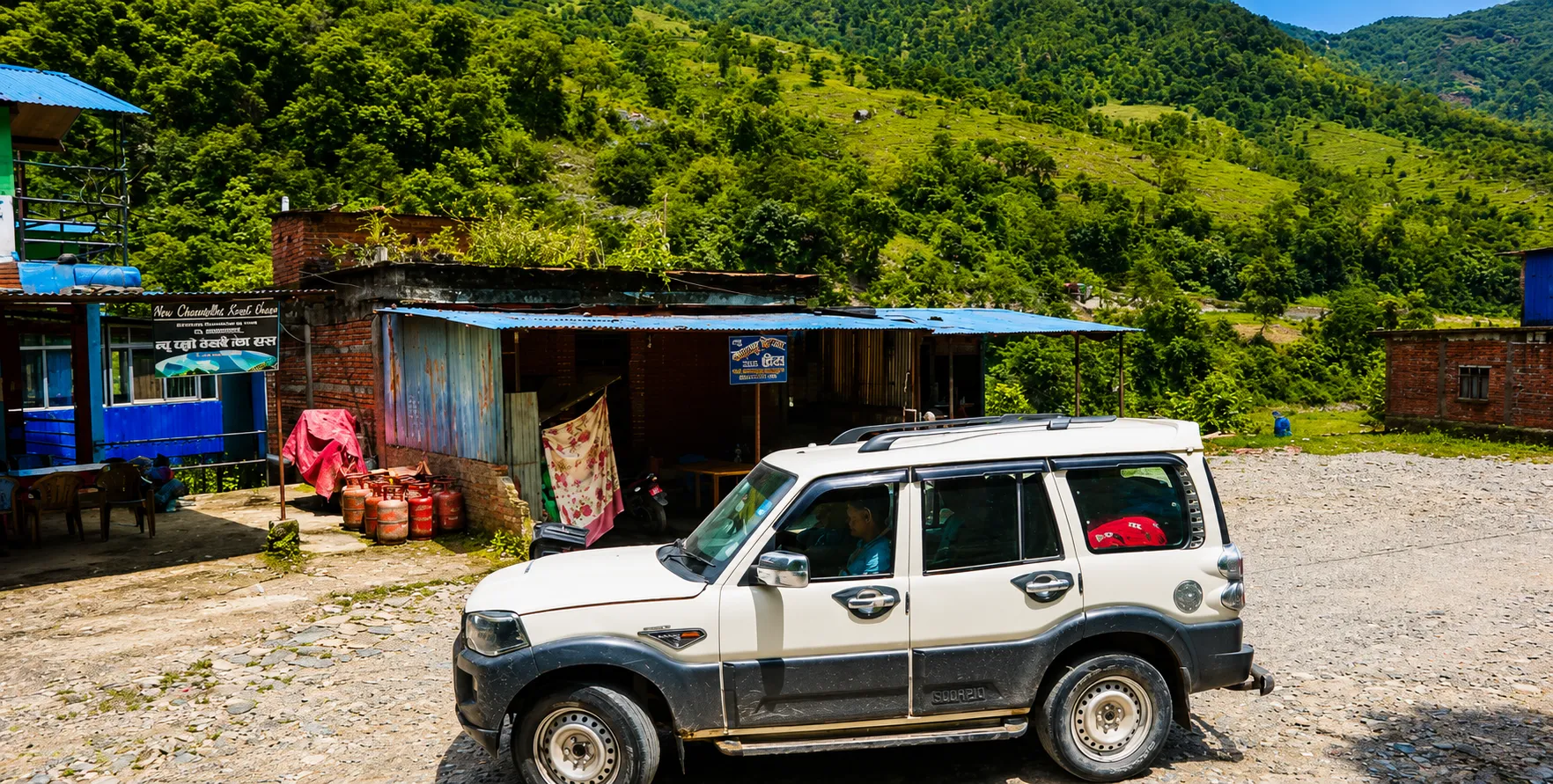
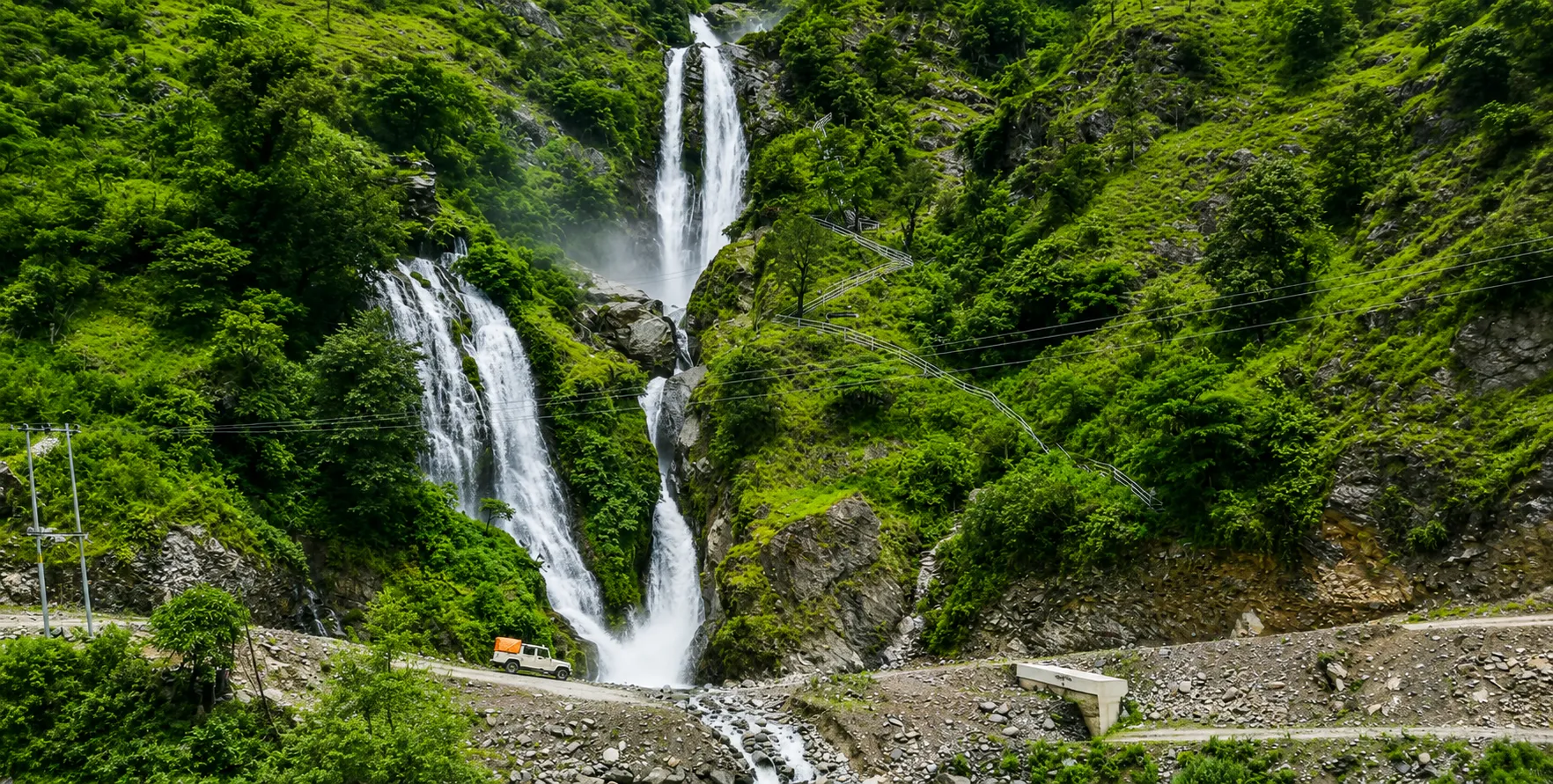
The scenery along the Arughat to Soti Khola section is, despite the road’s demanding character, increasingly spectacular as the Budhi Gandaki gorge begins to close in around the vehicle. The river runs directly below the track in many sections, its powerful green water audible as a constant companion to the engine noise, and the valley walls begin to display the first hints of the extraordinary vertical scale that defines the upper gorge further north. Soti Khola itself is a small but now well-established trekking stop with several functional teahouses offering basic accommodation, meals, and the opportunity for Manaslu Circuit trekkers to register at the local checkpoint — making it a natural pause and turnaround assessment point for any private jeep transfer from Nepal Vehicle Hiring Pvt. Ltd. on the route.
Stage 4: Soti Khola to Lububesi — The Road End (10 km / 1 hour)
The final vehicle-accessible section of the Kathmandu to Machha Khola road runs approximately 10 kilometers from Soti Khola to Lububesi — the current road end for 2026. This section is the most demanding of the entire private jeep transfer, following the Budhi Gandaki gorge on a track that has been constructed progressively in recent years but remains rough, narrow in places, and subject to seasonal deterioration from monsoon water damage. The high ground clearance of Nepal Vehicle Hiring Pvt. Ltd.’s 4WD jeep fleet — the Fortuner’s 279 mm of ground clearance or the Hilux’s 310 mm — handles the surface variation of this section with confidence that a lower-clearance vehicle could not match.
Lububesi is a small riverside settlement where the road ends and the trail begins — a transition point that most Manaslu Circuit trekkers who have reached it by private jeep recognize as a significant psychological marker: the moment when the vehicle journey ends, and the trekking adventure properly begins. From Lububesi, the trail to Machha Khola continues northward along the Budhi Gandaki gorge on a walking path of approximately three to four hours, passing through the beautiful Gurung village of Lububesii (which gives the road-end its name), crossing suspension bridges over the river’s tributaries, and eventually descending to the river flat where Machha Khola village sits in a widening of the gorge. The Nepal Vehicle Hiring Pvt. Ltd. driver will confirm the current road-end condition and ensure trekkers are aware of the trail conditions for the onward walk at the time of their transfer booking
Road Conditions: The Honest 2026 Assessment
Kathmandu to Dhading Besi — Good Highway Standard
The Prithvi Highway section from Kathmandu to the Dhading Besi turnoff, and the district road from the junction to Dhading Besi town itself, is the best-conditioned portion of the entire Machha Khola transfer route. The highway is paved to a standard that any vehicle handles comfortably, and the district road to Dhading Besi, while narrower than the main highway, is paved and in generally good repair. This section presents no significant vehicle capability demands. It is the portion of the journey where passengers can most comfortably relax, enjoy the increasingly open landscape of the Trishuli Valley and the approaching Dhading hills, and prepare mentally for the rougher section that begins after Dhading Besi.
Dhading Besi to Arughat — Progressively Rough
The road from Dhading Besi to Arughat deteriorates progressively in surface quality as it pushes into the Gorkha District foothills. The first fifteen to twenty kilometers from Dhading Besi retain a reasonable paved surface. Still, the subsequent section introduces the patched tarmac, rough gravel, and periodic sections of unpaved track that characterize the Machha Khola road beyond the district headquarters. During the dry season — October through May — this section is generally navigable by capable standard vehicles as well as 4WD jeeps. During and after monsoon — June through September — sections of the road can be affected by surface water damage and minor landslide debris, making the 4WD’s greater capability significantly more valuable.
Arughat to Lububesi — Jeep Track Terrain
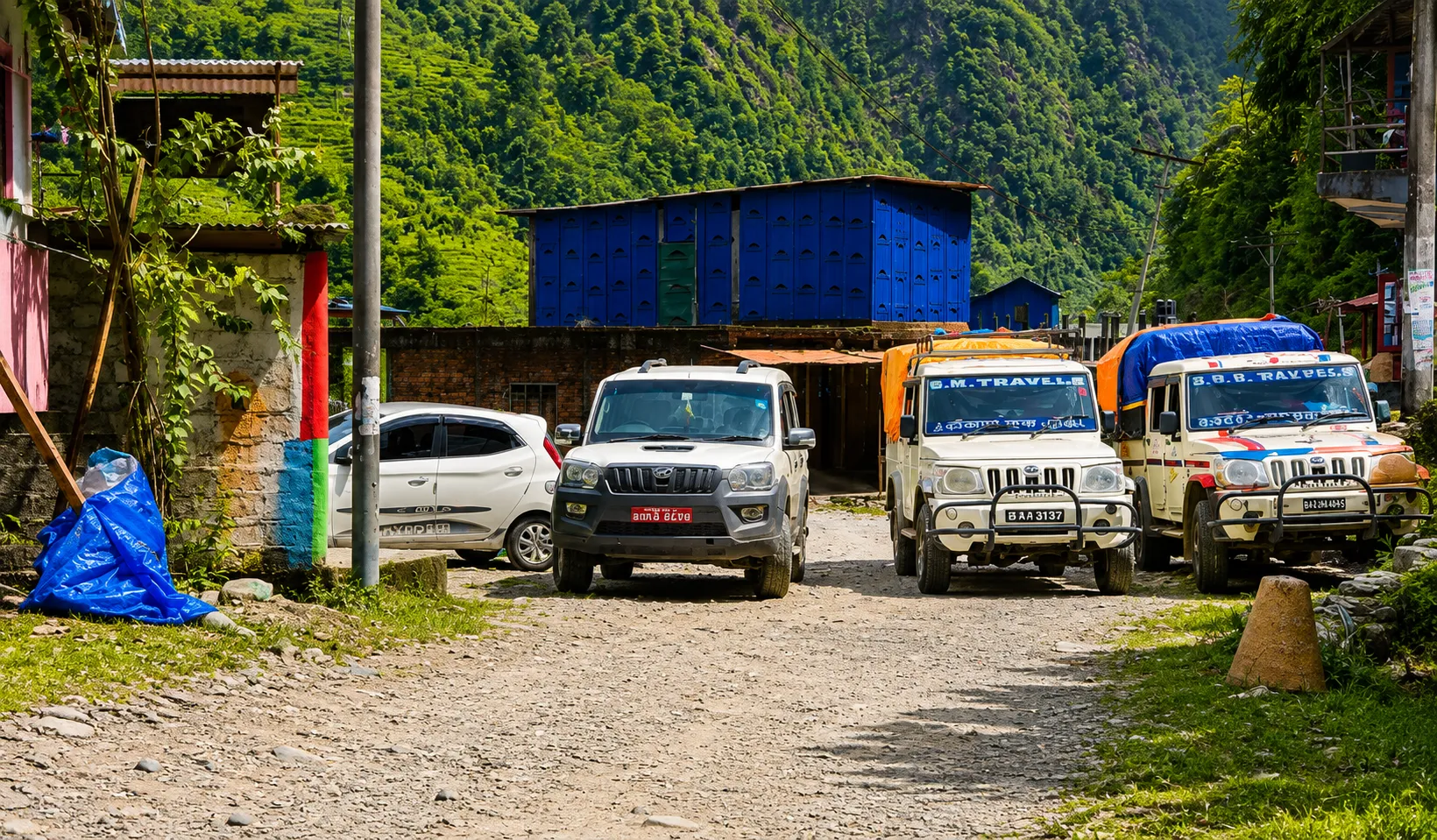
The road section from Arughat northward through Soti Khola to Lububesi is categorically different from the highway and district road sections that precede it — this is genuine jeep track terrain, where the road surface ranges from rough compacted gravel to rocky river-bank track, where the gradient increases significantly on several sections, where river crossings and narrow cliff-edge passages require a skilled driver with specific route knowledge, and where the structural demands on any vehicle are substantially greater than anything encountered between Kathmandu and Arughat. Nepal Vehicle Hiring Pvt. Ltd. deploys only its Fortuner, Hilux, or Land Cruiser for the Arughat-to-Lububesi section, driven by drivers with documented specific experience on this track. Standard sedans, non-4WD SUVs, and city taxis are entirely inappropriate for this section.
The monsoon season creates the most challenging conditions on this section: the Budhi Gandaki rises dramatically during heavy rainfall, occasionally approaching or briefly overtopping low sections of the gorge track; landslides from the steep valley walls above deposit debris on the road surface that must be navigated around or cleared; and the track surface itself becomes significantly muddier and more slippery after sustained rainfall. Nepal Vehicle Hiring Pvt. Ltd. maintains real-time road condition contacts along the Machha Khola route during monsoon season and provides clients with accurate, current information before confirming any monsoon transfer booking. Trekkers planning Manaslu Circuit treks during the monsoon months should build explicit buffer days for potential road delays into their itinerary.
Why a 4WD Vehicle Is Non-Negotiable for This Route
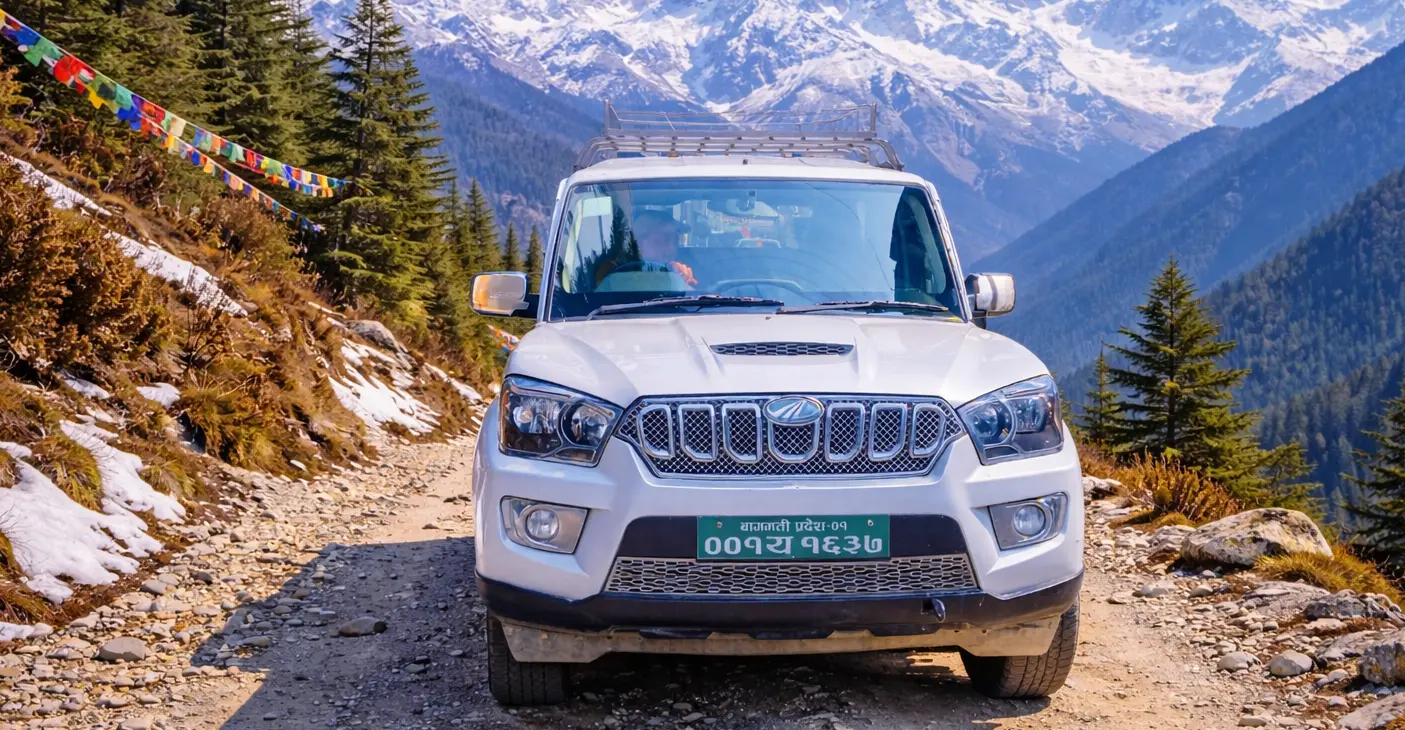
The Kathmandu to Machha Khola transfer is one of the clearest cases in Nepal’s trekking transport landscape where the choice of a 4WD jeep is not a matter of preference or comfort but of simple mechanical necessity for reaching the destination. The Arughat-to-Lububesi gorge track — with its rough surface, significant gradient sections, occasional river crossings, and narrow cliff-edge passages — demands ground clearance and four-wheel drive traction capability that standard vehicles do not possess. A standard sedan attempting the Arughat-to-Soti-Khola section risks beaching on the high-center obstacles between road ruts, sustaining undercarriage damage on the rocky sections, and losing traction on the compacted gravel inclines that characterize several key sections of the gorge track. A 4WD Toyota Fortuner, Hilux, or Land Cruiser handles all of these challenges comfortably in the hands of an experienced driver, with the ground clearance, engine torque, and four-wheel traction to progress steadily through the most demanding sections.
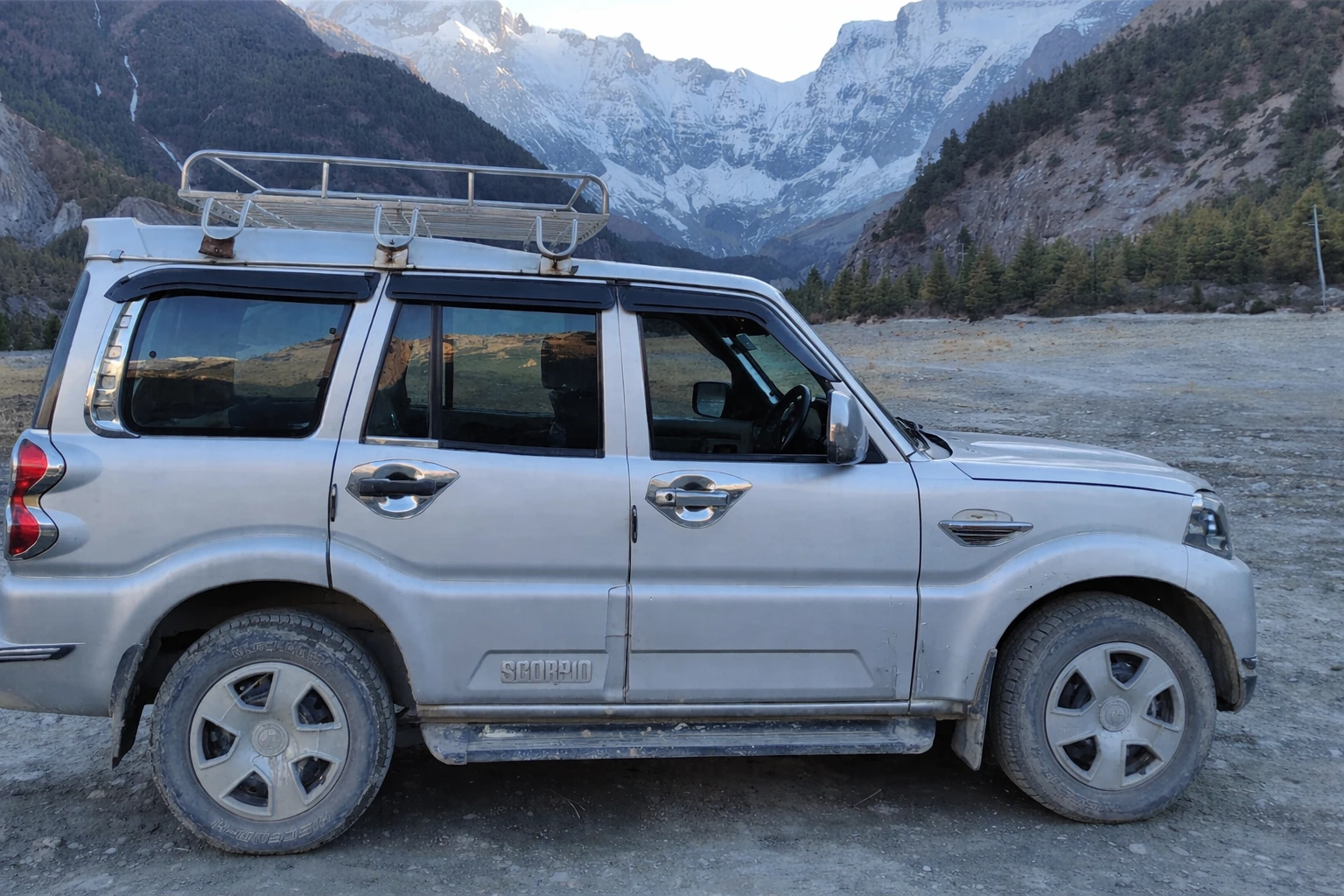
Nepal Vehicle Hiring Pvt. Ltd. offers three 4WD vehicle options for the Kathmandu to Machha Khola transfer. The Toyota Fortuner is the standard recommendation for groups of two to five trekkers — its combination of comfortable cabin, genuine 4WD capability, 279 mm ground clearance, and competitive rate makes it the most popular choice. The Toyota Hilux is recommended for trekkers with heavy gear loads, where the pickup truck bed provides useful cargo capacity, and for itineraries where the Soti Khola to Lububesi section will be traversed in monsoon season conditions, where the Hilux’s exceptional 310 mm ground clearance provides the maximum available margin. The Toyota Land Cruiser serves groups of up to seven trekkers. It provides the most comfortable and capable overall experience for the demanding full-day drive, at a premium rate reflecting its superior specifications.
Permits Required for the Manaslu Circuit Trek — 2026 Complete Guide
Manaslu Conservation Area Permit (MCAP)
The Manaslu Conservation Area Permit (MCAP) is the primary conservation permit required for all trekkers entering the Manaslu Conservation Area — the protected zone that encompasses the Manaslu Circuit Trek from Jagat northward to the Larkya La Pass and down to Dharapani. The MCAP costs NPR 3,000 per person (approximately USD 22) and is obtained from the Nepal Tourism Board office in Kathmandu (Bhrikutimandap) or the Pokhara office. As with all conservation permits in Nepal, the MCAP must be obtained before reaching the conservation area’s checkpoint—which in this case means before arriving at Jagat on the trek —making Kathmandu the most practical and reliable place to obtain it.
Manaslu Restricted Area Permit (MRAP)
The Manaslu Restricted Area Permit (MRAP) is the most significant and expensive of the Manaslu Circuit permits — a separate restricted area authorization required specifically for the northern, higher-altitude section of the circuit above the Manaslu Conservation Area boundary. The MRAP costs USD 100 per person per week from September to November and USD 75 per person per week from December to August — making it meaningfully more expensive than the equivalent permits for the Annapurna and Langtang regions and one of the primary reasons that the Manaslu Circuit is more expensive to trek than most of Nepal’s other major circuits. The MRAP must be arranged through a registered trekking agency. It cannot be obtained directly by independent trekkers —a requirement linked to the mandatory licensed guide requirement discussed below.
TIMS Card
The TIMS Card (Trekkers Information Management System) at NPR 2,000 per person is the standard trekker registration document, obtained from the Nepal Tourism Board in Kathmandu or Pokhara. As with the MCAP, obtaining the TIMS card in Kathmandu before the Machha Khola transfer day is strongly recommended to avoid any complications at checkpoints on the route.
Mandatory Licensed Guide
The Manaslu Circuit Trek operates within Nepal’s mandatory licensed guide regulation, enforced since 2023. Also, it requires that all trekkers in the restricted area be accompanied by a licensed guide arranged through a registered agency. This requirement effectively prohibits fully independent trekking on this route. The mandatory guide requirement is taken seriously on the Manaslu Circuit, with checkpoint enforcement more rigorous than on some other Nepal trekking routes, and trekkers who attempt to enter without the required guide and permits are turned back at the Jagat checkpoint without exception. Nepal Vehicle Hiring Pvt. Ltd. can connect Manaslu Circuit trekkers with reputable licensed guide services in Kathmandu at the time of transfer booking.
Planning Your Transfer — Timing, Preparation and Booking
The Case for a 5:00 AM Departure
The most important single decision in planning the Kathmandu to Machha Khola transfer is the departure time, and the experienced recommendation of Nepal Vehicle Hiring Pvt. Ltd. — based on years of operating this specific route — is an earliest-feasible departure from your Kathmandu hotel of 5:00 to 6:00 AM. This early start accomplishes several critical objectives simultaneously. It gets the vehicle through Kathmandu’s ring road before the urban traffic peak builds; it positions the vehicle to arrive at Dhading Besi at a reasonable breakfast time; it ensures passage through the Arughat gorge section in full daylight with the maximum time buffer for navigating any unexpected delays; and — most critically — it makes arrival at Lububesi possible by early to mid-afternoon, leaving adequate walking time to reach Machha Khola before dark without rushing. Departures after 7:00 AM from Kathmandu risk a sequence of compounding time delays that can result in the vehicle arriving at Lububesi too late for the walk to Machha Khola in safe daylight conditions.
The Two-Day Transfer Option
For trekkers who prefer not to face the demanding pressure of a five-to-six AM departure and an eleven-to-twelve hour day, the two-day transfer option — overnighting at Arughat Bazaar or Soti Khola on Day 1 and completing the final gorge section on Day 2 — is both practical and increasingly popular. Nepal Vehicle Hiring Pvt. Ltd. accommodates this option with a Day 1 transfer from Kathmandu to Arughat (a more comfortable seven to eight AM departure with arrival in Arughat by early afternoon), a night in basic Arughat guesthouse accommodation, and a Day 2 transfer from Arughat to Lububesi with a morning start that delivers trekkers to the walk-in section in the best part of the day. The additional vehicle day cost is more than offset for many trekkers by the significantly reduced physical strain of arriving at the Manaslu Circuit trailhead genuinely rested rather than fatigued from a full day of road travel.
Pre-Transfer Kathmandu Preparation
Experienced Manaslu Circuit trekkers consistently emphasize the importance of using pre-trek time in Kathmandu productively for both practical preparation and cultural engagement. Nepal Vehicle Hiring Pvt. Ltd.‘s Kathmandu sightseeing tour is the most efficient way to cover the city’s major heritage sites — Boudhanath Stupa, Swayambhunath, Pashupatinath Temple, and Patan Durbar Square — in a single day with a private vehicle.
For trekkers arriving in Kathmandu a day or two before the Machha Khola transfer, a visit to Bhaktapur Durbar Square — Nepal’s best-preserved medieval city — is specifically recommended for its extraordinary Newari heritage and the quality of the Bhaktapur day tour experience. The Nagarkot sunrise tour provides the further bonus of a first Himalayan mountain panorama, visible from the Nagarkot viewpoint on the eastern Kathmandu Valley rim, before the trekker heads into the mountains on foot.
The Essential Pre-Transfer Day Checklist
- Obtain MCAP (Manaslu Conservation Area Permit) — NPR 3,000 — from Nepal Tourism Board, Bhrikutimandap, Kathmandu
- Obtain TIMS Card — NPR 2,000 — from Nepal Tourism Board office (same location)
- Confirm MRAP (Manaslu Restricted Area Permit) with registered trekking agency — must be arranged through agency, not independently.
- Confirm licensed guide arrangement — mandatory, enforceable at Jagat checkpoint.
- Complete final gear check — sleeping bag rated to -15°C for Larkya La, all trekking equipment confirmed
- Visit Nepal Vehicle Hiring Ltd. booking confirmation — confirm driver details, vehicle type, exact pickup time.
- Complete any final Kathmandu sightseeing — Boudhanath, Pashupatinath, Bhaktapur
- Pack trekking food supplements — options become very limited beyond Arughat.
- Withdraw sufficient NPR cash — ATMs do not exist on the Manaslu Circuit
- Rest early — a 5:00 AM departure requires preparation the evening before
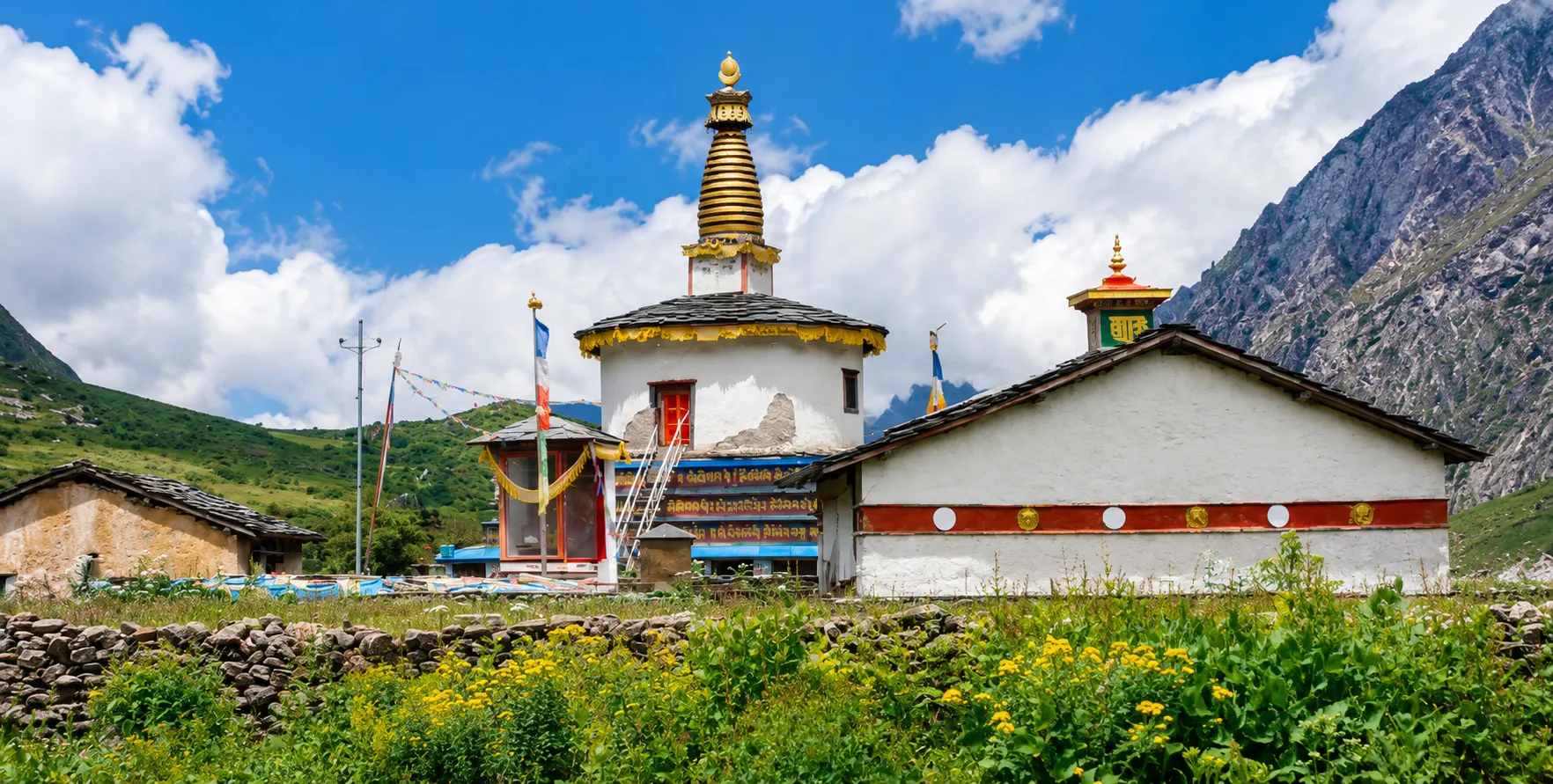
The Manaslu Circuit Trek — What Awaits Beyond Machha Khola
From Machha Khola to Jagat — The Gorge Opens
Machha Khola (870–930 m) marks the true beginning of the walking adventure, and the first full trekking day from Machha Khola to Jagat (1,410 m) — covering approximately 20 kilometers in six to seven hours — introduces trekkers to the extraordinary character of the Budhi Gandaki gorge. The trail climbs and descends through tropical and subtropical vegetation, crossing multiple suspension bridges over the surging river and passing through small Gurung and Magar villages where traditional round-roofed houses and terraced farmland create a cultural landscape entirely distinct from the more touristically developed communities of the Annapurna and Everest regions. The first views of genuinely high peaks — Peak 29 and the Himal Chuli massif — appear above the gorge walls on clear mornings, announcing the extraordinary mountain world that opens progressively as altitude increases.
The Upper Circuit — Sama Gaun, Larkya La, and the Pass Crossing
The Manaslu Circuit‘s most celebrated destination — reached after seven to nine trekking days from Machha Khola depending on the pace and itinerary chosen — is Sama Gaun (3,530 m), the large Tibetan-influenced village from which Mount Manaslu’s south face is most dramatically visible. The combination of the village’s extraordinary stone and timber architecture, the surrounding high-altitude pasture landscape, the Pungyen Glacier visible directly above, and the complete wall of Manaslu’s southern approaches filling the northern horizon creates the Manaslu Circuit‘s defining photographic and emotional moment — the encounter with a mountain so large and so proximate that it seems to reshape the sky itself.
From Sama Gaun, the circuit continues to Samdo (3,875 m) and Dharamsala (4,460 m) — the final teahouse before the pass — before the climactic crossing of the Larkya La Pass (5,106–5,160 m), typically attempted in a pre-dawn start from Dharamsala and completed in five to seven hours of high-altitude walking that includes approximately 650 metres of ascent on the western side and a long, steep descent on the eastern side to Bimthang (3,590 m).
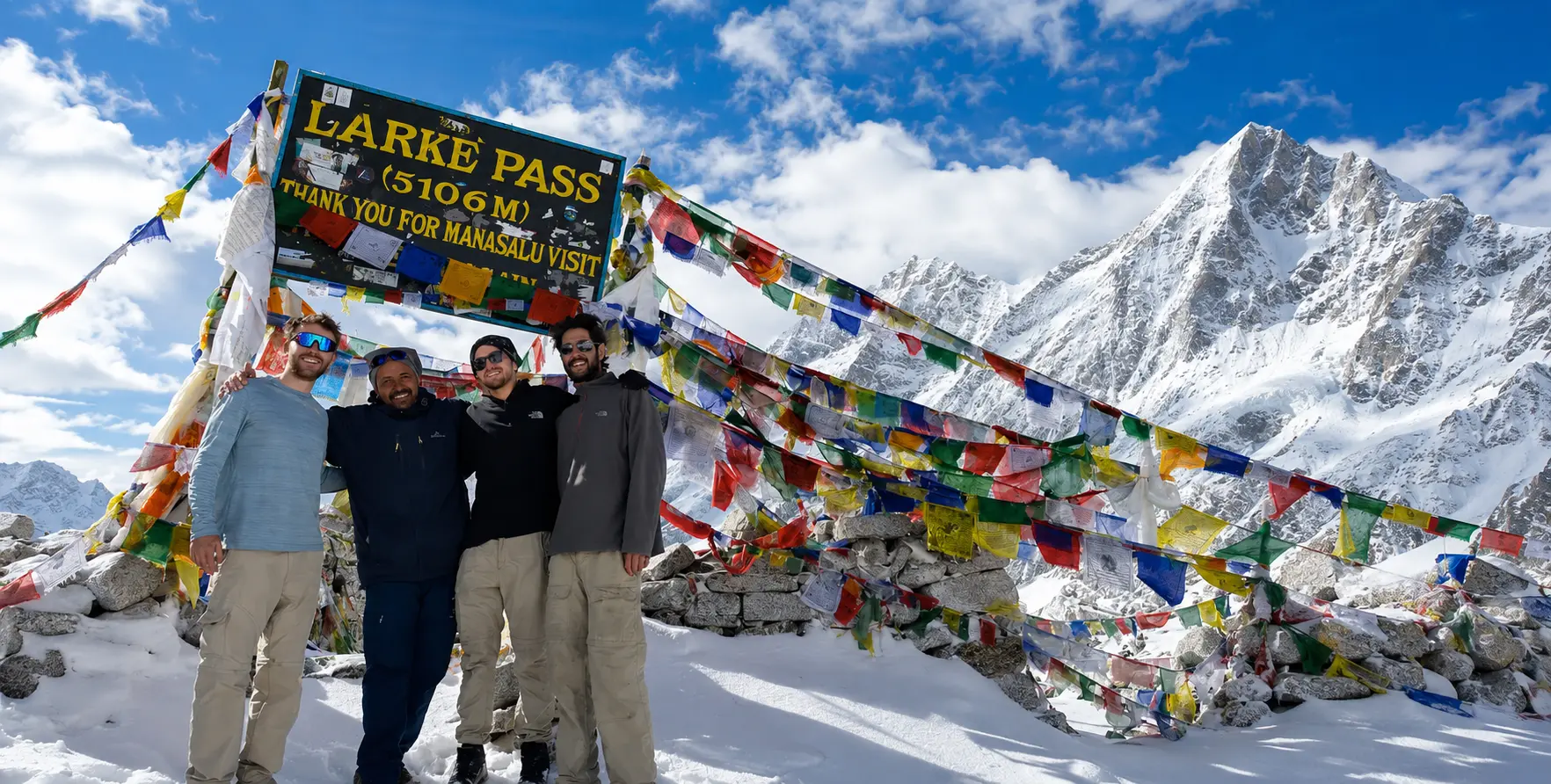
The pass views — encompassing Manaslu, Himlung, Cheo Himal, Kang Guru, and the entire northern arc of the Gandaki watershed — are described by all who make the crossing as among the finest high-altitude panoramas accessible to trekkers anywhere in Nepal. The descent from the pass leads ultimately to Dharapani, where the Annapurna Circuit road connects the circuit end to Besisahar and to the vehicle transfer services that return trekkers to Kathmandu or Pokhara at the circuit’s end.
Return Transport After the Manaslu Circuit
Most Manaslu Circuit trekkers complete their circuit at Dharapani and continue by vehicle hire to Besisahar (two to three hours by jeep) and from there either directly to Kathmandu (a further four to five hours) or onward to Pokhara (two to three hours from Besisahar) for post-trek recovery. Nepal Vehicle Hiring Pvt. Ltd. provides complete return transport from Dharapani or Besisahar to Kathmandu or Pokhara, with the same quality 4WD jeep and experienced driver that began the circuit at the Kathmandu to Machha Khola transfer stage. Booking the return transfer at the same time as the outbound Machha Khola transfer is recommended — it eliminates the need to organize transport from the circuit end when trekkers are typically tired and keen to return to civilization quickly.
Cost Guide: Kathmandu to Machha Khola Private Jeep Transfer 2026
The pricing for a private 4WD jeep transfer from Kathmandu to Machha Khola with Nepal Vehicle Hiring Pvt. Ltd. in 2026 reflects an all-inclusive rate covering the driver, fuel for the complete journey, vehicle insurance, all road tolls and checkpoints, and hotel pickup from anywhere in Kathmandu. For the Toyota Fortuner 4WD, the one-way Machha Khola transfer rate is NPR 20,000 to 24,000, reflecting the greater distance, road difficulty, and fuel consumption of this route compared to shorter transfers such as the Kathmandu to Besisahar transfer.
The Toyota Land Cruiser carries a premium rate of approximately NPR 24,000 to 28,000 for the same route. For groups of four to six trekkers sharing the vehicle, the per-person rate of NPR 4,000 to 5,500 is highly competitive with shared jeep alternatives while delivering the vastly superior service of a private, door-to-door transfer.
For trekkers choosing the two-day transfer option with an overnight stop at Arughat, the additional vehicle day rate is typically NPR 10,000 to 14,000 for the Fortuner or Hilux, covering the driver’s overnight accommodation and the second day’s vehicle time from Arughat to Lububesi. While this increases the total transfer cost, many experienced Manaslu Circuit trekkers consider the two-day option better value overall when the quality of arrival condition and the reduced fatigue at the trailhead are factored in.
Nepal Vehicle Hiring Pvt. Ltd. — Your Machha Khola Transfer Partner
Nepal Vehicle Hiring Pvt. Ltd. has been providing reliable, professionally managed private vehicle hire services across Nepal’s most demanding trekking trailhead routes for years, with a consistent reputation for vehicle quality, driver expertise, and transparent pricing. For the Kathmandu to Machha Khola transfer specifically — a journey that makes greater demands on vehicle capability, driver experience, and route knowledge than most Nepal trailhead transfers — these qualities are not peripheral attributes but essential service components. The company’s 8,000-plus satisfied customers and 5.0 TripAdvisor rating reflect a track record of delivering exactly the quality of service that this demanding route requires: a well-maintained 4WD jeep, an experienced driver who has made the Arughat-to-Lububesi section before, and the operational backing of a professional company with 24-hour WhatsApp support at +977 9851013196.
For trekkers whose Nepal itinerary extends beyond the Manaslu Circuit — returning to Kathmandu for onward travel, continuing to Pokhara for a post-trek stay, or combining the Manaslu trek with Kathmandu Valley sightseeing, a Nagarkot sunrise tour, or the Bhaktapur Durbar Square day trip before or after the trek — all of these transport needs can be arranged through Nepal Vehicle Hiring Pvt. Ltd. as a single, coordinated itinerary with consistent quality standards across every service.
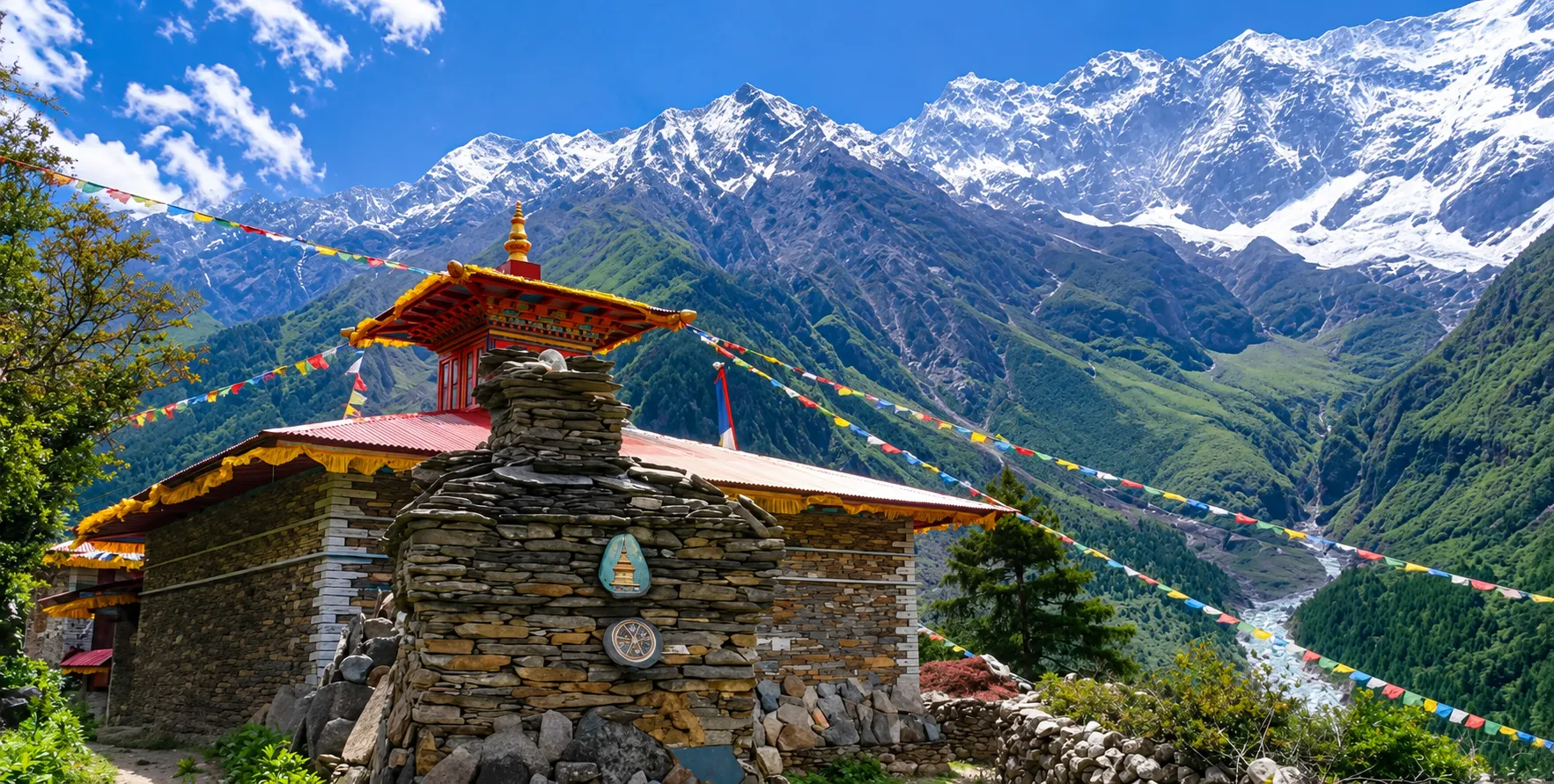
Book Your Kathmandu to Machha Khola Private Jeep Transfer |
| Website: www.vehiclehiringnepal.com |
| Phone / WhatsApp: +977 9851013196 (24/7 — Early Departures Available) |
| Email: [email protected] |
| Office: Bhagawatisthan, Thamel, Kathmandu, Nepal |
| 4WD Fleet: Toyota Fortuner | Toyota Hilux | Toyota Land Cruiser |
| Route: Kathmandu → Dhading Besi → Arughat → Soti Khola → Lububesi |
| Connects to: Manaslu Circuit Trek | Return from Dharapani/Besisahar |
| 8,000+ Happy Customers | 5.0 TripAdvisor | 200+ Verified Reviews |
| All-Inclusive Pricing | Experienced Mountain Drivers | 24/7 Support |
| Licensed & Registered | Company Reg. No. 219204 | Best Value Guaranteed |
Frequently Asked Questions — Kathmandu to Machha Khola
How far is it from Kathmandu to Machha Khola?
The total road distance from Kathmandu to the Machha Khola area via Dhading Besi and Arughat is approximately 160 kilometers. This covers the Prithvi Highway section to the Dhading Besi junction (approximately 75 km), the district road from Dhading Besi to Arughat (approximately 38 km), and the gorge jeep track from Arughat through Soti Khola to the current road end at Lububesi (approximately 23 km). An additional three to four hour walk from Lububesi reaches Machha Khola village itself.
Can a standard car or taxi make the Kathmandu to Machha Khola journey?
A standard car or taxi is adequate for the Prithvi Highway and Dhading Besi sections but entirely inappropriate for the road from Arughat northward toward Soti Khola and Lububesi. The gorge track demands the ground clearance, four-wheel drive traction, and mechanical robustness of a capable 4WD vehicle. Standard taxis and city cars attempting this section risk mechanical damage and becoming stranded on the rough sections. Nepal Vehicle Hiring Pvt. Ltd. deploys exclusively Fortuner, Hilux, or Land Cruiser for the Machha Khola transfer.
Does the jeep go all the way to Machha Khola village?
In 2026, the drivable road ends at Lububesi — approximately three to four hours’ walk south of Machha Khola village. The private jeep transfer from Nepal Vehicle Hiring Pvt. Ltd. delivers trekkers to Lububesi, from which the trail continues on foot to Machha Khola. Road construction continues northward in the gorge, and this situation may change in the future; Nepal Vehicle Hiring Pvt. Ltd. provides current road-end information at the time of booking.
What is the best time of year for the Kathmandu to Machha Khola drive?
October through November (post-monsoon autumn) and March through May (spring) are the best seasons for the Machha Khola transfer — dry roads, good visibility, and optimal driving conditions across all route sections. December through February is generally good but cold. June through September (monsoon) is the most challenging season — the gorge track from Arughat northward can be affected by landslides and road surface deterioration. Nepal Vehicle Hiring Pvt. Ltd. monitors current road conditions during monsoon and advises clients before confirming bookings.
How do I book the Kathmandu to Machha Khola jeep transfer?
Contact Nepal Vehicle Hiring Pvt. Ltd. via WhatsApp at +977 9851013196, by phone, by email at [email protected], or through vehiclehiringnepal.com. Provide your transfer date, group size, Kathmandu hotel name, and preferred departure time. The team confirms bookings promptly and provides complete driver and vehicle information before departure day.
Conclusion: The Long Road Is Part of the Adventure
The Kathmandu to Machha Khola journey is not a transfer that most trekkers would describe as effortless or brief. Seven to eight hours in a 4WD jeep across 160 kilometers of increasingly demanding road, followed by a three- to four-hour walk through the Budhi Gandaki gorge to the village itself, is a genuinely demanding day of travel that asks real commitment before the Manaslu Circuit Trek has even properly begun. But this is, in a sense, exactly the point. The Manaslu Circuit is a trek that rewards genuine commitment — and the long road from Kathmandu through the Dhading hills and the Arughat gorge is itself a preview of that commitment, a warm-up for the physical and logistical demands of what lies ahead.
With Nepal Vehicle Hiring Pvt. Ltd. as your transfer partner, the demanding logistics of this journey are managed professionally, reliably, and with the specific route knowledge that only comes from years of operating this exact corridor. The 4WD jeep is right, the driver is experienced, the departure time is optimized, and the journey to the world’s hidden circuit can begin with confidence. Contact us today at +977 9851013196 or vehiclehiringnepal.com — Machha Khola and the extraordinary mountain world beyond it are waiting.
- Kathmandu to Machha Khola — Quick Reference 2026
- Introduction: The Long Road to the World's Hidden Circuit
- Understanding Machha Khola — Gateway to the Manaslu Circuit
- Distance and Drive Time — The Verified 2026 Numbers
- The Complete Route: Kathmandu to Machha Khola Stage by Stage
- Road Conditions: The Honest 2026 Assessment
- Why a 4WD Vehicle Is Non-Negotiable for This Route
- Permits Required for the Manaslu Circuit Trek — 2026 Complete Guide
- Planning Your Transfer — Timing, Preparation and Booking
- The Manaslu Circuit Trek — What Awaits Beyond Machha Khola
- Cost Guide: Kathmandu to Machha Khola Private Jeep Transfer 2026
- Nepal Vehicle Hiring Pvt. Ltd. — Your Machha Khola Transfer Partner
- Book Your Kathmandu to Machha Khola Private Jeep Transfer
- Frequently Asked Questions — Kathmandu to Machha Khola
- Conclusion: The Long Road Is Part of the Adventure

Related Blog & Articles

Kathmandu to Soti Khola by Jeep – Complete Route Guide (2025)
Kathmandu to Gorkha Jeep Service: The Complete Guide (2026)
Kathmandu to Manaslu Circuit Jeep Transfer
Kathmandu to Manaslu Trek Transport