


 Plan a Trip


Kathmandu to Manaslu Circuit Jeep Transfer
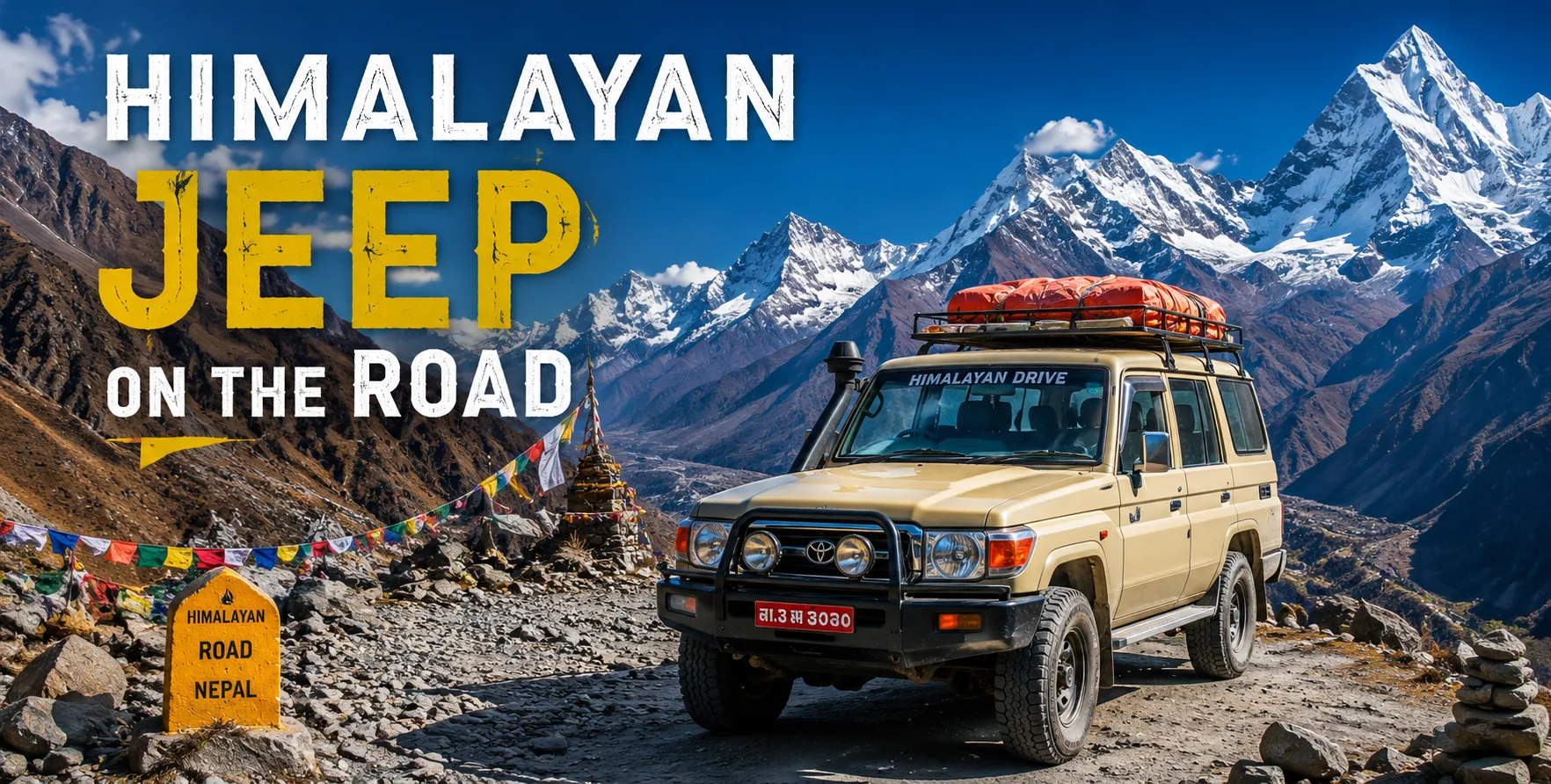
Kathmandu to Manaslu Circuit Jeep Transfer
The Manaslu Circuit is Nepal’s most compelling answer to a single trekking challenge: how do you deliver the dramatic high-altitude scenery, authentic Himalayan culture, and classic pass-crossing adventure of the Everest and Annapurna routes without the crowds that have, in recent peak seasons, made those trails feel more like queues than wilderness journeys? The answer, consistently given by experienced Nepal trekkers and operators alike, is the Manaslu Circuit — a 12-to 18-day loop around the world’s eighth-highest mountain, through the Nubri valley’s Tibetan Buddhist communities and over the demanding 5,106-meter Larkya La pass, with the full teahouse comfort of Nepal’s established routes but a fraction of the foot traffic.
But the Manaslu Circuit comes with a logistical reality that many first-time visitors underestimate: the jeep transfer from Kathmandu to the trailhead at Soti Khola or Machha Khola is a 7- to 10-hour road journey on terrain that becomes genuinely rough beyond the town of Arughat, requiring a 4WD vehicle for its final and most demanding section. This is not a minor travel formality — it is a substantive journey in its own right, one that deserves careful planning, the right vehicle, and a driver with specific experience on a road corridor that is both one of Nepal’s most scenically rewarding and most demanding long-distance transfers.
This comprehensive 2026 guide covers everything about the Kathmandu-to-Manaslu Circuit jeep transfer: the full route, the evolving trailhead question, all transport options and their costs, the return journey from Dharapani, road conditions by season, and why Nepal Vehicle Hiring Pvt Ltd is the right private 4WD partner for this journey.
The Trailhead Question — Soti Khola, Machha Khola, or Jagat?
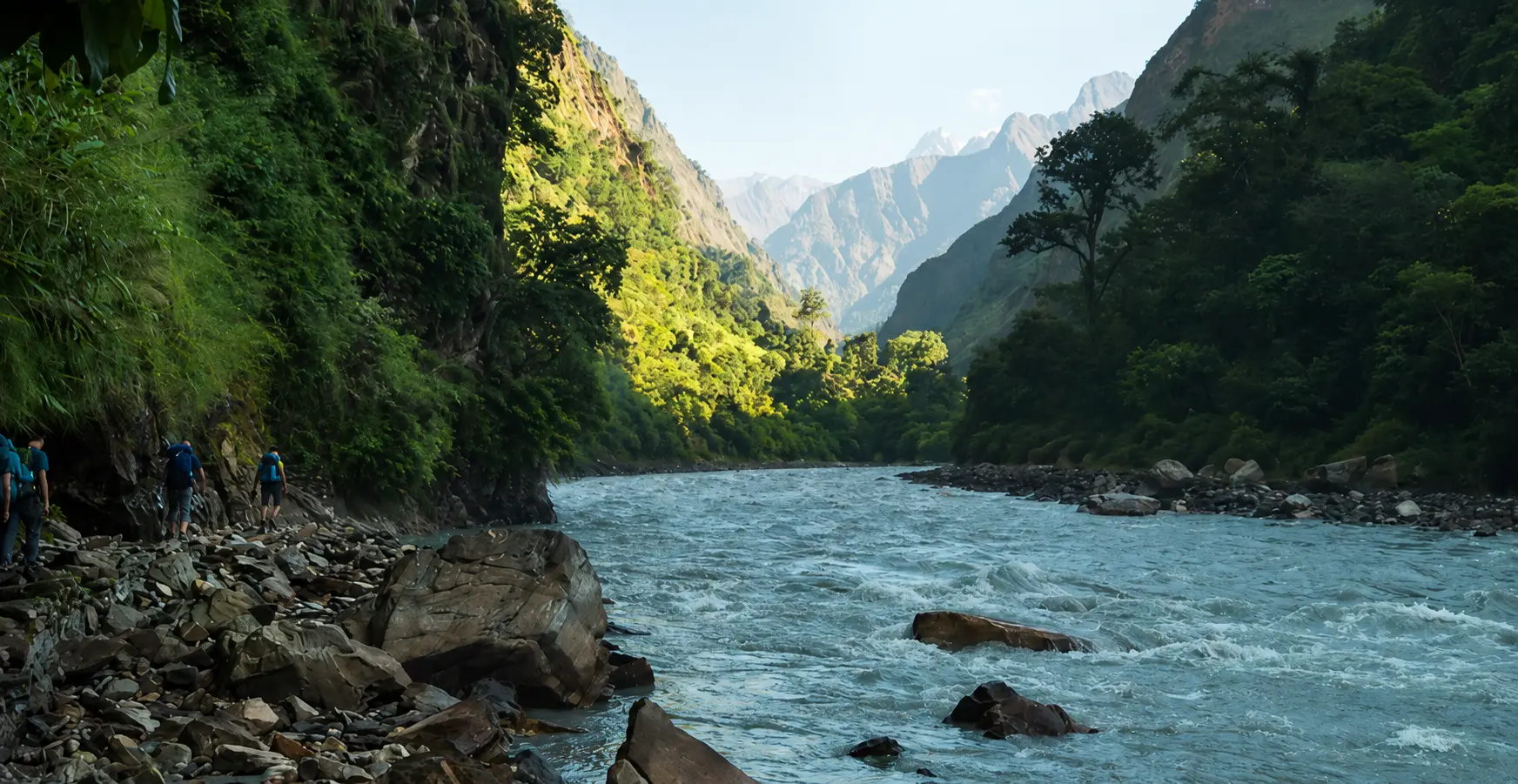
One of the most frequently changing and most practically important facts about the Manaslu Circuit jeep transfer is precisely where the vehicle journey ends, and the trekking begins. The answer has shifted progressively farther into the mountains as road construction has extended the drivable route beyond what was, until recently, a clear end of the road at Arughat Bazaar.
The original Manaslu Circuit trailhead, when the route first opened to foreign trekkers in 1991, began at Arughat itself — meaning the first several days of any Manaslu Circuit itinerary consisted primarily of walking along what is now a rough but drivable track, through terrain that most trekkers today would regard as an approach road rather than a highlight of the trekking experience. Progressive road extension has changed this significantly: Soti Khola, at 710 meters and approximately 126 km from Kathmandu, became the standard trailhead for most of the 2010s, representing a substantial saving in walking days compared to the original Arughat start. More recently still, continued road extension has reached Machha Khola, approximately 870 meters and 140 to 160 km from Kathmandu, which is now the starting point preferred by many operators and independent trekkers precisely because it shaves another full day of relatively unremarkable valley-floor walking from the trek’s opening section.
Beyond Machha Khola, the situation becomes more fluid: road construction has,s at various points,s extended tracks approaching Jagat at 1,340 meters. This starting point would save trekkers yet another day of walking. However, this upper extension is subject to weather damage, seasonal closure, and the genuine unpredictability of ongoing construction on terrain that monsoon landslides can significantly disrupt. As of 2026, most operators treat Machha Khola as the reliable standard starting point, with access to Jagatss treated as a bonus available only when road conditions specifically allow and confirmed by the driver on the morning of the journey.
Current Recommendation (2026): Nepal Vehicle Hiring Pvt Ltd confirms vehicle to Machha Khola as the standard booking — our drivers check current road extension status and will advise on the morning of departure whether conditions allow a further push toward Jagat, without charging extra if the road is passable.
Key Facts at a Glance
| Route Detail | Information |
| From | Kathmandu (1,400 m) |
| To (outward) | Soti Khola (710 m) or Machha Khola (870 m) |
| Return route | Dharapani (1,860 m) to Besisahar to Kathmandu |
| Road distance (to Soti Khola) | 126 km |
| Road distance (to Machha Khola) | 140-160 km (sources vary) |
| Drive time by private jeep | 7-8 hrs to Soti Khola; 8-10 hrs to Machha Khola |
| Drive time by local bus | 8-10 hrs to Arughat; additional shared jeep from Arughat |
| Recommended vehicle | 4WD Scorpio or Hilux — mandatory after Arughat |
| Road character | Prithvi Highway (paved, smooth) + Dhading Besi turn-off + Arughat corridor (rough off-road) |
| Return from Dharapani | 7-8 hrs to Kathmandu; 4-5 hrs to Pokhara (via Besisahar) |
| Best season for the road | October-November and March-May; monsoon increases landslide risk after Arughat |
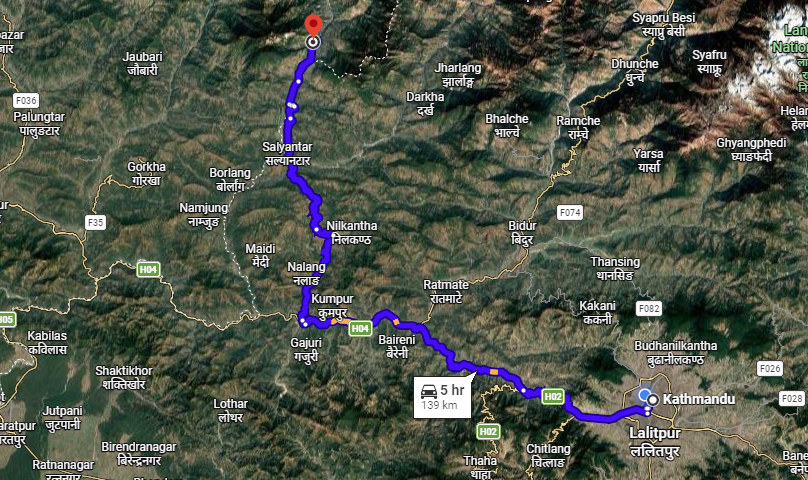
The Route — Kathmandu to Machha Khola Step by Step
| Checkpoint | Distance from KTM | Road Type | Notes |
| Kathmandu (Thamel) | Start (1,400 m) | City roads | Hotel pickup — depart 6:00-7:00 AM |
| Mugling Junction | 110 km | Prithvi Highway (paved) | Common breakfast stop; junction for Pokhara vs Manaslu route |
| Dhading Besi | 75-80 km via direct Dhading road | Paved highway | Alternative route via Dhading; avoids Mugling — faster in some conditions |
| Arughat Bazaar | 120-130 km | Paved to here | Gorkha District HQ area; last reliable fuel + ATM + services |
| Soti Khola | 126 km (710 m) | Rough off-road begins at Arughat | Original Manaslu Circuit starting point; most operators stop here |
| Lububesi / Machha Khola | 140-160 km (870 m) | Rough 4WD track | Road now extended to here; saves ~1 day of walking on the trek |
| Jagat (road occasionally reaches) | Beyond Machha Khola (1,340 m) | Very rough — road extension ongoing | Check current conditions; it saves another trekking day if passable |
Kathmandu to the Prithvi Highway Junction
The journey begins with the morning departure from your Kathmandu hotel, typically between 6:00 and 7:00 AM, to make full use of daylight on what is a long driving day. The standard route follows the Prithvi Highway westward from Kathmandu — the same artery used by the Pokhara road — until the fork that routes Manaslu-bound vehicles north through Dhading Besi, toward Arughat and the Budhi Gandaki river corridor, rather than continuing west toward Pokhara. This initial section on the Prithvi Highway is smooth, fast, and comfortable — the paved highway at its best, with good visibility and manageable traffic even during early morning departure.
Dhading Besi and the Turn North
From the Prithvi Highway, the route turns north toward Dhading Besi, the administrative headquarters of Dhading District — a town with reasonable facilities, including fuel stations and basic restaurants, making it a natural early road stop for vehicles departing Kathmandu before 7:00 AM. Beyond Dhading Besi, the road continues north along the Budhi Gandaki river corridor toward Arughat. This section remains largely paved but progressively narrower and more winding as it climbs into the initial Gorkha hills terrain.
Arughat — The Last Reliable Services
Arughat Bazaar, typically reached in 5 to 6 hours from Kathmandu, is the last town on the route with reliable fuel, ATMs, and comprehensive restaurant facilities. This is where the character of the road journey changes fundamentally: the relatively smooth paved approach from the south gives way, beyond Arughat, to the rough, unpaved off-road track that continues to the trekking trailheads. Nepal Vehicle Hiring Pvt Ltd recommends a proper lunch and rest stop in Arughat — refueling both the vehicle and the passengers — before the rougher final section begins.
ATM Alert: There are no functioning ATMs beyond Arughat on the Manaslu Circuit route. Withdraw sufficient NPR cash in Arughat or Kathmandu before departure to cover the entire trek plus a buffer — ATMs reappear only after the circuit exit at Besisahar or Pokhara.
Arughat to Soti Khola and Machha Khola — The Off-Road Final Stretch
The road beyond Arughat is where a 4WD vehicle transitions from a preference to a practical necessity. The track follows the Budhi Gandaki River through increasingly dramatic gorge terrain, crossing rough river-bank sections, navigating exposed cliff-edge stretches, and managing the kind of deteriorated surface that monsoon rainfall and landslide activity regularly damage and that dry-season driving gradually loosens into a deep-dust, loose-stone corrugation. A standard sedan or Hiace van can manage this road in optimal dry-season conditions but struggles significantly on any section affected by recent rain or surface deterioration.
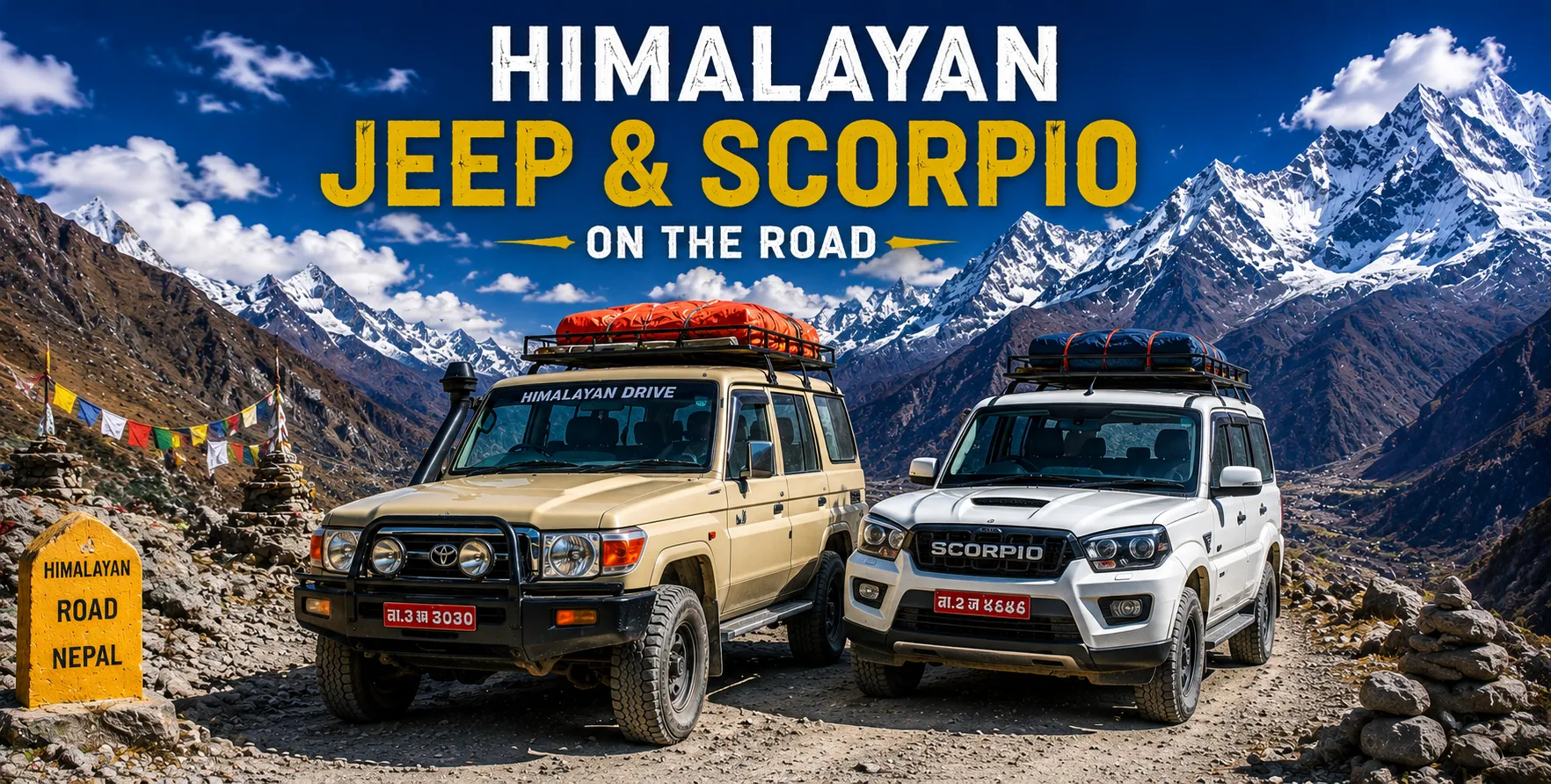
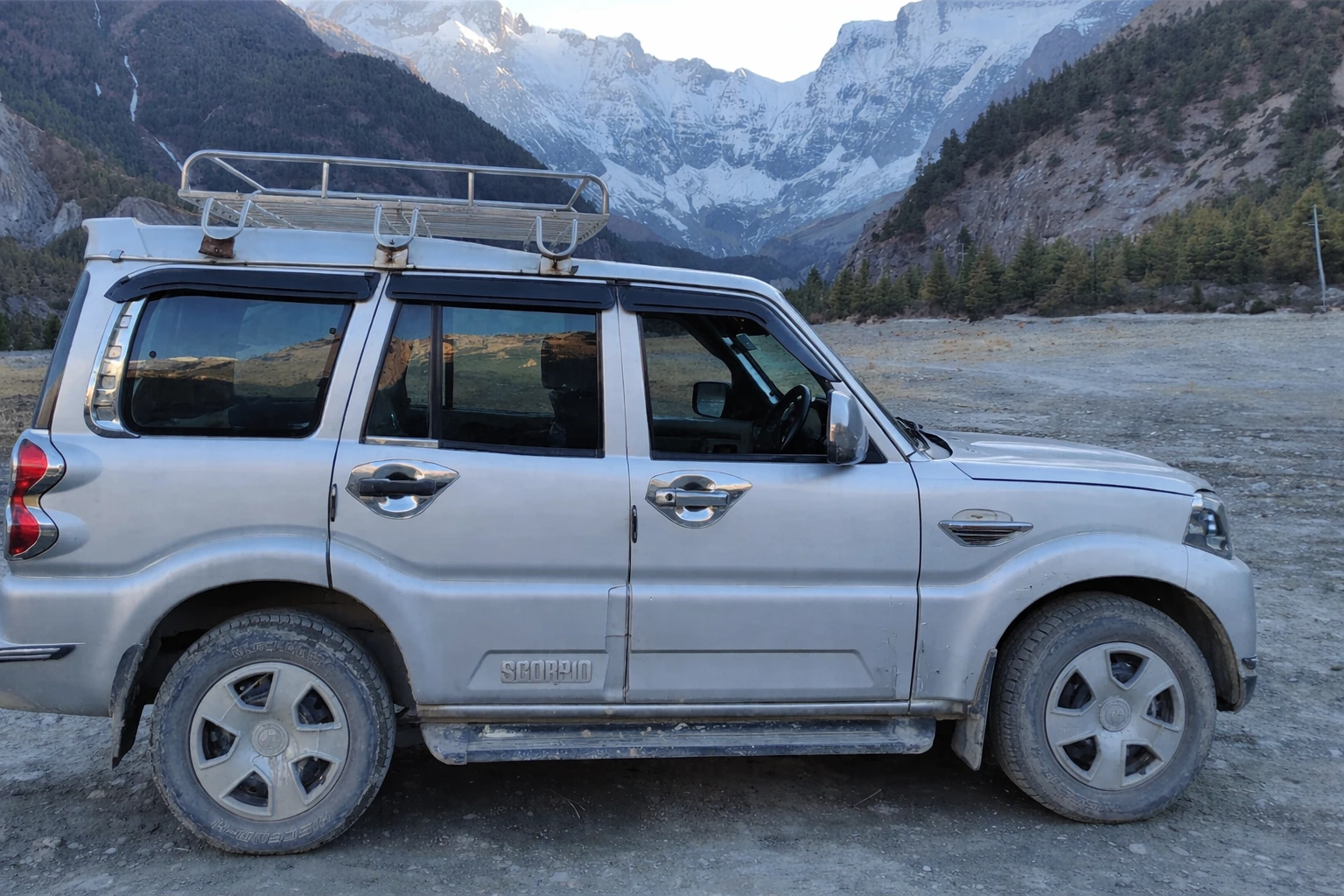
A Scorpio or Hilux 4WD, with appropriate ground clearance and low-range capability, handles the same road comfortably and safely regardless of conditions — the specific reason Nepal Vehicle Hiring Pvt Ltd recommends 4WD for all Manaslu Circuit trailhead transfers without exception.
All Transport Options — Kathmandu to the Manaslu Trailhead 2026
| Option | Cost (2026) | Time | Best For |
| Private Scorpio/Hilux 4WD (Kathmandu-Machha Khola) | NPR 18,000-25,000 / USD 135-190 (full vehicle) | 7-10 hrs | Groups of 4-6; comfort + luggage + flexibility |
| Private Hiace Van (Kathmandu-Soti Khola) | NPR 22,000-30,000 / USD 165-225 (full vehicle) | 7-9 hrs | Groups of 7-13; larger trekking parties |
| Shared Jeep (Kathmandu-Machha Khola) | NPR 2,600-3,900 / USD 20-30 per person | 8-10 hrs | Budget travelers are comfortable sharing |
| Local Bus (Kathmandu-Arughat) + shared jeep | NPR 800-1,000 bus + NPR 2,000-2,500 jeep per person | 10-13 hrs total | Tightest budget; multiple transfers |
| Return: Private Jeep (Dharapani-Kathmandu) | NPR 18,000-28,000 / USD 135-210 (full vehicle) | 7-8 hrs | Comfortable, direct return after trek |
| Return: Shared Jeep (Dharapani-Besisahar) | NPR 2,000-3,000 / USD 15-23 per person | 4-5 hrs to Besisahar | Budget return to Besisahar, then onward bus |
Why Private Jeep Is the Standard Professional Choice
The Manaslu Circuit’s trailhead transfer consistently occupies a different category from most other Nepal trekking transfers, not because the route is uniquely difficult but because the combination of long distance, rough final terrain, and the very specific start-of-trek logistics that follow makes the quality of the vehicle and driver choices matter more than on shorter or simpler transfers. Groups arriving at Soti Khola or Machha Khola, exhausted, late, and stressed from a difficult public transport journey, start their multi-week trek with a deficit that takes days to recover from.
Groups arriving by private 4WD with a professional driver, on schedule, with their luggage properly secured and their breakfast stop properly timed, start the same trek refreshed and exactly where they planned to be.
For groups of 4 to 6 sharing a private Scorpio or Hilux at NPR 18,000 to 25,000 (USD 135 to 190 for the full vehicle), the per-person cost compares very favourably with shared transport options once the full journey is costed — particularly when the additional cost of arranging separate onward transport from Arughat to the actual trailhead, which shared and public transport typically requires, is factored into the shared-transport total.
The Return Transfer from Dharapani
One of the most important and most frequently overlooked aspects of Manaslu Circuit transport planning is that the return journey follows a completely different route from the outward one. Because the circuit crosses the Larkya La pass and descends into the Annapurna Conservation Area, it exits not through the same Arughat corridor it entered by, but through Dharapani, Tal, and Besisahar — a descent into the standard Annapurna Circuit territory where frequent local jeep and bus connections run back toward Kathmandu or onward to Pokhara.
Nepal Vehicle Hiring Pvt Ltd coordinates the return pickup from Dharapani or Besisahar as part of a single booking with the outward transfer — meaning that when you step off the trail after crossing Larkya La, your return vehicle is already arranged and waiting, rather than requiring a negotiation with local transport at the end of an exhausting trek.
Road Conditions — What Actually Changes by Season
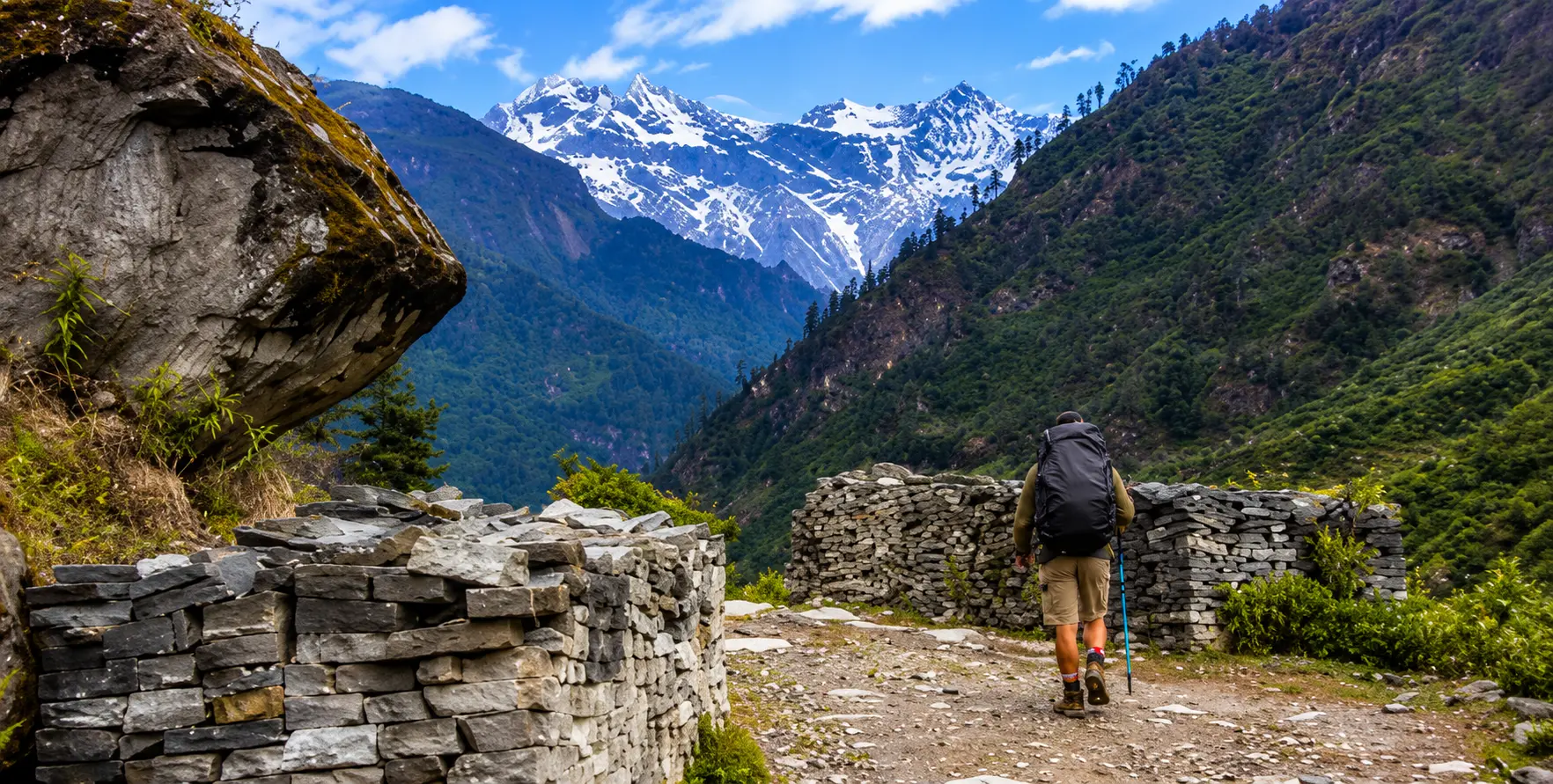
The Arughat-to-trailhead section of this transfer is one of the most monsoon-sensitive road sections covered anywhere in this blog series. Unlike the broad, well-maintained national highways serving routes like Kathmandu to Pokhara or Kathmandu to Chitwan, the track beyond Arughat is a community and construction road that depends on regular maintenance to remain passable and can be severely damaged by a single heavy monsoon downpour.
Several specific hazards recur with particular consistency: the river-bank crossings near Soti Khola that require careful line selection after any significant rise in the water level, the cliff-edge sections where road narrowing and surface erosion can appear without warning, and the dust-and-mud alternation of a road surface that has seen neither rain nor grading for several weeks.
During peak season — October and November for autumn, March to early May for spring — road conditions are generally at their best: dry surface, good visibility, and the consistency that comes from regular light traffic gradually consolidating the loose material.
During the monsoon from June to September, the risk of landslide-related road closures or significant surface damage between Arughat and the trailhead is elevated, and any monsoon Manaslu transfer should include explicit verification of current road conditions on the morning of departure. Nepal Vehicle Hiring Pvt Ltd actively monitors conditions through our driver network and will proactively advise clients on any day when the Arughat-onward section poses an unusual risk.
Winter departures — December through February — present conditions opposite to the monsoon: dry, clear roads with good surface consolidation, but cold temperatures that can create frost on exposed high-section road surfaces overnight, making an early-morning departure slightly more cautious than the same route warrants later in the day. Winter is also genuinely quiet in the Manaslu region, with permit offices sometimes operating with reduced staff compared to peak season —a logistical consideration worth confirming with your trekking agency when planning an off-peak departure.
Planning Your Departure — The Details That Make the Difference
The Manaslu Circuit jeep transfer rewards planning more than almost any other Nepal trekking transfer, specifically because several logistics elements interact closely in ways that can compound into significant problems if any one of them is managed carelessly.
- Departure timing: A 6:00 to 7:00 AM departure from the Kathmandu hotel is standard and strongly recommended. This allows a proper mid-journey lunch stop in Arughat and ensures arrival in Machha Khola with sufficient daylight for the trailhead accommodation arrangement and any initial trek preparations. A later departure after 8:00 AM risks a post-sunset arrival on the rough final road section, which is significantly less safe than driving in daylight.
- Permits before departure: All Manaslu Circuit permits — the Restricted Area Permit, MCAP, and ACAP — must be obtained in Kathmandu before the trailhead departure. There is absolutely no permit processing facility at Arughat or beyond. Our dedicated MCAP permit guide covers this in full, but the practical point for transfer planning is that the permit day and departure day should never fall on the same day.
- Luggage management: A Manaslu Circuit trek typically involves full expedition duffel bags, day packs, and sometimes additional porter loads. Nepal Vehicle Hiring Pvt Ltd vehicles have roof racks with securing ropes specifically for this kind of load — pack sensibly but do not under-pack for fear of overloading the vehicle. Proper luggage securing matters more on the rough final section than on any paved highway route.
- Fuel: The vehicle is fuelled in Kathmandu before departure and, if needed, again at Arughat. There are no fuel stations beyond Arughat on the approach to the trailhead. For the return journey via Dharapani, fuel is available in Besisahar. Our drivers know these logistics precisely and manage them as a standard part of the transfer.
- Communication: Mobile network coverage becomes unreliable after Arughat on the Soti Khola approach. If you have last-minute communication needs with your trekking agency or guide, arrange these before or during the Arughat stop, not after.
The Return Journey — Dharapani to Kathmandu or Pokhara
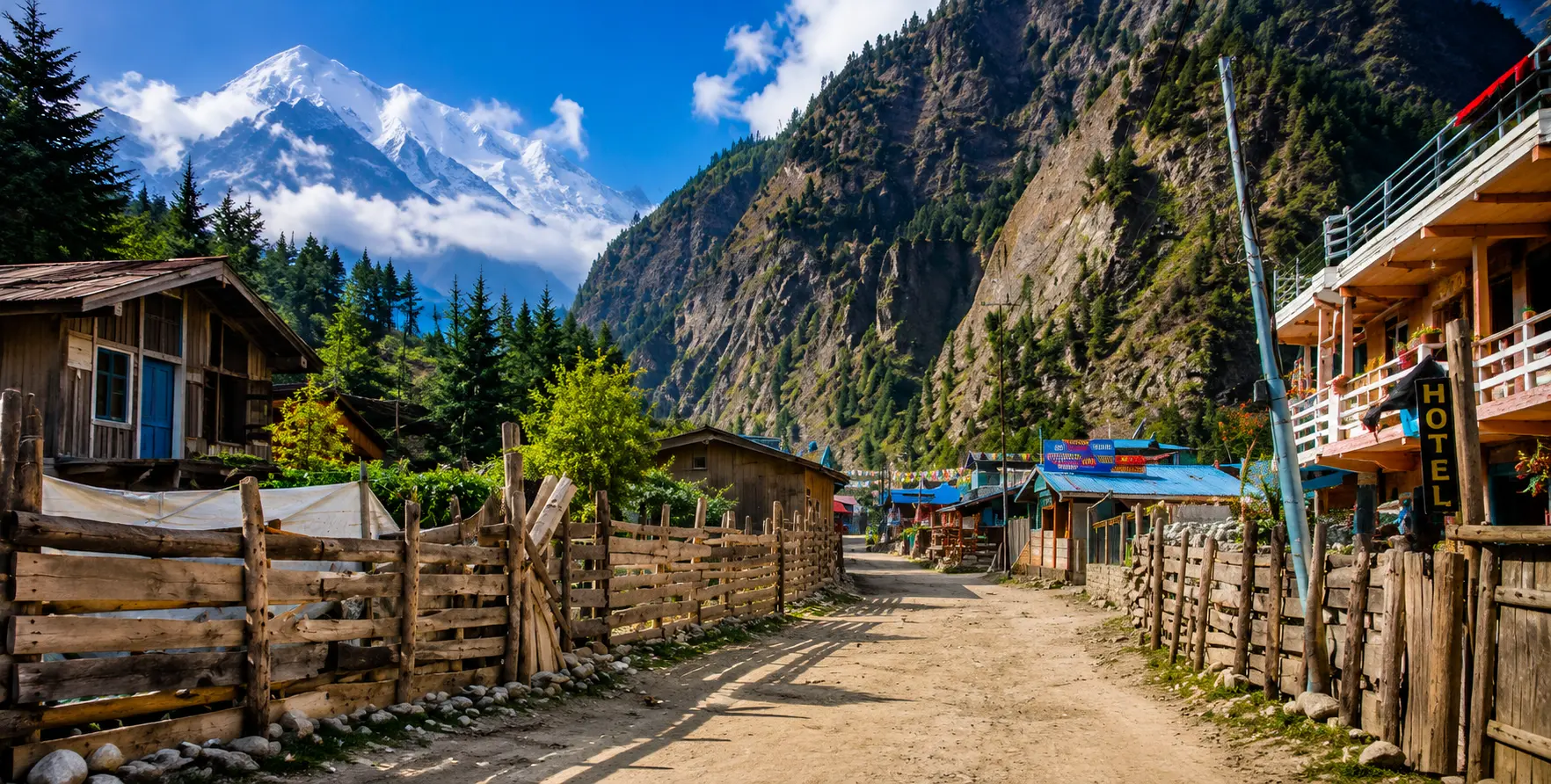
The Manaslu Circuit ends at Dharapani in the Annapurna Conservation Area, a point on the main Annapurna Circuit trail from which onward road infrastructure to Besisahar and the broader Gandaki highway network is considerably more developed than the Arughat corridor used on the outward journey. From Dharapani, a private jeep to Kathmandu takes approximately 7 to 8 hours via Besisahar, Dumre, and the Prithvi Highway — a journey that, while still long, travels predominantly on paved roads and is generally easier to drive than the outward Arughat approach.
Alternatively, many trekkers choose to end their circuit in Pokhara rather than Kathmandu. This route takes roughly 2 to 3 hours by car and brings the trekker to Nepal’s most pleasant lakeside city for a well-earned rest after the Larkya La crossing.
The key planning point for the return is that Dharapani’s local transport options — shared jeeps to Besisahar, local buses, and occasional tourist vehicles — are workable but unpredictable at the end of a demanding multi-week trek. A pre-arranged private vehicle pickup from Dharapani, coordinated as part of the same booking as the outward Kathmandu-Machha Khola transfer, removes this uncertainty entirely.
Nepal Vehicle Hiring Pvt Ltd routinely manages this combined outward-and-return booking as a single transaction — your return vehicle is confirmed before you even begin the trek, with the driver’s contact number shared in advance so that, as you approach Dharapani on the final day, communication and timing can be adjusted in real time if the trek’s schedule has shifted.
Why Choose Nepal Vehicle Hiring Pvt Ltd
- Manaslu-Specific 4WD Expertise: Our drivers have specific, repeated personal experience on the Kathmandu-to-Arughat-to-Soti Khola-and-Machha Khola corridor — including real-time knowledge of current road conditions, the best trailhead day rest stops, and how to navigate the rough final section in any season safely.
- Verified 4WD Fleet: Scorpio and Hilux 4WD exclusively for Manaslu transfers — we never send a sedan or 2WD vehicle on this route.
- Combined Outward and Return Booking: One booking covers Kathmandu to Machha Khola outward and Dharapani (or Besisahar) to Kathmandu or Pokhara return — all arranged before your trek begins.
- Flexible Trailhead Updates: On the morning of departure, our driver confirms current road conditions and whether the track has been extended beyond Machha Khola toward Jagat — no extra charge if conditions allow a further push.
- Transparent All-Inclusive Pricing: Driver, fuel, and road tolls in every quote — the price agreed is the price paid.
- 24/7 Booking: WhatsApp +977-9851013196— book your Manaslu Circuit jeep transfer with full itinerary support.
Frequently Asked Questions
How far is Kathmandu from the Manaslu Circuit trailhead?
Soti Khola, the traditional trailhead, is approximately 126 km from Kathmandu. Machha Khola, now the preferred starting point for most trekkers, is approximately 140-160 km away. The drive to Soti Khola takes 7 to 8 hours by private 4WD jeep, and to Machha Khola 8 to 10 hours, depending on road and traffic conditions.
Is a 4WD vehicle necessary for this transfer?
Yes, strongly recommended and effectively mandatory for a safe and reliable transfer. The road from Arughat onward to Soti Khola and Machha Khola is unpaved, rough, and in places steep and narrow. A 4WD vehicle with adequate ground clearance handles this section safely in all dry-season conditions. A standard sedan or Hiace van struggles and carries a real risk of becoming stuck or damaged on deteriorated sections.
What is the 2026 cost of a private jeep from Kathmandu to the Manaslu trailhead?
A private Scorpio or Hilux 4WD costs approximately NPR 18,000 to 25,000 (USD 135 to 190) for a one-way trip to Machha Khola. This price includes driver, fuel, and road tolls with door-to-door hotel pickup in Kathmandu.
Should I start at Soti Khola or Machha Khola?
Most operators now recommend Machha Khola as the standard starting point, saving approximately one day of relatively uninteresting low-valley walking compared to Soti Khola. The vehicle transfer costs are similar for both. Nepal Vehicle Hiring Pvt Ltd books to Machha Khola as standard and checks on the day of departure whether conditions allow a further push toward Jagat.
How do I return from the Manaslu Circuit to Kathmandu?
The Manaslu Circuit exits via Dharapani in the Annapurna region, from where a private jeep to Kathmandu takes approximately 7 to 8 hours via Besisahar and the Prithvi Highway. Many trekkers instead continue to Pokhara, reducing the return journey by 2 to 3 hours. Nepal Vehicle Hiring Pvt Ltd coordinates this return pickup alongside the outward booking.
When is the best time for the Kathmandu-to-Manaslu transfer?
October to November (autumn) and March to early May (spring) offer the best road conditions on the Arughat-onward rough section. Monsoons from June to September increase the risk of landslides. Winter, from December to February, is generally clear and dry but cold, with reduced staffing at permit offices in some locations.
Conclusion
The Kathmandu to Manaslu Circuit jeep transfer is more than a logistics footnote to one of Nepal’s finest trekking experiences — it is a genuine overland journey in its own right, covering nearly kilometers from the urban density of Kathmandu through the transitional hill country of Dhading and Gorkha to the rough river-gorge track that delivers trekkers to one of the Himalaya’s most rewarding and least crowded circuits. Done well, in a properly maintained 4WD with an experienced driver and a sensible departure time, it sets exactly the right tone for the multi-week adventure that follows. Done carelessly, it can leave trekkers at the trailhead exhausted, late, and already behind schedule.
Nepal Vehicle Hiring Pvt Ltd provides a private 4WD transfer that makes the difference — with tour experience, certified vehicles, and a flexible booking structure that coordinates the outward Machha Khola transfer and the Dharapani return pickup into a single seamless arrangement before your trek even begins.
Book your Manaslu Circuit jeep transfer — Call or WhatsApp: +977-9851013196
Website: https://vehiclehiringnepal.com/
- Kathmandu to Manaslu Circuit Jeep Transfer
- The Trailhead Question — Soti Khola, Machha Khola, or Jagat?
- Key Facts at a Glance
- The Route — Kathmandu to Machha Khola Step by Step
- All Transport Options — Kathmandu to the Manaslu Trailhead 2026
- Road Conditions — What Actually Changes by Season
- Planning Your Departure — The Details That Make the Difference
- The Return Journey — Dharapani to Kathmandu or Pokhara
- Why Choose Nepal Vehicle Hiring Pvt Ltd
- Frequently Asked Questions
- Conclusion

Related Blog & Articles

Kathmandu to Soti Khola by Jeep – Complete Route Guide (2025)
Kathmandu to Arughat Transport
MCAP Permit Guide

Besisahar to Dharapani Jeep Hire – Complete 4WD Transfer Guide for Annapurna Circuit Trekkers