Plan a Trip


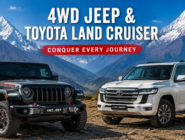
4WD Vehicles in Nepal: The Ultimate Hire Guide
4WD Vehicles in Nepal: The Ultimate Hire Guide
Nepal is a country that defies the ordinary in almost every dimension — its mountains are the highest on earth, its cultural heritage spans more than two thousand years of continuous civilisation, its religious diversity encompasses the birthplace of the Buddha and some of Hinduism’s most sacred shrines, and its biological range stretches from subtropical jungle at barely a hundred metres above sea level to permanent ice fields at more than eight thousand metres within a horizontal distance of less than two hundred kilometres.
But for anyone planning actually to travel through this extraordinary country by road, there is one fundamental geographic reality that shapes everything else: Nepal’s terrain is among the most demanding and varied on the planet, and the roads that traverse it range from smooth modern tarmac on the major inter-city highways to near-impassable mountain tracks that cling to cliff faces above thousand-metre drops, cross unbridged seasonal rivers, and wind through high-altitude desert at forty-five hundred metres where the air itself is thin enough to reduce engine performance.
In this landscape, the choice of vehicle is not a matter of preference or comfort alone — it is a matter of safety, reliability, and whether you can actually reach your destination. A standard city car that performs perfectly well on Kathmandu’s ring roads will struggle seriously on the rough approach road to a Himalayan trekking trailhead, may fail on the rocky jeep tracks of Upper Mustang, and is likely to be outright dangerous on the steep, unpaved switchbacks that provide the only vehicular access to dozens of Nepal’s most extraordinary destinations. For these roads, and for the full range of Nepal’s geographic and climatic extremes, the four-wheel-drive vehicle is not a luxury add-on but the essential tool — the difference between a journey that reaches its destination and one that turns back defeated.
Four-wheel drive vehicles have been central to Nepal’s transportation landscape for decades. The specific models that have earned the greatest trust — the Toyota Land Cruiser, the Toyota Fortuner, the Toyota Hilux, and the Toyota Land Cruiser Prado — are the same vehicles that governments, military forces, United Nations agencies, major international NGOs, and serious expedition teams have relied upon in Nepal’s most demanding conditions for generation after generation.
These are not vehicles that are famous because of marketing campaigns or dealership promotions; they are famous in Nepal because they work, consistently and reliably, in conditions that defeat lesser machines, and because their mechanical simplicity and the wide availability of parts and skilled mechanics throughout the country means that when something does go wrong in a remote location, there is a genuine chance of getting it fixed on-site rather than being stranded indefinitely.
This deep-research guide is a complete resource for anyone planning to travel in Nepal by four-wheel drive vehicle — whether you are hiring a vehicle with a professional driver from Nepal Vehicle Hiring Pvt. Ltd., considering a self-drive arrangement for specific routes, seeking to understand which vehicle type is genuinely appropriate for your specific itinerary, or simply wanting to understand why the four-wheel drive is so comprehensively dominant in Nepal’s road transport landscape.
We will explore what four-wheel drive actually means and why it matters specifically in Nepal’s conditions, examine the major 4WD models available for hire in the country in detail, analyse which routes require a 4WD and which do not, discuss what to look for when choosing a hire provider and vehicle, and address the full practical dimension of planning and executing a 4WD-based Nepal journey.
Understanding Four-Wheel Drive — What It Actually Means and Why It Matters in Nepal
The Mechanics of Four-Wheel Drive in Plain Language
The term ‘four-wheel drive’ is used loosely in everyday speech, often applied to any vehicle that appears capable and rugged regardless of its actual drivetrain configuration. In precise mechanical terms, however, four-wheel drive describes a specific powertrain system in which torque from the engine is transmitted to all four of the vehicle’s wheels simultaneously or on demand, rather than only to the front two wheels (front-wheel drive) or the rear two wheels (rear-wheel drive) as in standard passenger vehicles.
This configuration is especially important in challenging terrain. By powering all four wheels, the vehicle can keep moving even when one, two, or, in some cases, three wheels spin uselessly on a low-traction surface, because the remaining wheel or wheels that retain traction continue to receive driving force.
In practice, the distinction between different four-wheel drive systems matters considerably when choosing a vehicle for Nepal’s specific road conditions. Full-time four-wheel drive — as found in the Toyota Land Cruiser — keeps all four wheels engaged permanently, regardless of road conditions, providing maximum traction and eliminating the need for the driver to manually engage or disengage the four-wheel drive system based on terrain.
Part-time four-wheel drive — as found in the Toyota Fortuner and Toyota Hilux — can be switched between two-wheel drive for normal highway driving (where fuel efficiency is better and tire wear is reduced on consistent tarmac surfaces) and four-wheel drive for challenging terrain. Additionally, most serious four-wheel drive vehicles for Nepal offer a low-range gearing option, accessed through a separate transfer case lever, which multiplies the torque available to the wheels at very low speeds — essential for the steep ascents, technical rocky sections, and slow-moving river crossings that characterize Nepal’s most demanding vehicle routes.
Ground clearance is the companion concept to four-wheel drive that matters equally in Nepal’s conditions. Ground clearance — the distance between the lowest structural point of the vehicle’s underside and the ground surface — determines whether the vehicle can pass over rocks, ruts, and rough surface irregularities without damaging its undercarriage or becoming beached on a high center point between wheel ruts. Nepal’s mountain tracks regularly present surface features that would beach a low-clearance city car or standard sedan, and the high ground clearance — typically between 200 and 310 millimeters depending on the model — of the major four-wheel drive hire vehicles is an equally important technical specification as the drive system itself.
Nepal’s Road Reality — Why Standard Cars Cannot Go Everywhere
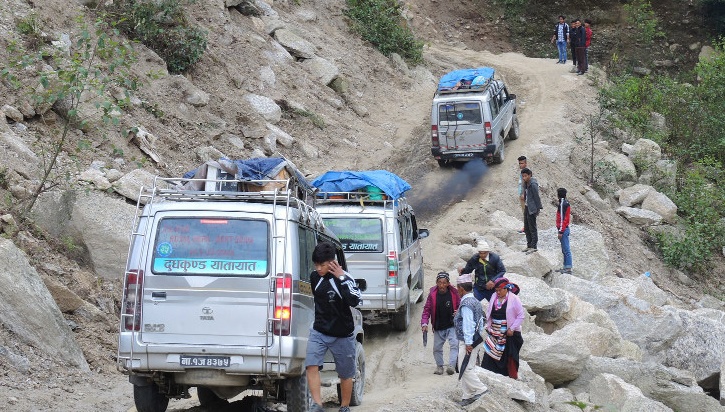
The fundamental issue with Nepal’s road network is not that it is uniformly poor — the main inter-city highways such as the Prithvi Highway between Kathmandu and Pokhara, the Mahendra Highway crossing the Terai, and the Arniko Highway toward the Tibetan border are paved and generally maintained to a standard that a standard sedan handles comfortably. The issue is the extraordinary diversity of road conditions within Nepal’s territory, and the reality that many of the country’s most spectacular and rewarding destinations are accessible only via roads that fall well outside what a standard passenger vehicle can reliably manage.
Consider the road from Kathmandu to Syabrubesi, the gateway to the Langtang Valley trek: it begins on paved Kathmandu city streets, transitions to a reasonable mid-grade district road for the initial approach, and then climbs through a series of increasingly rough, narrow, and exposure-edged switchbacks above the Trishuli River gorge where rock falls from the hillsides above deposit debris on the road surface and where the edge of the track may drop several hundred metres without barriers. A skilled driver in a capable 4WD vehicle handles this road with confidence; a standard car, pushed beyond its design parameters, risks mechanical damage and worse.
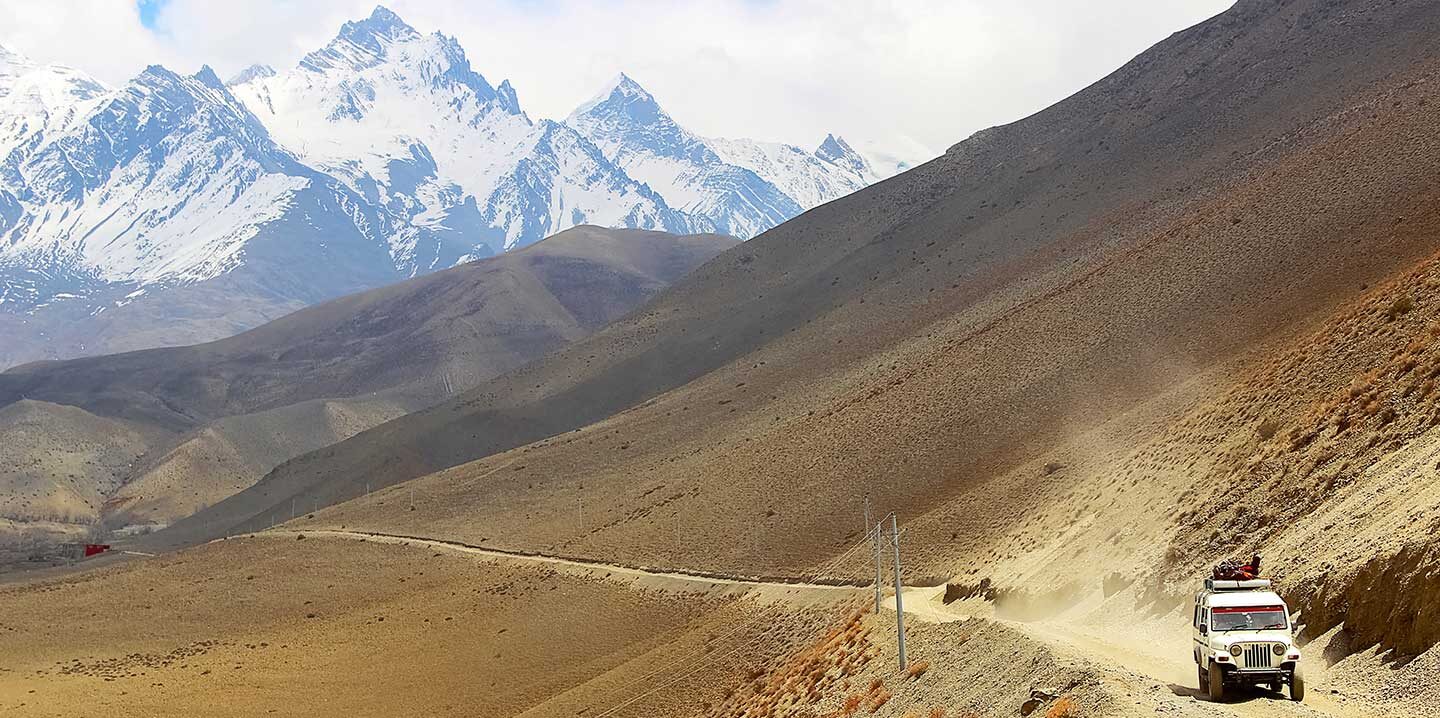
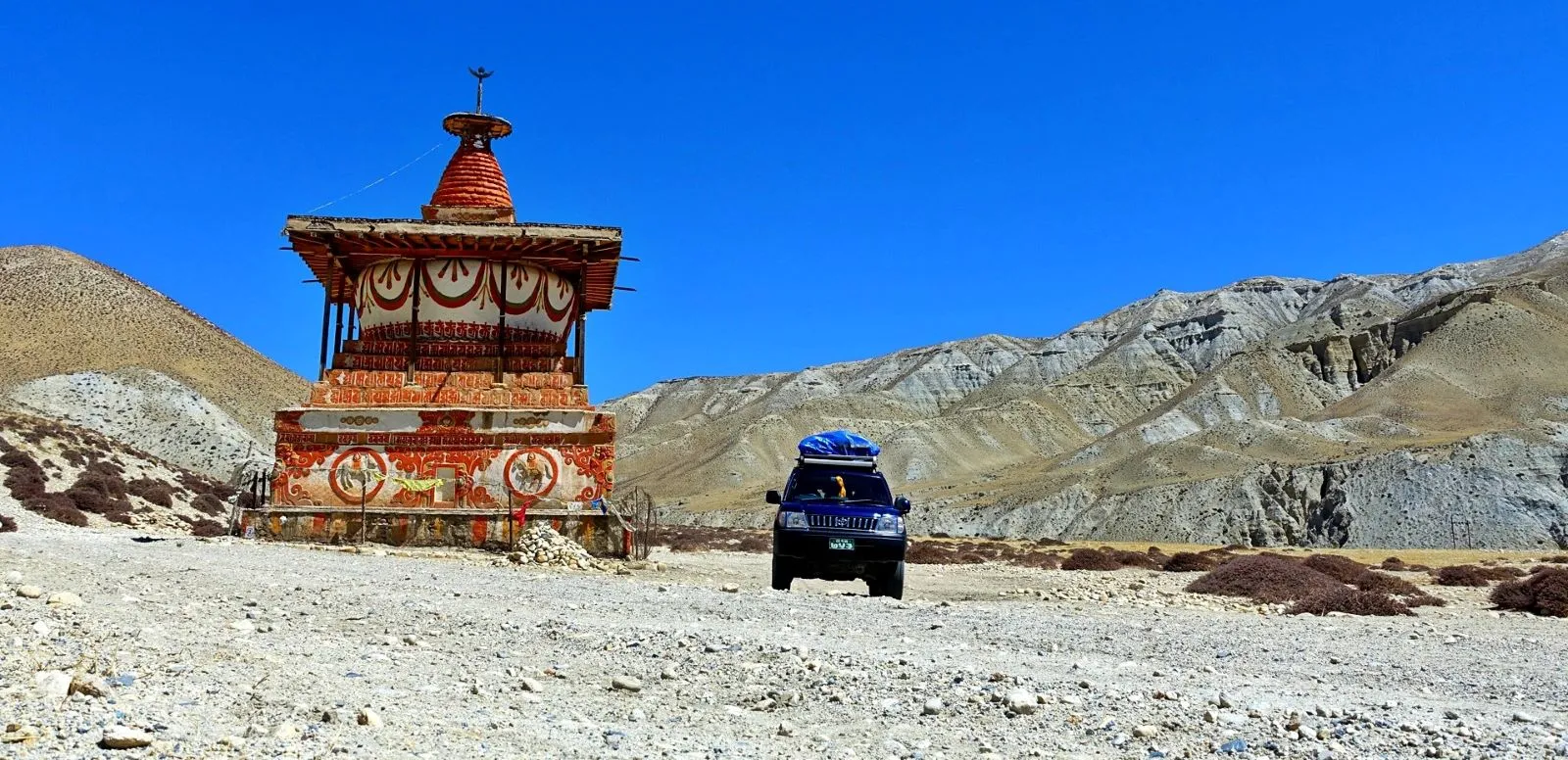
Or consider the track from Jomsom toward Lo Manthang in Upper Mustang — essentially a rough desert jeep trail through an arid plateau at 3,000 to 4,000 meters, crossing seasonal river channels and winding through loose compacted gravel and sand where the absence of road definition in the surrounding landscape means the route is often identified as much by instinct and local knowledge as by any visible road surface. No amount of skilled driving will make a standard sedan appropriate for this terrain; a capable 4WD Land Cruiser or Hilux, in the hands of an experienced driver, covers it with complete confidence.
The monsoon season—typically June through September—adds another dimension to Nepal’s road challenge. Heavy rainfall causes landslides and debris flows across roads throughout the hill and mountain regions, periodically blocking routes entirely or leaving road surfaces severely damaged; it causes rivers to rise to levels that cross or approach the road in low-lying sections; and it saturates the earth surfaces of unpaved tracks to a degree where traction becomes critically limited even for capable four-wheel drive vehicles, and catastrophically inadequate for standard cars.
In the monsoon season, a 4WD vehicle’s combination of all-wheel traction, high ground clearance, and the mechanical robustness to push through or recover from mud and debris is less a preference than a necessity for travel in Nepal’s mountain districts.
What Makes Nepal’s High-Altitude Roads Uniquely Demanding
Beyond traction and ground clearance, the high-altitude dimensions of Nepal’s most remote road journeys introduce a further vehicle performance consideration that is frequently underestimated by travelers planning their first Himalayan road trip: the effect of altitude on engine performance. At sea level, a vehicle’s engine operates in atmospheric conditions that provide approximately 1.225 kilograms of air per cubic mmeter— sufficient oxygen for the combustion process to develop the engine’s rated power. At 3,500 meters, the air density has dropped to roughly 65 per cent of sea-level density, meaning the engine receives 35 per cent less oxygen per intake cycle. Consequently, it develops only around 65 percent of its rated sea-level power. At 5,000 meters, where some of Nepal’s roads pass, the power deficit is even more dramatic.
The practical consequence of this altitude-related power reduction is that vehicles that feel adequately powerful at sea level can feel genuinely labored and sluggish on Nepal’s highest mountain roads — particularly on the steep ascents that precede major passes such as the Thorong La on the Annapurna Circuit or the high passes of the Upper Mustang approach.
The modern turbocharged diesel engines that power the Toyota Land Cruiser, Fortuner, and Hilux — specifically the 22.8-litre and 4.5-litre units common in these models — are significantly less affected by altitude than naturally aspirated engines, because the turbocharger compensates partially for the reduced air density by compressing the intake charge to a higher pressure before it enters the combustion chamber. This is one of the specific technical reasons why these particular vehicles are so highly favored for Nepal’s high-altitude routes over alternatives powered by smaller or less capable engines.
The Toyota Land Cruiser — Nepal’s Definitive Prestige 4WD
A Vehicle Forged by Seven Decades of Himalayan Reliability
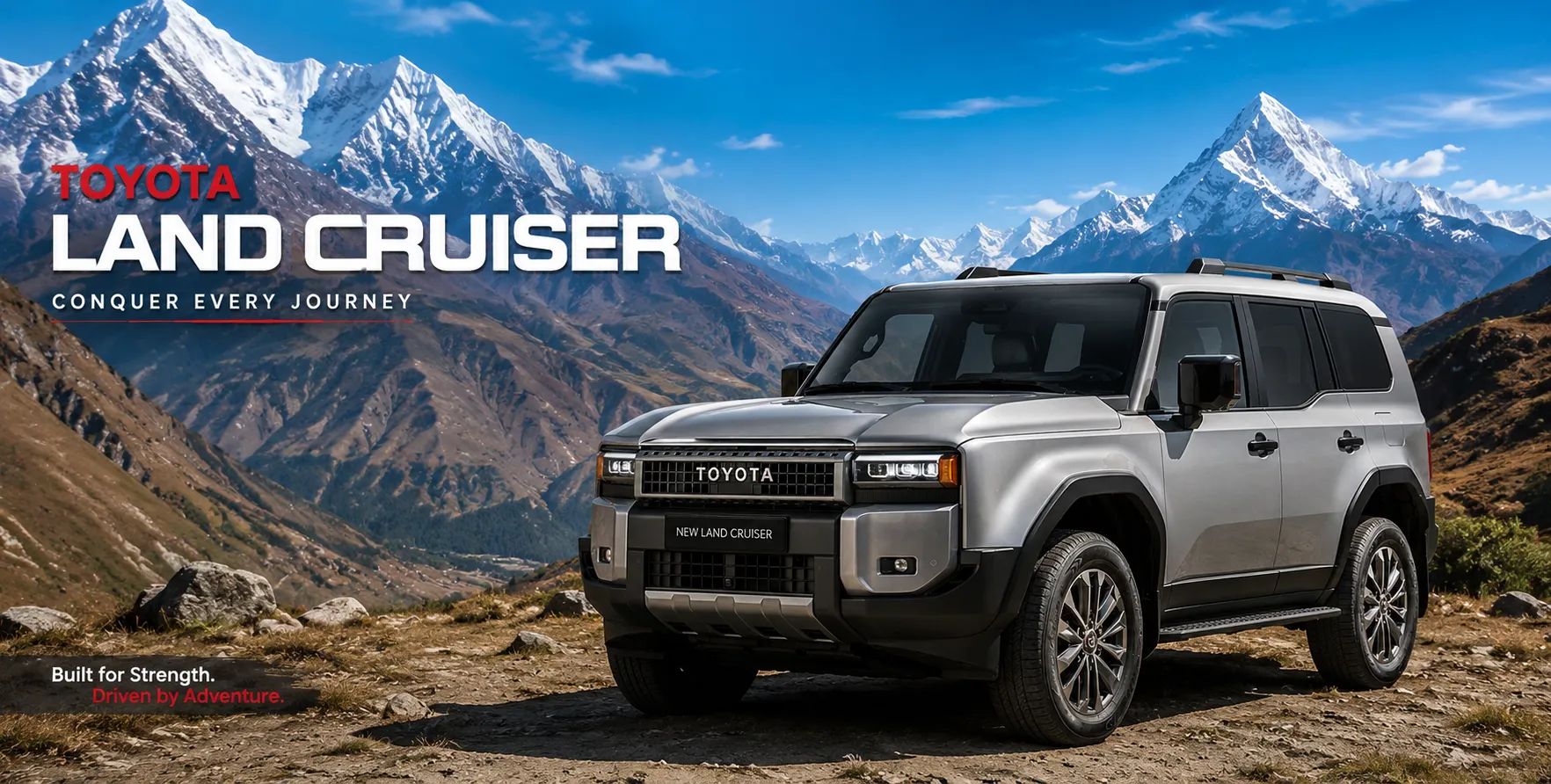
The Toyota Land Cruiser occupies a position in Nepal’s vehicular landscape that is genuinely unique — not merely the most respected four-wheel drive vehicle available for hire in the country, but a cultural institution in its own right, woven into the fabric of how Nepal’s most powerful institutions have moved through the country’s most challenging terrain for more than half a century. Walk into any government compound in Kathmandu, any major international NGO’s operational area, any United Nations sub-office in a remote district headquarters, and you will find Toyota Land Cruisers — their distinctive silhouette instantly recognisable, their white bodywork often bearing the emblems of the organisations whose missions they serve. This ubiquity is no coincidence; it is the earned result of a vehicle whose performance, reliability, and mechanical longevity have been repeatedly proven under conditions that would destroy lesser machines.
The Land Cruiser’s history in Nepal is intertwined with the country’s opening to the outside world in the 1950s, when the first foreign expeditions and development organizations began operating and immediately faced the challenge of moving people and equipment across terrain that had previously been traversed only on foot or by animal.
The Land Cruiser — first introduced by Toyota in 1951 as a utilitarian off-road vehicle and progressively refined through successive generations — proved, from its earliest deployments in Nepal, to be the vehicle best suited to combining the off-road performance needed for mountain tracks with the mechanical robustness required for reliability far from any service center. Seven decades later, that reputation has not merely survived; successive generations of the Land Cruiser that have served in Nepal have continuously reinforced it.
The Land Cruiser 200 series — the model most commonly found in Nepal Vehicle Hiring Pvt. Ltd.’s premium fleet and across the Nepal hire market generally — represents the platform’s most developed and refined expression before the recent introduction of the Land Cruiser 300 series.
Its 4.5-liter V8 turbodiesel engine delivers 261 horsepower and an extraordinary 650 Newton-Meters of torque — enough to haul the vehicle’s substantial mass through the most demanding gradients or technical obstacles with power to spare, and enough to maintain meaningful performance even at the high altitudes where most other engines are noticeably gasping.
The full-time four-wheel-drive system, with its torque-splitting center differential and electronically controlled Multi-Terrain Select system offering specific calibrations for mud, loose rock, and other surface types, represents the most sophisticated and capable off-road drivetrain configuration available in the Nepal hire market.
Inside, the Land Cruiser 200’s cabin is a genuinely premium space — leather seating for up to seven passengers across three rows, dual-zone automatic air conditioning that maintains consistent temperature regardless of exterior conditions, premium audio, USB charging throughout, and the commanding, elevated riding position that gives the driver exceptional forward visibility and gives passengers a sense of security and space that no smaller vehicle can replicate.
On the long driving days that characterize Nepal’s most ambitious road itineraries — the fourteen-hour drive from Kathmandu to the Solu Khumbu, the multi-day Upper Mustang expedition — this cabin quality translates into the difference between travelers who arrive ready to engage with their destination and travelers who arrive exhausted and cramped.
The Land Cruiser’s single genuine disadvantage in Nepal’s hire market is its size. Its substantial wheelbase and wide body track make it the least agile of the major 4WD models in extremely tight or narrow situations — some of the most constricted village lanes and narrow bridge crossings in remote hill districts require a degree of precision and local knowledge from the driver that a more compact vehicle would not demand. Nepal Vehicle Hiring Pvt.
Ltd. addresses this through driver assignment: Land Cruiser bookings for mountain routes are always serviced by drivers with specific multi-year experience with that vehicle model and on those route types, ensuring that the vehicle’s superior capabilities are matched with driver expertise to deploy them effectively.
The Land Cruiser Prado — Premium Capability in a More Agile Package
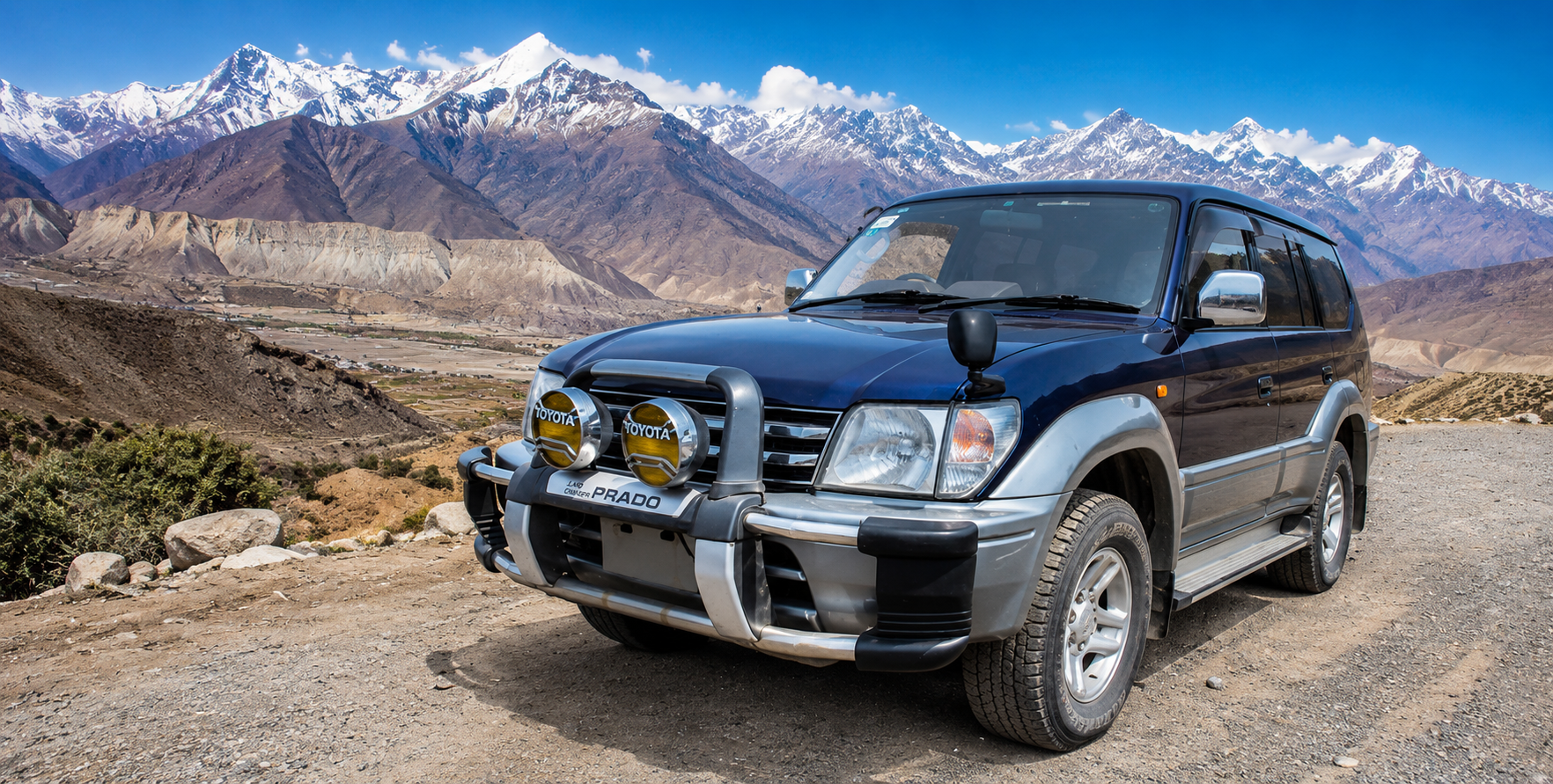
The Toyota Land Cruiser Prado offers travelers the Land Cruiser’s prestige, engineering pedigree, and off-road capability in a slightly more compact, urban-agile package, a genuinely excellent alternative. Built on a shorter wheelbase than the full-size Land Cruiser, the Prado combines a premium cabin finish — leather upholstery, touchscreen infotainment, ambient lighting, advanced connectivity — with the Kinetic Dynamic Suspension System that is one of the most sophisticated passive suspension systems offered in any four-wheel drive vehicle in its class, automatically adjusting damping response to surface conditions without driver input.
In Nepal’s specific context, the Prado’s combination of genuine off-road capability and urban maneuverability makes it particularly well suited to itineraries that mix demanding mountain road sections with heritage city sightseeing — the sort of journey that combines, for example, a Kathmandu Durbar Square heritage circuit with onward travel to Pokhara and from there to the Annapurna region trailheads.
Where the full-size Land Cruiser’s dimensions can be a minor liability in the congested lanes of Bhaktapur’s old city or Patan’s bazaar neighborhoods, the Prado’s slightly shorter body handles these environments with significantly more ease while losing nothing essentially in off-road performance for subsequent mountain driving. Nepal Vehicle Hiring Pvt. Ltd. recommends the Prado specifically for VIP and corporate clients whose itineraries require frequent transitions between city environments and mountain routes, and for families with children where the more accessible cabin height and slightly more compact dimensions improve the daily logistics of boarding and alighting at multiple stops.
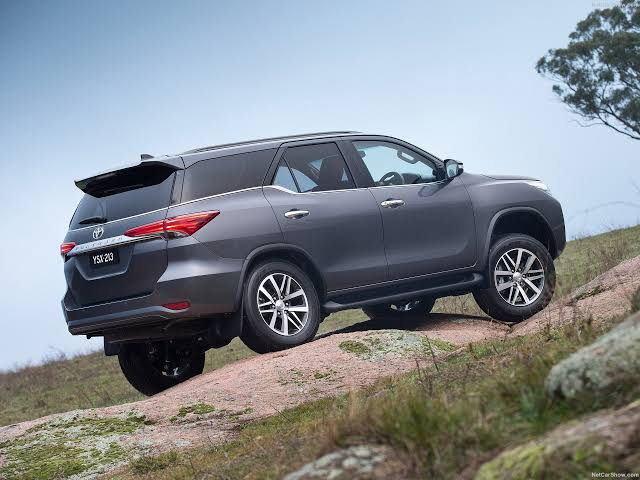
The Toyota Fortuner — Nepal’s Most Popular 4WD Hire Vehicle
The Democratic Mountain Machine
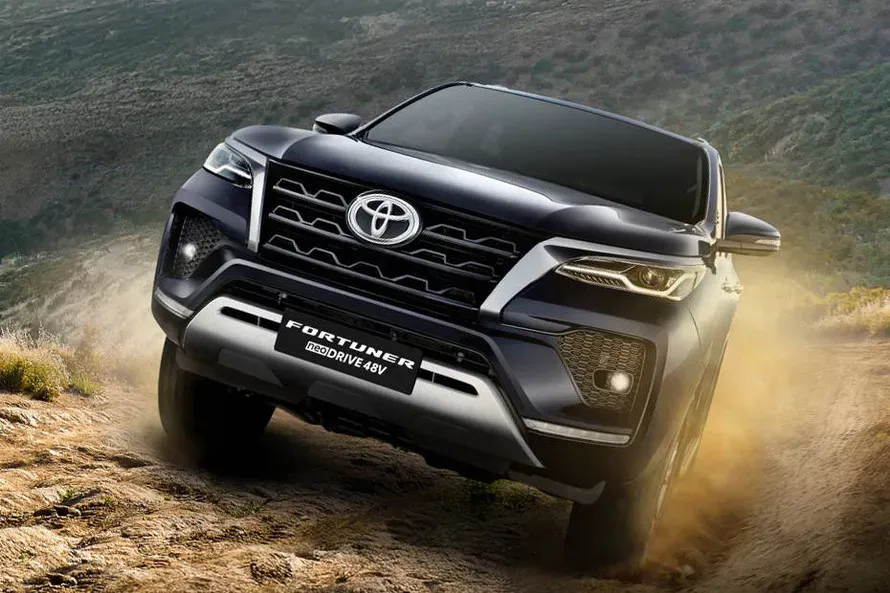
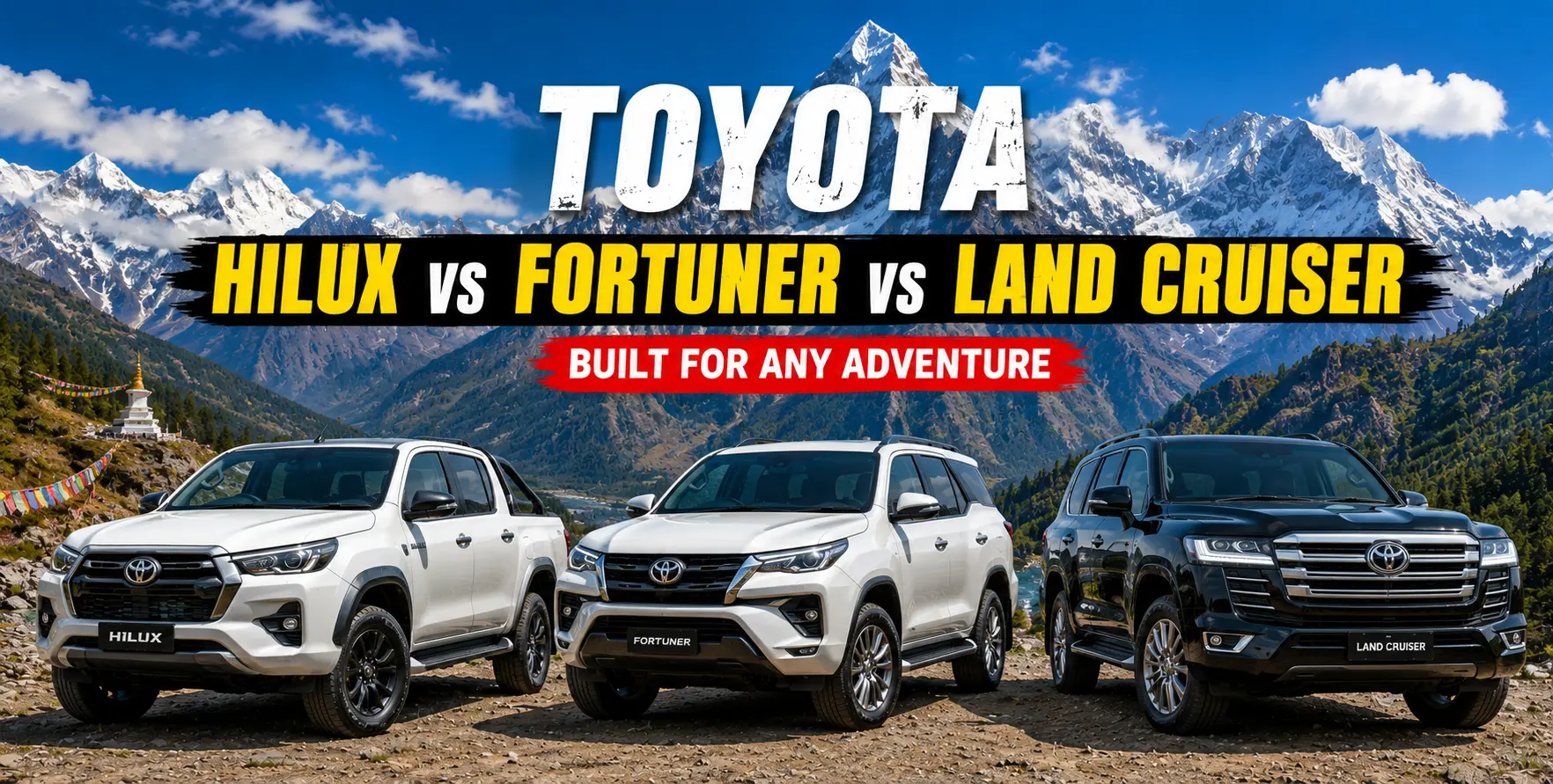
If the Land Cruiser is Nepal’s prestige four-wheel drive and the Hilux is its workhorse, the Toyota Fortuner is its democratically acclaimed favourite — the vehicle that appears in every significant segment of Nepal’s hire market, from budget-conscious trekking groups sharing the cost of a trailhead transfer to mid-level corporate transport and from family sightseeing tours around the Kathmandu Valley to moderately serious off-road adventures on the mountain approach roads.
The Fortuner’s extraordinary popularity in Nepal is earned by what is, in the context of this market, an almost uniquely balanced combination of qualities: genuine and proven four-wheel drive capability, comfortable and well-equipped passenger cabin, adequate but not excessive purchase price, and a maintenance and parts ecosystem that is so comprehensively embedded in Nepal’s vehicle servicing landscape that finding a qualified Fortuner mechanic and obtaining required parts is straightforward even in secondary cities and larger regional centres far from Kathmandu.
The Fortuner’s 2.8-litre turbodiesel engine — the same powerplant found in the Land Cruiser Prado and shared across Toyota’s global four-wheel drive range — delivers 201 horsepower and 500 Newton metres of torque in its most current specification, figures that translate in practice into performance that is entirely adequate for the great majority of Nepal’s road conditions, including the steep ascents, rough gravel, and technical mountain tracks that characterise the trekking trailhead approach roads and Himalayan regional routes that form the backbone of most visitors’ Nepal itineraries.
The 279-millimetre ground clearance — actually higher than that of the Land Cruiser Prado — is among the best of any stock passenger 4WD in the Nepal market, giving the Fortuner a meaningful advantage over vehicles with standard sedan-style clearances on the rocky and rutted surfaces common on mountain tracks.
What the Fortuner communicates to travellers in Nepal’s practical road context is perhaps best captured by this observation: it is the vehicle that experienced Nepali drivers and seasoned tour operators most instinctively reach for when planning a genuinely demanding route that does not specifically require the Land Cruiser’s additional capability or prestige.
The route from Pokhara to Muktinath through the Kali Gandaki gorge — a challenging, rewarding, and, in places, technically demanding drive that most visitors to the Annapurna region’s sacred sites take — a driver can handle with complete confidence in a Fortuner. The approach roads to the Gosaikunda Lake trekking circuit, the road to Salleri in the Solu Khumbu, the Bandipur ascent, the Gorkha approach — all of these are well within the Fortuner’s documented capability and its established performance history on Nepal’s roads.
For travelers whose itinerary includes Upper Mustang beyond Kagbeni or other genuinely extreme off-road terrain, the Fortuner performs adequately in dry conditions but is generally considered to be at or near its capability limits on the most technically demanding desert tracks of the far Mustang plateau, where the Land Cruiser’s additional chassis strength, V8 engine power, and full-time four-wheel drive system provide a meaningful margin of additional confidence. Nepal Vehicle Hiring Pvt.
Ltd. assesses each booking individually and recommends the Land Cruiser for the upper sections of the Upper Mustang routes and other similarly demanding terrain, while confirming the Fortuner as the appropriate and entirely sufficient choice for the vast majority of Nepal’s 4WD-requiring destinations.
The Fortuner in Group Travel — Economics That Make the Case Stronger
One of the Fortuner’s most practically significant advantages in Nepal’s hire market is the economics of group travel. A Fortuner accommodates six passengers comfortably, excluding the driver — meaning that a group of four to six travellers sharing a private hire can divide the vehicle cost to produce a per-person figure that is genuinely competitive with, and often lower than, comparable VIP bus or shared jeep alternatives, while delivering the door-to-hotel service, complete scheduling flexibility, and private cabin comfort that no shared option can match.
Nepal Vehicle Hiring Pvt. Ltd. consistently recommends that travelling families or groups of four or more people seriously evaluate the private Fortuner hire option against the shared transport alternatives they may initially consider, because the economics frequently favour the private option more clearly than travellers initially expect, particularly when the additional value of hotel pickup, flexible timing, and the freedom to stop at viewpoints and points of interest along the route is factored into the comparison.
The Toyota Hilux — The Indestructible Workhorse of Nepal’s Mountains
The Vehicle That Refuses to Fail
If you were to design, from first principles, the ideal vehicle for Nepal’s most challenging and remote road environments — prioritising mechanical reliability above all else, then off-road capability, then load-carrying capacity, and treating passenger comfort as a secondary consideration — you would arrive at something very close to the Toyota Hilux.
The Hilux is a pickup truck: its cabin accommodates four or five passengers depending on configuration, and its open load bed provides substantial carrying capacity for gear, equipment, camping supplies, fuel jerry cans, or any other combination of loads that a Nepal mountain expedition might require. It is mechanically simpler than either the Land Cruiser or the Fortuner. This relative simplicity translates directly into easier repairs in remote locations where workshop equipment is basic and spare parts may be limited.
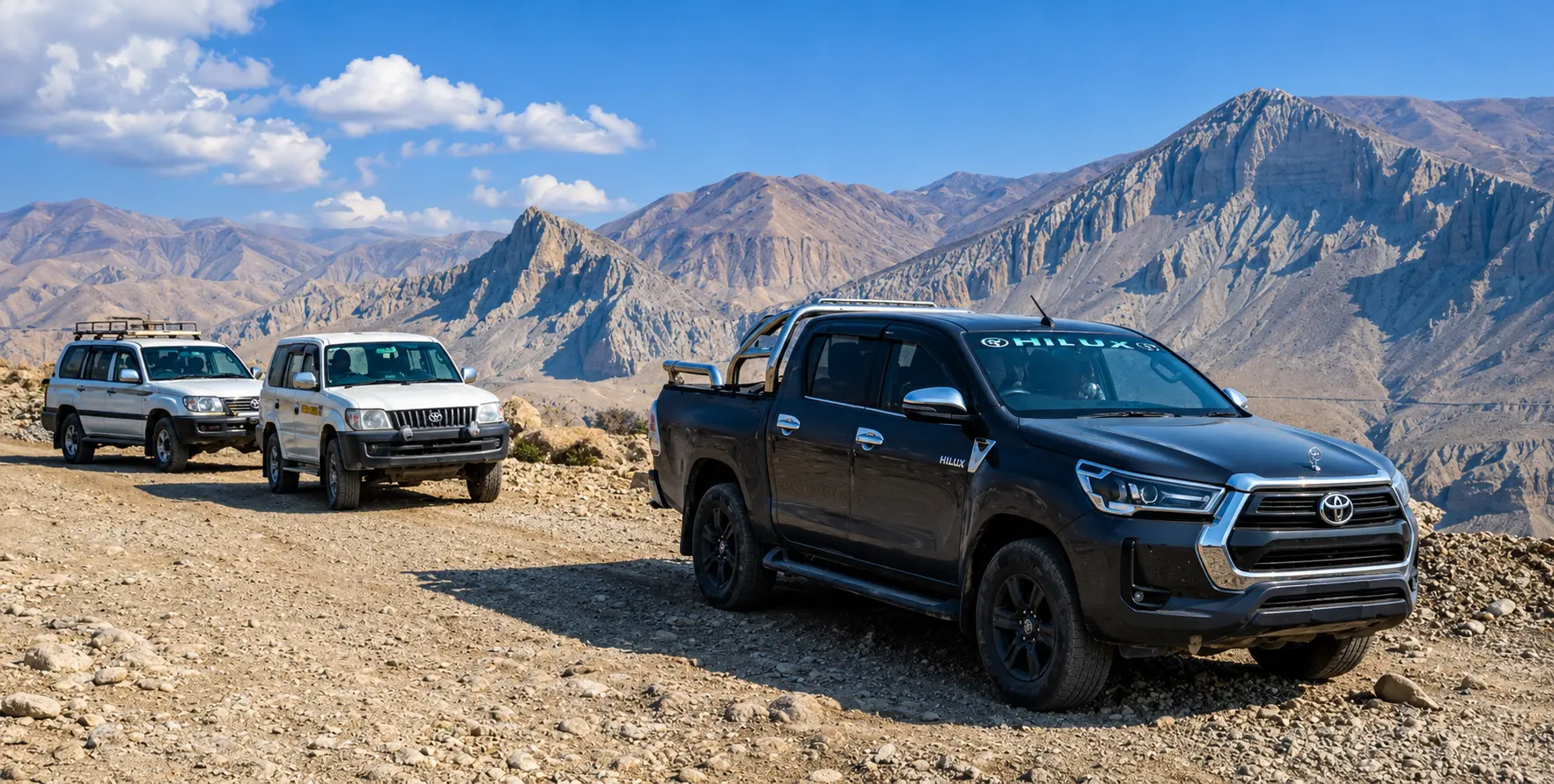
The Hilux’s reputation in Nepal and across the developing world’s most demanding operating environments is legendary. Documentary programs and overland travelers have repeatedly demonstrated the Hilux’s capacity to survive conditions that destroy other vehicles — high-speed crashes, immersion in salt water, rooftop fires, decade-long service with minimal maintenance — and to continue functioning in some capacity when vehicles of any other brand would be completely inoperable.
In Nepal’s specific context, this legendary robustness translates into practical confidence: operators who deploy Hilux vehicles in remote district areas where mechanical failure could mean days of delay before rescue or recovery know that the probability of catastrophic mechanical failure is as low as for any vehicle on Nepal’s roads, and that in the event of failure, the relatively straightforward mechanical architecture of the Hilux diesel engine gives a skilled driver or local mechanic the best chance of effecting a roadside repair.
The 2025 Hilux specification available in Nepal’s hire market — typically the 2.8-liter turbodiesel producing 201 horsepower and 500 Newton meters of torque — is essentially identical in powertrain to the Fortuner. The high-clearance Hilux exceeds the Fortuner’s ground clearance at 310 millimetres in some configurations, giving it a meaningful advantage on the most rock-strewn and technically rough sections of Nepal’s mountain tracks. The part-time four-wheel drive system with shift-on-the-fly engagement covers most situations on Nepal’s challenging roads, and the low-range transfer case option provides the extra mechanical advantage needed for the steepest gradients on the most demanding mountain tracks.
Where the Hilux gives up something compared to the Fortuner and Land Cruiser is in cabin sophistication and passenger comfort over long road sections. The pickup cab is less ergonomically refined than the SUV-bodied vehicles, road noise penetration is somewhat higher, and the rear seating in the double-cab configuration is less spacious than the Fortuner’s rear bench. For itineraries that involve primarily challenging off-road terrain with relatively short driving segments — the kind of journey characteristic of remote district access, expedition support, or gear-heavy trekking team transport — these differences are of minimal practical importance.
For long highway drives where passenger comfort is a priority, the Fortuner or Land Cruiser is a better choice. Nepal Vehicle Hiring Pvt. Ltd. recommends the Hilux specifically for heavy-equipment loads, the most technically demanding off-road sections, expedition support roles where the open truck bed is a functional advantage, and any situation where the client’s primary concern is absolute mechanical robustness in a remote environment.
Hilux in Nepal’s Most Remote Destinations
The Toyota Hilux has earned a specific and well-deserved reputation as the vehicle of choice for Nepal’s most remote and logistically challenging destinations. The road to Rara Lake in the far western Mugu District — a multi-day overland journey through some of Nepal’s least-developed terrain, covering unpaved tracks that cross high passes and seasonal rivers far from any significant population center — is typically handled by Hilux convoys carrying fuel, food, and supplies for expeditions that cannot rely on local resupply.
The approach to Dolpo, the remote trans-Himalayan district popularized by Peter Matthiessen’s celebrated book ‘The Snow Leopard,’ involves vehicle tracks so rough and exposed that the Hilux handles them more confidently than any of its four-wheel-drive competitors in Nepal’s hire market. Nepal Vehicle Hiring Pvt. Ltd.’s Hilux fleet specifically serves these extreme destinations, with experienced drivers whose knowledge of these remote routes is built on many years of operating in these precise environments.
Routes That Genuinely Require a 4WD Vehicle in Nepal
The Definitive Guide to When Four-Wheel Drive Is Non-Negotiable
One of the most frequently asked questions about Nepal vehicle hire is precisely which routes require a four-wheel drive vehicle and which can be handled by a standard car or taxi. The honest answer is more nuanced than a simple list because road conditions in Nepal vary by season, recent weather events, and the pace of ongoing road improvement work that progressively upgrades some previously rough routes to paved or improved-surface standards. With that caveat clearly stated, the following destinations are those Nepal Vehicle Hiring Pvt. Ltd. considers proper for a 4WD vehicle — either a Fortuner, Hilux, or Land Cruiser — to be truly necessary rather than merely preferable.
Upper Mustang, the ancient Forbidden Kingdom north of Jomsom, is the most unambiguous case. The road from Kagbeni northward into the restricted zone deteriorates rapidly from the paved standard of the highway south of Jomsom to a rough desert track of compacted gravel, loose sand, and rocky surfaces that requires genuine four-wheel drive capability, high ground clearance, and a driver experienced in reading the surface conditions of this specific terrain.
The afternoon winds in the Kali Gandaki valley, which regularly gust to 60-80 kilometers per hour, add a further driving challenge that experienced drivers with the right vehicle handle with confidence and inexperienced drivers in inappropriate vehicles find genuinely hazardous.
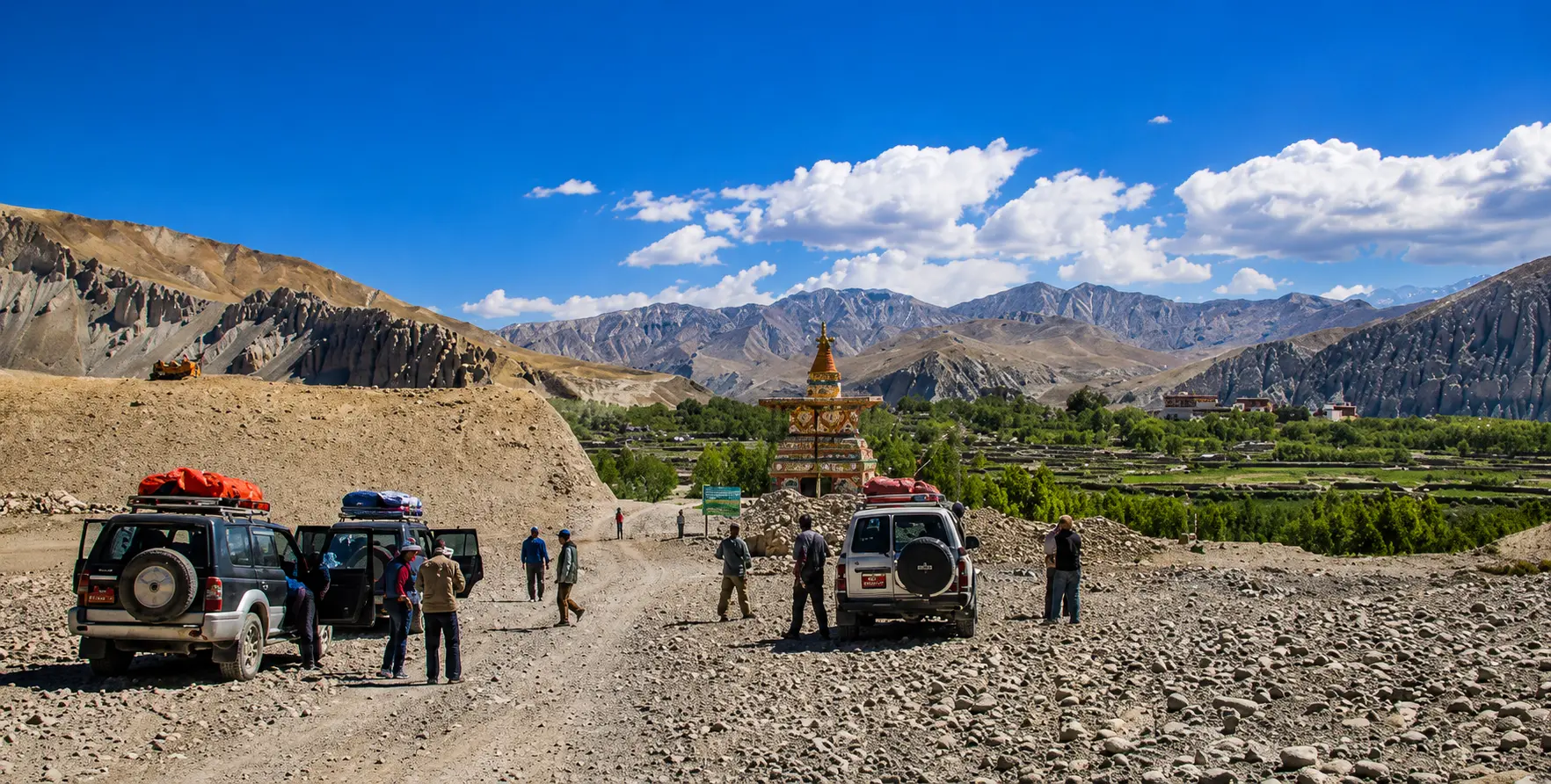
Muktinath Temple, one of Nepal’s most important Hindu and Buddhist pilgrimage sites at 3,800 meters in the Mustang District, is accessible by road from Jomsom via a progressively rougher track that climbs steeply on a partly graveled, partly unpaved surface toward the temple complex. While standard vehicles occasionally attempt this route in dry conditions, Nepal Vehicle Hiring Pvt. Ltd. consistently recommends a 4WD Fortuner or Land Cruiser for all Muktinath vehicle journeys, particularly given the altitude and the consequences of a breakdown or roadway incident at this remote elevation with limited rescue infrastructure.
Syabrubesi, the gateway town for the Langtang Valley trek, is reached from Kathmandu by a road that begins reasonably well but becomes progressively rougher and more exposed as it follows the Trishuli River gorge northward into the Rasuwa District. Several sections of this road involve narrow ledge tracks above significant drops, and landslide debris from the hillsides above is a periodic hazard, particularly during the monsoon. The Trishuli Gorge Road to Syabrubesi is one of Nepal’s most frequently cited examples of a route where a 4WD vehicle provides a genuinely meaningful safety margin over a standard car, and where an experienced, locally knowledgeable driver is as important a consideration as the vehicle itself.
The approach roads to Manang in the upper Marsyangdi Valley — the crucial acclimatisation stop on the Annapurna Circuit trek — follow progressively rougher mountain tracks above Besisahar, with sections of road ranging from rough gravel to rocky single-track that benefit significantly from the four-wheel drive system and high ground clearance of an appropriate vehicle. Similar conditions characterise the approach roads to Ghandruk in the Annapurna foothills, the road to Tsum Valley in the Gorkha District, the access track to the Api Himal trailhead at Makarigaad in far-western Nepal, and the overland route to Rara Lake in the Mugu District.
In contrast, the following major routes are entirely manageable by well-maintained standard cars and do not require 4WD: the Prithvi Highway between Kathmandu and Pokhara, the Mahendra Highway across the Terai, the road to Chitwan’s Sauraha area, the road to Lumbini from Bhairahawa, the road to Gorkha from the Prithvi Highway junction, and the road to Dhulikhel or Nagarkot from Kathmandu. For these destinations, a private car or standard SUV is entirely adequate, and a 4WD vehicle hire, while offering greater confidence and comfort, adds an unnecessary cost for travellers managing their budgets carefully.
Choosing the Right 4WD Hire Provider — What Matters Most
Vehicle Condition and Maintenance Standards
Nepal’s vehicle hire market includes operators ranging from highly professional fleet operators with rigorous maintenance standards to informal one-vehicle operators whose approach to mechanical upkeep may be significantly more casual. For any 4WD hire that involves mountain routes — where a mechanical failure can leave travellers stranded in genuinely remote and potentially hazardous locations — the hire provider’s maintenance standards are not merely a quality-of-experience consideration but a genuinely important safety issue.
Before confirming any 4WD booking for a demanding Neroute in Nepal, ask the provider about their vehicle maintenance schedule, when the specific vehicle assigned to your booking was last serviced, and whether the vehicle has been driven on the route you are planning. A professional operator like Nepal Vehicle Hiring Pvt. Ltd. will answer these questions with specific, verifiable information; an operator who responds vaguely or evasively is a warning sign worth taking seriously.
Specific mechanical checks that experienced Nepal travellers recommend confirming before a 4WD mountain journey include: tyre condition and tread depth on all four tyres plus the spare, brake condition and brake fluid level, engine oil level and condition, coolant level, and the integrity and operability of the four-wheel drive engagement mechanism — since a 4WD system that is technically present but malfunctions when actually needed defeats the entire purpose of hiring a four-wheel drive vehicle in the first place. Nepal Vehicle Hiring Pvt. Ltd. conducts a systematic pre-departure check on all vehicles assigned to mountain routes, and clients are welcome to observe or participate in it before departure.
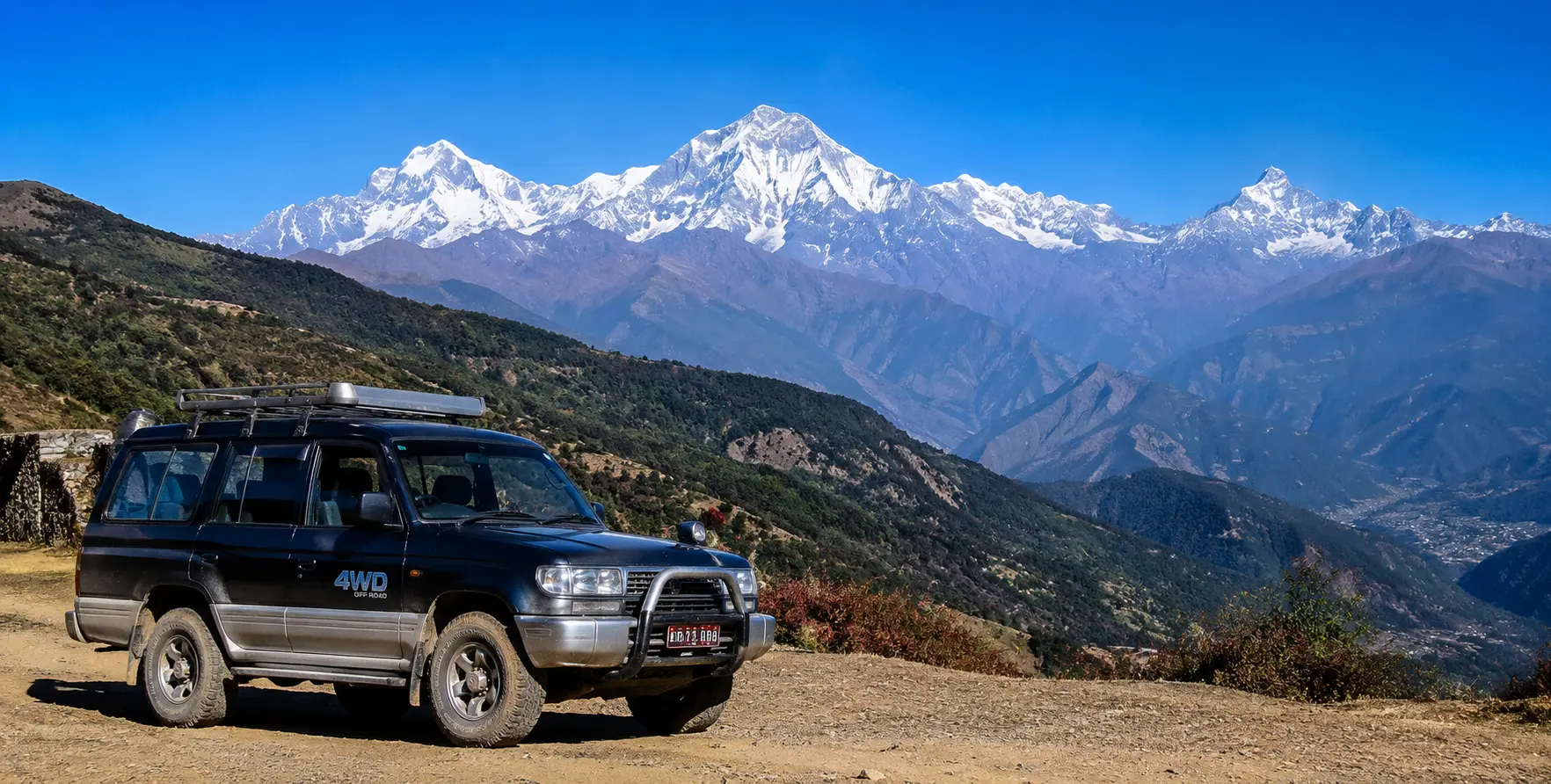
Driver Experience on Specific Routes
Driver experience in Nepal’s four-wheel-drive hire context cannot be overstated; it is the single quality that most clearly distinguishes a genuinely professional hire provider from a merely adequate one. Driving a 4WD vehicle competently on Nepal’s mountain roads is a skilled discipline that requires specific knowledge of the routes involved — the location of the narrowest sections, the timing of traffic flows at key junction points, the specific approach techniques required for the most technically demanding bends and gradients, the current condition of any sections subject to recent weather damage — combined with the practical experience of having driven those routes repeatedly over many seasons.
A driver who is technically licensed and perfectly competent on Kathmandu’s city roads but has never driven the Gokuleshwor-to-Makarigaad approach road to the Api Himal trek trailhead, or the route from Kagbeni into Upper Mustang, is a genuinely different proposition from a driver who has made those specific journeys dozens of times and carries the route knowledge in their instincts as much as their conscious memory. Nepal Vehicle Hiring Pvt. Ltd. assigns drivers to mountain routes based on documented experience with those routes — asking clients in advance about specific destinations and matching them with drivers whose records include those exact locations — rather than assigning the next available driver from a general pool.
Communication and Support During the Journey
For multi-day 4WD journeys in Nepal’s remoter regions — the kind of trip that takes a vehicle and driver into areas with limited or no mobile coverage, where any emergency would require coordination with the hire provider’s operations team back in Kathmandu or Pokhara — the quality of the hire provider’s communication infrastructure and emergency support capability becomes a material consideration. Nepal Vehicle Hiring Pvt. Ltd.
maintains 24-hour WhatsApp communication with clients throughout all journeys, provides clients with direct contact details for the operations team in addition to the driver’s personal number, and coordinates in advance with drivers on mountain routes to ensure they carry emergency contact lists, basic mechanical tools, and have confirmed knowledge of the nearest fuel sources and basic accommodation options at each major waypoint on the route.
This level of operational support may seem excessive for a straightforward day trip to Nagarkot or a Kathmandu-to-Pokhara highway run — and for those journeys, it is indeed more infrastructure than the situation demands. But for a seven-day Upper Mustang expedition, a five-day Rara Lake overland, or an Api Himal access drive through Nepal’s far-western districts, knowing that a professional team with real knowledge of the terrain and established emergency protocols is in communication throughout the journey is not a luxury but a genuine component of journey safety planning.
Seasonal Considerations for 4WD Vehicles in Nepal
Autumn — The Season of Maximum Confidence
October and November represent, by wide consensus among experienced Nepal operators and travelers, the optimal period for four-wheel-drive travel on Nepal’s mountain routes. The monsoon season ends in late September or early October, and the weeks that follow bring clear skies, moderate temperatures, dry road surfaces, and recently completed monsoon-season road repairs, creating the best overall road conditions of the year across virtually every region of the country.
Four-wheel drive vehicles can operate at their maximum capability on dry surfaces — traction is optimal, visibility is excellent, and the mountain panoramas from high-altitude routes are at their clearest and most spectacular. Nepal Vehicle Hiring Pvt. Ltd. sees its highest demand for 4WD hire precisely in October and November, and early booking during this period is essential.
Spring — Rhododendrons, Clear Mornings, and Excellent Roads
March, April, and May bring Nepal’s second peak travel season, and for 4WD travel in particular, spring offers an excellent combination of conditions. Road surfaces remain dry and well-maintained following the post-monsoon autumn repairs; morning visibility is generally good before the afternoon cloud build-up that characterizes the pre-monsoon period; and the rhododendron forests that line the mid-altitude mountain approach roads on routes such as the Annapurna Circuit and the Helambu Trek are in spectacular bloom. The spring months are also the preferred season for Everest and Annapurna mountaineering expeditions, meaning that expedition support vehicle hire — typically requiring the most capable 4WD options in the fleet — is at its annual peak.
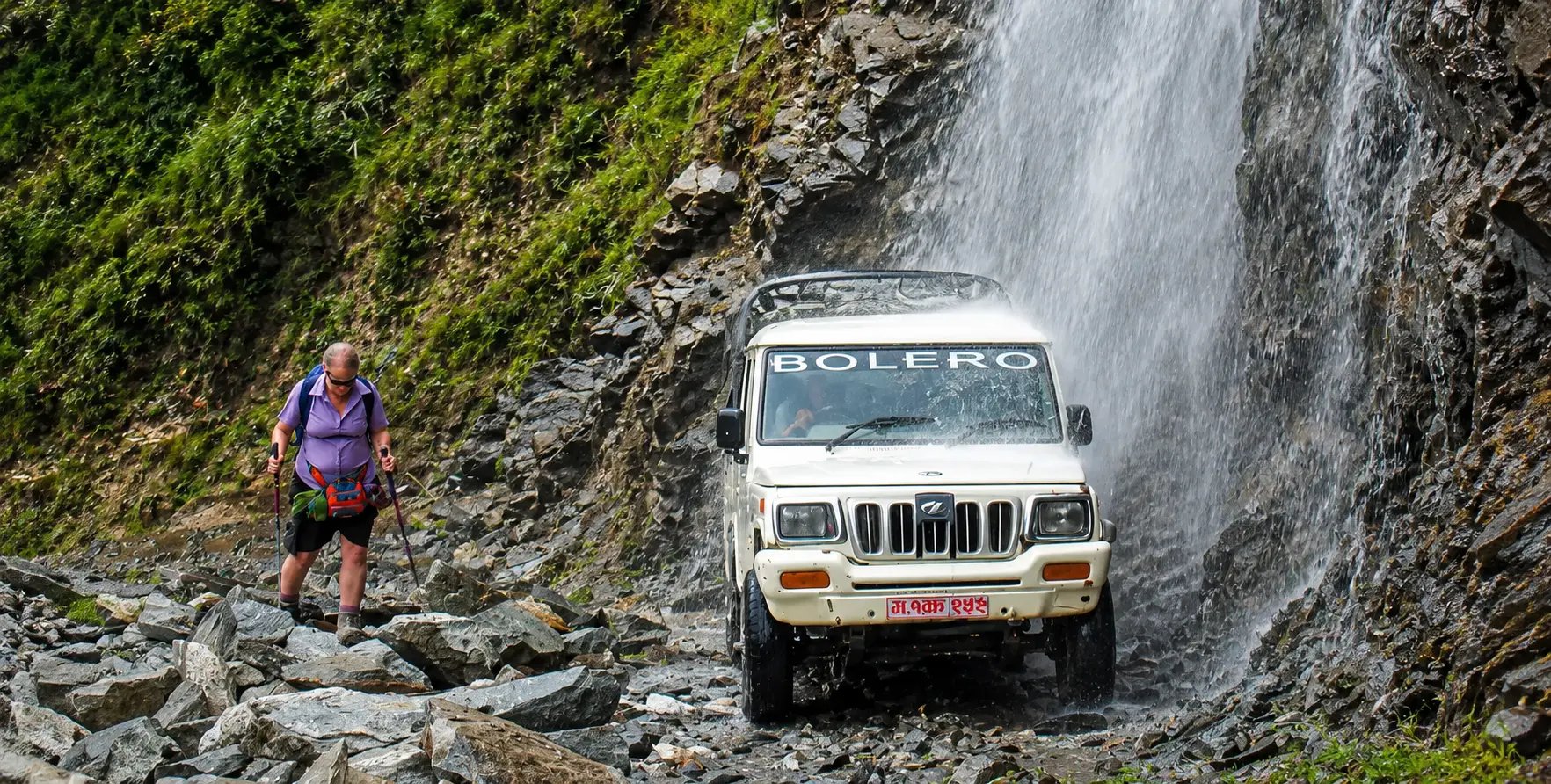
Monsoon — Caution, Capability, and Specific Opportunities
The monsoon season from June through September is the most challenging period for four-wheel drive travel in Nepal and, simultaneously, the time when 4WD capability is most essential rather than merely convenient. Landslides — a constant risk in Nepal’s steep, rain-saturated hill terrain — periodically block roads across the mountain districts, and a 4WD vehicle’s capability is tested not only by traction conditions but also by the need to navigate around or through debris that has settled on road surfaces.
Several of Nepal’s 4WD routes are considered genuinely too risky to travel during the peak monsoon without current, specific road-condition intelligence, and Nepal Vehicle Hiring Pvt. Ltd. maintains real-time contact with drivers on key routes during the monsoon to provide clients with accurate, up-to-date information before confirming monsoon-season mountain bookings.
There is, however, one notable exception to the general monsoon caution for 4WD travel: Upper Mustang. The Mustang plateau lies in the rain shadow of the Annapurna range. It receives comparatively little direct monsoon rainfall, so the plateau’s road conditions remain reasonable throughout much of the monsoon season, even as the approach roads below Jomsom experience heavier rainfall. Upper Mustang in July and August, in fact, sees some of its lowest visitor numbers — making it one of the rare destinations in Nepal where the monsoon season offers a genuine advantage in terms of solitude and reduced competition for accommodation, combined with reasonable road conditions for suitably capable 4WD vehicles.
Winter — Clear Air, Cold Roads, and Specific Pass Closures
December through February brings the coldest conditions to Nepal’s mountain regions, with temperatures at high-altitude points along major 4WD routes dropping well below zero at night and remaining below freezing for much of the day at passes above 4,000 meters. The resulting risk of ice formation on road surfaces—particularly on the shadow sides of steep sections where frost persists through daylight hours—adds a specific driving challenge to winter mountain driving.
An experienced driver in the right vehicle can handle this 4WD travel confidently, but it poses a genuine hazard for any vehicle-driver combination not specifically prepared for icy surface conditions. Nepal Vehicle Hiring Pvt. Ltd. recommends winter mountain 4WD bookings specifically for drivers with documented winter route experience and ensures that vehicles dispatched for winter high-altitude routes carry appropriate cold-weather equipment, including tyre chains, for the most ice-exposed sections.
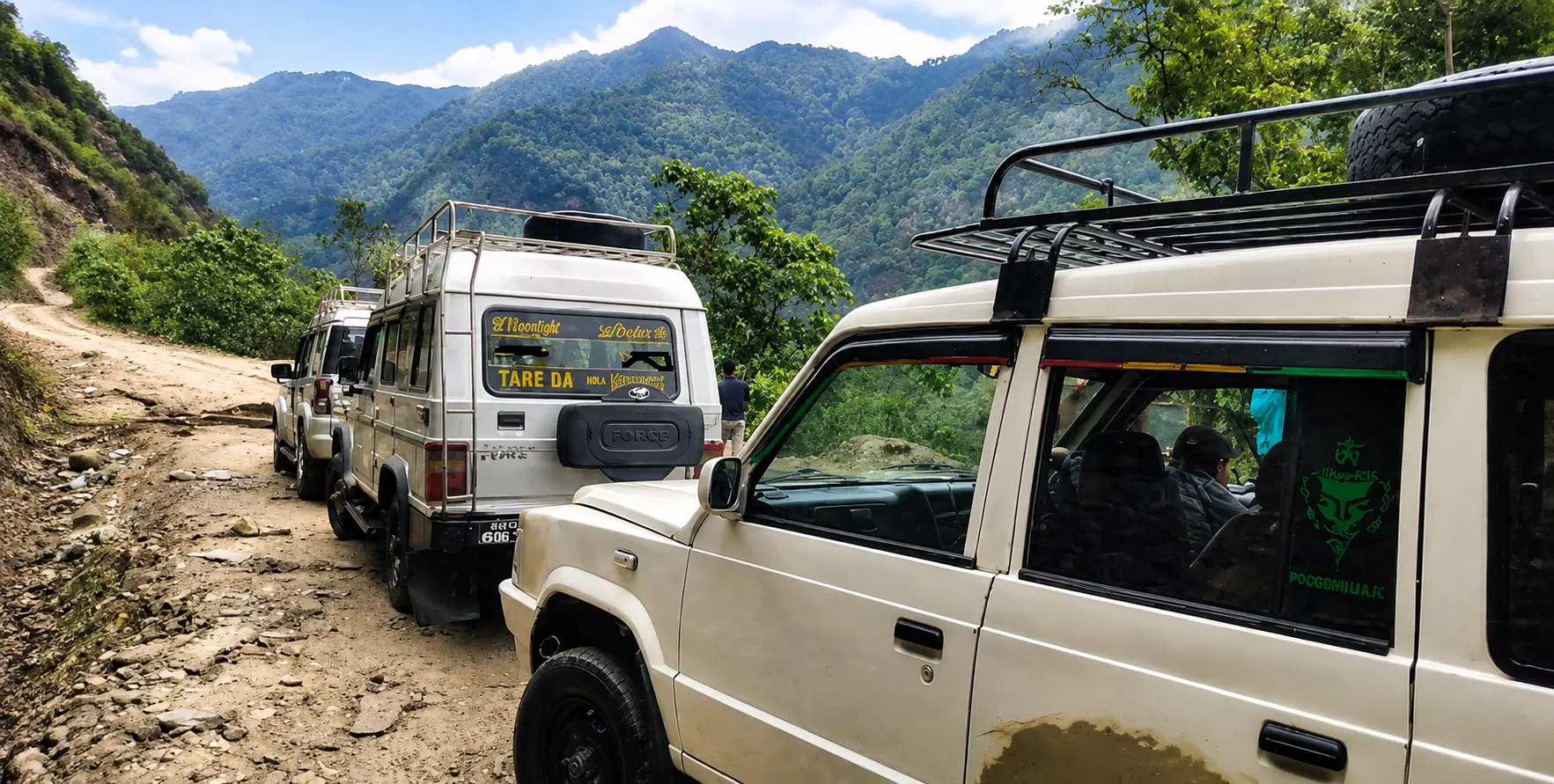
What to Check Before You Hire — A Practical Pre-Departure Checklist
Hiring a 4WD vehicle for a Nepal mountain journey means trusting a mechanical system with your safety, comfort, and schedule in an environment where mechanical failure has consequences far more serious than in an urban setting. The following practical checks are those that Nepal4Wtravelers confirm before beginning any mountain journey, and that Nepal Vehicle Hiring Pvt. Ltd. conducts SMS as part of its standard pre-departure protocol for all mountain route bookings.
The tires on all four wheels, plus the spare, should be visually inspected for adequate tread depth, proper inflation, and the absence of sidewall damage or bubbling, which might indicate internal structural weakness. In Nepal’s rocky mountain tracks, tire punctures are not uncommon, and departing with a spare that is already damaged or improperly inflated removes the single most important backup for the most frequent type of t mechanical incident encountered on these routes.
Start the engine and let it warm sufficiently before departure so you can identify and address any unusual sounds, vibrations, or warning lights before committing the vehicle to a remote route where finding a mechanic may be a day’s journey away.
Test the four-wheel drive system before departure—engage both the 4WD high-range and, if the route requires it, the 4WD low-range settings, confirming the transfer case engages cleanly and that no warning lights or mechanical resistance indicate a developing fault. The brakes should be checked for consistent response and the absence of pulling to one side that might indicate a partially seized caliper — brake reliability on Nepal’s steep descents is a non-negotiable safety requirement.
And the vehicle carries an adequate basic toolkit, tyre levers, a functioning jack with a rated capacity sufficient for the vehicle’s weight, tyre pump or CO2 inflation system, basic hand tools, nd, if the route involves river crossings or genuinely remote terrain, a tow rope and recovery shackles.
Nepal Vehicle Hiring Pvt. Ltd.’s standard pre-departure protocol covers all of these checks as routine, and clients booking 4WD mountain routes through the company can verify completion of the protocol before departure. For travellers hiring through any other provider, requesting to see evidence of a recent mechanical inspection and asking specifically about tyre condition and four-wheel-drive system operability is both entirely reasonable and professionally appropriate — a quality provider will welcome, rather than resist, this kind of informed client engagement.
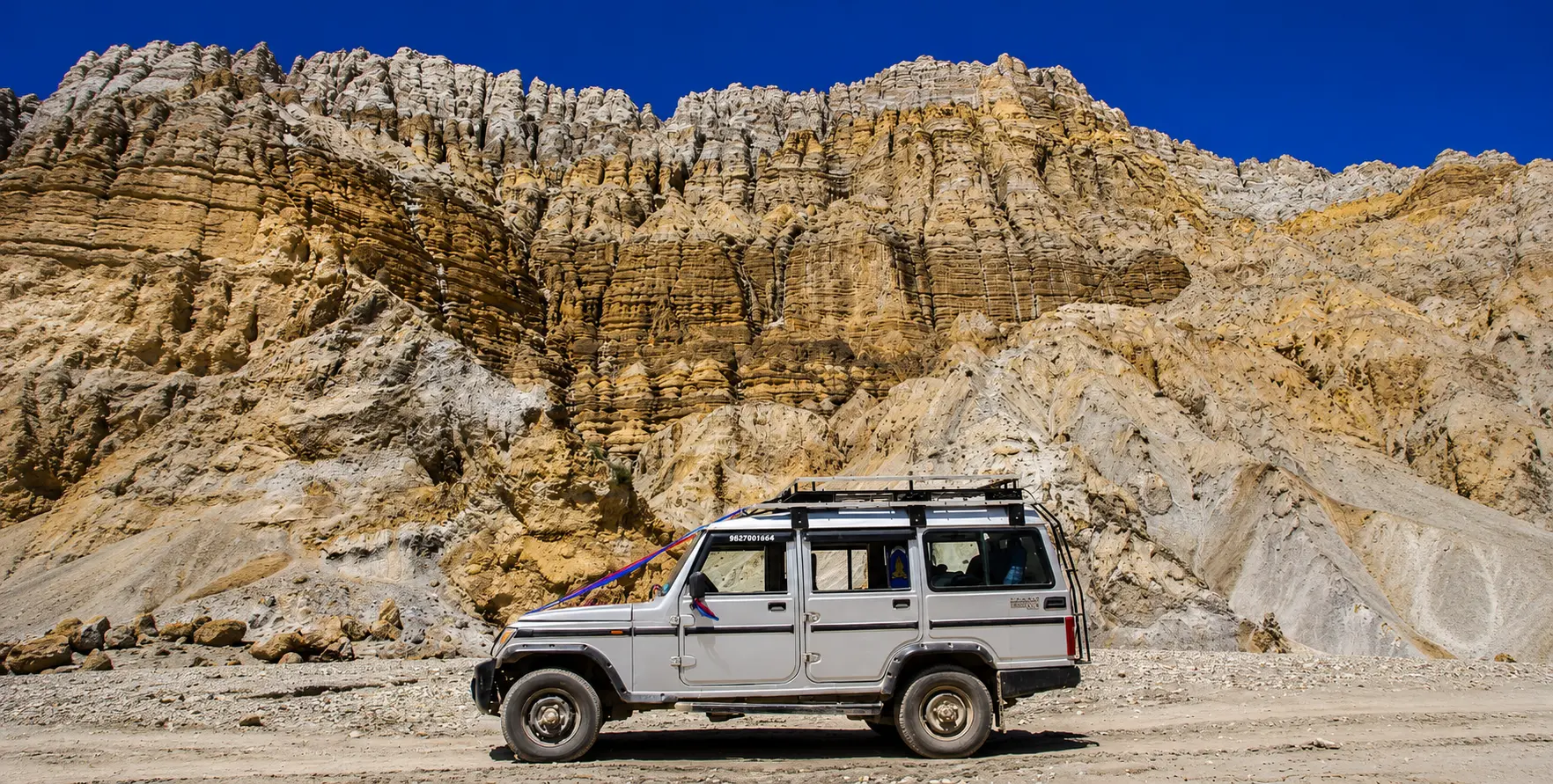
4WD Vehicle Hire Costs in Nepal — Understanding the Pricing Landscape
Four-wheel drive vehicle hire pricing in Nepal reflects tacombination of vehicle model, journey complexity, duration, route difficulty, and the qdriver’s uality and experience level Understanding how these factors interact to determine pricing helps travelers evaluate quotations they receive from different providers and make informed decisions about value rather than simply selecting the cheapest option available — a strategy that, in Nepal’s 4WD hire market, carries specific risks given the safety implications of mechanical reliability and driver experience on mountain routes.
Within the Kathmandu Valley and on the main inter-city highways — including the Prithvi Highway to Pokhara, the road to Chitwan, and the Arniko Highway corridor — 4WD hire rates from Nepal Vehicle Hiring Pvt. Ltd. for a full day of private vehicle use start from approximately NPR 12,000 to 16,000 for a Fortuner, NPR 14,000 to 18,000 for a Hilux, and NPR 18,000 to 25,000 for a Land Cruiser. These rates reflect all-inclusive pricing covering the driver, fuel for the agreed route, vehicle insurance, and all road tolls. These cost elements can add up significantly on longer journeys and are sometimes presented as additions to a lower-appearing headline rate by providers who price with less transparency.
For long-distance mountain routes — the Pokhara to Muktinath journey, the Kathmandu to Syabrubesi run, the trailhead transfers for the Annapurna Circuit or Langtang treks — rates are calculated on a per-journey basis rather than daily, reflecting the specific distance, road conditions, fuel consumption, and driver time involved. A private Fortuner from Pokhara to Muktinath, for example, is typically priced between NPR 25,000 and 32,000 one-way, with the Land Cruiser commanding a premium of roughly 30 to 40 percent over the Fortuner rate for the same journey.
Multi-day expeditions to Upper Mustang, Rara Lake, or the Api Himal area involve daily rates for vehicle and driver combined with driver accommodation allowances for overnight stays, producing total package costs that can range from NPR 80,000 to 150,000 or above for a full multi-day expedition — significant sums that reflect both the exceptional capability of the vehicle required and the specialized expertise and time commitment of the experienced driver serving these demanding routes.
One pricing dynamic worth understanding clearly: the cheapest 4WD quotation available for a demanding Nepal mountain route is rarely the best value, and is sometimes a genuine safety risk. The cost of maintaining a 4WD vehicle to the mechanical standard required for reliable operation on mountain routes, paying a driver with real experience on those specific routes a wage that reflects that specialized expertise, and carrying adequate insurance for the vehicle and its passengers all have minimum costs that reputable operators cannot fall below without cutting corners somewhere in the service or safety chain.
Nepal Vehicle Hiring Pvt. Ltd. prices transparently and competitively within the market for quality service — not as the cheapest option, but as the option that delivers genuine value across all the dimensions — vehicle quality, driver expertise, operational support, and transparent pricing — that combine to make a Nepal 4WD journey safe, reliable, and genuinely rewarding.
Nepal Vehicle Hiring Pvt. Ltd. — Your Trusted 4WD Partner
Nepal Vehicle Hiring Pvt. Ltd. has built its reputation as Nepal’s most trusted private vehicle hire company through a consistent and uncompromising commitment to exactly the qualities that matter most in the 4WD hire context: well-maintained vehicles, professionally experienced drivers matched to specific routes, transparent all-inclusive pricing, and the operational support infrastructure that backs up every booking with genuine 24-hour client service capability.
Our 4WD fleet encompasses the full range of the major models discussed throughout this guide — Toyota Land Cruiser, Toyota Land Cruiser Prado, Toyota Fortuner, and Toyota Hilux — maintained to a service schedule that goes beyond the manufacturer’s minimum requirements and subjected to a pre-departure inspection protocol before every mountain route booking. Our driver team is not a pool of generalists but a group of specialists, each with documented experience with specific Nepal route types, assigned to bookings based on that route-specific knowledge rather than simple availability.
The company’s 8,000-plus satisfied clients and consistent 5.0 TripAdvisor rating are the testimonial record of this approach — not the marketing claim of an aspirational provider but the earned recognition of an operator whose actual performance in Nepal’s most demanding road environments has consistently met and frequently exceeded client expectations. Whether your 4WD requirement is a single-day Kathmandu Valley sightseeing circuit, a trailhead transfer to the start of the Annapurna Circuit, a multi-day Muktinath pilgrimage journey from Pokhara, or a full Upper Mustang expedition, Nepal Vehicle Hiring Pvt. Ltd. has the vehicle, the driver, and the operational support to make that journey happen with the reliability, safety, and genuine quality of experience that Nepal’s extraordinary terrain and extraordinary destinations deserve.
| Book Your 4WD Vehicle with Nepal Vehicle Hiring Pvt. Ltd. |
| Website: www.vehiclehiringnepal.com |
| Phone / WhatsApp: +9779814227196 (24/7 Support) |
| Email:vehiclehiringnepal.com |
| Office: Bhagawatisthan, Thamel, Kathmandu, Nepal |
| 4WD Fleet: Toyota Land Cruiser | Land Cruiser Prado | Fortuner | Hilux |
| Routes: Upper Mustang | Muktinath | Annapurna Circuit | Langtang | Rara Lake | Api Himal |
| 8,000+ Happy Customers | 5.0 TripAdvisor | 200+ Verified Reviews |
| All-Inclusive Pricing | Experienced Mountain Drivers | 24/7 Operational Support |
| Licensed & Registered | Company Reg. No. 219204 | Best Value Guaranteed |
Frequently Asked Questions
Do I really need a 4WD vehicle for the journey from Kathmandu to Pokhara?
No — the Prithvi Highway between Kathmandu and Pokhara is a paved, well-maintained highway that standard cars, taxis, and tourist buses can handle. A 4WD vehicle provides extra comfort and confidence on this route but isn’t required. For journeys continuing beyond Pokhara into the Annapurna region, approach roads—the road to Nayapul, Ghandruk, Bhadaure, or especially the road toward Muktinath via Jomsom— make a 4WD vehicle increasingly important and, in some sections, genuinely necessary.
What is the difference between 4WD and AWD?
Four-wheel drive and all-wheel drive are related but distinct concepts. AWD systems, typically found in crossover SUVs and some passenger cars, automatically distribute power between axles via electronically controlled multi-plate clutches, generally without a true low-range gear option. 4WD systems, as found in the Land Cruiser, Fortuner, and Hilux, typically include a dedicated transfer case that provides a low-range option that multiplies available torque at very low speeds — the feature most relevant for Nepal’s steep-gradient sections and technical, rocky terrain where maximum torque at very low wheel speeds is required. For Nepal’s most demanding mountain routes, genuine 4WD with low-range capability is significantly more appropriate than AWD-only systems.
Can I drive a 4WD hire vehicle in Nepal myself?
Self-drive hire of 4WD vehicles is technically possible through some operators in Nepal. Still, Nepal Vehicle Hiring Pvt. Ltd. does not offer self-drive for its premium 4WD fleet and strongly advises against self-drive on Nepal’s challenging mountain routes for visitors unfamiliar with local road conditions. The combination of left-hand traffic, variable road surfaces, frequent unmarked hazards, and the specialized route knowledge required to navigate Nepal’s mountain tracks safely makes hiring a professional driver not merely a convenience but a genuine safety advantage. Our driver-inclusive hire service ensures that vehicle capability is matched with the human expertise to deploy it effectively.
How far in advance should I book a 4WD vehicle for a mountain route in Nepal?
For the Kathmandu Valley and main highway routes, 48-72 hours’ notice is generally sufficient. For specific mountain route bookings during peak season (October-November and March-May), at least 1 week’s notice is recommended. For multi-day Upper Mustang or Rara Lake expeditions, booking two to three weeks in advance ensures the specific vehicle model and driver experience level you require are available rather than already committed to other bookings. Nepal Vehicle Hiring Pvt. Ltd. advises confirming the complete vehicle, driver, and route details at the time of booking, rather than leaving any element to be sorted on the day of departure.
Conclusion: The Right Vehicle for the World’s Most Extraordinary Roads
Nepal’s roads are as diverse as the country itself — from the smooth modernity of a resurfaced Terai highway to the raw, demanding reality of a remote Himalayan district track where the road is defined as much by the absence of a cliff on one side as by the presence of any engineered surface. For the full range of this diversity, and for the specific section that encompasses Nepal’s most spectacular, most remote, and most rewarding destinations, the four-wheel-drive vehicle is not an optional upgrade but the essential foundation of any serious road-based journey in Nepal.
Understanding which 4WD model genuinely suits your specific itinerary — the Land Cruiser for the most demanding terrain and largest groups, the Fortuner for the broadest range of Nepal’s mountain approach roads at the best balance of capability and economy, the Hilux for the most technically demanding terrain and the heaviest loads — and combining that vehicle with a driver whose experience genuinely matches the route being attempted, is the formula for Nepal road travel that is both safe and richly rewarding. The terrain is extraordinary, the destinations are unforgettable, and the vehicle that gets you there reliably and safely makes the difference between a journey that becomes a story you tell for decades and one that becomes a lesson learned the hard way.
Nepal Vehicle Hiring Pvt. Ltd. — with its meticulously maintained fleet, its experienced and route-specific driver team, its transparent pricing, and its 24-hour operational support — is the partner that brings this formula to life for every traveller who chooses to explore Nepal’s extraordinary roads. Contact our team today, share your itinerary, and let us recommend the right vehicle and the right driver for the journey you have been planning. The mountains are waiting.
- 4WD Vehicles in Nepal: The Ultimate Hire Guide
- Understanding Four-Wheel Drive — What It Actually Means and Why It Matters in Nepal
- The Toyota Land Cruiser — Nepal's Definitive Prestige 4WD
- The Toyota Fortuner — Nepal's Most Popular 4WD Hire Vehicle
- The Toyota Hilux — The Indestructible Workhorse of Nepal's Mountains
- Routes That Genuinely Require a 4WD Vehicle in Nepal
- Choosing the Right 4WD Hire Provider — What Matters Most
- Seasonal Considerations for 4WD Vehicles in Nepal
- What to Check Before You Hire — A Practical Pre-Departure Checklist
- 4WD Vehicle Hire Costs in Nepal — Understanding the Pricing Landscape
- Nepal Vehicle Hiring Pvt. Ltd. — Your Trusted 4WD Partner
- Frequently Asked Questions
- Conclusion: The Right Vehicle for the World's Most Extraordinary Roads

Related Blog & Articles
4WD Himalayan Jeep in Nepal
Adventure Bike Hire in Nepal: The Complete Guide to Motorcycle Rentals
Jeep Hire in Nepal – Best Vehicle for Mountain Roads
Luxury Jeep Hire in Nepal – Premium 4WD Vehicle Rental for Himalayan Adventures