Plan a Trip


Kathmandu Sightseeing: Car and SUV Hire Guide
Kathmandu Full Day Sightseeing: Car and SUV Hire Guide
Kathmandu is one of the world’s great cultural capitals, and its sightseeing circuit offers one of Asia’s most concentrated UNESCO heritage experiences. Within an area of roughly 25 by 25 kilometres, the Kathmandu Valley contains seven UNESCO World Heritage Sites, hundreds of active temples and shrines, three former medieval kingdoms each with their own royal square, and a living tradition of Newari art, architecture, and religious practice stretching back more than a thousand years. The question for any visitor is not whether there is enough to see; it is how to move between sites efficiently, comfortably, and on your own schedule rather than a shared tour bus timetable.
This is precisely the gap a private car or SUV hire fills in the Context of Kathmandu sightseeing, rather than flagging down taxis between sites and navigating a city where meters are rare. Fare negotiation is the norm, or waiting for a shared tourist vehicle that departs on someone else’s schedule; a private car hire gives a traveller or group a dedicated vehicle and driver for the day, moving at their own pace, stopping where they choose, and reaching sites at the times that make the most photographic or devotional sense rather than the most logistically convenient. At Nepal Vehicle Hiring Pvt Ltd, our Kathmandu sightseeing tour service is built specifically around this model, with a fleet ranging from compact sedans for solo travellers and couples to full-size SUVs for families and groups of five to seven. This guide covers every dimension of that choice: which sites to include, in which order, with which vehicle type, and how to structure a one- or two-day itinerary to get the most out of what the Kathmandu Valley genuinely offers.
This guide is intentionally detailed. Kathmandu rewards preparation — knowing that Pashupatinath is most atmospheric in the early morning, before the cremation ghats fill with the day’s funerary activity, and that Swayambhunath is quietest before 8 AM, when the monkey population is still drowsy. The tourist groups have not yet arrived, and the Bhaktapur entry ticket allows re-entry over three days, which may affect how you plan your timing. A private car gives you the flexibility to act on this kind of information. This guide gives you the information itself.
Why Private Car or SUV Hire Beats Every Other Sightseeing Option in Kathmandu
Kathmandu’s traffic is real, and its road network is genuinely complicated, especially for visitors unfamiliar with the city. The Ring Road that circles the valley is a useful orientation point. Still, the old city areas — Thamel, Durbar Square, Asan Bazaar, Boudhanath, Pashupatinath — are connected by a web of narrow lanes, one-way streets, and junctions that don’t match the map intuition you get from other Asian cities. Getting from Swayambhunath to Pashupatinath, for instance, looks like a short distance on a map but can take 45 minutes in mid-morning traffic through the city centre on a shared bus or in a negotiated taxi.
A private car hire eliminates the navigational and negotiation friction of a day of sightseeing. The driver knows the fastest routes between sites at different times of day, knows where to park (which is not obvious at most heritage sites), knows which gate at Pashupatinath the driver can wait at, and can advise on whether the traffic on a particular route is likely to be worse before or after noon. This local knowledge is part of the hire cost, and it is genuinely valuable in a city where misjudging traffic timing can cost two hours of sightseeing. For families with children or older travellers, the ability to return to the car between sites for water, snacks, rest, and shade is an additional comfort that shared transport cannot provide. Our Kathmandu sightseeing tour page provides full booking details, while our dedicated Kathmandu one-day urban adventure tour offers a structured itinerary for first-time visitors. Private hires also add a safety and comfort layer that matters in Kathmandu’s traffic density. Negotiating a taxi fare, particularly in a language the visitor does not speak, creates a potential for overcharging and misunderstanding that is stressful and avoidable. App-based services have improved this somewhat in recent years. Still, coverage across all heritage sites remains unreliable, and peak-hour surges can make app-based fares comparable to private hire costs, without the continuity of having the same driver throughout the day.
Choosing the Right Vehicle for Your Kathmandu Full-Day Sightseeing Group
Sedan (Car) — Solo Travellers and Couples
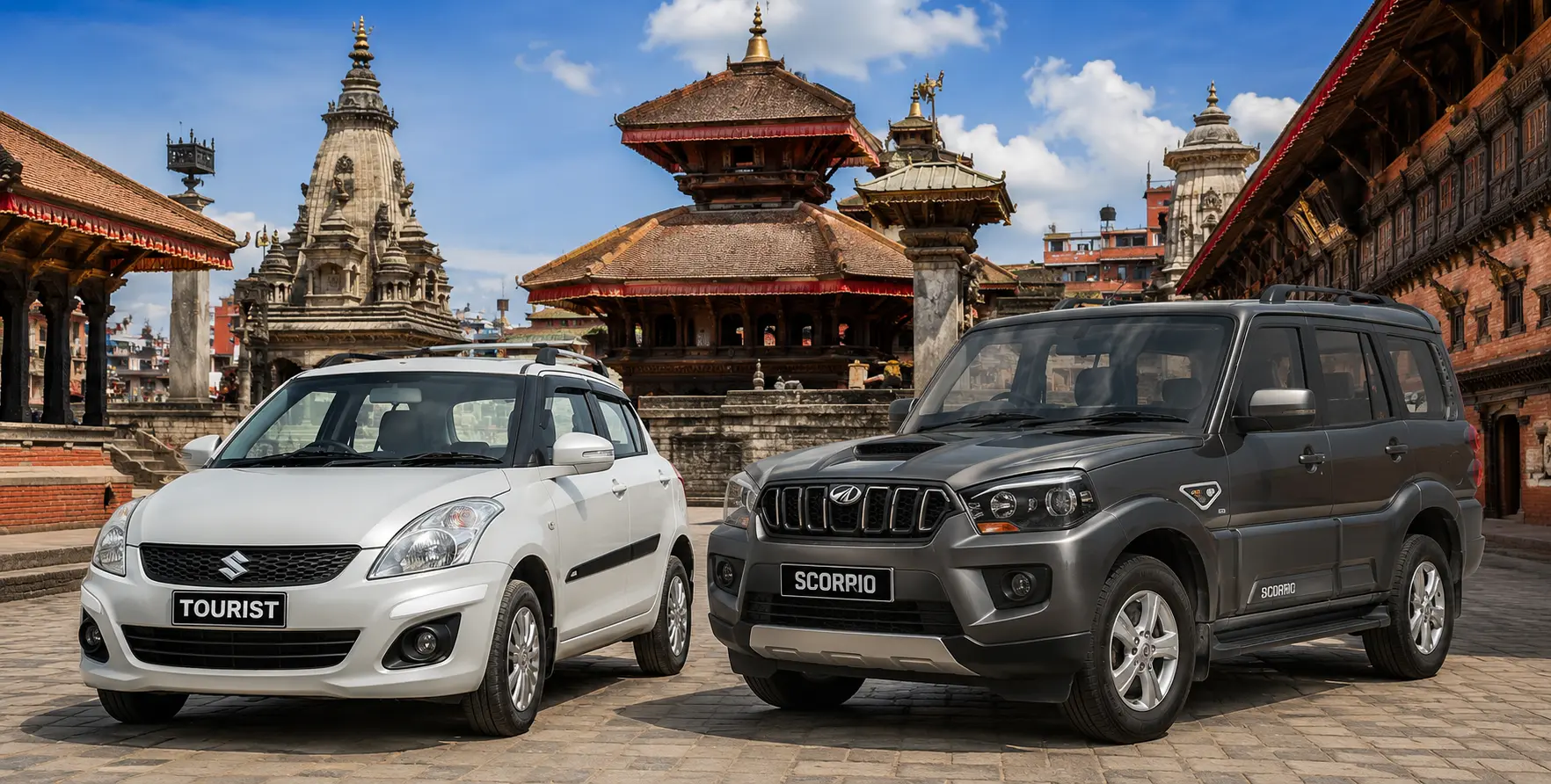
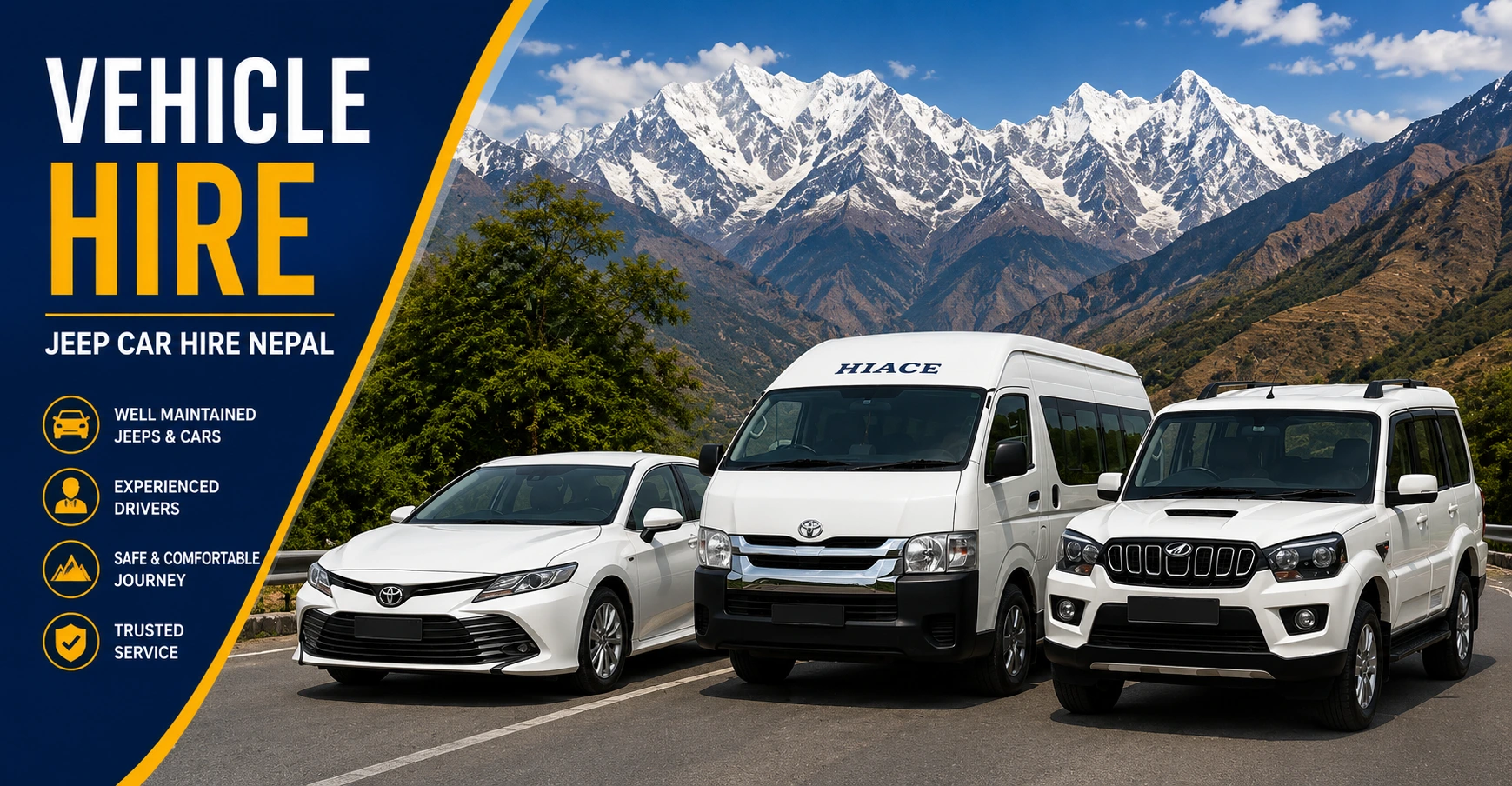
A standard sedan, typically a Hyundai i20, Suzuki Swift, or equivalent, is the most economical option for 1 to 3 passengers on a Kathmandu Valley day tour. Sedans are nimble through narrow old-city lanes, easy to park at heritage sites with limited vehicle access, and fuel-efficient for a full-day city sightseeing circuit covering 50 to 80 kilometres. The boot space is adequate for daypacks and camera bags. For solo travellers or couples who want to move quickly between sites without the cost of a larger vehicle, the sedan is the default choice. See our car hire in Nepal page for details on the sedan fleet.
SUV / Jeep — Families and Groups of 4 to 7
For families, small groups, or travellers with significant luggage arriving from or departing to a trekking destination on the same day as a Kathmandu sightseeing circuit, an SUV, Mahindra Scorpio, Tata Sumo, or equivalent, provides the seating and luggage capacity that a sedan cannot. The higher ride height also gives rear-seat passengers better views through Kathmandu’s traffic during the drive between sites. The SUV is also the appropriate vehicle if the sightseeing day is extended to Nagarkot, which involves a hilly road that benefits from ground clearance, or if the group wants to include a detour to one of the valley-rim viewpoints outside the main city circuit. Our jeep hire within the Kathmandu Valley and the broader Jeep fleet page covers SUV options.
Hiace Van — Larger Groups of 8 to 14
Groups of eight or more are best served by a Hiace or equivalent minivan, which can carry the entire party together without splitting into two cars. For school groups, extended-family pilgrimages, or organised cultural tours, the Hiace provides both seating capacity and a slightly elevated cabin, making it easier for the driver to navigate the city. Our Hiace fleet page covers available configurations.
The Seven UNESCO World Heritage Sites of the Kathmandu Valley
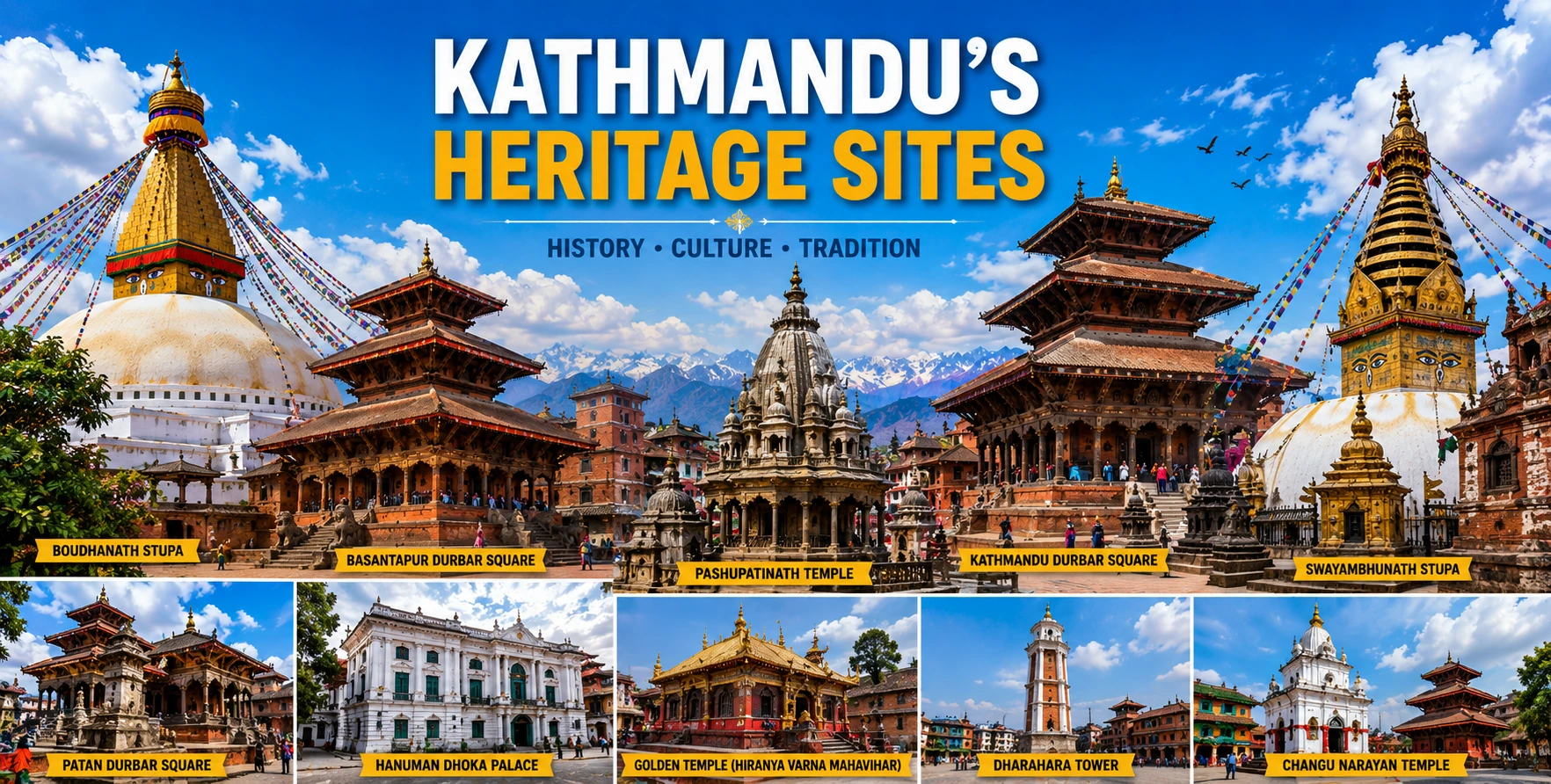
Kathmandu Valley’s seven UNESCO World Heritage Sites — Kathmandu Durbar Square, Patan Durbar Square, Bhaktapur Durbar Square, Swayambhunath, Boudhanath, Pashupatinath, and Changu Narayan — represent one of the world’s most extraordinary concentrations of cultural heritage. They span Newar architecture, Tibetan Buddhism, Shaivite Hinduism, and Vaishnava devotion in a valley small enough to visit all seven in two days by private vehicle.
Kathmandu Durbar Square (Hanuman Dhoka)
The historic royal palace complex of the Kathmandu kingdom sits at the heart of the old city and remains one of Nepal’s most densely layered heritage sites. The Hanuman Dhoka Palace, named for the guardian monkey-god statue at its gate, was the seat of Nepal’s Shah dynasty kings until the nineteenth century and contains a labyrinth of courtyards, audience halls, and ceremonial spaces. The Kumari Ghar, the residence of Nepal’s Living Goddess, faces the square, and on auspicious days the Kumari appears at her ornate carved window for a brief, much-photographed public appearance. Taleju Temple, visible above the square’s roofline, is the Malla kings’ royal palace and temple, open to the general public only on one day of the year, during Dashain. The entry fee for foreign visitors is approximately NPR 1,500 in 2026, with the ticket valid for three days.
Swayambhunath Stupa (Monkey Temple)
One of Nepal’s oldest Buddhist shrine complexes, Swayambhunath sits atop a prominent hill on the western edge of the city, its white dome and gold spire painted with the watchful eyes of the Buddha, visible from much of the valley floor. The 365 stone steps leading to the top are lined with small stupas, prayer wheels, and statues, and the hilltop complex offers the best panoramic view of the Kathmandu Valley cityscape available from within the city. The monkeys that give the site its popular English nickname live throughout the complex and are considered sacred rather than a nuisance, though you should hold camera bags and snack packets firmly. The entry fee for foreign visitors is approximately NPR 200.
Boudhanath Stupa
One of the world’s largest spherical stupas and the spiritual centre of Nepal’s Tibetan Buddhist community, Boudhanath draws pilgrims, monks, and visitors throughout the day in a continuous counterclockwise circumambulation of its massive white dome. The surrounding circular courtyard is lined with Tibetan monasteries, thangka shops, and rooftop cafes, and the atmosphere shifts distinctly from early-morning butter-lamp prayers at the base of the stupa to mid-afternoon tourist hours to the evening kora, when the dome is lit and the butter lamps are relit for the day’s close. Rebuilt after sustaining damage in the 2015 earthquake, the stupa was restored to its full size and brilliance by 2016 and is now in excellent condition. The entry fee for foreign visitors is approximately NPR 400.
Pashupatinath Temple
Nepal’s most sacred Hindu temple complex, dedicated to Lord Shiva in his form as Pashupati, Lord of Beasts, sits on the banks of the Bagmati River in eastern Kathmandu. Non-Hindu visitors may not enter the main inner sanctum of the primary temple. Still, they can freely explore the outer complex, which includes dozens of subsidiary shrines, the famous riverside cremation ghats, where open-air funeral pyres burn throughout the day, and the forest ridge above the ghats, populated by sadhus who maintain permanent residences there. Watching a Bagmati riverbank cremation is not voyeuristic if approached respectfully; it is a genuine window into the Hindu understanding of death as a transition rather than an ending, and Pashupatinath makes this visible and accessible in a way that few sacred sites anywhere in the world do. The entry fee for the outer complex area is approximately NPR 1,000 for foreign visitors.
Patan Durbar Square
The former royal capital of Lalitpur, immediately south of Kathmandu across the Bagmati, many historians and architects consider to contain the finest concentration of Newari craftsmanship in the valley. Krishna Mandir, built entirely of stone rather than the brick-and-wood typical of valley architecture, is a masterpiece of Mughal-influenced Newari design. Meanwhile, Hiranya Varna Mahavihar, known as the Golden Temple, is an active Buddhist monastery whose interior woodwork and metalwork rank among the most accomplished in Nepal. The Palace Museum, housed in the restored royal Palace, is widely considered Nepal’s best museum and is a strong recommendation for travellers with a genuine interest in the historical and religious context of the palaces across the valley. The entry fee is approximately NPR 1,000 for foreign visitors.
Bhaktapur Durbar Square
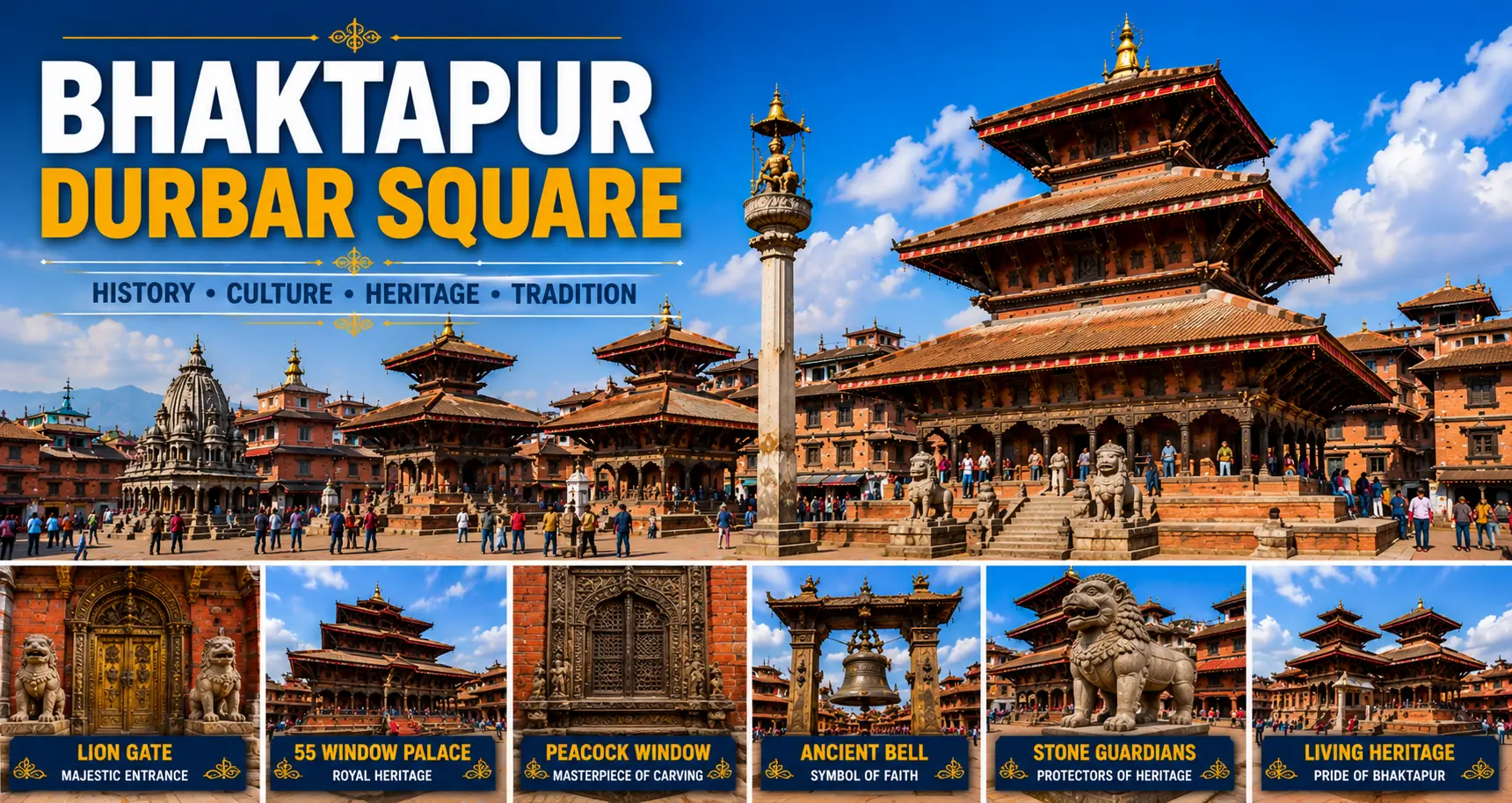
Bhaktapur, 13 kilometres east of Kathmandu, is the best-preserved of the three medieval kingdoms and the one that most rewards a dedicated half-day or full-day visit rather than a rushed stop between other sites. The 55-Window Palace, the Nyatapola Temple, and the Dattatraya Temple are the headline monuments. However, Bhaktapur’s greatest strength is its living urban character: Pottery Square, where traditional clay pots are still made and sun-dried on the street, the woodcarving district around Dattatraya, and the old-town lanes where Bhaktapur cuisine, including the famous juju dhau king curd, is sold fresh from local shops. The entry fee for foreign visitors is approximately NPR 1,800 in 2026, and the ticket is valid for three days, making it worthwhile to buy even if you plan only one day in case you want to return. Our dedicated Bhaktapur Durbar Square day tour page offers a structured half-day or full-day vehicle hire specifically for Bhaktapur.
Changu Narayan Temple
The oldest surviving temple in the Kathmandu Valley, dating to at least the 4th century CE, Changu Narayan sits on a forested hilltop above the Bhaktapur approach road. It contains some of the finest stone sculpture in the valley, including a multi-armed Vishnu image dated to the Licchavi period and a stone inscription recording the exploits of the 5th-century king Manadeva, the oldest such inscription in Nepal. Changu Narayan is the least visited of the seven UNESCO sites, which makes it the most peaceful, and the surrounding village retains a genuine agricultural and community character that has been more thoroughly overlaid by tourism in the three Durbar Squares. The entry fee for foreign visitors is approximately NPR 300.

Beyond the UNESCO Circuit: Nagarkot, Other Valley Highlights, and Day Extensions
Nagarkot: Sunrise and Himalayan Panorama
The hilltop settlement of Nagarkot, on the eastern rim of the Kathmandu Valley at approximately 2,100 meters, is the most popular sunrise viewpoint for the Himalayan range within an easy day trip of Kathmandu. On clear mornings, the view from Nagarkot extends from Dhaulagiri in the west across the Ganesh Himal, Langtang, Jugal, and Rolwaling ranges to Makalu and Kanchenjunga in the far east, with Everest visible to the northeast. The drive from Kathmandu to Nagarkot takes approximately 90 minutes to two hours, making it a viable very early-morning car hire option for a sunrise visit before returning to the city for the main UNESCO sightseeing circuit, or a late-afternoon extension to catch the sunset after a full-valley day. Our Kathmandu-to-Nagarkot vehicle service and Nagarkot sunrise tour services handle this specific excursion.
Chandragiri and Shivapuri: Valley Rim Viewpoints
The Chandragiri Hills, to the southwest of the valley and reachable by cable car from Thankot, offer a different vantage point on the valley and the Himalayan skyline, with the Bhaleshwor Mahadev Temple at the summit adding a religious dimension to the scenic visit. Shivapuri National Park, on the northern rim of the valley, is primarily a hiking and mountain biking destination, but it also offers day hikes to Shivapuri Peak for panoramic views. The forested approach road from Budhanilkantha makes for a pleasant drive before you reach the park entrance.
Budhanilkantha Temple
The Budhanilkantha temple, 9 kilometres north of central Kathmandu, houses one of Nepal’s most remarkable religious artefacts: a 5-metre stone statue of Vishnu reclining on the cosmic ocean, carved from a single piece of black stone and lying in an open water tank. The artistry is extraordinary, and the scale is unexpected; this is a much larger and more dramatically presented image than most visitors would expect from written descriptions. Unlike the Pashupatinath inner sanctum, non-Hindus may approach the outer edge of the tank and view the statue directly. It is a strong addition to a second-day Kathmandu Valley circuit and can be easily combined with the Kathmandu historical heritage sites guide for context.
Dakshinkali Temple
Dakshinkali, roughly 22 kilometres southwest of Kathmandu, is one of Nepal’s most important goddess temples and one of the most viscerally intense religious experiences available in the valley. On Tuesdays and Saturdays, which are the major sacrificial days, the temple draws enormous crowds of devotees carrying goats, chickens, and ducks for sacrifice to Kali, and the ritual atmosphere is unlike anything at the valley’s calmer Buddhist and Vaishnava sites. It is not for all visitors, but for those interested in the blood-sacrifice dimension of Hindu goddess worship and the specific devotional culture of tantric Kali traditions, Dakshinkali is irreplaceable. The drive from Kathmandu takes approximately 45 to 60 minutes, depending on traffic.
Entry Fees at Kathmandu’s Heritage Sites in 2026
Entry fees at Kathmandu’s heritage sites are charged per visit at most sites, with some tickets valid across multiple days, and should be budgeted separately from vehicle hire. The following arethe current 2026 fees for foreign (non-SAARC) visitors:
- Kathmandu Durbar Square — approximately NPR 1,500, valid for three days.
- Patan Durbar Square — approximately NPR 1,000.
- Bhaktapur Durbar Square — approximately NPR 1,800, valid for three days.
- Swayambhunath Stupa — approximately NPR 200.
- Boudhanath Stupa — approximately NPR 400.
- Pashupatinath Temple (outer complex) — approximately NPR 1,000.
- Changu Narayan Temple — approximately NPR 300.
SAARC nationals, including Indian citizens, receive substantially reduced rates at all sites. Nepali citizens enter all heritage sites for free or at a heavily discounted fee. Keep entry tickets, particularly for Bhaktapur and Kathmandu Durbar Square, since they are valid for multiple days and re-entry is permitted; showing a taxi receipt dated within the validity window can help if asked at a checkpoint.
Traffic, Timing, and the Practical Logic of a Kathmandu Sightseeing Day
Kathmandu’s traffic follows predictable patterns that significantly affect how you should structure a sightseeing day, and a good private driver will factor these into routing recommendations. The morning rush from roughly 8 to 10 AM is the worst, particularly on the main Ring Road arteries and the roads into central Kathmandu from the eastern residential areas. The midday window from 11 AM to 1 PM is generally freer flowing. The afternoon peak from 4 to 7 PM is severe, especially on the roads toward Patan and Bhaktapur.
The practical implication for a sightseeing day is clear: visit sites that are earliest-access-optimal first. Swayambhunath is best before 8 AM, when the morning light is golden, the tourist groups have not yet arrived, and the monkeys are still settling into the day. Pashupatinath is most atmospheric in the early morning, when the riverside aarti and the first cremations of the day begin. Boudhanath is also better in the early morning for the daily butter-lamp prayers, though the evening kora is equally worth catching if a two-day itinerary allows. By contrast, Bhaktapur and Patan Durbar Squares are best visited mid-morning to early afternoon, when the light falls well on the stone and brick facade work and the squares are active with local life rather than tour-group crowds.
Parking near heritage sites requires local knowledge. Kathmandu Durbar Square has limited vehicle access to its immediate vicinity, and most drivers park in a designated area several minutes’ walk away. Pashupatinath has a dedicated visitor parking area beyond the outer gate. Boudhanath has parking along the approach road. Bhaktapur has a dedicated tourist parking area at the city entrance. A driver who knows these parking points saves meaningful time on a packed sightseeing day — one of the practical advantages of booking a Kathmandu sightseeing tour through an operator whose drivers regularly run this circuit over a random Kathmandu taxi.

One-Day Kathmandu Sightseeing Itinerary by Private Car
For travellers with a single full day available, this itinerary covers the four core UNESCO sites within Kathmandu city and allows a brief stop in Thamel before evening:
- 6:00 AM — Arrive before the main tourist rush. Climb the 365 steps in the early morning light, complete the kora around the main stupa, and take in the panoramic valley view before 8 AM.
- 8:30 AM — Reach the riverside complex as the morning activity is at its height. Walk the outer complex, observe the cremation ghats from the opposite bank, and visit the Gorakhnath Temple area on the hill above.
- 10:30 AM — Complete a kora around the great stupa, visit one of the surrounding Tibetan monasteries, and take rooftop coffee with a stupa view.
- 12:30 PM — Lunch in Thamel or Asan Bazaar. A midday break avoids the heat and leaves time for lunch at a recommended local restaurant.
- 2:00 PM — Kathmandu Durbar Square. The afternoon light falls well on the Hanuman Dhoka Palace facade. Visit the Kumari Ghar courtyard, the Taleju Temple exterior, and Nasal Chowk before the site fills with late-afternoon visitors.
- 4:30 PM — Optional: Garden of Dreams or Narayanhiti Palace Museum, both within walking distance of Thamel, for a quieter end to the day.
Two-Day Kathmandu Valley Sightseeing Itinerary by Private Car
With two days available, the full valley circuit including Bhaktapur, Patan, Changu Narayan, and Nagarkot becomes achievable at a genuinely comfortable pace:
- Day 1, Morning — Swayambhunath and Pashupatinath as described in the one-day itinerary above, departing at 6 AM.
- Day 1, Midday — Boudhanath and lunch in the surrounding Tibetan quarter, with time to browse the thangka galleries and Tibetan artefact shops.
- Day 1, Afternoon — Patan Durbar Square and the Patan Museum. Allow two to three hours for Patan, the most artistically rich of the three Durbar Squares and the most intellectually rewarding for travellers with a genuine interest in Newari craftsmanship.
- Day 1, Evening — Drive to Nagarkot for sunset and overnight. The valley view at dusk from Nagarkot is spectacular, and staying there avoids the need for a very early-morning drive from Kathmandu to catch the sunrise. Car hire via our Kathmandu to Nagarkot vehicle
- Day 2, Early Morning — Nagarkot sunrise. On a clear day, one of the finest Himalayan panoramas is accessible from any road-accessible point in Nepal.
- Day 2, Morning — Drive to Bhaktapur for a full half-day. Pottery Square, Nyatapola Temple, 55-Window Palace, Dattatraya, and juju dhau king curd at a local shop. Our Bhaktapur Durbar Square day tour page provides a structured itinerary.
- Day 2, Afternoon — Changu Narayan Temple, the oldest temple in the valley, is quiet and often has few visitors. Then visit Kathmandu Durbar Square, the final UNESCO site, before returning to the hotel.
You can coordinate both one-day and two-day Kathmandu sightseeing itineraries through our Plan a Trip service as part of a broader Nepal itinerary, or book them as standalone day hires directly through our Kathmandu sightseeing tour page. For travellers arriving directly from the airport, our Kathmandu Airport Transfer can start the sightseeing day immediately on arrival, if timing permits.
Kathmandu’s Festival Calendar: Planning Your Sightseeing Around Living Culture
One of the most powerful ways to deepen a Kathmandu sightseeing day is to time it to coincide with one of the valley’s major festivals, when the heritage squares and temple courtyards transform from architectural monuments into living stages for ancient ritual performance. Nepal follows the lunar calendar for most major festivals, so dates shift annually in Gregorian terms, but the approximate seasonal windows stay consistent year to year.
Indra Jatra, held in late August or September at the Kathmandu Durbar Square, is one of the most spectacular festivals in the valley: eight days of masked dances, chariot processions, and public appearances by the Kumari Living Goddess, who blesses the heads of state and the gathered public from her chariot in the square. The festival celebrates the god Indra and the end of the monsoon season, and the Lakhe masked demon dance, performed by young men in elaborate costumes and heavy masks, is one of the finest examples of Newar performing arts tradition visible to any visitor.
Dashain, Nepal’s largest Hindu festival, falls in October and transforms the valley with kite flying, family gatherings, and the smell of marigold garlands. The Pashupatinath area is particularly active during Dashain, with long queues of devotees and dramatic animal sacrifice at the Dashain temples across the valley. Tihar, the festival of lights that follows Dashain by roughly two weeks, is Nepal’s equivalent of Diwali, with oil lamp and electric light displays decorating every building facade and the five-day festival honouring different animals, deities, and family relationships on successive days.
Bisket Jatra, the Newari New Year festival held in Bhaktapur each April, involves a tug-of-war between the upper and lower parts of the old city over an enormous chariot. This ritual chariot draws enormous crowds. For travellers in Kathmandu in April, a private car to Bhaktapur during Bisket Jatra offers access to a festival experience most guidebooks understate, and most tour operators fail to schedule around. The key logistical point is that Bhaktapur’s lanes close to vehicle traffic during the chariot procession, and a driver who knows the alternative parking points and approach routes on festival days can make the difference between watching from inside the crowd and being stuck outside the cordon.
For travellers wanting to time their Kathmandu sightseeing to coincide with specific festivals, our Plan a Trip service can advise on the current year’s festival calendar and help structure a day of vehicle hire that captures the best of the heritage circuit alongside whatever living cultural event falls within the travel window.
Combining Kathmandu Full-Day Sightseeing With a Wider Nepal Itinerary
Kathmandu sightseeing almost always forms part of a larger Nepal trip rather than a standalone visit, and the private car hire booked for the valley circuit can connect directly to onward transport legs without rebooking from scratch. The most common continuation from a Kathmandu sightseeing day is the Prithvi Highway transfer to Pokhara, covered by our Kathmandu to Pokhara Bus for group travel or a private vehicle for flexibility. For trekkers, a Kathmandu sightseeing day followed by a departure to a trekking trailhead—Kathmandu to Syabrubesi Jeep Transfer for Langtang, Kathmandu to Besisahar Private Jeep for the Annapurna Circuit, or Kathmandu to Soti Khola for Manaslu—is the standard start of most Nepal trekking itineraries.
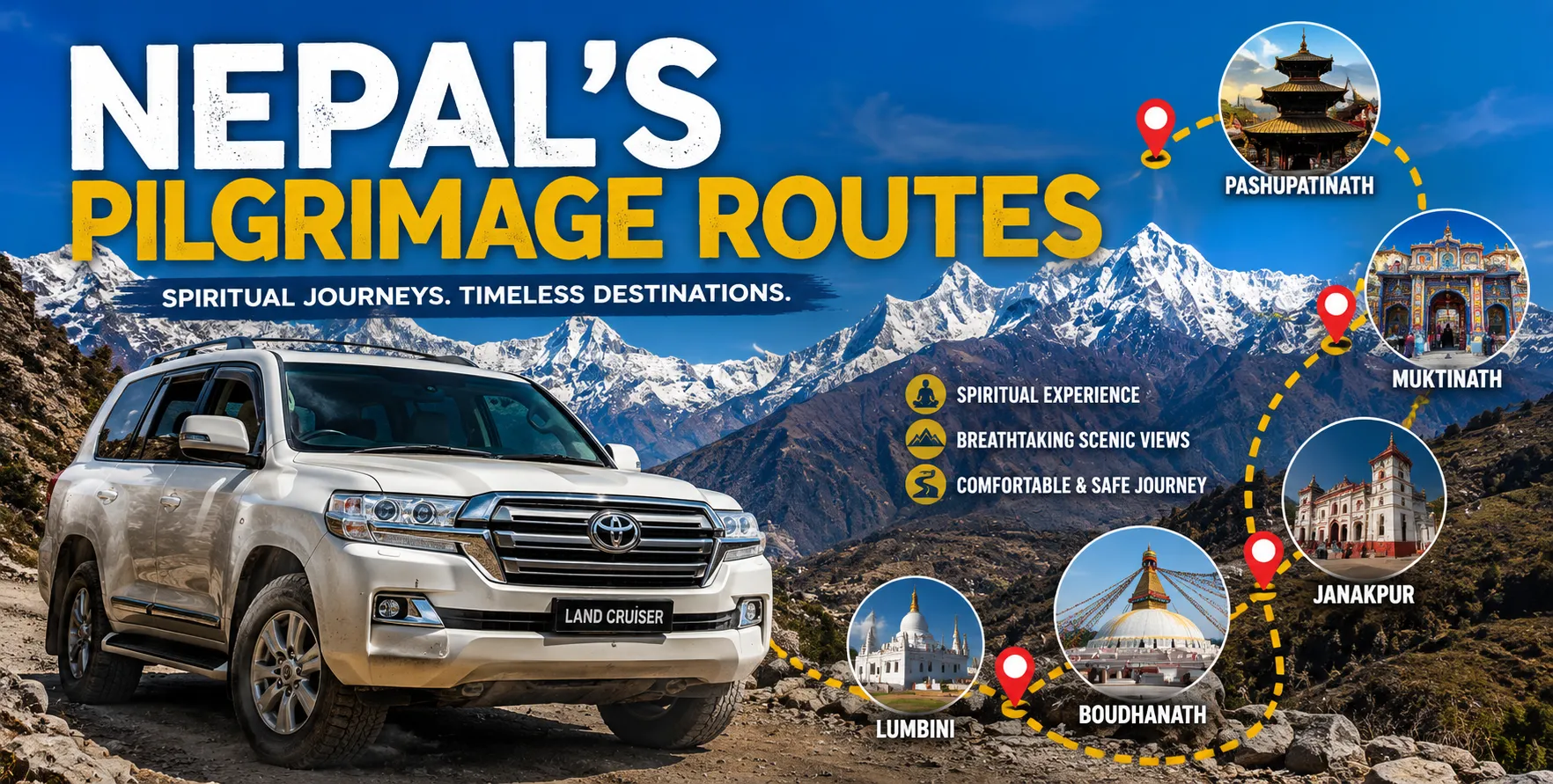
For pilgrims, the Kathmandu Pashupatinath visit is often a starting point rather than an endpoint of a broader pilgrimage circuit that continues to Muktinath via our Kathmandu to Muktinath Jeep service, or to Lumbini via our Kathmandu to Lumbini Bus. For a broader sense of how vehicle hire connects every part of a Nepal itinerary, our Complete Nepal Tourism Guide and unlimited tour and trek vehicle hire guide both expand on the themes introduced here.
Understanding Newari Culture: What the Sightseeing Circuit Is Really About
Most visitors to Kathmandu approach the UNESCO heritage circuit as a series of architecturally impressive monuments to photograph and tick off a list. This approach is entirely valid, but it substantially undersells what is actually available. The Kathmandu Valley’s temples, squares, and stupas are not archaeological remnants; they are functioning religious and social institutions, most of which are actively used daily by the Newar community whose ancestors built them and whose descendants still maintain them. Understanding even a little of the Newari cultural context transforms a day of Kathmandu sightseeing from an impressive visual experience into something considerably more layered.
The Newar people are the indigenous inhabitants of the Kathmandu Valley, and their civilisation produced the architectural tradition that makes the valley world-famous. Unlike the hill communities of Nepal’s middle mountains, whose cultures are shaped by subsistence agriculture and seasonal herding, the Newars built their identity around urban commerce, religious patronage, and an extraordinarily sophisticated tradition of craft production.
Newar metalworkers, stone carvers, woodcarvers, painters, and architects created every major temple and palace in the valley. Their work spread across the Himalayan region: Newar artisans built the Golden Temple in Lhasa, influenced monastery architecture across Ladakh and Bhutan, and shaped the pagoda temple form that spread from Nepal across East Asia.
The Newar social system is organised around guthi, community associations that maintain the religious festivals, temples, and ritual practices of each neighbourhood. Virtually every festival visible in Kathmandu is a guthi obligation rather than a spontaneous community celebration: the timing, specific rituals, participants, and funds to cover costs are all structured through guthi rules that have governed valley life for centuries. When you see a procession through Bhaktapur’s old lanes, a community feast laid out in a Patan temple courtyard, or priests performing synchronised rituals at Pashupatinath’s riverside ghats, the underlying organisational structure is almost certainly guthi-based, even if the festival looks spontaneous to an outside observer.
The practical implication for a Kathmandu sightseeing day is that timing matters more than most independent travel guides communicate. The valley is not a museum that opens at 9 AM and closes at 5 PM; it is a living religious city whose most interesting moments- the morning aarti, the midday deity processions, the evening circumambulations, the festival rituals tied to the lunar calendar- happen at times and in places that shift with the season and the religious calendar. A private car and driver who can respond to spontaneous opportunities, rather than a fixed coach tour schedule, is the transport format that genuinely suits this kind of visit.
Kathmandu’s Heritage Sites After the 2015 Earthquake: What Has Changed
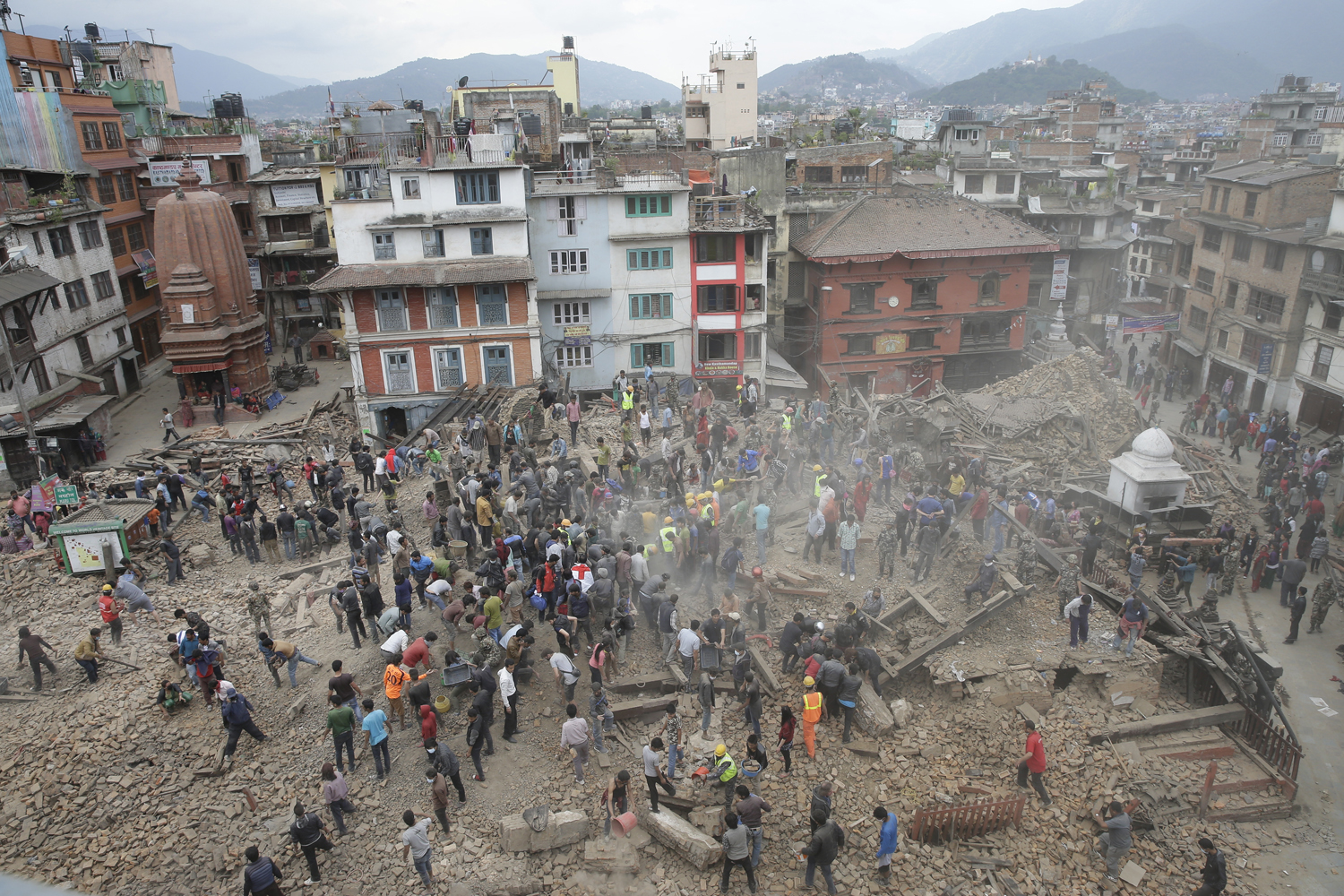
The April 2015 Gorkha earthquake, which measured 7.8 on the Richter scale, caused significant damage to the Kathmandu Valley’s heritage sites alongside its devastating human toll. Several structures at Kathmandu Durbar Square collapsed entirely, including the 19th-century Kasthamandap, the ancient wooden pavilion that gave Kathmandu its name and was Nepal’s oldest building. buildingahara Tower, a 19th-century minaret landmark near the bus park, fell completely. In Bhaktapur, several secondary structures were damaged, while in Patan the damage was less severe and restoration was more advanced. The earthquake also damaged several structures at Swayambhunath and Boudhanath.
By 2026, eleven years after the earthquake, the heritage restoration picture across the valley is substantially positive, with important nuance. Boudhanath was fully restored by 2016 and is in excellent condition. Patan Durbar Square has been largely restored, and the Patan Museum continues to operate at its pre-earthquake standard. Bhaktapur’s major monuments have been restored, and the city retains its medieval character. Kathmandu Durbar Square has the most visible ongoing work: the Kasthamandap has been rebuilt using traditional materials and methods after a long community consultation process, and restoration of the Hanuman Dhoka Palace complex is ongoing with UNESCO and international conservation funding. The Trailokya Mohan Narayan Temple and several other structures remain scaffolded.
The practical takeaway for 2026 visitors is that the Kathmandu Valley’s heritage experience is fully viable and deeply rewarding, with the caveat that Kathmandu Durbar Square specifically looks different from pre-earthquake photographs, with some structures still scaffolded or enclosed. Visitors interested in the restoration process will find it genuinely fascinating to see traditional Newari carpentry and masonry techniques applied in real time to reconstructing ancient structures. For the other six UNESCO sites, the visitor experience is essentially unchanged from pre-earthquake conditions.
Photography and the Best Light at Each Kathmandu Heritage Site
The Kathmandu Valley is one of the most photographically extraordinary places in Asia, and a private car that lets you control timing makes the difference between arriving at each site in optimal light and facing the harsh midday conditions that flatten the carved stone and brick facades the valley is famous for.
Swayambhunath is at its photographic best in the early morning before 8 AM, when the first light catches the spire’s gold and the prayer flags stir in the dawn breeze before the day’s wind picks up. The 365-step staircase, with its flanking statues and prayer flags, creates a strong compositional foreground for shots of the spire rising above. From the hilltop, the valley panorama shot looking east toward Bhaktapur is best in the morning before haze builds.
Pashupatinath’s cremation ghats on the Bagmati River are most active and most photographically atmospheric in the early morning and late afternoon, when natural light falls obliquely across the river,r and the smoke from the ghats catches the light. The rule of thumb here is that photography is acceptable from the opposite bank but should not intrude on families’ grief with a telephoto lens from close range. A respectful distance and a standard lens, rather than an aggressive telephoto, are more ethical and often more evocative compositions.
Boudhanath’s great dome is most dramatic either in the early morning, when butter lamps are lit and the circumambulation crowd is most devotional, or in the late afternoon, when the western light warms the white dome. The gilded spire catches the last direct sun. The surrounding rooftop cafes provide elevated vantage points for shooting down into the circumambulation crowd, adding a dimension not achievable from ground level.
Bhaktapur’s Nyatapola Temple, Nepal’s tallest pagoda at five stories, is best photographed from the western end of Taumadhi Square in the morning, when eastern sunlight falls across the temple’s face. The 55-Window Palace’s intricately carved windows are best lit in the late morning, when the sun has moved high enough to illuminate the upper windows without casting deep shadows across the lower carvings. Pottery Square, Bhaktapur’s photographic surprise, is most active mid-morning, when potters are throwing. The palace’s dozens of drying pots cover the square floor in geometric patterns.
Patan Durbar Square’s stone facades photograph best in the low light of early morning or late afternoon, when oblique illumination reveals the texture of the carved stone in a way that flat midday light does not. The golden ratio of Krishna Mandir’s stone columns and the reflections in the royal palace pond near the square offer some of the valley’s best opportunities for architectural photography.
Responsible Visiting: Practical Etiquette at Kathmandu’s Religious Sites
Kathmandu’s heritage sites are working religious places, not theme parks, and several practical etiquette norms apply that are worth understanding before arrival. These are not arbitrary restrictions but reflect genuine religious and cultural significance that the communities maintaining these sites take seriously.
- Footwear — remove shoes before entering any temple interior, including the inner courtyards of Kathmandu and Patan Durbar Squares, where shrine rooms require it. Carry a lightweight bag for your shoes at sites where shoe storage is not provided, or wear slip-on footwear for easy removal.
- Clothing — modest clothing covering knees and shoulders is expected at all religious sites. Many sites provide wraps for hire at the entrance gate for visitors who arrive inadequately dressed, but it is more advisable to plan ahead. This applies regardless of personal religious affiliation.
- Circumambulation direction — Buddhist stupas, including Boudhanath and Swayambhunath, should be circumambulated clockwise. Bon shrines are circumambulated counterclockwise. Following the direction of other worshippers is both respectful and practical.
- Photography restrictions — photography is prohibited inside many temples’ inner sanctums, including the Kumari Ghar interior and most active shrine rooms in the Durbar Squares. Photography of active rituals, particularly cremation ceremonies at Pashupatinath, requires discretion and a respectful distance. Always look for posted signs restricting photography before pointing a camera into a temple space.
- Non-Hindu visitors at Pashupatinath — the main Pashupatinath temple inner sanctum is restricted to Hindus only. Non-Hindus are fully welcome in the outer complex and along the riverbank. Attempting to enter the restricted area is both disrespectful and, if discovered, will result in removal. The outer complex is extensive enough that non-Hindu visitors have a full, rich experience without needing or wanting to enter the inner sanctum.
- Donations and begging — sadhus at Pashupatinath often request a small payment before allowing you to take a photograph. A donation of NPR 50 to 200 is customary if you want a portrait photograph and the sadhu has consented. General donations into temple collection boxes support site maintenance. Don’t feel obligated to give to everyone who approaches; politely declining with a namaste gesture is culturally appropriate.
Frequently Asked Questions About Kathmandu Car and SUV Hire for Sightseeing
How many sites can I realistically visit in a single Kathmandu sightseeing day?
With an early 6 AM start and a private car, you won’t wait for shared transport, so four to five sites in a single day are realistic without feeling rushed. The four core UNESCO city sites — Swayambhunath, Pashupatinath, Boudhanath, and Kathmandu Durbar Square — form a coherent one-day circuit. Adding Patan or Bhaktapur on the same day is possible but requires a fast pace and is better left for a second day if available.
Is a guide necessary for sightseeing in Kathmandu? Does the car hire driver serve as a guide?
A vehicle hire driver is not a trained cultural guide, and you shouldn’t confuse the two roles. The driver handles navigation, parking, and logistics; a licensed cultural guide explains the historical, religious, and artistic context of each site. If cultural depth is a priority, hiring a licensed guide as a separate booking on top of the vehicle hire is a genuinely worthwhile addition. However, many travellers find that good preparation from a guidebook or online research, combined with the local knowledge of a driver who has run the circuit hundreds of times, is enough for a satisfying day of sightseeing without the added cost of a formal guide.
What is the cost of a full-day private car hire for Kathmandu sightseeing?
A full-day private car hire in Kathmandu for a sightseeing circuit typically costs about NPR 5,000 to 7,000 for a sedan and NPR 7,000 to 10,000 for an SUV, including the driver and fuel for the day’s circuit. Entry fees at each site are payable separately by the traveller. Contact us directly for a current quote based on your group size and specific site list.
Can I combine a Kathmandu sightseeing day with an airport arrival on the same day?
Yes, and many travellers do exactly this, particularly those arriving on morning flights who want to make productive use of the day before checking into their hotel. Our Kathmandu Airport Transfer can be extended to a sightseeing day if the flight arrives early enough, with luggage secured in the vehicle or dropped at the hotel before the circuit begins.
Why Book Your Kathmandu Full-Day Sightseeing Car Hire With Nepal Vehicle Hiring
Our drivers run the Kathmandu sightseeing circuit multiple times per week and know the parking situation at every heritage site, the checkpoints where tickets are checked, and the optimal timing for each site in every season. We can match your group size to the right vehicle category from a fleet that spans sedans, SUVs, Hiace vans, and larger buses and coaches for group sightseeing. And if your Kathmandu day is the start of a wider Nepal trip, we can coordinate the sightseeing day directly into the first leg of your onward travel, whether that means a drive to Pokhara, a trek trailhead transfer, or an airport pickup on departure day.
Book Your Kathmandu Full-Day Sightseeing Car or SUV Hire Today
Whether you are planning a single morning of Kathmandu sightseeing or a full two-day UNESCO valley circuit including Bhaktapur, Nagarkot, and Changu Narayan, Nepal Vehicle Hiring Pvt Ltd can arrange the right car or SUV with an experienced driver who knows every site, every parking point, and every optimal timing window in the valley. Call or WhatsApp us at 9814227196, email us at [email protected], or visit vehiclehiringnepal.com to plan your Kathmandu sightseeing day today.
- Kathmandu Full Day Sightseeing: Car and SUV Hire Guide
- Why Private Car or SUV Hire Beats Every Other Sightseeing Option in Kathmandu
- Choosing the Right Vehicle for Your Kathmandu Full-Day Sightseeing Group
- The Seven UNESCO World Heritage Sites of the Kathmandu Valley
- Beyond the UNESCO Circuit: Nagarkot, Other Valley Highlights, and Day Extensions
- Entry Fees at Kathmandu's Heritage Sites in 2026
- Traffic, Timing, and the Practical Logic of a Kathmandu Sightseeing Day
- One-Day Kathmandu Sightseeing Itinerary by Private Car
- Two-Day Kathmandu Valley Sightseeing Itinerary by Private Car
- Kathmandu's Festival Calendar: Planning Your Sightseeing Around Living Culture
- Combining Kathmandu Full-Day Sightseeing With a Wider Nepal Itinerary
- Understanding Newari Culture: What the Sightseeing Circuit Is Really About
- Kathmandu's Heritage Sites After the 2015 Earthquake: What Has Changed
- Photography and the Best Light at Each Kathmandu Heritage Site
- Responsible Visiting: Practical Etiquette at Kathmandu's Religious Sites
- Frequently Asked Questions About Kathmandu Car and SUV Hire for Sightseeing
- Why Book Your Kathmandu Full-Day Sightseeing Car Hire With Nepal Vehicle Hiring

Related Blog & Articles
Cultural Heritage Temples in Nepal
Kathmandu Historical Heritage Sites: The Complete Travel Guidey
Kathmandu to Halesi Mahadev Transport