Plan a Trip


Cultural Heritage Temples in Nepal
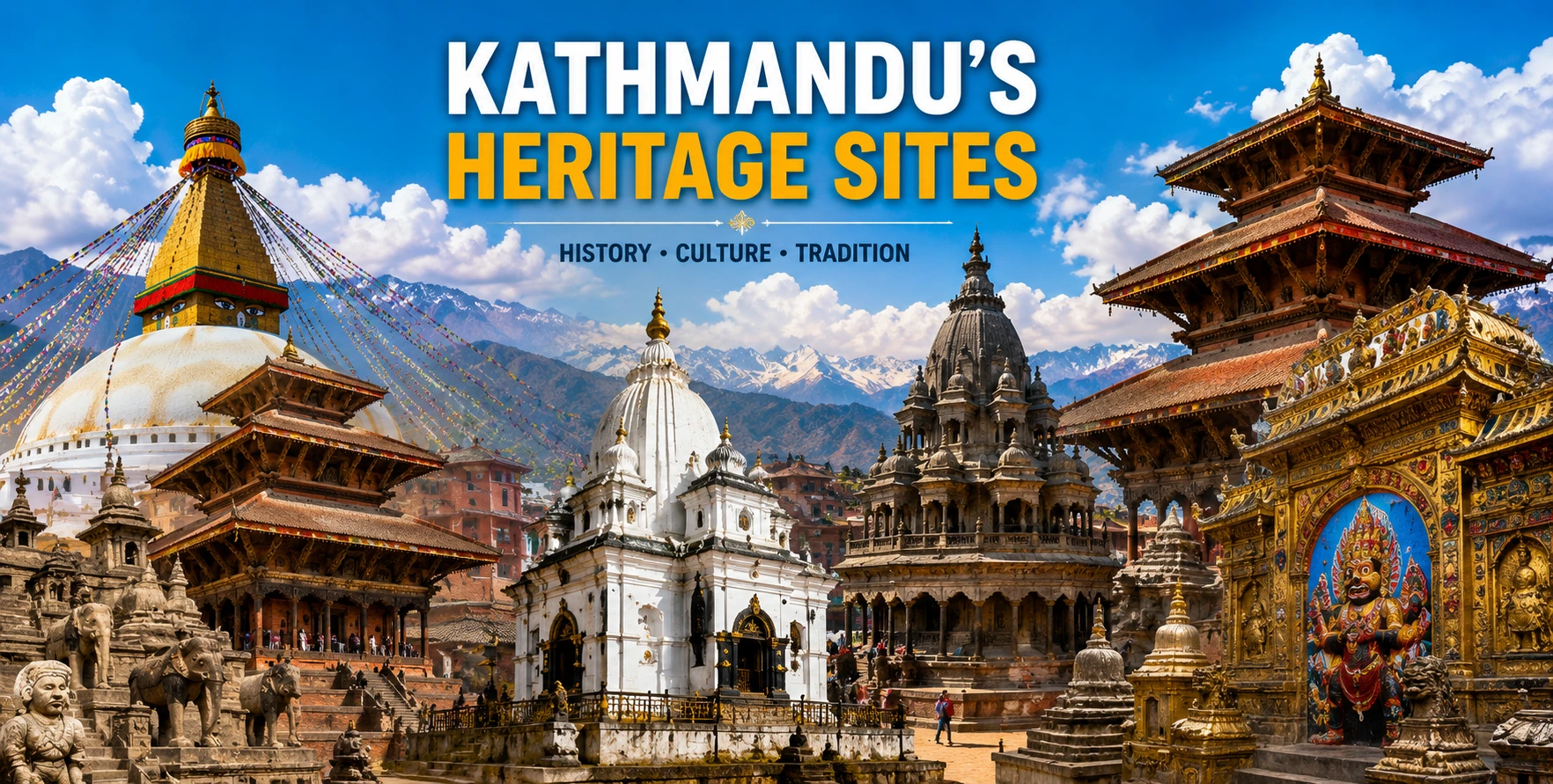
Best Cultural Heritage Temples in Nepal: A Living Museum of Faith and Architecture
Nepal is one of the rarest places on earth where religion, architecture, and daily life have remained inseparable for more than fifteen centuries. The country’s cultural heritage temples are not preserved relics sealed behind museum glass—they are active places of worship where priests conduct daily rituals, pilgrims travel for weeks to offer prayers, and the rhythms of Hindu and Buddhist ceremony continue unchanged by the tourism that has grown up around them.
This is what makes Nepal’s temple heritage genuinely extraordinary: you can stand at the cremation ghats of Pashupatinath or circle Boudhanath’s stupa with evening pilgrims, and the experience belongs to the living culture you are witnessing rather than a performance staged for visitors.
Nepal has four UNESCO World Heritage Sites, two cultural and two natural. The cultural sites — Kathmandu Valley, inscribed in 1979 and covering seven distinct monument zones, and Lumbini, the birthplace of the Buddha, inscribed in 1997 — contain most of the country’s most celebrated temples, stupas, and historic squares.
Beyond the UNESCO portfolio, Nepal’s temple landscape extends far beyond Kathmandu: the pilgrimage site of Muktinath sits at over 3,700 metres in the Mustang district, Manakamana perches on a cliff above the Trisuli Gorge, Halesi Mahadev is deep in the eastern hills, and dozens of other significant religious sites are scattered across the country’s valleys and mountain regions, each requiring its own transport and access planning. This guide covers the most important ones and points you to the right vehicle hire in Nepal to reach each one.
Understanding Newari Architecture: The Foundation of Nepal’s Temple Heritage
Before visiting individual temples, understanding the architectural tradition behind them transforms the experience from sightseeing into genuine cultural comprehension. Newari architecture, the style that defines virtually every major temple complex in the Kathmandu Valley, developed over roughly a thousand years of refinement by the Newar people, Nepal’s dominant cultural group in the valley, reaching its artistic peak during the Malla dynasty period between approximately 1200 and 1768 CE.
The signature features of Newari temple architecture include multi-tiered pagoda roofs covered in small overlapping terracotta tiles with gilded brass ornamentation along the eaves, intricate timber carvings on windows, doorways, roof struts, and bracket figures, many depicting deities, mythological scenes, and tantric imagery that scholars are still interpreting today, and precisely carved stone sculptures positioned at temple entrances and within courtyards as protective deities and devotional focus points.
The fired-brick-and-mud-mortar construction typical of this style has proven remarkably durable through centuries of seasonal rain, earthquake damage, and the weight of accumulated history. However, the 2015 earthquake, which caused significant damage to several sites in the Kathmandu Valley, reminded us that these structures require ongoing maintenance and expert restoration rather than being permanently invulnerable simply by virtue of having stood for so long.
The coexistence of Hindu and Buddhist elements within the same architectural complexes, and often within single compounds housing both types of shrine, reflects the unique religious syncretism of the Kathmandu Valley, where the two faith traditions developed side by side over many centuries and influenced each other in ways that produced a combined artistic and spiritual vocabulary found nowhere else in the world.
Pashupatinath Temple: Nepal’s Holiest Hindu Shrine
Location: Bagmati River, Kathmandu | Entry Fee: NPR 1,000 (approx. US$8.60) for foreign visitors | UNESCO: Listed 1979
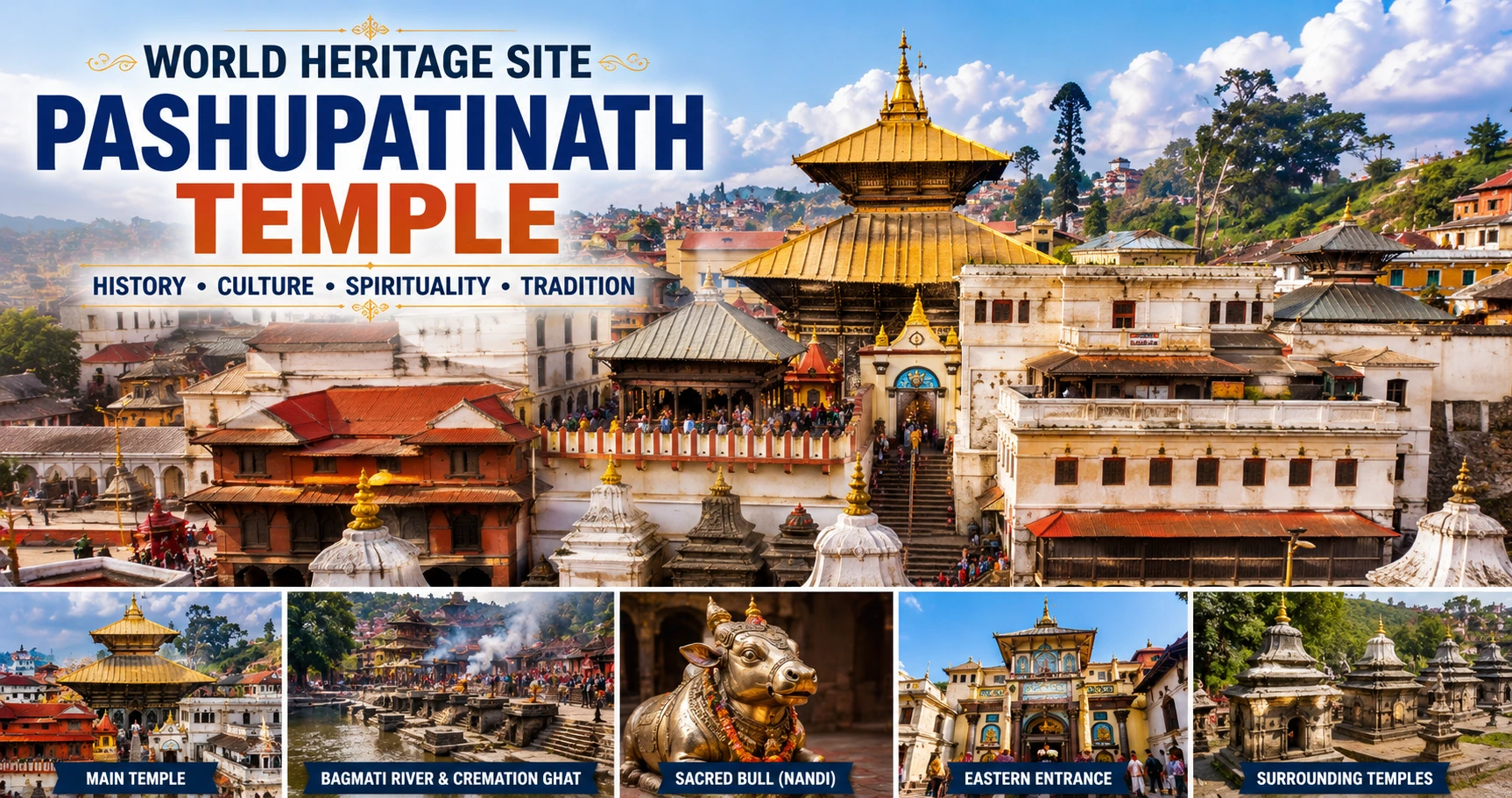
Pashupatinath Temple is Nepal’s most sacred Hindu site and one of the world’s most important Shiva temples, drawing pilgrims from across Nepal, India, and the broader Hindu world year-round.
Dedicated to Lord Shiva in his manifestation as Pashupati, the Lord of Animals, the main temple complex sits directly on the banks of the Bagmati River, a sacred waterway whose confluence with the Bishnumati River south of Kathmandu is itself considered holy. The complex contains 518 temples and monuments in its inner and outer courtyards, making it more than a single structure; it is a sacred precinct housing shrines to dozens of deities alongside the dominant Pashupati deity.
The main temple, with its distinctive double-roofed pagoda structure, golden roof, and silver doors, is accessible only to Hindu worshippers; non-Hindu visitors view the complex from the eastern bank of the Bagmati, a vantage point that actually provides one of the most memorable perspectives available, looking directly across the river at the main temple façade and along the sacred ghats where open-air cremations take place throughout the day.
Witnessing a cremation at Pashupatinath is a deeply meaningful, if initially confronting, experience that many visitors describe as the most powerful they have encountered anywhere in Nepal, a direct encounter with Hindu philosophy’s embrace of death as a passage rather than an ending, conducted entirely in public without ceremony or obscurity.
The evening Aarati ceremony at Pashupatinath, conducted on the river ghats with oil lamps, bells, chanting, and devotional music, is the best single moment to visit the complex, combining a spiritual atmosphere with the golden light of dusk across the river and the assembled crowd of pilgrims and respectful foreign visitors.
Practical tip: Pashupatinath is located roughly 20 minutes from Thamel by vehicle. A Kathmandu sightseeing tour by private car or Hiace can incorporate Pashupatinath alongside Boudhanath, Swayambhunath, and Kathmandu Durbar Square within a single well-planned day.
Boudhanath Stupa: The Heart of Tibetan Buddhism in Nepal
Location: Boudha, eastern Kathmandu | Entry Fee: NPR 400 (approx. US$3.40) for foreign visitors | UNESCO: Listed 1979
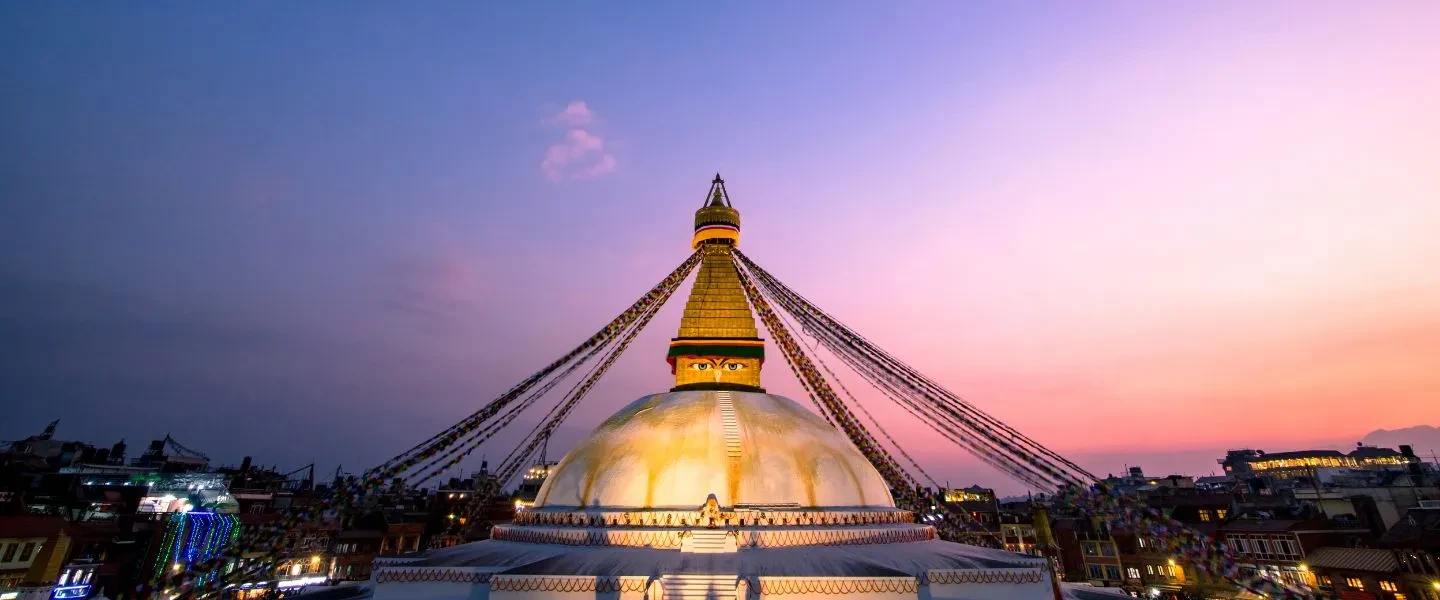
Boudhanath Stupa is one of the world’s largest spherical stupas and the undisputed centre of Tibetan Buddhist culture in Nepal. Built on a three-dimensional mandala ground plan representing the Buddhist cosmological universe, the stupa’s massive white dome is crowned by a gilded tower painted with the iconic Buddha’s eyes—the all-seeing wisdom eyes that look outward in all four cardinal directions, symbolising the Buddha’s omniscient awareness. Between the eyes sits a Nepali numeral representing unity, while the third eye symbol marks the centre of the forehead, signifying spiritual awakening.
The area around Boudhanath transformed significantly after 1959, when Tibetan refugees fleeing the Chinese occupation of Tibet settled in the neighbourhood, establishing dozens of monasteries, Buddhist schools, and community institutions that have made the Boudha area the most vibrant centre of living Tibetan Buddhist practice outside Tibet itself.
Today, the kora, the ritual clockwise circumambulation of the stupa performed by pilgrims spinning prayer wheels and chanting, draws hundreds of participants every morning and evening, swelling to thousands during full moon days and major Buddhist festival periods, and creating an atmosphere of quiet collective devotion that visitors of any background can join without formality, religious knowledge, or any prerequisite beyond basic respectfulness and a willingness to move clockwise.
The stupa suffered significant damage in the April 2015 earthquake, with its spire and upper tower sections collapsing, but was subsequently restored through a combination of Nepali government funding, UNESCO technical support, and community donations from Buddhist organisations worldwide.
The restoration was completed by 2016, a timeline widely praised as a remarkable example of rapid, technically sound heritage recovery that honoured the original structure’s proportions and materials rather than simply rebuilding quickly with whatever materials were available. The surrounding neighbourhood of rooftop cafés, incense shops, thangka painting galleries, and monastery courtyards makes Boudhanath one of the most rewarding half-days a visitor to Kathmandu can spend.

Swayambhunath: The Ancient Monkey Temple
Location: Hill west of central Kathmandu | Entry Fee: NPR 200 for foreign visitors | UNESCO: Listed 1979
Perched on a forested hill rising about 77 meters above the western edge of Kathmandu, Swayambhunath is one of the oldest Buddhist monuments in the entire valley, with the site’s religious use dating back at least 2,500 years according to historical sources. However, the current stupa structure draws primarily on medieval Licchavi and Malla-period construction and renovation.
The Sanskrit name Swayambhu translates approximately as ‘self-created’ or ‘self-existent’, reflecting the belief that the stupa emerged spontaneously from the primordial lotus that blossomed when the Kathmandu Valley was still a lake in cosmic prehistory, a founding myth shared in both Hindu and Buddhist versions of the valley’s origin story.
The climb to Swayambhunath, up 365 stone steps, is flanked by statues of deities and inhabited by troops of rhesus macaques that have lived on the hill for centuries, giving the complex its most popular informal name among foreign visitors: the Monkey Temple.
From the hilltop platform, the panoramic view encompasses the entire Kathmandu Valley floor, from the airport to the distant ring of hills, with clear Himalayan peaks visible on autumn and winter mornings beyond the northern rim. The stupa itself sits surrounded by shrines to both Buddhist and Hindu deities in the characteristic syncretistic arrangement that defines Kathmandu Valley’s religious landscape.
Kathmandu Durbar Square: The Ancient Royal Heart
Location: Basantapur, central Kathmandu | Entry Fee: NPR 1,000 (approx. US$8.60) for foreign visitors | UNESCO: Listed 1979
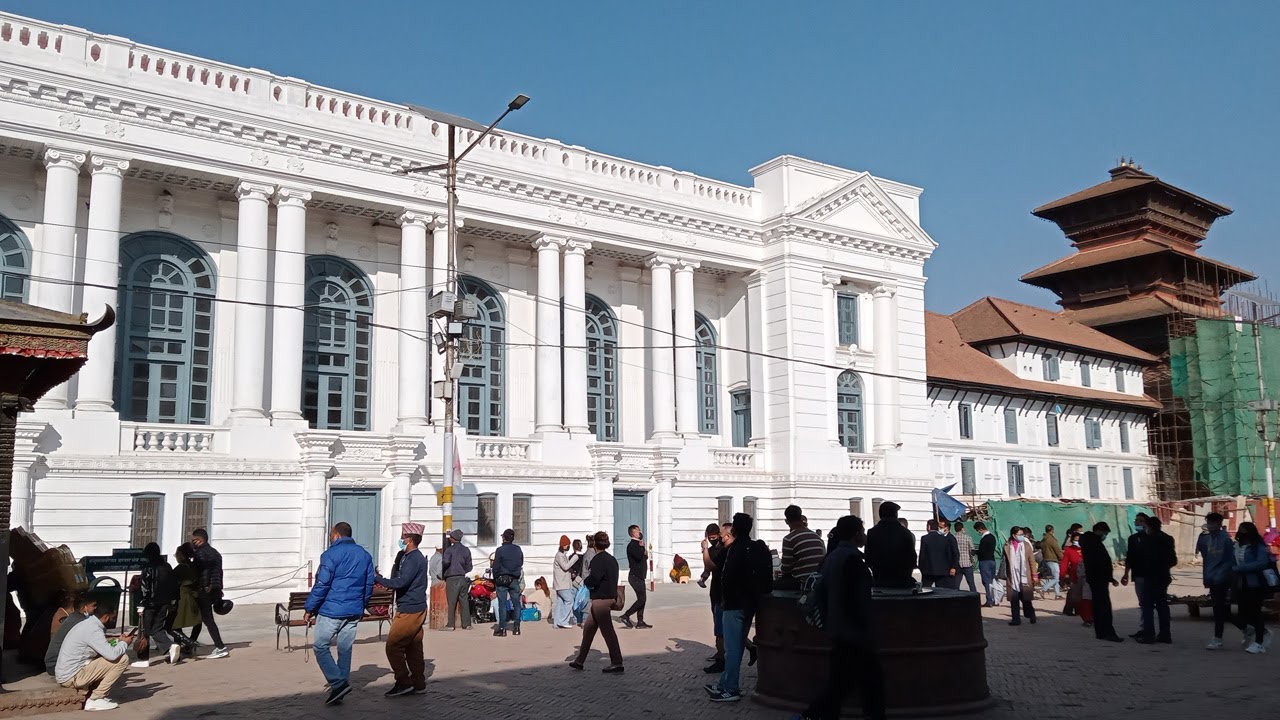
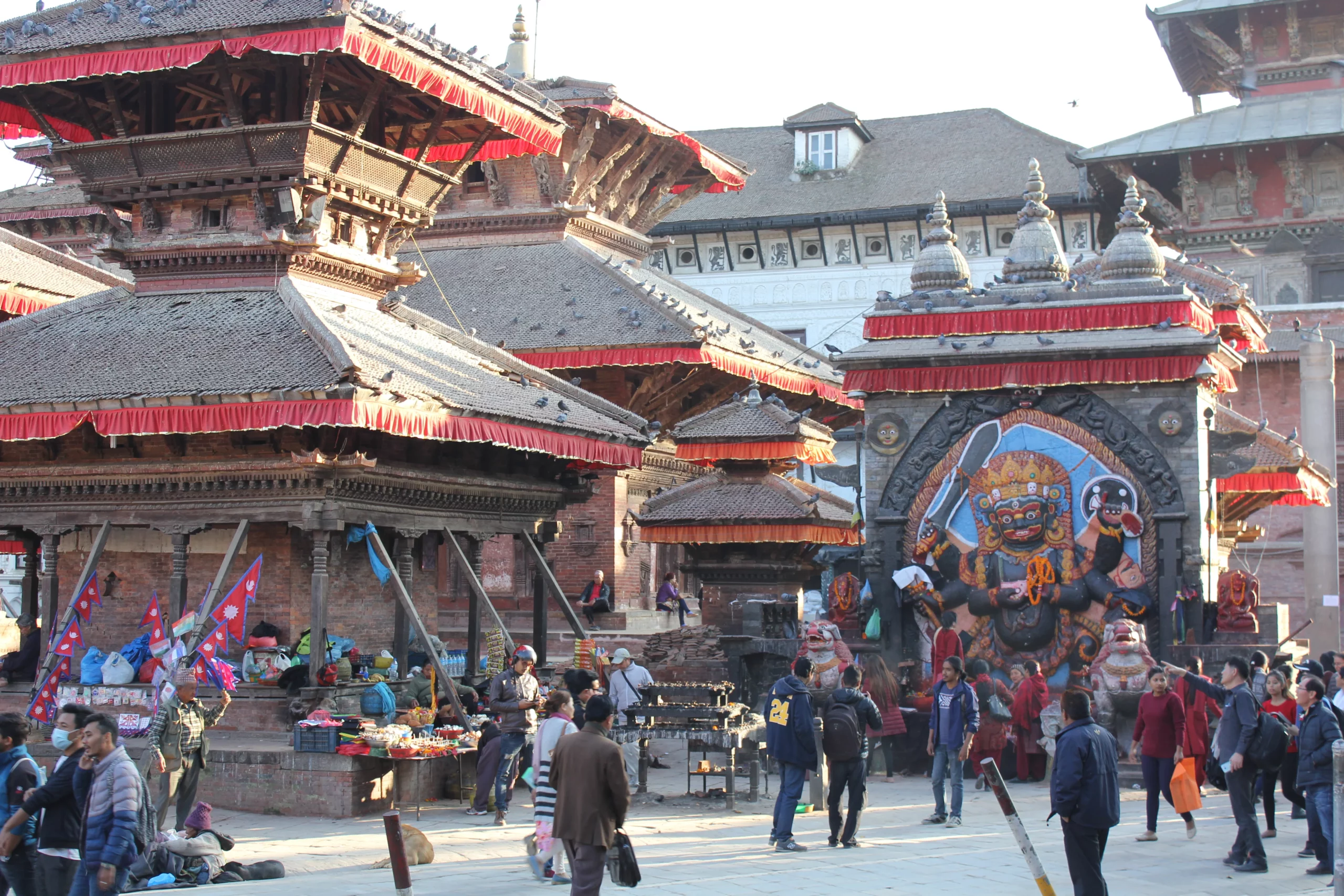
Kathmandu Durbar Square served as the royal ceremonial and administrative centre of the Kathmandu kingdom throughout the Malla and early Shah dynasty periods. The complex of palaces, courtyards, and temples clustered here reflects centuries of royal patronage and architectural ambition compressed into a single urban precinct that visitors can walk across in under ten minutes but genuinely explore for hours.
The Hanuman Dhoka Palace, the square’s central structure, takes its name from the statue of Hanuman, the monkey deity, that guards the main entrance, and it houses the coronation site of Nepal’s Shah kings, as well as a museum of royal artefacts.
Key structures within the Durbar Square complex include the Taleju Temple, dedicated to the royal family’s tutelary deity, and Kumari Chowk, the courtyard housing the Kumari, the living goddess tradition unique to the Kathmandu Valley, where a pre-pubescent girl selected through elaborate ritual is revered as a manifestation of the goddess Taleju.
The Kasthamandap, a remarkable structure whose name means ‘house of wood’ and which is believed to have been constructed entirely from the timber of a single sal tree, lending its name to the city of Kathmandu itself. The 2015 earthquake severely damaged parts of the square, and ongoing restoration using traditional materials and techniques continues to rebuild damaged sections, making the square a living document of heritage recovery alongside its ancient monuments.
The square is easiest to explore as part of a Kathmandu sightseeing tour that also includes Boudhanath and Pashupatinath, maximising time between the valley’s most significant cultural sites in a single day.
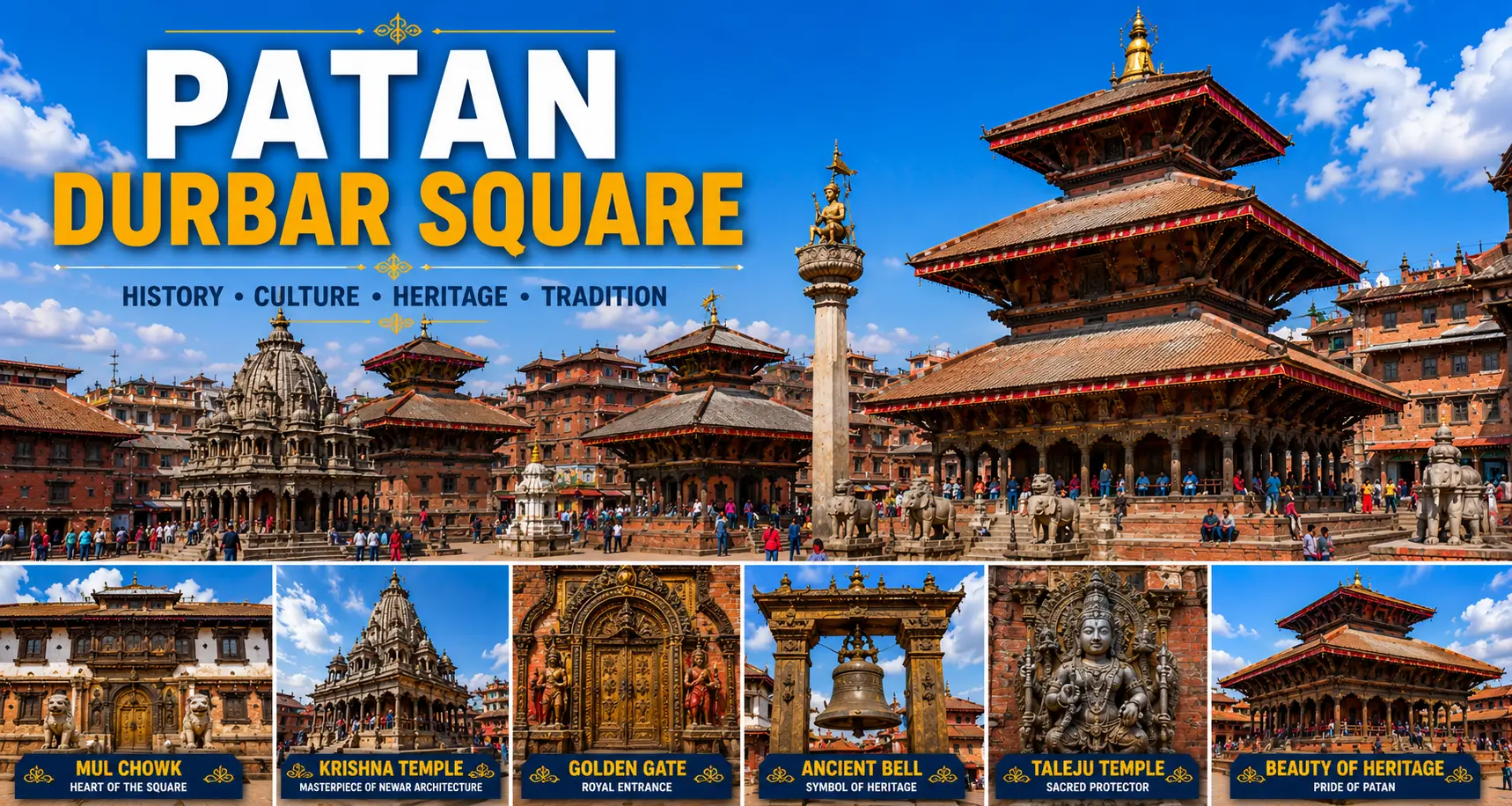
Patan Durbar Square: The Finest Newari Architecture in Nepal
Location: Mangal Bazar, Lalitpur (Patan) | UNESCO: Listed 1979
Patan, historically known as Lalitpur, meaning ‘city of beauty’, was an independent Malla kingdom whose craftsmen and architects are widely regarded as the finest practitioners of the Newari building tradition, and Patan Durbar Square is the most elegant expression of that tradition anywhere in the valley.
The square’s central courtyard is lined on three sides by the Royal Palace of Lalitpur and on the fourth by a dense row of temples dedicated to Krishna, Vishnu, and associated deities, with the overall composition exhibiting a visual harmony that distinguishes Patan’s Durbar Square from the more organic accumulation of structures that characterises the Kathmandu and Bhaktapur squares.
The Patan Museum, housed within the royal palace and widely regarded as Nepal’s finest museum, presents an outstanding collection of bronze statues, religious objects, and architectural elements with comprehensive interpretation that places Newari art within its historical and religious context, making it an excellent first stop before exploring the square and the surrounding Patan old city, whose narrow lanes contain hundreds of individual courtyard temples, stone water spouts, and carved wooden torana doorframes that reward extended exploration well beyond the main Durbar Square precinct.
Bhaktapur Durbar Square: The Best-Preserved Medieval City in Nepal
Location: Bhaktapur city, 14km east of Kathmandu | Entry Fee: NPR 1,800 for SAARC visitors, US$15 for other foreign visitors | UNESCO: Listed 1979
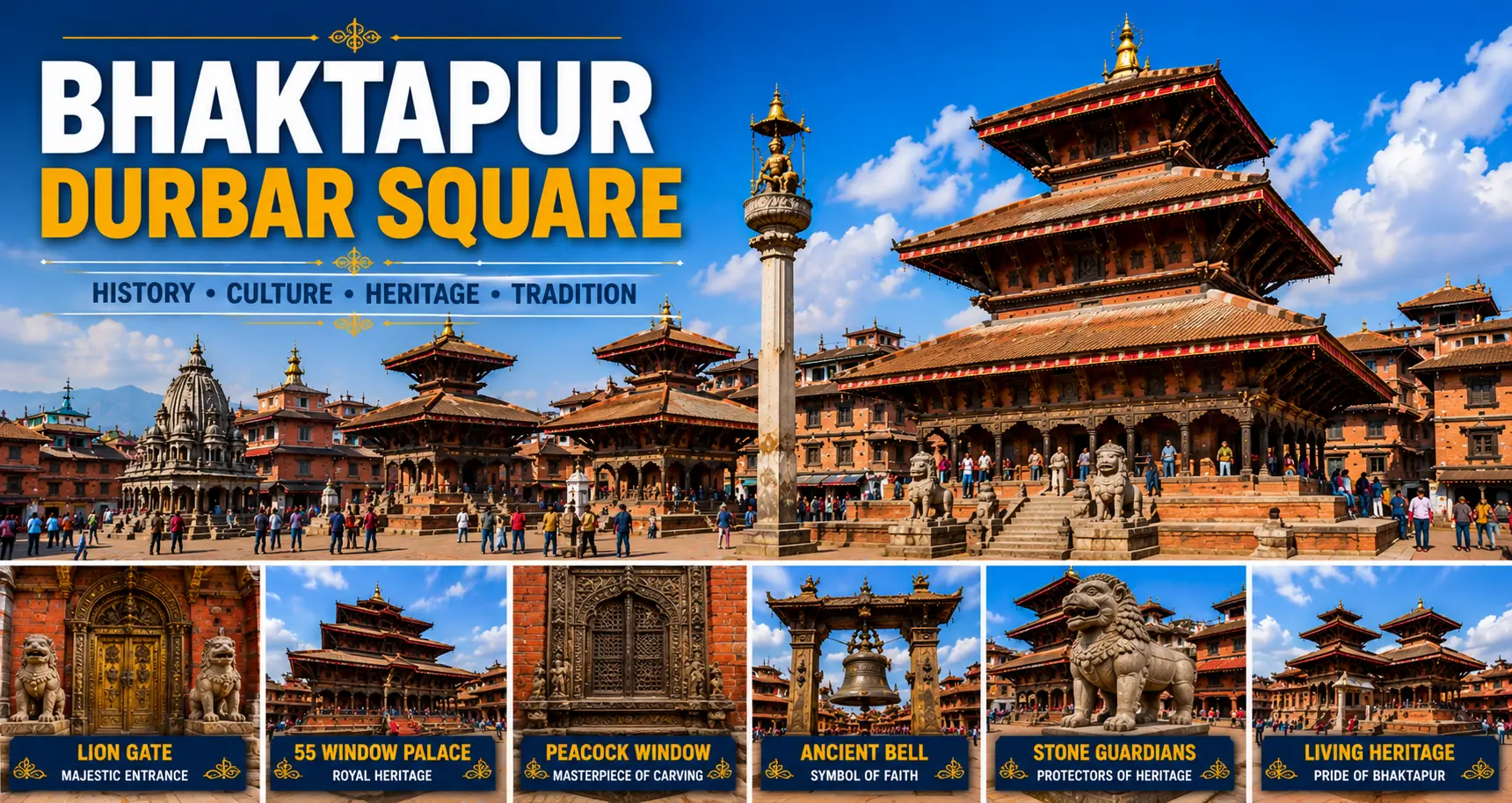
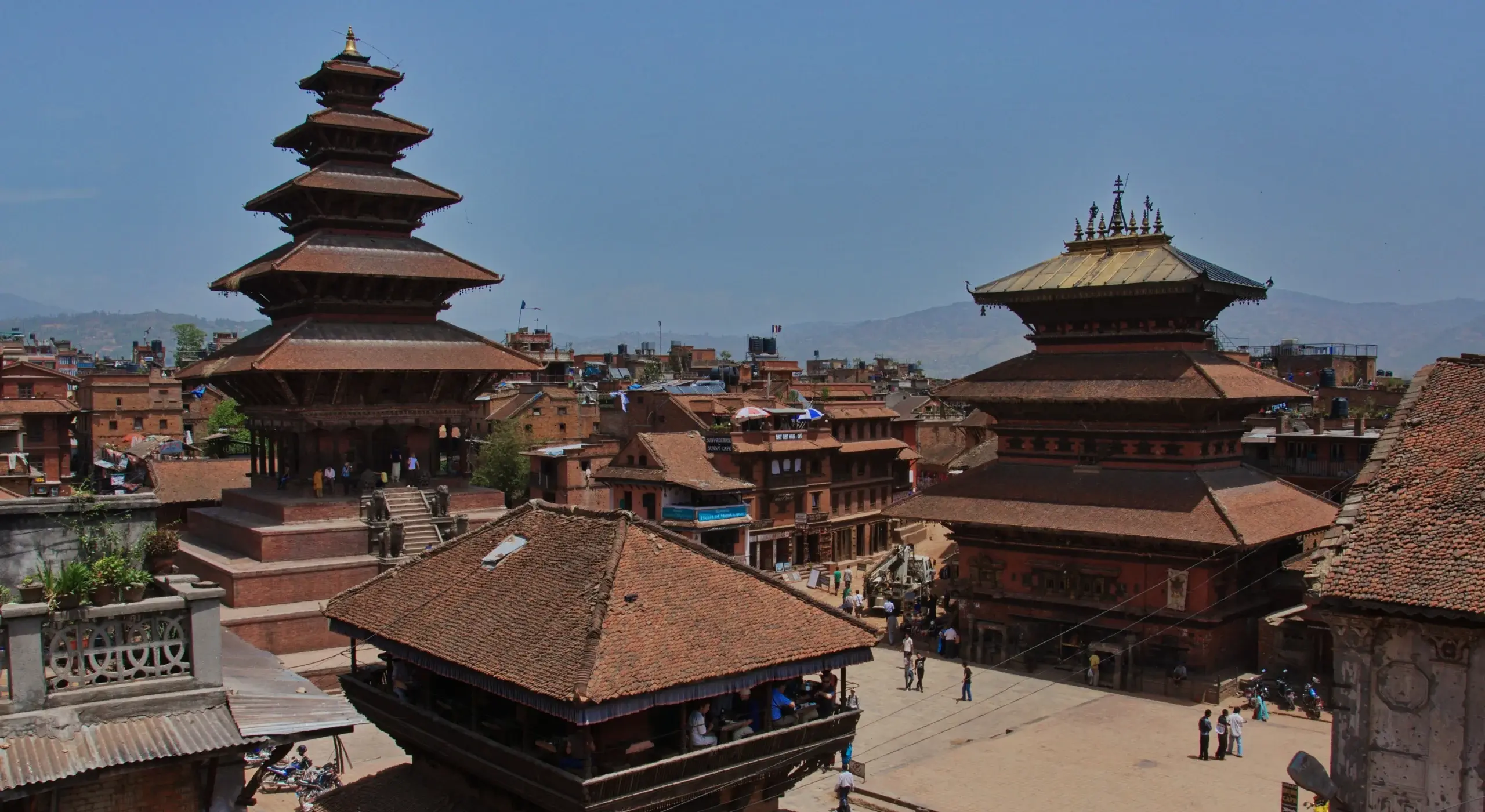
Bhaktapur, the easternmost of the three historic Malla kingdoms in the Kathmandu Valley, is widely regarded as Nepal’s most completely preserved medieval city, with a historic core that has retained its traditional urban fabric of brick streets, carved wood townhouses, and courtyard temples to a degree that neither Kathmandu nor Patan matches.
The city’s strict vehicle restrictions within the historic centre, combined with an entry-fee system that funds ongoing maintenance and limits casual footfall, have created a preservation environment that keeps Bhaktapur closer to its historical character than anywhere else in the valley. The famous Bhaktapur Durbar Square day tour from Kathmandu is one of the most popular half-day excursions for foreign visitors to the valley, combining architecture, ceramics workshops, and the renowned local Juju Dhau yoghurt in a single short trip.
The Durbar Square itself features several of the most photographed structures in Nepal, including the 55-Window Palace, named for its Palaceordinary carved wood window gallery overlooking the main square, the Nyatapola Temple, Nepal’s tallest standing pagoda at five stories rising 30 meters above its stone plinth, and the Bhairabnath Temple, dedicated to the tantric deity Bhairab. Potters’ Square, a short walk from Durbar Square, remains an active production centre where local potters continue traditional techniques unchanged across many generations, and the main Taumadhi Square to the east of the Durbar offers additional temple architecture centred on Nyatapola’s immediate neighbourhood.
Changu Narayan: Nepal’s Oldest Hindu Temple
Location: Changu village, Bhaktapur district, 22km from Kathmandu | Entry Fee: NPR 300 (approx. US$2.60) for foreign visitors | UNESCO: Listed 1979
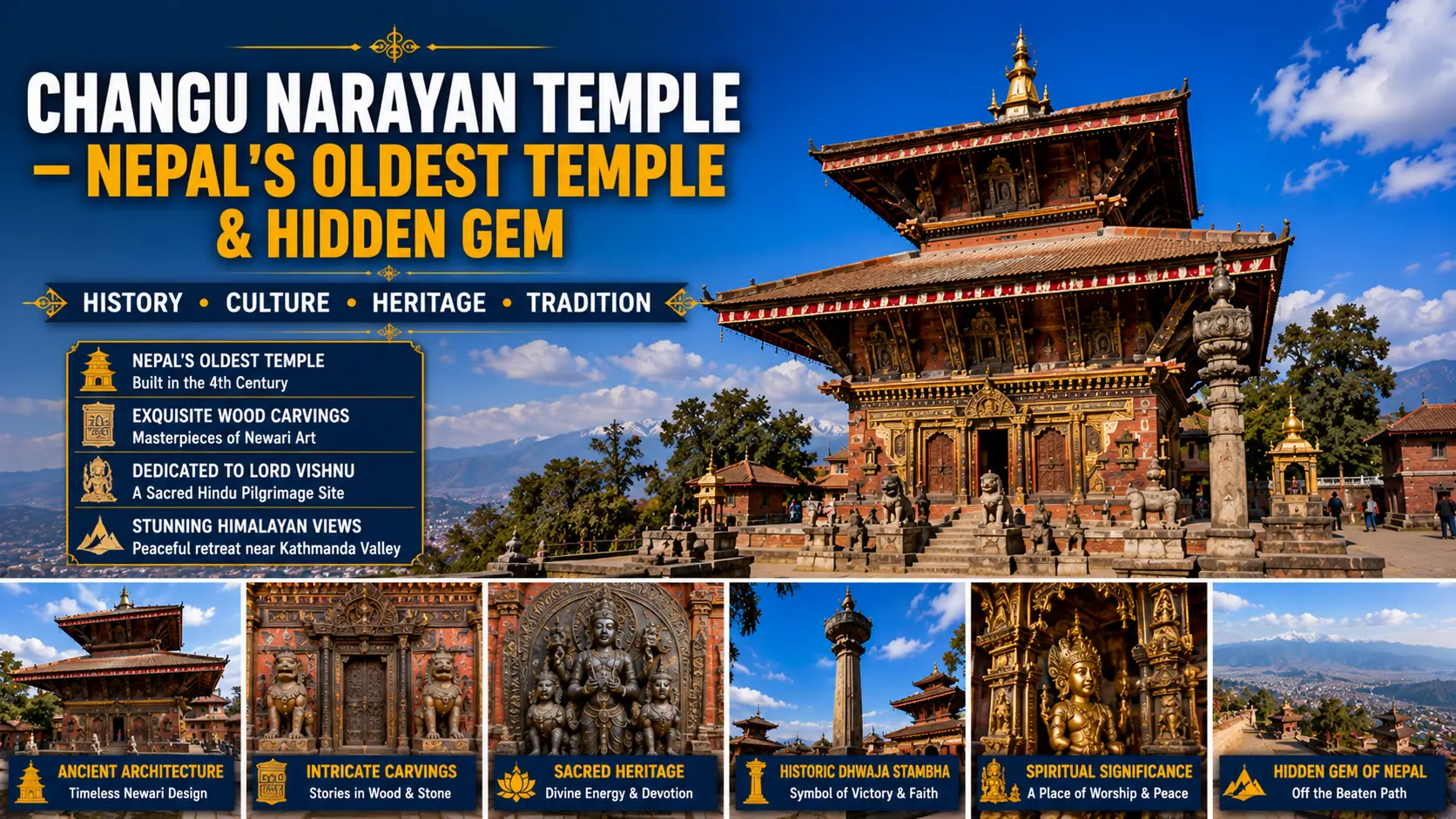
Changu Narayan Temple, perched on a forested ridge north of Bhaktapur, is considered Nepal’s oldest Hindu temple in continuous use, with the site dating to the Lichhavi period and the current main structure dating to the 4th century. However, it was subsequently rebuilt in 1702 after a fire.
Dedicated to Lord Vishnu, the temple complex is remarkable for its extraordinary collection of stone inscriptions and sculptures spanning many centuries, including what is considered the oldest known stone inscription in Nepal, a 5th-century Lichhavi text carved in Sanskrit, alongside stone carvings depicting Vishnu avatars, including Narasimha, the man-lion form, and Vishvarupa, the cosmic form of Vishnu displaying all of creation within his divine body.
Changu Narayan is set within a traditional Newar village whose residents continue to practice traditional farming and craft-based livelihoods, giving the site a genuine living-community context that differentiates it from the more urbanised temple complexes in central Kathmandu.
Many visitors walk to Changu Narayan from Bhaktapur through terraced farmland and rural villages, a roughly two- to three-hour trek that offers a genuinely local perspective on the countryside before arriving at the temple’s forested hilltop setting.
Lumbini: The Birthplace of the Buddha
Location: Rupandehi district, Terai region, western Nepal | UNESCO: Listed in 1997
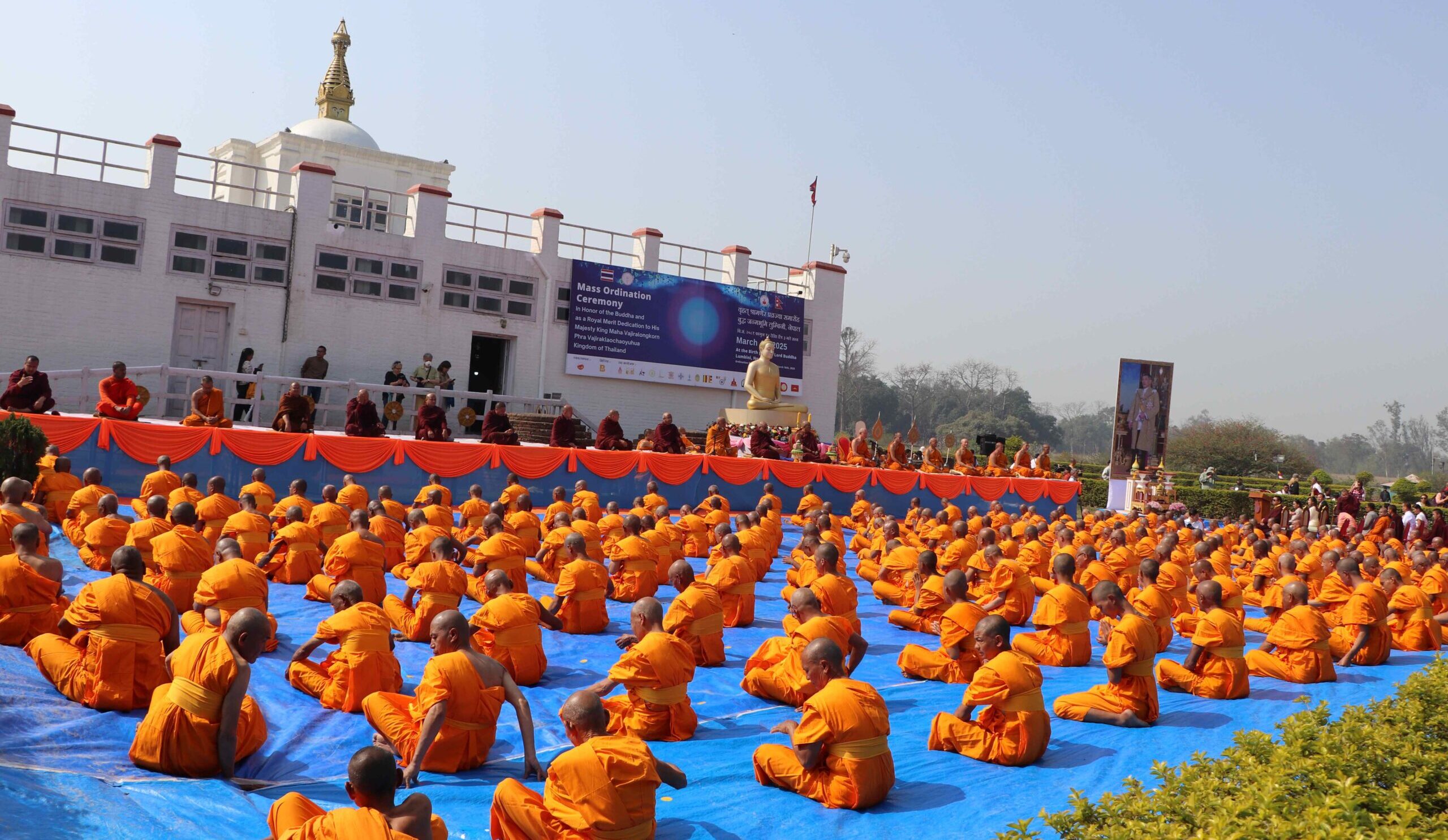
Lumbini is one of the four most sacred sites in all of Buddhism, alongside Bodh Gaya (where the Buddha attained Enlightenment), Sarnath (where he delivered his first sermon), and Kushinagar (where he died), and its identification as the specific birthplace of Siddhartha Gautama, the historical Buddha born in approximately 563 BCE, is supported by both Buddhist textual tradition and tangible physical evidence in the form of the Ashoka Pillar, erected by the Mauryan Emperor Ashoka during his pilgrimage to Lumbini in 249 BCE and bearing an inscription that specifically identifies the site as the birth place of the ‘Buddha Shakyamuni’. You can reach Lumbini from Kathmandu by bus or take the shorter route from the nearest major highway city, Bhairahawa.
At the centre of the UNESCO-protected Lumbini Garden stands the Maya Devi Temple, a modern protective structure built over the ancient foundations that mark the precise spot of the Buddha’s birth, revealed through archaeological excavations in the 1990s. The Sacred Garden immediately surrounding the Maya Devi Temple contains the Ashoka Pillar, the sacred Puskarini pond where the Buddha’s mother, Maya Devi, is said to have bathed before giving birth, and a Bodhi tree growing over the exact birth site.
The broader Lumbini monastic zone, designed by Japanese architect Kenzo Tange in the 1970s as a master plan encompassing square kilometres of dedicated Buddhist precinct, contains monasteries constructed by Buddhist communities from around the world — Thai, Japanese, Chinese, Korean, Sri Lankan, Burmese, German, Vietnamese, and many others — each built in the distinct architectural style of its originating tradition, creating an extraordinary comparative gallery of world Buddhist architecture within a single walkable complex.
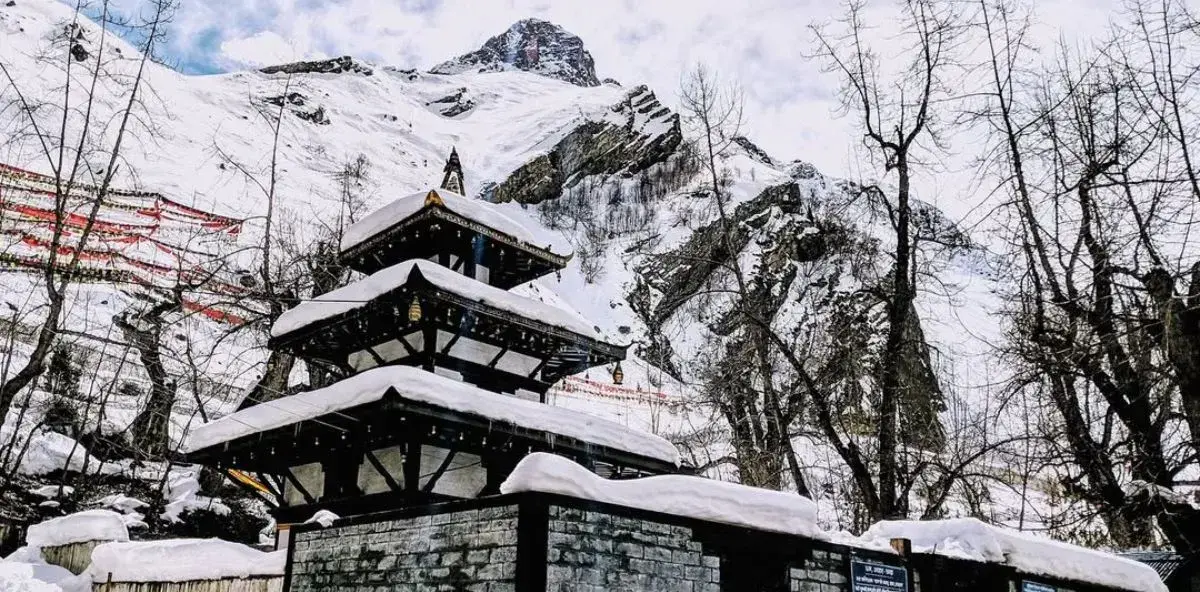
Muktinath Temple: Sacred to Both Hindus and Buddhists
Location: Mustang district, 3,710 meters altitude | Access: By jeep from Jomsom or on foot from the Annapurna Circuit
Muktinath, sitting at over 3,710 meters in the Mustang district north of the Annapurna range, holds a unique position in Nepal’s religious landscape as a site considered equally sacred by both Hindu and Buddhist traditions. For Hindus, Muktinath is one of 108 Vishnu shrines in the world and an important point on the Char Dham pilgrimage circuit, with the main temple’s sacred flame, burning continuously at a natural gas vent in the rock, representing the five elements held sacred in Hindu cosmology.
For Tibetan Buddhists, Muktinath is known as Chumig Gyatsa, meaning ‘hundred waters’, referring to the 108 sacred water spouts arranged in a semicircle around the main complex, through which pilgrims walk during ritual purification.
The combination of spiritual significance, a dramatic high-altitude setting, and relatively recent improvements in road access via the expanding Mustang jeep network has made Muktinath one of Nepal’s fastest-growing pilgrimage destinations for both domestic and international visitors. Pilgrims typically reach the temple via Jomsom, by flight from Pokhara or overland by 4WD jeep hire, with the final approach to the temple complex either on foot or by a short vehicle transfer on the partially paved road from Jomsom toward the upper villages.
Travellers combining a Muktinath pilgrimage with Pokhara sightseeing can arrange dedicated jeep hire in Nepal for the complete overland circuit, which increasingly includes road access through the Kali Gandaki valley, supplementing or replacing the traditional Jomsom flight option.
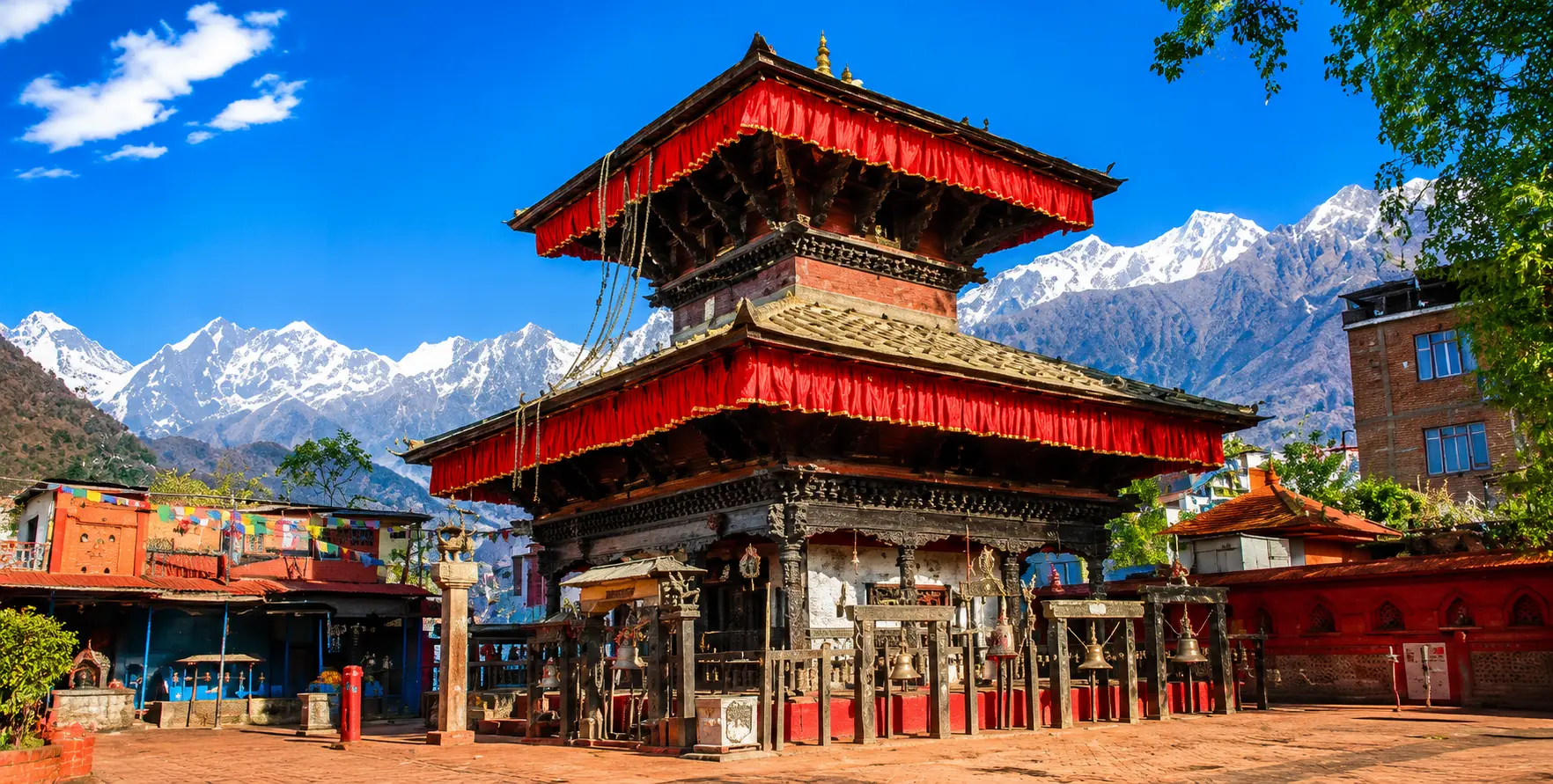
Manakamana Temple: The Wish-Fulfilling Goddess
Location: Gorkha district, 1,302 meters above the Trisuli Gorge
Manakamana Temple, dedicated to the goddess Bhagwati in her wish-fulfilling aspect, sits on a dramatic cliff-top promontory above the Trisuli River gorge, roughly midway between Kathmandu and Pokhara. The goddess is believed to fulfil the sincere wishes of devoted pilgrims, drawing enormous numbers of Nepali worshippers for whom this is one of the country’s most actively worshipped temples, particularly for marriage blessings, newborn ceremonies, and business prayers.
The temple is now accessible by cable car from Kurintar on the Prithvi Highway. This journey takes roughly 10 minutes and offers extraordinary views of the gorge and the Himalayas, making it a popular stop for travellers already travelling overland between Kathmandu and Pokhara.
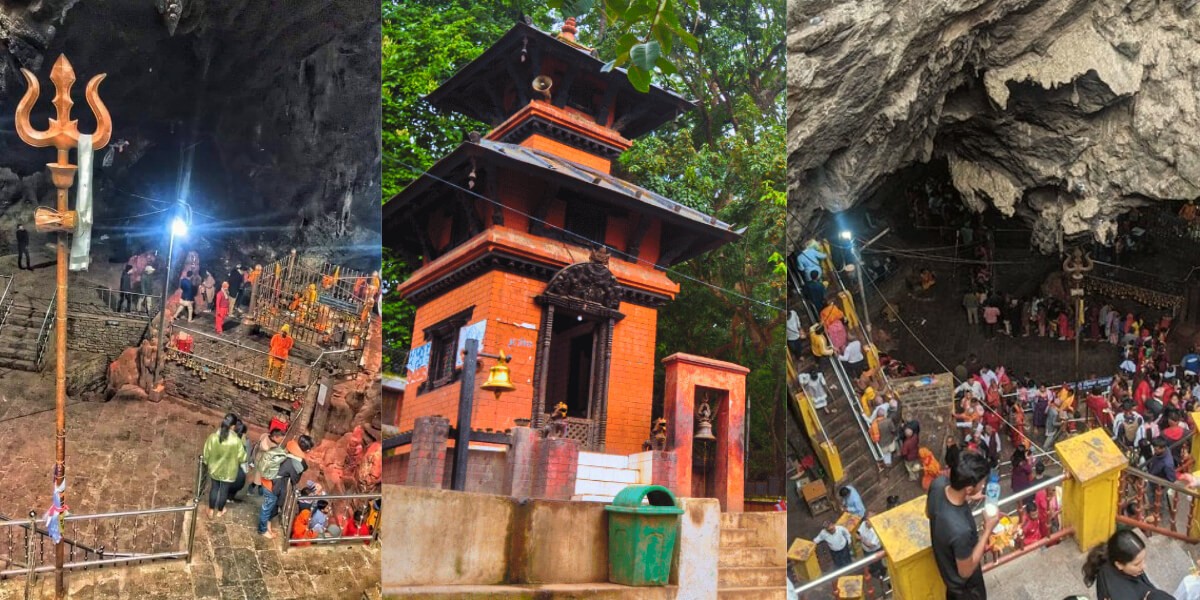
Halesi Mahadev Temple: The Kailash of the East
Location: Khotang district, eastern Nepal
Halesi Mahadev Temple, located in the Khotang district of eastern Nepal, is one of the country’s most sacred Shiva temples and is sometimes described as the Kailash of Nepal or the Kailash of the East, referring to its status as a high-importance Shiva site comparable in spiritual significance to Mount Kailash in Tibet.
The temple complex includes a series of natural caves that Hindu and Buddhist traditions attribute to the deity’s presence, with the main cave shrine dedicated to Shiva and adjacent caves associated with Guru Padmasambhava and other figures important to the local blend of Hindu and Vajrayana Buddhist practice.
Halesi remains less visited by foreign tourists than the Kathmandu Valley sites or Muktinath, giving it a more authentically pilgrimage-oriented atmosphere during its major festival periods, particularly the Maha Shivaratri celebrations that draw large numbers of Hindu pilgrims from both Nepal and India each February or March.
The 2015 Earthquake and Nepal’s Heritage Recovery
The April 2015 Gorkha earthquake, which struck with a magnitude of 7.8, severely damaged several of Nepal’s most important cultural heritage sites, including Kathmandu Durbar Square, Patan, Bhaktapur, Changu Narayan, Swayambhunath, and numerous smaller temple complexes throughout the valley and beyond. Initial assessments estimated that hundreds of historically significant structures suffered major damage or complete collapse, with Kathmandu Durbar Square losing the Kasthamandap and Trailokya Mohan Narayan temples, among others, entirely.
The decade since 2015 has seen considerable progress in restoration, supported by Nepali government funding, UNESCO involvement, and bilateral assistance from India, China, the United States, and European nations. Restoration work uses traditional materials and artisanal techniques wherever possible, with significant effort invested in training a new generation of Nepali craftspeople in traditional woodcarving, bricklaying, and metalwork to authentically reconstruct damaged structures, rather than simply replacing them with modern materials that would not match the original visual and structural character.
Restoration workshops at Kathmandu Durbar Square and Bhaktapur have become a living part of the heritage, where visitors can watch master craftspeople use traditional techniques in the open air alongside the monuments being repaired. In 2026, visitors will find most major sites open and functioning. However, active restoration work continues at several locations, making the heritage recovery process itself a visible and interesting aspect of visiting these sites.
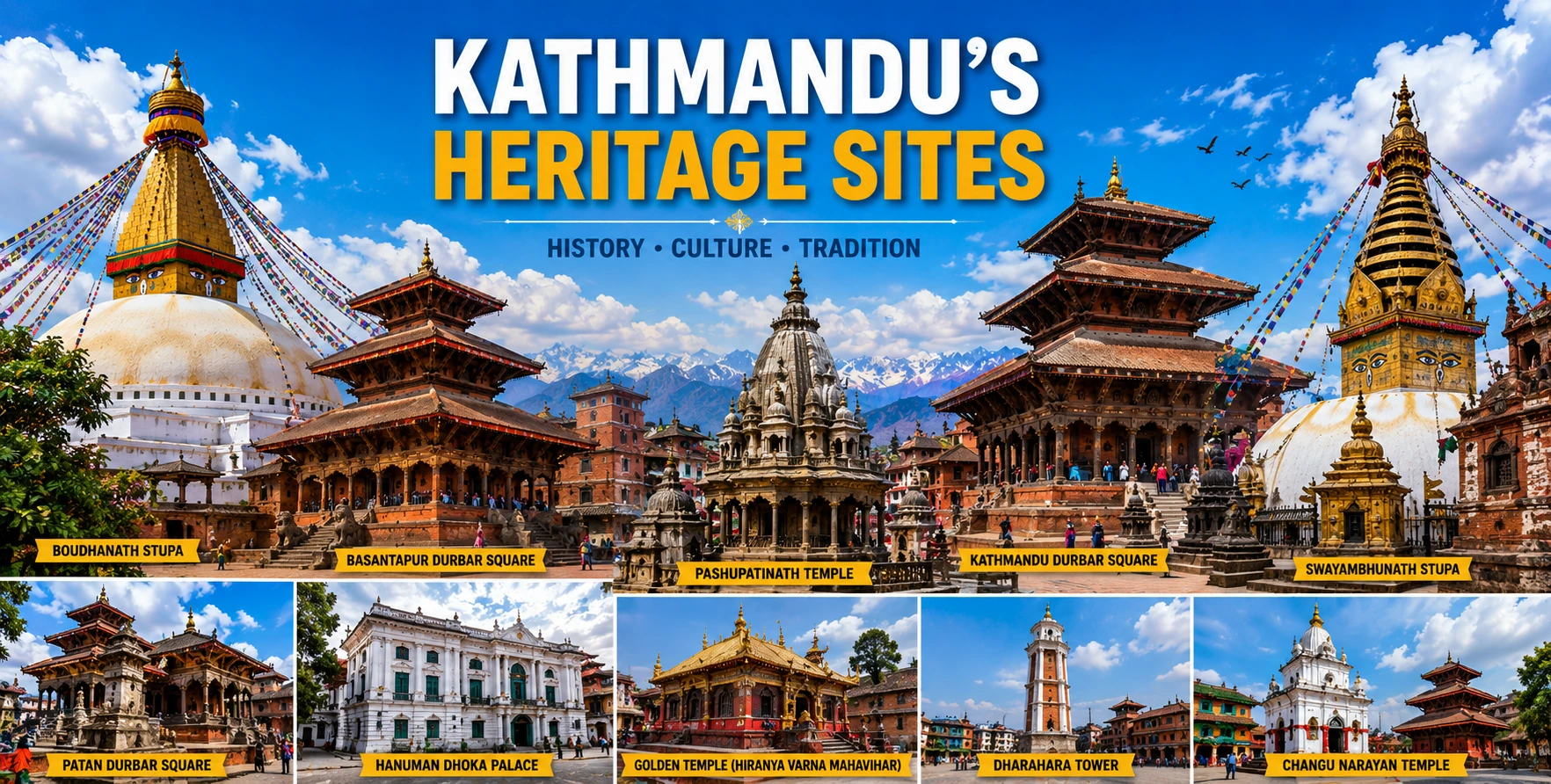
Practical Tips for Visiting Nepal’s Cultural Heritage Sites
Entry Fees (2026)
Foreign visitors pay site-specific entry fees at Nepal’s major heritage locations. As of 2026, the approximate fee structure for the most popular sites is: Kathmandu Durbar Square (NPR 1,000 / approx. US$8.60), Pashupatinath (NPR 1,000 / US$8.60), Boudhanath (NPR 400 / US$3.40), Swayambhunath (NPR 200), Changu Narayan (NPR 300 / US$2.60), and Bhaktapur (US$15 for non-SAARC foreign visitors, charged in USD or equivalent).
A combined Kathmandu Valley fee pass covering multiple sites is sometimes available but less commonly offered than individual site tickets; for visitors planning to cover all seven UNESCO monument zones in a single trip, it’s worth asking at the first site you visit about any available multi-site pass.
Dress Code and Temple Etiquette
Modest dress is expected at all of Nepal’s active religious sites, regardless of denomination: shoulders and knees covered is the reliable standard for both men and women, with loose-fitting trousers or long skirts more practical than shorts for a full day of temple touring. Remove shoes before entering any temple’s inner sanctum, and most sites provide basic shoe storage or allow visitors to leave their footwear at the doorstep.
Leather items, including shoes and belts, are sometimes prohibited in the most sacred inner sanctums of Hindu temples, reflecting traditional purity standards; check signage at individual sites.
Timing Your Visits
Most of Nepal’s urban heritage sites are open year-round, though autumn (October–November) and spring (March–May) offer the most comfortable temperatures and weather for extended outdoor sightseeing. Early-morning visits to Boudhanath and Pashupatinath capture the most authentic daily ritual atmosphere, with the kora circumambulation at Boudhanath particularly active before 8 am and the dawn puja at Pashupatinath drawing significant numbers of devotees before tourist numbers build throughout the morning.
The Pashupatinath evening Aarati, timed to sunset, is the best moment of the day at that site and worth arranging an afternoon visit around.
Getting Between Sites
Kathmandu’s cultural heritage sites are distributed across a broad urban area, making it impractical to walk between them in a single day. A private Kathmandu sightseeing tour by car or Hiace van remains the most time-efficient way to cover multiple sites. At the same time, Bhaktapur requires a dedicated day-tour vehicle from Kathmandu, about 14 kilometres east of the city centre. A Kathmandu-to-Nagarkot drive can include a Bhaktapur stop along the same route, making excellent use of a single day when returning from a Nagarkot sunrise excursion.
Suggested Heritage Temple Itineraries
One Day: Kathmandu Valley Highlights
Morning: Boudhanath kora and monastery visit, followed by Pashupatinath, with an afternoon at the Bagmati riverside. Afternoon: Kathmandu Durbar Square and Kumari courtyard. All three sites can be comfortably covered with a single Kathmandu sightseeing car or Hiace, arranged for the full day.
Two Days: All Seven UNESCO Zones
Day 1 covers Kathmandu Durbar Square, Boudhanath, Pashupatinath, and Swayambhunath. Day 2 covers Bhaktapur Durbar Square, Patan Durbar Square, and Changu Narayan, with an afternoon in Bhaktapur and a walk or vehicle ride to Changu Narayan from the nearby village.
Extended Heritage and Pilgrimage Circuit
For travellers combining Kathmandu’s UNESCO sites with Muktinath and Lumbini, the full circuit typically runs across five to seven days: two days covering Kathmandu Valley sites, an overnight to Lumbini via the Kathmandu to Lumbini bus with a full day at the birthplace site, followed by a return to Kathmandu and then either a flight to Jomsom or an overland jeep route toward Muktinath, combined with the broader Mustang district exploration before returning south.

Newari Festivals and Their Connection to Temple Culture
Nepal’s religious calendar is inseparable from its temple heritage, since almost every major festival in the Kathmandu Valley is physically anchored in one or more of its great temple complexes. Indra Jatra, the festival of the rain god Indra celebrated in Kathmandu Durbar Square each August or September, features the public procession of the living goddess Kumari through the streets, watched by tens of thousands of spectators from rooftops, windows, and every vantage point in the old city.
The chariot-pulling ceremony of Bisket Jatra in Bhaktapur in April is centred on the Bhairabnath Temple, with the enormous ceremonial chariot of the deity pulled through the narrow streets by hundreds of devotees in a display of collective devotion that has no close parallel anywhere else in the world, combining the physical effort of the chariot pull with musical processions, street performances, and the ritual raising and lowering of a massive ceremonial pole that marks the Newar new year at the festival climax.
Maha Shivaratri, the great night of Shiva celebrated in February or March, transforms Pashupatinath into Nepal’s largest single religious gathering, drawing hundreds of thousands of devotees and sadhus from Nepal and India for an all-night vigil that turns the entire complex into a sea of devotional activity and sacred fire.
These festivals offer foreign visitors a rare opportunity to witness Nepali religious culture not as a backdrop to daily life but as the full, active foreground, entirely dominating the city’s public space for days at a time. Planning a Nepal trip around one of these major festivals, and ensuring transport is arranged before the peak festival period when private vehicles and accommodation become significantly harder to secure on short notice, produces one of the most culturally immersive travel experiences available anywhere in Asia.
The Living Goddess Kumari: Nepal’s Most Unique Religious Tradition
No account of Nepal’s temple culture is complete without the Kumari tradition, which is unique in the world and deeply embedded in the Newari religious culture of the Kathmandu Valley. The Kumari is a pre-pubescent girl selected through elaborate ritual and astrological screening to serve as a living manifestation of the goddess Taleju, the royal protective deity of the Malla kingdoms, who resides in the Kumari Ghar, or Kumari House, adjacent to Kathmandu Durbar Square and in equivalent residences in Patan and Bhaktapur.
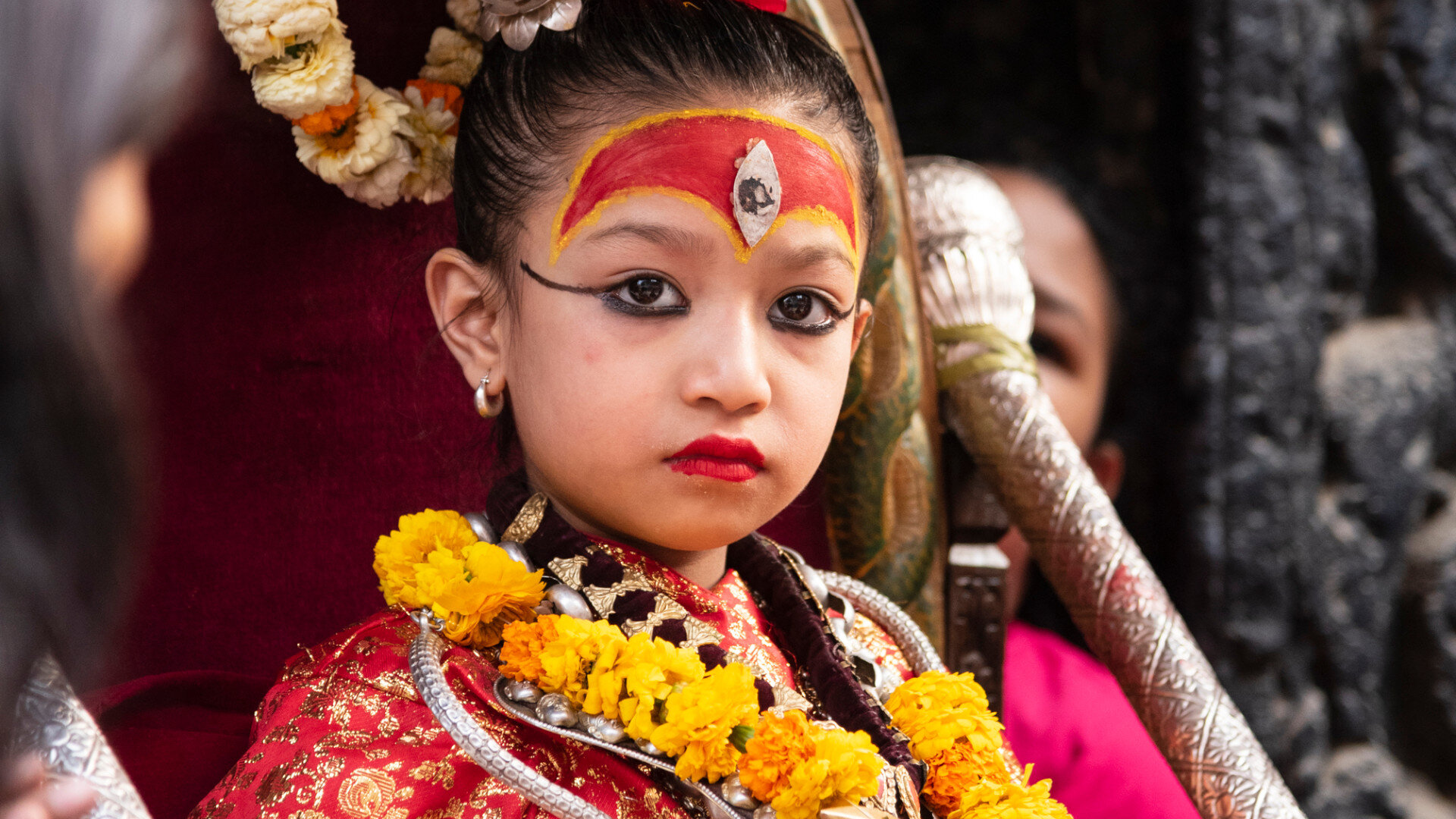
The Kumari is ceremonially revered during her carefully choreographed public appearances at major festivals, where she dispenses blessings through touch and symbolic gesture to ordinary citizens and, historically, Nepal’s monarchs. The tradition reflects a distinctive Newari theological understanding in which the divine is believed to be genuinely present in human form under the right ritual conditions, rather than merely symbolically represented. Foreign visitors may catch a brief glimpse of the Kumari from the courtyard of Kumari Ghar, where she occasionally appears at a carved window. However, photography is prohibited, and visitors are expected to remain silent and respectful during these appearances.
Buddhist Monasteries and Their Role in Nepal’s Temple Culture
Alongside the great UNESCO-listed stupas and Hindu temple complexes, Nepal’s active monastery network forms an essential part of the country’s living religious culture that foreign visitors should not overlook. The monasteries surrounding Boudhanath alone number in the dozens, ranging from large institutions with hundreds of resident monks and active retreat programs to small hermitage gompa on the hillsides above the valley.
Kopan Monastery, perched on a hill north of Boudhanath, is one of the most internationally recognised Tibetan Buddhist meditation centres outside Tibet, offering courses in Buddhist philosophy and meditation that draw students from across Europe, North America, and Australia, as well as local devotees.
The monastery also maintains a guesthouse for retreat participants, making it possible for travellers with a week or more available to combine a Boudhanath visit with a short residential meditation course in a setting that overlooks the stupa from its hilltop position, a combination of heritage tourism and contemplative practice unusual enough to have attracted genuinely enthusiastic reviews from travellers who would not otherwise have described themselves as meditation practitioners.
In the Everest region, Tengboche Monastery, sitting at roughly 3,870 meters with Everest, Lhotse, and Ama Dablam simultaneously visible from its courtyard, hosts the annual Mani Rimdu festival, a masked dance ceremony celebrating the triumph of Buddhism over older shamanistic traditions, drawing both Sherpa community members and trekkers whose itineraries happen to align with the festival’s lunar-calendar dates. The monastery was rebuilt after a fire in 1989 and remains the spiritual heart of the Khumbu Sherpa community, as well as one of the most dramatically situated monastery complexes in the world.
Heritage Architecture Beyond the Kathmandu Valley
While the Kathmandu Valley’s seven UNESCO monument zones rightly dominate most discussions of Nepal’s cultural heritage, significant temple and heritage architecture exists well beyond the valley, offering foreign visitors who venture further afield genuinely rewarding encounters with regional religious traditions often far less visited than the capital’s major sites.
Gorkha Durbar, the ancestral palace and temple complex of the Shah dynasty in Gorkha, roughly midway between Kathmandu and Pokhara, offers a remarkable hilltop complex of pagoda temples and palace buildings with commanding Himalayan views, and it sits directly along the drive route between Kathmandu and the Annapurna region trailheads.
The Bindabasini Temple in Pokhara, dedicated to the goddess Bhagwati and set in an atmospheric old-city location near Pokhara’s bazaar, is the most important active Hindu temple in the Pokhara valley, drawing daily local devotee traffic and offering a more authentically community-oriented experience than the larger, more tourist-adapted temples of Kathmandu. Travellers based in Pokhara who arrange car hire for day trips typically include the Bindabasini Temple, Phewa Lake, and Sarangkot in a single relaxed day of local sightseeing.
Stone Inscriptions, Bronze Statues, and Woodcarving: The Art Forms of Nepal’s Temples
The artistic traditions embedded within Nepal’s temple complexes are as remarkable as the architecture itself, and understanding them transforms a temple visit from passive sightseeing into genuine aesthetic and intellectual engagement.
Newari metalwork, particularly the tradition of lost-wax bronze casting, produced some of Asia’s most sophisticated devotional sculptures, with examples in the Patan Museum and scattered across courtyard shrines throughout the valley, exhibiting technical and expressive qualities that have influenced Buddhist art across much of East and Southeast Asia.
Best cultural heritage temples in Nepal
The tradition continues today in Patan’s metalworking district, where artisan workshops still produce bronze statues using techniques unchanged across many generations, and visitors can watch the casting process firsthand in several open studios near the Durbar Square.
Woodcarving is perhaps the most visible of Nepal’s traditional temple arts, since it appears on virtually every significant temple structure in the valley, on window screens, roof struts, doorframes, torana gateway arches, and bracket figures.
The most intricate woodcarving in Nepal is generally concentrated in Bhaktapur and Patan, where examples dating to the 15th and 16th centuries survive in remarkable condition, depicting multi-armed deities, celestial musicians, erotic bracket figures believed to have a protective tantric function, and interlaced vine and floral motifs of extraordinary refinement.
Stone carving similarly reaches exceptional quality in the valley, with the Changu Narayan complex housing some of Nepal’s finest early Lichhavi-period stone sculptures, and Pashupatinath’s outer complex containing a remarkable accumulation of stone Shiva lingas, deity images, and carved water spouts accumulated across more than a millennium of continuous donation and worship.
Conservation Challenges and the Future of Nepal’s Temple Heritage
Preserving Nepal’s cultural heritage temples faces a complex set of challenges that go well beyond earthquake preparedness. Urban pressure around Kathmandu’s heritage zones, including new construction that encroaches on traditional sight lines and increases ground vibration from traffic and construction near fragile brick structures, represents an ongoing planning and governance challenge that UNESCO and the Nepali government continue to negotiate with developers and local authorities.
Climate change also introduces increasing risks, with more intense monsoon rainfall accelerating the deterioration of mortar joints between bricks and wooden structural elements in temple buildings designed for historical rainfall patterns rather than the heavier precipitation events now becoming more common.
Tourism management itself presents conservation challenges, since the high visitor numbers at the most popular sites, particularly Boudhanath, Pashupatinath, and the Bhaktapur Durbar Square, generate wear and vibration that compound over millions of annual visits. Entry-fee systems at major sites direct a portion of revenue toward maintenance.
Still, the gap between conservation costs and available funding remains significant, particularly for smaller, less-visited sites that lack the tourist traffic to generate meaningful entry-fee income yet require equally careful maintenance to prevent deterioration.
Guided vs Self-Guided Temple Visits: What to Know
Hiring a licensed local guide significantly deepens the experience at Nepal’s major heritage temples, since much of the iconographic meaning embedded in carvings, sculptures, and ritual objects is not legible without background knowledge of Hindu and Buddhist cosmology, Newari history, and the specific deity hierarchies represented at each site.
UNESCO-registered guides operating in the Kathmandu Valley combine historical knowledge with practical, on-the-ground navigation of complex multi-compound sites, helping visitors prioritise what to see in limited time and interpret what they see, rather than simply photographing surfaces without context.
Nepal Vehicle Hiring Pvt Ltd can arrange vehicle transport coordinated with licensed guide services for a fully organised heritage temple day, covering multiple sites efficiently with professional interpretation throughout. For bookings, email [email protected] or WhatsApp +977 9851013196.
Self-guided visits remain entirely feasible for well-prepared travellers who research sites in advance, use quality guidebooks or audio guides where available, and allow enough time to explore beyond the most obvious main structures.
The risk of self-guided visits is spending most of your time at the most-photographed central monument while missing smaller courtyards, subsidiary shrines, and incidental street-level details that experienced guides and repeat visitors consistently cite as among their most memorable encounters at each site.
Frequently Asked Questions
How many UNESCO World Heritage Sites are in Nepal?
Nepal has four UNESCO World Heritage Sites: two cultural (Kathmandu Valley, listed in 1979, covering seven individual monument zones, and Lumbini, listed in 1997) and two natural (Sagarmatha National Park and Chitwan National Park).
Can non-Hindus enter Pashupatinath Temple?
Non-Hindu visitors are not permitted inside the main Pashupatinath temple’s inner sanctum. Still, they can freely access the outer complex and view the main temple building from the eastern bank of the Bagmati River, which offers an excellent, deeply atmospheric perspective on the complex, including the sacred ghats where cremations take place.
What is the best temple to visit in Nepal for first-time visitors?
Boudhanath Stupa is widely considered the most accessible and atmospherically powerful first temple visit in Nepal, combining manageable entry fees, an inclusive atmosphere that welcomes all visitors to participate in the kora circumambulation, and a consistently active spiritual atmosphere regardless of time of day or year.
Is Bhaktapur worth the entry fee?
Yes. Although it’s the most expensive single site in the Kathmandu Valley for foreign visitors, Bhaktapur offers the most completely preserved historic city environment in Nepal, with a density of architectural and cultural experiences throughout the old city that easily justifies a full half-day or day of exploration well beyond Durbar Square itself.
How do I get to Lumbini from Kathmandu?
The most comfortable and economical option for most travellers is the Kathmandu-to-Lumbini bus service, with the return journey handled by the Lumbini-to-Kathmandu bus. A domestic flight to Bhairahawa Airport, followed by a short local taxi or vehicle to Lumbini, is faster but more expensive.
How do I reach Muktinath Temple?
Muktinath is typically reached by flying from Pokhara to Jomsom, followed by a short jeep or vehicle transfer, or by an overland 4WD jeep route through the Kali Gandaki Valley, which has become increasingly popular as the road network toward Mustang has expanded. For queries about vehicle hire to Muktinath, contact us at [email protected] or WhatsApp +977-9814227196
Final Thoughts: Why Nepal’s Temples Are Unlike Anywhere Else
What distinguishes Nepal’s cultural heritage temples from comparable sites elsewhere in Asia is how deeply they remain embedded in active, living religious practice rather than becoming purely heritage-tourism attractions. The priests conducting daily puja at Pashupatinath, the monks performing kora at Boudhanath, the pilgrims ascending Swayambhunath’s steps at dawn—none of these is staged for foreign visitors.
They continue traditions that predate the concept of heritage tourism by many centuries, with or without an audience of camera-carrying visitors. This authenticity is ultimately Nepal’s most irreplaceable cultural asset.
Visiting these sites responsibly — following dress codes, respecting photography restrictions at sensitive ritual moments, keeping voices low in active worship spaces, purchasing souvenirs from local artisan producers rather than imported mass-manufactured items, and hiring licensed local guides who can interpret the rich iconographic and historical complexity these temples contain — enriches both the visitor’s experience and the ongoing sustainability of the communities that maintain these extraordinary sites for future generations.
Nepal Vehicle Hiring Pvt Ltd arranges comfortable, wellwell-organisednsport to all of Nepal’s major cultural heritage sites, from a single Kathmandu sightseeing tour to a full pilgrimage circuit that combines Kathmandu, Lumbini, and Muktinath over a week or more. Browse our full range of vehicle hire in Nepal, or explore a complete Nepal tour package tailored to the heritage sites that matter most to you.
To plan your heritage temple journey, email us at [email protected], call or WhatsApp us at +977-9814227196, or visit our contact page—we are ready to help you experience Nepal’s extraordinary cultural heritage with the comfort and reliability your journey deserves.
- Best Cultural Heritage Temples in Nepal: A Living Museum of Faith and Architecture
- Understanding Newari Architecture: The Foundation of Nepal's Temple Heritage
- The 2015 Earthquake and Nepal's Heritage Recovery
- Practical Tips for Visiting Nepal's Cultural Heritage Sites
- Suggested Heritage Temple Itineraries
- Newari Festivals and Their Connection to Temple Culture
- The Living Goddess Kumari: Nepal's Most Unique Religious Tradition
- Buddhist Monasteries and Their Role in Nepal's Temple Culture
- Heritage Architecture Beyond the Kathmandu Valley
- Stone Inscriptions, Bronze Statues, and Woodcarving: The Art Forms of Nepal's Temples
- Frequently Asked Questions
- Final Thoughts: Why Nepal's Temples Are Unlike Anywhere Else

Related Blog & Articles
Kathmandu Historical Heritage Sites: The Complete Travel Guidey
Adventure Bike Hire in Nepal: The Complete Guide to Motorcycle Rentals
Muktinath Pilgrimage and Mustang Tour