Plan a Trip


Kathmandu to Halesi Mahadev Transport

Kathmandu to Halesi Mahadev Transport
Nestled in the ancient hills of Khotang District in eastern Nepal, Halesi Mahadev is one of the most spiritually powerful and historically significant pilgrimage destinations in the entire subcontinent. Known as the ‘Pashupatinath of Eastern Nepal’, the sacred Halesi cave complex is simultaneously revered by Hindus, Buddhists, and Kirant people — a rare convergence of three great spiritual traditions in a single sacred place that speaks to the extraordinary depth of Nepal’s religious heritage.
Every year, hundreds of thousands of pilgrims journey from Kathmandu and across Nepal to seek the blessings of Lord Shiva at Halesi Mahadev — particularly during Maha Shivaratri, when the ancient cave temple draws some of the largest religious gatherings in the country. The journey from Kathmandu to Halesi covers about 222 to 230 km through some of eastern Nepal’s most beautiful and culturally rich hill country, and the right mode of transport can make all the difference between a stressful journey and a smooth, spiritually enriching pilgrimage.
This complete transport guide covers every option for travelling from Kathmandu to Halesi Mahadev — private jeeps, private cars, Hiace vans, coaster buses, local buses, domestic flights, and helicopter charters — with full 2026 costs, the complete route breakdown, key stops, road conditions by season, festival timing advice, and expert tips from Nepal Vehicle Hiring Pvt Ltd.
Halesi Mahadev — Sacred Cave of Three Traditions
Halesi Mahadev (also written as Halesi Mahadeva or Halesi Mahadevsthan) is located in Halesi VDC, Khotang District, Sagarmatha Zone, in the hilly region of eastern Nepal. The sacred site sits between the Dudh Koshi River (flowing from the Khumbu Glacier to the east) and the Sun Koshi River (flowing from Tibet to the west)—a geographical position of profound religious significance in both Hindu and Buddhist cosmology.
Hindu Significance — Lord Shiva’s Sanctuary
According to Hindu tradition, Lord Shiva came to the Halesi caves to hide from the demon Bhasmashur, who had received a boon that anyone he touched would turn to ash, and who turned his destructive power against Shiva himself. Halesi became Shiva’s refuge, and the cave became his sacred abode. The two-foot Shiva Linga inside the main cave is the primary object of worship, and the famous narrow stone passage between two pillars near the Linga is believed to be passable only by those without sin — a test of righteousness that thousands of pilgrims attempt each year.
Buddhist Significance — Guru Rinpoche’s Meditation Cave
For Tibetan Buddhists and followers of Vajrayana Buddhism worldwide, Halesi is equally sacred as the site where Guru Padmasambhava — Guru Rinpoche, the ‘Second Buddha’ who brought Buddhism to Tibet — meditated in the Maratika Cave for three months, attaining the siddhi (spiritual power) of immortality and performing the longevity practices that became the foundation of Tibetan Buddhist longevity rituals. The Maratika Cave, adjacent to the main Halesi complex, is one of the most sacred Buddhist pilgrimage sites in the Himalayan world, attracting Tibetan Buddhist monks, lamas, and devotees from across Nepal, Tibet, India, Bhutan, and the wider global Buddhist community.
Kirant Significance — Ancient Pre-Hindu Heritage
The Kirant Rai people — the original indigenous inhabitants of the Halesi region — regard the cave complex as their most sacred ancestral site, predating both Hindu and Buddhist influence in the region. The Kirant tradition, one of the oldest surviving indigenous spiritual traditions in the Himalayas, venerates Halesi as the abode of Paruhang and Sumnima — the primordial Kirant deities — and the site of creation itself. This ancient reverence gives Halesi a unique quality found at very few places on earth: it is simultaneously sacred to three completely separate and independently ancient religious traditions.
- Location: Halesi VDC, Khotang District, Sagarmatha Zone, Eastern Nepal
- Altitude: Approximately 1,000 to 1,200 meters above sea level
- Distance from Kathmandu: ~222–230 km by road
- Sacred to: Hindus (Shiva temple), Tibetan Buddhists (Guru Rinpoche meditation cave), Kirant Rai (ancient indigenous tradition)
- Main features: Halesi Mahadev Cave, Maratika Cave, Shiva Linga, stone pillar, narrow pass, Jayaram Ghat
- Facilities: Guesthouses, tea houses, prasad shops, local restaurants, Halesi Bazaar
Key Transport Facts — Kathmandu to Halesi Mahadev
| Route Detail | Information |
| Total Road Distance | 222–230 km (Kathmandu to Halesi Mahadev) |
| Halesi Mahadev Altitude | 1,000–1,200 m (Khotang District, Eastern Nepal) |
| Travel Time by Private Jeep | 7 to 9 hours (one way, depending on road conditions) |
| Travel Time by Private Car | 7 to 7.5 hours (one way) |
| Main Route | Kathmandu → Dhulikhel → Nepalthok → Khurkot → Ghurmi → Okhaldhunga → Jayaram Ghat → Halesi |
| Highway Used | Araniko Highway → BP Koirala Highway → Mid-Hill Highway |
| Road Condition | Good to Okhaldhunga; rough / partially paved to Halesi beyond Jayaram Ghat |
| Best Season | Year-round — best: October to June; avoid peak monsoon (July–August) |
| Key Religious Festivals | Shivaratri, Shravan Sombar, Bala Chaturdashi, Ram Navami, Teej |
| Nearest Airport | Lamidanda Airport (KIA) — ~45 km from Halesi; domestic flight from TIA |
| Helicopter Option | KTM to Halesi: ~2 hours charter — available for pilgrimage tours |
| Permits Required | None for Halesi temple visit — entry is free |
Recommended Transport: A private jeep or car from Nepal Vehicle Hiring Pvt. Ltd. is the best option for pilgrims and visitors travelling from Kathmandu to Halesi Mahadev. With door-to-door hotel pickup, flexible departure times, air conditioning, and professional drivers experienced on this route, a private vehicle turns the 7- to 9-hour journey into a comfortable, memorable road trip through eastern Nepal’s beautiful hill country.
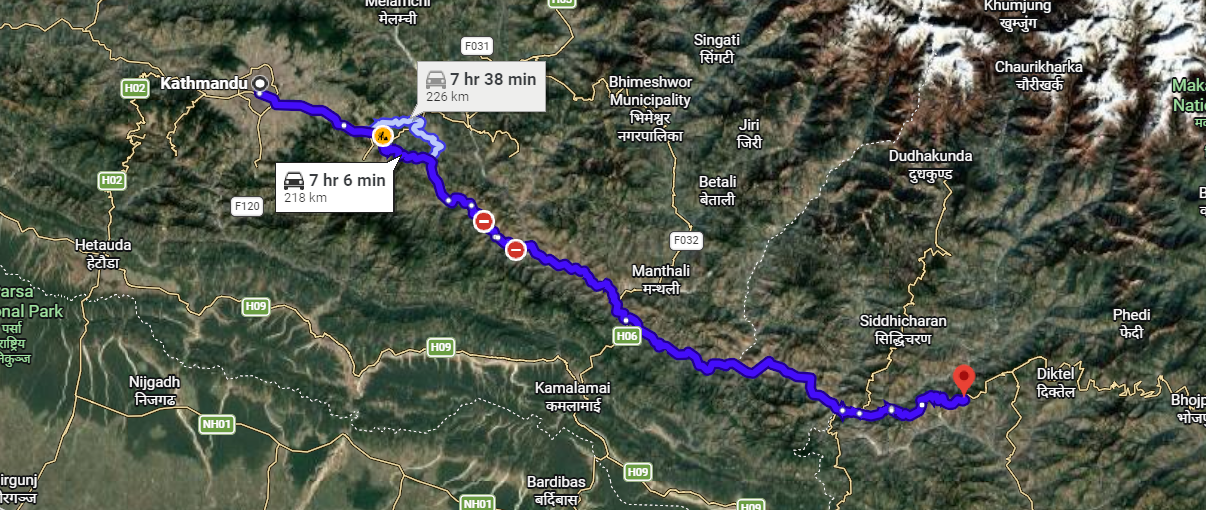
The Route — Kathmandu to Halesi Mahadev Step by Step
The Kathmandu to Halesi Mahadev road journey follows the Araniko Highway east from Kathmandu through Bhaktapur and Dhulikhel, then transitions onto the BP Koirala Highway toward Khurkot, and finally follows the Mid-Hill Highway north and east toward Okhaldhunga, Jayaram Ghat, and Halesi. The route passes through some of eastern Nepal’s most scenic and least-touristed landscapes — a fitting introduction to the spiritual journey ahead.
| Stop | Distance from KTM | Road Type | Key Notes |
| Kathmandu (Thamel) | Start | City roads | Departure — hotel pickup included |
| Bhaktapur | 16 km | Paved highway | Ancient UNESCO city — brief pass-through |
| Banepa | 30 km | Paved highway | Junction town — road turns east |
| Dhulikhel | 35 km | Paved highway | Hill station, Himalayan views, photo stop |
| Nepalthok | 55 km | Paved highway | Small town — occasional tea stop |
| Dolalghat | 65 km | Paved highway | Sunkoshi River confluence |
| Khurkot | 126 km | Paved highway | Standard breakfast/midpoint rest stop |
| Ghurmi Junction | 150 km | Paved highway | Turn northeast toward Okhaldhunga-Halesi |
| Okhaldhunga | 175 km | Paved with rough patches | District HQ — fuel, ATM, last good facilities |
| Jayaram Ghat | 200 km | Mixed/rough | River crossing area — scenic gorge |
| Diktel / Halesi Bazaar | 215 km | Rough road | Entry to the Khotang district, Halesi town area |
| Halesi Mahadev Temple | 222–230 km | Rough — local road | Sacred cave temple — journey’s end |
Kathmandu to Dhulikhel (35 km, 45 minutes)
The journey begins in Kathmandu’s Thamel district or at your hotel and heads east through Bhaktapur — the ancient UNESCO-listed city of Newari temples and traditional architecture — before passing through Banepa and climbing to the hilltop town of Dhulikhel. On a clear morning, Dhulikhel offers a panoramic view of the eastern Himalayan range — including peaks from Everest to Gaurishankar — and is genuinely one of the most spectacular roadside views in Nepal. Most drivers pause here briefly for photos on early-morning departures.
Dhulikhel to Khurkot (91 km, 2.5 hours)
Below Dhulikhel, the highway descends toward the Sunkoshi River at Dolalghat — the confluence of the Sunkoshi and Indrawati rivers. From here, the BP Koirala Highway follows the Sunkoshi River upstream through a beautiful, lush river gorge before climbing toward Khurkot. The scenery along this stretch — river rapids, forested gorge walls, traditional Tamang and Rai villages on the hillsides — is consistently beautiful. Khurkot is the standard breakfast stop for Kathmandu-to-Halesi travellers, approximately halfway to Okhaldhunga. Tea shops open from 5:00 AM and serve dal bhat, noodles, bread, and hot tea.
Khurkot to Okhaldhunga (49 km, 1.5 hours)
Above Khurkot, the route turns northeast through Ghurmi Junction and climbs steadily into the mid-hills of Okhaldhunga District. The road quality on this section is generally paved with some rough patches — a preview of the more challenging section ahead. Okhaldhunga town (approximately 175 km from Kathmandu) is the district headquarters of Okhaldhunga District and the last reliable point for ATM withdrawal, fuel, and substantial facilities before reaching Halesi. Nepal Vehicle Hiring Pvt Ltd drivers always refuel here.
Okhaldhunga to Jayaram Ghat to Halesi (55 km, 2 hours)
The final stretch from Okhaldhunga to Halesi is the most scenic and the roughest section of the journey. The road descends toward the Dudh Koshi River at Jayaram Ghat—a revered bathing ghat (sacred river bank) where many pilgrims take ritual purification baths before ascending to Halesi Mahadev. The road between Jayaram Ghat and Halesi is rough in places, with unpaved and partially constructed sections that require careful driving.
Nepal Vehicle Hiring Pvt Ltd’s experienced drivers know every bend of this final section and navigate it confidently. Upon arrival in Halesi Bazaar, the distinctive silhouette of the cave temple complex rises on the ridge above—the spiritual goal of the entire journey.

All Transport Options — Kathmandu to Halesi Mahadev
| Transport Option | Capacity | Cost (approx.) | Travel Time | Best For |
| Private Jeep (Scorpio) | 4–7 passengers | USD 200–300 | 7–9 hrs | Groups of 2–7, pilgrims, families |
| Private Car (Sedan) | 2–4 passengers | USD 150–250 | 7–7.5 hrs | Couples, small families |
| Private Hiace Van | 8–14 passengers | USD 260–400 | 8–9 hrs | Large pilgrim groups |
| Private Coaster Bus | 15–25 passengers | USD 370–520 | 9–10 hrs | Very large groups/tours |
| Local Bus (Kathmandu–Okhaldhunga) | Many passengers | NPR 800–1,200 per person | 10–13 hrs | Budget travellers — slow, crowded |
| Tourist Bus (Seasonal) | Many passengers | NPR 1,500–2,000 per person | 9–11 hrs | Budget group travel |
| Flight (TIA–Lamidanda) | Small aircraft | USD 100–130 per person | ~45 min flight + 1.5 hr road | Fast, expensive — weather-dependent |
| Helicopter (KTM–Halesi) | 4–5 passengers | USD 2,500–3,500 (full charter) | ~1.5–2 hrs | Luxury / time-critical pilgrimage |
Private Jeep — Best Option for Pilgrims and Families
A private 4WD jeep (Mahindra Scorpio, Toyota Hilux, or similar) is the most popular and recommended transport option for the Kathmandu-to-Halesi Mahadev journey. The rough road sections between Jayaram Ghat and Halesi Bazaar benefit from a jeep’s higher ground clearance and 4WD capability, and the comfortable interior makes the 7- to 9-hour journey manageable for pilgrims of all ages.
- Vehicle types: Mahindra Scorpio 4WD, Toyota Hilux 4WD, or similar
- Capacity: 4–7 passengers comfortably with luggage
- Cost: approximately USD 200–300 for the full vehicle, one way
- Round-trip cost: approximately USD 300–410
- Travel time: 7 to 9 hours one way
- Pickup: Door-to-door from your hotel anywhere in Kathmandu
- Includes: Driver, fuel, and all road tolls — all-inclusive pricing
Private Car (Sedan) — Comfortable for Small Groups
A private sedan (Toyota Corolla, Hyundai Sonata, or similar) is a comfortable, slightly more economical option for small groups of 2 to 4 people. The sedan handles the paved sections of the highway from Kathmandu to Okhaldhunga comfortably; the rough Jayaram Ghat-Halesi section requires more careful driving but is manageable for experienced drivers on this well-travelled route.
- Capacity: 2–4 passengers comfortably
- 2026 Cost: USD 150–250(one way, full vehicle)
- Best for: Couples, small families, 2–4-person pilgrim groups
Private Hiace Van — Best for Large Pilgrim Groups
For pilgrim groups of 8 to 14 people, a Toyota Hiace van is the most economical and practical option. The Hiace’s spacious interior is ideal for families with older adults and children who need more comfort on long journeys.
- Capacity: Up to 14 passengers
- 2026 Cost: USD 260–400 (one way, full vehicle)
- Best for: Large pilgrim families, community pilgrimage groups, religious organisations
- Note: The Hiace is recommended for the paved organisations — the Jayaram Ghat to Halesi rough section is better navigated by a 4WD jeep
Private Coaster Bus — Very Large Groups
For very large pilgrim groups or organised tours of 15 to 25 people, a coaster bus or tourist bus is the most economical per-person option on the well-maintained highway sections.
- Capacity: 15–25 passengers
- 2026 Cost: USD 370–600 (one way, full vehicle)
- Best for: Community groups, temple organisations, large family reunions
Domestic Flight — TIA to organisation
Lamidanda Airport (IATA: LDN) in Khotang District is the nearest domestic airport to Halesi Mahadev, approximately 45 km from the temple by road. Small STOL aircraft operate domestic flights from TIA Kathmandu to Lamidanda.
- Airlines: Small aircraft operators — Buddha Air, Tara Air (check current schedules as routes change)
- Flight time: Approximately 45 minutes to 1 hour
- Cost: Approximately USD 100–130 per person (one way)
- Road from Lamidanda to Halesi: ~45 km, approximately 1.5 to 2 hours by jeep or local vehicle
- Note: Flights are weather-dependent and may be cancelled during the monsoon or poor visibility; the schedule is limited
- Best for: Elderly pilgrims or those with limited time, willing to pay a premium for faster travel
Helicopter Charter — Premium Pilgrimage Option
A helicopter charter from Kathmandu to Halesi is available for pilgrims and visitors seeking the fastest and most scenic journey. Some operators land at or near Halesi, reducing total travel time to approximately 1.5 to 2 hours from Kathmandu.
- 2026 Cost: USD 2,500–3,500 for a full 5-seat helicopter charter (round trip)
- Travel time: ~1.5 to 2 hours from Kathmandu to Halesi by helicopter
- Aerial views: Spectacular — Everest range, Himalayan foothills, river gorges
- Best for: Luxury pilgrimage tours, elderly devotees with mobility limitations, VIP visits, very tight time schedules
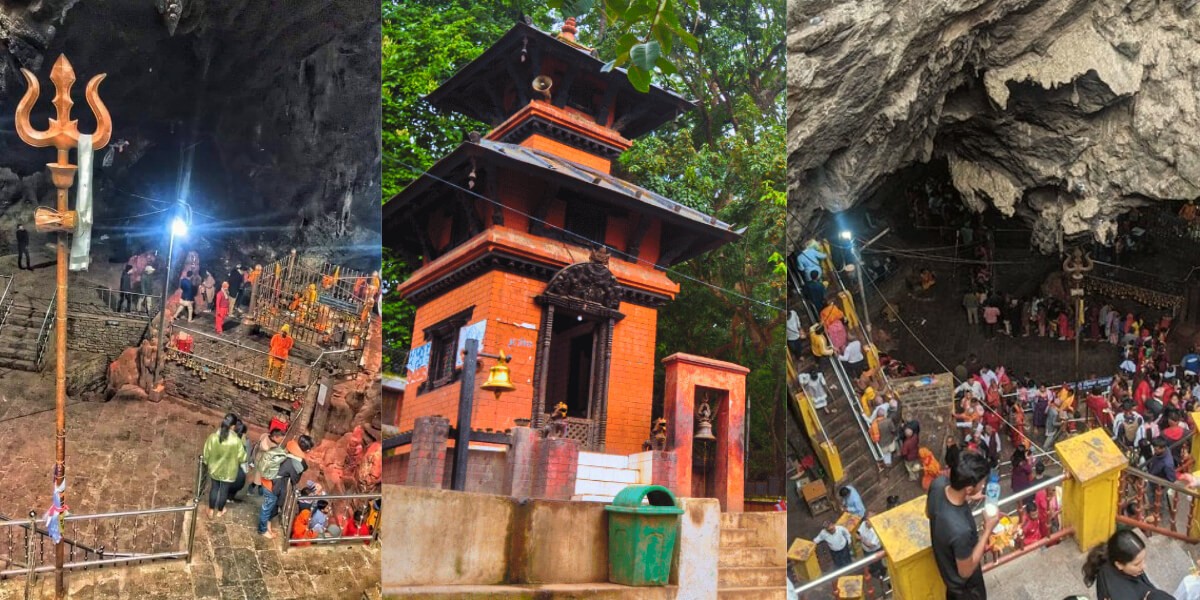
Sacred Sites at Halesi Mahadev — What to See and Do
| Sacred Site | Type | Significance |
| Halesi Mahadev Cave (Main) | Hindu / Shiva temple | Lord Shiva cave sanctuary — ‘Pashupatinath of the East.’ |
| Maratika Cave | Buddhist site | Guru Padmasambhava meditation cave — sacred to Tibetan Buddhism |
| Shiva Linga (Main) | Hindu shrine | Two-foot Shiva Linga inside the main cave — primary worship site |
| Two Stone Pillars (Narrow Pass) | Sacred gateway | Believed: sinners cannot pass through the test of righteousness |
| Jayaram Ghat | Riverside pilgrimage point | Sacred bathing ghat on Dudh Koshi river — purification ritual |
| Halesi Bazaar | Market and pilgrimage hub | Accommodation, prasad shops, local markets, guesthouses |
| Phulchoki Devi Temple | Hindu shrine | Local goddess temple near Halesi — culturally significant |
| Kirant Cultural Heritage | Living culture | Home of Kirant Rai people — unique pre-Hindu Himalayan culture |
Halesi Mahadev Main Cave — The Inner Sanctuary
The heart of the entire pilgrimage is the main Halesi Mahadev cave — a natural limestone cave of considerable depth and atmospheric power. As pilgrims enter through the cave’s narrow passages and descend toward the inner sanctum, thespace’s spiritual intensity is palpable. The two-foot Shiva Linga in the innermost chamber is the primary deity, adorned with offerings of flowers, dhatura leaves, milk, and water during puja ceremonies. The narrow passage between two stone pillars near the Linga—through which all pilgrims attempt to pass—is the cave’s most famous feature.
Tradition holds that those with pure souls pass through easily; others may struggle. Whether or not one subscribes to this belief, the ritual is a powerful and moving experience for all who undertake it.
Maratika Cave — Buddhist Jewel of Halesi
Adjacent to the main Halesi cave complex, the Maratika Cave is a separate and equally significant sacred site, particularly for Buddhist pilgrims. According to the gma and other Tibetan Buddhist traditions, Guru Padmasambhava and his consort, Mandarava, practised longevity sadhana (spiritual practice) in this cave for three months, received blessings of the Buddha Amitayus (Buddha of Long Life), and attained a rainbow body of immortal light.
A local Buddhist community decorates it with thangka paintings, butter lamps, and ritual offering bowls. Both Hindu and Buddhist pilgrims visit this cave, making it one of Asia’s most remarkable interfaith sacred spaces.
Jayaram Ghat — Sacred River Bathing
Jayaram Ghat, located where the Dudh Koshi River flows through a beautiful gorge approximately 20 km before Halesi, is a sacred bathing ghat where pilgrims traditionally purify themselves before ascending to Halesi Mahadev temple. The river water—crystal-clear mountain water flowing from the Khumbu glaciers—is considered purifying and auspicious, and the ritual bath at Jayaram Ghat is an important part of the traditional Halesi pilgrimage sequence for many devotees.
Diktel and Halesi Bazaar
Halesi Bazaar is the main commercial and accommodation hub serving the temple. It has several guesthouses ranging from basic to reasonably comfortable, restaurants serving Nepali meals, prasad (sacred offering food) shops, and local market stalls. The area is most vibrant during major festival periods — particularly Shivaratri and the Shravan Sombar Mondays — when it fills with pilgrims from across eastern Nepal and beyond.
Religious Festivals at Halesi — Transport Planning Guide
Festival timing is critically important for planning transport to Halesi Mahadev. During major festivals, the roads to Halesi carry many times the normal traffic volume, and accommodation in Halesi Bazaar fills up days or weeks in advance. Here is the key festival calendar:
| Festival | Timing (approx.) | Significance at Halesi |
| Maha Shivaratri | Feb–Mar (Falgun) | Biggest festival — hundreds of thousands of pilgrims; most sacred night |
| Shravan Sombar | July–August (every Monday in Shravan) | Thousands visit every Monday — peak monsoon pilgrimage |
| Bala Chaturdashi | November–December | Night-long vigil and morning flower offerings for deceased ancestors |
| Ram Navami | March–April | Major Hindu festival — large gatherings at Halesi |
| Teej | August–September | Women’s fasting festival — significant Shiva worship |
| Dashain | October | Family pilgrimage period — temple visits across eastern Nepal |
Maha Shivaratri — The Greatest Pilgrimage
Maha Shivaratri (occurring in February or March each year) is the single most important festival at Halesi Mahadev and one of the largest religious gatherings in eastern Nepal. Hundreds of thousands of devotees converge on Halesi from across the country during this period, creating extraordinary scenes of mass devotion but also significant logistical challenges for travellers.
Shravan Sombar — August Mondays
Every Monday (Sombar) during the Shravan month (July–August), Halesi Mahadev draws large numbers of pilgrims — particularly from the Khotang, Solukhumbu, and Udaypur districts. This is the most popular pilgrimage period during the monsoon. Roads are wet and in rougher condition during the monsoon, making a 4WD jeep particularly valuable for the Jayaram Ghat to Halesi section.
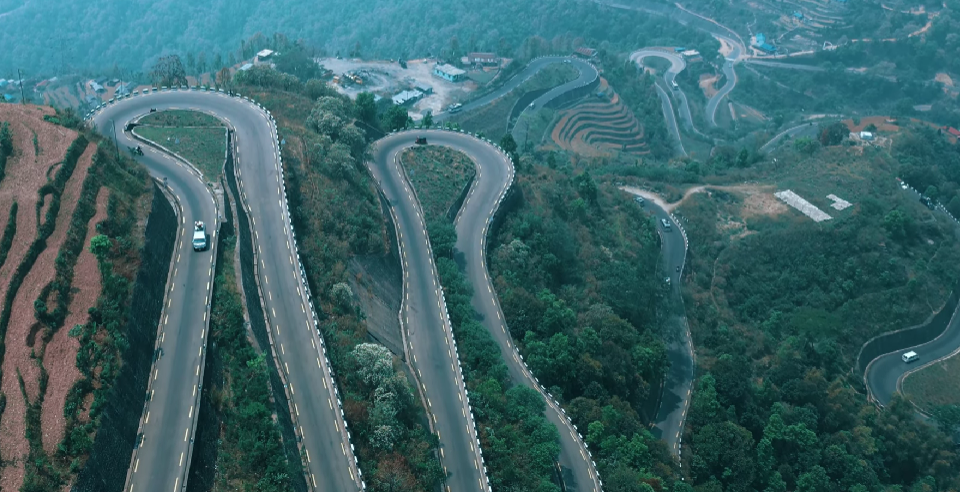
Road Conditions — Season Guide
| Season | Months | Road Conditions | Crowd Level | Recommendation |
| Post-Monsoon / Autumn | Oct – Dec | Good — dry roads | Moderate | Excellent — clear weather, post-Dashain |
| Winter | Jan – Feb | Good — cold, clear | Low to Moderate | Good — quiet, Shivaratri in Feb is massive |
| Spring | Mar – May | Good — warming up | Moderate to High | Excellent — dry roads, Ram Navami pilgrimage |
| Monsoon (Early) | Jun – Jul | Fair — some rain | Moderate | Manageable — Shravan pilgrims peak in July–Aug |
| Peak Monsoon | Jul – Aug | Rain-affected — rough | Very High (festival) | Caution — Shravan Sombar draws huge crowds; roads are wet |
| Late Monsoon | Sep | Improving | Moderate | Good — roads clearing, pre-Dashain period |
Recommended 2-Day Halesi Mahadev Pilgrimage Itinerary
| Day | Activity | Notes |
| Day 1 — 5:00 AM | Depart Kathmandu by private jeep | Hotel pickup in Thamel / any Kathmandu hotel |
| Day 1 — 5:45 AM | Pass through Dhulikhel — photo stop (10 min) | Himalayan sunrise panorama if clear — Everest visible on best days |
| Day 1 — 9:00–9:30 AM | Khurkot breakfast stop (30–45 min) | Dal bhat / noodles/tea — a common stop for all Halesi travellers |
| Day 1 — 11:30 AM–12:00 PM | Okhaldhunga — fuel + short rest | Last reliable ATM and fuel point before Halesi |
| Day 1 — 1:30–3:00 PM | Arrive Halesi Mahadev / Halesi Bazaar | Check in to the guesthouse — freshen up |
| Day 1 — 4:00–6:00 PM | Evening darshan (worship) at Halesi Mahadev Cave | Main cave temple, Shiva Linga, evening aarti prayers |
| Day 1 — Evening | Dinner at Halesi Bazaar | Local Dal Bhat, Nepali thali — rest for early morning puja |
| Day 2 — 5:00–6:00 AM | Morning puja — Halesi Mahadev Temple | Prime darshan time — less crowded, spiritual atmosphere |
| Day 2 — 7:00–8:00 AM | Visit Maratika Cave (Buddhist / Guru Rinpoche site) | Short walk from the main temple — sacred to both Hindus and Buddhists |
| Day 2 — 9:00 AM | Jayaram Ghat — holy bath and ritual | Sacred bathing ghat on Dudh Koshi River |
| Day 2 — 10:00 AM | Depart Halesi for return to Kathmandu | Same route back — arrive in Kathmandu 6:00–8:00 PM |
This 2-day itinerary is the most popular format for Kathmandu-to-Halesi Mahadev pilgrimage tours. Day 1 covers the full road journey with an evening darshan at the temple; Day 2 is dedicated to morning puja, visiting all the sacred sites (Maratika Cave, Jayaram Ghat), and the return drive to Kathmandu. Most pilgrims find this 2-day format spiritually complete and logistically comfortable.
Practical Tips for the Kathmandu to Halesi Mahadev Journey
- Depart Kathmandu by 5:00–5:30 AM — the 7 to 9 hour journey to Halesi requires an early start to arrive with daylight remaining for evening darshan.
- Book your vehicle at least 48–72 hours in advance — and 1 to 2 weeks before major festivals like Shivaratri and Shravan Sombar.
- Withdraw adequate NPR cash in Kathmandu or Okhaldhunga — ATM and card facilities at Halesi Bazaar are limited and unreliable during peak festival periods.
- Arrange Halesi accommodation in advance — especially for Shivaratri and Shravan Sombar, when guesthouses fill up weeks ahead.
- Wear comfortable, modest clothing appropriate for temple worship — many pilgrims wear traditional white or saffron attire for darshan.
- Carry a good torch/headlamp — the caves at Halesi are dimly lit, and some passages are narrow and dark.
- Remove footwear before entering the main temple cave and all sacred areas — follow the directions of the temple priests and local custom.
- Women in their menstrual cycle are traditionally asked not to enter the main cave sanctum — a firmly observed local custom.
- Bring prasad (offerings) — flowers (especially dhatura), milk, and fruits are appropriate offerings for Lord Shiva at Halesi.
- Carry motion sickness medication — the Khurkot to Okhaldhunga and Okhaldhunga to Halesi sections involve winding mountain roads with numerous switchbacks.
- For the Maratika Buddhist Cave, women are traditionally requested to dress modestly and cover their heads with a shawl.
- Carry your own drinking water — bottled water is available in Halesi Bazaar, but it is priced higher during festivals.
Combining Halesi Mahadev with Other Eastern Nepal Destinations
The road from Kathmandu to Halesi passes through or near several other significant destinations that can be combined into a multi-day eastern Nepal itinerary:
- Dhulikhel (35 km from KTM): Beautiful hill station with Himalayan panoramas — an ideal overnight stop for those who want a relaxed start before the Halesi journey.
- Sunkoshi River Rafting (near Dolalghat): The Sunkoshi is one of Nepal’s finest rafting rivers — river camp operators offer multi-day rafting packages that can be combined with a Halesi pilgrimage.
- Okhaldhunga (175 km): The district headquarters has cultural sites and market areas worth exploring on an extended itinerary.
- Solukhumbu and Everest Region: The road continues from Okhaldhunga toward Salleri and Phaplu — the starting point of the Salleri-to-Lukla overland route to Everest Base Camp. A combined Halesi + Everest region overland trip is a genuinely unique adventure in eastern Nepal.
- Taplejung and Kanchenjunga Region: Further east from Khotang District, the Taplejung area is the gateway to the Kanchenjunga Base Camp Trek — a remote and extraordinarily beautiful destination for adventurous trekkers.
Why Choose Nepal Vehicle Hiring Pvt Ltd?
- Route Experience: Our drivers have extensive experience on the full Kathmandu-to-Halesi Mahadev route — including the rough final section from Jayaram Ghat to Halesi, which requires the most careful and experienced navigation.
- Right Vehicles: Mahindra Scorpio 4WD and Toyota Hilux 4WD for groups of 4–7; sedans for small groups; Hiace and coaster buses for large pilgrim parties — always the right vehicle for the group size and road conditions.
- Festival Season Expertise: Nepal Vehicle Hiring Pvt Ltd has extensive experience managing Halesi Mahadev pilgrimages during Shivaratri and Shravan Sombar — we understand the road congestion, accommodation challenges, and timing requirements of festival-season travel.
- Door-to-Door Service: Hotel pickup from anywhere in Kathmandu — Thamel, Boudha, Patan, or wherever you are staying.
- All-Inclusive Pricing: Driver, fuel, and road tolls included in the quoted price. No hidden charges or surprise costs on arrival.
- 24/7 Booking: WhatsApp, phone, or email—book anytime and receive confirmation within minutes.
- Flexible Itinerary: Whether you need a 1-day express transfer, a 2-day pilgrimage package, or a multi-day eastern Nepal tour including Halesi, we tailor the vehicle hire to your exact itinerary and group requirements.
- Return Journey Guaranteed: Your return vehicle from Halesi to Kathmandu is booked at the same time as the outward journey — no searching for transport in Halesi Bazaar after your darshan.
Frequently Asked Questions — Kathmandu to Halesi Mahadev
How far is Kathmandu from Halesi Mahadev?
The road distance from Kathmandu to Halesi Mahadev (Halesi Mahadevsthan) in Khotang District is approximately 222-230 km, depending on the exact route taken and the current state of road construction between Okhaldhunga and Halesi.
How long does it take to drive from Kathmandu to Halesi Mahadev?
A private jeep or car takes approximately 7 to 9 hours from Kathmandu to Halesi Mahadev under normal road conditions. With an early 5:00 AM departure from Kathmandu, most travellers arrive in Halesi between 12:30 PM and 2:30 PM, leaving time for afternoon darshan.
Is a 4WD jeep necessary for the Kathmandu-Halesi route?
A 4WD jeep is highly recommended — and particularly valuable — for the rough road section between Okhaldhunga / Jayaram Ghat and Halesi. The Kathmandu-Okhaldhunga section on the paved BP Highway and Mid-Hill Highway is manageable for all vehicle types. However, for a comfortable and reliable journey all the way to Halesi Bazaar, a 4WD jeep is the best choice.
Can I take a bus from Kathmandu to Halesi Mahadev?
Yes. Local buses from Gongabu Bus Park in Kathmandu serve Okhaldhunga and Diktel (near Halesi) at NPR 800–1,200 per person, taking 10 to 13 hours with multiple stops. However, private vehicle hire is strongly recommended for pilgrim groups—it is faster, more comfortable, offers hotel pickup, and lets you plan your darshan timing precisely.
What is the nearest airport to Halesi Mahadev?
Lamidanda Airport (IATA: LDN) in Khotang District is the nearest domestic airport, approximately 45 km from Halesi Mahadev. Domestic flights from TIA Kathmandu to Lamidanda take approximately 45 minutes. From Lamidanda, a jeep or local vehicle covers the final 45 km to Halesi in 1.5 to 2 hours. Flights are weather-dependent and subject to limited schedules.
What permits are required for Halesi Mahadev?
No permits or entry fees are required for visiting the Halesi Mahadev temple. The sacred site is open to all pilgrims and visitors free of charge. However, a small donation to the temple fund is appreciated and customary.
When is the best time to visit Halesi Mahadev?
Halesi Mahadev is open and accessible year-round. The best times for road travel are October to June (dry season), when road conditions are at their best. Maha Shivaratri (February–March) is the most spiritually significant festival period, but draws enormous crowds — book transport and accommodation well in advance. For a quieter but equally spiritual visit, December to February (outside of Shivaratri) offers excellent road conditions and a more peaceful atmosphere.
Can Nepal Vehicle Hiring arrange a complete Halesi pilgrimage package including accommodation?
Yes. Nepal Vehicle Hiring Pvt Ltd can coordinate complete Halesi Mahadev pilgrimage packages, including private vehicle hire from Kathmandu, overnight accommodation in Halesi Bazaar, and return transfer to Kathmandu — all arranged as a single convenient booking. Contact us via WhatsApp or phone for custom package pricing.
Conclusion
The journey from Kathmandu to Halesi Mahadev is much more than a road transfer — it is a pilgrimage through some of eastern Nepal’s most beautiful and culturally rich landscapes, culminating at one of the most spiritually powerful and multi-traditional sacred sites in the entire Himalayan world. Where Hindu, Buddhist, and Kirant spiritual traditions converge in a single cave complex on the banks of the Dudh Koshi River, Halesi Mahadev offers a depth of religious experience that few destinations anywhere can match.
Whether you are a devout pilgrim seeking the blessings of Lord Shiva, a Buddhist practitioner retracing the footsteps of Guru Padmasambhava at Maratika Cave, a cultural traveller interested in the ancient Kirant tradition, or simply an explorer drawn to the extraordinary landscapes of eastern Nepal, the Kathmandu to Halesi Mahadev journey deserves the best possible transport — and that is exactly what Nepal Vehicle Hiring Pvt Ltd provides.
With comfortable private vehicles for every group size, experienced drivers who know every kilometre of this route, all-inclusive transparent pricing, door-to-door hotel pickup in Kathmandu, 24/7 booking support, and festival-season expertise, Nepal Vehicle Hiring Pvt Ltd is your most trusted transport partner for the Halesi Mahadev pilgrimage.
Book your Halesi Mahadev transfer today —WhatsApp:+977 981-4227196
Email: [email protected]
Website: www.vehiclehiringnepal.com
- Kathmandu to Halesi Mahadev Transport
- Halesi Mahadev — Sacred Cave of Three Traditions
- Key Transport Facts — Kathmandu to Halesi Mahadev
- The Route — Kathmandu to Halesi Mahadev Step by Step
- All Transport Options — Kathmandu to Halesi Mahadev
- Sacred Sites at Halesi Mahadev — What to See and Do
- Religious Festivals at Halesi — Transport Planning Guide
- Road Conditions — Season Guide
- Recommended 2-Day Halesi Mahadev Pilgrimage Itinerary
- Practical Tips for the Kathmandu to Halesi Mahadev Journey
- Combining Halesi Mahadev with Other Eastern Nepal Destinations
- Why Choose Nepal Vehicle Hiring Pvt Ltd?
- Frequently Asked Questions — Kathmandu to Halesi Mahadev
- Conclusion

Related Blog & Articles

Car Hire in Nepal – Complete Guide for Travelers

Jeep Hire in Nepal – Best Vehicle for Mountain Roads

Hiace Hire in Nepal