Plan a Trip


Kathmandu to Langtang Trek Vehicle Hire: The Complete Guide
Why the Right Vehicle Makes Your Langtang Trek
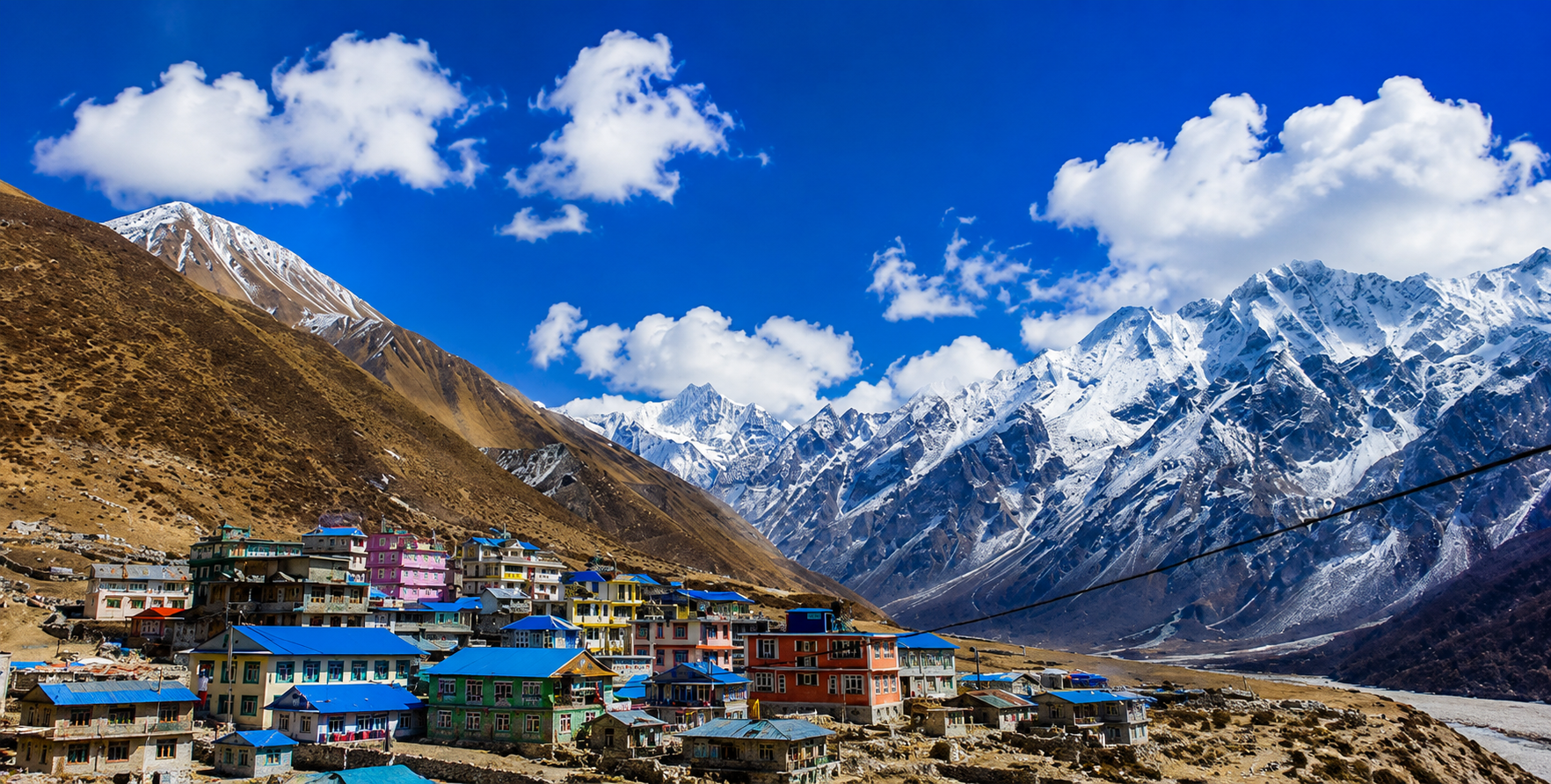
The Langtang Valley Trek is one of Nepal’s most celebrated and cherished trekking routes — a breathtaking journey into one of the Himalayas’ most spectacular and culturally rich valleys, just north of Kathmandu. Often described as a ‘valley of glaciers,’ Langtang offers extraordinary high-altitude scenery dominated by the towering Langtang Lirung (7,227 m), Ganesh Himal (7,422 m), and the Jugal Himal range, combined with a deeply authentic encounter with the Tamang people — one of Nepal’s most distinctive and welcoming Himalayan communities.
Unlike trekking routes that require flights to remote mountain airports, the Langtang Valley Trek begins with a road journey directly from Kathmandu — and that road journey is itself a significant, memorable part of the overall experience. The drive from Kathmandu to Syabrubesi — the trailhead village at the gateway of Langtang National Park — covers approximately 120–122 km through a progressively dramatic sequence of landscapes: Kathmandu’s urban sprawl giving way to terraced hillside agriculture, then to the wild gorge of the Trishuli River, then to the increasingly high and remote terrain of the Rasuwa District as you climb toward the Himalayan frontier.
Getting this vehicle journey right — choosing the right vehicle type, booking with a reliable, professional provider, understanding the road conditions and the three available route options, and knowing exactly what to expect at every stage — lays the physical and psychological foundation for your entire Langtang trekking experience. A comfortable, timely, well-managed journey by vehicle means you arrive in Syabrubesi rested and ready to trek. A poorly planned one — an overcrowded public bus, an inexperienced driver on mountain roads, or a last-minute scramble for shared transport — means you begin your adventure already tired and stressed.
This complete guide to the Kathmandu to Langtang trek vehicle hire covers everything you need: the full route narrative with the three road options, checkpoint distances and altitudes, road conditions by season, private jeep hire costs for all vehicle types, the permits required, the spectacular scenic highlights of the drive, the character of Syabrubesi as your trek starting point, and a clear comparison of all transport options — so you can make the best possible decision for your Langtang journey.
Nepal Vehicle Hiring Pvt. Ltd. — with its trusted 4WD fleet, experienced high-altitude mountain drivers, hotel pickup from anywhere in Kathmandu, and 24/7 WhatsApp support — is the vehicle partner of choice for trekkers heading to Langtang and throughout Nepal.
Kathmandu to Langtang Trek Vehicle — Quick Reference |
| Trek Trailhead: Syabrubesi Village, Rasuwa District, Bagmati Province |
| Syabrubesi Altitude: 1,460–1,550 m (4,790–5,085 ft) |
| Road Distance: Approx. 120–122 km (Kathmandu Thamel to Syabrubesi) |
| Drive Time: 5–7 hours (private jeep) | 7–10 hours (public/shared bus) |
| Route Options: 3 routes — Galchhi/Trishuli, Kakani Scenic, Tokha/Bidur |
| Vehicle Requirement: 4WD Jeep strongly recommended (Fortuner, Hilux, Land Cruiser) |
| Permits: Langtang National Park Permit (NPR 3,000/person) + TIMS Card (NPR 2,000) |
| Best Season: October–December and March–May |
| Trek Gateway To: Langtang Valley, Kyanjin Gompa, Tserko Ri, Tamang Heritage Trail, Helambu |
| Book With: Nepal Vehicle Hiring Pvt. Ltd. | +977 981-4227196 |
Langtang Valley: Nepal’s Closest High-Alpine Trekking Destination
Why Langtang Is Called the ‘Valley of Glaciers’
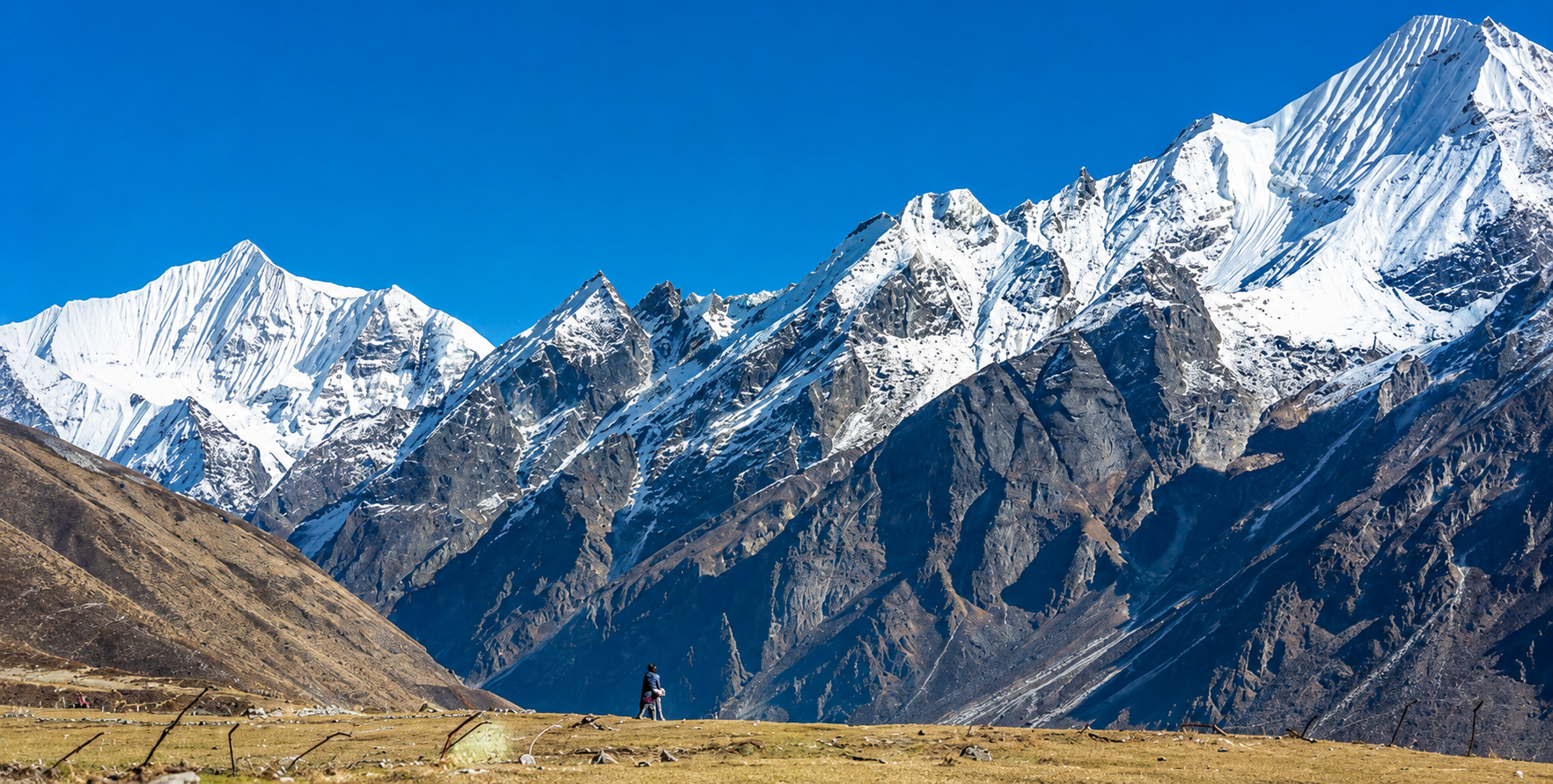
The Langtang Valley is a long north-south glacial valley in the Rasuwa District, carved over millennia by the Langtang Khola River and its tributaries, which descend from the high peaks of the Nepal-Tibet border. The valley floor rises from Syabrubesi at about 1,460 meters to the extraordinary Kyanjin Gompa at 3,870 meters—a gain of over 2,400 vertical meters that takes trekkers through a full spectrum of Himalayan ecological zones in just three to four days of walking.
The name ‘Valley of Glaciers’ reflects the extraordinary concentration of glacial ice in the valley’s upper reaches. The Langtang Glacier, Lirung Glacier, and Yala Glacier all descend from peaks above 6,000 meters that ring the upper valley, creating an ice-carved landscape unlike anything else accessible from Kathmandu in a single day’s drive. From Kyanjin Gompa, the highest point most trekkers reach, the view northward into the glacial amphitheatre of Langtang Lirung and eastward toward the Tibetan Plateau is one of Nepal’s finest high-altitude panoramas.
The valley gained international attention for devastating reasons in April 2015, when the great Nepal earthquake triggered a catastrophic ice avalanche from Langtang Lirung that buried much of Langtang village and killed hundreds of residents and trekkers. The subsequent recovery and rebuilding of the Langtang Valley community have been among Nepal’s most remarkable post-disaster stories — the Tamang people have rebuilt their villages, reopened their teahouses, and welcomed trekkers back with characteristic warmth and resilience. Trekking in Langtang today is not only a spectacular adventure but a meaningful act of support for a community that has demonstrated extraordinary strength.
Syabrubesi: Your Trek Gateway Village
Syabrubesi is a small but lively market town at the confluence of the Langtang Khola and Bhote Koshi rivers, serving as the primary gateway to all treks in the Langtang region. Situated at approximately 1,460–1,550 meters in a dramatic river valley surrounded by forested hillsides, Syabrubesi has grown significantly since the 2015 earthquake reconstruction and now offers a good range of accommodation, restaurants, shops, and facilities for trekkers. The town has a strong Tamang cultural character—most residents are Tamang, and the architecture, food, and community life reflect this distinct Tibetan-influenced culture.
From Syabrubesi, three distinct trekking routes fan outward: the main Langtang Valley Trek heading eastward up the Langtang Khola; the Tamang Heritage Trail heading south through traditional Tamang villages toward Gatlang, Tatopani, and Briddim; and the Helambu Trek heading south over the Lauribina La Pass toward the Helambu Valley and eventually Kathmandu. This makes Syabrubesi one of Nepal’s most strategically important trek trailheads, as a single-vehicle journey from Kathmandu provides access to three distinct and wonderful trekking experiences.
The Langtang Valley Trek — Overview
The classic Langtang Valley Trek itinerary lasts 7 to 10 days in total, including the drive from Kathmandu. After arriving in Syabrubesi by private jeep on Day 1, trekkers follow the Langtang Khola River Valley upstream through the subtropical forest villages of Bamboo and Ramche, climbing through increasingly alpine terrain to Lama Hotel (2,470 m), then Langtang Village (3,430 m, rebuilt after 2015), then Mundu and Kyanjin Gompa (3,870 m).
Optional high-altitude day hikes from Kyanjin include the spectacular Kyanjin Ri (4,773 m) and the extraordinary Tserko Ri (5,033 m) — one of the finest viewpoints in the entire Langtang region. The return follows the same valley route back to Syabrubesi, where a private vehicle picks up trekkers and returns them to Kathmandu.
The Complete Route: Kathmandu to Syabrubesi (Three Options)
Route Overview — Three Roads to Syabrubesi
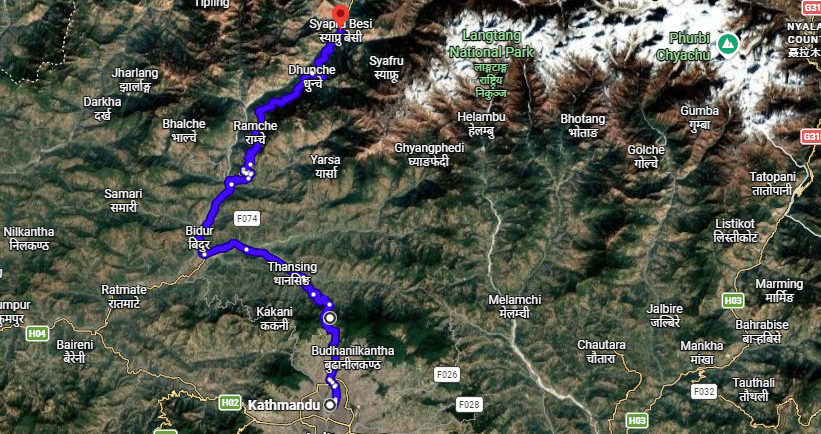
Unlike most Nepal trek trailhead drives, which follow a single road, the Kathmandu-to-Syabrubesi journey offers three distinct route options. Each has a different road quality, scenery, drive time, and suitability for different vehicle types. Understanding these three routes is essential for planning your vehicle hire effectively.
| Route | Distance | Drive Time (Private Jeep) | Road Quality | Best For |
| Route 1: Galchhi/Trishuli Highway (Standard) | 120–122 km | 5–6 hrs | Best — mostly paved, smooth highway | All travellers, first-timers, buses & jeeps |
| Route 2: Kakani Scenic Route | 115–118 km | 6–7 hrs | Mixed — paved but often rougher, narrower | Clear days, mountain view lovers, jeeps only |
| Route 3: Tokha/Bidur Route | 118–120 km | 5.5–6.5 hrs | Good — paved highway via Tokha | Alternative to Route 1, also bus-friendly |
Route 1: Galchhi / Trishuli Highway — The Standard Route (RECOMMENDED)
The Galchhi/Trishuli Highway route is the most commonly used and most reliable road from Kathmandu to Syabrubesi. It follows the Prithvi Highway westward from Kathmandu to Galchhi (approximately 70 km), then turns northward onto the Pasang Lhamu Highway — the main road connecting Kathmandu to the Rasuwa District and the Nepal-Tibet border. This highway follows the spectacular Trishuli River gorge northward through Trishuli Bazaar and Betrawati before climbing steeply to Dhunche and descending to Syabrubesi.
| Checkpoint | Distance from Kathmandu | Altitude | Drive Time from KTM |
| Balaju / Ring Road (Kathmandu exit) | 5 km | 1,350 m | 15–20 min |
| Galchhi Junction (Prithvi Hwy turnoff) | 68 km | 800 m | 1.5–2.0 hrs |
| Trishuli Bazaar | 76 km | 870 m | 2.0–2.5 hrs |
| Betrawati | 88 km | 1,000 m | 2.5–3.0 hrs |
| Kalikasthan | 95 km | 1,200 m | 3.0–3.5 hrs |
| Ramche (Landslide Zone / NP Entry) | 108 km | 1,700 m | 4.0–4.5 hrs |
| Dhunche (District HQ / Permit Check) | 112 km | 2,030 m | 4.5–5.0 hrs |
| Thulo Bharkhu | 117 km | 1,800 m | 5.0–5.5 hrs |
| Syabrubesi (Trek Trailhead) | 120–122 km | 1,460 m | 5.5–6.5 hrs |
Stage 1 — Kathmandu to Galchhi (68 km, ~1.5–2 hours): Leaving Kathmandu through Balaju and heading northwest, the road joins the Prithvi Highway — Nepal’s main arterial highway — and heads through the Trishuli River valley. The first hour is through the urban and semi-urban outskirts of the Kathmandu Valley before the road descends dramatically into the Trishuli gorge. At Galchhi, you leave the Prithvi Highway and turn northward onto the Pasang Lhamu Highway toward the Langtang region. This section is well-paved and the fastest part of the journey.
Stage 2 — Galchhi to Betrawati via Trishuli Bazaar (20 km, ~1 hour): The Pasang Lhamu Highway follows the west bank of the Trishuli River northward through the dramatic gorge landscape. The Trishuli River is a celebrated whitewater rafting destination, and on weekends, you will often see rafting groups on the turquoise water far below the road. Trishuli Bazaar is a significant town with restaurants, ATMs, and fuel stations — the last reliable ATM before Syabrubesi. Betrawati, a few kilometres farther north, marks where the valley begins to narrow and the road starts climbing more steeply into the Rasuwa hills.
Stage 3 — Betrawati to Dhunche via Kalikasthan and Ramche (24 km, ~1.5–2 hours): This is the most dramatic and demanding section of the drive. Beyond Betrawati, the road climbs steeply through Kalikasthan — where, on clear days, the first extraordinary views of the Langtang range (Langtang Lirung at 7,227 m and Ganesh Himal at 7,422 m) appear on the northern horizon.
The road then passes through the Ramche Landslide Zone — a 3 km section of unpaved or poorly maintained road that is the most technically challenging part of the entire journey, particularly after rainfall. Nepal Vehicle Hiring Pvt. Ltd.’s 4WD vehicles handle this section comfortably. Dhunche (2,030 m), the district headquarters of Rasuwa, is the Langtang National Park permit checkpoint — all trekkers must show permits here.
Stage 4 — Dhunche to Syabrubesi (10 km, ~45–60 minutes): The final stretch from Dhunche descends steeply from 2,030 meters down to Syabrubesi at 1,460 meters through a series of tight switchbacks with dramatic views of the Bhote Koshi valley and the distant Langtang peaks. The road is narrow and winding but paved. This section gives you your first clear views of the extraordinary river confluence at Syabrubesi and the forested hillsides that frame the entrance to the Langtang Valley. Arriving in Syabrubesi after this spectacular final descent feels like arriving somewhere genuinely remote and wild — the perfect psychological preparation for the trek ahead.
Route 2: Kakani Scenic Route
The Kakani route branches northward from the Kathmandu Valley via the scenic ridge village of Kakani (2,073 m) — a beautiful hilltop settlement with panoramic Himalayan views that is popular with Kathmandu day-trippers. The road climbs from Kathmandu through Nagarjun Forest Reserve to Kakani, then descends to rejoin the Pasang Lhamu Highway near Trishuli Bazaar.
The Kakani route offers potentially spectacular mountain views (Ganesh Himal, Langtang range, and Manaslu on a clear morning). Still, road conditions are often worse than on the Galchhi Highway, and the road is narrower and more winding throughout. Nepal Vehicle Hiring Pvt. Ltd. recommends this route only for jeep hire (not buses) and only in the dry season with a clear weather forecast. The total drive time is about 6–7 hours because of slower road sections.
Route 3: Tokha / Bidur Route
The Tokha route exits Kathmandu northward through the Tokha area and descends to Bidur before joining the main Pasang Lhamu Highway near Betrawati. This route is slightly shorter than the Galchhi highway in distance, but not significantly faster because road conditions in the Tokha area can be slow. Some local buses use it, and it suits jeeps and standard vehicles. Nepal Vehicle Hiring Pvt. Ltd. drivers know all three routes and will recommend the best option based on current road conditions, weather, and your vehicle type.
Road Conditions: Kathmandu to Syabrubesi
Kathmandu to Galchhi — Prithvi Highway
The Prithvi Highway section from Kathmandu to Galchhi is a well-maintained, two-lane tarmac road in good condition year-round. This section carries significant heavy vehicle traffic (trucks, buses) heading toward Pokhara and the western regions. Early morning departures (before 7:00 AM) beat the worst of the truck traffic. Road conditions on this section are excellent in the dry season and generally good in the monsoon, with occasional traffic delays due to minor accidents or construction works.
Galchhi to Betrawati — Pasang Lhamu Highway (Trishuli Section)
The Pasang Lhamu Highway from Galchhi to Betrawati is paved and in reasonable condition. The road follows the Trishuli River gorge and is occasionally damaged by landslides during and immediately after the monsoon season (June–September). The road is narrower than the Prithvi Highway with less room for passing vehicles, but experienced mountain drivers navigate it comfortably. This section is suitable for all vehicle types in the dry season. During the monsoon, 4WD vehicles are preferred.
Betrawati to Dhunche — The Mountain Climb
This is the most road-condition-sensitive section of the entire Kathmandu-to-Syabrubesi journey. The road climbs over 1,000 vertical meters from Betrawati to Dhunche through increasingly steep and winding terrain. The Ramche Landslide Zone (approximately 3 km before Dhunche) is the most consistently challenging section — unpaved or poorly maintained, narrow, and prone to post-rain surface damage. In 2026, this section is reported to be better maintained than in previous years. Still, it remains bumpy and rough, and a 4WD vehicle with an experienced mountain driver has a clear advantage over standard vehicles and buses.
Dhunche to Syabrubesi — Final Descent
The descent from Dhunche to Syabrubesi follows a winding, narrow paved road through multiple steep switchbacks. The road is technically demanding for drivers but manageable for all 4WD vehicles. In the monsoon, this section can be affected by minor landslides from the hillsides above the road. In the dry season, conditions are generally good. This section is not suitable for large buses.
| Road Section | Condition (Dry Season) | Condition (Monsoon) | 4WD Required? |
| Kathmandu to Galchhi (Prithvi Hwy) | Excellent — paved, smooth | Good — minor traffic delays possible | No — all vehicles are suitable |
| Galchhi to Betrawati (Pasang Lhamu Hwy) | Good — paved River Gorge Road | Fair — occasional landslide risk | Recommended but not mandatory |
| Betrawati to Ramche (Mountain climb) | Fair to Good — winding, paved | Challenging — rough surface, wet | Strongly recommended |
| Ramche Landslide Zone (3 km) | Rough — unpaved sections | Very Challenging — muddy, unstable | YES — 4WD essential |
| Dhunche to Syabrubesi (descent) | Good — paved, steep switchbacks | Fair — minor landslide risk | Strongly recommended |
| Critical Vehicle Warning for Langtang Route |
| Standard sedans and non-4WD cars are NOT recommended beyond Betrawati. |
| Large tourist buses cannot safely access the final descent to Dhunche–Syabrubesi. |
| 4WD Jeep (Fortuner, Hilux, Land Cruiser, Scorpio) is the IDEAL vehicle for this route. |
| All Nepal Vehicle Hiring Pvt. Ltd. jeeps are 4WD and driven by mountain-road specialists. |
| A private 4WD jeep is 2–3 hours faster than a public bus on the Langtang route. |
| The Ramche Landslide Zone (3 km) is the most challenging section — 4WD handles it best. |

Kathmandu to Syabrubesi Vehicle Hire Cost
Private Jeep Hire — One Way, Kathmandu to Syabrubesi
A private jeep hire from Kathmandu to Syabrubesi is the most popular, comfortable, and efficient way for trekking groups, families, and serious trekkers to reach the Langtang trailhead. Hotel pickup from anywhere in Kathmandu, flexible departure times, stops at viewpoints and tea stalls en route, and door-to-trailhead delivery make private hire the clear choice for anyone who values comfort and convenience over minimal cost.
| Vehicle Type | Capacity | One-Way Cost (Kathmandu→Syabrubesi) | Return Cost (Syabrubesi→Kathmandu) |
| 4WD Jeep (Scorpio/Bolero) | 1–5 passengers | NPR 18,000–22,000 / USD 130–160 | NPR 16,000–20,000 / USD 116–145 |
| 4WD Toyota Fortuner | 1–6 passengers | NPR 22,000–28,000 / USD 160–204 | NPR 20,000–25,000 / USD 145–182 |
| 4WD Toyota Hilux | 1–5 passengers | NPR 20,000–26,000 / USD 145–189 | NPR 18,000–23,000 / USD 130–167 |
| 4WD Toyota Land Cruiser | 1–7 passengers | NPR 27,000–35,000 / USD 196–254 | NPR 24,000–32,000 / USD 174–232 |
| Hiace Van (to Dhunche only) | 7–14 passengers | NPR 25,000–32,000 / USD 182–232 | NPR 22,000–28,000 / USD 160–204 |
Price Inclusions: Professional driver experienced on mountain roads, fuel for the complete journey, vehicle insurance, hotel pickup from anywhere in Kathmandu (Thamel, Lazimpat, Durbar Marg, all central areas), all road tolls and fees, and a vehicle emergency kit.
Price Exclusions: Langtang National Park permit (NPR 3,000/person), TIMS Card (NPR 2,000/person), passenger meals and accommodation, driver meals and accommodation (for multi-day bookings with vehicle waiting in Syabrubesi).
Cost Per Person by Group Size
| Group Size | Vehicle | Total Vehicle Cost | |
| 1–2 people | 4WD Scorpio / Bolero | NPR 18,000–22,000 | |
| 3–4 people | 4WD Fortuner | NPR 22,000–26,000 | |
| 5–6 people | 4WD Land Cruiser | NPR 26,000–32,000 | |
| 7–10 people | Hiace Van (to Dhunche) | NPR 26,000–32,000 |
For groups of 4 or more, a private 4WD jeep from Nepal Vehicle Hiring Pvt. Ltd. becomes comparable in per-person cost to shared jeep options — while delivering the enormous advantages of hotel pickup, flexible timing, and guaranteed delivery to Syabrubesi without the uncertainty and discomfort of shared transport.
Shared Jeep and Bus Options — Budget Alternatives
| Transport Option | Cost | Departure | Journey Time | ||
| Private Jeep — Nepal Vehicle Hiring | NPR 18,000–35,000 (full vehicle) | Flexible, hotel pickup | 5–7 hrs | ||
| Shared Jeep (Syabrubesi) | NPR 1,400–1,800/person | 7 AM, Machhapokhari Bus Park | 6–8 hrs | ||
| Tourist Bus (Kathmandu–Syabrubesi) | NPR 800–1,200/person | 6–7 AM, various operators | 7–10 hrs | ||
| Local Public Bus | NPR 300–500/person | Early AM, Machhapokhari | 8–12 hrs |
Vehicle Waiting Service — Syabrubesi Standby
For trekkers who want their private vehicle to remain in Syabrubesi and be available for immediate return at trek completion (without pre-arranging a separate return vehicle), Nepal Vehicle Hiring Pvt. Ltd. offers a vehicle standby service. The vehicle and driver remain in Syabrubesi for the duration of your trek, ready to depart on your schedule. This is particularly useful for trekkers with tight return flight schedules. Standby pricing is available on request — contact our team for a customised quote based on your trek duration.
Required Permits: Kathmandu to Langtang Trek customizedang Valley Trek enters Langtang National Park — Nepal’s fourth-largest national park, covering 1,710 square kilometres of outstanding Himalayan terrain, including glaciers, alpine meadows, dense forests, and the internationally important Langtang Biosphere Reserve. All trekkers entering the park must carry valid permits, which are checked at the Dhunche Army Checkpoint and again at the Langtang National Park entrance.
Since April 2023, trekking in Langtang National Park also requires a licensed guide. Checkpoints enforce this rule strictly, and it is non-negotiable. Nepal Vehicle Hiring Pvt. Ltd. can connect you with trusted licensed guide services as part of your trip planning.
| Permit / Document | Who Needs It | Cost | Where to Obtain |
| Langtang National Park Entry Permit | All foreign visitors entering Langtang National Park (including vehicle transit to Syabrubesi) | NPR 3,000/person (approx. USD 22) | Nepal Tourism Board offices, Kathmandu (Bhrikuti Mandap or Pradarshani Marg) or Trishuli Bazaar checkpoint |
| TIMS Card (Trekkers’ Information Management System) | All foreign trekkers | NPR 2,000/person individual (NPR 1,000 through registered agencies) | Nepal Tourism Board offices — same locations as above |
| SAARC Nationals — National Park Permit | India, Bangladesh, Pakistan, Sri Lanka, Bhutan, Maldives, Afghanistan | NPR 1,500/person | Same as above |
| SAARC Nationals — TIMS | SAARC visitors | NPR 1,500/person | Same as above |
| Nepali Nationals | Nepali citizens | NPR 100 entry permit | No TIMS required | Same as above |
| Licensed Guide (MANDATORY since 2023) | Required for ALL trekkers in Langtang National Park — enforced at checkpoints | USD 25–35/day (guide fee) | Book through registered trekking agencies in Kathmandu or Pokhara |
Permits can be obtained at the Nepal Tourism Board office in Kathmandu (Bhrikuti Mandap, near Tundikhel — open Sunday to Friday, 10:00 AM to 5:00 PM). Carry two passport-sized photographs and your original passport for each permit application. Alternatively, permits can sometimes be obtained at the Dhunche checkpoint, but queues are common during peak season — obtaining permits in Kathmandu the day before departure is strongly recommended.
The mandatory requirement for a licensed guide has been fully enforced since its introduction in April 2023. Trekkers without a licensed guide are turned back at the Langtang National Park checkpoints. Nepal Vehicle Hiring Pvt. Ltd. can provide contact details for reputable licensed guide services in Kathmandu.
Scenic Highlights of the Kathmandu to Syabrubesi Drive
The Kathmandu-to-Syabrubesi vehicle journey is far more than a logistical transfer — it is a spectacular introduction to the landscapes and atmosphere of the Langtang region. Here are the key scenic and cultural highlights to watch for en route:
The Trishuli River Gorge (Galchhi to Betrawati)
After turning north at Galchhi, the road enters the Trishuli River gorge—one of Nepal’s most dramatic river landscapes. The Trishuli River is a major whitewater rafting destination, and its churning blue-green waters, visible far below the road, create a spectacular backdrop to the drive. The gorge walls rise steeply on both sides, draped in subtropical vegetation, and the road clings to the cliffside in places with vertiginous drops to the river below. On weekends in season, you will often see groups of rafters navigating the rapids — a vivid reminder that Nepal’s adventure tourism extends far beyond trekking.
Trishuli Bazaar — Last Major Town Before the Mountains
Trishuli Bazaar is a significant town approximately 76 km from Kathmandu and the last sizable settlement on the Kathmandu-Syabrubesi route. The town has several good restaurants, ATMs (the last reliable ones before Syabrubesi — withdraw here!), fuel stations, and basic shops. Many drivers stop here for breakfast or an early tea break. The surrounding area is historically significant as the site of the Trishuli Hydropower Project, one of Nepal’s earliest major hydroelectric developments.
Kalikasthan — First Himalayan Peak Views
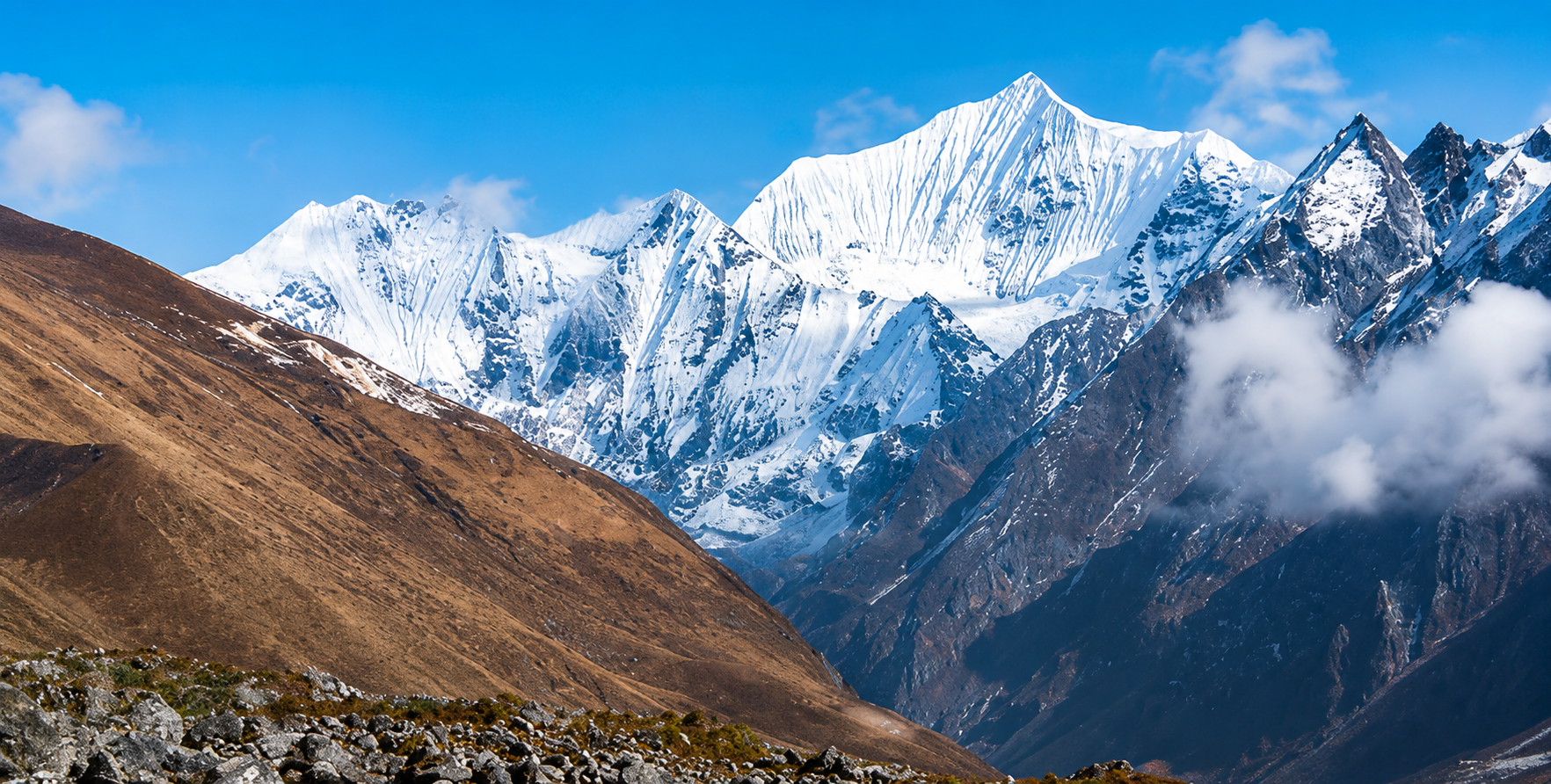
Just beyond the village of Kalikasthan, at approximately 1,200 meters, the valley opens. On clear mornings, the first extraordinary views of the Langtang and Ganesh Himal ranges appear on the northern horizon. Ganesh Himal (7,422 m) — named after the elephant-headed Hindu deity — and Langtang Lirung (7,227 m) are often the first peaks visible, rising white and massive against the blue sky. Ask your Nepal Vehicle Hiring driver to slow down at the Kalikasthan viewpoint for photographs — it is one of the finest roadside Himalayan views accessible from Kathmandu.
The Ramche Landslide Zone — Evidence of Nepal’s Raw Power
The Ramche area, just before Dhunche, is where the road passes through an active landslide zone that has periodically blocked or damaged the Kathmandu–Syabrubesi road over the years. In 2016, a major landslide temporarily dammed the Trishuli River near this area. In 2026, the road through Ramche is better maintained than in previous years but remains the roughest section of the journey. This is where your 4WD vehicle earns its value — navigating the unpaved, potholed 3 km section with the confidence and capability that a standard car or bus cannot match.
Dhunche — The Mountain Town Gateway
Dhunche (2,030 m) is the district headquarters of Rasuwa District and the Langtang National Park permit checkpoint. The town sits on a broad ridge with stunning views of the surrounding forested mountains and — on clear days — distant Himalayan peaks. It has a small bazaar, several teahouses and restaurants, a fuel station (the last one before Syabrubesi), and the national park entry gate where they check permits. Most travellers stop briefly in Dhunche for tea and a permit check. The landscape at Dhunche — pine and rhododendron forests stretching over hillsides in every direction, with mountain peaks rising above the tree line — announces unambiguously that you have arrived in the Himalayas.
Thulo Bharkhu — Valley Views Before the Final Descent
Between Dhunche and Syabrubesi, the road passes through the Thulo Bharkhu area at approximately 1,800 meters — a spectacular viewpoint above the Bhote Koshi valley. Here, looking down into the deep river valley below and north toward the Nepal-Tibet border peaks, the scale and wildness of the Langtang region become fully apparent for the first time. The descent from Thulo Bharkhu to Syabrubesi, with its numerous steep switchbacks, is exhilarating in a well-driven 4WD vehicle and marks the final chapter of your drive before reaching the trailhead.
Best Time to Travel from Kathmandu to Langtang
October to December — Autumn Peak Season (BEST)
The post-monsoon autumn season is the finest time for the Kathmandu-to-Syabrubesi drive and the Langtang Valley Trek. October and November offer the most reliably clear mountain views — the air has been washed crystal-clean by the monsoon rains, and Langtang Lirung, Ganesh Himal, and the Jugal Himal chain stand in breathtaking clarity above the valleys. Road conditions are at their best after the monsoon damage has been repaired.
Temperatures in Syabrubesi are pleasant (15–22°C by day) and cool at night. The drive through the Trishuli gorge in October is spectacular, with lush monsoon vegetation still green and the river full and dramatic. This is the most popular season for Langtang trekkers — book your vehicle well in advance.
March to May — Spring Season (EXCELLENT)
Spring is the second peak season for Langtang trekking and the Kathmandu–Syabrubesi drive. The rhododendron forests on the hillsides between Betrawati and Dhunche burst into magnificent bloom in March and April, creating a spectacular floral display visible from the road. Mountain views are generally clear in the mornings before afternoon cloud build-up. Temperatures warm up progressively through May. The Trishuli River is typically lower and calmer in spring, and the road conditions are generally good following the winter dry period.
December to February — Winter (POSSIBLE WITH PREPARATION)
Winter offers the clearest, coldest conditions on the Kathmandu-to-Syabrubesi route. The mountain views from Kalikasthan in December are often extraordinary — sharp and crystal-clear in the dry winter air. However, snow can fall on the road above Dhunche in January, and the descent from Dhunche to Syabrubesi can become icy. Nepal Vehicle Hiring Pvt. Ltd. monitors winter road conditions and can advise whether chains or other precautions are needed. Syabrubesi itself rarely receives significant snow, but temperatures are cold (5–10°C by day, -5°C or colder at night). The Langtang Valley trek is possible in winter for well-prepared trekkers.
June to September — Monsoon (CHALLENGING)
The monsoon season brings the most challenging road conditions on the Kathmandu-Syabrubesi route. The Ramche Landslide Zone is most active during heavy monsoon rainfall and can block the road for hours or even days. Landslides also affect sections of the Trishuli Gorge Road between Galchhi and Betrawati. Nepal Vehicle Hiring Pvt. Ltd. monitors road conditions in real time during the monsoon and will advise clients honestly about current conditions before departure. If road conditions permit, a private 4WD jeep is the only practical vehicle choice for monsoon-season travel on this route.
Why Choose Nepal Vehicle Hiring Pvt. Ltd. for Your Langtang Trek Vehicle
The Kathmandu to Syabrubesi road is one of Nepal’s most demanding and interesting vehicle journeys — a full day on mountain roads that transitions from city highway to remote Himalayan valley. It requires an experienced driver, a capable 4WD vehicle, and a company that knows the route thoroughly in all conditions. Thousands of Langtang trekkers have trusted Nepal Vehicle Hiring Pvt. Ltd. to deliver exactly this standard of service.
| Why Nepal Vehicle Hiring Is Your Best Partner for Langtang |
| 50,000+ satisfied customers | 5.0 TripAdvisor | 15,000+ verified 5-star reviews |
| All-4WD fleet — Fortuner, Hilux, Land Cruiser, Scorpio — all mountain-road ready |
| Drivers with specific experience on the Pasang Lhamu Highway & Ramche section |
| Bilingual drivers — English, Nepali, Hindi — will brief you on route highlights |
| Hotel pickup from anywhere in Kathmandu — Thamel, Lazimpat, Durbar Marg, all areas |
| Flexible departure — leave at 5:30 AM or 7:00 AM — your schedule, your choice |
| Real-time road condition monitoring — especially critical for monsoon travel |
| Return vehicle pickup from Syabrubesi on your specified date — pre-arranged and guaranteed |
| Transparent all-inclusive pricing — fuel, driver, vehicle, tolls — no hidden charges |
| 24/7 WhatsApp support: +977 981-4227196 | Licensed & Registered | Reg. No. 219204 |
Our Fleet for the Kathmandu to Syabrubesi Route
| Vehicle | Capacity | Why It’s Right for Langtang | Best Group Size |
| 4WD Toyota Fortuner | 1–6 pax | Powerful engine handles the Tamche zone, spacious cabin, excellent AC | 4–6 people ideal |
| 4WD Toyota Hilux | 1–5 pax | High ground clearance, proven mountain performer, good luggage space | 3–5 people ideal |
| 4WD Toyota Land Cruiser | 1–7 pax | Premium comfort for long mountain drives, maximum reliability | 5–7 people ideal |
| 4WD Scorpio / Bolero | 1–5 pax | Cost-effective, capable 4WD, good for budget-conscious groups | 2–4 people ideal |
| Hiace Van (to Dhunche) | 7–14 pax | For larger groups — note: only to Dhunche, not full Syabrubesi descent | 7–14 people (to Dhunche) |
Step-by-Step Booking Guide
- Step 1 — Contact Nepal Vehicle Hiring via WhatsApp (+977 981-4227196), phone, email ([email protected]), or Website (vehiclehiringnepal.com).
- Step 2 — Share your travel date, group size, Kathmandu hotel name/address, preferred departure time, and whether you need one-way drop-off or return pickup (or both).
- Step 3 — Choose your vehicle from our recommendations based on group size and budget.
- Step 4 — Receive the booking confirmation with the driver’s name, vehicle plate number, and driver’s WhatsApp contact.
- Step 5 — Obtain the Langtang National Park permit and TIMS card from the Nepal Tourism Board office in Kathmandu, the day before departure (at Bhrikuti Mandap, open from 10:00 AM).
- Step 6 — Arrange your licensed guide if you have not already done so (mandatory since April 2023).
- Step 7 — Be ready in your hotel lobby at the agreed time — typically 5:30–6:30 AM for the Kathmandu-Syabrubesi trip. Your driver WhatsApps when 10 minutes away.
- Step 8 — Enjoy the spectacular drive! Your driver will suggest the best stops for views, tea, and meals along the way.
Practical Tips for Your Kathmandu to Langtang Trek Vehicle Journey
Recommended Departure Time
A 5:30–6:30 AM departure from Kathmandu is strongly recommended for the Langtang trek vehicle journey. This early start beats the worst of Kathmandu’s morning traffic, allows you to reach Trishuli Bazaar by mid-morning for a comfortable breakfast stop, pass through the Ramche section in good daylight, arrive in Dhunche for a late lunch and permit check, and reach Syabrubesi by mid-afternoon with time to settle into your guesthouse before dark. Departures after 8:00 AM risk arriving in Syabrubesi in the dark — particularly in winter when daylight hours are shorter.
The ATM Stop at Trishuli Bazaar — Essential
No ATMs are operating between Trishuli Bazaar and Kathmandu on the return journey (most ATMs in Dhunche are unreliable). Budget your cash carefully for the full trek: accommodation and meals (approximately NPR 1,500–2,500 per person per day), guide and porter fees (NPR 2,000–3,000/day for a guide, NPR 1,500–2,000/day for a porter), monastery entrance fees, and incidental expenses. A trekker doing a 7-day Langtang Valley Trek should carry at least NPR 30,000–40,000 per person in cash. Withdraw at the Trishuli Bazaar ATM on the way — do not rely on Dhunche or Syabrubesi machines.
Motion Sickness Preparation
The Kathmandu to Syabrubesi road has over 1,000 turns, bends, and switchbacks — the route is justifiably famous among Nepalese drivers for its twisting mountain-road character, especially the sections above Betrawati and the descent from Dhunche. If you or any member of your group is susceptible to motion sickness, take appropriate medication before departure (30–60 minutes before the journey begins). The front passenger seat offers the smoothest ride and the least exposure to motion sickness. Nepal Vehicle Hiring Pvt. Ltd. drivers drive smoothly and at a pace appropriate to the conditions, but the mountain road character is inherent to this route.
What to Pack for the Vehicle Journey
- Motion sickness medication — taken 30–60 minutes before departure if you are susceptible.
- Langtang National Park permit and TIMS card — must be in your daypack before leaving Kathmandu.
- Cash in Nepali Rupees — withdraw from Kathmandu; supplement at Trishuli Bazaar ATM.
- Snacks and water for the road — approximately 1–1.5 litres of water per person for the drive.
- Light layers and a jacket — Syabrubesi (1,460 m) is noticeably cooler than Kathmandu, especially in the afternoon or in winter.
- Camera fully charged — the Trishuli Gorge, Kalikasthan mountain views, and the Dhunche–Syabrubesi descent offer excellent photo opportunities.
- A small bag of personal essentials is accessible during the drive — most luggage can go in the rear storage area.
Altitude and Acclimatisation at Syabrubesi
Syabrubesi, at 1,460 meters, is well within the altitude range; acclimatisation means visitors should feel comfortable, with no altitude symptoms. However, the Langtang Valley Trek climbs significantly from here, reaching Kyanjin Gompa at 3,870 meters, with optional day hikes to 4,700–5,000 meters. Proper acclimatisation during the trek itself—taking rest days, drinking plenty of water, and acclimatising—is essential. Most 7–10-day Langtang itineraries are appropriately paced for safe altitude gain. Your licensed guide will advise on acclimatisation during the trek.
Frequently Asked Questions
How long does the drive from Kathmandu to Syabrubesibesi take?
In a private 4WD jeep departing Kathmandu at 6:00 AM, the drive to Syabrubesi takes about 5.5–7 hours, including a breakfast stop in Trishuli Bazaar and a permit check in Dhunche. Public buses and shared jeeps take 7–10 hours or more because of multiple stops and slower driving on mountain roads. A private jeep from Nepal Vehicle Hiring Pvt. Ltd. typically saves 2–3 hours compared with public transport.
Is a 4WD vehicle really necessary for the drive from Kathmandu to Syabrubesi?
Yes — a 4WD vehicle is strongly recommended and, by many measures, essential. The Ramche Landslide Zone (3 km before Dhunche) is unpaved and rough, and after rainfall it becomes muddy and unstable. The descent from Dhunche to Syabrubesi involves steep, tight switchbacks. A standard car will struggle and potentially fail in these sections. All Nepal Vehicle Hiring Pvt. Ltd. vehicles for this route are 4WD Jeeps (Fortuner, Hilux, Land Cruiser, or Scorpio), ensuring your journey is safe and comfortable throughout.
Do I need permits to ride in a private vehicle to Syabrubesi?
Yes. Even if you are travelling to Syabrubesi by private vehicle rather than trekking on foot, you must carry a valid Langtang National Park permit and TIMS card. The Dhunche Army Checkpoint and Langtang National Park entry gate check all passengers — trekkers and vehicle passengers alike. Obtain your permits from the Nepal Tourism Board office in Kathmandu before your departure day.
Can I arrange a return vehicle pickup from Syabrubesi after my trek?
Absolutely — this is one of Nepal Vehicle Hiring Pvt. Ltd.’s most popular services for Langtang trekkers. Please tell us your expected trek completion date and time when booking, and we will assign a vehicle for your Syabrubesi pickup on that date. Your driver will WhatsApp you the evening before to confirm timing. If your trek runs over or under schedule, contact us via WhatsApp, and we will adjust the pickup accordingly.
What other treks can I do from Syabrubesi?
Syabrubesi is the gateway to three major trekking routes: the Langtang Valley Trek (the most popular, 7–10 days round trip), the Tamang Heritage Trail (a spectacular cultural circuit through traditional Tamang villages, 5–8 days), and the Helambu Trek (a lower-altitude cultural trek through the Helambu Valley, 5–7 days, finishing near Kathmandu). Nepal Vehicle Hiring Pvt. Ltd. provides vehicle hire for all three route trailheads from Kathmandu and return transport from various finishing points, depending on your chosen route.
How much cash should I carry for the Langtang Trek?
There are no ATMs between Trishuli Bazaar and Kathmandu on the mountain road. Withdraw sufficient NPR in Kathmandu (and top up at Trishuli Bazaar on the way). Budget approximately NPR 1,500–2,500 per person per day for teahouse accommodation and meals on the trek. A 7-day Langtang trek budget (excluding permits, guide, porter, and vehicle hire) is approximately NPR 15,000–25,000 per person. Carry an additional 20% buffer for unexpected expenses, emergency needs, or extended stays.
How do I book a Kathmandu-to-Syabrubesi jeep with Nepal Vehicle Hiring?
Contact Nepal Vehicle Hiring Pvt. Ltd. via WhatsApp (+977 981-4227196), phone, email ([email protected]), or the booking form at vehiclehiringnepal.com. Share your travel date, group size, Kathmandu hotel address, and preferred departure time. Our team responds within minutes during business hours. We recommend booking 3–5 days in advance during peak season (October–November and March–May), when 4WD vehicles for the Langtang route are in high demand.
Kathmandu to Syabrubesi: All Transport Options Compared
| Transport Option | Cost | Time | Comfort | Reliability | Door-to-Door | Best For |
| Private Jeep — Nepal Vehicle Hiring | NPR 18,000–35,000 | 5–7 hrs | ★★★★★ | ★★★★★ | Yes | Groups, families, and serious trekkers |
| Shared Jeep (Machhapokhari) | NPR 1,400–1,800/person | 6–8 hrs | ★★★☆☆ | ★★★☆☆ | No | Solo/couple on moderate budget |
| Tourist Bus | NPR 800–1,200/person | 7–10 hrs | ★★★☆☆ | ★★★☆☆ | No | Budget groups, non-time-sensitive |
| Local Public Bus | NPR 300–500/person | 8–12 hrs | ★★☆☆☆ | ★★☆☆☆ | No | Extreme budget, high tolerance for discomfort |
| Private Car (non-4WD) | NPR 12,000–18,000 | 6–8 hrs | ★★★☆☆ | ★★☆☆☆ | Partial | NOT recommended — fails at Ramche section |
Conclusion: Your Langtang Adventure Starts with the Right Vehicle
The Langtang Valley Trek is one of Nepal’s greatest short Himalayan adventures — a journey into a glacial valley of extraordinary beauty, rich wildlife, and Tamang cultural depth, accessible from Kathmandu in a single day’s drive. The vehicle journey from Kathmandu to Syabrubesi — following the Trishuli River gorge northward through progressively wilder,d more dramatic mountain terrain — is a spectacular experience that deserves to be enjoyed, not endured.
With Nepal Vehicle Hiring Pvt. Ltd., the Kathmandu-to-Syabrubesi drive is exactly that: an experience. A professional 4WD vehicle will collect you from your hotel before dawn. A smooth run through the morning-lit Trishuli gorge. A breakfast stop at Trishuli Bazaar as the mountains begin to appear on the northern horizon. The confident navigation of the Ramche section would defeat a lesser vehicle. The dramatic first views of Langtang Lirung and Ganesh Himal from Kalikasthan. The descent into Syabrubesi as afternoon light fills the river valley. Your first cup of Tamang butter tea at a riverside guesthouse, knowing the real walking begins tomorrow.
That is the Langtang experience at its best. And Nepal Vehicle Hiring Pvt. Ltd. is the vehicle partner that makes it possible.
Book your Kathmandu-to-Langtang trek vehicle today. Our team is available 24/7 on WhatsApp; peak season books up fast, and the mountains are waiting.
Book Your Kathmandu-to-Langtang Trek Vehicle Today! |
| Website: www.vehiclehiringnepal.com |
| Phone / WhatsApp: +977 981-4227196 (24/7 — we respond fast) |
| Email: [email protected] |
| Office: Bhagawatisthan, Thamel, Kathmandu, Nepal |
| Route: Kathmandu → Galchhi → Trishuli → Betrawati → Dhunche → Syabrubesi |
| Fleet: 4WD Fortuner | 4WD Hilux | Land Cruiser | Scorpio | Hiace Van |
| 50,000+ Happy Customers | 5.0 TripAdvisor | 15,000+ Verified Reviews |
| Hotel Pickup from Kathmandu | Flexible Departure | Return Pickup Available |
| 3 Route Options: Galchhi Standard | Kakani Scenic | Tokha/Bidur |
| Real-Time Road Condition Monitoring | Licensed & Registered | Reg. No. 219204 |
- Why the Right Vehicle Makes Your Langtang Trek
- Kathmandu to Langtang Trek Vehicle — Quick Reference
- Langtang Valley: Nepal's Closest High-Alpine Trekking Destination
- The Complete Route: Kathmandu to Syabrubesi (Three Options)
- Road Conditions: Kathmandu to Syabrubesi
- Kathmandu to Syabrubesi Vehicle Hire Cost
- Required Permits: Kathmandu to Langtang Trek customizedang Valley Trek enters Langtang National Park — Nepal's fourth-largest national park, covering 1,710 square kilometres of outstanding Himalayan terrain, including glaciers, alpine meadows, dense forests, and the internationally important Langtang Biosphere Reserve. All trekkers entering the park must carry valid permits, which are checked at the Dhunche Army Checkpoint and again at the Langtang National Park entrance.
- Scenic Highlights of the Kathmandu to Syabrubesi Drive
- Best Time to Travel from Kathmandu to Langtang
- Why Choose Nepal Vehicle Hiring Pvt. Ltd. for Your Langtang Trek Vehicle
- Practical Tips for Your Kathmandu to Langtang Trek Vehicle Journey
- Frequently Asked Questions
- Kathmandu to Syabrubesi: All Transport Options Compared
- Conclusion: Your Langtang Adventure Starts with the Right Vehicle
- Book Your Kathmandu-to-Langtang Trek Vehicle Today!

Related Blog & Articles

Jeep vs Bus to Syabrubesi
Kathmandu to Syabrubesi Jeep Guide 2026