Plan a Trip


MCAP Permit Guide
The MCAP Permit: Complete Guide to the Manaslu Conservation Area Permit
When trekkers begin researching the Manaslu Circuit Trek — one of Nepal’s most celebrated, most demanding, and most culturally rewarding long-distance trekking routes — they quickly discover that the region operates under a significantly more complex permit framework than the Annapurna or Langtang circuits they may have attempted before. Three distinct permits, issued by two separate government bodies, must be in a trekker’s possession before they can legally set foot on the restricted section of the Manaslu trail.
Of these three, the Manaslu Conservation Area Permit — universally abbreviated to MCAP — is perhaps the most fundamental and the most directly connected to the long-term well-being of the extraordinary landscape through which the Manaslu Circuit passes.
The MCAP is not a bureaucratic inconvenience or a revenue-raising exercise dressed up in conservation language. It is the primary legal instrument through which Nepal’s government, working through the National Trust for Nature Conservation (NTNC), regulates access to and manages the health of one of the Himalayan region’s most significant protected landscapes. The Manaslu Conservation Area, established in 1998, covers 1,663 square kilometres of terrain spanning extraordinary ecological and cultural diversity — from subtropical forest in the lower Budhi Gandaki valley to alpine meadow and high-altitude desert above 4,000 meters, from the ethnically Nepali villages of the lower route to the Tibetan Buddhist communities of Nubri and Tsum that the high valleys contain. Understanding what the MCAP is, why it exists, and what it represents — rather than simply how to obtain it — fundamentally enriches the experience of every trekker who carries it into the Manaslu wilderness.
This deep research guide addresses the MCAP from every angle relevant to a trekker planning the Manaslu Circuit: the conservation area’s history, geography, and ecological significance; the complete legal and regulatory framework governing the permit; the precise costs in Nepali rupees and US dollars for every nationality category; the step-by-step process for obtaining it; the network of checkpoints where it is verified along the route; its relationship to the other two mandatory permits.
The Restricted Area Permit (RAP) and the Annapurna Conservation Area Permit (ACAP) — that together make up the Manaslu Circuit’s full permit requirement; the specific provisions for the Tsum Valley extension that many trekkers add to the standard circuit; and the broader context of what the permit system means for the future of trekking in one of Nepal’s most precious protected landscapes.
Nepal Vehicle Hiring Pvt Ltd (vehiclehiringnepal.com) has included this comprehensive MCAP permit guide as part of its commitment to ensuring that every client approaching the Manaslu Circuit, whether independently or as part of a package, arrives at the trailhead fully informed and properly documented.
Our private 4WD jeep service for the Kathmandu-to-Arughat and Kathmandu-to-Soti Khola approach roads — the two principal starting points for the Manaslu Circuit — is directly connected to the permit-planning process. Clients who book trailhead transfers with us can access permit guidance and, where needed, referrals to trusted registered agencies for assistance with permit processing.

Understanding the Manaslu Conservation Area: Landscape, Ecology, and Significance
Establishment and Administration
The Manaslu Conservation Area (MCA) was formally established in 1998 under Nepal’s National Parks and Wildlife Conservation Act and covers 1,663 square kilometres in the Gorkha District of Gandaki Province. The National Trust for Nature Conservation (NTNC), a semi-autonomous government organisation mandated to conserve biodiversity and promote sustainable development across Nepal’s protected areas, manages it. The choice of NTNC rather than the Department of National Parks and Wildlife Conservation for MCA management reflects the hybrid conservation-development mission of the area: the Manaslu Conservation Area is explicitly designed not just to protect its natural heritage but to support the communities living within it through a model of conservation that integrates local people’s needs and traditional knowledge into management decision-making rather than excluding them.
This integrated approach distinguishes the conservation area model from the national park model, which governs other protected areas such as Sagarmatha (Everest) and Langtang. In a national park, core zones prohibit most forms of resource extraction and permanent human settlement. In a conservation area, local communities retain their right to live within the protected landscape and to use its resources — for fuel, fodder, building materials, and food — within limits set through collaborative management agreements that seek to balance current community needs against the long-term viability of the natural systems on which both communities and ecosystems depend. MCAP fees fund conservation programs, trail maintenance, community development projects, and the administrative infrastructure needed to manage this balance over time.
Geographic Boundaries and Terrain
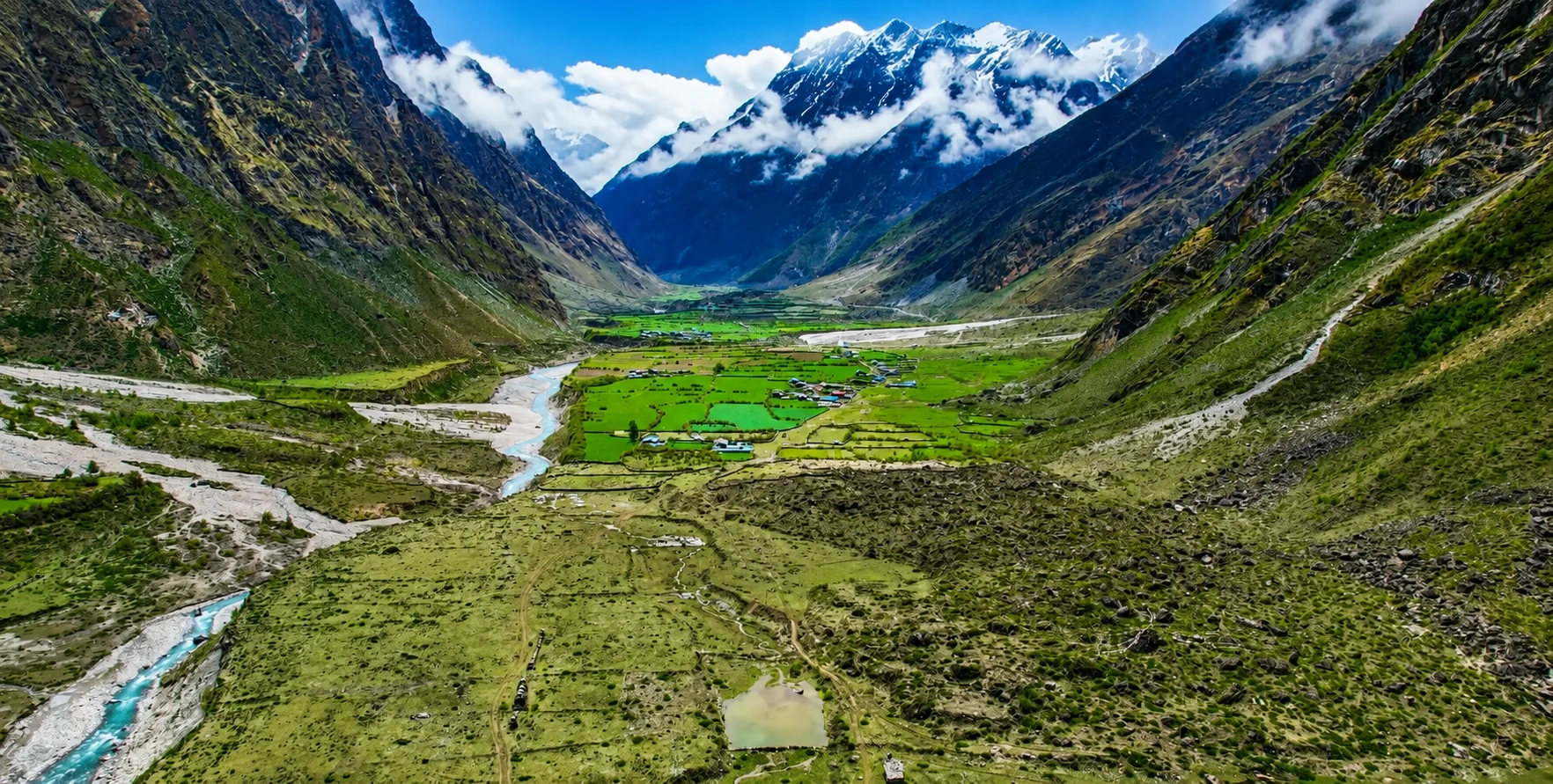
The Manaslu Conservation Area occupies a roughly rectangular zone in the upper Budhi Gandaki watershed, bounded on the north and northwest by the Nepal-Tibet border, on the east by the Annapurna Conservation Area boundary near Dharapani, and on the south and west by the lower reaches of the Budhi Gandaki River system below the village of Jagat. The Manaslu Massif dominates the area, anchored by Manaslu itself at 8,16 meters, the world’s eighth-highest mountain, along with several other major peaks, including Himalchuli (7,893 m), Peak 29 or Ngadi Chuli (7,871 m), and Baudha Himal (6,672 m). The Budhi Gandaki River drains the central valley, flowing southward through a gorge that ranks among the most dramatic and least accessible in the entire Nepal Himalaya.
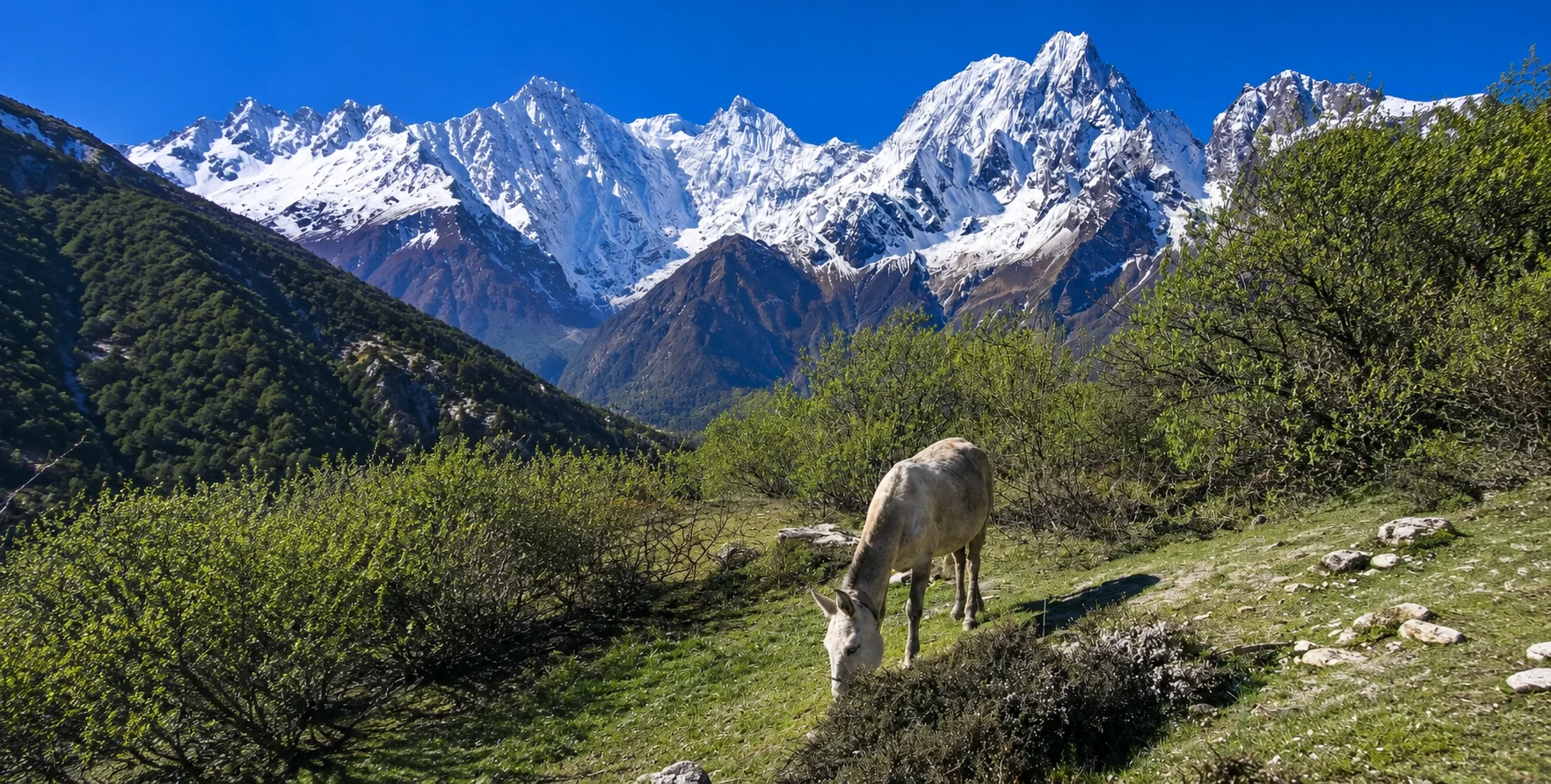
The terrain of the conservation area spans an elevation range from approximately 1,400 metres in the lower valleys near Arughat to over 8,000 metres at the summit of Manaslu, encompassing within this vertical distance a complete sequence of Himalayan ecological zones: tropical and subtropical forest in the lowest reaches, temperate oak and rhododendron forest in the middle altitude band, sub-alpine conifer and birch forest above 3,000 metres, alpine meadow and scrub between 4,000 and 5,000 metres, and the permanent ice and snow zone of the high peaks above. This ecological sequence supports extraordinary biodiversity, including populations of snow leopard, Himalayan tahr, musk deer, Himalayan black bear, red panda, and grey wolf among mammals, as well as over 100 bird species, ranging from subtropical forest specialists to high-altitude Himalayan endemics.
Cultural Landscape
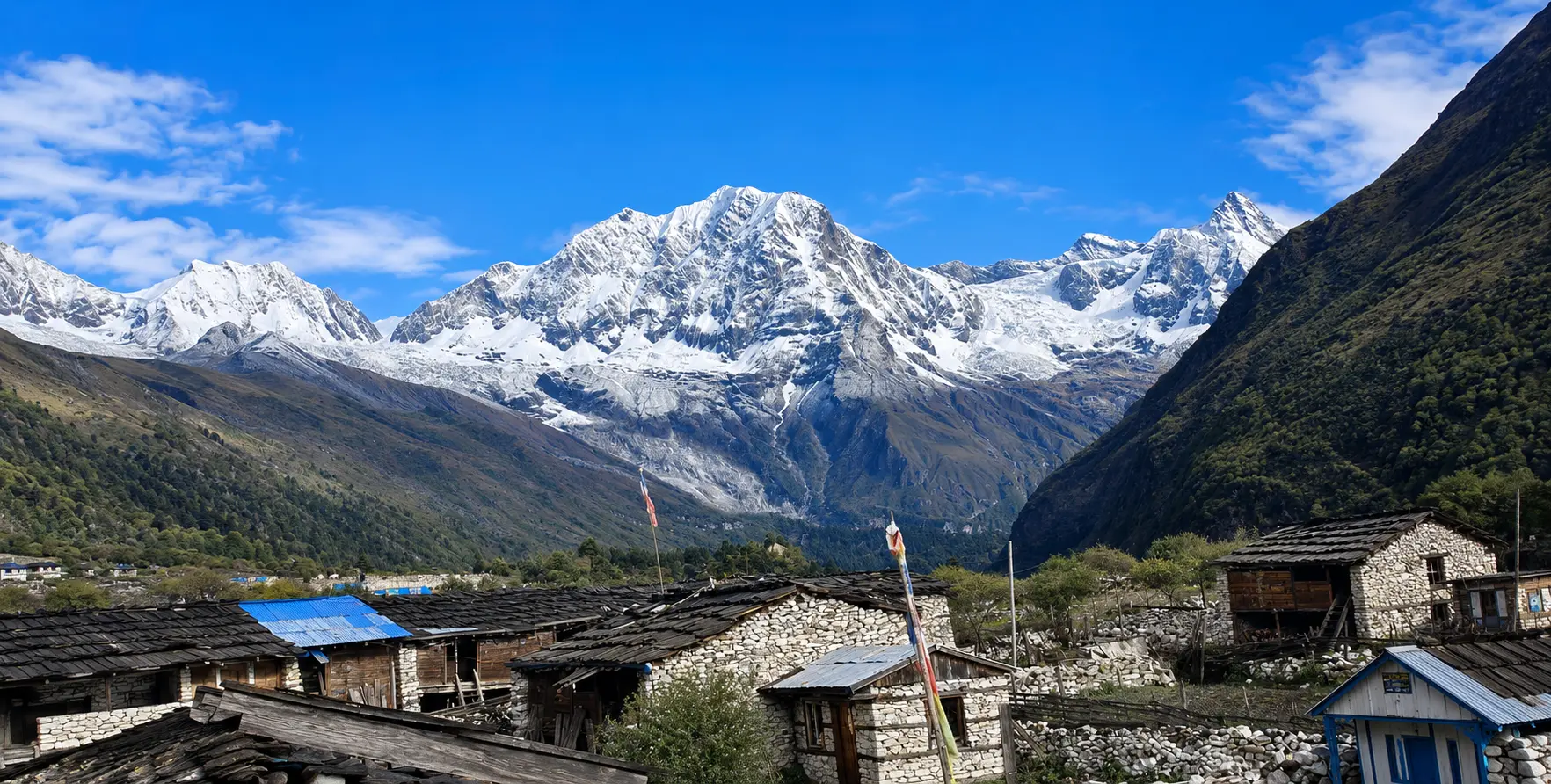
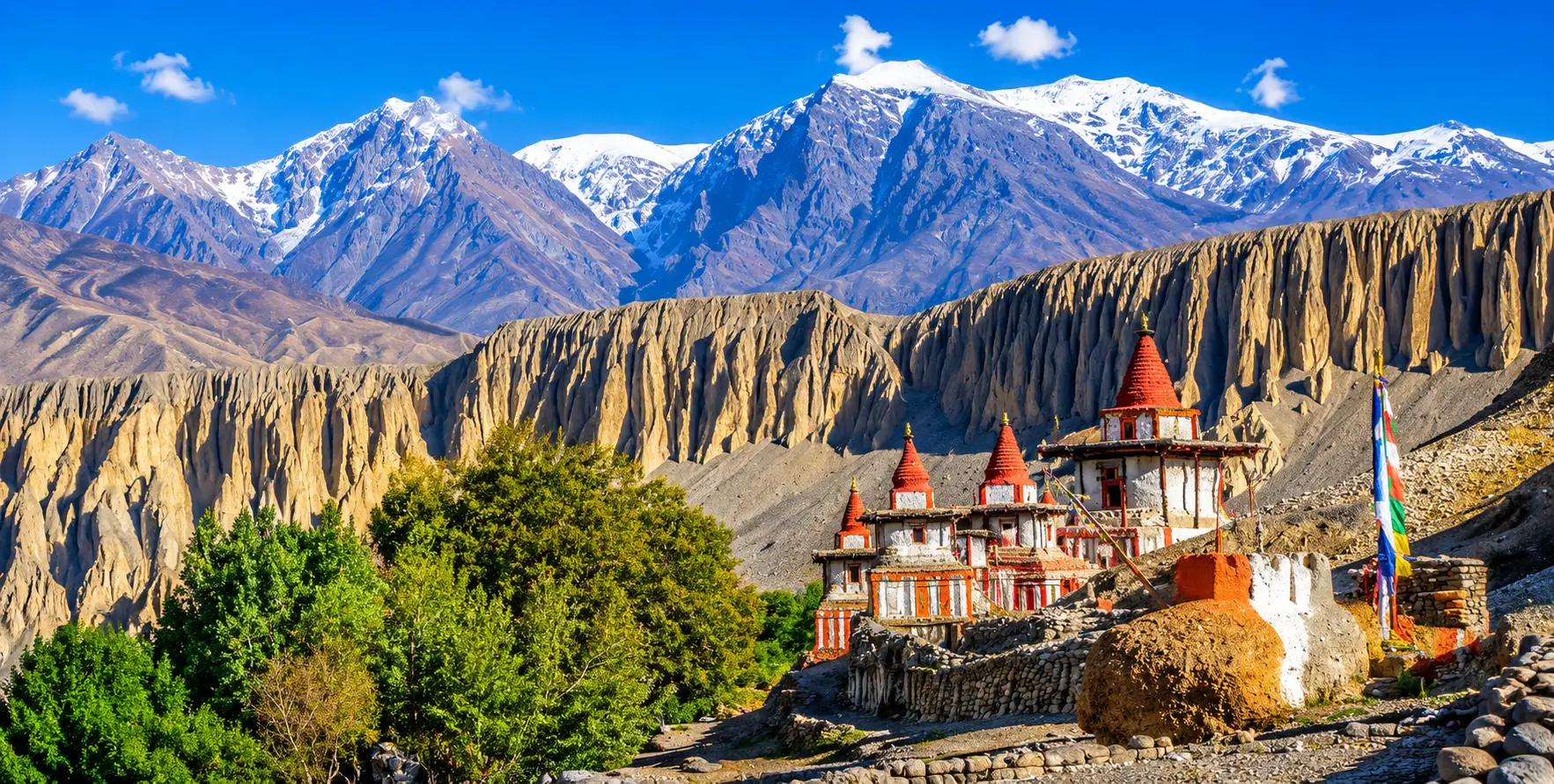
The human geography of the Manaslu Conservation Area is as richly diverse as its natural landscape. The lower valley is home to Gurung, Magar, and mixed-caste Nepali communities whose agricultural and pastoral practices reflect centuries of adaptation to the middle-hill environment. Above Jagat, as the route enters the restricted zone and the valley deepens toward the high Himalaya, the communities transition to the ethnically Tibetan Nubri people — a community of Tibetan Buddhist practice and Tibetan language whose presence in this high valley reflects centuries of Tibetan cultural expansion southward across the Himalayan range. The upper valley villages of Sama Gaon, Samdo, and Dharmasala are Nubri settlements whose monasteries, prayer flags, and traditional architecture could easily be mistaken for Tibetan plateau communities, so complete is the cultural continuity with the world north of the Nepal-Tibet border.
The Tsum Valley, which branches off the main Manaslu Circuit route near Chumling and can be visited as a significant extension requiring its own additional permit, is home to the Tsumba people — another ethnically Tibetan community whose cultural preservation has been even more complete than that of the main valley communities, partly because of the valley’s particular geographic isolation. Himalayan scholars and anthropologists widely describe Tsum as one of the most perfectly preserved examples of traditional Tibetan Buddhist village culture anywhere in the world accessible to visitors, and the experience of walking through its ancient villages and monasteries carries a quality of temporal dislocation that few other destinations in Nepal or indeed anywhere in the world can replicate.
The MCAP Permit: Definition, Legal Basis, and Purpose
Legal Framework
The Manaslu Conservation Area Permit derives its authority from Nepal’s National Parks and Wildlife Conservation Act 2029 (1973 in the Western calendar), which establishes the legal framework for all protected areas in Nepal, and from the specific management regulations established by the NTNC for the Manaslu Conservation Area following its formal gazette notification in 1998. Under this framework, entry into the Manaslu Conservation Area without a valid entry permit is a punishable offence, and conservation area staff and associated security personnel are authorised to turn back, detain, or fine individuals found inside the conservation area without the required documentation.
The permit system operates through a network of entry and checkpoint offices along the trekking routes that access the conservation area. Most trekkers approaching the Manaslu Circuit from Kathmandu must obtain the primary entry permit before reaching the first checkpoint, located near Arughat or Soti Khola; those approaching from the Annapurna Circuit must do so near Dharapani. This requirement is strictly enforced, and the consequences of attempting to enter without a permit — including significant fines, forced return, and the loss of the entire investment made in reaching the trailhead — make obtaining a permit in advance not merely advisable but essential.
What the MCAP Is and Is Not
Understanding what the MCAP covers and what it does not matters for planning, since the Manaslu Circuit’s full permit requirement involves three separate documents whose scope and issuing authorities differ in ways trekkers sometimes find confusing. The MCAP specifically authorises entry into the Manaslu Conservation Area — the protected landscape managed by the NTNC. It covers the full trail from the lower-valley entry point near Arughat or Soti Khola through the conservation area, specifically from the village of Philim, where the conservation area boundary is officially located, to the area’s exit at Dharapani, where the Manaslu Circuit connects with the Annapurna Circuit.
Critically, the MCAP does not authorise entry into the Restricted Area that lies within the conservation area. The section of the Manaslu Circuit between Jagat and Sama Gaon — roughly the middle section of the route through the high valley — constitutes a designated Restricted Area under Nepal’s foreign travel regulations, governed not by the NTNC but by the Department of Immigration through a separate permit instrument: the Restricted Area Permit (RAP).
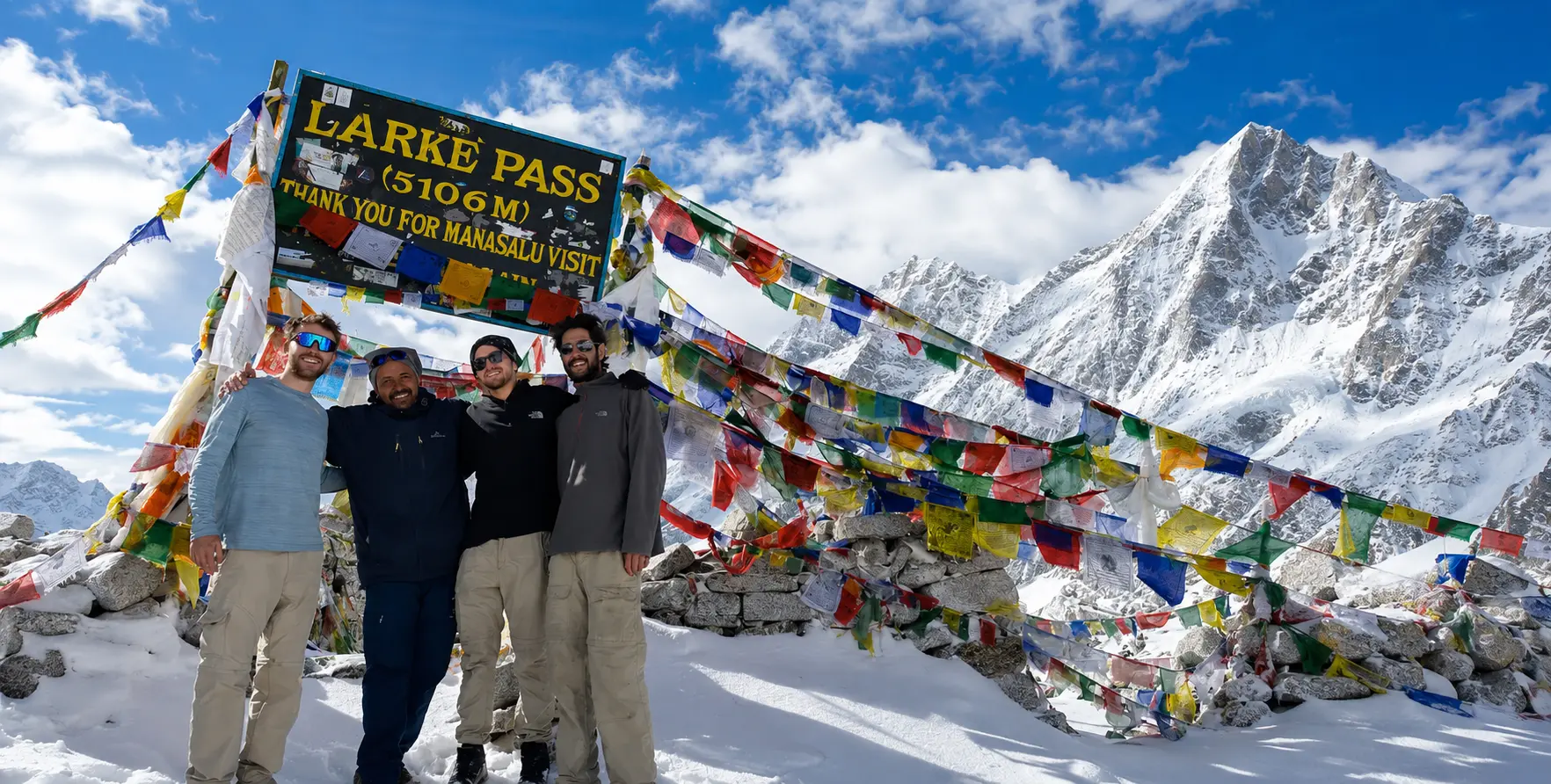
A trekker with only the MCAP can legally enter the conservation area up to Jagat from the south and beyond Sama Gaon from the north toward Dharapani, but cannot legally enter the zone between these two villages without also holding a valid RAP. In practice, all trekkers completing the Manaslu Circuit need both the MCAP and the RAP, since the Larkya La Pass crossing — the circuit’s defining high point — lies within the restricted zone.
The ACAP is the third permit, required for the section of the Manaslu Circuit that exits the Manaslu Conservation Area and enters the Annapurna Conservation Area near Dharapani as trekkers descend toward Besisahar and the end of the circuit. Even trekkers who do not intend to continue on the Annapurna Circuit beyond Dharapani must hold a valid ACAP to legally pass through the Dharapani area and out to the Besisahar road. The boundary between the two conservation areas isn’t a line you can easily skirt, and checkpoint staff at Dharapani verify ACAP possession as part of the standard permit inspection for all trekkers exiting the Manaslu route.
MCAP Permit Cost Complete Breakdown by Nationality
The MCAP permit fee structure is among the most straightforward of the three Manaslu Circuit permits, with a flat per-person rate that does not vary by season, visit duration, or number of days spent within the conservation area. This simplicity distinguishes it from the RAP, which applies different rates by season and adds daily fees beyond the first week. The MCAP is a one-time entry fee: pay it once, carry the resulting permit, and it authorises your full traverse of the Manaslu Conservation Area regardless of how many days you spend within it.
For foreign nationals who are not citizens of SAARC member states — meaning the vast majority of international trekkers from Europe, North America, Australia, East Asia, and elsewhere outside South Asia — the MCAP currently costs NPR 3,000 per person, equivalent to approximately USD 22-25 at current exchange rates. Multiple verified sources confirm this figure as the current rate, with one source noting the equivalent as NPR 3,000 or USD 22.46 per person. Payment is made in Nepali rupees at Nepal Tourism Board offices, and the USD equivalent is informational rather than an alternative payment currency —permit fees at Nepal’s government offices are settled in NPR.
For citizens of SAARC member nations—India, Bangladesh, Sri Lanka, Pakistan, Afghanistan, Bhutan, and the Maldives—the MCAP fee is NPR 1,000 per person, reflecting the preferential rate structure Nepal applies to visitors from neighbouring South Asian countries across most of its protected-area permit system. Nepali citizens who require a conservation area entry permit for their activities within the MCA pay NPR 100 per person. Children under ten years of age are exempt from the MCAP fee entirely, making it one of the few Manaslu Circuit permit components that do not apply to young children in trekking families.
It is important to note that permit fee rates in Nepal are subject to periodic government revision, and while the NPR 3,000 figure for non-SAARC foreigners has remained stable across the period covered by this guide’s research, trekkers planning journeys further into the future should verify current rates with the Nepal Tourism Board or a registered trekking agency before finalising their budget. The Nepal Tourism Board’s official offices in Kathmandu, at Bhrikutimandap, are open Sunday through Saturday, except on public holidays, from 9 AM to 5 PM, and provide authoritative, up-to-date information on all conservation area permit fees.
Complete Manaslu Circuit Permit Cost Summary
| Permit | Non-SAARC (NPR) | Non-SAARC (USD) | SAARC (NPR) | Seasonal Variation |
|---|---|---|---|---|
| MCAP (Manaslu Conservation Area Permit) | NPR 3,000 | ~USD 22–25 | NPR 1,000 | None — flat fee year-round |
| ACAP (Annapurna Conservation Area Permit) | NPR 3,000 | ~USD 22–25 | NPR 1,000 | None — flat fee year-round |
| RAP (Restricted Area Permit) — Sep to Nov | — | USD 100 first week | N/A | + USD 15/day from day 8 |
| RAP (Restricted Area Permit) — Dec to Aug | — | USD 75 first week | N/A | + USD 10/day from day 8 |
| Tsum Valley RAP (optional extension) | — | USD 35/week | N/A | In addition to the main RAP |
| TIMS Card (not required for Manaslu) | NPR 2,000 (if needed) | ~USD 15–16 | NPR 1,000 | Not required with RAP in place |
How to Obtain the MCAP: Step-by-Step Process
The Application Route
You can obtain the MCAP either directly from Nepal Tourism Board offices in Kathmandu or Pokhara, or through a registered trekking agency on your behalf. In practice, the overwhelming majority of trekkers obtain all three Manaslu Circuit permits — MCAP, ACAP, and RAP — simultaneously through their registered trekking agency, since this consolidated approach eliminates the need for multiple separate visits to different government offices and ensures that permit applications are processed by staff familiar with the specific documentation requirements and procedural steps involved. The Restricted Area Permit, in particular, can only be issued through a registered trekking agency and cannot be obtained by individual trekkers directly from the Department of Immigration — making agency involvement not just convenient but mandatory for at least one component of the full permit set.
For trekkers who prefer to handle permit acquisition themselves—perhaps those who have arranged their trek independently and need to manage the administrative side directly—the process begins at the Nepal Tourism Board office in Kathmandu at Bhrikutimandap. The MCAP and ACAP can be applied for and issued at this office without agency assistance, provided the applicant presents the correct documentation and fee. The office accepts only cash payment in Nepali rupees, so trekkers should bring the appropriate amount in NPR before visiting. Recent sources confirm that the application process has been partially digitised, with online application forms available for advance submission, reducing the time required at the physical office for verification and permit printing and shortening the overall application process.
Required Documents for MCAP Application
The documentation required for the MCAP application is straightforward compared to the more extensive requirements of the RAP. The core requirements, confirmed across multiple current sources, are as follows. A valid passport with at least 6 months’ remaining validity at the time of the trek is the primary identification document required. Two printed passport-sized photographs are required for the physical permit, which is produced as a laminated card featuring the trekker’s photograph alongside their permit details. Carry this physical permit on the trail at all times and present it at checkpoints along the route. A completed application form, either filled out at the Nepal Tourism Board office or submitted online in advance, must accompany the other documents. Proof of payment of the permit fee, in NPR at the issuing office, completes the documentation requirement.
One important practical point: passport photographs for the MCAP must be printed physical photographs, not digital images, because the permit production process requires physical photos for lamination. Trekkers who arrive at the Nepal Tourism Board without printed photographs can typically find photo services at nearby shops in the Bhrikutimandap area or in the broader Thamel district, but building this into the plan rather than discovering the need at the office saves time and reduces the stress of last-minute scrambling before a permit-sensitive departure date.
Processing Time and Practical Logistics
Under normal circumstances, the MCAP is issued on the same day as the application, typically within 1 to 2 hours of submitting the completed application and fee to the Nepal Tourism Board. The Department of Immigration, which issues the RAP, has a longer processing time—typically at least 1.5 hours for standard applications through the full official verification process involving multiple officers and ultimately the signature of the Director General of Immigration. Processing times may be longer if the online system is unavailable and the application must be processed manually, which occasionally occurs during busy periods or technical outages.
These processing realities translate into a practical recommendation that trekkers allow a full day in Kathmandu specifically for permit processing, preferably two to three working days before their planned departure for the trailhead. Trying to process all three Manaslu Circuit permits the day before departure introduces significant risk: any delay in processing— a system outage, a documentation gap, or a longer-than-expected queue at either office—could cause you to miss a planned departure, with cascading consequences for a tightly scheduled itinerary. Investing an extra day in Kathmandu for comfortable permit processing is considerably less costly than the alternatives.
Tip: Most experienced Manaslu Circuit operators recommend arriving in Kathmandu at least three to four days before your intended trailhead departure date, using the extra time to process permits at a comfortable pace, acclimatise slightly to Nepal’s climate and time zone, explore Kathmandu’s extraordinary cultural sites, and complete any remaining gear or supply acquisitions before heading north toward the mountains.
The Restricted Area Permit: The MCAP’s Essential Companion
No guide to the MCAP would be complete without a thorough treatment of the Restricted Area Permit, since the two documents are functionally inseparable for any trekker completing the standard Manaslu Circuit. The RAP governs access to the Manaslu Circuit zone between Jagat and Sama Gaon—the section of the route closest to the Nepal-Tibet border. This proximity to the border, combined with the desire to protect both the fragile cultural ecosystem of the Nubri communities and the politically sensitive border zone itself, motivates the designation of a restricted area.
Nepal’s government has classified the Manaslu region as a restricted area since trekking first opened there in 1991, a designation maintained and refined over the intervening three decades as the trekking industry has grown. The management of visitor impacts on remote cultural and natural landscapes has improved. The restricted area status serves multiple concurrent purposes: it controls the total number of visitors in a zone where infrastructure is limited and cultural communities are vulnerable to rapid change; it maintains a security buffer near the Chinese border that Nepal’s government considers prudent regardless of trekking considerations; it requires the engagement of local guides, supporting the economy of communities within the restricted zone; and it generates the premium permit fee revenue that funds a larger share of conservation and community development spending than the lower-cost conservation area permits can support.
The RAP is issued exclusively through registered trekking agencies — a requirement that cannot be circumvented through any combination of individual applications or government office visits. The application requires passport details, a valid Nepal visa, a completed online application form, payment of the applicable fee, and the agency’s sponsorship letter confirming that the applying agency is serving the trekker. The permit is a laminated document similar to the MCAP, produced after a multi-stage verification process at the Department of Immigration involving at least three officers and the Director General’s signature. This process reflects the higher security sensitivity associated with restricted-area access compared to standard conservation-area permits.
Unlike the flat-fee MCAP, the RAP fee structure is both season- and duration-sensitive. During the peak season from September through November, the RAP costs USD 100 per person for the first 7 days within the restricted zone, plus USD 15 per person per day from the 8th day onward. In the off-peak season from December through August, the first-week rate drops to USD 75 per person, with an additional USD 10 per person per day from day 8 onward. For standard Manaslu Circuit itineraries of eleven to fourteen days—in which the restricted zone section between Jagat and Sama Gaon typically accounts for seven to ten days of the total trek—the RAP alone is the largest single permit cost component, significantly exceeding the combined MCAP and ACAP fees.
The Annapurna Conservation Area Permit: The Circuit’s Exit Permit
The requirement for an Annapurna Conservation Area Permit on the Manaslu Circuit surprises many trekkers who do not initially appreciate the geographic continuity between the two conservation areas at the trek’s southern exit near Dharapani. The Manaslu Circuit Trek, as classically completed, does not end at the edge of the Manaslu Conservation Area but continues southward through the lower Marsyangdi Valley, the road to Besisahar, or onward to Kathmandu. This journey necessarily passes through territory managed by the Annapurna Conservation Area Project from approximately Dharapani southward.
The ACAP fee mirrors the MCAP in its structure: NPR 3,000 for non-SAARC foreigners, NPR 1,000 for SAARC nationals, with no seasonal variation and no daily fee beyond the flat one-time rate. The Nepal Tourism Board issues the ACAP like the MCAP; you can obtain it at the same time as the MCAP during the same visit, and it requires the same documents—passport, passport photos, and the completed application with fee. For most trekkers, getting the MCAP and ACAP together in a single Nepal Tourism Board visit is the most efficient approach, reducing the total government office time required for conservation area permits to a single transaction.
Some trekking operators and independent trekkers occasionally ask whether the ACAP is strictly necessary when their Manaslu Circuit exit route avoids entering the Annapurna Conservation Area—for example, by arranging vehicle pickup in Dharapani before crossing the ACAP boundary. This question deserves an honest answer: the boundary between the two conservation areas near Dharapani is a physical geographic line with a checkpoint, and where trekkers must hold an ACAP can depend on the specific route taken from the Manaslu exit to the road. The safest and most reliably compliance-ensuring approach is to obtain the ACAP as part of the standard permit set before departing Kathmandu, since the cost is modest, the acquisition is simple, and the alternative of being turned back at a Dharapani checkpoint because of a missing ACAP — after completing a demanding 14-day circuit — is a consequence out of all proportion to the inconvenience of having the permit in hand from the outset.
The Tsum Valley Extension: Additional Permit Requirements
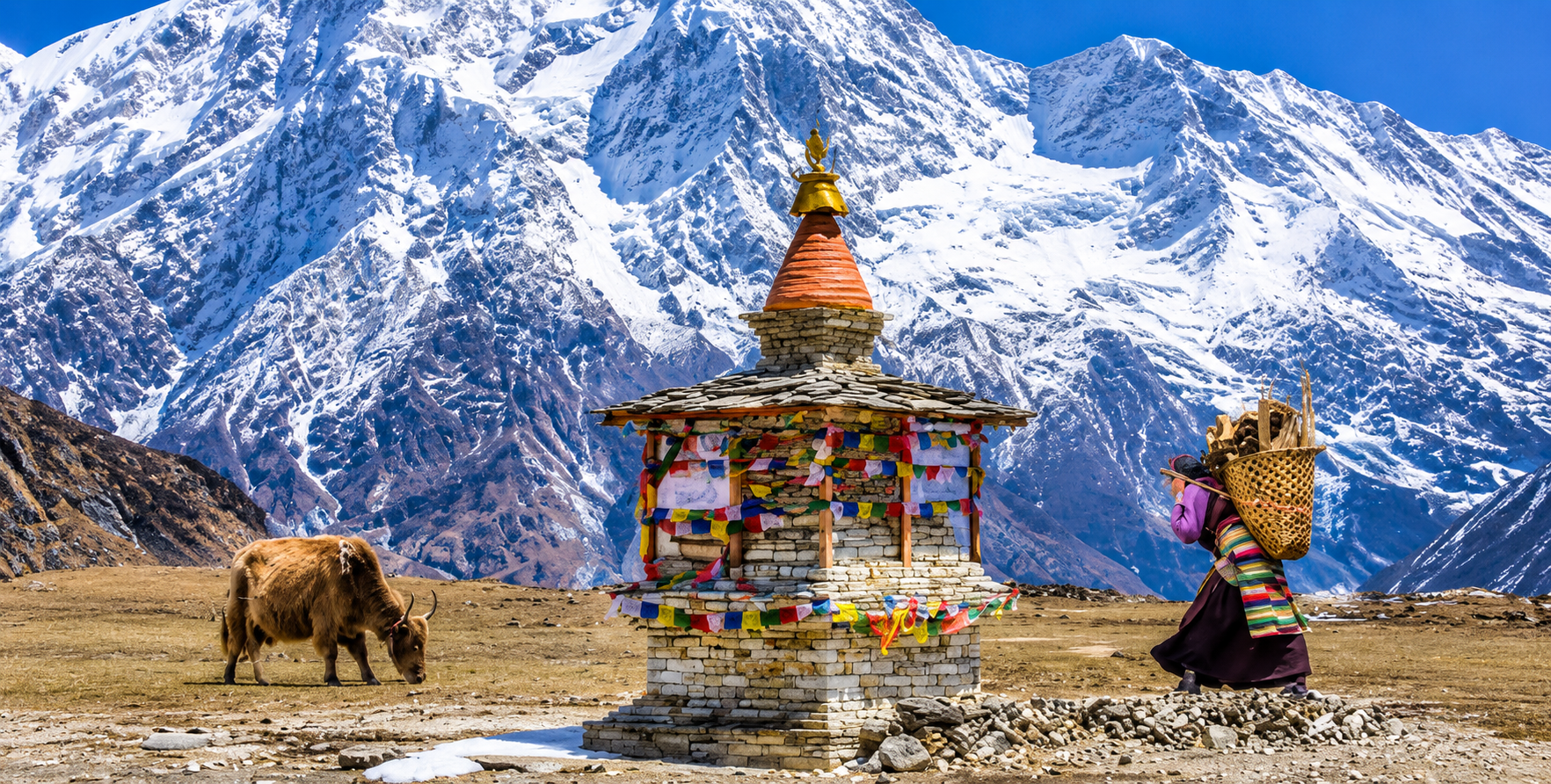
Tsum Valley, accessible via a branch trail from the main Manaslu Circuit route near Chumling, is one of Nepal’s most extraordinary off-the-beaten-path trekking destinations and is chosen by an increasing proportion of Manaslu Circuit trekkers as a significant extension of their journey. The Tsumba people who inhabit this isolated lateral valley are among the most perfectly culturally preserved Tibetan Buddhist communities accessible to trekkers anywhere in Nepal — their villages, monasteries, festivals, and daily practices maintaining a traditional character that the more accessible communities of the main Manaslu Circuit have inevitably modified somewhat through greater exposure to the trekking economy.
Entering Tsum Valley requires an additional Restricted Area Permit beyond the standard Manaslu Circuit RAP, since the valley lies within a separately designated restricted zone. The Tsum Valley Restricted Area Permit costs USD 35 per person per week, and the entry duration is typically calculated from the point of entering the Tsum Valley trail junction to the point of returning to the main Manaslu Circuit route.
Tsum Valley extensions require approximately one to two weeks of trekking, making the permit cost either USD 35 or USD 70 per person, depending on itinerary length. Additionally, the Tsum Valley extension route passes through portions of the Annapurna Conservation Area on its approach from the main circuit junction, making an ACAP permit relevant for this extension and reinforcing its value even for trekkers who might otherwise question the necessity of ACA on the standard circuit.
The application process for the Tsum Valley RAP follows the same agency-only channel as the main Manaslu RAP. Applicants must submit through a registered trekking company with the required documentation. Because the Tsum Valley is even more remote and less developed than the main Manaslu Circuit in terms of teahouse infrastructure, and because conservation managers view access to its communities as more culturally sensitive than in the main valley, the RAP system plays a particularly important role in regulating and limiting access to Tsum.
The relatively small number of trekkers who complete the full Tsum Valley extension each season — compared to the main circuit — is a direct result of the permit requirement and the additional time commitment involved, and the cultural preservation benefit of this lower traffic is widely recognised by researchers studying the relationship between tourism access and cultural change in Himalayan communities.
Permit Checkpoints on the Manaslu Circuit: Where and What to Expect
Understanding the checkpoint system on the Manaslu Circuit helps trekkers prepare for permit inspections, rather than being caught off guard by the frequency and thoroughness of document checks along the route. The Manaslu Circuit is one of Nepal’s most systematically checkpoint-monitored trekking routes, reflecting both its restricted-area status and the government’s emphasis on ensuring that only properly permitted visitors access the region.
The first major checkpoint is located at or near the entry to the Manaslu Conservation Area, typically at Arughat or, more commonly, at the trail entry points near Soti Khola, where rangers verify that trekkers hold a valid MCAP and record their entry. This is usually where rangers first scrutinise the MCAP and cross-reference its details—including the trekker’s photograph, name, nationality, and permit number—against the physical permit document. A second checkpoint at Jagat marks the entry to the Restricted Area, where RAP documents are verified with particular care, given the higher security sensitivity of the restricted zone beyond. Additional checkpoints at Chumling (where Tsum Valley permits are checked for those entering that extension), at Sama Gaon, and at Dharapani verify permit possession at the end of the restricted zone and at the transition to the Annapurna Conservation Area, respectively.
At each checkpoint, trekkers should expect to present all permit documents at once — MCAP, RAP, and ACAP—along with their passport, which serves as the primary identification document for verifying permit names and photographs. The checkpoint process is generally thorough but not lengthy for trekkers with complete documentation; the most common source of significant delay at checkpoints is missing or incomplete documents, which can result in trekkers being held at the checkpoint while the issuing agency is contacted for verification or, in the worst case, being turned back from the restricted zone entry altogether. This possibility—turning back at Jagat after three or four days of trekking from the road because of a missing RAP—is one of the most significant preventable risks in Manaslu Circuit planning and is entirely avoidable with proper advance permit acquisition.
PermCarry permits physically, not digital images on a phone or other device. The checkpoint process involves a physical inspection of the permit document, including an examination of the photograph lamination to confirm that the permit has not been transferred from another person. Because permits are explicitly non-transferable and non-refundable, and because they show the holder’s photograph on the face of the document, any attempt to use another person’s permit would be illegal and immediately detectable at the first checkpoint.
Trekking without valid MCAP, RAP, and ACAP in the Manaslu Circuit region is an offence under Nepal’s National Parks and Wildlife Conservation Act. Violations can result in significant fines, immediate expulsion from the conservation area, and potential complications with future Nepal visa applications. No exceptions are made for missing documentation — ensure all three permits are in your possession before leaving Kathmandu.
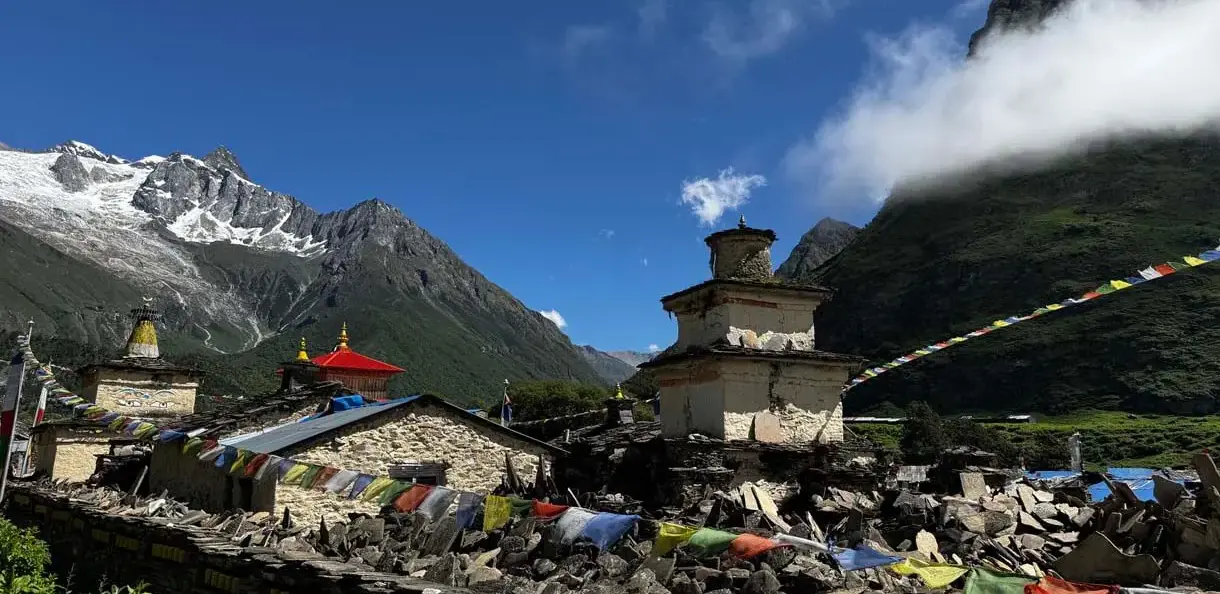
Where the Permit Fees Go: Conservation and Community Impact
Many trekkers ask what permit fees actually accomplish — beyond serving as entry tickets to a protected landscape — but few get a satisfying answer. Understanding the answer for the MCAP requires understanding both the institutional structure of the NTNC, which manages the Manaslu Conservation Area’s revenue and expenditure, and the specific program areas that conservation area permit income has historically supported.
The NTNC’s approach to Manaslu Conservation Area management explicitly links permit revenue to four priority areas: biodiversity conservation and wildlife monitoring; trail and infrastructure maintenance within the conservation area; community development projects in the villages along the trekking routes; and the administrative costs of the conservation area management system itself. In practice, this means that a meaningful portion of each NPR 3,000 MCAP fee flows into programs that directly benefit both the natural systems and the human communities that the permit system is designed to protect.
Biodiversity conservation spending in the Manaslu Conservation Area has supported wildlife monitoring programs for snow leopard, red panda, and Himalayan tahr populations in high-altitude zones above the main trekking corridor, as well as habitat restoration in lower-altitude forest zones affected by fuelwood collection pressures from communities within the area. The NTNC has collaborated with international conservation organisations, including the WWF and the IUCN, on specific program elements, bringing both additional funding and technical expertise to MCA conservation work that NTNC’s own resources alone could not have sustained.
Community development spending from MCA permit revenue has funded primary school improvements, basic health post infrastructure, drinking water system development, and small-scale livelihood support programmes in the villages most directly affected by trekking traffic — an allocation that reflects the conservation area management model’s commitment to ensuring that the communities living within the protected landscape benefit tangibly from the revenues generated by visitors who come specifically to experience the remarkable landscape and culture those communities have maintained. This community benefit dimension is also a significant factor in local communities’ ongoing willingness to support conservation measures rather than oppose them as constraints on their livelihood options.
Trail maintenance spending has funded the construction and repair of bridges, stone stairways, and trail surfaces along the Manaslu Circuit — physical infrastructure that benefits trekkers directly while also improving year-round access for local communities to essential services and markets. The extraordinary quality of some of the trail infrastructure in the Manaslu Conservation Area — particularly the suspended bridges over the Budhi Gandaki gorge — reflects the NTNC’s investment of permit revenue in engineering solutions that balance trekker safety with environmental appropriateness in a landscape where large-scale construction would be both ecologically damaging and practically impossible.

Getting to the Manaslu Circuit Trailhead: Vehicle Hire from Kathmandu
With permits secured in Kathmandu, trekkers focus on reaching the Manaslu Circuit trailhead. This journey requires a dedicated 4WD hire for the approach roads from Kathmandu to the starting points at Arughat Bazaar or Soti Khola, both of which involve road conditions that demand appropriate vehicles and experienced drivers.
The approach to Arughat, the more commonly used northern trailhead for the Manaslu Circuit, covers approximately 140 to 150 kilometres from Kathmandu and takes six to eight hours by private 4WD jeep. The route follows the Prithvi Highway westward from Kathmandu, then turns north toward Gorkha town and continues along increasingly rough roads to Arughat itself. The road quality deteriorates significantly beyond Gorkha town, with sections of loose gravel, narrow lanes, and occasional rough patches that call for a vehicle with good ground clearance and a driver experienced on this specific approach road. From Arughat, many trekkers also arrange a local jeep transfer of approximately three to four hours to Soti Khola or Machha Khola, pushing the walking start point deeper into the valley and saving a day’s road walking on a route that, beyond Arughat, remains drivable for experienced jeep operators.
Nepal Vehicle Hiring Pvt Ltd (vehiclehiringnepal.com) provides private 4WD jeep hire for the Kathmandu-to-Arughat and Kathmandu-to-SotiKholaa approach roads, with vehicles specifically maintained for these route conditions and drivers who have completed these routes multiple times. Our current pricing for the Kathmandu to Arughat transfer ranges from NPR 18,000 to NPR 28,000 for a full private vehicle that accommodates up to six passengers with trekking gear. The Kathmandu-to-Soti Khola transfer, including the additional rough road beyond Arughat, costs NPR 22,000 to 32,000 for the full vehicle. All rates include the vehicle, driver, fuel, and tolls.
For trekkers completing the Manaslu Circuit in the standard direction — entering from Arughat or Soti Khola and exiting near Dharapani — the return transport from the circuit exit point near Dharapani to Kathmandu typically follows the Besisahar highway corridor, with a private vehicle transfer of approximately four to five hours covering the 175 kilometres from Besisahar to Kathmandu. Pre-arranging this return transfer through Nepal Vehicle Hiring Pvt Ltd removes the uncertainty of finding transport in Dharapani or Besisahar after a physically demanding circuit. It lets trekkers reach their Kathmandu hotel at a predictable time, rather than waiting for whatever shared transport might be available.
Frequently Asked Questions About the MCAP Permit
Can I obtain the MCAP permit without a trekking agency?
Yes — you can obtain the MCAP and ACAP directly from the Nepal Tourism Board offices in Kathmandu or Pokhara without involving a trekking agency, provided you have the required documents and fee in NPR. The Restricted Area Permit, however, can only be issued through a registered trekking agency and requires agency involvement. Since all three permits are required for the Manaslu Circuit, agency involvement is effectively mandatory, even though you could theoretically obtain the MCAP and ACAP independently. Most trekkers find it simplest to obtain all three through their agency in a single coordinated process.
Is the MCAP valid for multiple entries or only a single entry?
The MCAP is valid for single entry only and is non-transferable and non-refundable. This means that once you enter the Manaslu Conservation Area under your MCAP, you cannot use the same permit to re-enter after exiting. Trekkers who plan to visit the Manaslu Conservation Area on multiple separate trips must obtain a new MCAP for each entry. The permit’s single-entry, non-refundable nature also means you should confirm applications only once trek departure dates are firmly set, since a cancelled or postponed trek results in a permit fee that cannot be recovered.
Does the MCAP cover the Tsum Valley extension?
No. The MCAP generally covers access to the Manaslu Conservation Area, but entering Tsum Valley requires a separate Restricted Area Permit for Tsum Valley, costing USD 35 per person per week and issued through a registered trekking agency, in the same manner as the main Manaslu RAP. Trekkers planning a Tsum Valley extension must arrange this additional permit before leaving Kathmandu, as it cannot be obtained after reaching the trail junction.
What happens if I lose my MCAP on the trail?
Losing a permit on the Manaslu Circuit is genuinely problematic, since permits are checked at multiple points along the route and a missing document can result in being held at a checkpoint or turned back. The best practical advice is to keep permits in a waterproof document holder at all times and to carry a photocopy as backup reference — though note that photocopies are not accepted as substitutes for the original at official checkpoints. If you lose an original permit, contact your trekking agency immediately and ask them to contact the issuing authority to confirm the permit’s validity. Still, no administrative solution is guaranteed once a permit is lost in a remote section of the trail.
Do children need an MCAP?
Children under ten are exempt from the MCAP fee and do not need a separate permit to enter the Manaslu Conservation Area. Children over ten, regardless of age, are subject to the same permit requirements as adult trekkers. Families trekking with children of mixed ages should confirm each child’s age with the Nepal Tourism Board at the time of application to ensure the correct documentation is prepared for all group members.
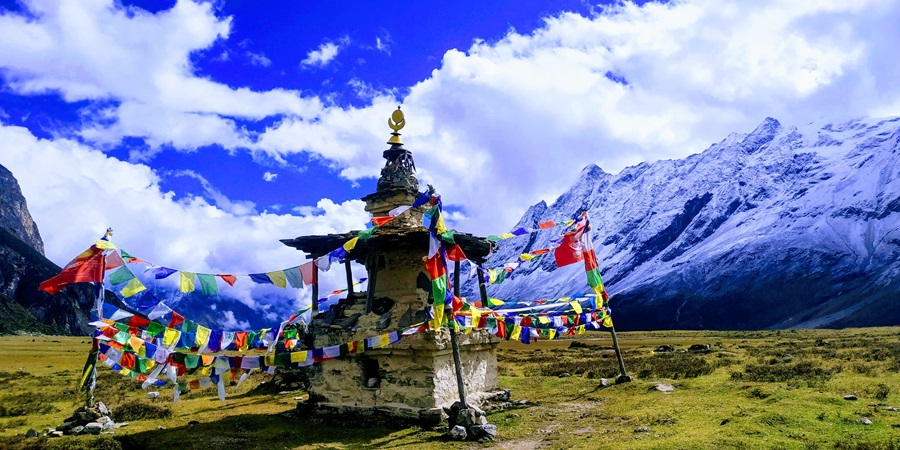
Conclusion: The MCAP as Gateway and Responsibility
The Manaslu Conservation Area Permit is, at its simplest, an administrative requirement—a piece of paper without which entry into a protected landscape is illegal and access to one of Nepal’s greatest trekking experiences is impossible. But more than that, the MCAP is far more than an entry ticket. It is the point of legal connection between the visiting trekker and the extraordinary landscape and community they are about to experience — the moment at which a person acknowledges, by paying a fee and accepting a document, that the Manaslu Conservation Area exists within a framework of law and management that has been created to protect something worth protecting, and that their presence within it carries both the privilege of access and the responsibility of care.
The Manaslu Conservation Area is home to snow leopards and red pandas, to the ancient monasteries of Nubri, to the time-preserved communities of Tsum, to the glacial grandeur of Manaslu’s southern flanks, and to the extraordinary human achievement of communities that have made meaningful lives in one of Earth’s most demanding environments across many centuries. The NPR 3,000 that a non-SAARC trekker pays for their MCAP is a genuinely modest contribution to the ongoing work of keeping this landscape and these communities in the condition that makes them worth visiting. Understanding what that fee supports — and holding the permit that carries that understanding into the mountains — is part of what distinguishes a genuinely aware trekker from one who passes through.
Nepal Vehicle Hiring Pvt Ltd is proud to support every stage of the Manaslu Circuit adventure, from the initial permit-planning consultation that clients can request alongside their trailhead vehicle booking, through the private 4WD jeep transfers that deliver trekkers to the Arughat or Soti Khola trailheads in the condition that demanding Himalayan trekking demands — well-rested, properly documented, and ready for what the mountains ahead will ask of them.
Book Your Manaslu Circuit Jeep Transfer Today
E-mail:[email protected]
WhatsApp: +977-9814227196
Kathmandu → Arughat | Kathmandu → Soti Khola | Dharapani → Kathmandu Return
Private 4WD Jeeps | Experienced Mountain Drivers | Transparent NPR & USD Pricing | 24/7 Support
- The MCAP Permit: Complete Guide to the Manaslu Conservation Area Permit
- Understanding the Manaslu Conservation Area: Landscape, Ecology, and Significance
- The MCAP Permit: Definition, Legal Basis, and Purpose
- MCAP Permit Cost Complete Breakdown by Nationality
- How to Obtain the MCAP: Step-by-Step Process
- The Restricted Area Permit: The MCAP's Essential Companion
- The Annapurna Conservation Area Permit: The Circuit's Exit Permit
- The Tsum Valley Extension: Additional Permit Requirements
- Permit Checkpoints on the Manaslu Circuit: Where and What to Expect
- Where the Permit Fees Go: Conservation and Community Impact
- Getting to the Manaslu Circuit Trailhead: Vehicle Hire from Kathmandu
- Frequently Asked Questions About the MCAP Permit
- Conclusion: The MCAP as Gateway and Responsibility

Related Blog & Articles

Kathmandu to Soti Khola by Jeep – Complete Route Guide

Kathmandu to Arughat Transport
ACAP Permit – The Annapurna Conservation Area Entry Pass: Complete Guide