Plan a Trip


Kathmandu to Kodari Border Transport

Kathmandu to Kodari Border Transport
At the far northeastern edge of Nepal, where the towering walls of the Sun Koshi gorge funnel the ancient trade route between the Indian subcontinent and the Tibetan plateau, lies Kodari — Nepal’s gateway to China. Situated at 2,515 meters above sea level in the rugged hills of Sindhupalchok District, Kodari is the Nepali side of the Nepal-China international border crossing, connected to the Tibetan town of Zhangmu (Khasa) across the famous Sino-Nepal Friendship Bridge.
The 115-kilometre route from Kathmandu to Kodari follows the Araniko Highway—one of Nepal’s most historically significant roads —built in the 1960s with Chinese assistance on an ancient yak track that for centuries carried Newar merchants, Buddhist pilgrims, and Himalayan trade goods between the Kathmandu Valley and Lhasa. Today, the Araniko Highway remains Nepal’s primary overland link with China, carrying cross-border trade, pilgrims, and travellers through some of the country’s most dramatic gorge scenery.
This complete transport guide covers everything about the Kathmandu to Kodari journey: the full route and its key stops, all vehicle options and costs, the famous Tatopani hot springs, the Kodari border crossing details, road conditions and safety, the best season for travel, and why a private vehicle from Nepal Vehicle Hiring Pvt Ltd is the most reliable and comfortable way to make this extraordinary mountain border journey.
Kodari — Nepal’s Gateway to China
Kodari is a small border village in Sindhupalchok District, Bagmati Province, situated at the end of the Araniko Highway on the banks of the Bhote Koshi (Sun Koshi) River. The village occupies a dramatically narrow section of the river gorge — steep Himalayan walls rise on both sides, the river thunders through the gorge below, and the Sino-Nepal Friendship Bridge spans the border between Nepal and Tibet.
The crossing point at Kodari connects Nepal to Zhangmu (also known as Dram or Khasa in Nepali) on the Chinese side — a bustling trade town in Nyalam County, Shigatse Prefecture, Tibet Autonomous Region. From Zhangmu, China National Highway 318 continues northward toward Shigatse and ultimately Lhasa — the historic overland route that once linked Kathmandu with the Tibetan heartland.
Historical Significance of the Kodari Route
The Kodari road follows one of Asia’s most important trade routes. For centuries before the Araniko Highway was built, Newar merchants from the Kathmandu Valley made the arduous journey on foot and by yak over the Himalayan passes to trade in Lhasa — carrying salt, grain, wool, and luxury goods in both directions. The route was so important to the Kathmandu Valley economy that the Newar trading communities of Lhasa became a permanent and culturally significant presence in Tibet for hundreds of years.
The Araniko Highway was built between 1963 and 1967 with Chinese technical and financial assistance, transforming the ancient yak track into a motorable road. It was named after Araniko, the famous 13th-century Nepali architect and artist who travelled to the Yuan Dynasty court of Kublai Khan and designed the White Pagoda (Bai Ta) in Beijing, among many other celebrated works of Nepali artistic influence in China.
- Highway name: Araniko Highway / National Highway 34
- Built: 1963–1967 with Chinese assistance
- Named after: Araniko — legendary 13th-century Nepali architect who worked in China
- Length: 112.83 km (70.11 miles) from Maitighar, Kathmandu to Kodari border
- Strategic significance: Nepal’s only overland route connecting directly with China
- China side connection: China National Highway 318 — continuing to Lhasa and Shanghai
Key Facts at a Glance — Kathmandu to Kodari
| Route Detail | Information |
| Total Road Distance | 115 km (Kathmandu to Kodari border) |
| Kodari Altitude | 2,515 m (8,251 ft) above sea level |
| Highway | Araniko Highway (NH 34) — built by China in the 1960s |
| Travel Time by Private Vehicle | 3.5 to 5 hours, depending on road conditions |
| Road Type | Paved — but mountainous, steep, and landslide-prone beyond Barabise |
| Nepal Border Point | Kodari / Tatopani border crossing (Sindhupalchok District) |
| China Side Border Town | Zhangmu (also called Dram or Khasa) — Tibet, China |
| Friendship Bridge | Sino-Nepal Friendship Bridge — spans the Sun Koshi River |
| Key Stops En Route | Bhaktapur, Banepa, Dhulikhel, Panchkhal, Dolalghat, Barabise, Tatopani |
| 4WD Required? | Recommended beyond Barabise — steep, narrow mountain road |
| Best Season | October–May (dry season) — avoid monsoon for safest travel |
| Border Status (2026) | Open for local trade and Nepali-Chinese nationals; tourists verify current status. |
Border Status Notice 2026: The Kodari/Tatopani border crossing status for international tourists can change based on Nepal-China bilateral agreements and security considerations. In 2026, the crossing is open to local cross-border trade and to Nepali and Chinese nationals. International tourists should verify the current border status with Nepal’s Department of Immigration (immigration.gov.np) or the Chinese Embassy in Kathmandu BEFORE planning any crossing. Nepal Vehicle Hiring Pvt Ltd can provide the most current information at the time of booking.
The Route — Kathmandu to Kodari Step by Step
| Stop | Distance from KTM | Altitude | Road Type | Key Notes |
| Kathmandu (Maitighar) | Start (1,400 m) | — | City roads | Departure — Thamel hotel pickup |
| Bhaktapur | 16 km | 1,401 m | Paved highway | Ancient UNESCO heritage city |
| Banepa | 30 km | 1,200 m | Paved highway | Junction town — road continues northeast |
| Dhulikhel | 35 km | 1,550 m | Paved highway | Himalayan panorama viewpoint — photo stop |
| Panchkhal | 50 km | 868 m | Paved highway | Descending valley — Indrawati River views |
| Dolalghat | 65 km | 640 m | Paved highway | Sunkoshi–Indrawati confluence — scenic rest stop |
| Lamosangu / Jiri Junction | 79 km | 610 m | Paved highway | Turn-off for Jiri (Everest lower approach) |
| Barabise | 90 km | 1,000 m | Paved — narrows here | Last major town before Tatopani/Kodari |
| Tatopani | 107 km | 1,067 m | Mountain road | Famous hot springs — purification bathing |
| Kodari Border | 115 km | 2,515 m | Steep mountain road | Nepal–China border, Sino-Nepal Friendship Bridge |
Kathmandu to Dhulikhel (35 km, 45 minutes)
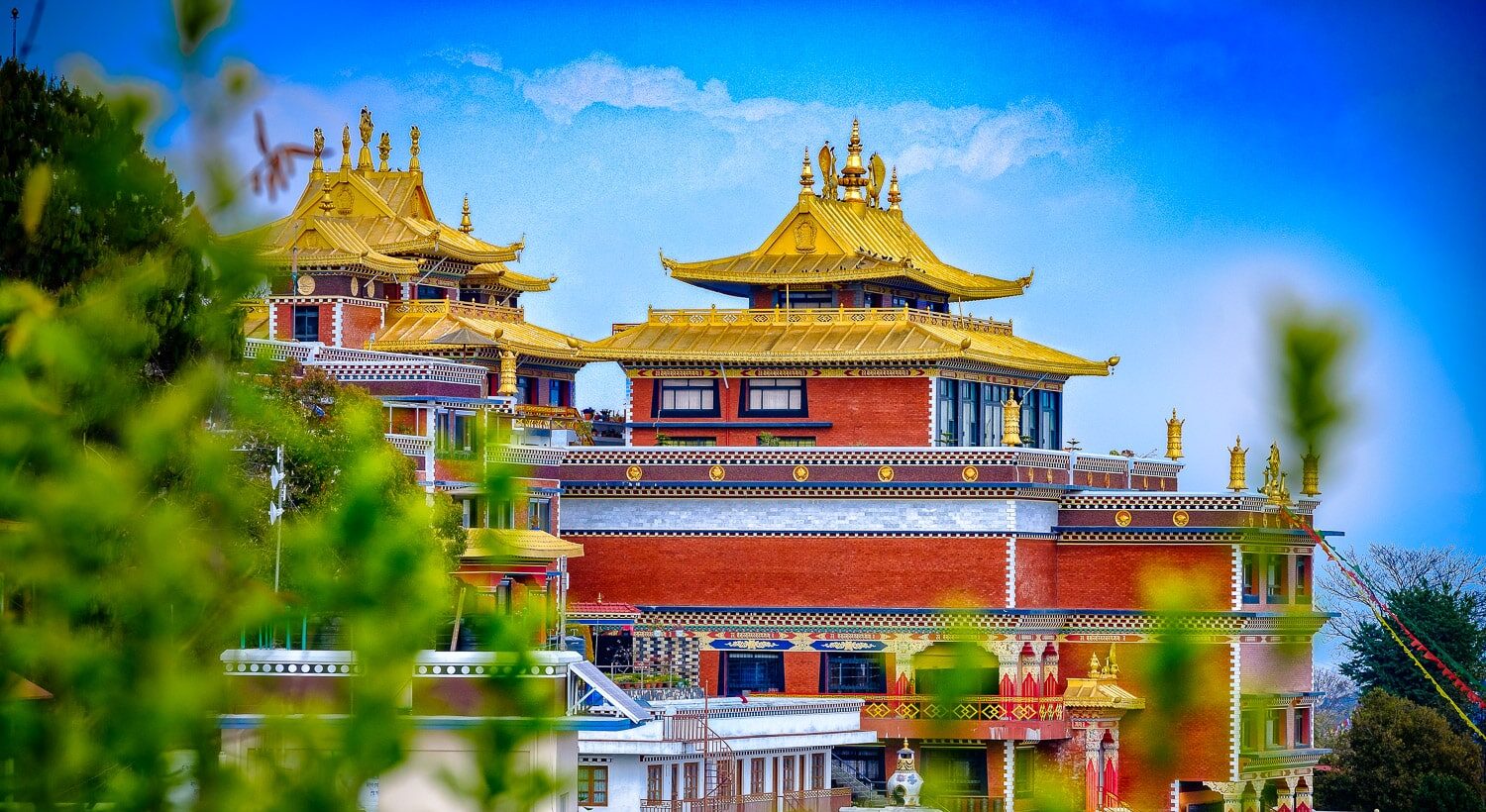
The Araniko Highway begins at Maitighar Junction in central Kathmandu and heads northeast through Bhaktapur, Banepa, and Sanga before reaching the hilltop town of Dhulikhel. This initial section is a well-maintained paved highway in excellent condition. The morning drive from Kathmandu offers progressively better views as you leave the city behind and the Himalayan foothills begin to dominate the horizon. Dhulikhel — a charming traditional town at 1,550 meters — offers one of the finest panoramic Himalayan views accessible by road near Kathmandu, including peaks from Manaslu to Ganesh Himal, and, on clear days, the distant summit of Everest itself. Nepal Vehicle Hiring Pvt Ltd drivers always pause briefly here on the outward journey for photos.
Dhulikhel to Dolalghat (30 km, 45 minutes)
Below Dhulikhel, the Araniko Highway descends steeply through the Panchkhal valley toward the Indrawati and Sun Koshi river systems. This section offers spectacular views of the deeply incised river valleys, terraced hillsides, and the distant snow-capped ridgeline of the Himalayan range. Dolalghat, situated at the confluence of the Indrawati and Sun Koshi rivers at 640 meters, is a common brief rest stop — the river confluence here is both scenic and sacred, and many travellers step out for a few minutes to take in the valley panorama.
Dolalghat to Barabise (25 km, 45 minutes)
Above Dolalghat, the route continues northeast along the Sun Koshi River gorge. The road passes through Lamosangu, where a turn-off leads south toward Jiri, the traditional starting point of the Everest trekking approach before Lukla Airport was built. The road narrows progressively as it approaches Barabise (~90 km from Kathmandu), where the gorge walls begin to steepen and close in on both sides. Barabise is the last significant town before the more challenging section of the highway — with fuel stations, restaurants, and basic facilities for travellers to rest.
Barabise to Tatopani (17 km, 45 minutes)
Beyond Barabise, the Araniko Highway enters its most challenging section. The road becomes narrow, steep, and increasingly exposed — carved into the cliff face above the roaring Bhote Koshi River gorge. This section is considered one of the most hazardous in Nepal because of its extreme steepness, narrow width, and high risk of landslides during and after monsoon rains. The scenery, however, is extraordinary — towering rock walls, cascading waterfalls, and the turbulent turquoise-green river hundreds of meters below. A 4WD vehicle with an experienced driver is strongly recommended for this section.
Tatopani (107 km from Kathmandu, 1,067 m altitude) is the most popular destination stop on the entire Kathmandu-Kodari route — home to the famous natural hot spring pools that draw visitors and pilgrims from across Nepal and India. Many day-trip travellers from Kathmandu visit Tatopani specifically for the hot springs and do not continue to the border.
Tatopani to Kodari (8 km, 30 minutes)
The final 8 km from Tatopani to the Kodari border is the steepest and narrowest section of the entire Araniko Highway. The road climbs sharply from Tatopani (1,067 m) to the Kodari border point (2,515 m) — a gain of almost 1,500 meters in just 8 km. The gradient is severe, the road is very narrow (passing two vehicles requires extreme care at some points), and the drop to the river below is daunting. This section demands a skilled, experienced mountain-road driver and a well-maintained vehicle. Nepal Vehicle Hiring Pvt Ltd assigns drivers with specific experience in this section for all Kodari bookings.
All Transport Options — Kathmandu to Kodari
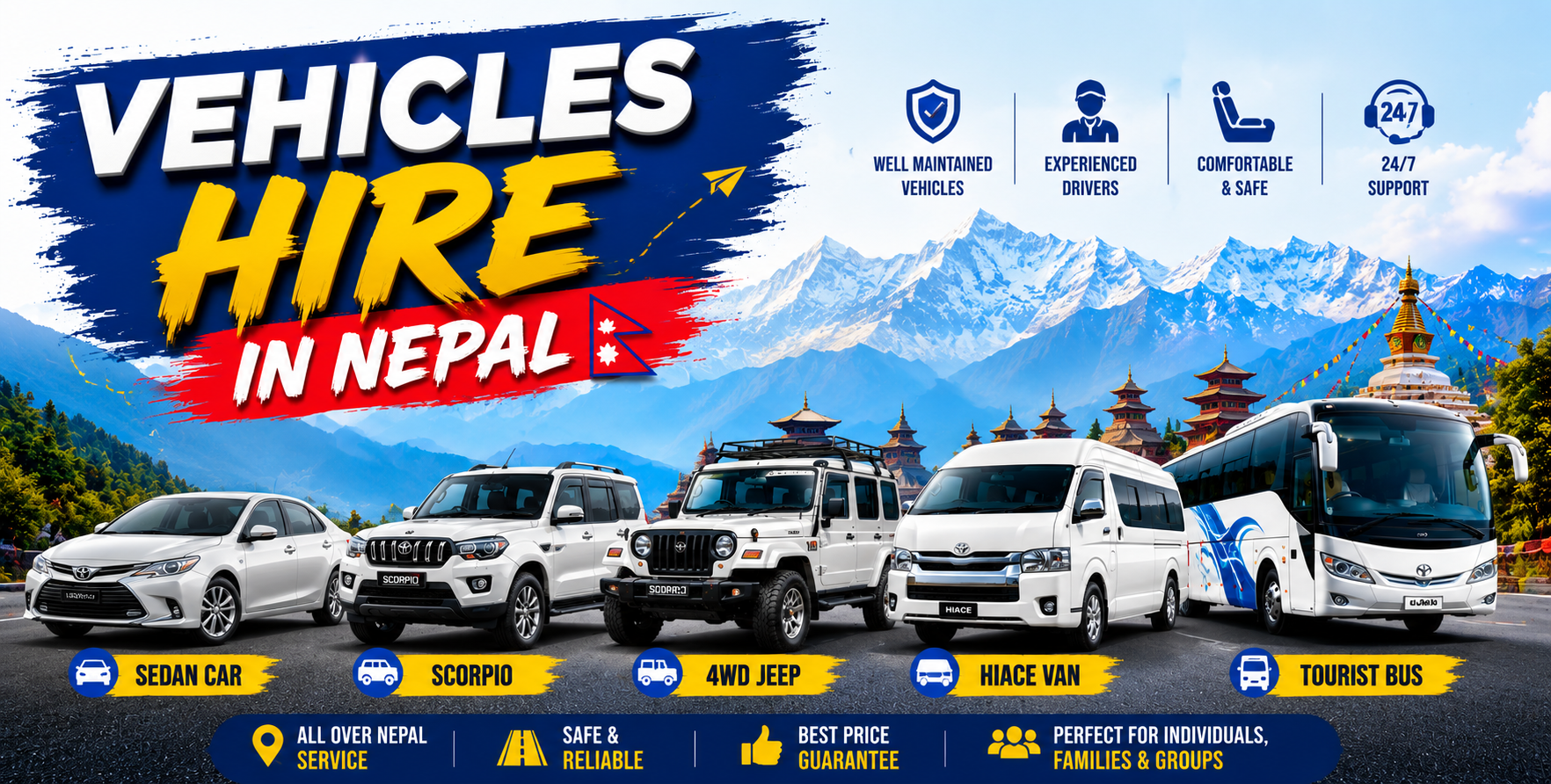
| Transport Option | Capacity | 2026 Cost | Travel Time | Best For |
| Private Sedan Car | 1–3 passengers | NPR 8,000–15,000 / USD 60–100 | 3.5–4.5 hrs | Small groups, day trip to Tatopani |
| Private Jeep (4WD) | 4–6 passengers | NPR 12,000–25,000 / USD 90–160 | 3.5–4.5 hrs | Groups, off-road reliability, border transfer |
| Private Hiace Van | 7–14 passengers | NPR 16,000–30,000 / USD 120–200 | 4–5 hrs | Trade groups, large pilgrim/tour parties |
| Private Coaster Bus | 15–25 passengers | NPR 20,000–40,000 / USD 150–250 | 4.5–5.5 hrs | Large organised group |
| us (Kathmandu–Barabise) | Many passengers | NPR 350–500 per person | 5–7 hrs | Budget travellers — Barabise only |
| Shared Jeep (Sumo) | 7–9 passengers | NPR 800–1,200 per person | 4–5 hrs | Budget — departs from New Bus Park |
| Day Return Package | 1–6 passengers | NPR 15,000–22,000 / USD 115–165 | Full day (round trip) | Tatopani Hot Springs Day Trip |
Private Jeep (4WD) — Recommended Option
A private 4WD jeep is the most recommended vehicle for the Kathmandu-to-Kodari route. The steep, narrow road beyond Barabise and the extreme gradient of the Tatopani-to-Kodari section are best handled by a 4WD vehicle with good ground clearance and low-range capability. For groups of 4 to 6, the per-person cost of a private jeep is very competitive with shared transport while offering complete flexibility, hotel pickup, and the ability to stop at Tatopani hot springs for any length of time.
- Vehicle: Mahindra Scorpio 4WD, Toyota Hilux 4WD
- Capacity: 4–6 passengers with luggage
- 2026 cost: NPR 12,000–25,000 / USD 90–180 (full vehicle, one way)
- Includes: Driver, fuel, road tolls — all-inclusive
- Hotel pickup: Door-to-door from your hotel in Kathmandu
Private Sedan Car — Suitable for Tatopani
A private sedan is suitable and comfortable for the Kathmandu-Tatopani section of the paved highway. For travellers whose destination is Tatopani hot springs only (not continuing to Kodari), a sedan is perfectly adequate and more economical. The Tatopani-to-Kodari section is steep and manageable in a sedan with an experienced driver in dry conditions, but a 4WD is much preferred for safety and confidence.
- 2026 cost: NPR 8,000–20,000 / USD 60–140 (Kathmandu to Tatopani/Kodari, one way)
- Best for: Day trips to Tatopani hot springs; small groups of 1–3
Private Hiace Van — Groups of 7–14
For larger groups, a Toyota Hiace van is the most economical mode of group transport on the Kathmandu-Barabise section of the paved highway. Note that the Hiace van, while capable on the paved road to Barabise, can be challenging on the very steep and narrow Tatopani-to-Kodari section — Nepal Vehicle Hiring Pvt Ltd assesses current road conditions before confirming Hiace hire for the full Kodari route.
- 2026 cost: NPR 16,000–30,000 / USD 120–225 (full vehicle, one way to Kodari
Tatopani Hot Springs — The Must-Stop Highlight
| Feature | Detail |
| Location | Tatopani village, Sindhupalchok District — ~107 km from Kathmandu |
| Name Meaning | ‘Tatopani’ = Hot Water in Nepali |
| Temperature | Natural spring water: 43–46°C (109–115°F) |
| Religious Significance | Hindus believe bathing here cleanses sins — many pilgrims combine it with the Kodari trip. |
| Setting | Riverside pools on the bank of the Bhote Koshi River — beautiful gorge scenery |
| Facilities | Public and private bathing pools, changing rooms, tea shops, and basic guesthouses |
| Entry Fee | NPR 100–200 per person |
| Best Time to Visit | October–April — avoid monsoon when river levels rise dangerously |
The Tatopani hot springs are the most celebrated attraction on the entire Kathmandu-Kodari route and a destination in their own right for many visitors from Kathmandu. Situated beside the Bhote Koshi River in the dramatic gorge below the main road, the natural hot spring pools offer an extraordinary combination of therapeutic mineral water, spectacular mountain-gorge scenery, and the unique atmosphere of a place equally valued by Hindu pilgrims performing ritual purification and by tired hikers and travellers seeking physical rejuvenation.
Geothermally heated groundwater feeds the springs, emerging at 43 to 46°C—warm enough for long, deeply relaxing soaks. The bathing pools — both open-air communal pools and smaller semi-private enclosures — are set directly beside the river, with the sound of rushing water and the sight of towering cliffs creating an experience unlike any spa or wellness facility. Most Kathmandu-Kodari day-trip travellers plan a 1- to 2-hour stop in Tatopani, and many wish they had planned longer.
Tatopani Day Trip: Nepal Vehicle Hiring Pvt Ltd’s most popular Kathmandu-Kodari booking is the one-day round trip specifically to Tatopani hot springs — depart Kathmandu at 6:30 AM, arrive Tatopani by 10:30 AM, enjoy 2+ hours in the hot springs and lunch at a riverside restaurant, depart Tatopani by 2:00 PM, arrive Kathmandu by 6:00 PM. A perfect restorative day trip from the city.
The Kodari Border — Nepal–China Crossing
| Border Detail | Information |
| Nepal Side | Kodari / Tatopani border post — Sindhupalchok District |
| China Side | Zhangmu (Dram / Khasa) — Nyalam County, Shigatse Prefecture, Tibet |
| Friendship Bridge | Sino-Nepal Friendship Bridge — spans the Sun Koshi (Bhote Koshi) River |
| Border Type | Nepal–China international land border crossing |
| Local Trade | Active daily cross-border trade in Chinese goods |
| Tourist Status (2026) | Verify current entry permissions with immigration before travel — check the latest Nepal government notices. |
| Common Crossers | Nepal-China trade business people, Tibetan pilgrims, and overland travellers (when open) |
| Khasa Market (Chinese Side) | Popular for electronics, clothing, and household goods at Chinese prices |
| Documents Required | Valid passport + China visa for crossing; Nepal ID for Nepali nationals |
| Nearest Nepal Customs | Tatopani Customs Office — all goods are inspected here |
The Sino-Nepal Friendship Bridge
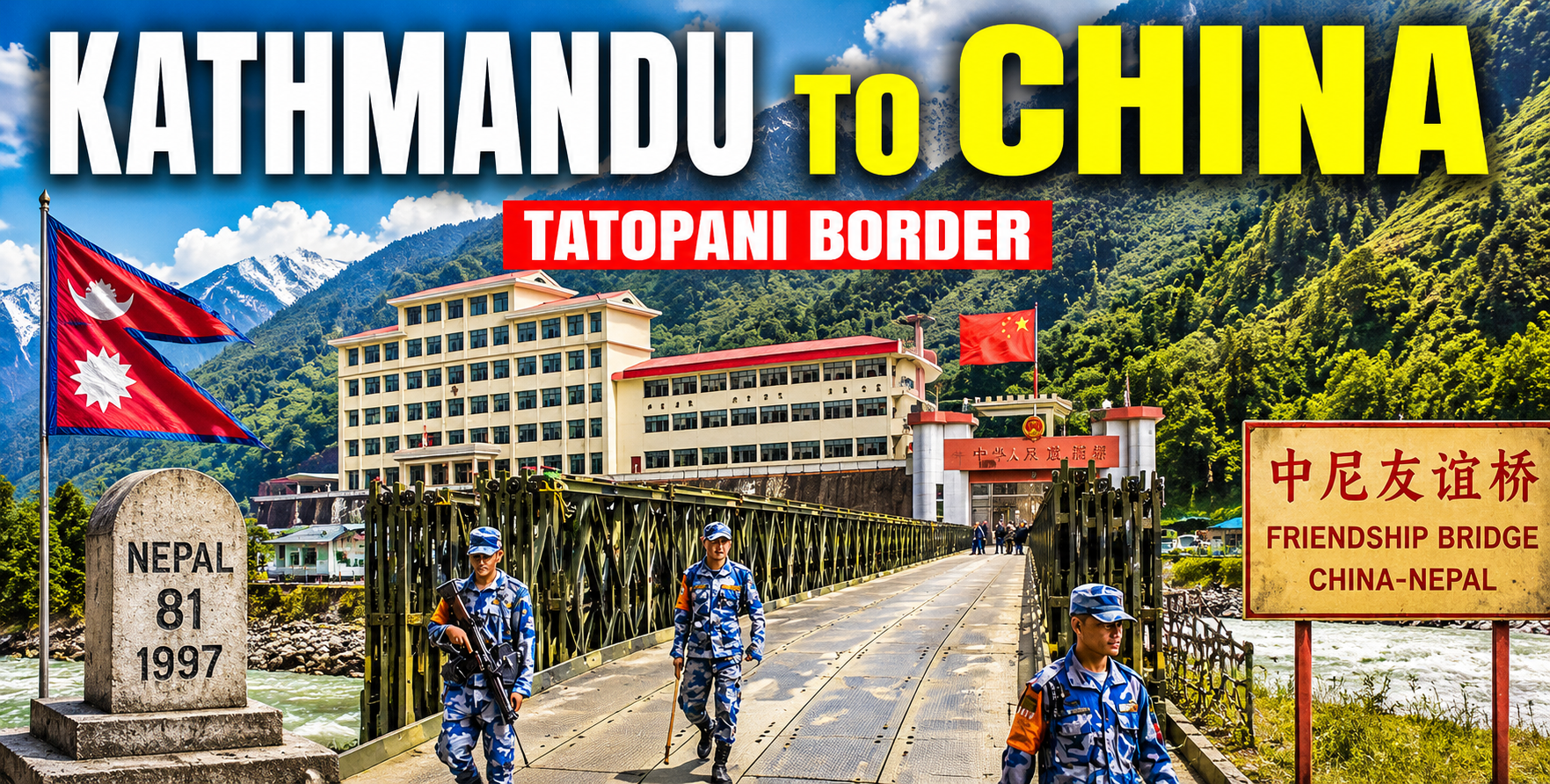
The Sino-Nepal Friendship Bridge is the actual point of border crossing between Nepal and China — a modest bridge spanning the Sun Koshi (Bhote Koshi) River with Kodari on the Nepali bank and Zhangmu (Khasa) on the Chinese/Tibetan bank. The bridge was originally built as a symbol of Nepal-China friendship and the conclusion of the Araniko Highway project in the 1960s. On the Nepal side, the bridge approach is flanked by the Nepal immigration and customs posts. On the Chinese side, it leads directly into the commercial town of Zhangmu.
Zhangmu (Khasa) — The Tibetan Trade Town
Zhangmu (called Khasa in Nepali) is a bustling commercial town on the steep slopes of the Tibetan Plateau, with streets lined with shops selling Chinese electronics, textiles, household goods, and a wide range of consumer products at prices significantly lower than in Kathmandu. For Nepali shoppers and traders, the Khasa market has long been a destination for affordable Chinese goods that are unavailable or more expensive in Nepal. The town is connected to Lhasa via China National Highway 318 — the famous overland route across the Tibetan plateau.
The April 2015 earthquake severely damaged both Kodari and Zhangmu, temporarily closing the border. The border was subsequently reopened for local trade, and international tourist crossings resumed for a period. In 2026, verify the border’s status for international tourists before travel — Nepal Vehicle Hiring Pvt Ltd maintains current border status information and will advise clients accordingly.
Tibet Overland Travel — Lhasa via Kodari
Before the 2015 earthquake disruptions, the Kodari border was the starting point for one of the world’s most celebrated overland journeys — the Nepal-Tibet Friendship Highway from Kathmandu to Lhasa via Zhangmu, Shigatse, and the Tibetan plateau. The route passes through some of the world’s most extraordinary high-altitude landscapes, including Gyirong Valley, Everest North Base Camp, and the vast open spaces of the Tibetan plateau. For travellers reaching Kodari to continue to Tibet, Nepal Vehicle Hiring Pvt Ltd can provide the Kathmandu-to-Kodari border transfer as the first leg of their overland Tibet adventure.
Road Conditions — Safety Guide
| Section | Road Condition | Risk Level | Notes |
| Kathmandu to Dhulikhel | Excellent paved | Low | Araniko Highway — national standard |
| Dhulikhel to Dolalghat | Good paved — descending | Low-Moderate | Winding valley descent |
| Dolalghat to Barabise | Paved — progressively narrower | Moderate | River gorge begins — traffic from trade trucks |
| Barabise to Tatopani | Narrow mountain road | High | Steep, prone to rockfall — 4WD recommended |
| Tatopani to Kodari | Very steep, narrow road | Very High | Most challenging section — expert driving essential |
| Monsoon Season (Jun–Sep) | ALL sections | Very High — landslides | Road closures are frequent — verify before travel |
Landslide Risk — The Critical Safety Issue
The Araniko Highway beyond Barabise is one of Nepal’s most landslide-prone road sections. The extremely steep Himalayan hillsides on both sides of the Bhote Koshi gorge are inherently unstable — heavy rainfall triggers regular rockfalls and mudslides that can block the road for hours or days. During and immediately after monsoon season (June–September), landslides commonly close the Barabise to Kodari section. The 2015 Gorkha earthquake caused catastrophic landslide damage to this section, closing the route for months.
Nepal Vehicle Hiring Pvt Ltd monitors road conditions on the Araniko Highway daily throughout the year and will proactively advise clients if the Barabise-Kodari section is unsafe for travel on any given day. During the monsoon, we may recommend limiting the journey to Tatopani (which is generally more accessible) rather than continuing to Kodari.
Trade Truck Traffic
The Araniko Highway carries significant cross-border trade traffic — heavy trucks loaded with Chinese goods heading from Zhangmu toward Kathmandu and beyond. These trucks are slow, wide, and challenging to pass on the narrow mountain road beyond Barabise. Passing trade trucks on the cliff-edge sections of the Tatopani-Kodari road requires experienced drivers who know the road’s passing points and exercise appropriate caution. Nepal Vehicle Hiring Pvt Ltd’s drivers are familiar with the trade truck traffic patterns on this route.
Season Guide
| Season | Months | Road Safety | Views | Recommendation |
| Autumn | Oct–Nov | Good — dry | Clear Himalayan views | Best season — dry roads |
| Winter | Dec–Feb | Good — cold, clear | Excellent mountain views | Very good — fewer visitors |
| Spring | Mar–May | Good — warming | Clear to hazy | Good — pleasant temperature |
| Monsoon | Jun–Sep | Dangerous — landslides | Poor — clouds | NOT recommended — road closure risk |
Monsoon Season Warning (June–September): The Barabise- Kodari section is extremely dangerous during heavy monsoon rainfall. Landslides, rockfalls, and flash flooding can close the road without warning. Nepal Vehicle Hiring Pvt Ltd does NOT recommend the Kathmandu-to-Kodari journey during the peak monsoon months. If travel during this period is essential, a 4WD vehicle with an experienced driver, real-time road-condition verification on the morning of travel, and a contingency plan to stop at Tatopani or Barabise if the road ahead is blocked are mandatory.
What to See and Do on the Kathmandu–Kodari Route
Dhulikhel — Mountain Viewpoint
Dhulikhel’s ridge position at 1,550 meters provides one of the finest accessible Himalayan panoramas near Kathmandu — a sweeping view from Ganesh Himal in the west to Numbur Himal in the east, with Gauri Shankar, Melungtse, and other prominent peaks visible on clear mornings. The traditional Newar town of Dhulikhel also has ancient stone temples, traditional courtyards, and charming lanes, making a 30-minute stop for exploration on the outward journey worthwhile.
Dolalghat — River Confluence
Dolalghat sits at the meeting point of the Sun Koshi and Indrawati rivers — a location of scenic and spiritual significance in Nepali tradition. The riverside area has a pleasant atmosphere for a brief stop, and the sound of the two rivers merging in the forested gorge is calming and beautiful. The Dolalghat suspension bridge offers a good vantage point for photography of the confluence.
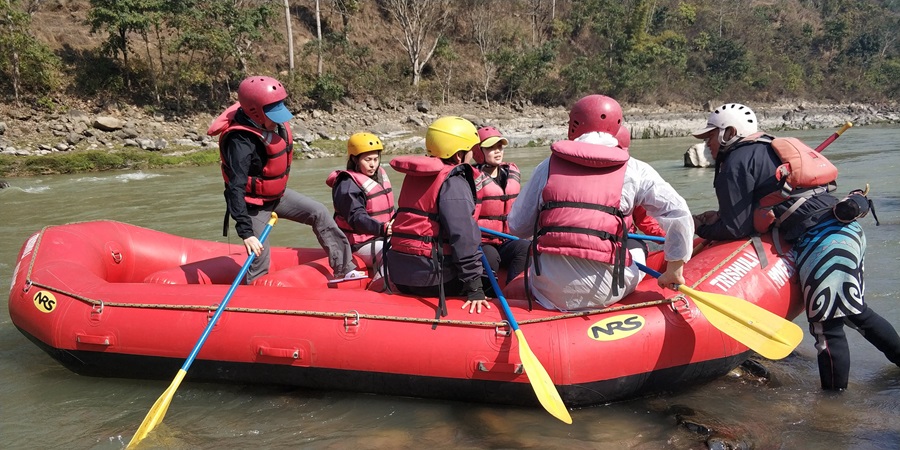
Bhote Koshi River — White Water Rafting
The Bhote Koshi River — the fast-flowing river that accompanies the Araniko Highway for much of the Barabise-to-Kodari section — is one of Nepal’s finest and most intense white water rafting rivers. Several adventure sports operators run rafting day trips and multi-day expeditions on the Bhote Koshi. Combining a Kodari road trip with a Bhote Koshi rafting experience makes for an outstanding two-day Kathmandu day-trip adventure that Nepal Vehicle Hiring Pvt Ltd can arrange as part of a combined transport package.
Tatopani Hot Springs — See Section 5
The Tatopani hot springs (described in full in Section 5 above) are the primary tourist attraction on the entire route and should not be missed. Whether as the final destination for a relaxing day trip from Kathmandu or as an intermediate stop on the way to Kodari, Tatopani’s riverside hot pools are one of Nepal’s most distinctive and therapeutic experiences.
Kodari Border Viewpoint
The Kodari border area itself — even for those not crossing into China — offers a unique experience: the dramatic end-point of the Araniko Highway at the Sino-Nepal Friendship Bridge, the sight of the Bhote Koshi gorge plunging toward the border, and the fascinating cultural atmosphere of a Nepal-China frontier town where trade and culture intersect. You can photograph the bridge from the Nepali side, and the border market area has local vendors and the distinctive feel of a remote Himalayan crossing point.
Practical Tips for Kathmandu to Kodari Transport
- Depart Kathmandu by 6:30–7:00 AM for a day trip — this reaches Tatopani by 10:30 AM, allowing 2+ hours at the hot springs before the return drive.
- Book a 4WD jeep rather than a sedan for the full Kodari route — the Tatopani-to-Kodari section is steep and narrow; 4WD and an experienced driver are strongly recommended.
- Verify border status before travel — check current Nepal-China border policies with the Department of Immigration or the Chinese Embassy in Kathmandu if planning to cross into Tibet.
- Carry NPR cash — there are no reliable ATMs beyond Barabise. Carry adequate NPR for meals, the Tatopani entry fee, hot-spring bathing, and any purchases en route.
- Bring swimwear and a towel for Tatopani — changing facilities are available, but a towel and swimwear make the hot-spring experience much more comfortable.
- Motion sickness medication is essential — the Araniko Highway has hundreds of winding curves, and the steep Tatopani-Kodari section is particularly twisting.
- Check road conditions on the morning of travel during monsoon and post-monsoon months — Nepal Vehicle Hiring Pvt Ltd monitors the Araniko Highway daily and will advise on current conditions.
- Bring a warm layer — Kodari at 2,515 m is significantly cooler than Kathmandu (1,400 m), especially on winter mornings and in the open gorge’s wind.
- Allow adequate time at Tatopani — most travellers feel they had too little time at the hot springs rather than too much. Build 1.5 to 2.5 hours into the Tatopani stop.
- Photography: The Bhote Koshi gorge from the Tatopani-Kodari road is exceptionally photogenic — keep your camera accessible in the vehicle during the final 15 km.
Why Choose Nepal Vehicle Hiring Pvt Ltd
- Route-Specific Drivers: Our drivers have extensive personal experience on the full Araniko Highway, including the challenging Barabise-Tatopani-Kodari section. They know the trade truck passing points, the best photo stops, and every checkpoint on the route.
- 4WD Verified: For the Kodari route, Nepal Vehicle Hiring Pvt Ltd exclusively provides 4WD Scorpions or Hiluxes — never a standard sedan or 2WD — for the steep mountain section beyond Barabise.
- Real-Time Road Monitoring: We track Araniko Highway conditions, landslide reports, and road closures daily—especially during and after monsoon rainfall. You will always be informed of the current road status before departure.
- Flexible Itinerary: Whether your destination is Tatopani hot springs only, the Kodari border, or onward to Tibet, Nepal Vehicle Hiring Pvt Ltd designs the transfer around your specific purpose and timing.
- Day Return Packages: Our Kathmandu-Tatopani-Kodari-return day packages are our most popular Araniko Highway service — full-day private vehicle with driver, all-inclusive, returning to Kathmandu the same evening.
- Transparent All-Inclusive Pricing: Driver, fuel, road tolls — included in every quote. No hidden charges at mountain checkpoints.
- 24/7 Booking: WhatsApp or phone at +977 981-4227196 — instant confirmation at any time.
Frequently Asked Questions — Kathmandu to Kodari 2026
How far is Kathmandu from the Kodari border?
The road distance from Kathmandu to the Kodari Nepal-China border is approximately 115 km (71 miles) via the Araniko Highway.
How long does it take to drive from Kathmandu to Kodari?
A private vehicle takes about 3.5 to 5 hours from Kathmandu to Kodari, depending on road conditions, trade-truck traffic, and stops at Tatopani. The Tatopani-to-Kodari final section (8 km) is the slowest due to the steep, narrow road.
What is the cost of a private jeep from Kathmandu to Kodari?
A private 4WD jeep hire from Kathmandu to Kodari costs approximately NPR 12,000 to 25,000 (USD 90 to180) for the full vehicle (one-way). A round-trip day return package including a stop at the Tatopani hot springs costs approximately NPR 15,000 to NPR 30,000 (USD 115 to USD 225).
Is the Nepal-China border at Kodari open to tourists in 2026?
Verify the status of the Kodari/Tatopani border crossing for international tourists with Nepal’s Department of Immigration (immigration.gov.np) or the Chinese Embassy in Kathmandu before travel. The border is open for local cross-border trade. For international tourists, the current status depends on bilateral Nepal-China agreements and may change. Nepal Vehicle Hiring Pvt Ltd maintains current information and will advise at the time of booking.
What is Tatopani on the Kodari route?
Tatopani is a village approximately 107 km from Kathmandu on the Araniko Highway, famous for its natural geothermal hot spring pools beside the Bhote Koshi River. The springs produce water at 43–46°C and are revered for both their therapeutic properties and their religious significance in the Hindu tradition. Entry costs approximately NPR 100–200 per person. Most Kathmandu-Kodari day-trip travellers include a 1- 2-hour soak at the hot spring in Tatopani.
Is a D vehicle necessary for the Kathmandu-Kodari route?
A 4WD vehicle is strongly recommended for the full Kathmandu-to-Kodari route — particularly the steep Tatopani-to-Kodari section (8 km with an extreme gradient). For travel only to Tatopani, a standard sedan is adequate in dry conditions. For the full route to Kodari and beyond, a 4WD with an experienced driver is the safe and recommended choice.
When is the best time to visit Kodari and Tatopani?
October to May (dry season) is the best time to visit. Autumn (October–November) and winter (December–February) offer the clearest Himalayan views and safest road conditions. Monsoon season (June–September) is not recommended for the Barabise- Kodari section due to landslide risk.
Can I combine the Kodari trip with white water rafting?
Yes — the Bhote Koshi River alongside the Araniko Highway is one of Nepal’s finest white water rafting rivers. Nepal Vehicle Hiring Pvt Ltd can arrange a combined private vehicle transfer with Bhote Koshi rafting as a one- or two-day adventure from Kathmandu.
Conclusion
The Kathmandu to Kodari journey along the Araniko Highway is one of Nepal’s most historically significant, scenically dramatic, and adventurously challenging road trips — a 115-kilometre journey from the ancient Newari city of Kathmandu to the Nepal-China border at the edge of the Tibetan plateau, through some of the country’s most spectacular gorge scenery, past the famous Tatopani hot springs, and to a frontier crossing that has connected two of Asia’s greatest civilisations for years.
Whether your goal is a relaxing day trip to the Tatopani hot springs, a visit to the dramatic Kodari border and Sino-Nepal Friendship Bridge, onward travel to Tibet via Zhangmu, or simply the pleasure of one of Nepal’s most scenic and historically rich mountain drives, Nepal Vehicle Hiring Pvt Ltd provides the most reliable, experienced, and comfortable private vehicle transport for this extraordinary Araniko Highway journey.
With 4WD vehicles matched to the road’s demands, drivers with specific Kodari route experience, real-time road condition monitoring, flexible day-return packages, and transparent all-inclusive pricing, Nepal Vehicle Hiring Pvt Ltd is your most trusted transport partner for the Kathmandu to Kodari border journey.
Book your Kathmandu to Kodari transfer — Call or WhatsApp: +977 981-4227196
Website: www.vehiclehiringnepal.com E-mail: [email protected]
- Kathmandu to Kodari Border Transport
- Kodari — Nepal's Gateway to China
- Key Facts at a Glance — Kathmandu to Kodari
- The Route — Kathmandu to Kodari Step by Step
- All Transport Options — Kathmandu to Kodari
- Tatopani Hot Springs — The Must-Stop Highlight
- The Kodari Border — Nepal–China Crossing
- Road Conditions — Safety Guide
- Season Guide
- What to See and Do on the Kathmandu–Kodari Route
- Practical Tips for Kathmandu to Kodari Transport
- Why Choose Nepal Vehicle Hiring Pvt Ltd
- Frequently Asked Questions — Kathmandu to Kodari 2026
- Conclusion

Related Blog & Articles
Kathmandu to Dhulikhel Car Hire – Private Car Rental for a Perfect Day Trip
Kathmandu to Jiri Road Trip Guide
Kathmandu to Phaplu Vehicle Guide