Plan a Trip


Muktinath Yatra Return to Sunauli | Drop Jeep Hire
Muktinath Yatra Return to Sunauli Drop Jeep Hire Guide
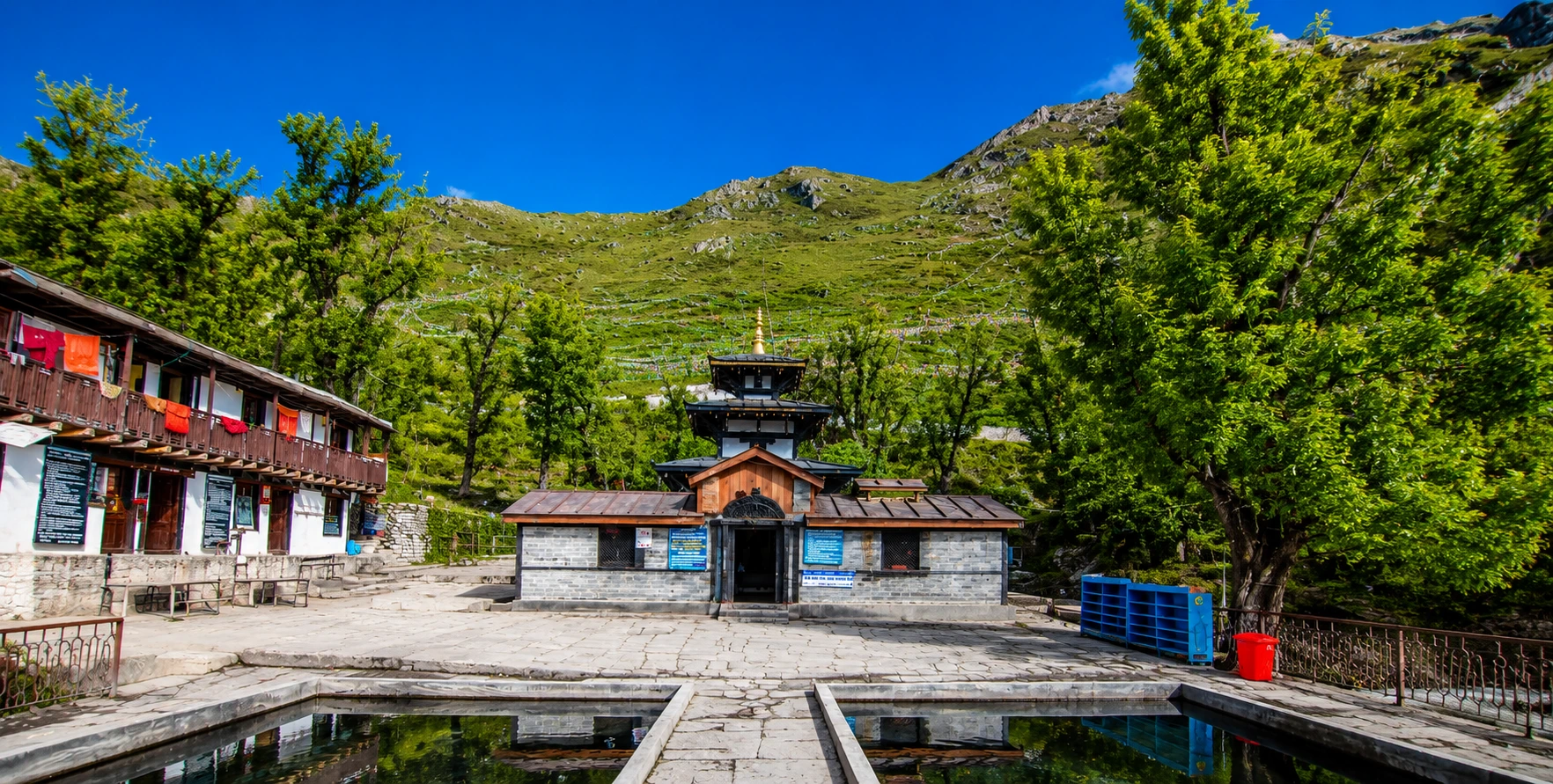
The Muktinath darshan is complete. You have stood beneath all 108 sacred water spouts and felt the ice-cold Himalayan spring water flow over you. You have lit a lamp at the Jwala Mai shrine where fire and water co-exist in eternal divine union. You have offered prayers at the Vishnu Mandir, circumambulated the sacred courtyard, and carried a Shaligram stone from the Kali Gandaki riverbed to receive the temple’s blessing. Your Muktinath Yatra has reached its spiritual fulfilment — and now the return journey to the Sunauli border, and beyond it to India, must be organised with the same care and professionalism that brought you here.
The return drop jeep hire from Muktinath to the Sunauli border is not simply a reversal of the outward journey. It is a two-day return road experience covering approximately 340 to 380 kilometres that descends from the Himalayan high desert at 3,710 metres back through the Kali Gandaki gorge, through the lakeside city of Pokhara, and down the Siddhartha Highway to the border crossing — and it carries the opportunity for additional sacred and cultural stops that many pilgrims choose to incorporate on the return: Tatopani’s renowned natural hot springs, the temple city of Pokhara’s Bindhyabasini and Gupteshwar Mahadev, the Manakamana Temple cable car near Mugling, and — for those who did not visit on the outward journey — the UNESCO World Heritage birthplace of Lord Buddha at Lumbini, just 22 kilometres from the Sunauli border.
This complete 2026 guide covers every aspect of the Muktinath Yatra return jeep hire to Sunauli: the full return route and its highlights, the most popular return itinerary formats, the 2026 vehicle hire costs, what makes a professional drop service different from informal local transport at Ranipauwa, and how Nepal Vehicle Hiring Pvt Ltd provides the private drop jeep hire that completes the Muktinath Yatra properly — from temple to border, with every sacred stop along the way handled with the same care and reliability that the pilgrimage itself deserves.
Completing the Yatra — The Spiritual Significance of the Return Journey
In Hindu pilgrimage tradition, the return journey from a sacred site is not merely a logistical exercise but the completion of a devotional arc that began with the first step away from home. The concept of the parikrama — the sacred circumambulation of a holy place or region — applies as much to the broader geography of the Muktinath Yatra as it does to the circumambulation of the temple courtyard itself: the pilgrim who travels from their home in India, crosses the border at Sunauli, travels through Nepal’s sacred landscape past Lumbini, ascends through the Annapurna region to Muktinath, receives the darshan and blessings of the 106th Divya Desam, and then descends through the same landscape on the return, completing the full devotional circuit and returning home with the grace accumulated across the entire journey.
This understanding of the return journey as spiritually active, rather than spiritually neutral, changes how pilgrims approach drop-vehicle hire. The return is not simply transportation — it is the final section of the Yatra, and the decisions made about how to cover it — which sacred sites to include, how much time to give each, whether the Tatopani hot springs represent a restorative spiritual act or merely a tourist distraction, whether to stop at Lumbini for a final Buddha birthplace darshan — are pilgrimage decisions as much as logistics decisions. Nepal Vehicle Hiring Pvt Ltd‘s Muktinath return jeep hire service is designed with this pilgrimage dimension at its centre: our drivers are experienced in accommodating temple stop requests, are familiar with the timings and protocols of the roadside sacred sites between Muktinath and Sunauli, and understand that the vehicle they are driving is, for its passengers, not a transport but a continuation of the sacred journey itself.
The Full Return Route — Muktinath to Sunauli Step by Step
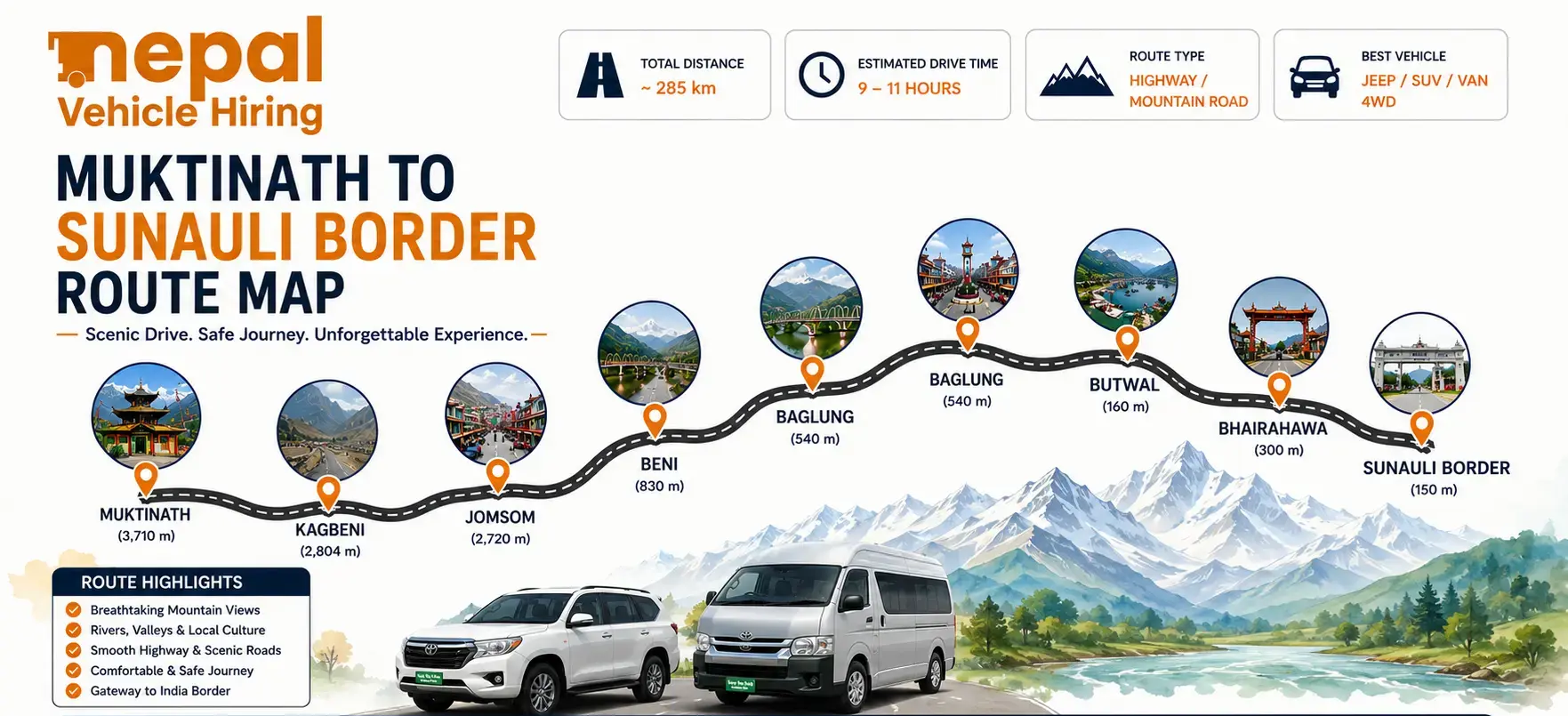
The return journey from Muktinath to Sunauli follows the same road corridor as the outward journey. Still, with a different emotional and physical character: the descent from high altitude, the re-entry into progressively warmer and more populous terrain, and the gradual transition from the stark Himalayan landscape of Mustang back to the tropical green of the Terai plains near the border all mark the return as a distinct experience from the ascent. Most Muktinath return drop packages cover about 340 to 380 kilometres over two driving days, with an overnight stop in Pokhara. However, pilgrims with urgent onward commitments can do a one-day direct return.
Muktinath / Ranipauwa to Jomsom — The Early Morning Descent. The return from Muktinath begins at Ranipauwa village, where the private jeep from Nepal Vehicle Hiring Pvt Ltd waits after the darshan. The critical timing consideration on this first section is the famous Jomsom wind: as described in our dedicated guide to the Muktinath tour from Sunauli, the Kali Gandaki valley functions as a natural wind tunnel between the Dhaulagiri and Annapurna massifs, with a powerful upstream wind typically building from around 10:00 AM that can make driving conditions challenging and reduce visibility with blown sand in the valley floor sections. Departing Ranipauwa as early as possible — ideally by 6:00 to 7:00 AM after an early morning final darshan — ensures the vehicle descends through the Kagbeni-to-Jomsom section before the wind is at its most intense. Nepal Vehicle Hiring Pvt Ltd’s return drop drivers are specifically briefed on this wind timing and schedule departures accordingly.
Kagbeni — The Gateway Back. Passing through Kagbeni on the return descent, pilgrims have a second opportunity to stop at the sacred Kali Gandaki riverbed for Shaligram collection — many experienced Muktinath yatra guides specifically recommend this return Kagbeni stop for pilgrims who did not collect Shaligrams on the way up, or who wish to offer the specific final riverbed prayers at Pitri Tarpan (ancestral offering) that Kagbeni’s position at the confluence of the Kali Gandaki and Khing Khola rivers makes particularly auspicious. The private jeep hire from Nepal Vehicle Hiring Pvt Ltd includes a flexible stop in Kagbeni on the return descent, upon prior request.
Jomsom to Tatopani — The Gorge in Reverse. From Jomsom, the drop jeep descends through Marpha — with its apple orchards now behind rather than ahead — through Tukuche, Kalopani, and Ghasa, re-entering the Kali Gandaki gorge from above. The gorge section in the southward direction has a different visual character from the northward ascent: the light falls differently on the cliff faces, the river is seen from above rather than alongside, and the sense of descent through geological deep time — from high desert through subalpine to temperate and then subtropical — is experienced as a journey through time as much as through space. Tatopani, reached approximately 3 to 4 hours after leaving Jomsom, is the standard and strongly recommended rest stop on the return descent for all Muktinath Yatra return packages.
Tatopani Hot Springs — The Yatra’s Natural Reward. Tatopani, whose name literally means ‘hot water’ in Nepali, is well known across the Annapurna Circuit trekking community for its natural hot springs, fed by geothermal activity in the Himalayan rock beneath the village. For Muktinath Yatra pilgrims on the return drop, a 45-minute to 1-hour stop at the Tatopani hot springs serves a dual purpose: it provides a deeply welcome physical recovery from the darshan rituals (which involve standing in the open at 3,710 metres while cold spring water pours over the body through the 108 Mukti Dhara spouts). Many pilgrims see it as a natural extension of the purification ritual begun at the temple—the hot spring water providing complementary healing warmth after the temple’s sacred cold. Local tradition holds that the mineral-rich water of the Tatopani springs has specific therapeutic properties for joint pain and muscle fatigue, making a Tatopani stop particularly valued by older pilgrims for whom the Muktinath high-altitude circuit has been physically demanding.
Tatopani to Beni and Pokhara. From Tatopani, the return drive continues to Beni and then along the Pokhara-Baglung Highway to Pokhara—a section of about 100 kilometres taking 3 to 4 hours that retraces the most accessible part of the outward journey. The Dana and Tatopani gorge, passed in both directions, is at its most dramatically lit in the late afternoon, when the sun angles through the clifftops and turns the river sections below into strips of silver. The private return jeep from Nepal Vehicle Hiring Pvt Ltd arrives in Pokhara for the overnight stay, typically in the late afternoon or early evening, with the Annapurna range visible from the lakeside — seen now, after the Muktinath visit, with a fundamentally different feeling than before the darshan.
Pokhara Overnight to Sunauli — Day 2. The second day of the return journey follows the Siddhartha Highway from Pokhara southward to Bhairahawa and the Sunauli border — approximately 175 to 190 kilometres, taking 5 to 7 hours. With a 6:00 to 7:00 AM departure from Pokhara, a mid-morning stop in Tansen, and a comfortable afternoon arrival in Sunauli in time for border formalities and onward travel to India, Day 2 of the return is considerably easier than Day 1’s descent from Muktinath to Pokhara.
Transport Options for the Return — From Ranipauwa to Sunauli
Pre-Arranged Private Jeep Drop — The Right Choice. The return drop from Muktinath to Sunauli works most effectively when booked as a pre-arranged private jeep hire through Nepal Vehicle Hiring Pvt Ltd, confirmed before the pilgrimage even departs Sunauli on the outward journey. A pre-confirmed return drop arrangement means that on the morning after the darshan, when the group is ready to descend, the vehicle and driver are already confirmed and waiting — no negotiation at Ranipauwa with local jeep operators at prices inflated by the distance from any competing alternative, no uncertainty about departure time, and no possibility of being told no seats are available on the shared vehicle departing at an inconvenient hour.
The cost of a private Scorpio or Hilux jeep drop from Muktinath to Sunauli (2 days, carrying 4 to 6 passengers, including Pokhara overnight and all stop requests) is approximately NPR 35,000 to NPR 55,000 (USD 263 to 413) for the full vehicle — the return leg of the complete Muktinath Yatra tour package from Sunauli. For pilgrims who booked the outward journey through Nepal Vehicle Hiring Pvt Ltd, the return drop is confirmed as part of the package at the time of the initial booking, with the total combined round-trip cost of approximately NPR 70,000 to 95,000 (USD 525 to 713). Contact our team via WhatsApp at our contact page or through our plan trip page for specific group quotes.
Shared Local Jeep from Ranipauwa — The Alternative. Shared local jeep services operate from Ranipauwa village on the standard fill-and-go basis that characterises local mountain transport throughout Nepal: vehicles depart when they have enough passengers to make the journey worthwhile, not at any agreed scheduled time. During peak pilgrimage season, particularly October and November, the volume of pilgrims descending from Muktinath creates reasonable passenger availability, and shared jeeps to Jomsom depart with moderate frequency. However, for groups of 4 or more pilgrims travelling together, the shared vehicle cost per person, multiplied by the group size, often approaches the full private jeep hire cost, making private booking the practical choice for medium-to-large groups.
Toyota Hiace Van — For Larger Pilgrim Groups. For pilgrim parties of 7 to 14 people, Nepal Vehicle Hiring Pvt Ltd coordinates the Muktinath-to-Jomsom section in our 4WD jeep fleet and transfers the group to a Toyota Hiace van at Pokhara for the Pokhara-to-Sunauli Siddhartha Highway section. The same Hiace-plus-jeep combination serves the outward Muktinath tour from Sunauli for large groups. Tourist coasters and bus hire are available for very large temple groups of 20 or more.
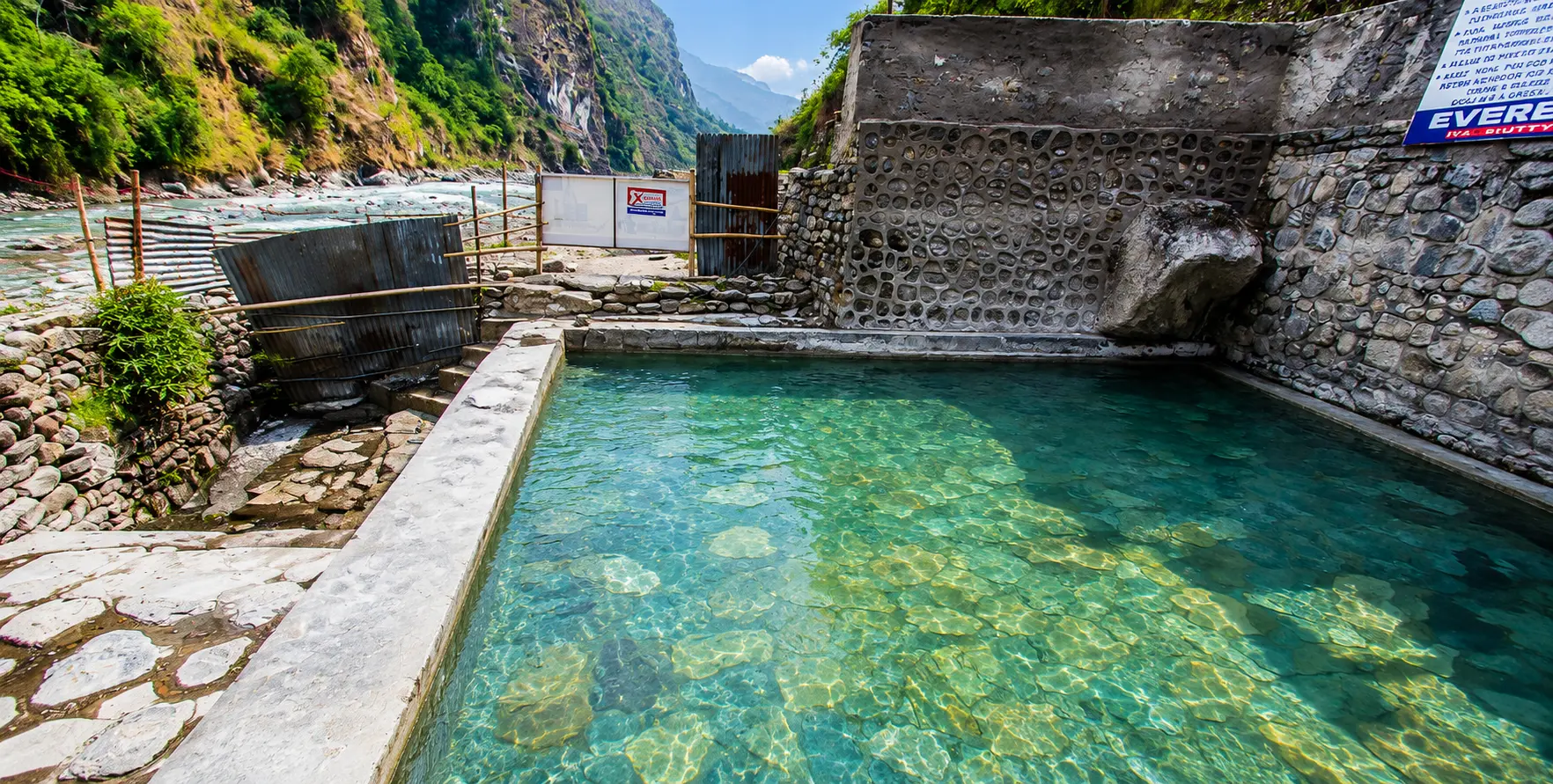
The Tatopani Hot Springs — A Sacred Pause on the Return
The Tatopani hot springs hold a special, celebrated place in the Muktinath pilgrimage experience and deserve more than a passing mention in any honest return-journey guide. The springs emerge from fissures in the Himalayan rock along the west bank of the Kali Gandaki River, heating the water to temperatures consistently around 40 to 45 degrees Celsius—warm enough to provide genuine muscular relief and thermal comfort, and cool enough to tolerate for extended soaking. Traditional bathing areas consist of stone-lined pools beside the river, open to the sky with forested gorge walls rising on both sides, and the atmosphere during pilgrimage season is one of communal relaxation and shared spiritual recovery rather than resort-hotel luxury.
For pilgrims who have completed the 108 Mukti Dhara cold-water ritual at Muktinath in autumn or winter, when temperatures can drop well below zero, the Tatopani hot springs provide what amounts to a divine counterbalance: the sacred cold of the Himalayan spring water at the temple answered, a day later, by the healing warmth of the geothermal springs in the gorge below. Many pilgrims who have made the Muktinath Yatra multiple times describe the Tatopani stop as an essential, non-negotiable part of the return journey—not an optional addition or sightseeing detour — but a key part of the yatra’s physical and spiritual completion. The Yatra’s jeep hire from Nepal Vehicle Hiring Pvt Ltd includes a Tatopani stop for as long as the group needs—typically 45 minutes to 1.5 hours.
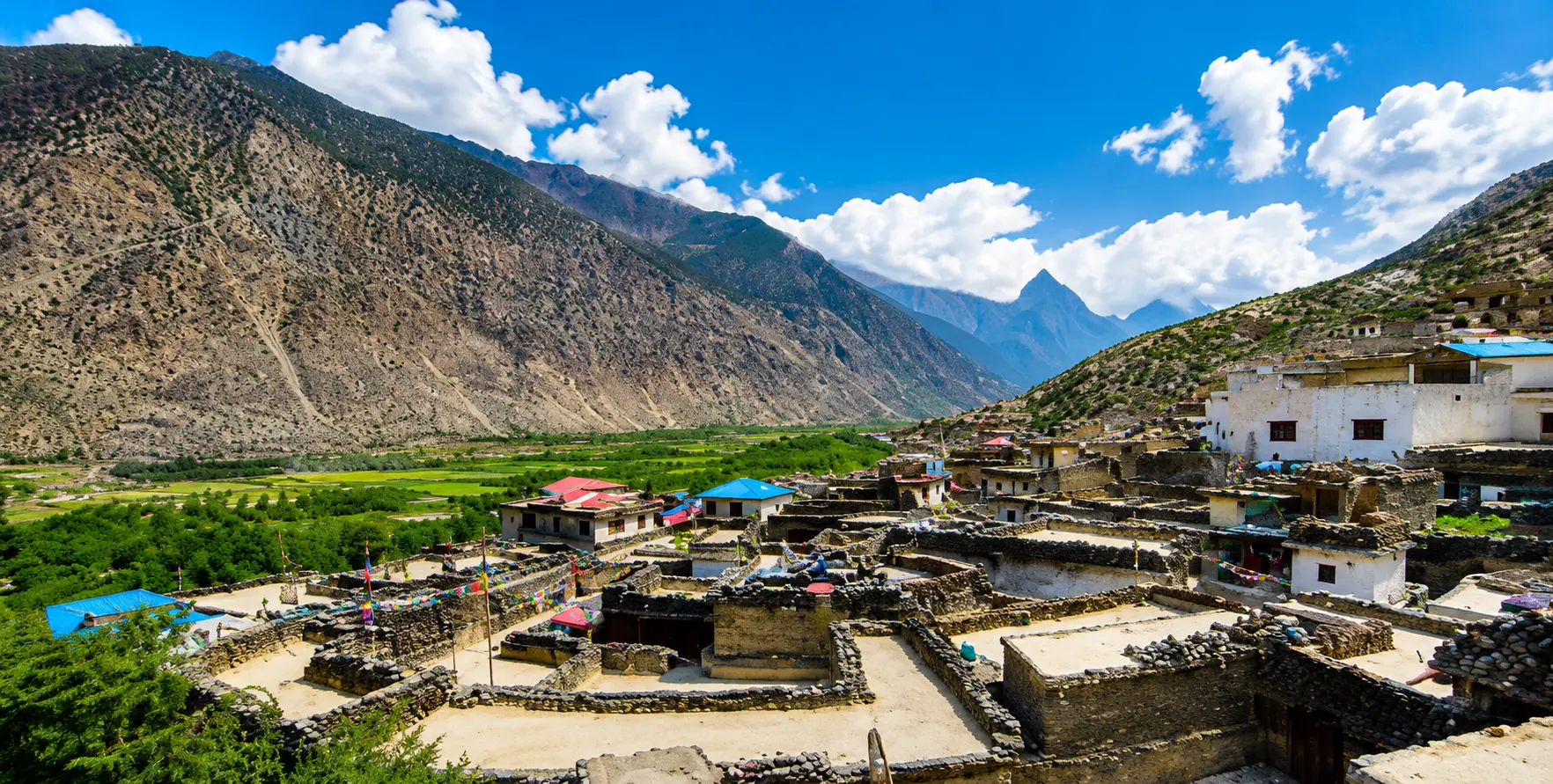
Marpha Village and Apple Orchards
One of the most missed pleasures on the return from Muktinath is Marpha village, 30 minutes south of Jomsom. Its whitewashed stone houses, covered lanes, and apple orchards against the Nilgiri massif create one of Nepal’s most complete traditional Himalayan village scenes. The return journey reaches Marpha at mid-morning in the best light. Marpha apple products are exceptional: locally produced apple brandy, dried rings, fresh juice, and cider are sold at village stalls and make ideal Yatra souvenirs. A 20-minute stop costs no extra time and rewards you with a Yatra experience. Nepal Vehicle Hiring Pvt Ltd includes a Marpha stop in all Muktinath return drop itineraries on request.
Beyond the apples, Marpha has a Tibetan Buddhist monastery perched on the hillside above the village and several shrines within the lane system that are worth a brief devotional visit for pilgrims completing their Muktinath Yatra on the descent. The village represents, in microcosm, the Kali Gandaki valley’s broader character as a frontier zone between Himalayan and trans-Himalayan culture: Thakali ethnicity, Tibetan Buddhist practice, and Nepali national identity all coexist in the same stone-paved lanes, just as they do in Kagbeni, Jomsom, and Muktinath above. Our sister company, Trek Nepal Himalayas, includes Marpha as a standard overnight stop on itineraries that continue above Kagbeni into the restricted Mustang kingdom. Our sister company, Alpine Luxury Treks, also offers luxury Mustang experiences coordinated with Nepal Vehicle Hiring Pvt Ltd transport services.
Kali Gandaki Wildlife and Afternoon Light on the Return
On the return journey, the Kali Gandaki gorge offers something the outward journey rarely provides: afternoon light falling directly on the east-facing gorge walls as the vehicle descends through the narrowest sections between Dana and Ghasa. This light creates extraordinary shadow contrasts that reveal the geological layering in the cliff faces. The gorge walls expose nearly 500 million years of geological record, from Precambrian basement formations at the deepest levels to the Mesozoic limestone that contains the marine fossils which, eroded into the Kali Gandaki riverbed, become the Shaligram Shilas that Muktinath pilgrims collect at Kagbeni for temple blessing.
Wildlife encounters also differ on the return, partly due to the different time of day. Blue sheep graze the slopes above Kalopani most visibly in the late afternoon. The Himalayan tahr appears on rocky sections as evening draws the animals to lower elevations. In the dense lower gorge forest, the Himalayan monal — Nepal’s spectacularly plumed national bird — and the satyr tragopan reward patient observation. The Annapurna Conservation Area, which encompasses this corridor, the same protected area requiring the ACAP permit discussed in our Besisahar private vehicle guide, sustains this remarkable biodiversity. For pilgrims extending their Nepal journey beyond the Yatra, we offer the Annapurna Circuit trek, Ghorepani Poon Hill trek, and Yatra Annapurna Base Camp trek from Pokhara via our Nayapul transport and Besisahar private vehicle services.
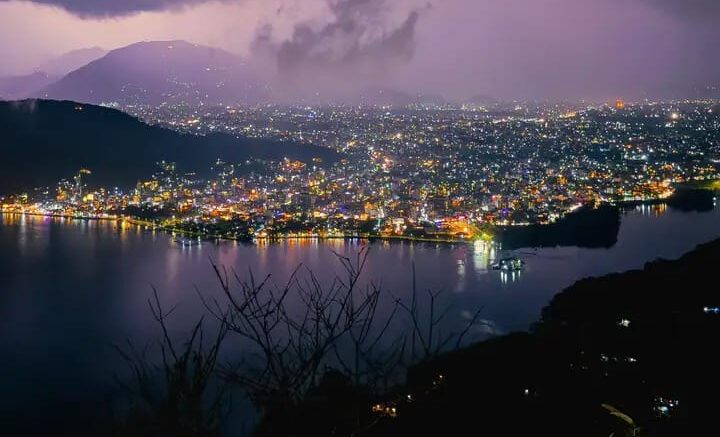
Pokhara Overnight — Sacred Sites and Rest
The Pokhara overnight stop on the Muktinath Yatra return is not merely a convenient logistics point but an opportunity for additional sacred site visits and genuine rest, which the full physical and spiritual demands of the darshan experience make necessary before the final Siddhartha Highway drive to Sunauli. Pokhara’s own pilgrimage sites—several of which are specifically relevant to the devotional context of the Muktinath Yatra—provide a natural next chapter to the journey rather than an interruption.
The Bindhyabasini Temple, one of the oldest Hindu temples in the Pokhara Valley and dedicated to Goddess Bhagwati in her manifestation as the region’s protective deity, is a standard morning visit for Muktinath Yatra pilgrims stopping in Pokhara. The Gupteshwar Mahadev Cave, containing a naturally formed Shiva lingam shrine within a river-cave system at the edge of Pokhara’s gorge above Davis Falls, is another important Shaivite site for pilgrims whose devotional orientation extends across Vaishnav and Shaiva traditions — and the setting of the cave shrine itself, reached by descending through a natural rock passage to a subterranean chamber where the lingam rises from the cave floor surrounded by the sound of underground water, echoes the elemental combination of rock and water that defines the Muktinath sacred complex above.
For pilgrims with an extra morning in Pokhara before the Sunauli highway departure, Pokhara car hire through Nepal Vehicle Hiring Pvt Ltd covers the full Bindhyabasini-Gupteshwar-Mahendra Cave-Taal Barahi (the Phewa Lake island temple) sacred-site circuit in a comfortable 3- to 4-hour morning arrangement. The Sarangkot sunrise transfer — a pre-dawn drive to the famous viewpoint above Pokhara from where the Annapurna and Dhaulagiri ranges glow in the first morning light — provides a final, deeply moving Himalayan panorama for pilgrims who wish to see, from a distance at dawn, the mountains within whose shadow the Muktinath darshan was received.
The Sarangkot sunrise is available as an add-on to the Muktinath return package through Nepal Vehicle Hiring Pvt Ltd, requiring only a 4:30 to 5:00 AM departure from the Pokhara Lakeside hotel and returning before 8:00 AM — well before the Siddhartha Highway departure time. Many pilgrims describe the Sarangkot sunrise view of Annapurna, seen the morning after the Muktinath darshan, as the visual conclusion to the temple’s spiritual experience: the mountain range seen whole, in golden light, before the descent to the plains and the return to India.
Tansen — The Historic Hill Town on the Siddhartha Highway
Between Pokhara and the Sunauli border on the Siddhartha Highway, the town of Tansen (also known as Palpa) deserves a dedicated mention in any Muktinath Yatra return guide because it is, by a significant margin, the most historically and culturally interesting town on the highway between the two endpoints — and one that many pilgrims on tight schedules pass through or past without stopping, to their considerable later regret. Tansen is one of Nepal’s finest traditional Newar hill towns: its stone-paved lanes, traditional dhaka cloth weaving workshops, perfectly preserved Newar architecture with carved wooden windows and doorways, and commanding ridge-top position overlooking the Terai plains below create a medieval urban character comparable to Bhaktapur’s famous old city, but in a completely uncrowded and uncommercialised context that Bhaktapur — with its entry fees and tourist-facing economy — can no longer provide.
The Amar Narayan Temple in Tansen’s central Tundikhel square is a fine example of traditional Nepali pagoda temple architecture, with intricately carved wooden struts and a proportioned multi-tiered roof that rewards close attention. The Tansen Durbar, the palace of the former Tansen kingdom, whose ruling Sen dynasty was among the most powerful in pre-unification Nepal, offers a glimpse into the political history of the western Himalayan region’s pre-Gurkha power landscape. For Muktinath Yatra pilgrims in particular, Tansen also has a direct devotional connection: the Shri Bhagwati Temple above the town square draws pilgrims from across the region and is one of the most important Shakta shrines along the Siddhartha Highway corridor. Nepal Vehicle Hiring Pvt Ltd includes a 30 to 45 minute Tansen stop on all Muktinath return drop itineraries for groups who request it, and our drivers know the best parking and walking routes to the main temple and bazaar area.
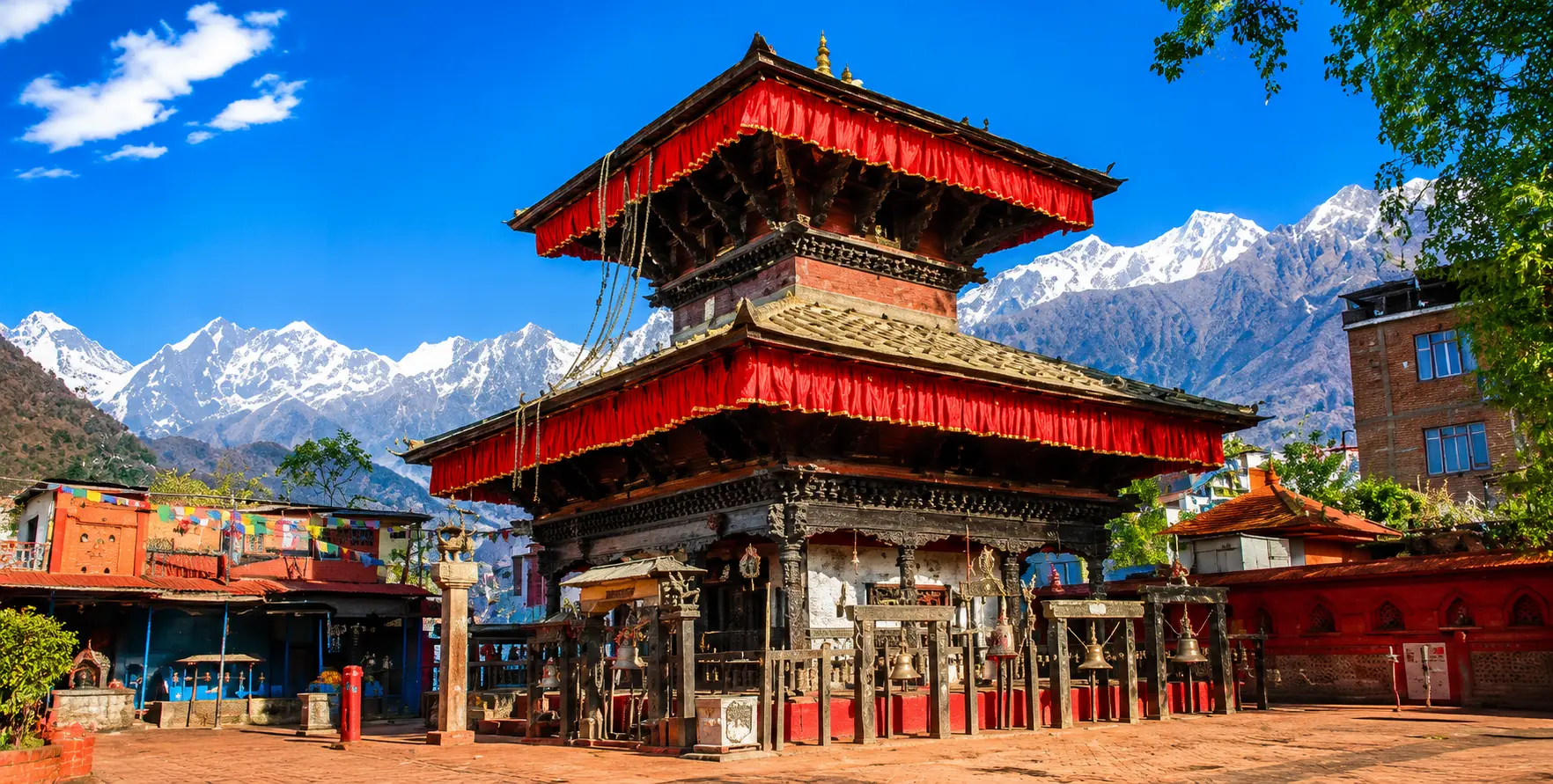
The Manakamana Temple Option — An Add-On for Via-Kathmandu Returns
For pilgrim groups whose return from Sunauli will continue to Kathmandu rather than direct onward to India, or who specifically wish to include the famous Manakamana Temple on their return, Nepal Vehicle Hiring Pvt Ltd offers a routing variant that proceeds from Pokhara eastward to Kathmandu via the Prithvi Highway rather than southward to Sunauli via the Siddhartha Highway — with a Manakamana cable car stop included near the Mugling junction as a natural addition to the route. The Manakamana Temple, perched dramatically on a hilltop in Gorkha District and accessible by one of Nepal’s most famous cable cars, is dedicated to Goddess Manakamana — Bhagwati in her wish-fulfilling form — and is one of the most visited Hindu temples in Nepal, particularly for Indian pilgrims who believe that the goddess fulfils devotees’ sincere wishes.
This extended return routing — Muktinath/Ranipauwa to Jomsom, Tatopani hot springs stop, Pokhara overnight, Pokhara to Manakamana cable car, Manakamana to Kathmandu, and then Kathmandu sightseeing before the return flight or overland to India — transforms the Muktinath Yatra return into a complete Nepal pilgrimage circuit covering Muktinath, Manakamana, Pashupatinath, and the Kathmandu heritage temples in a single extended journey. Nepal Vehicle Hiring Pvt Ltd coordinates all legs of this extended circuit through our Nepal tour packages service, with Kathmandu airport transfer for groups flying home from Tribhuvan International Airport.
Lumbini on the Return — Completing the Sacred Circuit
For pilgrims who did not include a Lumbini visit on the outward Sunauli-to-Muktinath journey, or who specifically chose to reserve the Buddha birthplace visit for the return as a devotional conclusion to the yatra, Lumbini on the return leg presents an equally natural and meaningful addition. At just 22 kilometres from the Yatrae Sunauli border on the Nepal side, Lumbini adds only 1 to 2 hours to the final day’s Pokhara-to-Sunauli drive. It delivers a spiritual experience of entirely different character from Muktinath — the placid, garden-like UNESCO heritage zone centred on the Maya Devi Temple, the Ashoka Pillar, and the sacred Puskarini pond p, providing the contemplative, historically rooted counterpoint to the dramatic, elemental alpine spirituality of the Muktinath complex above.
The pairing of Muktinath (Vishnu’s Himalayan seat at 3,710 metres) and Lumbini (the Buddha’s earthly birthplace at 93 metres) on a single yatra represents, for pilgrims whose devotional world encompasses both Hindu and Buddhist tradition, one of the most complete spiritual circuits Nepal’s sacred geography makes possible — the ascent to the Lord of Liberation and the descent to the birthplace of the Awakened One enclosed within a single overland journey. Nepal Vehicle Hiring Pvt Ltd can add the Lumbini stop to all Muktinath return drop packages from Pokhara to Sunauli on request, ensuring the visit falls on cooler mornings when the sacred garden’s atmosphere is most serene, and the Maya Devi Temple queues are most manageable.
Standard Return Itineraries — What Nepal Vehicle Hiring Pvt Ltd Offers
The 2-Day Direct Return (Most Popular). Day 1: Muktinath/Ranipauwa early departure → Kagbeni Shaligram stop → Jomsom → Tatopani hot springs rest → Beni → Pokhara (overnight). Day 2: Pokhara → Tansen lunch stop → Bhairahawa → Sunauli border departure. Total driving: approximately 340-380 km over 2 days. This is the most frequently booked Muktinath return drop format for 4- to 7-day Sunauli-based pilgrim groups.
The 3-Day Return with Pokhara Sightseeing. Day 1: Muktinath to Tatopani to Pokhara. Day 2: Pokhara sightseeing — Bindhyabasini, Gupteshwar, Phewa Lake, Sarangkot sunrise optional. Day 3: Pokhara to Sunauli via Tansen and Lumbini. This format adds a full Pokhara sacred and natural sightseeing day to the return — appropriate for pilgrim groups who treated Pokhara as a transit stop on the outward journey and wish to explore it properly on the way home.
The 4-Day Extended Return with Chitwan. For pilgrim groups adding Nepal’s finest wildlife destination to their yatra before returning to India: Day 1 Muktinath to Pokhara; Day 2 Pokhara to Chitwan National Park via Pokhara Yatra Chitwan bus or private vehicle; Day 3 Chitwan jungle safari ; Day 4 Chitwan to Sunauli via Lumbini. This 4-day return extension turns the Muktinath Yatra into a comprehensive Nepal experience, combining Himalayan pilgrimage with Terai wildlife—available through Nepal Vehicle Hiring Pvt Ltd’s Nepal tour packages.
The Direct Same-Day Return (Emergency/Urgent). For pilgrims with urgent onward commitments who must reach Sunauli in a single driving day from Jomsom or Muktinath, a direct same-day return covering approximately 340 km in 12 to 14 hours is physically possible but is not recommended by Nepal Vehicle Hiring Pvt Ltd as a standard option. The extended driving duration in a single day creates a genuine driver fatigue risk on the mountain sections, and the total duration leaves no time for the sacred stops — Tatopani, Tansen — that make the return journey its own complete pilgrimage experience. If you need an urgent return, please discuss the specific timing constraints with our contact team, and we will find the most appropriate arrangement for your situation.
Permits and the Border — What the Return Journey Requires
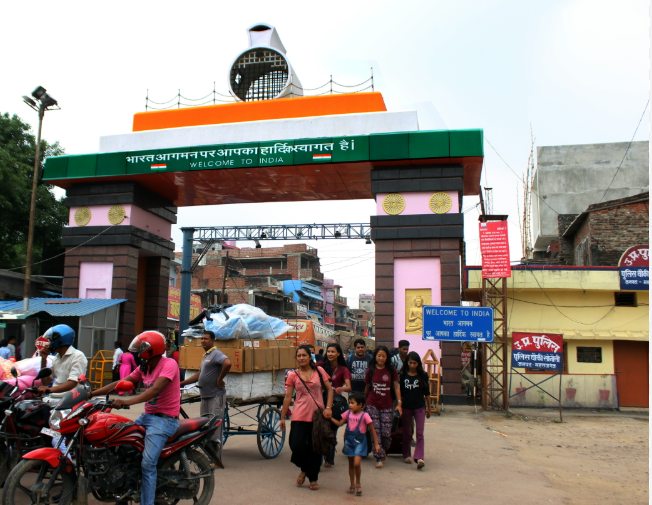
The return through the Sunauli border for Indian nationals follows the same process as entry: Indian citizens cross using their Voter ID card or passport, receive an exit stamp from Nepal Immigration on the Nepal side, and enter the Uttar Pradesh side at Sonauli through standard Indian immigration and customs formalities. The exit process is typically faster than the entry process, with most formalities completed within 30 to 45 minutes for a standard pilgrim group. Nepal Vehicle Hiring Pvt Ltd’s border drop service includes assistance at the Nepal Immigration exit checkpoint — our representative walks the group through the exit stamp process and ensures all documentation is in order before the formal handover at the border.
No specific permits are required for the Muktinath return journey beyond the exit formalities: the ACAP permit obtained on entry covers the full visit and requires no return endorsement, and TIMS cards similarly require no return processing. Pilgrims carrying Shaligram stones collected from the Kali Gandaki riverbed should be aware that Indian customs regulations on the Indian side of the Sunauli border have occasionally queried the import of these sacred stones — consulting a registered trekking agency or the Indian Embassy in Kathmandu about current regulations for Shaligram import before departure is advisable for pilgrims carrying a significant number of stones.
Season Guide — When the Return Journey Is at Its Best
Autumn (October to November) is the peak return season, just as it is the peak outward season: the Kali Gandaki gorge in October and November light is at its most dramatic, the apple brandy and cider of Marpha are in active harvest, Tatopani’s hot springs are particularly welcome after the cold Muktinath darshan in October and November temperatures, and the Siddhartha Highway through Tansen is at its most pleasant in the clear post-monsoon atmosphere. Nepal Vehicle Hiring Pvt Ltd manages peak-season return booking pressure by requiring advance confirmation at the time of the outward booking. All Muktinath return drop packages should be confirmed at least 2 weeks before departure.
Spring (March to May) delivers its own distinct return journey quality: rhododendron forests in the lower Kali Gandaki gorge section between Tatopani and Ghasa are in peak bloom through March and April, the rice paddies in the Siddhartha Highway foothills are a vivid green, and the Pokhara Lakeside in spring is at its most visually rewarding with the full Annapurna range reflected in Phewa Lake. In spring, Annapurna Base Camp trekkers completing their own circuit through Jomsom share the Kali Gandaki road descent with Muktinath pilgrims, creating a lively, internationally mixed travel atmosphere on what is, in peak spring season, one of Nepal’s busiest mountain road corridors.
Winter (December to February) is manageable but cold — particularly on the Jomsom-to-Tatopani morning drive, which begins at high altitude before the sun has had time to warm the gorge. The Siddhartha Highway below Tansen is considerably warmer than the Kali Gandaki above. Private jeep hire is available year-round from Nepal Vehicle Hiring Pvt Ltd — confirm current road conditions above Jomsom with our team before any winter-season departure.
Monsoon (June to August) brings the heaviest rainfall to the lower gorge sections between Tatopani and Beni, with landslide risk on specific recurring problem sections. The Muktinath area above Jomsom receives less monsoon rainfall due to its rain-shadow position. Still, the road descent to Tatopani and Beni passes through the wetter gorge before reaching the drier plateau. Nepal Vehicle Hiring Pvt Ltd monitors monsoon road conditions on this corridor and advises on route and timing adjustments for any return departure during the monsoon season.
Practical Tips for the Muktinath Yatra Return
- Depart Ranipauwa before 7:00 AM: This is the single most important practical rule for the return. The Jomsom wind builds through the morning and makes the Kagbeni-to-Jomsom road section increasingly uncomfortable. An early departure also allows comfortable Tatopani timing without rushing.
- Confirm your return drop jeep before the Muktinath darshan day: Nepal Vehicle Hiring Pvt Ltd return pickups from Ranipauwa are confirmed at the time of the outward booking — do not assume a jeep will be available at Ranipauwa on an unbooked basis during peak season.
- Carry NPR cash for Tatopani and the road: The hot springs charge a small entry fee (NPR 100 to 200 per person), food and drinks in Tatopani and Tansen are paid in cash, and the Pokhara overnight hotel requires NPR for any extras.
- Horse descent from Muktinath to Ranipauwa: Pilgrims who used a horse for the ascent from Ranipauwa to the temple can arrange a horse for the descent as well — NPR 200 to 400 for the downhill ride. This is particularly recommended for elderly pilgrims or those with knee or joint concerns after a full day at altitude.
- Tatopani towel and clothing: Pack a towel and a change of warm clothing in the vehicle cabin rather than on the roof rack — the hot springs are considerably more enjoyable if dry clothing is immediately accessible afterwards.
- Pokhara hotel booking: Nepal Vehicle Hiring Pvt Ltd can recommend Pokhara Lakeside hotels at all budget levels. For pilgrim groups wanting a fully coordinated return package including accommodation, contact us through our plan trip page.
- Border exit timing: Arrive at Sunauli before 3:00 PM where possible—the border immigration offices can be slow in the late afternoon, with traffic building up. An early Pokhara departure of 6:00 to 7:00 AM, with a Tansen lunch stop and an afternoon visit to Lumbini, typically gets you to Sunauli between 2:00 and 3:00 PM.
Combining the Muktinath Yatra with a Complete Nepal Circuit
For Indian pilgrim groups with 7 or more days available, the Muktinath Yatra return journey from Sunauli creates a natural framework for a complete Nepal pilgrimage and heritage circuit that combines the Himalayan sacred site of Muktinath with the Terai UNESCO heritage sites, Nepal’s wildlife reserves, and Kathmandu’s great temple complex. Nepal Vehicle Hiring Pvt Ltd coordinates all transport for each leg of this extended circuit through our Nepal tour packages, with a single point of contact managing the entire itinerary from Sunauli outward and back to Sunauli
The most popular 7-day extended circuit runs: Day 1 Sunauli to Lumbini to Pokhara, Day 2 Pokhara to Muktinath, Day 3 Muktinath darshan and Jomsom overnight, Day 4 Jomsom to Tatopani to Pokhara overnight, Day 5 Pokhara sightseeing with Bindhyabasini and Sarangkot sunrise, Day 6 Pokhara to Chitwan via our Pokhara to Chitwan bus for a jungle safari, Day 7 Chitwan to Lumbini to Sunauli border. This 7-day circuit delivers Muktinath darshan, Lumbini(Buddha’s birthplace),) Pokhara Lakeside, the Kali Gandaki Gorge, the Tatopani hot springs, Chitwan wildlife, and ta return via the Sunauli border in a single, efficiently routed Nepal pilgrimage journey.
For groups adding Kathmandu to the circuit, the 8- to 10-day extended format includes Pashupatinath Temple — one of the world’s most important Shiva shrines and a Divya Desam in its own right — alongside Kathmandu sightseeing, the Bhaktapur heritage tour, and the Nagarkot sunrise transfer. Our Kathmandu airport transfer handles arrival and departure connections for groups flying into and out of Tribhuvan International Airport. For groups requiring a Kathmandu to Pokhara bus connection or the Pokhara to Kathmandu bus for a return, Nepal Vehicle Hiring Pvt Ltd coordinates all legs. We can also accommodate Langtang Valley and Manaslu Circuit trek groups who want a full Himalayan trekking extension alongside the pilgrimage circuit, with our Manaslu trek transport and Salleri Phaplu jeep services completing the eastern Nepal trekking options.
Why Pre-Arrange Your Return Drop Before the Yatra Begins
The most important lesson from experienced Muktinath Yatra groups about the return journey is this: don’t leave return transport until after the darshan. At Ranipauwa, in the immediate aftermath of the darshan and the 108 Mukti Dhara ritual, with the group tired from the altitude and the emotional intensity of the pilgrimage’s culmination, the task of negotiating a fair-priced jeep hire with local operators while competing with other pilgrim groups for available vehicles is the last thing anyone wants to be doing. The local jeep stand at Ranipauwa operates in a genuinely competitive environment during peak season — vehicles are limited, prices reflect that scarcity, and the negotiating position of a group of pilgrims who have just completed a physically and emotionally demanding high-altitude ritual is not their strongest.
A pre-arranged return drop package from Nepal Vehicle Hiring Pvt Ltd eliminates this situation. Your driver’s WhatsApp number is in your phone before you leave Sunauli on the outward journey. When the darshan is complete and the group is ready to descend, a single message confirms the departure time, and the private jeep is there. The cost is agreed in advance, transparent, and all-inclusive of driver, fuel, and road tolls. No post-darshan negotiation, no pricing uncertainty, no standing at Ranipauwa managing a transport crisis when you should be in a state of spiritual completion. Book both legs through Nepal Vehicle Hiring Pvt Ltd as a coordinated single arrangement through our plan trip page or via WhatsApp at +977 981-4227196.
Why Choose Nepal Vehicle Hiring Pvt Ltd for Your Return Drop
- Confirmed before the yatra begins: Return drop arranged at outward booking — driver details, vehicle, date, and route all confirmed before you cross the Sunauli border.
- Ranipauwa specialist drivers: 4WD Scorpio and Hilux jeep drivers with specific experience on the Ranipauwa-to-Jomsom section, including the Jomsom wind timing that makes early departure essential.
- Sacred stop expertise: Kagbeni Shaligram stop, Tatopani hot springs timing, Tansen lunch stop, Lumbini coordination — all built into the itinerary on request.
- Right vehicles for every group: Private jeep for 4 to 6 people, Hiace van for 7 to 14, coaster and bus for large temple parties.
- Transparent all-inclusive pricing: Driver, fuel, and tolls included — no surprises at journey end.
- 24/7 booking: WhatsApp +977 981-4227196 or contact us online for quotes and confirmations.
Frequently Asked Questions — Muktinath Yatra Return to Sunauli
How long does the return from Muktinath to Sunauli take?
The standard 2-day return takes Day 1: Muktinath to Pokhara (8 to 11 hours including Tatopani stop) and Day 2: Pokhara to Sunauli (5 to 7 hours including Tansen stop)—total road distance: approximately 340 to 380 km. Private 4WD jeep hire from Nepal Vehicle Hiring Pvt Ltd covers both days.
What is the cost of the return drop from Muktinath to Sunauli?
A private Scorpio or Hilux 4WD return drop (Ranipauwa to Sunauli, 2 days) costs approximately NPR 35,000 to 55,000 (USD 263 to 413) for the full vehTheor the complete round-trip package from Sunauli outward and rn, it costs approxiNPRlyNPRR 70,000 to 95,000 (USD 525 to 713). Contact us at +977 981-4227196 or through our plan trip page for a specific group quote.
Can I arrange the return drop at Ranipauwa after the darshan?
Yes, but we don’t recommend it during peak season. Local jeeps at Ranipauwa operate on a fill-and-go basis with variable pricing. Pre-arranging a private return drop through Nepal Vehicle Hiring Pvt Ltd before the yatra begins eliminates post-darshan negotiation.
Is the Tatopani hot springs stop included?
Yatra— Tatopani is a standard stop on all Nepal Vehicle Hiring Pvt Ltd Muktinath return drop packages. The duration at the springs is flexible, based on the group’s preference.
Can I visit Lumbini on the return journey?
Yes — Lumbini is 22 km from Sunauli border and adds 1 to 2 hours to the final day’s Pokhara-to-Sunauli drive. Nepal Vehicle Hiring Pvt Ltd includes Lumbini on all return packages on request.
What time should I depart from Ranipauwa on the return morning?
By 6:00 to 7:00 AM, before the famous Jomsom valley wind peaks by mid-morning. Our drivers are briefed on this timing and schedule the return departure accordingly.
Conclusion
The Muktinath Yatra return drop jeep hire to the Sunauli border is the final chapter of one of the most spiritually complete journeys available to any Hindu pilgrim departing from India—and it deserves the same quality of transport service as the outward approach. The descent through the Kali Gandaki gorge, the restorative pause at Tatopani, the lakeside overnight in Pokhara, the medieval lanes of Tansen, and the final Lumbini darshan before the border are not logistical obstacles to be managed, but pilgrimage experiences to be honoured — and Nepal Vehicle Hiring Pvt Ltd provides the private jeep drop service that holds space for each of them, from the early morning Ranipauwa departure to the Sunauli border handover.
Book your Muktinath Yatra return drop to Sunauli with Nepal Vehicle Hiring Pvt Ltd — call or WhatsApp +977 981-4227196, visit vehiclehiringnepal.com, or plan your complete yatra through our plan trip page.
- Muktinath Yatra Return to Sunauli Drop Jeep Hire Guide
- Completing the Yatra — The Spiritual Significance of the Return Journey
- The Full Return Route — Muktinath to Sunauli Step by Step
- Transport Options for the Return — From Ranipauwa to Sunauli
- The Tatopani Hot Springs — A Sacred Pause on the Return
- Marpha Village and Apple Orchards
- Kali Gandaki Wildlife and Afternoon Light on the Return
- Pokhara Overnight — Sacred Sites and Rest
- Tansen — The Historic Hill Town on the Siddhartha Highway
- The Manakamana Temple Option — An Add-On for Via-Kathmandu Returns
- Lumbini on the Return — Completing the Sacred Circuit
- Standard Return Itineraries — What Nepal Vehicle Hiring Pvt Ltd Offers
- Permits and the Border — What the Return Journey Requires
- Season Guide — When the Return Journey Is at Its Best
- Practical Tips for the Muktinath Yatra Return
- Combining the Muktinath Yatra with a Complete Nepal Circuit
- Why Pre-Arrange Your Return Drop Before the Yatra Begins
- Why Choose Nepal Vehicle Hiring Pvt Ltd for Your Return Drop
- Frequently Asked Questions — Muktinath Yatra Return to Sunauli
- Conclusion

Related Blog & Articles
Altitude and Health: Essential Muktinath Advice
Sunauli to Pokhara Private Vehicle Hire Guide
Muktinath Tour from Sunauli Border