Plan a Trip


Muktinath Tour from Sunauli Border
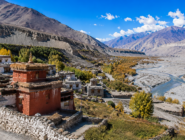
Muktinath Tour from Sunauli Border — Private Vehicle Hire Guide
Every year, hundreds of thousands of devotees cross the Sunauli border—Nepal’s busiest India-Nepal land crossing—with one spiritual destination in mind: the sacred temple of Muktinath at 3,710 meters in the Mustang District of Nepal’s Gandaki Province. For Hindu pilgrims, Muktinath is one of the 108 Divya Desams, the sacred abodes of Lord Vishnu that devotees aspire to visit, ranked at the 106th position and among the rarest of all Vishnu shrines because it manifests the divine in a self-existent form — not an image installed by human hands, but a naturally occurring Shaligram Shila, the sacred black fossil stone that Vaishnav tradition treats as a direct physical manifestation of Vishnu himself.
For Buddhist pilgrims, the same site holds equal sanctity as a place where Guru Rinpoche is believed to have meditated, and where the eternal natural flame that has burned at the Jwala Mai shrine for centuries represents the co-existence of the five elements in a single sacred space. For the Jomsom and Mustang communities living in the shadow of the Annapurna range around the temple, Muktinath is the centre of their world—a place of pilgrimage, festival, and daily devotional life that predates any formalised tourism economy by many generations.
The vehicle hire that carries pilgrims from the Sunauli border crossing to this extraordinary destination is not a minor logistics footnote — it is the beginning of the pilgrimage itself, a journey of approximately 350 to 400 kilometres through some of Nepal’s most scenically and culturally rewarding terrain, from the flat Terai plains through the rising foothills of the Siddhartha Highway, into the lakeside city of Pokhara, and then northward along the Kali Gandaki River valley through the deepest gorge on earth before climbing to the high desert plateau of Mustang and the temple of liberation that gives Muktinath its name.
This guide covers every aspect of that journey: the complete route and its character, all transport options and their costs, the spiritual sites along the way, what the Muktinath darshan itself involves, the permits and documentation required, and how Nepal Vehicle Hiring Pvt Ltd provides the private jeep hire and vehicle packages that carry pilgrims from Sunauli to Muktinath and back with comfort, safety, and professional support.
Sunauli — The Gateway That Shapes the Journey’s Beginning
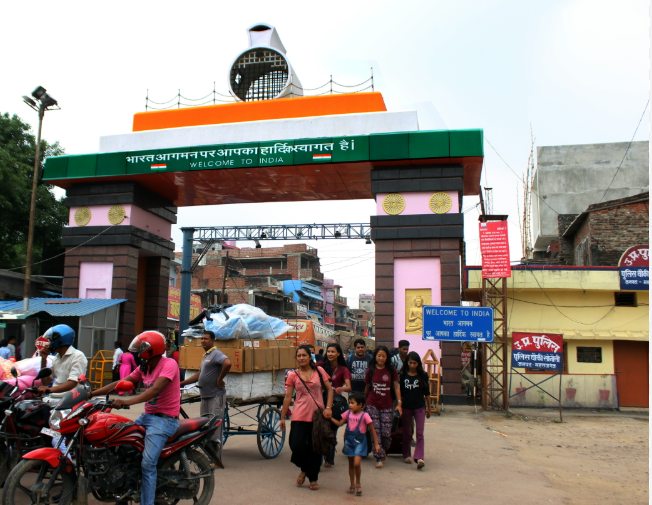
Sunauli (known as Sonauli on the Indian side) is the busiest overland border crossing between India and Nepal, connecting the Uttar Pradesh town of Nautanwa, approximately 90 kilometres from Gorakhpur, with the Nepali border town of Sunauli in Rupandehi District. The crossing functions 24 hours a day, and Indian citizens have a specific documentation advantage here that makes the Nepal entry process particularly straightforward: Indian nationals do not require a visa to enter Nepal and can cross using a valid Voter ID card or passport — making Sunauli the most accessible international border crossing in South Asia for Indian pilgrims and tourists, without any of the visa application process that complicates international travel elsewhere.
After completing immigration formalities at the border—a process that typically takes 30 to 60 minutes and includes standard Nepali entry procedures, such as document verification and registration—travellers enter Nepal on the Bhairahawa side of the border, officially in Rupandehi District. Nepal Vehicle Hiring Pvt Ltd provides a border pickup service for Muktinath tour groups arriving at Sunauli — our representative and driver meet the group at the Nepal side of the border, assist with the final Nepal entry registration, and begin the Muktinath journey immediately after clearance without any waiting or separate transport arrangement needed at the border itself. This seamless border-to-vehicle arrangement eliminates one of the most common sources of confusion and delay for first-time India-to-Nepal overland travellers, who often find the transition from border formalities onward to transport the most stressful part of the Muktinath pilgrimage.
The nearby city of Bhairahawa (also called Siddharthanagar), about 4 kilometres from the Sunauli border on the Nepali side, serves as the practical staging point for Muktinath tour vehicle hire arrangements. Bhairahawa has a domestic airport (Gautam Buddha International Airport) with flights to Kathmandu, ATMs, fuel stations, and a growing range of hotels that serve as the first overnight option for pilgrim groups arriving late in the day at Sunauli.
Just 22 kilometres from the Sunauli border, the UNESCO World Heritage Site of Lumbini — the birthplace of Lord Buddha — makes a natural and deeply meaningful first stop for pilgrims whose journey has a broad spiritual character, and Nepal Vehicle Hiring Pvt Ltd’s Muktinath tour packages routinely include a Lumbini visit on the outward journey from Sunauli, adding minimal time while delivering one of Nepal’s most profound cultural and religious experiences.
Muktinath — The Place of Liberation
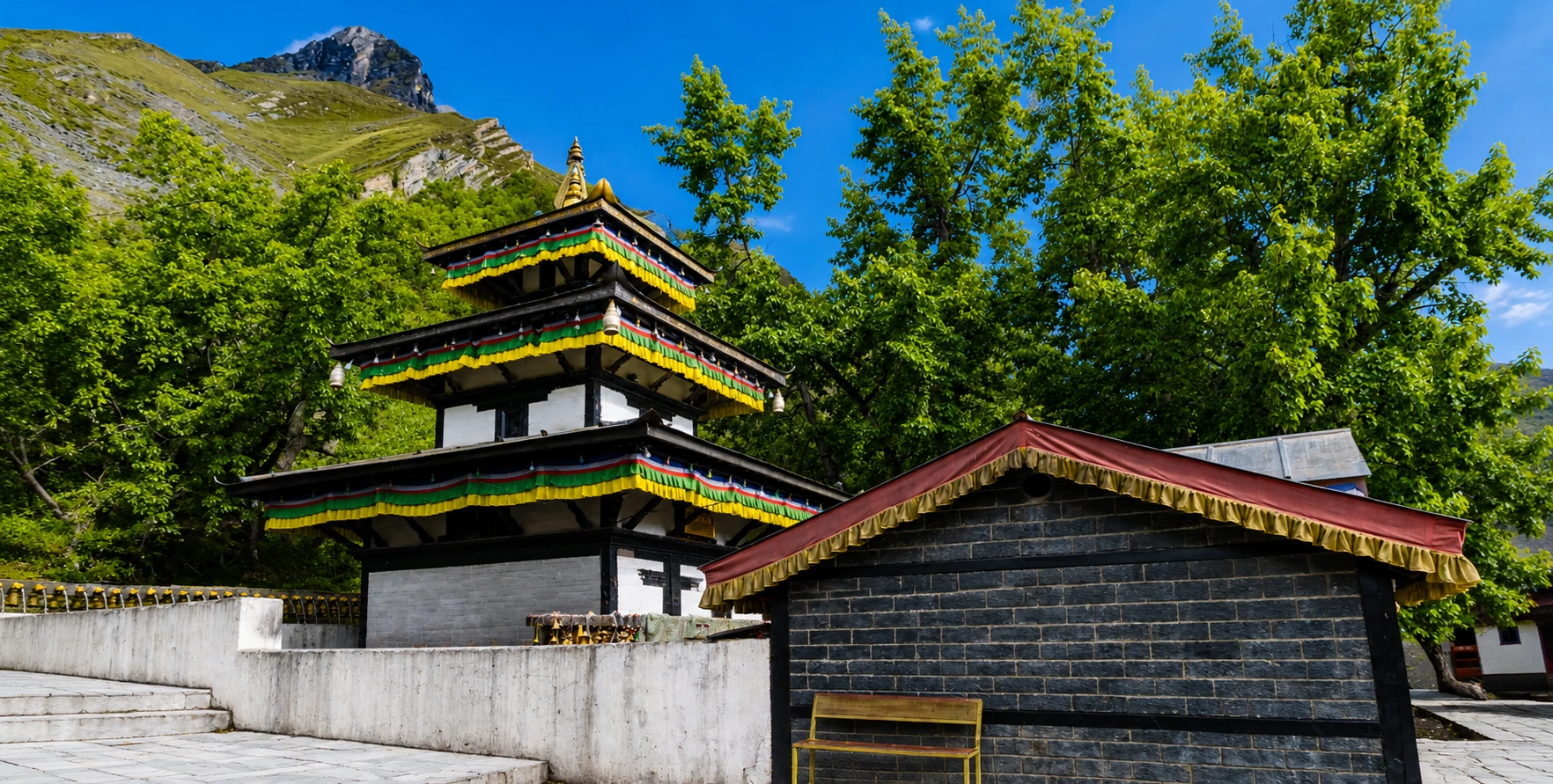
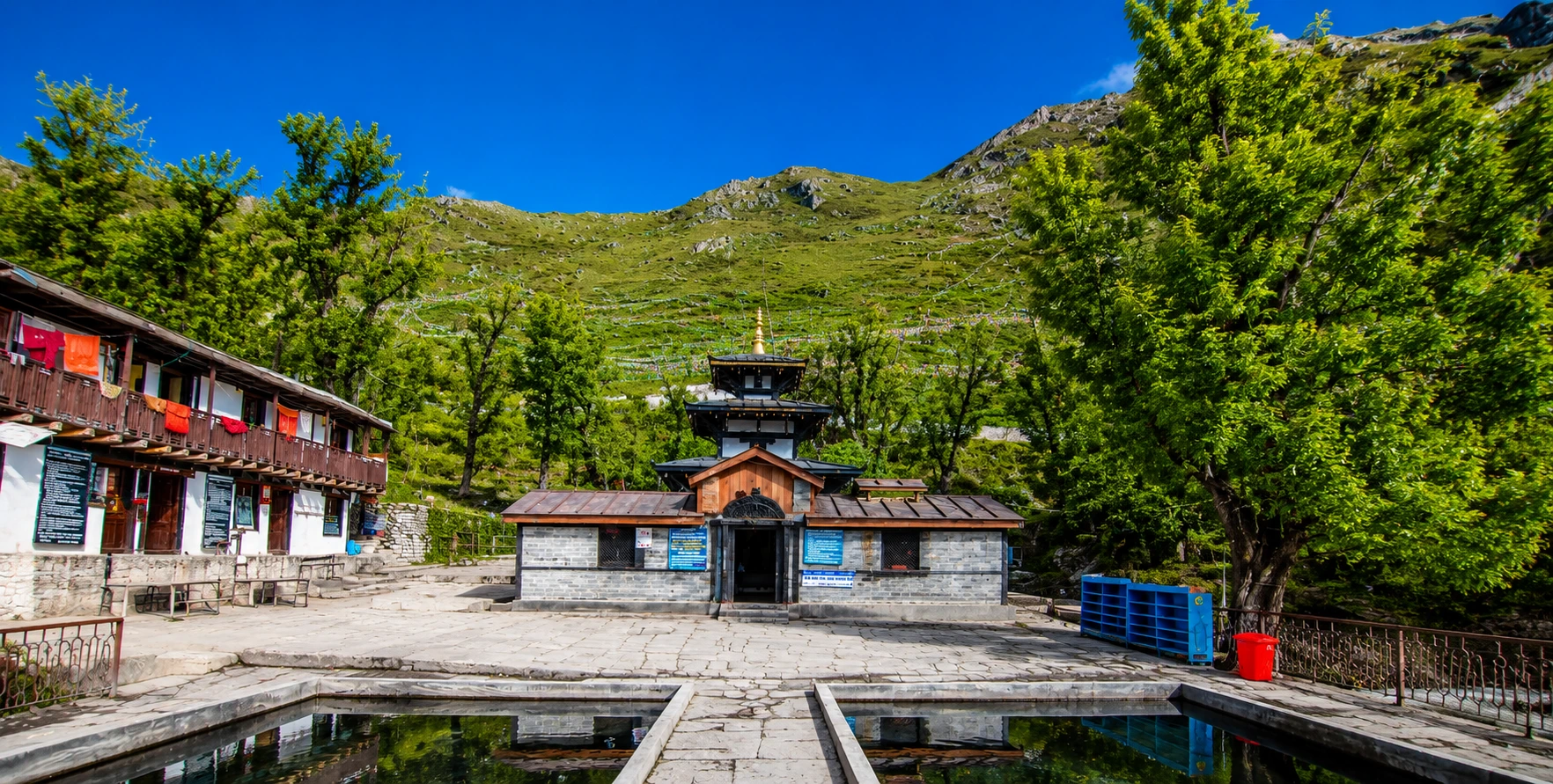
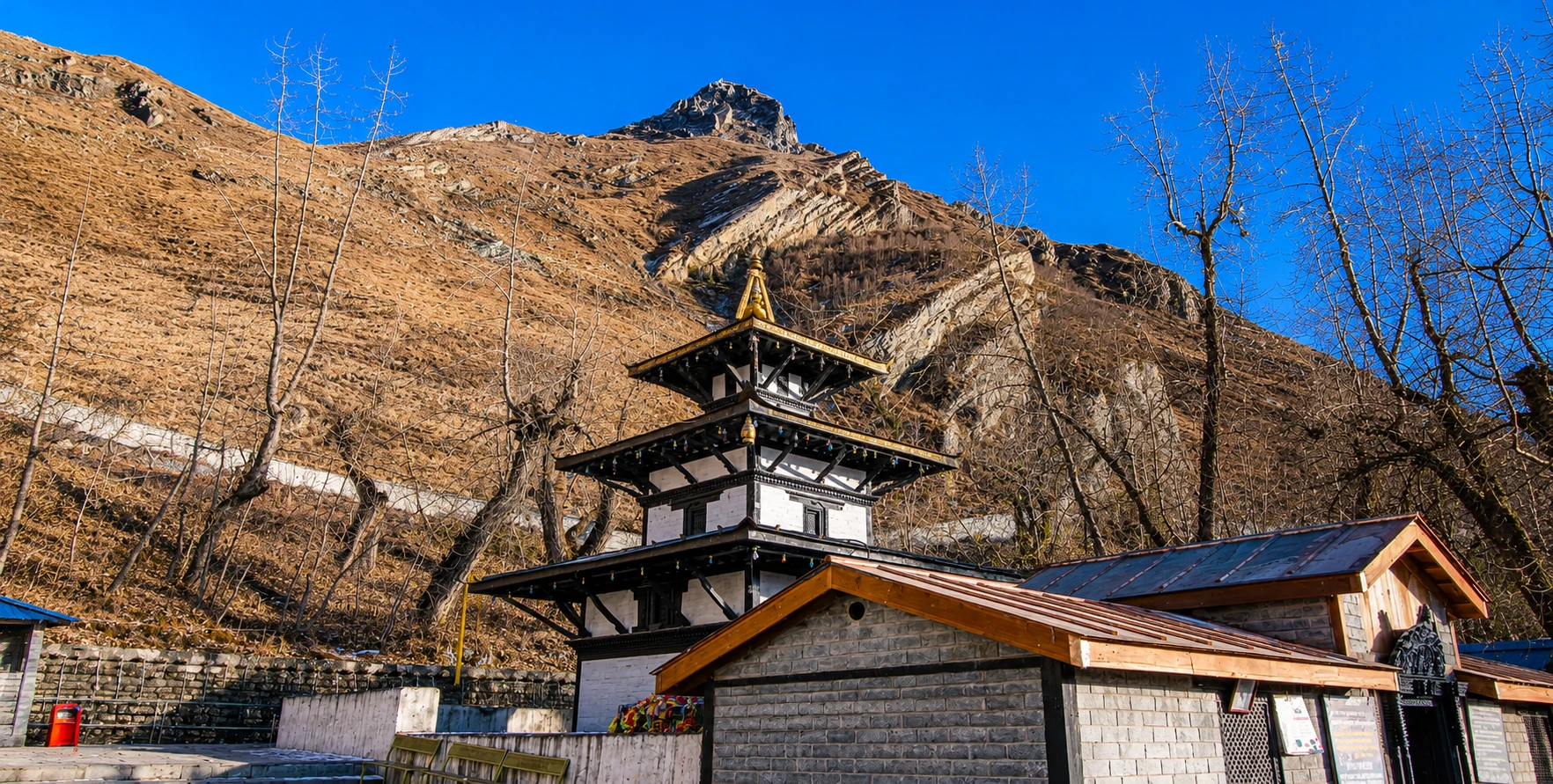
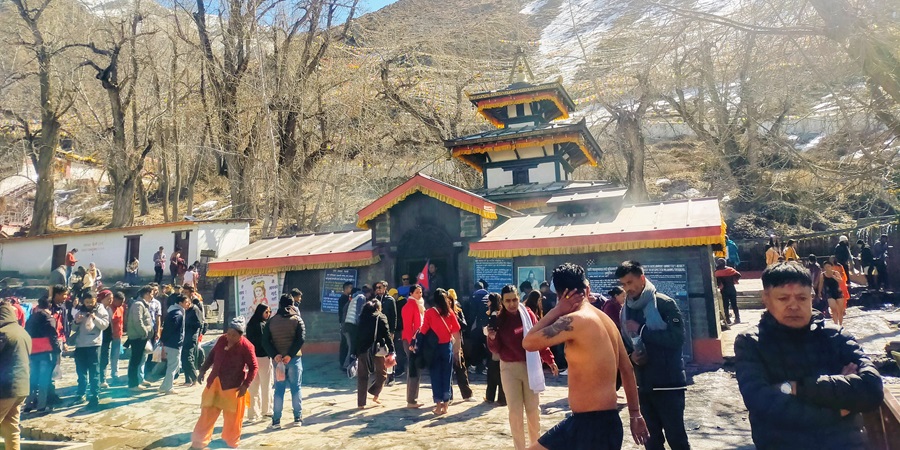
Muktinath, whose name translates directly as ‘Lord of Liberation’ (mukti meaning liberation, nath meaning lord), sits at 3,710 meters on the slopes of the Thorong La massif at the northern rim of the Annapurna range in Mustang District. The temple itself — a courtyard complex housing the principal Vishnu shrine alongside dedicated structures for Shaivite, Vaishnavite, and Tibetan Buddhist worship — is reached by a 2-kilometre walk or horse ride from the vehicle stand at Ranipauwa village, rising approximately 100 vertical metres through a landscape that shifts, in the short walk from road to temple, from the open high desert of the Kali Gandaki rain shadow to the lush, poplar-lined courtyard of the sacred complex itself.
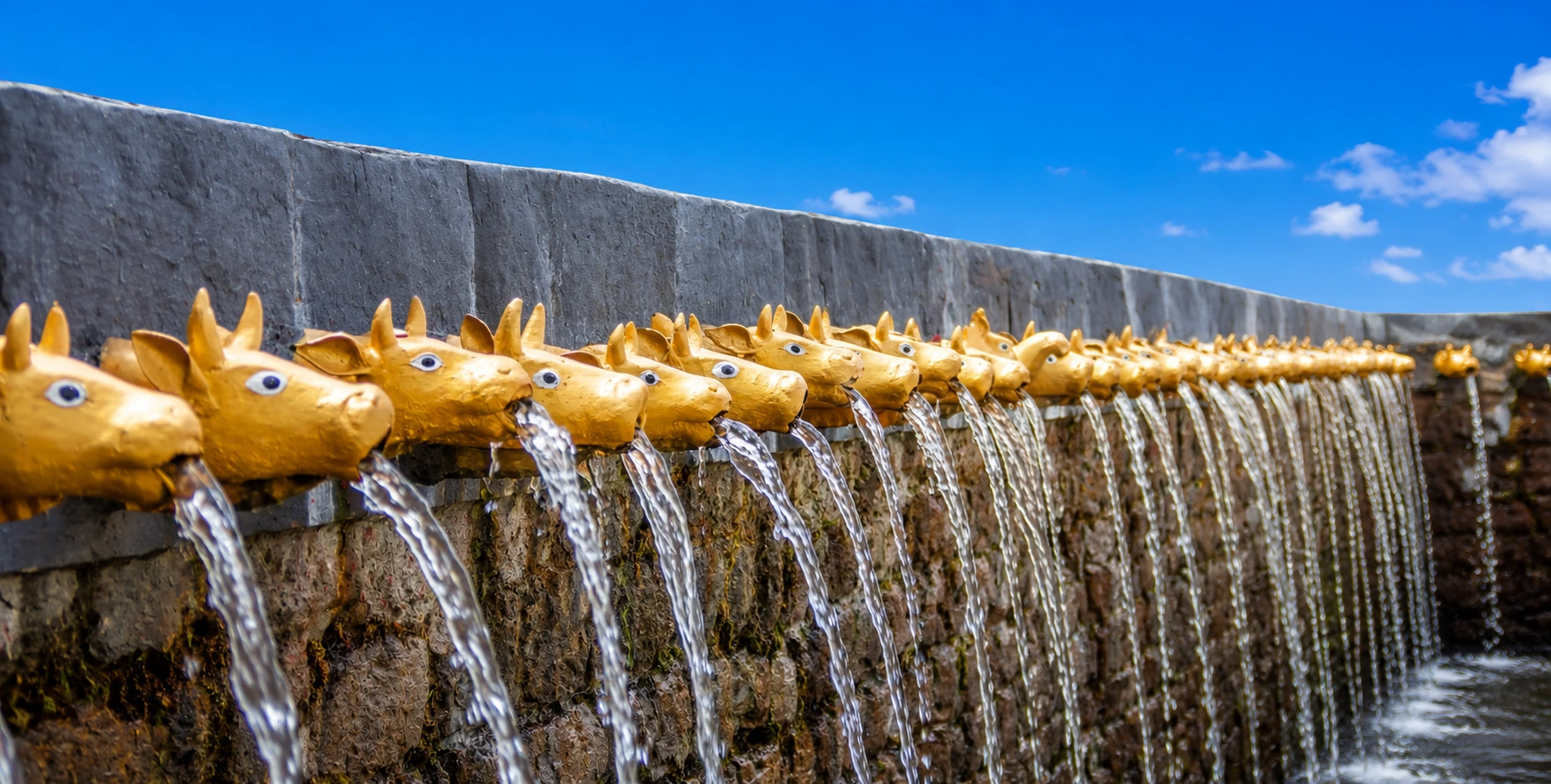
The defining physical features of the Muktinath pilgrimage are the 108 Mukti Dhara — stone water spouts arranged in a semicircle around the temple’s outer wall, through which spring water from the surrounding mountain flows continuously regardless of season. Most pilgrims pass under all 108 spouts as part of the darshan ritual, pouring ice-cold Himalayan spring water over themselves in an act of spiritual purification that, at 3,710 meters and in temperatures that can drop well below zero in winter, is as physically bracing as it is spiritually significant. In both Hindu and Buddhist tradition, the water is understood to possess liberation-conferring power—the very essence that gives Muktinath its name.
Within the same complex, the Jwala Mai shrine houses the eternal natural flame that burns where a natural gas seep meets a spring—fire and water coexisting in the same physical space, an occurrence both Hindu and Buddhist cosmological frameworks regard as a direct manifestation of the divine. This flame, burning continuously without human maintenance, is one of the most compelling natural religious phenomena in the Himalayan world, comparable in theological significance and physical uniqueness to the eternal flame at the Gosaikunda sacred site and the temple fire traditions maintained at other great pilgrimage sites across the Himalayan arc.
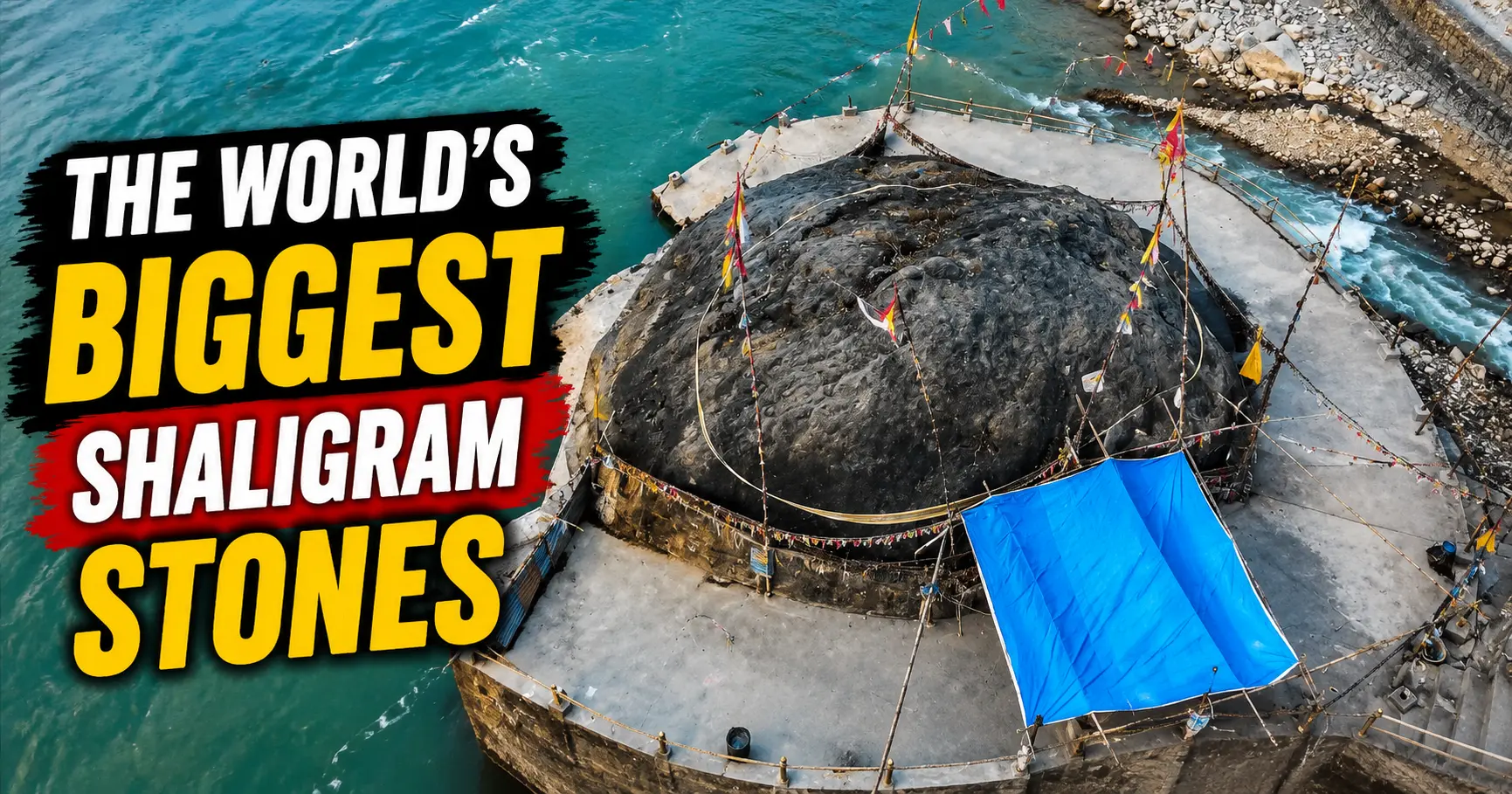
Beyond its role as the 106th Divya Desam, Muktinath holds an additional significance for Vaishnavite pilgrims: the Shaligram Shilas — the black ammonite fossils found in the Kali Gandaki River below the temple, formed from ancient marine organisms in the prehistoric Tethys Sea that covered this region before the Himalayan uplift — are understood as naturally occurring physical forms of Vishnu, and the riverbed between Kagbeni and Muktinath is one of the only places in the world where Shaligrams of various sizes and forms can be found. Pilgrims collect Shaligrams from the Kali Gandaki and then ascend to Muktinath for darshan, completing, in a single pilgrimage, a devotional circuit no other place on earth can offer.
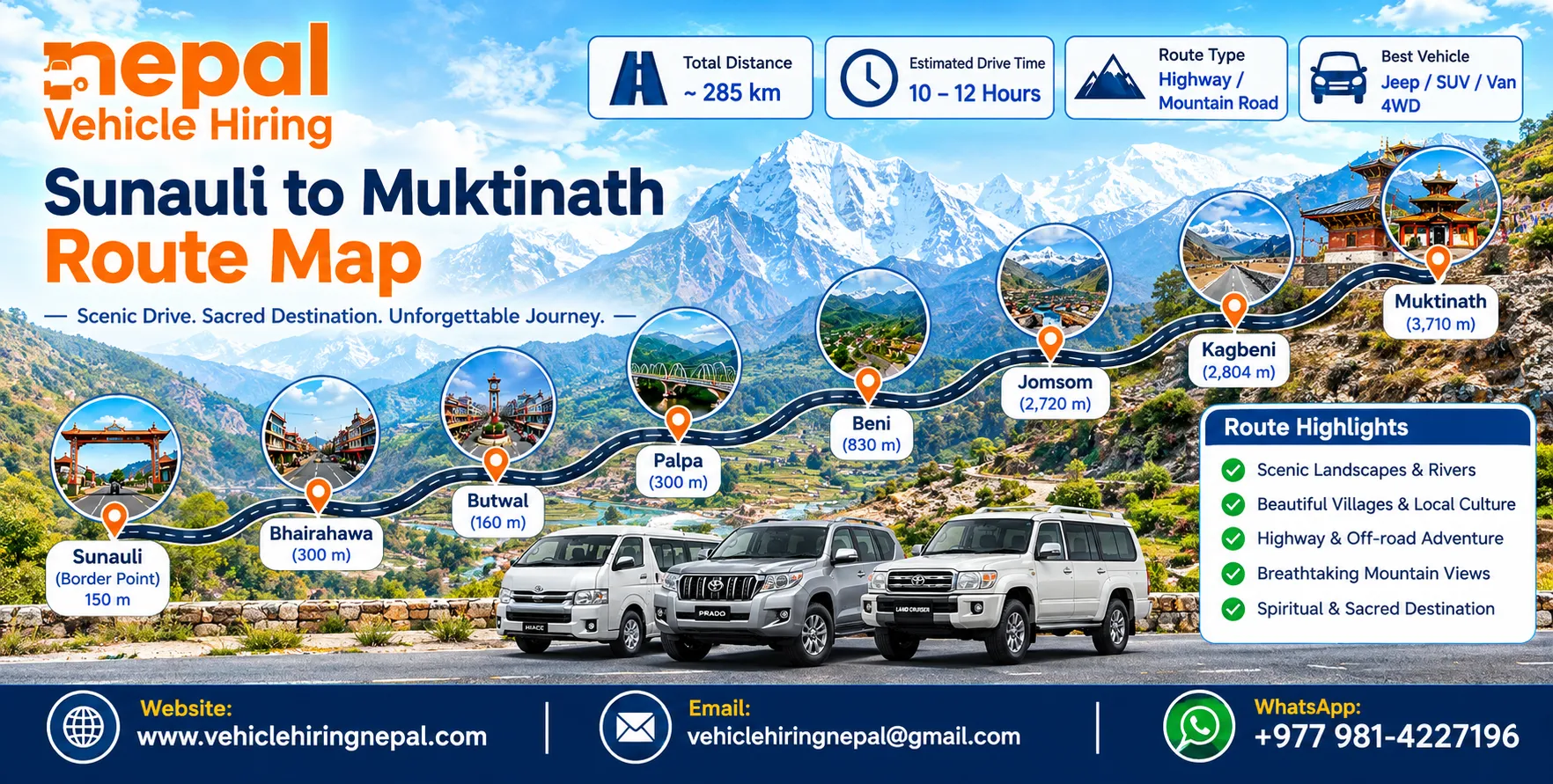
The Full Route — Sunauli to Muktinath Step by Step
The overland route from Sunauli to Muktinath covers about 350 to 400 kilometres by road, depending on the exact route taken, and is best split into two driving days with an overnight stop in Pokhara. Nepal Vehicle Hiring Pvt Ltd’s standard Muktinath tour vehicle hire from Sunauli follows this two-day route, offering comfortable pacing that avoids the exhaustion of covering the full distance in a single day while maximising time at the Muktinath temple on arrival morning.
Day 1: Sunauli Border to Pokhara — The Siddhartha Highway. After clearing the Sunauli border formalities and boarding the private jeep or Hiace van waiting on the Nepal side, the first day’s journey follows the Siddhartha Highway northward from the Terai plains toward Pokhara. The Siddhartha Highway, named after Prince Siddhartha Gautama (Lord Buddha), is one of Nepal’s finest and most historically significant mountain roads, climbing from the flat lowlands of Rupandehi District through the Middle Hills terrain of Palpa District and down to the Pokhara Valley in a series of beautifully engineered curves that were, when the road first opened in the 1960s, one of Nepal’s earliest mountain highway achievements. The total distance from Sunauli to Pokhara via the Siddhartha Highway is approximately 175 to 190 kilometres, typically taking 5 to 7 hours by private vehicle.
The journey’s outstanding midpoint is the town of Tansen (also called Palpa), perched dramatically on a ridge at approximately 1,370 meters with commanding views over the Terai plains below and the Annapurna range above. Tansen is one of Nepal’s finest and most undervisited traditional Newari towns — its narrow stone-paved lanes, traditional dhaka cloth weaving industry, and preserved Newar architecture are comparable in quality to Bhaktapur’s famous medieval character, and the Nepal Vehicle Hiring Pvt Ltd Muktinath tour standard itinerary includes a brief Tansen stop for lunch and exploration before continuing toward Pokhara. Arriving in Pokhara in the early evening, the group checks into their Lakeside hotel for the night — with the Pokhara car hire service available for any optional evening lakeside sightseeing, and the Sarangkot sunrise tour an option for the very early morning of Day 2 for those wanting the famous Annapurna range dawn view before the Muktinath drive departs.
Day 2: Pokhara to Muktinath — The Kali Gandaki Journey. The second day’s drive from Pokhara to Muktinath via Beni, the Kali Gandaki Gorge, and Jomsom covers about 197 kilometres. It takes 8 to 11 hours depending on road conditions and stop timing — making an early morning departure of 5:00 to 6:00 AM standard for all Muktinath jeep tours. The route initially follows the Pokhara-Baglung Highway westward from Pokhara, passing through Kusma and crossing the Kali Gandaki River at Beni before entering the gorge proper. Beyond Beni, the road enters one of Earth’s most geologically extraordinary landscapes: the Kali Gandaki Gorge, carved between the massifs of Dhaulagiri (8,167 m) to the west and Annapurna I (8,091 m) to the east, is by several geological measurements the world’s deepest gorge — the vertical relief from the river surface to the summit of Dhaulagiri exceeds 5,500 metres in less than 30 horizontal kilometres. Driving through this gorge, the scale of the surrounding mountains becomes comprehensible only gradually and incompletely — a single glance cannot take in peaks of this height.
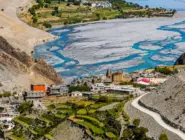
The Kali Gandaki gorge section of the drive passes through the villages of Tatopani (famous for its natural hot springs, a popular dip point for trekkers on the Annapurna Circuit), Dana, Ghasa, Kalopani, Tukuche, and Marpha — a sequence of traditional Thakali villages whose architecture, cuisine (apple orchards, apple brandy, buckwheat pancakes), and Buddhist-influenced culture become progressively more apparent as the road climbs out of the monsoon zone into the rain shadow plateau of Mustang. Marpha is widely considered the most beautiful village on the entire Pokhara-to-Muktinath road — its whitewashed stone houses, covered lanes, and productive apple orchards backed by the dramatic bulk of Nilgiri mountain create a visual composition that rivals any mountain village landscape in Nepal.
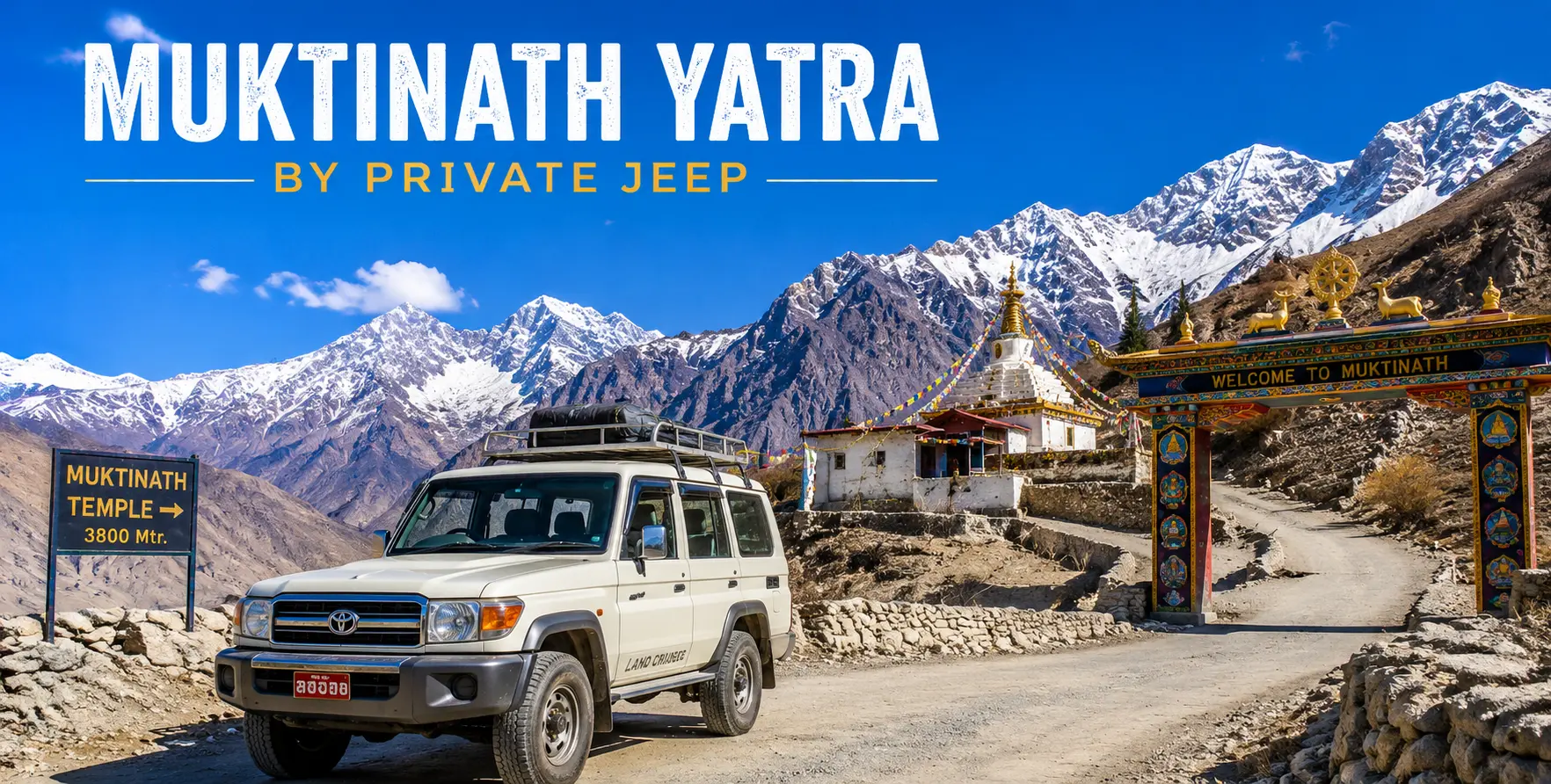
From Marpha, the road continues to Jomsom — the district headquarters of Mustang at approximately 2,720 meters, with its own small airport connecting to Pokhara by the famous 20-minute scenic mountain flight. From Jomsom, the final section to Muktinath passes through Kagbeni — the gateway to Upper Mustang’s restricted area and the Shaligram Shila collecting site on the Kali Gandaki riverbed — before climbing steeply to Ranipauwa village at 3,690 meters, from where the 2-kilometre walk or horse ride leads to the Muktinath temple complex itself at 3,710 meters. Nepal Vehicle Hiring Pvt Ltd’s Muktinath jeep package from Sunauli covers the full Pokhara-to-Muktinath drive with an experienced driver familiar with the Kali Gandaki route in all seasons.

Transport Options — What Nepal Vehicle Hiring Pvt Ltd Provides
Private vehicle hire options for a Muktinath tour from Sunauli include several vehicle types, each suited to different group sizes and comfort needs.
Private Jeep (Scorpio or Hilux 4WD) — The Standard Muktinath Vehicle. A private 4WD Scorpio or Hilux jeep from Nepal Vehicle Hiring Pvt Ltd carries 4 to 6 passengers with luggage. It is the standard vehicle for the Muktinath road journey from both Sunauli and Pokhara. The 4WD capability is specifically relevant for the Pokhara-to-Muktinath section: while the road has been substantially improved in recent years with more paved sections than before, the stretch from Tatopani to Jomsom still includes unpaved, rough sections — particularly near Kalopani and on the approach to Ranipauwa — where ground clearance and 4WD traction make a meaningful difference in both safety and reliability. The 2026 cost for a private Scorpio or Hilux from Sunauli to Muktinath and back (round trip, covering approximately 700 to 800 km total) is approximately NPR 70,000 to 95,000 (USD 525 to 713) for the full vehicle over the 4 to 5 day standard package duration.
Toyota Hiace Van — For Larger Pilgrimage Groups. For family groups and pilgrimage parties of 7 to 14 people, a Toyota Hiace van from Nepal Vehicle Hiring Pvt Ltd covers the Sunauli-to-Pokhara section comfortably—the Siddhartha Highway is paved throughout and suitable for the Hiace. For the Pokhara-to-Muktinath section, where the Kali Gandaki gorge road requires higher ground clearance and 4WD capability beyond what a Hiace can provide, we transfer passengers from the Hiace to a private 4WD jeep at Pokhara, with the Hiace waiting in Pokhara for the return journey. This combined Hiace-plus-jeep arrangement is cost-effective for groups larger than 6 and provides the right vehicle for each section of the road.
Tourist Coaster or Bus — For Large Groups. A tourist coaster or bus can serve large pilgrimage groups of 20 or more people on the Sunauli-to-Pokhara highway section, with a fleet of jeeps arranged from Pokhara for the Muktinath mountain section. This combination is the standard arrangement for temple groups, religious societies, and organised pilgrimage parties travelling from India with 20+ members, and Nepal Vehicle Hiring Pvt Ltd coordinates multi-vehicle arrangements of this type with the same transparent, all-inclusive pricing structure used for smaller private bookings.
Private Car — Kathmandu to Pokhara Section. For pilgrims arriving in Kathmandu by domestic flight from other Indian cities and then connecting to the Muktinath journey via Pokhara, our private car hire in Nepal covers the Kathmandu-to-Pokhara section comfortably via the Prithvi Highway, with the Kathmandu airport transfer beginning at the Tribhuvan International arrivals hall.
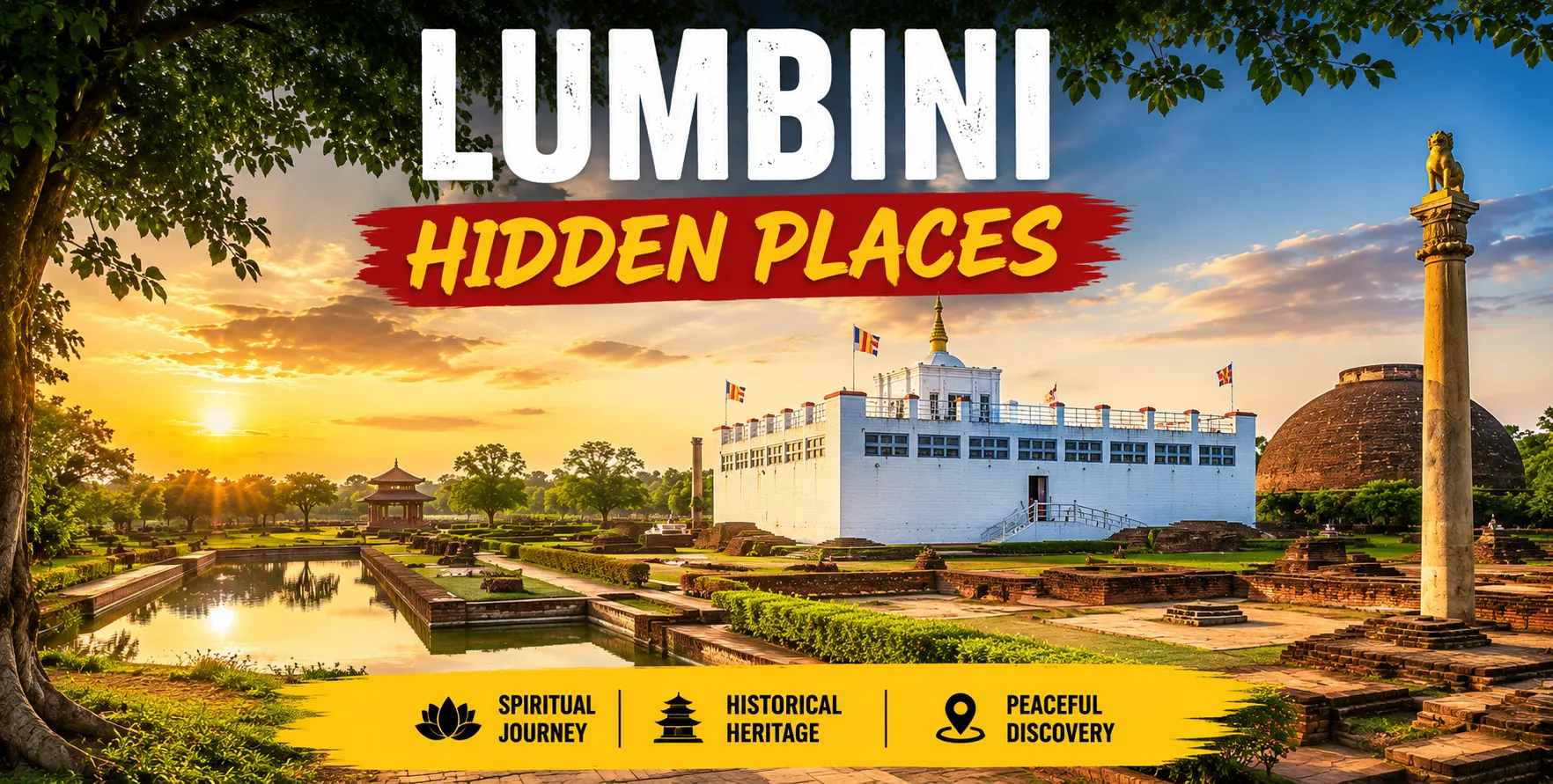
The Lumbini Detour — A Sacred Pairing That Costs Little Time
Just 22 kilometres from the Sunauli border on the road toward Pokhara, the UNESCO World Heritage Site of Lumbini represents one of the most meaningful and most frequently included stops on any Muktinath tour from Sunauli. Lumbini is the birthplace of Siddhartha Gautama, the historical Buddha — the Maya Devi Temple, built over the exact spot where the Buddha’s mother is said to have given birth, stands at the centre of the Lumbini sacred garden alongside the Emperor Ashoka’s commemorative pillar (erected 249 BCE and one of the most significant surviving inscriptions in South Asian history), the sacred Puskarini pond where the newly born Buddha is said to have been bathed, and the remarkable World Peace Pagoda and the numerous monasteries built by Buddhist nations from around the world within the broader Lumbini Development Zone.
For pilgrims whose Muktinath yatra carries both Hindu and Buddhist spiritual significance, Lumbini creates a profound beginning to the journey: starting at the birthplace of the Buddha, then ascending to the temple where Guru Rinpoche meditated and where Vishnu manifests in eternal form, traces a spiritual arc across Nepal’s full religious geography that no other combination of destinations can replicate. Nepal Vehicle Hiring Pvt Ltd includes the Lumbini stop in our standard Sunauli to Muktinath tour package, adding only 1 to 2 hours to the first day’s journey while delivering a UNESCO heritage experience that many pilgrims describe as the most moving stop of the entire yatra. Our Kathmandu-to-Lumbini bus service offers Lumbini connections from Kathmandu for pilgrims building a broader Nepal itinerary.
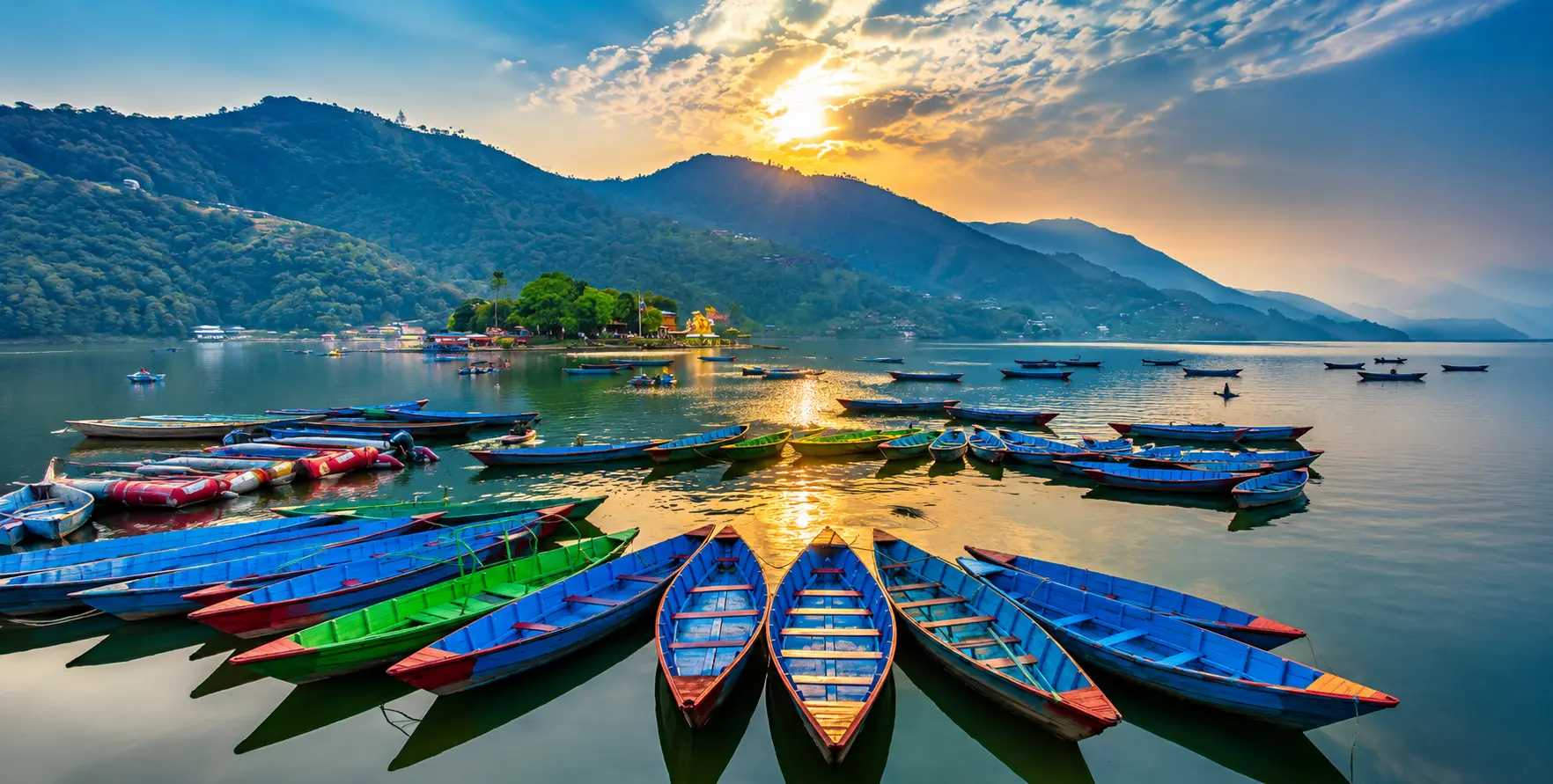
Pokhara — The Natural Overnight Stop and Its Own Rewards
Pokhara, Nepal’s second city and the tourism hub of the Gandaki province, is the natural and universally recommended overnight stop on the Sunauli-to-Muktinath journey. Set on the shores of Phewa Lake at 827 meters, with the dramatic Annapurna, Machhapuchhre, and Dhaulagiri ranges visible from the lakeside promenade, Pokhara provides comfortable hotel accommodation, functioning restaurants, and a relaxed atmosphere that pilgrims who have just crossed an international border and spent 5 to 7 hours in a vehicle need before the more demanding Kali Gandaki gorge drive the following morning.
Beyond its role as an overnight logistics stop, Pokhara itself contains several pilgrimage and spiritual sites of genuine significance. The Bindhyabasini Temple, one of the oldest Hindu temples in the Pokhara Valley and dedicated to Goddess Bhagwati, is a standard morning visit for Muktinath pilgrims before the day’s drive departs. The Gupteshwar Mahadev Cave, containing a natural Shiva lingam shrine, is another Shaivite pilgrimage site of regional importance. For those with a morning to spare before the Muktinath drive, our Sarangkot sunrise vehicle hire provides the pre-dawn transfer to Sarangkot viewpoint for the famous Annapurna range sunrise panorama — the same peaks that the Muktinath pilgrim will be driving directly into a few hours later, seen from a distance that renders their full scale comprehensible in a way that the gorge-level view cannot.
Nepal Vehicle Hiring Pvt Ltd’s Pokhara car hire service covers all Pokhara sightseeing requirements for groups staying an extra half-day or full day in the city. Our Pokhara to Nayapul transport serves the Ghorepani Poon Hill trek and Annapurna Base Camp trek trailhead transfers for any pilgrims adding a trekking experience to their Muktinath tour. The Annapurna Circuit trek itself ends at Muktinath after crossing the Thorong La pass — meaning that Pokhara is the common base city for both the pilgrimage vehicle approach and the classic circuit trek approach to the same sacred destination.
The Kali Gandaki Valley — A Geological and Spiritual Wonder
The drive from Beni northward through the Kali Gandaki Gorge is, by the consistent account of experienced Nepal travel guides and returning pilgrims alike, the single most physically impressive section of the Muktinath road journey — and one of the most extraordinary natural landscapes on earth by any objective measure. The Kali Gandaki River, rising in the trans-Himalayan plateau of Upper Mustang and cutting its ancient course southward through the full height of the Annapurna-Dhaulagiri massif before reaching the plains, has, over millions of years,s carved the gorge that drivers and pilgrims pass through today — a valley whose depth exceeds the height of Mount Everest above sea level at its most extreme points and whose walls rise on both sides to peaks that, at 8,000+ metres, are the sixth and tenth highest points on earth.
The Thakali villages strung along this valley — Tatopani with its hot springs, Dana perched above the river on a rocky bench, Ghasa where the climate shifts from subtropical to alpine, and Kalopani with its direct views of Nilgiri and Tilicho — have historically served as the commercial and hospitality nodes of the old trans-Himalayan salt trade, through which Tibetan salt was exchanged for Nepali grain in a trading pattern that sustained these communities for centuries before the Tibet border closure disrupted it in 1959.
The Upper Mustang trek offered by our sister company,ny Trek Nepal Himalaya, follows the same valley above Kagbeni into the restricted Mustang District beyond— the ancient walled city of Lo Manthang and the cliff-face cave monasteries of the Mustang plateau represent one of the finest preserved medieval Tibetan Buddhist civilisations remaining anywhere in the Himalayan world. For pilgrims whose Muktinath yatra leaves them wanting more of this extraordinary region, Alpine Luxury Treks offers a luxury Mustang trekking experience as a premium extension.
Jomsom — The Overnight Gateway to Muktinath
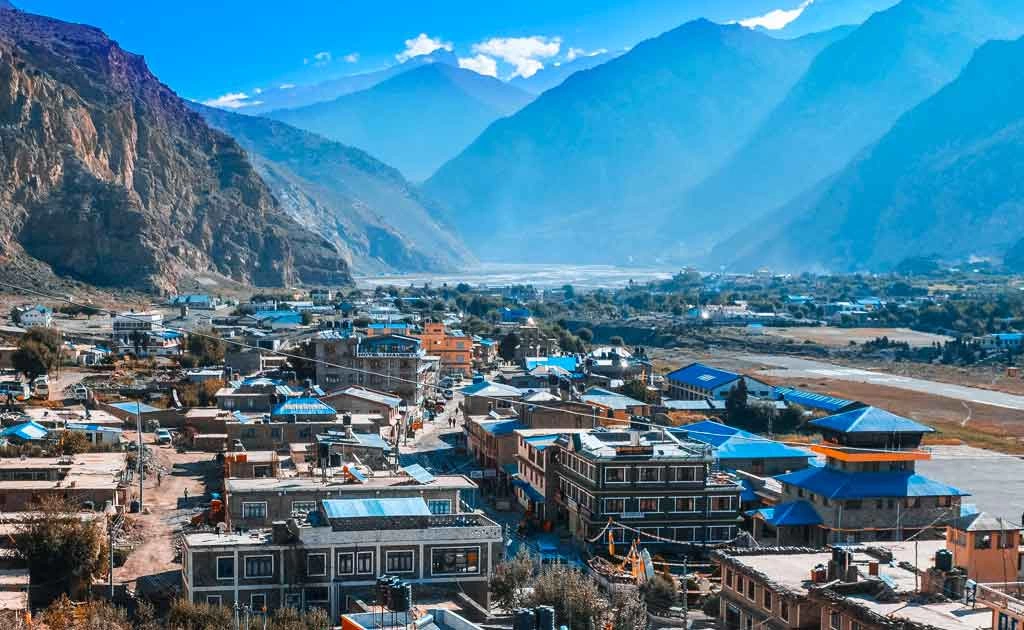
Jomsom, the headquarters of Mustang District at approximately 2,720 metres, is far more than a transport waypoint on the road to Muktinath — it is a genuinely fascinating settlement in its own right, whose character has been shaped by its position at the crossroads of ancient trans-Himalayan trade routes, Tibetan Buddhist and Thakali culture, and the more recent trekking economy that has made the Annapurna Circuit trek one of Nepal’s most celebrated long-distance walking routes. The town is divided into new and old sections on opposite banks of the Kali Gandaki River, with the newer commercial area housing the airport, government offices, and a growing range of hotels along the main road, while the older Jomsom across the river retains its traditional stone architecture and quieter atmosphere. Our private jeep hire from Pokhara to Muktinath includes Jomsom as the standard overnight base for the 4- and 5-day tour formats.
The famous Jomsom wind deserves special mention: the Kali Gandaki valley acts as a natural wind tunnel between the Dhaulagiri and Annapurna massifs, and by mid-morning each day a powerful upstream wind typically builds, strong enough to lift sand from the dry riverbed and reduce visibility to a few hundred meters. This wind pattern is one reason Tuktinath tours from Sunauli and Pokhara consistently depart as early as possible, arriving in Jomsom and driving the final section to Ranipauwa before the wind peaks at noon, making the journey much more comfortable than a later departure. For this reason, Nepal Vehicle Hiring Pvt Ltd schedules all Jomsom-bound departures from Pokhara between 5:00 and 6:00 AM, and drivers familiar with the valley know exactly where the wind is strongest on the Jomsom approach road.
From Jomsom, the Upper Mustang restricted area begins at Kagbeni — the walled medieval village that marks the boundary between the accessible Mustang lower valley and the restricted kingdom above. While a full Upper Mustang trek to Lo Manthang requires a separate restricted-area permit and is a multi-day expedition beyond the standard Muktinath yatra, the drive from Jomsom to Kagbeni takes only 30 minutes. It includes the famous Kali Gandaki Shaligram collecting site — the sacred riverbed where the black fossil-stone Shaligrams that Vaishnav tradition treats as a physical form of Vishnu are found. Many Muktinath pilgrims stop at Kagbeni for 30 minutes specifically to collect a Shaligram from the riverbed before ascending to the temple above. This devotional practice adds particular significance to the Muktinath darshan for Vaishnavite pilgrims who carry the sacred stone directly from the river to the temple for blessing.
The Kali Gandaki Gorge Drive — Waterfall Sections and Wildlife
The Kali Gandaki drive from Beni northward is punctuated by natural features that reward any traveller not yet dulled by Nepal’s extraordinary landscape density. The gorge section between Dana and Ghasa is the most dramatically enclosed: here the walls rise fastest, and the river is most compressed, with waterfalls visible on the opposing cliff face that fall hundreds of meters through bare rock before reaching the valley floor. The transition at Ghasa is one of the drive’s most noticeable climate shifts: below Ghasa the vegetation is subtropical and moist, the air warm even in spring; above Ghasa the landscape dries rapidly, alpine shrub replaces forest, and the character of the Himalayan high desert that defines Mustang’s appearance begins to assert itself.
The area around Kalopani and Lete offers the best wildlife-viewing opportunity on the Muktinath vehicle tour route: the open hillsides here are known habitat for Himalayan tahr, and the blue sheep (bharal), whose population has been well studied in the Annapurna Conservation Area, are sometimes visible from the road on the higher slopes. The Nilgiri mountain group — three connected summits reaching 7,061 meters, collectively one of Nepal’s most photographed peak groupings — provides the backdrop for the Kalopani section of the drive, its enormous snow-covered south face appearing directly ahead as the road rounds the final bend before the village. Many Annapurna Circuit trekkers walk past this exact view over several trekking days; Muktinath tour vehicle hire passengers experience it as a single, sustained visual revelation as the valley opens before them.
The apple town of Marpha, approximately 30 minutes before Jomsom, is the single most atmospheric village stop on the entire Pokhara-to-Muktinath road. Established as a Thakali trading community on the edge of the Mustang rain shadow, Marpha’s flat-roofed stone houses, covered stone lanes, and productive apple orchards, backed by the snowy Nilgiri massif, create one of the most complete traditional Himalayan village scenes on any vehicle-based Nepal route. The apple brandy and cider produced here are sold at roadside stalls — and for groups with a flexible schedule, a 30-minute Marpha stop for apple products and village photography is one of the most consistently memorable non-religious moments of the Muktinath tour from Sunauli.
Muktinath Darshan — What the Temple Visit Actually Involves
The physical approach to Muktinath from the vehicle stand at Ranipauwa is a 2-kilometre walk that rises about 100 vertical meters through terraced fields and poplar trees that, in autumn, turn vivid gold against the snow-capped backdrop of Thorong Peak and the Annapurna range behind. For pilgrims unable to walk this section, horses are available for hire at Ranipauwa at rates around NPR 300 to 500 for the return ride to the temple — a practical option for older pilgrims, those with mobility considerations, or families with young children who have already made the long journey from Sunauli. The private vehicle from Nepal Vehicle Hiring Pvt Ltd waits at Ranipauwa during the darshan.
The temple complex itself is entered through a traditional Nepali gateway, beyond which the atmosphere changes immediately and unmistakably: prayer flags overhead, the sound of water from the 108 Mukti Dhara spouts, the smell of incense, and the presence of pilgrims from across Nepal, Tibet, and India all create a devotional environment that is simultaneously intimate and universal.
The circuit of the 108 water spouts takes approximately 20 minutes of sustained movement, during which each spout pours cold spring water over the pilgrim passing beneath. Most pilgrims then proceed to the main Vishnu shrine — the Muktinath Mandir — for the central darshan, before visiting the Jwala Mai shrine with its eternal natural flame, the Buddhist Gompa within the same complex maintained by Tibetan Buddhist monks, the Mukteshwor Mahadev Temple (Shaivite shrine within the same complex), and several additional sacred points including the Vishnu Paduka (stone footprint of Vishnu), the Swaminarayan meditation spot, and the Narasimha and Guru Ramanujacharya temples.
Most pilgrims spend 2 to 4 hours at Muktinath, complete the full complex circuit, return to Ranipauwa, wait for their private vehicle, and descend to Jomsom for the overnight stay. The descending drive to Jomsom from Ranipauwa takes approximately 1 hour, and Jomsom — with its growing range of guesthouses and hotels, the famous apple products (apple pie, cider, and brandy) of the Marpha valley, and the dramatic backdrop of Nilgiri mountain — provides the most comfortable overnight base for groups who want to spend more than a single rushed day at the temple and want a morning return visit or additional time in the Kali Gandaki valley before the drive back to Pokhara begins.
Permits Required for the Muktinath Journey
The Muktinath journey passes through the Annapurna Conservation Area, Nepal’s largest protected area at 7,629 square kilometres, and as such requires the Annapurna Conservation Area Permit (ACAP) — the same permit described in our dedicated Besisahar private vehicle guide and Annapurna trekking transport guides. The 2026 ACAP fee for foreign nationals is NPR 3,000 (approximately USD 22 to 25) per person. Indian nationals, as SAARC members, pay a reduced rate of NPR 1,000 per person—a significant cost saving compared to the standard non-SAARC rate, making the ACAP permit particularly affordable for the Indian pilgrim groups that make up the largest segment of Muktinath visitors.
A TIMS (Trekkers’ Information Management System) card is also recommended — while the ACAP technically covers the Muktinath area, a TIMS card provides an additional registration record that can be useful if emergency assistance is needed during the journey. Indian nationals on a pure pilgrimage vehicle tour (without any trekking) are sometimes exempt from TIMS requirements in practice. Still, Nepal Vehicle Hiring Pvt Ltd advises confirming the current status of this exemption with a registered trekking agency or through our contact team when booking.
Indian citizens entering Nepal at Sunauli do not need a visa—a Voter ID card or valid passport suffices. The Nepal side of the Sunauli border issues a free Entry/Exit stamp. Nepal Vehicle Hiring Pvt Ltd representatives at the border assist with the documentation process for groups booking our border pickup and Muktinath tour package.
NOTE: ACAP permits for Indian nationals must be obtained before or at the Beni checkpoint — this is the standard collection point for vehicle-based Muktinath visitors entering via the Pokhara-Beni-Jomsom road. Nepal Vehicle Hiring Pvt Ltd drivers on this route know the checkpoint procedure and handle it as part of the standard transfer.
Standard Muktinath Tour Itineraries from Sunauli
The 4-Day Muktinath Tour — The Most Popular Package. Day 1: Sunauli border to Lumbini (optional 2-hour visit), then Pokhara (overnight). Day 2: Early departure from Pokhara to Muktinath via Beni and the Kali Gandaki Gorge — darshan at the temple, overnight in Jomsom or descent to Tatopani. Day 3: Return drive from Jomsom/Tatopani to Pokhara (overnight in Pokhara). Day 4: Pokhara to Sunauli border, return to India. This 4-day format, with a total driving distance of approximately 700 to 800 kilometres round trip, is the most commonly booked Muktinath tour from Sunauli for pilgrims with limited time who want to complete the yatra efficiently without excessive rushing.
The 5-Day Package — With Pokhara Sightseeing. Adding a half-day of Pokhara sightseeing — Bindhyabasini Temple, Davis Falls, Gupteshwar Mahadev Cave, Taal Barahi on Phewa Lake — and an extended Kali Gandaki Valley stop at Tatopani hot springs transforms the 4-day format into a richer 5-day experience that balances pilgrimage with cultural immersion. You can also add the Sarangkot sunrise transfer as an optional pre-departure morning activity from Pokhara.
The 7-Day Extended Package — Adding Kathmandu or Chitwan. For pilgrims with a week available, the 7-day package extends the standard Muktinath tour to include either a Kathmandu heritage circuit — covering Pashupatinath Temple (one of the most important Shiva shrines in the Hindu world), Kathmandu sightseeing, Bhaktapur Durbar Square, and the Nagarkot sunrise view — or a Chitwan National Park addition for a jungle safari that adds Nepal’s finest wildlife destination to the spiritual journey. Nepal Vehicle Hiring Pvt Ltd coordinates the Pokhara to Chitwan bus or private vehicle transfer as part of the extended Nepal tour package.
Season Guide — Best Time for the Muktinath Yatra from Sunauli
Autumn (October to November) is the peak season for Muktinath darshan from Sunauli and, by most accounts, the finest time for the Kali Gandaki valley drive: post-monsoon air clarity delivers the sharpest mountain views of Dhaulagiri, Annapurna I, Nilgiri, and Thorong Peak, the apple orchards of Marpha are in active harvest with fresh fruit and cider available, and road conditions on the Pokhara-to-Muktinath corridor are at their best after the monsoon’s end. The Annapurna Circuit trek is also at peak season, meaning the valley has a vibrant atmosphere of trekkers and pilgrims without being excessively crowded at the temple itself.
Spring (March to May) is the second peak window: the lower gorge sections bloom with rhododendrons. Temperatures at Muktinath’s 3,710 meters are milder than in autumn or winter, and demand for private jeep hire from both Indian pilgrim groups and international trekkers peaks again. Book at least 2 weeks in advance for spring season Muktinath tour packages.
Winter (December to February) is possible but challenging. The Muktinath temple itself remains open year-round, but winter temperatures at 3,710 meters drop well below -10 to -15 Celsius overnight, and snow on the road above Jomsom occasionally creates access difficulties — particularly in January and early February. Some Pokhara-to-Jomsom flights (the alternative approach) are cancelled due to winter fog.g Pilgrims choosing a winter Muktinath yatra should carry proper cold-weather clothing, confirm current road conditions through Nepal Vehicle Hiring Pvt Ltd before departure, and allow schedule flexibility for any weather-related road adjustments.
Monsoon (June to August) is technically viable for the Muktinath vehicle tour from Sunauli since Muktinath sits in the Mustang rain shadow and receives significantly less precipitation than the Pokhara approaches below. The Kali Gandaki gorge road, however, does carry additional landslide risk on specific sections during heavy monsoon rainfall. Nepal Vehicle Hiring Pvt Ltd monitors conditions and advises on current road status before any monsoon-season departure.
Practical Tips for Indian Pilgrims Travelling from Sunauli
- Documentation: Indian citizens need a valid Voter ID card or passport for Nepal entry at Sunauli — no visa required. Carry extra photocopies of your ID document for ACAP permit processing and any roadside checkpoints.
- Currency: Nepal widely accepts Indian Rupees at standard exchange rates, but most establishments prefer NPR (Nepali Rupees). Nepal Vehicle Hiring Pvt Ltd offers tour packages payable in INR or USD with advance arrangement.
- Mobile networks: Indian SIM cards lose coverage shortly after the border. An Ncell or Nepal Telecom SIM purchased at Bhairahawa or the border area provides coverage through Pokhara; above Jomsom, coverage becomes limited.
- ACAP permit: Ensure the ACAP permit is arranged through Nepal Vehicle Hiring Pvt Ltd or your trekking agency before reaching the Beni checkpoint — our drivers handle this as a standard part of all Muktinath tour bookings.
- Altitude at Muktinath: At 3,710 meters, Muktinath is high enough to trigger altitude sickness symptoms in some travellers, particularly those arriving by vehicle from Pokhara in a single day. Mild headache and fatigue are common and generally resolve with rest. The standard 4-day itinerary includes an overnight in Jomsom (2,720 m) before darshan at Muktinath, providing meaningful altitude adjustment compared to driving directly to the temple.
- Horse hire at Ranipauwa: Horses are available at Ranipauwa for the 2 km walk to the temple — NPR 300 to 500 for the return trip. This is strongly recommended for elderly pilgrims or those with mobility concerns.
- Book early for peak season: October-November and March-April are high-demand periods. Contact Nepal Vehicle Hiring Pvt Ltd at +977 9814227196 via WhatsApp or through our plan trip page at least 2 weeks before departure.
Combining Muktinath with Other Nepal Pilgrimage Sites
The Muktinath yatra from Sunauli is most enriching when combined with Nepal’s other major Hindu pilgrimage destinations, and Nepal Vehicle Hiring Pvt Ltd’s Nepal tour packages coordinate transport for any combination of sites. Pashupatinath Temple in Kathmandu — one of the most important Shiva temples in the world and a Divya Desam in itself — is a natural pairing for Vaishnav pilgrims visiting Muktinath, creating a journey that combines the 106th and several other major pilgrimage sites in a single Nepal visit. Kathmandu sightseeing through Nepal Vehicle Hiring Pvt Ltd covers the full Pashupatinath, Guhyeshwari, Budhanilkantha, and Changu Narayan circuit alongside the standard heritage monument zones. The Bhaktapur Durbar Square day tour and Nagarkot sunrise transfer complete a Kathmandu-based extension for any Muktinath pilgrim who also wants a Kathmandu heritage experience.
For pilgrims specifically building a complete Nepal pilgrimage circuit from the Sunauli entry point, the standard recommended combination covers: Sunauli → Lumbini (Buddha birthplace) → Muktinath yatra → Kathmandu (Pashupatinath, Kathmandu sightseeing) → return via Sunauli or Kathmandu airport. The Kathmandu-to-Pokhara bus service or private vehicle connection links the capital to the Pokhara-Muktinath route. For groups adding Janakpur—the birthplace of Sita Devi in the Terai—a further eastward extension within the Nepal tour package framework creates one of the most comprehensive Hindu pilgrimage circuits in South Asia.
Why Choose Nepal Vehicle Hiring Pvt Ltd for Your Muktinath Tour
Nepal Vehicle Hiring Pvt Ltd has provided Muktinath vehicle hire for Indian pilgrim groups from Sunauli and Kathmandu throughout our operating history. Our specific Muktinath tour advantages include: a border pickup representative who meets groups at the Nepal side of the Sunauli crossing and manages the entry documentation process; experienced drivers who know the full Siddhartha Highway, Pokhara overnight logistics, and the Kali Gandaki gorge road from Beni to Jomsom, with the specific knowledge of seasonal road conditions that the Tatopani-to-Jomsom section requires; and an all-inclusive pricing structure that covers driver, fuel, and road tolls without any hidden additions.
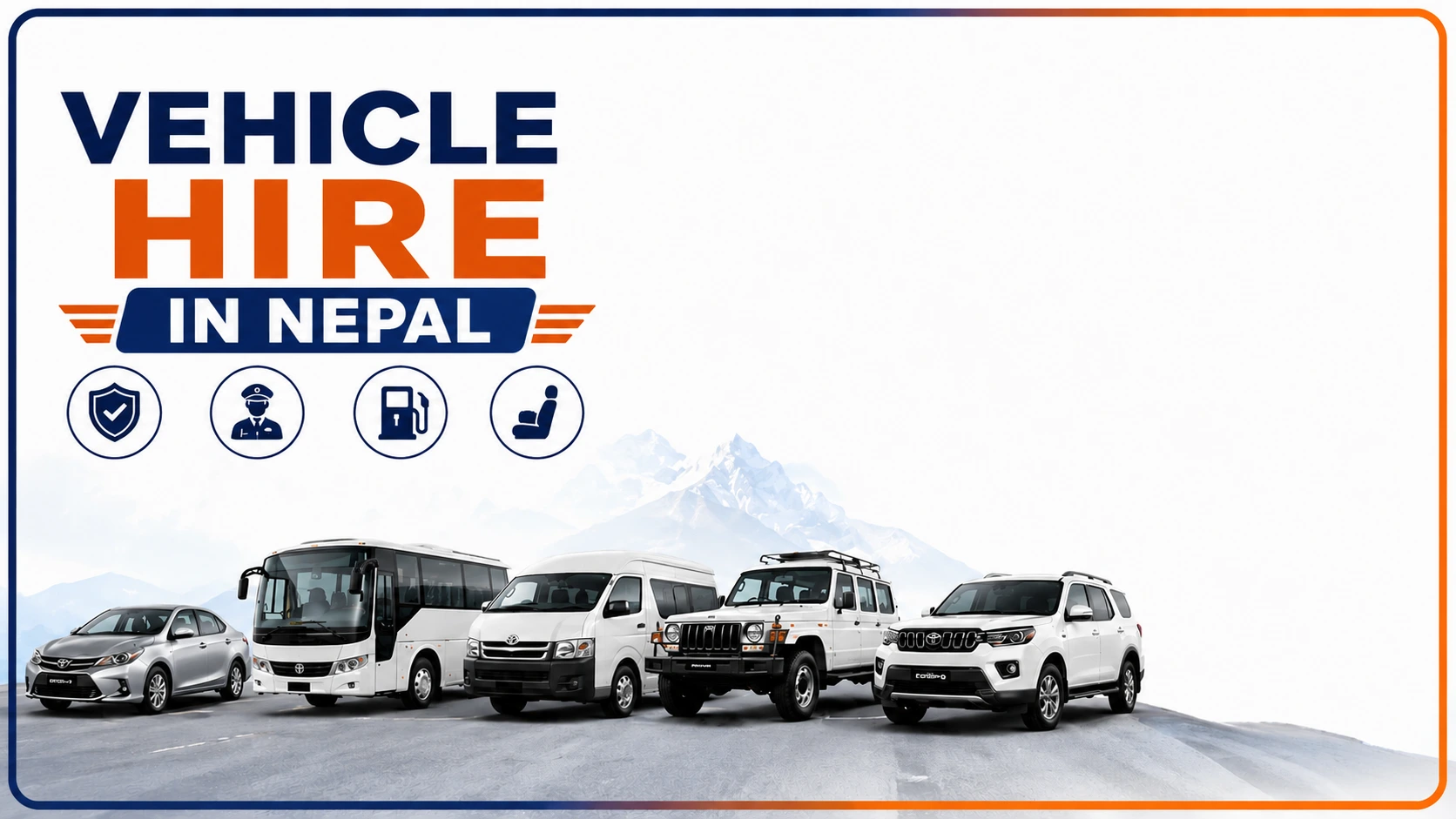
Our fleet includes private 4WD Scorpio and Hilux jeeps for groups of 4 to 6; Toyota Hiace vans for groups of 7 to 14 on highway sections; tourist coasters and tourist buses for large pilgrimage parties; and private sedans for airport transfer connections. Every Muktinath booking includes ACAP permit assistance, route guidance, and direct driver contact details provided 24 hours before departure. Book via WhatsApp at +977 9814227196, the tour plan page, or the contact page.
Frequently Asked Questions — Muktinath Tour from Sunauli
How long does it take to reach Muktinath from Sunauli by private vehicle?
The standard itinerary is 2 driving days: Day 1 Sunauli to Pokhara (5 to 7 hours via the Siddhartha Highway), Day 2 Pokhara to Muktinath (8 to 11 hours via Beni and the Kali Gandaki gorge). A private jeep from Nepal Vehicle Hiring Pvt Ltd covers both days.
Do Indian citizens need a visa to cross at Sunauli?
No — Indian nationals do not require a visa for Nepal. A valid Voter ID card or passport is sufficient for the Sunauli border crossing. Nepal issues a free entry stamp on arrival.
What does aprivate-vehicle Muktinath tour from Sunauli cost in 2026?
A complete round-trip Muktinath tour package from Sunauli by private Scorpio or Hilux jeep (4 to 6 passengers) costs approximately NPR 70,000 to 95,000 (USD 525 to 713) for the full 4 to 5 day package. Contact Nepal Vehicle Hiring Pvt Ltd at +977 9814227196 for a specific quote for your group size and dates.
What permits are required for Muktinath?
The Annapurna Conservation Area Permit (ACAP) — NPR 3,000 for foreign nationals, NPR 1,000 for SAARC nationals including Indians — is required. Nepal Vehicle Hiring Pvt Ltd assists with ACAP permit processing for all Muktinath tour bookings.
Can I visit Lumbini on the way to Muktinath from Sunauli?
Yes — Lumbini is only 22 km from the Sunauli border, adding just 1 to 2 hours to the first day’s journey. Nepal Vehicle Hiring Pvt Ltd includes Lumbini in its standard Sunauli-to-Muktinath tour package.
What is the best time for the Muktinath yatra from Sunauli?
October to November (autumn) and March to May (spring) are the best seasons. Autumn delivers the clearest mountain views and best road conditions. Spring offers rhododendron bloom and milder temperatures at altitude.
Is there a horse ride available at Muktinath temple?
Yes — horses are available for hire at Ranipauwa village (the vehicle stand, 2 km from the temple) for NPR 300 to 500 return. This is particularly recommended for elderly pilgrims and those with mobility concerns.
Conclusion
The Muktinath tour from Sunauli by private vehicle is one of South Asia’s finest pilgrimage journeys. This road trip moves from the plains of Uttar Pradesh through the birthplace of the Buddha, the lakeside city of Pokhara, and the world’s deepest gorge to a temple perched at 3,710 meters where Vishnu, Shiva, and the Buddhist tradition share a single sacred courtyard ringed by the Himalayan range. This journey combines the physical drama of Nepal’s mountain roads with the spiritual depth of one of Hinduism’s most revered pilgrimage destinations. Nepal Vehicle Hiking Pvt Ltd is proud to support this journey with private vehicle hire, tour packages, and professional border-to-temple transport, making the Muktinath Yatra from Sunauli smooth, safe, and spiritually focused, not logistically stressful.
Book your Muktinath tour from Sunauli with Nepal Vehicle Hiring Pvt Ltd — call or WhatsApp +977 9814227196, visit vehiclehiringnepal.com, or plan your complete yatra through our plan trip page.
- Muktinath Tour from Sunauli Border — Private Vehicle Hire Guide
- Sunauli — The Gateway That Shapes the Journey's Beginning
- Muktinath — The Place of Liberation
- The Full Route — Sunauli to Muktinath Step by Step
- Transport Options — What Nepal Vehicle Hiring Pvt Ltd Provides
- The Lumbini Detour — A Sacred Pairing That Costs Little Time
- Pokhara — The Natural Overnight Stop and Its Own Rewards
- The Kali Gandaki Valley — A Geological and Spiritual Wonder
- Jomsom — The Overnight Gateway to Muktinath
- The Kali Gandaki Gorge Drive — Waterfall Sections and Wildlife
- Muktinath Darshan — What the Temple Visit Actually Involves
- Permits Required for the Muktinath Journey
- Standard Muktinath Tour Itineraries from Sunauli
- Season Guide — Best Time for the Muktinath Yatra from Sunauli
- Practical Tips for Indian Pilgrims Travelling from Sunauli
- Combining Muktinath with Other Nepal Pilgrimage Sites
- Why Choose Nepal Vehicle Hiring Pvt Ltd for Your Muktinath Tour
- Frequently Asked Questions — Muktinath Tour from Sunauli
- Conclusion

Related Blog & Articles
Muktinath Pilgrimage and Mustang Tour

Complete Muktinath And Chitwan And Pokhara Circuit Vehicle Hire
Mustang Full Guide: Upper & Lower Mustang Vehicle Hire
Places to Visit in Mustang Nepal: Budget Travel Guide