Plan a Trip


Pokhara Historical and Spiritual Places – The Complete 2026 Travel and Transport Guide

Pokhara Historical and Spiritual Places – The Complete 2026 Travel and Transport Guide
Most visitors who arrive in Pokhara come for the view — the mirror-still surface of Phewa Lake reflecting the soaring white triangle of Machhapuchhre, the Annapurna range filling the entire northern horizon with an improbable wall of ice and rock. This view, experienced from the Lakeside promenade at dawn or from the Sarangkot ridge at sunrise, is one of the great visual experiences of Asia and fully deserves the international reputation that draws hundreds of thousands of travelers to Pokhara each year. But Pokhara is not, and never has been, only a landscape. It is also a city of genuine historical depth, of ancient temples with origin stories reaching back to the Kaski kingdom that ruled this valley for centuries before Prithvi Narayan Shah’s unification, of sacred caves where Shiva’s presence is said to have been continuously worshipped since before recorded time, of Buddhist monasteries preserving Tibetan culture in exile since 1959, and of a living folk-religious tradition that imbues its lake, its hills, its rivers, and its very geography with spiritual significance.
The historical and spiritual dimensions of Pokhara are, in many ways, the city’s best-kept secret. The modern tourist strip of Lakeside — with its paragliding launches, coffee shops, trekking agencies, and boutique hotels — is less than sixty years old, a phenomenon of the post-1960s trekking boom. Beneath and behind it lies a Pokhara of a much older identity: a Newari trading town of the Kaski kingdom, a waystation on the India-Tibet salt trade route, a city whose most important landmarks are not viewpoints but temples, not adventure start points but pilgrimage sites. This guide explores the deeper Pokhara, documenting its historical and spiritual sites in careful detail and explaining how a private vehicle hire from Vehicle Hiring Nepal makes exploring the full scope of the city’s cultural landscape easy, comfortable, and richly rewarding.
Pokhara and the Kaski Kingdom — A Historical Foundation
The Pokhara Valley lies in the heart of what was historically the Kaski Kingdom — one of the Baize Rajya (twenty-two kingdoms) that fragmented what is now western Nepal during the medieval period. The Kaski kings, ruling from their palace at Kasthamandap in the town of Kaski (not to be confused with Kathmandu’s Kasthamandap), maintained authority over the Pokhara valley and the surrounding trade routes as part of a larger western hill political geography that also included the kingdoms of Parbat, Lamjung, Tanahun, and Gorkha.
Pokhara’s importance as a human settlement derived originally not from its scenic beauty but from its position on the trans-Himalayan trade network. The valley sits at a natural junction where goods moving between the Indian plains and the Tibetan plateau passed through on their way north via the Kali Gandaki gorge and the Mustang corridor. Salt from Tibet, wool, and animal products moved south; grain, manufactured goods, and devotional items moved north. Pokhara’s Old Bazaar — the area around Bindhyabasini temple — was the commercial and cultural heart of this trade. In this market town, Newar merchants who had migrated west from the Kathmandu Valley established the trading networks that would define the city’s pre-modern economy.
The Kaski kings ruled this valley until Prithvi Narayan Shah’s unification campaign absorbed it in the 1780s, just over a decade after his capture of Kathmandu. The kingdom’s religious and cultural legacy survives most visibly in the temples and sacred sites that the Kaski rulers established or patronized — Bindhyabasini, Barahi, and others — which remain active centers of Hindu devotion today. Most of Pokhara’s old city was destroyed in a catastrophic fire in 1949 that is locally said to have started at the Bindhyabasini temple, and which consumed much of the Old Bazaar. This tragedy wiped out many physical records of the Kaski-period city. Still, the temples themselves, rebuilt on their original sites, preserve the continuity of the devotional traditions that preceded the fire.
Bindhyabasini Temple — Pokhara’s Oldest and Most Sacred
Location: Mohariya Tole, Old Bazaar area, Pokhara — on a small hillock 3,002 feet (915 m) above sea level
Deity: Goddess Bindhyabasini — an incarnation of Durga/Kali, the guardian deity of Pokhara city
Age: Established in the 17th–18th century (over 300 years of documented worship)
Architecture: White octagonal shikhara-style temple with dome, golden carved metal gate, two golden lions at the entrance
Daily Puja: Nitya Puja begins at 4:00 AM daily; devotees may enter after 5:30 AM
Entry: Free (no entry fee); NPR 20 car park fee; donations welcome
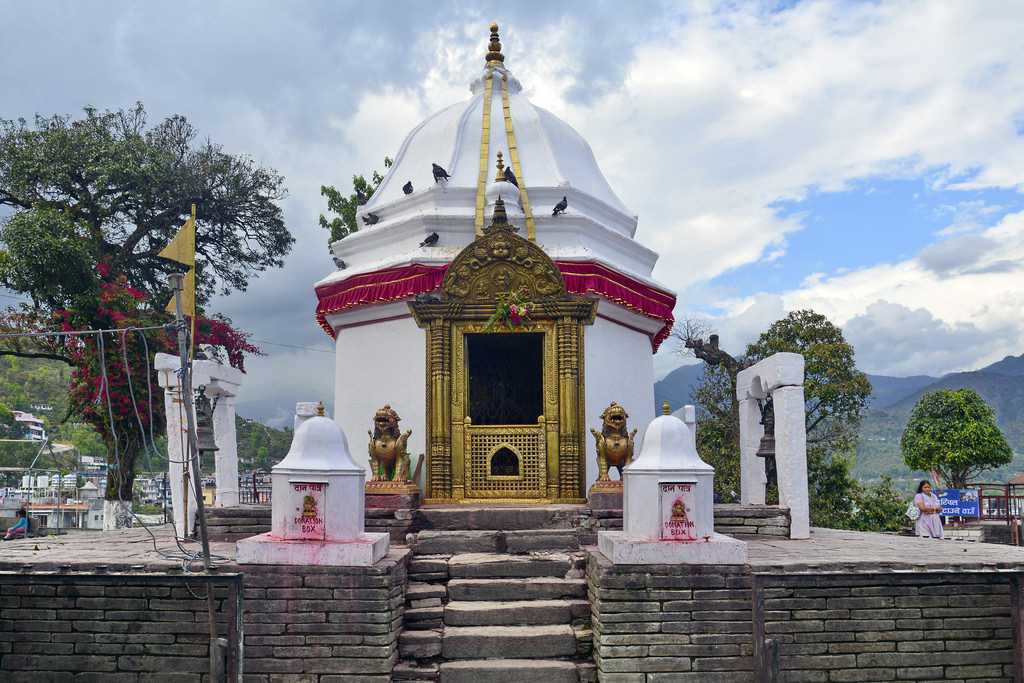
Bindhyabasini Temple is the oldest, most revered, and most historically rooted sacred site in all of Pokhara — the city’s spiritual anchor, the temple from which the Settlementlement of Pokhara grew outward, and the goddess who is understood by the local community to be the guardian deity and protector of the entire valley. Understanding the city’s spiritual geography begins here.
The temple’s origin story blends myth and documented history in the characteristically Nepali way. According to one of the primary accounts, King Siddhi Narayan Shah of Kaski, while on pilgrimage in India, visited the Vindhyachal mountain in Uttar Pradesh. In this region, the original Bindhyabasini (Vindhyavasini) goddess is worshipped. Deeply moved by the goddess’s power, he sent trusted men to retrieve her sacred image and bring it to Pokhara. During the return journey, the bearers made camp on the hillock in what is now the Mohariya Tole area. The following morning, the goddess’s image could not be lifted from the ground — a divine sign universally interpreted in the Nepali religious tradition as the goddess choosing her own abode. The temple was established on that spot, and the goddess has been worshipped there ever since.
An alternative version attributes the foundation to King Khadgaman Malla of Parbat, who had a similar divine directive. Both accounts agree on the essential elements: the goddess’s image was brought from Vindhyachal, India; she chose her own location by becoming immovable; and the Kaski kingdom established her temple on that chosen site. The multiplicity of founding accounts is itself characteristic of major Nepali sacred sites, reflecting the convergence of several devotional communities’ claims to the site’s sanctity over time.
The goddess dwells in the temple not as a sculptural image in the conventional sense but as a Shaligram — a sacred ammonite fossil from the Kali Gandaki River regarded throughout the Hindu tradition as a natural manifestation of Vishnu, and here specifically of the Divine Mother in her fierce aspect. This aniconic, geological form of the divine — older than any human image, shaped by the river and the earth over millions of years — gives the goddess’s presence at Bindhyabasini a quality of primordial authority that no carved idol could replicate.
The Temple Complex
The main Bindhyabasini temple sits on a raised platform surrounded by a park-like compound that includes a remarkable collection of smaller shrines dedicated to the Hindu pantheon: Saraswati (goddess of learning and the arts), Hanuman (the monkey-god of devotion and strength), Shiva (in his Lingam form), Vishnu with Lakshmi, Ganesh (the elephant-headed remover of obstacles), and Jogi Paati — a rest house for wandering ascetics (jogis). On the opposite side of the compound sits the Krishna Mandir, where Krishna Janmashtami (the birthday of Lord Krishna) is celebrated annually with great devotion.
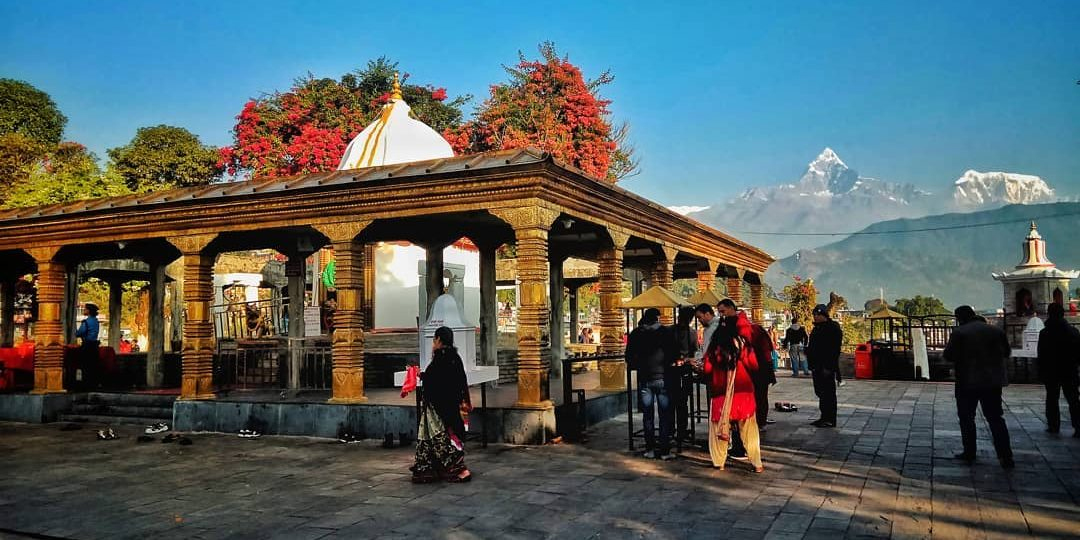
The main white octagonal temple, built in the Shikhara style with a distinctive dome, creates a visually striking contrast with the more common pagoda-style temple architecture found elsewhere in Nepal. The octagonal form — rare in Nepali temple architecture — reflects specific geometric principles associated with Tantric sacred architecture, in which the eight directions of space are understood to require ritual acknowledgment and protection. The golden carved metal gate at the main entrance and the two golden metal lions flanking it are recent additions reflecting the ongoing investment of the local Dharmic committee in the temple’s physical upkeep.
The view from the temple’s elevated hillock encompasses the entire city of Pokhara spread below to the south and east, with Phewa Lake visible in the middle distance, and, on clear mornings, the Annapurna and Machhapuchhre ranges in spectacular proximity to the north. This combination of spiritual power and physical beauty makes Bindhyabasini’s hilltop one of the finest places in Pokhara to pause and understand the city’s relationship with both its sacred geography and its natural setting.
Festivals at Bindhyabasini
The temple is the focal point of Pokhara’s major Hindu festival calendar. The Navaratri (nine nights of the goddess) is celebrated in both Chaitra (spring) and Ashwin (autumn) and is most significant, featuring nine days of continuous Devi Bhagwat Purana recitation, Durga Bali animal-sacrifice rituals, and Havan (sacred fire) ceremonies. Maha Shivaratri draws large crowds to the Shiva shrine within the complex. Teej (the women’s festival in August) fills the temple with red-sari-clad women celebrating marital devotion. Krishna Janmashtami brings festivity to the adjacent Krishna Mandir. Every Saturday — the sacred day of Bhagwati worship in the Nepali tradition — hundreds of devotees arrive from across Pokhara for special puja, and the compound throbs with hymn-singing accompanied by traditional Nepali musical instruments.
Tal Barahi Temple — The Island Goddess of Phewa Lake
Location: A small island at the center of Phewa Lake, accessible by a 10 to 15-minute boat ride from the Lakeside boat ghats
Deity: Goddess Barahi — a two-armed incarnation of Durga, specifically associated with boars and protection from water
Age: Founded by the Kaski Kingdom in the 18th century; reconstructed in its current form circa 1971 CE (2017 BS) under King Mahendra
Architecture: Two-story pagoda-style temple in traditional Newari red brick and timber construction
Boat Fare: NPR 50–100 shared boat; NPR 800–1,000 private boat (2026 rates)
Aarti Timings: 7:00 AM and 6:00 PM daily
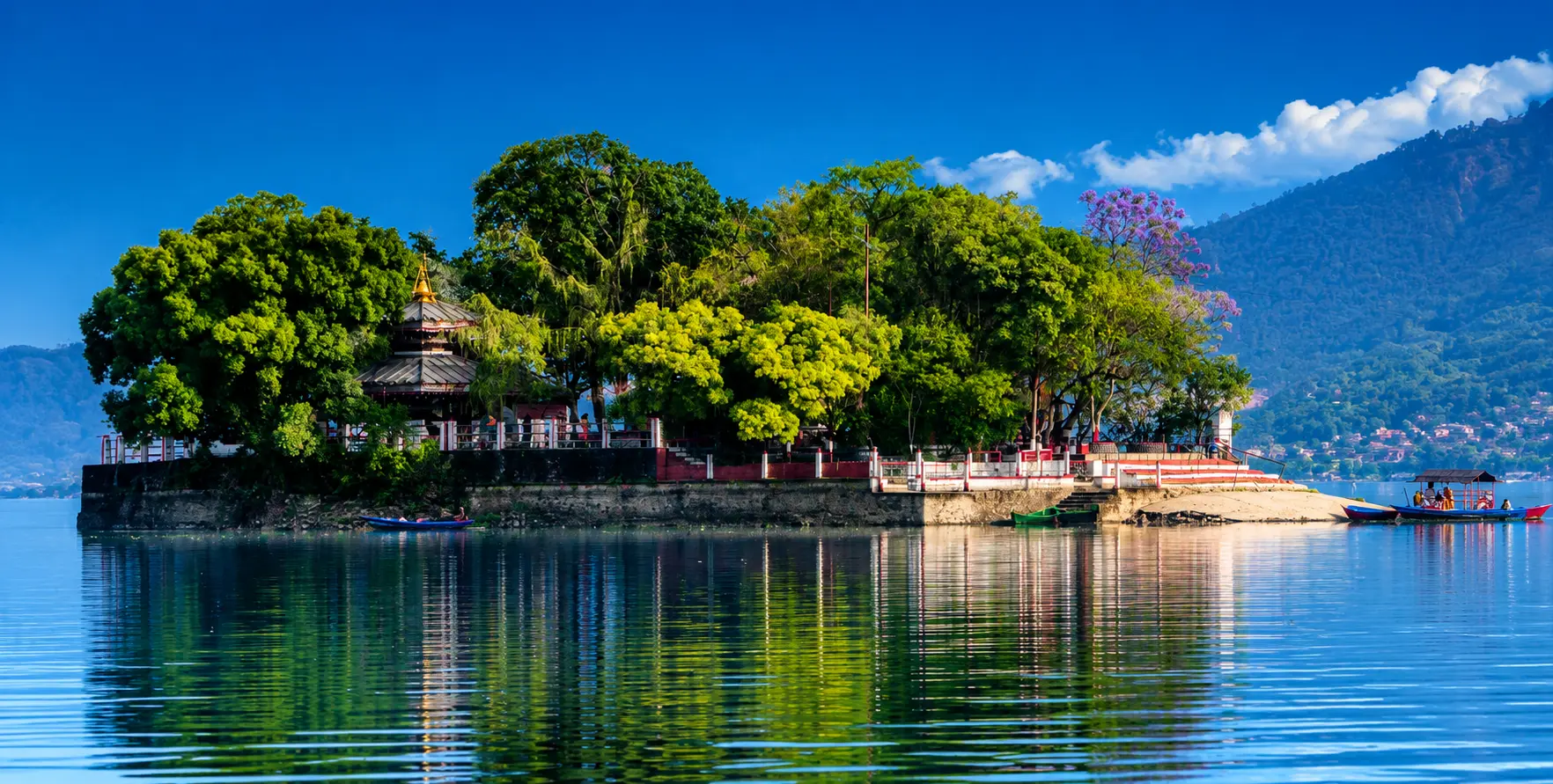
The Tal Barahi Temple — the Lake Barahi Temple — is arguably Pokhara’s most photographed sacred site and one of the most visually distinctive temple settings in all of Nepal. The small island on which it stands, barely large enough for the temple complex and its surrounding trees, rises from the center of Phewa Lake like a divine apparition — the two-story red-brick pagoda roofline silhouetted against the Annapurna range on clear mornings in a composition that has become one of the defining images of Pokhara.
Goddess Barahi is a manifestation of Durga, specifically associated with water and the boar form of Vishnu (the Varaha avatar). Her worship on this lake island reflects a specific geographical theology: a powerful goddess installed at the center of the valley’s largest body of water, ensuring its protection and the safety of those who depend on it. The Kaski kings who established the temple understood that Phewa Lake was the valley’s most important water resource — feeding the surrounding farmland through its outlet streams — and the placement of the goddess at its center was an act of both devotion and practical statecraft.
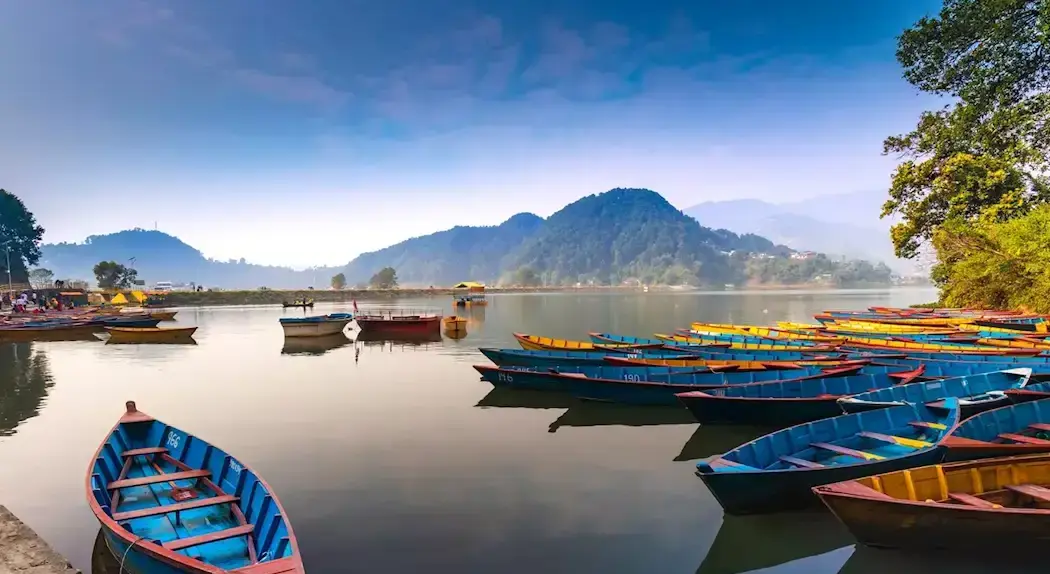
The approach to the temple by boat is itself an essential part of the experience. The 10-to 15-minute row across the lake — in the traditional wooden rowboats that remain the only permitted means of access — allows the temple island to grow gradually from a distant silhouette into a detailed sacred space, with the mountain panorama expanding behind it as you move further from the Lakeside shore. The reflections of the Annapurna range and Machhapuchhre in the lake’s still morning water, seen from a boat at eye level, are among the most beautiful natural sights in western Nepal.
On the island, devotees remove their footwear and climb the carved wooden steps to the main sanctum, where Goddess Barahi is worshipped in both anthropomorphic and symbolic forms. The daily aarti at 7:00 AM — lamp flames, bells, and the scent of incense rising over the lake in the morning light — is one of Pokhara’s most serene and spiritually charged moments. Animal sacrifice, particularly of ducks and goats, is an important element of Barahi worship, especially on Saturdays and during the Dashain festival.
Gupteshwor Mahadev Cave — Shiva’s Hidden Sanctuary
Location: Approximately 2 km west of the Davis Falls viewpoint, Pokhara — near the western end of Phewa Lake
Deity: Lord Shiva in his Mahadev (Great God) form, worshipped within a natural limestone cave system.
Cave Length: Approximately 3 km of documented passages; approximately 300–350 m of the main passage is open to public visit
Entry Fee: NPR 100 for Nepali citizens; NPR 300 for SAARC nationals; NPR 500 for non-SAARC foreign visitors (2025–26 rates)
Opening Hours: Daily, approximately 7:00 AM to 6:00 PM
Gupteshwor Mahadev Cave is Pokhara’s most extraordinary natural sacred site — a limestone cavern system of remarkable geological beauty and profound spiritual significance that extends for approximately 3kilometerss through the hillside above the Pardi stream. The cave’s name is perfectly descriptive: Gupt means hidden, and Eshwor is another name for Shiva. The Hidden Shiva. The sense of encountering the divine in a form that is not immediately visible — present in the darkness of the cave, in the geological formations that devotees read as manifestations of divine energy, in the underground stream that eventually emerges as Davis Falls (Patale Chhango, the Falls of the Underworld) — is precisely what gives Gupteshwor its distinctive spiritual character.
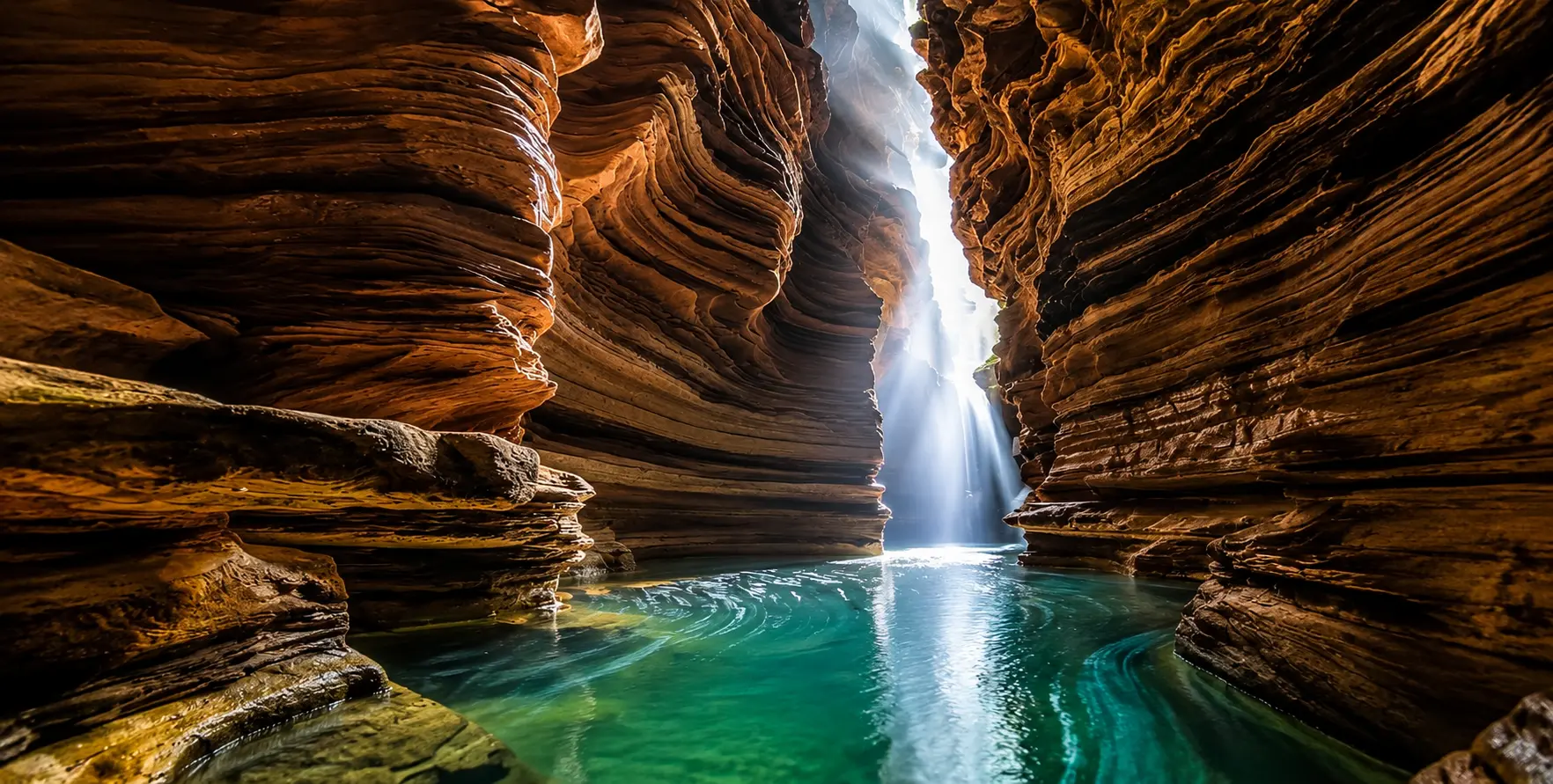
The cave entrance opens at the top of a rocky stairway descending from the road, and the first section is large enough to walk through comfortably before narrowing into passages that require crouching and careful footwork. The geological formations within the cave — stalactites, stalagmites, columns, and flowstones built up by centuries of mineral-laden water dripping through limestone — are illuminated by artificial lighting in the public sections, creating a dramatically beautiful underground landscape of dripping stone and reflected water.
At the deepest publicly accessible point of the cave sits the sacred Shiva Lingam — the primary sacred object of the Gupteshwor shrine — a natural stone formation that has been worshipped as a manifestation of Shiva’s presence since before documented history. The Lingam is perpetually wet from the cave’s interior moisture, a condition regarded as auspicious in Shiva worship — the Lingam is understood to be continuously anointed by the earth itself, requiring no human ritual bathing. Priests conduct daily puja at this deepest shrine, and the combination of the cave’s enclosed acoustics, the incense smoke, the sounds of dripping water, and the lingering darkness makes the experience of worship here profoundly different from any open-air temple.
The connection between Gupteshwor and Davis Falls is one of Pokhara’s most intriguing natural-sacred links. The underground stream that flows through part of the Gupteshwor cave system emerges dramatically at Davis Falls (Patale Chhango). At this underground waterfall, the Pardi stream plunges into a sinkhole, disappears into the earth, and then re-emerges below. From within the Gupteshwor cave, the sound and sight of this underground waterfall can be perceived at the cave’s deepest accessible point — giving the experience of being underground with Shiva a further dimension of natural drama. Maha Shivaratri brings the largest annual pilgrimage crowd to Gupteshwor.
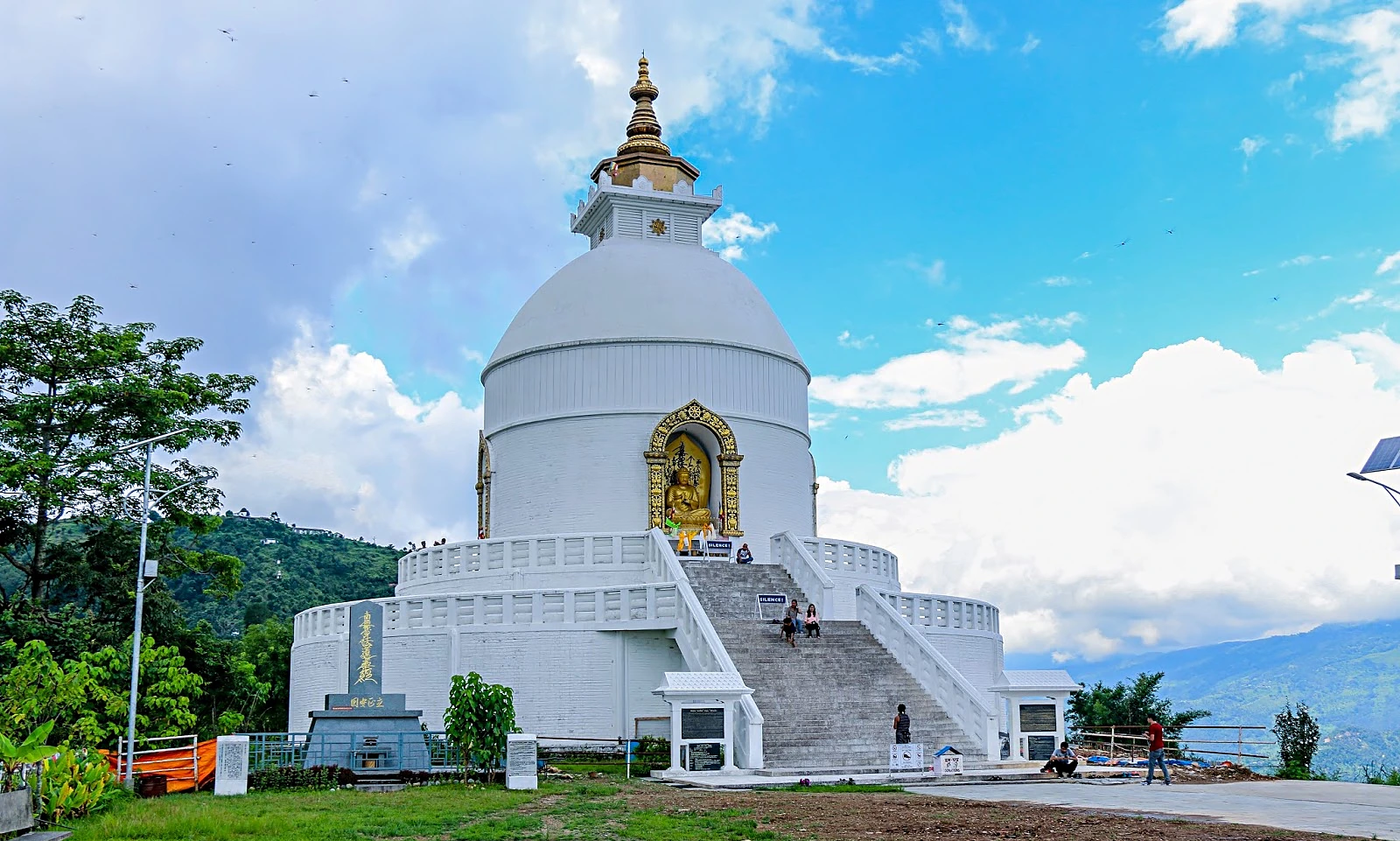
World Peace Pagoda (Shanti Stupa) — Buddhism Over the Lake
Location: Anadu Hill, south of Phewa Lake, at approximately 1,100 m elevation
Type: Shanti Stupa (Peace Pagoda) — one of 80 such pagodas worldwide, and one of two in Nepal
Builder: Nichidatsu Fujii, Japanese Buddhist monk, founder of the Nipponzan-Myohoji order; local Buddhists assisted
Foundation: Foundation laid 1947; construction began 1973; inaugurated October 30, 1999
Approach: Approximately 1 to 1.5-hour hike from Lakeside (steep trail through forest); or vehicle access to a point 30 minutes below the stupa; or short boat ride to the south shore, then hike
Views: 360-degree panorama of Phewa Lake, Pokhara city, and the Annapurna and Dhaulagiri ranges
The World Peace Pagoda on Anadu Hill above the southern shore of Phewa Lake is one of Pokhara’s most architecturally striking landmarks and one of its most significant modern Buddhist sacred sites. This gleaming white stupa stands on a high ridge with a panoramic view encompassing the entire Pokhara valley, the full extent of Phewa Lake, and on the clearest days, the full sweep of the Himalaya from Dhaulagiri in the west to Manaslu in the east.
The Shanti Stupa movement was initiated by Nichidatsu Fujii (1885–1985), a Japanese Buddhist monk of the Nipponzan-Myohoji order who dedicated his life to building Peace Pagodas across the world as physical symbols of the Buddhist aspiration toward non-violence and global peace. Fujii had met Mahatma Gandhi in 1931 and been deeply influenced by his philosophy of non-violent resistance; the Peace Pagodas were conceived as a response to the atomic bombings of Hiroshima and Nagasaki in 1945, embodying the Buddhist vow that such violence should never be repeated. The Pokhara pagoda is one of 80 Shanti Stupas built worldwide by the Nipponzan-Myohoji order.
The stupa itself is a large white dome in the traditional hemispherical form, surmounted by a golden spire (harmika) and encircled at its base by four gilded Buddha images representing the four directions — the birth, Enlightenment, first teaching, and parinirvana of the Buddha. The platform surrounding the stupa provides the finest 360-degree viewpoint in the entire Pokhara valley at its level, combining the spiritual experience of circumambulating a sacred stupa (clockwise, as is the universal Buddhist practice) with one of Nepal’s finest mountain panoramas.
The hike to the pagoda through the forested Anadu Hill is a significant part of the experience for most visitors — a 1- to 1.5-hour ascent through subtropical forest where rhesus macaques are commonly sighted, birds are abundant, and the increasing elevation gradually reveals the Pokhara valley in its full extent below. The sunrise view from the pagoda platform — the Annapurna range turning gold, the lake still dark below, and the first light catching the white dome — is one of the finest possible beginnings to a Pokhara day.
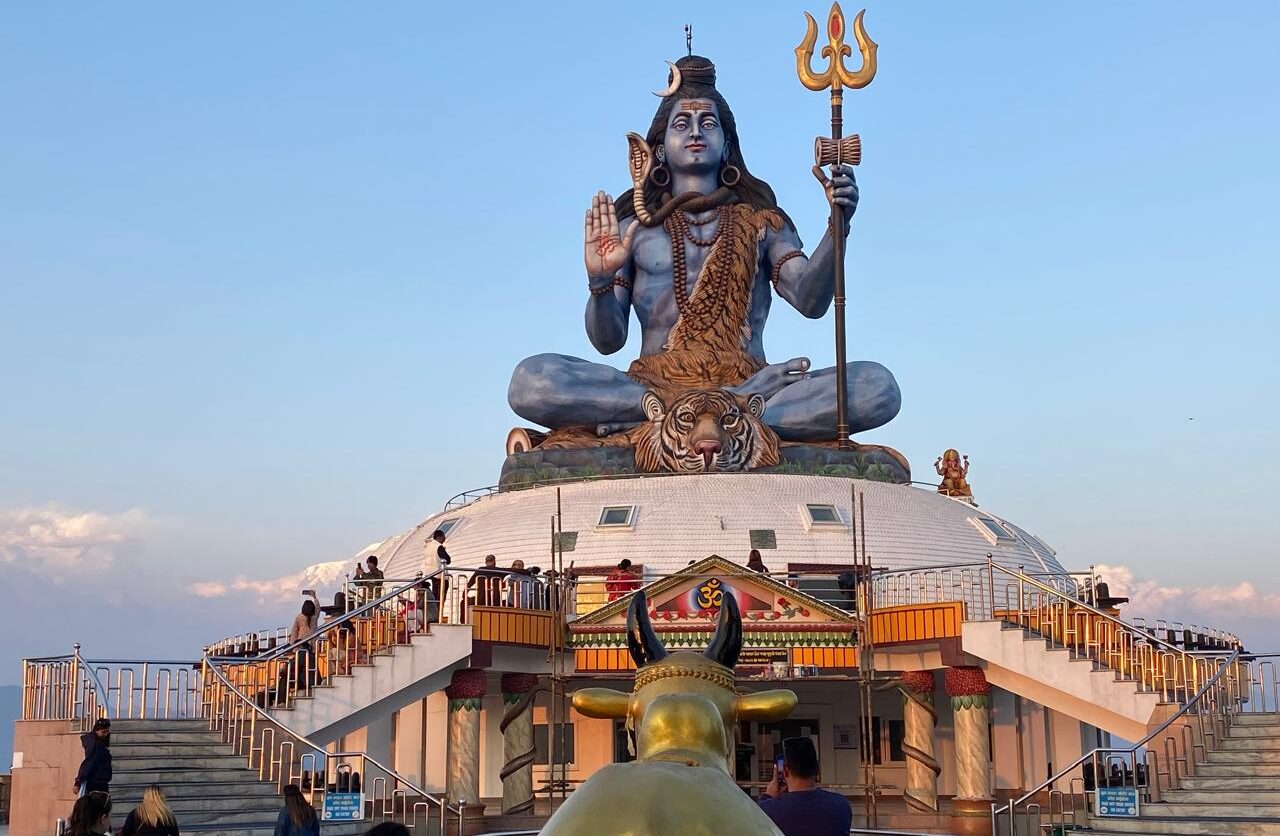
Pumdikot — The Hill of 216 Shiva Lingas and the Giant Shiva
Location: Pumdikot Hill, Pokhara-8, approximately 7 km from central Pokhara
Altitude: Approximately 1,500 m — the highest major sacred site accessible by vehicle in the Pokhara valley
Significance: 216 sacred Shiva Lingas; Shakti Peetha (seat of divine energy); historic Malla, Magar, and Shah dynasty fort and worship site
The Giant Shiva: A 51-meter (167-foot) tall Shiva statue — one of the tallest Shiva statues in the world — was inaugurated in recent years and is visible from across the Pokhara valley.
Pumdikot Hill is one of Pokhara’s most richly layered sacred and historical sites. This high hilltop has served as a military fortification, a Shakti Peetha of concentrated divine energy, a Shiva shrine of ancient origin, and, most recently, the site of one of the world’s tallest Shiva statues, which has transformed Pumdikot into a landmark visible from virtually every point in the Pokhara valley.
The hill’s spiritual identity is defined by its 216 Shiva Lingas — which hold considerable ritual significance in Hindu sacred numerology. The lingas are distributed across the hilltop in a pattern that maps the site’s sacred geography, each an individual object of worship within a larger, integrated devotional landscape. This density of sacred objects gives Pumdikot a quality different from most individual temple sites: it is less a place with a single divine focus and more a sacred environment in which the divine permeates the entire hillside.
The site’s designation as a Shakti Peetha places it in the company of the most powerful divine feminine sacred sites in the subcontinent — points in the landscape where the concentrated energy of the goddess (Shakti) is understood to reside and to be accessible to worshippers in a particularly direct form. During the Malla, Magar, and Shah dynasties, the Bhumeshwor Temple at the summit was the site of specific royal rituals for prosperity and military victory — a practice reflecting the understanding that controlling the high ground meant not only a strategic military advantage but also a spiritual one.
The 51-meter Shiva statue at Pumdikot — seated in a meditative posture, visible from across the valley — is the most recent addition to the site’s sacred landscape and has rapidly become one of Pokhara’s most-visited viewpoints for devotees and general visitors alike. The view from the statue’s base, encompassing the full Pokhara valley, Phewa Lake, the city, and the unbroken Himalayan wall from Dhaulagiri through Annapurna to Manaslu, rivals anything available from Sarangkot and is considerably less crowded. Chaitee Dashain in April and Haritalika Teej in September bring the largest festival gatherings to Pumdikot.
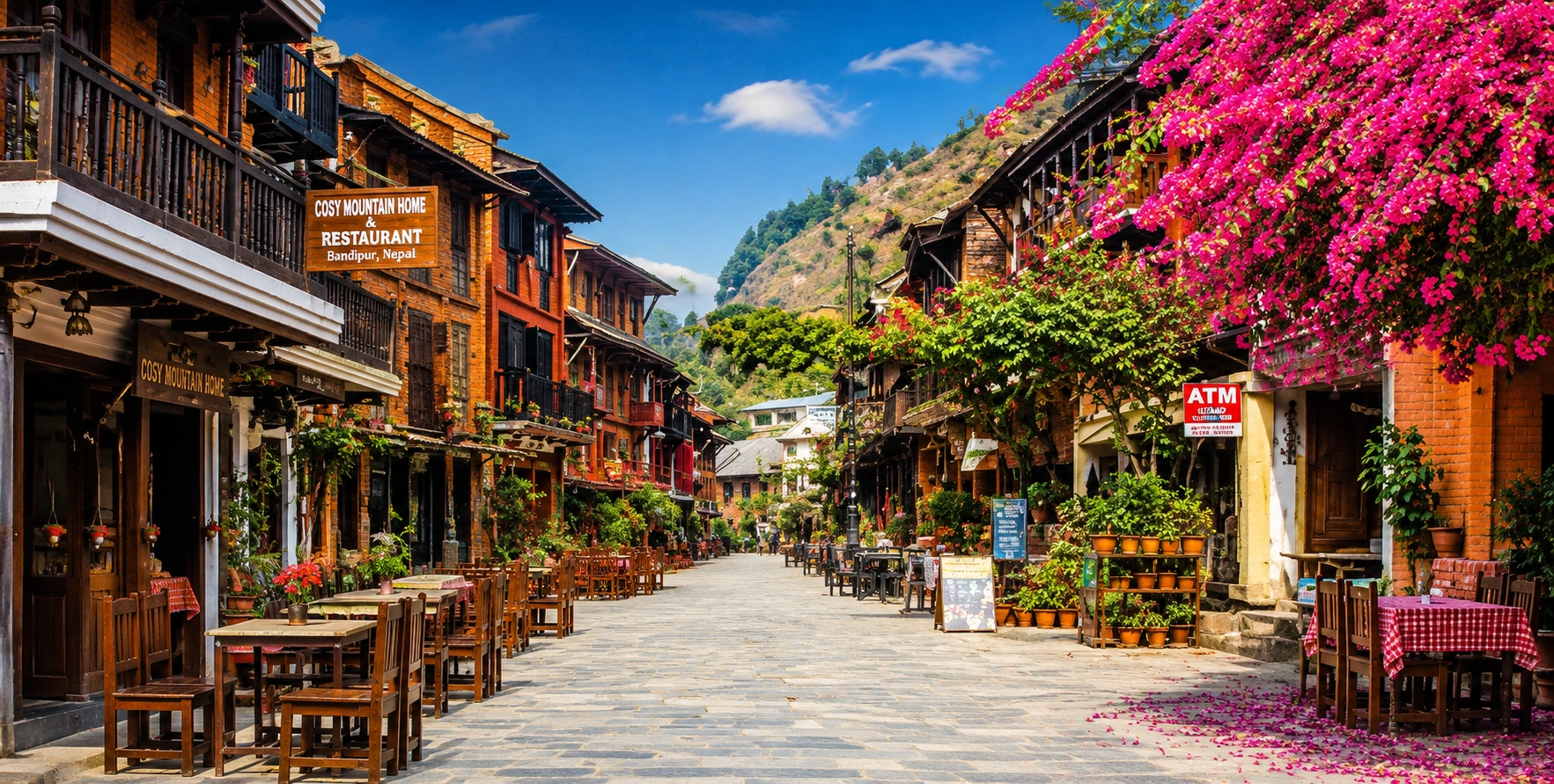
Pokhara Old Bazaar and the Newari Heritage Quarter
The Old Bazaar area of Pokhara — stretching roughly between the Bindhyabasini temple to the north and the Mahendrapul bridge to the south, along what was historically the main trading street — is one of the most historically significant and least tourist-visited areas of the city. The bazaar is not a museum-piece heritage precinct; it is a living market, densely packed with shops selling hardware, textiles, spices, and everyday necessities, whose architectural fabric — stone-paved lanes, multi-story timber-framed houses with carved wooden windows and brick facades — preserves visible echoes of the Newar trading town that occupied this site before the 1949 fire.
The Newar merchant community that settled here from the Kathmandu Valley established Pokhara’s tole as a trade route, bringing with them the commercial organization, the architectural tradition, and the religious practices — including the construction of the Bhasthindeyabasini and Barahi temples, and the institution of the festival calendar — that shaped the pre-modern city. Wandering the Old Bazaar’s lanes, past chaityas (small Buddhist shrines) at street corners, water-spout systems (dhara) fed by traditional underground aquifers, and the workshops of traditional artisans, is a form of historical reading unavailable at any formal heritage site.
Among the specific features of the Old Bazaar worth locating are the traditional Newar courtyard houses (bahal-style compounds with inner courtyards), the Bhimsen Mandir (the patron deity of Newar merchants, whose worship was a commercial institution throughout the Kathmandu Valley trading world), and several smaller shrines associated with specific Newar community festivals that are conducted with complete continuity from the pre-modern period but virtually without outside visitors. The Old Bazaar’s morning market, when fresh vegetables, local cheese (churpi), and Pokhara’s own dried fish from Phewa Lake are sold from street-side stalls, is also one of the most authentic daily-life experiences available in the city.
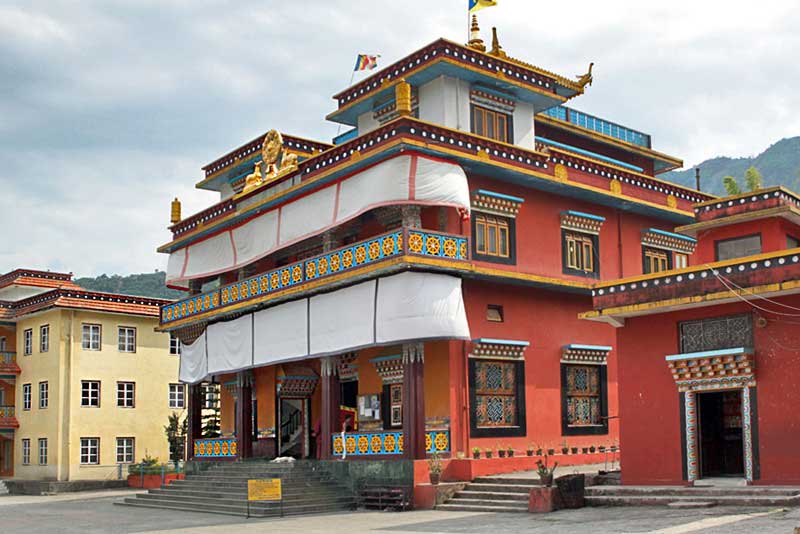
Tibetan Refugee Settlements and Buddhist Monasteries
Pokhara hosts some of Nepal’s largest and most culturally significant Tibetan refugee settlements, established following the Tibetan uprising of 1959 and the subsequent flight of tens of thousands of Tibetans across the Himalayan border into Nepal. The Tibetan communities of Pokhara — concentrated in camps at Tashi Palkhel (Hyangja) and Tashiling (Prithvi Narayan Campus area) — have built vibrant cultural institutions including monasteries, schools, craft workshops, and cultural centers that are today among the finest accessible windows into Tibetan Buddhist culture available anywhere outside Tibet itself.
Jangchub Choeling Monastery
Location: Near the Tibetan Camp, Pokhara
Founded: 1967 CE, under the guidance of Lama Dupsing Rinpoche and with the blessings of His Holiness the 14th Dalai Lama
Jangchub Choeling is one of Pokhara’s most important Tibetan Buddhist monasteries, founded in 1967 by Tibetan refugees who arrived in Nepal following 1959. The monastery contains shrines dedicated to Lord Buddha in multiple forms, including Avalokiteshvara (the bodhisattva of compassion) and Manjushri (the bodhisattva of wisdom), as well as elaborately painted thangkas, ritual implements, and the continuous sound of monks in prayer that fills the surrounding lanes at sunrise.
The most spectacular public event associated with Jangchub Choeling is the Mahakala Dance and Rally observed during Sonam Losar (Tibetan New Year, falling in January or February) in the month of Magh. The Mahakala (Great Black) deity is a fierce protector figure in Vajrayana Buddhism, whose masked dance (Cham) performed by monks in elaborate costumes represents the subjugation of negative forces. The ritual culminates in the burning of a Mahakala effigy, understood to carry away all demons and negative forces affecting the community. This festival draws both Tibetan Buddhists and Hindus — a characteristic Pokhara blending of traditions that would be unimaginable in most other religious contexts.
Tashi Palkhel (Hyangja) Tibetan Settlement
The Tashi Palkhel settlement at Hyangja, approximately 4 km northwest of central Pokhara, is one of the largest and most self-sufficient Tibetan refugee communities in NepalSettlement’sment’s Monastery (Ngyiwa Monastery), schools, carpets and craft workshops, and community cultural centre together form a remarkably complete transplanted Tibetan community — a village of Tibet set within the mid-hills of western Nepal, where the traditional material culture, language, food (butter tea, tsampa, momos), religious practice, and social organization of pre-1959 Tibet are maintained with remarkable fidelity and warmth. Visitors are genuinely welcome; the carpet workshops, in particular, are worth the time, as the traditional Tibetan carpet-weaving technique and wool dyeing can be observed firsthand.
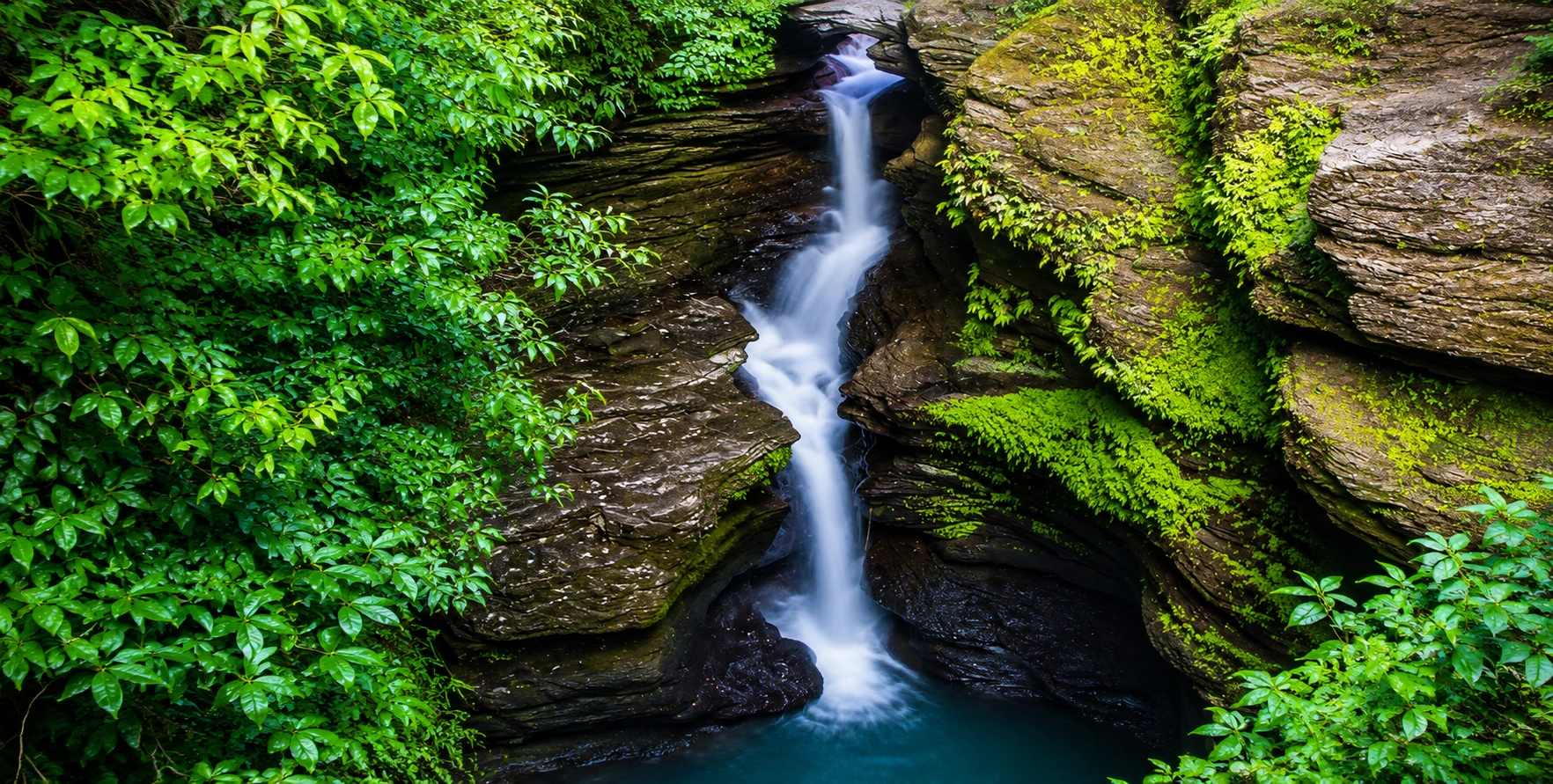
Seti River Gorge and the Sacred Waters
Location: Running through the heart of Pokhara city, the Seti Gandaki River flows in a gorge up to 6meterses deep but only a few meters wide — often completely hidden under the city’s streets and buildings
Sacred Name: Seti means ‘white’ in Nepali — the river carries glacial meltwater from the Annapurna range that is perpetually milky-white from fine glacial sediment
Viewpoints: K.I. Singh Bridge (Khadka Bridge), Mahendrapul Bridge, Ram Ghat, Bagar area gorge viewpoints
The Seti Gandaki River — the White River — is one of Pokhara’s most extraordinary geological and sacred features, and one of its least-publicized attractions. The river flows from the slopes of Annapurna IV and Annapurna II, carrying glacial sediment that gives it a perpetually milky-white coloration — the color of fresh snowmelt, of purification, of the sacred whiteness associated in Hindu iconography with spiritual clarity.
As it enters the Pokhara valley, the Seti Gandaki has carved a limestone gorge of extraordinary dimensions: up to 60 meters deep but in places only 3 to 5 meters wide, it flows largely underground through the city itself, completely invisible from street level except at specific viewpoints where the gorge opens enough to reveal the white water thundering far below.
The Seti’s sacred status in Pokhara’s religious geography is twofold. First, it is a perennial river of glacial origin. This perpetually flowing, never-drying river is a fundamental sacred attribute in the Hindu tradition, associated with the constant flow of divine grace. Second, its milky whiteness is read as inherently purifying — bathing in the Seti is considered especially efficacious for removing ritual impurity, and its banks at Ram Ghat are used for cremation and post-death ritual bathing in a direct parallel to the role of the Bagmati at Pashupatinath in Kathmandu.
The gorge viewpoints, particularly at the K.I. Singh Bridge and the Mahendrapul area reveal something almost supernatural: a narrow crack in the earth, barely distinguishable from a distance, through which the sound of roaring water rises from invisible depths. Looking down into the Seti gorge for the first time is consistently startling — the disproportion between the narrow, almost invisible slot at street level and the dramatic hidden river far below is one of Pokhara’s most memorable natural surprises, made more powerful by the white water’s sacred associations.
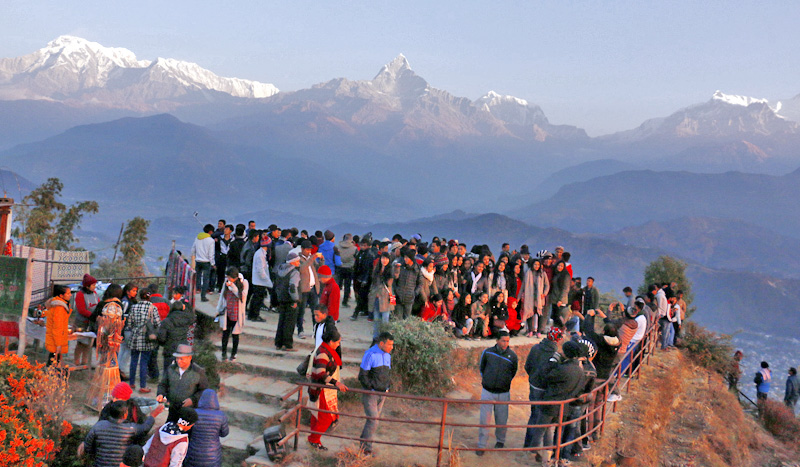
Sarangkot — Historical Fort and Sacred Sunrise Viewpoint
Location: Approximately 5 km northwest of Pokhara Lakeside, 1,592 m elevation
Historical: Site of a Kaski Kingdom fort (kot) — one of the strategic hilltops commanding the Pokhara valley approach
Viewpoint: The most celebrated sunrise viewpoint in western Nepal, with panoramic views of Dhaulagiri, the Annapurna range, and Machhapuchhre
Sarangkot’s fame today rests almost entirely on its reputation as a sunrise viewpoint and paragliding launch site — the ridge from which Pokhara’s most iconic mountain panorama unfolds each clear morning. But Sarangkot was not always a tourist attraction; it was a Kaski Kingdom military fortification, one of the strategic hilltops (kot) from which the Kaski rulers surveyed and controlled the Pokhara valley.
The ruins of the old fort — minimal but visible — remain on the highest point of the Sarangkot ridge, and a small Kali temple at the summit continues to receive devotees who have been making the ascent for reasons of devotion rather than mountain photography for centuries.
The sunrise at Sarangkot is, without exaggeration, one of the finest accessible Himalayan viewpoints in Nepal. The ridge faces directly north toward the Annapurna range, with Machhapuchhre’s distinctive double summit forming the closest major peak at approximately 6,993 m and approximately 25 km distant.
This proximity creates an overwhelming sense of the mountain’s scale in a way that more distant views cannot replicate. At the moment of sunrise, the sequence in which the peaks catch the light — first the highest summits in pale pink, then progressively richer gold and orange cascading down the faces as the sun clears the eastern horizon — is a spectacle of sufficient power to arrest even the most jaded traveler.
Vehicle Hiring Nepal vehicles access Sarangkot via the road from Pokhara to the lower viewpoint, from where the final section is a 10 to 15-minute walk to the summit. For sunrise visits, departures from Lakeside are typically from 5:00 to 5:30 AM, with the vehicle waiting below while the group ascends to the summit for sunrise and returns afterward.
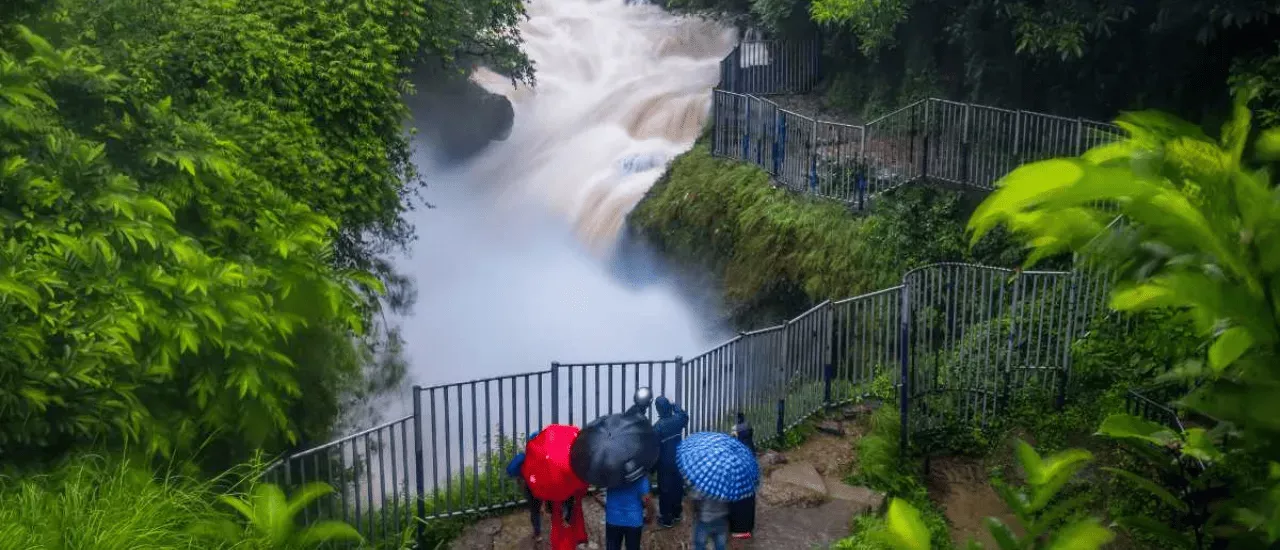
Davis Falls (Patale Chhango) — The Underworld Waterfall
Location: Approximately 2 km southwest of Pokhara airport, on the road toward Gupteshwor Cave
Name Meanings: Patale Chhango = Underworld Waterfall (Nepali); ‘Davis Falls’ = named after Mrs Davis (or David), a Swiss tourist who was swept into the falls in 1961
Season: Most spectacular during and immediately after monsoon (July–September); reduced flow in dry season
Davis Falls — or Patale Chhango, the Underworld Waterfall — is one of Pokhara’s most unusual natural attractions and one of the city’s most distinctive sacred-natural sites. The falls occur where the Pardi stream suddenly plunges into a sinkhole in the limestone bedrock and disappears underground, reappearing below as a subterranean waterfall before flowing through the cave system connected to Gupteshwor Mahadev and eventually re-emerging further downhill.
The disappearance of the water into the earth — its descent into the Patale (the Hindu underworld realm below the surface) — is understood in local sacred geography as a place where the boundary between the visible and invisible worlds is especially thin, and where Shiva’s subterranean presence (in the form of the Gupteshwor Lingam just 200 meters away) is most immediate.
The falls are most dramatic during the monsoon season when the Pardi stream is in full flood — a great roaring volume of water vanishing into the limestone with a sound that reverberates through the surrounding hillside.
In the dry winter months, the flow reduces significantly, but the geological structure — the sinkhole, the underground passage, and the connection to Gupteshwor Cave — remains equally interesting. The paved viewing area allows safe observation of the plunge point, and the signage explaining the geological-hydrological connection to Gupteshwor adds an interpretive dimension to the visit.
Pokhara Regional Museum — Understanding the Valley’s History
Location: Near Prithvi Narayan Campus, central Pokhara
Established: 1960 CE — one of Nepal’s older regional museums
The Pokhara Regional Museum houses a collection of archaeological and ethnographic artifacts from GandakiProvincen, including traditional tools, domestic objects, musical instruments, religious artifacts, costumes, and photographs documenting the pre-modern material culture of the Pokhara valley and its surrounding hill communities. For visitors who want to understand the historical and cultural context of the sites they are visiting across Pokhara, the museum provides an excellent orientation — the Kaski kingdom objects,
the Thakali and Gurung community artifacts, and the documentation of traditional trade-route culture all help explain the deeper history visible at the valley’s temples and ghats. It is often overlooked in favor of more visually dramatic sites, but it rewards a -1 to 2-hour visit for travelers interested in historical depth.
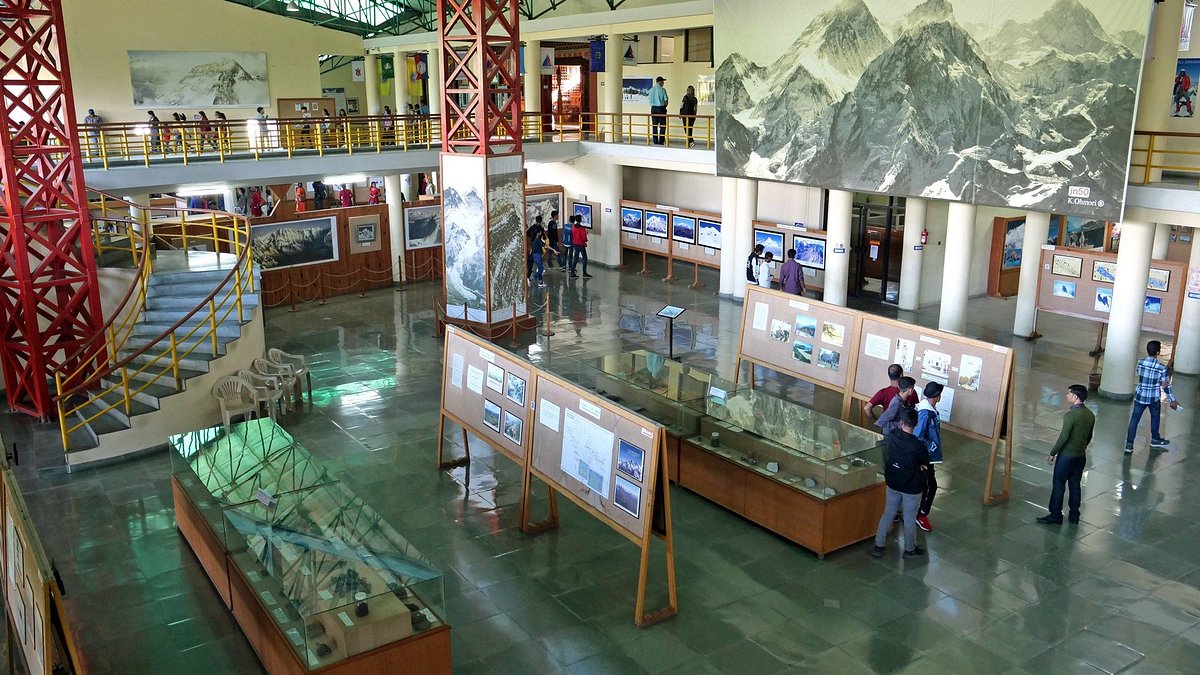
International Mountain Museum — The Highest Peaks on Earth
Location: Pokhara-6 (near the airport), approximately 3 km from Lakeside
Established: 2002 CE
Content: Comprehensive exhibition on the world’s major mountain ranges, Himalayan climbing history, mountain peoples of Nepal, and mountaineering equipment through the ages
The International Mountain Museum is one of Nepal’s finest specialist museums and one of the most visited cultural attractions in Pokhara — a comprehensive celebration of the Himalayan world, its mountains, its peoples, and the remarkable history of high-altitude mountaineering. The museum covers the geology of the Himalaya (formed by the collision of the Indian and Eurasian tectonic plates approximately 50 million years ago), the history of Himalayan exploration and climbing including the 1953 first ascent of Everest and subsequent ascents of all fourteen 8,000-metre peaks, and the traditional cultures of the mountain communities — Sherpa, Gurung, Tamang, Thakali, and others — whose identity is inseparable from the great peaks among which they have lived for centuries.
For visitors to Pokhara who will trek into the Annapurna region, the museum provides an invaluable contextual foundation — understanding the geological history, the cultural significance, and the physical demands of the mountains they are about to enter adds dimensions of meaning to the trek that pure physical preparation cannot supply. The large-scale models of the major peaks, the exhibits on indigenous mountain spirituality (including the roles of deities and sacred sites in Himalayan communities), and the documentation of expedition history are all well presented and well translated into English.
Devis Fall, Seti Gorge and Gupteshwor — The Sacred Triangle
The area immediately west of Pokhara’s airport — within a radius of about 1 to 2 km — contains three of the city’s most distinctive natural-sacred sites: Gupteshwor Mahadev Cave, Davis Falls (Patale Chhango), and the Seti Gorge viewpoints. These three sites are geologically and spiritually interconnected in a way that makes visiting them as a single circuit deeply rewarding.
The geological connection: the Pardi stream disappears at Davis Falls into the limestone sinkhole, flows underground through the limestone, passes (audibly and visibly at one point) through the Gupteshwor cave system where the Shiva Lingam is enshrined, and eventually re-emerges as part of the Seti Gandaki’s contribution to the Pokhara valley’s hydrology. Water that you see disappearing at Davis Falls, in other words, flows past the feet of Shiva’s sacred Lingam before re-emerging downstream.
The sacred reading of this geology is clear: the water descends into the underworld (Patale), passes through Shiva’s hidden domain (Gupteshwor), and re-emerges purified as part of the sacred Seti — the White River. It is a complete sacred hydrological cycle, comprehensible once you understand the underlying geology, and deeply meaningful within the framework of Shaiva sacred geography in which Shiva is associated with rivers (the Ganga flows from his hair), with caves and mountains, and with the underground as much as with the sky.
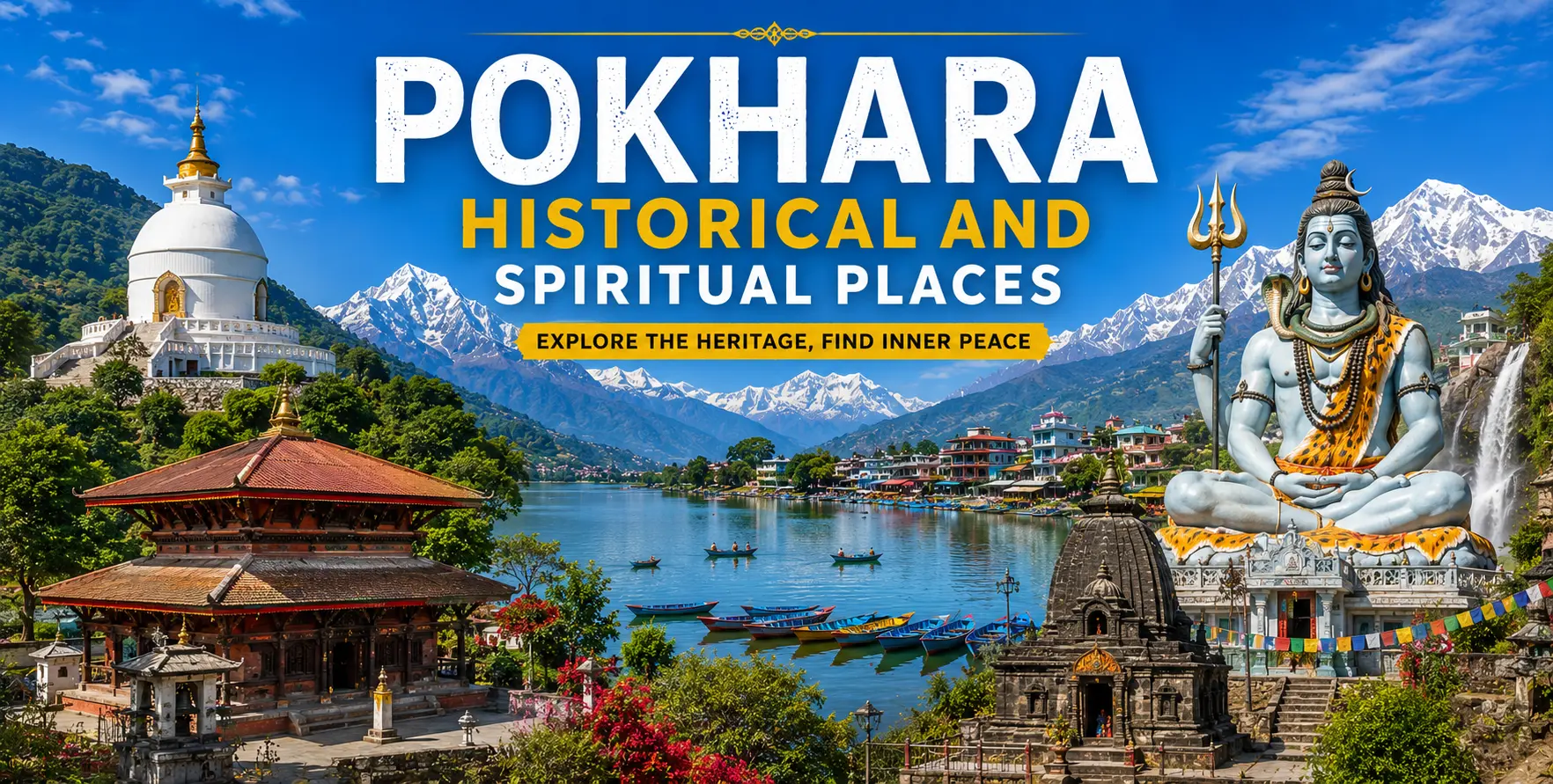
Getting Around Pokhara’s Historical and Spiritual Sites by Private Vehicle
Pokhara’s historical and spiritual sites are spread across a valley approximately 10 to 15 km in extent from east to west and north to south. While some sites — Bindhyabasini, the Old Bazaar — are walkable from central Lakeside, others require meaningful travel: Pumdikot is 7 km and 1,500 m elevation from the city center; the Tibetan settlements are 4 km northwest; the World Peace Pagoda requires either a 1.5-hour hike or a multi-vehicle approach; and combining multiple sites in a single day without a vehicle is impractical.
A private vehicle from Vehicle Hiring Nepal is the most efficient and comfortable way to combine Pokhara’s diverse historical and spiritual sites in a single half-day or full-day circuit:
| Site | Distance from Lakeside | Time Required | Best For |
| Bindhyabasini Temple | 3 km north | 45–60 min | All visitors — oldest temple, city views |
| Old Bazaar | 3.5 km north | 45–90 min | Cultural/historical interest |
| Tal Barahi Temple | Boat from Lakeside Ghat | 45–90 min | Temple + lake experience |
| Gupteshwor Cave | 8 km southwest | 60–90 min | Sacred cave, geology, Shiva worship |
| Davis Falls | 8 km southwest | 20–30 min | Natural sacred site, near Gupteshwor |
| World Peace Pagoda | 9 km (then 30 min walk) | 2–3 hrs | Buddhism, panoramic views |
| Pumdikot (Giant Shiva) | 7 km, 1,500 m alt | 1.5–2 hrs | Shiva shrine, best valley panorama |
| Sarangkot | 5 km northwest | 2–3 hrs (sunrise) | Sunrise, Fort history, mountain views |
| Tibetan Camps (Hyangja) | 4 km northwest | 1–2 hrs | Tibetan Buddhist culture, carpets |
| International Mountain Museum | 3 km from Lakeside | 1.5–2 hrs | Mountain history, Himalayan culture |
| Seti River Gorge | 2–4 km (multiple points) | 30–45 min | Sacred river, geological wonder |
| Pokhara Regional Museum | 3 km central | 1–2 hrs | Historical context, valley culture |
Sample Itineraries for Pokhara’s Historical and Spiritual Sites
Half-Day Circuit (4–5 Hours) — Core Sacred Sites
- 8:00 AM: Bindhyabasini Temple — morning puja atmosphere at Pokhara’s oldest temple, panoramic city views from the hilltop
- 9:00 AM: Old Bazaar — walk the historic lanes, Bhimsen Mandir, traditional Newar architecture
- 10:00 AM: Seti River Gorge viewpoint at Mahendrapul or K.I. Singh Bridge — the hidden sacred river
- 10:30 AM: Drive to Gupteshwor Cave — underground Shiva sanctuary, geological marvel
- 11:30 AM: Davis Falls (Patale Chhango) — the underworld waterfall
- 12:00 PM: Return to Lakeside — lunch at Lakeside Restaurant
- Afternoon: Optional boat ride to Tal Barahi Temple for the 6:00 PM evening aarti
Full Day: Pokhara Sacred Sites and Panoramic Viewpoints
- 5:00 AM: Depart Lakeside for Sarangkot — sunrise over the Annapurna range from the historic fort ridge
- 7:30 AM: Return to Lakeside — breakfast
- 9:00 AM: Bindhyabasini Temple morning visit — Saturday puja if available, otherwise quieter weekday atmosphere
- 10:00 AM: Old Bazaar cultural walk
- 11:00 AM: Drive to Pumdikot — 216 Shiva Lingas, Shakti Peetha, giant Shiva statue, finest valley panorama
- 1:00 PM: Lunch at Pumdikot area restaurant or return to Lakeside
- 2:30 PM: Gupteshwor Mahadev Cave and Davis Falls circuit
- 4:00 PM: Boat to Tal Barahi Temple — on the lake for sunset light, attend the 6:00 PM aarti
- 6:30 PM: Return to Lakeside
Cultural Full Day: Tibetan Monasteries and Buddhist Pokhara
- 8:00 AM: Tashi Palkhel (HyangTiSettlementment — monastery, carpet workshop, cultural center
- 10:30 AM: Jangchub Choeling Monastery — Buddhist shrines, thangkas, monks in prayer
- 12:00 PM: Lunch at a Tibetan restaurant in the settlement area
- 2:00 PM: World Peace Pagoda — boat to south shore, hike to stupa (1 to 1.5 hrs), panoramic views
- 4:30 PM: Tal Barahi Temple by boat for the evening aarti
- 6:30 PM: Return to Lakeside

Kathmandu to Pokhara by Private Vehicle — Connecting the Two Cities
Most visitors to Pokhara’s historical and spiritual sites arrive from Kathmandu. Vehicle Hiring Nepal provides all vehicle types for the Kathmandu to Pokhara transfer — the natural gateway to Pokhara’s cultural landscape:
| Vehicle | Capacity | KTM → Pokhara One-Way | Travel Time | Best For |
| Sedan Car | 1–3 pax | USD 80–110 | 5–6 hrs | Couples, solo |
| SUV / Fortuner | 4–5 pax | USD 110–145 | 5–6 hrs | Small families |
| Toyota Hiace Van | 7–14 pax | USD 130–170 | 5–6 hrs | Groups, pilgrimages |
| Coaster Bus | 15–22 pax | USD 175–230 | 6–7 hrs | Large groups |
| Tourist Bus | per seat | USD 10–30/person | 7–8 hrs | Solo, budget |
The Kathmandu to Pokhara road via the Prithvi Highway passes Manakamana Temple’s cable car base station at Kurintar — a natural en-route pilgrimage stop for groups heading to Pokhara with a spiritual itinerary.
Best Time to Visit Pokhara’s Historical and Spiritual Sites
October to November — Peak Season, Finest Mountain Views
Post-monsoon clarity reveals the Annapurna range in full sharpness from every viewpoint, from Sarangkot to Pumdikot. Dashain (October) fills Bindhyabasini and Tal Barahi with devotees and the festive atmosphere of Nepal’s greatest celebration. The weather is crisp and cool, ideal for the Pumdikot and World Peace Pagoda hikes.
December to February — Clear and Quiet
Maha Shivaratri (February) brings large crowds to Gupteshwor Mahadev and Bindhyabasini. Sonam Losar (January–February) brings the Mahakala Dance festival at Jangchub Choeling Monastery — one of Pokhara’s finest cultural events. Mountain views in December and January are often at their sharpest of the year.
March to May — Spring Rhododendron Season
Spring is excellent for all Pokhara activities. The World Peace Pagoda hike and Pumdikot approach are beautiful with blooming rhododendrons. Pre-monsoon morning mountain views are superb before afternoon haze builds. Teej in August-September brings a major surge of women’s festival activity to Bindhyabasini.
Monsoon (June to September)
Davis Falls and the Seti Gorge are at their most dramatic in monsoon floods. The lake and valley are intensely green. However, mclouds,d obscure mountain views and the World Peace Pagoda hike becomes slippery. The sacred sites themselves are fully operational year-round.
Practical Tips for Visiting Pokhara’s Sacred Sites
- Dress modestly at all temple sites — covered shoulders and knees; remove footwear before entering any temple structure. re
- Saturday is the most auspicious and most crowded day at Bindhyabasini and Tal Barahi — expect large local crowds aan nd intense devotional atmosphere; plan accordingly.
- For Tal Barahi, take the boat early in the morning (7:00–8:30 AM) for the morning aarti and the finest lake light; the Annapurna range reflected in the morning lake is unmatched.d
- For Gupteshwor Cave, wear closed shoes — the cave passages are uneven and damp; avoid white or light clothing as the cave walls are occasionally wet with mineral deposits.
- For Sarangkot sunrise, arrive at the viewpoint 20 to 30 minutes before the scheduled sunrise time — the pre-dawn approach in darkness is part of the experience.n ce
- For the World Peace Pagoda hike, carry water and wear sun protection — the upper sections are fully exposed; hire a local guide for the forest trail if unfamiliar with the route.
- The Tibetan settlements welcome visitors to their monasteries and workshops, but photograph monks and religious rituals only with permission — these are active religious communities, not tourist attractions .ctions
- Carry NPR cash for entry fees, boat fare, temple donations, and small purchases — card payments are rarely available at sacred sites.s

How to Book Your Pokhara Historical and Spiritual Tour Vehicle
- Contact Vehicle Hiking Nepal via WhatsApp at +977 9851013196 or visit vehiclehiringnepal. com. Please tell us your current location — Kathmandu (we arrange Kathmandu-to-Pokhara transfer + local Pokhara vehicle) or already in Pokhara.a
- Confirm your group size and preferred sacred sites itinerary
- Specify any festival or early-morning timing requirements (Sarangkot sunrise, Bindhyabasini Saturday puja)
- Receive booking confirmation with driver details and vehicle information
WhatsApp: +977 9851013196
Email:[email protected]
Frequently Asked Questions
Which is the oldest temple in Pokhara?
Bindhyabasini Temple is the oldest temple in Pokhara, with more than 300 years of documented history, established by the Kaski Kingdom in the 17th century. The goddess’s image was brought from Vindhyachal in Uttar Pradesh, India, and the temple was established at its current location in the Mohariya Tole area of the Old Bazaar after the goddess’s image became immovable at that spot — interpreted as a divine sign indicating her chosen abode.
How do you reach Tal Barahi Temple on Phewa Lake?
Tal Barahi Temple is located on a small island in the middle of Phewa Lake and can only be reached by boat. Boats depart from the main boat ghats at Lakeside (Baidam) continuously during daylight hours. A shared boat costs approximately NPR 50-100 per person for the 10-15-minute crossing; a private boat costs approximately NPR 800-1,000. The morning aarti at 7:00 AM and the evening aarti at 6:00 PM are the most spiritually significant times to visit.
Is the World Peace Pagoda accessible by vehicle?
The World Peace Pagoda is not fully accessible by vehicle — the final section requires a 30-minute hike from the vehicle access point, or approximately 1 to 1.5 hours from the lake shore if approaching by boat and trail. Vehicle Hiring Nepal drives you as close as the road allows, and the driver waits below while you complete the walk to the pagoda and back. The combinedboat-and-traill approach from the south shore of Phewa Lake is the most scenic option.
What is the best time of day to visit Bindhyabasini Temple?
The early morning — particularly between 5:30 and 8:00 AM — is the finest time for a Bindhyabasini visit. The Nitya Puja begins at 4:00 AM, and by 5:30 AM the temple is active with morning worship in the most contemplative atmosphere of the day, before tourist groups arrive and before the market around the base of the hill becomes noisy. Saturday mornings are the most devotionally intense but also the most crowded.
How far is Pumdikot from Pokhara and how do you get there?
Pumdikot Hill is approximately 7 km from central Pokhara at an altitude of approximately 1,500 m. A private vehicle from Vehicle Hiring Nepal takes you to the Pumdikot parking area at the base of the final ascent, from where the giant Shiva statue, the 216 Shiva Lingas, and the Shakti Peetha viewpoint are a short walk away. The drive takes approximately 20 to 30 minutes from Lakeside. Pumdikot is one of the most rewarding single-site visits in the Pokhara valley for the combination of spiritual significance and panoramic views.
Can the historical and spiritual sites be combined with adventure activities in Pokhara?
Yes — this combination is one of the most rewarding ways to experience Pokhara fully. A typical Pokhara day might begin with Sarangkot sunrise (fort history + mountain views), continue with a temple circuit (Bindhyabasini, Old Bazaar, Gupteshwor), and close with an afternoon paragliding session from Sarangkot before the Tal Barahi evening aarti on the lake. Vehicle Hiring Nepal provides transport for the sacred and historical portions of the day, while adventure operators handle paragliding arrangements — we coordinate vehicle timing with your activity schedule.
Final Thoughts
Pokhara’s identity as a world-class adventure travel and mountain-view destination is entirely deserved — but it is not the whole story of what this city is and has been. The Bindhyabasini temple that anchors the Old Bazaar has been receiving pilgrims and merchants for three centuries, since long before the first trekking permit was ever issued. The Tal Barahi temple on its lake island was being worshipped during the Kaski kings’ era and into the Shah period before the first international traveler ever arrived in Nepal. Gupteshwor’s sacred Lingam has been offered daily puja in its underground darkness since before written record. These ancient devotional traditions do not compete with Pokhara’s modern identity as an adventure hub; they deepen and enrich it, giving the city a cultural and spiritual substance that no mountain view alone can provide.
For visitors willing to move beyond the Lakeside promenade and the sunrise-view tower, and for pilgrims who understand that Pokhara is as much a sacred landscape as a scenic one, the city’s historical and spiritual sites offer an entirely different and deeply satisfying Nepal experience — accessible, authentic, and profoundly connected to the living religious and cultural traditions that make Nepal one of the great spiritual destinations on earth.
Vehicle Hiring Nepal provides reliable, comfortable, and expert-guided private vehicle transport for the full range of Pokhara’s historical and spiritual sites, from Kathmandu to Pokhara and throughout the city’s sacred geography. Book your Pokhara cultural tour vehicle today. WhatsApp: +977 9851013196 | Website: www.vehiclehiringnepal.com
- Pokhara Historical and Spiritual Places – The Complete 2026 Travel and Transport Guide
- Pokhara and the Kaski Kingdom — A Historical Foundation
- Bindhyabasini Temple — Pokhara's Oldest and Most Sacred
- Tal Barahi Temple — The Island Goddess of Phewa Lake
- Gupteshwor Mahadev Cave — Shiva's Hidden Sanctuary
- World Peace Pagoda (Shanti Stupa) — Buddhism Over the Lake
- Pumdikot — The Hill of 216 Shiva Lingas and the Giant Shiva
- Pokhara Old Bazaar and the Newari Heritage Quarter
- Tibetan Refugee Settlements and Buddhist Monasteries
- Seti River Gorge and the Sacred Waters
- Sarangkot — Historical Fort and Sacred Sunrise Viewpoint
- Davis Falls (Patale Chhango) — The Underworld Waterfall
- Pokhara Regional Museum — Understanding the Valley's History
- International Mountain Museum — The Highest Peaks on Earth
- Devis Fall, Seti Gorge and Gupteshwor — The Sacred Triangle
- Getting Around Pokhara's Historical and Spiritual Sites by Private Vehicle
- Sample Itineraries for Pokhara's Historical and Spiritual Sites
- Kathmandu to Pokhara by Private Vehicle — Connecting the Two Cities
- Best Time to Visit Pokhara's Historical and Spiritual Sites
- Practical Tips for Visiting Pokhara's Sacred Sites
- How to Book Your Pokhara Historical and Spiritual Tour Vehicle
- Frequently Asked Questions
- Final Thoughts

Related Blog & Articles

ACAP Permit – The Annapurna Conservation Area Entry Pass: Complete Guide

4WD Himalayan Jeep in Nepal

Car Hire in Nepal – Complete Guide for Travelers

Hiace Hire in Nepal