Plan a Trip


Ramechhap Airport Transfer
Ramechhap Airport Transfer: Private Vehicle Service 2026/27 — Kathmandu to Manthali
Something remarkable happened to the Everest trekking world in the early 2020s, and its ripple effects are still reshaping how travelers from across the globe begin their journey to the highest mountain on Earth.
The Civil Aviation Authority of Nepal made a landmark policy decision: during the peak trekking seasons of spring and autumn — when demand for Lukla flights reaches its annual maximum, and Kathmandu’s Tribhuvan International Airport is already managing complex international traffic — regular Lukla flights would be redirected from Kathmandu to Manthali Airport in Ramechhap District.
For hundreds of thousands of trekkers heading to Everest Base Camp, Gokyo Lakes, Everest Three Passes, and the broader Khumbu region, this decision added a new first step to every Himalayan adventure: the drive from Kathmandu to Ramechhap, 130 to 135 kilometers to the east, through the BP Highway corridor and the scenic Tamakoshi River valley.
Today, the Ramechhap airport transfer has become one of Nepal’s most frequently booked and most logistically consequential vehicle hire services. During the peak seasons of April to May and mid-September to November — the two windows when Manthali Airport handles what is reported to be approximately 85 flights daily — thousands of trekkers make the pre-dawn drive from Kathmandu to Ramechhap every morning.
The shared vehicles departing Thamel at 2:00 AM, the private cars and jeeps booked weeks in advance by travellers who understand the consequences of missing a Lukla flight, and the Hiace vans carrying trekking groups of eight to fifteen people — all of these form a nightly convoy of Everest-bound adventurers threading through Nepal’s dark pre-dawn road network toward an airport that, a few years ago, most international visitors had never heard of.
This guide from Nepal Vehicle Hiring Pvt Ltd covers everything a traveler needs to know about the Ramechhap airport transfer in 2026 and 2027 — the route, the vehicles, the costs, the timing, and the specific advantages of a professional private transfer service over the shared alternatives that this route’s economics make available.
Understanding why the Ramechhap diversion was implemented helps travelers approach this new logistics element with acceptance rather than frustration. Kathmandu’s Tribhuvan International Airport operates under significant congestion during peak trekking seasons, with international wide-body aircraft, domestic turboprops, helicopter operations, and the small STOL (Short Takeoff and Landing) aircraft used for the Lukla route all competing for limited runway time and airspace slots.
By relocating Lukla flights to Ramechhap’s dedicated single-purpose facility, the Civil Aviation Authority of Nepal created a system where Manthali Airport focuses entirely on Lukla operations — eliminating the priority conflicts with international flights that caused many Kathmandu-to-Lukla delays, and providing trekkers with a more reliable, less interrupted flight operation than the Kathmandu departure point could offer.
The 4 to 5 hour road journey to reach this more reliable airport is, for most trekkers, a genuinely worthwhile trade for the improved flight reliability that Manthali’s dedicated operation provides.
Understanding Ramechhap / Manthali Airport: Key Facts
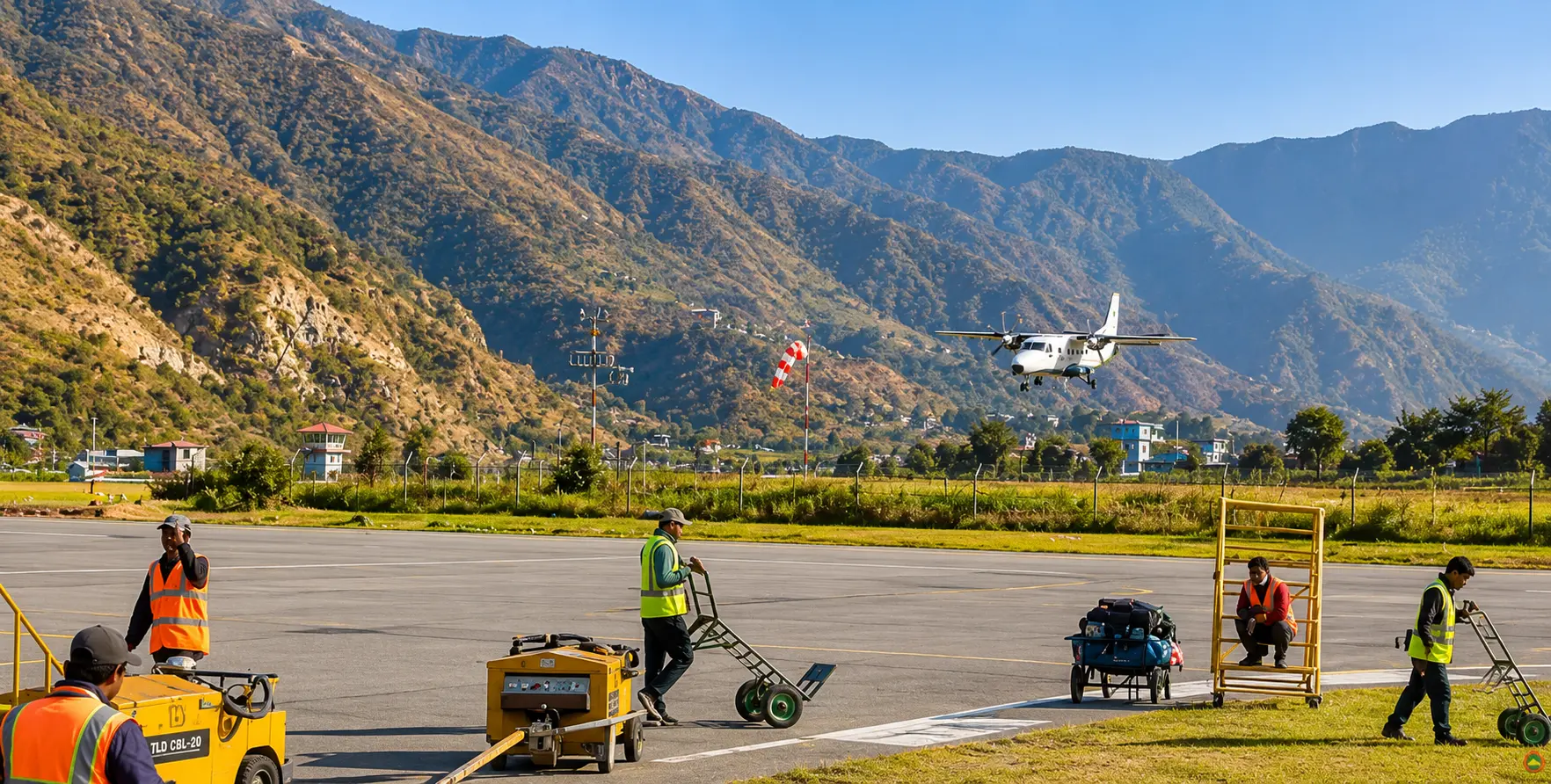
Manthali Airport, officially designated Ramechhap Airport and also referred to by the name of its host town Manthali (the administrative headquarters of Ramechhap District), sits in the Tamakoshi River valley at an elevation of just 474 meters above sea level — considerably lower than Kathmandu at 1,400 meters, a fact that creates a pleasantly warm microclimate for the early morning airport experience compared to the cool conditions of the capital at the same pre-dawn hour.
The airport’s runway is oriented along the river valley. The sight of small STOL aircraft taking off from this compact facility with the first light of dawn touching the surrounding hills is one of Nepal’s more characterful aviation experiences. At the same time, trekkers lining up on the short apron is one of Nepal’s more characterful aviation experiences — nothing like the impersonal efficiency of a major international terminal, but possessed of a certain adventurous energy that feels entirely appropriate as the starting point of a Himalayan expedition.
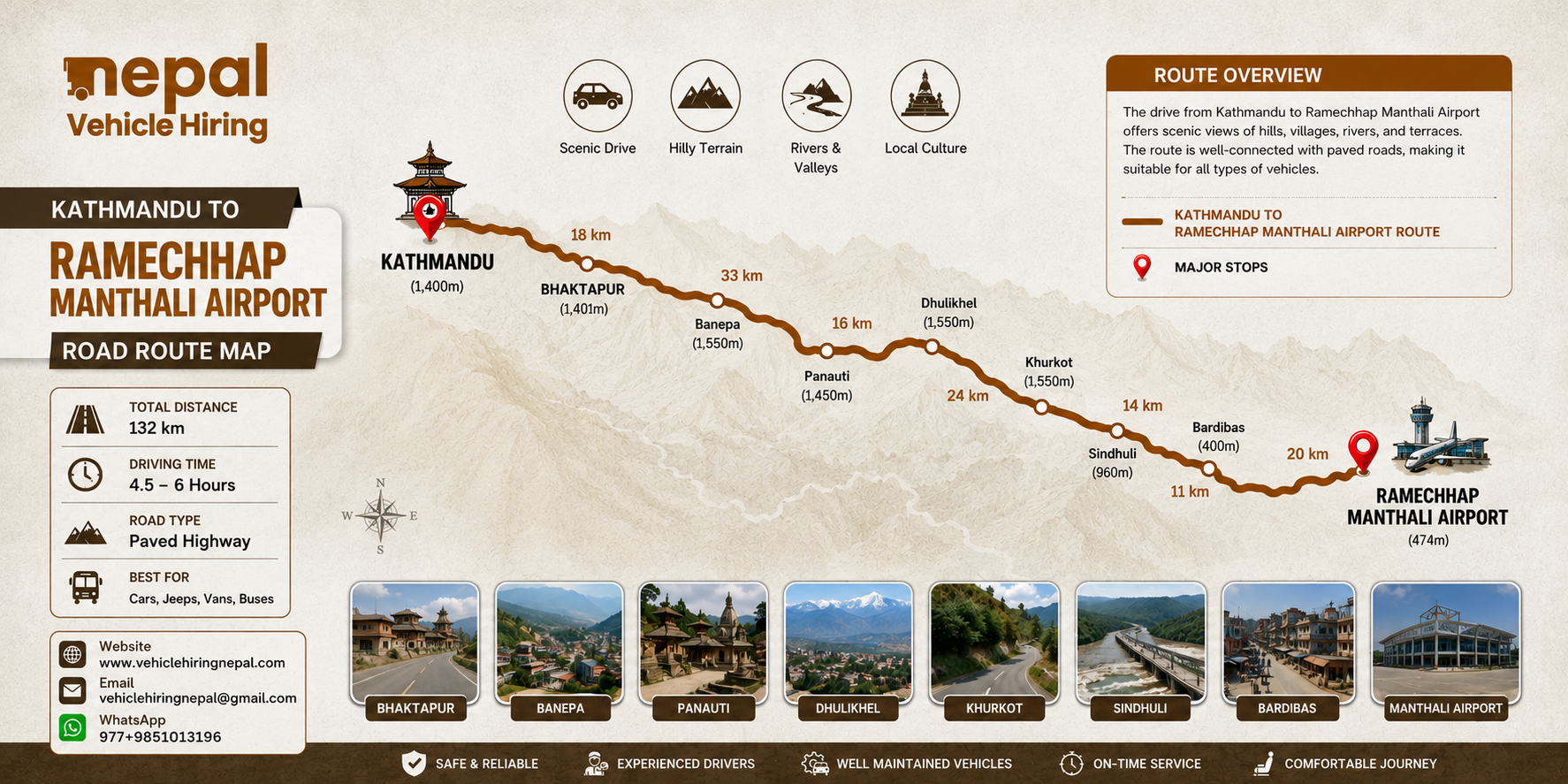
The distance from Kathmandu to Ramechhap Airport is consistently cited across multiple authoritative sources as 130 to 135 kilometers via the BP Highway — specifically following the route Kathmandu → Banepa → Nepalthok → Khurkot → Manthali. This route is entirely on the BP Highway (Bp Koirala Highway, named after Nepal’s first elected Prime Minister Bishweshwar Prasad Koirala), a well-engineered road built to connect Kathmandu with eastern Nepal and the Terai corridor, following the scenic Tamakoshi River valley for much of its relevant section.
The journey time by private vehicle is consistently reported as 4 to 5 hours under normal conditions, with some sources noting that early morning departures — the standard for this route given the necessity of arriving for dawn flights — can occasionally achieve the distance in closer to 3.5 to 4 hours when traffic is absent from Kathmandu’s suburban streets.
The airport currently handles flights operated by several Nepal domestic carriers on the Ramechhap to Lukla route. This 20-minute flight covers approximately 63 kilometers in straight-line distance. It delivers trekkers to Tenzing-Hillary Airport at Lukla at 2,860 meters with spectacular aerial views of the Himalayan foothills along the way. The one-way flight from Manthali to Lukla costs approximately USD 185 to USD 195 per person in 2026, with the specific rate varying slightly between carriers and booking channels.
The Ramechhap to Lukla flight operates primarily during the morning hours—typically between 6:00 and 10:00 AM—with afternoon flights less common due to mountain weather patterns that make afternoon aviation progressively less reliable in the Khumbu region. This operational window is the primary driver of the pre-dawn departure requirement for the Kathmandu to Ramechhap transfer.
Manthali Airport is a seasonal operation for Lukla flights — it specifically handles the diverted Kathmandu-Lukla route during peak seasons (April to May, mid-September to November). Outside these peak seasons, direct Kathmandu-to-Lukla flights resume, and the Ramechhap transfer is not required. Always confirm whether your Lukla flight departs from Kathmandu or Ramechhap at the time of booking.
The Route: Kathmandu to Ramechhap in Full Detail
The BP Highway Corridor — Beauty at 2 AM
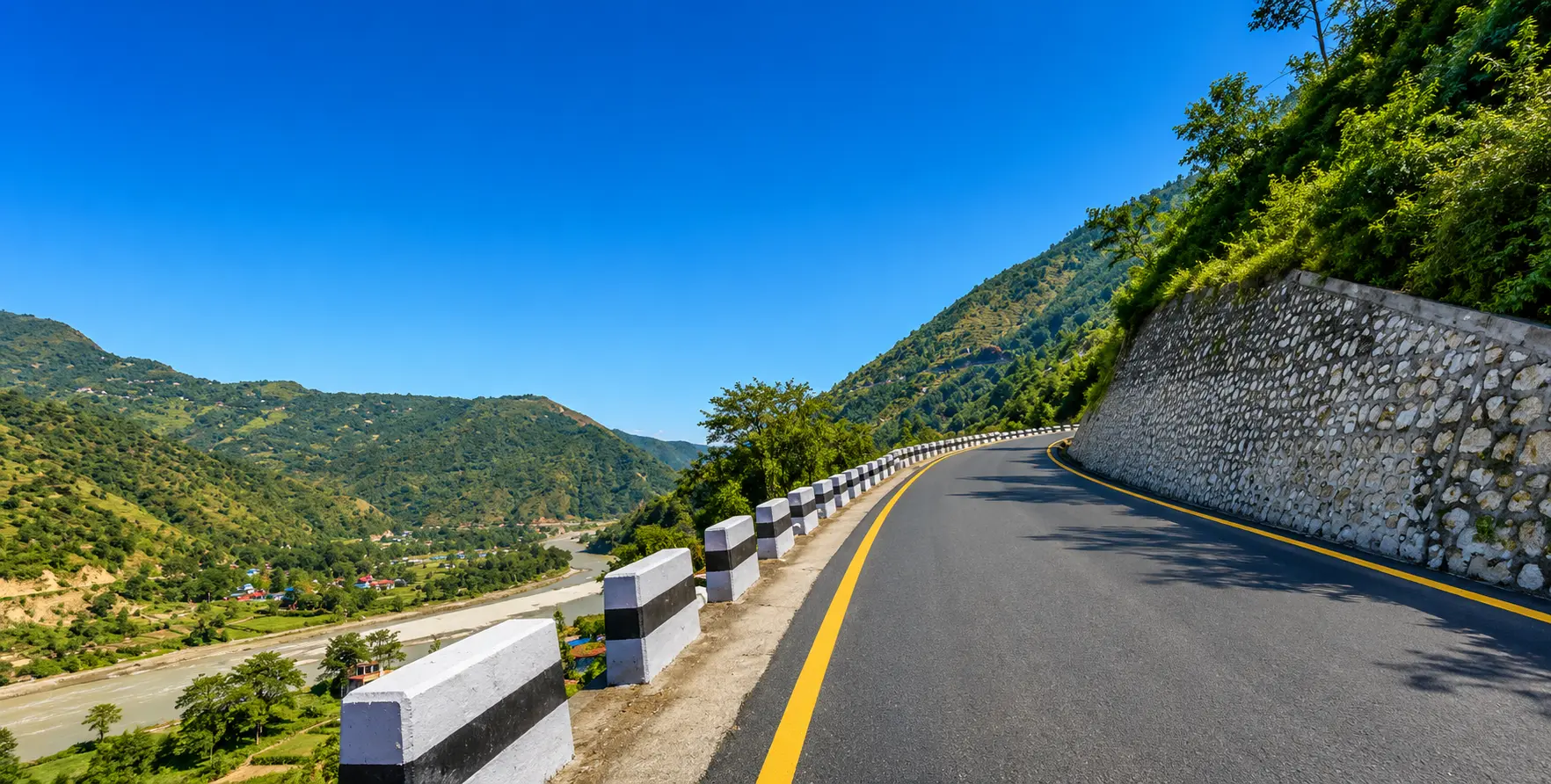
The Kathmandu to Ramechhap route follows one of Nepal’s most important highways through some genuinely beautiful mid-hill scenery — beauty that, admittedly, most travelers experience in complete darkness given the 2:00 to 3:00 AM departure times that the Manthali flight schedule necessitates. The route exits Kathmandu eastward through Bhaktapur — home of the famous medieval Newar city that many travelers visit on Bhaktapur day tours before or after their Everest trek — and continues through Banepa (approximately 25 kilometers from Kathmandu), where the road joins the BP Highway proper and begins its scenic descent into the Panchkhal valley.
The town of Dhulikhel, just beyond Banepa at 1,552 meters, offers one of Nepal’s most celebrated viewpoints across the Himalayan range on clear days — a panorama that sweeps from Ganesh Himal through the entire Langtang range, Jugal Himal, and eastward toward Gauri Shankar — though this view is obviously invisible to travelers passing in pre-dawn darkness.
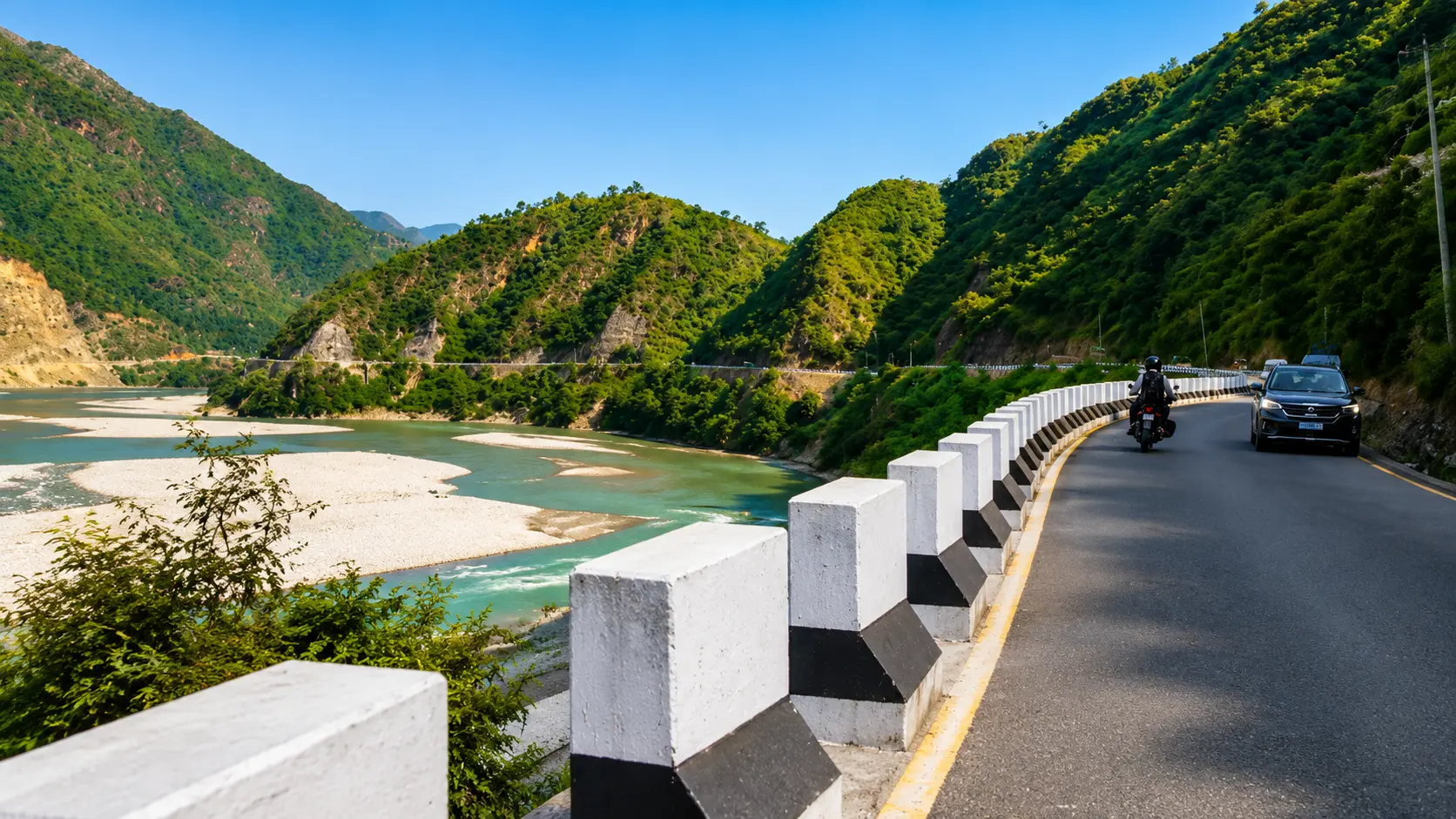 Beyond Dhulikhel, the BP Highway descends steeply through several switchback sections toward Panchkhal. Then it continues along the Sunkoshi River valley through Dolalghat before entering the Tamakoshi tributary corridor that carries the road to Ramechhap. This section of the journey — roughly from Dolalghat (approximately 60 kilometers from Kathmandu) through Khurkot (approximately 95 kilometers) and onward to Manthali (135 kilometers)
As the most scenic portion of the route on the rare occasions when daylight travel is possible, with the Tamakoshi River valley’s combination of terraced hillsides, traditional village settlements, cascading waterfalls, and the distant presence of the higher Himalayan ridgelines to the north creating a driving environment of real beauty. Most trekkers experience this section in darkness on the outbound journey. Still, they may enjoy it in daylight on the return from Manthali after completing their trek if they return via road rather than flying back to Kathmandu.
The road quality on the Kathmandu to Ramechhap route is generally good — the BP Highway is a sealed tarmac road across most of its length through this section, with the main variable being the condition of specific sections that have been damaged by monsoon-season runoff or earthquake-related subsidence and await repair. Nepal Vehicle Hiring Pvt Ltd drivers for this route are specifically familiar with current road conditions and monitor any emerging issues with sections that experience seasonal deterioration, providing clients with accurate journey time estimates based on actual current conditions rather than optimistic averages.
Key Towns and Landmarks
Banepa, the first significant town on the route at approximately 25 kilometers from Kathmandu, is a historic trading town and a major junction where the Araniko Highway (connecting Kathmandu with the Chinese border at Kodari) diverges northward while the BP Highway continues eastward. Most Ramechhap transfer vehicles pass through Banepa without stopping in the pre-dawn hours, though its market area has several teahouses that open early for road travelers. Dhulikhel, just beyond Banepa, is the hill town famous for its mountain viewpoint and its heritage Newar settlement — worth an extended visit on a daylight leisure trip.
Panchkhal, approximately 35 kilometers from Kathmandu, is where the road begins its descent into the lower valley systems, and Dolalghat at approximately 60 kilometers marks the confluence of the Sunkoshi and Indrawati Rivers — a scenic junction visible even in the early grey light of pre-dawn when most Ramechhap transfers pass through. Khurkot, at approximately 95 kilometers, sits where the road drops to cross the Sunkoshi River before climbing again toward Manthali — a point used by many private vehicle drivers for a brief fuel and coffee stop if the journey timing allows.
The Pre-Dawn Departure: Why 2:00 AM Is Non-Negotiable
The single aspect of the Ramechhap airport transfer that consistently surprises trekkers encountering this logistics arrangement for the first time is the departure time: 2:00 AM from Thamel for shared vehicles, and typically 2:00 to 3:00 AM for private vehicle bookings depending on the specific flight time and the operator’s experience with the route’s traffic patterns. This pre-dawn timing is not an arbitrary inconvenience but a strict operational requirement driven by the Manthali airport’s flight schedule and the 4-to-5-hour journey time from Kathmandu.
Lukla flights from Manthali operate in the morning window from approximately 6:00 AM to 10:00 AM, with the specific departure time of any individual flight depending on the airline’s schedule for that day and the weather assessment at Lukla made early each morning. A typical Manthali to Lukla flight departing at 7:00 AM requires check-in to be completed by approximately 6:00 AM — meaning the trekker must be at Manthali Airport no later than 5:30 to 5:45 AM. With a 4-to-5-hour drive from Kathmandu, this translates to a departure from the capital no later than 1:00 to 2:00 AM if the latest possible morning check-in is targeted, or 12:00 to 1:00 AM if any margin for traffic delays or unexpected road conditions is to be maintained. Most experienced operators recommend a 1:30 to 2:00 AM departure from Thamel as the standard schedule that balances journey time, traffic contingency, and the need to arrive at Manthali with enough time to complete check-in, security, and any last-minute equipment checks before boarding.
For travelers accustomed to relaxed international airport procedures, the logistics of a 2:00 AM departure for a 7:00 AM flight can initially seem excessive. The key is understanding that the 130-kilometre journey to Manthali is not a 20-minute suburban airport run but a full mountain road drive through Kathmandu’s eastern suburbs, down the BP Highway’s winding descent sections, and along the Tamakoshi valley — a journey whose duration is genuinely sensitive to traffic conditions, particularly in the Kathmandu suburban sections that can experience early-morning commercial vehicle movement as wholesale markets open and freight operations begin before dawn. Nepal Vehicle Hiring Pvt Ltd times all Ramechhap airport transfer departures based on our drivers’ specific experience with the route’s traffic patterns at different hours, providing the most accurate and comfortable departure schedule rather than a one-size-fits-all early morning estimate.
Tip: Do not plan any significant activity for the evening before your Ramechhap transfer. An early dinner by 7:00 PM, preparation of all trekking kit and documents by 9:00 PM, and an alarm set for 1:00 AM gives the most comfortable buffer before a 2:00 AM pickup. Our drivers arrive 10 minutes before the confirmed time so you never keep them waiting.

Vehicle Options for Ramechhap Airport Transfers
Private Car — The Solo and Couple TTraveler’sBest Choice
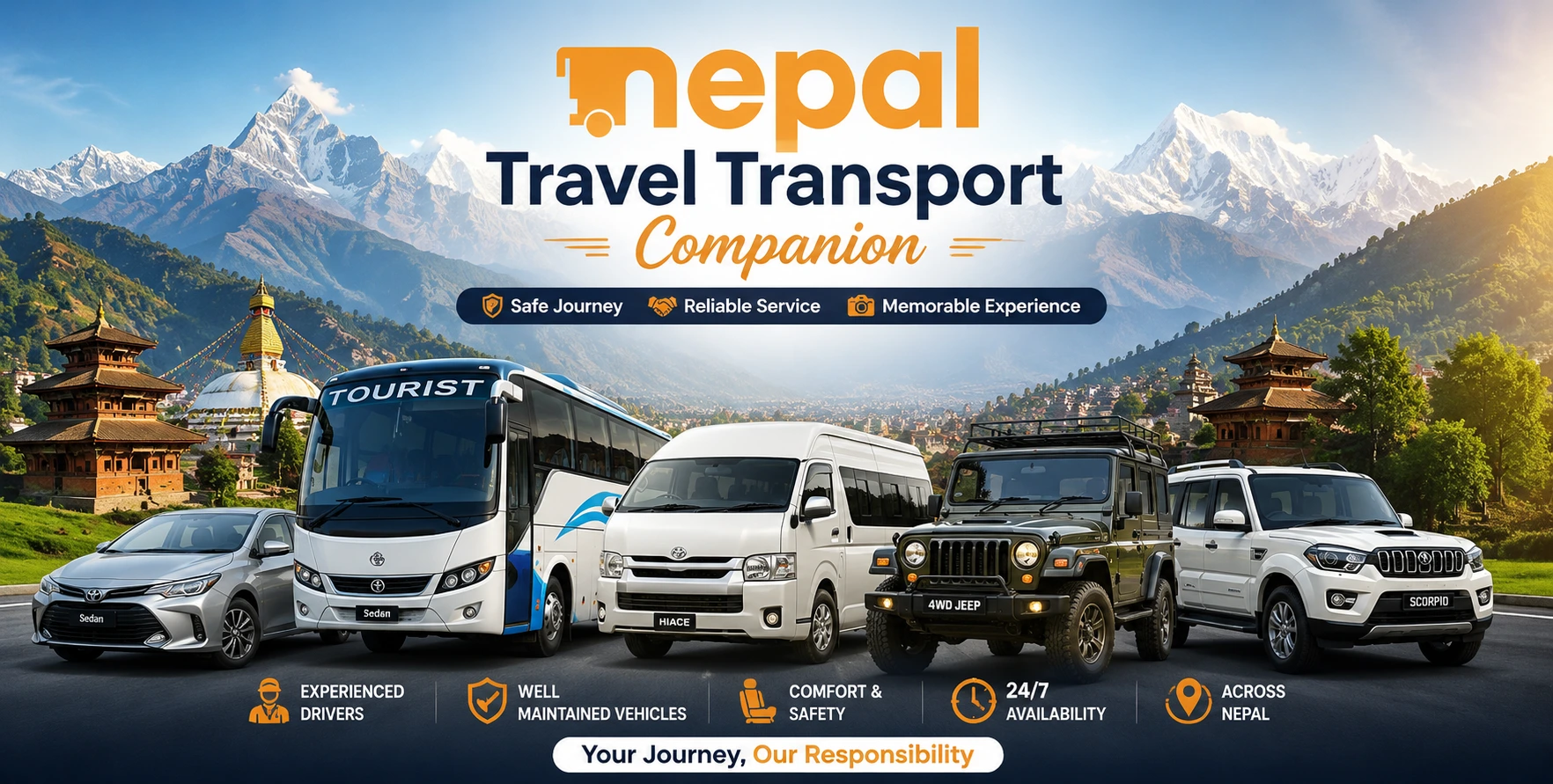
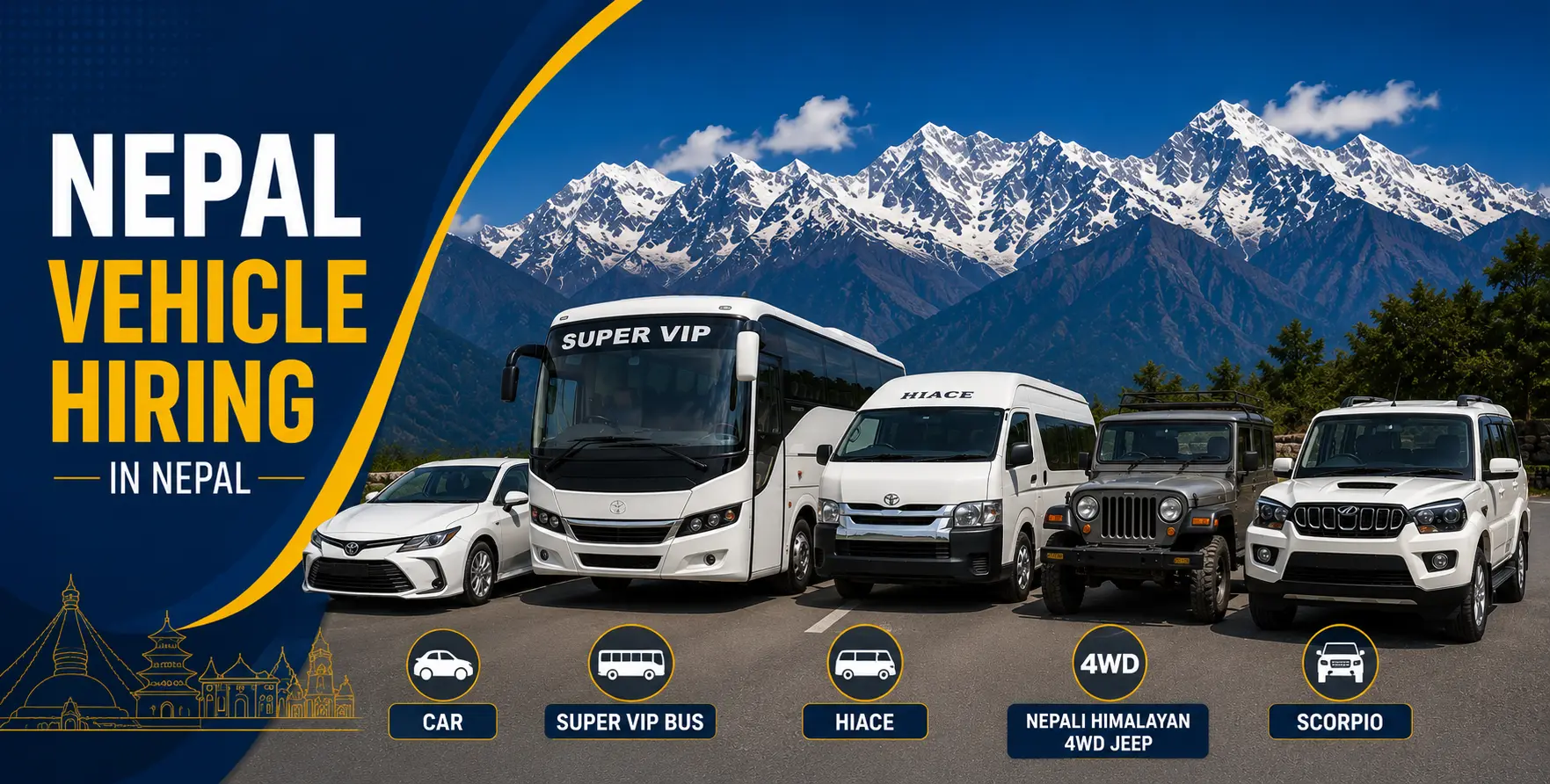
A private car hire is the most appropriate and most comfortable option for solo trekkers and couples heading to Ramechhap Airport—providing the flexibility, hotel pickup, and timing certainty of private transport in the most compact and economical package available for smaller groups. The BP Highway to Ramechhap is a sealed tarmac road across its most relevant sections, and the route’s conditions do not require the elevated ground clearance and 4WD capability that Nepal’s more demanding mountain roads demand.
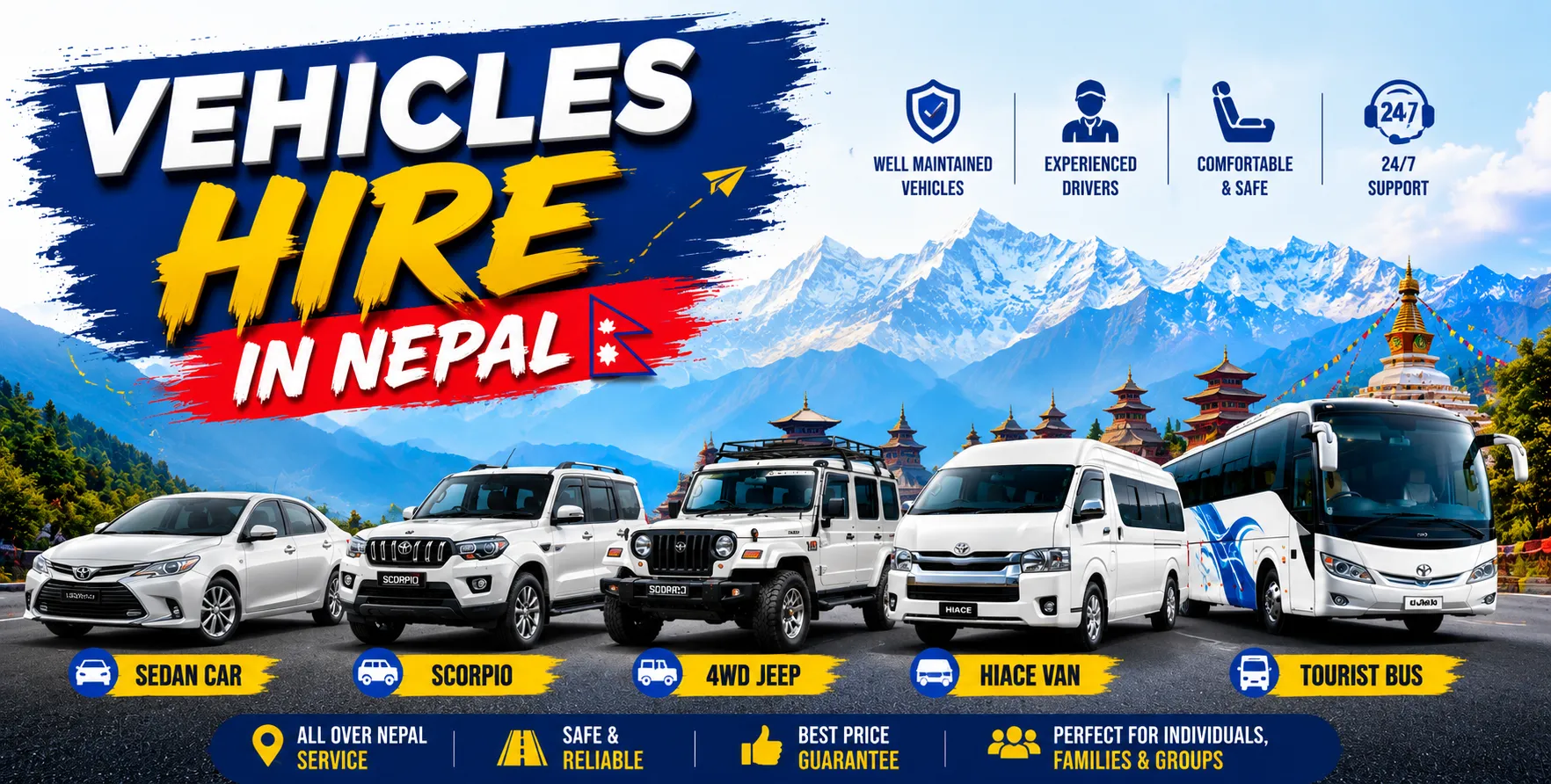
A well-maintained sedan or compact SUV handles the Kathmandu to Manthali journey competently and comfortably, with the additional benefit of being easier to park and maneuver in Manthali Airport’s limited parking area than a larger jeep or van. Nepal Vehicle Hiring Pvt Ltd’s private car hire service for the Ramechhap transfer costs approximately USD 120 to USD 150 (NPR 16,000 to NPR 20,000) for a private car accommodating 3 to 4 passengers with luggage — making it the most economical private vehicle option per group for smaller parties.
Private Jeep — The Group Standard
For groups of four to seven trekkers traveling together, a private 4WD jeep is the standard and most commonly booked vehicle for the Ramechhap airport transfer. The jeep’s seven-seat capacity, adequate luggage space for a group’s trekking kit, and slightly higher ground clearance than a standard car make it the most practically all-around appropriate vehicle for this route. Costs for a private jeep from Kathmandu to Ramechhap Airport range from approximately USD 150 to USD 200 (NPR 20,000 to NPR 27,000) for the full vehicle — per-person cost for a group of six runs approximately USD 25 to USD 34, which is competitive with the shared vehicle rate while delivering the enormous practical advantages of hotel pickup, confirmed departure timing, and dedicated luggage space that shared vehicles cannot offer.
The shared jeep/van option, departing from Thamel at 2:00 AM, costs approximately USD 25 per person according to multiple current sources — making it the budget standard for this route. However, the shared vehicle experience comes with important practical limitations: the 2:00 AM departure is fixed and inflexible, the vehicle may be crowded with the full complement of seven passengers and their trekking luggage, and the driver’s schedule is optimized for the shared route rather than any individual passenger’s hotel location or timing preference. For trekkers whose Everest adventure is the trip of a lifetime and whose entire Himalayan experience begins with this pre-dawn transfer, the modest additional cost of a private vehicle represents an immediately worthwhile investment in the comfort and certainty of that beginning.
Hiace Van — The Group Solution
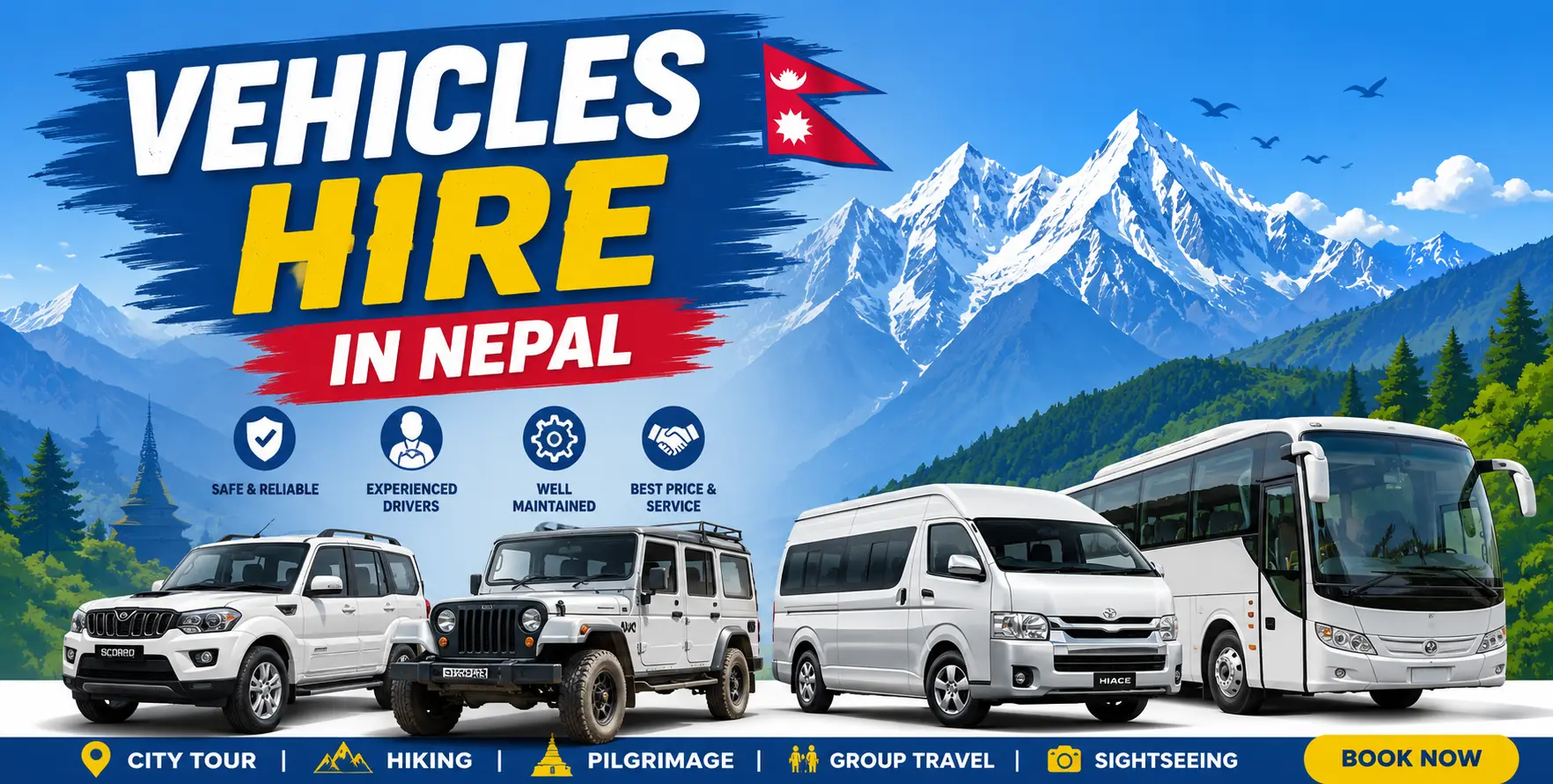
For trekking groups of eight to fifteen people — organized expedition parties, school or university groups, corporate team builds, and friends groups traveling together — a Hiace van hire provides the most cost-effective and practically appropriate group transport for the Ramechhap airport transfer. The Hiace van’s 12 to 14-seat capacity accommodates a standard organized trekking group with their luggage in a single vehicle, eliminating the coordination complexity and cost of booking multiple jeeps for a large group. Hiace van hire for the Kathmandu to Ramechhap transfer costs approximately USD 200 to USD 280 (NPR 27,000 to NPR 37,000) for the full vehicle — per-person cost for a group of twelve runs approximately USD 17 to USD 23, making it the most economical private vehicle option per head for larger groups while still delivering all the practical advantages of dedicated private transport.
Coaster and Bus — For Very Large Groups
For very large expedition parties, climbing teams with extensive equipment, or organized trekking groups of 20 or more participants, Nepal Vehicle Hiring Pvt Ltd provides coaster hire (20 to 22 seats) and bus hire (30 to 35 seats) for the Ramechhap airport transfer when group size makes these larger vehicles the most appropriate and most economical solution. Large group Ramechhap transfers require coordination of luggage management at both the Kathmandu departure point and the Manthali Airport arrival, and Nepal Vehicle Hiring Pvt Ltd provides specific briefing for drivers on large group logistics to ensure that the airport arrival process — check-in, luggage handling, security queuing — proceeds as efficiently as the airport’s capacity allows.
Complete Cost Guide: Ramechhap Airport Transfer 2026/27
The following cost information consolidates current market research across multiple Nepal transport operators for the 2026/27 season, providing the most accurate and current pricing picture available for planning purposes. All Nepal Vehicle Hiring Pvt Ltd rates are fully inclusive of vehicle, experienced driver, fuel, and applicable road tolls — with no hidden additions at settlement.
Private car (3–4 passengers): USD 120–150 per vehicle (NPR 16,000–20,000 one way). Approximately USD 30–50 per person for a group of 3–4.
Private jeep (5–7 passengers): USD 150–200 per vehicle (NPR 20,000–27,000 one way). Per-person cost for a group of 6: approximately USD 25–34.
Private Hiace van (8–14 passengers): USD 200–280 per vehicle (NPR 27,000–37,000 one way). Per-person cost for a group of 12: approximately USD 17–23.
Shared tourist vehicle (per person): USD 25–30 per person for a shared seat from Thamel, departing at 2:00 AM. Total cost per person for shared vehicle plus flight: approximately USD 195–220 for the complete Manthali to Lukla package as offered by some operators.
Public bus (per person): USD 7–10 per person from Gongabu Bus Station or Old Park Bus Station. Cheapest option but slowest and least comfortable, with no hotel pickup, and departure timing may not align with Manthali flight schedules.
Return transfer (Manthali to Kathmandu after trek): Same vehicle hire rates as above. Nepal Vehicle Hiring Pvt Ltd strongly recommends booking the return vehicle simultaneously with the outbound transfer — confirming the return date so the driver or replacement vehicle is secured in advance rather than arranged at Manthali at the end of a physically demanding trekking journey when energy and planning capacity are at their lowest.
Note: All USD figures are approximate conversions at current exchange rates. Payment in Nepal is made in Nepali Rupees (NPR). Nepal Vehicle Hiring Pvt Ltd provides specific NPR quotes at the time of booking, which are fixed for the confirmed journey regardless of subsequent exchange rate fluctuations.
Why Private Vehicle Transfer Is Essential for the Ramechhap Airport Route
The case for a private transfer over shared or public transport alternatives for the Ramechhap Airport route is stronger than for almost any other vehicle hire service in Nepal, for reasons rooted specifically in this journey’s logistics and the consequences of anything going wrong at the wrong time. The core issue is simple: missing the Manthali-to-Lukla flight because the Kathmandu-to-Manthali transfer was delayed, unreliable, or poorly timed creates a cascade of consequences — at minimum, an extra unexpected night in Manthali or a return to Kathmandu, rebooking costs, and a day’s delay in the start of a carefully planned trekking itinerary. At maximum, for trekkers with fixed return international flight bookings and a precisely calculated number of days available for their Everest adventure, a missed Lukla flight can compromise the entire trekking trip.
Hotel door pickup is the first essential advantage of a private transfer that any shared vehicle service cannot replicate. The shared tourist vehicle from Thamel at 2:00 AM requires the trekker to present themselves at the vehicle with their full trekking kit in the middle of the night — easy enough if staying in the immediate Thamel area, considerably more complex if staying in Boudha, Lazimpat, Patan, or any of Kathmandu’s other hotel districts where a separate taxi journey to the shared vehicle’s departure point in the pre-dawn hours adds additional uncertainty to an already logistics-intensive morning. A private vehicle that picks up directly from the hotel door eliminates this complexity, allowing the trekker to spend the 10:00 PM to 1:00 AM window sleeping rather than managing a complex pre-dawn multi-vehicle chain.
Departure time control is the second essential advantage. A private vehicle departs when the booking specifies — not when the shared vehicle is full enough to justify departure. On nights when shared vehicles are slow to fill, the 2:00 AM departure can slip to 3:00 AM or later, compressing the arrival time buffer at Manthali and adding unnecessary anxiety to what should be a relaxed journey to an exciting adventure’s starting point. With a private Nepal Vehicle Hiring Pvt Ltd vehicle, the departure time is confirmed, guaranteed, and adhered to — the driver arrives 10 minutes early, not 40 minutes late.
The peace of mind element — understanding that a professional, accountable transport provider is managing your pre-dawn journey to an airport where a 20-minute flight connects you to a Himalayan adventure — is genuinely significant at 2:00 AM. Nepal Vehicle Hiring Pvt Ltd provides confirmation documentation with the driver’s name and contact number, 24-hour support through our customer line, and drivers who have completed the Kathmandu to Manthali route dozens of times and know every section of the road in every season. This specific route experience matters: a driver who has never made this particular journey before may not know the most current condition of specific sections of the BP Highway, the precise location of Manthali Airport’s entrance (which first-time visitors sometimes find confusing in the dark), or the best approach to the airport’s parking and drop-off area given the significant vehicle volume during peak season mornings.
The Everest Region: What Awaits Beyond Manthali Airport
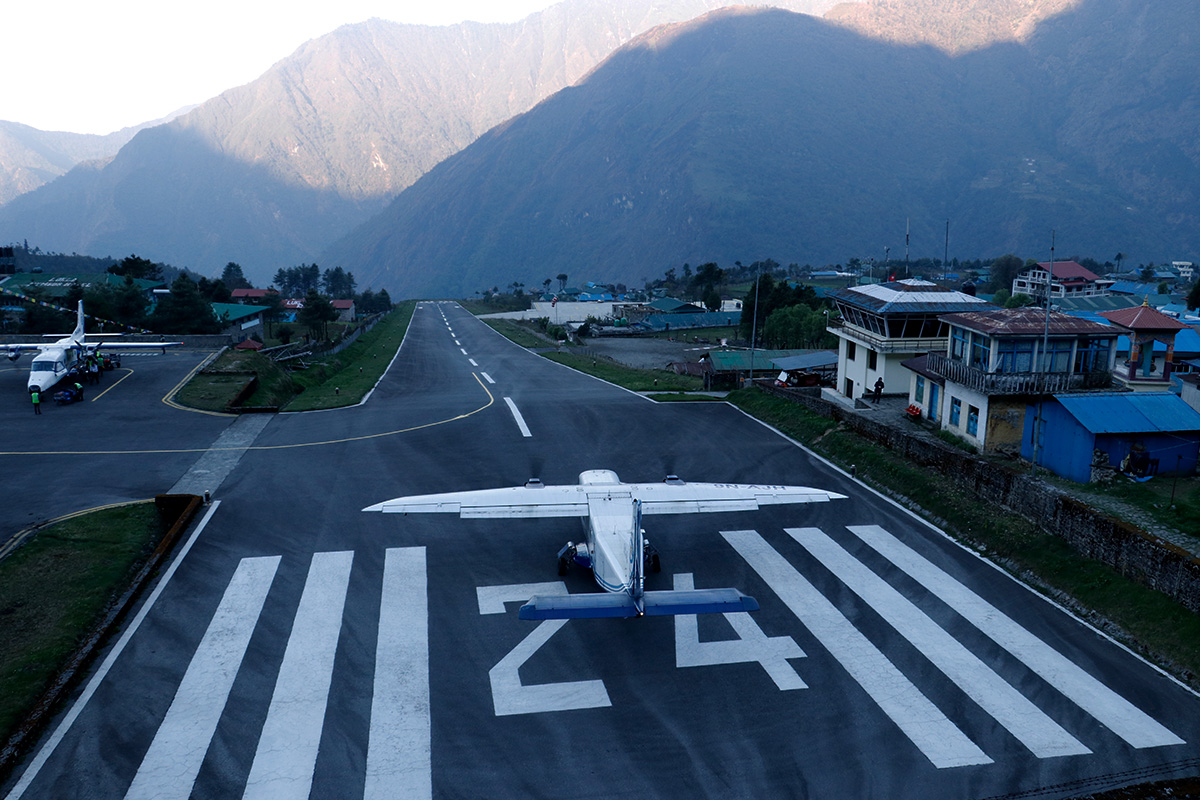
Understanding what the Ramechhap airport transfer delivers to trekkers helps contextualize the logistics of this pre-dawn journey in the most motivating terms. The 20-minute flight from Manthali to Tenzing-Hillary Airport at Lukla is the gateway to the Everest Base Camp Trek — one of the world’s great trekking experiences and the most sought-after Himalayan adventure destination on Earth. From Lukla at 2,860 metres, the trail climbs northward through the Dudh Koshi River valley, passing through Phakding, Namche Bazaar (the Khumbu’s bustling commercial hub at 3,440 metres), Tengboche Monastery (site of the famous October Mani Rimdu festival, perched at 3,870 metres with extraordinary Everest and Ama Dablam views), Dingboche, Lobuche, and Gorakshep before arriving at Everest Base Camp itself at 5,364 metres — the foot of the world’s highest mountain, reachable in approximately twelve to sixteen days of round-trip walking for the standard itinerary.
Beyond the classic EBC route, the Lukla gateway opens access to the Gokyo Lakes circuit — a spectacular alternative or extension that takes trekkers to the turquoise glacial lakes at approximately 4,700 to 5,000 metres with some of the finest Everest-range views available from any non-technical trekking route — the Everest Three Passes circuit that crosses Renjo La (5,360 m), Cho La (5,420 m), and Kongma La (5,535 m) in one of Nepal’s most demanding and most rewarding complete Khumbu experiences, and the less-frequently visited routes toward Kongma Danda and the Chhukung valley that experienced Khumbu trekkers explore after completing the standard base camp itinerary. All of these adventures begin with the Manthali flight, and all of them begin with the Kathmandu to Ramechhap private vehicle transfer that is the subject of this guide. Consult our comprehensive trekking services page for the full range of Himalayan adventures that Nepal Vehicle Hiring Pvt Ltd supports through trailhead and airport transfer services.
The return journey from the Everest region follows the same path in reverse—trekking from Base Camp (or whatever the highest point reached) back south through the Khumbu Valley to Lukla, flying from Lukla to Manthali, and then taking the vehicle transfer from Manthali Airport back to Kathmandu. For many trekkers, the Manthali-to-Kathmandu return drive is their first opportunity to see in daylight the BP Highway scenery that was completely invisible in the 2:00 AM darkness of the outbound journey — a daylight return through the Tamakoshi valley’s terraced hillsides and river gorge scenery that consistently surprises trekkers who had no idea this scenic quality lay along the route they had already traveled.
Seasonal Operation: When Do Ramechhap Flights Run?
The Ramechhap airport transfer service is specifically a peak-season operation, aligned with the periods when the Civil Aviation Authority of Nepal mandates the diversion of Lukla flights from Kathmandu to Manthali Airport. Understanding the seasonal schedule is essential for accurate planning, since the vehicle transfer to Ramechhap is only relevant during these specific periods — outside them, direct Kathmandu-to-Lukla flights resume and no Ramechhap transfer is required.
The spring season, from approximately April 1 through May 31 (with possible extension into early June depending on civil aviation authority decisions each year), is the primary Ramechhap season. This period coincides with Nepal’s peak spring trekking season, when the Annapurna Conservation Area and Sagarmatha National Park see their highest annual visitor volumes, and when demand for Lukla flights reaches its annual maximum. The autumn season, from approximately mid-September through November 30 (again subject to annual civil aviation decisions), is the second Ramechhap season and the one that many experienced trekkers prefer for EBC given the exceptional atmospheric clarity and mountain visibility that Nepal’s post-monsoon autumn delivers.
Outside these peak seasons — specifically from December through March and from June through mid-September — flights from Kathmandu directly to Lukla typically resume, and the Ramechhap transfer is not required. Trekkers planning winter Everest approaches, monsoon-season Khumbu treks (undertaken by a small number of experienced trekkers who specifically seek the quieter conditions), or early spring departures before the Ramechhap season begins should confirm their specific flight routing directly with their airline or booking agent and with the Civil Aviation Authority of Nepal for the most authoritative current information on seasonal flight operations. Nepal Vehicle Hiring Pvt Ltd monitors these seasonal operations and advises clients booking Ramechhap transfers of any announced schedule changes that may affect their specific travel dates.
Tip: Always confirm whether your Lukla flight departs from Kathmandu (Tribhuvan International Airport) or Ramechhap (Manthali Airport) when booking your Lukla flight ticket. Do not assume the operating airport based on your travel date alone — the civil aviation authority makes final seasonal operation decisions that may adjust the standard seasonal calendar. Once confirmed, book your airport transfer immediately to secure vehicle availability for your specific departure date.
What to Expect at Manthali Airport
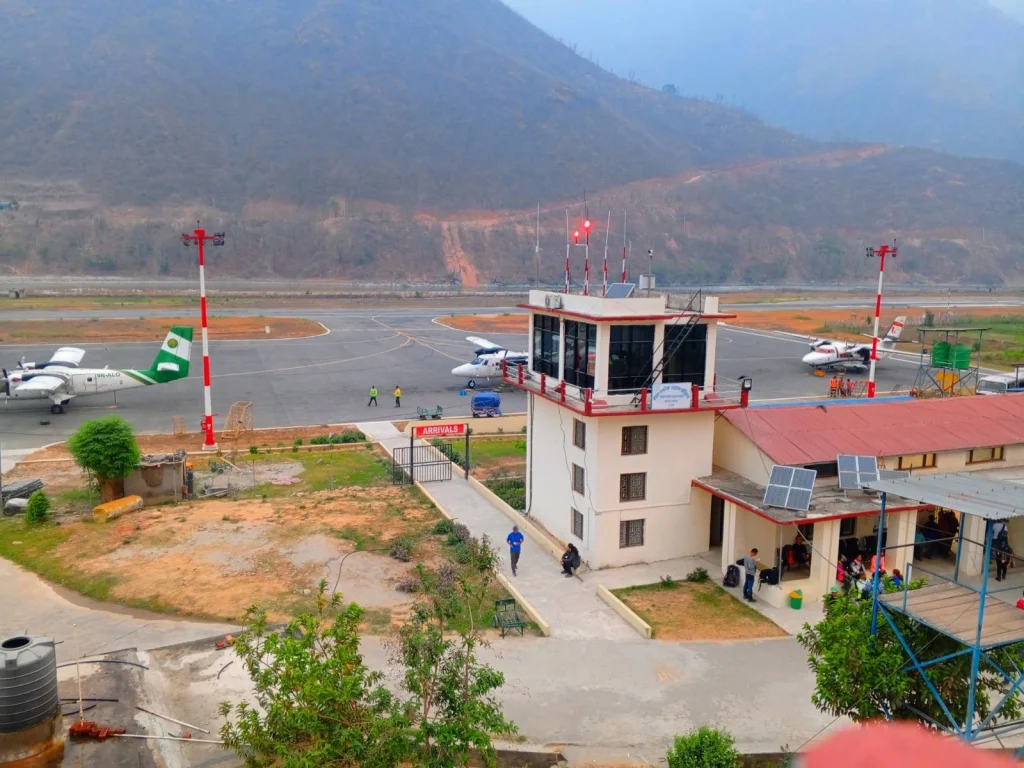
Manthali Airport is a small facility by any international standard — a single runway, a compact terminal building, basic check-in counters for the airlines operating the Lukla route, and a modest waiting area that, during peak season mornings, fills rapidly with the hundreds of trekkers whose combined vehicle convoy from Kathmandu has delivered them simultaneously to this compact facility. One operator notes that Manthali handles approximately 85 flights daily during peak season—a significant volume for an airport of this size—creating the crowded, energetic atmosphere most trekkers describe as one of the more memorable aspects of the beginning of their Everest adventure. Queues for check-in, luggage tagging, and security screening during the peak morning window of 5:00 to 8:00 AM can be substantial, and arriving at the airport with the minimum time buffer is not advisable.
Check-in for Manthali-to-Lukla flights typically opens 45 to 60 minutes before the scheduled departure, and airlines require check-in to be completed at least 30 minutes before departure — sometimes 45 minutes for this specific route given the need to weigh and tag luggage for the weight-sensitive STOL aircraft used. Arriving at Manthali with 90 minutes before the scheduled departure is a comfortable buffer that allows unhurried check-in, any last-minute document checks, and the pre-flight energy bar and tea that pre-dawn road trip trekkers typically need at this point in the morning. The airport has basic food and beverage facilities, including tea and snack stalls. However, the range is limited, and prices reflect the captive-audience character of a remote airport at peak demand.
Luggage weight limits on the Manthali-to-Lukla route are strictly enforced — the standard allowance for most airlines is 10 to 15 kilograms of checked luggage plus 5 kilograms of carry-on for the small aircraft used on this route. Excess baggage fees are charged per kilogram and can be significant, making it important to have weighed trekking luggage before leaving Kathmandu rather than discovering an excess at the Manthali check-in counter. Nepal Vehicle Hiring Pvt Ltd drivers for this route are experienced in the airport’s procedures. They can provide guidance on the check-in sequence if traveling clients are unfamiliar with small airport domestic operations in Nepal.
 Combining the Ramechhap Transfer with Kathmandu Pre-Trek Activities
For most international trekkers, the days before the Ramechhap transfer provide a natural opportunity for Kathmandu cultural sightseeing — exploring the UNESCO World Heritage temples and cultural sites of Nepal’s extraordinary capital before heading into the mountain wilderness. Nepal Vehicle Hiring Pvt Ltd provides comprehensive Kathmandu sightseeing by private car or private jeep for pre-trek visitors, covering Pashupatinath Temple (Nepal’s most sacred Hindu site.
One of the most important Shiva shrines in the world), Boudhanath Stupa (one of the world’s largest stupas and the center of Nepal’s Tibetan Buddhist community), Swayambhunath (the ancient hilltop stupa overlooking the Kathmandu Valley), and the extraordinary medieval Newar city of Patan with its UNESCO-listed Durbar Square complex. A well-organized Kathmandu sightseeing day builds cultural context for the Buddhist traditions that permeate the Khumbu Sherpa communities the trekker will encounter in the mountains, making the Everest experience richer and more meaningful for those who have taken time to understand Nepal’s broader cultural landscape before departing for the high altitudes.
The Nagarkot sunrise tour — a pre-dawn drive to the valley rim viewpoint at 2,175 meters for the sunrise panorama across the Himalayan range from Dhaulagiri to Kanchenjunga, including a distant view of Everest itself — is a natural pre-trek addition that many Everest-bound trekkers specifically request. Seeing Everest from Nagarkot before flying to its foot creates a motivating visual connection that enriches the trekking experience for many first-time Khumbu visitors.
The Bhaktapur day tour is the single most consistently recommended pre-trek cultural activity for Everest visitors given the town’s extraordinary preservation and its position directly on the Kathmandu to Ramechhap route — making it possible to combine a morning Bhaktapur visit with the afternoon return to Kathmandu for final gear packing before the 2:00 AM Ramechhap departure. Our airport transfer service from Tribhuvan International Airport on arrival ensures that even the first moments of a Nepal journey — stepping out of a long international flight into Kathmandu’s warm chaos — are smoothly managed in a comfortable private vehicle.
The Return: Manthali to Kathmandu After the Everest Trek
The Manthali-to-Kathmandu return transfer, taken after completing the Everest region trekking adventure and flying back from Lukla to Manthali, carries a completely different emotional character from the outbound pre-dawn departure. The trekker stepping off the Lukla-to-Manthali flight is a different person from the one who boarded the Manthali-to-Lukla flight two or three weeks earlier — physically transformed by weeks of high-altitude walking, emotionally changed by the scale and profundity of the Khumbu landscape, and carrying a weight of experience and memory that most describe as among the most significant of their lives. The vehicle that receives this returning trekker at Manthali Airport and carries them back to Kathmandu is the final physical element of the entire Himalayan adventure.
A pre-booked private vehicle from Nepal Vehicle Hiring Pvt Ltd waiting at Manthali Airport for the returning trekker is one of the most appreciated service elements we provide, precisely because it eliminates the one logistical uncertainty that most plagues returning trekkers — the question of how to get from this remote airport back to Kathmandu in comfort, without negotiating last-minute transport from a position of physical exhaustion and reduced planning capacity. Our return vehicle pickup service includes the driver meeting returning trekkers at the airport exit, assisting with luggage, and providing the comfortable, quiet, well-maintained vehicle in which the return journey can be spent in whatever combination of reflection, conversation, and sleep the returning trekker finds most appropriate for the journey’s emotional character.
For trekkers whose Nepal itinerary extends beyond the Everest region to other destinations — Pokhara for the Annapurna region, Chitwan for wildlife safaris, or additional cultural sightseeing in Kathmandu before flying home — Nepal Vehicle Hiring Pvt Ltd coordinates the complete onward vehicle logistics from the Manthali return, providing Kathmandu to Pokhara private vehicle transfer, Kathmandu sightseeing by private car, or the final airport transfer to Tribhuvan International as a seamless continuation of the complete Nepal journey support that began with the outbound Ramechhap transfer. Our Nepal tour packages combine Everest region trekking with other Nepal destinations in coordinated itineraries that provide comprehensive vehicle support at every stage—from the initial Kathmandu airport arrival through the Ramechhap departure, the Manthali return, and all subsequent Nepal travel—in a single unified professional arrangement.
More Nepal Trekking Transfers: Beyond Ramechhap
Nepal Vehicle Hiring Pvt Ltd’s vehicle hire expertise covers the complete network of trekking approach transfers across all of Nepal’s major trekking regions — not just the Ramechhap Everest gateway but every principal trailhead transfer in the country. For the Annapurna Circuit, our Kathmandu to Besisahar private vehicle and Kathmandu to Manang jeep services connect the capital to the circuit’s principal entry points. Our Kathmandu to Syabrubesi jeep transfer serves the Langtang Valley, one of Nepal’s most scenic approach drives through the Pasang Lhamu Highway corridor. For the Manaslu Circuit, our Kathmandu to Soti Khola jeep service covers the rough Gorkha district roads to the circuit’s primary starting point.
For Pokhara-based treks, our Pokhara to Nayapul jeep serves the Poon Hill and Annapurna Base Camp circuits; our Pokhara to Ghandruk jeep covers the Annapurna foothills cultural circuit; and our Pokhara to Ghorepani Poon Hill jeep hire provides the direct jeep-drive option to Nepal’s most celebrated sunrise viewpoint. For the Upper Mustang adventure, our Pokhara to Mustang overland jeep is the gateway to the ancient walled city of Lo Manthang through the world’s deepest gorge. In contrast, the Kathmandu to Muktinath jeep serves the sacred Muktinath pilgrimage site at 3,710 meters. For the Everest overland approach to Solukhumbu, our Kathmandu to Salleri and Phaplu service provides a road alternative to the Lukla flight—the same Solukhumbu gateway that the Ramechhap airport transfer serves by air —now available by road for trekkers who prefer the overland experience or who travel outside Manthali’s operational season.
For city-based activities, our Kathmandu sightseeing by private vehicle covers the full UNESCO heritage circuit, the Nagarkot sunrise vehicle hire provides the valley-rim viewpoint experience, the Sarangkot sunrise tour vehicle from Pokhara delivers the Annapurna dawn panorama, and our Pokhara car hire covers all Pokhara city transfers and day excursions. Our Kathmandu to Pokhara private vehicle connects Nepal’s two principal tourism cities, while our Hiace van hire, coaster hire, and bus hire scale our group transport capacity from 12 to 35+ passengers for any Nepal group movement. Visit vehiclehiringnepal.com to plan your complete Nepal journey, or contact us directly with your specific transfer requirements.
What to Pack for the Pre-Dawn Ramechhap Airport Transfer
The 2:00 AM departure for the Ramechhap airport transfer demands a level of personal preparation the night before that differs meaningfully from the morning-of packing approach that most travelers use for standard daytime airport runs. Getting this preparation right transforms the pre-dawn experience from a stressful scramble into a smooth, well-managed start to an extraordinary adventure.
All trekking luggage destined for the Khumbu should be fully packed, weighed, and ready before you go to sleep on the night before departure. The Manthali-to-Lukla flight’s strict luggage weight limits — typically 10 to 15 kilograms checked plus 5 kilograms carry-on — must be respected, and discovering at 2:00 AM that your pack exceeds the limit creates an impossible repacking problem in the dark. A hanging luggage scale, available from most Kathmandu trekking equipment shops in Thamel for NPR 300 to NPR 600, is an essential pre-departure tool that eliminates any weight-limit uncertainty before departure.
After completing your Kathmandu sightseeing and cultural preparation days, dedicate the afternoon before the 2:00 AM departure specifically to final equipment checks and luggage weighing. Nepal Vehicle Hiring Pvt Ltd drivers for the Ramechhap route are experienced in advising clients on luggage management. They can flag obvious weight concerns based on what they see loaded into the vehicle at pickup.
Personal comfort items for the vehicle journey deserve specific consideration. A light blanket or sleeping bag liner for the vehicle cabin is valuable — the pre-dawn temperatures on the Kathmandu to Ramechhap route can be genuinely cold, particularly in autumn (September to November) when the seasonal transition brings chilly nights even at Kathmandu’s 1,400 meters. A neck pillow allows light sleep during the first two to three hours of the 4-to-5-hour drive if the trekker has had only a few hours of rest after an early-evening bedtime.
A small personal bag within easy reach of the seat — containing a headtorch, water bottle, any required medications, a snack, and personal documents including passport and flight booking confirmation — should be kept separate from the main trekking luggage in the vehicle’s boot. Earplugs can help manage sleep on the road if the vehicle’s engine or road noise is an issue.
Essential documents that must be physically carried in the pre-dawn vehicle transfer include a valid passport (required for Manthali check-in), the Lukla flight booking confirmation (electronic or printed), any trekking permits pre-purchased in Kathmandu, and travel insurance documentation including the emergency contact number and policy number for the helicopter evacuation coverage that is essential for any trek above 3,000 meters.
The Nepal Tourism Board issues the Sagarmatha National Park permit (NPR 3,000 for non-SAARC nationals) and the TIMS card for Everest region trekkers from its Bhrikutimandap offices in Kathmandu — both should be obtained before departing Kathmandu for Ramechhap, not at the Manthali Airport or on the trail. The TAAN-registered guides that all Khumbu trekkers now require under Nepal’s mandatory guide regulations should also have confirmed their arrangements and be either traveling in the same vehicle or meeting the group at Manthali Airport — confirm this logistics detail specifically before the 2:00 AM departure. Hence, there is no uncertainty on arrival at the airport about where the guide is.
- Weigh all trekking luggage the evening before — check-in limits of 10–15 kg apply strictly on Manthali-Lukla flights.
- Set two alarms — one at 1:00 AM and a backup at 1:15 AM — to ensure the 2:00 AM pickup is not missed.
- Keep passport, flight confirmation, permits, and travel insurance in an easily accessible inner pocket or small personal ba.g
- Prepare all snacks, water bottle, and medication in the vehicle cabin bag the night before — do not leave this for the morning.
- Charge all electronic devices (phone, camera, headtorch) fully the evening before — charging opportunities at Manthali Airport are limited.d
- Wear warm base layers for the vehicle journey — add or remove layers at Manthali as needed for the short airport wait.
- Inform Nepal Vehicle Hiring Pvt Ltd of your hotel’s exact gate or entrance location, particularly if staying at a property with multiple entrances, to ensure the driver’s pickup is immediate and preci.se
Driver Experience and Night Driving Safety on the Ramechhap Route
The Ramechhap airport transfer is almost unique among Nepal’s vehicle hire services in that it involves sustained night driving on mountain roads — a combination that places specific and substantial demands on both the driver and the vehicle that daytime transfers, however demanding their road conditions, do not present in the same concentrated form. Nepal Vehicle Hiring Pvt Ltd selects and assigns drivers for the Ramechhap route based on demonstrated specific experience with this corridor, including extensive night driving experience on the BP Highway to Manthali that goes well beyond general Nepal driving competence.
A driver who routinely makes this journey once or twice per week during peak season develops a route-specific knowledge — the locations of the BP Highway’s most challenging bend sequences, the sections where road damage from the previous monsoon has created surface hazards that require reduced speed, the approximate positions of the Tamakoshi valley’s narrower sections where oncoming truck headlights can temporarily blind an unprepared driver — that no amount of general driving experience can substitute for. Our vehicle hire service is built around this matching principle: the right driver for the right route, every time.
Vehicle preparation for night driving on this route goes beyond the standard pre-journey checks that any responsible operator applies to daytime hire. Nepal Vehicle Hiring Pvt Ltd specifically verifies headlight alignment and brightness, wiper blade condition (critical for the valley sections where early morning mist can be encountered), tyre tread depth and pressure (the BP Highway’s occasional rough sections place meaningful tyre demands that underinflated or worn tyres cannot manage safely), and brake performance — the descent from the BP Highway’s higher sections toward the Tamakoshi valley involves sustained downhill driving where brake efficiency is directly safety-relevant. All vehicles assigned to Ramechhap night transfers receive these specific pre-journey checks as standard, not as optional extras for premium bookings.
The pre-dawn road environment on the Kathmandu to Ramechhap route is shared with significant freight vehicle traffic — Nepal’s truck operations run heavily in the pre-dawn hours when the roads are clearest of passenger vehicles, and the BP Highway carries a meaningful volume of heavy goods vehicles heading east from Kathmandu’s wholesale markets toward the eastern districts. Experienced Ramechhap transfer drivers know to maintain appropriate following distances from heavy vehicles on the highway’s downhill sections, to anticipate the wider turning arcs that trucks require on sharper bends, and to manage their vehicle’s position on the road at points where headlights of oncoming vehicles can temporarily reduce visibility.
These driving adjustments are second nature to an experienced route driver but require active attention from someone making this journey for the first time at 2:00 AM. This is precisely why Nepal Vehicle Hiring Pvt Ltd never assigns first-time or route-unfamiliar drivers to the Ramechhap transfer — this specific route demands specific experience, and our clients’ safety and timely arrival at Manthali Airport is the non-negotiable outcome that this assignment policy protects.
For trekkers traveling in groups, there is also a practical comfort dimension to experienced night driving that is worth noting. A driver whose smooth, confident night driving style allows passengers to doze through the early hours of the BP Highway journey is contributing directly to the quality of the Everest adventure that follows — trekkers who arrive at Manthali Airport having slept for two of the four driving hours are meaningfully more rested for the flight and first trekking day than those who have spent the same period tensely gripping the seat in a vehicle driven less confidently on night roads they do not know. The cumulative effect of rest versus exhaustion at this early stage of a two-week Himalayan adventure is not negligible, and it is one of the less obvious but genuinely real benefits of choosing a professional private transfer service with properly qualified and experienced drivers over the shared vehicle alternative where driver selection is entirely outside the traveler’s control.
For further information about night driving safety standards in Nepal or to discuss specific vehicle and driver requirements for your Ramechhap transfer, contact Nepal Vehicle Hiring Pvt Ltd directly. We are also happy to discuss combined itinerary planning through our trip planning service for travellers whose Nepal journey includes the Ramechhap transfer alongside Kathmandu cultural activities, post-trek Pokhara visits via our Kathmandu to Pokhara vehicle service, Annapurna Circuit approaches via our Besisahar private vehicle service, or any other Nepal destination covered by our comprehensive vehicle hire fleet including private cars, jeeps, Hiace vans, coasters, and buses for groups of every size.
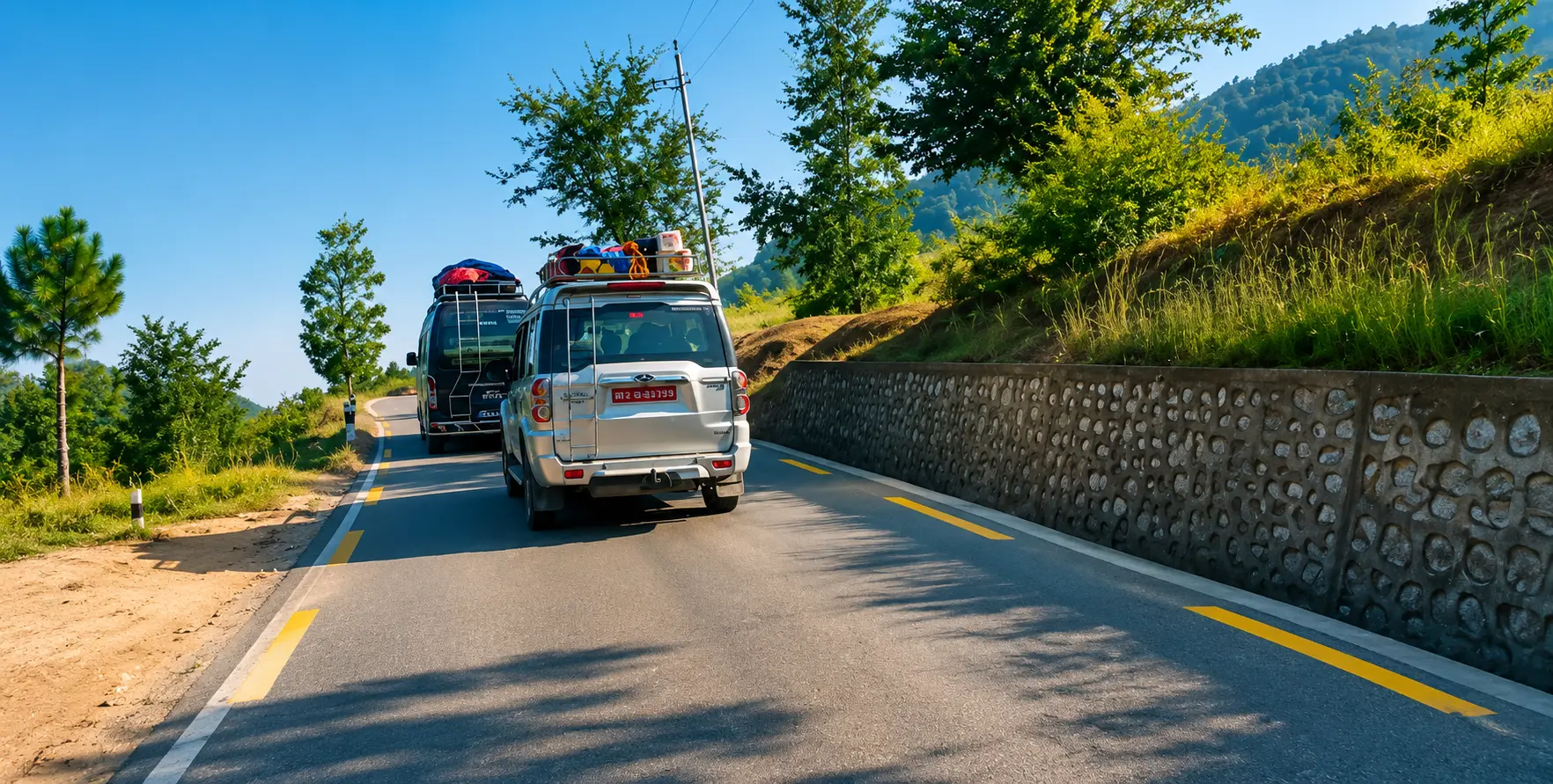
Nepal Vehicle Hiring Pvt Ltd: Your Complete Nepal Transport Network
Nepal Vehicle Hiring Pvt Ltd covers every major road and every trekking corridor in Nepal. From the Kathmandu airport transfer on arrival, through pre-trek Kathmandu sightseeing, a Bhaktapur day tour, and a Nagarkot sunrise experience, to the Ramechhap pre-dawn transfer itself and onward to every major Nepal destination by private car, 4WD jeep, Hiace van, coaster, or bus — our fleet serves every group size, every trailhead, and every season.
After the Everest trek, connect to Pokhara via our Kathmandu to Pokhara vehicle, explore the Annapurna region from Pokhara to Nayapul or Pokhara to Ghandruk, or head to Upper Mustang via our Pokhara to Mustang overland jeep. Our Kathmandu to Syabrubesi jeep serves Langtang, our Besisahar private vehicle and Kathmandu to Manang jeep serve Annapurna, our Soti Khola jeep serves Manaslu, our Kathmandu to Salleri Phaplu serves Solukhumbu by road, and our Kathmandu to Muktinath jeep serves the sacred pilgrimage at 3,710 meters. Explore our complete Nepal tour packages, browse our trekking transport services, plan your trip, or contact us today — Nepal Vehicle Hiring Pvt Ltd is ready for every stage of your Nepal adventure.
Frequently Asked Questions — Ramechhap Airport Transfer
What time does the Kathmandu to Ramechhap transfer depart?
Shared tourist vehicles depart from Thamel at 2:00 AM sharp. Private vehicles through Nepal Vehicle Hiring Pvt Ltd can be scheduled for any departure time between 1:00 AM and 3:00 AM depending on your specific Manthali flight time — we recommend a 2:00 AM departure for a 7:00 AM Lukla flight as the standard comfortable schedule.
How much does the Ramechhap airport transfer cost?
Private car: USD 120–150 (3–4 passengers). Private jeep: USD 150–200 (5–7 passengers). Hiace van: USD 200–280 (8–14 passengers). Shared tourist vehicle: USD 25–30 per person. All Nepal Vehicle Hiring Pvt Ltd private rates are fully inclusive of vehicle, driver, fuel, and tolls.
Do I need a private vehicle or can I take shared transport?
Both options are available. Shared transport costs USD 25–30 per person but requires self-transport to the Thamel departure point by 2:00 AM, has a fixed departure time, and offers no flexibility for hotel pickup or schedule changes. A private vehicle provides hotel door pickup, confirmed departure timing, dedicated luggage space, and the peace of mind of an accountable professional driver—strongly recommended for all but the most budget-constrained solo travelers. Which months does Ramechhap Airport operate for Lukla flights?
Manthali Airport handles Lukla flights primarily during the spring season (April to May) and autumn season (mid-September to November). During winter (December to March) and monsoon (June to mid-September), direct Kathmandu to Lukla flights typically resume. Always confirm your specific flight’s departure airport at the time of booking.
How far in advance should I book the Ramechhap transfer?
During peak seasons (April–May and October–November), book at least one week in advance and ideally two weeks for specific high-demand dates. Vehicles on this route fill quickly during peak periods when hundreds of trekkers are simultaneously booking for Manthali flights. Outside peak season, three to five days’ advance notice is generally sufficient.
Can I combine the Ramechhap transfer with Bhaktapur sightseeing?
Yes — the Ramechhap route passes through Bhaktapur’s outskirts, making a Bhaktapur Durbar Square visit a natural addition to the day before the 2:00 AM transfer. Arrange a Bhaktapur sightseeing day with Nepal Vehicle Hiring Pvt Ltd for the afternoon before your Ramechhap departure, then return to your Kathmandu hotel for a few hours’ rest before the pre-dawn pickup.
Conclusion: Start Your Everest Adventure the Right Way
The Ramechhap airport transfer is, for most Everest region trekkers in 2026 and 2027, the true beginning of the Himalayan adventure — not the moment the Manthali-to-Lukla flight banks over the Himalayan foothills, but the moment the private vehicle pulls away from a Kathmandu hotel at 2:00 AM, heading east toward an airport that will become the gateway to one of the world’s greatest trekking experiences.
That pre-dawn departure, managed smoothly by an experienced driver in a well-prepared vehicle with hotel door pickup and confirmed timing, sets the tone for everything that follows — the flight, the valley, the monastery at Tengboche, the Khumbu Glacier, and eventually the prayer flags of Everest Base Camp snapping in the thin air at 5,364 meters.
Nepal Vehicle Hiring Pvt Ltd is ready to make that beginning as seamless, as comfortable, and as confidence-inspiring as it deserves to be. Our Kathmandu to Ramechhap Manthali Airport transfer service operates throughout the peak seasons with experienced drivers, well-maintained vehicles, and transparent all-inclusive pricing that leaves no room for pre-dawn surprises.
Whether you need a private car for two, a private jeep for your trekking group, or a Hiace van for a larger expedition party, we have the right vehicle, the right driver, and the right experience to deliver you to Manthali on time, every time. Plan your complete Everest trip including the Ramechhap transfer and all other Nepal vehicle stages, or contact us directly with your specific transfer requirements. The mountain is waiting — and so is the vehicle that will start your journey toward it.
- Ramechhap Airport Transfer: Private Vehicle Service 2026/27 — Kathmandu to Manthali
- Understanding Ramechhap / Manthali Airport: Key Facts
- The Route: Kathmandu to Ramechhap in Full Detail
- The Pre-Dawn Departure: Why 2:00 AM Is Non-Negotiable
- Vehicle Options for Ramechhap Airport Transfers
- Complete Cost Guide: Ramechhap Airport Transfer 2026/27
- Why Private Vehicle Transfer Is Essential for the Ramechhap Airport Route
- The Everest Region: What Awaits Beyond Manthali Airport
- Seasonal Operation: When Do Ramechhap Flights Run?
- What to Expect at Manthali Airport
- The Return: Manthali to Kathmandu After the Everest Trek
- More Nepal Trekking Transfers: Beyond Ramechhap
- What to Pack for the Pre-Dawn Ramechhap Airport Transfer
- Driver Experience and Night Driving Safety on the Ramechhap Route
- Nepal Vehicle Hiring Pvt Ltd: Your Complete Nepal Transport Network
- Frequently Asked Questions — Ramechhap Airport Transfer
- Conclusion: Start Your Everest Adventure the Right Way

Related Blog & Articles

Ramechhap Manthali Airport Transportation
Kathmandu to Ramechhap Airport Transfer Full Guide 2026

All Over Nepal Vehicle Hire – Private Car, Scorpio, 4WD Jeep, Hiace & Tourist Bus
Kathmandu to Jiri Road Trip Guide 2026