


 Plan a Trip


Rolwaling Valley Trek Return: Gongar Khola to Kathmandu Jeep
Rolwaling Valley Trek Return: Gongar Khola to Kathmandu Private Jeep 2026/27 Complete Guide
The Rolwaling Valley is one of Nepal’s most perfectly preserved Himalayan secrets — a remote east-west glacial trough in the Dolakha District of Bagmati Province, running parallel to the Tibetan border beneath the soaring peaks of the Gaurishankar range, that receives a fraction of the visitor numbers that the Everest, Annapurna, and Langtang corridors attract and rewards those who make the effort to reach it with a quality of wilderness experience and cultural authenticity that Nepal’s most famous trekking routes can no longer consistently deliver. The Rolwaling Valley is home to the famous Tsho Rolpa glacial lake — one of the largest and most beautiful glacial lakes in Nepal at 4,580 meters, set in a dramatic cirque beneath the permanent snows of the Rolwaling Himal — to the traditional Sherpa and Tamang communities of Simigaon, Beding, and Na, and to the extraordinary Tashi Lapcha Pass at 5,755 meters that connects the Rolwaling with the Khumbu region for those attempting the legendary crossing into the Everest corridor.
For trekkers completing the Rolwaling Valley Trek and descending back to the road at Gongar Khola at the end of their adventure, the return to Kathmandu is the final and often the most practically challenging vehicle logistics stage of the complete journey. The road from Gongar Khola and the adjacent Chhetchhet trailhead back to Kathmandu follows the same 200-plus-kilometer route through Dolakha District, Charikot, Singati, and the Tamakoshi-Bhote Koshi river valley corridor that the outbound journey covered — an 8-to-10-hour drive on roads that range from the Arniko Highway’s established quality to the more demanding sections of the Dolakha District approach. This complete guide from Nepal Vehicle Hiring Pvt Ltd (vehiclehiringnepal.com) covers every dimension of the Gongar Khola to Kathmandu return vehicle service in 2026 and 2027 — the route, the vehicle options, accurate costs in NPR and USD, the specific advantages of private jeep hire over the public bus alternative, and the broader Nepal vehicle network that supports Rolwaling trekkers before and after this remarkable journey.
Nepal Vehicle Hiking Pvt Ltd provides private jeep hire, private car hire, and Hiace van hire for the Gongar Khola to Kathmandu return journey throughout the Rolwaling trekking season, with vehicles and drivers specifically experienced on the Dolakha District road corridor that this return route follows. Whether you are a solo trekker returning from the Tsho Rolpa lake circuit, a group that has completed the classic Rolwaling Valley to Simigaon-Beding-Na itinerary, or an expedition party returning from the Tashi Lapcha Pass crossing that connects the Rolwaling with the Khumbu, this guide provides the complete transport picture for the return to Kathmandu.
About the Rolwaling Valley Trek: Understanding the Context
The Rolwaling Valley: Nepal’s Best-Kept Trekking Secret
The Rolwaling Valley occupies a remarkable position in Nepal’s trekking landscape — close enough to Kathmandu to reach in a single day’s drive, yet remote and logistically demanding enough to remain one of the country’s least-visited major trekking destinations. Geographically, the valley lies in the Dolakha District of Bagmati Province in east-central Nepal, bordered by Tibet to the north and connected by the Tashi Lapcha Pass (5,755 m) to the Khumbu region of Solukhumbu District to the east. The Rolwaling Valley Trek typically takes 10 to 20 days, depending on whether the classic valley circuit (Gongar Khola/Chhetchhet to Na and back) or the extended Tashi Lapcha Pass crossing into the Everest corridor is included. The standard round-trip valley circuit returns trekkers to Gongar Khola or Chhetchhet after 10 to 14 days of walking, from where the private vehicle return to Kathmandu begins.
The Rolwaling Valley’s trekking attractions are exceptional. The Tsho Rolpa glacial lake at 4,580 meters — one of Nepal’s largest glacial lakes — sits in a setting of raw mountain drama beneath the permanent snowfields of the Rolwaling Himal, its turquoise waters reflecting the surrounding peaks in conditions of early morning clarity that most trekkers describe as among the most visually stunning moments of their Nepal trekking experience. The Sherpa village of Beding at 3,510 meters, the largest settlement in the valley, offers an authentic encounter with the Sherpa Buddhist community, where cultural practices, monastery architecture, and the pastoral economy have been far less altered by trekking infrastructure than in equivalent Sherpa communities in the Everest region. Na Gaon at 4,120 meters is the valley’s highest inhabited village and the base for excursions toward the Yalung La and the approaches to the Tsho Rolpa — a settlement whose summer pasture character and ancient monastery create an atmosphere of genuinely remote Himalayan habitation.
The Rolwaling Valley is far less visited than Nepal’s four most famous trekking corridors — Everest, Annapurna, Langtang, and Manaslu — and this lower visitor density is both the valley’s greatest attraction and its biggest logistical challenge. Unlike the Everest Base Camp Trek’s well-serviced Lukla flight approach or the Annapurna Circuit’s multiple road access points, the Rolwaling is served by a single vehicle approach corridor from Kathmandu through Dolakha District — a route that rewards proper planning with a transport arrangement that works, without the last-minute negotiation challenges that under-served trailheads sometimes impose on returning trekkers.
The Return Route: Gongar Khola to Kathmandu in Full Detail
Distance, Duration and Road Overview
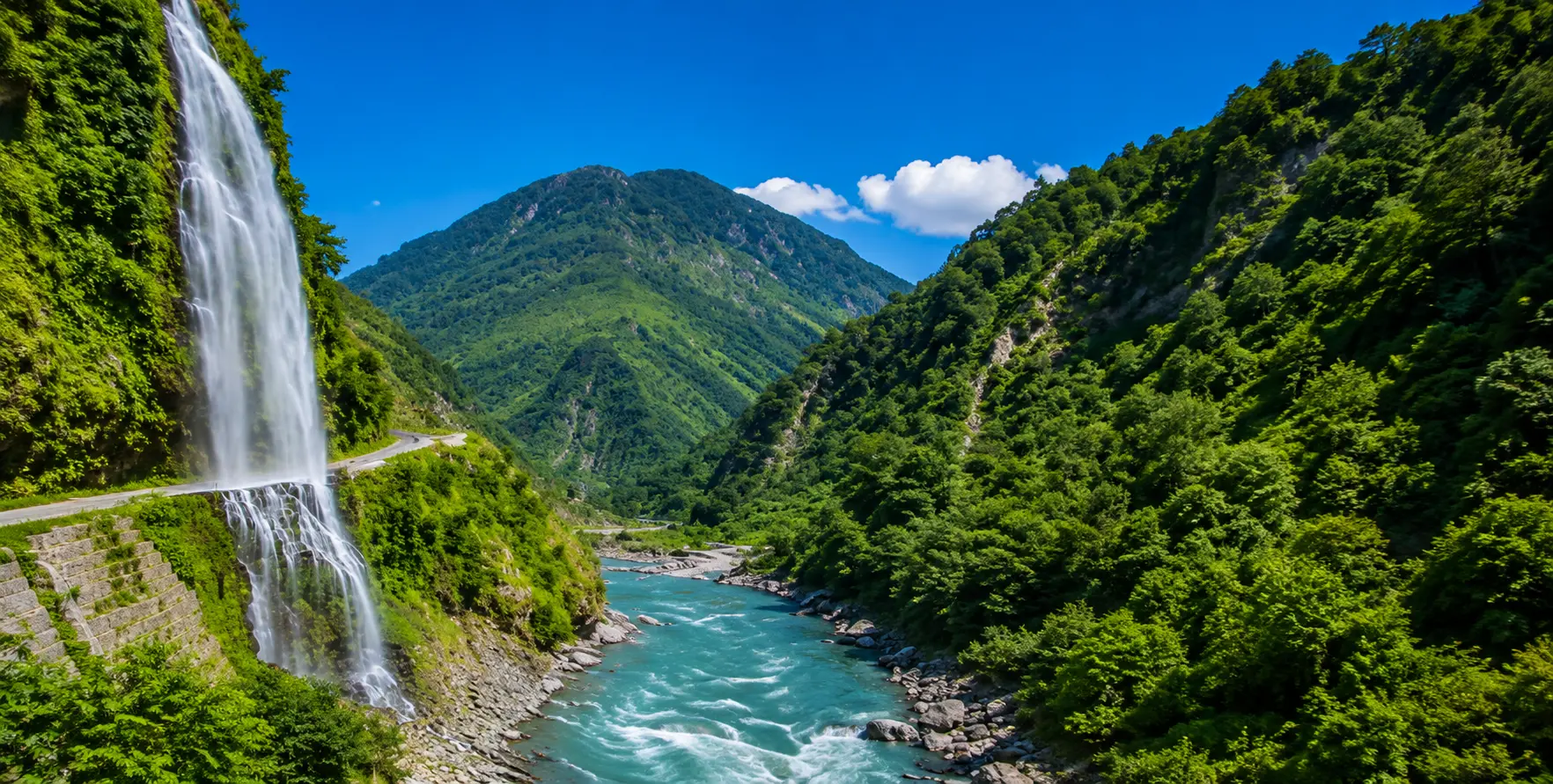
The road from Gongar Khola / Chhetchhet back to Kathmandu covers approximately 200 to 210 kilometers — confirmed by multiple current Rolwaling trek operators at 8 to 9 hours’ drive via the BB Highway (Arniko Highway and Dolakha District roads). The route follows the Dolakha District road southward from Gongar Khola through Singati, Charikot (Dolakha District headquarters at 1,980 meters), and the Dolalghat junction before joining the Arniko Highway for the final approach to Kathmandu through Banepa and the eastern valley rim. This is a mountain road of genuine character — winding, scenic, and demanding of an experienced driver and an appropriate vehicle for its more variable sections.
The road exits Gongar Khola / Chhetchhet climbing steeply through the Tamakoshi River valley scenery that defines the approach corridor’s lower sections — the dramatic gorge walls, terraced hillsides, and river views that the outbound journey passed in either darkness (if the group departed Kathmandu before dawn) or in reverse orientation (since the outbound drive carries passengers northward while their full attention is often directed toward the adventure ahead rather than the scenery around them). The return journey, by contrast, typically takes place in daylight. Many Rolwaling trekkers describe seeing the approach valley’s landscape properly for the first time on the return drive — the Tamakoshi gorge scenery, the Bhote Koshi river confluence, and the mid-hill villages of the Dolakha District corridor revealing themselves in the afternoon light with a beauty that the outbound pre-dawn departure or trekking-focused attention had made invisible.
Key Waypoints: Gongar Khola to Kathmandu
Gongar Khola (approximately 1,100 m): The return journey’s starting point — the small settlement at the confluence of the Gongar Khola stream and the Tamakoshi River where the Rolwaling Valley road access terminates and returning trekkers board their private vehicle for the Kathmandu journey. The adjacent settlement of Chhetchhet (1,377 m), a short distance from Gongar Khola, serves as the trail start/end point for most Rolwaling itineraries, where trekkers cross the suspension bridge over the Tamakoshi. Nepal Vehicle Hiring Pvt Ltd vehicles meet returning trekkers at either Gongar Khola or Chhetchhet depending on road conditions and the group’s preferred pickup point — confirm the exact meeting location when communicating the return date via WhatsApp.
Singati (approximately 800 m): The first significant settlement on the return route south of Gongar Khola, Singati is a roadside market town in the Tamakoshi valley where fuel stops, roadside snacks, and short comfort breaks are readily available. Many returning Rolwaling trekkers make a brief stop in Singati for refreshments before the longer climb to Charikot begins.
Charikot (1,980 m): The Dolakha District headquarters and the most significant town on the return corridor, Charikot sits on a ridge above the Tamakoshi valley at nearly 2,000 meters — a pleasant hill town with a broader range of hotel and restaurant options than the lower valley settlements. For trekkers who prefer to split the return journey with a Charikot overnight — arriving from Gongar Khola in the late afternoon, resting, and departing for Kathmandu fresh the next morning — Charikot offers the most practical and comfortable stopping point. The town’s ridge position offers fine views of the Gauri Shankar massif on clear mornings, and the Dolakha Bhimsen Temple (a significant pilgrimage site for Nepali Hindu devotees) adds a cultural dimension to the Charikot stop for trekkers with the energy and inclination to visit.
Dolalghat and Banepa: As the return route joins the Arniko Highway and approaches Kathmandu, the landscape shifts from Dolakha District’s hilly terrain to the increasingly developed and densely populated Kavrepalanchok District. The Dolalghat junction — where the Sunkoshi and Indrawati rivers meet — marks the point where the return journey shifts from mountain road to established national highway character. From Dolalghat, the Arniko Highway carries the vehicle into Banepa and then Dhulikhel before the final descent into the Kathmandu Valley. For trekkers who want to add a cultural stop to the return journey, Dhulikhel’s hilltop viewpoint offers a spectacular Himalayan panorama on clear afternoons — the same range of peaks visible from Nagarkot but from a slightly different angle, with the Rolwaling Himal and Gaurishankar range visible to the east in a context that the returning trekker can now recognize and name with intimate familiarity.
Vehicle Options for Gongar Khola to Kathmandu Return
Private 4WD Jeep — The Essential Choice
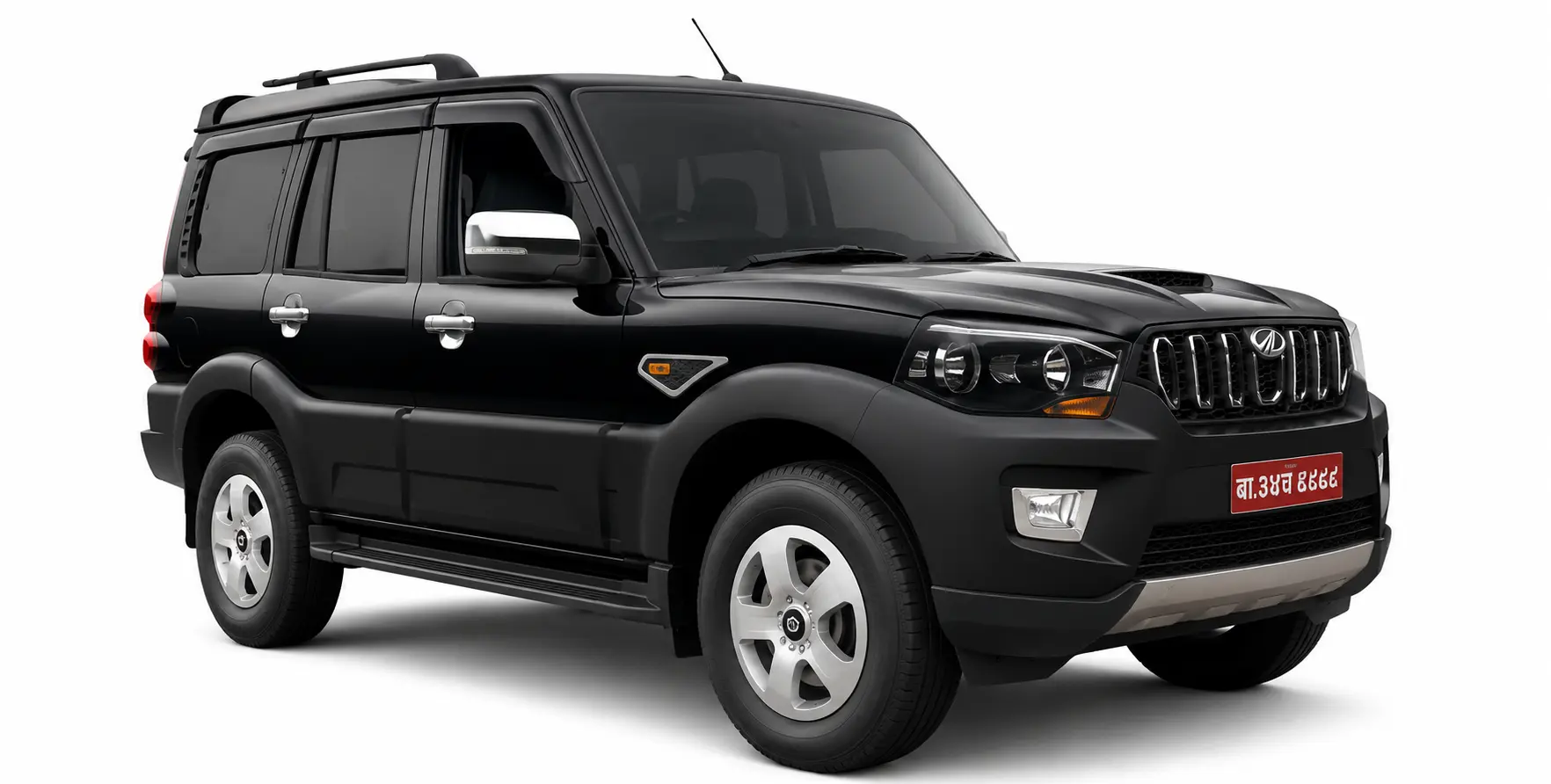
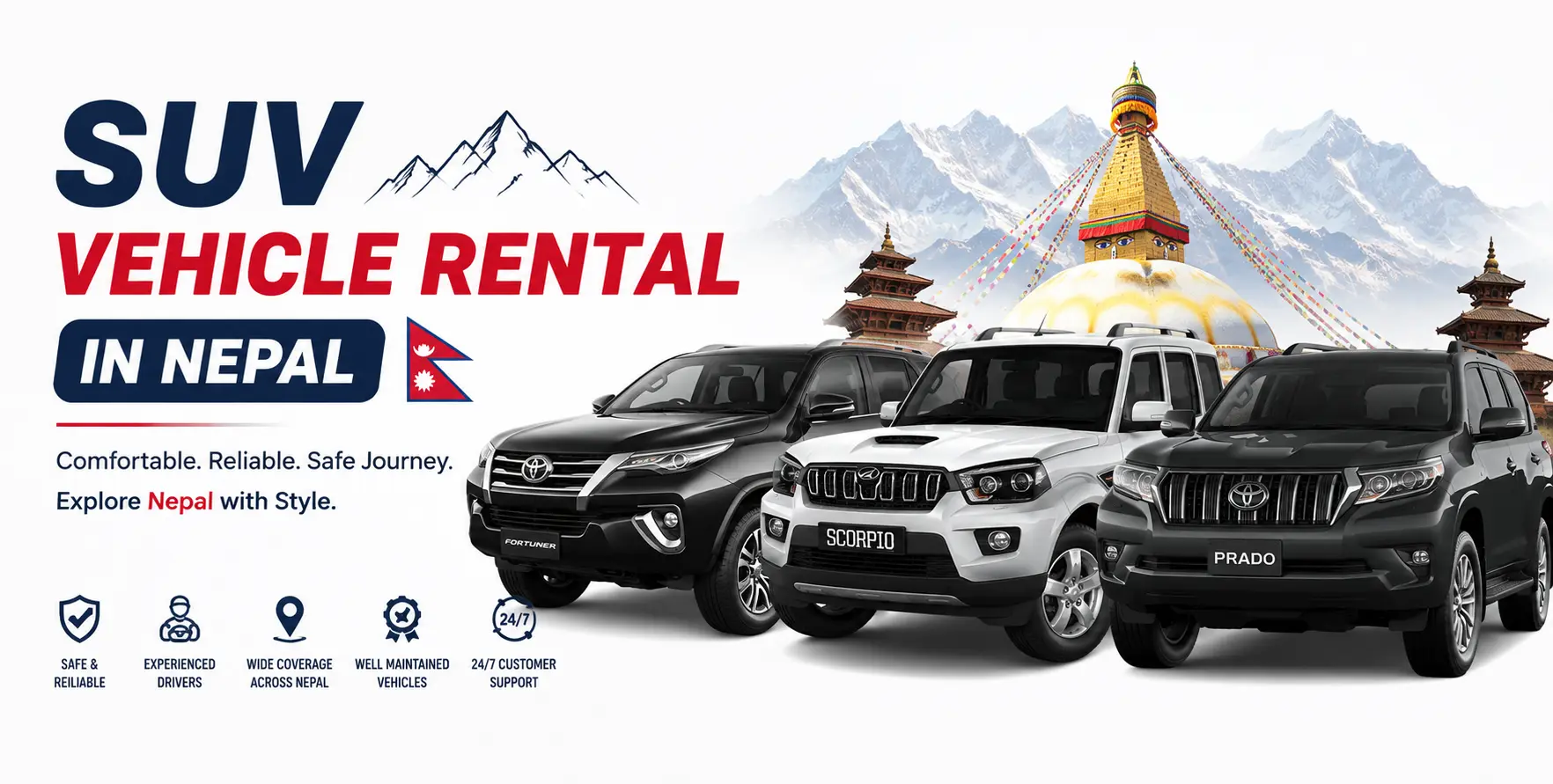
A proper 4WD jeep — Toyota Land Cruiser Prado, Land Cruiser VX, or Mahindra Scorpio — is the strongly recommended vehicle for the Gongar Khola to Kathmandu return journey. The Dolakha District road sections between Gongar Khola and Charikot involve sufficient road variation, gradient, and occasional rough-surface character that a vehicle with genuine 4WD capability and good ground clearance handles with a comfort and reliability margin that standard sedans or lower-clearance vehicles cannot match. This is especially true during and immediately after monsoon season (June through September), when Dolakha District roads can be compromised by rainfall, making 4WD engagement genuinely useful rather than merely precautionary.
The Toyota Land Cruiser Prado is Nepal Vehicle Hiring Pvt Ltd’s premium recommendation for the Gongar Khola to Kathmandu return — its spacious 7-seat interior providing the comfortable recovery environment that physically tired returning Rolwaling trekkers need after 10 to 14 days of sustained high-altitude walking, while its proven 4WD mountain road engineering handles the Dolakha District approach roads with easy confidence. The Land Cruiser’s effective climate control is especially welcome on the return journey’s lower-altitude sections near the Tamakoshi valley floor, where temperatures can be much warmer than the Rolwaling Valley’s high-altitude environment trekkers spent the preceding weeks in.
The Mahindra Scorpio provides a more economical 4WD alternative — proven on Nepal’s mountain road corridors, adequate for the Dolakha District approach sections, and sufficient for the 200-kilometer return journey at a meaningfully lower hire rate than the Land Cruiser. For budget-conscious groups, or those comfortable with a less refined cabin environment, the Scorpio delivers essential 4WD capability on a corridor where the Gongar Khola pickup point and the Dolakha District road sections reward ground clearance and all-wheel drive with improved safety and reliability margins. Nepal Vehicle Hiring Pvt Ltd’s 4WD jeep hire service provides both Land Cruiser and Scorpio options for the Rolwaling return with route-experienced drivers for each.
Private Car — Suitable for the Right Conditions
A private car or SUV — Toyota Fortuner, Hyundai Tucson, or similar — is a viable option for the Gongar Khola to Kathmandu return in good road conditions during the dry seasons of spring and autumn. The main sections of the Arniko Highway and Dolakha District roads are sealed and navigable by a well-maintained SUV; however, the sections closest to Gongar Khola, along with the variable character of the Singati-Charikot road in certain conditions, reward the jeep’s added capability. Nepal Vehicle Hiring Pvt Ltd advises on whether a private car is appropriate for specific return dates based on current road condition information — and recommends upgrading to a 4WD jeep for monsoon-season returns or when rainfall in the preceding days has made the lower road sections less predictable.
Hiace Van — The Group Return Solution
For Rolwaling trekking groups of 8 to 12 returning together, a Hiace van hire provides the most cost-effective group return vehicle for the sections of the Gongar Khola to Kathmandu route that the van’s ground clearance handles comfortably. The Hiace is appropriate for the Charikot to Kathmandu section on sealed road, and for the Gongar Khola to Charikot section in good dry-season conditions. For monsoon-season returns, or when the lower approach sections are in variable condition, Nepal Vehicle Hiring Pvt Ltd recommends a 4WD jeep for the Gongar Khola to Charikot section, with the Hiace meeting the group at Charikot if needed—a coordinated two-vehicle arrangement that optimizes both per-person cost and vehicle appropriateness for each road section.
Complete Cost Guide: Gongar Khola to Kathmandu 2026/27
The following cost information represents current 2026/27 market rates for private vehicle hire on the Gongar Khola to Kathmandu return corridor. All Nepal Vehicle Hiring Pvt Ltd rates are fully inclusive of vehicle, experienced driver, fuel, and applicable road tolls — with no hidden additions at settlement.
Private 4WD jeep — Toyota Land Cruiser Prado (5–7 passengers): NPR 22,000 to NPR 30,000 per vehicle (approximately USD 165 to USD 225). Per-person cost for a group of 6: NPR 3,667 to NPR 5,000. Best all-round option for the complete route. Nepal Vehicle Hiring Pvt Ltd’s private jeep hire service covers this return at transparent, all-inclusive rates.
Private car/premium SUV (3–4 passengers): NPR 16,000 to NPR 22,000 per vehicle (approximately USD 120 to USD 165). Suitable for dry-season returns on good road conditions. Nepal Vehicle Hiring Pvt Ltd offers Toyota Fortuner and equivalent options for this route.
Hiace van (8–12 passengers): NPR 25,000 to NPR 35,000 per vehicle (approximately USD 188 to USD 263).Per person for 10 passengers: NPR 2,500 to NPR 3,500. Nepal Vehicle Hiring Pvt Ltd’s Hiace van hire service is the most economical group return option for groups of 8 or more on the dry-season road.
Public bus comparison: A local bus from Charikot or the Dolakha District to Kathmandu costs approximately NPR 800 to NPR 1,500 per person and takes 10 to 12 hours — with no hotel pickup from Gongar Khola, no fixed departure time, shared seating, and no luggage security. The public bus serves trekkers with extremely limited budgets; for everyone else, the private vehicle’s pickup flexibility, comfort, and reliable timing are worth the modest additional cost per person for groups of three or more.
Tip: For a group of six trekkers returning from the Rolwaling Valley, a private Land Cruiser at NPR 26,000 total costs approximately NPR 4,333 per person — less than USD 33 each — for a comfortable 8-to-9-hour door-to-hotel return service. This per-person cost is the most efficient use of the return vehicle budget and should be the default choice for any group of four or more returning trekkers.
Why Private Jeep Hire Is Essential for the Rolwaling Return
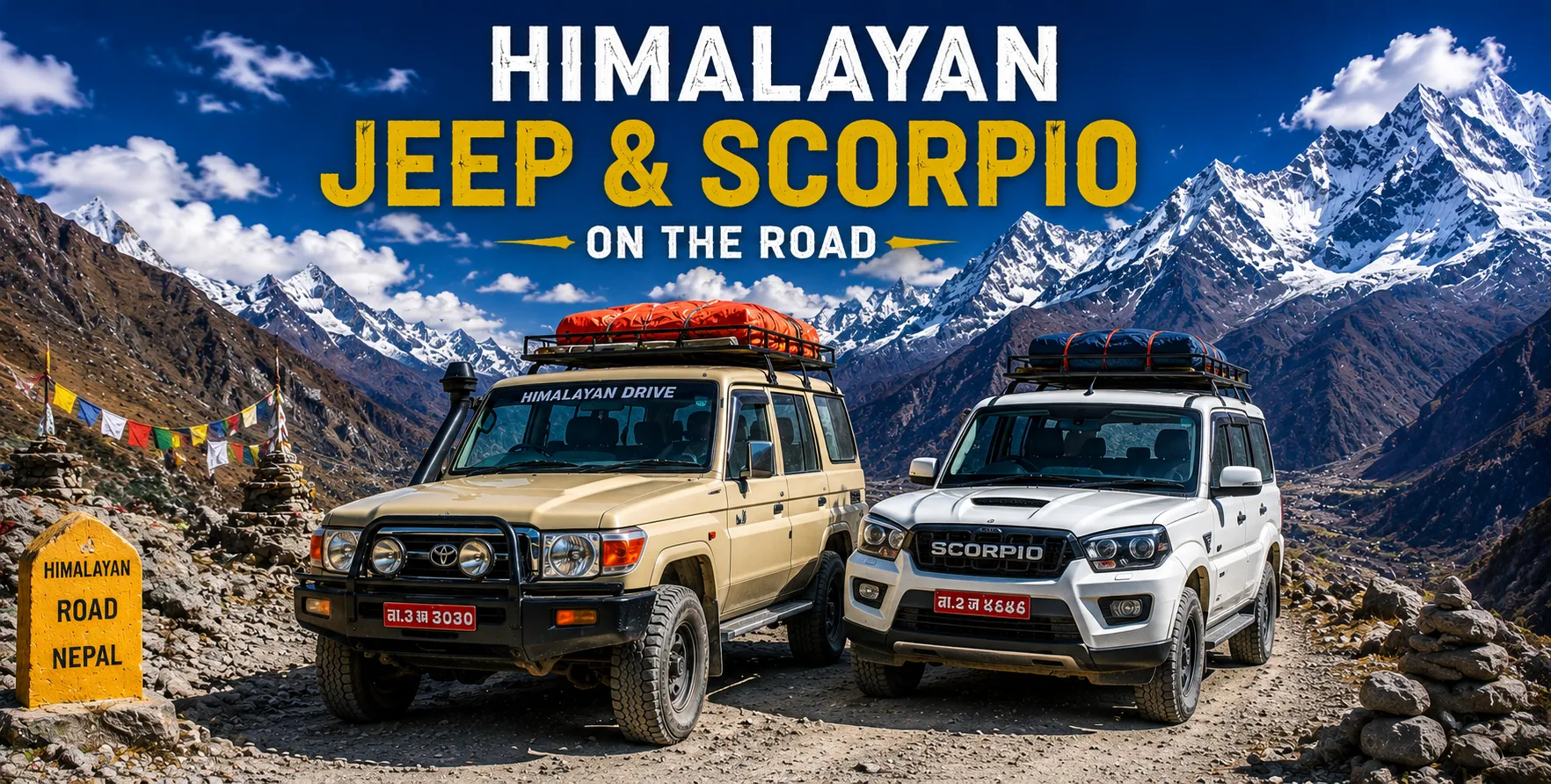
The case for a private jeep return from Gongar Khola over public bus or shared vehicle alternatives is unusually strong for the Rolwaling corridor specifically — because the specific character of this trailhead’s road and the remote, low-infrastructure character of the Dolakha District approach make the advantages of private transport more consequential than they are on better-served Nepal trekking corridors.
The Gongar Khola / Chhetchhet trailhead is not a bustling hub with multiple daily departure options and a readily available pool of local shared vehicles. It is a small, quiet settlement at the road terminus of a relatively low-traffic mountain road in Dolakha District. Returning trekkers who have not pre-arranged their return vehicle may find themselves waiting for shared vehicles or local buses on an uncertain schedule, in post-trek fatigue that makes extended waits far more uncomfortable than at the start of a fresh adventure. A pre-arranged private vehicle from Nepal Vehicle Hiring Pvt Ltd waiting at Gongar Khola or Chhetchhet eliminates this uncertainty — the vehicle is there when the group descends from the trail, the driver has been briefed, and the journey back to Kathmandu begins immediately without negotiation, waiting, or logistical improvisation at the end of what has been a physically demanding two-week mountain adventure.
Hotel drop-off in Kathmandu is the second major private vehicle advantage. After 10 to 14 days in the basic teahouse accommodation that characterizes Rolwaling Valley trekking, arriving directly at a Kathmandu hotel door — rather than at a general bus terminus, with all luggage safely in the vehicle boot rather than negotiating a separate city taxi—is a meaningful quality-of-return consideration. Nepal Vehicle Hiring Pvt Ltd’s return vehicles deliver to any Kathmandu hotel, guesthouse, or address, completing the circuit from wilderness to comfort with the maximum efficiency and minimum post-trek logistical effort.
The Outbound Kathmandu to Gongar Khola Journey: Planning Ahead
The best way to plan the return vehicle is as part of the complete Rolwaling transport plan, not as an afterthought at the trek’s end. The outbound journey from Kathmandu to Gongar Khola / Chhetchhet sets the template for the return — the same 200-kilometer route, the same 8-to-9-hour driving time, the same vehicle requirement for the Dolakha District approach section. Multiple current Rolwaling Valley Trek operators describe the outbound drive as ‘8 to 9 hours via the BB Highway (Arniko Highway) through Dolalghat, Charikot, Singati, and Gongar Khola’ covering approximately 200 to 210 kilometers. Nepal Vehicle Hiring Pvt Ltd provides both the outbound Kathmandu to Gongar Khola jeep transfer and the return Gongar Khola to Kathmandu pickup as a single coordinated booking—the most efficient and cost-effective approach to the complete Rolwaling vehicle transport arrangement.
The outbound journey to Gongar Khola typically departs Kathmandu between 6:00 and 7:00 a.m. to ensure arrival at the trailhead in the early afternoon, with enough daylight to cross the Tamakoshi suspension bridge and reach the first teahouse at Simigaon before dark. The route passes through Bhaktapur on the eastern Kathmandu Valley rim — many trekking groups make a brief stop at the ancient Newar city on the outbound journey for the cultural orientation it provides before entering the more remote Himalayan world of the Rolwaling. Nepal Vehicle Hiring Pvt Ltd can incorporate a Bhaktapur stop into the outbound Kathmandu to Gongar Khola transfer on request, adding 1 to 1.5 hours to the journey but delivering a first cultural Nepal experience of genuine quality before the wilderness begins.
Seasonal Considerations: Return Journey Through the Year
The Gongar Khola to Kathmandu return journey’s character changes meaningfully by season — and the Rolwaling Valley’s trekking season constraints mean that the return vehicle is most commonly needed in the spring (March to May) and autumn (September to November) windows that also represent the finest road conditions on the Dolakha District approach corridor.
Autumn,n from September through November,r is both the finest Rolwaling trekking season and the finest road-conditions period for the return journey. Post-monsoon road surfaces are newly stable, the Tamakoshi valley’s scenery is at its most vividly green and atmospheric in the weeks immediately after the monsoon’s departure, and the clear post-monsoon air delivers exceptional mountain views from the higher road sections near Charikot. Nepal Vehicle Hiring Pvt Ltd recommends autumn as the optimal return season for Rolwaling trekkers — the combination of excellent trail conditions on the Tsho Rolpa approaches and excellent road conditions on the return corridor making October and November the calendar’s finest window for the complete Rolwaling experience.
Spring,g from March through May, brings the rhododendron bloom that transforms the Rolwaling approach forests in March and April, and road conditions are generally good after the winter dry period. Late May pre-monsoon conditions can make some road sections more variable as early rainfall begins to affect the Dolakha District, and Nepal Vehicle Hiring Pvt Ltd monitors road conditions during this transitional period to provide clients with accurate departure timing advice.
Monsoon season from June through August brings the highest road disruption risk on the Gongar Khola to Kathmandu corridor—the sections between Gongar Khola and Charikot are historically most affected by landslides and road surface deterioration during sustained heavy rainfall. The Rolwaling Valley Trek is not commonly undertaken during monsoon season given both the trail conditions at higher elevation and the road risk on the approach corridor. For the small number of experienced trekkers who do visit during monsoon, Nepal Vehicle Hiring Pvt Ltd specifically recommends a Land Cruiser 4WD for the monsoon-season return and monitors current road conditions before confirming departure timing from Gongar Khola.
The Rolwaling Experience: What Trekkers Return Having Seen
Understanding what the Rolwaling Valley delivers to trekkers helps contextualize why the return vehicle arrangement matters as much as it does—because the quality of experience the valley provides creates a specific emotional character in returning trekkers that the best return vehicle service supports rather than disrupts. The Rolwaling Valley Trek is not the Everest Base Camp trail’s celebrated accessibility or the Annapurna Circuit Trek’s comprehensive infrastructure. It is a more demanding, more remote, and in many ways more profound encounter with Nepal’s Himalayan world — the kind of trek that changes returning trekkers’ frames of reference for what authentic mountain wilderness means.
The approach through the Tamakoshi River valley from Chhetchhet to Simigaon, climbing steeply through traditional Tamang and Chhetri villages on the ridge above the gorge, already signals a less-traveled and more culturally intact corridor than the most famous Nepal trekking routes. Simigaon at 2,020 meters is the valley’s first Sherpa village — a compact, traditional settlement with a small monastery and the warm teahouse hospitality that characterizes Rolwaling’s genuinely limited but deeply sincere accommodation infrastructure. The progression northward through Dongang, across the Rolwaling Khola suspension bridges, and up to Beding at 3,510 meters — the valley’s largest and most culturally rich Sherpa settlement — delivers an encounter with living Buddhist mountain culture at a depth that the more heavily commercialized Sherpa communities of the Everest corridor rarely match.
Na Gaon, at 4,120 meters, the valley’s highest permanently inhabited village, marks the point where the Rolwaling’s character fully transitions into the high Himalayan landscape that defines the trek’s most powerful visual and spiritual moments. The ancient monastery at Na — where the great 8th-century Buddhist master Guru Padmasambhava is said to have meditated — sits above the village amid glaciated peaks and high-altitude pastureland, creating one of Nepal’s most authentically timeless Himalayan experiences. From Na, the approach to the Tsho Rolpa glacial lake — a half-day walk to the lake at 4,580 meters through moraine and tundra terrain, with the Rolwaling Himal reflected in the turquoise water — is consistently described by trekkers as the visual and emotional highlight of the valley experience. Those undertaking the Three Passes Trek, or extending their Rolwaling adventure toward Tashi Lapcha Pass for the crossing into the Khumbu near the Gokyo Lake Trek corridor, add further days of extraordinary high-altitude wilderness to the experience.
Booking Your Return Vehicle: Practical Steps
Book Before the Trek Begins
The most important practical step for the Gongar Khola to Kathmandu return is booking the vehicle before the trek begins, ideally with the outbound Kathmandu to Gongar Khola transfer in a single Nepal Vehicle Hiring Pvt Ltd arrangement. This pre-booking secures vehicle availability for your return date, provides the return driver’s WhatsApp contact details for communication from the trail, and removes the logistical uncertainty of arranging return transport from Gongar Khola’s limited local vehicle supply at the end of a demanding trek. Contact Nepal Vehicle Hiring Pvt Ltd at +977 9851013196 (WhatsApp/Viber) or through vehiclehiringnepal.com with your return date, group size, and pickup preference (Gongar Khola or Chhetchhet) to confirm the complete arrangement before departure.
Communication from the Trail
Mobile connectivity on the Rolwaling Valley Trek is available at the lower valley settlements — Simigaon has NTC network coverage that allows WhatsApp communication — but becomes limited or absent above Beding and in the upper valley toward Na and the Tsho Rolpa. The practical communication strategy is: confirm the return date to the Nepal Vehicle Hiring Pvt Ltd driver by WhatsApp when leaving Na or Beding on the descent, giving 2 to 3 days’ notice of the expected Gongar Khola/Chhetchhet arrival. This advance notice alerts the driver to position and be ready at the pickup point on the confirmed day, without last-minute communication from the final descent section, where connectivity is often absent.
- Book the return vehicle before the trek begins — the same booking session as the outbound Gongar Khola transfer.
- Save the driver’s WhatsApp number before leaving Kathmandu — use it to send return-date confirmation from Simigaon or Beding on the descent.t
- Confirm the exact pickup point — Gongar Khola settlement or the Chhetchhet suspension bridge area — which may differ slightly based on where the trail meets the road.
- Pack a change of clean clothes at the top of your pack for the return vehicle journey — 10 to 14 days of trail wear makes fresh clothing a meaningful quality-of-return consideration.n
- Carry NPR cash from the outbound journey — Gongar Khola and Chhetchhet have no ATMs, and you pay the return vehicle fare in NPR at the end of the journey.
- Consider a Charikot overnight if the final descent day leaves the group arriving at Gongar Khola in the late afternoon — a Charikot overnight and fresh 6:00 a.m. Kathmandu departure the following morning produces a noticeably more comfortable return than a 5:00 p.m. departure arriving in Kathmandu at midnight.
- For the return journey, confirm whether you want a Bhaktapur or Dhulikhel viewpoint stop — Nepal Vehicle Hiring Pvt Ltd drivers for this route know the best stops and can time them appropriately within the day’s journey.
Post-Trek Kathmandu: What Rolwaling Returnees Do Next
The Kathmandu days after completing the Rolwaling Valley Trek offer natural opportunities for the cultural and sightseeing activities the trek’s remote character has heightened appreciation for. Nepal Vehicle Hiring Pvt Ltd’s Kathmandu sightseeing vehicles serve Rolwaling returnees for the UNESCO World Heritage temple circuit — Pashupatinath, Boudhanath, Swayambhunath, and Patan Durbar Square — in a well-paced day by private car or jeep. The Bhaktapur Durbar Square day tour is particularly resonant for returning Rolwaling trekkers, as the outbound route passed through Bhaktapur’s outskirts, and the medieval Newar city’s concentrated heritage offers a vivid cultural counterpoint to the Sherpa and Tamang communities of the Rolwaling Valley just experienced.
For trekkers extending their Nepal adventure beyond the Rolwaling, Nepal Vehicle Hiring Pvt Ltd’s complete transport network connects Kathmandu to every major trekking and tourism destination. A post-Rolwaling Kathmandu to Pokhara private vehicle opens the Annapurna region for a second trekking adventure or lakeside rest. Our Kathmandu to Syabrubesi jeep transfer connects to the Langtang Valley Trek — Nepal’s closest Himalayan glacier trek to the capital. Our Kathmandu to Salleri and Phaplu overland service reaches the Everest Base Camp Trek corridor without a domestic flight. Our Kathmandu to Soti Khola jeep service provides the Manaslu Circuit Trek approach from Kathmandu. And our Nagarkot sunrise tour offers a final Himalayan farewell panorama before any international departure — seeing the Gaurishankar and Rolwaling Himal on the northern horizon from Nagarkot after walking through their foothills creates a geographic synthesis of the complete Nepal experience that many Rolwaling returnees describe as one of their trip’s most moving moments.
Nepal Vehicle Hiring Pvt Ltd: Complete Network for Rolwaling Trekkers
Nepal Vehicle Hiring Pvt Ltd provides a complete vehicle hire network for Rolwaling Valley Trek transport—from the outbound Kathmandu to Gongar Khola jeep transfer through the return pickup and every Kathmandu city and onward trekking vehicle requirement. Our private jeep hire, private car hire, Hiace van hire, coaster hire, and bus hire cover groups from solo travelers to 40+ person expedition parties. Our Kathmandu airport transfer begins every Nepal journey from Tribhuvan International Airport. Our Kathmandu sightseeing service covers the UNESCO heritage circuit. Our Bhaktapur day tour vehicle and Nagarkot sunrise tour serve the most popular Kathmandu Valley day trips.
Our trekking trailhead network covers Kathmandu to Syabrubesi for Langtang, Kathmandu to Besisahar and Kathmandu to Manang jeep for Annapurna Circuit, Kathmandu to Soti Khola for Manaslu Circuit, Kathmandu to Salleri Phaplu for Everest overland, Kathmandu to Muktinath jeep for Mustang pilgrimage, Pokhara to Nayapul transport, Pokhara to Ghandruk jeep, Pokhara to Ghorepani Poon Hill jeep, Pokhara to Upper Mustang overland jeep, Sarangkot sunrise tour vehicle, Pokhara car hire, and the Kathmandu to Pokhara private vehicle inter-city connection. Our Nepal tour packages and trekking transfer services coordinate complete multi-stage Nepal journeys. Plan your complete trip or contact us at +977 9851013196 (WhatsApp). Visit vehiclehiringnepal.com to book.
Comparing Rolwaling with Nepal’s Other Remote Trek Returns
The Gongar Khola to Kathmandu return falls into a specific category of Nepal trekking returns — those from genuinely remote, lower-infrastructure trailheads where the private vehicle arrangement matters more than on the well-served Everest and Annapurna corridors. Understanding how the Rolwaling return compares with other remote trek returns helps trekkers contextualize the logistics involved and choose the right vehicle.
The most similar return corridor in Nepal’s trekking network is the Dharapani to Kathmandu return after the Manaslu Circuit Trek. Both the Rolwaling and Manaslu Circuit approach through Gorkha and Dolakha districts, respectively; both involve return roads of variable quality that require appropriate vehicle selection; and both trailhead settlements have limited local vehicle availability, making pre-arranged private pickup strongly preferable to last-minute local vehicle negotiation. The Gongar Khola return covers a similar distance (200 to 210 km) to the Dharapani return (approximately 220 km), and both take 8 to 9 hours by private jeep. The primary difference is road character: the Rolwaling return’s Dolakha District sections require 4WD for the lower gorge sections near Gongar Khola, while the Dharapani return’s Marsyangdi valley road is generally more consistent in quality throughout.
The Kanchenjunga Base Camp Trek return from Taplejung is Nepal’s other major remote eastern trek return corridor — significantly longer (approximately 500 km from Taplejung to Kathmandu, 12 to 15 hours) and more demanding in terms of advance booking requirements given the Taplejung area’s distance from Kathmandu. The Tsum Valley Trek return from the Gorkha District shares some logistical character with the Rolwaling return — both require 4WD jeep hire for the mountain district approach sections, and both benefit strongly from pre-arranged rather than locally negotiated return transport. Nepal Vehicle Hiring Pvt Ltd provides dedicated private jeep hire for all these remote trek return corridors, with the same route-experienced-driver-assignment philosophy that characterizes our Rolwaling corridor service.
The Rolwaling Trek Route in Detail: From Gongar Khola to Tsho Rolpa and Back
For trekkers planning the Rolwaling Valley Trek and coordinating the vehicle return as part of a complete itinerary, understanding the complete trek route’s structure from the road terminus at Gongar Khola / Chhetchhet to the highest point and back helps estimate the return vehicle date with accuracy. The standard round-trip Rolwaling Valley itinerary from the road covers 10 to 14 days of walking depending on pace, fitness, and whether rest days at Beding and exploration days around the Tsho Rolpa are included.
Day 1 from Chhetchhet: Cross the Tamakoshi suspension bridge and climb steeply up the ridge to the Tamang village of Simigaon at 2,020 meters — a 3-to-4-hour climb that immediately establishes the Rolwaling’s characteristically steep and forested lower terrain. Simigaon’s ridge-top position above the gorge provides the first clear views of the Gauri Shankar range to the north, and the village’s small gompa and traditional Tamang architecture offer a first cultural encounter with the mixed Tamang-Sherpa community that defines the valley’s lower settlements. Day 2 continues northward through Dongang and across suspension bridges over the Rolwaling Khola tributary streams, climbing to Beding at 3,510 meters through increasingly spectacular mountain terrain. Beding deserves at least one rest day — the ancient monastery above the village, the yak grazing pastures, and the cultural depth of the largest Sherpa settlement in the Rolwaling Valley all reward unhurried exploration. From Beding, the trail continues north to Na Gaon at 4,120 meters and the approach to the Tsho Rolpa glacial lake at 4,580 meters — the trek’s visual and spiritual culmination. The Rolwaling Valley Trek return follows the same route in reverse to Chhetchhet and Gongar Khola, with the descent typically taking 2 to 3 days less than the ascent for fit trekkers who don’t need acclimatization rest days on the way down.
The complete Rolwaling round trip from Gongar Khola covers about 80 to 100 kilometers of trail—a distance that seems modest compared to the Annapurna Circuit’s 160-plus-kilometer route. Still, it involves altitude gain and loss across very steep terrain, making the physical demands comparable to much longer flat-terrain routes. Most trekking agencies describe the Rolwaling as a moderate-to-challenging trek for fit adult walkers, with the Tsho Rolpa lake approach day and the return from Na to Beding being the most physically demanding single-day stages of the standard itinerary.
Combining Rolwaling with the Everest Tashi Lapcha Extension
The most adventurous Rolwaling itinerary extends through Tashi Lapcha Pass at 5,755 meters into the Khumbu region. This crossing connects the Rolwaling Valley with the Everest Base Camp Trek and Gokyo Lake Trek corridor, creating one of Nepal’s most extraordinary multi-region trekking adventures. The Tashi Lapcha crossing is technically demanding — involving glacier travel that requires experience, appropriate equipment, and a licensed guide with specific high-altitude crossing competence — and is typically undertaken only by well-equipped, experienced trekkers with 20 to 25 days of total trek time available.
For trekkers completing the Tashi Lapcha crossing, the return to Kathmandu differs significantly from the standard Rolwaling round-trip return. Instead, going to Gongar Khola, the crossing carries trekkers through the Khumbu to Namche Bazaar and eventually to Lukla for the domestic flight back to Kathmandu, or via the Everest Base Camp Trek trail to the Three Passes Trek circuit before exiting at Lukla. For these extended Rolwaling-Khumbu itineraries, Nepal Vehicle Hiring Pvt Ltd coordinates only the outbound Kathmandu to Gongar Khola jeep transfer — the return is managed through the Lukla flight infrastructure rather than road transport. Clients combining Rolwaling with the Tashi Lapcha crossing should book only the outbound Gongar Khola transfer and arrange the Lukla return separately through their trekking operator.
For trekkers who want to experience elements of both the Rolwaling and Everest corridors without the technical demands of the Tashi Lapcha crossing, Nepal Vehicle Hiring Pvt Ltd offers coordinated vehicle arrangements: a Kathmandu to Gongar Khola outbound transfer for the Rolwaling valley circuit, return to Kathmandu by private jeep, then a subsequent Ramechhap Airport transfer for the Lukla flight and the Everest Base Camp Trek or Gokyo Lake Trek approach — two complete Himalayan adventures in a single extended Nepal itinerary with coordinated private vehicle support across every road stage. This combination offers some of the finest trekking diversity in Nepal’s eastern Himalayan region, connecting Rolwaling’s pristine wilderness with the Khumbu’s legendary mountain grandeur through a Kathmandu base, with Nepal Vehicle Hiring Pvt Ltd providing airport transfers, sightseeing vehicles, and tour package coordination throughout.
Nepal Vehicle Hiring Pvt Ltd’s complete trekking return network covers every major Nepal trek corridor: Gongar Khola to Kathmandu for Rolwaling, Dharapani to Kathmandu for Manaslu Circuit, Syabrubesi return for Langtang, Salleri-Phaplu return for Everest overland, Nayapul return for Annapurna Base Camp, Ghandruk return for Annapurna foothills, Jomsom / Upper Mustang return for Mustang overland — all with the same transparent pricing, route-experienced drivers, and pre-book-with-outbound convenience that defines Nepal Vehicle Hiring Pvt Ltd’s return vehicle philosophy. For the Ghorepani Poon Hill Trek and Annapurna Base Camp Trek returns via Nayapul and Pokhara, our Pokhara car hire and Kathmandu to Pokhara vehicle complete the return chain. Our Everest Base Camp Trek support coordinates the Salleri approach and Lukla-to-Kathmandu airport transfer for the complete Everest corridor. For the Upper Mustang Trek, our Pokhara-to-Mustang jeep operates in both directions. And for the Kanchenjunga Base Camp Trek, our eastern Nepal vehicle network provides the complete Taplejung approach and return corridor. Contact Nepal Vehicle Hiring Pvt Ltd to book a return vehicle for any Nepal trek. Our complete fleet of private jeeps, Hiace vans, and buses serves every group size across every Nepal trek corridor.
Frequently Asked Questions
How far is Gongar Khola from Kathmandu?
The road distance from Gongar Khola / Chhetchhet to Kathmandu is approximately 200 to 210 kilometers via the Arniko Highway, Dolalghat, Charikot, and Singati. Multiple current Rolwaling Valley Trek operators confirm the drive takes 8 to 9 hours by private vehicle. Nepal Vehicle Hiring Pvt Ltd provides this return service with experienced Dolakha District corridor drivers.
What is the best vehicle for the Gongar Khola to Kathmandu return?
A private 4WD jeep—Toyota Land Cruiser Prado or Mahindra Scorpio—is strongly recommended for the full return route. The Dolakha District sections between Gongar Khola and Charikot have variable road character that rewards genuine 4WD capability and good ground clearance. Nepal Vehicle Hiring Pvt Ltd’s jeep hire costs NPR 22,000 to NPR 30,000 for the full vehicle —about USD 165 to USD 225.
Is there a bus from Gongar Khola to Kathmandu?
Local buses and shared jeeps connect Charikot to Kathmandu, but direct scheduled public transport from Gongar Khola / Chhetchhet is very limited given the remote character of this trailhead. Most returning Rolwaling trekkers either pre-arrange a private vehicle or take a local vehicle from Gongar Khola to Charikot and connect to Kathmandu from there. A private vehicle from Nepal Vehicle Hiring Pvt Ltd eliminates this two-stage uncertainty.
Should I book the return vehicle before or after the trek?
Before the trek — ideally in the same booking session as the outbound Kathmandu to Gongar Khola transfer. Pre-booking guarantees vehicle availability for the return date, provides the driver’s WhatsApp contact for trail communication, and eliminates post-trek transport uncertainty. Contact Nepal Vehicle Hiring Pvt Ltd at +977 9851013196 to book both legs simultaneously.
Can I overnight at Charikot and return to Kathmandu the next morning?
Yes — and Nepal Vehicle Hiking Pvt Ltd recommends this for groups arriving at Gongar Khola in the late afternoon. Charikot at 1,980 meters has comfortable hotel options, and a fresh morning departure from Charikot at 6:00 a.m. reaches Kathmandu by 2:00 to 3:00 p.m. — a much more comfortable return than a late-afternoon Gongar Khola departure arriving in Kathmandu close to midnight.
What permit is required for the Rolwaling Valley Trek?
The Rolwaling Valley Trek requires a Gaurishankar Conservation Area Permit (GCAP) and a TIMS card (Trekkers’ Information Management System). You can obtain both from the Nepal Tourism Board office in Kathmandu before departure. A licensed guide is mandatory for all foreign trekkers in Nepal’s conservation areas under the 2023 mandatory guide regulation.
Conclusion: Complete the Rolwaling Circle with the Right Return Vehicle
The Rolwaling Valley Trek is one of Nepal’s most extraordinary trekking experiences — a journey through pristine wilderness, living Sherpa culture, and the magnificent glaciated landscape of the Gaurishankar range that rewards the commitment of reaching it with memories and perspectives of lasting depth. The private jeep from Gongar Khola that closes this journey and carries returning trekkers to Kathmandu is not incidental to the experience. Still, its final chapter — and NepalVehicle Hiring Pvt Ltd is committed to making that chapter as comfortable, as reliable, and as professionally managed as the adventure it completes.
Our private 4WD jeep hire, private cars, and Hiace vans provide the complete return vehicle solution for every size and every need. Contact our team today at +977 9851013196 (WhatsApp/Viber) to book your Gongar Khola to Kathmandu return vehicle, plan your complete Rolwaling trekking transport including the outbound Kathmandu to Gongar Khola jeep, or explore our Nepal tour packages for combined trekking and cultural itineraries. Visit vehiclehiringnepal.com — the vehicle hire partner that starts and completes your Rolwaling Valley adventure.
- Rolwaling Valley Trek Return: Gongar Khola to Kathmandu Private Jeep 2026/27 Complete Guide
- About the Rolwaling Valley Trek: Understanding the Context
- The Return Route: Gongar Khola to Kathmandu in Full Detail
- Vehicle Options for Gongar Khola to Kathmandu Return
- Complete Cost Guide: Gongar Khola to Kathmandu 2026/27
- Why Private Jeep Hire Is Essential for the Rolwaling Return
- The Outbound Kathmandu to Gongar Khola Journey: Planning Ahead
- Seasonal Considerations: Return Journey Through the Year
- The Rolwaling Experience: What Trekkers Return Having Seen
- Booking Your Return Vehicle: Practical Steps
- Post-Trek Kathmandu: What Rolwaling Returnees Do Next
- Nepal Vehicle Hiring Pvt Ltd: Complete Network for Rolwaling Trekkers
- Comparing Rolwaling with Nepal's Other Remote Trek Returns
- The Rolwaling Trek Route in Detail: From Gongar Khola to Tsho Rolpa and Back
- Combining Rolwaling with the Everest Tashi Lapcha Extension
- Frequently Asked Questions
- Conclusion: Complete the Rolwaling Circle with the Right Return Vehicle
