Plan a Trip


Everest Base Camp Helicopter Tour One Day
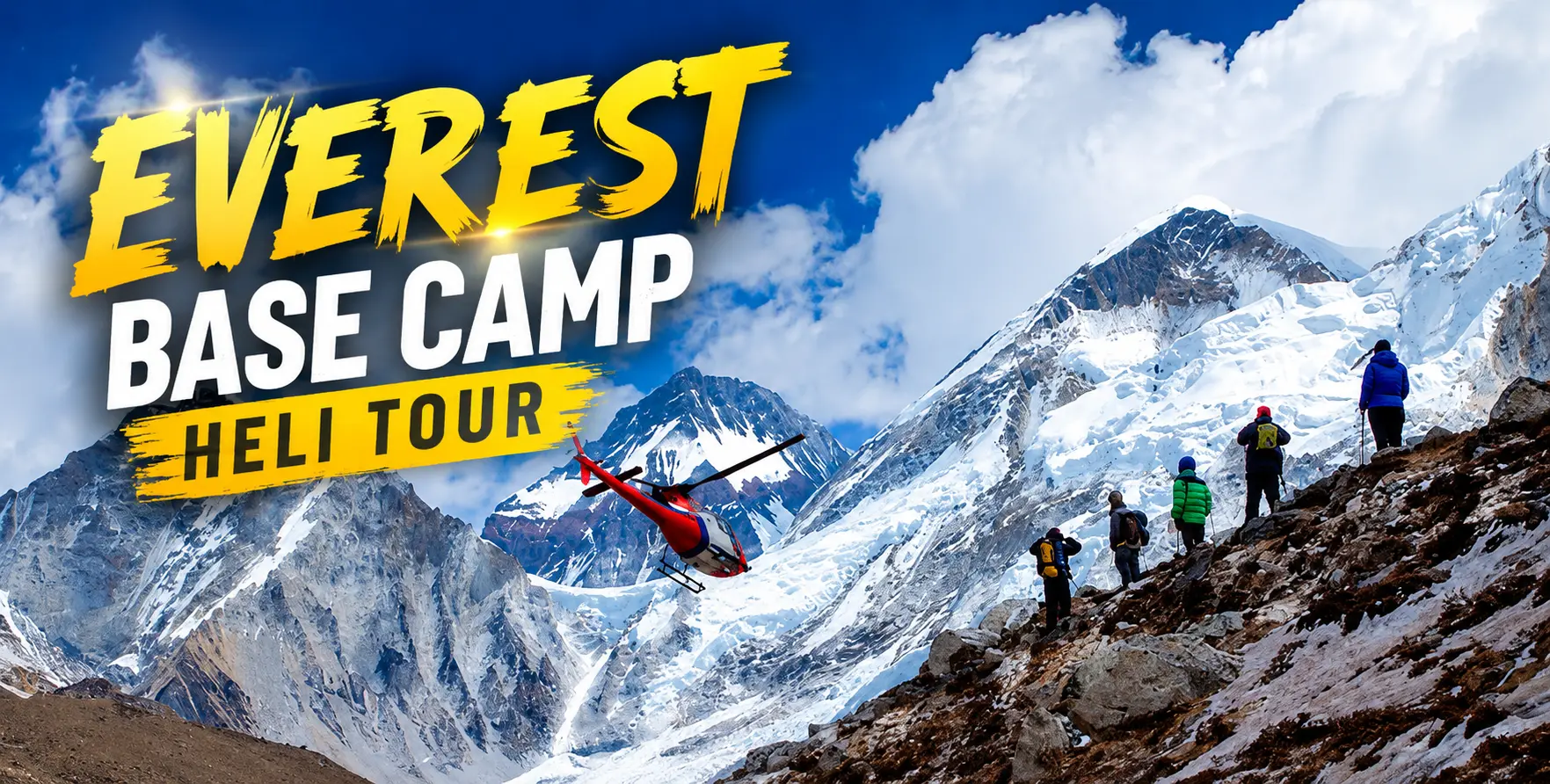
Everest Helicopter Tour: One-Day Full Guide 2026/2027
Everest helicopter tour has become one of Nepal’s most sought-after experiences: a single morning that takes you from the streets of Kathmandu to the foot of Everest itself and back again, all before lunch. It is not a substitute for the Everest Base Camp Trek in any deeper sense; the two experiences serve different travelers with different goals, but for time-limited visitors, older travelers, families, or anyone pairing a shorter Nepal itinerary with a bucket-list mountain view, it remains one of the most efficient and genuinely spectacular ways to experience the Himalayas.
This guide covers everything travelers need to know about the one-day Everest helicopter tour heading into 2026 and 2027: the route and typical timeline, what is included, private versus shared group options, cost factors, seasonal and weather considerations, safety and altitude notes, and how ground transport and airport logistics fit around the flight itself. Nepal Vehicle Hiring works alongside our sister trekking companies to coordinate the ground transport side of this experience, and this guide draws on that combined view of how the tour actually works in practice.
What Is the Everest Helicopter Tour
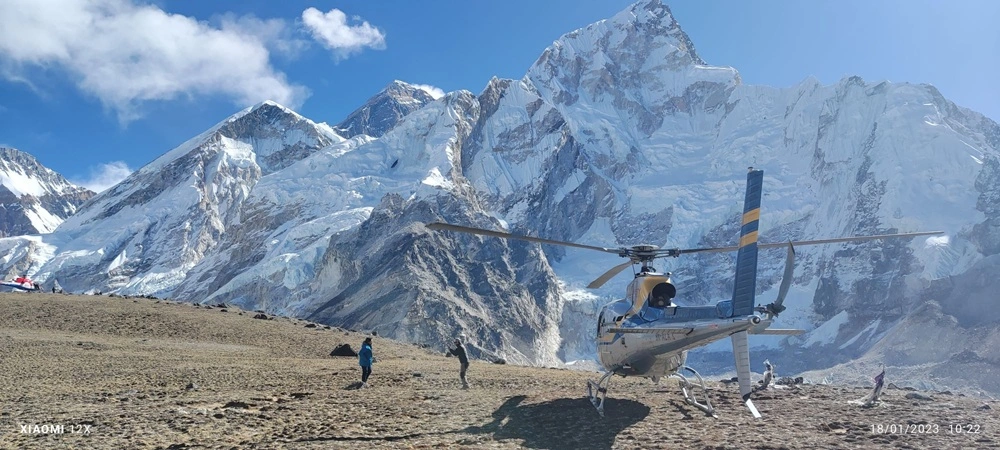
The Everest helicopter tour is a single-day scenic flight departing from Kathmandu, flying directly over the foothills and mid-hill villages of the Solukhumbu region before entering the high Himalaya and approaching Everest, Lhotse, Nuptse, and the surrounding peaks at close range. Most itineraries include a landing near Everest Base Camp or at a high viewpoint such as Kala Patthar for photographs, followed by a second landing at the Everest View Hotel in Syangboche for a mountain-view breakfast, before returning to Kathmandu. The entire experience, door to door, typically takes three to four hours, making it feasible as a half-day activity even for travelers with a tight overall Nepal itinerary.
This tour has grown steadily in popularity over the past decade, driven by rising demand from time-limited international travelers and improvements in helicopter fleet availability and operator experience on this specific high-altitude route. Heading into 2026 and 2027, continued growth in Nepal’s premium tourism segment, alongside Pokhara’s expanding international airport, is expected to keep demand for this experience strong, particularly among travelers pairing it with luxury lodge trekking or broader Himalayan touring itineraries.

The Route: What You Actually See
A typical Everest helicopter tour departs from Kathmandu, usually from either Tribhuvan International Airport’s domestic terminal or a private helipad depending on the operator, and climbs out over the Kathmandu Valley before turning east toward the Solukhumbu region. The early part of the flight passes over the mid-hill landscape familiar to trekkers walking the classic Jiri approach, before the terrain rises sharply as the helicopter enters the higher Khumbu region, passing near Lukla and Namche Bazaar from the air.
The flight typically continues up the Khumbu valley, offering aerial views of Tengboche Monastery, Ama Dablam, and the approach to Everest Base Camp itself, before landing at or near Kala Patthar, the classic ground-level viewpoint for Everest’s summit, or in some itineraries closer to Everest Base Camp directly, subject to weather and specific operator routing. After a roughly ten- to fifteen-minute landing for photos, most tours continue to the Everest View Hotel at Syangboche, above Namche Bazaar, for a mountain-view breakfast before the return flight to Kathmandu.
A Typical One-Day Timeline
While exact timing varies by operator and weather conditions, a standard Everest helicopter tour day typically follows a similar pattern. An early departure, usually between 5:30 and 6:30 in the morning, takes advantage of the clearest flying conditions before daytime cloud typically builds over the mountains. The flight to the Everest Base Camp or Kala Patthar area takes approximately fifty minutes to just over an hour, depending on the exact route and aircraft. After a short landing for photographs, the helicopter continues to Syangboche for a breakfast stop lasting thirty to forty-five minutes at the Everest View Hotel, one of the highest-altitude hotels in the world, before the return flight to Kathmandu, arriving back mid-morning. Most travelers return to their Kathmandu hotel by nine or ten in the morning, freeing the rest of the day for other activities.
What Is Typically Included
- Round-trip helicopter transport from Kathmandu to the Everest region and back.
- A landing near Everest Base Camp or at Kala Patthar for photographs, subject to weather conditions on the day.
- A breakfast stop at the Everest View Hotel in Syangboche, with panoramic Himalayan views from one of the highest hotels in the world.
- Oxygen supply on board for passenger comfort at altitude, standard on most reputable operators’ aircraft.
- A pilot experienced in high-altitude Himalayan flying, given the specialized skill required for this route.
Travelers should confirm with their chosen operator exactly what is included in the quoted price, since airport transfer to the helicopter departure point, breakfast costs, and any hotel pickup are sometimes quoted separately rather than bundled into a single package price.
Private Charter Versus Shared Group Tours
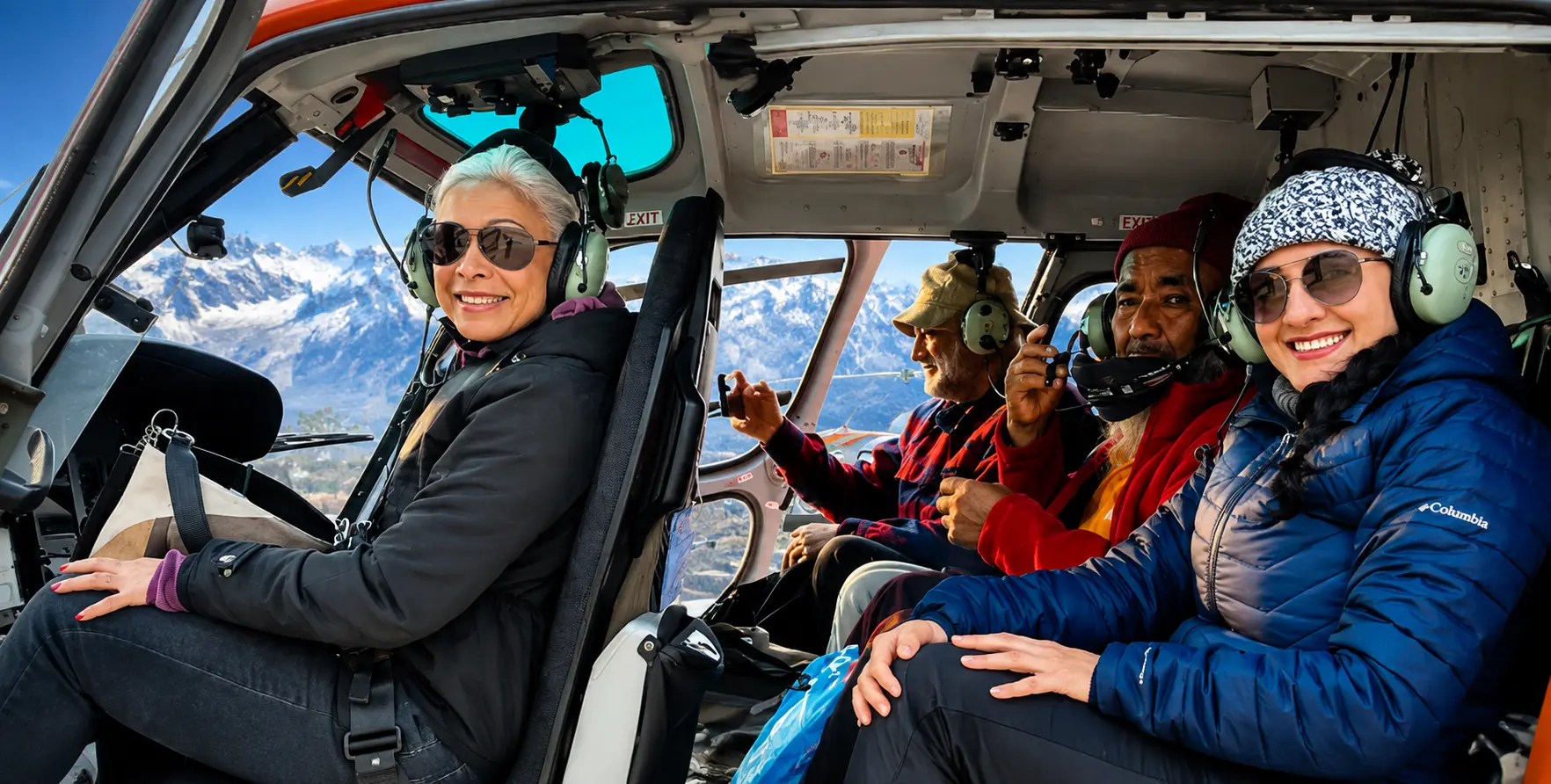
The Everest helicopter tour is typically offered to travelers in two main booking formats, each suited to a slightly different kind of traveler and budget. A shared group tour, usually seating up to five passengers depending on aircraft and weight restrictions, splits the total charter cost across the group, making it the more affordable per-person option. However, departure times are fixed and cannot be adjusted around an individual traveler’s schedule. A private charter, booked for a single party rather than shared with strangers, costs considerably more in total but offers full flexibility over departure time and, in some cases, the option to customize the route or duration of ground stops, an appealing option for honeymooners, small families, or corporate groups wanting a fully private experience.
Cost Factors and Pricing Trends Into 2026 and 2027
Pricing for the Everest helicopter tour depends heavily on whether a traveler books a shared seat or a private charter, and on broader fuel and operating cost trends within Nepal’s aviation sector. Shared group tours have historically offered significantly better value per person, while private charters, booked for exclusive use of the aircraft, command a considerable premium because the helicopter and crew cost a lot regardless of passenger count. As demand continues to grow through 2026 and 2027, driven by expanding premium tourism and improved aircraft availability, travelers should expect pricing to remain sensitive to season, with peak spring and autumn dates commanding higher rates and requiring earlier booking than quieter shoulder-season periods. Confirm exact pricing directly with operators or through a trusted local coordinator at the time of booking, since rates shift with fuel costs and demand.
Best Time of Year and Time of Day
Autumn (September to November) and spring (March to May) offer the clearest, most stable weather for this tour, with the highest likelihood of unobstructed mountain views and minimal flight delays. Morning departures are essential regardless of season, since cloud cover over the high Himalaya typically builds through the late morning and early afternoon, reducing visibility and increasing the chance of a shortened or rerouted flight later in the day. Winter can offer exceptionally clear, cold-weather visibility. However, flights are more susceptible to delays from localized weather systems. At the same time, the monsoon season between June and August brings the least reliable flying conditions and the highest rate of cancellations or postponements.
Weather Delays and Flexibility
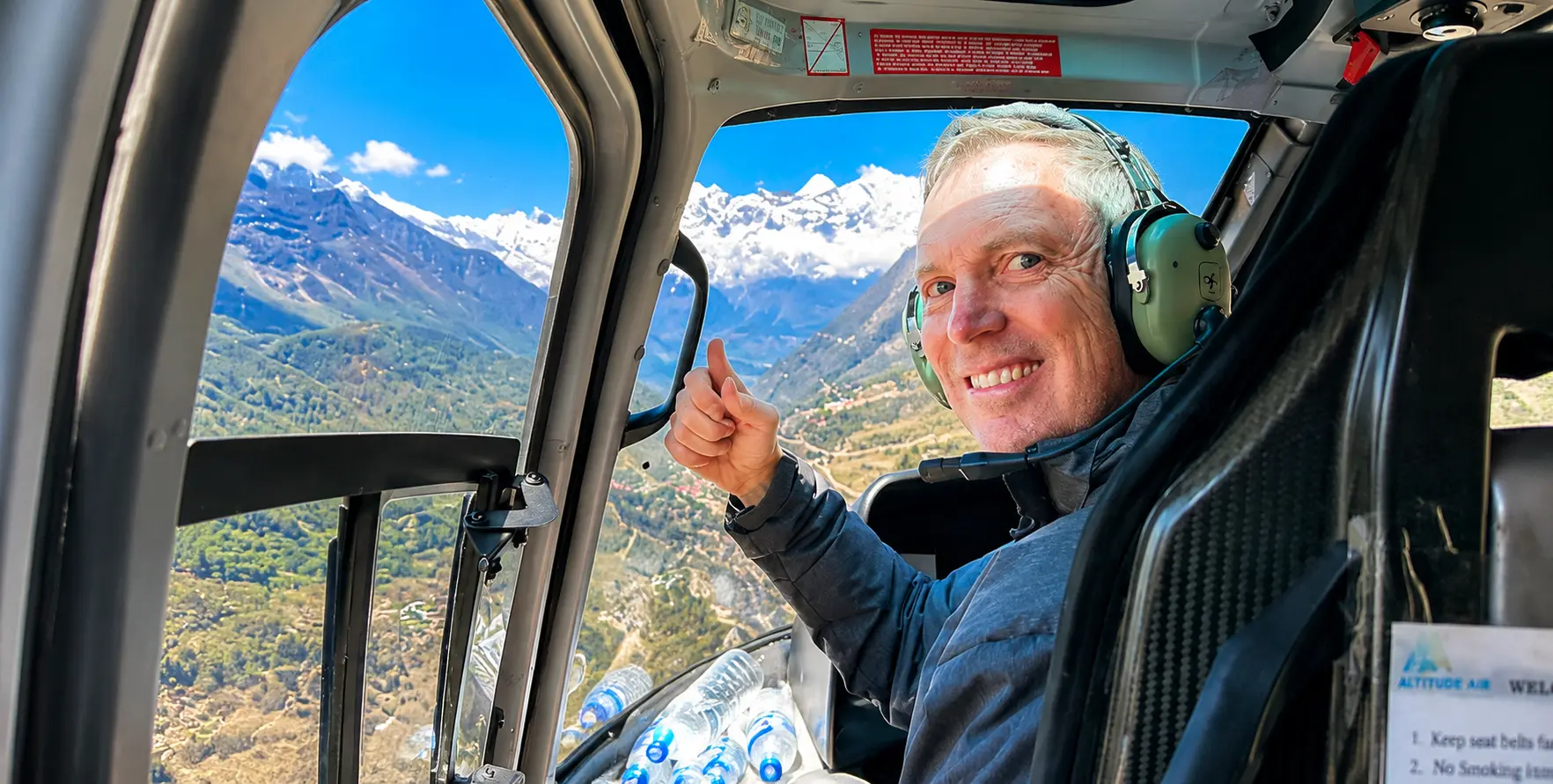
Given the technical demands of flying in the high Himalaya, weather-related delays and cancellations are a genuine possibility for any Everest helicopter tour booking, and travelers should build flexibility into their broader Nepal itinerary rather than scheduling this tour on their very last morning before an international departure. Reputable operators monitor mountain weather closely and will postpone or reschedule a flight rather than risk passenger safety, and travelers booking through a trusted local coordinator benefit from real-time communication about weather-related changes rather than discovering a cancellation only on arrival at the helipad.
Altitude and Health Considerations
While the tour itself lasts only a matter of hours, the landing points reached, Kala Patthar or the Everest Base Camp area, are at over 5,000 meters. The Everest View Hotel at nearly 3,900 meters represents a genuine high-altitude environment where some travelers may notice mild effects such as shortness of breath or lightheadedness, even during a brief visit. Onboard oxygen helps most passengers manage this, and the short duration of ground time at the highest points limits sustained exposure. Travelers with underlying heart or lung conditions should consult a doctor before booking, and pregnant travelers or those with significant health concerns are generally advised against high-altitude landings without specific medical clearance.
Ground Transport and Airport Logistics
Reaching the helicopter departure point on time, especially given the early-morning departure typical of this tour, depends on reliable ground transport from your Kathmandu hotel. Our
Kathmandu airport transfer service is well suited to this kind of early-morning pickup, ensuring travelers reach the helipad with time to spare for check-in and weight verification before departure. Travelers combining the helicopter tour with a wider Kathmandu Valley itinerary often pair it with our
Bhaktapur Durbar Square tour later the same day, given that most helicopter tours return to Kathmandu by mid-morning, leaving the rest of the day free.
Combining the Helicopter Tour With a Trekking or Touring Itinerary
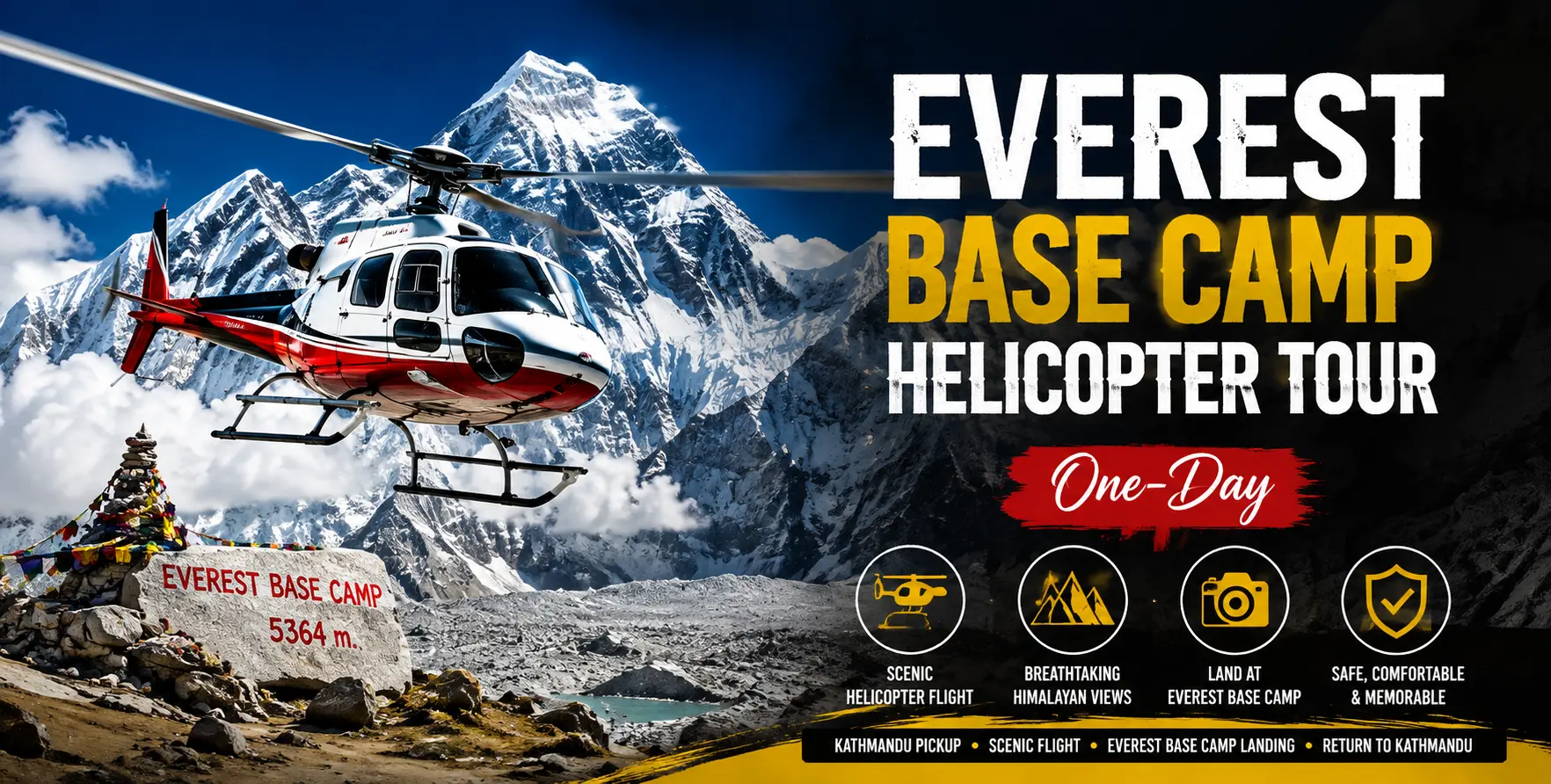
A growing number of travelers combine the Everest helicopter tour with a broader Nepal itinerary rather than booking it as a standalone activity. For trekkers who have just completed the
Everest Base Camp Luxury Lodge Trek on foot, a helicopter return flight from Base Camp itself, rather than the multi-day walk back to Lukla, has become an increasingly popular way to save time on the return leg while still completing the full trekking approach in one direction. Alpine Luxury Treks’
helicopter tour packages are specifically designed to integrate with this kind of combined trekking and flying itinerary, and our ground transport services handle the corresponding airport and Kathmandu-based logistics on either end.
Comparing the Helicopter Tour to the Full Trek
It is worth being clear-eyed about what the helicopter tour offers compared to the full Everest Base Camp Trek, since the two experiences are genuinely different rather than simply faster and slower versions of the same thing. The trek offers sustained, gradual immersion in Sherpa culture, days of walking through changing landscapes, overnight stays in mountain villages, and the particular sense of achievement that comes from reaching Base Camp on foot after weeks of effort. The helicopter tour offers none of this cultural or physical immersion. Still, it delivers an extraordinary concentrated dose of Himalayan scenery, including aerial perspectives on the mountains unavailable from the ground, within a single morning. For travelers who genuinely cannot spare two to three weeks, or whose physical circumstances make a multi-day trek impractical, the helicopter tour offers a legitimate, spectacular alternative rather than a consolation prize.
Safety Standards and Choosing a Reputable Operator
Given the real technical demands and complexity of high-altitude helicopter flying, choosing an operator with a strong, verifiable safety record, experienced Himalayan pilots, and well-maintained aircraft matters far more here than for most tourism activities. Travelers should ask specifically about pilot experience on this particular route, the aircraft’s service history, and the operator’s weather-related cancellation policy before booking, rather than choosing purely on price. Working with a trusted local coordinator familiar with reputable operators removes much of the guesswork for first-time visitors unfamiliar with Nepal’s aviation sector.
What to Wear and Bring
- Warm layers, since temperatures at the Base Camp or Kala Patthar landing point can be well below freezing even during the flight’s short duration on the ground.
- Sunglasses and sun protection, given the intensity of high-altitude sunlight and glare off snow and ice.
- A camera or fully charged phone, since photography opportunities are a primary reason most travelers book this tour.
- Comfortable, weather-appropriate footwear for the brief walk around the landing area and breakfast stop.
- Any personal medication, particularly for travelers with respiratory or cardiac conditions who have received medical clearance for the altitude involved.
Booking Requirements and Practical Considerations
Most operators require passport details and, in some cases, weight information in advance for load planning, given the strict weight limits of high-altitude helicopter operations. Booking at least several days ahead is advisable, and considerably earlier during peak autumn and spring weeks when demand is highest. Given the likelihood of weather-related rescheduling, travelers are strongly advised to build at least one buffer day into their Kathmandu itinerary around this tour, rather than scheduling it on the same day as an international departure.
2026 and 2027 Outlook for Everest Helicopter Tourism
Several trends point toward continued growth in Everest helicopter tourism through 2026 and 2027. Nepal’s broader shift toward premium ground and air transport standards, discussed extensively across our other guides on luxury vehicle hire and airport transfer, mirrors a parallel rise in demand for time-efficient, high-comfort ways to experience the Himalaya. Pokhara’s expanding international airport is also expected to gradually increase interest in helicopter tours based from that city, particularly toward the Annapurna range, potentially expanding the range of one-day Himalayan flight experiences available to travelers who begin their trip outside Kathmandu. As always, travelers should confirm current pricing, operator options, and any regulatory changes directly closer to their travel dates, since Nepal’s aviation sector continues to evolve alongside broader tourism growth.
The Aircraft: What Actually Flies This Route
Everest helicopter tours in Nepal typically use high-altitude capable helicopters such as the Airbus H125 (AS350), a single-engine aircraft favored across the Himalaya for its strong power-to-weight ratio at extreme altitude, where thinner air reduces rotor lift efficiency compared to sea-level operations. These aircraft are also the mainstay of Nepal’s mountain rescue and expedition support operations, meaning the same helicopters and often the same pilots flying scenic Everest tours are also those responsible for high-altitude rescue work on Everest and other 8,000-meter peaks during the climbing season, a reassuring indicator of the aircraft and crew experience involved in this specific type of flying.
Pilot Training and Himalayan Flying Expertise
Flying a helicopter safely at the altitudes involved in an Everest tour, often exceeding 5,000 meters at the highest landing points, requires specialized training well beyond standard commercial helicopter piloting. Mountain pilots in Nepal typically build this expertise over years of flying progressively more demanding routes, often starting with lower-altitude tourism and cargo flights before qualifying for high-altitude rescue and tourism work in the Everest and Annapurna regions. This specialized skill set is a key reason the cost for this experience reflects not just the aircraft itself, but the rarity and value of pilots qualified to fly it safely.
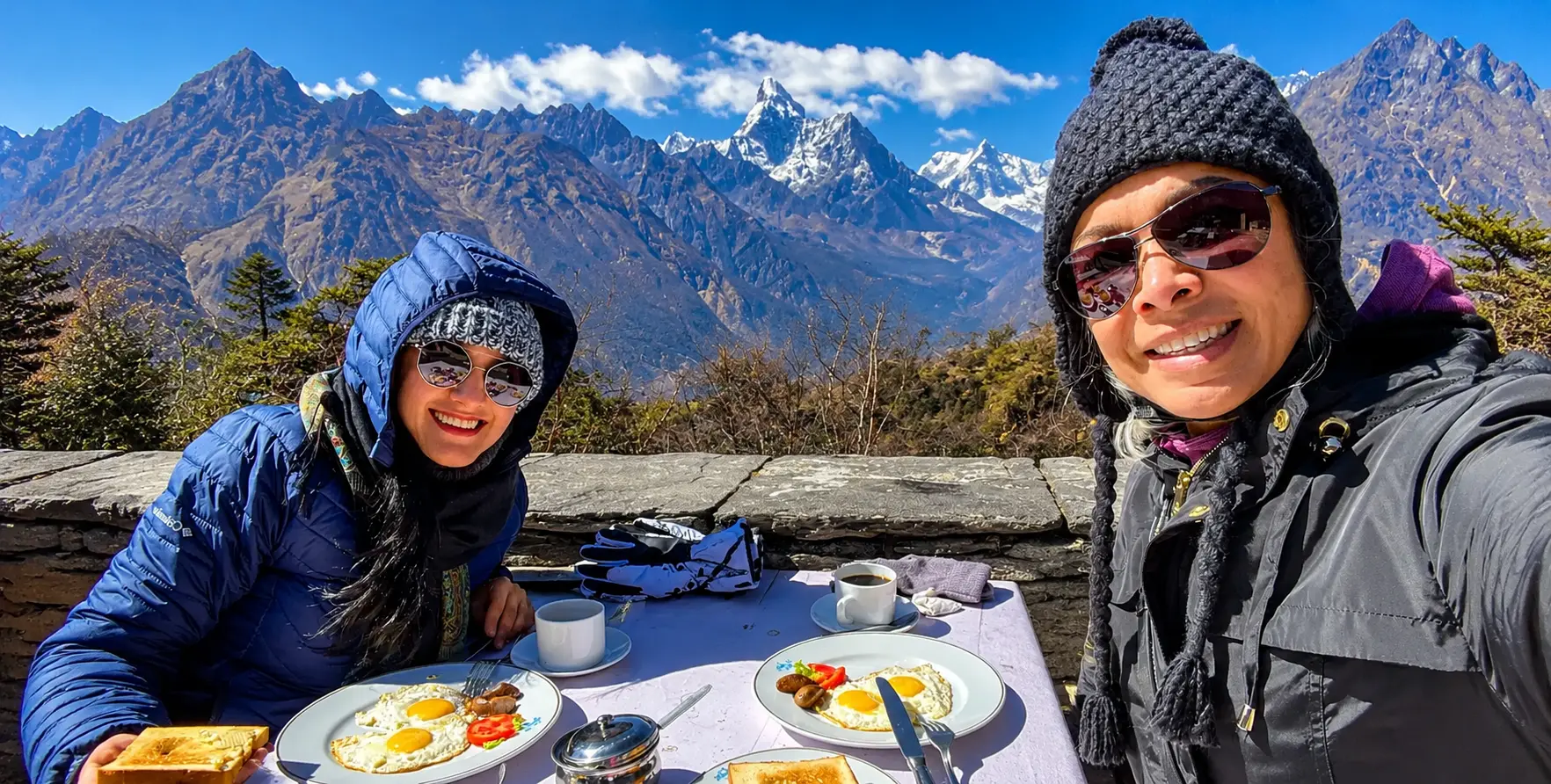
Everest View Hotel: Breakfast at the Top of the World
The Everest View Hotel, perched at Syangboche above Namche Bazaar at nearly 3,900 meters, holds a long-standing reputation as one of the highest-altitude hotels in the world, originally built with Japanese investment specifically to offer travelers unable to trek the full route to Base Camp a genuine Everest view without the physical demands of high-altitude walking. The hotel’s terrace offers a sweeping panorama including Everest, Lhotse, Ama Dablam, and Thamserku, and the breakfast stop included on most helicopter tours has become as much a part of the experience’s appeal as the Base Camp landing itself, offering a relaxed, unhurried moment to take in the mountain views before the return flight to Kathmandu.
A History of Everest Tourism by Air
Scenic mountain flights over Everest have a longer history than many travelers realize, predating the modern helicopter tour by several decades. Fixed-wing mountain flights, which offer views of Everest from altitude without landing, became popular among tourists visiting Kathmandu as early as the 1970s and remain available today as a lower-cost alternative for travelers who want an aerial Everest view without the cost of a full helicopter charter. The helicopter landing tour itself developed more recently, as improved aircraft capability, growing high-end tourism demand, and the established success of helicopter rescue operations in the region combined to make a landing tour both technically feasible and commercially viable. What was once a niche, expensive novelty has, over the past fifteen to twenty years, become one of Nepal’s signature premium tourism products.
Environmental Considerations of Helicopter Tourism
As with any form of aviation, helicopter tourism carries an environmental footprint worth acknowledging honestly. Fuel consumption for high-altitude helicopter flights is significant given the power required to operate effectively in thin mountain air, and the growing popularity of this tour format has prompted discussion within Nepal’s tourism and conservation community about balancing this premium, low-impact-on-the-ground tourism against its aviation emissions footprint compared to trekking. Proponents of helicopter tourism point out that a single shared flight carrying several passengers concentrates emissions into a short, efficient trip compared to the cumulative footprint of flights, teahouse heating, and portering involved in a multi-week trek for the same number of travelers. However, this remains a genuinely debated point within sustainable tourism circles, not a settled question.
Photography Tips for the Everest Helicopter Tour
Since photography is a primary motivation for most travelers booking this tour, a few practical tips can help you make the most of the limited time at each stop. Window seats offer the best unobstructed views during flight, and confirming seating arrangements with your operator in advance is worth doing if photography is a priority. At the Base Camp or Kala Patthar landing, the ten-to-fifteen-minute window moves quickly, so having your camera settings and any necessary lens changes prepared before landing helps maximize usable time for photographs rather than fumbling with equipment once on the ground. The Everest View Hotel breakfast stop offers a more relaxed pace for photography, given its longer duration, and the terrace itself provides one of the most reliably clear and well-composed vantage points on the entire tour.
Corporate and Special Occasion Bookings
Beyond individual leisure travelers, the Everest helicopter tour has become an increasingly popular choice for corporate incentive groups, honeymoon couples, and special occasion celebrations such as milestone birthdays or anniversaries. Private charter bookings for these occasions sometimes include additional customization, such as champagne or a special breakfast arrangement at the Everest View Hotel, coordinated in advance with the operator. Corporate groups visiting Nepal for conferences or incentive travel often add this tour as a signature activity, as it delivers a genuinely unforgettable shared experience in a single morning without disrupting the rest of a business itinerary.
Alternative Helicopter Tour Variations
Everest and Gokyo Combined Tours
Some operators offer an extended variation of the standard tour that includes a pass over or near the Gokyo Lakes region in addition to the standard Everest Base Camp and Kala Patthar route, offering views of Cho Oyu alongside Everest and Lhotse within a single, longer flight. This variation typically extends total flight time and cost compared to the standard tour. Still, it appeals to travelers who want the broadest possible aerial overview of the Khumbu’s major landmarks in one trip.
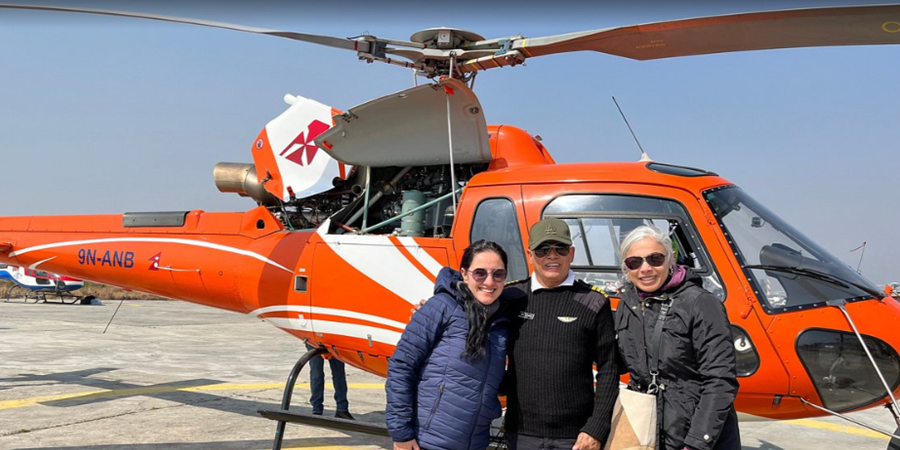
Everest Base Camp Trek Return Flights
Rather than a dedicated round-trip tour from Kathmandu, many trekkers who have walked to Everest Base Camp on foot arrange a one-way helicopter flight for their return journey, landing at or near Base Camp to pick them up before flying directly back to Kathmandu or Lukla. This variation is technically a different product from the standalone scenic tour, since it serves primarily as a time-saving return transport option rather than a dedicated sightseeing experience. However, it includes much of the same scenery.
Annapurna Helicopter Tours as a Comparison
Nepal’s Annapurna region offers a similar one-day helicopter tour product, typically departing from Pokhara rather than Kathmandu, with landings near Annapurna Base Camp or at high viewpoints offering views of the Annapurna massif and Machapuchare. Travelers splitting their time between Kathmandu and Pokhara sometimes consider both the Everest and Annapurna helicopter tour options. However, the Everest version remains the more established and heavily booked of the two given the singular draw of the world’s highest peak.
How Weight Restrictions Affect Booking
Because helicopters have reduced lift capacity at high altitude, strict weight limits apply to both passengers and their carried items on Everest helicopter tours, generally more restrictive than typical commercial aviation weight allowances. Operators typically request passenger weight in advance during booking, and travelers should expect luggage to be limited to a small daypack rather than full trekking gear, given that this tour does not involve an overnight stay or extended time on the ground. Understanding and accurately reporting weight information during booking helps operators plan flights safely and avoids last-minute complications at the helipad on departure morning.
The Role of Local Coordination in a Smooth Experience
Because the Everest helicopter tour involves coordination across an early-morning airport or helipad transfer, weather-dependent scheduling, and sometimes same-day changes if conditions shift, working with a knowledgeable local coordinator rather than booking blind through an unfamiliar overseas agent tends to produce a smoother overall experience. A local team familiar with current operator reputations, realistic weather patterns for your specific travel dates, and the practical logistics of early-morning Kathmandu transfers can help set realistic expectations and respond quickly if a reschedule becomes necessary, rather than leaving travelers to navigate an unfamiliar situation without local support.
Comparing Operators: What Actually Varies
While the core route and structure of the Everest helicopter tour is broadly similar across operators, meaningful differences exist in fleet age and maintenance standards, pilot experience specifically on this route rather than general helicopter flying hours, cancellation and rescheduling policies, and the level of communication provided in the days leading up to the flight. Travelers researching operators should look beyond marketing materials and ask specific questions about aircraft type and age, pilot experience on Himalayan routes, and what happens in practice if weather forces a delay, including whether alternative dates are offered without a high additional cost.
Time-of-Day Considerations Beyond the Morning Departure
While nearly all Everest helicopter tours depart early to take advantage of the clearest flying conditions, the timing within that morning window can still matter. Flights departing at first light, often around 5:30 or 6:00 a.m., generally enjoy the calmest air and clearest visibility. At the same time, later morning departures, even by an hour or two, can encounter earlier cloud build-up during certain seasons, particularly in the shoulder months bridging peak and off-peak periods. Travelers with flexible bookings should generally choose the earliest available departure slot offered by their chosen operator.
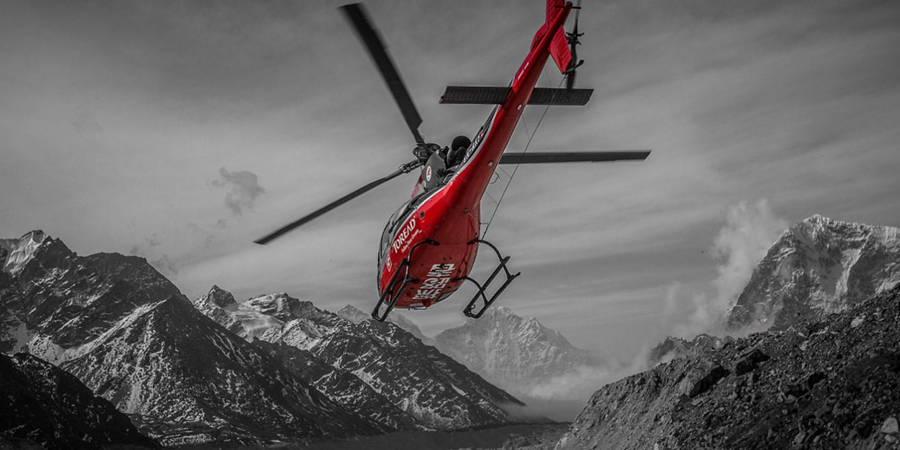
What Makes This Tour Different From a Standard Scenic Mountain Flight
It is worth distinguishing the full Everest helicopter tour, with its landing stops at Base Camp or Kala Patthar and breakfast at the Everest View Hotel, from simpler scenic mountain flights that circle the Everest region without landing, a lower-cost option offered by fixed-wing aircraft or shorter helicopter flights departing from Kathmandu. These non-landing options offer aerial views of Everest and the surrounding peaks at a fraction of the cost and time commitment, making them a reasonable alternative for travelers on a tighter budget or schedule who still want an aerial Everest experience without the full landing tour’s cost and complexity.
Booking Through a Trekking Agency Versus Direct With an Operator
Travelers can typically book the Everest helicopter tour either directly with a helicopter operator or through a trekking or touring agency that coordinates the booking on their behalf, often as part of a broader itinerary. Booking through an established agency, particularly one already coordinating other elements of a Nepal trip such as ground transport or a broader trekking package, can simplify logistics considerably, ensuring the helicopter tour is scheduled sensibly around other commitments and that any weather-related changes are communicated promptly through a single point of contact rather than requiring the traveler to manage multiple separate bookings independently.
A Day-Before Checklist for a Smooth Experience
- Confirm your exact pickup time and location with your ground transport provider the evening before, given the early morning departure.
- Double-check that your operator has your accurate weight information on file to avoid last-minute complications at the helipad.
- Pack warm layers and sun protection the night before, along with a fully charged camera or phone.
- Confirm your operator’s weather rescheduling policy and keep the following day free where possible in case of postponement.
- Bring your passport, since most operators require identification for manifest and load planning purposes.
What Previous Travelers Commonly Say About the Experience
Feedback and reviews from travelers who have completed the Everest helicopter tour consistently highlight a few recurring themes. Many describe the first clear view of Everest’s summit from the aircraft window as genuinely emotional, even for travelers who didn’t expect such a strong reaction. The brief landing near Base Camp or Kala Patthar is frequently described as surreal given how quickly it arrives after departure from Kathmandu, a sharp contrast to the weeks of walking required to reach the same vantage point on foot. The breakfast stop at the Everest View Hotel is often cited as an unexpectedly relaxed highlight, giving you time to absorb the mountain panorama rather than rush through a brief photo stop.
Understanding the Value Proposition Compared to Trekking
For travelers weighing the cost of a helicopter tour against a full trek, it helps to think of the two experiences as serving fundamentally different purposes rather than as directly comparable products at different price points. The trek delivers weeks of cultural immersion, physical achievement, and gradual, earned arrival at Base Camp. In contrast, the helicopter tour delivers a concentrated, efficient aerial and ground experience of the same broad region within a single morning. Travelers who have already trekked in the region and want to revisit the experience without another multi-week commitment, or those for whom a multi-week trek is genuinely not feasible due to time or physical circumstances, find that the helicopter tour offers a legitimate, complete experience in its own right rather than a lesser substitute.
Seasonal Booking Patterns and Availability
Demand for the Everest helicopter tour closely follows Nepal’s broader tourism seasonality, with the clearest weather and highest booking volume in the peak autumn months of October and November, followed by the spring window from March through May. During these peak periods, popular morning departure slots can book out several days or even weeks in advance, especially for shared group tours where operators must coordinate multiple passengers into a single flight. Travelers with fixed, non-negotiable travel dates during peak season should book as early as possible, while those with more flexibility can sometimes secure better availability and even modest pricing advantages during shoulder-season weeks just outside the busiest periods.
Combining the Tour With a Broader Kathmandu Itinerary
Since most Everest helicopter tours return to Kathmandu by mid-morning, travelers frequently use the remainder of the day for other activities rather than treating the tour as a full-day commitment. A relaxed afternoon exploring Kathmandu’s Durbar Squares, a visit to Pashupatinath or Swayambhunath, or simply resting before an evening flight all fit comfortably around a morning helicopter tour. Travelers on a tight overall Nepal schedule sometimes use this flexibility to fit the tour into an itinerary that might otherwise seem too short to include an Everest region experience, making it a particularly efficient addition for business travelers or those on limited-duration visits.
Why This Tour Appeals Particularly to First-Time Visitors to Nepal
For travelers visiting Nepal for the first time, often with limited days available and uncertain whether they will return for a longer, more dedicated trekking trip in future, the Everest helicopter tour offers a way to experience the country’s single most iconic landmark without gambling significant portions of a first visit on a multi-week trek. This has made the tour particularly popular among travelers combining Nepal with a wider regional itinerary spanning India, Bhutan, or Tibet, where a shorter overall Nepal stay makes a multi-week trek impractical. Still, an Everest experience remains a firm, non-negotiable priority.
A Note on Realistic Expectations
While marketing materials for the Everest helicopter tour understandably emphasize its spectacular scenery, honest expectation-setting matters for genuine traveler satisfaction. Weather can and does affect visibility and, occasionally, the exact landing location or duration of ground stops, and travelers should understand that a shortened or slightly modified itinerary due to weather remains a normal, safety-driven outcome rather than a failure of the tour itself. Approaching the experience with genuine flexibility, and choosing an operator who communicates honestly about these possibilities rather than overpromising guaranteed conditions, leads to a considerably more satisfying overall experience.
Insurance Considerations for Helicopter Tours
While helicopter tours in Nepal operate under commercial aviation regulations with their own safety and insurance requirements, travelers are still advised to confirm that their personal travel insurance policy covers helicopter tourism activities specifically, since some standard travel insurance policies exclude aviation activities beyond scheduled commercial flights or require an additional rider for this kind of adventure activity. Confirming this detail before booking avoids any ambiguity about coverage in the unlikely event of an incident, and reputable operators can generally confirm their own liability and passenger insurance arrangements upon request.
How This Fits Into Nepal’s Broader Premium Tourism Trend
The growing popularity of the Everest helicopter tour sits squarely within the broader shift toward premium, time-efficient travel experiences across Nepal’s evolving tourism sector, a trend covered in depth in our guide on why luxury vehicle hire is transforming Nepal travel. Just as premium ground transport has reshaped expectations around airport transfers and trekking logistics, helicopter tours represent the aviation equivalent of this same underlying shift: travelers increasingly expect Nepal’s most iconic experiences to be accessible in a format that respects their time constraints without sacrificing the authenticity or spectacle of the experience itself.
Final Practical Advice Before Booking
- Choose an operator based on safety reputation and pilot experience, not price alone.
- Book during the clearest possible season, spring or autumn, for the highest chance of an uninterrupted experience.
- Build at least one buffer day into your Kathmandu itinerary in case of weather-related rescheduling.
- Confirm exactly what is included in your quoted price, including ground transport, breakfast, and any hotel pickup.
- Coordinate your early-morning airport or helipad transfer well in advance to avoid a stressful start to the day.
Cultural Sensitivity During Ground Stops
Even during brief landing stops at Base Camp, Kala Patthar, or the Everest View Hotel, travelers pass through a landscape with deep cultural and religious significance to local Sherpa communities, as well as active mountaineering operations during peak climbing season. Being mindful of expedition camps and personnel if visible near a Base Camp landing, avoiding disruptive behavior near prayer flags or chortens encountered at any stop, and generally treating these fleeting visits with the same respect afforded to the region by trekkers who arrive on foot, helps preserve the experience’s integrity for both visitors and the communities whose homeland forms its backdrop.
The Broader Appeal of a Single Unforgettable Morning
There is something distinct about an experience compressed into a single morning that trekking, by its nature, cannot replicate: an intensity and immediacy that comes from encountering one of the world’s most extraordinary landscapes with almost no build-up, stepping from a Kathmandu hotel lobby into the presence of the world’s highest mountain within the space of a single flight. This immediacy is precisely what draws many travelers to the Everest helicopter tour, even when a longer trek might otherwise appeal, recognizing that some experiences are valuable specifically because of, rather than despite, their brevity.
Combining With Nepal’s Other Signature Experiences
Travelers building a broader Nepal itinerary around an Everest helicopter tour often pair it with other signature experiences that similarly compress iconic Himalayan scenery into a manageable timeframe, such as a sunrise visit to Nagarkot for wider Himalayan range views, a scenic flight or shorter trek in the Annapurna region from Pokhara, or a cultural circuit through the Kathmandu Valley’s ancient Durbar Squares. Combining several of these compressed, high-impact experiences allows travelers with limited time to build a genuinely rich Nepal itinerary without the multi-week commitment of a single long trek, an increasingly common approach among repeat visitors and time-constrained first-time travelers alike.
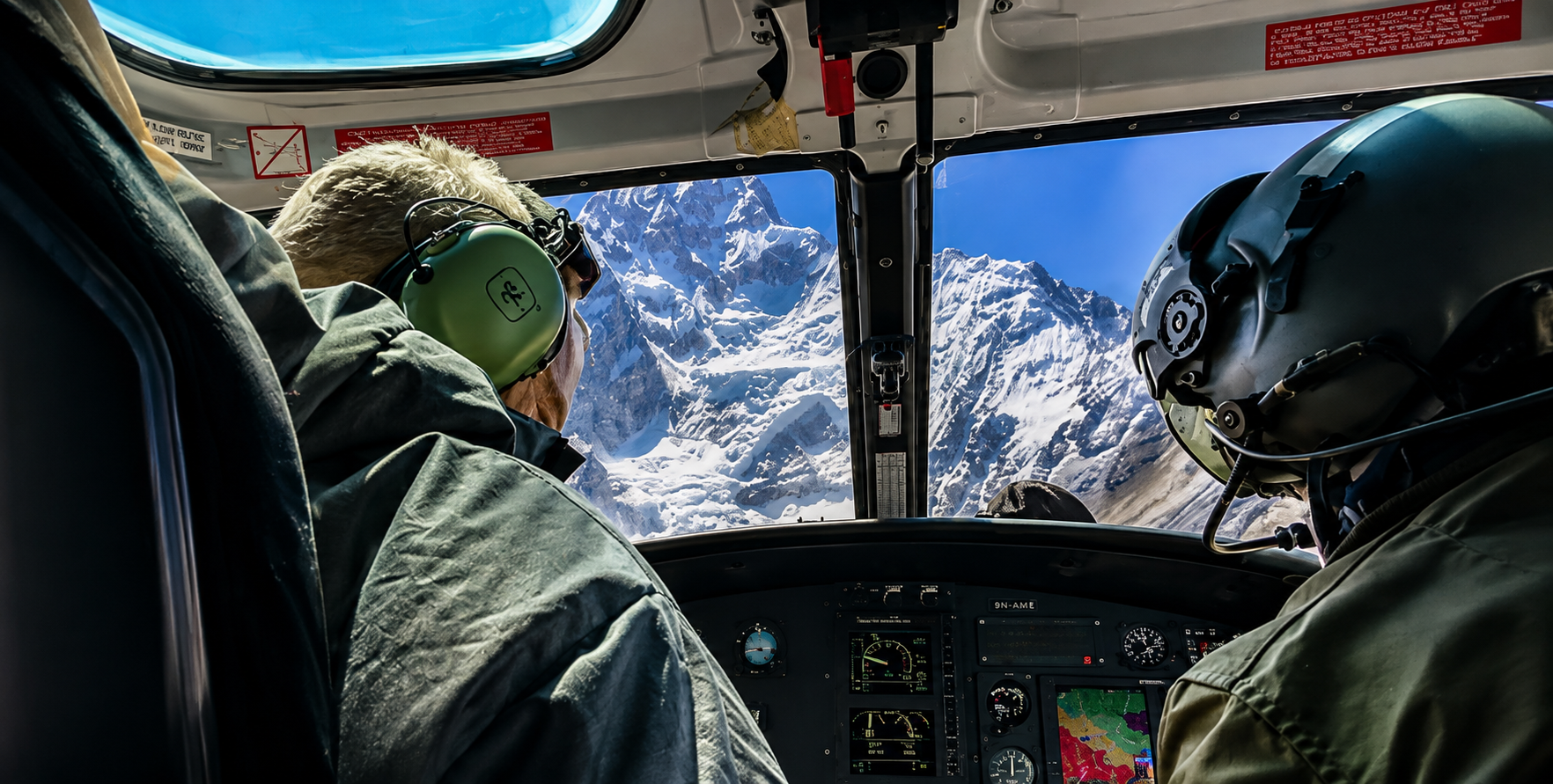
Final Considerations Before You Book
The Everest helicopter tour rewards travelers who approach it with realistic expectations, appropriate seasonal timing, and a reputable, safety-focused operator, delivering one of the most efficient and genuinely spectacular ways to experience Nepal’s highest mountains. As demand continues to grow through 2026 and 2027 alongside Nepal’s broader premium tourism development, early booking, careful operator selection, and sensible itinerary flexibility around weather remain the three factors most within a traveler’s control to ensure the experience lives up to its considerable promise.
Frequently Asked Questions
How long does the Everest helicopter tour take?
The full experience, from Kathmandu departure to return, typically takes three to four hours, including landing stops at the Everest Base Camp or Kala Patthar area and a breakfast stop at the Everest View Hotel.
Is the helicopter tour safe?
Reputable operators with experienced high-altitude pilots and well-maintained aircraft maintain strong safety records. However, travelers should research an operator’s reputation and safety history before booking, given the technical demands of this route.
What happens if the weather is bad on my scheduled day?
Reputable operators will postpone or reschedule the flight rather than risk passenger safety. We strongly recommend building flexibility into your itinerary rather than scheduling this tour on your last day in Nepal.
Can I do the helicopter tour if I have no trekking experience?
Yes. The tour requires no trekking or physical fitness beyond the ability to walk a short distance at the landing points, making it accessible to a much wider range of travelers than the full trek.
Is it better to book a shared or private helicopter tour?
A shared group tour offers better value per person but fixed departure times, while a private charter costs more but offers full scheduling flexibility. The right choice depends on your budget and how much control you want over timing.
Do I land directly at Everest Base Camp?
Most tours land near the Base Camp area or at Kala Patthar, depending on weather and the operator’s routing that day, rather than at a single fixed landing spot.
Can this tour be combined with a trek I am already doing?
Yes. Many trekkers use a helicopter flight for the return leg after walking in to Everest Base Camp, saving several days compared to walking both directions.
What should I do if I have a heart or lung condition?
Consult a doctor before booking, given the altitude reached at the landing points. Onboard oxygen helps manage general altitude effects, but discuss specific medical conditions with a physician in advance.
How far in advance should I book?
Book at least several days ahead, and considerably earlier during the peak autumn and spring seasons, when demand and limited daily flight slots make early booking especially important.
Do I need special clothing for the high-altitude landing?
Warm layers are essential, since temperatures at the landing points can be well below freezing even during the tour’s short ground stops.
Can children join the Everest helicopter tour?
Children can generally join, subject to the operator’s own age and weight policies. However, the altitude reached at the landing points warrants the same general health caution given to any traveler, and parents should confirm specific age restrictions with their chosen operator.
Does the tour operate every day of the year?
Tours generally operate year-round, weather permitting. However, frequency and reliability are highest in spring and autumn, with the monsoon months seeing the least consistent operation due to persistent cloud cover and rain.
Can I request a specific landing point, such as Kala Patthar versus Everest Base Camp itself?
Some operators offer some choice or accommodate specific requests when weather and aircraft capability allow. However, the pilot makes the final decision on the day based on real-time conditions. Travelers should treat any specific landing point as a preference rather than a guarantee, discuss it openly with the operator during booking rather than assume it in advance, since final routing always depends on the pilot’s real-time safety judgment on the day of the flight.
What is the typical group size on a shared helicopter tour?
Shared tours typically accommodate up to five passengers per aircraft, subject to combined passenger weight limits; the exact number depends on the specific helicopter model and the combined weight of the passengers booked for that flight.
Will I definitely see Everest’s summit clearly?
On a clear day, yes, but visibility depends entirely on weather conditions at the time of your flight, which is why morning departures during the spring and autumn seasons offer the best overall likelihood of clear views.
Is the Everest helicopter tour worth the cost compared to a scenic mountain flight without landing?
This depends on your priorities: a landing tour offers ground time near Base Camp and breakfast at the Everest View Hotel, a considerably richer experience than a non-landing scenic flight, but at a higher price point that should be weighed against your specific interest in the landing experience itself.
Final Thoughts: A Morning You Will Not Forget
The Everest helicopter tour compresses into a single unforgettable morning an experience that would otherwise take weeks of dedicated trekking to reach, offering aerial views of the world’s highest peaks, a landing within sight of Everest Base Camp, and breakfast at one of the highest-altitude hotels on earth, all before most travelers would normally finish their coffee. Getting the logistics right, from a reliable early-morning airport transfer through to choosing a reputable operator and building weather flexibility into your schedule, ensures this compressed experience delivers everything it promises. For many travelers, it becomes not a lesser alternative to the full trek, but a genuinely complete and deeply memorable way to encounter the Everest range on its own terms, one clear morning and a single unforgettable flight at a time.
Contact Nepal Vehicle Hiring today at +977 9851013196 or visit
vehiclehiringnepal.com to arrange your early-morning airport transfer and coordinate your Everest helicopter tour alongside the rest of your Kathmandu itinerary, whether that includes valley sightseeing, a trekking extension, or a broader regional journey through Nepal, Tibet, and Bhutan.
We look forward to helping you plan this unforgettable morning in the mountains.
- Everest Helicopter Tour: One-Day Full Guide 2026/2027
- What Is the Everest Helicopter Tour
- The Route: What You Actually See
- A Typical One-Day Timeline
- What Is Typically Included
- Private Charter Versus Shared Group Tours
- Cost Factors and Pricing Trends Into 2026 and 2027
- Best Time of Year and Time of Day
- Weather Delays and Flexibility
- Altitude and Health Considerations
- Ground Transport and Airport Logistics
- Combining the Helicopter Tour With a Trekking or Touring Itinerary
- Comparing the Helicopter Tour to the Full Trek
- Safety Standards and Choosing a Reputable Operator
- What to Wear and Bring
- Booking Requirements and Practical Considerations
- 2026 and 2027 Outlook for Everest Helicopter Tourism
- The Aircraft: What Actually Flies This Route
- Pilot Training and Himalayan Flying Expertise
- Everest View Hotel: Breakfast at the Top of the World
- A History of Everest Tourism by Air
- Environmental Considerations of Helicopter Tourism
- Photography Tips for the Everest Helicopter Tour
- Corporate and Special Occasion Bookings
- Alternative Helicopter Tour Variations
- Everest Base Camp Trek Return Flights
- How Weight Restrictions Affect Booking
- The Role of Local Coordination in a Smooth Experience
- Comparing Operators: What Actually Varies
- Time-of-Day Considerations Beyond the Morning Departure
- What Makes This Tour Different From a Standard Scenic Mountain Flight
- Booking Through a Trekking Agency Versus Direct With an Operator
- A Day-Before Checklist for a Smooth Experience
- What Previous Travelers Commonly Say About the Experience
- Understanding the Value Proposition Compared to Trekking
- Seasonal Booking Patterns and Availability
- Combining the Tour With a Broader Kathmandu Itinerary
- Why This Tour Appeals Particularly to First-Time Visitors to Nepal
- A Note on Realistic Expectations
- Insurance Considerations for Helicopter Tours
- How This Fits Into Nepal's Broader Premium Tourism Trend
- Final Practical Advice Before Booking
- Cultural Sensitivity During Ground Stops
- The Broader Appeal of a Single Unforgettable Morning
- Combining With Nepal's Other Signature Experiences
- Final Considerations Before You Book
- Frequently Asked Questions
- Final Thoughts: A Morning You Will Not Forget

Related Blog & Articles

Annapurna vs Everest Base Camp
Best 4WD Jeep for Everest Base Camp Trek Transfers

4WD Vehicles in Nepal: The Ultimate Hire Guide 2026