Plan a Trip


Annapurna vs Everest Base Camp
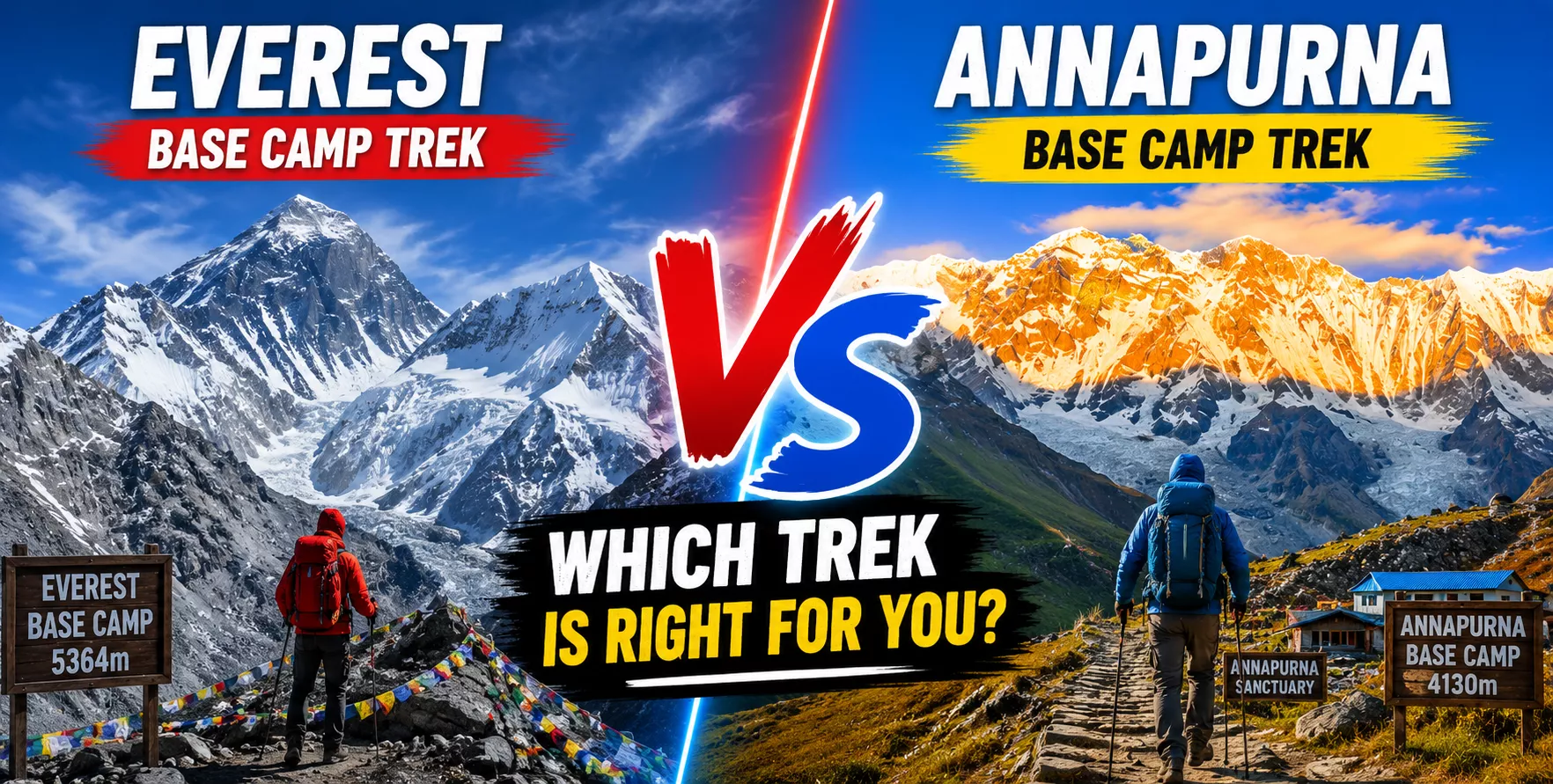
Annapurna vs Everest Base Camp: Which Trek Is Right for You?
You have probably had two browser tabs open for a while now — one with Annapurna Base Camp itineraries, the other with Everest Base Camp — flipping back and forth hoping one of them will eventually decide for you. It won’t. Both are genuinely among the finest trekking experiences on earth, and both will leave you a slightly different person than the one who started walking. But they are also genuinely different journeys, asking different things of your body, your wallet, and your schedule, and rewarding you with different kinds of mountain magic in return.
This guide gives you a real, head-to-head comparison across every factor that actually matters for making this decision — altitude and acclimatization, difficulty, duration, cost, scenery, culture, and the practical logistics of simply getting to each trailhead — so you can stop refreshing both tabs and book the trek that’s actually right for you. And because getting to the trailhead is where Nepal Vehicle Hiring Pvt Ltd comes in, we’ll also cover exactly how each journey begins, and how we can get you there.
The Quick Verdict
If you genuinely cannot decide and need a one-line answer: choose Annapurna Base Camp if you want the more accessible, more affordable, and more varied first Himalayan trek — it is shorter, lower, and considerably easier to fit into a busy calendar. Choose Everest Base Camp if the Everest story itself is the reason you are going, and you are ready for a longer, higher, more committing journey through the legendary Khumbu. For most first-time trekkers, Annapurna Base Camp is the better starting point — and a meaningful number of trekkers do exactly that, completing ABC one year and returning for EBC the next, once Nepal has inevitably gotten under their skin.
| Factor | Annapurna Base Camp (ABC) | Everest Base Camp (EBC) |
| Max Altitude | 4,130 m (ABC itself) | 5,364 m (Base Camp); 5,545 m at Kala Patthar viewpoint |
| Trek Duration | 7–12 days typical (5–27 days possible with extensions) | 10–14 days typical (12–16 days with buffer) |
| Total Trekking Distance | 110–115 km | 130 km |
| Starting Point | Pokhara (827 m) — no flight required to begin trekking | Lukla (2,860 m) — reached by flight, often via Ramechhap |
| Formal Acclimatization Days | Not formally built in — altitude risk is lower | 2 rest days typically built into itinerary (Namche, Dingboche) |
| Altitude Sickness Risk | Lower — most nights spent below 3,500 m | Higher — sustained high altitude over many days |
| Difficulty Type | Muscular/endurance — relentless stone staircases (‘Nepali flat’) | Respiratory/altitude — thinner air, slower movement |
| Protected Area | Annapurna Conservation Area (7,629 sq km) | Sagarmatha National Park (smaller, more concentrated) |
| Primary Culture | Gurung and Magar villages | Sherpa villages and monasteries |
| Independent Trekking Permitted? | No — licensed guide mandatory since late 2023 | No — licensed guide mandatory since late 2023 |
Altitude and Acclimatization — Thin Air vs. Burning Legs
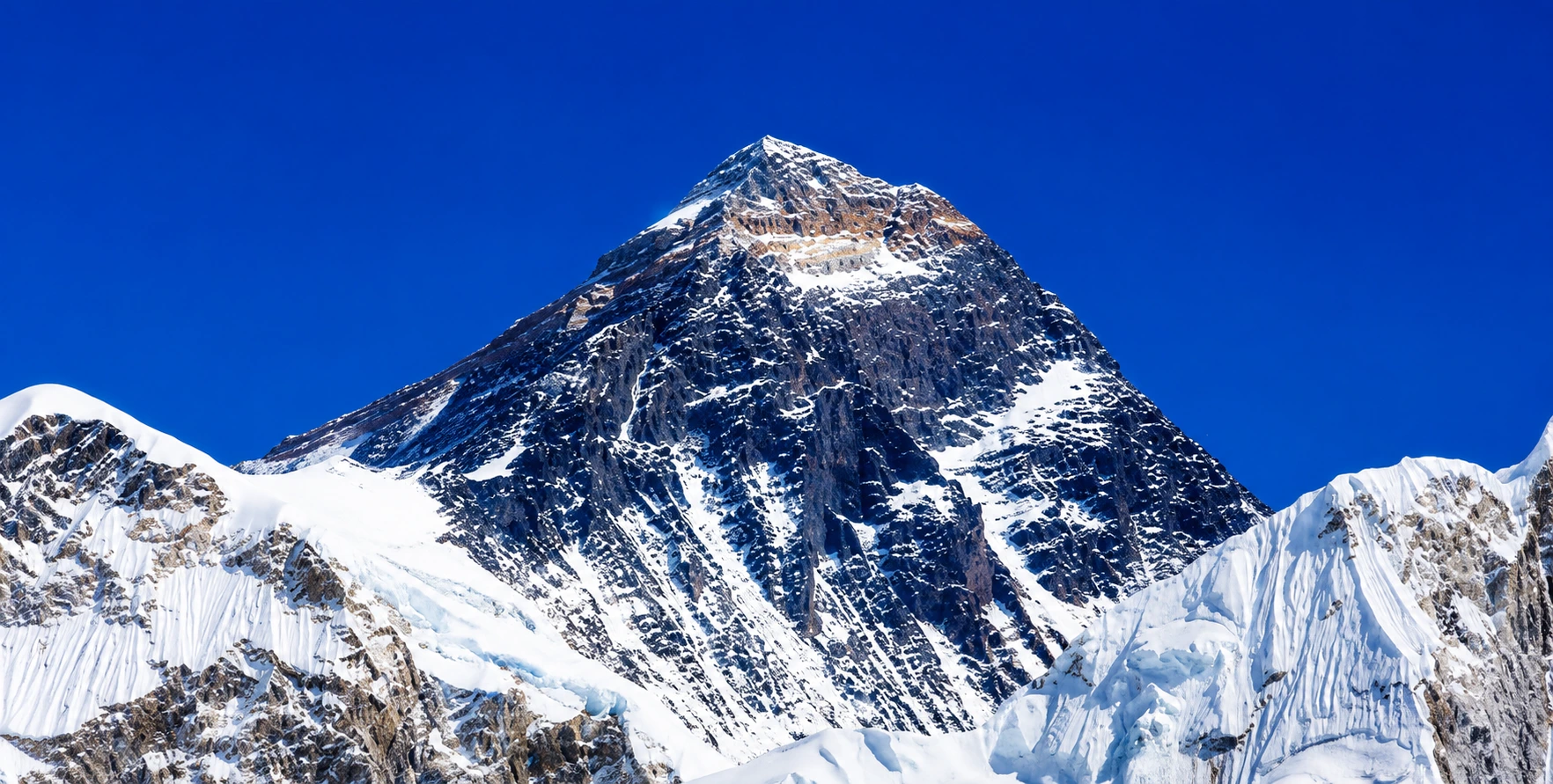
The single most consequential difference between these two treks is altitude. Annapurna Base Camp tops out at 4,130 meters, with most nights along the route spent below 3,500 meters. This profile keeps the risk of Acute Mountain Sickness meaningfully lower throughout the trek, even though the trail still gains real altitude and deserves genuine respect. Everest Base Camp, by contrast, reaches 5,364 meters at the base camp itself, and most itineraries include an additional push to the Kala Patthar viewpoint at 5,545 meters for the classic unobstructed Everest panorama — a full 1,234 meters higher than ABC’s maximum point.
This altitude difference is precisely why Everest Base Camp itineraries formally build in two dedicated acclimatization rest days, typically at Namche Bazaar (3,440 m) and Dingboche (4,410 m), while standard Annapurna Base Camp itineraries do not include formal rest days at all — the lower overall altitude profile makes this less critical. However, sensible pacing and hydration still matter throughout. As one experienced comparison puts it plainly: Everest places a premium on your ability to breathe at higher altitude, while Annapurna is more about your ability to keep climbing steeply for long periods. Thin air versus burning legs — you know your own body best.
Difficulty — Two Different Kinds of Hard
Comparing the difficulty of these two treks is genuinely like weighing a marathon against a high-altitude stair-climb. Annapurna’s trails are famous for what trekkers half-jokingly call the ‘Nepalese flat’ — local code for thousands of stone steps that climb relentlessly up and then immediately drop just as relentlessly down, repeatedly, day after day, draining muscular endurance even though the technical walking itself is never difficult. The push from Bamboo to Deurali and the final climb to Annapurna Base Camp are routinely singled out as the most physically demanding sections.
Everest Base Camp’s difficulty profile is different: the walking itself is generally less technically demanding than Annapurna’s staircases, but the sustained high altitude, the longer overall distance, and the cumulative effect of multiple consecutive days above 4,000 meters make it the more demanding trek overall by most experienced accounts. Most trekkers walk 5 to 7 hours daily on the EBC across rocky paths and suspension-bridge crossings, sustaining that effort over 12 to 14 days — a longer war of attrition than ABC’s shorter, steeper bursts.
The honest summary: ABC can feel steeper and more intense on individual days; EBC is harder overall because it asks more of your body for longer, at greater altitude, with less opportunity to walk it off.
Duration and Distance
Annapurna Base Camp can be completed in as few as 5 to 7 days for a fast-paced itinerary, with 7 to 12 days being the more common and comfortable range, and considerably longer options — up to 20 days or more — available for trekkers who want to combine ABC with Poon Hill, the wider Annapurna Circuit, or a Tilicho Lake and Muktinath extension. Everest Base Camp typically requires 10 to 14 days as a standalone trek, with most reputable itineraries allowing 12 to 16 days once flight-delay buffers and proper acclimatization are accounted for. Total trekking distance follows the same pattern: approximately 110-115 km for ABC, versus approximately 130 km for EBC.
Cost — Where the Real Money Goes
| Cost Category | Annapurna Base Camp (approx.) | Everest Base Camp (approx.) |
| Getting to trailhead | Bus to Pokhara: USD 8–30, or short flight USD 30–50, plus local jeep to Nayapul | Lukla flight (round trip): USD 350–450+ — the single biggest cost driver |
| Permits (ACAP + TIMS) | USD 35–45 combined | Sagarmatha NP permit + TIMS: ~USD 40–55 combined |
| Licensed guide (mandatory) | USD 25–35 per day | USD 25–35 per day |
| Teahouse food & lodging | Generally cheaper — lower altitude, easier logistics | More expensive at altitude — a meal that costs USD 5–6 in Namche can cost USD 10–12 at Gorak Shep |
| Typical total independent trek cost | From approximately USD 440–700 | From approximately USD 1,000–1,500+ |
| Overall cost comparison | 30–40% cheaper than EBC, as a general rule | More expensive — driven primarily by the mandatory Lukla flight |
The dominant driver of EBC’s higher overall cost is unambiguous: the Lukla flight. At USD 350- 450 or more for a round trip in 2026, this single transport leg alone often costs more than an entire week of food and accommodation on the Annapurna trail. Annapurna Base Camp requires no flight at all to begin trekking — most trekkers travel from Kathmandu to Pokhara by bus (USD 8–30) or short flight (USD 30–50), then continue to the Nayapul or Kande trailhead by private jeep or local transport, a transfer Nepal Vehicle Hiring Pvt Ltd provides directly with hotel pickup in Pokhara.
Food prices rise with altitude on both treks. Still, the effect is considerably more pronounced on EBC simply because the trek spends more time, at greater altitude, in a more logistically remote environment — a plate of dal bhat that costs USD 5–6 in Namche Bazaar can cost USD 10–12 by the time you reach Gorak Shep, just below Base Camp itself.
Scenery — Variety vs. Drama
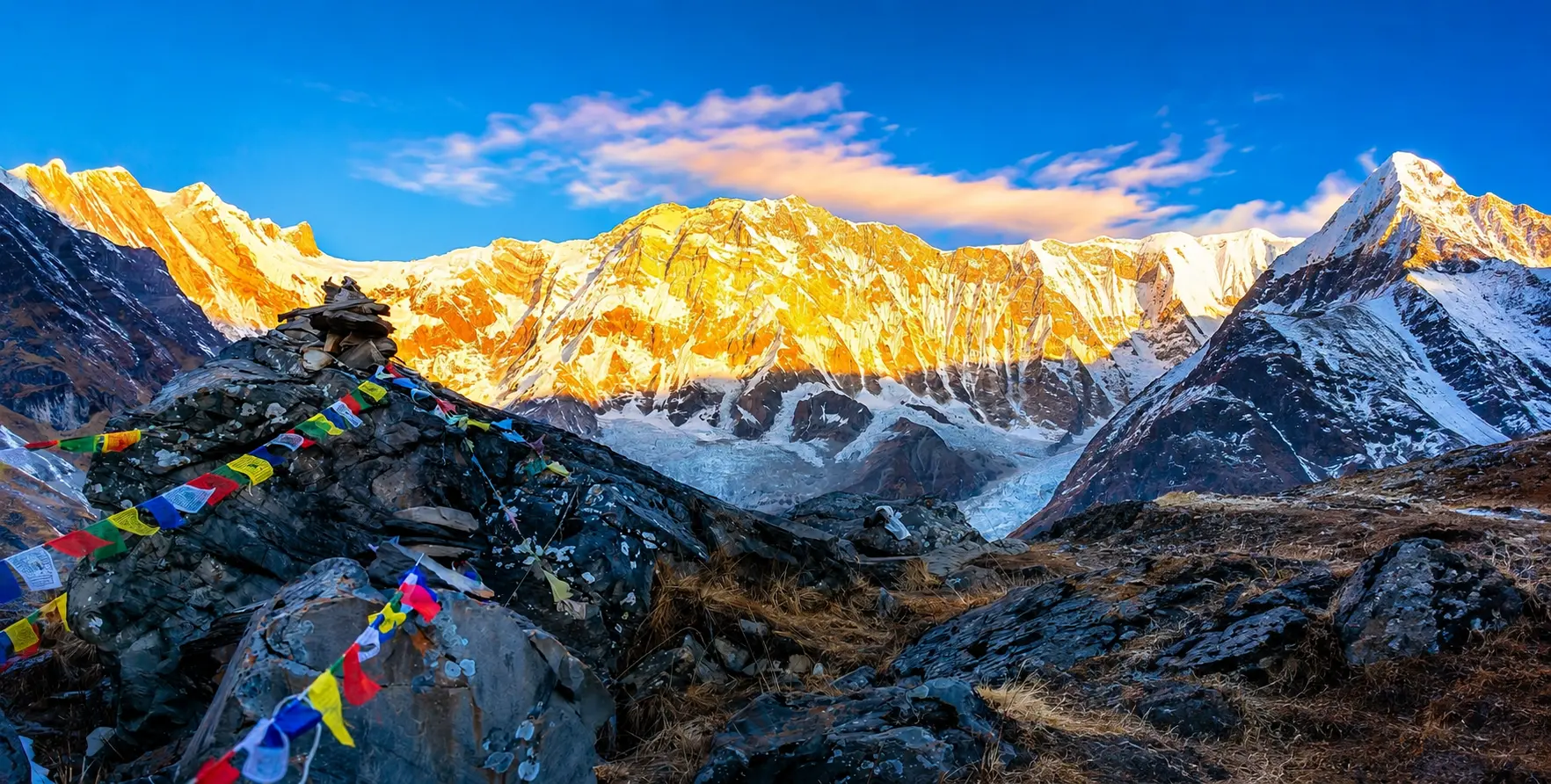
Annapurna Base Camp’s defining scenic quality is variety: the trek moves through subtropical river valleys, terraced farmland, dense rhododendron forest, and traditional Gurung and Magar villages before the trail finally opens into the Annapurna Sanctuary — a glacial amphitheatre completely encircled by Annapurna I (8,091 m), the sacred fishtail of Machhapuchhre, Hiunchuli, and Gangapurna, with nowhere to look that isn’t a wall of snow and rock. Many trekkers describe the sunrise on Annapurna South from the Base Camp teahouse, washing the peak gold, as one of the most beautiful moments of their lives — delivered, notably, in a more intimate and immersive setting than EBC’s more distant mountain views.
Everest Base Camp’s scenery is more visually uniform but no less dramatic — starkly barren high-altitude terrain, the grinding ice of the Khumbu Glacier, and views of Everest itself alongside Lhotse, Nuptse, Ama Dablam (widely considered the most beautiful peak in the entire Khumbu), Pumori, Cho Oyu, and Makalu. EBC offers something ABC simply cannot: the chance to stand beneath the literal highest point on earth, with expedition tents visible at Base Camp and the legendary Khumbu Icefall grinding audibly below — a different category of experience, carrying historical and mountaineering weight that no other trek on the planet can match.
Culture — Gurung and Magar Villages vs. Sherpa Country
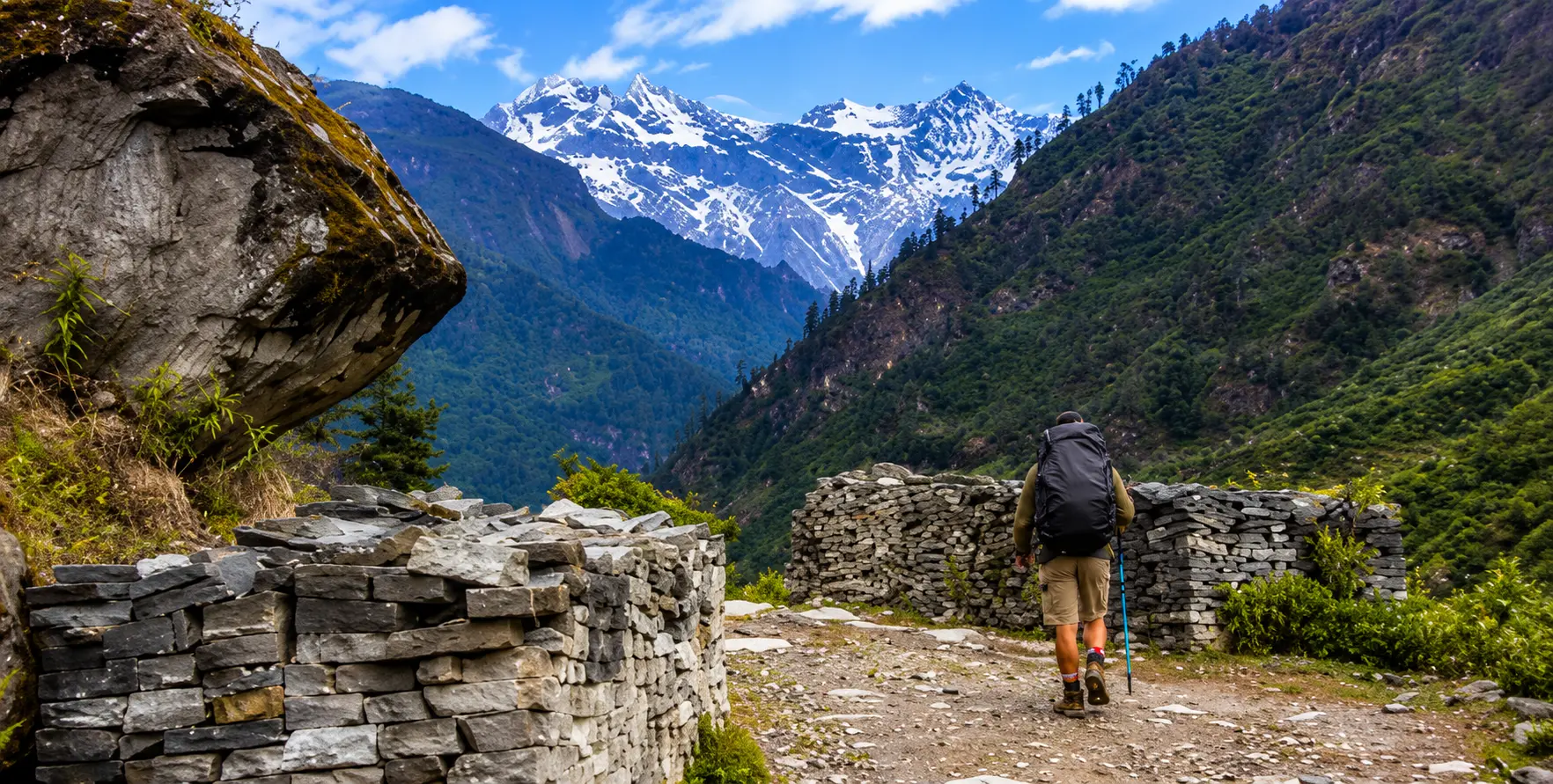
The Annapurna Base Camp route passes predominantly through Gurung and Magar hill communities — villages such as Ghandruk and Chhomrong offering home-cooked dal bhat, traditional stone architecture, and a level of multi-ethnic cultural variety along a single trail that few other routes in Nepal can match. Everest Base Camp, by contrast, travels through the legendary Sherpa heartland of the Khumbu — Namche Bazaar, the unofficial Sherpa capital; Tengboche Monastery, the spiritual centre of the region and the site of the annual Mani Rimdu festival; and a string of villages whose Tibetan Buddhist culture, monasteries, and mountaineering history are inseparable from the Everest story itself, as explored in greater depth in our dedicated guide to Nepal’s sacred mountain geography.
Getting There — The Logistics That Actually Start Your Trek
This is where the two treks diverge most sharply in practical terms, and where Nepal Vehicle Hiring Pvt Ltd’s role in each journey looks quite different.
Reaching the Annapurna Base Camp Trailhead
ABC begins with a road journey from Kathmandu to Pokhara (covered in our dedicated Kathmandu to Pokhara guides), followed by a private jeep or local transport transfer from Pokhara to the trailhead at Nayapul, Kande, or Jhinu Danda — a journey of 45 minutes to 2 hours depending on the exact starting point chosen for your specific itinerary. No flight is required at any stage. Nepal Vehicle Hiring Pvt Ltd provides direct door-to-door private vehicle transfer from your Pokhara hotel to any of these trailheads, full details of which are covered in our dedicated Pokhara to Annapurna Base Camp, Pokhara to Ghandruk, and Pokhara to Kande route guides.
Reaching the Everest Base Camp Trailhead
EBC begins with a flight from Kathmandu to Lukla (2,860 m) — and, importantly for 2026 travelers, during the peak spring and autumn trekking seasons, this flight now frequently departs not from Kathmandu’s main Tribhuvan International Airport but from Ramechhap’s Manthali Airport instead, due to ongoing congestion management at TIA. This means the EBC journey typically begins with a 4- to 5-hour predawn road transfer from Kathmandu to Ramechhap before the Lukla flight itself — a critical logistical step that we cover in exhaustive detail in our dedicated Ramechhap Manthali Airport Transportation guide. Nepal Vehicle Hiring Pvt Ltd specializes in exactly this predawn transfer, with flight-specific departure-time calculations and 24/7 availability.
Plan This Step Carefully: Whichever trek you choose, the trailhead transfer is not a minor afterthought — it is the first real test of your itinerary’s logistics. For EBC specifically, missing your calculated departure window from Kathmandu to Ramechhap can mean missing your Lukla flight entirely. Book this transfer with Nepal Vehicle Hiring Pvt Ltd well in advance of your trek start date.
Permits and the 2026 Mandatory Guide Rule
As of late 2023, independent solo trekking is no longer legally permitted in either the Annapurna Conservation Area or the Sagarmatha (Everest) National Park — a regulation that remains firmly in force in 2026. Every foreign trekker on both routes must now be accompanied by a licensed, government-certified guide, a rule introduced to improve trekker safety and to support local guiding employment. Both treks also require entry permits for their respective conservation areas or national parks, as well as a TIMS card. Neither trek can any longer be undertaken as a fully independent, unguided journey — plan for a licensed guide as a non-negotiable line item in your budget for whichever trek you select.
Best Season for Each Trek
Both treks share broadly the same two recommended windows: spring (March to May) and autumn (September to November). Spring is particularly magical for Annapurna Base Camp, when the lower-altitude rhododendron forests burst into vivid bloom alongside generally stable, warming weather. Autumn is considered the gold-standard season for Everest Base Camp specifically — crystal-clear post-monsoon skies deliver the sharpest possible views of Everest, Lhotse, and Ama Dablam, and it is also the peak season when mountaineering expeditions are visibly preparing at Base Camp itself, adding genuine atmosphere to the EBC experience.
The Decision Matrix
| Choose Annapurna Base Camp If You… | Choose Everest Base Camp If You… |
| Are a first-time Himalayan trekker wanting a gentler altitude introduction | Have already done a moderate-altitude trek and want the bigger challenge |
| Have limited time (a week or less can work) | Have at least 12–16 days available |
| Want varied landscapes — subtropical valley to alpine sanctuary in one trip | Want sustained, dramatic high-altitude glacial and alpine scenery |
| Are budget-conscious and want to avoid an expensive mountain flight | Are drawn specifically to the global prestige of standing at Everest’s foot |
| Want a quieter, more flexible itinerary with shorter daily distances | Want Sherpa culture, Tengboche Monastery, and the legendary Khumbu |
| Prefer strong leg/stair endurance challenges over altitude exposure | Are comfortable with — or want to test — sustained high-altitude exposure specifically |
Can You Do Both?
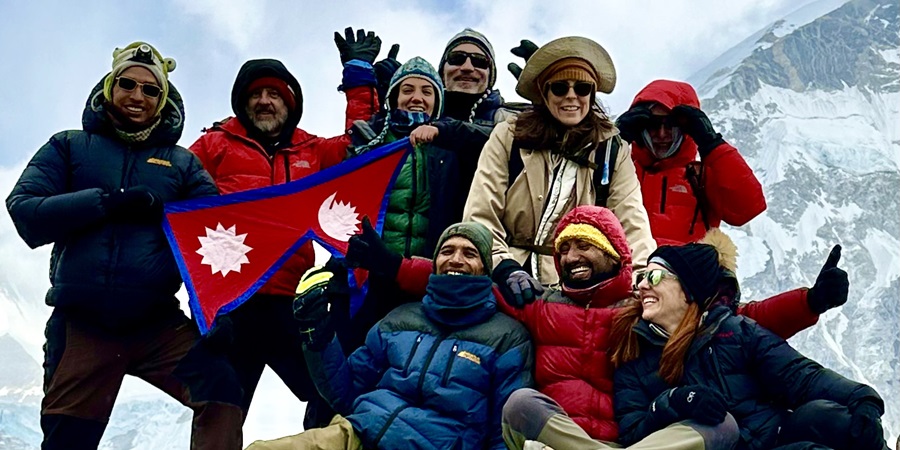
Many experienced Himalayan trekkers eventually do exactly that — and Nepal, as more than one returning trekker has observed, has a habit of making that second trip happen faster than expected. A genuinely sensible sequencing strategy for first-timers is to complete Annapurna Base Camp first: it functions as excellent practical preparation for the altitude, teahouse logistics, and daily trekking rhythm that Everest Base Camp will later demand at a higher and more sustained level, while delivering a complete and deeply rewarding Himalayan experience entirely in its own right, regardless of whether a second trip ever follows. There is no ranking between these two treks — only two different kinds of remarkable, and no reason you eventually have to choose only one.
Why Choose Nepal Vehicle Hiring Pvt Ltd for Either Trek
- Complete Trailhead Coverage: Whether your trek begins in Pokhara (ABC) or requires a predawn transfer to Ramechhap for your Lukla flight (EBC), we provide the right vehicle and departure time for both.
- Flight-Specific Departure Calculation for EBC: We calculate your exact Kathmandu-to-Ramechhap departure time based on your specific Lukla flight slot — not a generic estimate.
- Door-to-Door Pokhara Service for ABC: Hotel pickup anywhere in Pokhara, direct to Nayapul, Kande, or Jhinu Danda.
- All Vehicle Types: Private sedan, 4WD Scorpio, or Hiace van — sized to your group for either trailhead.
- Transparent All-Inclusive Pricing: Driver, fuel, and tolls included in every quote for both routes.
- 24/7 Booking: WhatsApp +977-9851013196 — whichever trek you choose, we’ll get you to the start line.
Frequently Asked Questions — ABC vs EBC
Which is more difficult, Annapurna Base Camp or Everest Base Camp?
Everest Base Camp is generally considered more difficult overall, primarily due to its significantly higher altitude (5,364 m vs 4,130 m), longer duration, and sustained high-altitude exposure. Annapurna Base Camp can feel more intense on individual days due to its relentless stone staircases, but EBC asks more of your body for a longer period.
Which trek is cheaper?
Annapurna Base Camp is typically 30-40% cheaper than Everest Base Camp, primarily because EBC requires an expensive round-trip flight to Lukla (USD 350–450+) while ABC requires no flight at all. Independent ABC treks can start from around USD 440–700, while EBC typically starts from USD 1,000–1,500 or more.
Is a guide mandatory for both treks in 2026?
Yes. Since late 2023, independent solo trekking has been legally prohibited in either the Annapurna Conservation Area or the Sagarmatha (Everest) region. A licensed guide is mandatory for both treks.
Which trek is better for a first-time Himalayan trekker?
Annapurna Base Camp is generally recommended as the better first trek — it reaches a lower maximum altitude, carries a lower risk of AMS, offers more flexible, shorter itineraries, and is typically cheaper, making it a gentler and more accessible introduction to high-altitude trekking.
How do I get to the Everest Base Camp trailhead in 2026?
Most EBC treks begin with a flight from Kathmandu to Lukla. During peak spring and autumn seasons, this flight often departs from Ramechhap’s Manthali Airport rather than Kathmandu’s main airport, requiring a predawn 4- to 5-hour road transfer from Kathmandu to Ramechhap first. Nepal Vehicle Hiring Pvt Ltd provides this transfer — see our dedicated Ramechhap Manthali Airport Transportation guide for full details.
Can I do Annapurna Base Camp without taking any flights?
Yes — this is one of ABC’s key advantages. The entire journey from Kathmandu can be completed overland: bus or private vehicle to Pokhara, then jeep transfer to the trailhead at Nayapul, Kande, or Jhinu Danda, with no domestic flight required at any point.
Conclusion
There is no universally correct answer to the Annapurna versus Everest Base Camp question — only the answer that’s correct for you, your fitness, your budget, your available time, and what’s actually pulling you toward Nepal in the first place. If you want a gentler introduction to high-altitude trekking, a more varied landscape, and a friendlier budget, Annapurna Base Camp is calling your name. If the Everest story itself is why you’re reading this, and you’re ready for a longer, higher, more committing journey through the legendary Khumbu, Everest Base Camp is your trek.
Whichever you choose, Nepal Vehicle Hiring Pvt Ltd will get you to the start line — comfortably, on time, and ready to begin. The mountains will take care of the rest.
Book your trailhead transfer — Call or WhatsApp: +977-9851013196
E-mail:[email protected]
- Annapurna vs Everest Base Camp: Which Trek Is Right for You?
- The Quick Verdict
- Altitude and Acclimatization — Thin Air vs. Burning Legs
- Difficulty — Two Different Kinds of Hard
- Duration and Distance
- Cost — Where the Real Money Goes
- Scenery — Variety vs. Drama
- Culture — Gurung and Magar Villages vs. Sherpa Country
- Getting There — The Logistics That Actually Start Your Trek
- Permits and the 2026 Mandatory Guide Rule
- Best Season for Each Trek
- The Decision Matrix
- Can You Do Both?
- Why Choose Nepal Vehicle Hiring Pvt Ltd for Either Trek
- Frequently Asked Questions — ABC vs EBC
- Conclusion

Related Blog & Articles
Annapurna Conservation Area
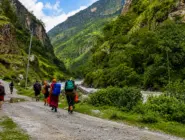
Airport to Trek Starting Point Transfer Nepal
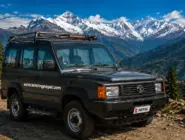
ACAP Permit – The Annapurna Conservation Area Entry Pass: Complete Guide
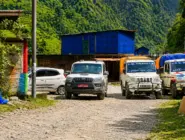
Best 4WD Jeep for Everest Base Camp Trek Transfers
Kathmandu to Phaplu Vehicle Guide 2026