Plan a Trip


Gautam Buddha Airport to Lumbini Vehicle – Complete Transfer Guide 2026

Gautam Buddha Airport to Lumbini Vehicle – Complete Transfer Guide 2026
Landing at Gautam Buddha International Airport in Bhairahawa and heading to the sacred birthplace of the Buddha in Lumbini? You are just 22 kilometers away from one of the most spiritually significant places on earth. The transfer from Gautam Buddha Airport to Lumbini is short and simple, taking approximately 25 to 35 minutes by private vehicle, making it one of the most convenient airport-to-sacred-site transfers in Nepal.
Whether you are arriving as a Buddhist pilgrim, a Hindu devotee, a heritage traveler, or simply a curious visitor, this complete 2026 guide covers everything you need to know about booking your vehicle from Gautam Buddha Airport to Lumbini – transport options, prices, what to expect at the airport, what to see in Lumbini, and how to arrange your transfer with Vehicle Hiring Nepal.
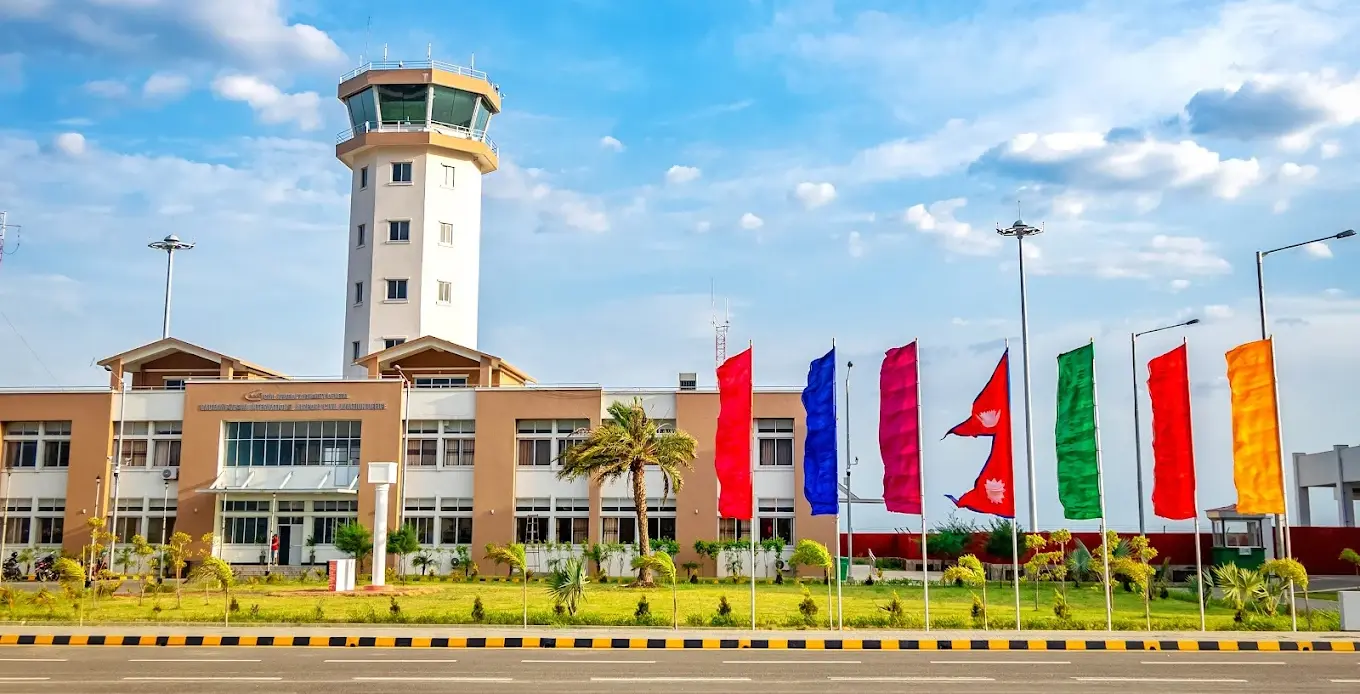
Gautam Buddha International Airport – Overview
Official Name: Gautam Buddha International Airport (IATA: BWA)
Location: Siddharthanagar (Bhairahawa), Rupandehi District, Lumbini Province, Nepal
Distance to Lumbini: 22 km west of the airport – approximately 25 to 35 minutes by vehicle
Airport Type: Regional International Airport – fully operational for domestic and select international flights
Domestic Airlines: Yeti Airlines, Shree Airlines, Buddha Air – multiple daily flights from Kathmandu (35 min)
International: Select charter and scheduled international services from India and beyond
New Terminal: The new modern terminal building opened in 2022 with improved facilities for arrivals
Airport Facilities: Arrivals hall, baggage claim, currency exchange counter, café, official taxi desk, car park
Gautam Buddha International Airport is named in honor of Siddhartha Gautama – the Buddha – who was born at Lumbini, just 22 km west of the airport. This naming reflects the airport’s primary purpose as the aviation gateway for the millions of Buddhist and Hindu pilgrims who visit Lumbini each year from India, Sri Lanka, Thailand, Myanmar, Japan, South Korea, China, and across the world. For many pilgrims, stepping off the aircraft at Gautam Buddha Airport is itself the first moment of the pilgrimage – the Buddha’s land begins at the runway.
Distance and Travel Time: Gautam Buddha Airport to Lumbini
Distance: Approximately 22 km by road
Travel Time: 25 to 35 minutes by private vehicle in normal traffic
Road Type: Fully paved road throughout – no rough sections
Route: Airport → Bhairahawa city → Siddhartha Highway west → Lumbini Development Zone gate
Best Departure: Immediately on collecting luggage – no reason to delay for such a short journey
The road from Gautam Buddha Airport to Lumbini is one of the most straightforward airport transfers in Nepal. The route passes through the commercial heart of Bhairahawa and then continues west on the Siddhartha Highway, through the flat Terai agricultural landscape, to the Lumbini Development Zone. The road is fully paved and in good condition throughout, and in normal traffic, the journey rarely takes more than 35 minutes.

Vehicle Options & Prices: Airport to Lumbini 2026
Vehicle Hiring Nepal provides reliable, comfortable vehicles for groups of all sizes traveling from Gautam Buddha Airport to Lumbini. Here are your options and 2026 prices:
| Vehicle Type | Capacity | Price (USD) | Price (NPR) | Best For |
| Sedan Car (Toyota Corolla / Suzuki Swift) | 1–3 pax | USD 15–22 | NPR 2,000–3,000 | Solo pilgrims, couples, small families |
| SUV / Toyota Fortuner / Jeep | 4–5 pax | USD 22–32 | NPR 3,000–4,300 | Families, small groups with luggage |
| Toyota Hiace Van | 7–14 pax | USD 35–50 | NPR 4,800–6,800 | Pilgrim groups, tour groups |
| Toyota Coaster Bus | 15–22 pax | USD 55–80 | NPR 7,500–10,800 | Large pilgrim groups, monastery parties |
| Full-Size Bus | 23–45 pax | USD 90–130 | NPR 12,000–17,500 | Very large groups, such as school or temple tours |
All prices include the driver, fuel for the short airport-to-Lumbini journey, and vehicle insurance. These are one-way transfer prices. Return transfer pricing (Lumbini back to Gautam Buddha Airport) is available at the same rates. Book both directions together for a combined discount and guaranteed return vehicle. Contact us for your exact 2026 quote.
Transport Options at Gautam Buddha Airport
When you arrive at Gautam Buddha Airport, you have several transport options to reach Lumbini. Here is a full comparison:
| Transport Option | Cost | Travel Time | Comfort | Reliability | Best For |
| Pre-booked Private Vehicle (Vehicle Hiring Nepal) | USD 15–50 | 25–35 min | Excellent | Confirmed – driver tracks flight | All travelers – most recommended |
| Airport Official Taxi Desk | NPR 1,500–2,500 | 25–40 min | Good | Good – fixed rate | Solo travelers without pre-booking |
| Metered / Negotiated Taxi (outside) | NPR 1,000–2,000 | 25–40 min | Variable | Variable – negotiate carefully | Budget travelers |
| Auto Rickshaw (Tempo) | NPR 200–400 | 40–60 min | Basic | Limited with luggage | Ultra budget, light luggage only |
| Hotel Pickup (pre-arranged) | Free or NPR 1,000+ | 25–35 min | Good | Good if pre-confirmed with the hotel | Travelers whose hotel offers pickup |
For most travelers – especially pilgrims arriving with luggage and offerings after a flight – a pre-booked private vehicle from Vehicle Hiring Nepal is the clear recommendation. Your driver is waiting at the arrivals exit with your name on a board; the price is fixed in advance; the vehicle is air-conditioned and clean; and you are taken directly to your Lumbini hotel or the Development Zone gate without any fuss or negotiation.
The Road: Gautam Buddha Airport to Lumbini
Airport Exit to Bhairahawa City (5 km | ~10 min)
From the airport departure zone, your driver heads west through the airport approach road and into the commercial heart of Bhairahawa city – officially called Siddharthanagar. Bhairahawa is a busy, modern Terai city with wide roads, commercial markets, hotels, banks, hospitals, and good amenities. If you need to make any final purchases, withdraw Nepali Rupees from an ATM, or stock up on offerings for the temple (marigold garlands, incense, fruit) before arriving at Lumbini, Bhairahawa city is the ideal opportunity. Alert your driver, and they will stop at any location in the city.
Bhairahawa City to Lumbini Road Junction (10 km | ~15 min)
Continuing west, the road passes through the outer commercial areas of Bhairahawa and transitions into the flat, open agricultural landscape of the western Terai. Rice paddies, mustard fields, and the occasional mango orchard line both sides of the road. The sky is wide and the horizon flat – the characteristic landscape of the Lumbini plains that stretches all the way to the Indian border south of Lumbini. The road is paved and in good condition throughout.
Lumbini Road Junction to the Development Zone Gate (7 km | ~10 min)
From the main road junction, the Lumbini access road leads south through increasingly peaceful, tree-lined terrain. The landscape becomes notably quieter as the sacred zone approaches. The famous Lumbini Master Plan – the UNESCO-supported development blueprint designed by Japanese architect Kenzo Tange – is visible in the widening, tree-lined central canal that runs through the heart of the Development Zone. Your driver will take you to your hotel, monastery guest house, or directly to the main gate of the Lumbini Development Zone.
Arriving at Lumbini – What to Expect at the Development Zone
The Lumbini Development Zone is a planned sacred park of approximately 6 square kilometers divided into three main areas. Understanding the layout before you arrive helps you make the most of your time:
The Sacred Garden (Core Zone)
At the heart of the Development Zone lies the Sacred Garden – the most ancient and spiritually charged area of Lumbini. The Sacred Garden contains the Maya Devi Temple (marking the exact birthplace of the Buddha), the Ashoka Pillar (erected in 249 BCE), the Puskarini Pond (where Queen Maya Devi bathed before giving birth and where the infant Buddha was first bathed), and the ancient brick ruins of monasteries dating from the 3rd century BCE to the 9th century CE. This is the starting point for all pilgrims.
Entry to the Sacred Garden requires removing footwear. The atmosphere inside is one of profound peace and concentrated spiritual power – particularly in the early morning before large groups arrive. Your vehicle can drop you at the Sacred Garden gate, which is a short walk from the Maya Devi Temple.
The Monastic Zone – East and West
Extending north of the Sacred Garden along a central canal, the Monastic Zone is divided into the East Zone (Theravada Buddhist countries – Sri Lanka, Myanmar, Thailand, Cambodia, Vietnam) and the West Zone (Mahayana Buddhist countries – China, Japan, South Korea, Germany, France, and others). Each monastery is architecturally unique to its home country’s Buddhist tradition. Walking through the Monastic Zone is like a journey through global Buddhism – over 40 monasteries from dozens of nations, each one a masterpiece of its national sacred architecture.
A bicycle or electric rickshaw is the most practical way to explore the full extent of the Monastic Zone, which stretches approximately 3 km from the Sacred Garden to the northern boundary. Bicycle hire is available near the Development Zone gate for a small fee.
The Lumbini Village Area
Just outside the southern boundary of the Development Zone, the Lumbini village area contains most of the hotels, guesthouses, and monastery guest houses used by pilgrims and visitors. Your vehicle will drop you at your specific accommodation address in this area.
Lumbini Development Zone Entry Fee 2026
| Visitor Category | Entry Fee (NPR) | Entry Fee (USD approx.) | Notes |
| Foreign National (non-SAARC) | NPR 500 | USD 4 | All international visitors outside South Asia |
| SAARC National (India, etc.) | NPR 200 | USD 1.50 | India, Bangladesh, Pakistan, Sri Lanka, etc. |
| Nepali Citizen | NPR 50 | NPR 50 | Nepali national ID required |
| Children under 10 years | Free | Free | All nationalities |
The entry fee is paid at the main gate of the Lumbini Development Zone and is valid for the full day. This fee is separate from any monastery entry fees (most individual monasteries are free to enter, with donation boxes available). The entry fee is not included in your vehicle hire price – have Nepali Rupees or USD ready at the gate.

Top Sacred Sites to Visit in Lumbini
Once your vehicle drops you at Lumbini, here is a guide to the most important sites to visit during your stay:
Maya Devi Temple – The Exact Birthplace
The most sacred site in all of Lumbini is the exact location where Queen Maya Devi gave birth to Prince Siddhartha Gautama, the future Buddha, in approximately 623 BCE. The ancient temple complex protects the Marker Stone – the specific stone that marks the precise birthplace – and the ruins of earlier temples built over this sacred ground since the 3rd century BCE. Adjacent is the sacred Puskarini Pond. The Ashoka Pillar stands just outside the temple enclosure, its Brahmi inscription from 249 BCE confirming this as the authentic birthplace. Remove footwear before entering. Photography inside the inner sanctum is restricted.
Ashoka Pillar
The sandstone pillar erected by Emperor Ashoka during his pilgrimage to Lumbini in 249 BCE is one of the oldest surviving historical monuments in Nepal. The pillar bears an inscription in Brahmi script identifying this as the birthplace of the Buddha and recording Ashoka’s exemption of Lumbini from taxes in recognition of its sacred status. The pillar has been partially restored and now stands approximately 7 meters tall, surrounded by a protective railing.
World Peace Flame
The World Peace Flame monument near the Maya Devi Temple burns with a permanent flame symbolizing peace and the light of the Buddha’s teachings radiating across the world. The flame is particularly beautiful at dusk, when the warm evening light catches it against the backdrop of the ancient sacred garden.
Chinese Monastery (Zhong Hua Buddhist Monastery)
One of the most visually magnificent structures in the entire Monastic Zone, the Chinese monastery is a full-scale recreation of a traditional Chinese imperial Buddhist temple complex – sweeping curved rooflines, red lacquer pillars, gilded Buddha images, and serene meditation gardens. The monastery is actively maintained by Chinese Buddhist monks and nuns and is open to all visitors.
Royal Thai Buddhist Monastery
The Thai monastery is another architectural highlight of the West Monastic Zone – a gleaming white building with traditional Thai Buddhist architectural details including distinctive tiered spires (prangs), golden Buddha images, and beautifully maintained gardens. The monastery compound contains some of the finest Buddhist art in Lumbini.
Kapilavastu / Tilaurakot (27 km from Lumbini)
For pilgrims who wish to follow the full extent of the sacred sites associated with the Buddha’s life, Tilaurakot – identified as the ancient royal city of Kapilavastu where Prince Siddhartha grew up – lies 27 km west of Lumbini. The archaeological ruins include the remains of the palace walls, city gates, moat, and meditation garden where the young Siddhartha is believed to have had his early encounters with human suffering that set him on the path to Enlightenment. Your Vehicle Hiring Nepal driver can take you to Tilaurakot as a half-day excursion from Lumbini.
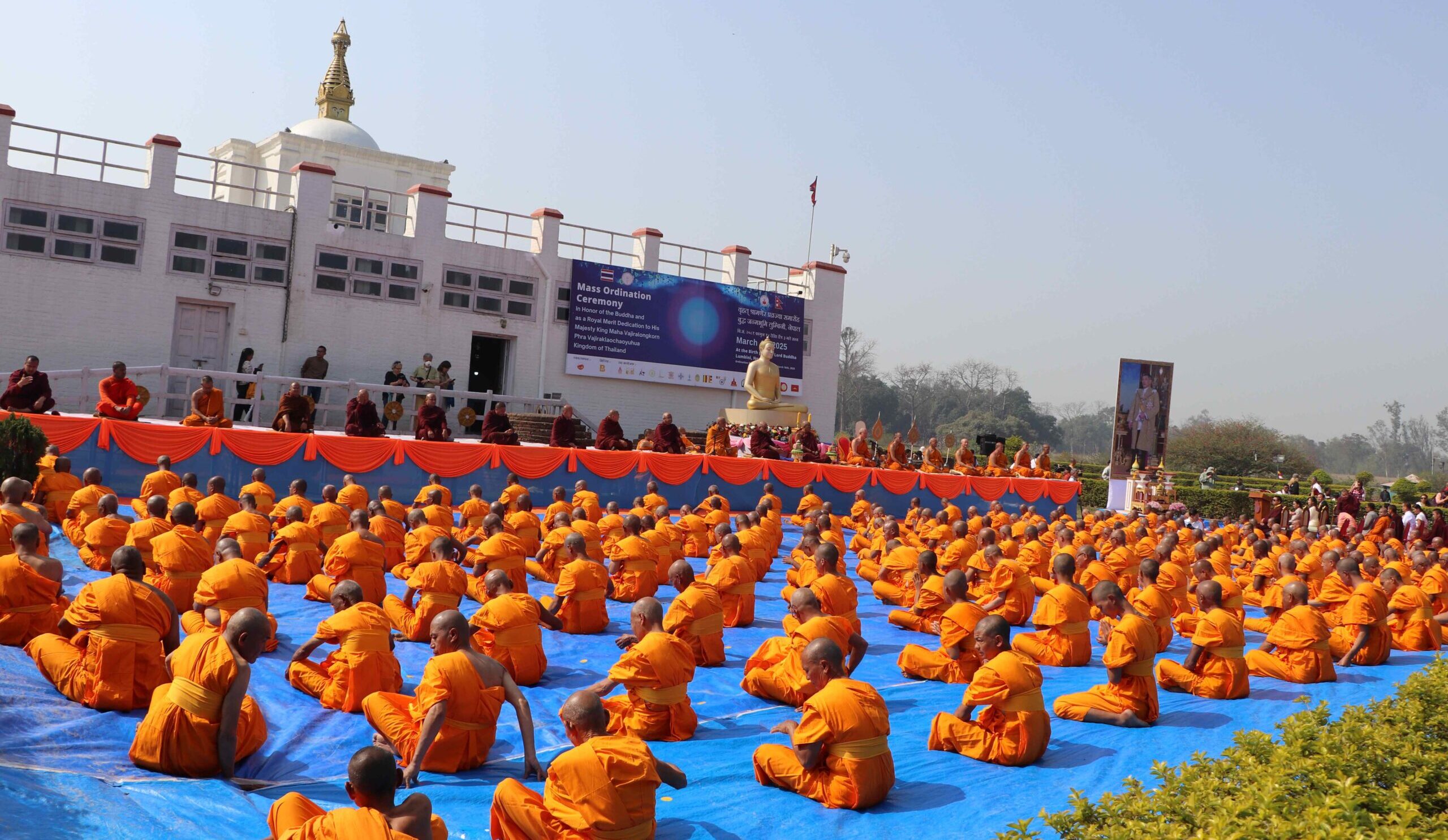
The Pilgrimage Experience – Making the Most of Your Lumbini Visit
Best Time of Day to Visit the Sacred Garden
Early morning is by far the finest time to visit the Maya Devi Temple and Sacred Garden. Arrive at the garden gate between 6:00 and 6:30 AM, when the site opens and the morning light is soft and golden. At this hour, the garden is relatively quiet, the atmosphere most contemplative, and the ancient stones of the birthplace most accessible without crowds. The afternoon (2:00 to 5:00 PM) is also good, but can be busy with larger tour groups. The hour before sunset – approximately 4:30 to 6:00 PM – sees the most beautiful light in the garden.
How Long to Spend in Lumbini
A single day at Lumbini – arriving at the airport in the morning and leaving in the evening – allows time to visit the Sacred Garden and a portion of the Monastic Zone. For a meaningful pilgrimage experience, a minimum of 2 nights in Lumbini is strongly recommended. Two full days allow you to visit the Maya Devi Temple at dawn, explore the full extent of both Monastic Zones by bicycle, make a half-day excursion to Tilaurakot, and experience the beautiful evening light in the Sacred Garden on two occasions. Three nights is ideal for those who also want to visit Devghat and the surrounding area.
Traditional Pilgrimage Offerings
If you are visiting as a Hindu or Buddhist pilgrim, traditional offerings for Lumbini include marigold garlands (purchased from flower sellers near the Development Zone gate), incense sticks, camphor, small ghee lamps, fruit (particularly coconuts and bananas), and red or saffron cloth. Buddhist pilgrims typically offer butter lamps (available at the monasteries), khata (white ceremonial scarves), and small monetary donations in the donation boxes at each monastery altar. Offerings can be purchased in Lumbini village just outside the main gate.
Accommodation in Lumbini 2026
Lumbini offers accommodation across a wide range of options – from peaceful monastery guest houses to comfortable hotels. Here is what is available within and around the Development Zone:
| Accommodation Type | Price Per Night (USD) | Location | Best For |
| Budget Guesthouse | USD 8–20 | Lumbini village, outside the zone | Backpackers, budget pilgrims |
| Monastery Guest House | USD 10–35 | Inside monasteries in the zone | Buddhist practitioners, pilgrims seeking immersion |
| Mid-range Hotel | USD 30–70 | Lumbini village / Bhairahawa | Families, independent travelers |
| Lumbini Garden New Hotel | USD 70–130 | Inside Development Zone | Best hotel in Lumbini, pool, garden, comfort |
| Bhairahawa City Hotels | USD 30–100 | 22 km from Lumbini | Better facilities, wider choice, day-trip basis |
For the most authentic pilgrimage experience, staying in a monastery guesthouse within the Development Zone is highly recommended. Several monasteries – including the Sri Lankan, Myanmar, and Korean monasteries – operate simple yet clean guesthouses open to visitors of all faiths. Meals are sometimes offered at the monastery refectory. Book well in advance for the October-to-February peak pilgrimage season.
From Lumbini – Onward Transport Options
After your visit to Lumbini, Vehicle Hiring Nepal can arrange onward transport to any destination in Nepal. Here are the most frequently requested onward journeys:
| Destination | Distance from Lumbini | Travel Time | Approx. Price (USD) | Notes |
| Gautam Buddha Airport (return) | 22 km east | 30 min | USD 15–22 | Return flight to Kathmandu |
| Chitwan National Park | 130 km east | 2–2.5 hrs | USD 60–95 | Jungle safari destination |
| Kathmandu | 300 km | 7–8 hrs | USD 110–145 | Capital – via the Mugling highway |
| Pokhara | 200 km | 4–5 hrs | USD 85–120 | Via Butwal and Prithvi Highway |
| Bhairahawa City Hotels | 22 km east | 30 min | USD 15–22 | City accommodation, airport next day |
| Tilaurakot (day trip) | 27 km west | 40 min | USD 20–30 | Half-day excursion from Lumbini |
| Devghat Sacred Site | 120 km east | 2 hrs | USD 55–75 | Sacred river confluence near Narayangadh |
Practical Tips for Your Airport to Lumbini Transfer
- Pre-book your vehicle before your flight departs – Vehicle Hiring Nepal’s driver will be waiting at the arrivals exit with your name board as soon as you collect your bags.
- Carry Nepali Rupees for the Lumbini Development Zone entry fee (NPR 500 for most foreigners), offerings, bicycle hire, and small purchases – currency exchange is available at the airport.
- The airport journey from the t to Lumbini journey (25 to 35 min), but the Terai can be very hot – the vehicle’s air conditioning will be a welcome relief, especially from April to September.
- Inform your driver if you need to stop in Bhairahawa city for an ATM, pharmacy, or supplies – they will stop without hesitation.
- If arriving on an early morning flight (7:00 to 8:00 AM), you can be at the Lumbini Development Zone gate by 8:30 AM – early enough for the most peaceful morning visit to the Maya Devi Temple.
- Tell your driver your hotel name and full address in Lumbini at the time of booking – some accommodations are within the Development Zone and require navigating the internal road system.
- For larger groups arriving with many bags, request a Hiace van rather than a sedan to ensure comfortable luggage storage for the full group.
- If any group members have mobility limitations, inform us at the time of booking – we can provide a vehicle with easier access and ask your driver to assist with temple access logistics.
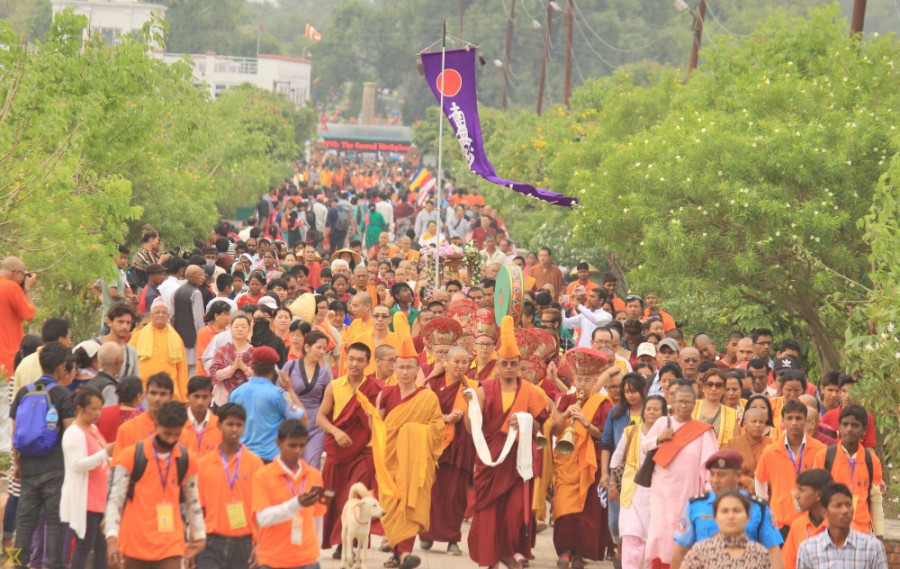
Lumbini for Different Types of Visitors
Buddhist Pilgrims
For Buddhist pilgrims arriving at Gautam Buddha Airport, Lumbini represents the most sacred destination in the Buddhist world – the actual birthplace of the historical Buddha. The entire journey from the airport to the Sacred Garden is a pilgrimage from the very first moment. Many devout Buddhists make prostrations (full-body bows) upon entering the Sacred Garden. The monastery zone offers the opportunity to connect with Buddhist communities from your home country in an extraordinary setting of spiritual power.
Hindu Devotees
For Hindu pilgrims, Lumbini holds significance as the birthplace of the great teacher, whom many Hindus consider the ninth avatar of Lord Vishnu. The Hindu tradition deeply respects the site, and many Indian pilgrims include Lumbini in their Nepal pilgrimage circuit alongside Pashupatinath Temple in Kathmandu and Muktinath in Mustang. The devotional atmosphere of Lumbini is familiar and welcoming to Hindu pilgrims.
Heritage and Cultural Travelers
For travelers interested in history, archaeology, and world heritage, Lumbini offers one of the finest concentrations of ancient sacred archaeology and living religious tradition in Asia. The excavated remains beneath the Maya Devi Temple represent some of the oldest brick structures in Nepal. The Ashoka Pillar inscription is one of the earliest examples of writing in the Subcontinent. The architectural diversity of the Monastic Zone represents a remarkable cross-section of 21st-century Buddhist sacred architecture from across the global Buddhist world.
Families with Children
Lumbini is an excellent destination for families with children. The Development Zone is flat, spacious, and easily navigable. The peaceful garden atmosphere, the colorful monastery buildings, the bicycle rides along the central canal, and the opportunity to witness living pilgrimage traditions from many different countries make Lumbini an enriching educational experience for children of all ages. Children under 10 enter the Development Zone free.
Best Time to Visit Lumbini via Gautam Buddha Airport
October to February (Best Season)
The dry winter months are the finest time for both air travel to Bhairahawa and visiting Lumbini. The weather is clear, cool (15 to 25°C), and comfortable for outdoor pilgrimage activities. The Development Zone gardens are green and lush after the monsoon. Domestic flights to Bhairahawa from Kathmandu are most reliable in winter with few weather-related delays. This is peak international pilgrimage season – the Lumbini garden sees its largest international groups during November, December, January, and February. Book accommodation well in advance.
March to May (Good – Warming Up)
Spring is a pleasant time to visit. Temperatures are rising but not yet extreme (25-35°C). The gardens are beautiful in March and April. Domestic flights are reliable. May can be hot (35 to 38°C), but the early-morning Sacred Garden visit remains manageable. Fewer crowds than peak season.
June to September (Monsoon – Possible)
The monsoon brings heavy humidity to the Terai, but Lumbini itself remains accessible year-round. The gardens are intensely green. However, domestic flights to Bhairahawa are more likely to be delayed by weather during the monsoon. If your flight is delayed or canceled, Vehicle Hiring Nepal can help you reschedule your airport transfer. The main challenge in the monsoon is the heat and humidity rather than any access issues – Lumbini itself never closes.
What is Included in Your Airport Transfer
- Meet and greet service – your driver waits at the arrivals exit with a sign bearing your name
- Flight tracking – your driver monitors your actual arrival time and adjusts waiting time accordingly if your flight is early or delayed
- Private, air-conditioned vehicle for the full airport-to-Lumbini journey
- Full fuel cost included – no extra charges
- Vehicle insurance for the journey
- Luggage assistance – driver helps load and unload bags
- Direct drop-off at your specific hotel, monastery guest house, or the Lumbini Development Zone main gate
- Optional stop in Bhairahawa city for ATM, supplies, or currency exchange if needed
- 24/7 WhatsApp contact for any queries or last-minute changes
Not included: Development Zone entry fee (NPR 500 for most foreigners), temple offerings, pilgrimage supplies, personal meals, accommodation, and any additional stops beyond the agreed route.

How to Book Your Gautam Buddha Airport to Lumbini Vehicle
- Contact Vehicle Hiring Nepal via WhatsApp at +977 9851013196 or visit vehiclehiringnepal.com
- Provide your flight details – airline name, flight number, and scheduled arrival time at Bhairahawa.
- Confirm your group size and the number of bags or pieces of luggage
- Choose your vehicle type based on group size – sedan, SUV, Hiace, or Coaster
- Provide your exact destination in Lumbini – hotel name, monastery name, or Development Zone gate
- Mention if you need any stops in Bhairahawa city en route
- Specify if you need a return transfer from Lumbini to the airport at the end of your stay
- Receive instant booking confirmation with your driver’s name, vehicle details, and WhatsApp contact
WhatsApp: +977 9851013196
Email: [email protected]
Frequently Asked Questions
How far is Gautam Buddha Airport from Lumbini?
Gautam Buddha International Airport is approximately 22 km east of the Lumbini Development Zone main gate. The drive takes 25 to 35 minutes by private vehicle under normal traffic conditions.
How much does a vehicle from Gautam Buddha Airport to Lumbini cost?
A pre-booked private sedan car from Vehicle Hiring Nepal costs USD 15 to USD 22 (approximately NPR 2,000 to NPR 3,000) for 1 to 3 passengers. An SUV costs USD 22-32 for up to 5 passengers. A Toyota Hiace van for groups of 7 to 14 costs USD 35 to USD 50. All prices include driver, fuel, and insurance. The airport official taxi desk charges approximately NPR 1,500 to NPR 2,500 for the same journey by metered taxi.
Is there a direct bus from Bhairahawa Airport to Lumbini?
There is no direct public bus service from Gautam Buddha Airport to Lumbini. Local tempo (electric three-wheelers) and auto rickshaws operate in Bhairahawa city, but are impractical for getting from the airport with luggage. The most convenient and affordable option for most travelers arriving with baggage is a pre-booked private vehicle or the official airport taxi.
Can I visit Lumbini as a day trip from Bhairahawa?
Yes. If you are staying in a Bhairahawa city hotel – for example, when transiting through the area or flying in and out the same day – a day trip to Lumbini and back is very easy. The 22 km drive takes just 25 to 35 minutes each way. Vehicle Hiring Nepal can arrange a Bhairahawa-to-Lumbini-and-return transfer for the day. We recommend arriving at Lumbini between 7:00 and 8:00 AM for a peaceful early-morning experience and returning by late afternoon.
What if my flight arrives very early or very late?
Vehicle Hiring Nepal operates 24 hours a day, 7 days a week. Domestic flights to Bhairahawa typically operate from approximately 6:30 AM to 6:00 PM. For any flight in this window, our drivers are available, and your driver will track your flight status in real time. If your flight is delayed, your driver waits. If your flight lands early, they will be ready. Provide your flight number at the time of booking.
Can I include Tilaurakot in my airport transfer to Lumbini?
Yes. Tilaurakot – the ancient royal palace city where the Buddha grew up – is 27 km west of Lumbini. We can arrange your airport transfer to include a stop at Tilaurakot en route or as a half-day excursion from your Lumbini hotel on a subsequent day. This adds approximately 1.5 to 2 hours to your transfer and a small additional cost. Inform us at the time of booking.
Can I book a return transfer from Lumbini back to the airport?
Yes. Vehicle Hiring Nepal provides return transfers from Lumbini to Gautam Buddha Airport for your departure flight. For early-morning flights (7:00 to 8:00 AM), you will need to depart Lumbini between 5:30 and 6:00 AM – we provide early-morning transfers for all flight times. Book your return transfer at the same time as your arrival transfer for the best combined rate.
What is the best thing to do on the day I arrive in Lumbini?
If you arrive at Bhairahawa Airport on a morning flight and reach Lumbini between 8:00 and 9:00 AM, your ideal Day 1 plan is to check into your hotel, drop off your luggage, and immediately walk or cycle to the Sacred Garden for your morning visit. The Maya Devi Temple and Ashoka Pillar are most peaceful from 8:00 to 11:00 AM. Have lunch near the Development Zone gate, rest during the midday heat, then explore one section of the Monastic Zone in the late afternoon. Watch the sunset light on the Sacred Garden. Day 1 is complete.
Final Thoughts
The transfer from Gautam Buddha Airport to Lumbini is one of Nepal’s most meaningful journeys – short in distance but profound in destination. In just 22 kilometers and 30 minutes, you travel from the airport that bears the Buddha’s name to the actual ground where he was born. No other airport-to-sacred-site transfer in the world carries quite the same weight.
Vehicle Hiring Nepal makes this transfer seamless, reliable, and comfortable. Your driver is at the arrivals exit when you land; the vehicle is cool and clean; the price is agreed before you board; and you arrive at Lumbini ready to begin your pilgrimage without any travel stress. Whether you are arriving as a devout Buddhist pilgrim, a Hindu devotee, a heritage traveler, or a curious visitor, we are honored to be the first vehicle to carry you to the birthplace of the Buddha.
Book your Gautam Buddha Airport-to-Lumbini vehicle transfer today. WhatsApp: +977 9851013196 | Website: www.vehiclehiringnepal.com | Email: [email protected]. We are available 24 hours a day.
- Gautam Buddha Airport to Lumbini Vehicle – Complete Transfer Guide 2026
- Gautam Buddha International Airport – Overview
- Distance and Travel Time: Gautam Buddha Airport to Lumbini
- Vehicle Options & Prices: Airport to Lumbini 2026
- Transport Options at Gautam Buddha Airport
- The Road: Gautam Buddha Airport to Lumbini
- Arriving at Lumbini – What to Expect at the Development Zone
- Lumbini Development Zone Entry Fee 2026
- Top Sacred Sites to Visit in Lumbini
- The Pilgrimage Experience – Making the Most of Your Lumbini Visit
- Accommodation in Lumbini 2026
- From Lumbini – Onward Transport Options
- Practical Tips for Your Airport to Lumbini Transfer
- Lumbini for Different Types of Visitors
- Best Time to Visit Lumbini via Gautam Buddha Airport
- What is Included in Your Airport Transfer
- How to Book Your Gautam Buddha Airport to Lumbini Vehicle
- Frequently Asked Questions
- Final Thoughts

Related Blog & Articles
Kathmandu to Lumbini Vehicle – Complete Hiring Guide 2026

Kathmandu to Lumbini by Private car, jeep, hiace, and bus full Vehicle Guide