Plan a Trip


Jhinu to Kathmandu Jeep hire : Annapurna Trek Exit Guide
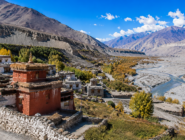
Jhinu to Kathmandu Jeep Rental: Annapurna Trek Exit Guide
Most Annapurna Base Camp trekkers remember Jhinu Danda for one thing: the hot springs. After days of stone staircases, freezing mornings above the tree line and the long, knee-testing descent from Chhomrong, the pools beside the Modi Khola are the part of the trek people talk about afterwards. What they talk about far less, and what causes more last-day stress than almost anything else on the itinerary, is the question of how to get from that riverside village to a hotel bed in Kathmandu.
This guide is written for exactly that moment. It explains what a Jhinu-to-Kathmandu jeep journey really consists of, why it is rarely one uninterrupted drive, where a vehicle can and cannot meet you, how to decide between pushing on to the capital the same day and sleeping a night in Pokhara, and how Nepal Vehicle Hiring arranges the legs so that the walk out, the valley road and the highway fit together without gaps.
One note on how we have written it. Road access in the Modi Khola valley has been extended in stages and varies with season and repair work, so the exact jeep pickup points have not stayed fixed. Rather than promise a single pickup spot that may be wrong by the time you read this, we describe the pattern, explain the local names you will hear, and tell you what to confirm with your guide and with us before the final morning.
The Jhinu-to-Kathmandu journey at a glance
It helps to stop thinking of this as one trip and see it as three connected pieces, each with its own character and its own timing.
- Piece one: Jhinu Danda to the roadhead. This is the short stretch between your lodge and where a vehicle can actually stop. Depending on conditions,s it is anything from a brief walk to a longer descent along the Modi Khola trail. Nothing with wheels can help you here, so it is a matter of legs, porters and good timing.
- Piece two: the valley road to Pokhara. From the roadhead,d a four-wheel-drive jeep follows the Modi Khola valley down through the villages around Siwai, past the Birethanti checkpoint and the Nayapul junction, and on to Pokhara. Trekking operators commonly describe the drive from the Jhinu area to Pokhara as three to four hours, and the lower part of that is a quick paved run once you reach Nayapul.
- Piece three: Pokhara to Kathmandu. This is the long Prithvi Highway run of roughly two hundred kilometres, normally six to eight hours with a meal stop. You can do it by road in a single day, by a short domestic flight, or after a night in Pokhara.
Add those together, and a same-day road journey from Jhinu to Kathmandu is a very long day, often ten to twelve hours of travelling once you count the walk, the stops, and the traffic at either end. Many trekkers happily do it, particularly those with an international flight to catch. Many others, after a week or more of walking, decide the sensible option is to break the journey in Pokhara. Neither choice is wrong. The point of this guide is to help you make it deliberately rather than on the last evening, tired, in a lodge with patchy signal.
Understanding Jhinu Danda as a departure point
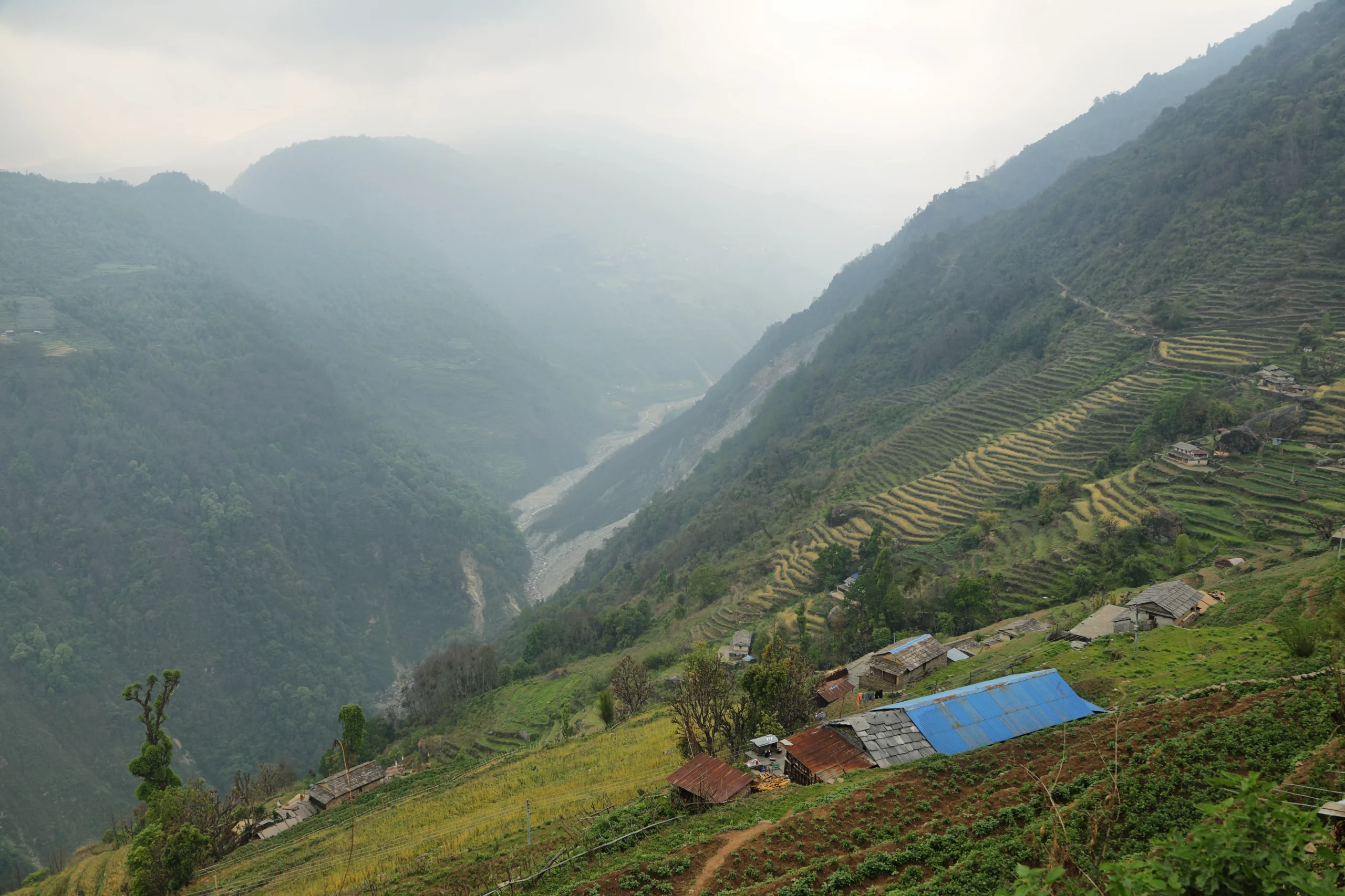
Jhinu Danda, sometimes written Jhinu Dada or Jinu Danda, is a Gurung settlement strung along a ridge above the Modi Khola at roughly 1,780 metres, in Kaski District inside the Annapurna Conservation Area. It sits on the Annapurna Base Camp route between Chhomrong above and the lower valley villages below, which is why so many itineraries make it the final trekking night.
Why so many treks end here
The reasoning is partly physical and partly practical. Coming down from Annapurna Base Camp, the trail passes Bamboo, Sinuwa and Chhomrong, and then drops steeply down the long Chhomrong staircase to the Kimrong Khola before climbing again to the ridge at Jhinu. By the time you reach Jhin,u, the big altitude is behind you, the air is thick and warm, and the lodges are comfortable. The hot springs, reached by a stone-stepped forest path of about twenty to thirty minutes down to the river, turn the evening into a small celebration. Several trekking operators describe the springs as a set of pools with different temperatures, set directly beside the Modi Khola in a forested gorge, which is a good part of their appeal.
From a transport point of view,w Jhinu matters because it is the last place where a trek and a road meet. Above Chhomrong,g there is no road at all. Below Jhinu,u the valley opens toward the lower villages and the motorable track. That is why vehicle planning for this exit comes down to one question: where, on the day you leave, does the track end and the trail begin?
The culture you are walking out of
Jhinu and its neighbours belong to the Gurung homeland of the Annapurna foothills. Gurung villages in this part of Kaski are known for their terraced millet and rice fields, their stone-slab paths and lodges run by families who often have sons, brothers or cousins in military and overseas service. Build in ten unhurried minutes on your final morning to say a proper goodbye to your lodge family. In a valley where almost every lodge is a family home, a good exit is as much about courtesy as logistics, and a driver who arrives to find the group relaxed and ready, rather than frantically repacking, has an easier and safer day.
The roadhead question: where does the jeep actually meet you?
This is the single most important thing to understand about a Jhinu-to-Kathmandu jeep, and the part where generic advice most often lets people down.
Why the pickup point is not fixed
The motorable road up the Modi Khola valley has been pushed progressively higher over time, and it is a seasonal, mountain-construction track rather than a finished highway. In the monsoon, landslides and washed-out crossings can interrupt it, and after the rains it is repaired and reopened in stages. As a result, itineraries published by different operators describe the pickup differently. You may see the vehicle waiting at Siwai, at Simrung (sometimes spelt Samrung), at Mithu Danda, or not very near Jhinu itself when the track allows. Each of these descriptions was accurate for the operator who wrote it at the time. None of them is a permanent rule.
What does stay constant is the geography. Jhinu sits at roughly 1,780 metres on a ridge, the river runs far below, and the track follows the valley downward. Wherever the vehicle waits, you will reach it by descending, not climbing, and the descent is usually short enough to be comfortable on tired legs.
Three ways to handle the walk-out
- Ride from the nearest roadhead. If the track currently runs close to Jhinu, the walk is brief, and the jeep carries you the rest of the way. This is the easiest option and the one most groups prefer when it is available.
- Walk down to a lower roadhead. If the track is interrupted higher up, the walk extends. Some groups choose this on purpose because the Modi Khola trail below Jhinu is pleasant, shaded and gently graded, and because it gives a calm morning before the vehicle section begins.
- Walk all the way to Nayapul or Birethanti. The classic way to finish is to follow the river trail down to the Birethanti checkpoint and the Nayapul road junction, where an ordinary road vehicle is waiting. It is a long, rewarding day on foot, but it removes dependence on the valley track altogether, which is why some guides still favour it in unsettled weather.
What to tell us and what to confirm
When you book with Nepal Vehicle Hiring, give us three things: the date you expect to leave Jhinu, the number of people and bags, and whether you want to end the day in Pokhara or Kathmandu. In return, we will confirm the current pickup point with our driver in the valley, tell you honestly if the track is affected, and set the departure time based on the real situation rather than an old itinerary. It also helps to ask your trekking guide, in the days before you reach Jhinu, to confirm the roadhead with lodge owners and local drivers. They know within a day or so when the track is open.
If you are still working out the earlier legs of the trek, our trekking transport page explains how approach and return vehicles are normally paired, and the Pokhara to Nayapul transportation service covers the lower valley approach if you are starting the trek rather than ending it.
Leg one: down the Modi Khola valley by jeep
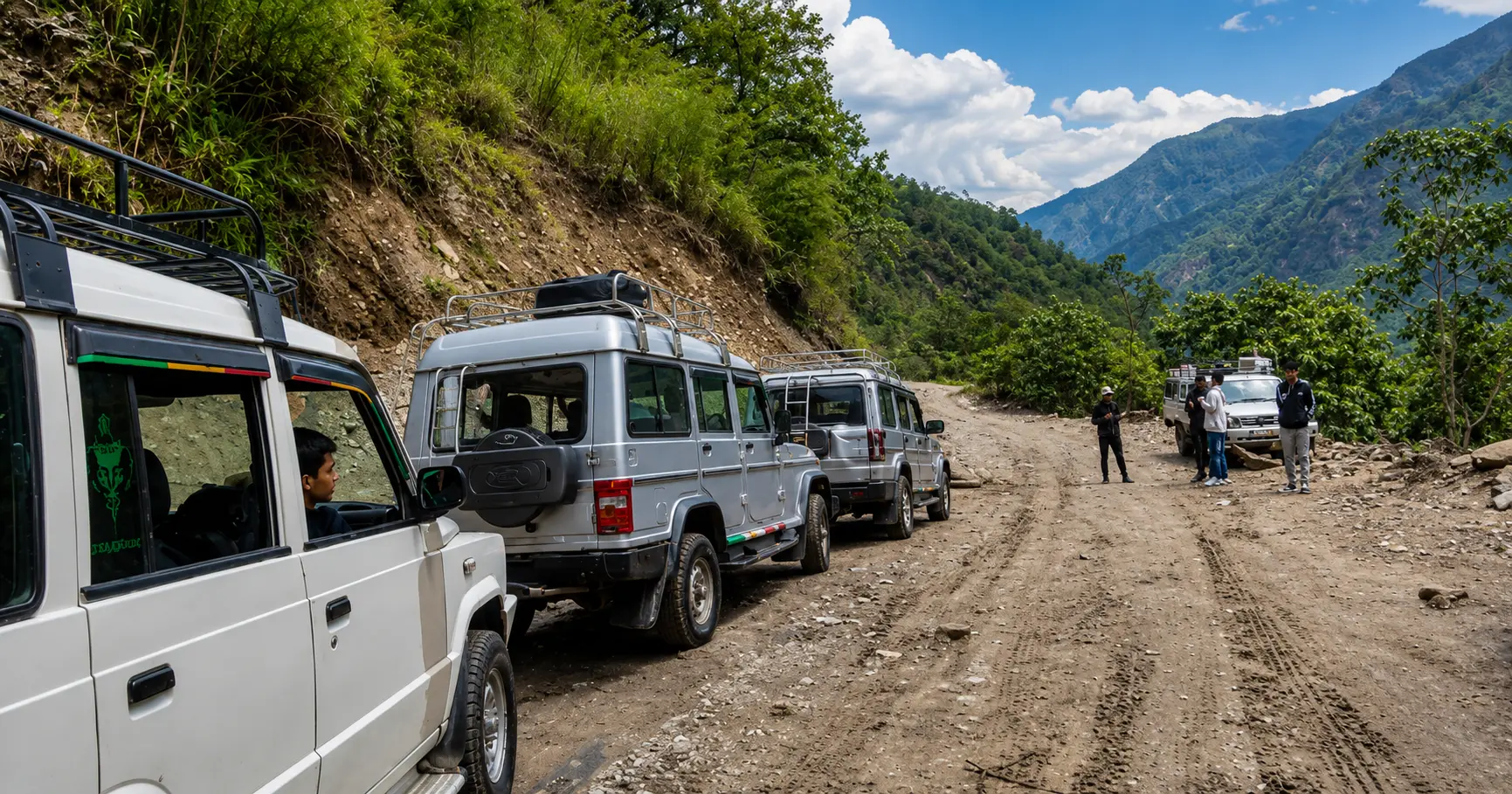
Once you are in the vehicle, the first stage of the drive is the most characterful and demanding, and it’s why a four-wheel-drive Scorpio jeep is the right tool for the valley section.
What the road is like
The valley track is a mountain construction road. It clings to the side of the gorge in places, crosses side streams on narrow bridges or through shallow fords, and alternates between compacted gravel, exposed rock and the occasional stretch of loose material where a slope has recently been cleared. The surface sets the speed, not the clock. A driver who knows the road slows to a walking pace through the rough crossings and makes up a little time on the firmer sections, and that rhythm is the difference between a smooth ride and a jarring one.
Passing is done at wide spots. Where two vehicles meet on a single-lane stretch, one reverses or pulls into the nearest bay, and the drivers settle it with horn taps and hand signals. It looks dramatic the first time, but it’s routine for anyone who drives here daily. Passengers who feel uneasy should say so; a good driver will happily slow down, and nobody on this road is in a hurry to prove anything.
The villages and the checkpoint
As the track drops toward the lower valley, it passes through Gurung and other hill-community villages in the Siwai area, where terraced fields climb the slopes on both sides, and the river appears and disappears below the road. Further down, you reach Birethanti, the busy riverside settlement that serves as the Annapurna Conservation Area checkpoint on the Modi Khola. Trekking itineraries often mention stopping here to have permits checked, and it is the natural place to keep your ACAP permit and TIMS card handy. Depending on your route and the checkpoint’s practice on the day, your driver or guide will tell you whether a stop is needed.
Just beyond lies the Nayapul junction, where the valley road meets the paved highway toward Pokhara. From here,e the character of the journey changes completely: smooth tarmac, shops, traffic and, within about an hour and a half, the first glimpses of Phewa Lake and the Pokhara valley. Trekkers who have spent a week above the tree line often find this transition more jarring than any rough road, and it is worth spending a few quiet minutes simply looking out of the window.
Why a Scorpio jeep for this section
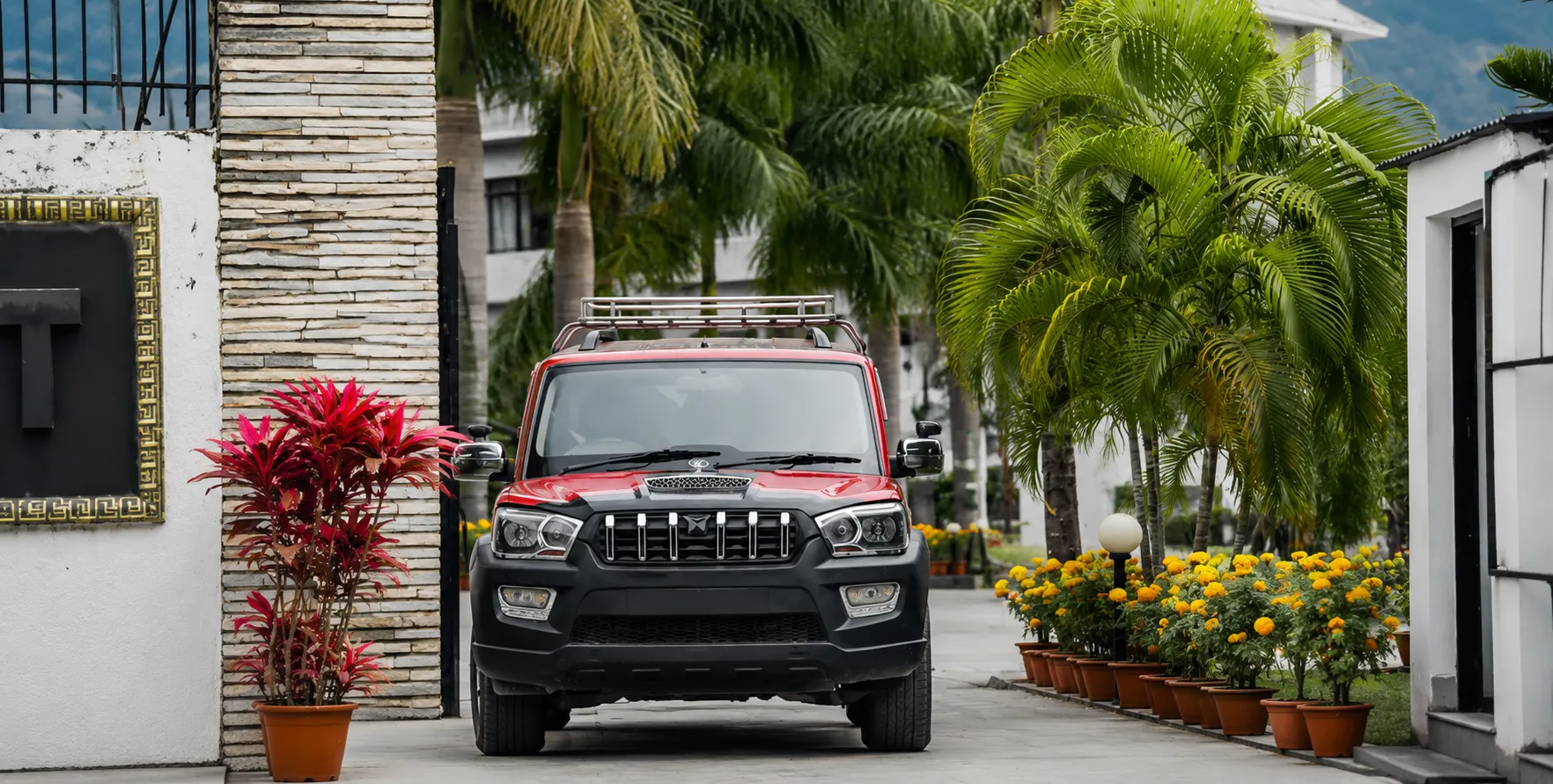
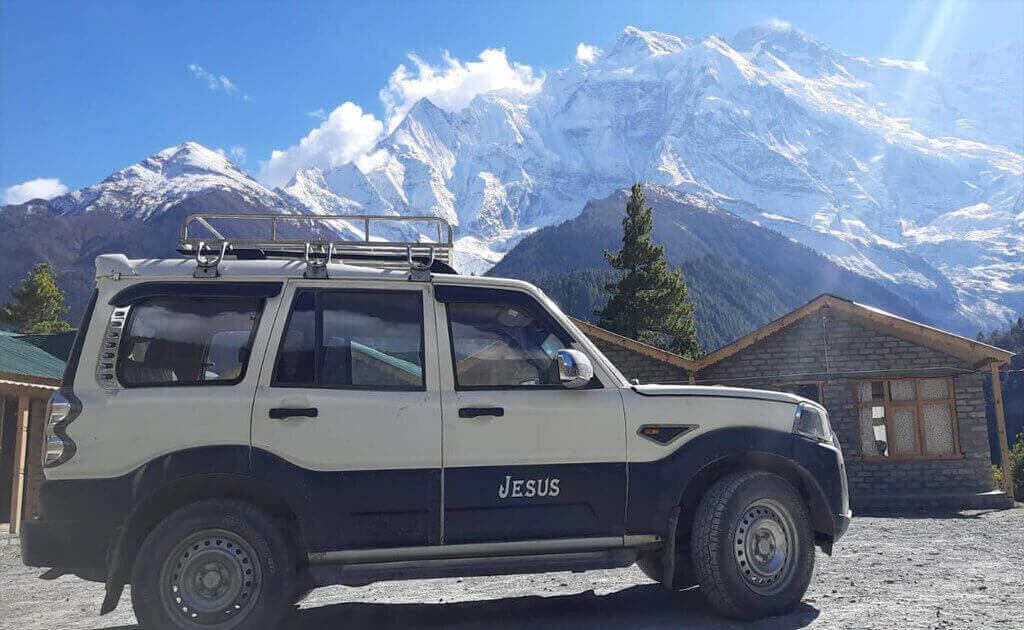
The Mahindra Scorpio is Nepal Vehicle Hiring’s standard mountain vehicle for roads like this. It combines four-wheel drive and good ground clearance with a body narrow enough for the tight sections, and it seats a small group comfortably with luggage on the roof rack. A group of four to seven trekkers with their packs fits well. For this stretch, we do not use vans or buses; they are unsuitable for the surface and unsafe on the narrow crossings, no matter the group size.
Leg two: Pokhara to Kathmandu on the Prithvi Highway
If you plan to reach Kathmandu in one day, or if you are completing the second day of a two-day exit, this is the long leg. For many people, it’s also the most enjoyable part of the journey once the stress of the trek exit has passed.
The highway in plain terms
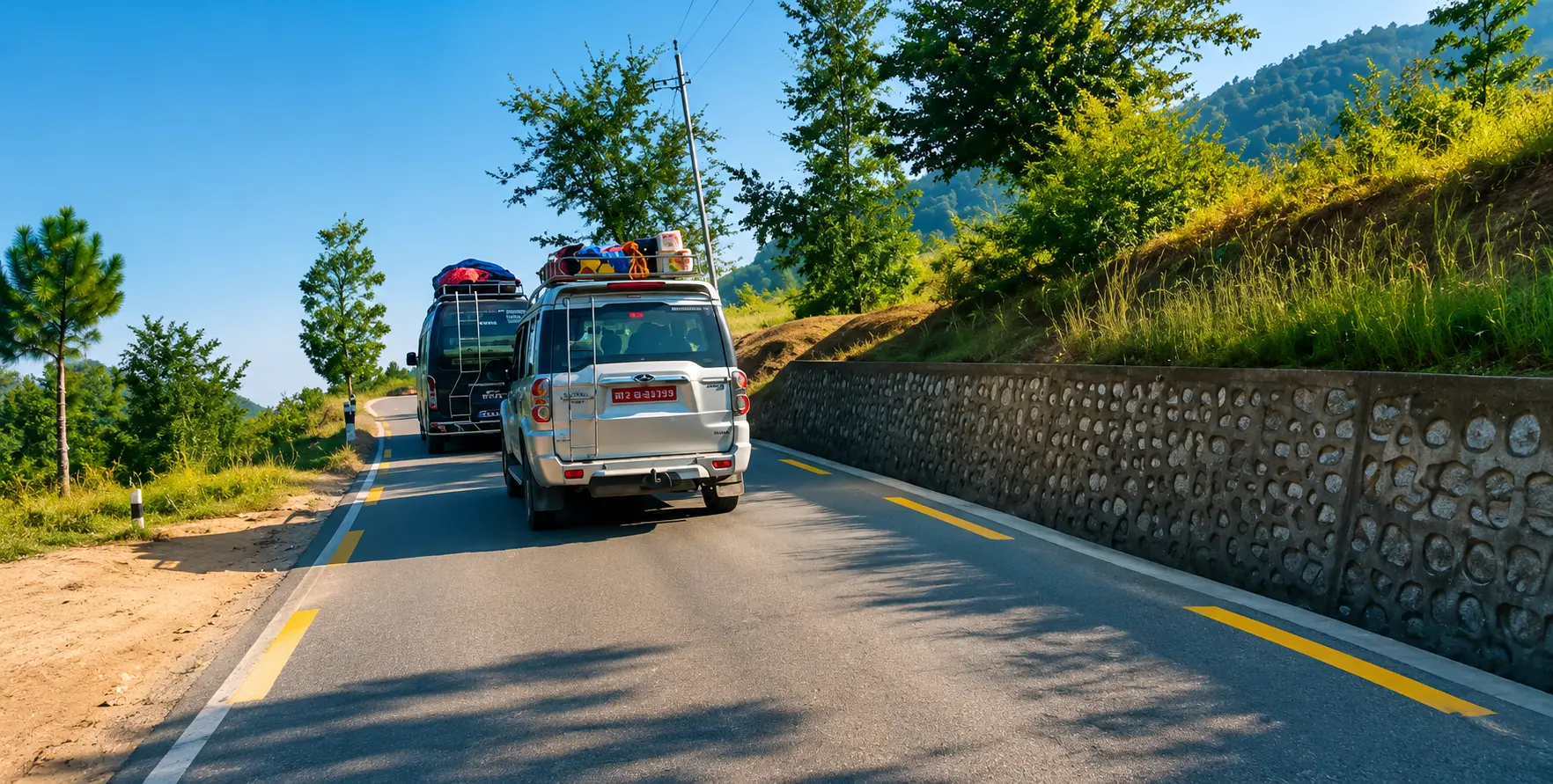
The Prithvi Highway is Nepal’s busiest tourist road, a roughly two-hundred-kilometre link between Pokhara and the Kathmandu Valley that follows the Marsyangdi and Trishuli river corridors for much of its length. Sections have been widened over time, and others remain two lanes with the traffic character you would expect on a national route: slow trucks, buses overtaking on gentle bends and the occasional hold-up at a narrow bridge. A comfortable plan allows six to eight hours, including a proper meal stop, and more on festival days or when roadworks are active.
For a group arriving from the mountains, comfort matters as much as speed. This is where a car or a Hiace van with air conditioning and reclining seats is more comfortable than a jeep, which is why some of our itineraries use a relay: the Scorpio jeep for the valley section, and a car or van waiting at Pokhara for the highway.
Stops that make the drive worth it
- Mugling junction and the river fish restaurants. Along the way,y you reach Mugling junction, where riverside restaurants serve freshwater fish from the Trishuli. A late lunch here, with the rapids audible from the table, is one of the better meals on any Nepal road.
- Manakamana cable car. From Mugling, ng a cable car rises to the hilltop shrine of Manakamana. It adds a couple of hours and suits groups that aren’t under time pressure and enjoy a short, pilgrimage-style detour.
- A little off the highway at Dumre, Bandipur’s preserved Newari bazaar makes a pleasant overnight stop for trekkers who want a quiet heritage town between the mountains and the capital. It is not essential, but it is a far gentler landing than a long push into the Kathmandu traffic.
- Early arrival, Kathmandu traffic. The final hour into the valley can be slow in the evening. A mid-afternoon arrival in Thamel is far more pleasant than a nine o’clock arrival after a day in the vehicle.
For travellers who don’t want to hire a private vehicle on this leg, the regular Kathmandu to Pokhara bus service runs in the opposite direction on the same road, and our team can explain how the schedules fit with a late-morning arrival in Pokhara.
Same day or overnight in Pokhara? A practical decision guide
This is the question groups ask us most often and the one with the least generic answer. The right choice depends on four things.
When the same-day journey makes sense
- You have an international flight the following morning. Rest matters less than certainty, and a long day on the road is the trade-off for being sure of making the flight. Leave Jhinu early, keep stops short, and tell us the flight time so we can plan the buffer.
- Your group is fit, young or used to long days. If everyone finished the trek feeling strong and wants to be in Kathmandu for a proper evening, a same-day plan is workable.
- Weather is settled. Clear weather and a dry road make a long day far less risky than a monsoon afternoon.
When a Pokhara overnight is better
- Anyone is tired, sore or carrying a minor injury. Downhill days leave knees and ankles inflamed. Another six hours in a vehicle is hard on both.
- The valley road is rough or slow. If the first leg takes the full four hours, the arithmetic of a same-day push gets poor very quickly.
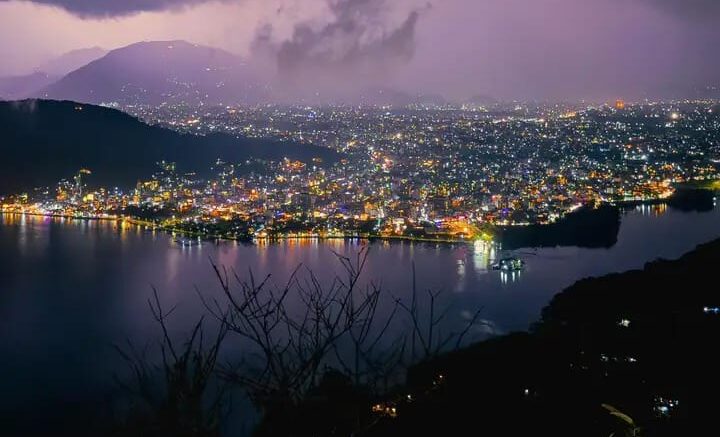
- You want the lake. After days in the mountains, an unhurried evening beside Phewa Lake, with a proper shower, a restaurant meal and a view of Machhapuchhre in the morning light, turns the end of the trek into a holiday rather than a logistics exercise. An early start on the Sarangkot sunrise tour is a satisfying way to say goodbye to the Annapurna range.
The flight option
A domestic flight between Pokhara and Kathmandu takes well under half an hour and is a popular way to finish after a night in Pokhara. However, it is weather-dependent: flights in this corridor are generally best in the morning, and cancellations and delays happen, particularly in the monsoon and in winter haze. If you have a fixed international connection, treat the flight as a convenience and keep the road as a backup. Nepal Vehicle Hiring can hold a vehicle in Pokhara as insurance on request, and we also provide Kathmandu airport transfers for the other end.

Choosing the right vehicle for your group
Because the journey crosses two very different road types, the vehicle mix matters more than the vehicle brand.
- Small groups of two to four. A single Scorpio jeep can handle the whole journey, valley and highway. It is robust, comfortable enough for a long day and removes any need to change vehicles. This is the simplest option.
- Groups of four to seven. One Scorpio jeep works if luggage is moderate. If bags are heavy, because of porter loads or expedition gear, a second vehicle spreads the weight and improves comfort.
- Groups of eight to fourteen. Because of the valley track, a group of this size needs two or more jeeps for the Jhinu-to-Nayapul section, followed by a Hiace van from Nayapul or Pokhara for the highway. Nepal Vehicle Hiring coordinates this relay so that the van is waiting as the jeeps arrive.
- Groups of fifteen or more. For larger parties, several jeeps cover the valley, and a Coaster bus takes over on the highway. Larger school, university and club groups often travel this way, and we arrange both vehicle types under a single booking.
- Couples and solo travellers. A private car is the most economical choice for the highway leg, paired with a jeep for the valley if the road requires it.
All of our vehicles are driver-operated; there is no self-drive option, and none would be appropriate on this road. Your driver will have driven the valley before, will know which crossings are firm and which need care, and will know how to read the day’s conditions rather than guess.
A sample exit day, hour by hour
The details below describe a typical day for a group that wants to reach Pokhara comfortably by late afternoon. Adjust times to match your own plan and the road.
- Early morning at Jhinu. Many groups visit the hot springs at dawn rather than the evening before, when the pools are quieter, and the valley is still cool. Allow forty to sixty minutes, including the descent and the climb back.
- Breakfast and pack. Eat properly. The next leg is a day of sitting. Settle your lodge bill, confirm porters and make sure permits and passports are where you can reach them.
- Mid-morning walk or short transfer. Descend to the roadhead agreed with your guide and driver. This takes from a few minutes to a couple of hours depending on where the vehicle waits.
- Valley drive. The jeep follows the valley track through Siwai and on toward Birethanti. Expect a stop for permits or a drink; your driver will tell you when.
- Nayapul and the highway. At the junction, the tarmac begins. If you are changing to a car or van here, bags move across in a few minutes, and your driver or guide will handle it.
- Early afternoon in Pokhara. A late lunch, a hot shower and a chance to wander the lakeside. For many groups, this is the point where the trek truly ends.
- Next morning to Kathmandu. A relaxed departure for the six-to-eight-hour highway run, with a fish lunch at Mugling and a mid-afternoon arrival in the valley.
For trek leaders and group organisers, whether you’re organising a club, party, or family of eight, the exit from Jhinu is where small planning gaps turn into big ones. These habits keep it running smoothly.
Brief the group before the last night.t
Tell everyone the plan at dinner on the evening before, not at breakfast. Cover the departure time, the walk to the roadhead, what to carry in the cabin, where bags will travel, and the lunch arrangement. A group that has heard the plan once, calmly, behaves very differently from a group that learns it while shouldering packs in the cold.
Count heads and bags twice.e
Count people and count bags separately, at the lodge and again at the vehicle. Duffels are easy to leave behind on a porch, and the most common trek-exit loss is a bag that went to the wrong vehicle. If you are using more than one jeep, assign each person to a numbered vehicle and keep that assignment through the day, including at the change at Nayapul or Pokhara.
Agree on a communication plan.
Mobile coverage in the lower valley is better than on the upper trail but not complete. Give the driver and your guide each other’s numbers, share a single point of contact for the group and agree what to do if a vehicle is delayed. Nepal Vehicle Hiring’s operations team is reachable by WhatsApp, which handles patchy signal better than voice calls, and we send the driver’s name and number before the day.
Keep a margin for the unexpected.
Build slack into the plan on purpose. If the group has an international flight, add an extra margin on top of the usual allowance. If a bridge is slow or a vehicle is late, you want the margin to absorb it, not the flight. A buffer day in Pokhara is often the most sensible protection against the monsoon and the road.
Plan the end of the trek as a moment. nt
The last night at Jhinu is a small celebration, and it is worth making it one. A group dinner, a thank-you to the guides and porters, and a moment of reflection on the trek give people a sense of completion. The vehicle exit the next day then feels like a graceful continuation rather than an anticlimax.
Why local driver knowledge matters on this road
On a highway, a driver is mainly a person who gets you from one place to another. On a valley track like this one, the driver is closer to a pilot who reads the terrain. Several things separate a driver who knows the Modi Khola valley from one who does not.
- Reading the surface. After rain, a crossing that was firm yesterday can be soft today. Experienced drivers notice small changes such as the colour of the water, the freshness of the tracks and the state of the bank, and adjust before the vehicle is in trouble.
- Knowing the passing places. On a single-lane section, knowing where the next wide spot is, and whether another vehicle is likely to be coming the other way, avoids long reversals on exposed edges.
- Timing the day. A driver who has done this many times knows when the road is busiest, when the light fades and how long each section really takes, as opposed to what a map suggests.
- Local relationships. Drivers on this road know the lodge owners, the checkpoint staff and other drivers. A quick message down the valley can tell them whether a slide has been cleared or a bridge is passable.
- Passengers pick up on the driver’s confidence. A steady, unhurried driver makes the whole vehicle relax, and a relaxed group copes better with the rest of the day.
When we assign a driver to a Jhinu pickup, we choose someone who works this valley regularly and who communicates clearly in English or Hindi. That is not a luxury. On this particular road, it is the most important safety feature in the vehicle.
Travelling responsibly in the Modi Khola valley
The Annapurna Sanctuary route is among the most visited trekking trails in Nepal, and the communities along it live with the consequences of that popularity every day. A few habits make you a better guest and make the valley more pleasant for the next group.
- Treat lodge families as hosts. Most lodges here are homes. Pay your bill promptly, thank the family and avoid haggling over small charges. A warm goodbye is part of the experience.
- Be careful at the hot springs. The pools are shared and natural. Follow the posted rules, keep noise low, take your rubbish with you and shower or rinse as required before entering. Respect the privacy of other bathers.
- Reduce plastic. Refill bottles from safe water points where available, and carry out what you carry in. Bottles and wrappers are a far larger problem in mountain valleys than they look.
- Support local services. Eat in lodges, buy from village shops and hire local porters and guides where you can. The valley’s economy depends on trekkers who spend within it.
- Look after porters and drivers. Make sure porters have appropriate clothing and loads, and treat drivers as part of the trekking team. Small gestures, a hot drink at a stop or a proper thank-you at the end, matter more than people expect.
- Respect the road. If a vehicle is slow because the surface is poor, that is the safe choice. Never press a driver to hurry on exposed sections.
Linking the Jhinu exit to the rest of your Annapurna trip
The Jhinu-to-Kathmandu journey is the last chapter of a longer story, and it works best when it is planned alongside the first.
A typical Annapurna Base Camp itinerary begins with the road from Kathmandu to Pokhara, followed by a short drive from Pokhara to Nayapul and the first trekking days toward Ghandruk, Chhomrong or the Poon Hill ridge. Our Pokhara to Nayapul transportation service covers the lower approach, and the same drivers who take you up often come back for the exit. When you book both ends together, you receive written confirmation for every leg before you leave Kathmandu, plus a single point of contact throughout the trek.
If you are combining the Sanctuary with something longer, such as a Poon Hill loop, a lake day in Pokhara or an extended Nepal circuit, we coordinate the legs as one plan. The same principle applies to groups finishing at Jhinu and continuing elsewhere: Chitwan for wildlife, Lumbini for the Buddha’s birthplace, or the Kali Gandaki valley for Mustang. A single operator across all legs means a single standard of vehicle, driver and communication, and one conversation to adjust when the weather, the road or the group’s energy changes.
What the valley shows from the jeep window
It is easy to treat the vehicle section as dead time between the trek and the hotel, but the lower Modi Khola valley rewards anyone who keeps their eyes open. Because you are descending, the landscape changes in layers, and it changes faster than it ever did on foot.
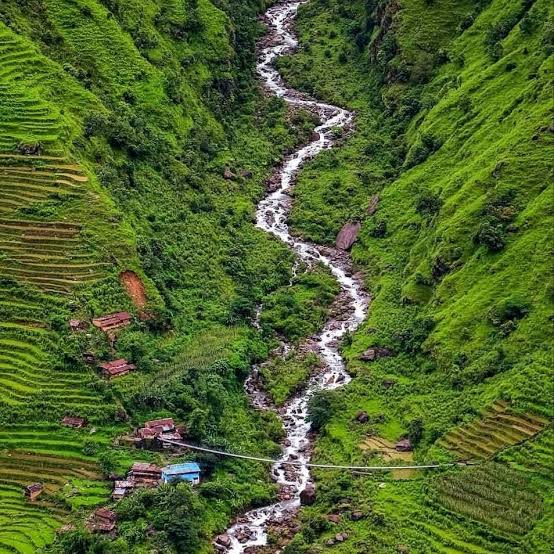
Near Jhinu, the slopes are steep and forested, with oak and rhododendron on the cooler faces and bamboo thickets close to the river. As the track drops, the forest opens into terraces cut into the hillside, planted with millet, rice, and maize according to the season, with small stone and slate-roofed houses scattered between them. After rain, thin waterfalls appear on the valley walls and disappear again within a day or two, which is why the same road can look entirely different on consecutive mornings.
Suspension bridges are the other recurring feature. Some carry only foot traffic and are visible far below the road, strung across the river at points where the gorge narrows. Others carry vehicles and are narrower than they look from the cabin. Your driver will slow for each, and it is worth watching how little room the vehicle needs when it is placed with care.
Further down, the valley widens, and the settlements become larger and busier. Roadside tea shops, small shops selling trekking supplies and the first dense traffic of the day tell you that you are leaving the mountain world. Many trekkers describe the moment the tarmac begins at Nayapul as the real end of the trek, and the sense of closure is unexpectedly strong. A few quiet minutes of looking back up the valley, before the conversation in the vehicle turns to hot showers and dinner, is a good way to mark it.
A short planning checklist
Use this list as a working summary when you finalise the exit guide with us.
- Confirm the final exit date and a fallback day, so a delay on the trail does not collapse the plan.
- Decide whether the journey ends in Pokhara or Kathmandu, and whether the plan includes a flight.
- Count passengers and bags, and tell us how many porters are travelling to the roadhead.
- Ask your guide to confirm the current pickup point with local lodge owners before you reach Jhinu.
- Agree the departure time for the final morning, allowing for a dawn visit to the hot springs if you want one.
- Keep permits, passports and a small daypack inside the cabin.
- Share a single group contact and the driver’s number once you receive it.
- Hold a buffer if you have a fixed international departure.
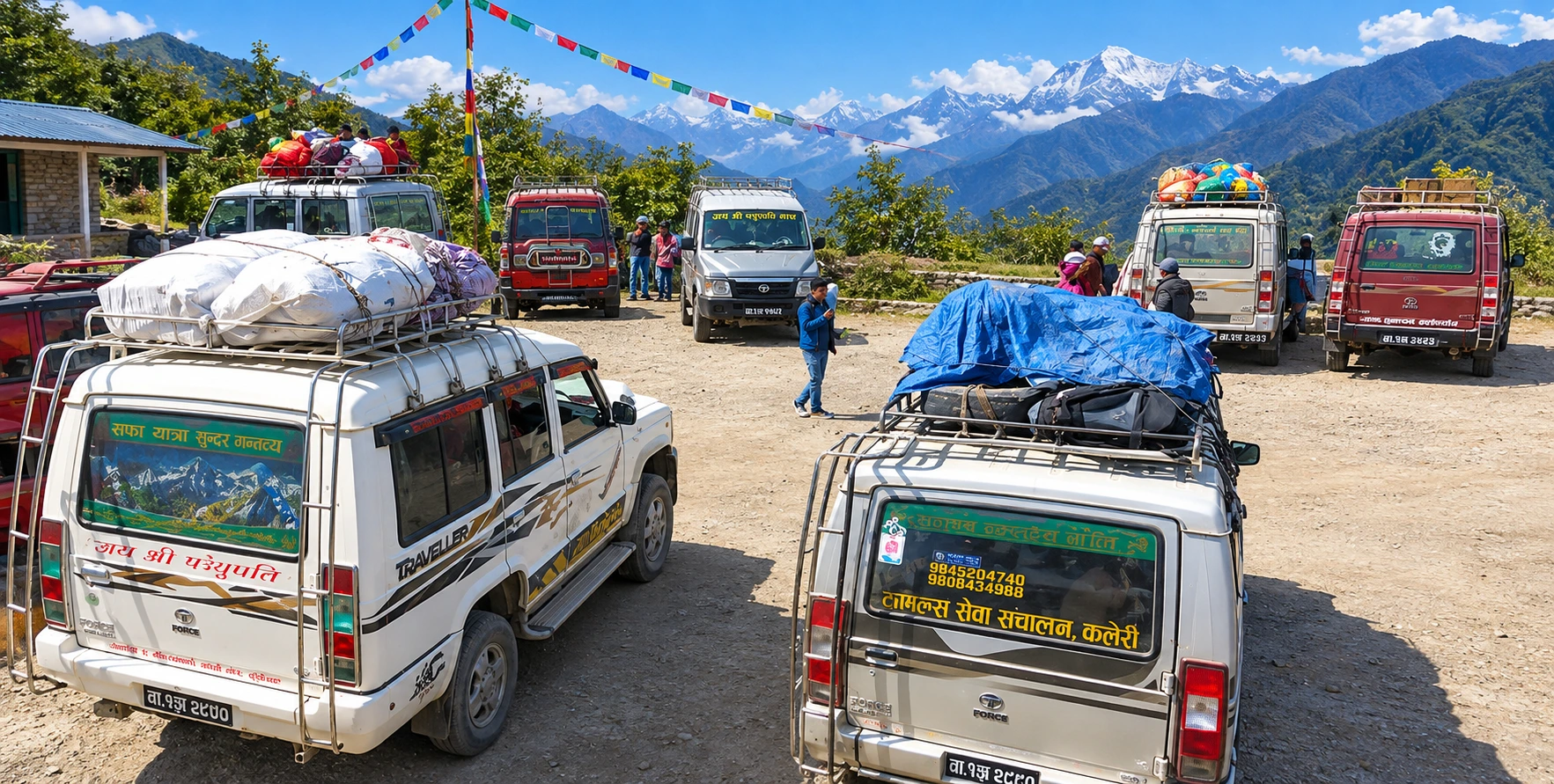
Practical preparation for the last day of the trek
Bags, porters and the roof rack
Trek bags are usually bulkier than people expect once everything is stuffed back in, and porter loads are often heavier than the guide’s estimate. Tell us at booking how many large packs and duffels there are, and whether porters will accompany the group to the roadhead or hand bags over earlier. A Scorpio jeep carries a good number of packs on its roof rack, but a full roof on a rough road slows driving, not speeds it up. If your group has more luggage than passengers, the right answer is an extra vehicle, not a heavier roof.
Keep a small daypack inside the cabin with what you will want before the next hotel: water, a warm layer, a rain shell, phone and charger, passports, permits, and any medication. The same day-bag rule applies at Nayapul if you change vehicles.
Permits and documents
The Annapurna region requires an Annapurna Conservation Area permit and a TIMS card for foreign trekkers, and checkposts along the valley, including the Birethanti post near the end of the route, may ask to see them. Keep both documents in a waterproof folder near the top of your bag, not at the bottom of a duffel. If you are leaving the mountains with a guide, they will know whether you need to stop. If you are travelling independently, ask your driver, who will know the usual practice. Carry your passport on the day, since you will need it at the hotel.
Cash for the road
Expect to spend small amounts at stops: a hot drink at a viewpoint, a snack, a tip for a porter or lodge staff, a last souvenir. Small notes are far more useful than large ones in the valley, and card payments aren’t dependable between Jhinu and Pokhara. Withdraw what you need in Pokhara, not on the road.
Looking after your body
- Hydrate before the drive. Soaking in hot springs, followed by a long day in a vehicle, can leave you drowsy and dehydrated. Drink water at breakfast and carry a bottle in the cabin.
- Motion sickness. A winding downhill road after days of walking can unsettle even people who normally travel well. If you are prone to it, sit toward the front, keep the window cracked open, and tell the driver early.
- Knees and ankles. Tired joints may be tender after the long descent from Chhomrong. A walking pole in the cabin helps, and stretching your legs at stops is worth the extra minutes.
- Leeches in wet weather. Low sections of the Modi Khola trail can have leeches in the rainy months. A quick check of socks and boots before getting into the vehicle saves a messy surprise later.
How the seasons change the exit
Spring
Late spring brings warm days, rhododendron on the upper slopes and a generally dry valley road. It is a busy time on the trail, so vehicles and lodge rooms in Pokhara fill up earlier than in the off-season. Book the exit well before you start trekking.
Monsoon
The rainy months are the most demanding period for the valley road. Slides and washed-out crossings can interrupt the track for a day or more, rivers run high, and visibility in the lower hills is often poor. This is when a flexible plan, with a buffer day and a driver who can read conditions, matters most. It is also when walking the whole way to Nayapul, which avoids the track altogether, becomes the more attractive option for some groups.
Autumn
Autumn is the favourite season for trekking in Nepal for good reason: clear skies, stable weather and a freshly repaired road. It is also the busiest period, with the greatest demand for vehicles and rooms. Treat any plan that leaves booking to the last few days with suspicion at this time of year.
Winter
Winter mornings are cold at Jhinu, but the days are bright, and the views are sharp. The road is usually dry. Traffic is lighter, and with fewer trekkers, lodges are quieter and more flexible. Short daylight hours mean the same-day plan to Kathmandu needs an earlier start.
Mistakes we see most often
- Treating an old itinerary as a pickup instruction. The place a jeep waited in a published itinerary may not be where it can wait today. Always confirm the current roadhead.
- Booking the vehicle on the last evening. Good drivers and the right vehicles are committed days ahead in the busy months. Book before you start the trek if you can, and refine the plan from the trail as the date approaches.
- Underestimating luggage. The number of bags decides the number of vehicles, not just the number of passengers.
- Using the wrong vehicle for the valley. A van or a standard car is not suitable for the valley track, no matter how well it handles a highway.
- Packing the day too tightly. A hot spring soak, a rough road, a slow bridge and the Prithvi Highway traffic can all run late. Build a buffer, especially if you have a flight.
- Skipping the Pokhara night out of habit. For many trekkers, the quiet evening beside the lake is the best way to end the trek.
Making the Kathmandu arrival count
Reaching the capital after a trek is a small culture shock, and it is worth planning your first day. A hot shower, a laundry service and a decent meal restore people faster than any amount of rest. After that, Kathmandu makes up for a slower day or two.
Our Kathmandu sightseeing service covers the valley’s heritage sites, including Pashupatinath, Boudhanath and Swayambhunath, in a single day. The Bhaktapur Durbar Square day tour is the best single-site day in the valley for people who want old-town streets and pottery squares. For one last mountain view, the Nagarkot sunrise tour leaves in the dark and returns for breakfast, and the Kathmandu to Nagarkot vehicle service handles the road. Before an international departure, the airport transfer service meets you at the hotel with a named driver.
Beyond the Annapurna Sanctuary
Many trekkers who finish at Jhinu begin planning the next trip before they reach the capital. If the high mountains have hooked you, the Everest Base Camp trek transport page explains how approach vehicles work for the Khumbu, and the Muktinath Yatra and Pokhara to Mustang jeep pages describe the Kali Gandaki approach to the dry side of the Annapurna range. For travellers with less time, our Nepal tour package and Nepal holiday tour pages explain how vehicle legs are coordinated across a wider circuit.
Frequently asked questions
Can a jeep reach Jhinu Danda itself?
Sometimes it can reach very close, but the exact point varies. The motorable track in the Modi Khola valley has been extended over time and is seasonal, so the place where jeeps wait has been described as Siwai, Simrung, Mithu Danda or a point near Jhinu at different times. We confirm the current situation before your departure and plan the walk-out around it.
How long does the journey from Jhinu to Kathmandu take?
Plan on roughly three to four hours by jeep from the Jhinu area to Pokhara, followed by six to eight hours on the Prithvi Highway from Pokhara to Kathmandu. With the walk out and stops, a same-day journey usually takes ten to twelve hours or more. Many groups break it up with a night in Pokhara.
Is one vehicle enough for the whole trip?
For small groups, a single Scorpio jeep can cover both the valley and the highway. For larger groups, we normally use jeeps for the valley section and change to a car, a Hiace van or a Coaster bus at Nayapul or Pokhara for the highway. We arrange the change as part of one booking.
Should I stay in Pokhara or go straight to Kathmandu?
It depends on your flight, your fitness and the state of the road. If you have an international departure the next morning, a same-day push may be sensible. Otherwise, an evening by the lake is a gentler and often more enjoyable way to finish the trek.
What about porters and bags?
Please tell us how many large bags you have and whether porters will accompany the group to the roadhead. Luggage decides how many vehicles you need. We recommend keeping a small daypack in the cabin with water, documents, medication and a warm layer.
Can I book the pickup before I start the trek?
Yes, and we recommend it, especially in the busy months. Book from Kathmandu or from home with a provisional exit date, then confirm or adjust by message from the trail. A short note a few days before you reach Jhinu lets us confirm the roadhead and the driver.
What if the road is closed or damaged?
We monitor conditions through the drivers who work the valley. If the track is interrupted, we will tell you, discuss alternatives such as walking farther down the trail to a lower roadhead or to Nayapul, and re-organise the plan. ReReorganizing buffer day into the plan makes it much less stressful.
Can I visit the hot springs and still leave the same day?
Yes, if you go at dawn. Many groups do exactly that, leaving the lodge soon after first light, soaking for a short while and being back for breakfast with the vehicle plan on schedule. Drink water afterwards and avoid rushing the climb back to the village.
Related services from Nepal Vehicle Hiring
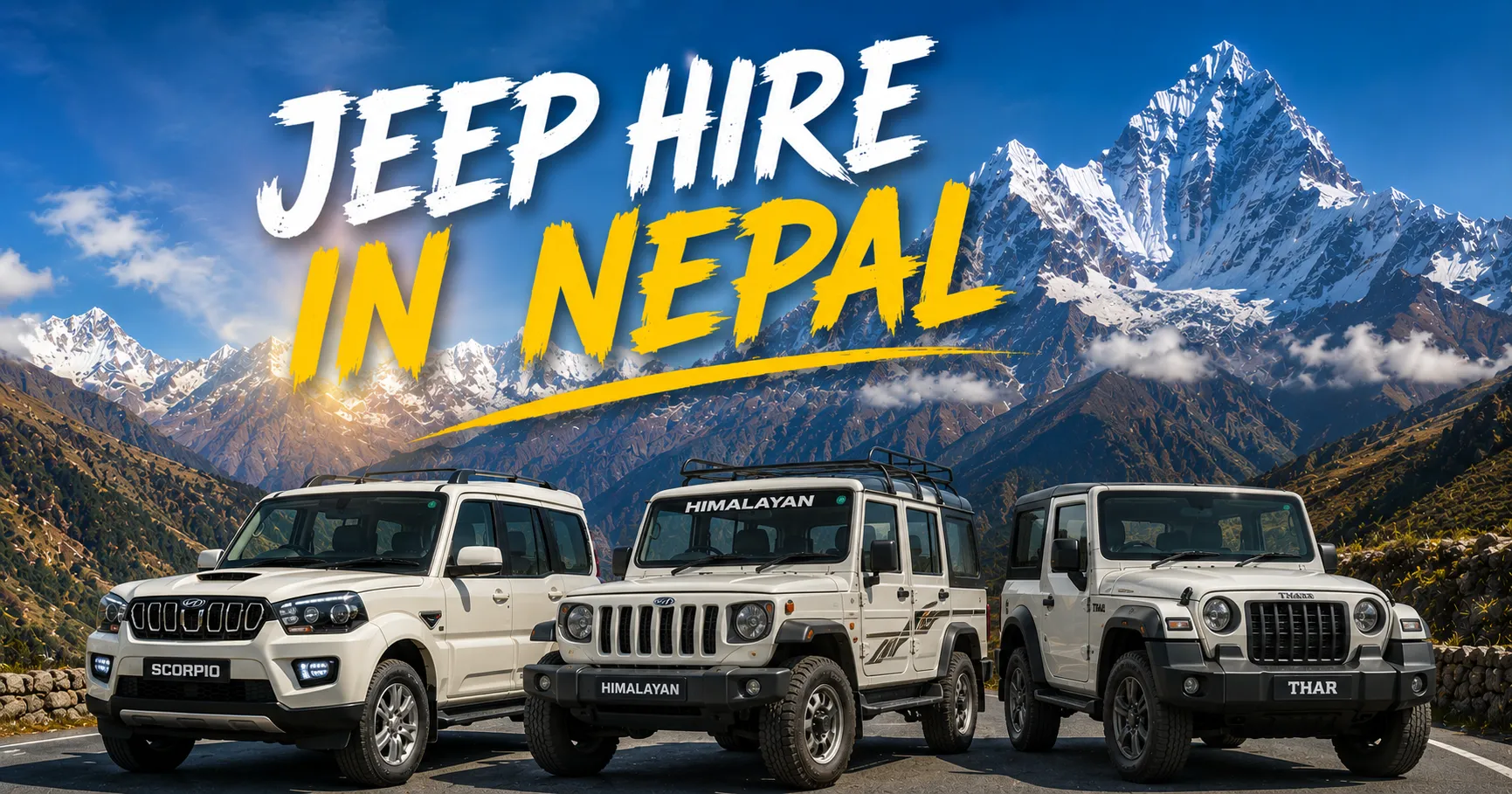
- 4WD jeep hire: Scorpio jeeps for the valley track and mountain approach roads
- Car hire in Nepal: comfortable highway travel for couples and small groups
- Hiace van hire: air-conditioned group travel on the Pokhara to Kathmandu highway
- Coaster bus hire: larger groups on highway sections
- Pokhara to Nayapul transportation: the lower valley road for trek starts and ends
- Trekking transport: approach and return vehicles across Nepal
- Kathmandu sightseeing and Kathmandu airport transfers
Plan your Jhinu to Kathmandu return
If you are planning an Annapurna Base Camp trek and want the return journey arranged before you leave, please tell us your expected exit date, group size and number of bags, and whether you want to finish in Pokhara or Kathmandu. We will confirm the current pickup point, recommend the right mix of vehicles and send you a written plan with driver details before you set out. Use the Plan Your Trip page or contact us directly.
- WhatsApp or call: +977 9851013196
- Email: [email protected]
- Website: www.vehiclehiringnepal.com
- Location: Thamel, Kathmandu
- Jhinu to Kathmandu Jeep Rental: Annapurna Trek Exit Guide
- The Jhinu-to-Kathmandu journey at a glance
- Understanding Jhinu Danda as a departure point
- The roadhead question: where does the jeep actually meet you?
- Leg one: down the Modi Khola valley by jeep
- Leg two: Pokhara to Kathmandu on the Prithvi Highway
- Same day or overnight in Pokhara? A practical decision guide
- Choosing the right vehicle for your group
- A sample exit day, hour by hour
- For trek leaders and group organisers, whether you're organising a club, party, or family of eight, the exit from Jhinu is where small planning gaps turn into big ones. These habits keep it running smoothly.
- Why local driver knowledge matters on this road
- Travelling responsibly in the Modi Khola valley
- Linking the Jhinu exit to the rest of your Annapurna trip
- What the valley shows from the jeep window
- A short planning checklist
- Practical preparation for the last day of the trek
- How the seasons change the exit
- Mistakes we see most often
- Making the Kathmandu arrival count
- Frequently asked questions
- Related services from Nepal Vehicle Hiring
- Plan your Jhinu to Kathmandu return

Related Blog & Articles
Pokhara to Jhinu Danda Jeep Rental

All Over Nepal Vehicle Hire – Private Car, Scorpio, 4WD Jeep, Hiace And Tourist Bus
Kathmandu to Hetauda Vehicle Rental
Pokhara to Mardi Himal Trek Route Vehicle