


 Plan a Trip


Kathmandu to Dhunche Syabrubesi Road Conditions 2026
Kathmandu to Dhunche Syabrubesi Road Condition Guide 2026
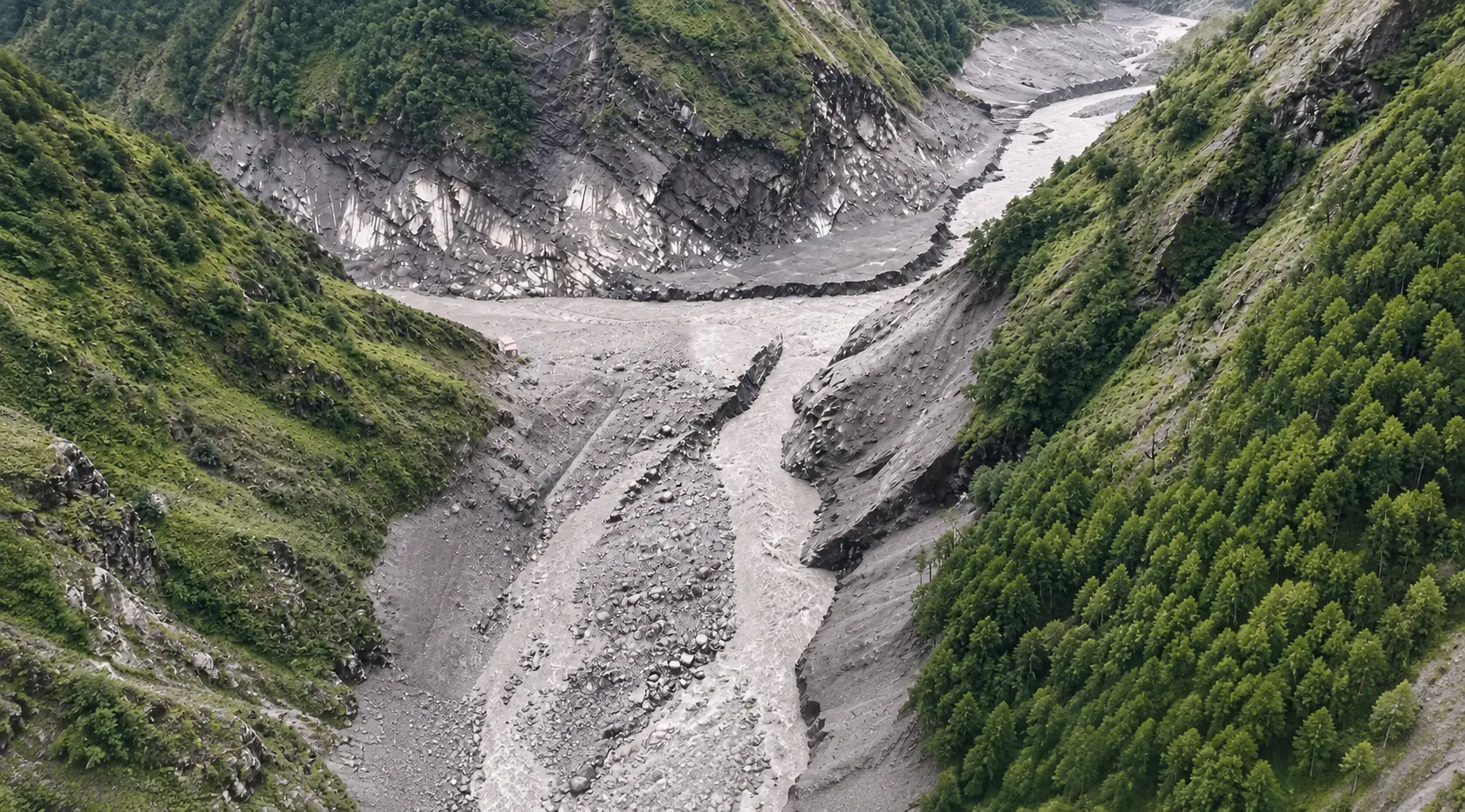
IMPORTANT — CURRENT ALERT: CRITICAL AUGUST 2026 UPDATE: A glacial lake outburst flood (GLOF) from Tibet struck the Bhotekoshi River in Rasuwa District on August 26, 2026, causing severe damage to Syabrubesi and Timure. Approximately 60 houses and 2 bridges were destroyed. The Rasuwagadhi border crossing is currently closed. Vehicle movement on the Pasang Lhamu Highway in sections near Syabrubesi and Timure is suspended. All travelers planning Langtang Valley treks via Syabrubesi or the Rasuwagadhi border crossings should contact their registered agency and Nepal Vehicle Hiring Pvt Ltd for current road status before departing Kathmandu. The Dhunche-to-Gosaikunda route higher above the valley may remain operational — see Section 2 for details.
The Pasang Lhamu Highway — the road that connects Kathmandu northward through the Trishuli River valley to Dhunche, Syabrubesi, and ultimately the Rasuwagadhi border crossing with China — is Nepal’s primary access corridor for the Langtang Valley trek, the Gosaikunda pilgrimage, the Tamang Heritage Trail, and the overland route to Tibet via the Kerung border. It is also one of Nepal’s most frequently discussed trekking access roads in terms of road condition, because its reputation for difficulty — steep terrain, monsoon landslide vulnerability, the famous Ramche Landslide Zone before Dhunche, and the narrower, rougher section beyond the Trishuli River valley — precedes any first-hand description in virtually every Langtang trek planning guide available online.
This complete 2026 guide covers the full Kathmandu-to-Rasuwaghdi road corridor with honest, current information: the current flood emergency and its implications for travel, the road’s character section by section under normal conditions, the Ramche Landslide Zone that all drivers must navigate, the specific advantages of private 4WD jeep hire from Nepal Vehicle Hiring Pvt Ltd over buses and shared vehicles on this route, seasonal road condition variations, alternative trekking approaches when the main road is disrupted, and everything a traveler needs to know to make a safe and informed decision about when and how to travel this corridor in 2026 and beyond.
Current Status — August 2026 Rasuwa Flood Emergency
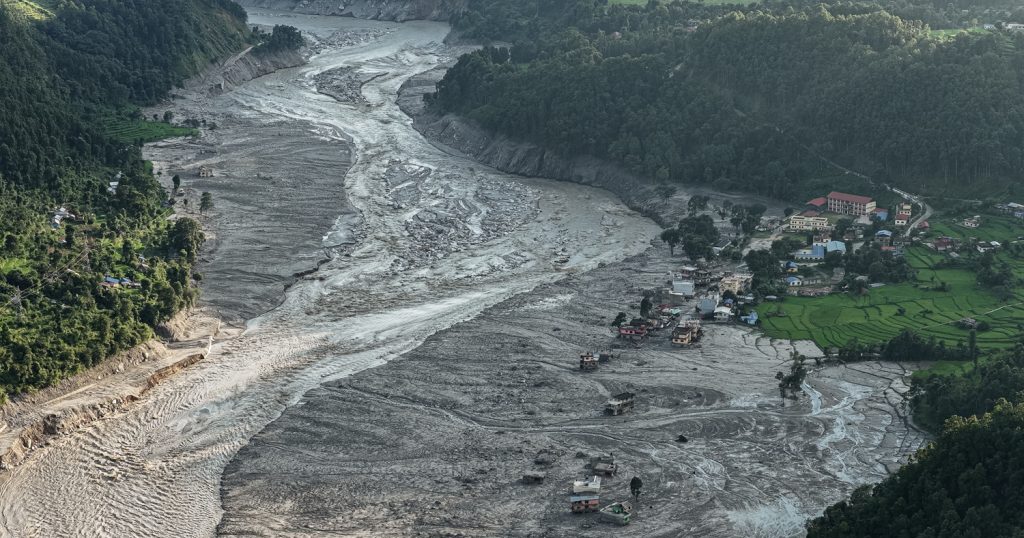
On the morning of August 26, 2026, a sudden and powerful flash flood tore through the Bhotekoshi River in Rasuwa District, triggered by what authorities have identified as a glacial lake outburst flood (GLOF) originating on the Tibetan side of the border. The flood struck without warning at about 9:15 a.m., moving downstream so fast that riverside communities had little time to evacuate. Syabrubesi — the primary trailhead town for all Langtang Valley trekking routes and a community of significant size and tourism infrastructure — sustained severe structural damage. Timure, the last Nepali village before the Rasuwagadhi border crossing, was also severely affected.
The documented immediate impacts, as of August 29, 2026, include: approximately 60 houses and 2 bridges destroyed across the affected zone; the helipad at Timure swept away, removing the emergency helicopter access point for the upper Rasuwa valley; multiple hydropower installations along the Bhotekoshi River damaged or destroyed, including the Chilime Hydropower Project and Rasuwagadhi Hydropower facility; vehicle movement suspended on the Pasang Lhamu Highway in the sections most directly affected; the Rasuwagadhi border crossing with China closed; public transport between Kathmandu and seven downstream districts suspended as a precaution due to flood risk to the Trishuli River corridor; and communication infrastructure significantly disrupted with multiple telecom towers in Rasuwa and Nuwakot damaged.
As of this writing, August 29, 20266, the situation is evolving. Nepal Vehicle Hiring Pvt Ltd is continuously monitoring road conditions through our driver network in the Rasuwa corridor. The specific advice for any traveler with planned Langtang or Rasuwa travel in September and October 2026 is: do not rely on pre-flood route information, do not attempt to reach Syabrubesi independently without current confirmation from your registered trekking agency, and contact Nepal Vehicle Hiring Pvt Ltd directly at +977-9851013196 via WhatsApp for the latest road status before any departure from Kathmandu. We will not dispatch vehicles on a route we cannot confirm as currently safe.
The broader context matters: the Langtang region itself—the trekking trail above Syabrubesi into the valley—may be far less affected than road access to the trailhead, since the Langtang trail climbs away from the river almost immediately above Syabrubesi and follows high ground rather than the valley floor. This distinction matters for trip planning: the trail may reopen before the road reaches full capacity, and alternative approach routes (described in Section 11 below) may provide trekking access while road repairs continue.
The Dhunche and Gosaikunda Alternative — What Remains Accessible
One important distinction in the current flood situation is that Dhunche — the Rasuwa District headquarters at approximately 1,950 meters, which sits on higher ground above the Bhotekoshi River flood zone — and the Gosaikunda pilgrimage route that begins from Dhunche rather than Syabrubesi may be significantly less affected than the lower Syabrubesi flood zone. The road from Kathmandu to Dhunche follows the Pasang Lhamu Highway to its upper section. Still, it diverges from the Syabrubesi flood corridor at the higher-ground Dhunche junction, potentially keeping Dhunche accessible when the lower Syabrubesi section is suspended.
Gosaikunda Lake (4,380 m) — the sacred glacial lake that is the destination of Nepal’s largest annual Hindu pilgrimage (Janai Purnima) and a genuinely spectacular high-altitude trekking destination in its own right — is accessed from Dhunche rather than Syabrubesi, climbing directly from the higher road junction rather than from the flood-affected valley floor. For travelers with Langtang October plans who find Syabrubesi access disrupted, a Gosaikunda trek starting from Dhunche is, as the Everest Holiday guide notes, a genuine alternative rather than a consolation prize — a sacred lake at 4,380 meters surrounded by dramatic Himalayan scenery, accessible on a dedicated Nepal trekking transport arrangement from Kathmandu to Dhunche via private jeep hire. Nepal Vehicle Hiring Pvt Ltd will confirm Dhunche road accessibility specifically as distinct from the Syabrubesi section when clients contact our team.
The Pasang Lhamu Highway — Normal Road Character
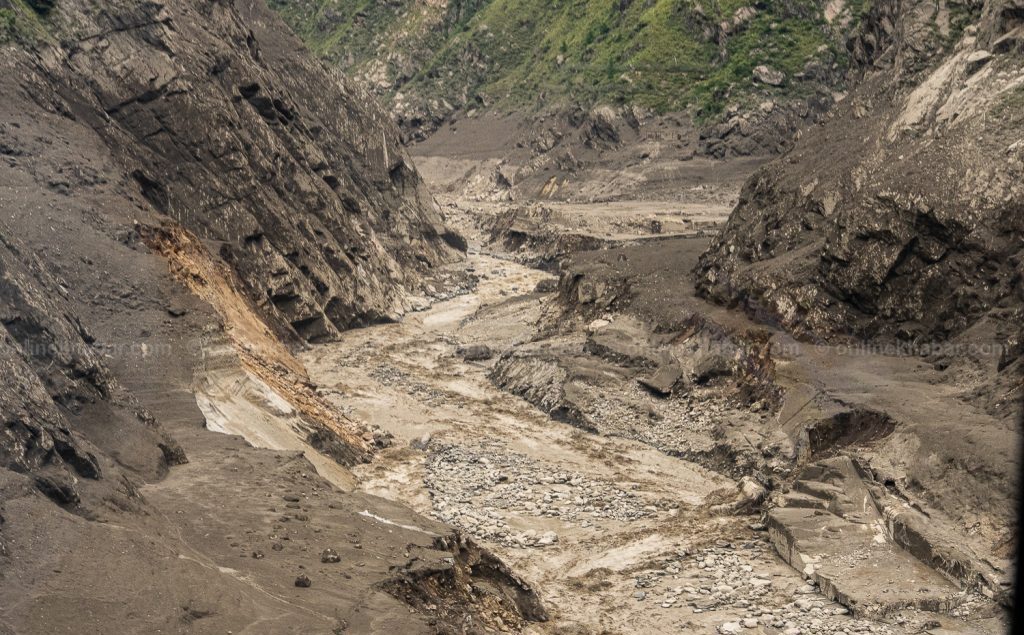
Under normal, non-flood conditions, the Pasang Lhamu Highway from Kathmandu to Syabrubesi is one of Nepal’s more challenging but manageable mountain access roads — used by thousands of trekkers, pilgrims, and local residents every month of the year, except during severe monsoon disruptions. The total distance from Kathmandu to Syabrubesi is approximately 117 to 122 kilometers, and the drive takes 6 to 9 hours by private vehicle depending on road conditions, traffic, and rest stops. Understanding the road’s character section by section is the foundation of realistic journey planning.
Kathmandu to Kakani and Trishuli Bazaar. The first 70 to 75 kilometers from Kathmandu to Trishuli Bazaar follow a well-maintained paved road through the Nuwakot District lowlands — leaving Kathmandu via the Ring Road and Balaju and heading northwest via Kakani, the hill viewpoint town at 2,073 meters that provides the first clear mountain panorama of the Langtang range for outward-bound travelers, then descending to the Trishuli River valley at Trishuli Bazaar (approximately 440 m). This Kathmandu-to-Trishuli section is comfortable, straightforward highway driving and takes approximately 2 to 3 hours. Nepal Vehicle Hiring Pvt Ltd’s private jeep hire from Kathmandu to Syabrubesi includes a Trishuli rest stop for breakfast or mid-morning refreshment on the standard itinerary.
Trishuli Bazaar to Dhunche — The Road Becomes Mountain. From Trishuli Bazaar, the highway turns north, and the character changes immediately and significantly: the road narrows, the gradient steepens, and the terrain becomes the kind of exposed mountain road that makes the Kathmandu to Syabrubesi jeep hire the subject of every honest trekking operator’s road condition caveat. The Trishuli-to-Dhunche section, about 50 kilometers long, climbs about 1,500 vertical meters over a mixed paved and unpaved road surface that, in good conditions, takes 3 to 4 hours and, in poor conditions, takes considerably longer.
The road follows the Trishuli River and then the Betrawati tributary corridor northward, gaining altitude through a succession of small hill settlements and forested ridgeline sections that alternate between freshly paved surfaces in the most recently upgraded zones and the rougher original road surface in sections awaiting improvement. As of 2026, significant portions of this section have been paved as part of ongoing Pasang Lhamu Highway improvement works. However, the overall corridor remains narrow, with tight curves and exposed cliff-edge sections that require a professional, experienced driver who knows this specific road—not a self-drive arrangement navigated by GPS alone.
The Ramche Landslide Zone — The Road’s Most Discussed Challenge. Approximately 3 kilometers before Dhunche, the Pasang Lhamu Highway passes through what is universally known among Langtang trek operators and trekkers as the Ramche Landslide Zone — a section of road cut through active landslide terrain that, even in the best dry-season conditions of 2026, remains unpaved and rough by the specific standards that make 4WD jeep hire a practical advantage over buses on this corridor. The section is 2 to 3 kilometers in length and involves the typical characteristics of active-slope road construction in Nepal’s middle hills: loose surface material, occasional rock debris on the roadway from above, variable track width, and the visible evidence of previous slide events in the scarred hillside above and the retained debris slopes below.
Dhunche to Syabrubesi — The Lower Rasuwa Valley Section
Dhunche (approximately 1,950 m), the Rasuwa District headquarters, marks a significant transition in the Pasang Lhamu Highway’s character. From Dhunche, the road descends about 500 meters to Syabrubesi on the valley floor at 1,460 meters—a descent of about 15 kilometers that takes 30 to 45 minutes in normal conditions. This section has historically been better maintained than the Trishuli-to-Dhunche section above, as it is shorter and serves the district headquarters town’s year-round administrative and commercial traffic.
Under normal, non-flood conditions, the Dhunche-to-Syabrubesi section is paved for most of its length and offers the most comfortable drive on the final approach to the Langtang trailhead. The road descends through forested hillside with views over the Bhotekoshi River valley below — the same river whose August 2026 GLOF caused the emergency conditions described in Section 1. Nepal Vehicle Hiring Pvt Ltd’s private jeep drivers on this route know this descent well and manage the tight hairpin curves and the Syabrubesi riverside approach that, while routine in dry conditions, require careful management when the road surface is wet.
Syabrubesi to Rasuwaghdi — The Border Approach
From Syabrubesi, the road continues approximately 21 kilometers northward to Rasuwaghdi (also spelled Rasuwagadhi) — the Nepal-China border crossing formally known as the Rasuwa-Kerung border, which serves as the overland crossing point for the Nepal-Tibet trade route and, in recent years, has become significant as the planned entry point for the rail connection between the two countries. This Syabrubesi-to-Rasuwaghdi section passes through Timure village — the second settlement severely affected by the August 2026 flood — and is entirely separate from the Langtang trekking route, which climbs eastward from Syabrubesi into the upper Langtang Valley rather than continuing northward along the river.
Under normal conditions, the Syabrubesi-to-Rasuwaghdi road serves primarily as: the Nepal-Tibet overland cargo route for bilateral trade between Nepal and China’s Tibet Autonomous Region; the access road for the multiple hydropower projects installed along the Bhotekoshi River between Syabrubesi and the border; and the approach for the small number of overland travelers making the overland Nepal-Tibet crossing as part of a Lhasa-bound road journey. The Department of Roads and the relevant hydropower project companies maintain the road, and in normal dry-season conditions it is passable by 4WD vehicle for the full 21-kilometer section. Under the current (August 2026) flood conditions, this section is suspended.
The Seasonal Road Condition Cycle — What Changes Month by Month
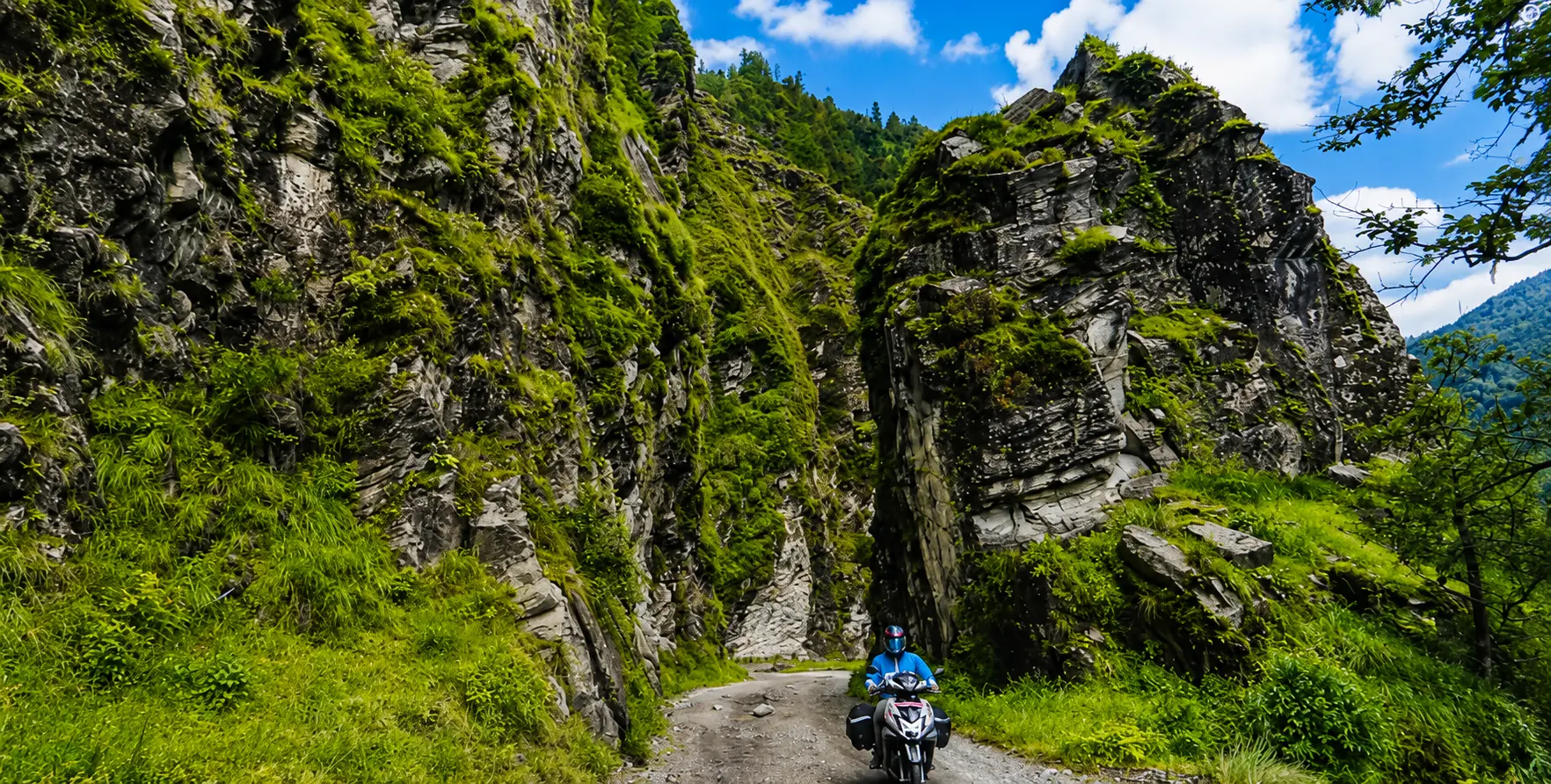
The road condition on the Kathmandu-to-Syabrubesi-to-Rasuwaghdi corridor follows a predictable seasonal pattern in normal years (outside exceptional flood events like the August 2026 GLOF) that experienced operators like Nepal Vehicle Hiring Pvt Ltd have observed over many years of regular vehicle deployment on this route.
October to November — Best Conditions. The post-monsoon dry season delivers the most stable and predictable road conditions on the Pasang Lhamu Highway. Department of Roads crews complete the most significant repairs to monsoon damage in October, meaning that late October and November typically see the best surface consolidation of the year. This window coincides with peak Langtang Valley trek season and highest private jeep hire demand on the corridor. Book at least 1 to 2 weeks in advance. Note that the Ramche Landslide Zone remains unpaved and rough even in peak dry season — this section does not improve seasonally; only the sections subject to monsoon damage repair benefit from the post-monsoon improvement cycle.
March to May — Spring Conditions. Road conditions are good following the winter dry period. The Trishuli-to-Dhunche section is at its driest and most consolidated after winter. Light spring rainfall in March and April creates brief surface softening in unpaved sections but does not typically create the sustained disruption that monsoon brings. Spring is the second peak season for Langtang trek transport demand. The Pasang Lhamu Highway in spring also serves significant pilgrim traffic for the Gosaikunda pre-festival season.
December to February — Winter Conditions. The road remains open throughout winter in most years, with dry surface conditions making the Ramche Landslide Zone and other unpaved sections more manageable than in the wet season. Snow on the highway above Dhunche is possible in January and February but is typically light and short-lived at road level (heavier snowfall above 2,500 m on the trekking trail). Nepal Vehicle Hiring Pvt Ltd operates Syabrubesi jeep hire year-round — winter is the quietest booking period and vehicle availability is best.
June to August — Monsoon and High Risk. This is the most challenging season for the Pasang Lhamu Highway, and the season in which the August 2026 GLOF event occurred. The Trishuli-to-Dhunche road section sees the highest landslide frequency of the year during monsoon, with recurring problem sections near Ramche and several other identified slide zones requiring regular clearing by Department of Roads crews. At its most severe — as demonstrated by the July 2025 flood event (which the Everest Holiday notes took 13 days to restore to one-way traffic) and the August 2026 GLOF (still unfolding) — monsoon events can completely suspend traffic for days to weeks. Nepal Vehicle Hiring Pvt Ltd does not dispatch vehicles on the Syabrubesi corridor without current road confirmation during June to August and advises all clients with monsoon-season Langtang plans to keep schedules flexible and confirm departure the morning of the planned travel day.
Vehicle Choices — Why 4WD Matters on This Specific Road
The Kathmandu to Syabrubesi private vehicle hire discussion in the Nepal trekking community consistently returns to the same core recommendation: a 4WD Scorpio or Hilux jeep is the right vehicle for this corridor, not because the entire route requires 4WD in the mechanical sense, but because the Ramche Landslide Zone and several other unpaved sections benefit meaningfully from the ground clearance, low-range torque, and mechanical robustness that these vehicles provide over standard 2WD alternatives.
Private 4WD Jeep — The Standard and Recommended Choice. The private Scorpio or Hilux jeep from Nepal Vehicle Hiring Pvt Ltd is the vehicle most experienced Langtang trek operators specify for clients’ trailhead transfers. Its 4WD advantage matters most on the Ramche section—especially in wet conditions—where the loose, uncompacted surface of this landslide zone becomes soft and slippery, and where 4WD traction prevents the wheel-spin and sliding that 2WD vehicles experience. The 2026 price for a private 4WD jeep from Kathmandu to Syabrubesi (or Dhunche, as current conditions require) is approximately NPR 14,000 to 22,000 (USD 105 to 165) one way for the full vehicle, carrying 4 to 6 passengers.
Shared Local Jeep — The Budget Alternative. Shared jeeps (colloquially called ‘Sumos’ in Kathmandu’s bus park) operate from the Machhapokhari/Gongabu area on the Kathmandu-to-Syabrubesi route, departing when full (typically early morning between 6:00 and 8:00 a.m.). The 2026 shared jeep rate is approximately NPR 2,000 to 2,500 (USD 15 to 19) per seat, with the journey taking 6 to 7 hours and carrying 7 to 9 passengers. The shared jeep’s advantages are cost and departure frequency—multiple shared vehicles depart each morning during trekking season. Its disadvantages are fixed departure times (no hotel pickup, no schedule adjustment), crowded seating that makes the long journey less comfortable, and the same luggage-management limitations as the local bus.
Local Bus — The Cheapest Option. Local buses to Syabrubesi depart from Gongabu Bus Park in Kathmandu early in the morning, and take up to 10 hours for about NPR 700 to 1,000 (USD 5 to 8) per person. The bus is the most economical option but the most physically demanding — the 1,000+ turns described in multiple operator accounts, combined with the long journey duration and typically crowded conditions, make it the least comfortable option for most international trekkers.
Toyota Hiace Van — For Groups. For trekking groups of 7 to 13, a Toyota Hiace van covers the Kathmandu-to-Dhunche/Syabrubesi route efficiently on the paved sections, with all passengers together. The Hiace’s ground clearance is lower than the Scorpio/Hilux, making it less ideal for the Ramche Landslide Zone in wet conditions, but in dry conditions it completes the route routinely. Nepal Vehicle Hiring Pvt Ltd recommends the Hiace van hire for the Syabrubesi route in spring and autumn conditions and the 4WD jeep fleet for monsoon-adjacent or road-uncertain conditions.
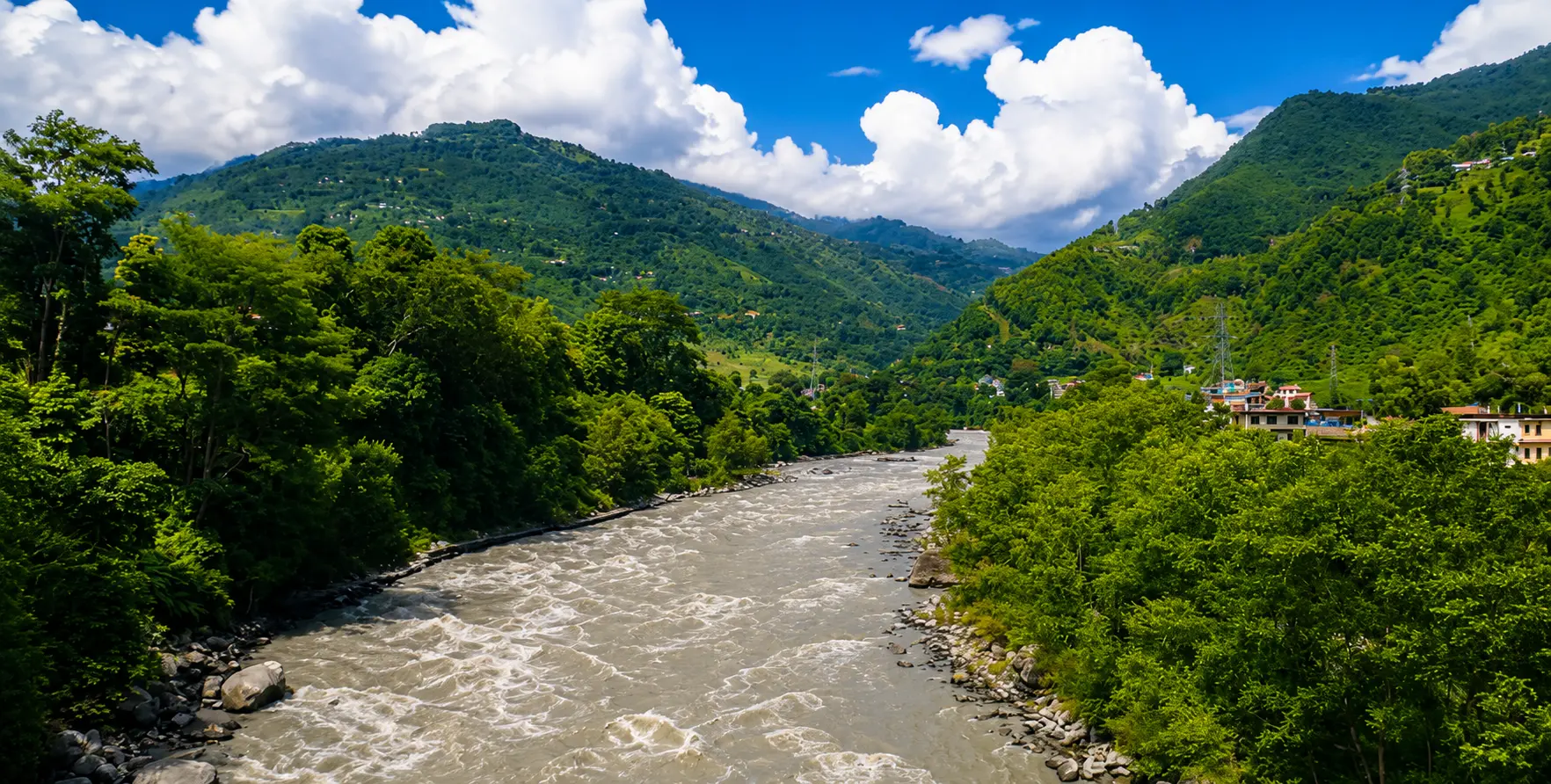
The Trishuli River — The Road’s Defining Companion
One of the most distinctive experiences of the Kathmandu to Syabrubesi road journey is the Trishuli River’s sustained presence as the highway’s companion from the Nuwakot lowlands to the upper Rasuwa valley. The Trishuli — one of Nepal’s most commercially important whitewater rivers, supporting the hydropower sector and the adventure tourism industry — runs alongside the road for much of the Trishuli Bazaar-to-Dhunche section, alternating between visible proximity (where the road and river share the same narrow valley floor) and aerial distance (where the road climbs above the river gorge on exposed cliff-face sections). This sustained river visibility keeps the private jeep journey visually engaging throughout—the river’s changing character between its broad lower sections and the compressed gorge of its upper canyon provides a continuous visual narrative of Nepal’s extraordinary hydrology in action.
The Trishuli’s whitewater character is visible from the road at several points, particularly in the Charaundi and Kurintar sections, where Grade 3 to 4 rapids create permanent white-water foam against the river’s green depths. Occasional commercial rafting groups are visible on the river surface in season — the same river that the Pasang Lhamu Highway follows north is one of Nepal’s most accessible multi-day rafting routes, and seeing the connection between the mountain source above and the commercial adventure tourism use below is one of the road journey’s more memorable moments.
The Langtang Valley Trek — What the Road Delivers You To
The entire purpose of the Kathmandu to Syabrubesi private jeep hire is to deliver trekkers to the starting point of the Langtang Valley trek — one of Nepal’s finest and most accessible long-distance mountain treks, combining outstanding natural scenery with the rich Tamang Buddhist culture of the Langtang communities and an approach logistics profile (no domestic flight required, road access to the trailhead from Kathmandu within a day) that makes it uniquely practical among Nepal’s major Himalayan trek destinations.
The Langtang Valley trek from Syabrubesi covers the route through Lama Hotel (2,470 m), Langtang Village (3,430 m — partially destroyed in the 2015 earthquake and rebuilt), Mundu, Kyanjin Gompa (3,870 m), and the optional climb to Kyanjin Ri (4,773 m) or Tserko Ri (4,984 m) for outstanding panoramic views of the Langtang, Dorje Lakpa, and Ganesh Himal ranges. The standard Langtang Valley trek round trip from Syabrubesi takes 7 to 10 days—considerably shorter than the Annapurna Circuit or Everest Base Camp trek—and, combined with Kathmandu road access that eliminates domestic flight costs and uncertainty, makes Langtang the most cost-accessible of Nepal’s three major trekking regions.
Our sister company Trek Nepal Himalayas provides fully guided Langtang Valley trek packages coordinated with Nepal Vehicle Hiring Pvt Ltd’s private jeep transfer from Kathmandu to Syabrubesi. Alpine Luxury Treks provides a premium-comfort version of the Langtang experience for travelers wanting upgraded accommodation and guiding. Regardless of the trekking package chosen, the Syabrubesi jeep hire from Kathmandu through Nepal Vehicle Hiring Pvt Ltd gets the group to the trailhead with a professional standard consistent with the trek itself.
The 2015 Earthquake Legacy and Road Recovery
The April 2015 Gorkha earthquake caused enormous damage to the Langtang region—an avalanche triggered by the earthquake almost destroyed Langtang Village, and the Pasang Lhamu Highway suffered significant damage from landslides and surface collapse across multiple sections. The road and region’s recovery since 2015 has been one of Nepal’s most closely watched post-disaster reconstruction stories. The current (pre-August 2026 flood) condition of the highway reflects nearly a decade of sustained repair, upgrade, and improvement work by the Department of Roads, international development partners, and the local communities who depend on the road for their livelihoods.
The comparison between the 2016 road condition (the first trekking season after the earthquake, when the highway was passable but severely degraded) and the 2024 condition (with substantial new paving on many sections that were gravel-only in 2016) illustrates how significantly the Pasang Lhamu Highway has improved as a practical trekking transport corridor over the past decade. Nepal Vehicle Hiring Pvt Ltd has operated private jeep hire on this route throughout this recovery period and can attest from direct operational experience to the genuine improvements in surface quality, road width, and shoulder consolidation that have been achieved — while also noting honestly that the earthquake legacy and the ongoing geological activity of this steep Himalayan terrain means that the road will always require proactive maintenance, seasonal repair, and the kind of real-time monitoring that the August 2026 GLOF event has once again demonstrated is essential.
The pattern of the 2026 flood — glacial lake outburst from Tibet, flood wave down the Bhotekoshi, damage to Syabrubesi and Timure, road and bridge destruction — closely parallels multiple previous flood events in this corridor. The 1993 flood, the 2016 Bhotekoshi flood, and the July 2025 Syabrubesi flood all followed essentially the same mechanism. This repetition reflects the fundamental geological reality of the upper Bhotekoshi-Rasuwa corridor: glaciers are destabilizing at an accelerating rate, and glacial lake outburst events from the Tibetan side of the watershed will likely continue to threaten this corridor periodically, regardless of any road improvements made at lower elevations. Nepal Vehicle Hiring Pvt Ltd’s approach to this reality is straightforward: maintain real-time road monitoring through our driver network, refuse to dispatch vehicles without current confirmation, and always have alternative routing options ready when the primary corridor is disrupted.
Kakani — The Rewarding First Stop
Kakani, at about 2,073 meters on the western rim of the Kathmandu Valley, about 29 kilometers from the city center, is the first major landmark on the Kathmandu to Dhunche/Syabrubesi road journey and one of the finest day-trip viewpoints accessible from the capital. For trekking groups departing Kathmandu for the Langtang region with an early morning start, Kakani’s famous Himalayan panorama — a sweeping view from the Annapurna range in the west through the Ganesh Himal, the Jugal Himal, and the Langtang range to the east — provides a magnificent first sight of the mountain landscape the group is traveling toward, visible on clear mornings from the Kakani hilltop viewpoint that the private jeep passes just below on the main road.
More significantly for road condition awareness, Kakani is also the point from which the Pasang Lhamu Highway begins its descent toward the Trishuli Valley — the start of the section that becomes progressively more mountain in character and that, in monsoon conditions, can show early warning signs of the landslide activity in the Trishuli-to-Dhunche section further ahead. Nepal Vehicle Hiring Pvt Ltd’s experienced Syabrubesi route drivers begin making real-time road condition assessments from the Kakani descent onward, contacting our monitoring network for updates on the Ramche zone and the Trishuli gorge sections before committing to the full journey. This proactive monitoring from the early stages of the drive—rather than discovering a problem 4 hours into the journey—is one of the specific professional advantages of booking private jeep hire from Nepal Vehicle Hiring Pvt Ltd rather than a local shared vehicle whose driver has no network support.
For travelers visiting the Kakani area as a Kathmandu day trip — rather than as a passing waypoint on the Langtang approach — Nepal Vehicle Hiring Pvt Ltd’s car hire in Nepal and Kathmandu sightseeing service covers the Kakani viewpoint visit alongside other Kathmandu Valley day trips including Bhaktapur, Nagarkot sunrise, and the full Kathmandu heritage circuit. The Panch Pokhari trek transport also departs from the Kathmandu Valley using roads near the Kakani approach before branching toward the Jugal Himal.
Langtang Trek Permits and What to Carry
The Langtang Valley trek from Syabrubesi requires two permits, which you must obtain in Kathmandu before departure — the Dhunche checkpoint verifies both for all vehicle passengers entering the Langtang National Park boundary. The Langtang National Park entry permit costs NPR 3,000 per person for foreign nationals (NPR 1,500 for SAARC nationals). You can obtain it from the Nepal Tourism Board office in Kathmandu or at the national park office. The TIMS card (Trekkers Information Management System) costs USD 10-20 per person. Nepal’s 2023 trekking regulations require a licensed guide for all Langtang trekkers.
For the Helambu trek and Gosaikunda pilgrimage that share the Dhunche access road, the same permit set applies — Langtang National Park entry permit and TIMS card. Nepal Vehicle Hiring Pvt Ltd’s contact team advises on all current permit requirements for the Rasuwa corridor when clients book their Dhunche or Syabrubesi jeep hire. Obtaining permits in Kathmandu the day before departure, rather than buying them at the Dhunche checkpoint, is always recommended—the checkpoint office is not always fully stocked for walk-up purchases during peak season. All Nepal trekking transport bookings through Nepal Vehicle Hiring Pvt Ltd include permit requirement advisory as a standard booking service.
The Tamang Heritage Trail — The Alternative for Culture-First Trekkers
For travelers whose Langtang region visit prioritizes cultural immersion over peak altitude, the Tamang Heritage Trail — an alternative trekking route that follows the ridgeline communities of the Rasuwa and Nuwakot districts through traditional Tamang villages inaccessible to normal vehicle traffic — provides one of Nepal’s finest and most completely uncommercialized cultural trekking experiences. The trail passes through Gatlang, Tatopani, Nagthali, Thuman, Lingling, Briddim, and eventually connects to the Langtang Valley proper — covering the same ethnic and linguistic territory as the Langtang Valley trek, but through a landscape of working village communities rather than established teahouse lodges.
The Tamang Heritage Trail’s trailhead access follows the same Kathmandu-to-Dhunche private jeep-hire corridor as the Langtang Valley trek, with Gatlang village typically reached by 4WD from Dhunche via a short side road. Nepal Vehicle Hiring Pvt Ltd’s drivers know the Gatlang approach and the specific access points for each section of the Tamang Heritage Trail. Our contact team advises on the optimal vehicle drop-off point for each trail section when booking.
Alternative Access Routes When the Main Road Is Disrupted
The August 2026 flood situation highlights the value of knowing alternative approaches to the Langtang region when the Pasang Lhamu Highway is disrupted. The most established walking alternative is the classic Sundarijal-to-Chisapani-to-Gosaikunda ridgeline route, which bypasses the Syabrubesi valley floor entirely and reaches the Langtang region via the Shivapuri National Park and Jugal Himal ridgeline. This route adds several days to any itinerary but is entirely independent of the Bhotekoshi River flood corridor and remains accessible when the highway is suspended.
The Helambu trek circuit — accessible from Sundarijal on the Kathmandu Valley rim, covered in our sister company’s Helambu trek guide — provides an alternative Langtang region experience that begins closer to Kathmandu and uses the Panch Pokhari trek transport corridor rather than the Pasang Lhamu Highway. For trekkers specifically determined to reach the Langtang Valley when the Syabrubesi road is suspended, coordinating with a registered agency for the walking alternative via the Gosaikunda ridge is the most reliable approach — Nepal Vehicle Hiring Pvt Ltd can support the Sundarijal approach transfer from Kathmandu by private car hire as the first leg of this alternative routing.
For the Gosaikunda pilgrimage specifically — Nepal’s most important high-altitude pilgrimage lake accessible in the Langtang region — the Dhunche approach (rather than Syabrubesi) is the standard vehicle access, and if Dhunche road access is confirmed as unaffected by the current flood, a private jeep from Kathmandu to Dhunche and then walking to Gosaikunda remains a viable option. Nepal Vehicle Hiking Pvt Ltd will confirm Dhunche road status specifically and separately from Syabrubesi when contacted via WhatsApp at +977-9851013196.
Combining the Langtang Region with Other Nepal Destinations
The Langtang region’s proximity to Kathmandu — requiring no domestic flight and reachable by private jeep in 6 to 9 hours — makes it the most logistically straightforward of Nepal’s three major trekking regions to combine with other Nepal destinations in a single extended visit. Before the Syabrubesi transfer, Kathmandu’s extraordinary concentration of UNESCO heritage sites provides the standard pre-trek cultural circuit: Kathmandu sightseeing covering Pashupatinath, Boudhanath, and Swayambhunath; the Bhaktapur day tour; and the Nagarkot sunrise transfer for the Himalayan dawn panorama that includes the Langtang range the trekker is about to enter.
After the Langtang trek, the most popular extension is a Chitwan National Park addition — the Chitwan jungle safari by private vehicle from Kathmandu or Pokhara to Chitwan, or by bus — providing a lowland wildlife complement to the Himalayan high-altitude experience. A Pokhara lakeside recovery extension is also popular — the Kathmandu to Pokhara bus or private car hire connecting the two cities in 4 to 6 hours and positioning the returned Langtang trekker at the gateway to the Ghorepani Poon Hill trek, the Annapurna Base Camp trek, or the Annapurna Circuit via our Pokhara to Nayapul transport and Besisahar private vehicle service.
For trekkers combining multiple Himalayan regions in an extended Nepal visit — for example a Langtang trek followed by an Everest Base Camp trek or a Manaslu Circuit — Nepal Vehicle Hiring Pvt Ltd coordinates all the connecting trekking transport legs through our plan trip page: Kathmandu airport transfer on arrival, the Syabrubesi jeep for Langtang, onward to Soti Khola for Manaslu or Salleri for the Everest overland approach, and the final airport drop at journey end — all coordinated through a single professional transport partner.
Nepal Vehicle Hiring Pvt Ltd’s Rasuwa Corridor Service
Nepal Vehicle Hiring Pvt Ltd has been providing private jeep hire on the Kathmandu to Syabrubesi corridor throughout the Langtang trekking region’s recovery from the 2015 earthquake and its growth since — including the 2020-2021 COVID closure period, the 2023 and 2024 monsoon disruption events, the July 2025 flood (which closed the road for 13 days), and the current August 2026 GLOF emergency. Our approach to this specific corridor reflects the honest operational experience of a company that has managed vehicle deployments through multiple Rasuwa District road disruption events:
- We do not dispatch vehicles when we cannot confirm the road is safe. We confirm every Syabrubesi or Dhunche jeep booking with a morning-of road status check through our driver network before departure.
- Our drivers know the Ramche zone’s specific conditions. The 4WD Scorpio and Hilux drivers we use on this route have personal, repeated experience in the Ramche Landslide Zone and know when to proceed with caution versus when to wait for the section to clear.
- We update clients in real time. When conditions change between booking and departure, we contact the client immediately with the current status and options — schedule adjustment, alternative routing, or rescheduling.
- We coordinate with registered agencies. For trekking groups booking through Trek Nepal Himalayas or Alpine Luxury Treks, we coordinate directly with the agency on road status rather than leaving communication solely to the client.
- 24/7 WhatsApp: +977-9851013196. Our plan trip page and contact page receive and respond to all current road condition inquiries.
The Bhotekoshi River corridor’s importance for Nepal extends well beyond the Langtang trekking economy. The river powers multiple hydropower projects that contribute significantly to Nepal’s national electricity grid — the Chilime Hydropower Project (22 MW), the Rasuwagadhi Hydropower Project (111 MW), and several smaller run-of-river installations along the upper Bhotekoshi represent a substantial portion of Nepal’s domestic generation capacity. Damage to these facilities during the August 2026 GLOF has direct implications for Nepal’s power supply in addition to the trekking and border trade impacts. The road that Nepal Vehicle Hiring Pvt Ltd’s private jeeps travel on the Syabrubesi transfer is the same road that serves this critical national infrastructure — which is why the Department of Roads prioritises its repair and why the corridor typically sees faster recovery from flood damage than equivalent rural roads in districts without major infrastructure: the hydropower sector’s operational and maintenance requirements create sustained pressure for rapid road restoration that general road categories do not receive.
Nuwakot District, through which the Pasang Lhamu Highway passes in its lower sections between Trishuli Bazaar and Dhunche, is one of Nepal’s most historically significant districts — home to the Nuwakot Palace (Saat Tale Durbar), the seven-story tower palace built by King Prithvi Narayan Shah from which he planned and launched the unification of Nepal in the eighteenth century. The palace is visible from the road near Nuwakot Bazaar and is accessible on a brief detour from the main highway for groups with a flexible schedule. This cultural and historical dimension of the Kathmandu to Syabrubesi road journey — passing through the birthplace of Nepal’s national unification narrative — is rarely mentioned in trekking guide descriptions of the route, which tend to focus exclusively on road conditions and journey times. Nepal Vehicle Hiring Pvt Ltd’s experienced drivers on this corridor know the Nuwakot Palace approach and can accommodate a brief visit for groups interested in this remarkable historical site. It pairs naturally with a Kathmandu sightseeing day before the Langtang departure if you choose a two-day Kathmandu-to-Syabrubesi itinerary. Contact our team or visit our plan trip page to plan the complete trip.
Practical Tips — Kathmandu to Dhunche/Syabrubesi Road Journey
- Check current road status the morning of departure: Contact Nepal Vehicle Hiring Pvt Ltd at +977-9851013196 via WhatsApp before departing Kathmandu. This is non-negotiable in monsoon season and in the current August 2026 flood situation.
- Depart Kathmandu by 6:00 to 7:00 a.m.The 6- to 9-hour journey is much more comfortable in daylight. An early departure also avoids Kathmandu morning traffic at the Ring Road exit.
- Pack motion sickness medication: The 1,000+ curves of the Trishuli-to-Dhunche section genuinely affect a significant proportion of passengers. Don’t travel this road without anti-nausea medication available if you have any history of car sickness.
- Carry dust protection: On the unpaved Ramche section and other rough stretches, vehicle interiors accumulate significant dust, particularly in dry conditions. A buff or light scarf over nose and mouth is strongly recommended.
- Withdraw NPR cash in Kathmandu: Dhunche has limited ATM infrastructure; Syabrubesi even less so. Carry enough NPR for the full trek, withdrawn from Kathmandu ATMs before departure.
- Obtain the Langtang National Park permit in Kathmandu: You must get the Langtang trekking permits (Langtang National Park entry + TIMS card) before the Dhunche checkpoint; you can’t buy them there.
- Book the private jeep well in advance in peak season: October-November demand for Syabrubesi jeep hire is high. Contact our team at least 5 to 7 days ahead during peak season.
Frequently Asked Questions — Kathmandu to Dhunche and Syabrubesi Road
Is the Kathmandu to Syabrubesi road open in August-September 2026?
As of August 29, 2026, the road is severely disrupted due to the August 26 glacial lake outburst flood. Vehicle movement is suspended on sections near Syabrubesi and Timure. The situation is evolving — contact Nepal Vehicle Hiring Pvt Ltd at +977-9851013196 for the current status before any planned departure.
How long does the Kathmandu to Syabrubesi journey take?
Under normal conditions: 6 to 9 hours by private jeep, 7 to 8 hours by shared jeep, 8 to 10 hours by local bus. Distance: approximately 117 to 122 km.
What is the 2026 price of a private jeep from Kathmandu to Syabrubesi?
NPR 14,000 to 22,000 (USD 105 to 165) for a full private Scorpio or Hilux 4WD, 4 to 6 passengers, all-inclusive. Contact Nepal Vehicle Hiring Pvt Ltd at +977-9851013196 or our plan trip page for a current quote.
What is the Ramche Landslide Zone?
A 2 to 3 kilometer unpaved section approximately 3 km before Dhunche, passing through active landslide terrain. This section is the Pasang Lhamu Highway’s most consistently rough stretch in all seasons. A 4WD jeep handles it better than buses or 2WD vehicles, particularly in wet conditions.
Can I reach Gosaikunda if Syabrubesi is closed?
Gosaikunda is accessed from Dhunche, not Syabrubesi, and may be accessible via the higher-ground Dhunche road even when the lower Syabrubesi valley section is disrupted. Confirm Dhunche road status specifically with Nepal Vehicle Hiring Pvt Ltd before departing.
Is a private jeep necessary, or can I take the shared jeep?
The shared jeep (Sumo) is a popular budget option at NPR 2,000 to 2,500 per seat. For groups of 4 or more with full trekking luggage, the private jeep hire from Nepal Vehicle Hiring Pvt Ltd offers hotel pickup, fixed departure time, and significantly more comfort for a small per-person premium.
Conclusion
The Kathmandu to Dhunche and Syabrubesi road is one of Nepal’s most important trekking access corridors — and, in August 2026, one of its most dramatically disrupted. The glacial lake outburst flood of August 26 26s fundamentally changed the short-term access picture for the Langtang region, and any traveler planning aplanning a Langtang visit in September-October 2026 must verify current conditions with their operator and Nepal Vehicle Hiring Pvt Ltd before any departure. For the long term — and across the normal seasonal cycle outside exceptional flood events — this road is a thoroughly manageable and rewarding mountain drive that, in a private 4WD jeep from Nepal Vehicle Hiring Pvt Ltd, delivers trekkers comfortably to one of Nepal’s finest and most accessible mountain trek starting points.
Contact Nepal Vehicle Hiring Pvt Ltd for current road status, private jeep hire booking, and Langtang region transport coordination — call or WhatsApp +977-9851013196, visit vehiclehiringnepal.com, or submit your inquiry through our plan trip page.
- Kathmandu to Dhunche Syabrubesi Road Condition Guide 2026
- Current Status — August 2026 Rasuwa Flood Emergency
- The Dhunche and Gosaikunda Alternative — What Remains Accessible
- The Pasang Lhamu Highway — Normal Road Character
- Dhunche to Syabrubesi — The Lower Rasuwa Valley Section
- Syabrubesi to Rasuwaghdi — The Border Approach
- The Seasonal Road Condition Cycle — What Changes Month by Month
- Vehicle Choices — Why 4WD Matters on This Specific Road
- The Trishuli River — The Road's Defining Companion
- The Langtang Valley Trek — What the Road Delivers You To
- The 2015 Earthquake Legacy and Road Recovery
- Kakani — The Rewarding First Stop
- Langtang Trek Permits and What to Carry
- The Tamang Heritage Trail — The Alternative for Culture-First Trekkers
- Alternative Access Routes When the Main Road Is Disrupted
- Combining the Langtang Region with Other Nepal Destinations
- Nepal Vehicle Hiring Pvt Ltd's Rasuwa Corridor Service
- Practical Tips — Kathmandu to Dhunche/Syabrubesi Road Journey
- Frequently Asked Questions — Kathmandu to Dhunche and Syabrubesi Road
- Conclusion

Related Blog & Articles
Rasuwagadhi Kerung Border Condition Now | Nepal Update

Kerung to Sunauli Border Transfer After Kailash Yatra