


 Plan a Trip


Kathmandu to Shigati Rolwaling Valley
Kathmandu to Shigati Rolwaling Valley — Private Jeep Price and Transport Guide 2026
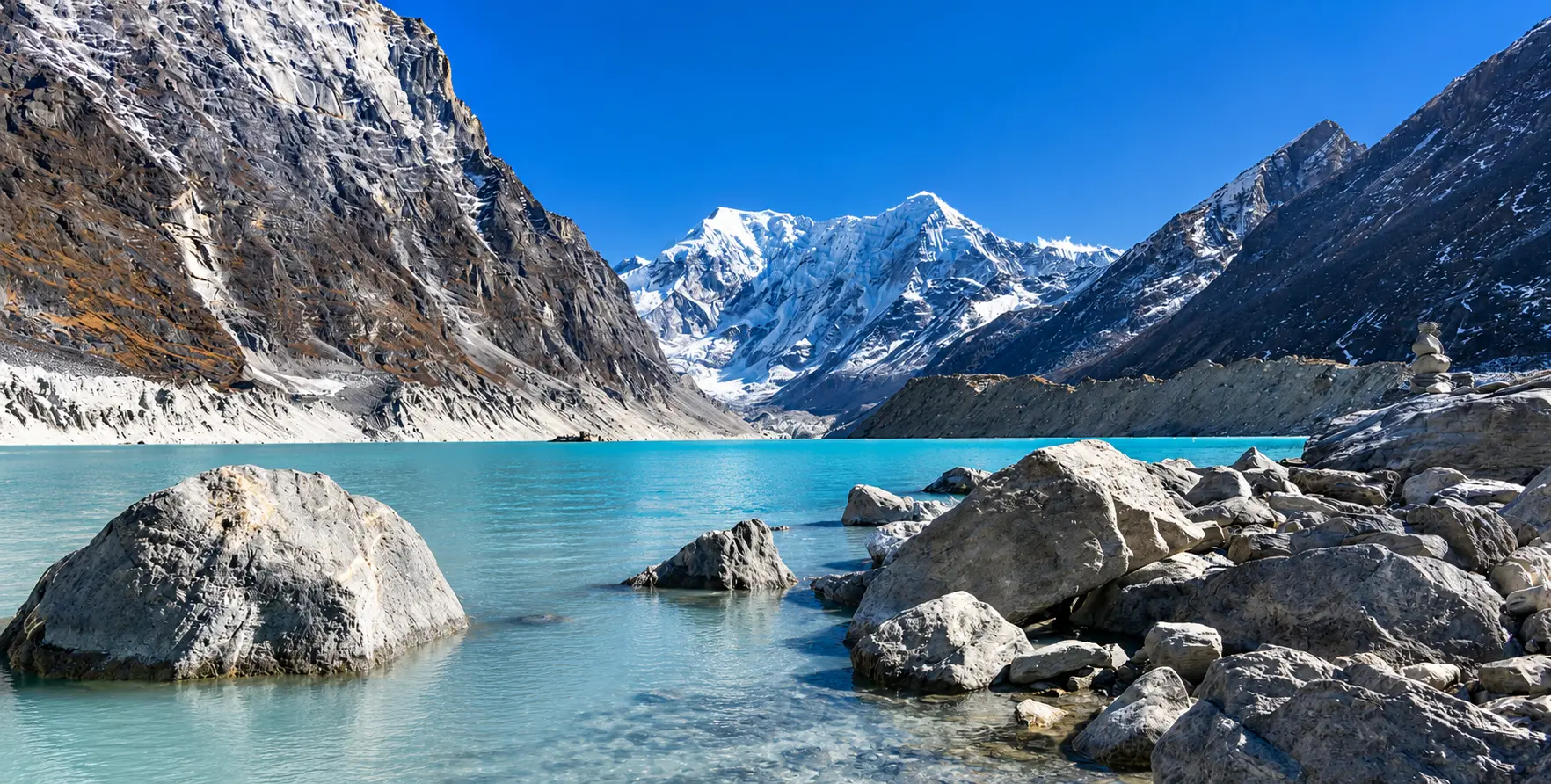
The Rolwaling Valley is one of Nepal’s best-kept secrets — a remote, rarely visited Himalayan valley in Dolakha District whose combination of extraordinary natural landscapes, ancient Sherpa Buddhist culture, and access to some of the most technically demanding high mountain terrain in the entire country makes it one of the finest destinations for experienced trekkers seeking genuine wilderness and genuine solitude. The Rolwaling Valley trek through the Gaurishankar Conservation Area, past the sacred twin-peaked mountain of Gauri Shankar (7,134 m) and up to the glacial Tsho Rolpa Lake at 4,580 meters, is, by the consistent judgment of experienced Nepal trekking operators, one of the finest and most undervisited extended trekking experiences available anywhere in the Himalayan region — and it begins with a road journey from Kathmandu to Shigati (also spelled Singati), the primary motorable gateway to the Rolwaling valley approach.
The private jeep hire from Kathmandu to Shigati is the essential first transport leg of any Rolwaling Valley expedition — covering approximately 175 to 183 kilometers of road through the Arniko Highway corridor, the Dolakha district connecting roads, and the Tamakoshi River valley approach to Shigati Bazaar in 8 to 10 hours of driving. This guide covers everything a traveler planning the Kathmandu-to-Shigati transfer needs to know: the 2026 price of a private 4WD jeep, the full route in detail, the road character and why 4WD matters, permits for the Rolwaling trek, and how Nepal Vehicle Hiring Pvt Ltd provides the verified private jeep hire that brings trekkers to one of Nepal’s most extraordinary valley entrances in the best possible condition for the adventure ahead.
The Rolwaling Valley — Nepal’s Hidden Himalayan Treasure
The Rolwaling Valley stretches northwest to southeast in Dolakha District, roughly parallel to and south of the Tibet border, draining the glaciers of the Rolwaling Himal through the Rolwaling Khola (river) down to its confluence with the Tamakoshi River. The valley is entirely contained within the Gaurishankar Conservation Area (GCAP) — a 2,179-square-kilometer protected area established in 2010 that encompasses the Gauri Shankar and Melungtse massifs and the complete Rolwaling river drainage system, extending from the subtropical lower valley at approximately 1,000 meters to the permanent snowfields and glaciers above 6,000 meters.
The dominant visual and spiritual presence in the Rolwaling landscape is Gauri Shankar itself — the 7,134-metre twin-peaked massif whose distinctive twin summits are visible from much of the eastern Kathmandu Valley on clear days and whose sacred status in both Hindu and Buddhist traditions (the two peaks represent Shiva and Parvati — Gauri and Shankar — in divine union) gives the valley a spiritual atmosphere that distinguishes it from the more commercially developed trekking regions. The sacred mountain was one of the last major Himalayan summits to receive its first ascent in 1979, partly because of strong local opposition to climbing this revered peak and partly because of the genuine technical difficulty of its ridgelines and faces.
The Rolwaling Valley gained a specific place in mountaineering history in 1951, when British explorer Eric Shipton photographed what appeared to be large, unknown-primate footprints on the Drolambau Glacier at the head of the valley during a reconnaissance of the region. These photographs became the most influential visual evidence in the twentieth-century Yeti mythology, reproduced in publications worldwide and contributing substantially to the sustained interest in Himalayan cryptozoology that, while scientifically unresolved, has added a distinctly atmospheric dimension to the upper Rolwaling’s already formidable reputation as some of Nepal’s most genuinely remote and least-visited high mountain terrain. The Rolwaling Valley trek offered by our sister company, Trek Nepal Himalayas, provides a fully guided experience of this extraordinary valley, with Nepal Vehicle Hiring Pvt Ltd coordinating the Kathmandu-to-Shigati private jeep transfer for all their Rolwaling trek groups.
Shigati Bazaar — The Gateway to Rolwaling
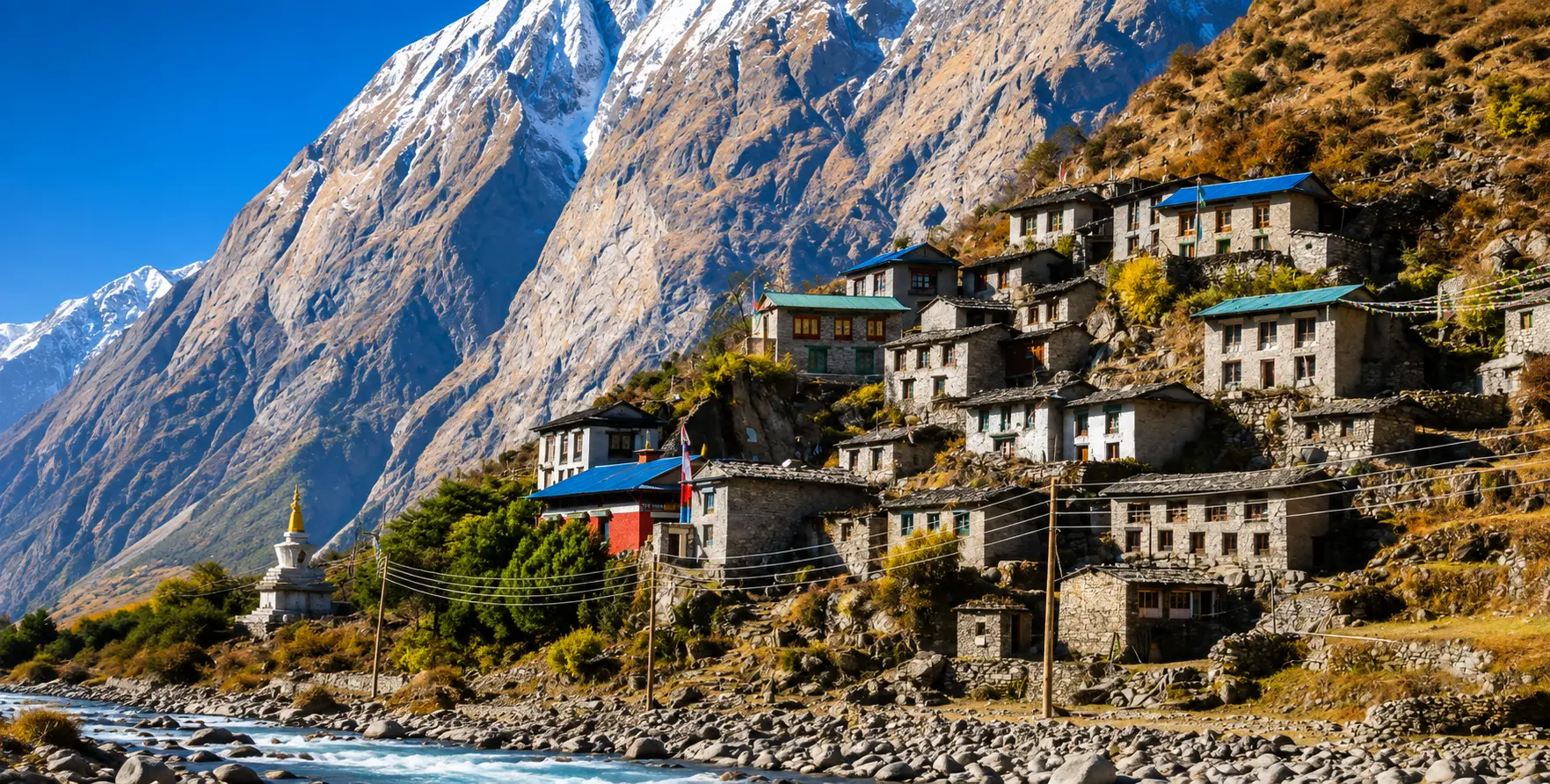
Shigati (also commonly spelled Singati) is a small bazaar town in Dolakha District at approximately 1,020 meters, situated where the road from Charikot descends into the Tamakoshi River valley. It serves as the primary market and transport hub for communities on the lower Rolwaling approach. It has developed basic but functional infrastructure for trekking groups that use it as the road-end trailhead for the Rolwaling valley approach. Shigati has basic guesthouses, a small bazaar, and basic food options—it is emphatically not a developed trekking hub on the scale of Besisahar or Syabrubesi. Still, it provides enough infrastructure for a trekking group to spend a comfortable final night before beginning the walk into the valley.
The relationship between Shigati and the road network beyond it has changed significantly in recent years. What was previously a clear road-end at Shigati has been extended progressively — first to Gonghar Khola and subsequently, according to 2025 and 2026 trekking operator reports, as far as Bungur Khola and occasionally to Chhetchhet at approximately 1,377 meters, which several sources now describe as the effective road-end and official trek start for the Rolwaling Valley trail. This road extension means groups taking a private 4WD jeep from Kathmandu to Shigati or beyond can potentially reach a higher starting point than before, reducing the first day’s walking by 1 to 2 hours and starting the proper valley trail at a higher elevation. Nepal Vehicle Hiring Pvt Ltd advises clients on the current confirmed road-end point for their specific travel date, as road extension work continues and seasonal conditions affect the maximally drivable point.
NOTE: The road beyond Shigati toward Chhetchhet is rough and narrow — only verified 4WD vehicles should attempt it. Nepal Vehicle Hiring Pvt Ltd confirms the current road status with our drivers before any Shigati booking departure to advise on the optimal drop-off point.
The Route — Kathmandu to Shigati Step by Step
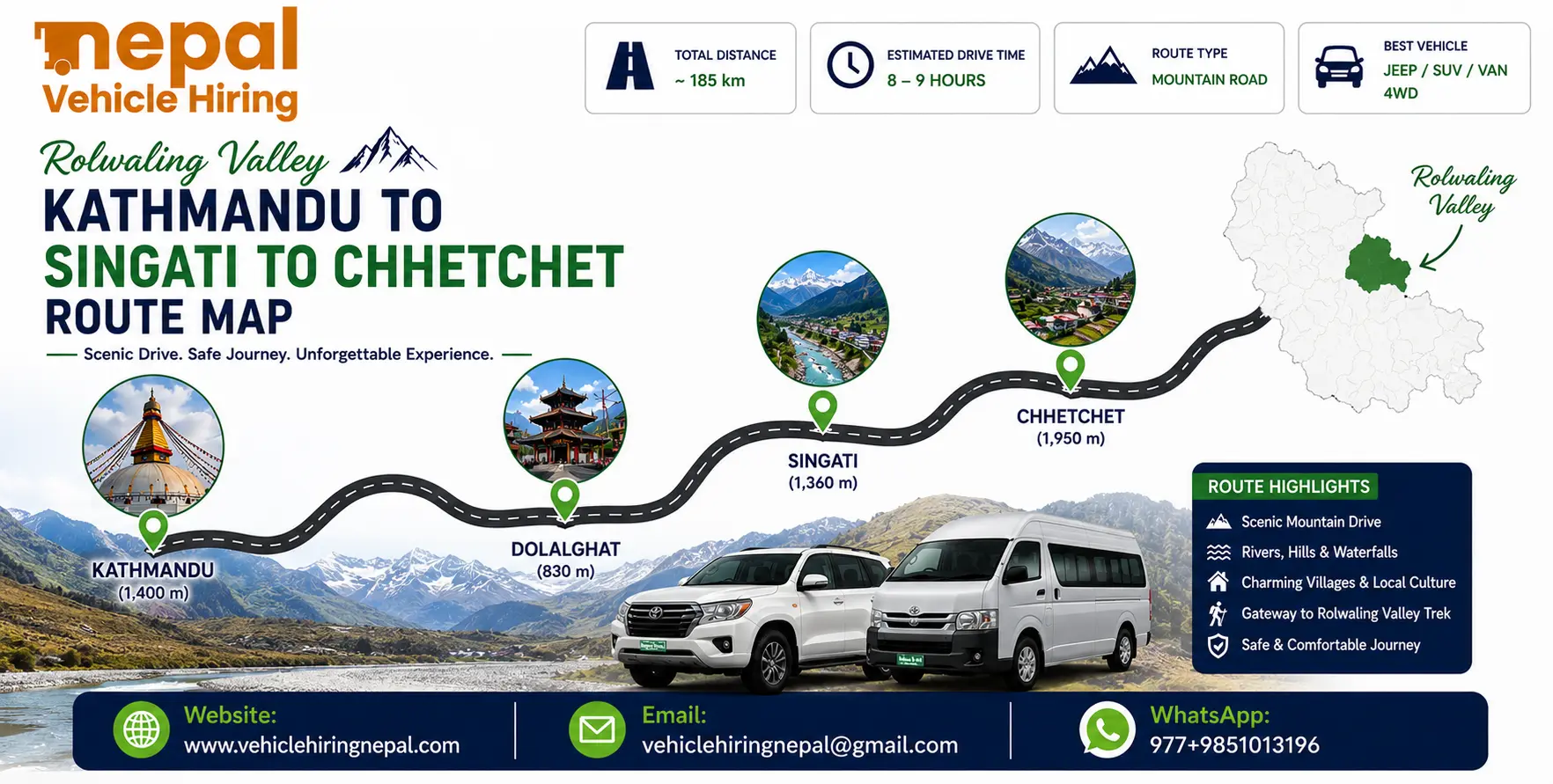
The Kathmandu to Shigati private jeep route covers approximately 175 to 183 kilometers by road and takes 8 to 10 hours including rest stops. The route follows the Arniko Highway (also called the Kathmandu-Tibet Highway or Friendship Highway) northeast from Kathmandu before branching southward toward Dolakha and then descending into the Tamakoshi valley to Shigati.
Kathmandu to Bhaktapur and Dhulikhel — The Highway Start. Departing Kathmandu by private jeep from the hotel door with Nepal Vehicle Hiring Pvt Ltd, the journey begins on the Arniko Highway heading northeast through Bhaktapur — itself one of Nepal’s finest UNESCO heritage cities and well worth a very early morning stop for temple photography if time allows — and climbing through Banepa to Dhulikhel, the hill town at approximately 1,550 metres whose eastern terrace viewpoint offers a famous panoramic view of the Himalayan range from Langtang through the Gauri Shankar-Melungtse massif to the Rolwaling Himal and the Everest group beyond. For trekkers heading to Rolwaling, the Dhulikhel viewpoint offers the first view of the mountain landscape they are traveling toward—a powerful orientation moment before the road descends into the lower valleys below.
Dhulikhel to Dolalghat and Lamosangu. From Dhulikhel, the Arniko Highway descends steeply to the Sun Koshi River at Dolalghat, where the river’s jade-green color and the forest-covered gorge walls create one of the most beautiful sections of any highway journey in Nepal. Lamosangu, about 70 kilometers from Kathmandu at the confluence of the Bhotekoshi River and the Sun Koshi, is the junction where the Arniko Highway continues northeast toward the Tibet border and the branch road turns south toward Charikot and Dolakha. On this route, Nepal Vehicle Hiring Pvt Ltd’s private jeep drivers take the Charikot branch at Lamosangu junction.
Lamosangu to Charikot — The Dolakha District Road. From Lamosangu, the road climbs significantly into the Dolakha district connecting road, rising from the Sun Koshi valley floor at approximately 630 meters to Charikot (also called Dolakha) at approximately 1,660 meters in a section of approximately 50 kilometers, taking 1.5 to 2 hours. The road quality on this section is paved but narrow and winding, with exposed cliff-edge sections and tight hairpin curves that make a professional driver familiar with this specific road a meaningful advantage over self-driving. Charikot is the district headquarters of Dolakha District and the largest town on the route to Shigati — it has functioning ATMs, fuel stations, and proper restaurant options. All Nepal Vehicle Hiring Pvt Ltd Shigati bookings include a Charikot fuel top-up and rest stop as a standard procedure.
The famous Dolakha Bhimeshwor Temple in Charikot town is one of Nepal’s most significant and most unusual Hindu temples — a shrine whose principal deity is believed to manifest as three different divine forms at different times of day (Bhimeshwar in the morning, Mahadeva during the afternoon, and Narayana in the evening), a triple divine presence unique among Nepal’s thousands of Hindu sacred sites. Trekking groups departing Kathmandu early and planning a Charikot overnight before the Shigati continuation visit the temple at dawn for Bhimeshwar darshan—an experience available nowhere else in Nepal. Nepal Vehicle Hiring Pvt Ltd drivers know the temple approach road and the best parking point for groups making this stop.
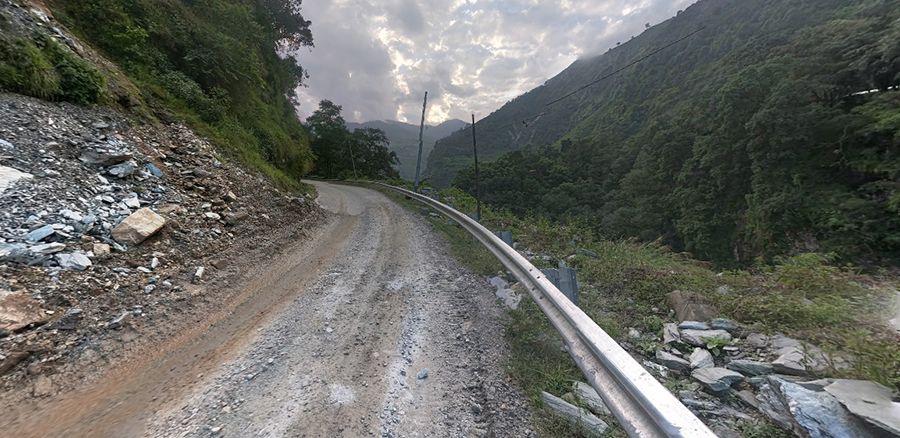
Charikot to Shigati — The Final Descent. From Charikot, the road to Shigati descends approximately 600 to 700 vertical meters from the ridgeline district headquarters down to the Tamakoshi River valley floor. This descent section — approximately 25 to 35 kilometers, taking 1.5 to 2.5 hours — is where the road character changes most significantly from the Charikot-approach paved connecting road to the narrower, rougher, more variable surface track of the lower Tamakoshi valley. This section most definitively requires a 4WD Scorpio or Hilux jeep from Nepal Vehicle Hiring Pvt Ltd rather than a standard sedan: the road includes unpaved sections, active construction zones, and river-adjacent tracks that 2WD vehicles navigate poorly and occasionally cannot navigate at all in wet conditions.
Private Jeep Price — Kathmandu to Shigati 2026
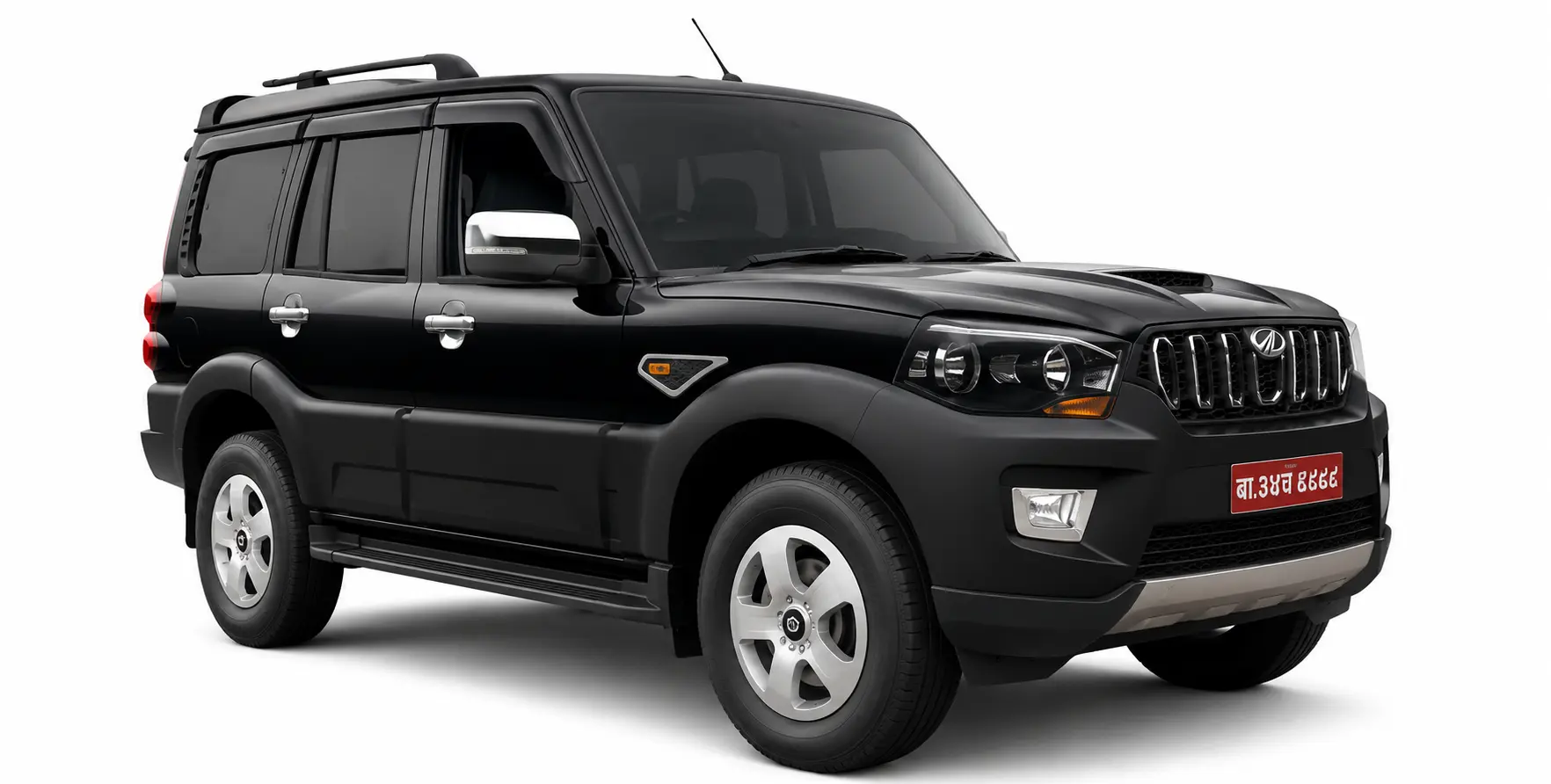
The 2026 price for a private 4WD Scorpio or Hilux jeep hire from Kathmandu to Shigati from Nepal Vehicle Hiring Pvt Ltd is approximately NPR 18,000 to NPR 28,000 (USD 135 to 210) for the full vehicle one way, covering 4 to 6 passengers with trekking luggage. This all-inclusive price covers driver, fuel, and road tolls from any Kathmandu hotel to Shigati Bazaar. For the return jeep from Shigati to Kathmandu at the trek’s end, the same price range applies — pre-arranged at the time of the outward booking through Nepal Vehicle Hiring Pvt Ltd’s coordination team. Contact our team at +977-9851013196 via WhatsApp or through our plan trip page for a quote based on your group size and travel dates.
For comparison, the local shared jeep from Kathmandu to Shigati/Singati costs approximately USD 25 to 40 per person for a seat in a shared vehicle — making it competitive with the private option for solo travelers but less cost-effective for groups of 4 or more, where the private jeep hire divides to approximately USD 34 to 53 per person. The shared jeep’s departure from Gongabu Bus Park at fixed morning times (typically 6:00 to 7:00 a.m.), its multiple intermediate passenger stops, and its variable vehicle condition and luggage management make the private jeep hire from Nepal Vehicle Hiring Pvt Ltd the straightforwardly better option for any trekking group with full expedition luggage and a fixed trek start date.
Two-Day Option with Charikot Overnight. For groups preferring not to drive the full 8 to 10 hours in a single push, Nepal Vehicle Hiring Pvt Ltd offers the Kathmandu-to-Shigati private jeep transfer as a two-day arrangement with an overnight stop in Charikot. Day 1 covers Kathmandu to Charikot (approximately 130 km, 6 to 7 hours, including the early-morning Dhulikhel viewpoint stop and the Bhimeshwor Temple visit). Day 2 covers the shorter Charikot-to-Shigati descent (25 to 35 km, 1.5 to 2.5 hours) by jeep, then waiting while the group prepares for the trek start. This two-day format is the standard arrangement for groups planning to begin walking from Shigati or beyond on the second day.
Why a 4WD Jeep Is Non-Negotiable for This Route
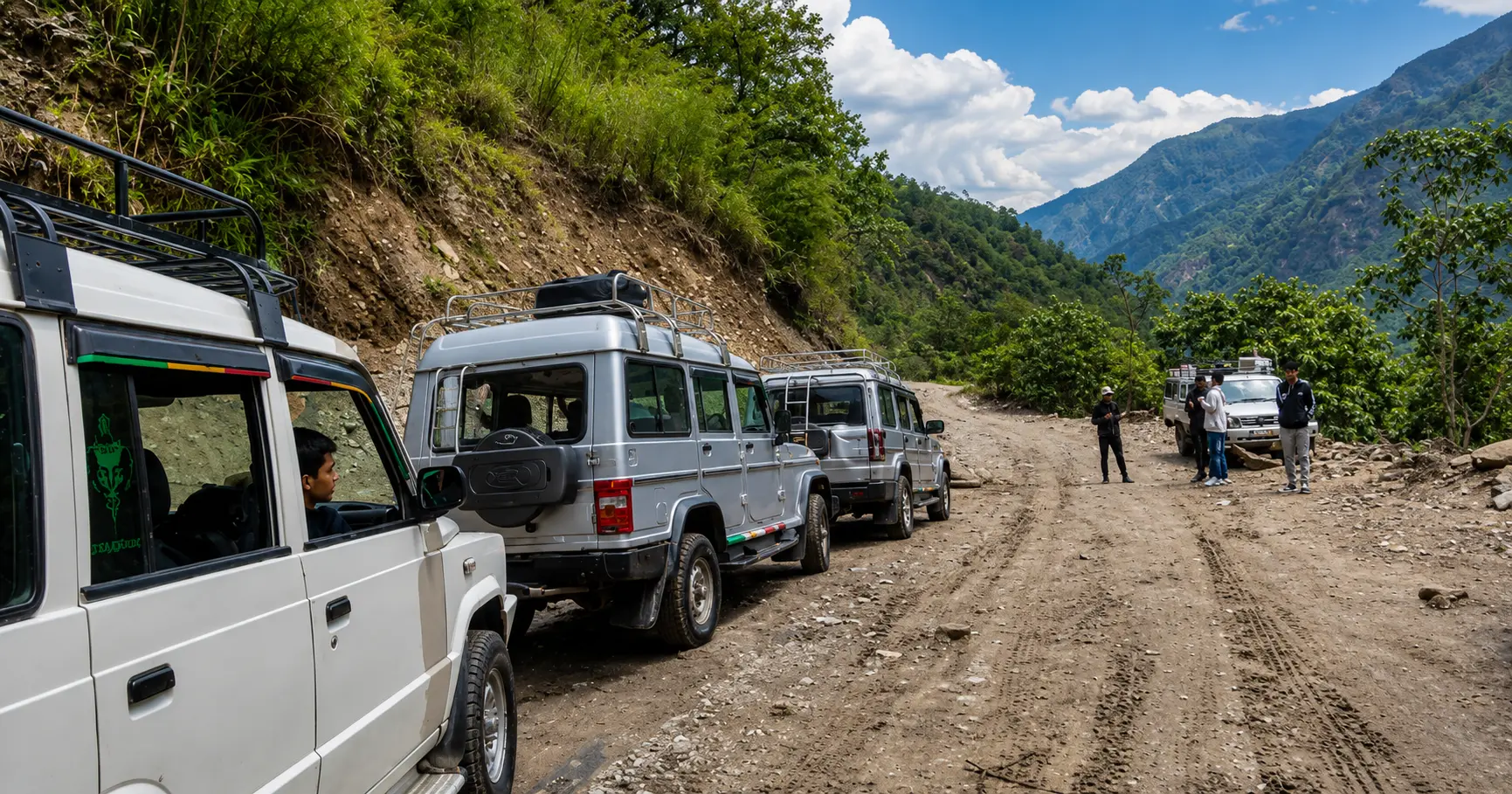
The Kathmandu to Shigati private jeep route has a clearer answer to the 4WD question than many Nepal trekking transport routes: the section from Charikot descending to Shigati and any extension beyond Shigati toward Chhetchhet is definitively unsuitable for standard 2WD vehicles in all but the driest conditions of peak dry season, and genuinely dangerous in wet or monsoon conditions. The combination of steep descent gradients, narrow track width with a sheer drop-off on one side, unpaved surface sections prone to seasonal damage, and river-adjacent approaches near Shigati creates conditions where ground clearance, load-range differential, and the mechanical reliability of a well-maintained 4WD vehicle are not comfort preferences but genuine safety requirements.
Nepal Vehicle Hiring Pvt Ltd uses 4WD Scorpio and Hilux jeeps exclusively for the Shigati transfer — not because of company policy alone but because the specific road character of the Charikot-to-Shigati descent section requires it. Our drivers on this specific route have personal, repeated experience on all sections of the Lamosangu-to-Charikot-to-Shigati corridor in multiple seasons, including specific knowledge of the road sections most vulnerable to seasonal damage, the river crossing points near the Tamakoshi valley floor, and the extended track beyond Shigati toward Chhetchhet that requires verified 4WD engagement rather than the highway-mode 4WD engagement that Kathmandu-area driving uses.
The Rolwaling Trek — What Awaits Beyond Shigati
The Rolwaling Valley trek from Shigati or Chhetchhet to Tsho Rolpa Lake and back — or continuing over the Tashi Lapcha Pass (5,755 m) to the Khumbu (Everest) region — is one of Nepal’s finest and most demanding extended trekking experiences. The standard Tsho Rolpa Lake return trek from Shigati takes 10- 15 days. The crossing to Khumbu via Tashi Lapcha takes 18 to 21 days and requires basic mountaineering skills and specific rope-work experience for the technical sections of the pass crossing.
Shigati to Jagat (1,290 m) and Simigaon (2,025 m) — Day 1 to 2. The trail from Shigati or Chhetchhet follows the Tamakoshi River upstream through mixed forest and cultivated valley floor terrain, crossing several suspension bridges over the Rolwaling River’s tributary gorges before reaching Jagat — a small town of mixed Chhetri, Tamang, and Sherpa ethnicity that serves as the first proper teahouse stop on the trail. From Jagat, the trail climbs more steeply to Simigaon — a distinctly Sherpa village whose flat-roofed stone houses, mani walls, and prayer flags signal the upper valley’s Tibetan cultural character.
Simigaon to Beding (3,690 m) — Days 3 to 4. Beyond Simigaon, the valley narrows dramatically as the trail enters the Rolwaling Valley proper — passing through dense bamboo and rhododendron forest in the lower section and emerging into the open alpine terrain of the upper valley as altitude builds. Beding is the largest settlement in the Rolwaling Valley — a genuine high-altitude Sherpa village with a monastery, traditional stone architecture, and the completely undisturbed cultural authenticity that the Annapurna Circuit trail villages and Langtang Valley settlements lost to the trekking economy decades ago. Beding receives perhaps a few hundred trekkers per year — compared to tens of thousands on the main Annapurna and Everest corridors — and this exceptionally low visitor density preserves a community atmosphere and a village-to-trekker relationship of exceptional warmth and genuine curiosity.
Beding to Na (4,180 m) and Tsho Rolpa Lake (4,580 m). Na village, 3 to 4 hours above Beding, is the last permanent settlement in the Rolwaling Valley and the acclimatization base for the high-altitude sections above. From Na, the trail continues to the magnificent Tsho Rolpa glacial lake at 4,580 meters — one of Nepal’s largest glacial lakes and a profoundly beautiful high-altitude body of water whose turquoise surface reflects the surrounding glaciated peaks in a visual composition of extraordinary intensity. Tsho Rolpa has become a subject of serious scientific monitoring because rapid glacial ice melt above the lake has accelerated its growth — a viscerally immediate manifestation of climate change that adds a sobering layer to the lake’s beauty. The government has installed a drainage pipe and early-warning siren system in the villages below as a preventive measure against the risk of a glacial lake outburst flood (GLOF) — an engineering intervention visible from the trail that contextualizes the fragile relationship between this pristine environment and the global processes now shaping it.
The Tashi Lapcha Pass — Connecting Rolwaling to Khumbu
The Rolwaling Valley trek’s most dramatic and most technically demanding option is the crossing of the Tashi Lapcha Pass (also spelled Tesi Lapcha) at 5,755 meters — one of Nepal’s highest and most technically challenging non-expedition passes, linking the Rolwaling Valley on the west with the Khumbu (Everest) region on the east. The pass crossing descends to Thame village in the upper Khumbu, from where the trail connects to Namche Bazaar and the main Everest Base Camp trek route. Combined with the Kathmandu-to-Shigati private jeep entry and a Lukla-to-Kathmandu flight exit, the Rolwaling-Tashi Lapcha-Khumbu crossing creates one of Nepal’s finest and most remote extended mountain journeys.
The Tashi Lapcha crossing involves technical, glaciated terrain—the high sections of the pass require crampons, ice axe technique, and rope-management experience. Nepal’s mandatory guide regulation applies to all trekkers in the Rolwaling region, and our sister company, Trek Nepal Himalayas, offers Rolwaling Valley guided treks with guides who have specific Tashi Lapcha crossing experience. Alpine Luxury Treks provides premium guiding and equipment for the pass crossing for groups wanting a higher comfort and safety margin than standard guided service provides. Nepal Vehicle Hiring Pvt Ltd coordinates the Kathmandu-to-Shigati outward jeep transfer and the Lukla-to-Kathmandu connection arrangements for Rolwaling-to-Khumbu crossing groups through our contact team.
Permits for the Rolwaling Valley Trek
The Rolwaling Valley trek requires specific permits that differ in important ways from the standard Nepal trekking permit se, and must be obtained in Kathmandu before the Shigati departure.
The Gaurishankar Conservation Area Permit (GCAP) is the primary permit for the Rolwaling Valley — NPR 3,000 per person for foreign nationals. This permit covers the entire Gaurishankar Conservation Area, including the Rolwaling Valley approach from Shigati through to the upper valley and Tsho Rolpa Lake. You can obtain it from the Nepal Tourism Board or DNPWC (Department of National Parks and Wildlife Conservation) offices in Kathmandu.
A TIMS Card (Trekkers Information Management System), costing USD 10 to 20 per person, is also required. Nepal’s 2023 trekking regulation requires a licensed guide for all trekkers in the Gaurishankar Conservation Area; individual trekkers cannot obtain permits without a registered guide.
For the Tashi Lapcha Pass crossing into Khumbu, the Sagarmatha National Park permit (NPR 3,000 per person) covers the Khumbu section entered on descent from the pass. Pachermo Peak climbing (6,273 m, a popular technical peak in the upper Rolwaling) requires an additional Nepal Mountaineering Association climbing permit. Nepal Vehicle Hiring Pvt Ltd advises on all current permit requirements when clients book their Kathmandu to Shigati jeep transfer through our plan trip page or contact team.
NOTE: Individual trekkers CANNOT obtain GCAP permits — only trekking groups with a licensed guide are issued permits for the Rolwaling Valley. Confirm guide arrangement before traveling to the Charikot permit checkpoint.
The Arniko Highway — Nepal’s Road to Tibet and the Rolwaling Gateway
The Arniko Highway — officially designated Nepal’s national highway no. 4 and historically known as the Friendship Highway for connecting Nepal with China through the Tibet border at Kodari — is one of Nepal’s most scenic and historically significant road corridors. It forms the first and most comfortable section of the Kathmandu-to-Shigati private jeep journey. Commissioned in 1967 as a joint Nepal-China construction project, the highway was the physical expression of the bilateral diplomatic relationship that opened the Himalayan corridor between Kathmandu and Lhasa to road traffic and fundamentally changed the commercial and cultural exchange patterns of Nepal’s eastern hill region. Today the same highway serves multiple purposes simultaneously: the export route for Nepali goods to China, the import route for Chinese manufactured goods flowing southward, the access road for the Rolwaling, Gaurishankar, and Jugal Himal trekking regions, and the transit corridor through which the Kathmandu to Shigati private jeep hire group begins their journey.
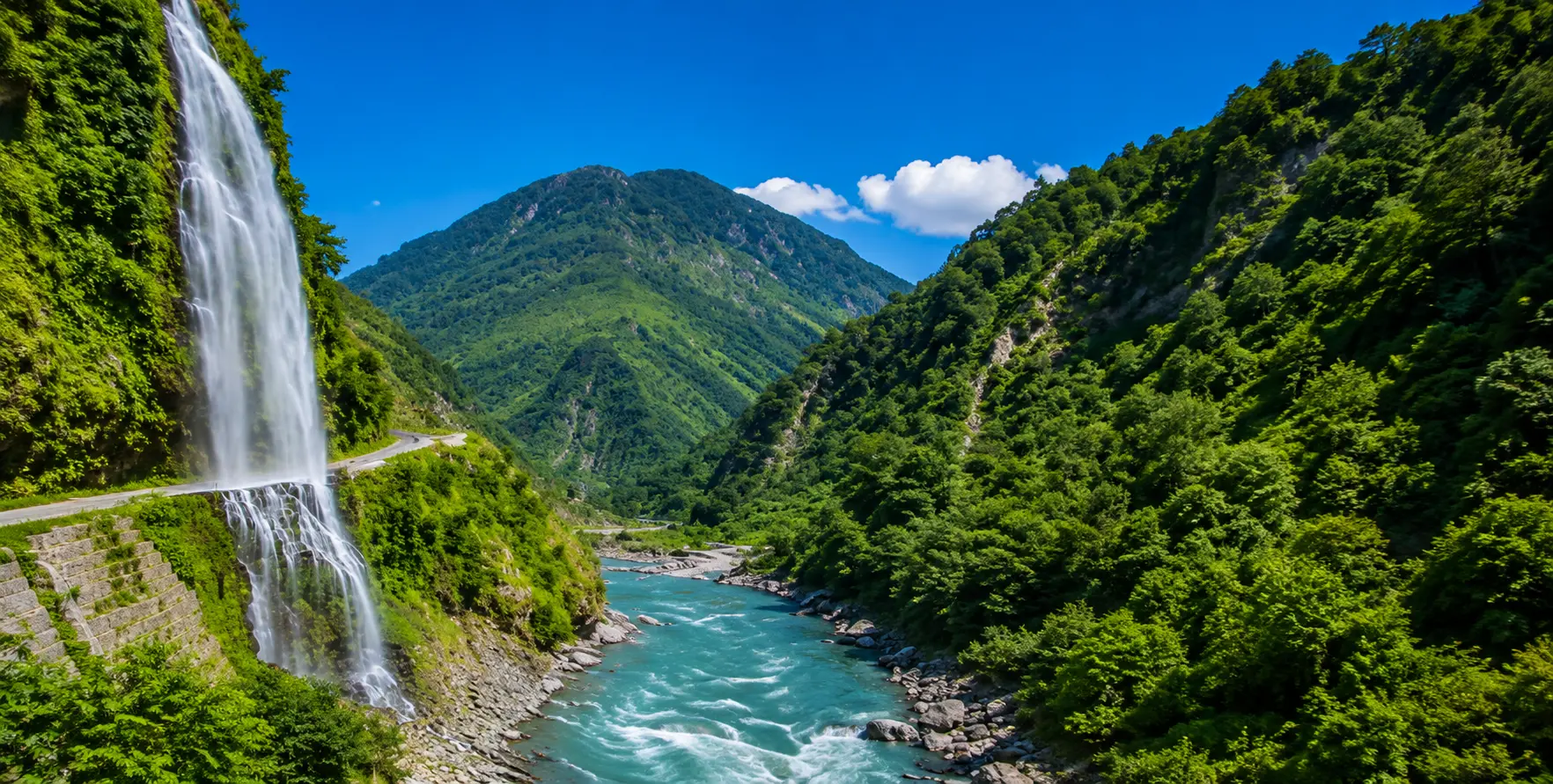
The specific landscapes visible from the Arniko Highway before the Lamosangu branch point provide some of the finest highway scenery in Nepal. The Sun Koshi River — ‘the gold river,’ one of Nepal’s major Himalayan tributaries — runs alongside the highway through the Dolalghat section at the bottom of the descent from Dhulikhel, its broad river banks and terraced hillsides above creating the kind of pastoral Himalayan middle-hill landscape that decades of trekking guidebook photography has established as the visual signature of Nepal’s eastern hills. The forested ridge sections between Sanga and Banepa, visible before the descent to Dolalghat, support a rich birdlife that rewards early morning travelers with flycatcher, warbler, and occasionally raptor sightings — the same dawn birding opportunity available to groups departing Kathmandu at 5:30 a.m. for the Shigati jeep transfer.
At Lamosangu, the Arniko Highway junction marks the branch point where the road to Tibet continues northeast, and the road to Charikot and Dolakha turns southeastward. This junction is one of Nepal’s busiest inter-regional transport intersections, with the China-Nepal transit truck traffic creating a permanently active and genuinely fascinating roadside tableau of massive Chinese container trucks, Nepali trading vehicles, and the occasional trekking jeep fleet heading toward the eastern hill districts. Nepal Vehicle Hiring Pvt Ltd’s Shigati route drivers navigate the Lamosangu junction as routine, ensuring the group on board takes the right branch without navigation uncertainty.
Shigati’s Neighboring Attractions — Beyond the Rolwaling Trailhead
Shigati Bazaar and the surrounding Tamakoshi River valley offer more than simply the gateway to the Rolwaling trek — the broader Dolakha District contains a cluster of natural, cultural, and religious sites that Nepal tour package groups with extra days and private jeep hire flexibility from Nepal Vehicle Hiring Pvt Ltd can incorporate into a broader eastern Nepal itinerary.
Kalinchowk Bhagwati Temple, perched at approximately 3,842 meters on a ridge above Charikot and accessible by cable car from Kuri village, is one of Dolakha District’s most important Hindu pilgrimage sites — a mountain-top shrine to Goddess Bhagwati whose winter festival (Maha Shivaratri season) draws thousands of pilgrims from Kathmandu and the eastern districts and whose ridge-top location provides a 360-degree panorama of the Langtang, Gaurishankar, Rolwaling, and even Everest ranges on clear days. Nepal Vehicle Hiring Pvt Ltd’s private car hire reaches the cable car base station at Kuri from Charikot in about 30 to 45 minutes, making a Kalinchowk addition a natural half-day extension for groups spending the night in Charikot before continuing to Shigati.
The Tamakoshi River itself is one of Nepal’s most productive whitewater rivers for kayaking and rafting, with the steep gradient sections above and below Shigati providing high-quality rapid formations in the moderate to advanced difficulty range. The river powers the Tamakoshi Hydroelectric Project — one of Nepal’s largest and most strategically significant run-of-river hydropower installations — whose infrastructure is visible from the road at several points on the Charikot-to-Shigati descent and whose engineering represents one of Nepal’s most ambitious energy self-sufficiency investments of the twenty-first century. For Nepal tour package groups interested in Nepal’s hydropower development alongside trekking, the Tamakoshi corridor provides a rare opportunity to see this national energy infrastructure in direct relationship with the mountain landscape and community from which it draws its power.
The Panch Pokhari trek transport serves the Helambu and Jugal Himal region north of Dolakha district — a trekking area with its own extraordinary cultural and natural character that, combined with the Rolwaling approach via Kathmandu to Shigati jeep hire, creates a comprehensive eastern Nepal cultural and mountain circuit for travelers with sufficient time. Our Langtang Valley trek transport, Helambu trek coordination, and Panch Pokhari guide cover all of these eastern Nepal trekking transport options.
The Rolwaling in Nepal’s Great Himalayan Trail
The Rolwaling Valley forms a segment of Nepal’s Great Himalayan Trail (GHT). This ambitious long-distance mountain route traverses the entire width of Nepal, from the Kanchenjunga region in the east to Tumla District and Api Nampa in the far west, covering about 1,700 kilometers of high-altitude trail and linking major Himalayan valleys, passes, and communities across Nepal’s full mountain extent. The GHT through the Rolwaling uses the same Shigati approach corridor covered in this guide, ascends through Simigaon and Beding to the upper valley, and crosses the Tashi Lapcha Pass into the Khumbu section of the trail — making the Kathmandu to Shigati private jeep transfer the starting point for both the standalone Rolwaling trek and the GHT’s most technically challenging section.
For Rolwaling Valley guided trekkers whose journey is one section of a longer GHT traverse, Nepal Vehicle Hiring Pvt Ltd coordinates the Kathmandu logistics at both the entry end (the Shigati jeep transfer at the start of the Rolwaling-Khumbu GHT section) and at the Khumbu exit end (the Lukla to Kathmandu flight connection at the end of the Khumbu GHT section), providing a complete eastern Nepal transport wrapper for the two-valley crossing. For GHT trekkers approaching from the west—entering Nepal at Kathmandu after a western GHT section and needing the Shigatse approach for the Rolwaling eastward continuation—our airport transfer, Kathmandu sightseeing, and private jeep to Shigatse provide full transit support through our plan trip page.
Gaurishankar and Rolwaling — A Landscape of Sacred Mountains
The Gauri Shankar Conservation Area that the Rolwaling trek passes through is named for the area’s most significant mountain — Gauri Shankar at 7,134 meters, whose twin summits are visible from the approach above Charikot and from multiple viewpoints on the trail, representing one of Nepal’s most recognizable and sacred mountain silhouettes. The mountain’s dual name — Gauri for the Goddess Parvati (the fair one) and Shankar for Lord Shv — reflects its status as a divine dwelling place in the region’s Hindu cosmology. The Dolakha communities below the mountain have maintained a strong prohibition against any activity they believe would disturb the peak’s divine presence.
Melungtse (7,181 m), the highest peak in the Rolwaling Himal and less frequently photographed than its more famous neighbor, is equally significant in the upper valley’s visual landscape, visible from the Na village area in spectacular perspective alongside the glaciated ridgelines above Tsho Rolpa. The combination of Gauri Shankar and Melungtse provides the Rolwaling Valley trek with a mountain backdrop that, for those who make the journey, is consistently rated alongside the finest mountain views available on any Nepal trek regardless of the region — and significantly more exclusive, given the extremely small number of trekkers who reach the upper valley each year. Nepal Vehicle Hiring Pvt Ltd’s private jeep hire from Kathmandu to Shigati is the transport foundation for the trek. Theolwaling Valley’s position within the Gaurishankar Conservation Area also means the trek takes place in one of Nepal’s most ecologically diverse protected environments. The conservation area spans a remarkable altitude gradient from the subtropical Tamakoshi valley floor at approximately 1,000 meters to the permanent snowfields and glaciers above 7,000 meters — encompassing subtropical forest, temperate mixed forest with oak and rhododendron, subalpine conifer forest, alpine shrub and meadow, and the permanent ice and snow of the high glacial environment in a single continuous protected territory. This altitude range supports an extraordinary breadth of biodiversity: from the subtropical birds and butterflies of the lower Tamakoshi approaches to the snow leopard, red panda, Himalayan thar, and musk deer of the upper valley’s rocky and forested terrain. The conservation area’s very limited visitor numbers — a direct result of the permit system, the mandatory guide requirement, and the remote road access that the Kathmandu to Shigati jeep transfer addresses — mean that wildlife encounters in the Rolwaling tend to be significantly more likely and less disturbed than in the heavily visited Annapurna and Everest conservation areas.
Season Guide — Best Time for the Kathmandu to Shigati Jeep and Rolwaling Trek
Spring (March to May) is one of the two peak seasons for the Rolwaling Valley trek and the Kathmandu to Shigati jeep transfer: rhododendron forests bloom spectacularly in the lower and middle valley sections through March and April, the Arniko Highway and the Dolakha district road are at their driest and most stable, and the upper valley’s glacier and lake environments are at their most vivid. Spring also provides the best conditions for the Tashi Lapcha Pass crossing, with stable snow consolidation on the upper sections and daylight hours sufficient for the long summit day.
Autumn (September to November) is the second peak season: post-monsoon air clarity creates the year’s sharpest mountain views, particularly in October, when Gauri Shankar and Melungtse can be seen in extraordinary detail from the Na village viewpoints. October is the finest month for Tsho Rolpa Lake photography—the lake’s surface mirrors the surrounding mountains in post-monsoon stillness before the first winter winds disturb it. Nepal Vehicle Hiring Pvt Ltd recommends booking the Kathmandu to Shigati private jeep at least 1 to 2 weeks in advance for October and November departures, when Rolwaling treks coincide with peak demand for Annapurna Circuit transport, Langtang jeep hire, and Manaslu trek transport across all Nepal trekking corridors.
Winter (December to February) is not recommended for the Rolwaling Valley trek — the upper valley above Beding receives heavy snowfall that makes the trail and the Tsho Rolpa approach difficult or impassable, and the Tashi Lapcha Pass is effectively closed. Kathmandu-to-Shigati jeep hire remains available in winter for lower-valley visits to Simigaon and Beding, but the full upper-valley experience is a spring or autumn undertaking.
Monsoon (June to August) is technically possible in the Rolwaling’s lower sections (the valley receives less direct monsoon rainfall than the Annapurna or Langtang approaches due to its sheltered east-facing orientation). Still, the road from Charikot to Shigati becomes significantly more challenging during monsoon — the descent sections are prone to small landslides and surface washing. Nepal Vehicle Hiring Pvt Ltd monitors Dolakha district road conditions throughout monsoon and advises on the current status before any planned monsoon-season departure through our contact team.
Dolakha and the Bhimeshwor Temple — The Cultural Stop
The Dolakha Bhimeshwor Temple in Charikot town is one of Nepal’s most theologically distinctive and historically significant Hindu shrines—and one of the most frequently overlooked by trekking groups passing through Dolakha on their way to Shigati. The temple’s principal deity, Bhimeshwor, is unique in being believed to manifest as three different divine forms at different times of the same day: Bhimeshwar (a fierce manifestation of Shiva) in the morning, Mahadeva (the great god Shiva in his transcendent form) during the afternoon, and Narayana (a form of Vishnu) in the evening. This triple divine identity, held in a single consecrated image, reflects the extraordinary theological creativity of the medieval Newar religious artists who created the temple’s principal sacred objects and wove both Shaiva and Vaishnava traditions into a devotional framework unique in Nepal’s religious geography.
The temple’s annual Dashain festival draws pilgrims from across Nepal’s eastern hills, and it receives a steady flow of local pilgrims throughout the year from Dolakha communities whose identity is deeply intertwined with the Bhimeshwor tradition. For Kathmandu to Shigati private jeep hire groups using the standard two-day format with a Charikot overnight, the early-morning Bhimeshwor Temple visit before the Shigati continuation creates a cultural and devotional opening to the Rolwaling journey that many trekkers describe as one of the trip’s unexpected highlights. Nepal Vehicle Hiring Pvt Ltd’s drivers on this route know the temple approach road and the best morning timing for Bhimeshwar darshan.
Combining Rolwaling with Other Nepal Destinations
The Rolwaling Valley trek from Kathmandu naturally combines with Nepal’s broader eastern region trekking network. The most logical combination is the Rolwaling-to-Khumbu crossing via Tashi Lapcha, which places trekkers in the Everest Base Camp trek corridor at Thame and Namche Bazaar after the pass—a combined adventure that covers two of Nepal’s most remote and spectacular mountain regions in a single extended journey. Nepal Vehicle Hiring Pvt Ltd’s Kathmandu airport transfer and Kathmandu sightseeing car hire cover the Kathmandu pre-trek days alongside the Shigati jeep transfer in a single coordinated booking.
For trekkers approaching the Rolwaling from the east (entering from the Khumbu side and exiting via Shigati), Nepal Vehicle Hiring Pvt Ltd provides the Shigati to Kathmandu return jeep hire as a pre-arranged pickup confirmed before departure. The Jiri to Everest trek uses the same Arniko Highway corridor as the Rolwaling approach before branching south at different points, and our Kathmandu to Salleri Phaplu jeep service covers the southern Solukhumbu approach for groups combining eastern Nepal trekking destinations. For the Manaslu Circuit trek in the northwest of the same Dolakha-Gorkha mountain region, our Kathmandu to Soti Khola jeep hire and Manaslu trek transport service cover all approach options.
Pre-trek Kathmandu experiences available through Nepal Vehicle Hiring Pvt Ltd include Kathmandu sightseeing, a Bhaktapur heritage tour, and the Nagarkot sunrise transfer—the Nagarkot viewpoint specifically provides a direct line-of-sight view toward the Gauri Shankar and Rolwaling Himal on clear mornings, making it a personally resonant pre-Rolwaling morning experience.
Practical Tips — Kathmandu to Shigati Private Jeep
- Depart Kathmandu by 5:30 to 6:00 a.m.The 8- to 10-hour drive to Shigati requires an early start. Nepal Vehicle Hiring Pvt Ltd confirms the hotel pickup time when you book your private jeep.
- Book the two-day format: For most groups, the Charikot overnight is strongly recommended — it splits the drive into comfortable halves, allows the Bhimeshwor Temple morning visit, and ensures arrival at Shigati with daylight remaining for trek preparation.
- Withdraw NPR cash at Charikot ATMs: The last reliable ATMs before Shigati are in Charikot. Withdraw sufficient NPR for the full trek duration (teahouse food, permit fees at checkpoints, porter and guide payments).
- Obtain GCAP and TIMS permits before departure: The Gaurishankar Conservation Area permit cannot be issued at any field checkpoint — arrange in Kathmandu through a registered agency or the Nepal Tourism Board. Our contact team advises on current permit offices and requirements.
- Pack lunch for the road: Charikot has restaurant options for a proper meal stop; between Charikot and Shigati, options are limited. Pack snacks and water for the final descent section.
- Confirm road-end beyond Shigati: Ask Nepal Vehicle Hiring Pvt Ltd to confirm the current maximum drivable point beyond Shigati (Gonghar Khola, Bungur Khola, or Chhetchhet) at the time of booking — this affects where the trek effectively starts and which day’s itinerary is most efficient.
- Book the return jeep in advance: Pre-arrange the Shigati to Kathmandu return jeep at the time of the outward booking. Shigati does not have a reliable local jeep pool for pick-up without prior arrangement.
Why Choose Nepal Vehicle Hiring Pvt Ltd for Kathmandu to Shigati
- Verified Dolakha corridor experience: Our drivers have personal experience on the Lamosangu-Charikot-Shigati route, including current knowledge of the Charikot-to-Shigati descent sections and the extended track toward Chhetchhet.
- 4WD Scorpio and Hilux exclusively: Nepal Vehicle Hiring Pvt Ltd uses only verified 4WD vehicles for the Shigati corridor — essential beyond Charikot and on the Tamakoshi valley approach sections.
- Hotel pickup anywhere in Kathmandu: All Shigati jeep bookings include departure from your Kathmandu hotel door.
- Permit advisory: Our contact team advises on GCAP, TIMS, and guide requirements when booking.
- Two-day format available: Kathmandu to Charikot Day 1, Charikot to Shigati Day 2 — pre-arranged as a single booking with Charikot accommodation recommendation included.
- Return transfer pre-confirmed: Book the Shigati-Kathmandu return jeep at outward booking — no uncertainty at the trek end.
- Transparent pricing: Driver, fuel, road tolls — all inclusive. Book via WhatsApp +977-9851013196 or our plan trip page.
Frequently Asked Questions — Kathmandu to Shigati Rolwaling Jeep
How far is Kathmandu from Shigati Rolwaling Valley?
Approximately 175 to 183 kilometers by road via the Arniko Highway, Lamosangu, Charikot, and the Tamakoshi valley descent. The drive takes 8 to 10 hours by private 4WD jeep.
What is the 2026 private jeep price from Kathmandu to Shigati?
NPR 18,000 to 28,000 (USD 135 to 210) for the full vehicle one way, 4 to 6 passengers, all-inclusive of driver, fuel, and road tolls. Contact Nepal Vehicle Hiring Pvt Ltd at +977-9851013196 or via our plan trip page for a specific quote.
Is a 4WD jeep necessary for the Kathmandu to Shigati route?
Yes — the descent from Charikot to Shigati and any extension beyond Shigati requires 4WD. Nepal Vehicle Hiring Pvt Ltd uses 4WD Scorpio and Hilux exclusively for this route.
What permits are required for the Rolwaling Valley trek?
GCAP (Gaurishankar Conservation Area Permit) at NPR 3,000 per person, TIMS card at USD 10 to 20 per person, and a licensed guide (mandatory). We obtain all of these in Kathmandu before departure. Our team advises on current requirements when you book the jeep hire.
Can the drive be done in one day from Kathmandu?
Yes, a direct Kathmandu-to-Shigati drive in one day is possible with a 5:30 to 6:00 a.m. departure, arriving by 4:00 to 6:00 p.m. However, the two-day format with a Charikot overnight is recommended for comfort, the Bhimeshwor Temple visit, and optimal trek-start timing.
Where does the road actually end near Shigati for the Rolwaling trek?
As of 2026, the road has been extended beyond Shigati to Gonghar Khola, Bungur Khola, and in some conditions to Chhetchhet (1,377 m). Nepal Vehicle Hiring Pvt Ltd confirms the current road-end status at the time of booking. The official trek start from the road-end is the same regardless of where the road currently ends.
Conclusion
The Kathmandu to Shigati private jeep transfer is the starting act of one of Nepal’s finest and most exclusive trekking journeys —an 8 to 10 hour road trip through the Arniko Highway corridor, the historic district of Dolakha, and the Tamakoshi River valley to the gateway of the Rolwaling, where Gauri Shankar and Melungtse await above, and the Sherpa villages of Simigaon, Beding, and Na lead upward to one of Nepal’s most extraordinary glacial lakes. Nepal Vehicle Hiring Pvt Ltd provides verified 4WD jeep hire and a route-experienced driver who makes this transfer as smooth and reliable as the extraordinary adventure it begins.
Book your Kathmandu to Shigati Rolwaling Valley private jeep with Nepal Vehicle Hiring Pvt Ltd — call or WhatsApp +977-9851013196, visit vehiclehiringnepal.com, or plan your complete Rolwaling trek transport through our plan trip page.
- Kathmandu to Shigati Rolwaling Valley — Private Jeep Price and Transport Guide 2026
- The Rolwaling Valley — Nepal's Hidden Himalayan Treasure
- Shigati Bazaar — The Gateway to Rolwaling
- The Route — Kathmandu to Shigati Step by Step
- Private Jeep Price — Kathmandu to Shigati 2026
- Why a 4WD Jeep Is Non-Negotiable for This Route
- The Rolwaling Trek — What Awaits Beyond Shigati
- The Tashi Lapcha Pass — Connecting Rolwaling to Khumbu
- Permits for the Rolwaling Valley Trek
- The Arniko Highway — Nepal's Road to Tibet and the Rolwaling Gateway
- Shigati's Neighboring Attractions — Beyond the Rolwaling Trailhead
- The Rolwaling in Nepal's Great Himalayan Trail
- Gaurishankar and Rolwaling — A Landscape of Sacred Mountains
- Season Guide — Best Time for the Kathmandu to Shigati Jeep and Rolwaling Trek
- Dolakha and the Bhimeshwor Temple — The Cultural Stop
- Combining Rolwaling with Other Nepal Destinations
- Practical Tips — Kathmandu to Shigati Private Jeep
- Why Choose Nepal Vehicle Hiring Pvt Ltd for Kathmandu to Shigati
- Frequently Asked Questions — Kathmandu to Shigati Rolwaling Jeep
- Conclusion
