Nepal Road Conditions 2026: What Every Traveller Should Know
Nepal’s Roads — The Reality Every Traveller Needs to Know
Nepal’s road network is one of the country’s most distinctive and most misunderstood travel experiences. International travellers arriving from well-engineered European, North American, or East Asian road systems are often surprised—and occasionally alarmed—by the condition of Nepal’s mountain roads.
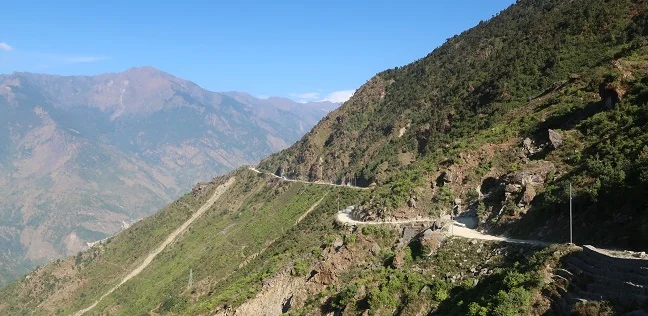
The narrow lanes cut fr m vertical gorge walls, the unpaved surfaces that turn to slick mud in rain, the single-lane bridges shared with pedestrians and livestock, the hairpin turns above thousand-metre drops, and the occasional landslide debris that requires careful navigation — these are genuine characteristics of Nepal’s mountain road network that every traveller should understand before hiring a vehicle.
But describing Nepal’s roads as uniformly poor or uniformly dangerous is both inaccurate and unhelpful. Nepal’s road network in 2026 spans a wide range of quality—from the excellent, multi-lane Prithvi Highway between Kathmandu and Pokhara, which is genuinely comfortable for almost any passenger, to the extreme mountain tracks of the Besisahar to Manang road, which require serious 4WD capability and experienced drivers.
Knowing which road you are on and what vehicle it requires is the most important piece of road knowledge for Nepal travellers—and it is exactly the knowledge Nepal Vehicle Hiring Pvt. Ltd. brings to every booking, matching the right vehicle and driver to each specific Nepal route.
This guide covers every major Nepal tourism road in 2026—its condition, vehicle requirements, seasonal factors, and the specific Nepal Vehicle Hiring Pvt. Ltd. services that cover each corridor. From the flat, fast East-West Highway of the Terai to the dramatic gorge roads of the Trishuli Valley and the extreme mountain tracks of the upper Marsyangdi, this road knowledge is essential for anyone hiring a vehicle in Nepal before they book.
Understanding Nepal’s Road Grading System
How to Think About Nepal Road Quality
A useful framework for understanding Nepal’s road quality spectrum is to think in four categories that reflect both the physical road condition and the vehicle requirement: National Highways (paved, maintained, suitable for standard vehicles), Feeder Roads (mostly paved, occasional rough sections, 4WD advised for mountain variants), District Roads (mixed surface, 4WD required for mountain variants), and Track Roads (unpaved mountain tracks, 4WD essential, experienced drivers required). Most major Nepal tourist itineraries involve at least two of these categories — and the transition from a smooth National Highway to a rough mountain track can happen within a few kilometres as the route climbs away from the valley floor.
The monsoon season from June to September is the single most important seasonal factor affecting Nepal road conditions — heavy rainfall erodes unpaved surfaces, triggers landslides across roads, washes out bridges, and creates unstable road edges above gorges. The post-monsoon period from October to May delivers the most reliable road conditions, with the dry-season surface allowing maximum vehicle speed and safety on mountain routes.
Even in the post-monsoon period, however, the previous monsoon’s effects remain visible on every mountain road—new patches, temporary surface repairs, repaired landslide areas, and fresh cut faces on hillsides where the road was recently cleared. Nepal Vehicle Hiring Pvt. Ltd. drivers know each route’s current condition in real time — a level of knowledge that no published guide can fully replicate and that makes the driver as important as the vehicle on Nepal’s challenging roads.
The Prithvi Highway — Kathmandu to Pokhara
Nepal’s Best Road — The Traveller’s Backbone
The Prithvi Highway — the 200 km national highway connecting Kathmandu and Pokhara — is Nepal’s most important and best-maintained road, and the one on which the largest proportion of Nepal’s international tourist travel occurs. The highway is fully paved throughout.
It has been progressively upgraded over the past decade, with particular improvements to the sections through the Trishuli River valley and the Marsyangdi approach that were historically the most challenging. In 2026, the Prithvi Highway is in genuinely good condition by any reasonable standard — comfortable, reliably paved, and manageable in any capable vehicle including standard sedans and SUVs.
The highway’s most distinctive feature is its route through the Trishuli River gorge — the steep-sided valley that the road follows for much of the first half of the journey from Kathmandu. The gorge section’s dramatic landscape, riverside road, and occasional narrow sections carved from the rock face make it one of Asia’s most visually engaging highway drives —though attentive driving and good visibility are also important for safety.
The Kathmandu to Pokhara private vehicle transfer from Nepal Vehicle Hiring Pvt. Ltd. covers this route with experienced highway drivers who know the best overtaking points, current road-condition patches, and the most reliable rest stops—delivering the 200 km journey in 5 to 7 hours, depending on traffic and stops.
Vehicle recommendation: Standard sedan or SUV — the Prithvi Highway does not require 4WD. Nepal Vehicle Hiring Pvt. Ltd.‘s Kathmandu to Pokhara private vehicle transfer is available in both standard vehicles and 4WD for groups or travellers who prefer the additional luggage capacity of a larger vehicle.
Prithvi Highway Notable Stops
The Mugling junction at the midpoint of the Prithvi Highway — where the Marsyangdi River meets the Trishuli River and the road to Besisahar and the Annapurna Circuit branches north — is the traditional rest stop for the Kathmandu to Pokhara drive. The cluster of riverside restaurants at Mugling is famous for curd (dahi) — the thick buffalo-milk yoghurt that is one of Nepal’s finest roadside foods — and the stop provides a welcome break and a beautiful riverside setting at the 2.5 to 3-hour mark of the journey.
Nepal Vehicle Hiring Pvt. Ltd. drivers on the Prithvi Highway route know the best Mugling roadside restaurants and typically include a 20 to 30-minute stop as part of the standard Kathmandu-to-Pokhara transfer experience.
Kathmandu Valley Roads — The Heritage Circuit
Within the Valley — Excellent Conditions
The road network within the Kathmandu Valley — covering the city of Kathmandu itself plus the neighbouring cities of Patan (Lalitpur), Bhaktapur, and the surrounding areas including Nagarkot — is paved throughout and generally in good condition, with the primary challenge being congestion rather than road quality. Kathmandu‘s traffic can be genuinely slow during peak hours — particularly in the morning and evening commute periods and around the major heritage sites on busy tourist days.
The Kathmandu sightseeing tour from Nepal Vehicle Hiring Pvt. Ltd. typically departs by 9:00 AM to take advantage of lighter mid-morning traffic before afternoon congestion builds, and experienced drivers navigate Kathmandu‘s complex street network efficiently.
The road to Bhaktapur — 13 km east of Kathmandu on the Arniko Highway — is a dual-carriageway in excellent condition that takes approximately 30 to 45 minutes from Thamel. The Nagarkot road from Bhaktapur — the final 12 km climb to the sunrise viewpoint at 2,195 m — is a paved but steep and narrow mountain road that requires care in the dark during pre-dawn sunrise tour departures.
The Nepal Vehicle Hiring Pvt. Ltd. drivers who cover the Nagarkot sunrise tour route regularly know every turn of this road in darkness — an important safety competence for a 4:30 AM departure.
The Besisahar Road — Annapurna Circuit Gateway
Kathmandu to Besisahar — Mixed Conditions
The road from Kathmandu to Besisahar — the traditional starting point for the Annapurna Circuit Trek — covers approximately 170 km via the Prithvi Highway to Abu Khaireni junction and then north on the Marsyangdi Valley approach road. The Prithvi Highway section (approximately 80 km) is in excellent condition as described above.
From Abu Khaireni north to Besisahar (approximately 90 km), road quality is more variable, mostly paved with sections of rough surface, particularly on the upper approach from Khudi to Besisahar, where the road climbs more steeply and the pavement deteriorates. In the post-monsoon period, this approach road typically has several recently patched sections and occasional rough crossings at stream bridges.
Vehicle recommendation: Any capable sedan or SUV for the Kathmandu to Besisahar section under normal conditions. Nepal Vehicle Hiring Pvt. Ltd.‘s Besisahar jeep transfer prefers 4WD vehicles — the added ground clearance and capability of a Toyota Fortuner or Hilux 4WD provide significant comfort margins on the rough upper sections and are especially appropriate during the monsoon and post-monsoon periods, when road surface quality is at its lowest.
Besisahar to Chame — 4WD Territory
From Besisahar northward through the Marsyangdi Valley gorge to Chame (2,670 m) — the 55 km section that parallels the lower Annapurna Circuit trekking route — the road transitions to what experienced Nepal drivers categorise as ‘4WD strongly advised’ territory. The surface alternates between paved (about 40 per cent of the route) and unpaved (60 per cent), with the unpaved sections ranging from hard-packed gravel to deeply rutted mud, depending on recent weather and road maintenance.
Multiple river crossings on suspension bridges — shared with pedestrians, livestock, motorcyclists, and occasionally trekkers — require slow and careful navigation. The gorge sections above Jagat and Chamje involve narrow road cuts above the river, where the margin between the road edge and a significant drop is measured in centimetres rather than metres.
Vehicle requirement: A 4WD with adequate ground clearance is strongly advised for the Besisahar to Chame section and is essential during the monsoon and post-monsoon period. A standard city sedan would face serious difficulty on this section under any but the driest conditions.
Nepal Vehicle Hiring Pvt. Ltd.‘s Chame jeep transfer uses only 4WD vehicles—Toyota Fortuner, Hilux, or Land Cruiser—and the company’s mountain-route drivers have specific experience with current road conditions and the most recent damage or repair points on each section.
Chame to Manang — Extreme Mountain Track
The final section from Chame to Manang (2,670 m to 3,519 m) is the most demanding road section on any standard Nepal tourist itinerary. This rough mountain track gains nearly 900 metres of altitude over about 37 km on a surface that varies from rough gravel to bare rock to compressed Earth, with multiple sections where the road is barely wider than the vehicle and where a wheel leaving the road edge can have severe consequences.
This section requires 4WD capability, high ground clearance, low-range gearing, and experienced mountain drivers. The Kathmandu to Manang jeep rental from Nepal Vehicle Hiring Pvt. Ltd. is one of the company’s most specialised services—the Toyota Land Cruiser or Toyota Hilux is specifically recommended for the full Chame to Manang section, and drivers are allocated based on their experience on the upper Marsyangdi Valley road.
The Syabrubesi Road — Langtang Valley Gateway
Kathmandu to Syabrubesi — 2026 Status
The Kathmandu to Syabrubesi road — the primary vehicle approach to the Langtang Valley Trek — covers approximately 120 km via Bidur and the Trishuli River valley in 7 to 8 hours under normal conditions. In 2026, this route requires pre-travel road condition verification due to the August 2026 fl sh flood that severely damaged the corridor between Syabrubesi and the Rasuwagadhi border.
The section from Kathmandu to Syabrubesi town is expected to reopen progressively as flood damage is repaired. In contrast, the section between Syabrubesi and the Rasuwagadhi border area remains subject to ongoing assessment and emergency operations.
Contact Nepal Vehicle Hiring Pvt. Ltd. on WhatsApp for the most current Syabrubesi road condition assessment before booking — the team has real-time awareness of the repair status that no published guide can replicate.
Under normal conditions (and for the October 2026 trekking season when the road is expected to be substantially repaired), the Kathmandu to Syabrubesi jeep route is a genuinely rewarding mountain road journey — the Trishuli River gorge section is spectacularly dramatic, the Dhunche approach through the Rasuwa District foothills is beautiful, and the arrival at Syabrubesi at the confluence of the Bhote Koshi and Trishuli rivers is a genuinely satisfying journey endpoint. The jeep vs bus to Syabrubesi comparison consistently favours the private jeep — the mountain road conditions on this route, particularly the sections above Dhunche, are specifically appropriate for 4WD vehicles with experienced mountain drivers.
The East-West Highway — Terai Corridor
Chitwan to Lumbini — Nepal’s Flattest Road
The East-West Highway (Mahendra Highway) — the national highway running across Nepal’s entire southern Terai lowland belt from east to west — is Nepal’s most reliable long-distance road by flat-road standards. The section between Chitwan and Lumbini specifically—the 140 to 160 km Chitwan to Lumbini vehicle hire route covered by Nepal Vehicle Hiring Pvt. Ltd.—runs across genuinely flat Terai agricultural land on a paved highway in consistently good condition.
The Terai’s flat terrain means the East-West Highway avoids the landslide vulnerability and erosion damage of mountain roads, and road maintenance on this corridor is more effective and regular than on mountain routes.
The Sunauli to Pokhara road — used by travellers entering Nepal from India at the Sunauli-Belahiya border crossing and heading to Pokhara — joins the East-West Highway at Butwal before climbing north on the Siddhartha Highway through the Palpa hills. The East-West Highway section from Sunauli to Butwal is in excellent condition.
The Siddhartha Highway from Butwal to Pokhara is mostly paved, with some rough sections on the hill climbs—manageable in any capable vehicle. Still, some sections benefit from 4WD capability after the monsoon.
The Arniko Highway — Kathmandu to the China Border
Road Conditions — Check Before Travelling
The Arniko Highway from Kathmandu to the Tatopani-Kodari border — 115 km through Banepa, Dhulikhel, Dolalghat, and the Bhote Koshi gorge — is one of Nepal’s most scenically spectacular and simultaneously most risk-vulnerable roads. The gorge section is prone to landslides during and after the monsoon, and the monsoon seasons have produced significant road damage at multiple points.
Under normal conditions, the road is fully passable with appropriate 4WD vehicles, but the Tatopani border crossing is currently closed. Travellers using the Arniko Highway for the Bhotekoshi and Sun Koshi rafting approach or for sightseeing in the gorge area should verify current road conditions with Nepal Vehicle Hiring Pvt. Ltd. on WhatsApp before departure.
Monsoon Season Road Conditions — What Changes June to September
How Monsoon Affects Nepal Roads
The June to September monsoon season transforms Nepal’s mountain road network in ways that every vehicle hire traveller should understand. The effects build cumulatively through the season: June brings the first monsoon rains and the start of road surface deterioration on unpaved sections.
July and August are the most intense monsoon months, when landslides are most frequent, river levels are highest, and road surfaces are most damaged. September sees the monsoon withdrawing, and roads are at their most deteriorated state of the year, with the full impact of accumulated rain damage on the surface.
The post-monsoon October trekking season begins with rough roads that improve rapidly as government and contractor repair teams work through the backlog of monsoon damage.
The monsoon’s specific effects on Nepal’s key tourism road corridors: the Prithvi Highway remains consistently passable, but with more frequent minor delays for landslide clearing. The Besisahar to Chame road becomes significantly more challenging with deep ruts, mud sections, and more frequent bridge damage.
The Syabrubesi road is more vulnerable to landslide closures during the monsoon—the combination of the Trishuli Valley’s steep hillsides and heavy monsoon rainfall creates regular disruption on this corridor. The East-West Highway remains consistently passable throughout the monsoon as the flat Terai terrain does not generate the landslides that affect mountain roads.
Post-Monsoon — October to November
The October to November post-monsoon period is the sweet spot for Nepal road travel — the monsoon rains have stopped, road repair teams have been active for several weeks, and the surfaces have largely dried and hardened. Mountain roads that were deeply rutted mud in August are typically firm and much more manageable by October.
This post-monsoon improvement in road quality is one of the main reasons October is Nepal’s peak trekking season—the best weather and road conditions combine to deliver the year’s best overall travel conditions. Nepal Vehicle Hiring Pvt. Ltd.‘s fleet of 4WD vehicles is at its highest demand in October, and the team recommends booking all trekking trailhead transfers at least two to three weeks in advance for October departures.
Why 4WD Is Essential on Nepal Mountain Roads
Technical Reasons — What 4WD Actually Does
The case for 4WD vehicles on Nepal’s mountain roads is not marketing — it is a straightforward engineering reality. A standard 2WD vehicle distributes engine power to only two wheels.
On a mountain road, if one driven wheel is on loose gravel, soft mud, or wet rock, it spins freely while the vehicle stops moving forward. A 4WD vehicle distributes power to all four wheels simultaneously — the three wheels on firm ground continue to drive the vehicle forward.
In contrast, the one wheel on the slippery surface recovers. On Nepal’s mountain roads, where the surface shifts between firm and slippery every metre, this 4WD advantage translates directly into the difference between reliable forward progress and getting stuck.
Ground clearance is the second critical factor. Nepal’s mountain tracks have protruding rocks, deep ruts, and raised sections between wheel tracks that a standard car’s low chassis will ground on — dragging the vehicle to a halt and potentially causing underbody damage.
The Toyota Fortuner‘s 279 mm ground clearance and the Toyota Hilux‘s 310 mm ground clearance let these vehicles clear road obstructions that would stop a standard car. The Land Cruiser‘s combination of 4WD, maximum ground clearance, and the most powerful engine in Nepal Vehicle Hiring Pvt. Ltd.‘s fleet makes it the top specification vehicle for the most demanding Nepal mountain road sections — the Chame to Manang track, the Tipling approach to Somdang, and the most extreme post-monsoon conditions on any trekking trailhead road.
The Driver Factor — As Important as the Vehicle
On Nepal’s mountain roads, the driver is as important as the vehicle — and in some respects more important. The most capable 4WD vehicle driven by a driver unfamiliar with the route will face avoidable difficulties that an experienced driver in a less capable vehicle can navigate successfully.
Knowledge of where the road narrows, where the best passing points are on single-lane sections, which bridge decking sounds solid and which sounds hollow (indicating degraded timber), where the road edge is more vulnerable to collapse, which stream crossings have safe lines and which have dangerous soft spots — all of this is the knowledge of the experienced mountain driver that comes from having driven the route many times, in different seasons and different conditions.
Nepal Vehicle Hiring Pvt. Ltd. allocates drivers to routes based on their specific experience with that route — the Kathmandu to Syabrubesi jeep hire uses drivers who have made that journey many times, the Besisahar and Chame jeep transfer uses drivers with specific Marsyangdi Valley experience, and the Kathmandu to Arughat jeep hire for Manaslu Circuit trekkers uses drivers who know the Dhading approach road specifically. This route-matched driver allocation is one of Nepal Vehicle Hiring Pvt. Ltd.‘s most important safety and service quality practices — and it is one of the most significant differences between a professional vehicle hire operator and the informal local taxi alternatives that travellers sometimes consider.
Road Condition Checklist — Before You Book Your Nepal Vehicle
Questions to Ask Your Vehicle Hire Operator
- What is the current road condition on my specific route? (Not general Nepal roads — your exact route)
- Has this road had recent monsoon or flood damage, and has it been repaired?
- Is a 4WD vehicle recommended or essential for my destination?
- How experienced is the driver with this specific route?
- What is the operator’s plan if a landslide blocks the road en route?
- Is the vehicle adequately maintained for mountain road use — tyres, brakes, engine, 4WD system?
- What contact is available 24 hours during the journey for support or emergency coordination?
How Nepal Vehicle Hiring Answers These Questions
Nepal Vehicle Hiring Pvt. Ltd. answers all seven questions comprehensively for every booking. The 24-hour line on WhatsApp provides real-time road-condition information drawn from the company’s network of drivers who travel Nepal’s roads daily.
The fleet of Toyota Fortuner, Hilux 4WD, and Land Cruiser vehicles is maintained to standards suited to Nepal’s mountain road demands. Route-matched driver allocation ensures every client’s driver has specific experience on their route.
The 24-hour support line means any road disruption en route—a sudden landslide, a bridge closure, an unexpected condition change—is met with immediate professional coordination, rather than leaving the driver and passengers without guidance. This comprehensive service framework sets Nepal Vehicle Hiring Pvt. Ltd. apart from less formal Nepal vehicle hire alternatives, and it is why 8,000+ satisfied customers have trusted the company with their Nepal road journeys.
| Book Your Nepal Vehicle with Road Condition Guarantee |
| Website: www.vehiclehiringnepal.com |
| WhatsApp (24/7 — Real-Time Road Condition Updates) |
| Email: [email protected] |
| Office: Bhagawatisthan, Thamel, Kathmandu, Nepal |
| Prithvi Highway (Kathmandu-Pokhara): Sedan/SUV — NPR 12,000-25,000 |
| Besisahar Jeep (Annapurna Circuit): 4WD Fortuner — NPR 18,000-25,000 |
| Chame/Manang Jeep: 4WD Hilux/Land Cruiser — NPR 24,000-45,000 |
| Syabrubesi Jeep (Langtang): 4WD — NPR 14,000-23,000 (check road status) |
| Chitwan to Lumbini: Sedan/SUV — NPR 10,000-14,000 |
| 8,000+ Happy Customers | 5.0 TripAdvisor | 200+ Reviews | Reg. No. 219204 |
Nepal’s Key Road Corridors — Detailed Route Profiles
The Pokhara to Muktinath Road — Kali Gandaki Grandeur
The road from Pokhara to Muktinath — the sacred pilgrimage site at 3,800 m in the upper Mustang — is one of Nepal’s most dramatically scenic road journeys and one of the most significant for religious tourism. The route follows the Kali Gandaki River northward from Pokhara through Beni, Tatopani (the hot springs village distinct from the border crossing), Ghasa, Marpha, and Jomsom before climbing to Muktinath via Kagbeni.
The Kali Gandaki gorge section between Ghasa and Marpha is reputedly the world’s deepest gorge—the river valley between Dhaulagiri (8,167 m) to the west and Annapurna I (8,091 m) to the east creates a depth that exceeds any comparable gorge on Earth. The road through it provides views of a scale and drama that leave even experienced Earth-based travellers speechless.
The Pokhara to Muktinath private vehicle transfer from Nepal Vehicle Hiring Pvt. Ltd. covers this route in 5 to 7 hours depending on road conditions.
Road conditions on the Pokhara to Muktinath road are mixed but generally manageable with appropriate 4WD vehicles. The lower sections from Pokhara through Beni are paved and in good condition.
The gorge section from Tatopani northward becomes progressively rougher — a combination of paved, unpaved, and very rough sections where the road was carved from the gorge wall and where the afternoon wind that howls up the Kali Gandaki from the Terai toward the Tibetan plateau becomes a significant driving factor. The Jomsom to Muktinath section (22 km) is a rough mountain track that requires genuine 4WD capability with high ground clearance.
For the Muktinath approach, Nepal Vehicle Hiring Pvt. Ltd. uses only 4WD vehicles — Fortuner, Hilux, or Land Cruiser — with drivers who have specific Kali Gandaki route experience.
The Kathmandu to Chitwan Road
The road from Kathmandu to Chitwan — Nepal’s premier wildlife destination — offers two distinct routing options. The direct Prithvi Highway approach branches south from the Prithvi Highway at Mugling and descends through Bharatpur to the Chitwan Terai in approximately 4 to 5 hours total from Kathmandu.
This is the most commonly used route, and the Prithvi Highway section is in excellent condition. The alternative route via Hetauda descends through the Tribhuvan Highway — one of Nepal’s original mountain road engineering achievements — through spectacular switchback terrain from the Kathmandu Valley rim to the Terai floor.
The Tribhuvan Highway is historically significant and scenically extraordinary but is a more demanding drive than the Prithvi Highway approach.
The Kathmandu to Chitwan private vehicle transfer from Nepal Vehicle Hiring Pvt. Ltd. typically uses the Prithvi Highway direct approach — the most reliable and time-efficient routing. The Terai roads around Chitwan itself are flat and in good condition, and the final approach to the Sauraha tourist area from Bharatpur is paved and manageable in any vehicle.
The Chitwan-to-Lumbini vehicle hire then continues westward from Chitwan along the East-West Highway to Lumbini—the flat, fast Terai highway and the most comfortable long-distance driving in Nepal.
The Gorkha Road — Manaslu Circuit Gateway
The road from Kathmandu to Arughat Bazar — the traditional starting point for the Manaslu Circuit Trek — branches north from the Prithvi Highway at the Abu Khaireni junction and climbs through Dhading Besi into the increasingly remote Ankhu Khola Valley to Arughat at the Budhi Gandaki River. The route covers approximately 130 to 145 k from Kathmandu and takes 5 to 6 hours by private 4WD jeep from Nepal Vehicle Hiring Pvt. Ltd..
The Dhading Besi to Arughat section — approximately 40 km of increasingly rough mountain road — is the most demanding part of the journey and specifically requires 4WD capability. The Kathmandu-to-Arughat jeep ride from Nepal Vehicle Hiring Pvt. Ltd. uses a Toyota Fortuner or Hilux—the standard sedan cannot reliably handle the rough Arughat approach.
Seasonal Road Condition Calendar
October to November — Peak Season Conditions
October is the best month for Nepal road conditions and when most trekking trailhead transfers are completed. Post-monsoon road surfaces are firm, landslide risk is minimal, rivers are receding from their peak levels, and the outstanding autumn weather provides maximum visibility on mountain roads.
The Prithvi Highway is at its most comfortable, the Besisahar jeep transfer road is in its best post-monsoon condition, and the Kathmandu sightseeing circuit roads are clear and comfortable. Book all Nepal Vehicle Hiring Pvt. Ltd. services at least two to three weeks in advance for October — peak demand makes last-minute booking difficult.
November continues the excellent conditions of October with the addition of the first winter snowfall on the highest passes — the Manang area and the approach to Thorong La can see early November snow that affects the upper mountain track conditions. The main Prithvi Highway and Kathmandu Valley roads are entirely unaffected by high-altitude snow. Pokhara car hire and Annapurna Circuit approaches are in excellent condition through the end of November.
December to February — Winter Conditions
Winter brings cold temperatures but generally stable road conditions on Nepal’s main tourism corridors. The Prithvi Highway is unaffected by winter — snow does not reach the highway’s altitude and the road remains comfortable year-round.
The Kathmandu Valley sightseeing roads are fully passable in winter, though early morning temperatures in January can produce occasional frost on exposed valley-rim sections. Mountain roads to Manang and the highest trekking trailheads can have ice on exposed sections in December and January — the 4WD vehicles operated by Nepal Vehicle Hiring Pvt. Ltd. are equipped for winter mountain driving, and the Besisahar approach road remains manageable throughout winter for properly equipped vehicles.
March to May — Spring — Second Best Season
Spring from March to May delivers the second-best road conditions of the year—the winter ice has cleared from mountain roads, spring rains have not yet begun to deteriorate surfaces, and rhododendron blooms in the lower valley forests add extraordinary visual richness to every mountain road journey. The Prithvi Highway is in excellent spring condition.
The Besisahar road is in its best pre-monsoon condition. The Syabrubesi road (current 2026 August flood damage permitting) is at its spring best by April. The Pokhara to Muktinath road is manageable and rewarding in spring, with excellent visibility on the Kali Gandaki gorge section.
Book Nepal Vehicle Hiring Pvt. Ltd. services at least one week in advance for April — the second peak season for Nepal vehicle hire.
June to September — Monsoon — Most Challenging
June to September is the most challenging period for road travel in Nepal. The Prithvi Highway remains reliable but subject to more frequent minor delays. Mountain roads deteriorate significantly; the Besisahar to Chame section becomes substantially rougher and more prone to mud sections.
The Syabrubesi road is most vulnerable to landslide closure during monsoon. The East-West Highway (Chitwan to Lumbini) remains comfortable throughout monsoon — the flat Terai terrain does not generate the landslide risk of mountain roads.
For monsoon travel in the mountains, Nepal Vehicle Hiring Pvt. Ltd. specifically recommends its most capable 4WD vehicles and drivers with the most current route condition knowledge — available via WhatsApp.
Road Safety Tips for Nepal Vehicle Hire Travellers
Before Departure
- Confirm current road conditions for your specific route with Nepal Vehicle Hiring Pvt. Ltd. on WhatsApp — real-time information is more reliable than any guide.
- Start early — mountain roads are better driven in daylight; most Nepal Vehicle Hiring Pvt. Ltd. mountain route drivers recommend 6:00-7:00 AM departures.
- Check the weather forecast for the route — rain increases landslide risk and road surface deterioration on mountain sections.
- Ensure your vehicle hire includes a driver with specific experience of your route — not just Nepal driving generally.
- Carry water, snacks, and a basic first aid kit for longer mountain road journeys.
- Share your route and estimated arrival time with your accommodation
During the Journey
- Trust your driver’s judgement on road conditions—experienced Nepal mountain drivers will make the right call on difficult sections.
- Do not rush—mountain roads require patience; allow generous time margins rather than pressuring the driver to maintain speed on rough sections.
- Be prepared for brief stops to clear or wait for road obstructions — a few minutes of patience avoids the risk of pushing through uncertain conditions.
- Photograph road conditions that concern you and share with Nepal Vehicle Hiring Pvt. Ltd. via WhatsApp — the team can provide immediate guidance
- If a road section looks unsafe, trust that instinct and contact WhatsApp for guidance before proceeding.
Frequently Asked Questions — Nepal Road Conditions 2026
Are Nepal roads safe for tourists?
Yes — Nepal roads are safe for tourists when you have the right vehicle, the right driver, and the right preparation. The Prithvi Highway and Kathmandu Valley roads are genuinely comfortable for any capable vehicle. Mountain roads require WD vehicles and experienced drivers.
Nepal Vehicle Hiring Pv . Ltd. provides the appropriate vehicle and driver for every Nepal road condition — contact WhatsApp.
Do I need a 4WD vehicle for all Nepal roads?
No — the Prithvi Highway (Kathmandu to Pokhara), the Kathmandu Valley sightseeing roads, and the East-West Highway (Chitwan to Lumbini) are comfortable in any capable sedan or SUV. 4WD is strongly advised for mountain routes beyond Besisahar and essential for the Chame to Manang section and other extreme mountain tracks.
How does the monsoon affect Nepal roads?
The June to September monsoon season deteriorates Nepal’s mountain road surfaces—unpaved sections develop ruts and mud, landslides temporarily close roads, and bridges can be damaged. The October post-monsoon season offers the best road conditions of the year. Nepal Vehicle Hiring Pv . Ltd. monitors current road conditions year-round — contact WhatsApp for the most current assessment on your specific route and travel date.
What is the condition of the Syabrubesi road in 2026?
The Kathmandu to Syabrubesi road sustained significant damage from the August 2026 flash flood. The section between Kathmandu and Syabrubesi town is being repaired in stages and is expected to be operational for the October trekking season. Contact Nepal Vehicle Hiring Pvt. Ltd. on WhatsApp for the current road status before booking the Syabrubesi jeep transfer.
How long does the Kathmandu to Pokhara drive take?
The Kathmandu-to-Pokhara private vehicle transfer takes 5 to 7 hours via the Prithvi Highway, depending on traffic and stops. Nepal Vehicle Hiring Pv . Ltd. recommends departing by 7:00 AM to finish before afternoon traffic builds in Pokhara. The standard rest stop is at Mugling, halfway through.
Conclusion: Know Your Road, Choose Your Vehicle
Nepal’s roads in 2026 offer one of the world’s most diverse and rewarding vehicle travel experiences — from the comfortable, fast Prithvi Highway between Kathmandu and Pokhara to the dramatic gorge roads of the Marsyangdi Valley and the extreme mountain tracks above Chame. The key to enjoying rather than merely surviving this road diversity is matching the right vehicle and driver to each specific road — and that is precisely what Nepal Vehicle Hiring Pvt. Ltd. delivers.
Contact Nepal Vehicle Hiring Pvt. Ltd. on WhatsApp or vehiclehiringnepal.com with your specific Nepal itinerary — the team will confirm current road conditions, recommend the right vehicle for each section, and provide the all-inclusive transparent pricing that has earned 8,000+ satisfied customers and a 5.0 TripAdvisor rating across Nepal’s full road network. From Kathmandu sightseeing tours to Bhaktapur day trips, from Nagarkot sunrise tours to Besisahar Annapurna Circuit jeep hire, and from Chitwan to Lumbini vehicle hire—Nepal Vehicle Hiring Pvt. Ltd. is Nepal’s road-condition expert and most trusted private vehicle hire provider.
National Highways — The Backbone Network
Nepal’s eight designated National Highways form the country’s primary road backbone—fully paved, government-maintained arteries connecting major cities and serving as trunk routes for commercial transport and tourist travel. The most important for tourist use are the Prithvi Highway (H06, Kathmandu to Pokhara), the East-West/Mahendra Highway (H01, across the full Terai lowland), and the Arniko Highway (H05, Kathmandu to the Tibet border).
These highways suit standard passenger vehicles under normal conditions, though 4WD helps on mountain sections in post-monsoon conditions. Nepal Vehicle Hiring Pvt covers. covers all National Highway routes— the Kathmandu sightseeing tour and Kathmandu-to-Pokhara transfer on the Prithvi Highway, and the Chitwan-to-Lumbini vehicle hire on the East-West Highway. Contact WhatsApp for rates and availability.
Feeder Roads and District Roads — Trekking Approach Routes
Below the National Highway level, Nepal’s feeder and district road network provides access to trekking trailheads and remote communities. The Besisahar approach road (Annapurna Circuit gateway), the Gorkha-Arughat road (Manaslu Circuit gateway), and the Rasuwa road to Dhunche (Langtang gateway) are all feeder road level — mostly paved, reasonably maintained, but with rough sections that specifically benefit from 4WD capability, particularly in the monsoon and post-monsoon seasons.
District roads form the third tier — the rough mountain tracks that require genuine off-road capability. The Besisahar to Chame section of the Marsyangdi Valley, the Tipling approach to Somdang, and upper sections of the Budhi Gandaki valley are district-road level, where Nepal Vehicle Hiring Pvt. Ltd.’s Toyota Fortuner, Hilux, and Land Cruiser 4WD vehicles provide the capability and ground clearance the road demands.
Bridge Safety — The Most Critical Road Factor
Suspension Bridges on Nepal Mountain Roads
Nepal’s mountain road network uses suspension bridges extensively — permanent structures on established routes and simpler timber-decked bridges on less-developed corridors. Suspension bridges typically accommodate one vehicle at a time, require slow crossing speeds, and carry weight limits that must be respected.
Post-monsoon bridge conditions require particular attention — the high-water season can damage foundations, cables, and decking in ways not always visible from the road approach. The August 2026 Rasuwa flood destroyed multiple bridges on the Syabrubesi approach road, illustrating this infrastructure’s flood vulnerability. Nepal Vehicle Hiring Pv .
Ltd. uses the most current available bridge condition information from its driver network and from local road authority contacts. When bridge conditions are uncertain, the team arranges alternative routes rather than risking client safety for schedule convenience.
Nepal has also developed considerable expertise in rapid Bailey bridge deployment — the modular military-specification bridge structures assembled in days rather than months. The Chinese government’ rapid Bailey bridge replacement at Rasuwagadhi after the July 2025 GLOF illustrates this capacity. Nepal Vehicle Hiring Pv.
Ltd. drivers are experienced with Bailey bridge driving requirements—the appropriate speed, weight distribution, and approach line that optimise both safety and bridge longevity on these temporary but critical infrastructure links.
Hiring a Vehicle in Nepal — What First-Timers Should Know
Choosing a Professional Nepal Vehicle Hire Operator
Choosing the right vehicle hire operator in Nepal matters more than in most countries because road conditions dramatically amplify the difference between professional and informal operators. A professional operator like Nepal Vehicle Hiring Pvt. Ltd. provides: a known, licensed, maintained vehicle with a professional, route-experienced driver; transparent all-inclusive pricing with no hidden charges; 24-hour support via WhatsApp; and the accountability of a registered company (Reg.
No. 219204). An informal taxi or unverified local operator provides none of these guarantees — and on a narrow mountain road above a 500-metre drop, the difference is fundamental to safety.
Key markers of a professional Nepal vehicle hire operator include company registration, a documented track record (Nepal Vehicle Hiring Pvt. Ltd. has 8,000+ satisfied customers and a 5.0 TripAdvisor rating with 200+ verified reviews), transparent all-inclusive pricing, 24-hour contact availability, and fleet vehicles maintained to mountain-road standards. For first-time travellers to Nepal, the Nepal Vehicle Hiring Pvt. Ltd. team’s advice on vehicle selection, departure timing, and current road conditions is as valuable as the vehicle itself.
Book via WhatsApp or vehiclehiringnepal.com for the complete Nepal private vehicle hire service — from the Kathmandu sightseeing tour and Bhaktapur day trip to the Besisahar Annapurna Circuit jeep transfer and the Chitwan to Lumbini vehicle hire.
The Post-Monsoon Road Recovery — Why October Is Nepal’s Best Month
The transition from the September monsoon tail to October’s peak trekking season is one of the most dramatic monthly improvements in road quality anywhere in the world. Roads that were deeply rutted and muddy in August are firm and manageable by October. Repair teams have addressed the most critical road damage.
Rivers have receded from their peak flood levels to normal channel flow. Teams have cleared landslide debris that blocked roads in August. New road patches have cured and hardened.
Clear, dry autumn weather means no further rain-induced deterioration for the next two months. This is why October is Nepal’s peak travel month: the best trekking weather, the most reliable road conditions, and the most vibrant tourism atmosphere make it the best month for private vehicle hire travel on every major route.
Nepal Vehicle Hiring Pvt. Ltd. sees its highest monthly booking volumes in October and recommends booking trekking trailhead transfers at least two to three weeks in advance to secure vehicle and driver availability during this peak period.
The Kathmandu sightseeing circuit, the Kathmandu to Pokhara Prithvi Highway transfer, the Besisahar jeep hire for the Annapurna Circuit, the Nagarkot sunrise tour, the Bhaktapur Durbar Square day tour, the car hire in Pokhara for Sarangkot sunrise and Lakeside sightseeing — all of these services are at their operational best in October, delivered by Nepal Vehicle Hiring Pvt. Ltd. drivers who know every current road condition on every route from daily operation. Contact the team on WhatsApp or visit vehiclehiringnepal.com to plan your October travel in Nepalwith thee country’s most trusted and experienced private vehicle hire operator
Keep reading